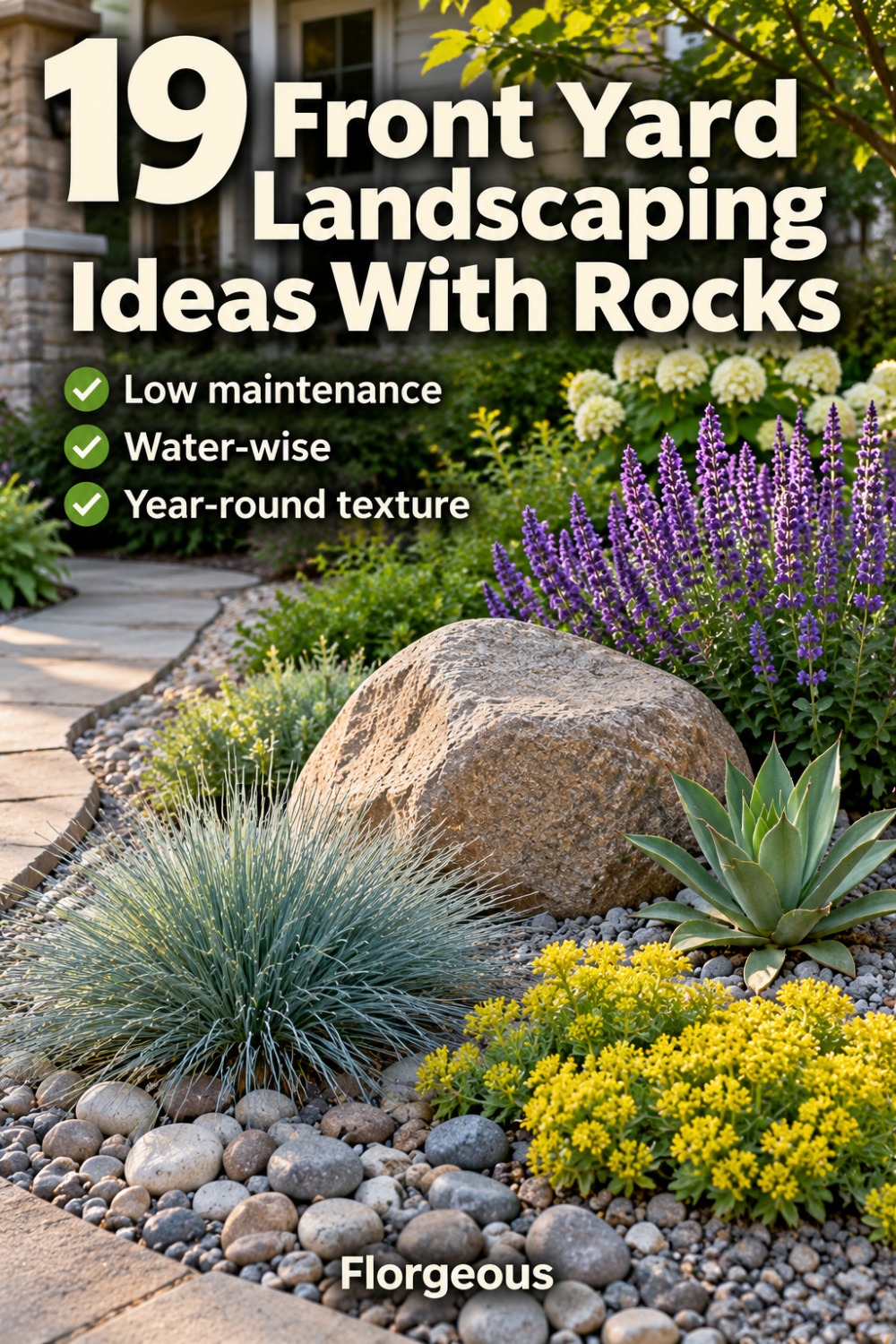
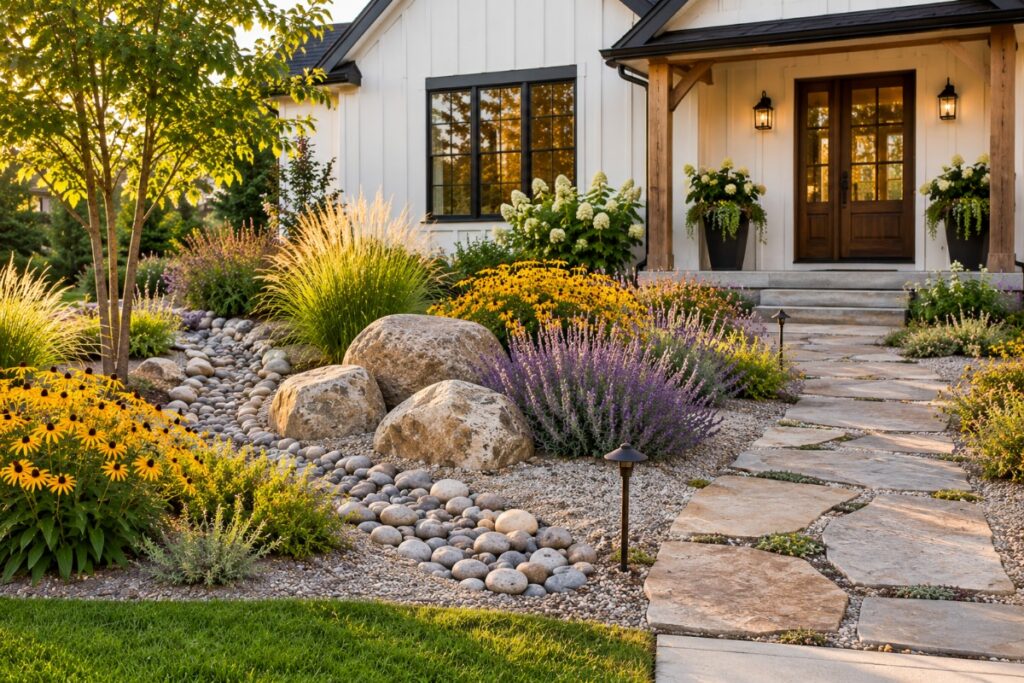
Rocks are one of the most hard-working materials in a front yard.
They don’t need watering, mowing or replanting, they handle drainage problems and they add texture that looks good in every season.
The difference between a beautiful rock landscape and a bare one is all in the details: choosing the right stone, setting it naturally and softening it with plants.
These 19 front yard landscaping ideas with rocks cover everything from river rock borders and boulder groupings to dry creek beds, gravel gardens and stone paths.
Common Landscape Rocks Compared
| Rock | Look | Best for |
|---|---|---|
| River rock | Smooth, rounded, mixed colors | Dry creek beds, borders, drainage areas |
| Pea gravel | Small, rounded, soft underfoot | Paths, seating areas, between stepping stones |
| Crushed granite / decomposed granite | Fine, natural, compacts firmly | Paths and patios in natural or desert gardens |
| Lava rock | Light, porous, red or black | Modern beds and accents |
| Flagstone | Flat, irregular slabs | Walkways and steps |
| Boulders | Large, natural focal points | Anchoring beds and slopes |
1. Pick One Main Rock to Match Your Home
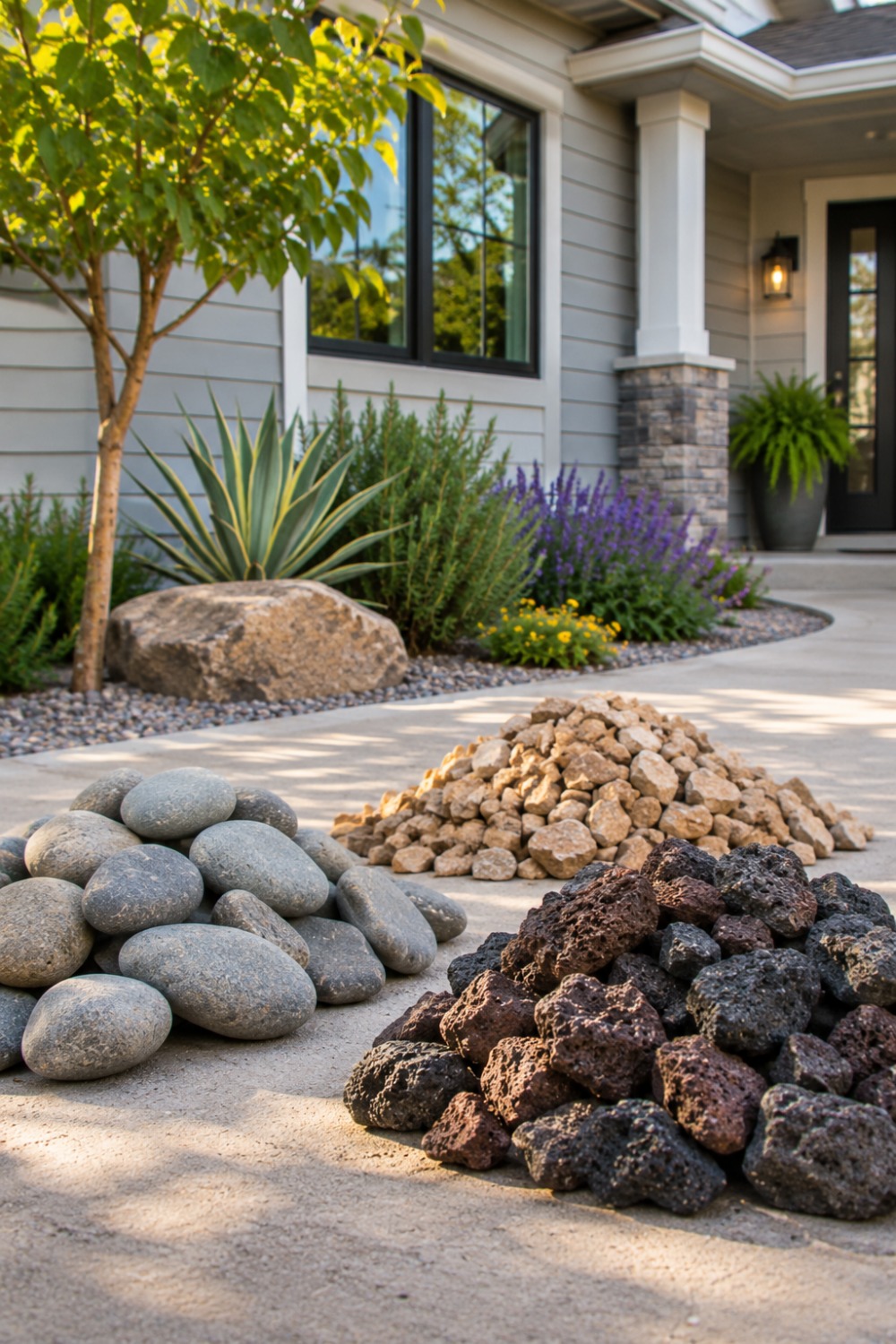
The most polished rock landscapes use one main type of stone, with maybe one accent.
Warm tan and buff stones suit brick, stucco and Southwest-style homes. Gray and blue-gray stones look crisp against white, gray and modern houses.
Bring a few samples home and look at them next to your siding before you order in bulk.
How to do it:
- Pick up samples from a local landscape supply yard.
- Compare them against your siding, roof and front door.
- Choose one main rock and, if you like, a single accent stone.
Common mistake: mixing too many rock colors and sizes. It looks busy rather than natural.
2. Build a Dry Creek Bed Through the Yard
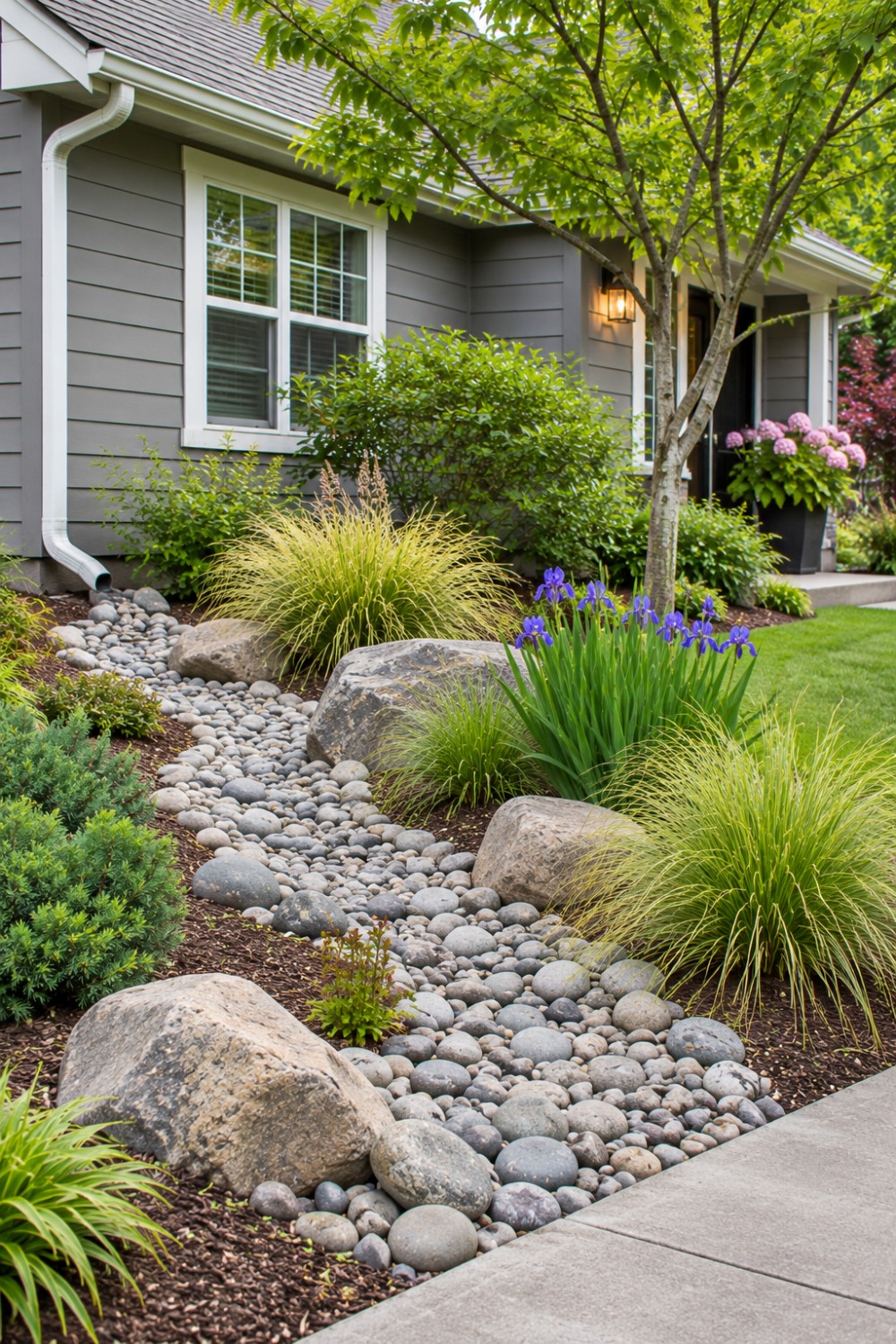
A dry creek bed looks like a natural stream bed and solves drainage at the same time.
It carries rainwater from downspouts or low spots across the yard, then sits dry and decorative the rest of the time.
Mix river rock sizes, from small pebbles to larger stones, and place a few boulders along the banks.
How to do it:
- Dig a shallow, winding channel following the natural flow of water.
- Line it with landscape fabric and lay larger stones along the edges.
- Fill the center with mixed river rock and plant grasses along the banks.
3. Edge Flower Beds With a Band of River Rock
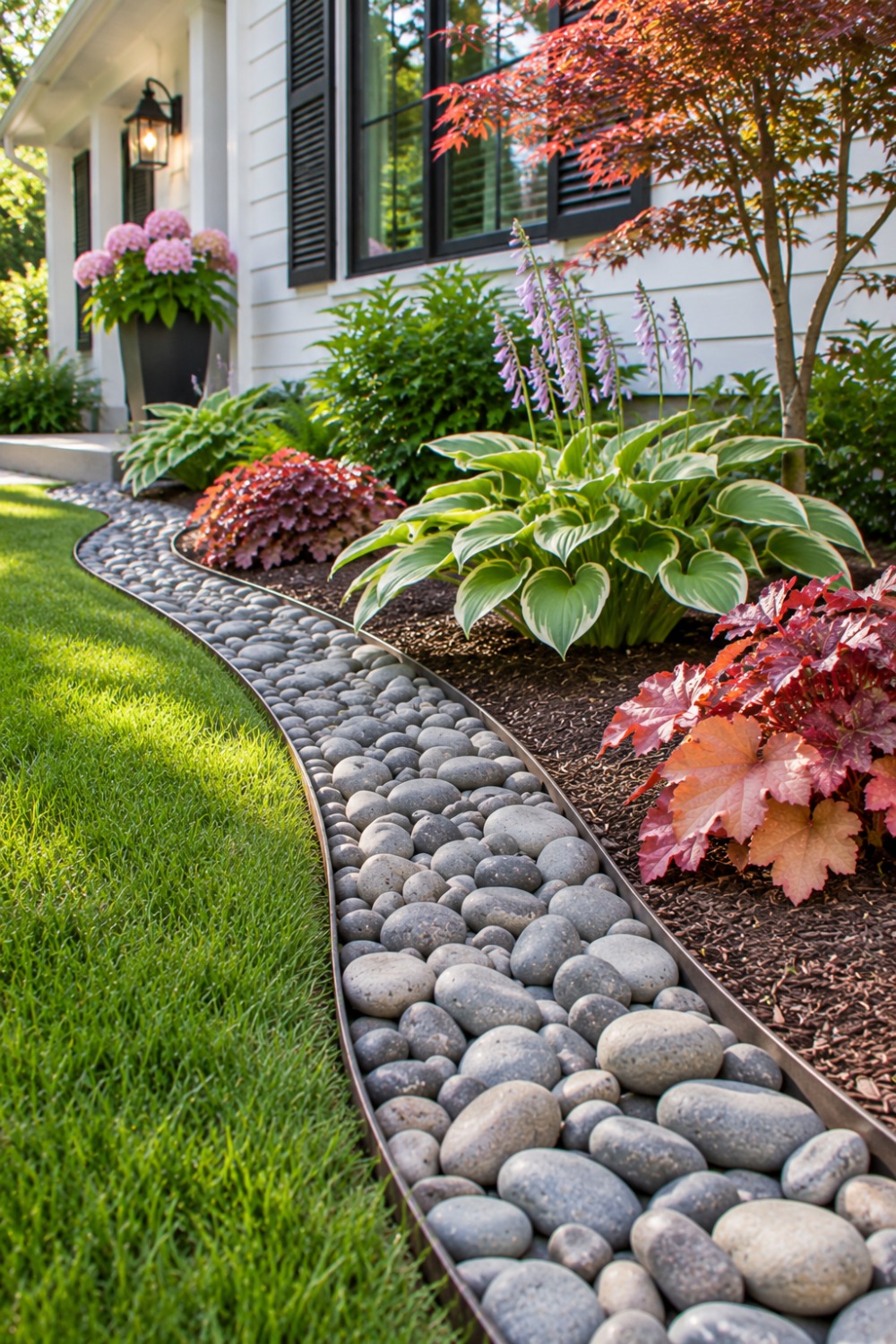
A narrow band of river rock between lawn and bed creates a clean, low-maintenance edge.
It keeps mulch from washing onto the grass and gives the mower a clear line to follow.
Use 2- to 3-inch stones in a band 8 to 12 inches wide with edging on both sides.
How to do it:
- Install edging along the lawn side of the bed.
- Lay landscape fabric in the band.
- Fill with river rock to just below the top of the edging.
4. Group Boulders in Threes for a Natural Look
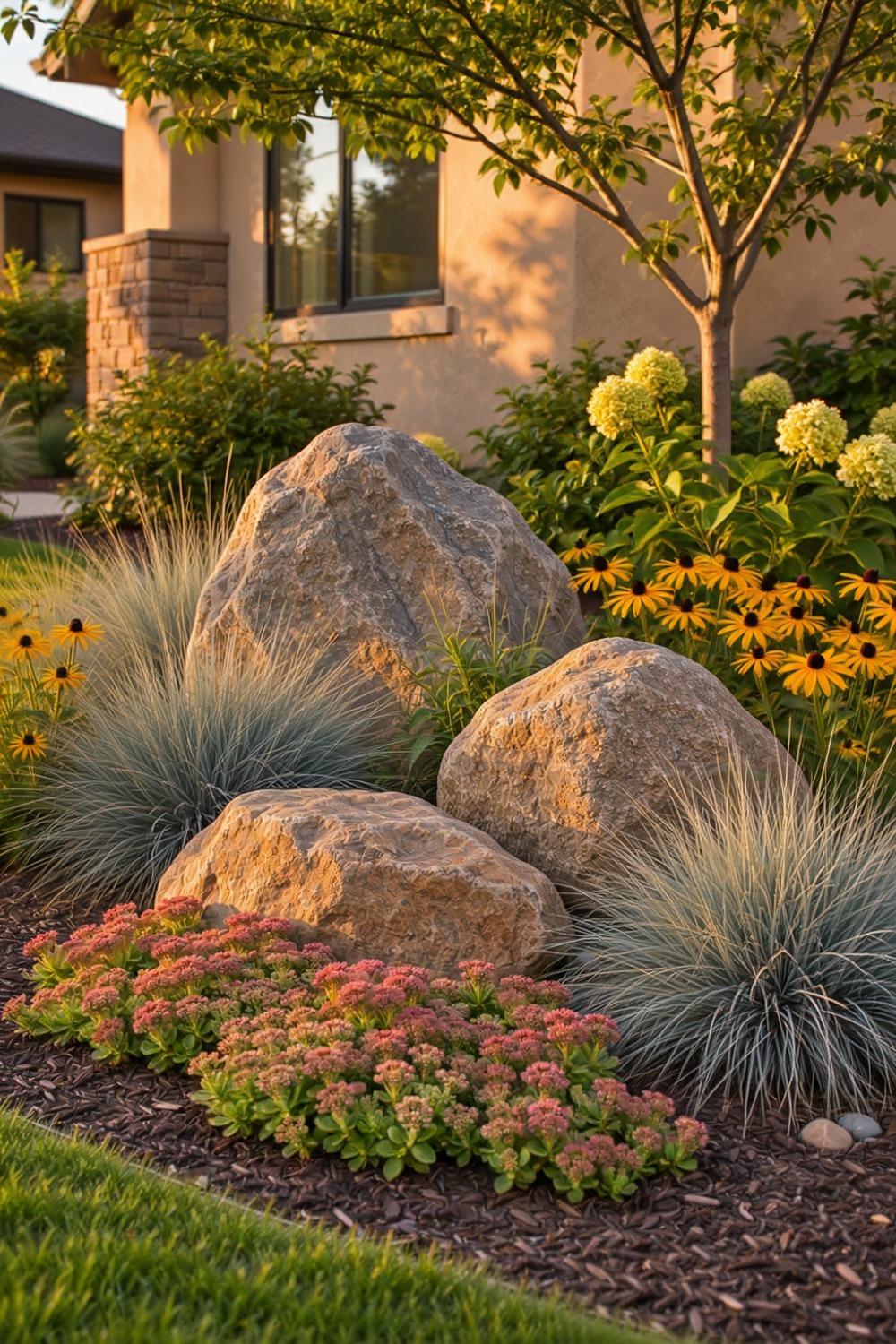
One boulder can look like it landed by accident. A group of three in different sizes looks like it has always been there.
Bury each one about a third of its depth and angle them in the same direction, as they would sit in nature.
Tuck low plants around the bases to settle them in.
How to do it:
- Choose one large, one medium and one small boulder of the same stone.
- Arrange them in a loose triangle, partly buried.
- Plant grasses and low perennials around their bases.
5. Create a Raised Rock Garden Berm
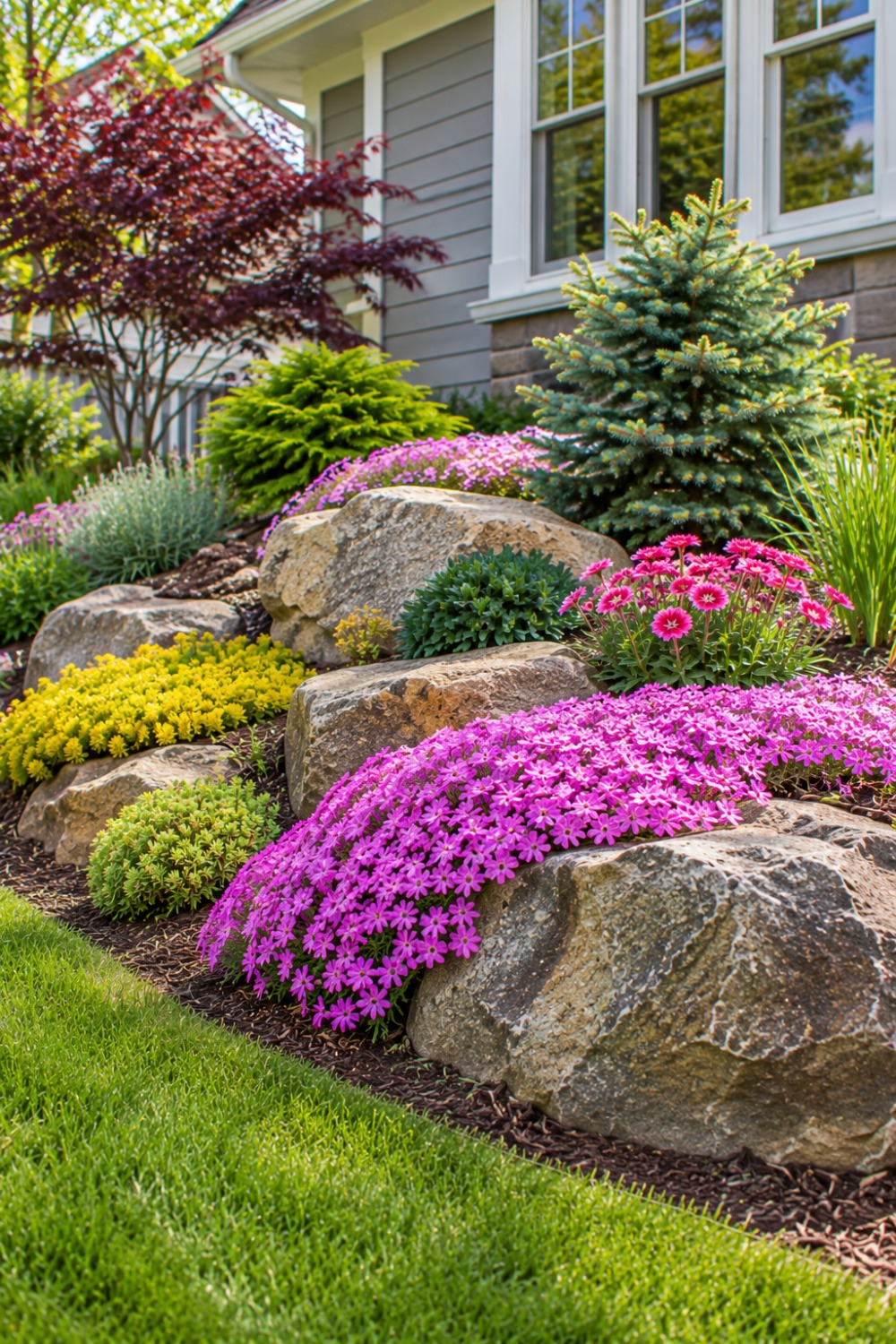
A raised rock garden adds height to a flat front yard and gives perfect drainage for plants that hate wet roots.
Build a gentle mound of gritty soil, set stones into it like outcrops and plant creeping phlox, sedum, dianthus and dwarf conifers between them.
It looks especially good on a sunny corner.
How to do it:
- Mark an irregular shape in full sun.
- Build a low mound with a gritty, well-draining soil mix.
- Bury rocks partly into the mound and plant between them.
6. Lay a Flagstone Walkway With Planted Joints
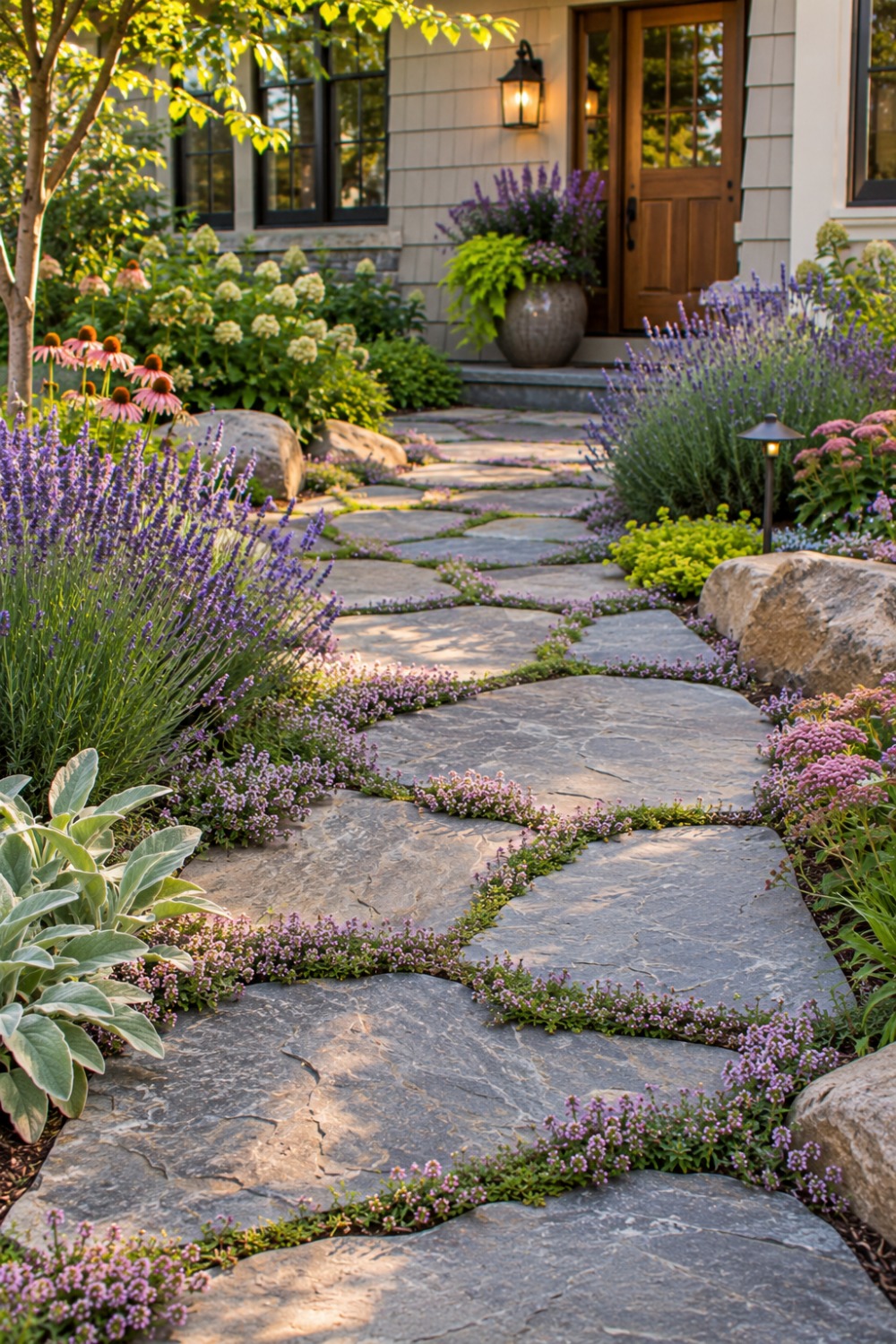
Flagstone gives a front path a natural, timeless look.
Set the stones with gaps of an inch or two and plant the joints with creeping thyme, Irish moss or mini mondo grass for a soft, living path.
Choose flatter stones for the main route so the path is easy to walk.
How to do it:
- Excavate and lay a compacted gravel base topped with sand.
- Set flagstones level with consistent gaps.
- Fill joints with soil and plant low, walkable ground covers.
7. Use Decomposed Granite for a Soft Natural Path
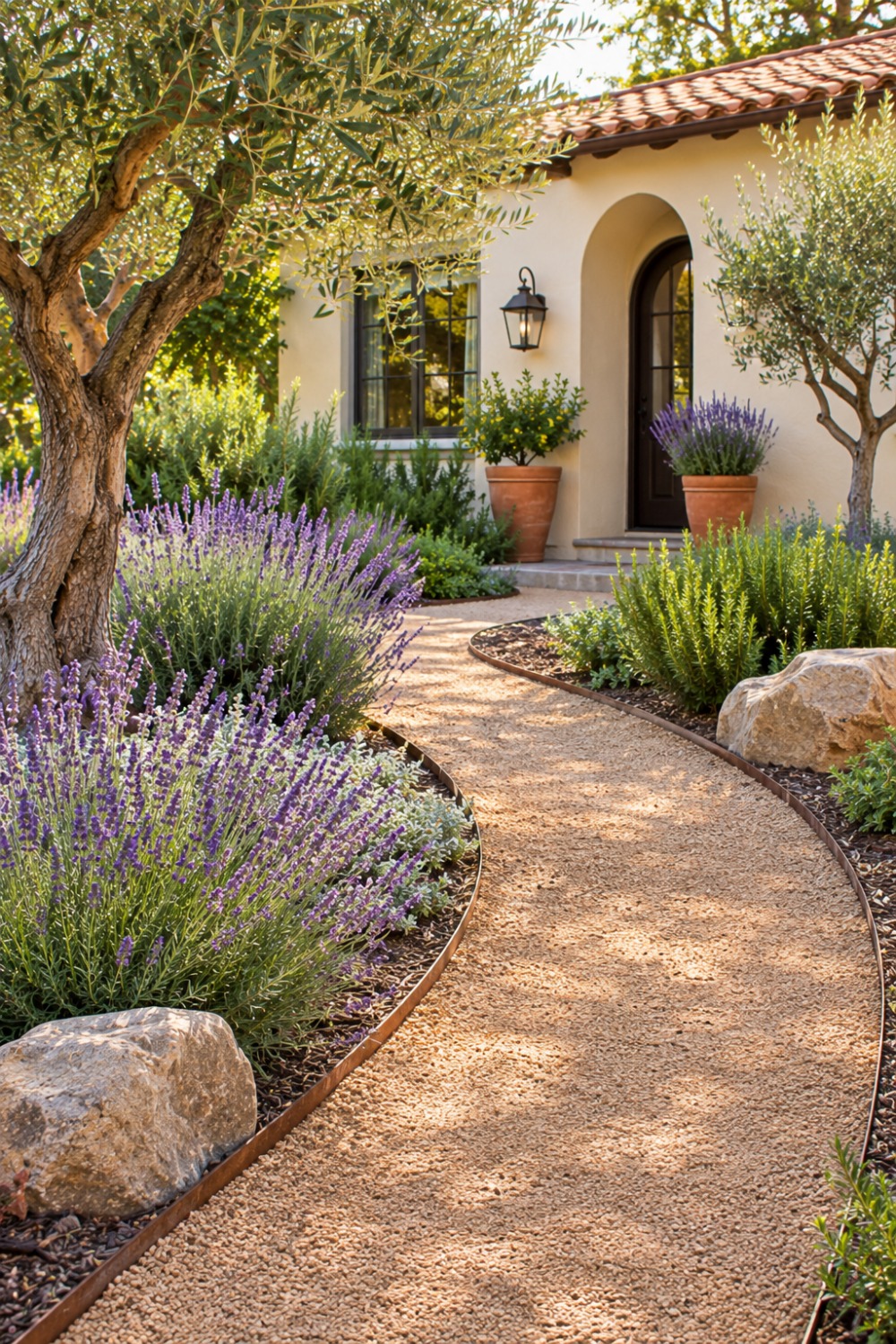
Decomposed granite is a fine crushed stone that packs down into a firm, natural-looking surface.
It’s cheaper than pavers, drains well and suits cottage, Mediterranean and desert-style gardens.
Stabilized versions resist washing out on gentle slopes.
How to do it:
- Excavate 3 to 4 inches and install sturdy edging.
- Spread decomposed granite in layers, wetting and compacting each one.
- Top up and re-compact every year or two.
8. Plant a Gravel Garden With Ornamental Grasses
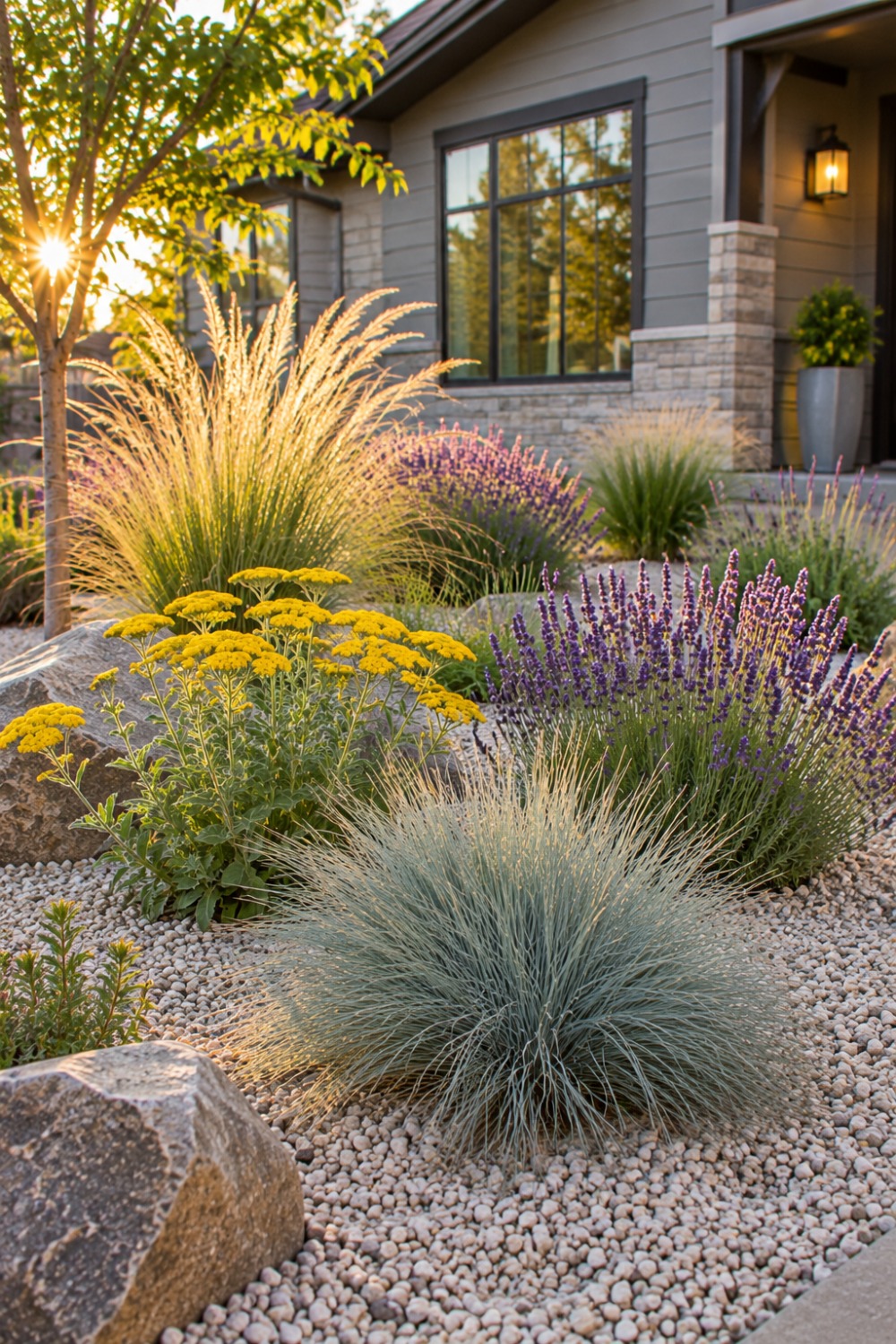
A gravel garden replaces lawn with a gravel mulch and drought-tolerant plants that grow up through it.
Ornamental grasses such as blue fescue, little bluestem and feather reed grass look stunning against stone, especially with backlight.
Add lavender, sedum and yarrow for color.
How to do it:
- Remove the lawn and improve drainage if needed.
- Plant first, then spread 2 to 3 inches of gravel around the plants.
- Water to establish, then only during long dry spells.
9. Ring Trees With Rock, Not Up to the Trunk
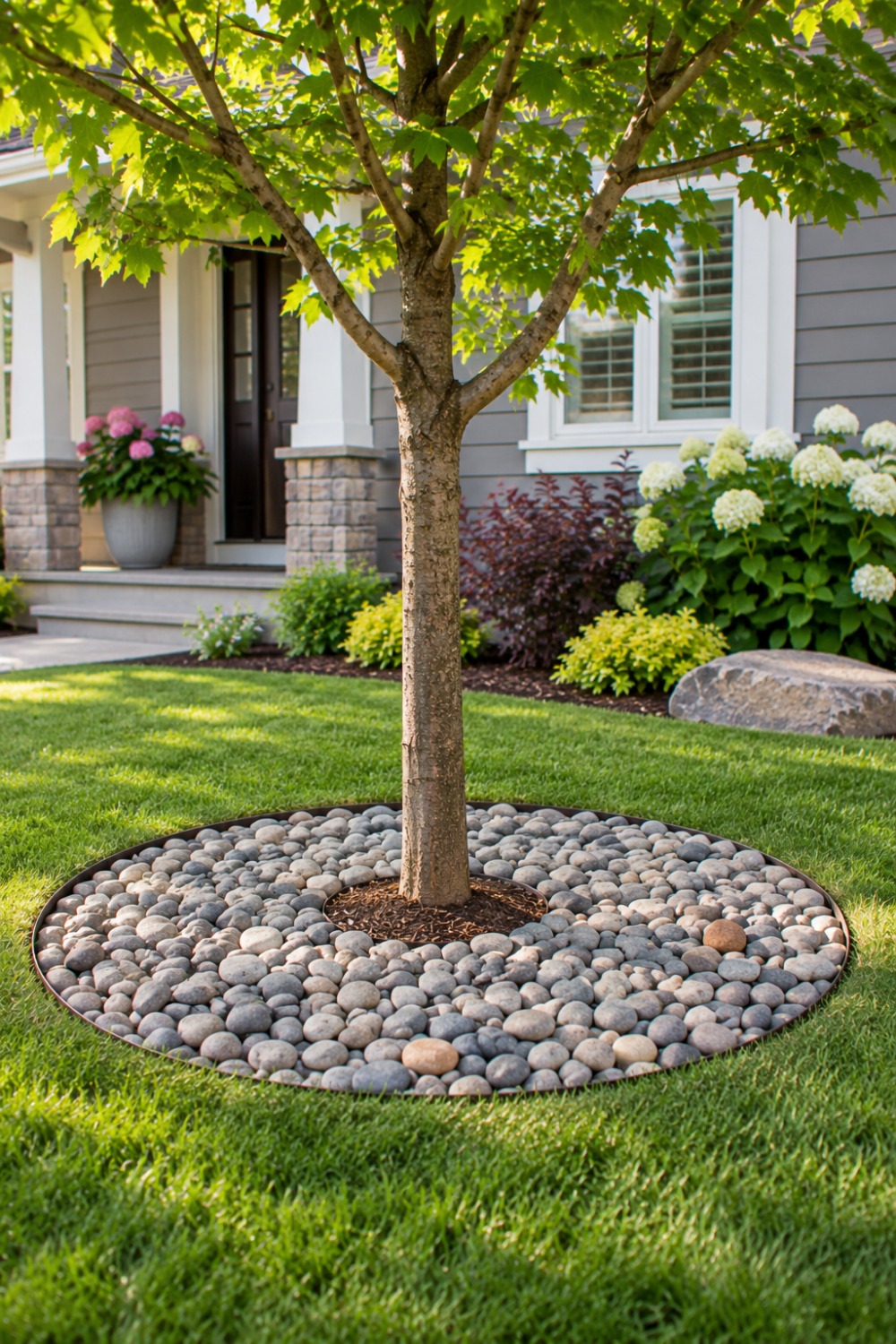
A ring of decorative stone around a front yard tree looks tidy and stops mower damage to the bark.
Keep the ring wide and flat, and leave a gap of several inches around the trunk so moisture and heat don’t build up against the bark.
In hot climates, organic mulch under trees is often kinder to roots, since rock holds and reflects heat.
How to do it:
- Remove grass in a wide circle around the tree.
- Lay stone in a thin, even layer, keeping it away from the trunk.
- Add edging so the ring stays neat.
Good to know: rock mulch can make the soil underneath hotter in full sun. Pair it with heat-tolerant plants.
10. Build a Low Dry-Stack Stone Wall
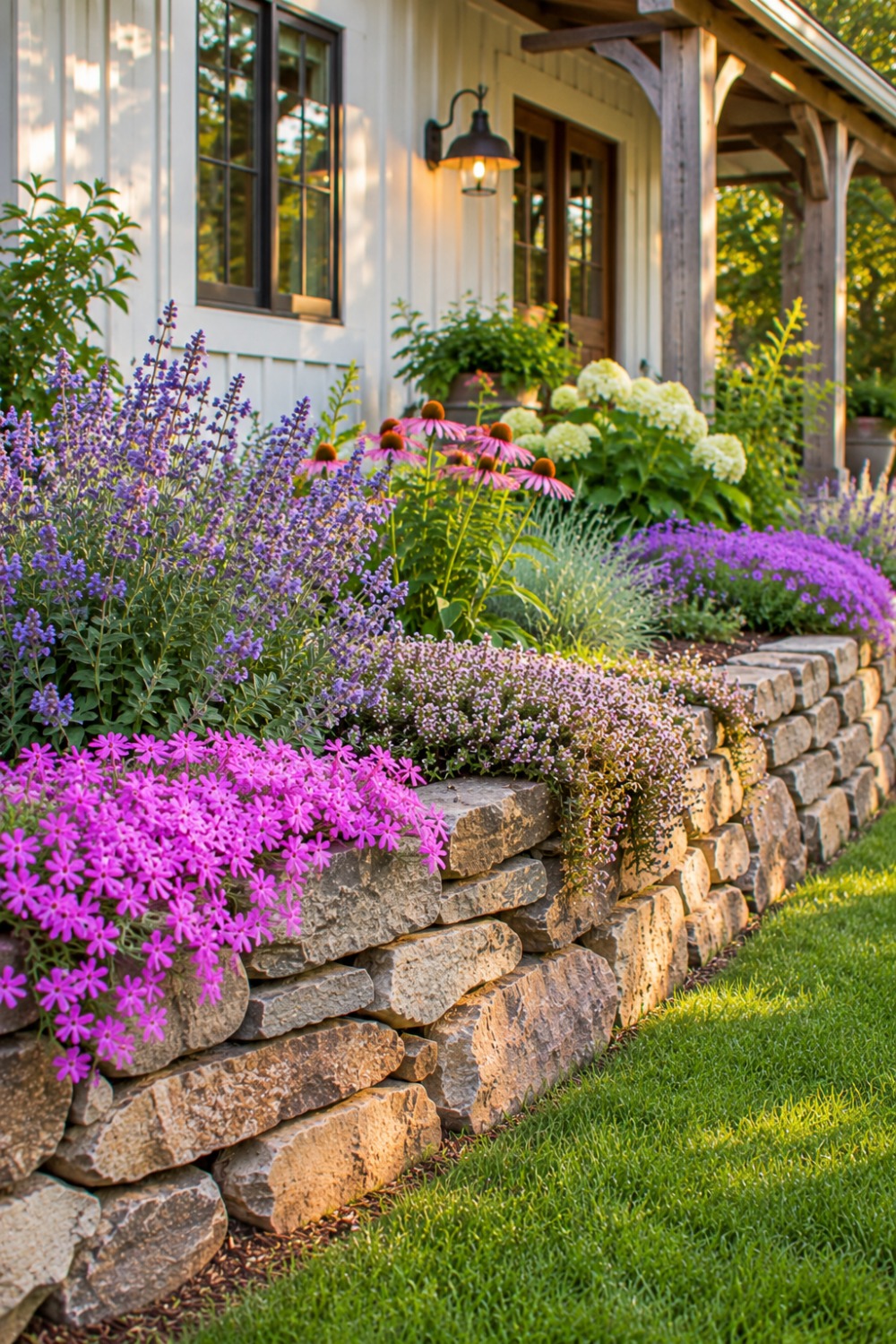
A low dry-stacked stone wall adds character, defines a raised bed and can hold back a gentle slope.
No mortar is needed for walls under about 2 feet tall, though they need a solid base and a slight lean back into the soil.
Plant the top with spilling perennials or herbs.
How to do it:
- Dig a trench and lay a compacted gravel base.
- Stack stones with joints staggered, leaning slightly back.
- Backfill with gravel and plant along the top.
11. Contrast Black and White Rock for a Modern Look
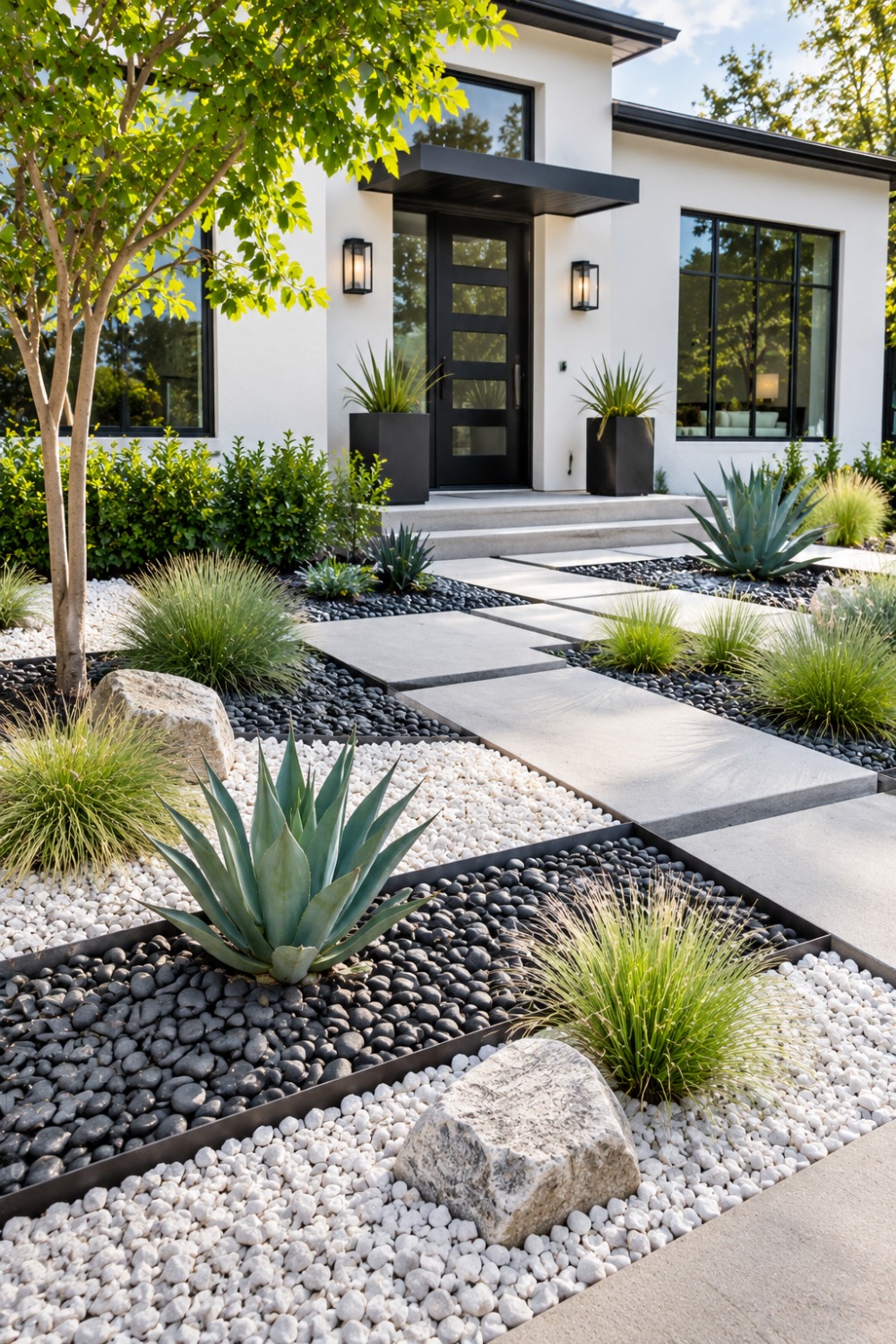
For contemporary homes, two contrasting rock colors in clean, geometric shapes make a striking statement.
Use black lava rock or black river rock alongside white marble chips or white river rock, separated with metal edging.
Add sculptural plants like agave, yucca or dwarf grasses as accents.
How to do it:
- Plan bold, simple shapes on paper first.
- Separate each color with steel or aluminum edging.
- Place a few sculptural plants as focal points.
12. Stop Splash Damage at Downspouts With Rock
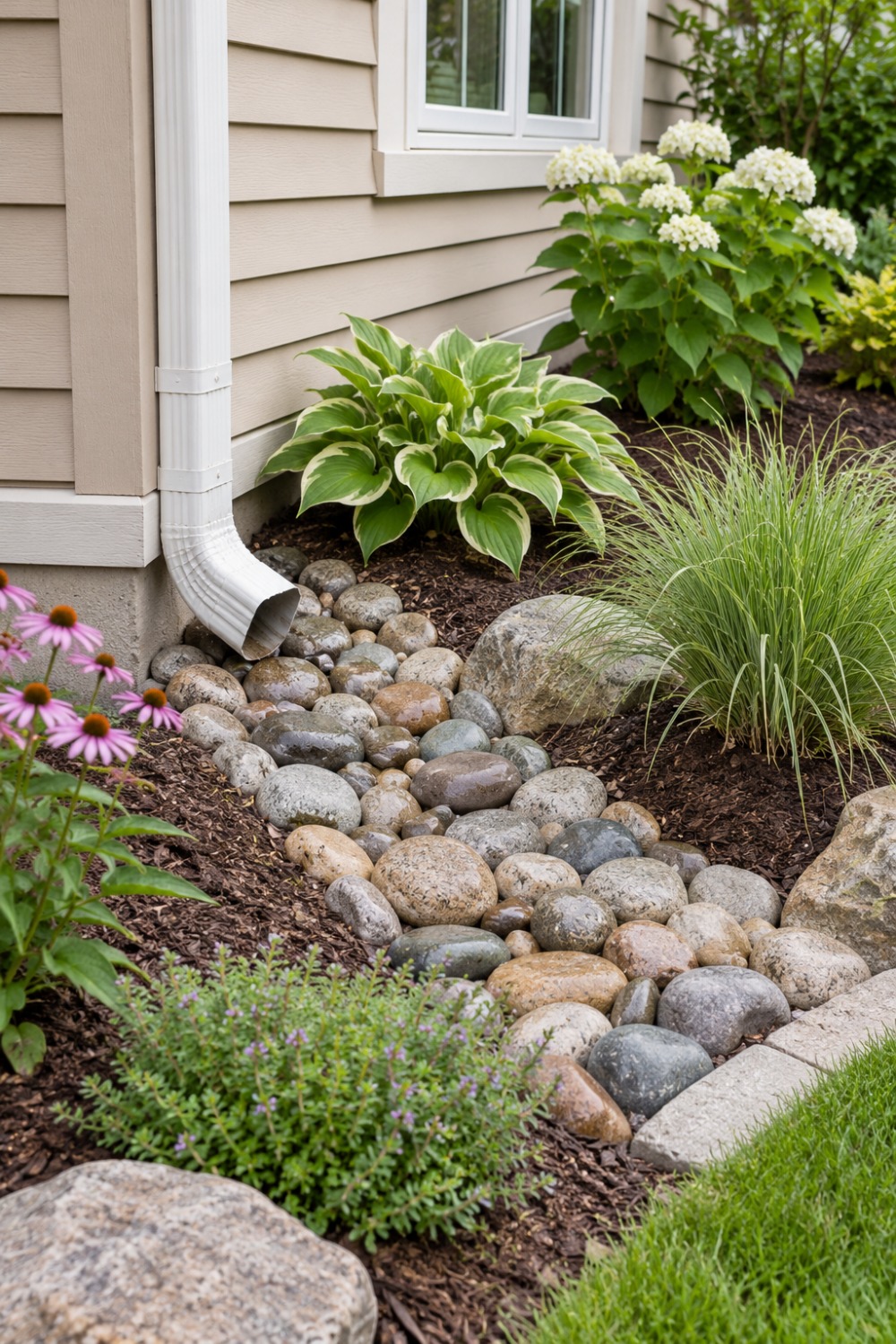
Water pouring from a downspout can carve out soil and splash mud onto siding.
A splash area of river rock, or a short rock-lined channel, spreads the water out and directs it away from the foundation.
It’s a small, practical upgrade that looks tidy.
How to do it:
- Make sure the ground slopes away from the house.
- Lay landscape fabric and a bed of larger river rock under the downspout.
- Extend it into a short channel leading away from the foundation.
13. Add a Bubbling Boulder Water Feature
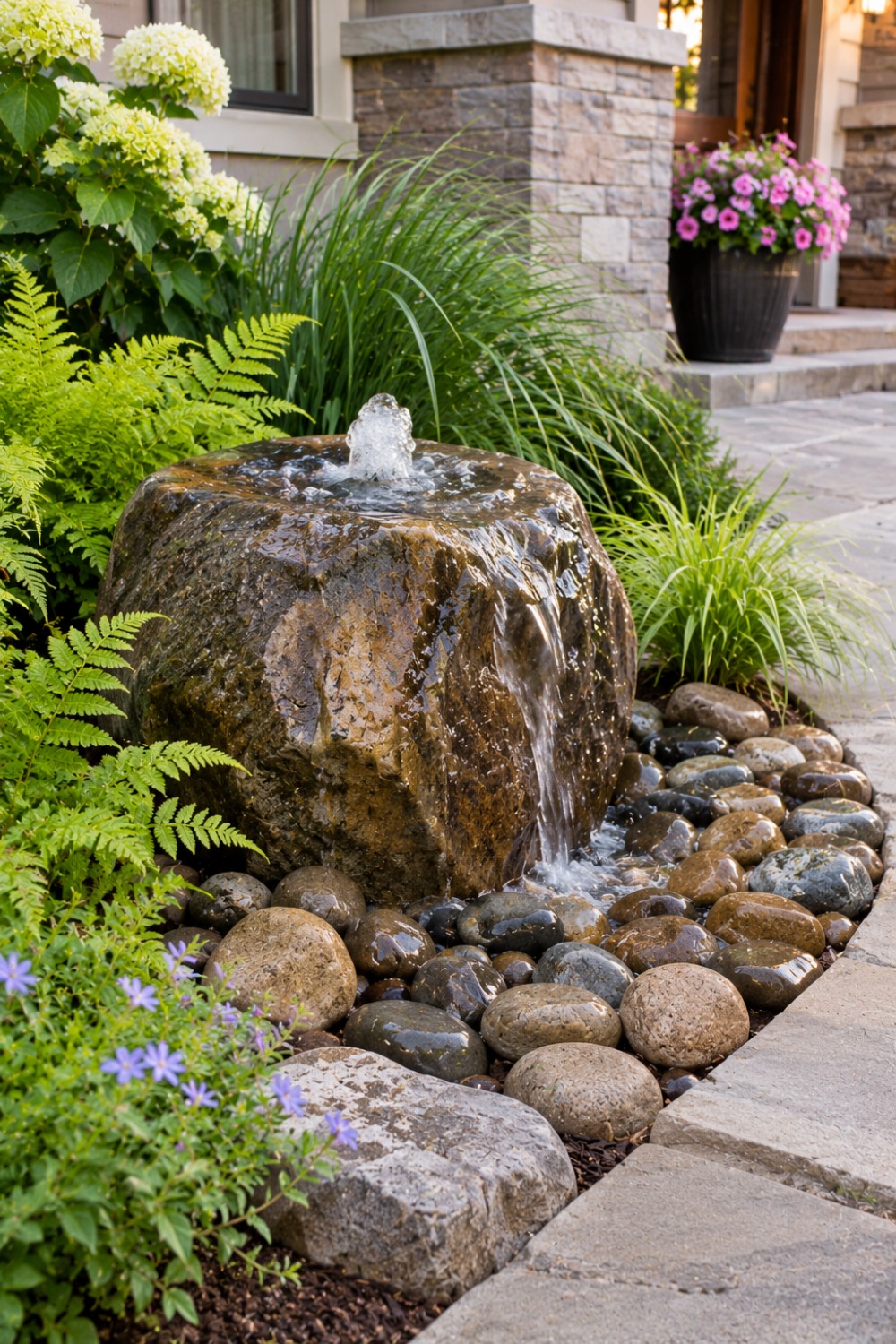
A drilled boulder fountain sends water bubbling over the top of the stone and down into a hidden basin.
It’s safe because there’s no open water, and the sound adds calm to a front entry.
Surround it with smaller rocks and moisture-loving plants.
How to do it:
- Choose a pre-drilled boulder and a matching basin kit.
- Set the basin in the ground and cover it with a grate and rocks.
- Run power from a ground-fault protected outlet.
14. Plant Succulents Among the Rocks
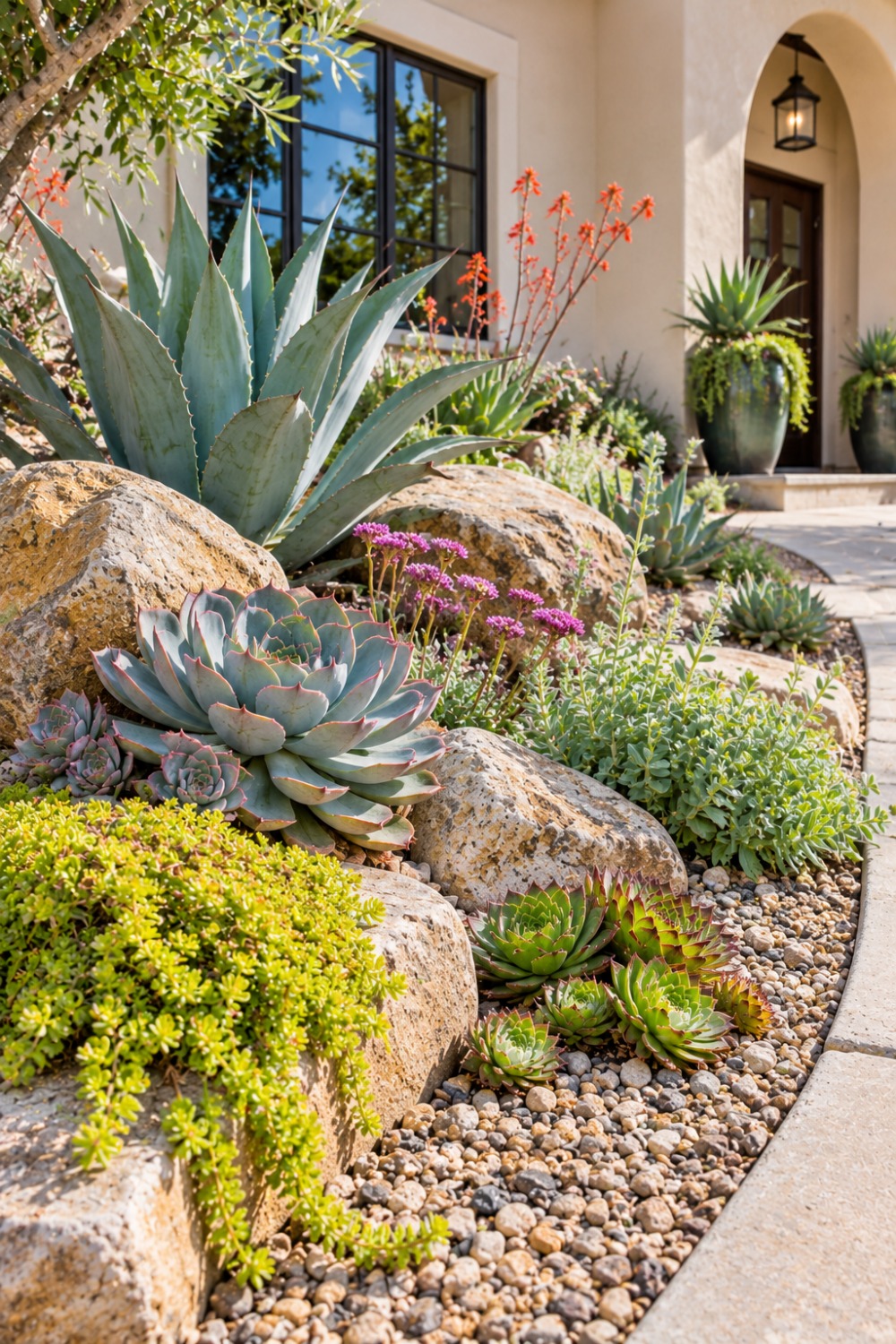
Succulents and rocks are natural partners. Both love sharp drainage and sun.
In warm, dry climates, agave, aloe and echeveria thrive outdoors. In colder zones, hardy sedum and hens and chicks are good choices. For sunny containers, see our list of plants that handle full sun and heat in pots.
Group them in pockets between stones for a natural look.
How to do it:
- Check which succulents are hardy in your zone.
- Plant in gritty, fast-draining soil between rocks.
- Water only when the soil is completely dry.
15. Run Stepping Stones Through a Gravel Side Yard
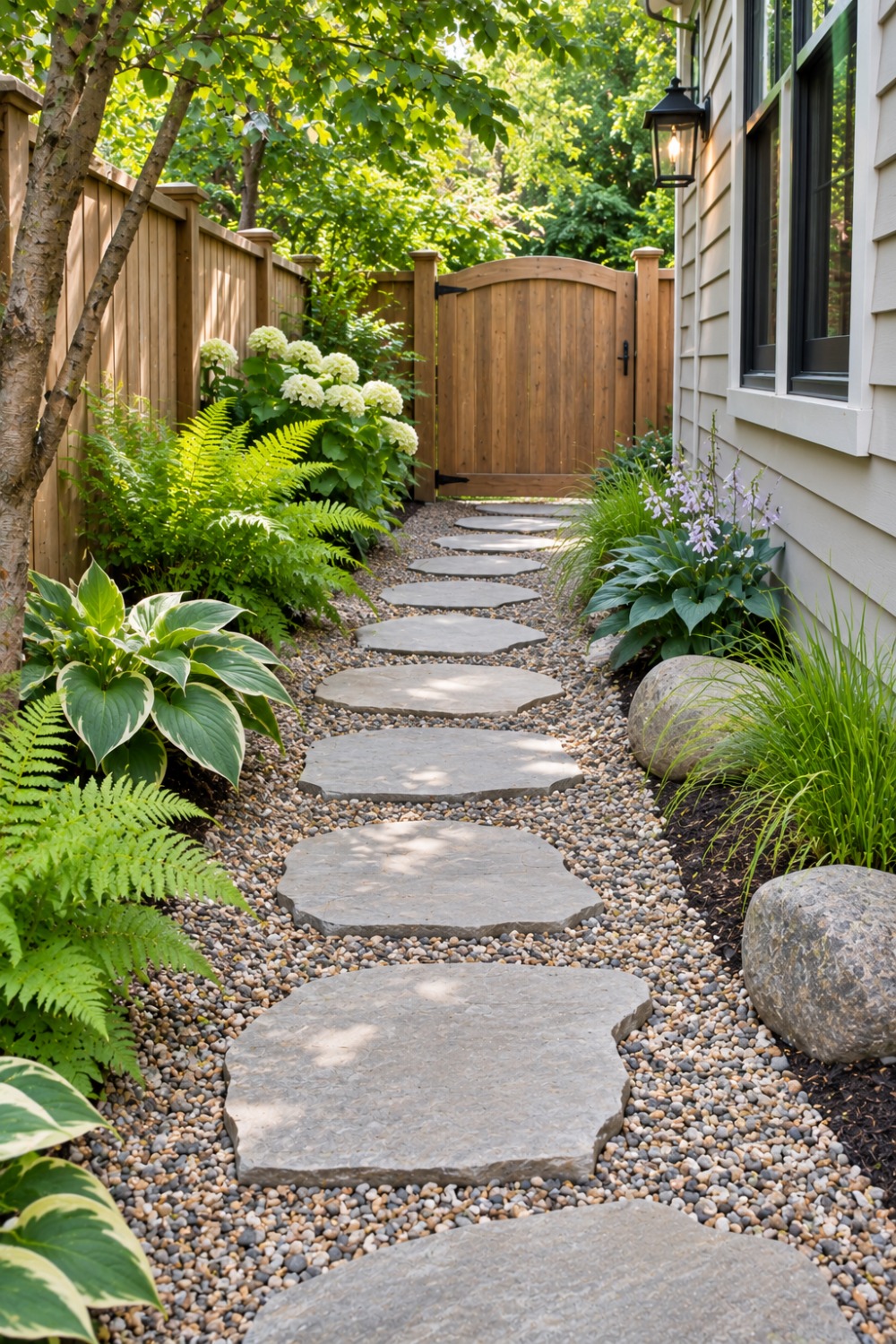
Narrow side yards are hard to grow grass in, but they’re perfect for gravel and stepping stones.
Large flat stones set into pea gravel give a clear route to the gate, while gravel keeps the area dry and tidy.
Add a few shade-tolerant plants along the fence.
How to do it:
- Clear the side yard and lay landscape fabric.
- Set large flat stepping stones at a comfortable stride.
- Fill around them with pea gravel.
16. Create a Zen-Style Raked Gravel Bed
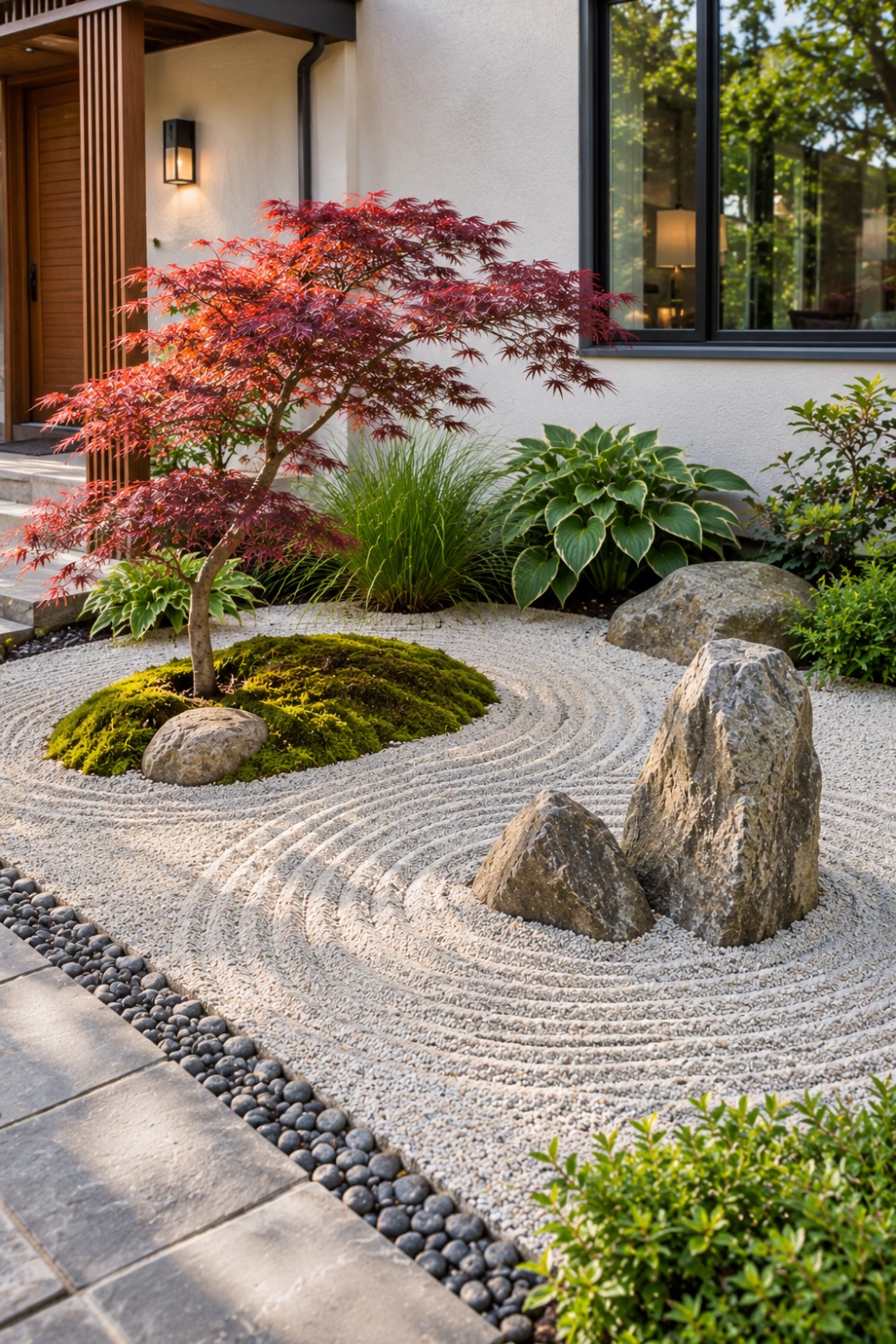
Inspired by Japanese dry gardens, a raked gravel bed with a few carefully placed stones is calm and minimal.
Rake fine gravel into gentle patterns around one or two upright stones, and add a single sculptural plant like a Japanese maple or Japanese forest grass.
It works well in small front yards and shady courtyards.
How to do it:
- Choose a small, defined area with clean edges.
- Spread fine gravel 2 to 3 inches deep.
- Place stones, then rake patterns and refresh them occasionally.
17. Set Natural Stone Steps Into a Sloped Front Yard
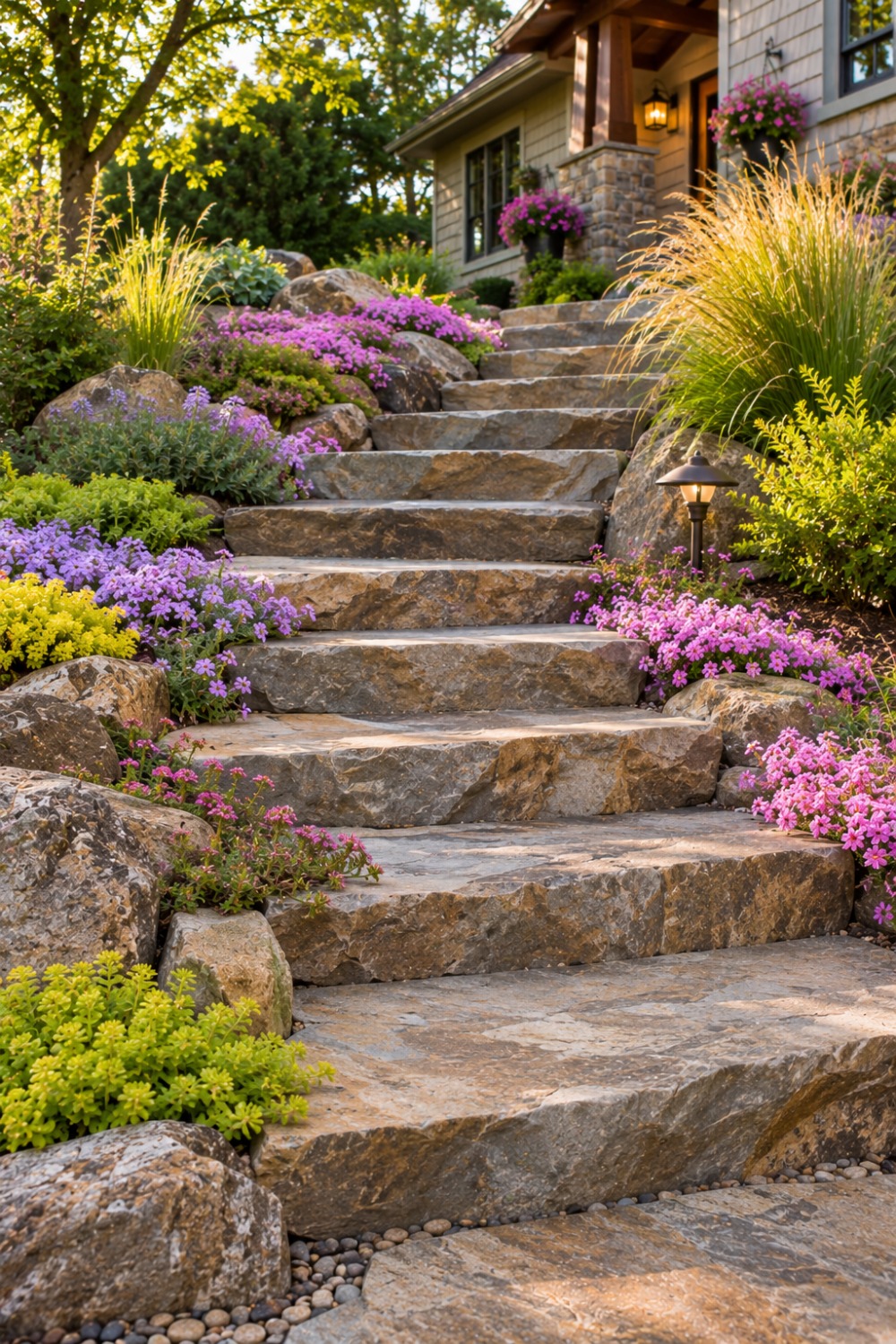
On a sloping front yard, chunky natural stone steps look far better than a steep path.
Each step should be wide and deep enough to feel safe, with planting tucked along the sides to soften the edges.
Large single stones are more stable than stacked pieces.
How to do it:
- Plan a comfortable rise and depth for each step.
- Set each stone on a compacted gravel base, slightly sloped for drainage.
- Plant ground covers and perennials along the sides.
18. Install Fabric and Edging So Rock Stays Neat
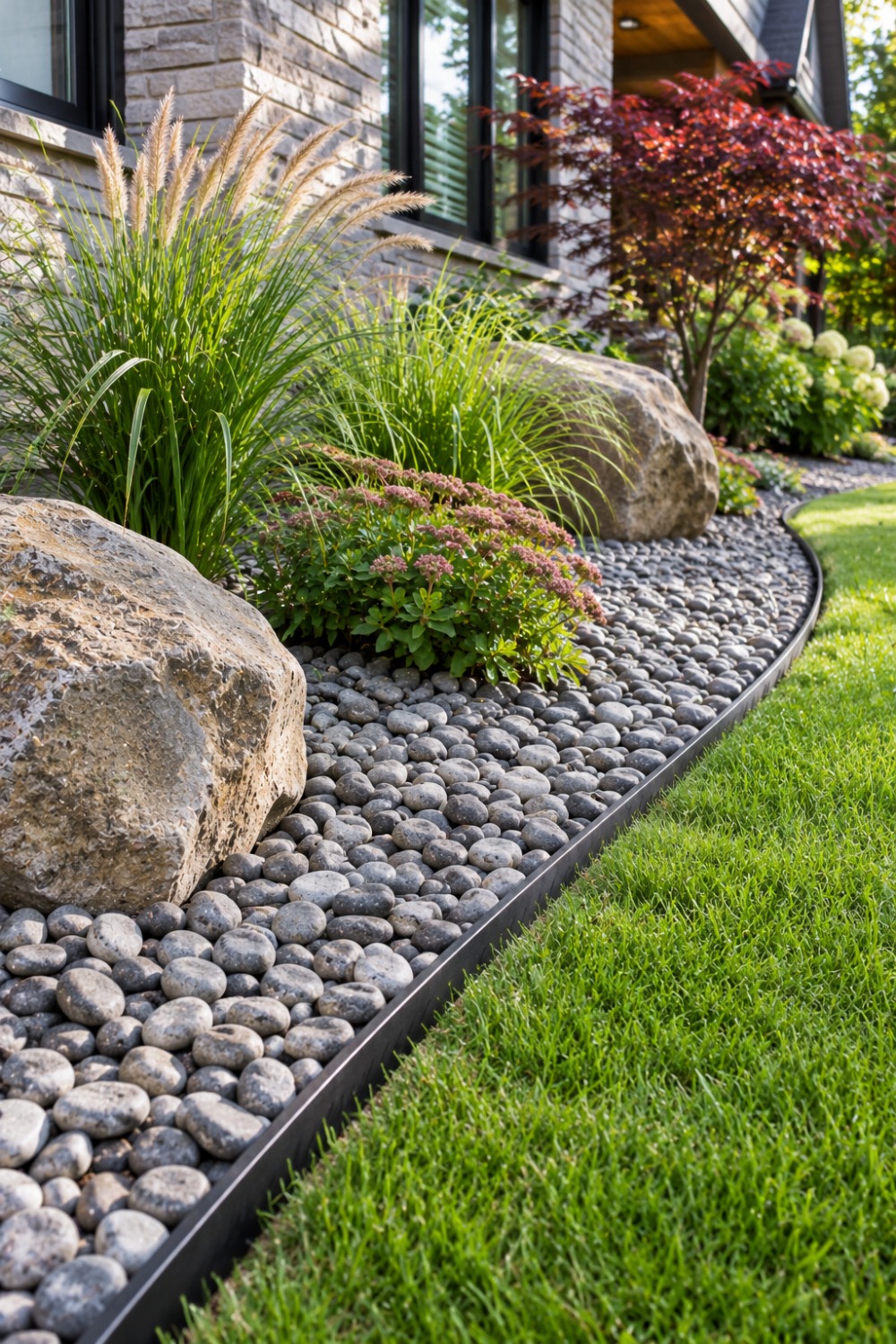
The biggest complaints about rock landscaping are weeds and rocks wandering into the lawn. Both are easy to prevent.
Lay a heavy-duty landscape fabric under the rock and install sturdy edging along every border.
Clear out fallen leaves regularly so they don’t break down into soil where weeds can root.
How to do it:
- Remove existing weeds and grass before laying fabric.
- Overlap fabric seams and pin them down.
- Use metal, stone or concrete edging to hold the rock in place.
Pro tip: a leaf blower makes clearing debris from rock beds quick.
19. Soften Rock Beds With Flowering Perennials
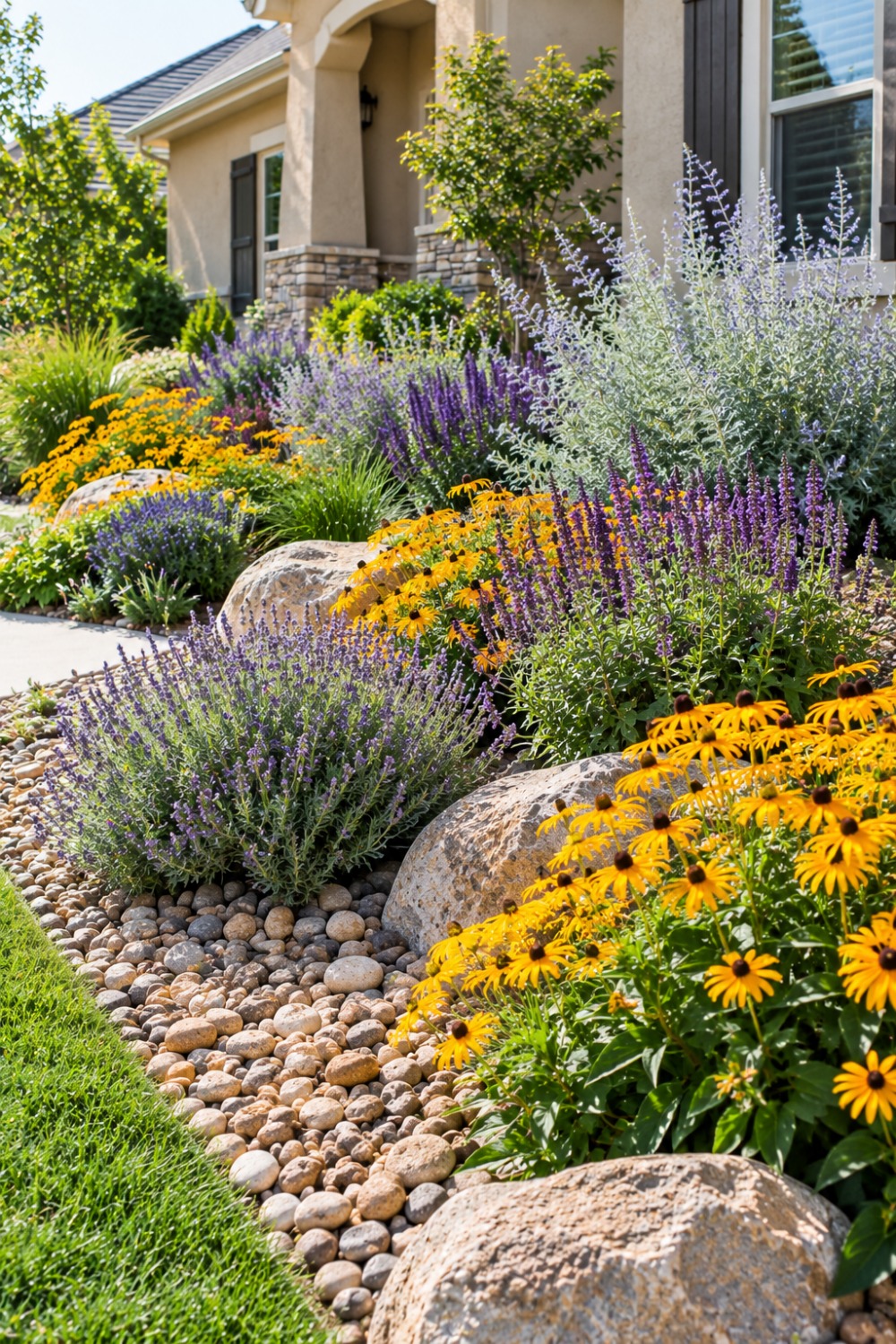
Rock-only landscapes can look harsh. Flowering perennials bring them to life.
Tough, sun-loving plants like black-eyed Susans, salvia, lavender, yarrow and Russian sage handle the reflected heat and look beautiful against stone.
Plant them in drifts so color flows through the rock bed.
How to do it:
- Pull back rock and cut an X in the fabric for each plant.
- Plant into improved soil and fold the fabric back.
- Replace the rock around the base, leaving space for growth.
Frequently Asked Questions
What kind of rock is best for front yard landscaping?
River rock is versatile for borders and drainage, pea gravel works well for paths, decomposed granite makes natural-looking walkways and boulders add focal points. Choose a color that complements your house.
Should I put landscape fabric under rocks?
In most beds, yes. A heavy-duty fabric under rock helps prevent weeds and stops stones sinking into the soil. Skip it in areas where you want plants to spread and self-seed.
Does rock landscaping make a yard hotter?
Rock absorbs and reflects heat, so beds in full sun can get warmer than mulched or planted areas. Choose heat-tolerant plants and consider organic mulch around trees in hot climates.
How do I keep weeds out of rock landscaping?
Remove weeds before installing fabric, use sturdy edging, and regularly clear leaves and debris so soil doesn’t build up on top of the rock.
Final Thoughts: Let Rocks Do the Heavy Lifting
Rocks can transform a front yard into a low-maintenance landscape that looks good in every season.
The key is restraint: choose one main stone that suits your house, set it naturally and soften it with plants.
Use rock where it solves a problem, like a dry creek bed for drainage or a gravel path through a narrow side yard.
Add boulders for structure, flagstone for paths and drifts of tough perennials and grasses to bring the stone to life.
Invest in good fabric and edging at the start, and your rock beds will stay neat with very little work.
Start with one bed or path, see how you like it, then expand. A well-planned rock landscape gets better with every season.