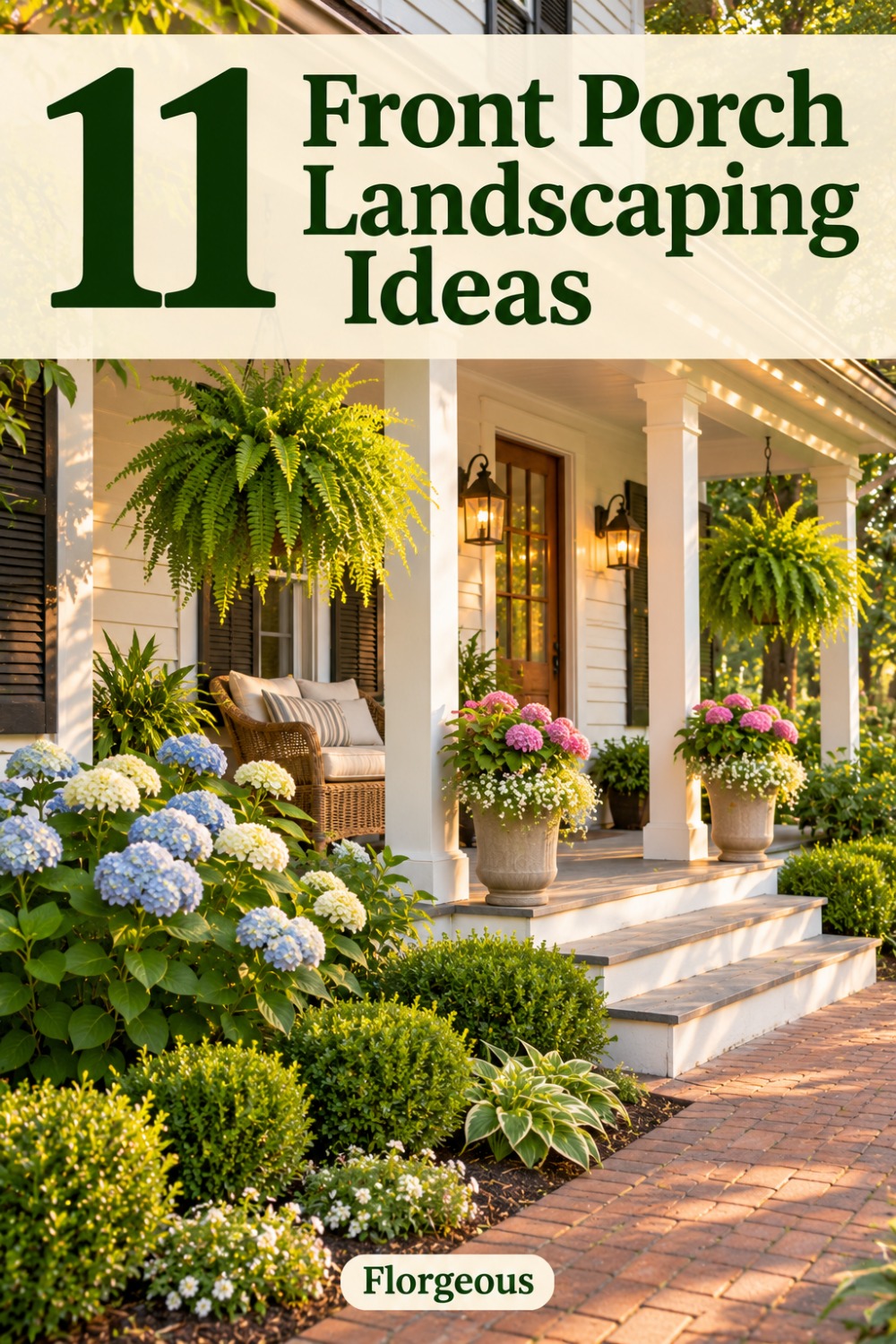
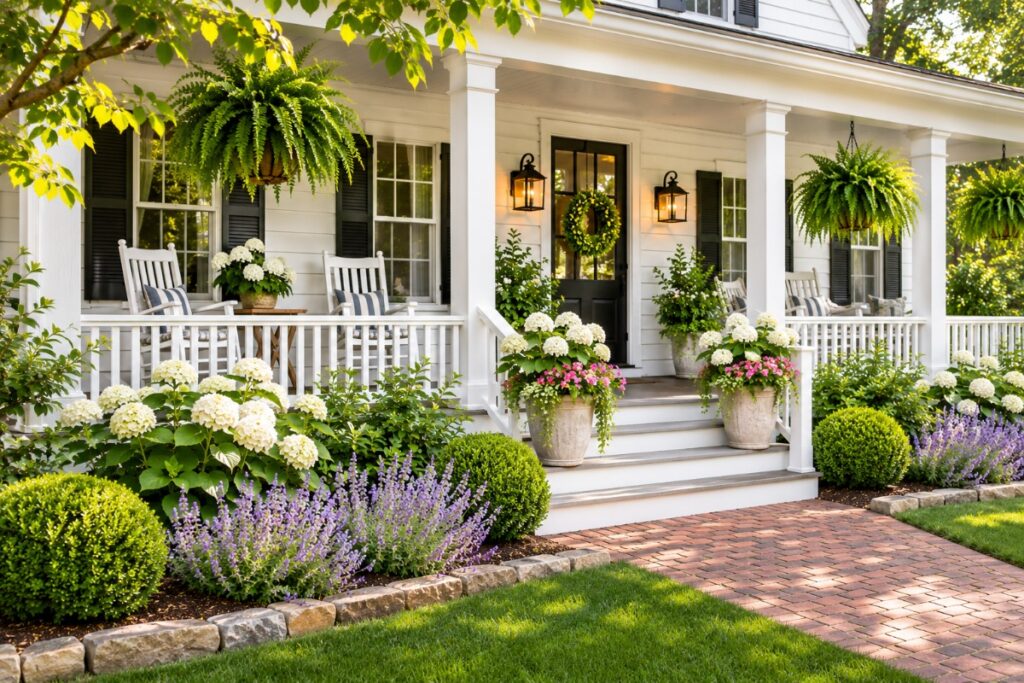
A front porch is where your home says hello, and the planting around it sets the tone before anyone reaches the door.
Without plants, even a beautiful porch can look stark, with bare lattice, a plain concrete edge and steps that seem to float in the lawn.
The secret to porch landscaping isn’t filling every gap. It’s framing the porch so it looks rooted to the ground and leading guests naturally to the steps.
These 11 front porch landscaping ideas will help you soften the edges and give your entry a warm welcome. For ideas for the rest of the yard, see our front yard landscaping ideas.
Porch Plants by Height
| Layer | Plant ideas | Where it goes |
|---|---|---|
| Tall back layer | Hydrangeas, viburnum, upright holly | Against the porch, under railings |
| Middle layer | Dwarf boxwood, spirea, ornamental grasses | In front of the shrubs |
| Low edge | Catmint, heuchera, creeping phlox | Along the bed edge |
| Containers | Ferns, geraniums, seasonal annuals | On steps and beside the door |
| Overhead | Hanging baskets, clematis, climbing roses | Porch beams and posts |
1. Layer Plants in Three Heights Along the Porch
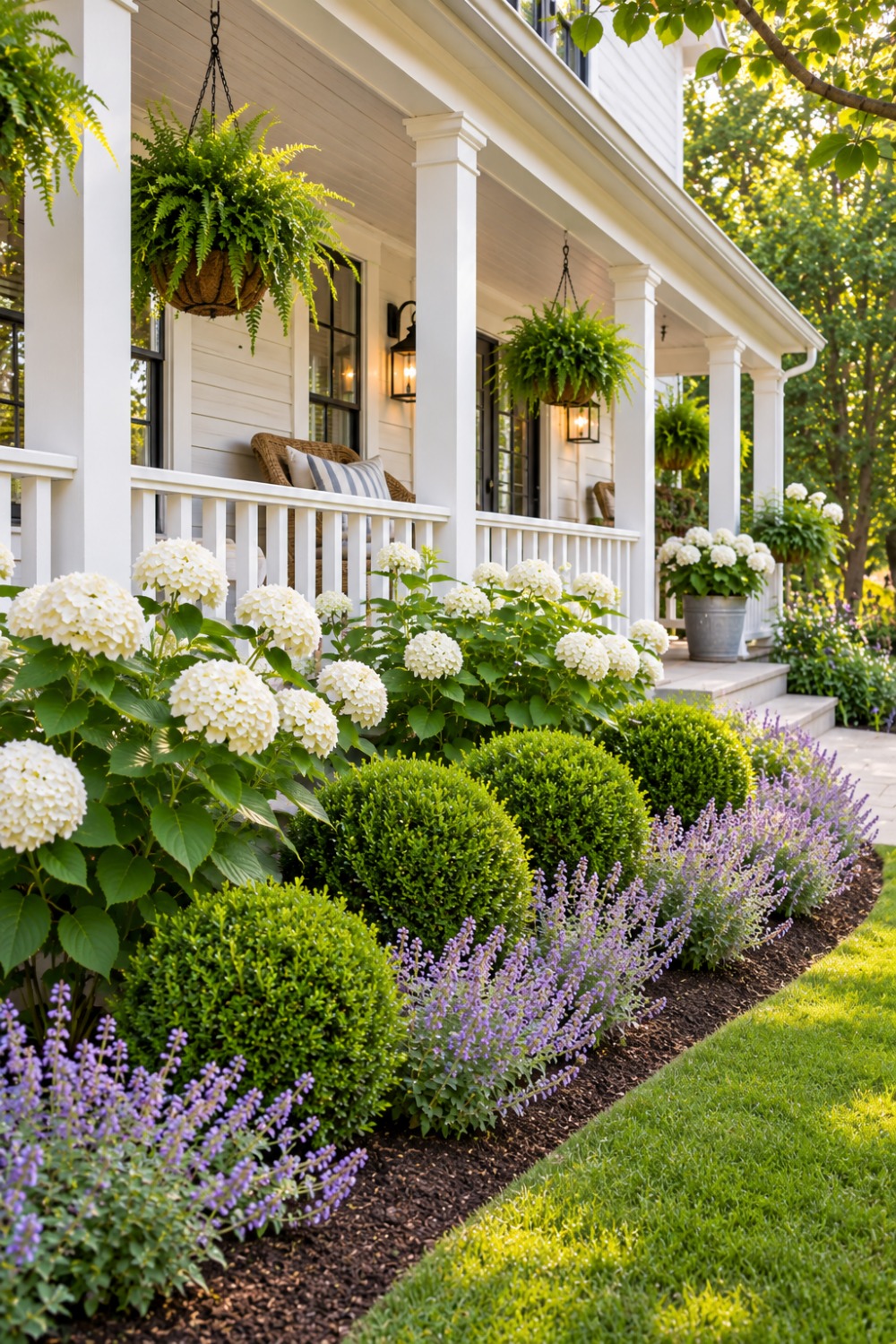
The most polished porch beds use three layers: tall shrubs at the back, medium plants in the middle and a low edge in front.
This hides the porch base and creates depth, so the bed looks full from the street.
Keep the tallest plants below the porch railing so they don’t block the view from your seat.
How to do it:
- Make the bed at least 4 to 5 feet deep so all three layers fit.
- Plant shrubs about 3 feet from the porch to give them room to grow.
- Repeat the same plants along the bed for a calm, unified look.
2. Hide the Porch Base With Lattice Skirting and Shrubs
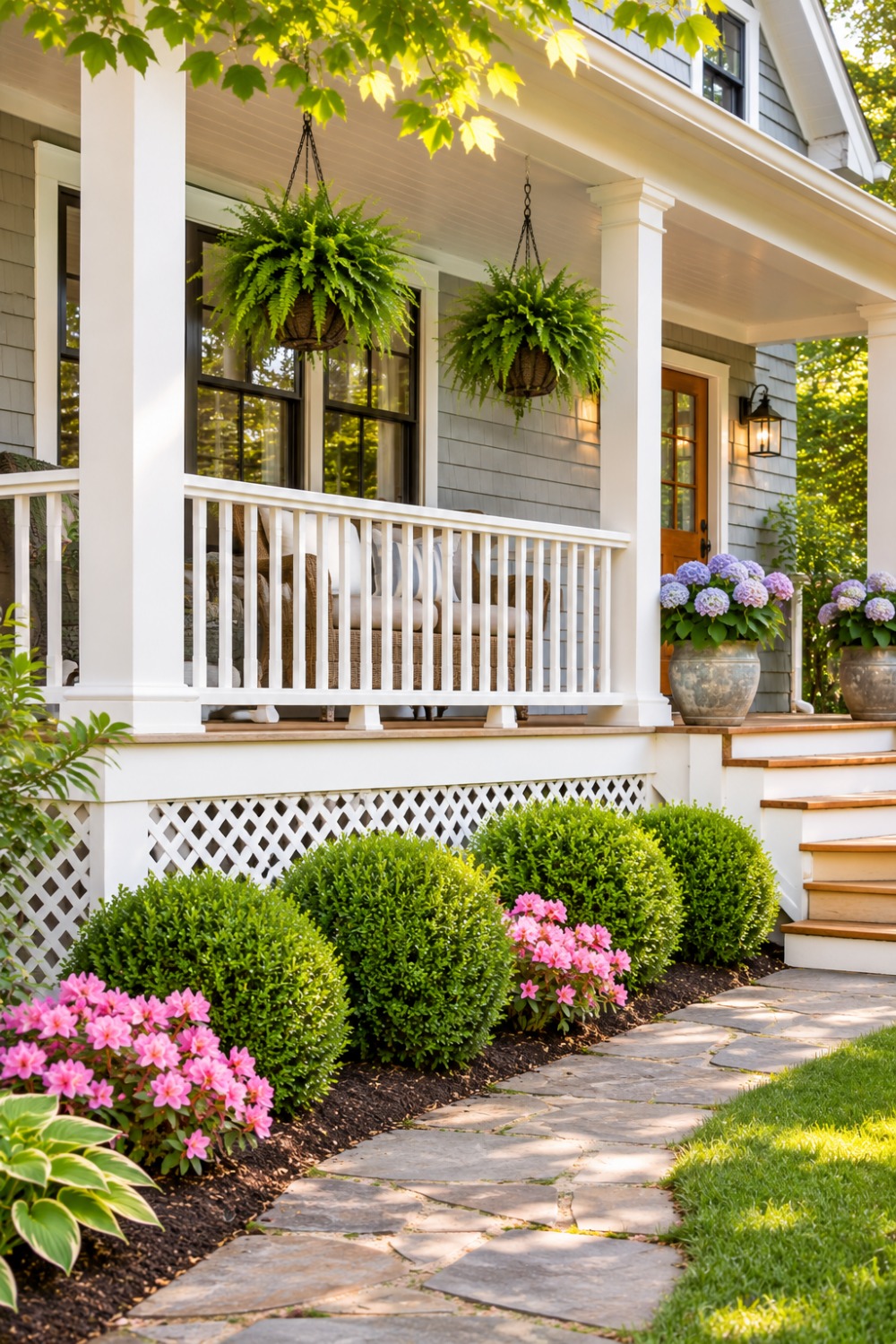
The gap under a raised porch can look unfinished and collect leaves and pests.
Lattice or slatted skirting closes it in, and evergreen shrubs in front soften the lines.
Leave a small access panel so you can still reach under the porch when needed.
How to do it:
- Fit lattice or horizontal slats between the porch posts.
- Plant evergreens far enough out to leave a small gap for airflow.
- Add an access panel near the steps.
3. Flank the Steps With Matching Planters
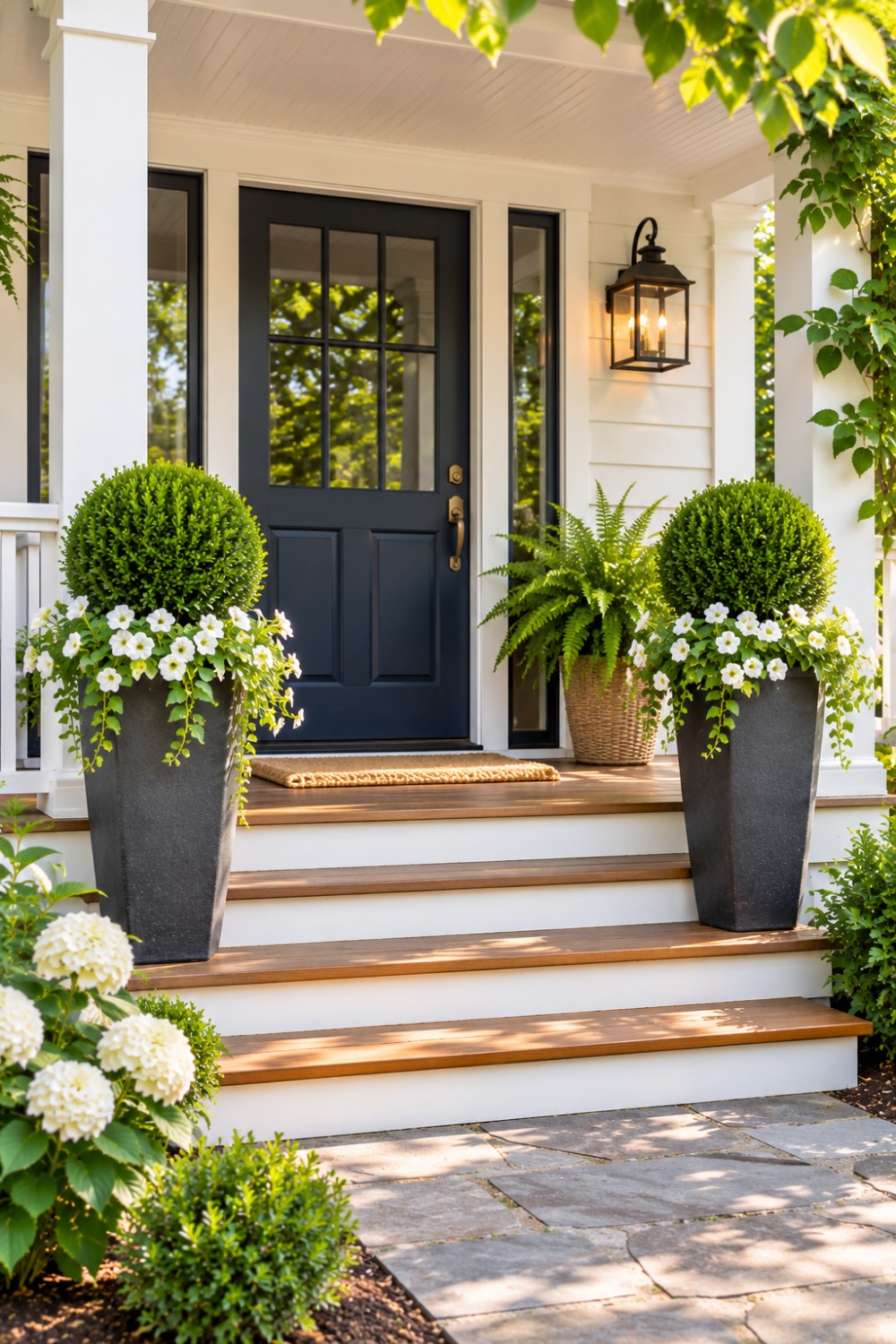
A matching pair of planters at the bottom or top of the steps is a classic, welcoming touch.
It draws the eye to the entry and makes even a simple porch feel more formal.
Evergreens give structure year-round, and seasonal flowers or trailing plants add color.
How to do it:
- Choose planters in proportion to your steps and door.
- Plant an evergreen centerpiece with seasonal flowers around it.
- Water often, as containers dry out faster than beds.
4. Line the Walkway With a Low Border
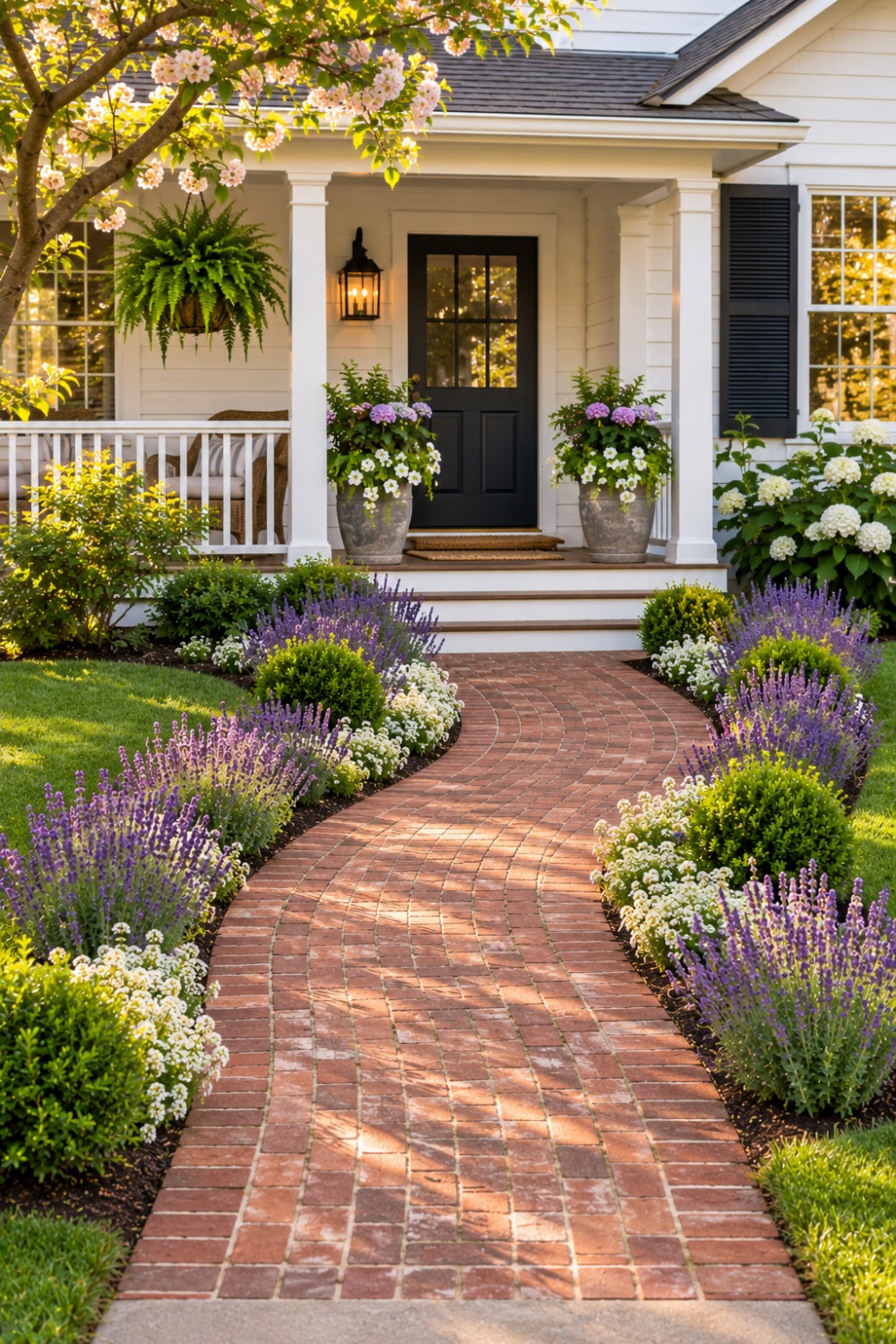
The path to the porch is part of the welcome.
A low border of flowers or herbs along each side guides guests to the steps and makes the walk feel special.
Keep plants low and tidy so they don’t spill over the path or brush against legs when wet.
How to do it:
- Leave a planting strip about 12 to 18 inches wide on each side.
- Choose low plants that stay under about 18 inches tall.
- Repeat the same plants on both sides for a balanced look.
5. Hang Ferns and Baskets From the Porch Beams
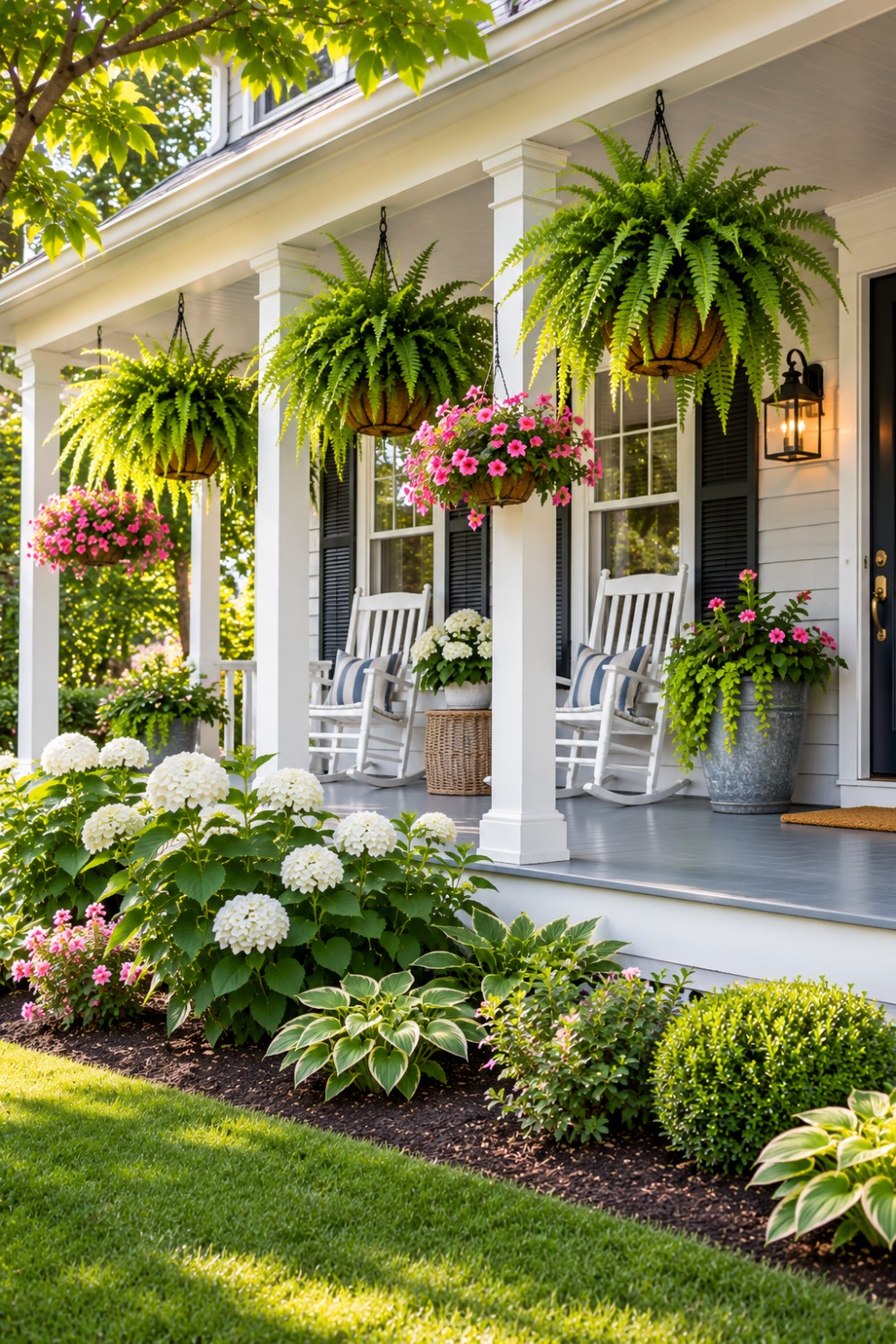
Hanging baskets bring greenery up to eye level and make a porch feel lush and lived-in.
Boston ferns are a classic Southern choice for shady porches, while trailing flowers suit sunny ones.
Spacing them evenly along the beam adds a pleasing rhythm to the porch front.
How to do it:
- Use sturdy hooks screwed into beams, not just trim.
- Hang baskets at the same height and evenly spaced.
- Water often in summer, as hanging baskets dry out quickly.
6. Train a Climbing Vine Up a Porch Post
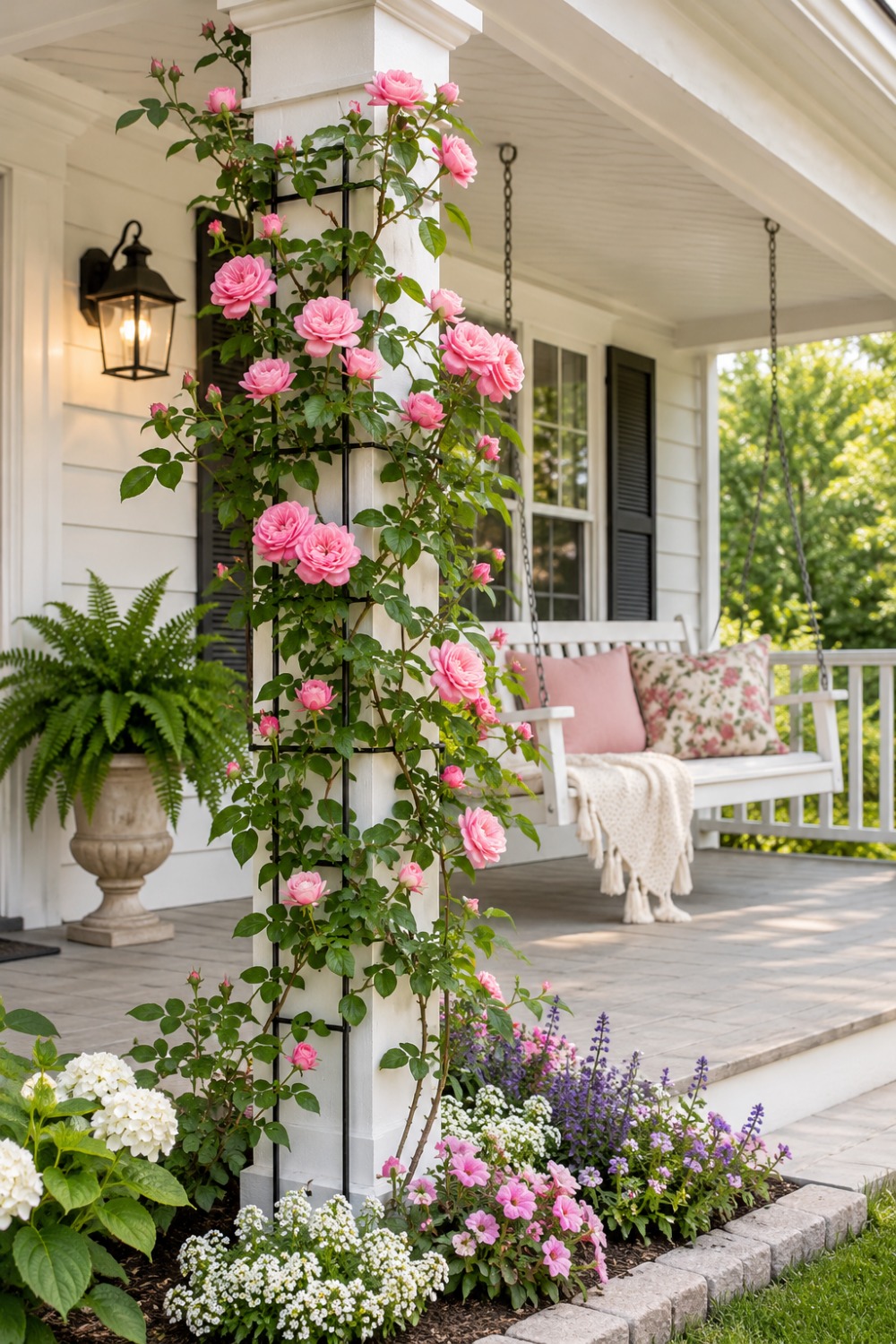
A vine climbing one porch post softens the strong vertical lines and adds a romantic, cottage feel.
Clematis, climbing roses or native coral honeysuckle are good choices that won’t overwhelm the structure.
Avoid aggressive vines like wisteria near houses, as they can damage gutters and woodwork.
How to do it:
- Attach a slim trellis or wires a few inches from the post.
- Plant the vine about a foot from the post base.
- Tie in new growth and keep stems away from gutters.
7. Add a Small Ornamental Tree Near the Porch Corner
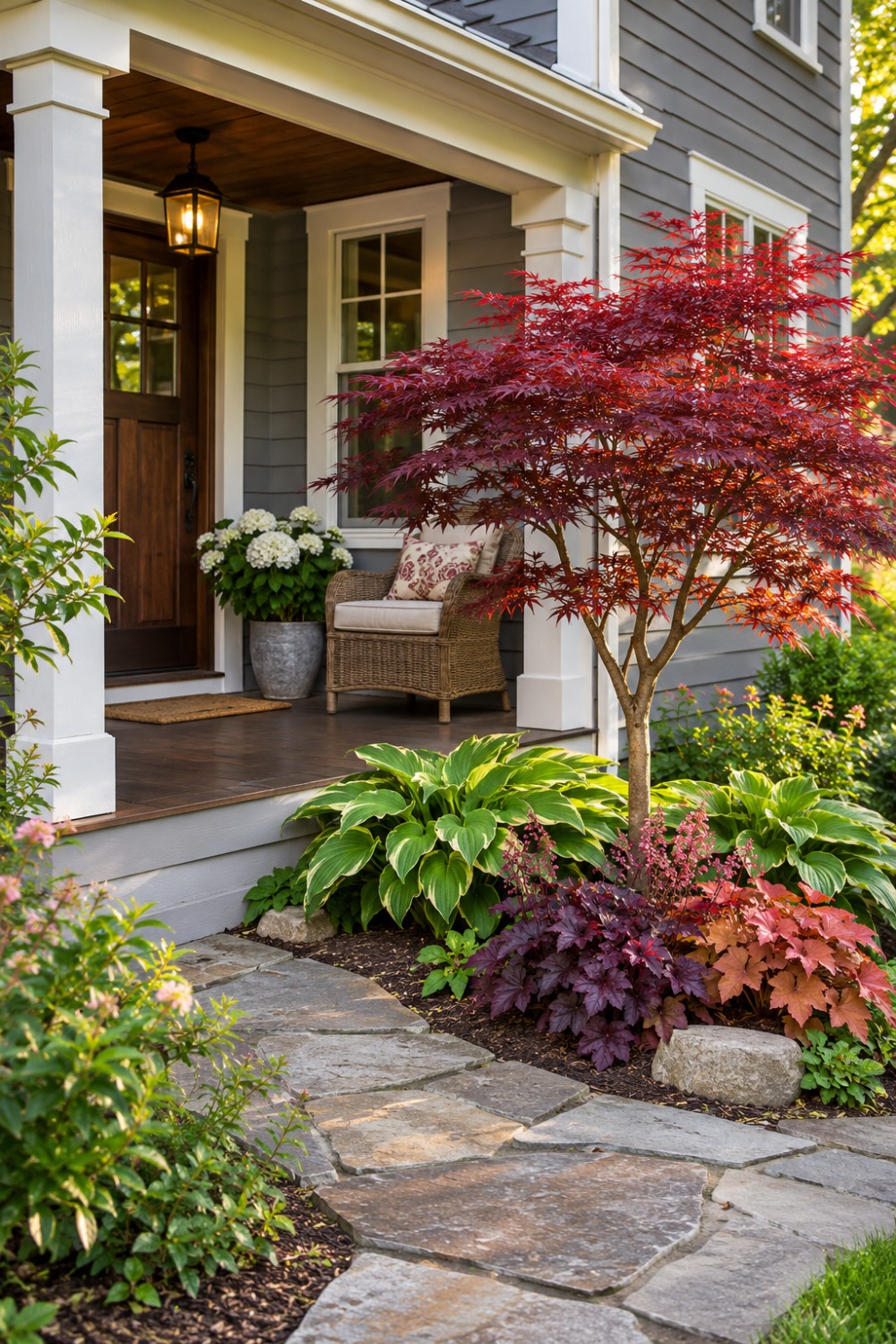
A small tree at one corner of the porch frames the house and adds height to the planting.
Japanese maples, dogwoods, redbuds or serviceberries stay small and offer seasonal color.
Plant it far enough out that the canopy won’t rub against the roof or gutters.
How to do it:
- Check the tree’s mature size before planting.
- Plant it several feet from the porch and house foundation.
- Underplant with shade-tolerant perennials.
8. Use Window Boxes Along the Porch Railing
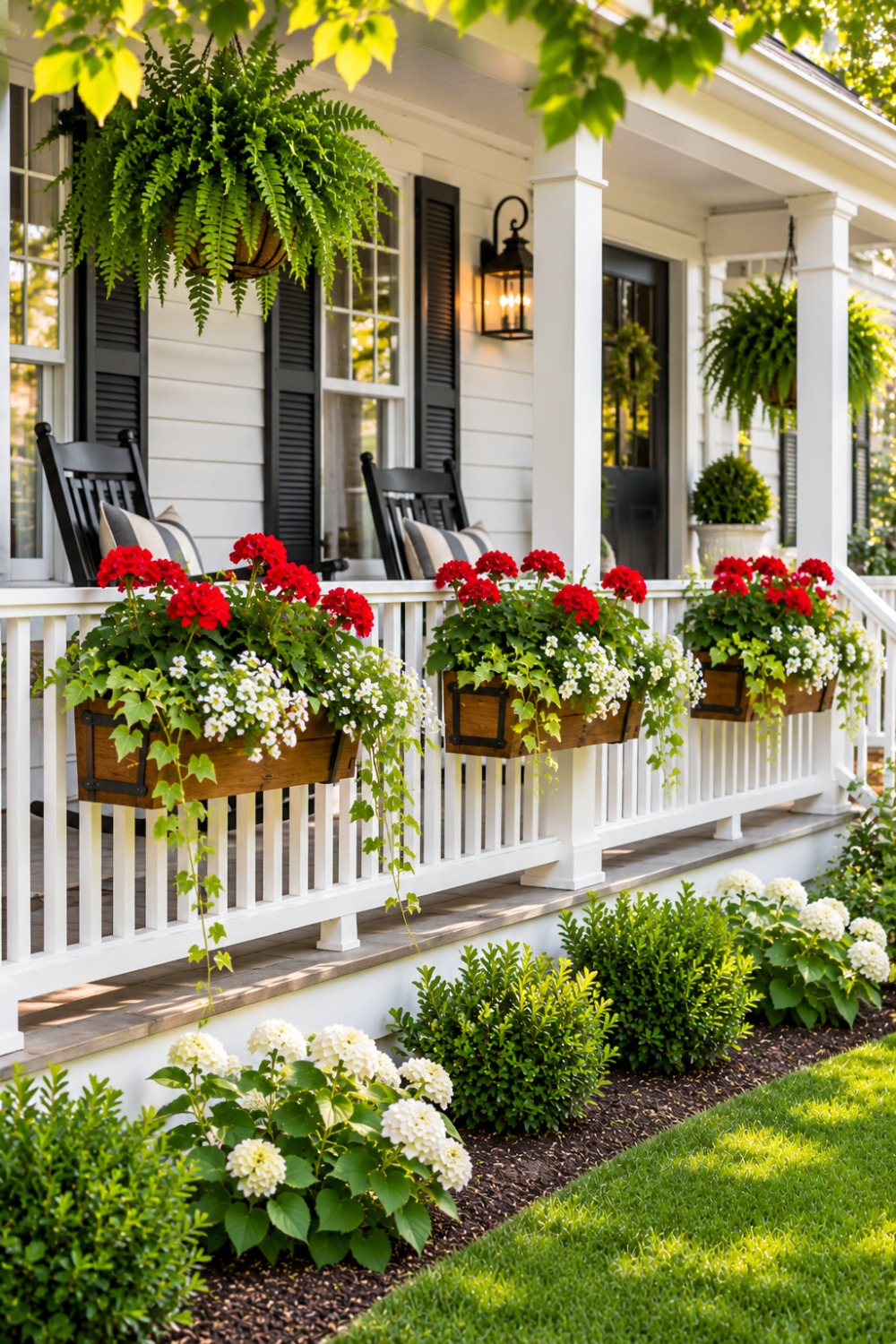
Railing planters bring color right to where you sit and can be seen from the street.
They’re perfect for small porches where there’s no room for floor pots.
Choose flowers that suit your porch’s sun, and change them with the seasons.
How to do it:
- Use brackets made for railing planters and check they’re secure.
- Fill with potting mix and plant trailing and upright flowers together.
- Water daily in hot weather.
9. Edge the Porch Bed With Natural Stone
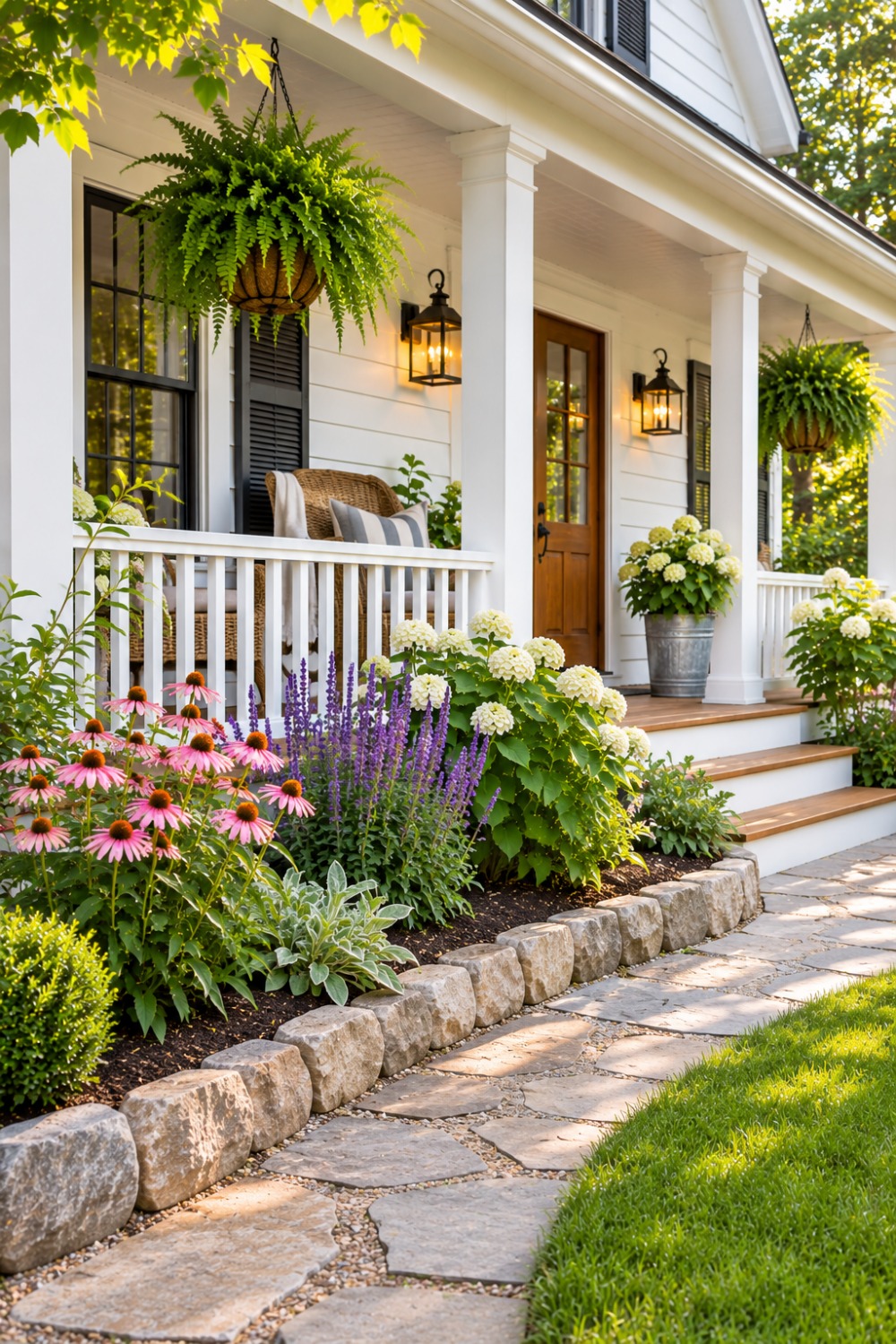
A stone edge gives the porch bed a crisp, permanent outline.
Natural fieldstone suits farmhouse and cottage porches, while cut stone or brick looks more formal.
It also keeps mulch in the bed and makes mowing along the edge easier.
How to do it:
- Mark a gentle curve for the bed edge.
- Dig a shallow trench and set the stones snugly side by side.
- Backfill and tamp the soil firmly behind them.
10. Plant Fragrant Flowers Near Where You Sit
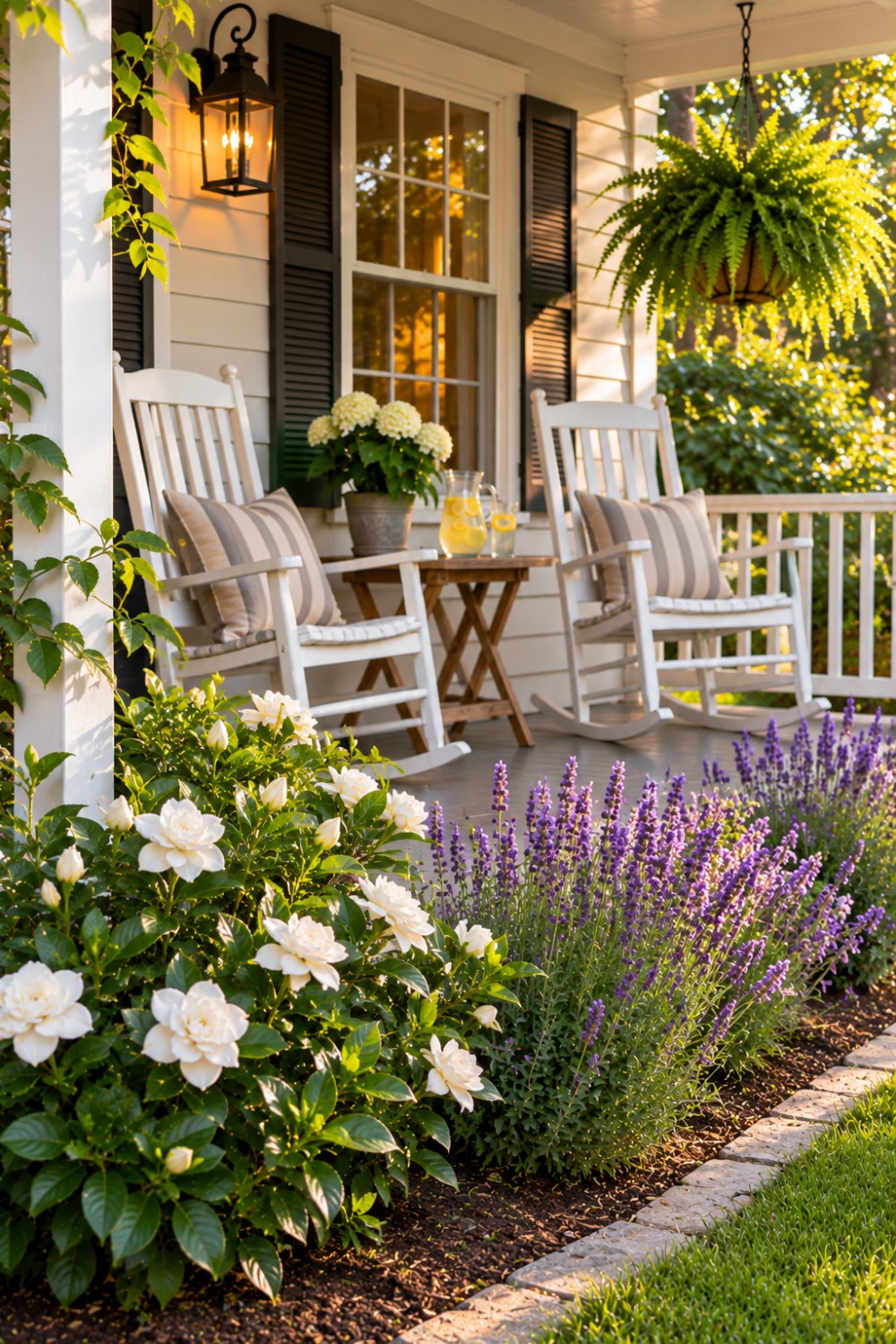
A porch is for sitting, so plant something that smells wonderful nearby.
Gardenias, lavender, roses and sweet alyssum all release their scent on warm evenings.
Place them beside the seating area or near the steps, where you’ll brush past them.
How to do it:
- Find out which plants suit your climate and porch light.
- Plant them close to the porch edge near your chairs.
- Deadhead regularly to keep the flowers coming.
11. Light the Steps and Beds for Evening
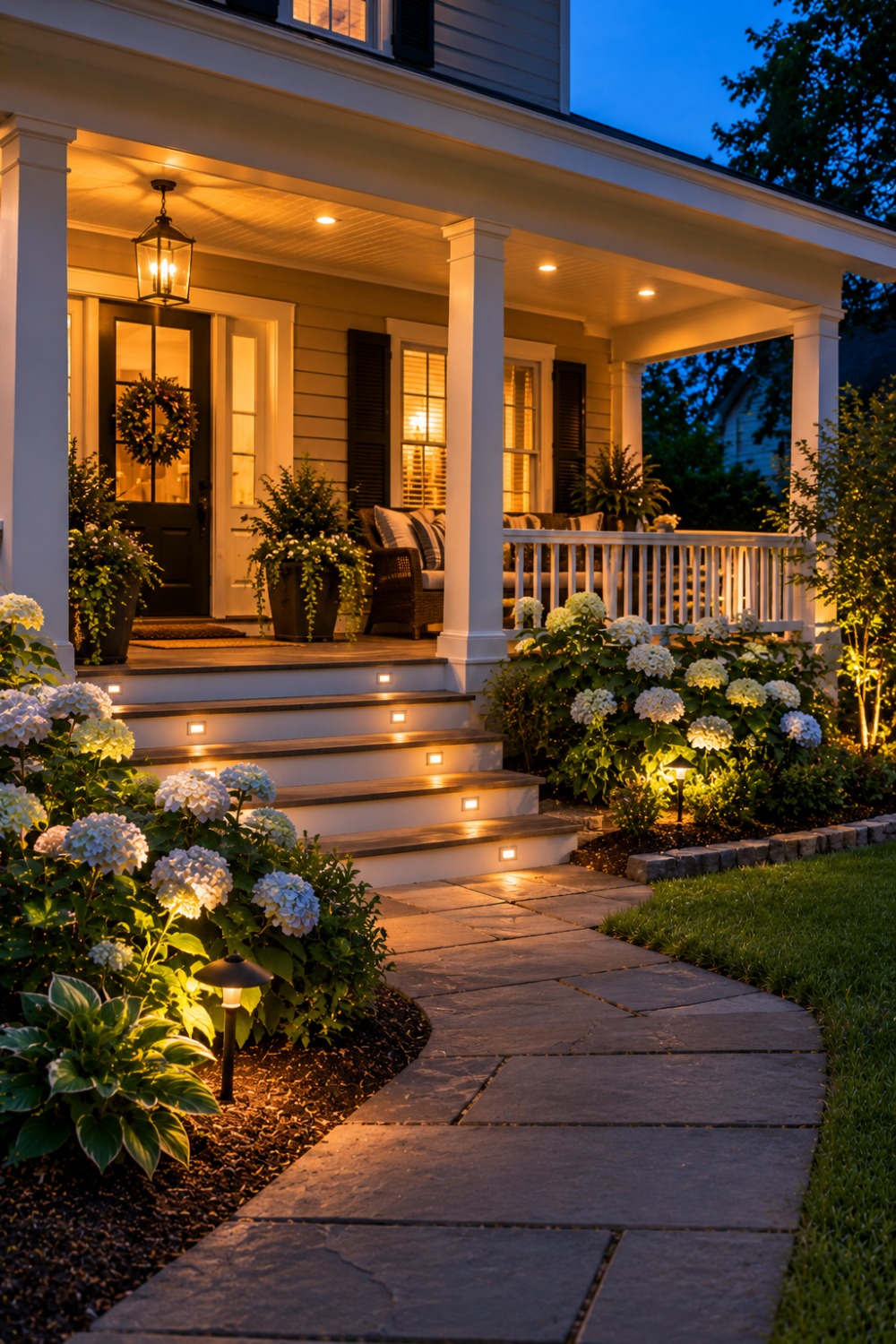
Good lighting makes the porch safe and inviting after dark.
Step lights prevent trips, while a couple of low uplights in the beds highlight your best plants.
Warm-colored light feels welcoming and keeps the porch from looking harsh.
How to do it:
- Add lights to each step or along the stair edges.
- Place one or two uplights in the bed aimed at shrubs or the porch columns.
- Use a timer or dusk sensor so lights come on automatically.
Frequently Asked Questions
What are the best plants for around a front porch?
Hydrangeas, boxwood, hollies, ornamental grasses and long-blooming perennials like catmint are reliable choices. Match plants to how much sun your porch gets.
How far from the porch should shrubs be planted?
Plant most shrubs at least half their mature width away from the porch, often about 3 feet, so they have room to grow and air can flow.
How do I landscape under a raised porch?
Close the gap with lattice or slatted skirting and plant evergreen shrubs in front to soften it.
What should I hang on a front porch?
Hanging ferns or flower baskets add greenery at eye level. Use sturdy hooks in the beams and water them often.
Final Thoughts: Frame the Welcome
Porch landscaping is all about making your entry look rooted, finished and inviting.
Start with a deep foundation bed in three layers to hide the porch base.
Then frame the steps with matching planters and guide guests in with a low walkway border.
Add something at eye level, such as hanging baskets, railing boxes or a climbing vine.
Choose plants for your porch’s light and keep everything below the railing so you can enjoy the view.
Finish with soft lighting and a few fragrant plants near your favorite chair.
For budget-friendly finishing touches, see our cheap simple front yard landscaping ideas.
With a little planting, your porch will feel like the warmest spot on the street.