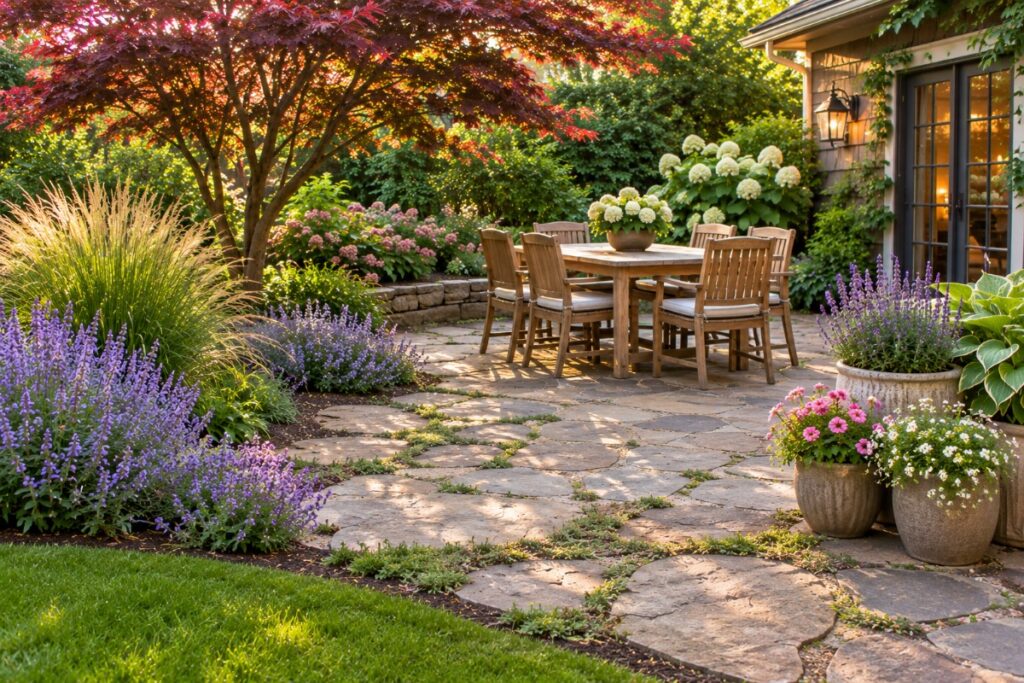
A patio can be perfectly built and still feel like a slab dropped onto the lawn.
What makes it feel like an outdoor room is everything around it: the plants, the edges, the shade and the view from your chair.
The secret to great patio landscaping isn’t a bigger patio. It’s softening the hard edges and wrapping the space in planting so it feels tucked into the garden.
These 17 patio landscaping ideas will help you frame, shade, screen and soften your patio so it becomes the spot everyone gravitates to.
Patio Planting Zones at a Glance
| Zone | What it does | Plant ideas |
|---|---|---|
| Edge beds | Softens hard lines and links patio to garden | Catmint, hardy geranium, lady’s mantle, ornamental grasses |
| Paving gaps | Adds green between stones | Creeping thyme (sun), Irish moss (part shade), dwarf mondo grass |
| Shade | Cools the seating area | Japanese maple, serviceberry, dogwood |
| Screening | Adds privacy and blocks views | Feather reed grass, switchgrass, columnar evergreens in planters |
| Walls and fences | Adds height without taking floor space | Clematis, climbing hydrangea, star jasmine (warm climates) |
| Near the grill | Handy for cooking | Rosemary, thyme, sage, oregano, basil |
| Containers | Seasonal color and flexibility | Bulbs, annuals, mums, dwarf evergreens |
1. Wrap the Patio Edge With a Deep Planting Bed
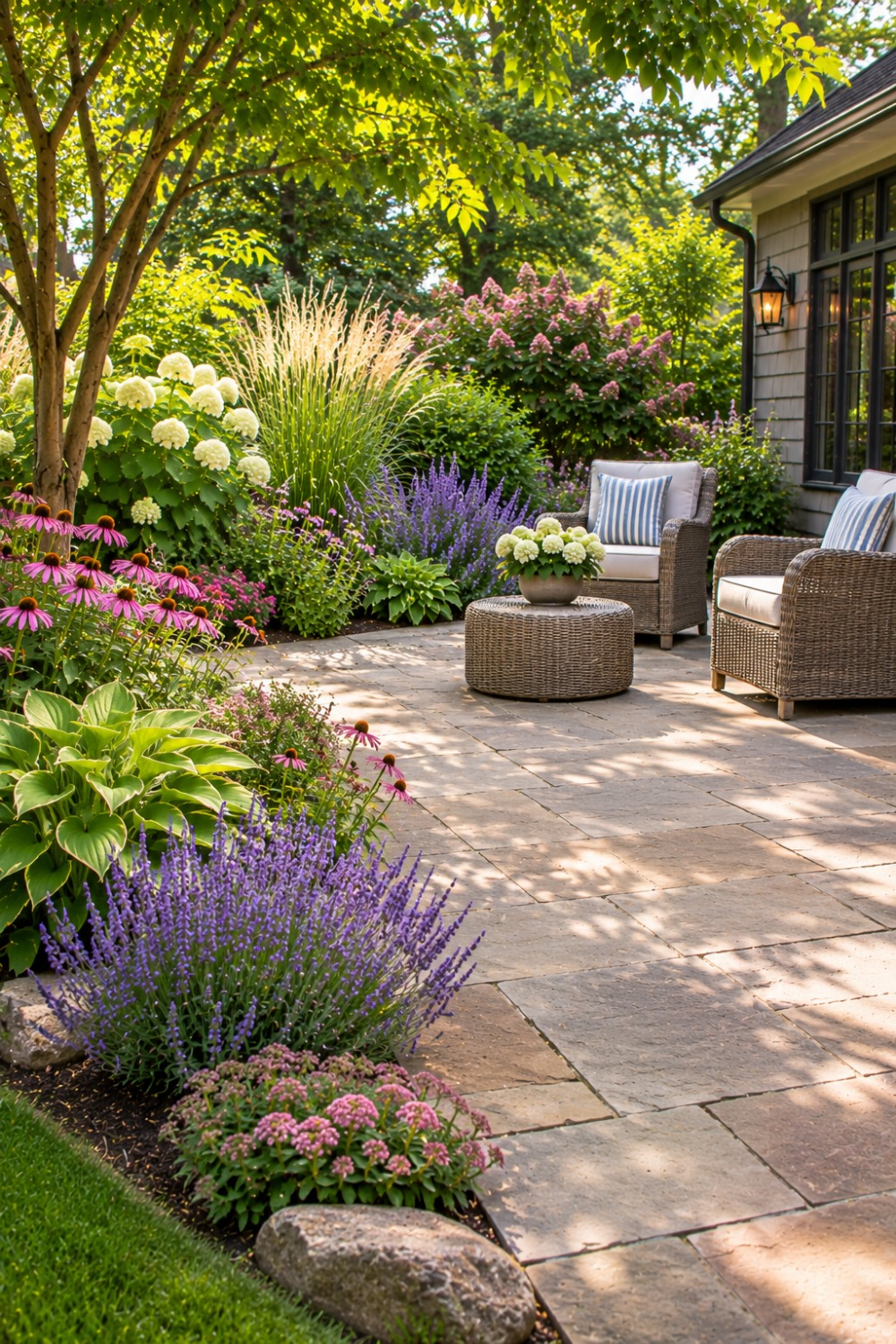
The fastest way to make a patio feel settled is to plant right up to its edge.
A narrow strip looks like an afterthought. A bed at least 3 feet deep has room for layers: low plants at the front, shrubs and grasses behind.
Wrap it around two or three sides and the patio instantly feels enclosed and cozy.
How to do it:
- Mark a bed 3 to 5 feet deep around the patio’s outer edges.
- Remove the turf and loosen the soil with compost.
- Plant low perennials at the front and taller shrubs or grasses at the back.
2. Leave Planting Pockets in the Paving
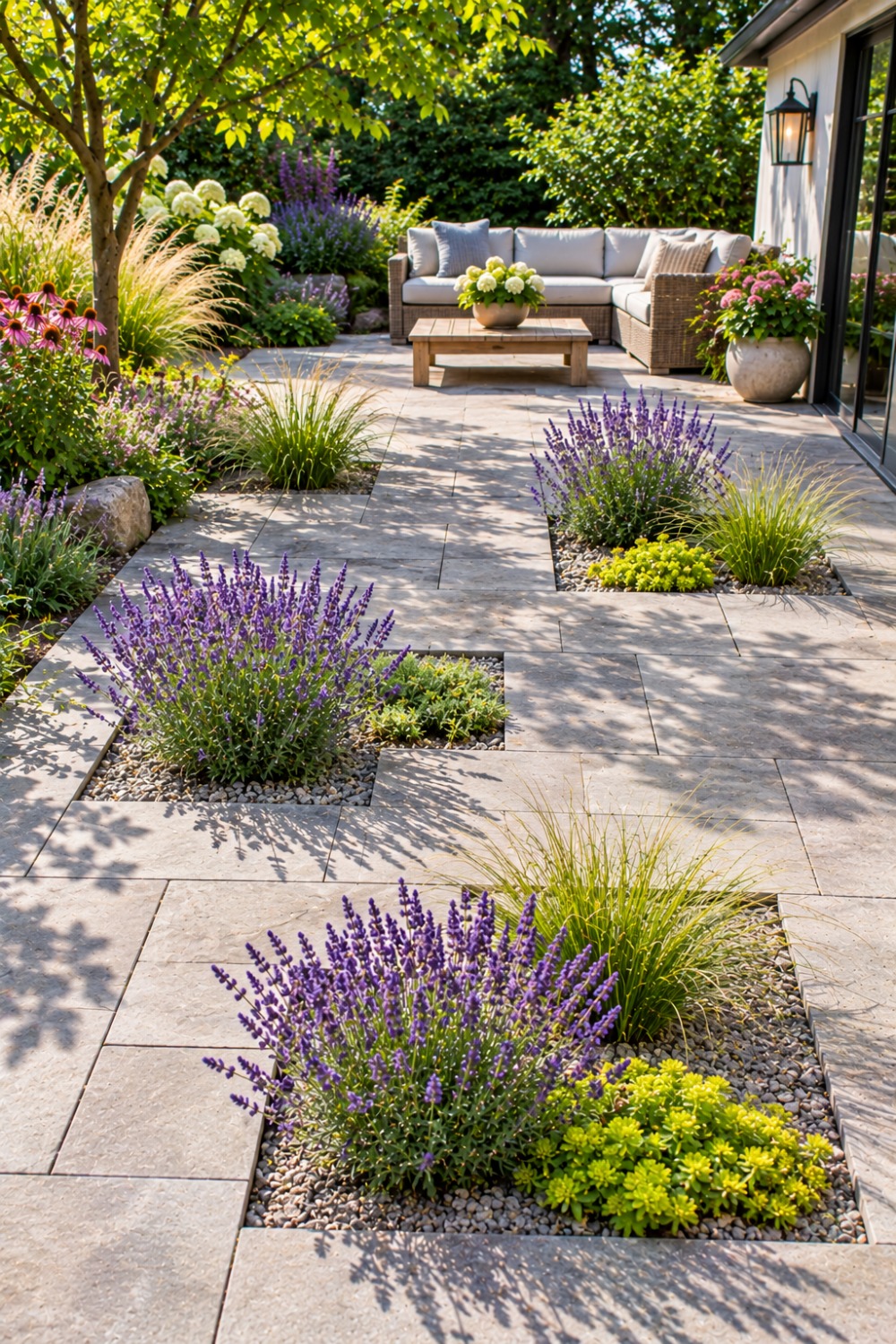
Removing a few pavers and planting in the gaps breaks up a large expanse of stone.
It makes the patio feel like part of the garden instead of something sitting beside it.
Use compact, tough plants such as lavender, small grasses or low sedums in sunny pockets.
How to do it:
- Lift a few pavers away from the main walking and dining areas.
- Dig out the base gravel and replace it with good garden soil.
- Plant one or two compact plants per pocket and mulch with fine gravel.
3. Plant Creeping Thyme Between Flagstones
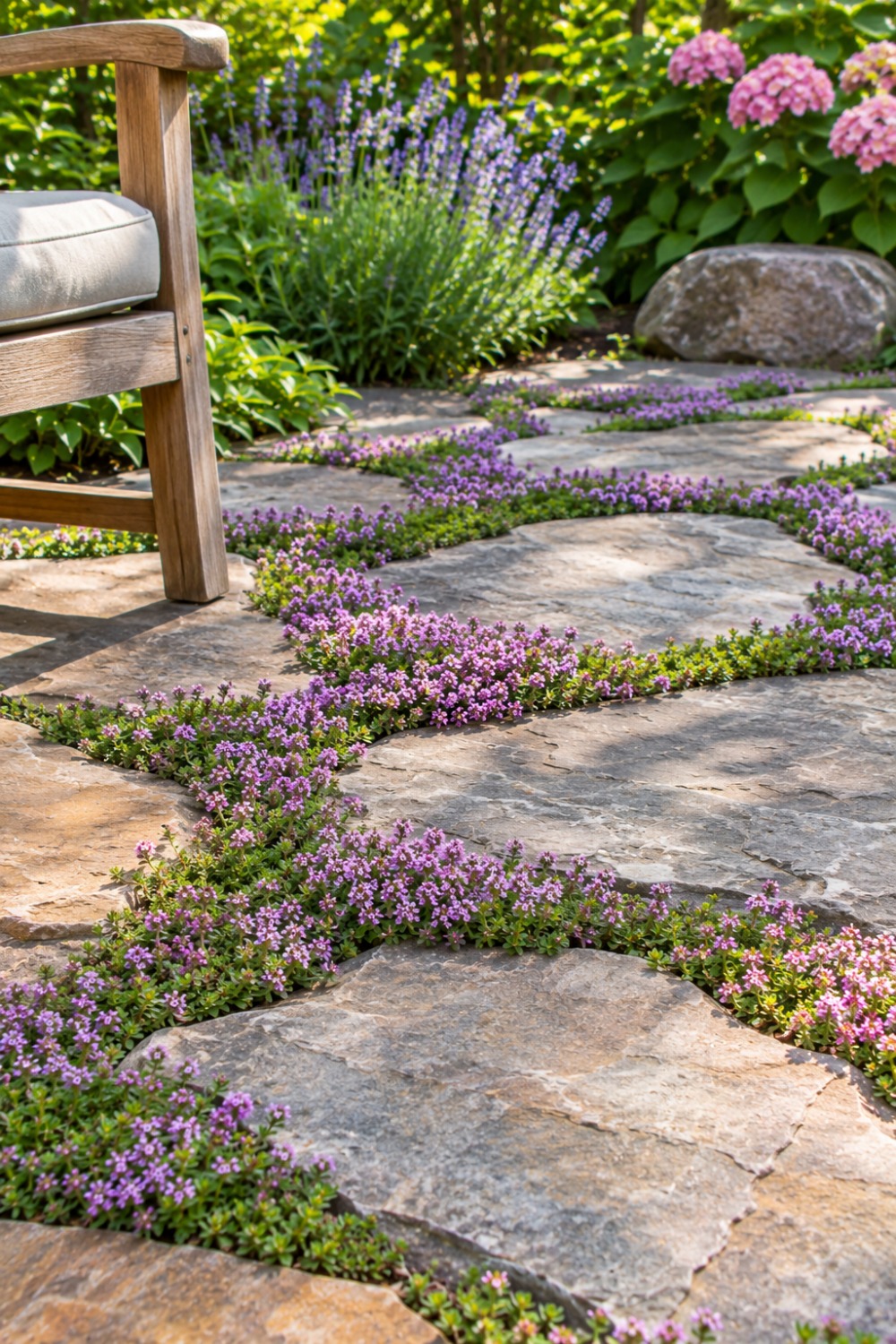
Creeping thyme (Thymus serpyllum) is one of the best plants for patio joints.
It handles light foot traffic, releases a lovely scent when stepped on and covers itself in tiny pink or purple flowers in summer.
It needs full sun and good drainage. In part shade, try Irish moss (Sagina subulata) or dwarf mondo grass instead.
How to do it:
- Clear the joints and fill them with a mix of soil and sand.
- Tuck in small plugs every 6 to 12 inches.
- Water regularly until they spread, then only in long dry spells.
4. Plant a Small Tree for Dappled Shade
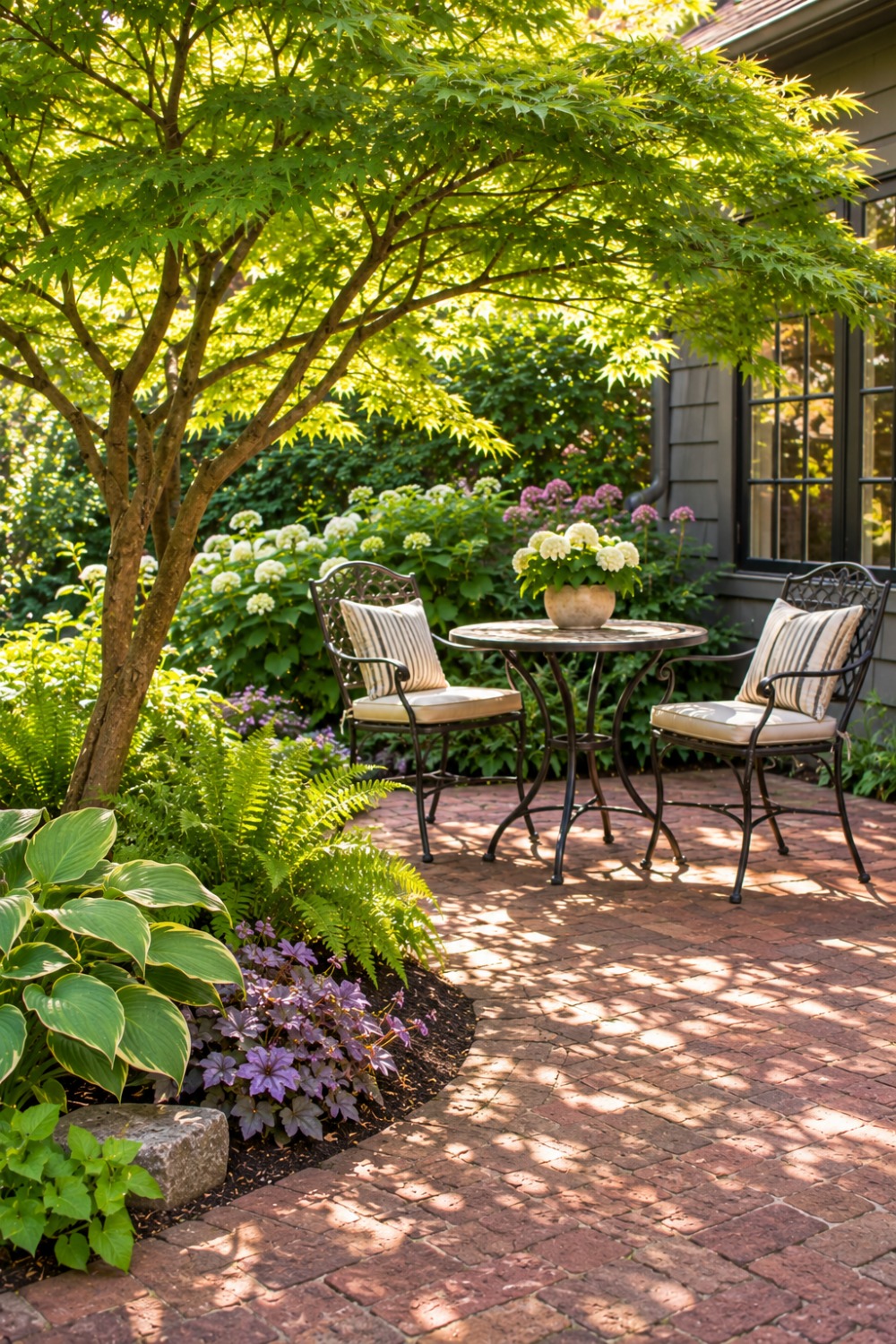
A small tree beside the patio adds shade, height and a sense of shelter overhead.
Choose a tree with a modest mature size and roots that won’t lift paving, such as Japanese maple (Acer palmatum), serviceberry (Amelanchier) or flowering dogwood (Cornus florida).
Plant it on the south or west side of the patio to block the hottest sun.
How to do it:
- Check the tree’s mature height and spread before planting.
- Plant it a few feet back from the patio edge.
- Prune the lower branches over time so you can sit beneath the canopy.
5. Screen the View With Tall Planters and Grasses
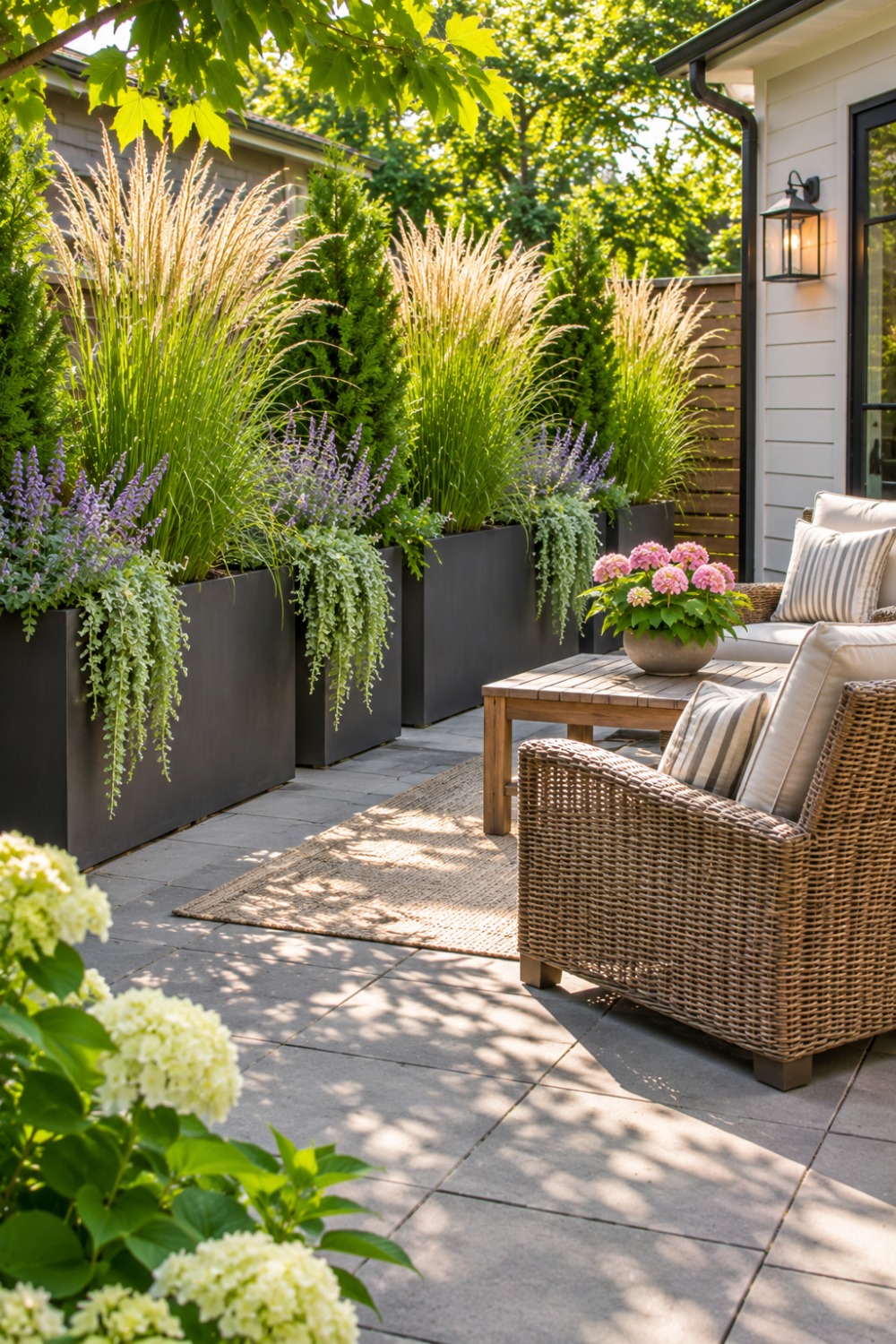
If neighbors overlook your patio, a living screen gives you privacy without building a wall.
A row of tall planters filled with ornamental grasses or narrow evergreens works on a patio where you can’t dig.
Feather reed grass, upright switchgrass and columnar evergreens such as ‘Emerald Green’ arborvitae all grow tall without spreading wide.
How to do it:
- Use planters at least 18 to 24 inches wide so plants have room to root.
- Line them up along the side that needs screening.
- Water container plants more often than plants in the ground.
Common mistake: planting running bamboo for quick privacy. It spreads aggressively and is very hard to remove.
6. Group Containers at the Patio Corners
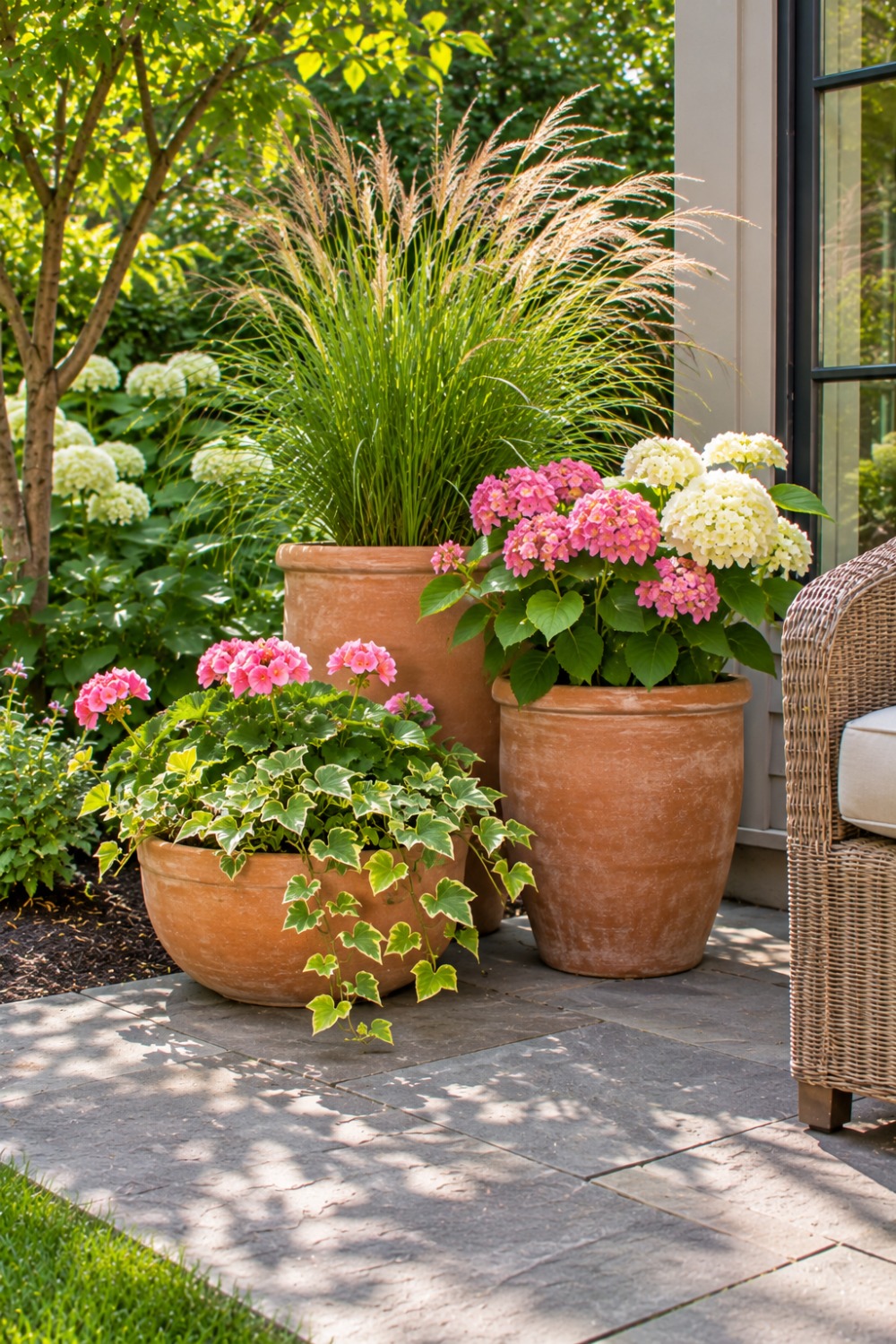
Corners are where a patio often looks bare.
A cluster of three containers in different heights softens the corner and adds color right at eye level.
Use one tall pot with a small shrub or grass, one medium pot with flowers and one low bowl with trailing plants.
How to do it:
- Choose pots in the same material or color for a calm look.
- Arrange them in a loose triangle, tallest at the back.
- Plant a thriller, filler and spiller combination in the largest pot.
7. Let Soft Plants Spill Over the Hard Edges
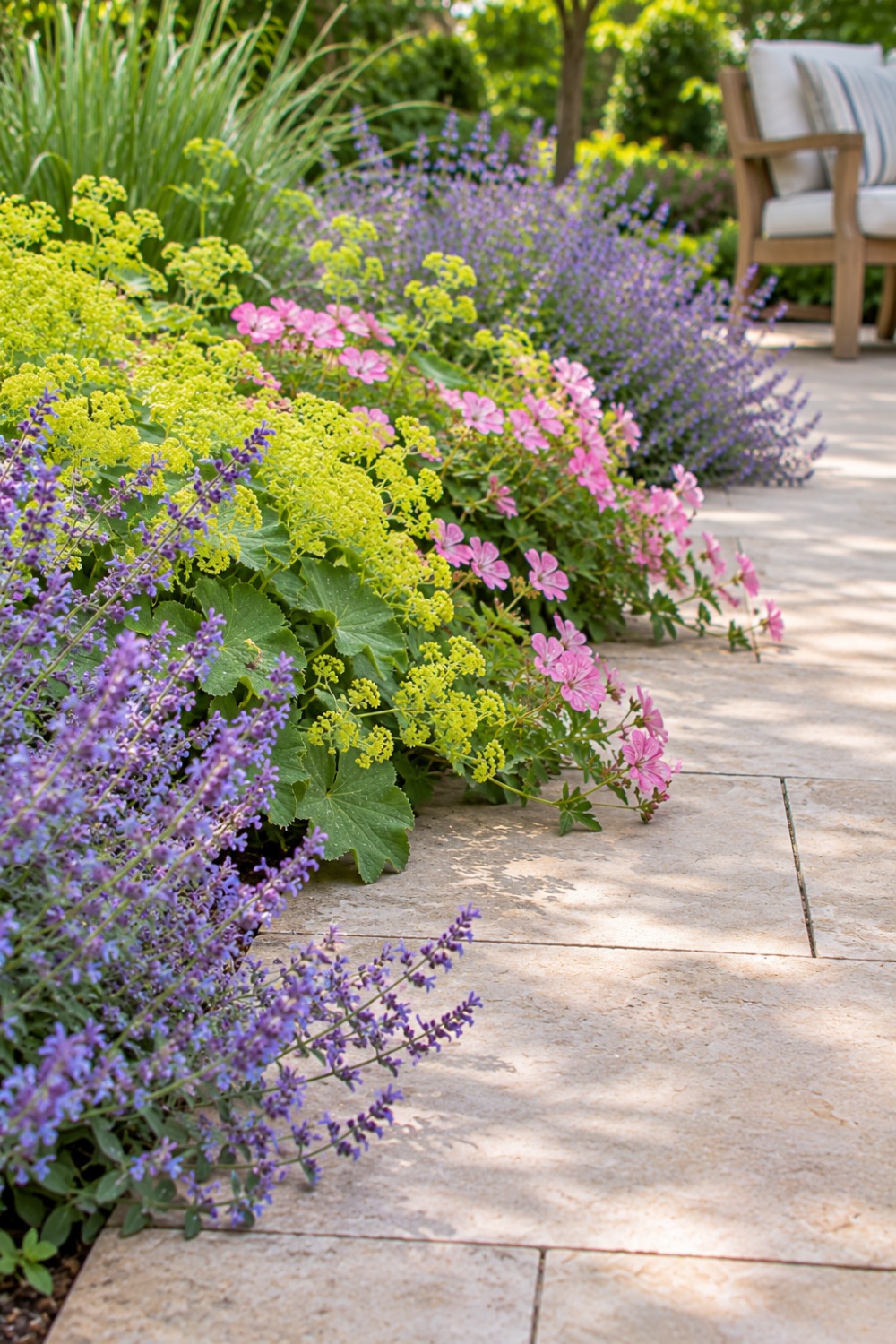
A straight patio edge looks much softer when plants spill over it.
Mounding perennials like catmint (Nepeta), hardy geranium and lady’s mantle (Alchemilla mollis) lean gently onto the stone and blur the line.
It’s a simple trick that makes a brand-new patio look established.
How to do it:
- Plant mounding perennials right at the front of the edge bed.
- Let them spread over the paving by a few inches.
- Trim them back after flowering if they start to block walking space.
8. Grow a Vine on the Wall Behind the Patio
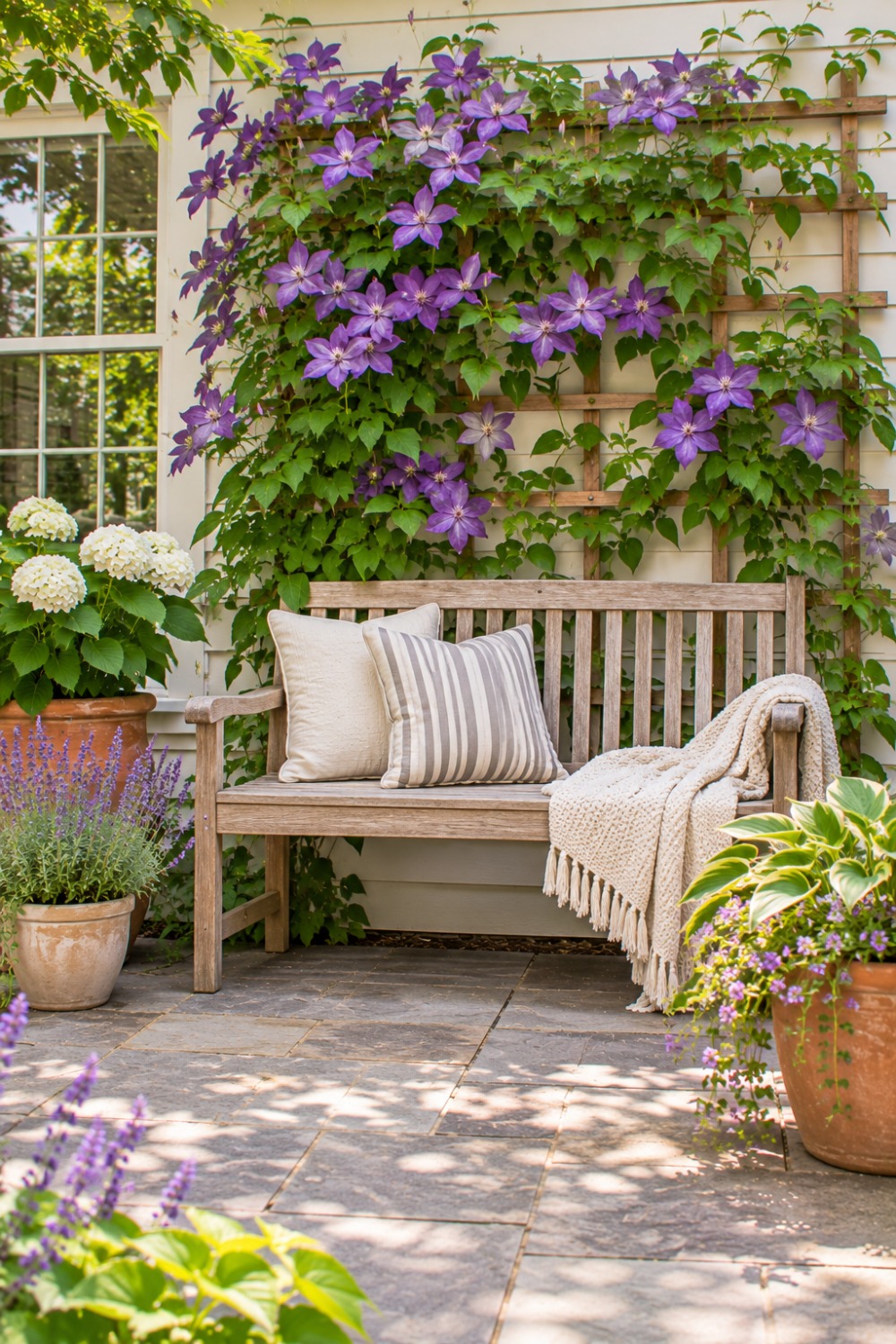
The house wall or fence behind a patio is a big blank canvas.
A flowering vine on a trellis or wire grid adds green and color without taking up any floor space.
Clematis suits most climates. Climbing hydrangea (Hydrangea anomala subsp. petiolaris) grows well in shade, and star jasmine (Trachelospermum jasminoides) brings fragrance in warm climates.
How to do it:
- Fix a trellis or wires a few inches out from the wall for air flow.
- Plant the vine about a foot from the wall base.
- Tie in new shoots as they grow until they climb on their own.
Avoid English ivy and Asian wisteria. Both are invasive in many areas and can damage walls.
9. Plant a Kitchen Herb Bed Beside the Grill
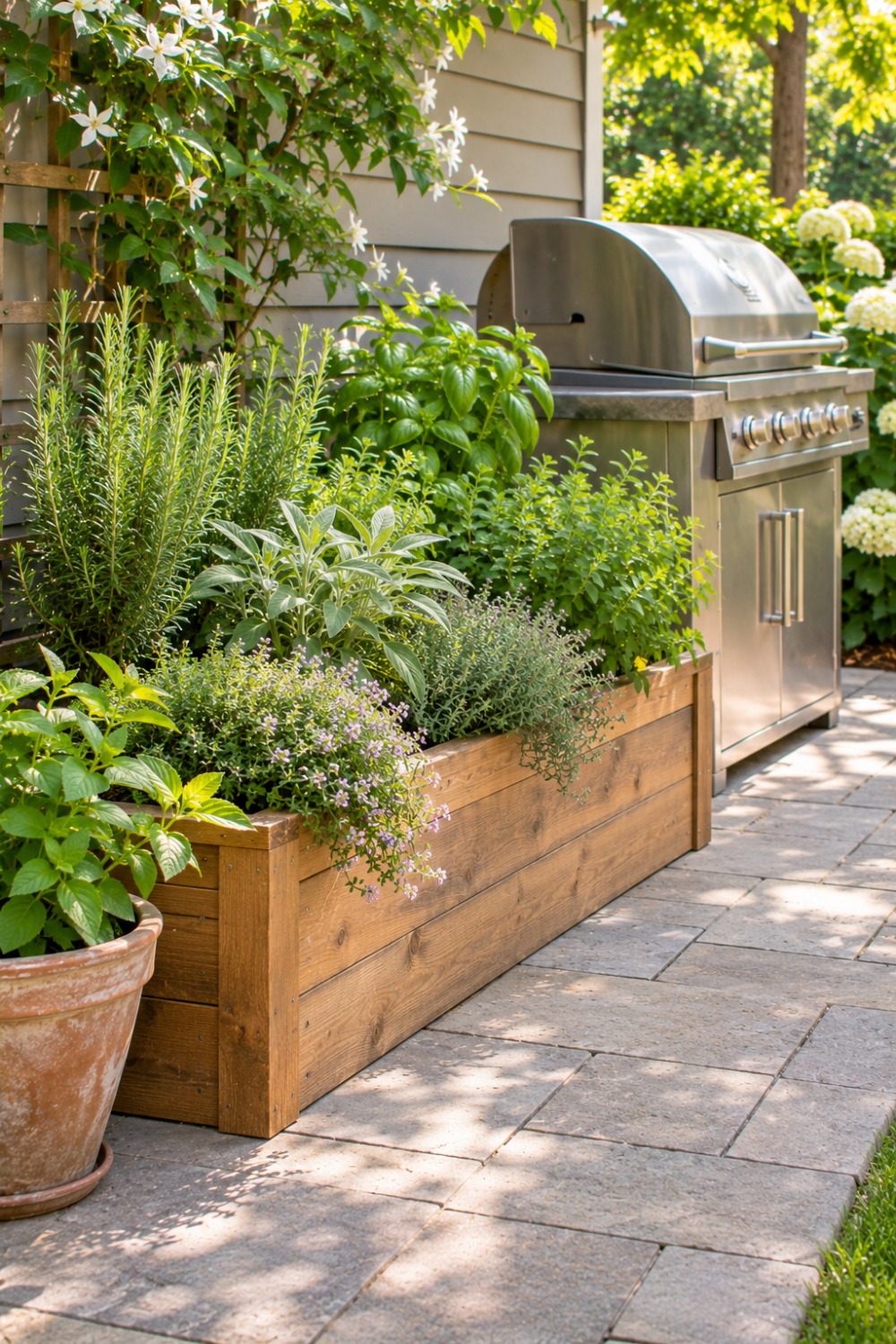
If you cook outdoors, plant herbs within reach of the grill.
Rosemary, thyme, sage and oregano love sun and dry soil, and they smell wonderful when the patio warms up.
Add basil and parsley in pots each summer, and keep mint in its own container so it doesn’t take over.
How to do it:
- Choose a sunny spot near the grill but out of the main walking path.
- Plant perennial herbs in a small bed or a wide trough.
- Snip often to keep the plants bushy.
10. Extend a Small Patio With a Gravel Overflow Area
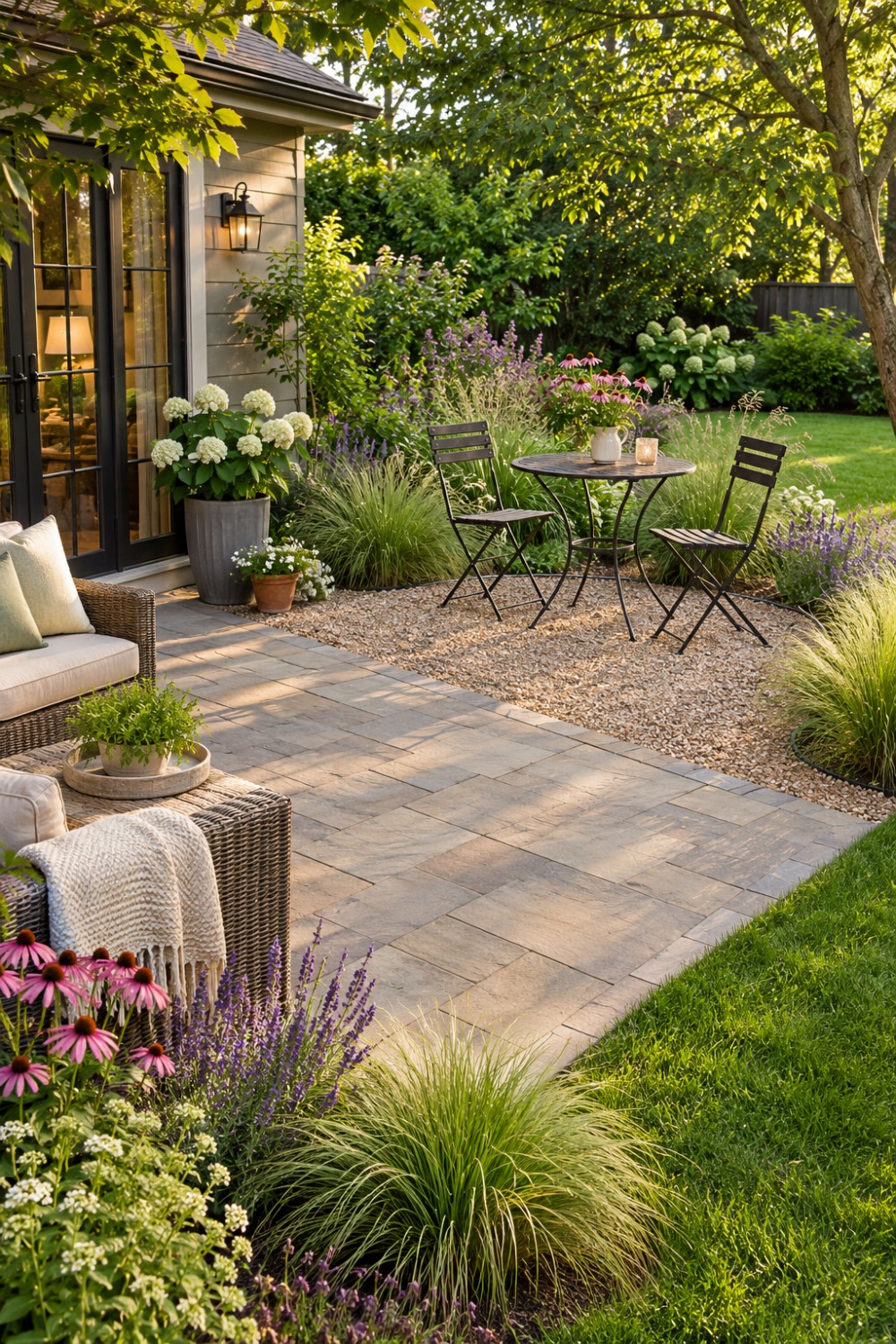
If your patio feels too small for gatherings, extend it with gravel instead of more paving.
A pea gravel or crushed stone area beside the patio adds space for extra chairs, a fire bowl or a bistro set at a fraction of the cost.
Edge it neatly so the gravel stays in place.
How to do it:
- Mark the extension next to the existing patio.
- Dig down 3 to 4 inches, lay landscape fabric and add a compacted base.
- Top with 2 inches of gravel and install edging around it.
11. Mark the Patio Entrance With Two Potted Shrubs
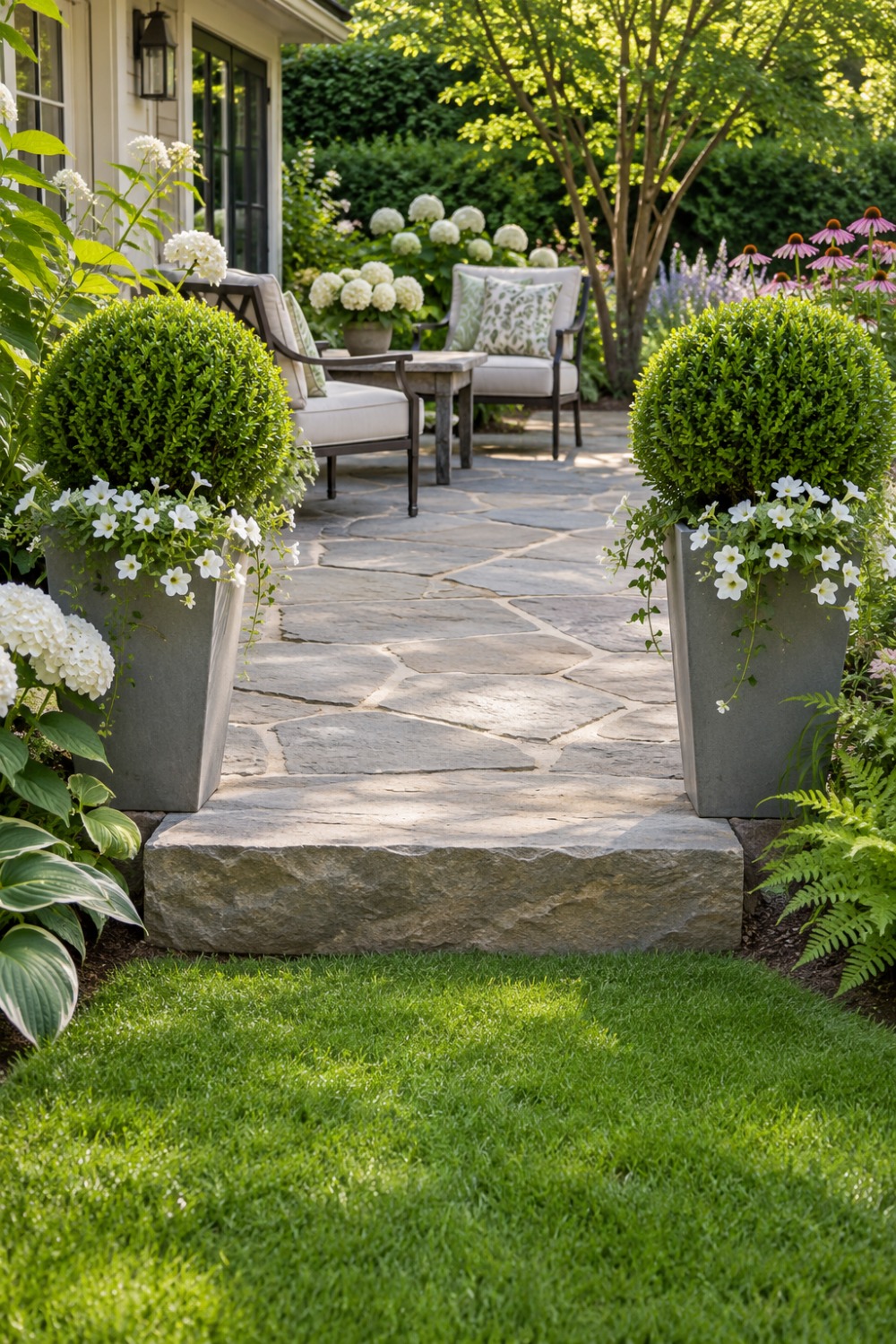
A patio feels more like a room when it has a clear way in.
A matching pair of potted shrubs on either side of the step or path works like a doorway.
Boxwood, dwarf holly or small clipped evergreens look good all year. Add trailing flowers at their base for summer color.
How to do it:
- Choose where people naturally step onto the patio.
- Set a matching pot on each side.
- Plant identical shrubs so the pair stays balanced.
12. Choose Low-Litter Plants Near the Dining Table
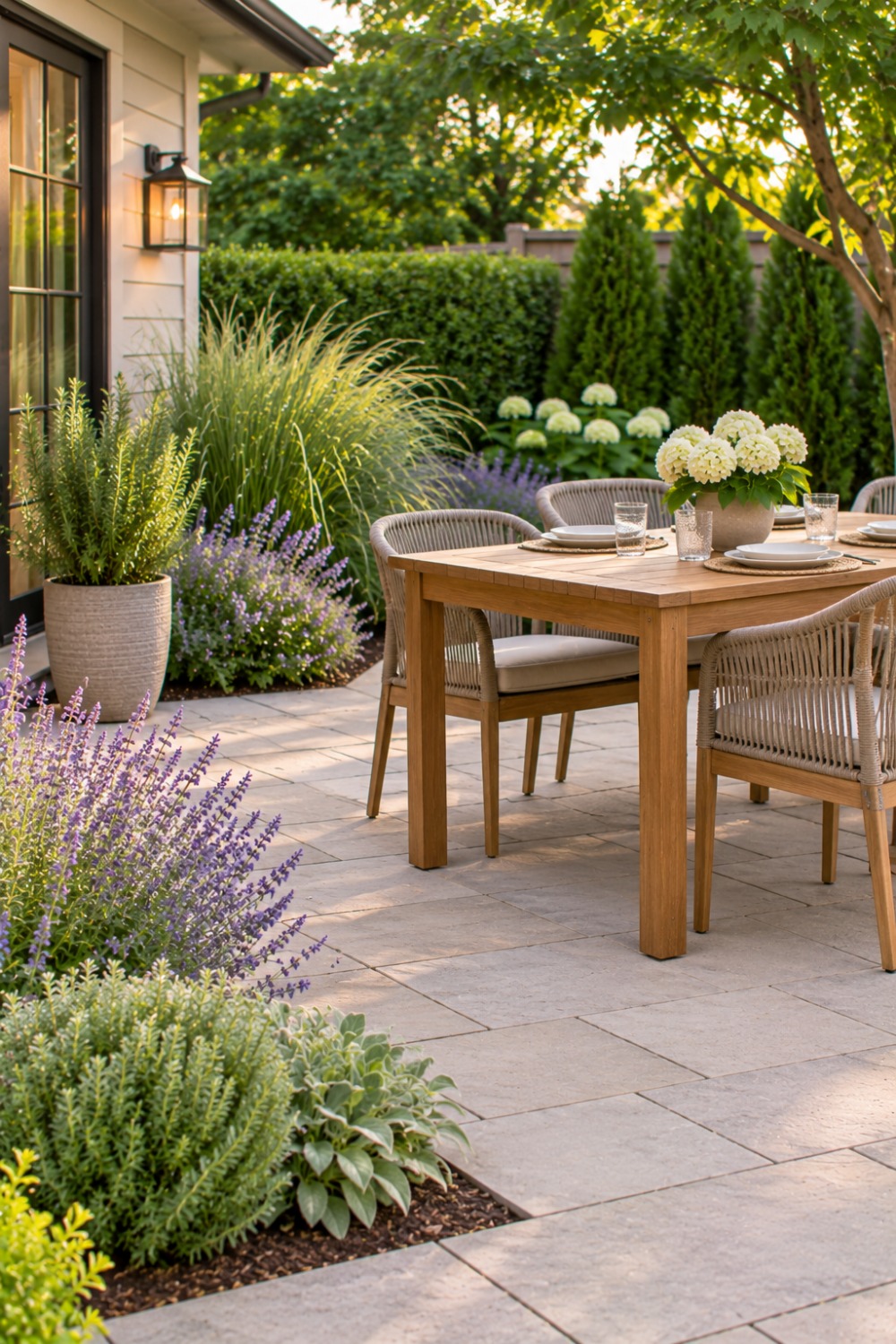
Some trees and shrubs drop fruit, pods or sticky flowers that stain paving and attract wasps.
Keep mulberries, sweetgums and heavy-fruiting crabapples well away from where you eat.
Near the table, stick with evergreen shrubs, grasses and perennials that stay tidy.
How to do it:
- Check whether a plant drops fruit, seed pods or sap before planting it near the patio.
- Use evergreen shrubs and perennials in the beds closest to the table.
- Plant messier favorites farther out in the garden.
13. Mask Street Noise With a Bubbling Fountain
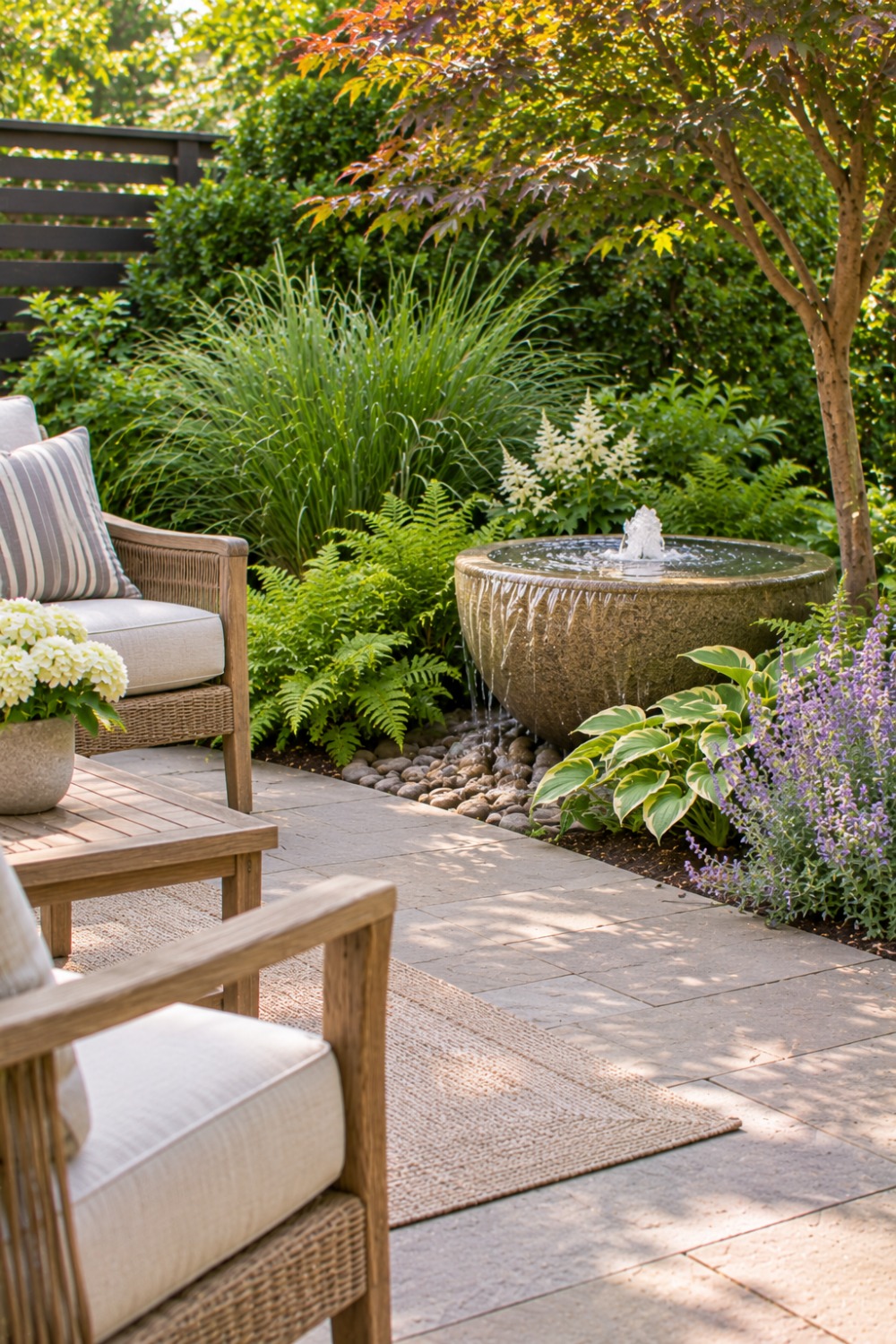
The gentle sound of water makes a patio feel calm and helps hide traffic or neighbor noise.
A small bubbling bowl, urn or stone fountain needs very little space and recirculates its own water.
Set it at the edge of the patio where you can hear it from your seat.
How to do it:
- Choose a self-contained fountain with a hidden reservoir.
- Place it within reach of an outdoor-rated power outlet, or use a solar pump in full sun.
- Top up the water regularly in hot weather.
14. Tuck Low Lighting Into the Planting Beds
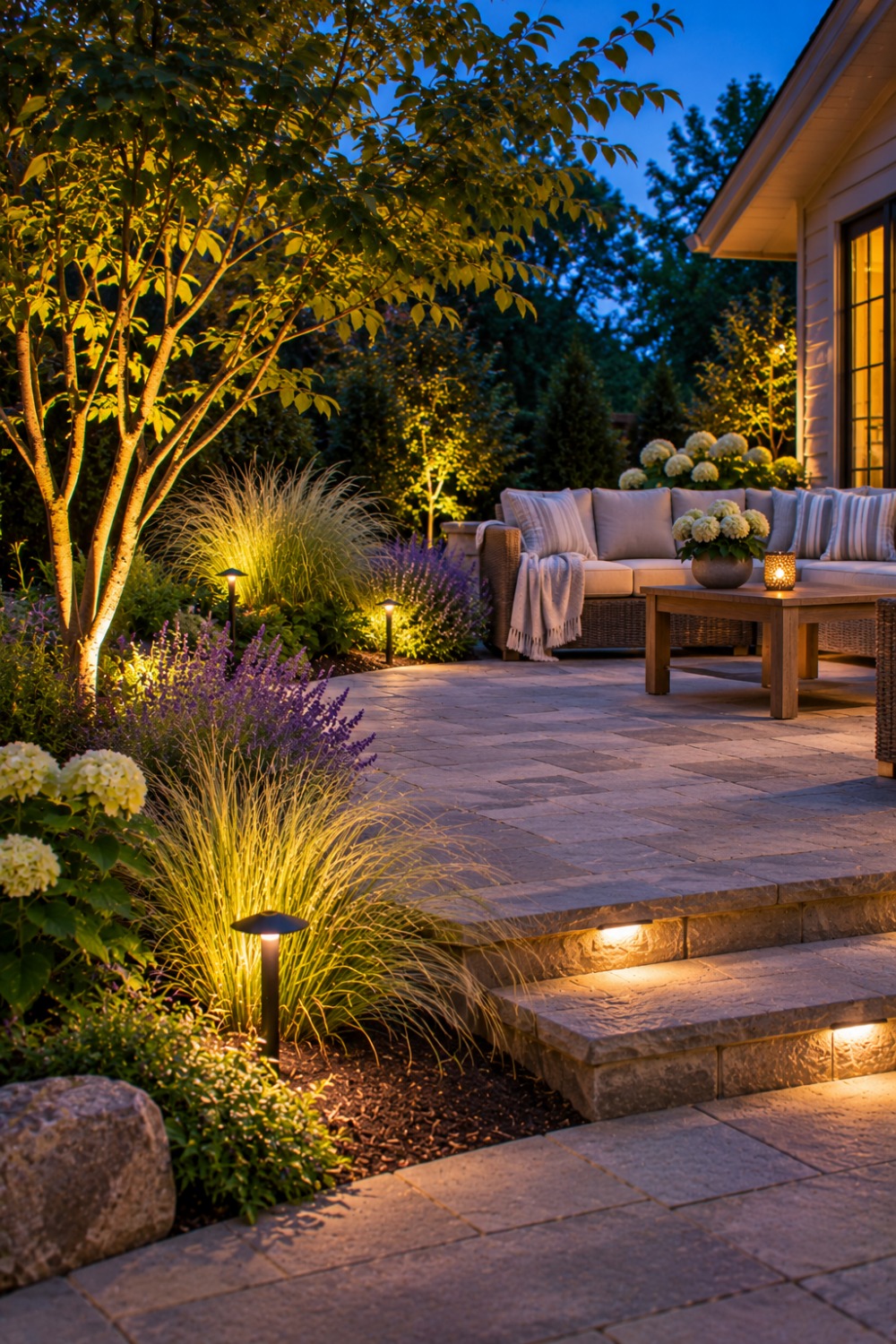
Lighting the plants around the patio, not just the patio itself, makes evenings feel magical.
Small spotlights angled up into a tree or through ornamental grasses create soft shadows and depth.
Add a few step lights so people can move around safely.
How to do it:
- Uplight one tree or large shrub as a focal point.
- Add two or three smaller lights in the beds around the patio.
- Use warm white bulbs and a timer so the lights come on at dusk.
15. Connect the Patio to the Lawn With Stepping Stones
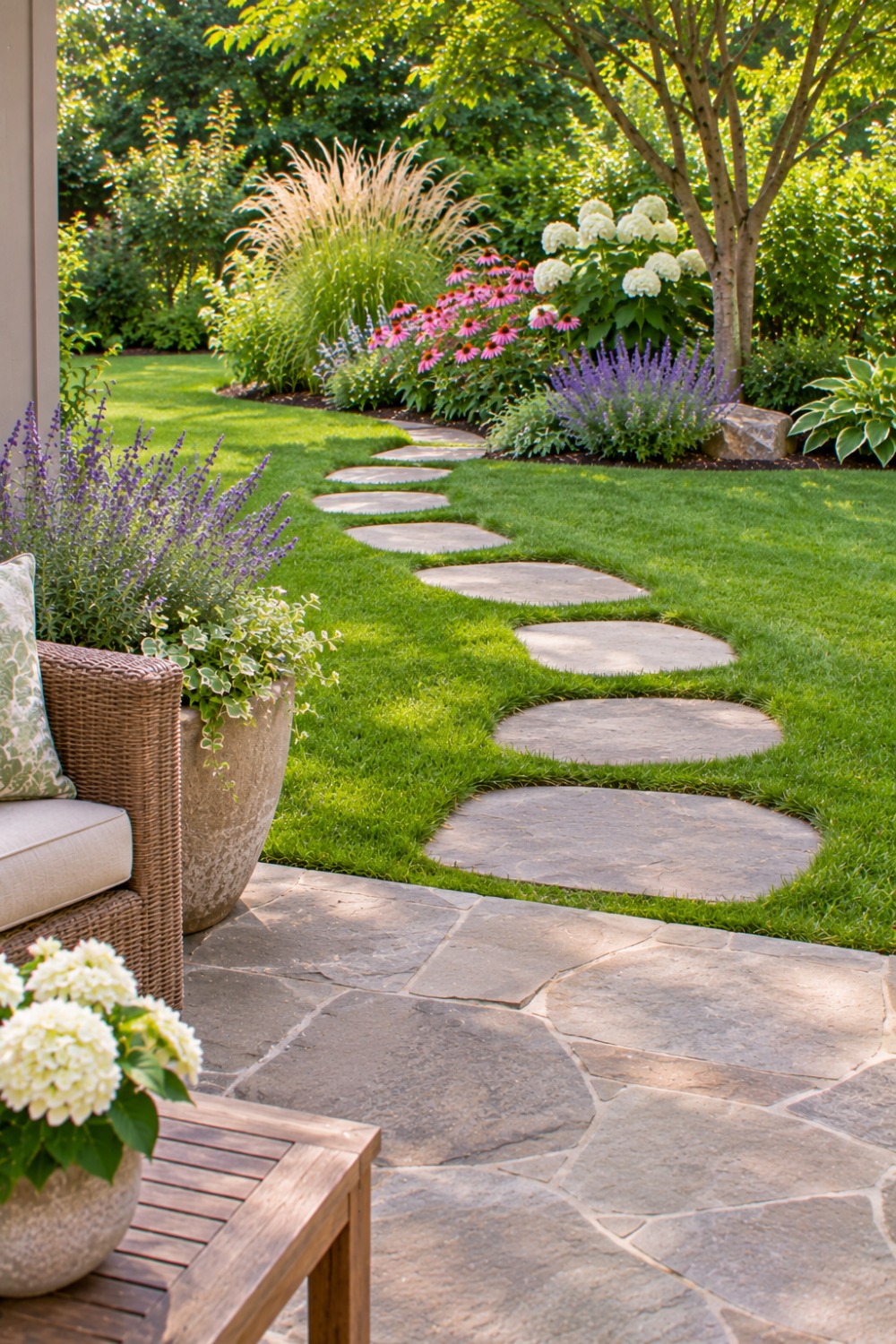
A patio feels more connected when a path leads from it out into the garden.
Stepping stones set in the lawn invite you to wander and stop a worn track forming in the grass.
Use the same stone as the patio, or a material in the same color family.
How to do it:
- Walk your natural route and place stones where your feet land.
- Cut around each stone and remove the turf.
- Set the stones just below lawn level so you can mow straight over them.
16. Plant the Border to Look Best From Your Chair
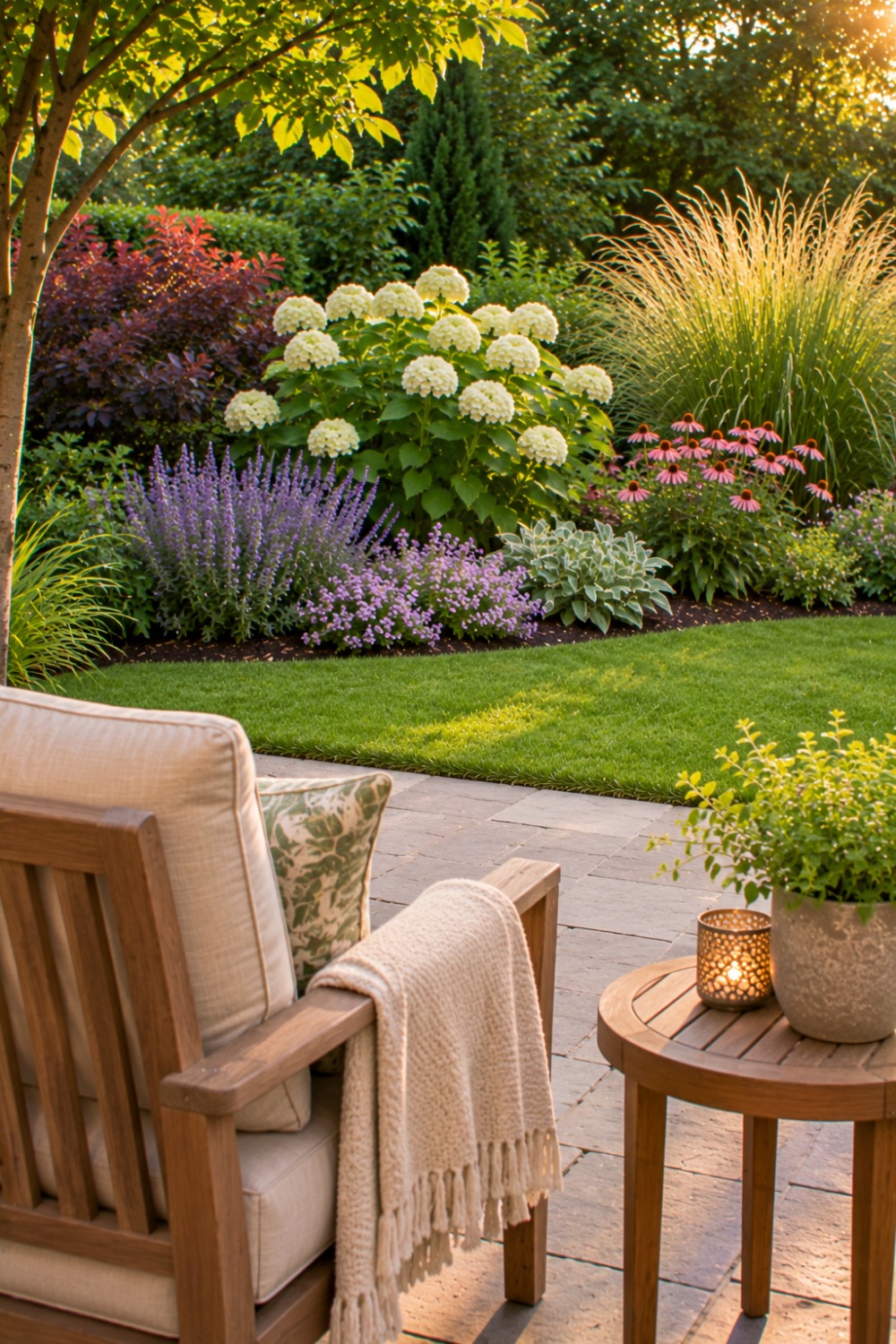
Most people design patio planting from the house. Try designing it from your favorite chair instead.
Sit where you’ll relax most and notice what you look at. That’s where your best plants belong.
Place the tallest plants at the back of the view, the most colorful ones in the middle and soft, low plants closest to you.
How to do it:
- Sit on the patio and note the main views.
- Put a focal point, such as a shrub with long bloom, in your direct line of sight.
- Layer plants by height so nothing blocks the view.
For more ideas on building outdoor rooms, see our backyard landscaping ideas.
17. Swap Seasonal Pots for Year-Round Color
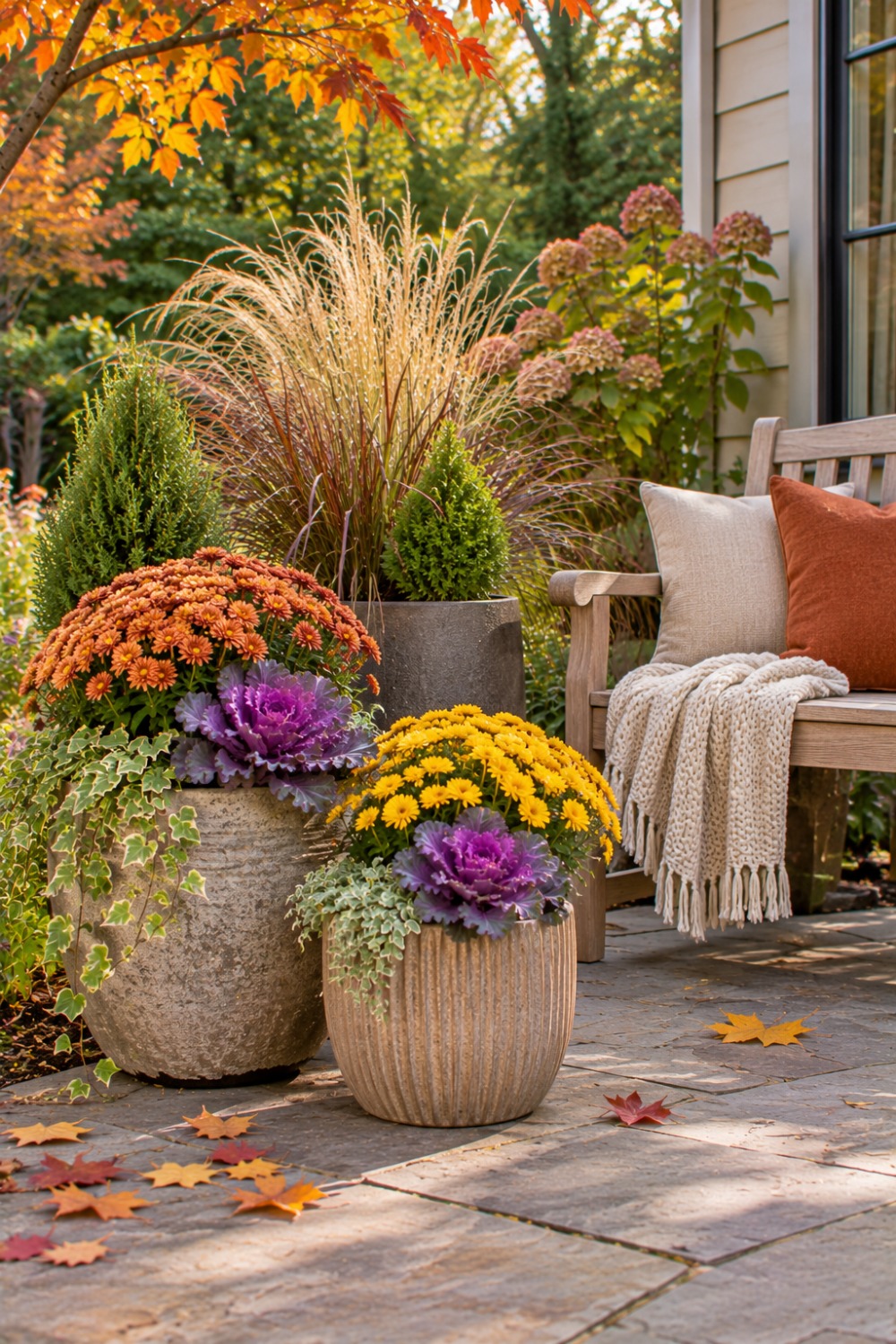
Containers make it easy to keep the patio looking fresh every season.
Plant bulbs in fall for spring, fill pots with annuals in summer, then switch to mums, ornamental kale and grasses in autumn.
In winter, small evergreens, cut branches and berries keep the pots from looking empty.
How to do it:
- Keep one or two large pots planted with permanent evergreens.
- Use smaller pots for seasonal plants you can swap easily.
- Refresh the potting mix each spring.
Frequently Asked Questions
What should I plant around a patio?
Use a mix of low perennials at the edge, shrubs or grasses for structure and a small tree for shade. Catmint, hardy geraniums, ornamental grasses and compact evergreens are reliable in many regions. Ask your local nursery what thrives in your climate and sun.
How wide should a planting bed around a patio be?
Aim for at least 3 feet deep. That gives you room for two or three layers of plants. Narrow strips under a foot wide are hard to plant well and usually look sparse.
Can I plant a tree next to a patio?
Yes, if you choose a small tree with non-aggressive roots and plant it a few feet back from the edge. Japanese maple, serviceberry and dogwood are good choices. Avoid large trees with shallow roots that can lift paving.
What are the best low-maintenance plants for patio pots?
Dwarf evergreens, ornamental grasses, lavender, rosemary and succulents need little care. Use large pots, which dry out more slowly, and add a slow-release fertilizer each spring.
Final Thoughts: Let the Garden Wrap Around Your Patio
A great patio is defined by what surrounds it.
Start with a deep planting bed around the outside edges. It does more to soften the space than any other single change.
Then add height with a small tree, a vine on the wall or tall planters for privacy.
Soften the stone itself with plants in the joints, pockets in the paving and perennials spilling over the edge.
Keep messy plants away from the dining table, and put herbs where you cook.
Finish with soft lighting and a little water sound so the patio feels as good at night as it does at noon.
If you’re planning an evening gathering spot too, our backyard fire pit landscaping ideas pair well with these.
Start with one edge bed this season. Once it fills in, you’ll wonder how the patio ever felt complete without it.