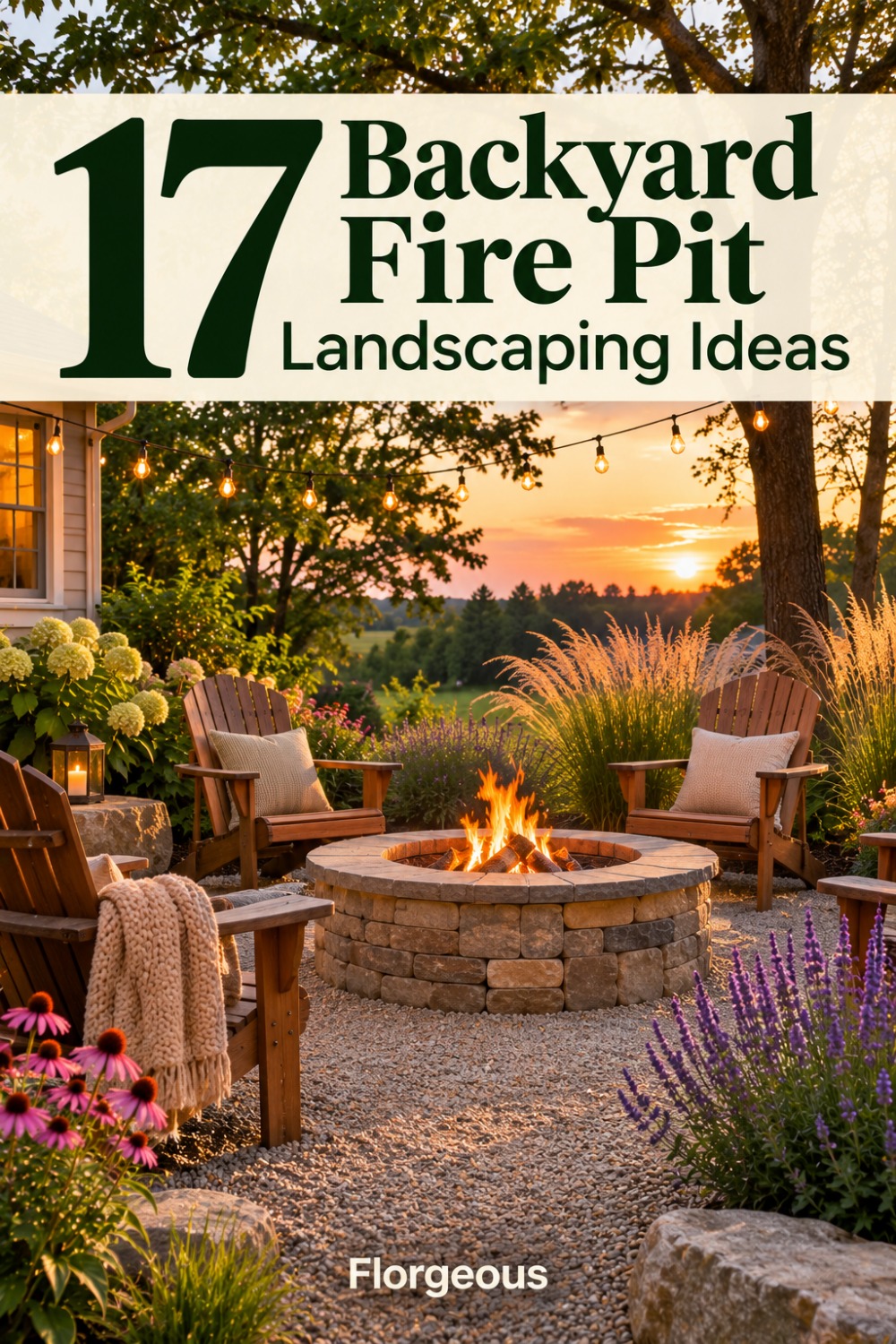
There’s a reason everyone ends up around the fire at a backyard get-together.
A fire pit gives people a place to gather, keeps evenings comfortable well into fall and turns an ordinary yard into a destination.
The fire pit itself is only half of it, though. The surface around it, the seating, the lighting and the planting decide whether it feels like a cozy retreat or a metal bowl on the lawn.
These 17 backyard fire pit landscaping ideas cover safe placement, budget-friendly gravel circles, built-in seating and planting that frames the space without putting it at risk.
Fire Pit Area Ideas at a Glance
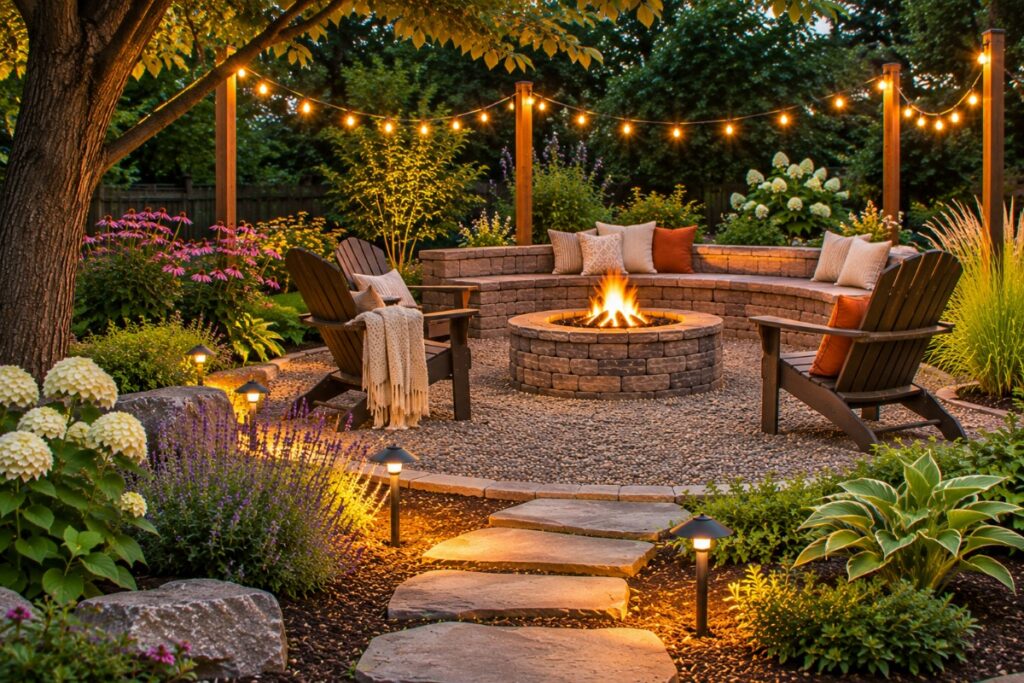
| Style | Surface | Budget |
|---|---|---|
| Pea gravel circle | Gravel over compacted base | $ |
| Flagstone patio | Flagstone on sand or mortar | $$ to $$$ |
| Sunken lounge | Pavers or stone with seat walls | $$$ |
| Boulder ring | Gravel or compacted soil | $ to $$ |
| Gas fire table | Pavers or concrete patio | $$ |
| Portable fire bowl | Any non-combustible surface | $ |
1. Choose a Safe Spot Before You Choose a Design
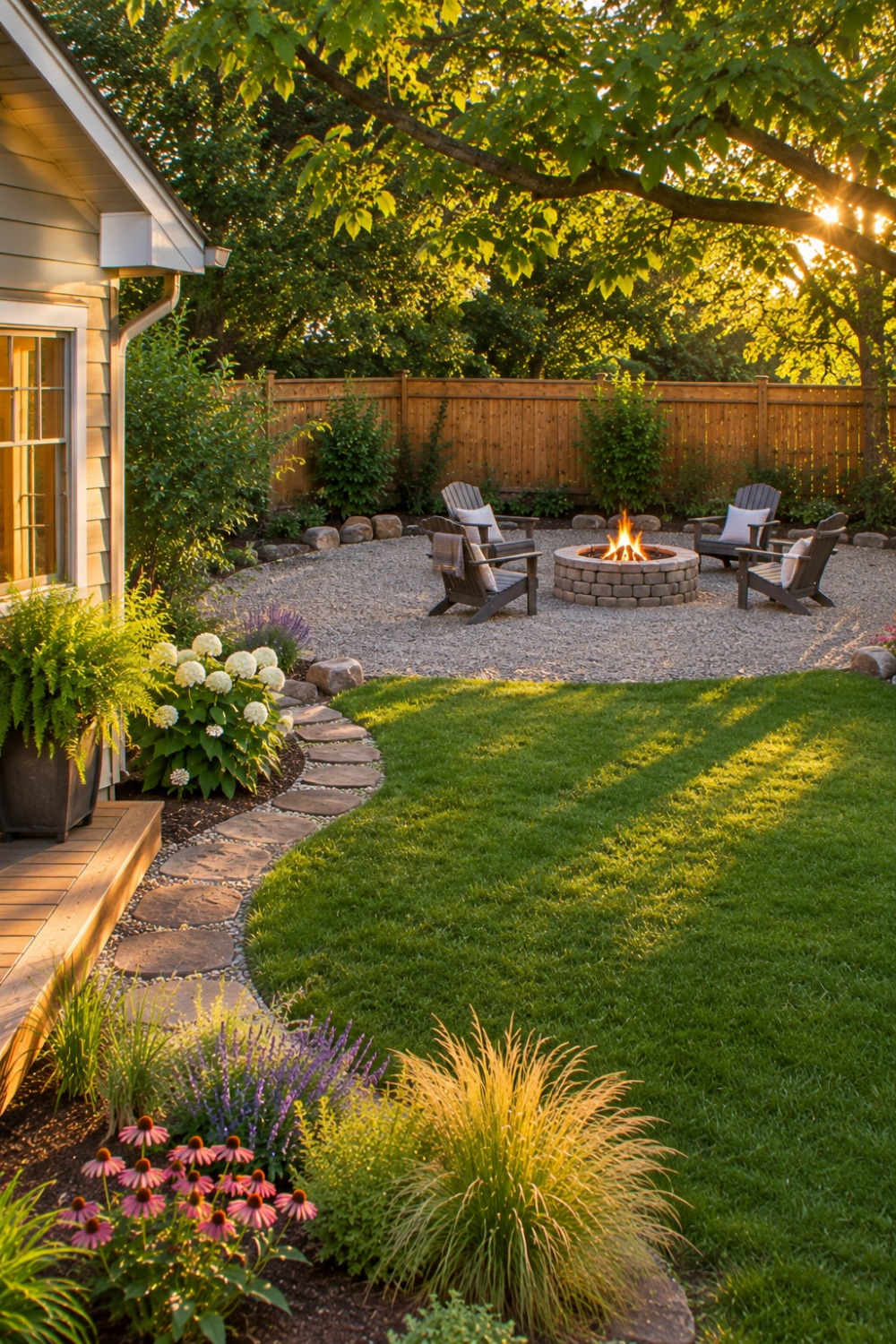
Placement comes first. A beautiful fire pit in the wrong spot is a hazard.
Travelers’ fire pit safety guidance recommends keeping fire pits at least 10 feet from your home, other structures and anything combustible, and not setting them up under string lights or power lines. Many local codes require more, so check your town’s rules too.
Look for an open, level area away from overhanging branches, fences and sheds.
How to do it:
- Check local fire codes, HOA rules and any burn restrictions.
- Measure clearances from the house, fences, sheds and trees.
- Notice the usual wind direction so smoke won’t blow toward the house.
Good to know: never use lighter fluid or gasoline to start or revive a fire, and keep a fire extinguisher or hose close by.
2. Set a Round Fire Pit in a Circle of Pea Gravel
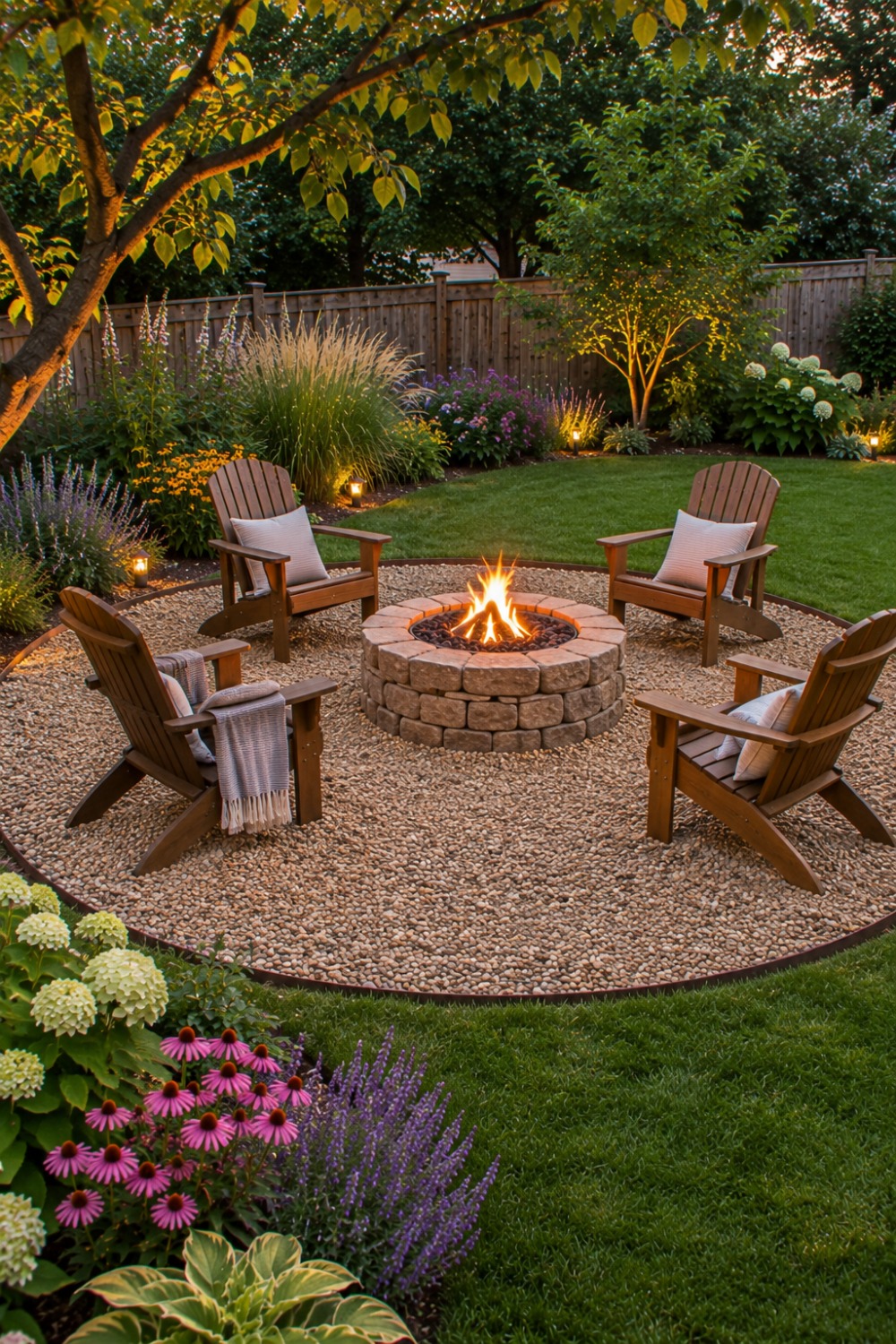
A pea gravel circle is the classic budget fire pit area, and it’s easy to build in a weekend.
Gravel drains quickly, doesn’t burn and lets you move chairs around freely.
Edge the circle with steel, stone or brick so the gravel stays in place.
How to do it:
- Mark a circle at least 16 to 20 feet across, with the pit in the center.
- Remove sod, compact the base and lay landscape fabric.
- Install edging and spread 2 to 3 inches of pea gravel.
3. Build a Sunken Fire Pit Lounge
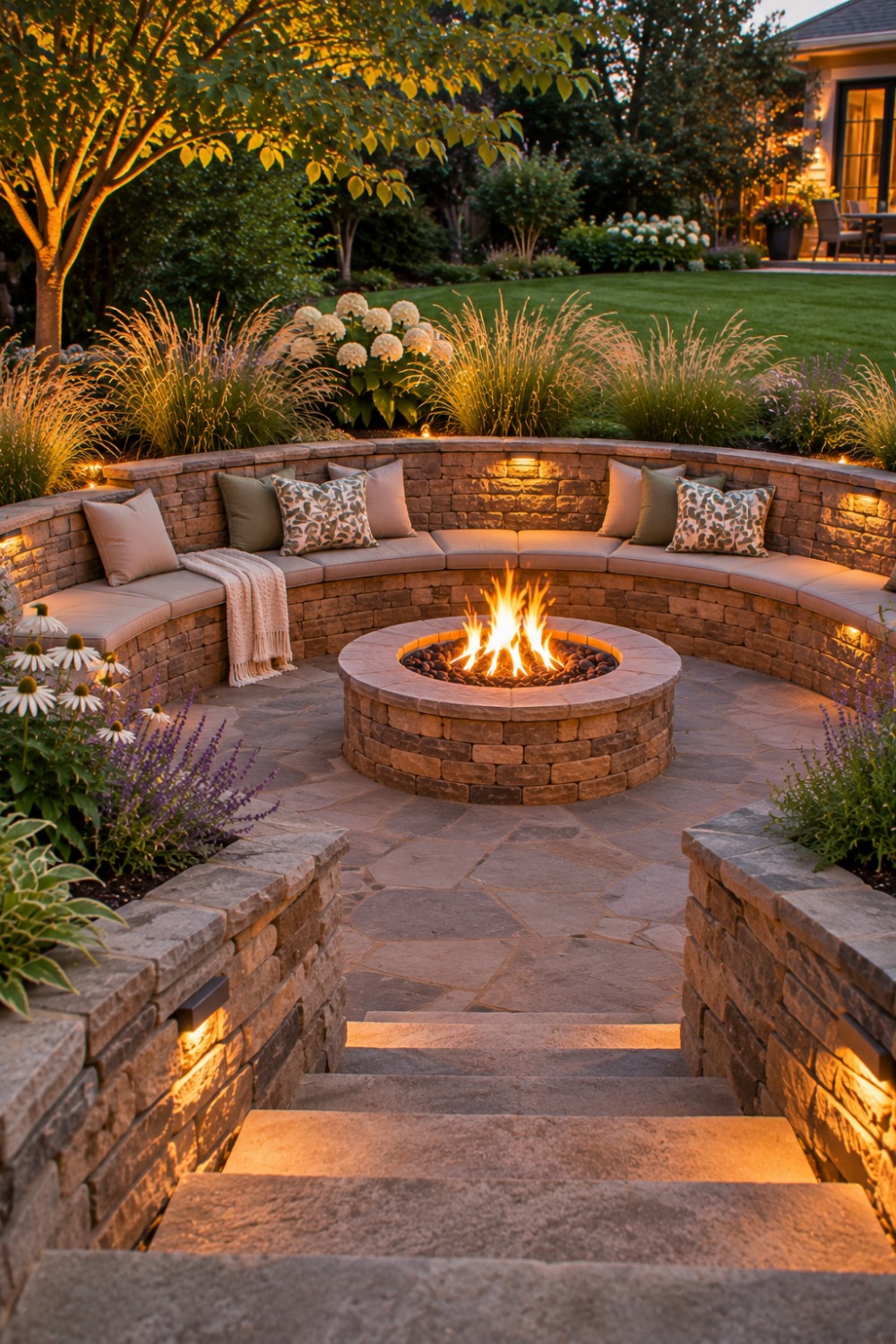
Lowering the seating area a step or two below the surrounding yard makes it feel enclosed and cozy.
Retaining walls around the edge double as built-in seats, and the walls help block the wind.
It’s a bigger project, best done with professional help, but it creates a real outdoor room.
How to do it:
- Have drainage and excavation planned by a professional.
- Build retaining walls at seating height, around 18 inches.
- Add cushions and plant the top edge with low grasses.
4. Surround the Pit With a Flagstone Patio
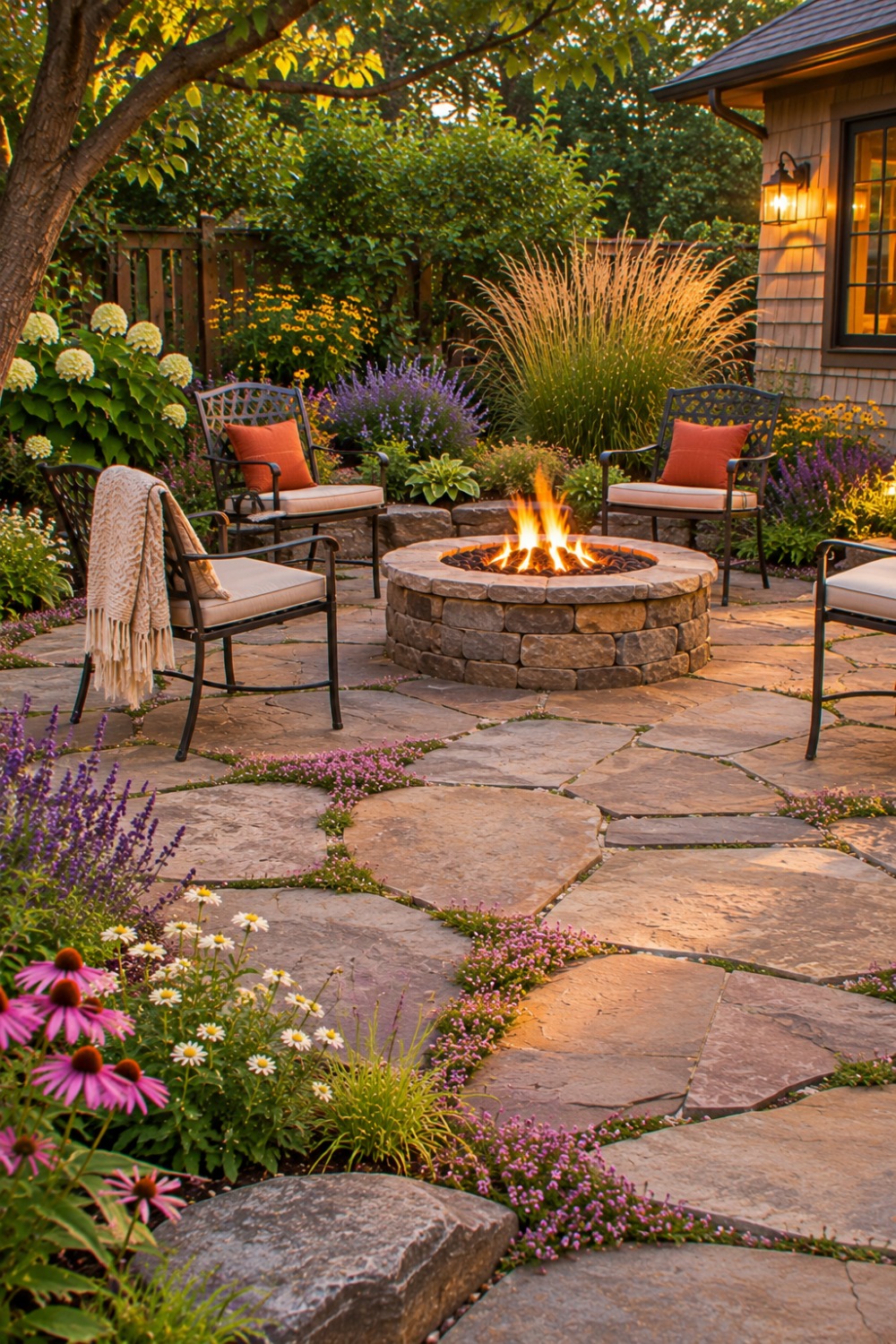
Irregular flagstone gives a fire pit area a natural, timeless look.
Set the stones on compacted sand for a more relaxed feel, or in mortar for a smoother surface.
Low ground covers between the outer stones soften the edges and blend the patio into the garden.
How to do it:
- Excavate and compact a gravel and sand base.
- Lay the largest stones first, then fill gaps with smaller pieces.
- Plant low ground covers in the outer joints, well away from the fire.
5. Add Built-In Seat Walls
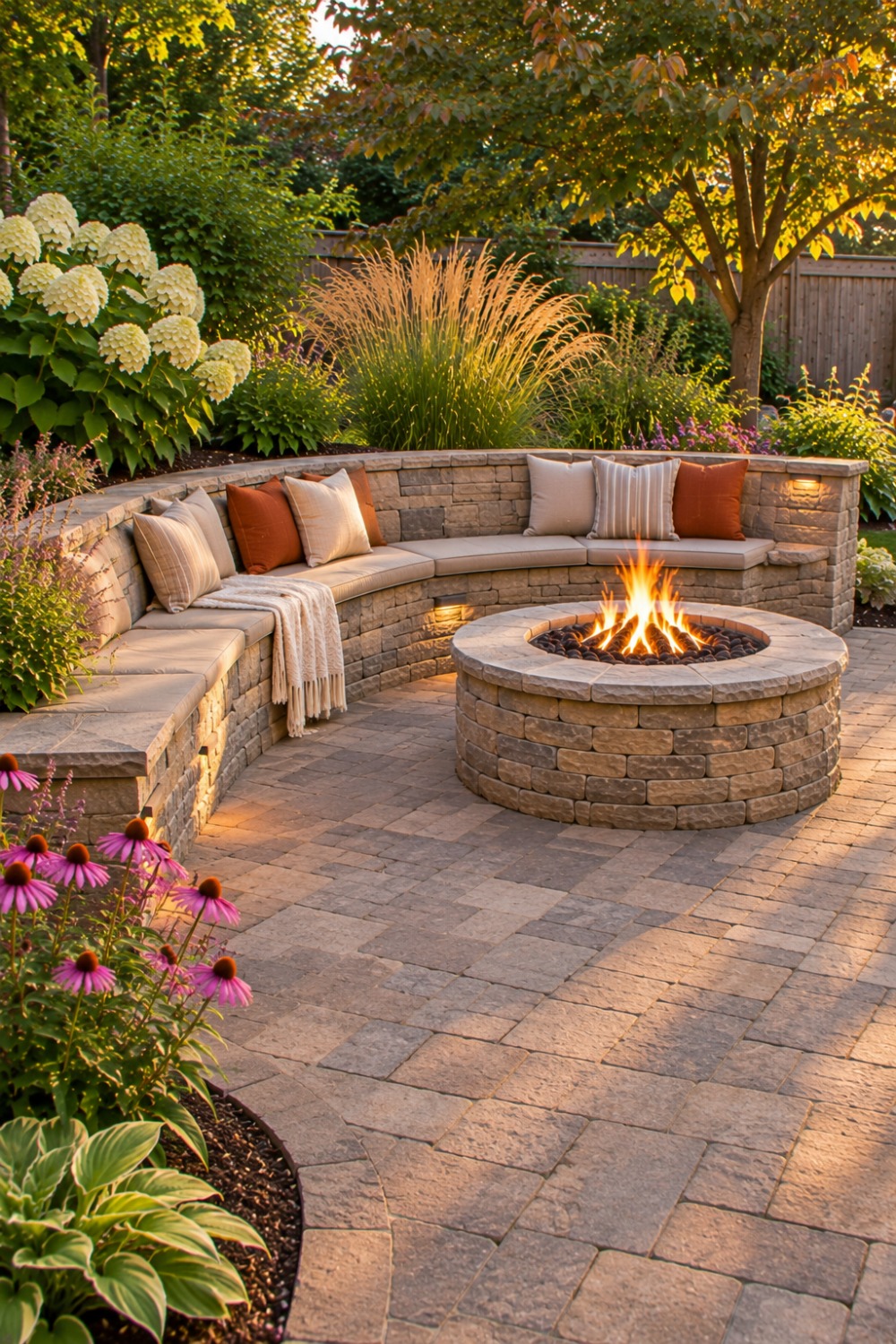
A curved seat wall gives permanent seating that never needs storing for winter.
Build it from the same stone or block as the fire pit so the whole area looks unified.
Add outdoor cushions for comfort and leave openings so people can walk in easily.
How to do it:
- Plan the wall in an arc a comfortable distance from the pit.
- Build it 16 to 20 inches high, the height of a chair seat.
- Cap it with smooth stone for comfortable sitting.
6. Arrange Adirondack Chairs for a Classic Look
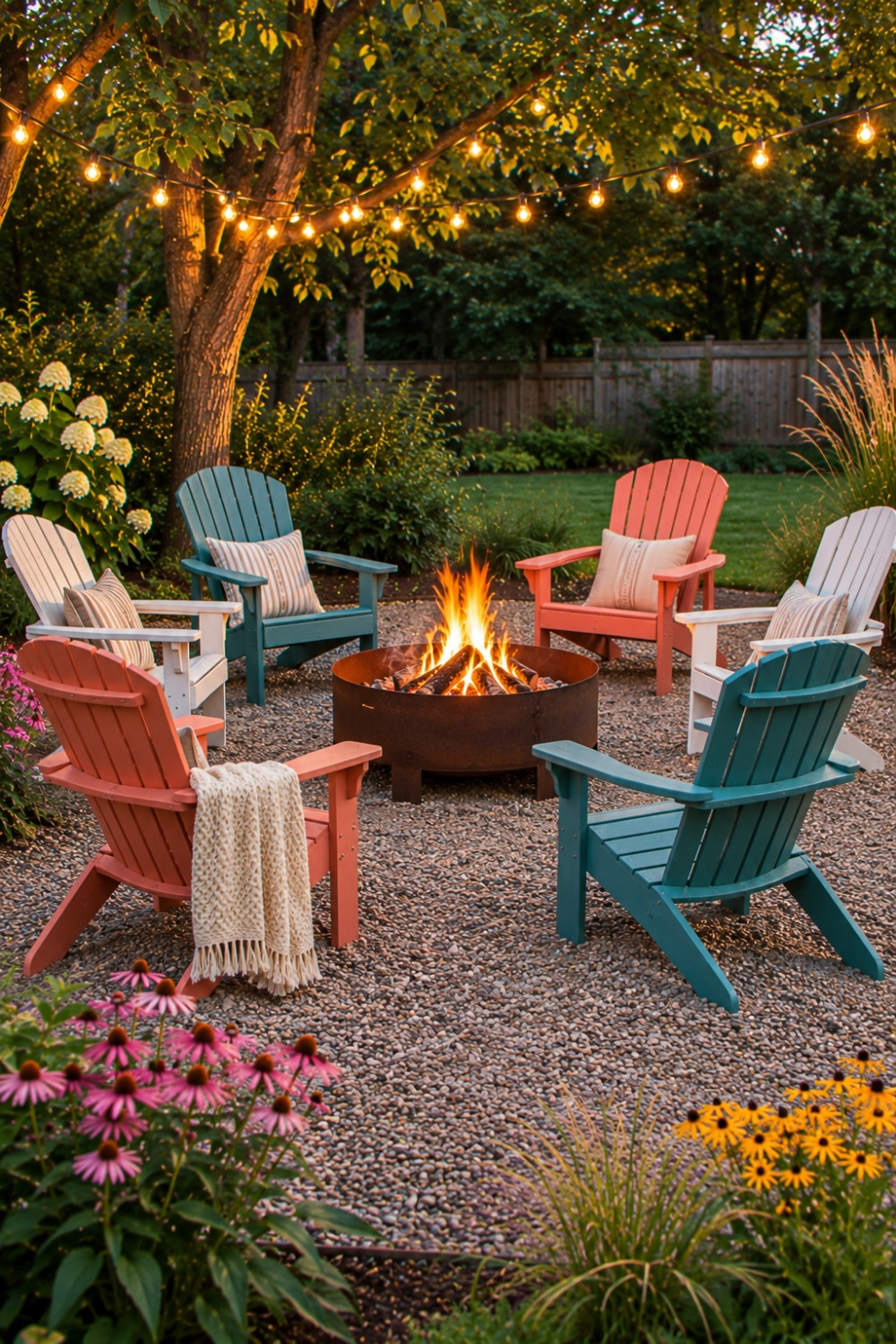
Adirondack chairs are the iconic fire pit seating, and for good reason: they’re comfortable, weatherproof and easy to rearrange.
Choose a color that pops against your planting or one that blends with the stone.
According to paver maker Unilock’s guidance, chairs around a wood-burning fire pit should sit at least 3 feet from the pit.
How to do it:
- Choose four to six chairs depending on the space.
- Arrange them in a circle at a comfortable, safe distance.
- Add small side tables for drinks.
7. Frame the Area With Low, Well-Watered Planting
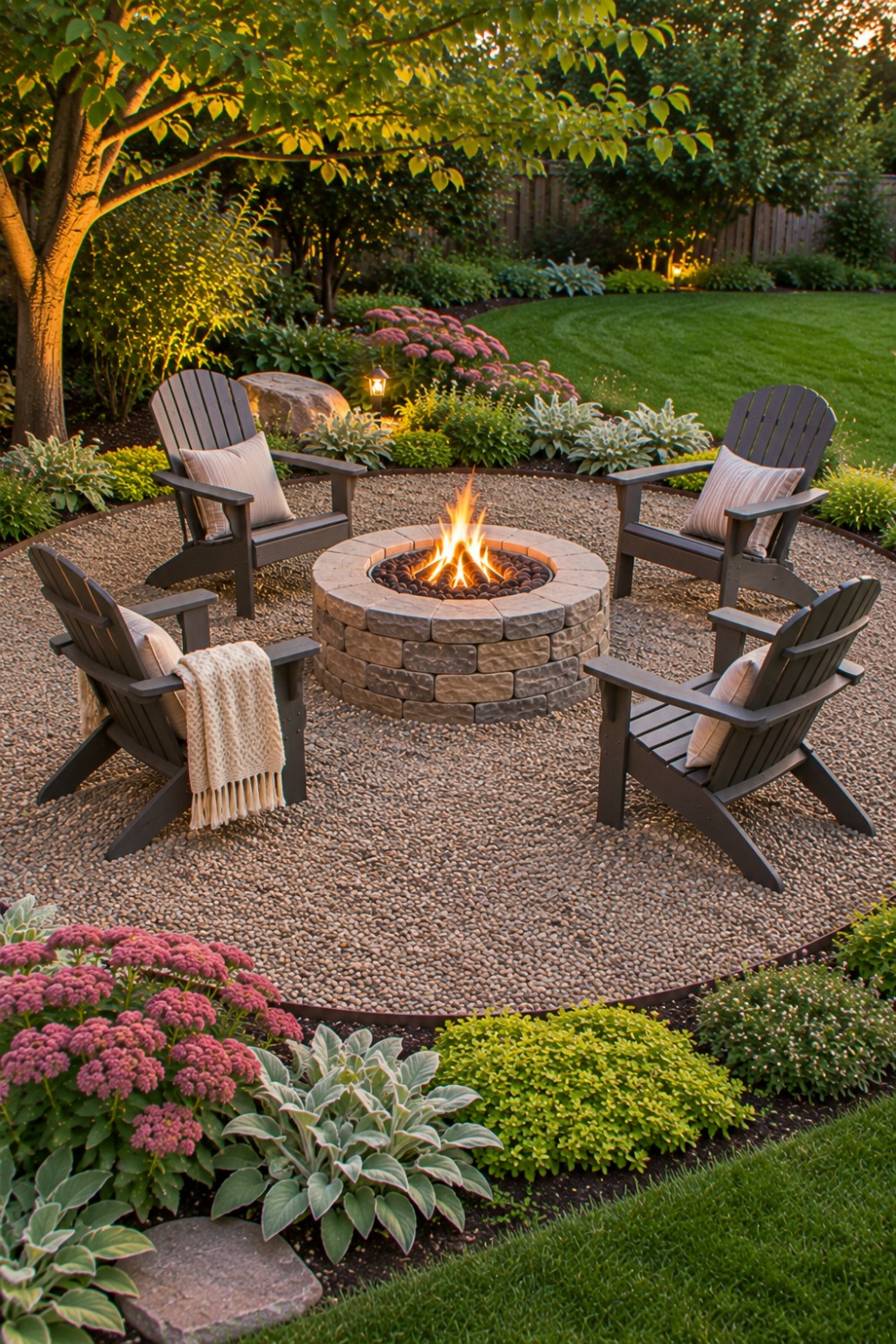
Planting makes a fire pit area feel like part of the garden rather than an island of gravel.
Keep plants low near the fire and choose ones with high moisture content, such as sedum, ice plant or lamb’s ears, instead of resinous conifers or ornamental grasses that dry out.
Keep a clear gap between the planting and the fire, and water these beds regularly.
How to do it:
- Leave a clear, non-combustible zone around the pit.
- Plant low, moisture-rich plants at the outer edge.
- Keep the area free of dry leaves and dead stems.
Common mistake: planting tall ornamental grasses right beside the fire. They look great, but dry winter stems can catch sparks.
8. Light the Path to the Fire Pit
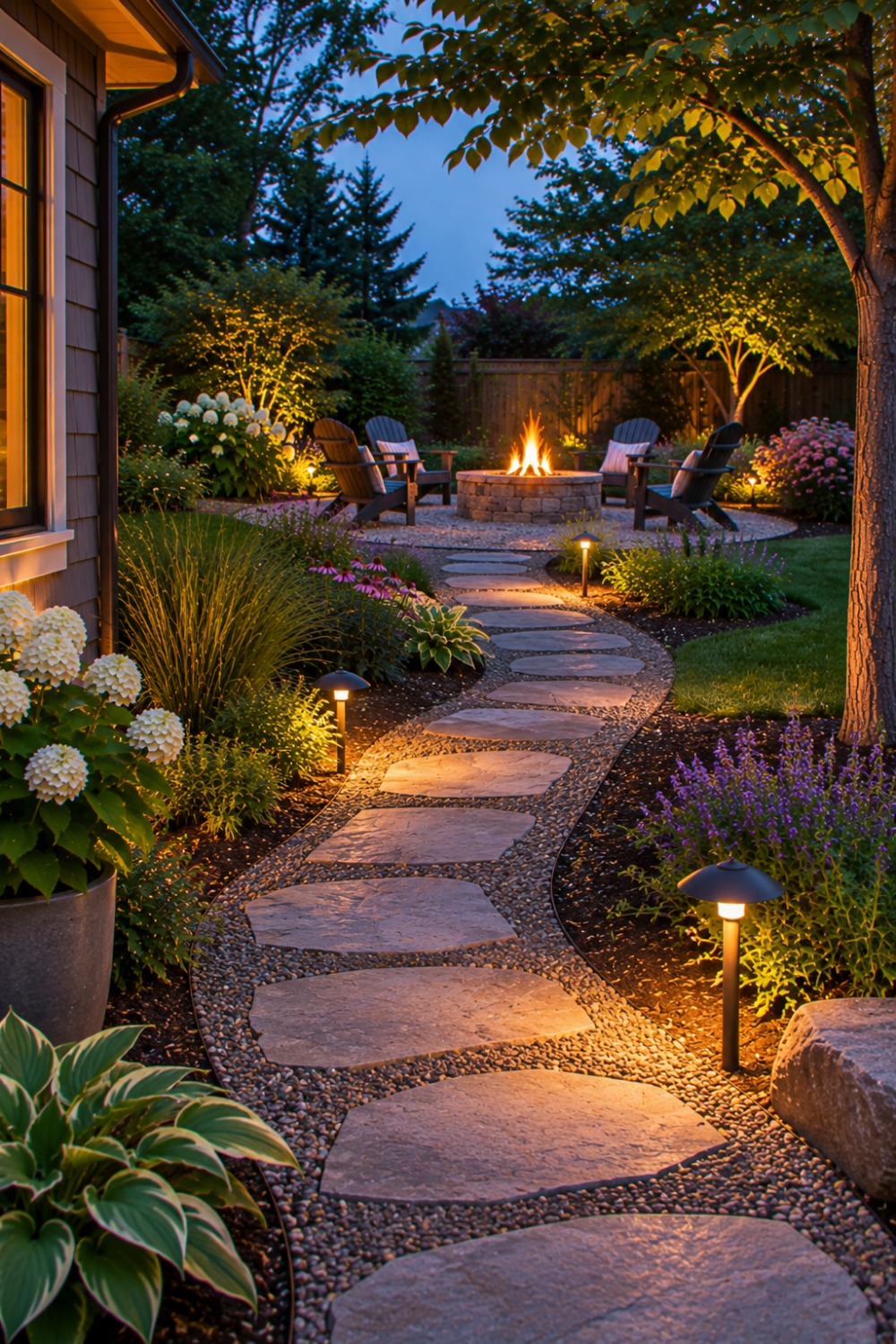
When the fire pit sits at the back of the yard, people need a safe way to get there after dark.
Low path lights, step lights or lanterns along the route make the walk easy and build anticipation as you approach.
Keep the lighting soft so it doesn’t compete with the glow of the fire.
How to do it:
- Plan a clear path from the house to the fire area.
- Space low path lights along one side.
- Use warm white light on a timer.
9. Hang String Lights Around, Not Over, the Fire
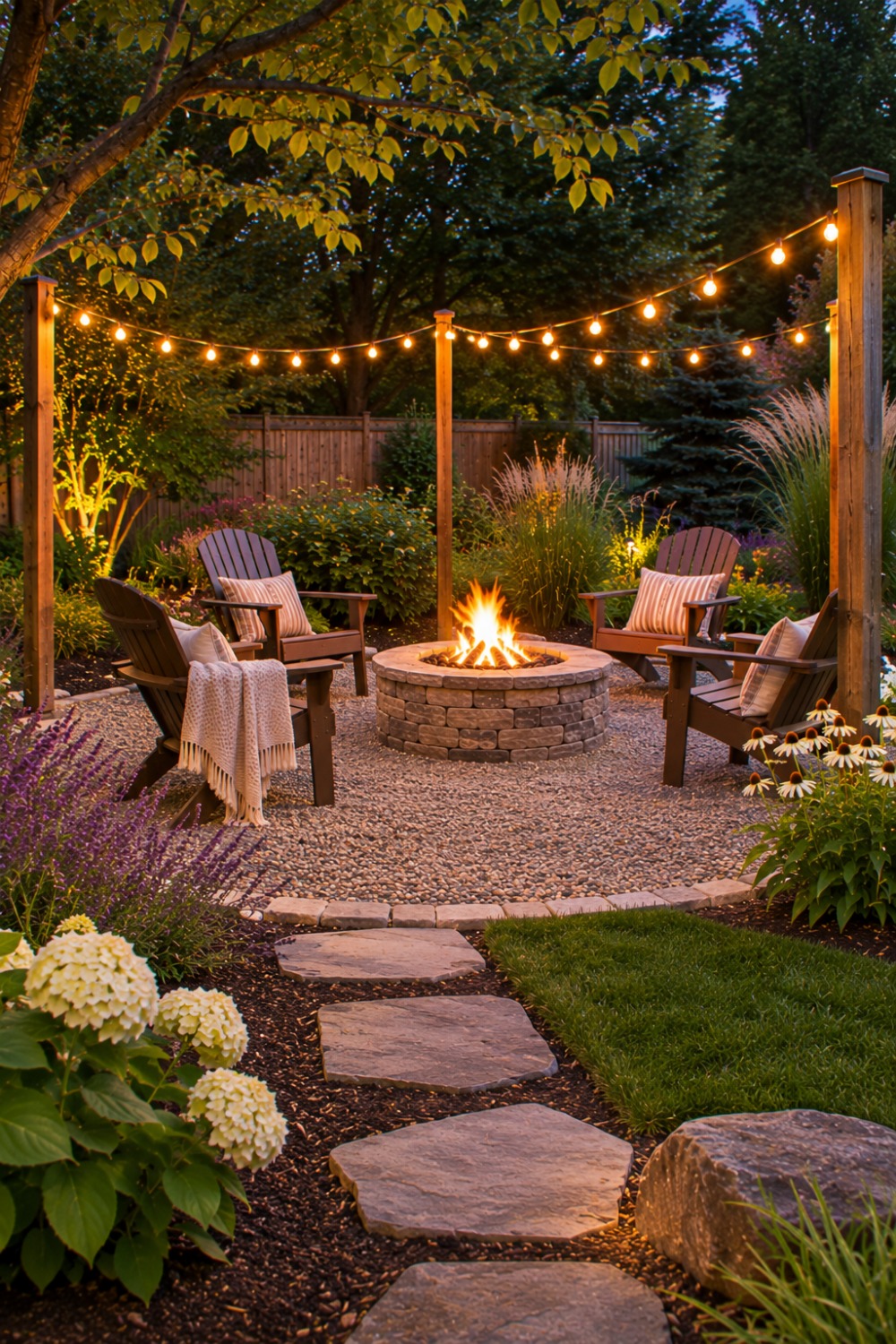
String lights add a festive glow to a fire pit area, but they should never hang directly above the flames.
Run them between posts or trees around the outside of the seating area, so they frame the space overhead without being over the fire.
Choose outdoor-rated lights and plug them into a protected outdoor outlet.
How to do it:
- Set sturdy posts or use trees outside the fire pit clearance zone.
- Run lights around the perimeter, not across the middle.
- Keep cords away from walkways and the fire.
10. Terrace a Sloped Yard for a Fire Pit Nook
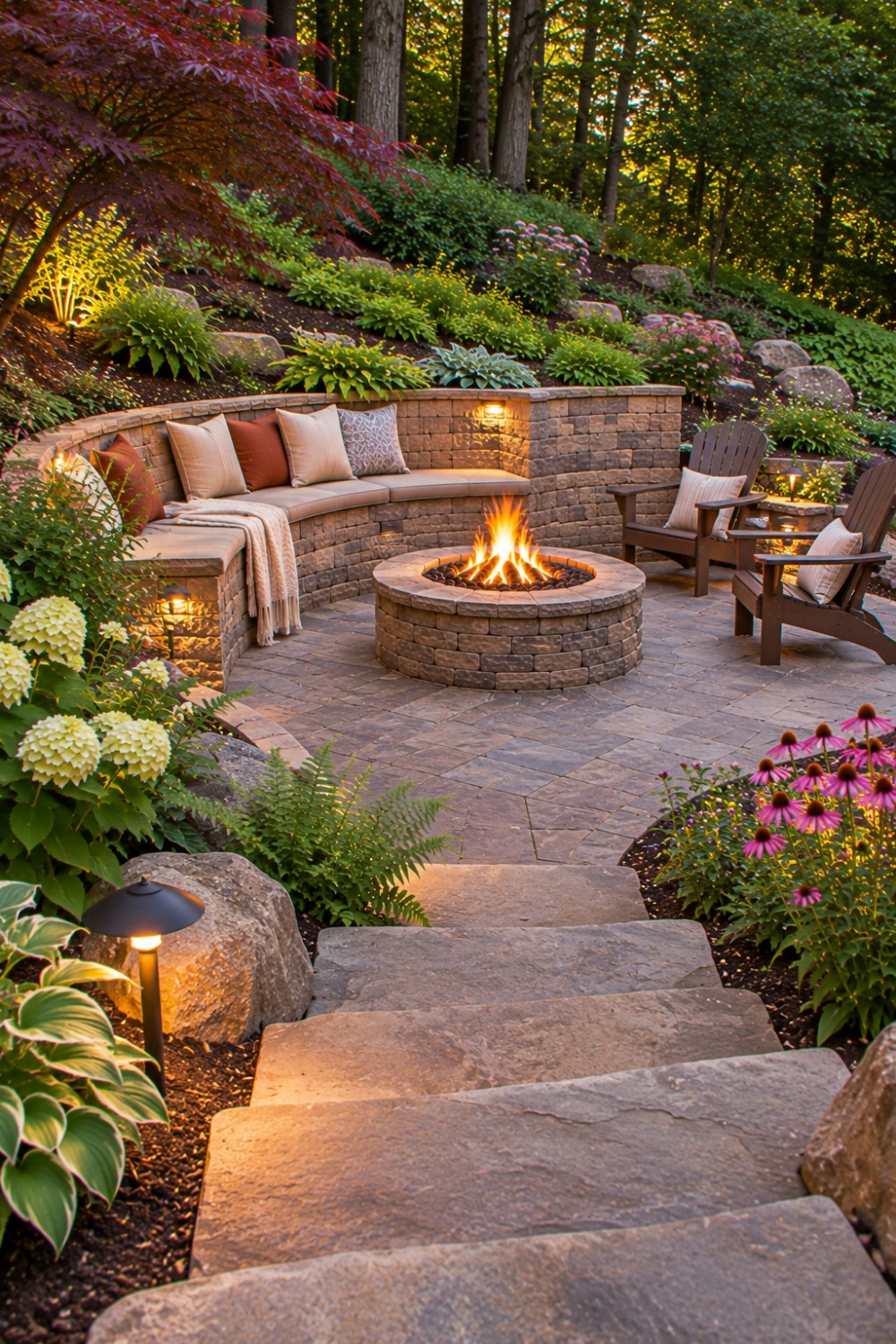
A slope doesn’t rule out a fire pit. Cutting a level terrace into the hillside creates a sheltered nook with a view.
The bank behind it can be planted with low shrubs and ground covers, which also helps control erosion.
Steps leading down to the terrace add to the sense of arrival.
How to do it:
- Have a professional design retaining walls for the slope.
- Create a level terrace large enough for seating.
- Plant the bank above with deep-rooted ground covers.
11. Ring a Rustic Fire Pit With Natural Boulders
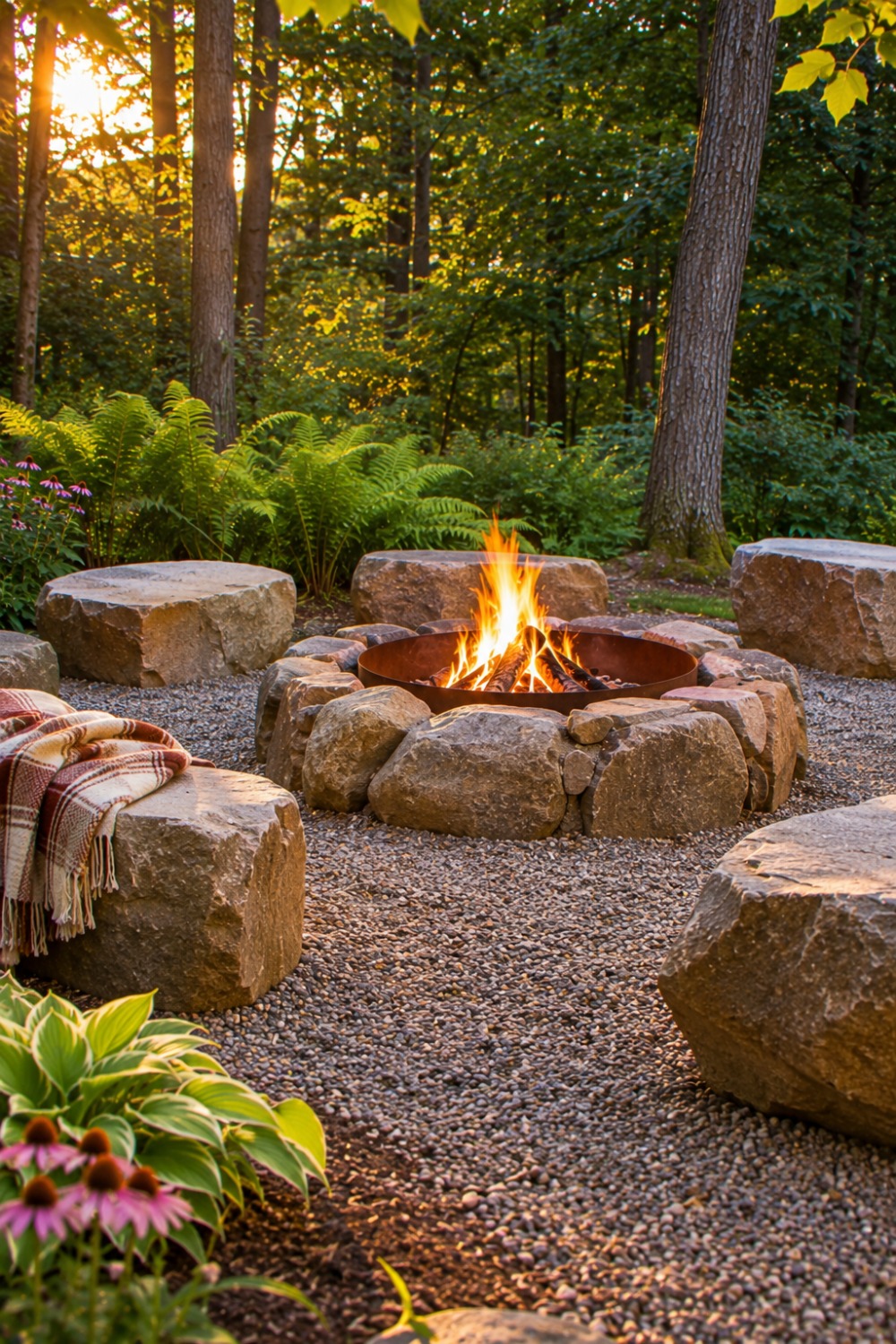
For a cabin-in-the-woods feel, build the fire pit ring from large natural stones or boulders.
Flat-topped boulders around the outside can serve as rustic seating.
This style suits wooded lots, country properties and naturalistic gardens.
How to do it:
- Use a steel fire ring insert for safety and durability.
- Set boulders around it, partly buried for stability.
- Add flat-topped stones at seating distance.
12. Go Modern With a Gas Fire Table
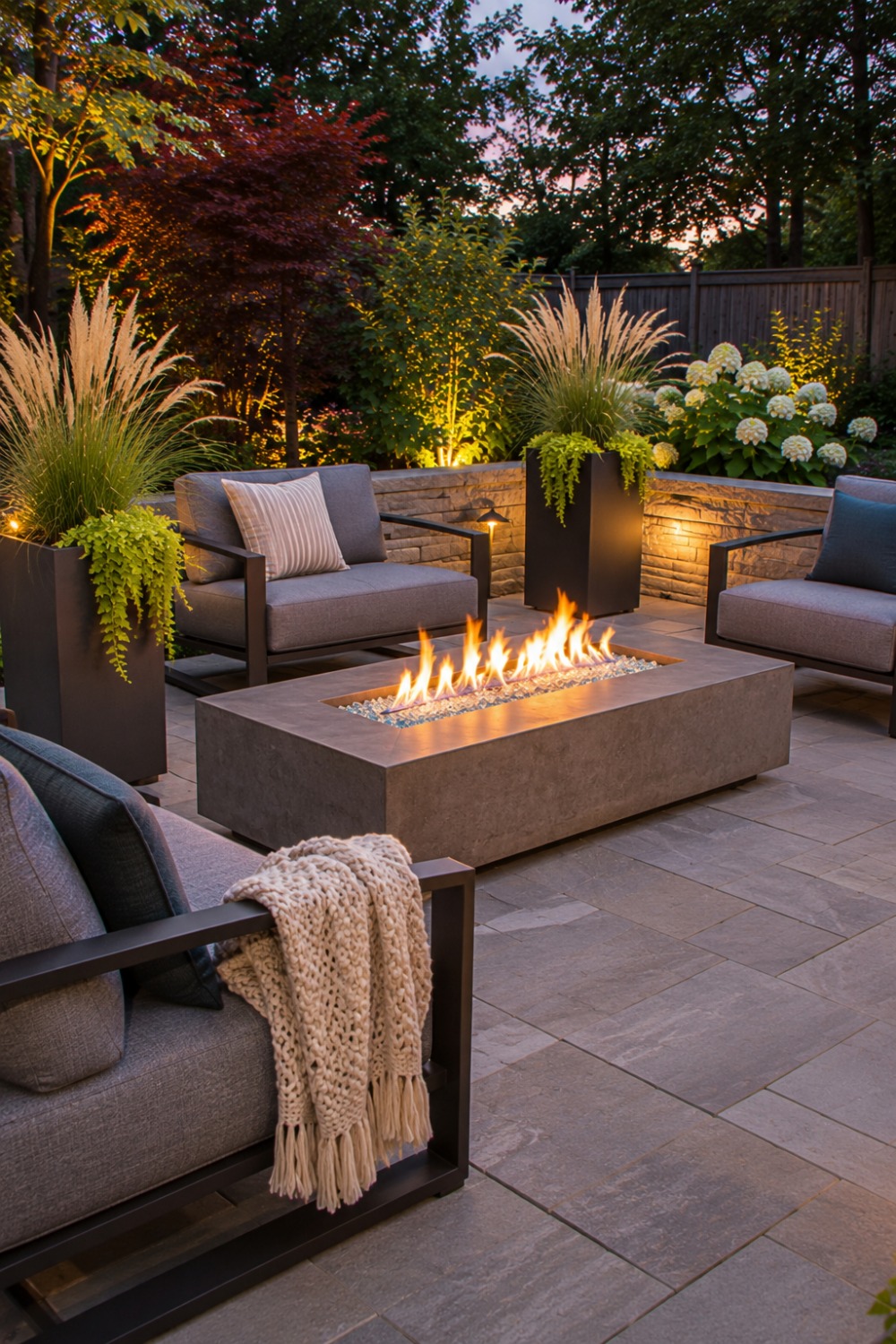
A gas fire table gives instant flames with no smoke, sparks or ash to clean up.
Its clean lines suit contemporary patios, and the tabletop doubles as a place to set drinks.
Gas features often need less clearance than wood-burning ones, but always follow the manufacturer’s instructions and local codes.
How to do it:
- Choose propane or natural gas based on your setup.
- Have gas lines installed by a licensed professional.
- Pair with low, modern lounge seating.
13. Create a Living Screen for Shelter and Privacy
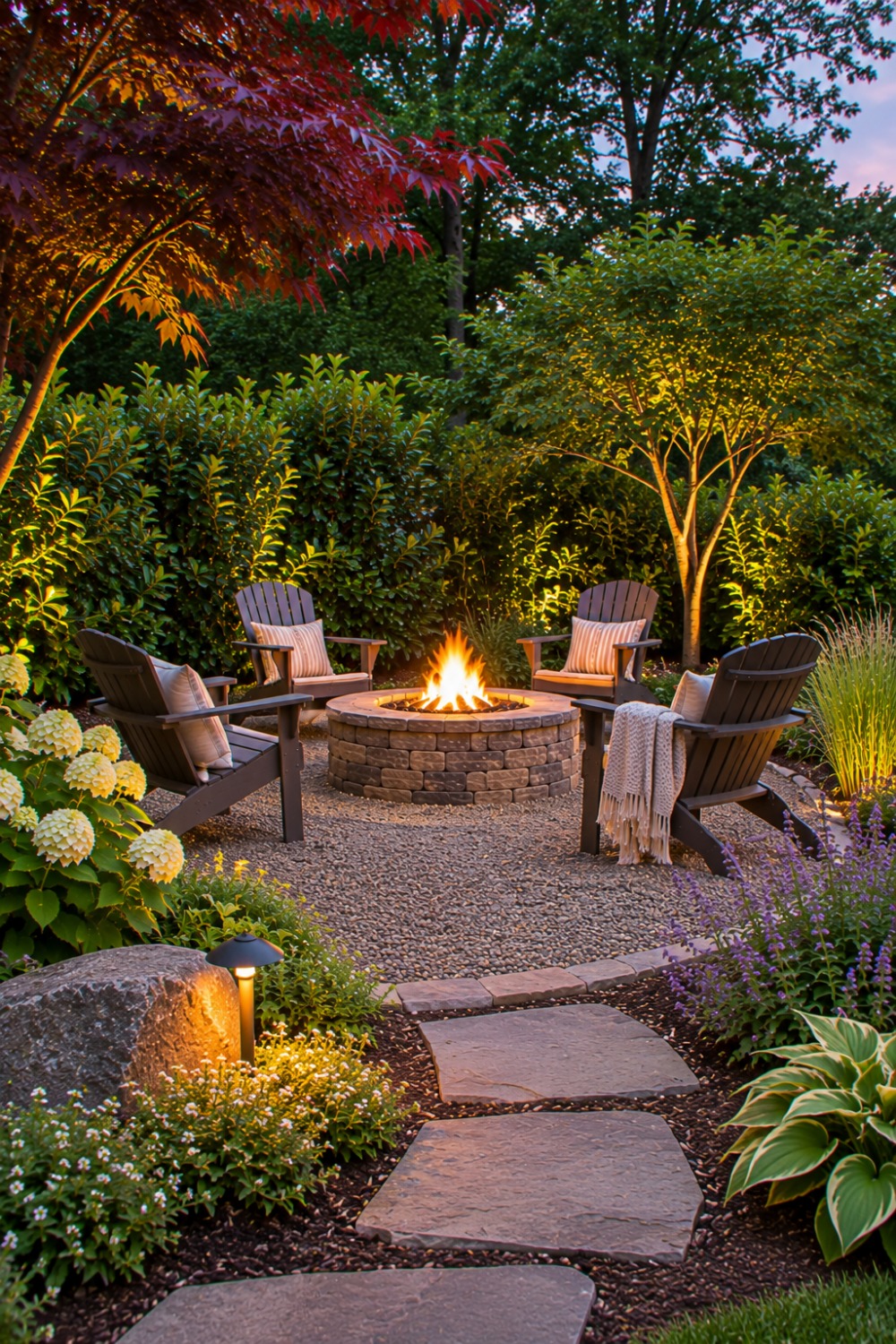
A fire pit area feels coziest when it has a sense of enclosure.
Plant a screen of shrubs or small trees on the windward side, a safe distance from the fire, to block breezes and views from neighbors.
Evergreens with broad leaves are a better choice near fire areas than resinous conifers.
How to do it:
- Note the direction of prevailing winds.
- Plant the screen well outside the fire clearance zone.
- Keep it watered and free of dead material.
14. Store Firewood Away From the Pit
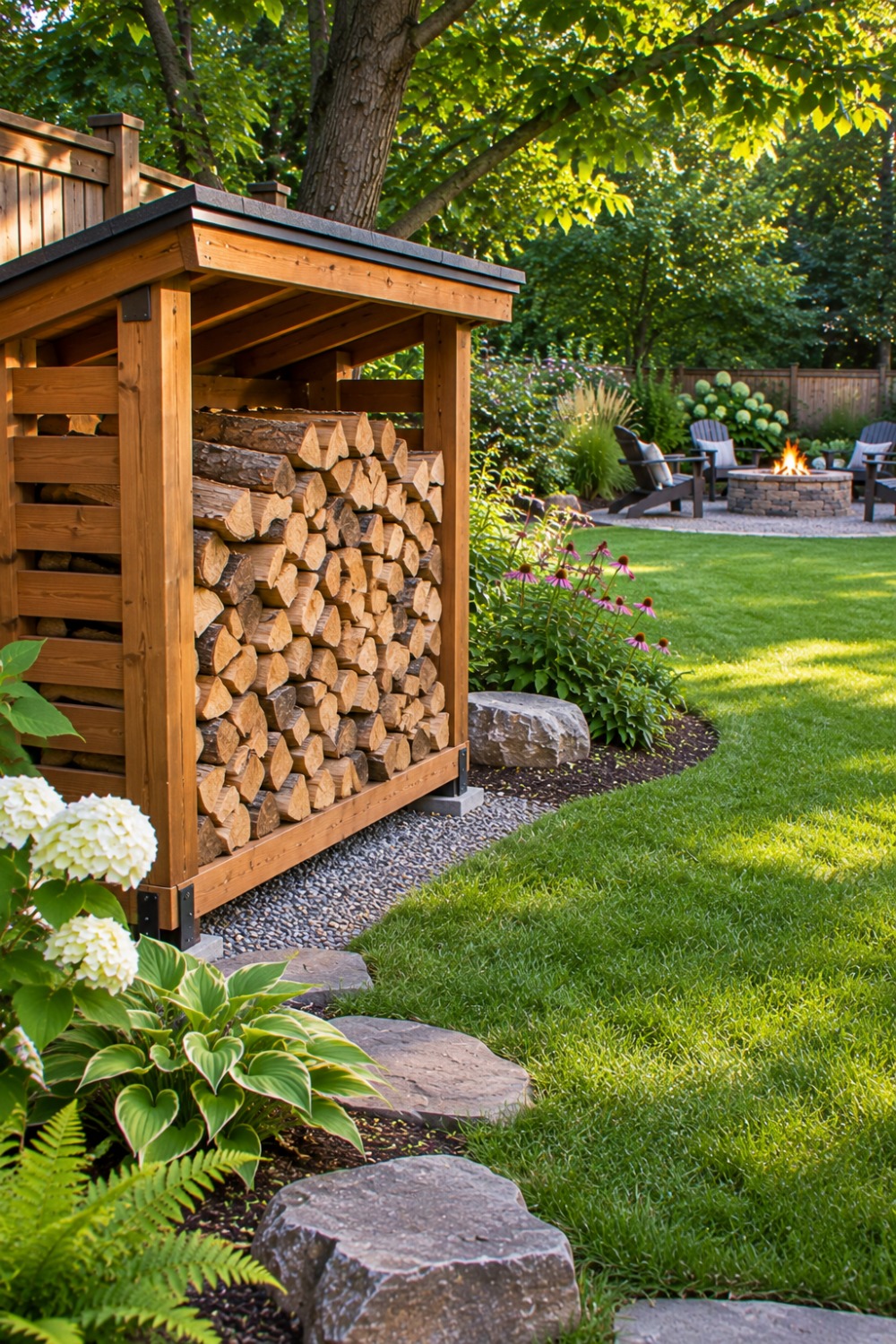
A neat stack of firewood looks great, but it shouldn’t sit right next to the fire or the house.
Travelers advises keeping stacked firewood at least 30 feet from your fire pit and home.
A small log holder near the seating can hold just enough wood for one evening.
How to do it:
- Build or buy a covered firewood rack.
- Place it well away from the house and fire pit.
- Bring only a few logs at a time to the fire.
15. Position the Fire Pit to Frame a View
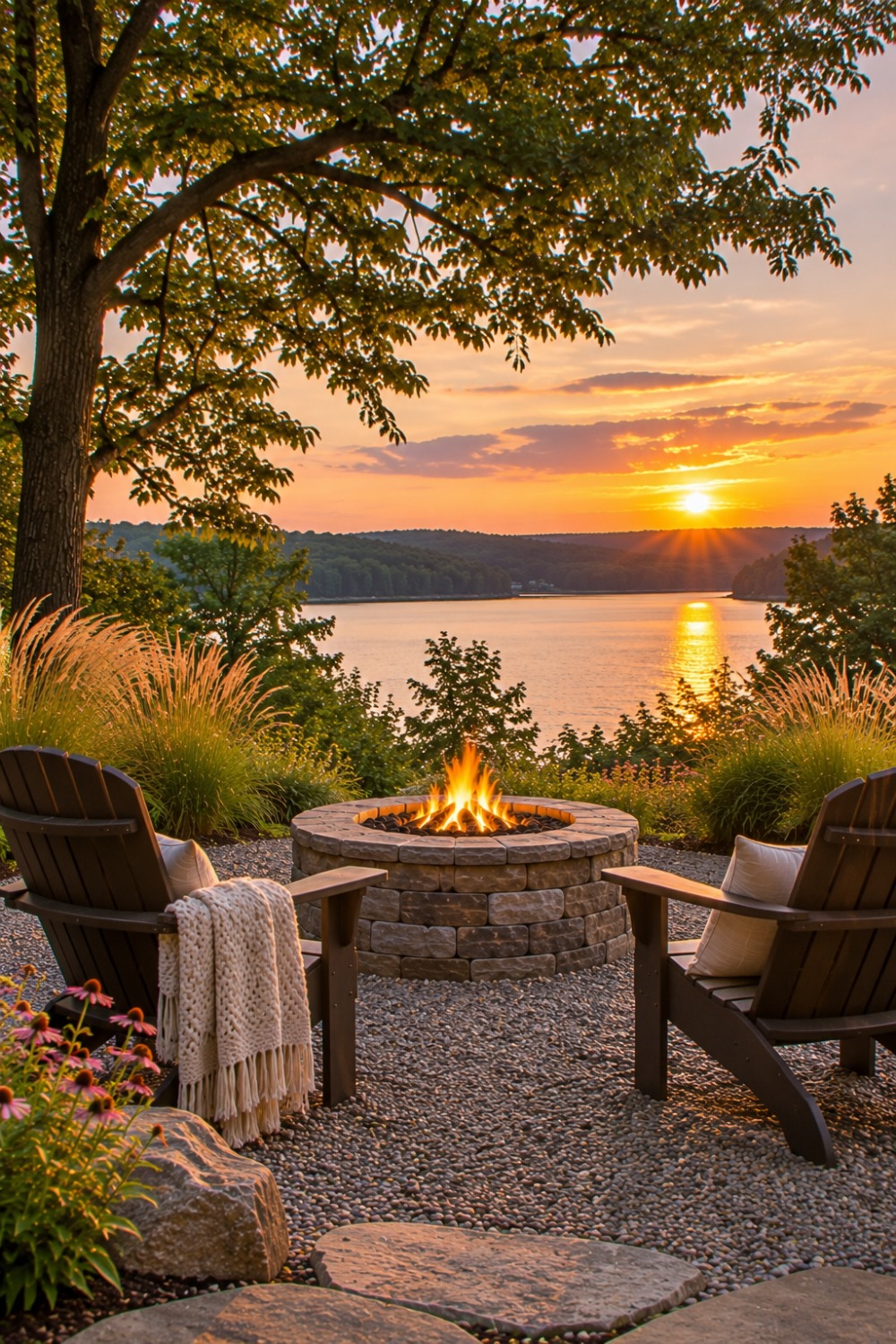
If your yard has a view of hills, water or a beautiful tree, orient the seating to face it.
Place the fire pit so the best view sits beyond it, and keep planting low on that side.
Sunset fires become an event when the sky is part of the scene.
How to do it:
- Sit in different spots at sunset to find the best view.
- Place seating on the side facing away from the view.
- Keep plants low between the fire and the view.
16. Use a Portable Fire Bowl in a Small Yard
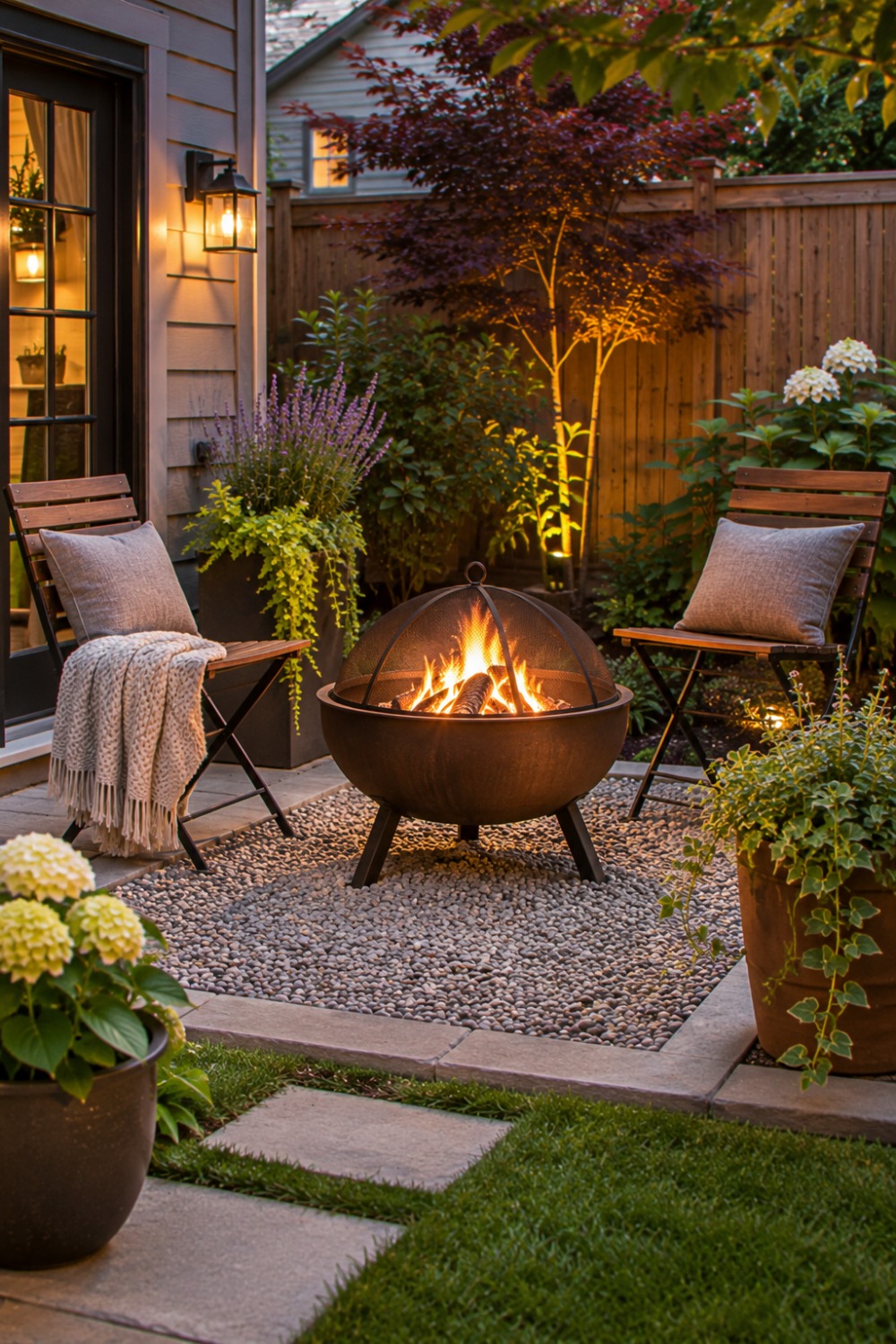
If you rent or have a small space, a portable fire bowl gives you the same cozy evenings without construction.
Set it on a large paver, a gravel pad or a fireproof mat, never directly on wood decking.
Store it when it’s not in use to free up space.
How to do it:
- Choose a stable, spark-screened model.
- Place it on a level, non-combustible surface.
- Check local rules for portable fire features.
17. Plant Fragrant Herbs Near the Seating
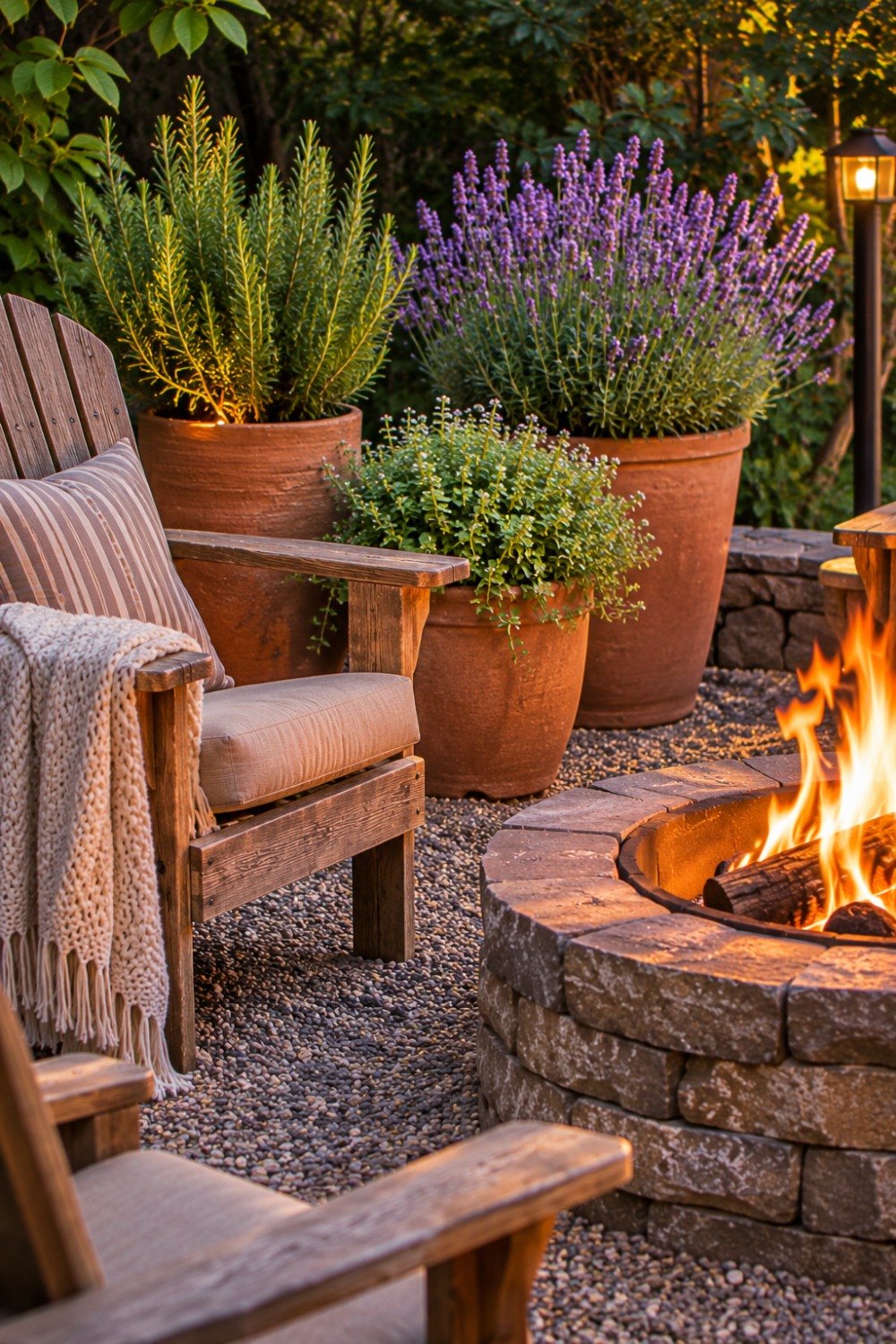
Fragrant herbs around the outer edge of the seating area add scent on warm evenings.
Rosemary, lavender, lemon thyme and mint in containers can be moved closer or farther as needed. For more ideas, see our list of plants that keep bugs away.
Keep the containers watered and outside the fire’s clearance zone.
How to do it:
- Choose a few large containers.
- Plant rosemary, lavender and lemon-scented herbs.
- Place them behind the seating, not beside the fire.
Frequently Asked Questions
How far should a fire pit be from the house?
Travelers’ fire pit safety guidance recommends at least 10 feet from the house, other structures and anything combustible. Local fire codes may require more, so check with your town or fire department before you build.
What is the best surface around a fire pit?
Non-combustible surfaces such as pea gravel, flagstone, pavers or concrete are safest. Avoid placing wood-burning fire pits directly on wooden decks or near dry mulch.
What plants are safe near a fire pit?
Low plants with high moisture content, such as sedum, ice plant and lamb’s ears, are better choices than resinous conifers or tall dry grasses. Keep all plants outside the clearance zone and well watered.
Can I build a fire pit on a budget?
Yes. A pea gravel circle with a simple stone ring or steel insert is one of the cheapest options, and a portable fire bowl on a gravel pad is even simpler.
Final Thoughts: Plan the Fire Pit Area as a Whole Outdoor Room
A great fire pit area is about more than the fire itself.
Start with safe placement, then choose a surface, seating and lighting that suit your yard and budget.
Gravel circles and portable bowls are quick, affordable wins. Seat walls, flagstone and sunken lounges take more work but create a space you’ll use for years.
Frame the area with low, well-watered planting and a living screen for shelter, and keep firewood and dry material well away from the flames.
Most importantly, check your local rules and keep safety equipment close by every time you light a fire.
Get those basics right, and your fire pit will become the heart of your backyard on cool evenings.