
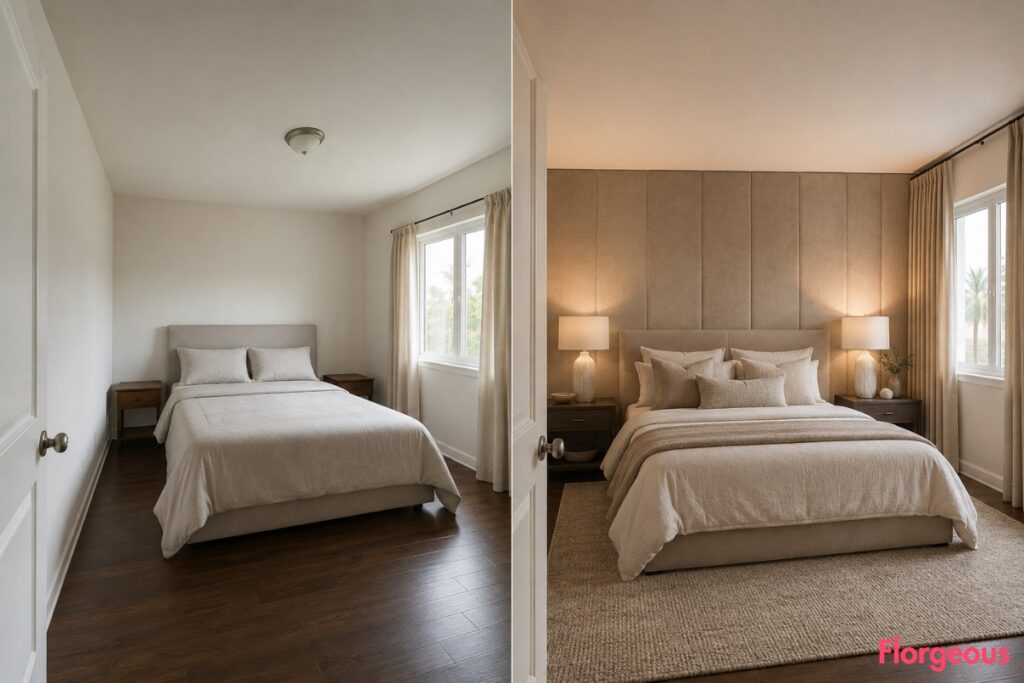
Our starting bedroom is deliberately ordinary: neutral walls, a basic bed with simple bedding, two bare nightstands, short plain curtains, a generic ceiling fixture, and almost no styling. It is clean and functional, but there is nothing memorable about it.
Now keep the architecture completely fixed. The doorway, window, floor footprint, ceiling height, camera angle, and circulation never change. Instead, imagine giving that exact room 21 completely different personalities.
These Coastal Bedroom ideas prove that seaside-inspired design can be tailored, earthy, dark, glamorous, architectural, vintage, contemporary, or wonderfully relaxed. The common thread is not shells or nautical signs. It is the thoughtful use of light, natural materials, color, texture, and atmosphere.
1. Sun-Washed California: Start With Plaster, Flax, and Pale Ash
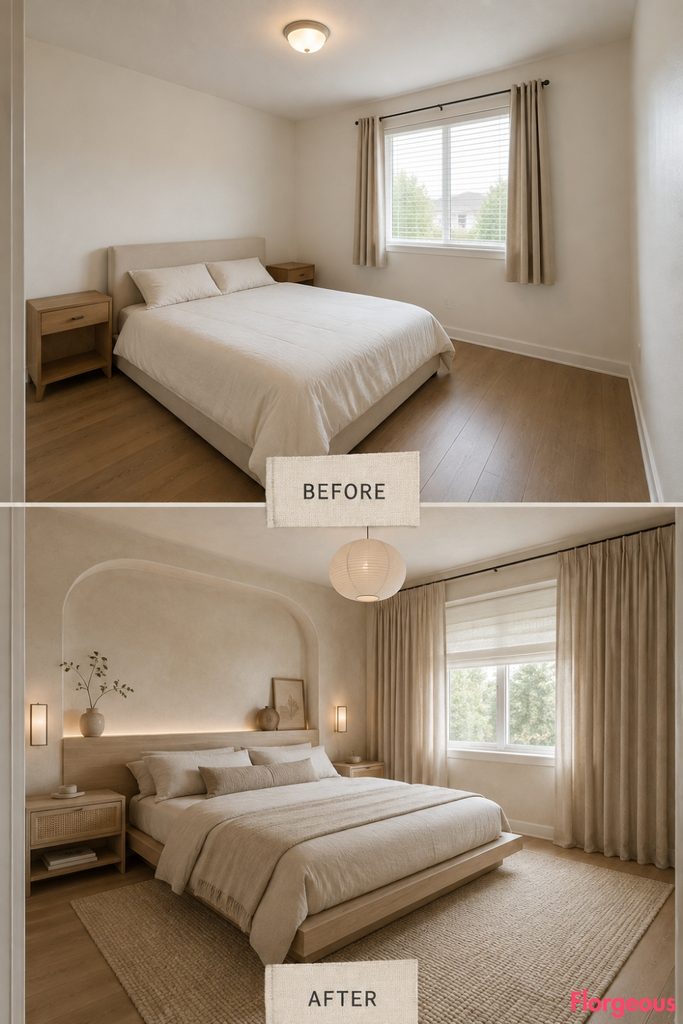
The first makeover is deliberately loose and unfussy.
Before: The locked builder-grade room feels flat, generic, and under-furnished.
After: Sandy plaster warms the walls, a low pale-ash platform bed lowers the visual center of gravity, and chunky woven nightstands add tactile contrast. Flax bedding, an oatmeal wool rug, floor-length curtains, and a softly irregular ceramic pendant complete the relaxed composition.
Designer Tip: Use ivory instead of bright white beside pale timber. It keeps a sunny room from feeling sterile.
2. From Builder-Grade Box to a Crisp New England Retreat
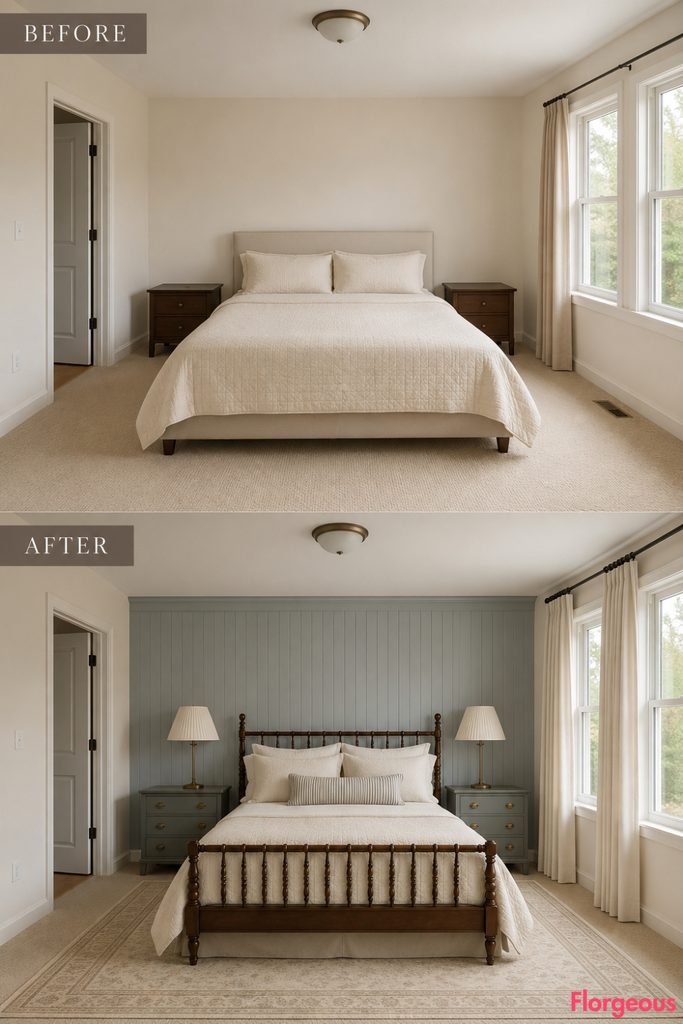
Here, architecture creates the coastal character.
Foggy blue-gray tongue-and-groove boards cover the bed wall. A dark mahogany spindle bed gives the room sharper definition, while painted bedside chests, pleated cream lamps, a bordered ivory rug, tailored curtains, and one restrained ticking-stripe cushion create a polished East Coast mood.
The contrast between dark timber and cool painted paneling keeps the room from feeling overly sweet.
3. No Blue, No Problem: A Bedroom Inspired by Coastal Dunes
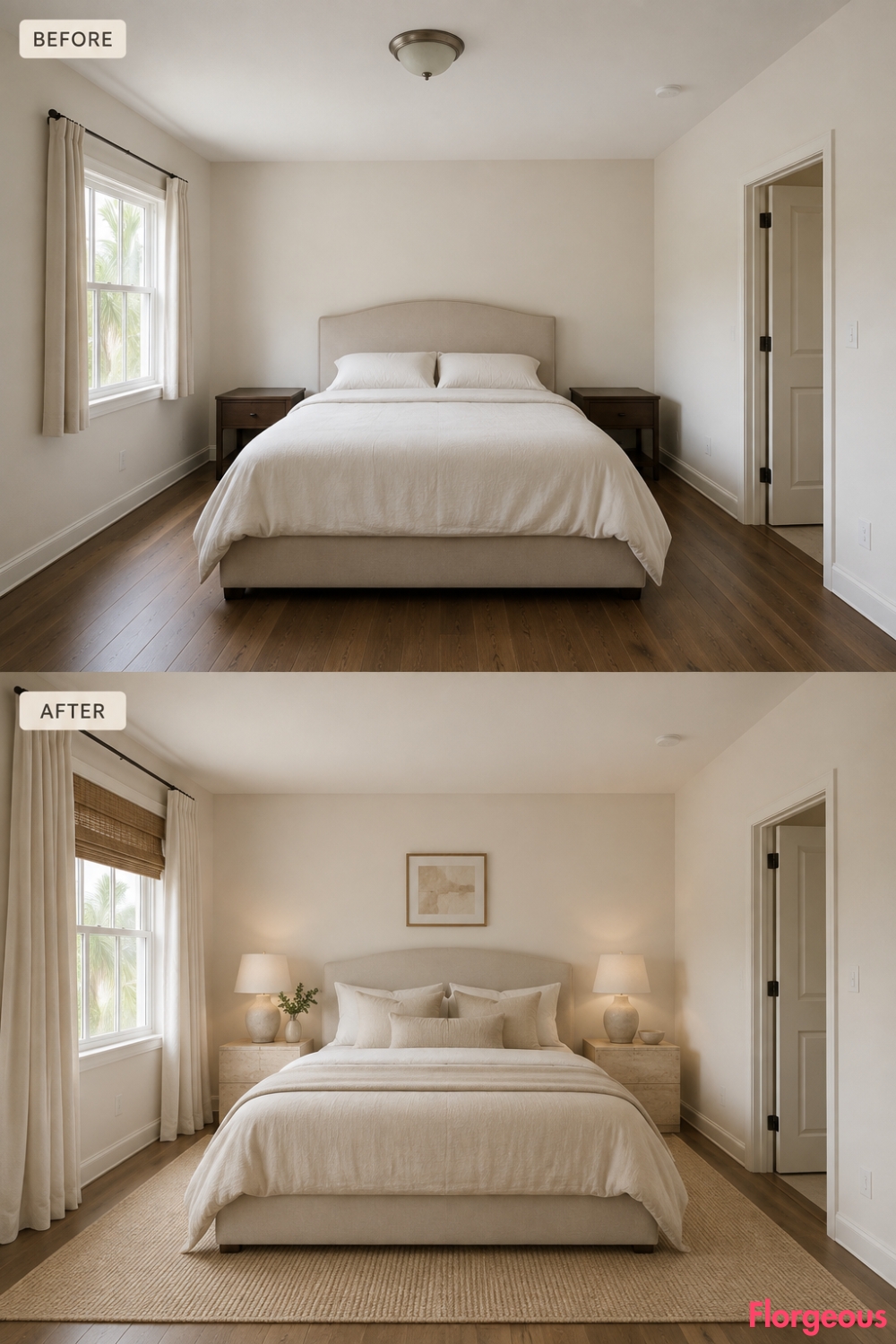
This room takes its palette from sand rather than sea.
A broad oatmeal upholstered bed sits against chalky ivory walls. Travertine bedside blocks, softly veined stone lamps, layered cream linen, woven Roman shades, and a thick sand-colored wool rug create subtle depth without a strong accent color.
Color Story: The interest comes from changing surfaces, not changing hues. Mix wool, limestone, woven fiber, upholstery, and linen.
4. What If the Mediterranean Coast Set the Mood?
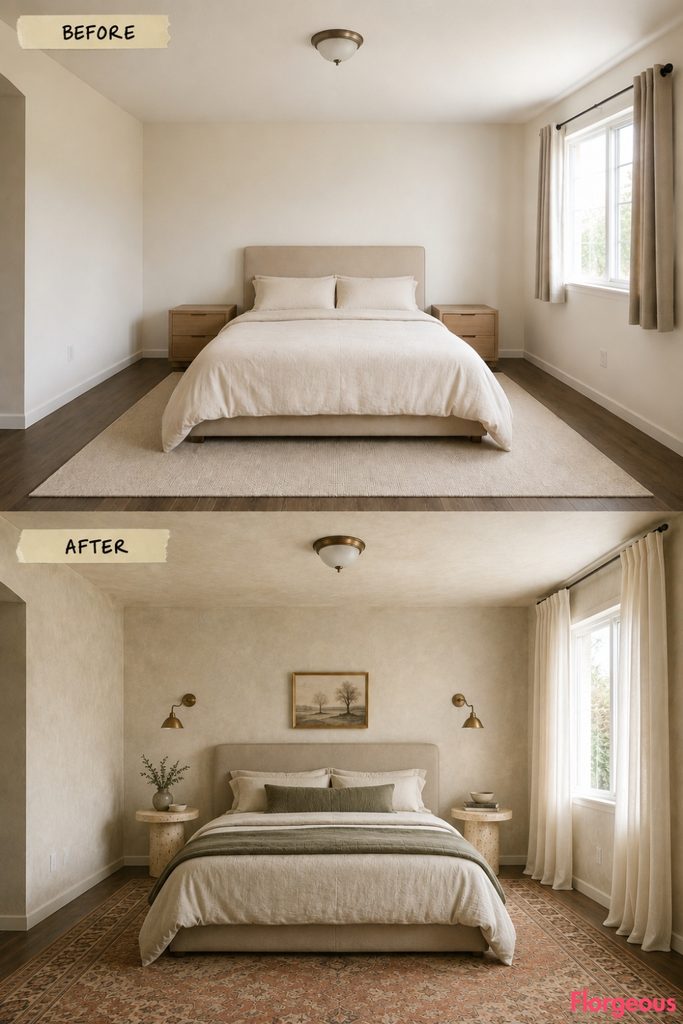
Instead of cool blues, this makeover uses sun-baked warmth.
Creamy limewash brings movement to the walls. A curved flax headboard sits between compact travertine pedestals, while hand-thrown ceramic lamps, olive-gray linen, a faded terracotta-and-sand rug, and aged brass create a softer European seaside character.
Nothing is heavily rustic, which keeps the look fresh.
5. Storm Warning: Take the Whole Room Darker
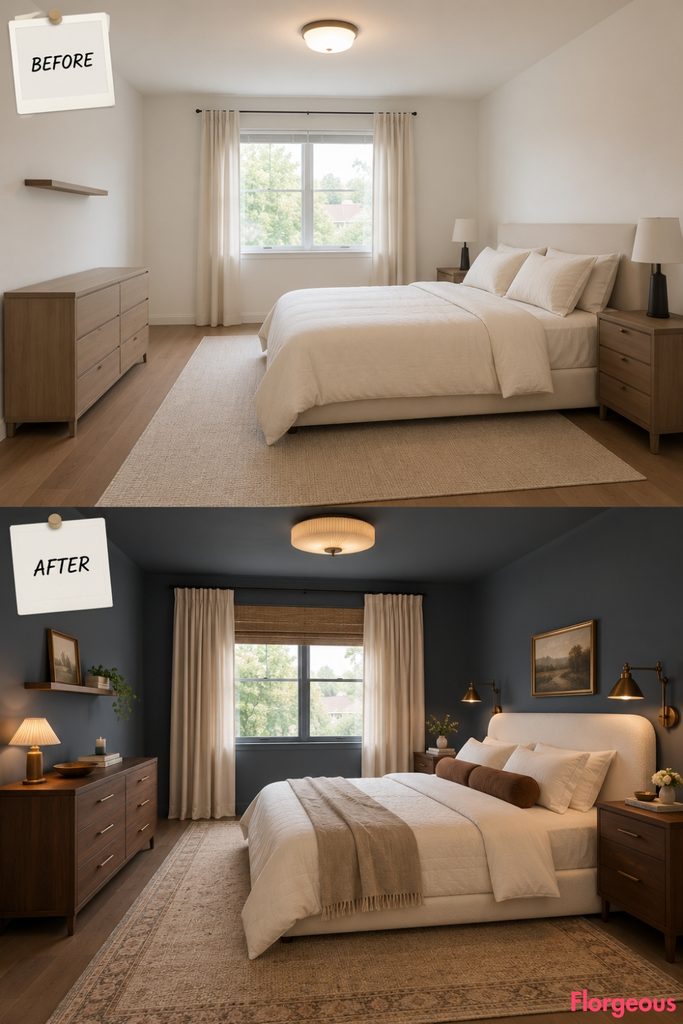
A shoreline during bad weather can be just as inspiring as a sunny beach.
Soft charcoal-blue wraps both walls and ceiling. The bed becomes broad and ivory, creating a bright focal point against the darker envelope. Walnut nightstands, aged-bronze sconces, a tobacco velvet bolster, and a sandy wool rug keep the palette warm.
Common Mistake: Avoid navy bedding against navy walls. Dark coastal rooms need lighter planes for contrast.
6. Let One Antique Brass Bed Do the Decorating
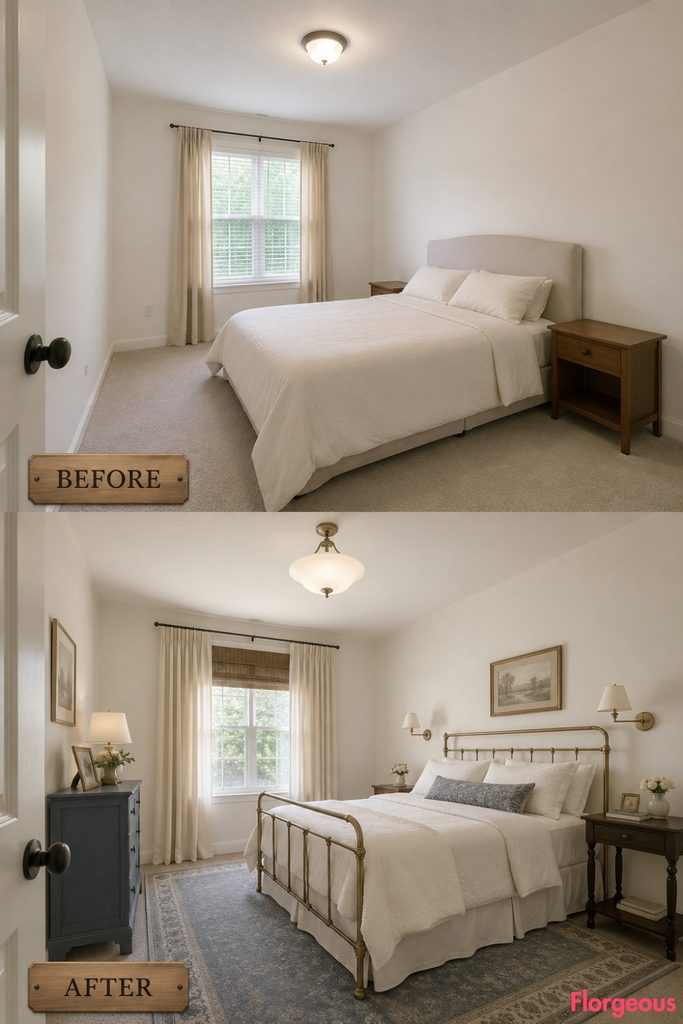
This transformation relies on furniture rather than architectural treatment.
A slender antique-brass bed becomes the immediate focal point against warm ivory walls. One dusty-blue painted chest pairs with a small dark wood table on the opposite side, giving the room a collected seaside-cottage feel.
A faded blue flatweave rug and petite opal ceiling fixture add history without creating clutter.
7. One Continuous Headboard Wall Makes Everything Feel Contemporary
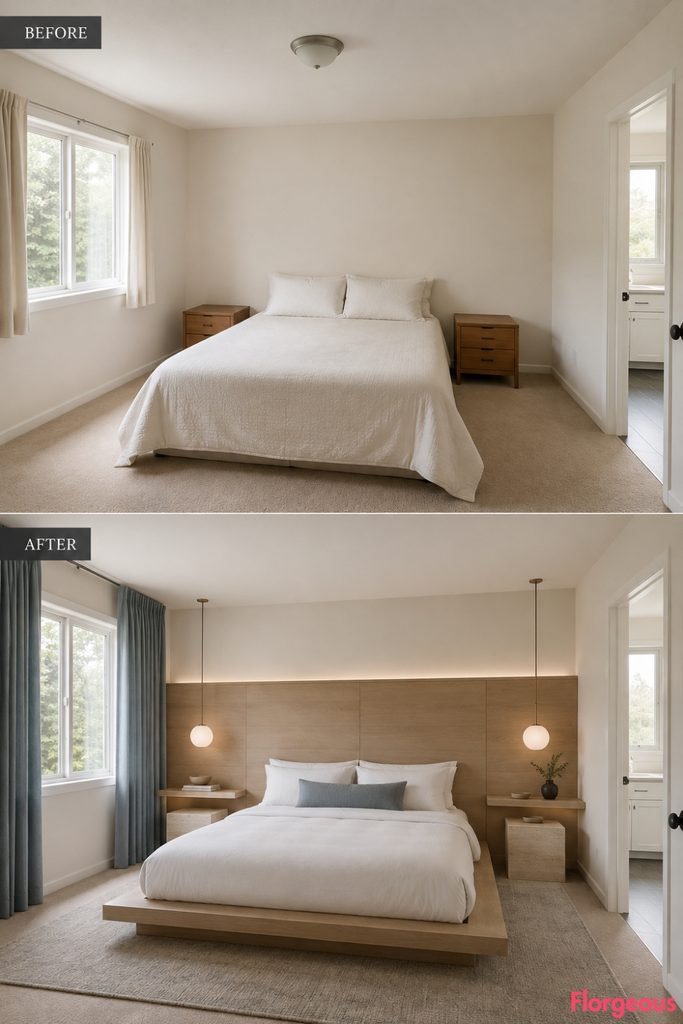
This room replaces small pieces with one strong architectural gesture.
A low bleached-oak platform bed connects visually to a full-width pale timber headboard wall. Narrow floating ledges replace conventional nightstands, while limestone blocks and tiny frosted pendants introduce cool contrast.
Chalk-white bedding and blue-gray curtains keep the result crisp without becoming minimalist.
8. Check Into a 1930s Seaside Hotel
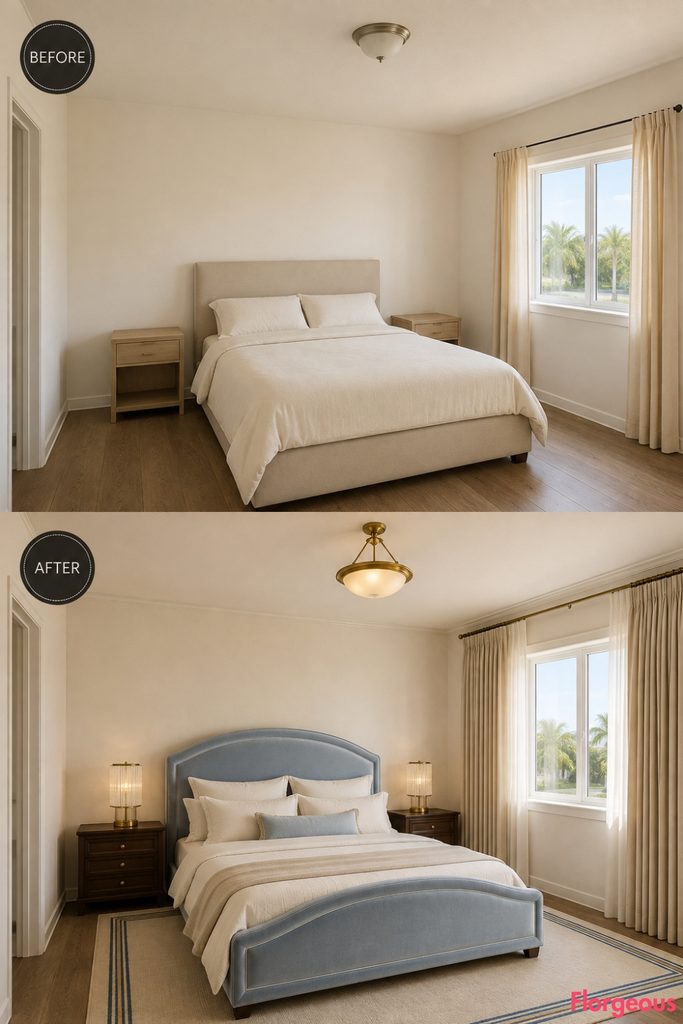
This interpretation is more glamorous than casual.
A curved powder-blue upholstered bed introduces a subtle Art Deco silhouette. Dark walnut nightstands, ribbed-glass lamps, brushed-brass ceiling lighting, ivory bedding, and a cream rug with a restrained geometric border create the feeling of a restored vintage resort.
The palette stays soft so the room remains restful.
9. Cedar, Moss, and Fog Tell a Pacific Northwest Story
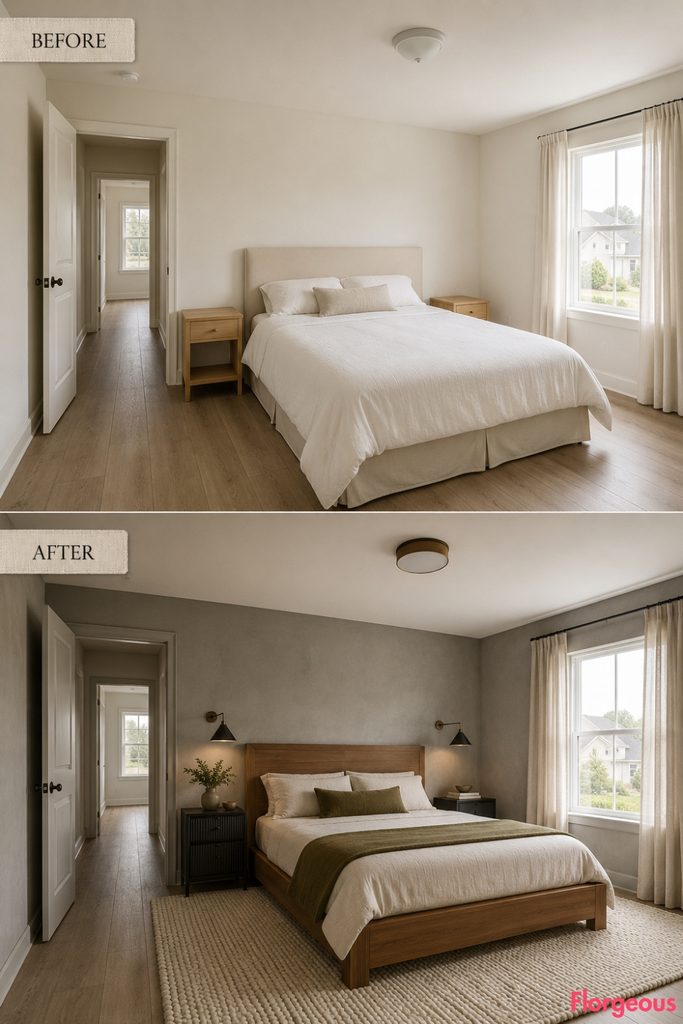
This makeover leaves sandy beaches behind.
Muted fog-gray walls meet a cedar-toned timber bed, dark bedside cabinets, and blackened-bronze reading lights. A moss-green wool bolster references coastal forests, while a chunky cream rug and flax curtains keep the space light enough for a bedroom.
Why It Works: Reddish timber warms gray and green far more effectively than another pale wood.
10. Blue and White, Rewritten as Something Tailored
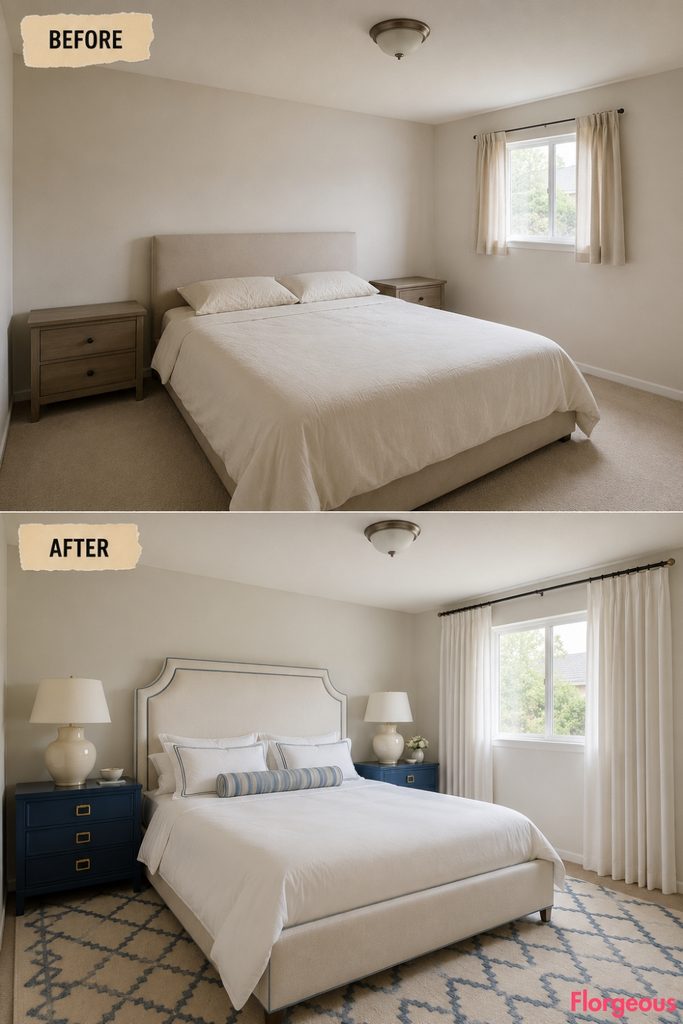
This is the classic palette with tighter control.
A tall cream upholstered bed gets narrow dusty-blue piping. Deep blue lacquered nightstands provide one concentrated shot of color, balanced by ivory ceramic lamps, clean white bedding, a single striped lumbar cushion, and a pale geometric rug.
Nothing else needs stripes.
11. Coastal Bedroom Quiet Luxury Is Almost Colorless
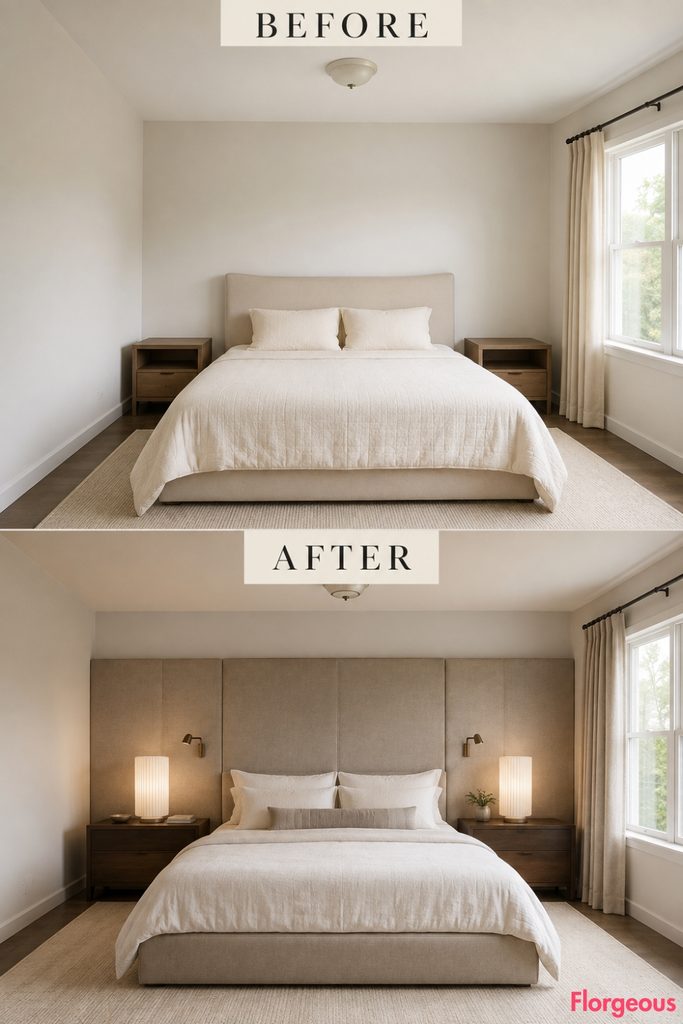
Here, material quality becomes the decoration.
A wall-to-wall mushroom upholstered headboard creates a soft architectural backdrop. Low dark-oak cabinets anchor both sides, accompanied by fluted alabaster lamps and brushed-bronze details.
A pale wool rug, layered ivory linen, and tailored oatmeal curtains create an understated, expensive-looking finish without visual excess.
12. Curves Take Over, Inspired by Water-Worn Stone
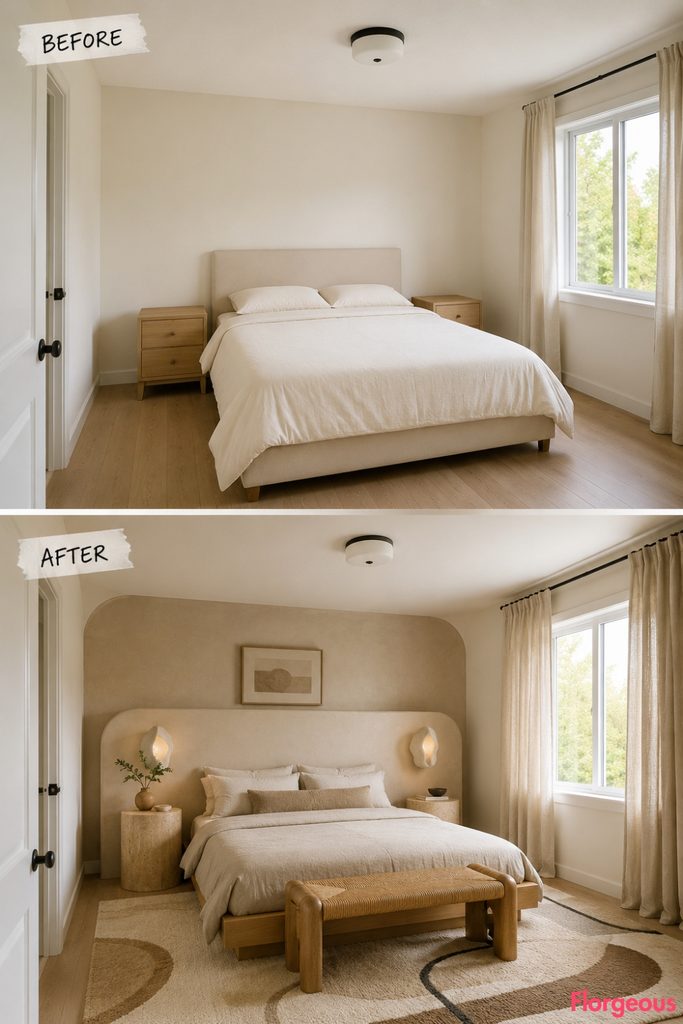
This room has almost no conventional coastal motifs.
A rounded plaster headboard surround frames a low natural-oak bed. Cylindrical stone tables, irregular ceramic wall lights, a curved rush bench, and an abstract sand-and-seaweed rug continue the organic geometry.
13. French Atlantic Style Looks Better When Nothing Matches
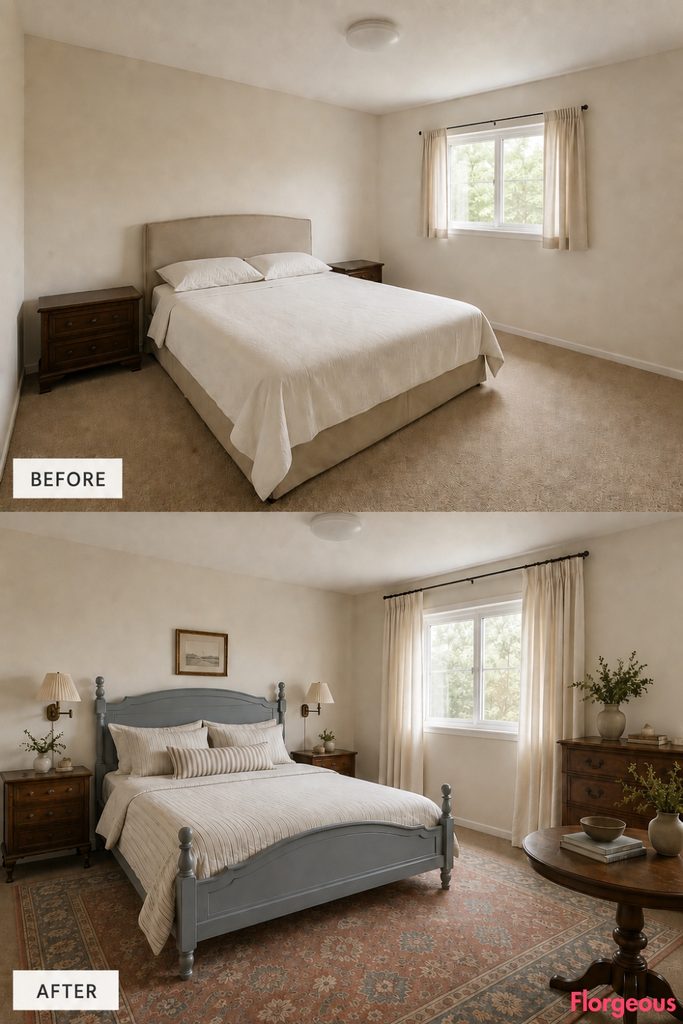
Perfect symmetry disappears in this collected European interpretation.
A washed blue-gray painted bed sits beside an antique walnut commode on one side and a small round pedestal table on the other. Pleated wall lamps, cream ticking textiles, a faded rust-and-blue rug, and loose ivory curtains make the bedroom feel gently accumulated over time.
14. Picture-Frame Molding Finds the Middle Between Classic and Coastal
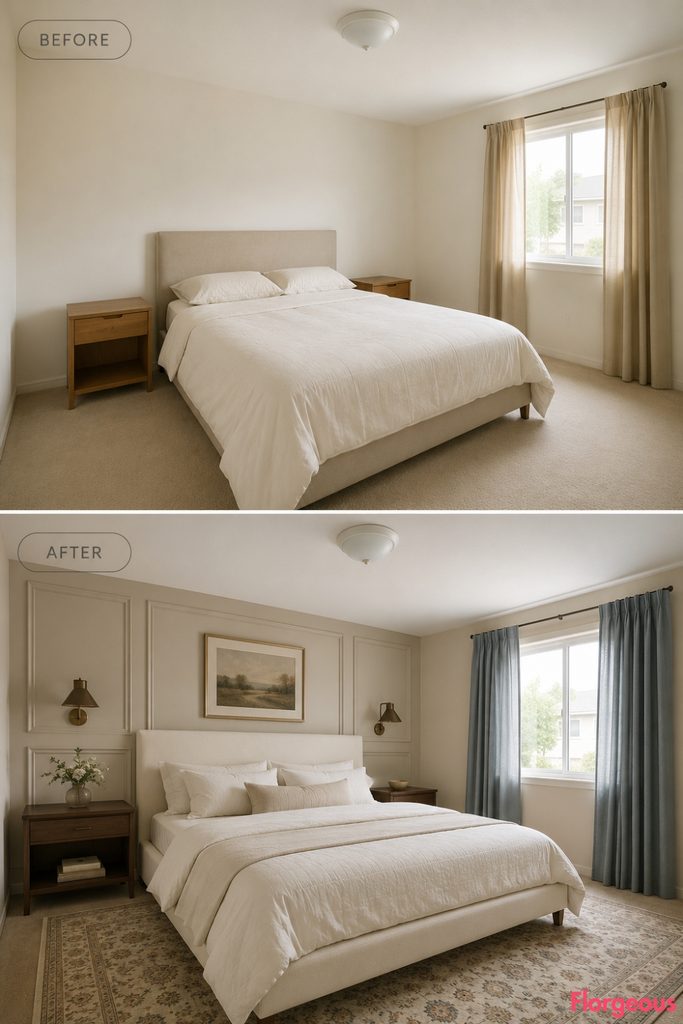
This direction works especially well in a home that already leans transitional.
Warm greige picture-frame molding gives the walls structure without making them ornate. A cream upholstered bed, medium-walnut tables, bronze shaded sconces, pale patterned wool, and muted blue-gray curtains soften the traditional framework.
The room feels polished, but still relaxed enough for a seaside setting.
15. A Four-Poster Draws the Room Upward
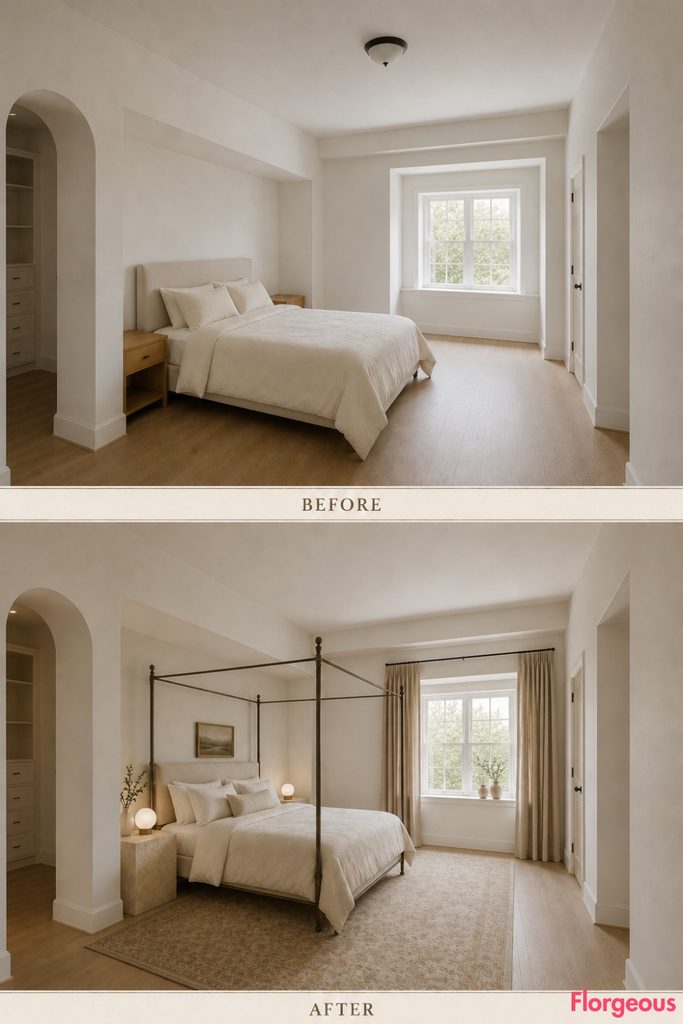
Rather than changing the wall behind the bed, this makeover changes the bedroom silhouette.
A slender dark-bronze four-poster reaches upward without canopy fabric. Low limestone cubes and tiny opal lamps keep the bedside zone visually quiet.
Cream linen, a faded sand rug, and full-height flax curtains soften the metal frame, giving the room the feel of an understated coastal resort.
16. Dune-Grass Wallpaper Instead of Ocean Prints
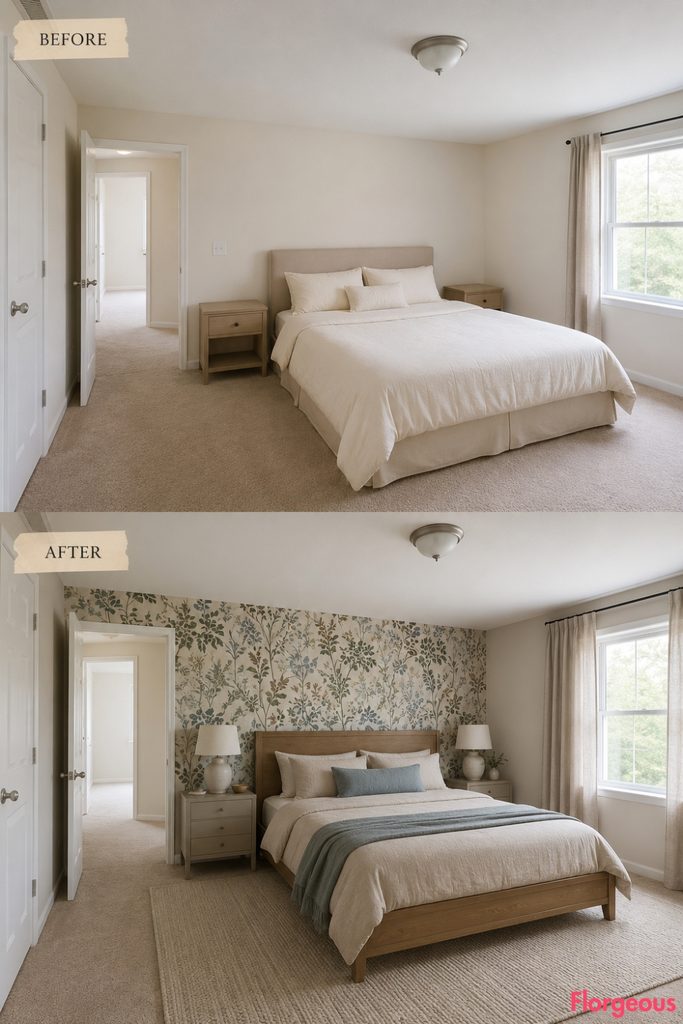
Botanical pattern can feel coastal when the palette references shoreline vegetation.
Muted olive, mushroom, and dusty-blue wallpaper covers only the bed wall. A simple medium-oak bed and lacquered taupe nightstands keep the furniture modern, while sculptural ceramic lamps and a solid oatmeal rug stop the pattern from becoming too cottage-like.
Budget Version: Try removable wallpaper behind the bed and keep the other walls warm ivory.
17. Arts and Crafts Goes to the Coast
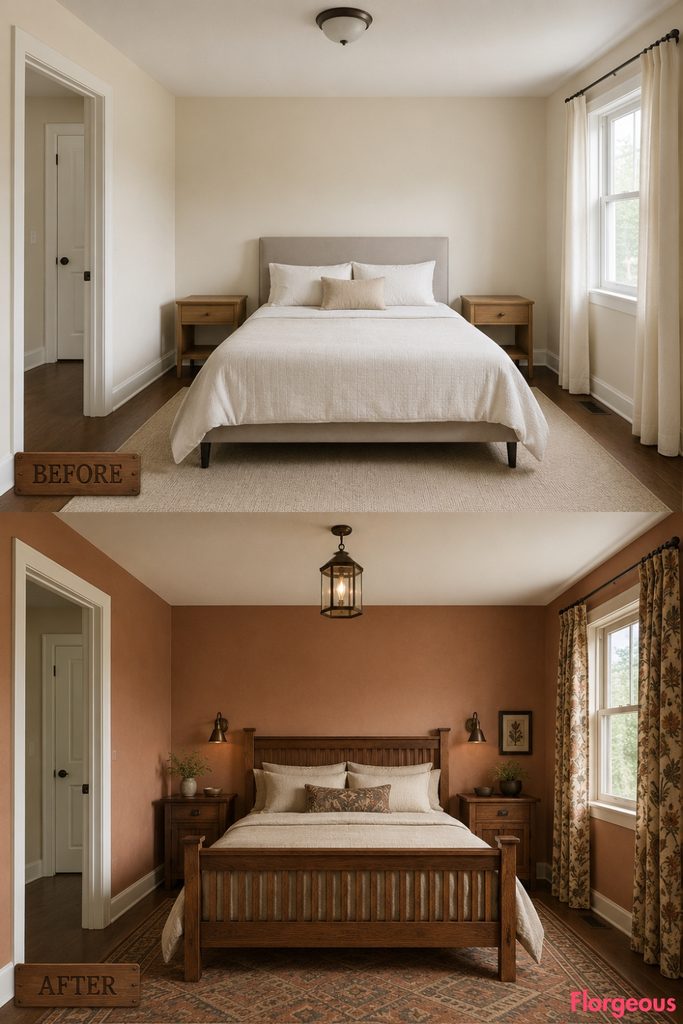
This is the most substantial timber-driven transformation in the gallery.
A quarter-sawn oak slatted bed pairs with low Craftsman bedside cabinets and warm clay walls. Stylized botanical curtains, geometric wool, hammered bronze hardware, and a compact lantern ceiling fixture introduce hand-crafted character.
Cream linen prevents the room from becoming visually heavy.
18. Sea-Glass Walls Meet Cool Brushed Metal
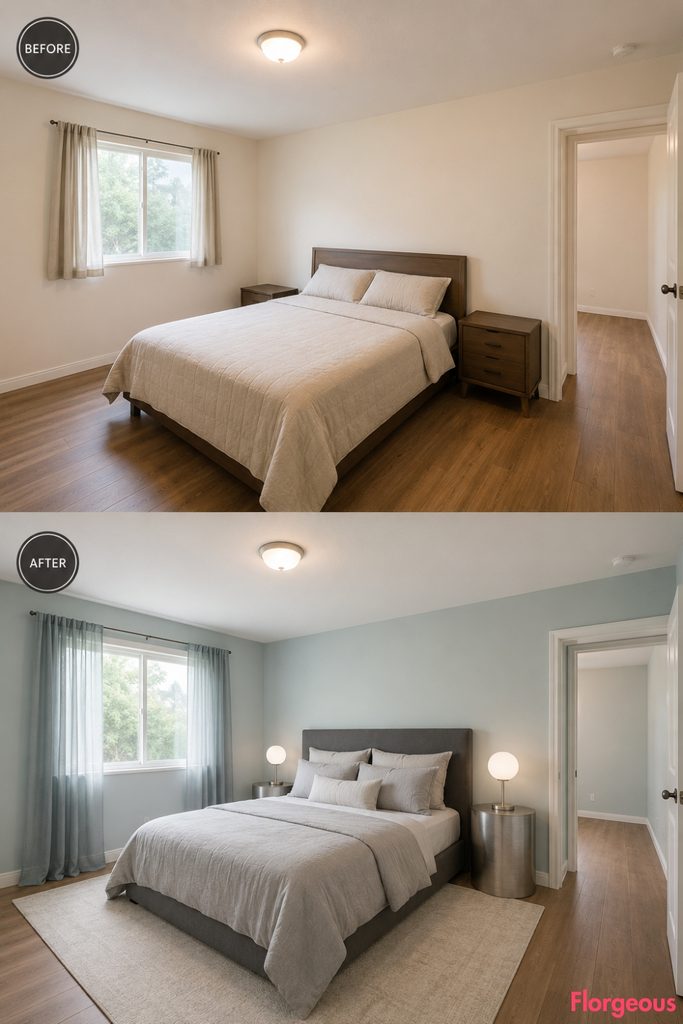
This concept intentionally avoids weathered timber, rattan, and cottage references.
Pale sea-glass mineral paint surrounds a graphite upholstered bed. Brushed-aluminum cylindrical nightstands and small opal globe lamps introduce a cooler contemporary material story.
Soft gray linen, a pale cream rug, and translucent blue-gray curtains keep the metal from making the room feel hard.
Style Note: Choose matte or satin metal rather than mirror-polished chrome.
19. Japanese Seaside Calm With a Low, Grounded Layout
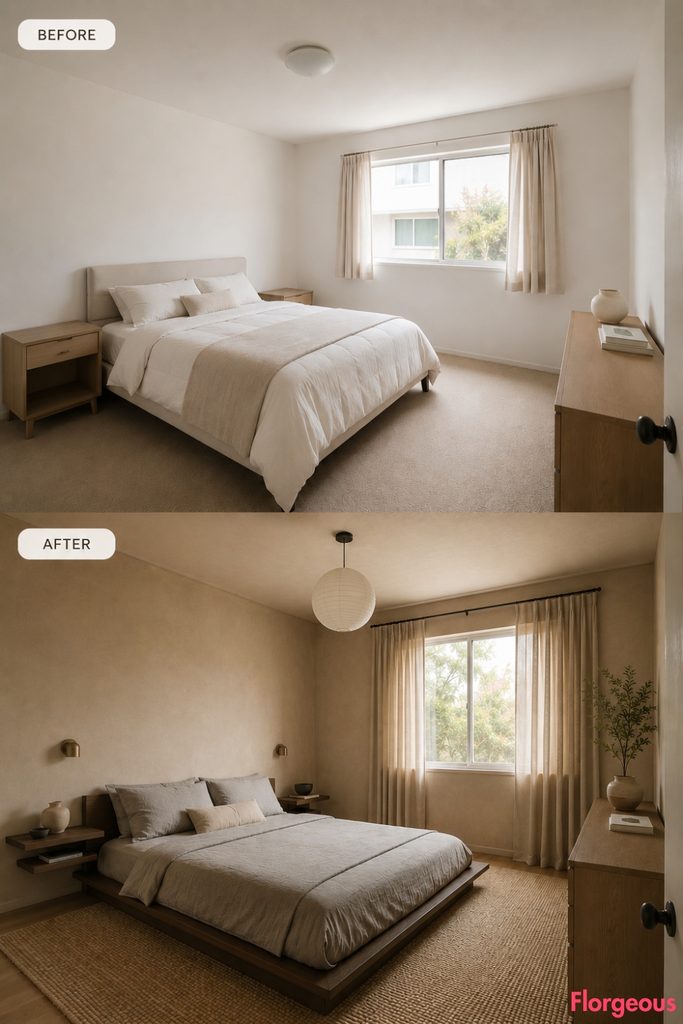
This interpretation moves away from Western beach-house furniture altogether.
A low smoked-oak platform bed sits against a softly textured warm plaster wall. Narrow timber bedside shelves replace tables, while a high-hung paper lantern, natural woven floor covering, stone-gray linen, and pale reed-toned curtains create a grounded, quiet mood.
The coastal feeling comes from restraint, natural fiber, filtered light, and weather-softened color.
20. Make the Window the Destination, Not the Bed Wall
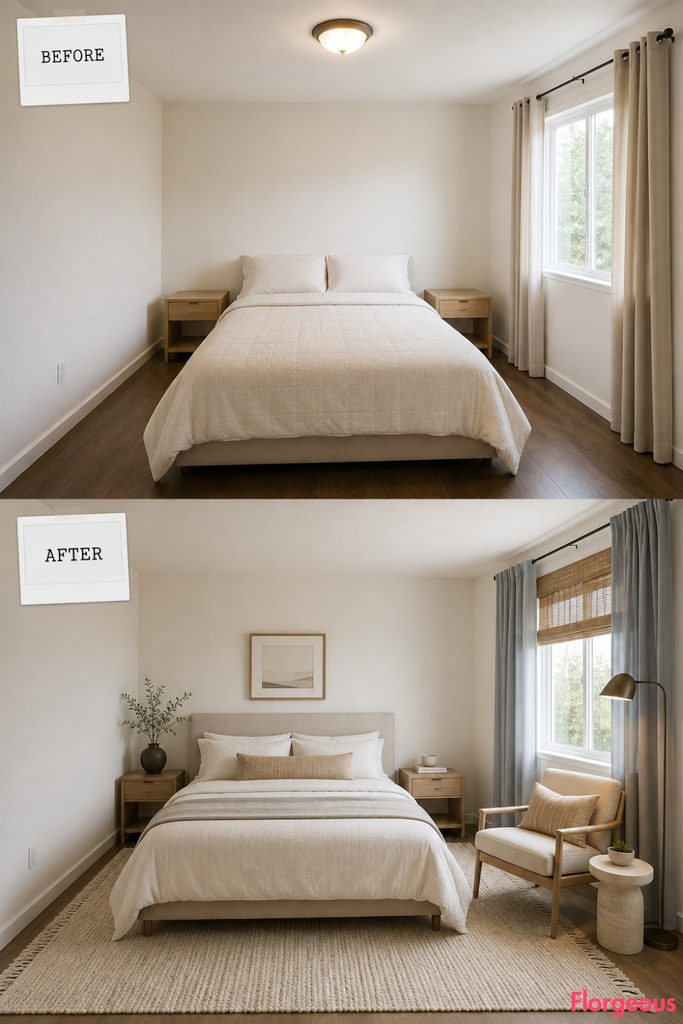
This makeover is driven by how the room is used.
A compact pale-ash reading chair and tiny limestone table create a quiet corner near the window without blocking access. The bed gets a slim oatmeal headboard, while a woven shade, sky-gray curtains, textured cream rug, and articulated bronze floor lamp define the new zone.
Small Space Tip: Keep the direct route from doorway to window completely clear before adding a reading chair.
21. Zero Renovation: A Coastal Makeover a Renter Can Undo
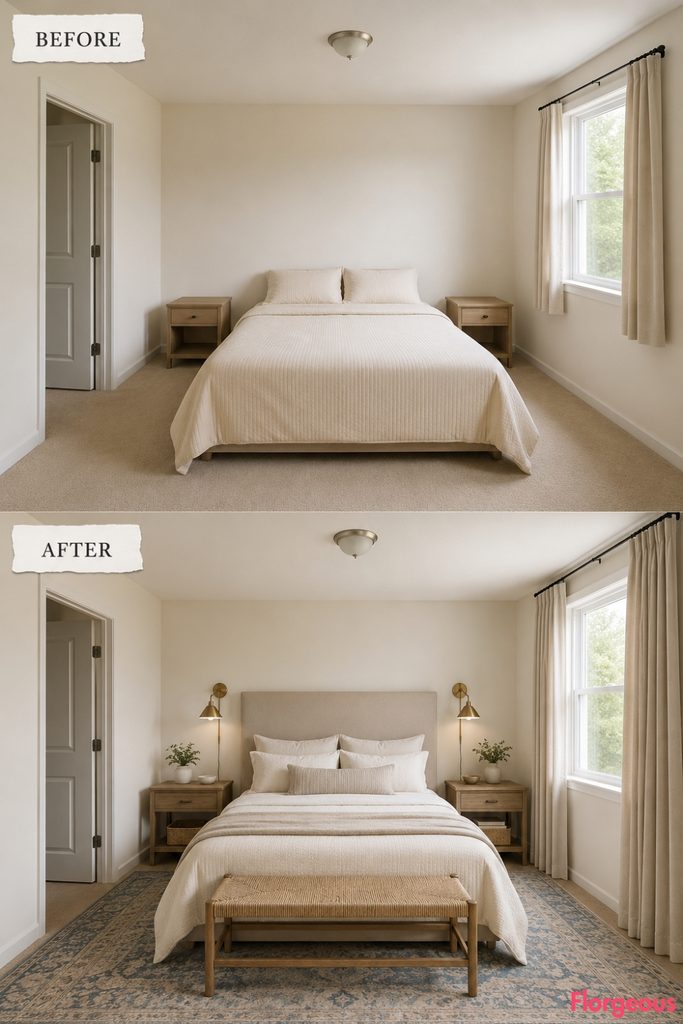
The final idea changes the room visually without altering its shell.
A removable wide flax headboard gives the basic bed more scale. Weathered-oak tables, plug-in aged-brass sconces with neat cord covers, an oversized blue-gray-and-sand rug, ready-made full-height curtains, layered cream bedding, and a woven bench create the finished look.
Nothing requires custom construction.
Budget Version: Start with the rug and curtains. Correcting those two proportions often makes a builder-grade bedroom feel significantly more intentional.
Before You Choose a Coastal Direction, Choose Its Design Language
The most convincing rooms in this gallery do not depend on obvious beach decor. They use wood tone, stone, linen, wool, filtered light, architectural detail, furniture silhouette, and color to suggest a particular coastline and way of living.
That distinction matters. A Mediterranean-inspired room should not end up using the same bed, nightstands, rug, and lighting as a stormy Pacific bedroom. Likewise, a refined New England space should feel structurally different from a contemporary sea-glass scheme.
For your own Coastal Bedroom, choose one clear direction before shopping. Then select two or three core materials and one dominant color story. Test paint samples in morning and evening light, measure rugs and curtains properly, and make the largest visual decisions before buying decorative accessories.
If you want the quickest improvement, begin with the headboard, rug, curtains, bedding, and lighting. Those elements control an enormous amount of the room’s visual character and can make a plain bedroom feel complete without requiring a major renovation.