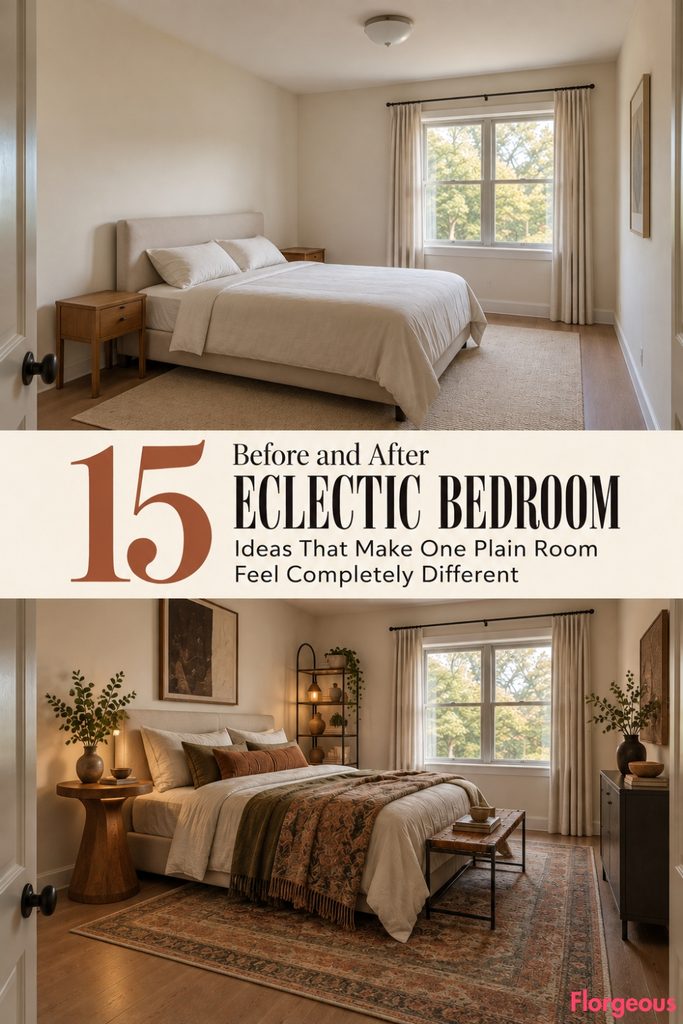
A builder-grade bedroom can be comfortable and still feel anonymous. Warm off-white walls, a basic bed, bare nightstands, short curtains, and generic lighting create a clean starting point with almost no personality.
That makes the room ideal for an Eclectic Bedroom experiment. Instead of choosing one decorating period, each makeover below gives contrasting furniture, materials, shapes, and objects a specific rule that makes them belong together.
The architectural shell never changes. Doorway, window, walls, floor footprint, ceiling height, circulation, camera position, lens, framing, and daylight direction remain locked.
Only the interior strategy changes. Every makeover uses a different organizing principle, spatial solution, furniture logic, visual focal point, and electric lighting system.
1. Connect Mismatched Furniture Through Negative Space
Instead of repeating a color or wood finish, repeat emptiness.
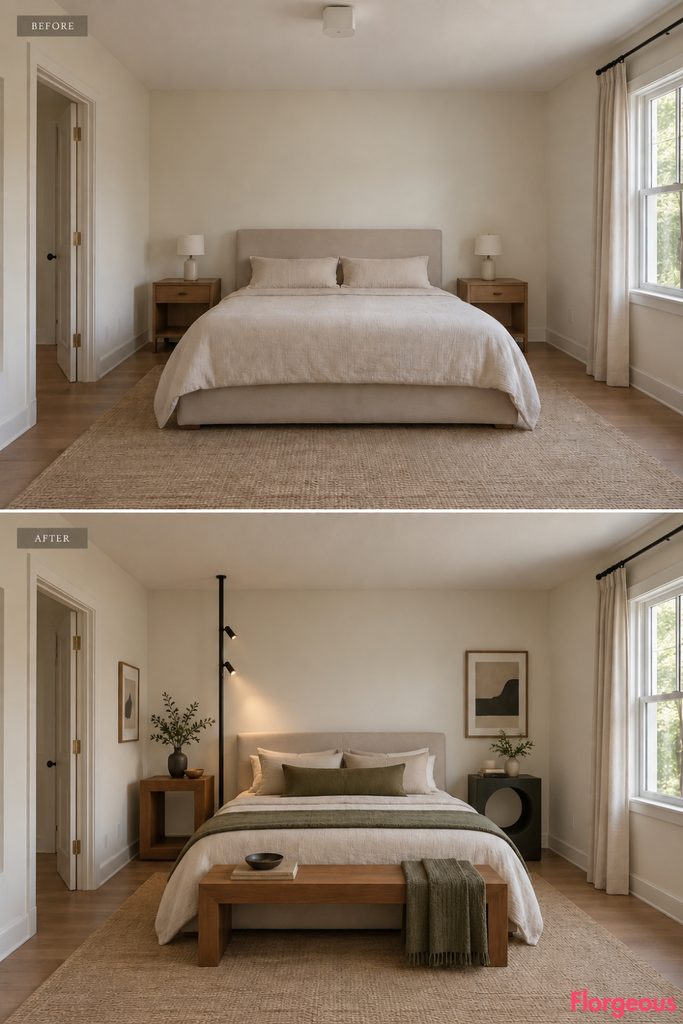
Pair a timber side table pierced by a circular opening with a compact painted cabinet containing a rectangular void and a small metal stand shaped around an open arch. The furniture comes from visibly different design languages, but every piece contains a deliberate cutout.
Keep the bed quiet in natural linen so the shapes stay readable.
Before: The locked plain bedroom with a shallow prismatic acrylic ceiling cube.
After: Unrelated furniture becomes a family through negative space rather than matching finishes.
Why it works: The connection is subtle enough to feel collected rather than coordinated.
2. Turn the Bedside Zone Into a Mobile Workshop
Replace static nightstands with furniture that moves.
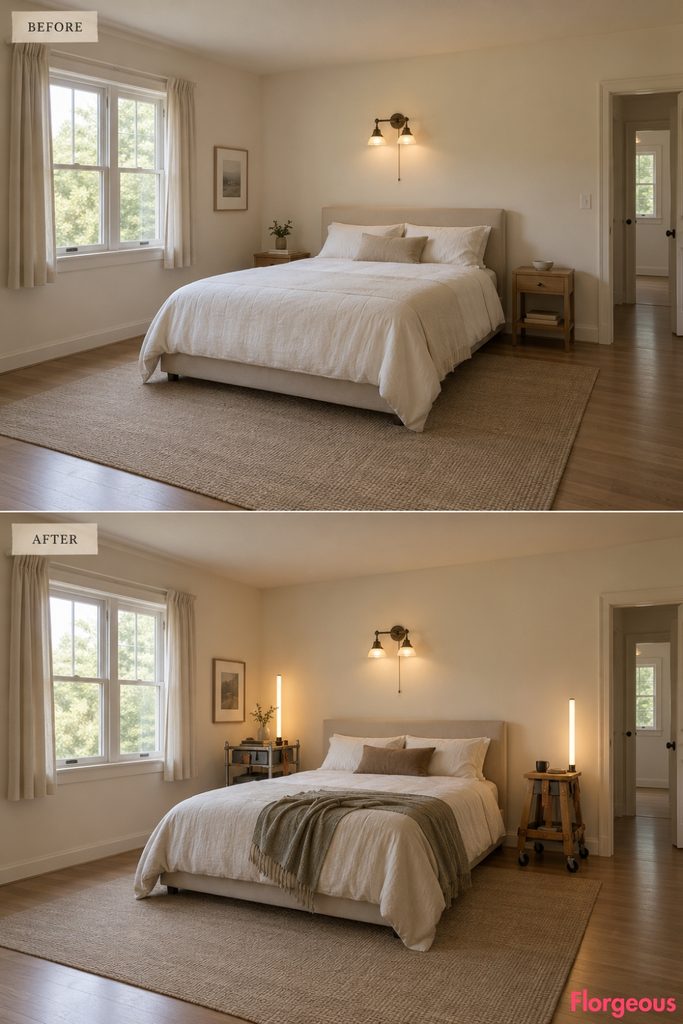
Use a narrow steel trolley on one side of the bed and a compact timber artist’s taboret on casters on the other. Books, water, textiles, and devices move with the furniture, then both pieces can roll away when more floor space is needed.
Leather pulls and dark wheel hardware quietly connect the two objects.
Before: Same locked bedroom with a twin-socket pull-chain wall fixture.
After: The bedside zone becomes flexible rather than permanently furnished.
Try this: Look at studio, workshop, and utility furniture instead of conventional bedroom sets.
3. Let a Removable Floor Grid Control the Composition
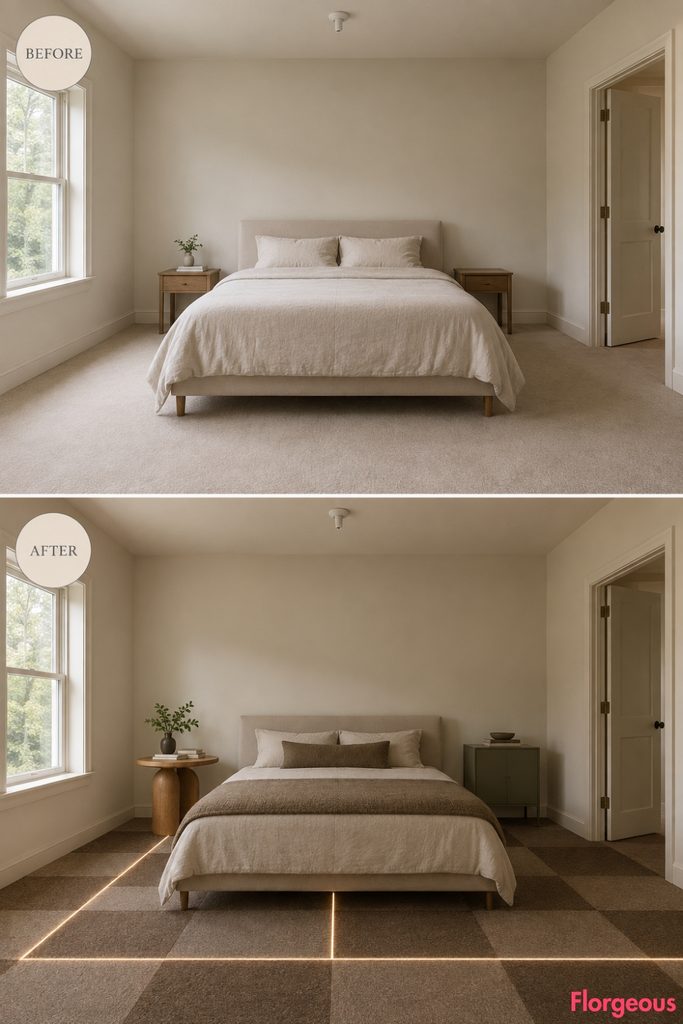
Here, the floor becomes the organizing device.
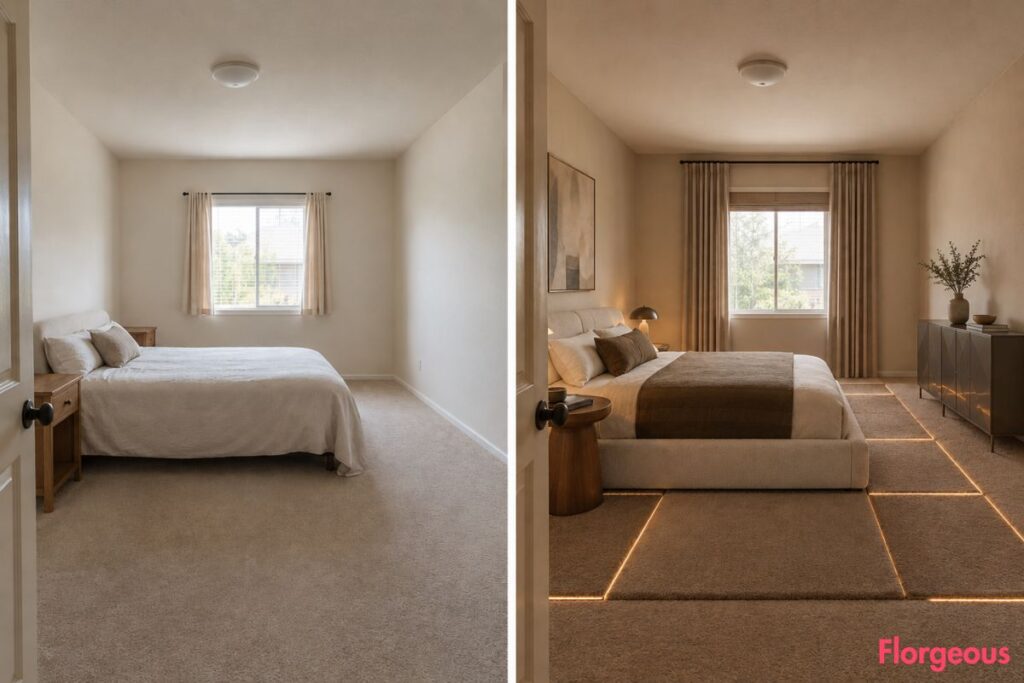
Lay removable mushroom and tobacco wool carpet tiles in a precise grid. Position a rounded timber table, angular metal cabinet, and simple upholstered bed according to the tile lines rather than trying to match their styles.
The walls remain deliberately quiet.
Before: Same locked room with a porcelain keyless ceiling lampholder.
After: Geometry makes several design languages coexist.
Designer Tip: Once the floor becomes graphic, simplify the bedding.
4. Arrange the Secondary Furniture in a Broken Orbit
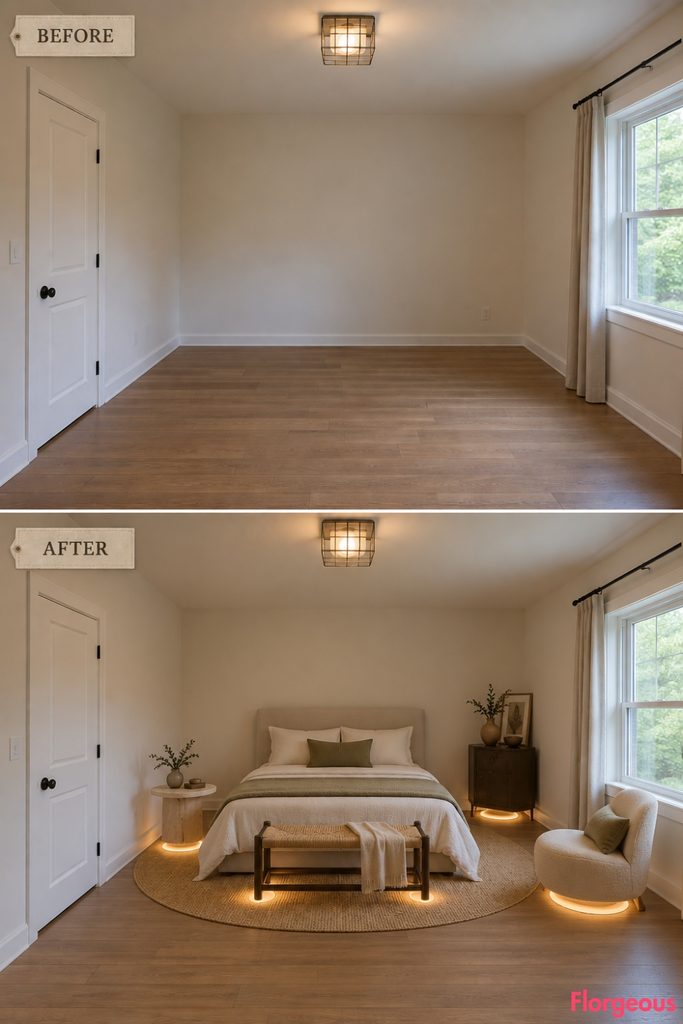
Rather than lining every piece against the walls, organize small furniture along an incomplete curve around the sleeping zone.
A compact table, narrow storage piece, object pedestal, and low stool occupy different points of an imaginary arc. The sequence intentionally stops well before the doorway and window.
The bed remains in its normal position and nothing forms a divider.
Before: The same room with a square wireguard ceiling utility fixture.
After: Spatial movement connects objects that do not match in period or material.
5. Connect the Furniture Through a Design Relay
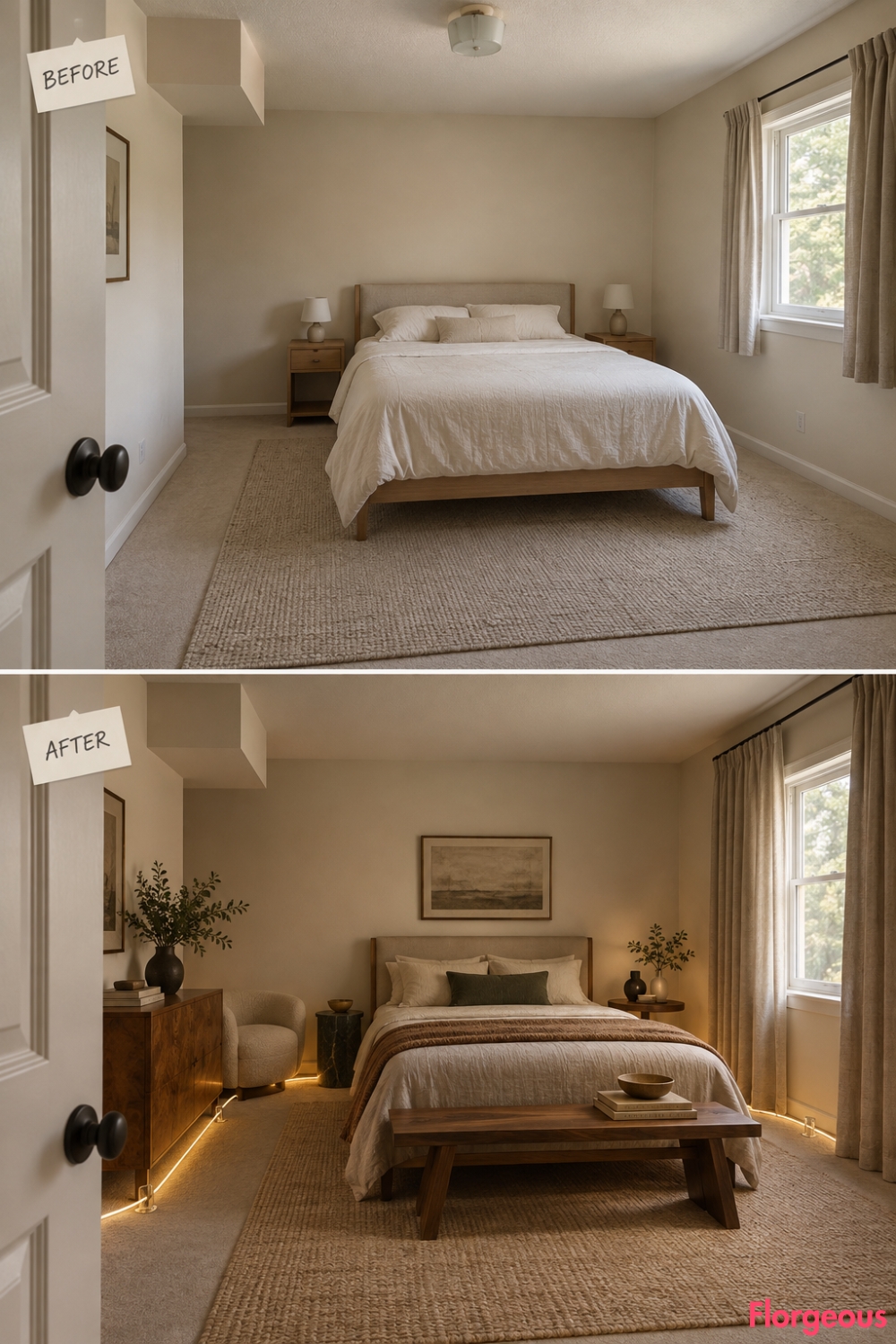
This room has no single finish, shape, or period repeated everywhere.
Instead, each object shares one characteristic only with the next object in the sequence. A rounded timber table shares its circular geometry with a painted metal stool. The stool shares its dark finish with a small cabinet. That cabinet shares a ribbed surface with a woven container. The woven piece repeats the warm tan of the bedding.
The chain closes visually without creating a matching set.
Before: The locked bedroom with a compact frosted capsule-style wall bulkhead near the doorway.
After: Cohesion travels from object to object like a relay instead of relying on one repeated motif.
Why it works: Several contrasting pieces can coexist without one decorative rule becoming obvious or repetitive.
6. Style the Bedroom Like a Small Materials Library
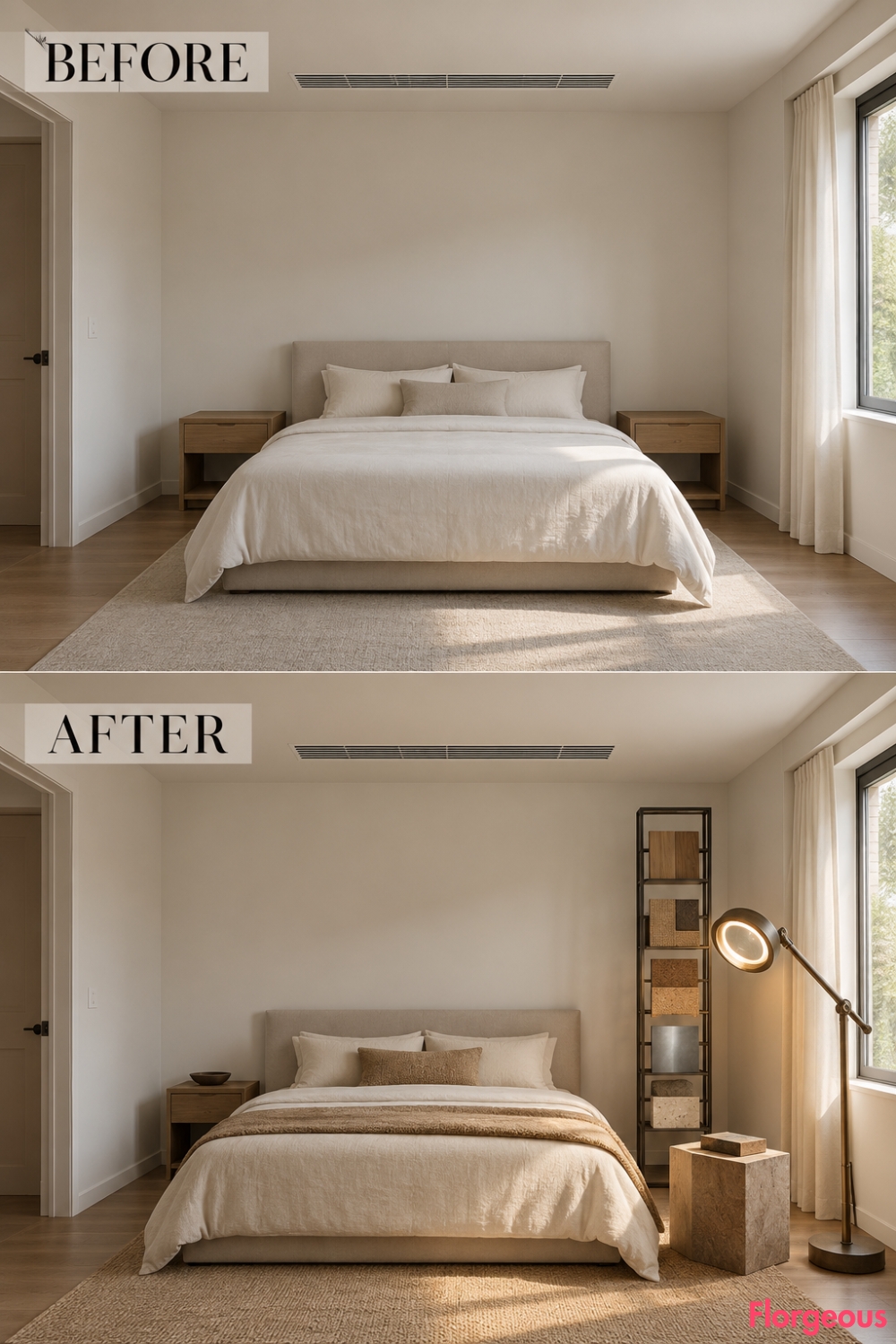
Let raw material become the collection.
Place a narrow freestanding sample rack flat against a side wall with unlabeled pieces of timber, woven fiber, cork, metal, and mineral composite. Add one compact occasional table assembled from several larger sample blocks.
Keep the bed quiet so every texture can be read clearly.
Before: Same room with a louvered rectangular ceiling utility strip.
After: The bedroom feels collected through craftsmanship rather than decorative objects.
7. Create a Deliberate Furniture Height Gradient
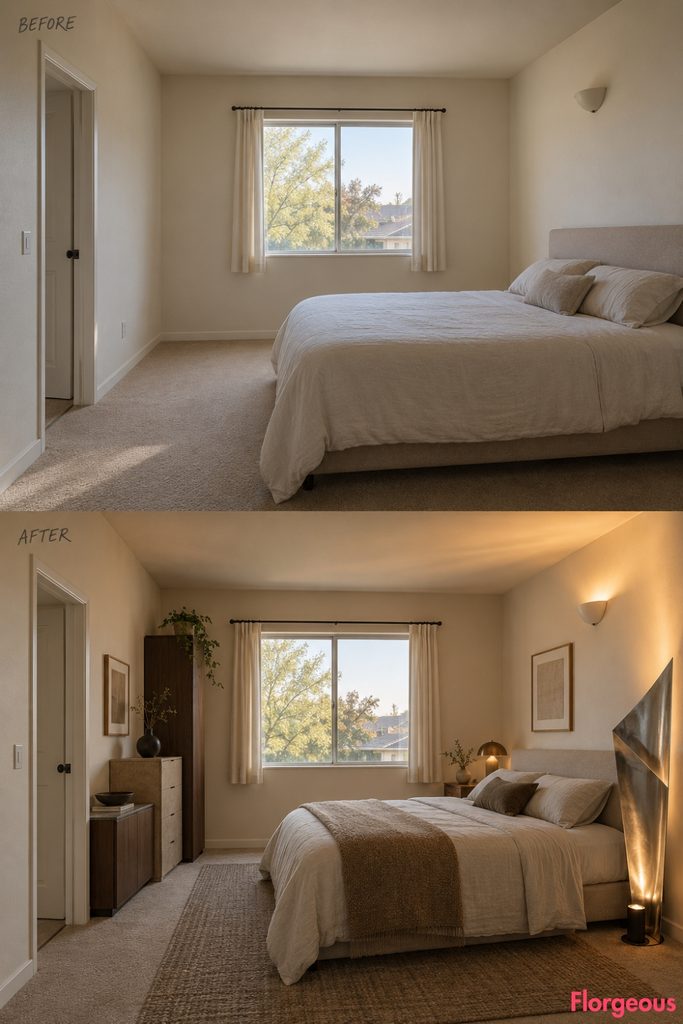
Make scale, rather than symmetry, control the room.
Begin along one usable wall with a very low closed box cabinet, continue to a medium-height drawer unit, then finish with a tall narrow column cabinet. The simple bed sits beside the progression instead of being framed by matching nightstands.
Each piece can come from a different period.
Before: Same locked room with a small molded-resin wedge fixture mounted high on one side wall.
After: The eye follows a controlled rise in height.
8. Organize Mixed Furniture With One Proportion System
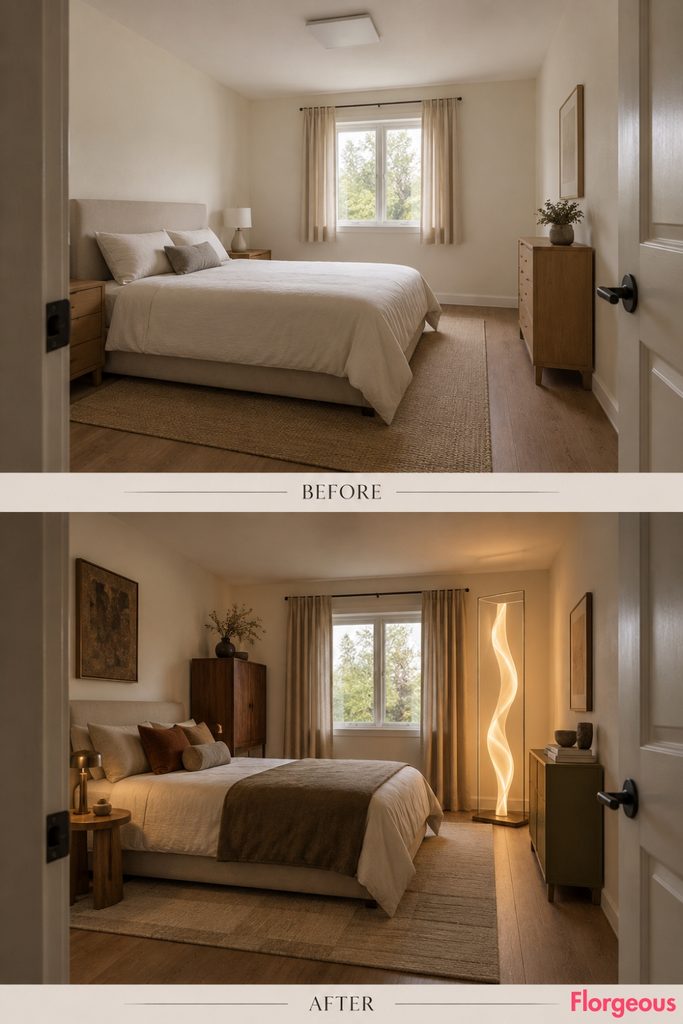
The furniture does not share material, era, or color. It shares mathematics.
Choose one invisible base module, then use simple multiples of that dimension for the widths and heights of visible furniture. A squat painted unit might be one module high, a timber table two modules wide, and a metal cabinet four modules tall.
No numbers or measurement markings appear in the room.
Before: Same bedroom with a flat polycarbonate ceiling plate containing one centered light source.
After: Hidden proportional order makes contrasting objects feel deliberate.
Style Note: The relationship should be visible through scale, not explanation.
9. Connect Mixed Furniture Through Exposed Joinery
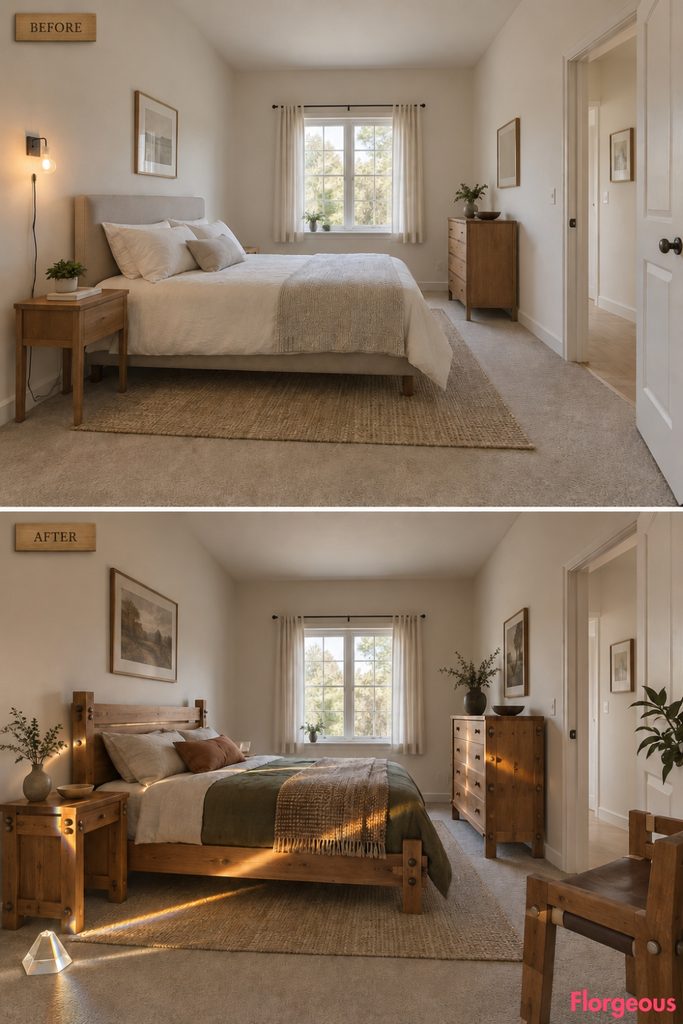
Instead of coordinating surface finishes, repeat evidence of construction.
Use a compact ash cabinet with visible wedged tenons, a dark stool with oversized dowels, and a metal-and-wood bedside unit with exposed mechanical fasteners.
The furniture clearly comes from different design traditions, but craftsmanship becomes the common language.
Before: Same room with a simple cord-operated wall socket light beside the doorway.
After: Construction details become more important than furniture age.
10. Furnish the Bedroom With Pieces That Fold Nearly Flat
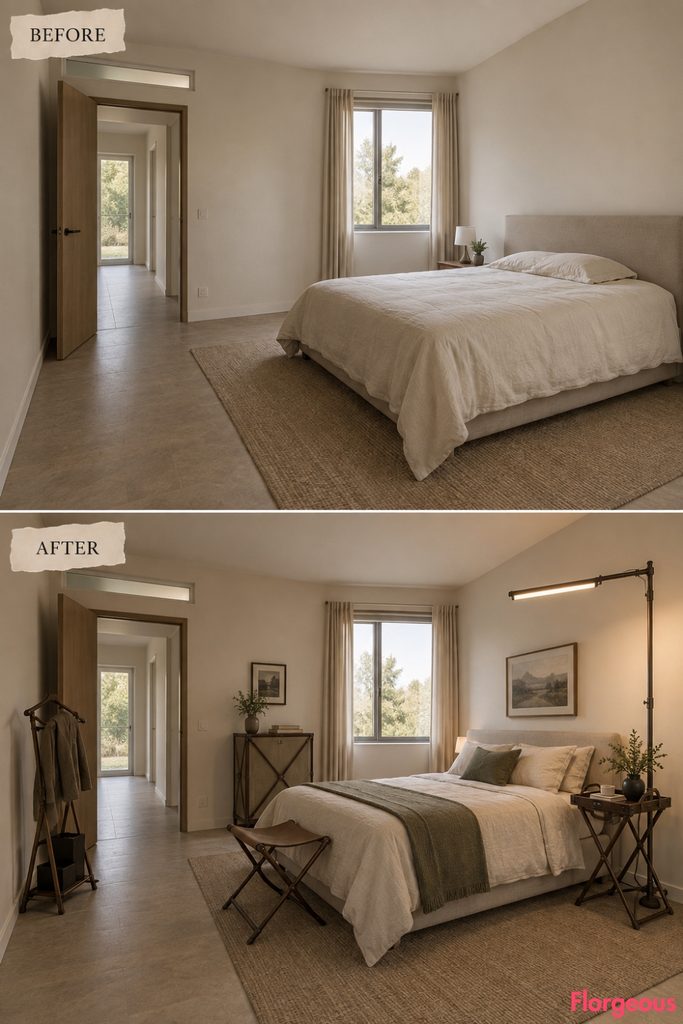
Secondary furniture does not need a permanent footprint.
Use a folding campaign-style bedside tray, collapsible dressing valet, and slim folding stool. When required, they open into functional pieces. Afterwards, they fold nearly flat against an unused wall section.
One compact solid storage unit provides a stationary visual anchor.
Before: Same locked room with a narrow frosted linear diffuser mounted above the doorway.
After: Mechanical behavior, rather than style, connects the eclectic furniture.
11. Add a Tiny Breakfast Table Instead of a Reading Corner
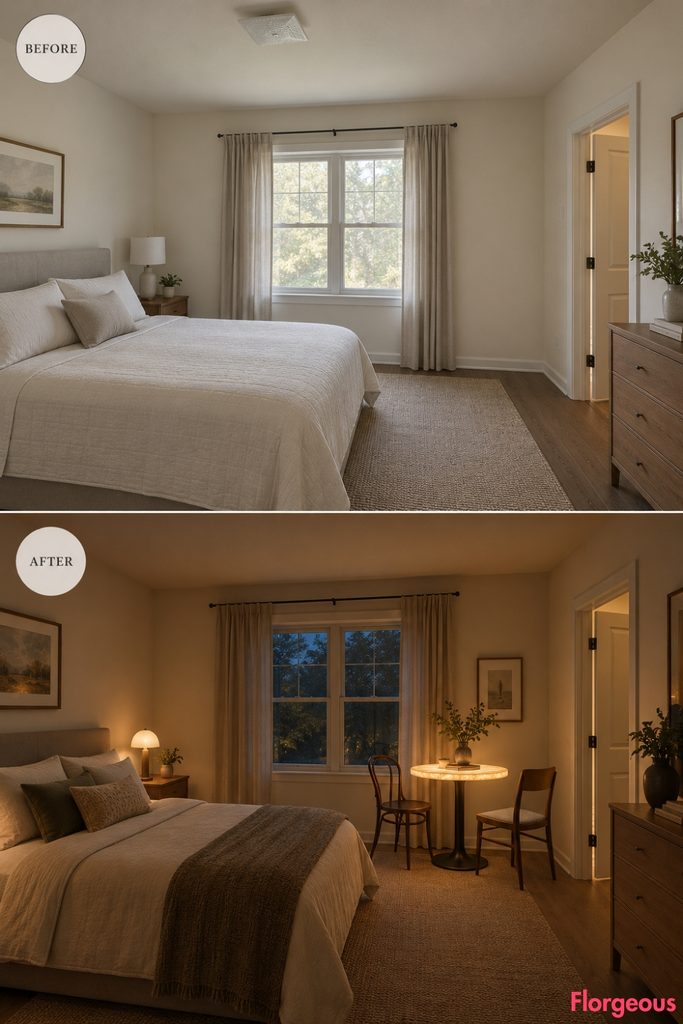
Give the bedroom a secondary ritual that is neither a desk, vanity, reading nook, nor window seat.
Place a compact round café table near the foot-side corner with two small chairs from visibly different eras. Keep the sleeping and storage zones restrained enough that the table has breathing space.
Repeat one subtle checked textile between the table setting and bedding.
Before: Same room with a shallow square pressed-glass ceiling diffuser.
After: The bedroom gains a quiet morning-coffee zone without becoming a dining room.
12. Break Storage Into Three Independent Stations
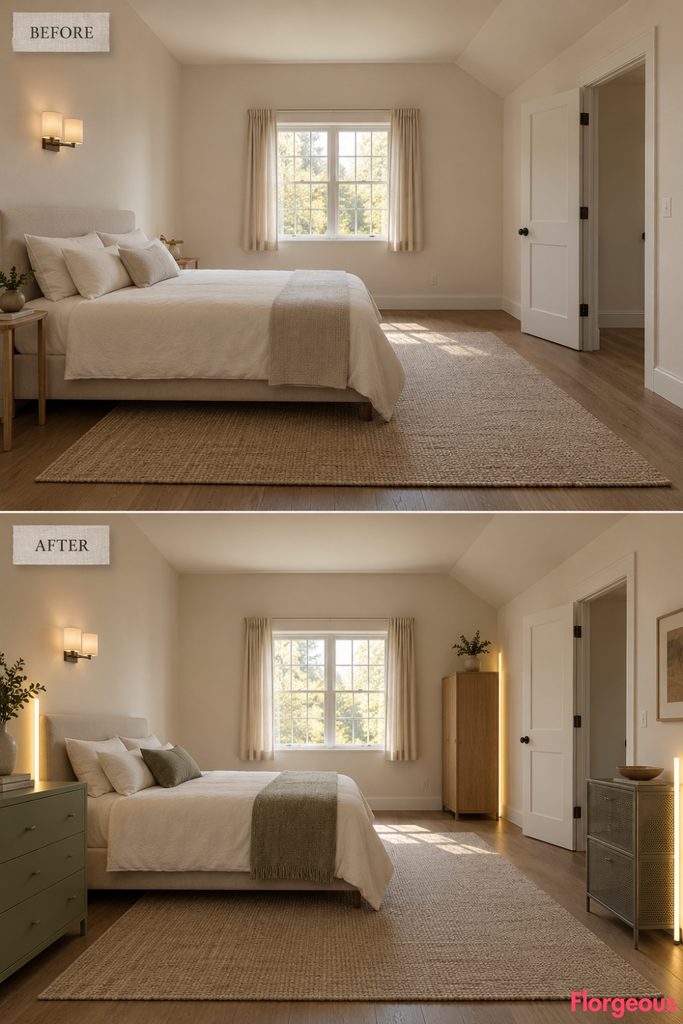
Instead of using one dominant dresser or wardrobe, distribute storage around the perimeter.
Use a compact painted drawer unit, low timber cabinet, and narrow metal box unit at three separate wall positions. Their silhouettes remain unrelated, while one small hardware detail quietly connects them.
Large areas of wall stay empty between the pieces.
Before: Same bedroom with a two-source wall bar behind shallow translucent shields.
After: Storage becomes a constellation instead of a single visual mass.
13. Hide the Strongest Colors Inside Quiet Furniture
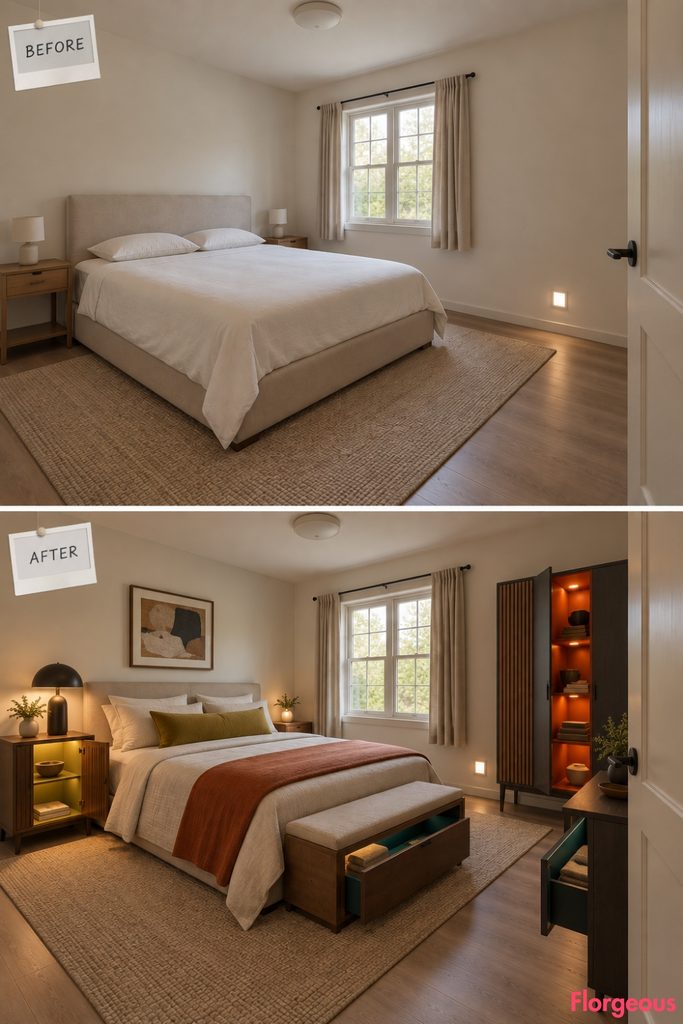
Keep the outside of the room restrained.
Use a cream cabinet, muted timber bedside box, and charcoal drawer unit, then paint only their interiors citron, teal, and burnt orange. Leave selected doors or drawers partly open so the saturated colors appear as controlled fragments.
The room changes depending on what is revealed.
Before: Same locked bedroom with one low wall-mounted frosted step light.
After: Color becomes something discovered rather than spread across walls or upholstery.
14. Build Bedside Surfaces From Functional Layers
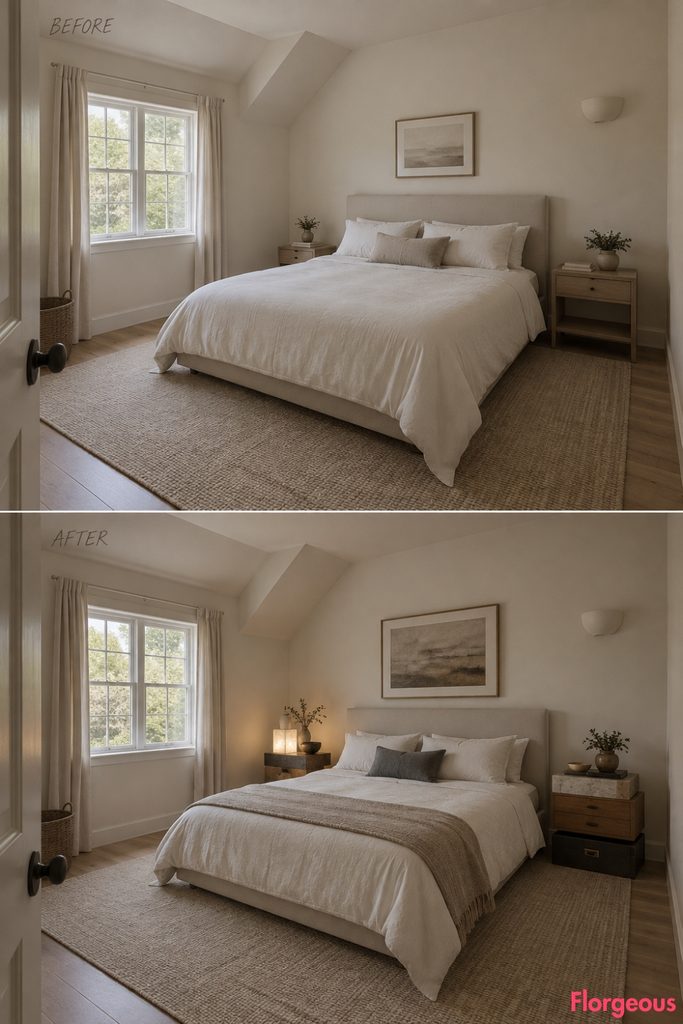
Replace recognizable nightstands with assembled useful components.
On one side, combine a shallow drawer cassette, rigid archival case, and flat tray. On the other, use a solid timber module, shallow compartment unit, and smooth mineral-composite slab.
Both constructions finish at approximately the same practical bedside height, but their structures remain visibly different.
Before: Same room with a molded half-cylinder utility wall light.
After: Bedside furniture emerges from layers rather than a conventional table silhouette.
Try this: Every layer must be flat, stable, load-bearing, and useful.
15. Balance the Room Through Optical Weight
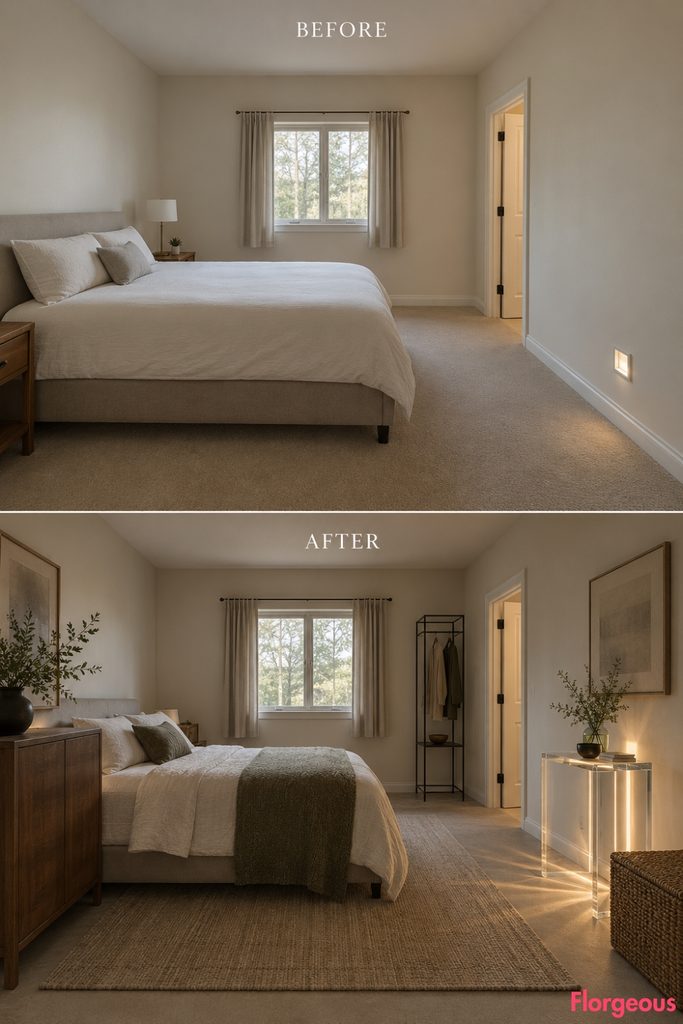
Coordinate furniture according to how visually heavy it feels.
Pair one dense timber cabinet with a transparent cast-acrylic bedside table, an open linear metal stand, and a tightly woven low storage piece. The bed stays visually quiet so the alternation between solid, transparent, linear, and porous objects becomes obvious.
Nothing needs to match by era.
Before: Same locked room with a small recessed louvered wall light positioned just above skirting height.
After: Visual density, rather than material matching, controls the eclectic composition.
Why it works: One visually heavy piece can balance several lighter forms without symmetry.
How to Keep an Eclectic Bedroom From Feeling Random
A successful Eclectic Bedroom does not depend on how many unrelated pieces you can fit into it. It depends on the rule connecting them.
That rule might be negative space, mobility, a floor grid, an orbit, a design relay, material study, height, proportion, visible craftsmanship, mechanical behavior, distributed function, hidden color, layered construction, or optical weight.
Choose one strong rule before adding another statement object.
Then protect empty space. If every wall, corner, and tabletop is telling a different story, the room stops looking collected.
Before the final styling pass, stand at the doorway and explain the room in one sentence. If its organizing idea is already obvious, stop adding.