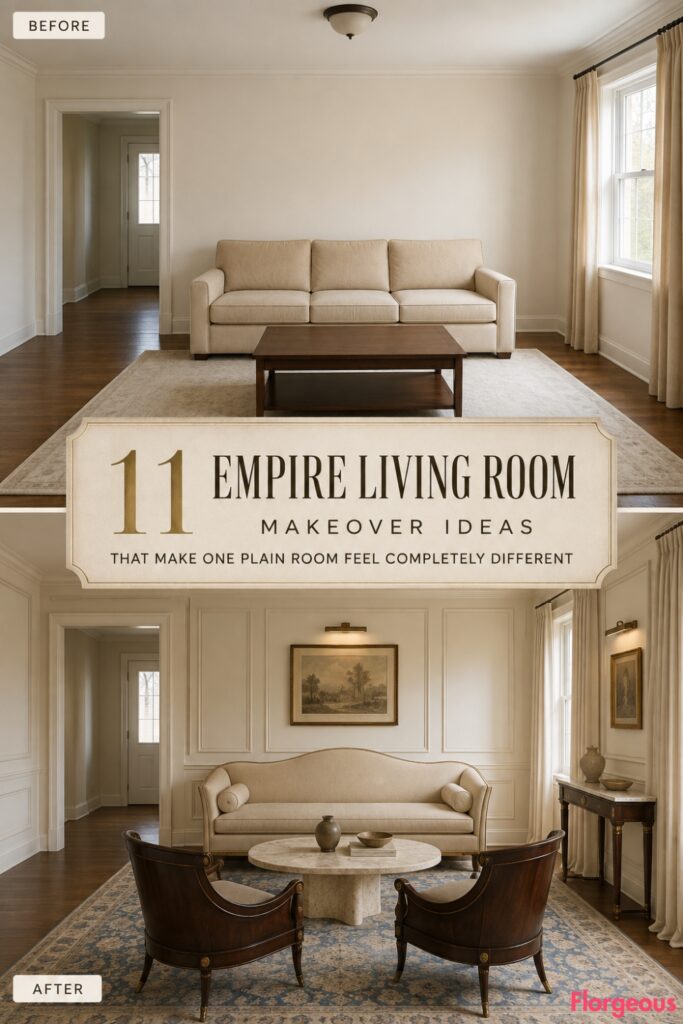
A builder-grade living room can be perfectly usable and still feel unfinished. Warm off-white walls, a beige sofa, short curtains, a basic coffee table, and one ceiling light create a neutral starting point, but there is very little architecture or personality holding the room together.
An Empire Living Room approaches the same space through proportion and structure first. Symmetry, substantial furniture forms, dark polished woods, natural stone, bronze, tall drapery, and restrained classical references give the room a much stronger identity without requiring it to look like a historical reconstruction.
For these 11 makeovers, the starting room never changes. The doorway, window, flooring, ceiling height, camera position, architecture, and circulation all remain identical. Only the design direction changes, and every after version explores a deliberately different interpretation of French Empire style.
1. Turn the Plain Room Into a Bright Ivory and Mahogany Parisian Salon
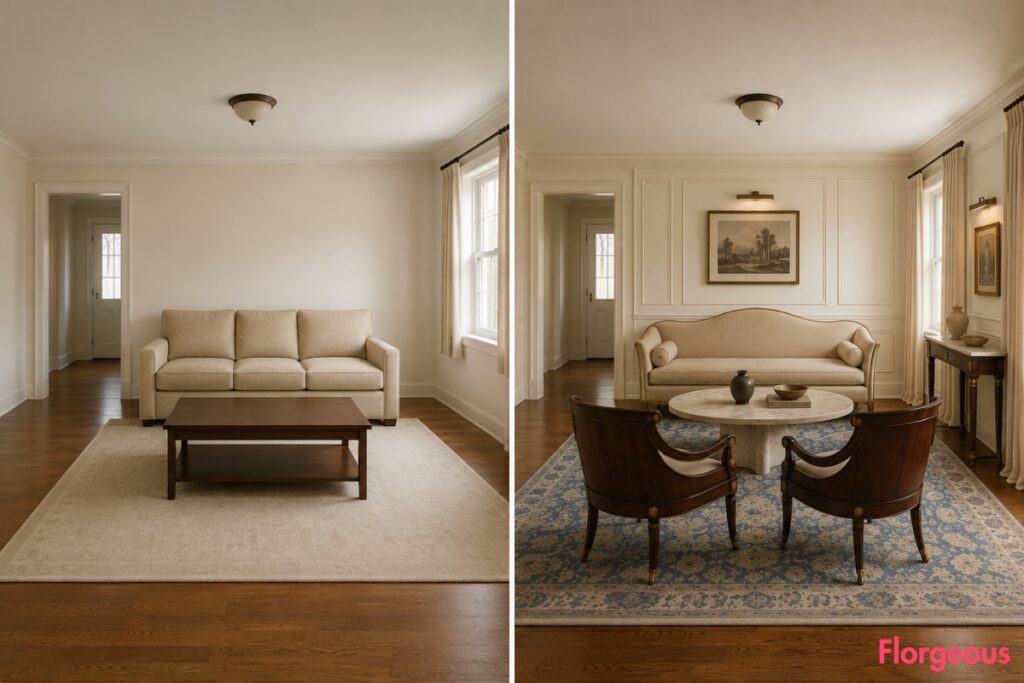
This is the most historically rooted interpretation, but it stays light enough for a modern home.
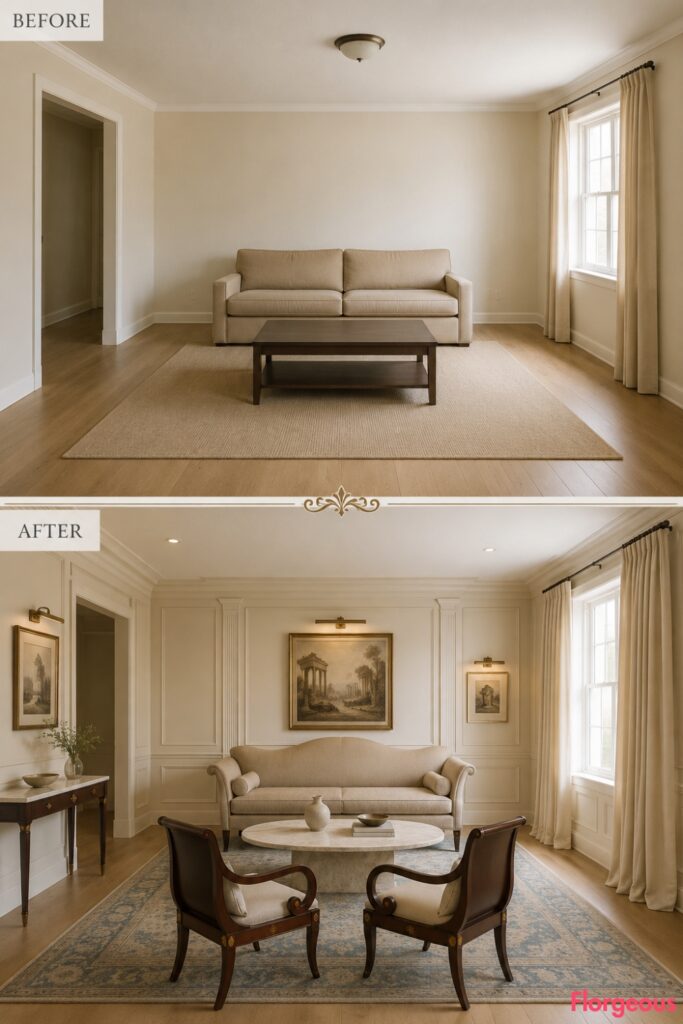
Before: The identical builder-grade living room has warm off-white walls, a straight beige sofa, bare rectangular coffee table, simple neutral rug, short curtains, basic ceiling light, empty walls, and soft natural daylight.
After: Warm ivory walls gain narrow symmetrical molding and restrained pilaster-inspired details. Replace the sofa with an oatmeal camel-back design, then place two dark mahogany gondola-inspired chairs directly opposite it. A cream marble oval table, faded blue-and-parchment rug, full-height ivory curtains, bronze picture lights, and a slim marble-topped mahogany console create a polished French salon atmosphere.
Why it works: Pale architecture allows substantial mahogany furniture to feel elegant rather than heavy.
Designer Tip: Keep the wood pieces visually related, but avoid buying a matching suite. Slight variations in mahogany tone make the room feel collected.
2. Give the Same Room a Dramatic Charcoal, Limestone, and Blackened Bronze Look
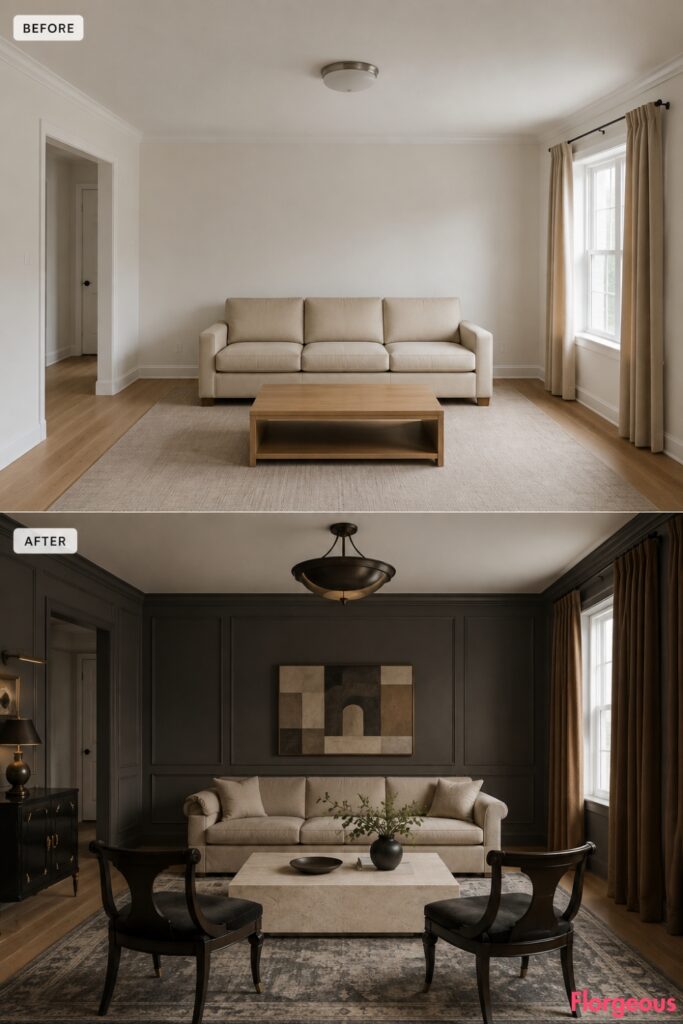
The second makeover moves in the opposite direction. Instead of polished warmth, it uses shadow, mineral texture, and architectural contrast.
Before: Keep the exact same plain room unchanged.
After: Charcoal mineral-plaster walls are framed with broad shallow molding. A parchment linen sofa lightens the center of the composition, while two ebonized klismos-inspired chairs create sharp silhouettes opposite it. Use a chunky pale limestone plinth table, a smoky charcoal-and-cream rug, tobacco-colored curtains, a blackened-bronze ceiling fixture, and one low lacquer cabinet.
There is almost no gold here. The room gets its richness from texture and proportion instead.
Common Mistake: A dark Empire-inspired room becomes theatrical quickly if every object is ornate. Let wall architecture and furniture shape carry most of the historical reference.
3. Make a Small Living Room Feel Grand With Slim Walnut and Parchment Furniture
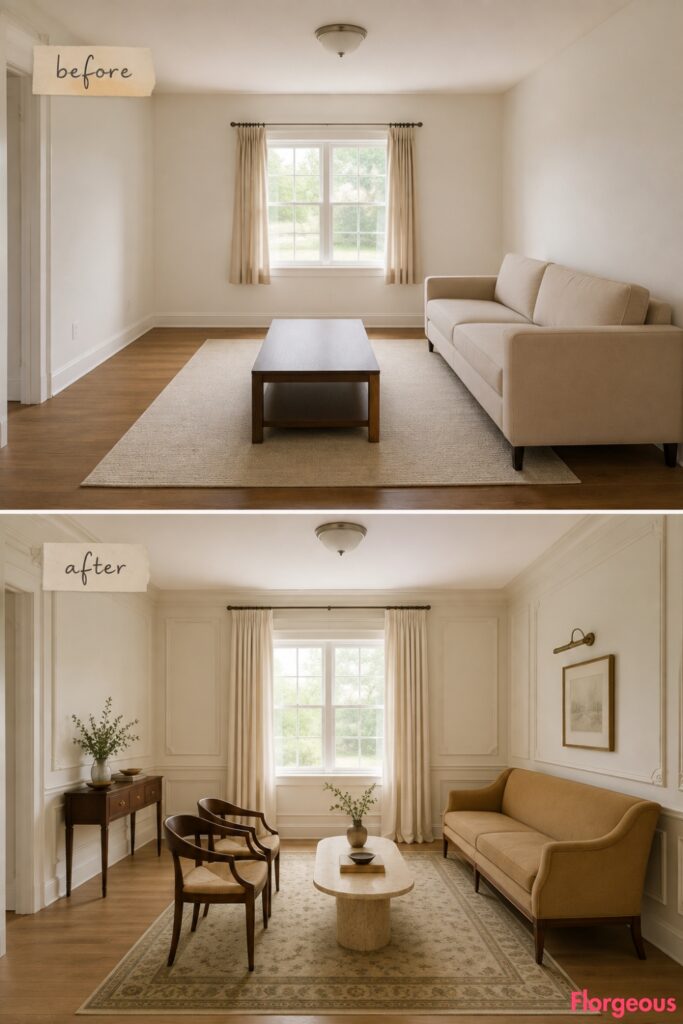
Empire design can work in a compact room when the silhouettes are carefully scaled.
Instead of heavy fauteuils and deep seating, choose a slim camel settee, two compact walnut chairs with gently curved backs, and a narrow travertine pedestal table. Pale parchment walls and a muted olive rug keep the palette quiet, while high-hung cream curtains visually stretch the walls.
A shallow walnut console provides storage without narrowing the walkway.
Small Space Tip: Furniture scale matters more than ornament. Leave visible floor around the chairs and keep the central circulation route completely open.
4. Build a Rich Forest Green and Oxblood Collector’s Room
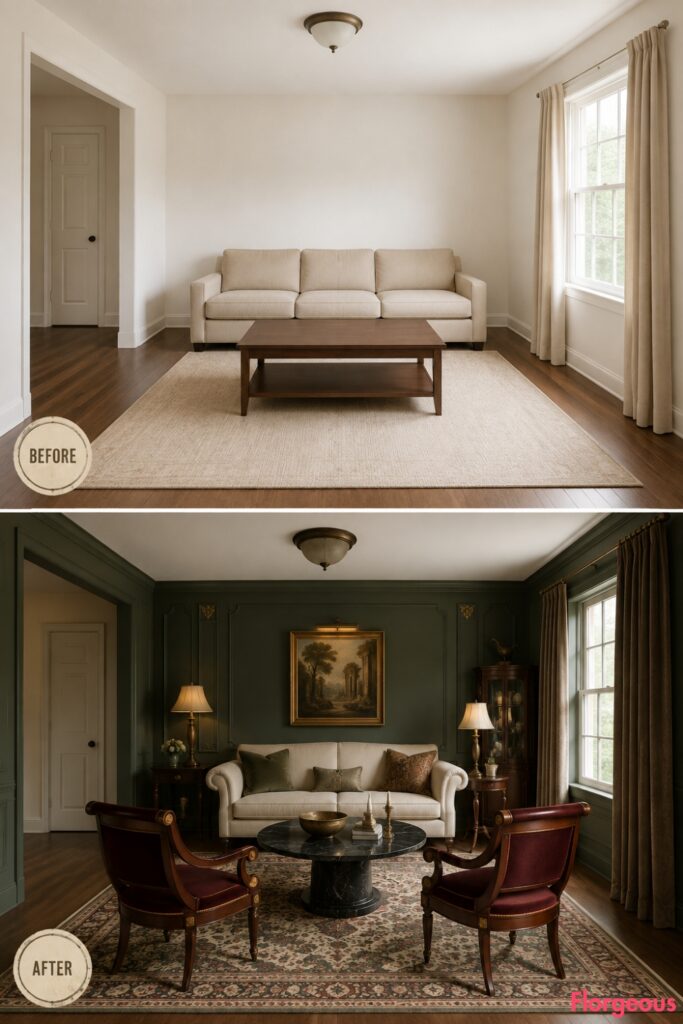
For a more colorful interpretation, start with deep forest-green walls and let oxblood become the focal color.
A warm cream scroll-arm sofa keeps the room from becoming too dark. Opposite it, two polished rosewood chairs upholstered in muted oxblood create the strongest visual moment. Add a black marble round pedestal table, a faded green-and-claret rug, mushroom velvet curtains, antiqued-brass shaded lamps, and a slim glass-front rosewood cabinet.
The palette feels historic, but it avoids the predictable red velvet and gold combination.
Color Story: Forest green, oxblood, rosewood, and black marble are all strong. Cream upholstery and mushroom curtains give the eye somewhere to rest.
5. Give Empire Style a Romantic Side With Dusty Rose, Dark Walnut, and Cream Stone
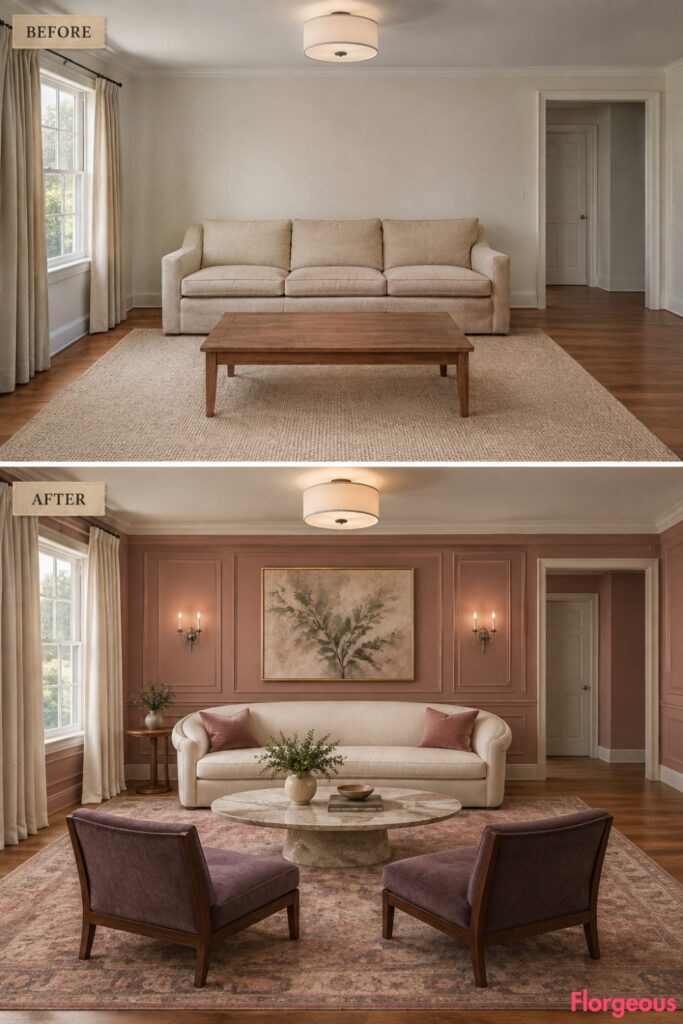
Empire interiors do not need to feel stern.
Muted dusty-rose walls soften the room immediately. Pair them with a gently curved cream sofa, two dark walnut slipper chairs upholstered in muted plum-gray fabric, and a pale quartzite oval table. A faded rose-and-taupe rug, full ivory curtains, antiqued-silver sconces, and delicate abstract botanical artwork bring in a quieter, more romantic mood.
The furniture still sits in a disciplined symmetrical layout, so the room never slips into cottage or Rococo territory.
Why It Works: The softness comes from color and textile choice, while the structure remains unmistakably neoclassical.
6. Create a Renter-Friendly Olive and Rust Empire Makeover
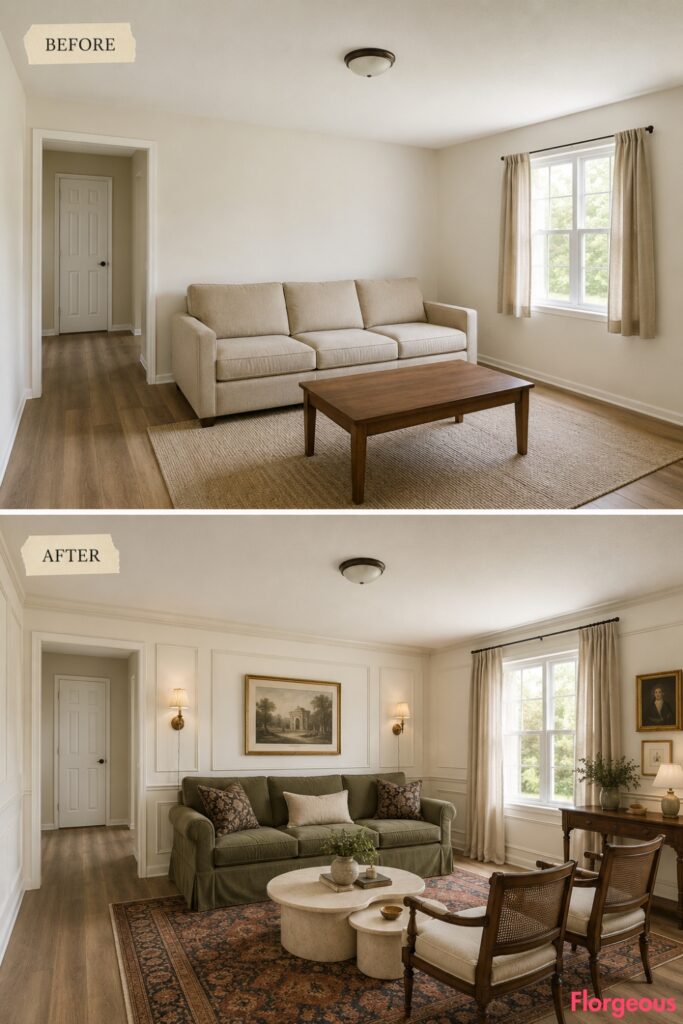
This version proves that the architectural character does not need to be permanent.
Apply removable ivory molding to the existing walls, then use an olive slipcovered sofa, two walnut carved-look lounge chairs, and plaster-look nesting tables. A faded rust-and-indigo rug adds pattern, while ready-made flax curtains hung high and wide change the proportions of the room.
Plug-in antique-brass sconces, a freestanding walnut console, and removable framed art complete the transformation.
Budget Version: Look for secondhand dark wood furniture with strong silhouettes instead of inexpensive faux-gilded reproductions. Real wood usually creates a more convincing Empire mood.
7. Strip Empire Style Back to Limestone Gray and Sculptural Modern Forms
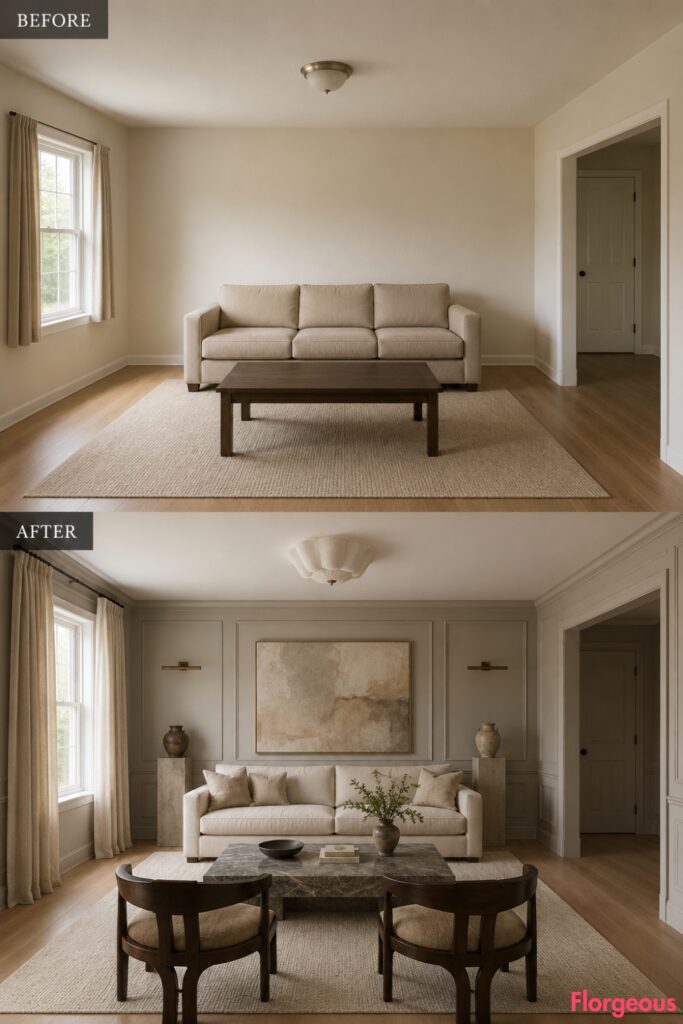
For a relaxed contemporary interpretation, remove almost all obvious historical decoration.
Use warm limestone-gray walls with broad shallow molding, an oat linen sofa, two dark rosewood chairs with subtly curved Empire-inspired profiles, and a low honed gray marble coffee table. Add a parchment wool rug, natural linen curtains, a sculptural plaster ceiling light, bronze picture lights, and handmade ceramics.
This room relies on mass, symmetry, material quality, and disciplined furniture placement instead of elaborate ornament.
Style Note: If you like modern interiors but want more architectural presence, this is one of the easiest Empire directions to adapt.
8. Create a Masculine Tobacco, Cognac, and Campaign-Inspired Interior
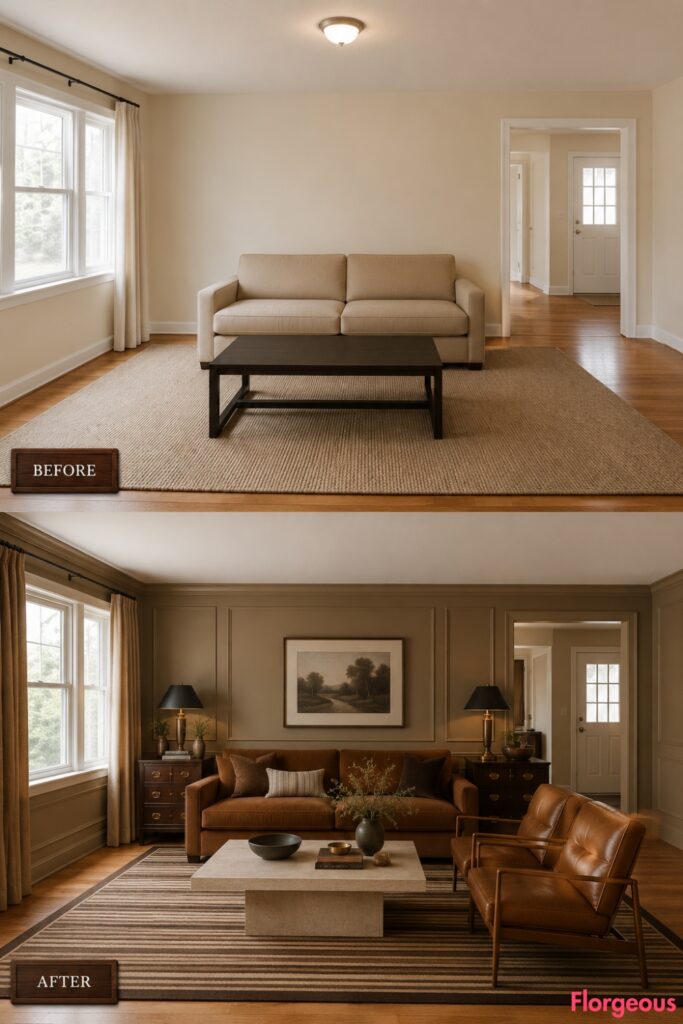
This makeover draws from the practical furniture side of the Empire period rather than formal salon decoration.
Warm tobacco mineral walls create the backdrop for a saddle-brown sofa and two slim cognac leather chairs. Add dark rosewood campaign-style storage with restrained brass hardware, a honed limestone table, a muted striped wool rug, mushroom curtains, and shaded bronze lamps.
The combination feels tailored and worldly without relying on military memorabilia.
Designer Tip: Campaign-inspired furniture works best as one substantial storage piece. Repeating brass-cornered furniture around the room can make the concept feel themed.
9. Cool the Room Down With Muted Imperial Blue, Walnut, and Antique Nickel
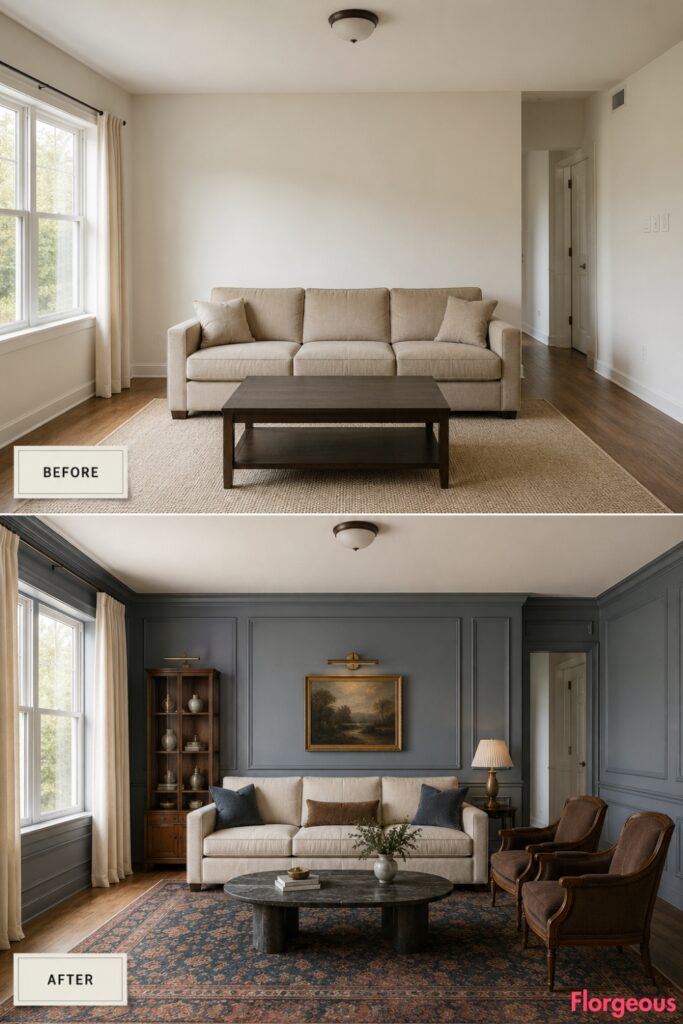
This scheme moves away from warm bronze completely.
Muted imperial blue-gray walls create a cooler architectural backdrop. Use a parchment sofa, two medium-walnut fauteuil-inspired chairs upholstered in soft tobacco wool, and a dark gray stone oval table. A faded blue-and-rust rug warms the floor, while cream curtains and antique-nickel picture lights keep the upper half of the room bright.
A shallow walnut vitrine introduces height and display space without overwhelming the room.
10. Reference Egyptian Revival With Sand, Black Stone, and Papyrus-Inspired Bronze
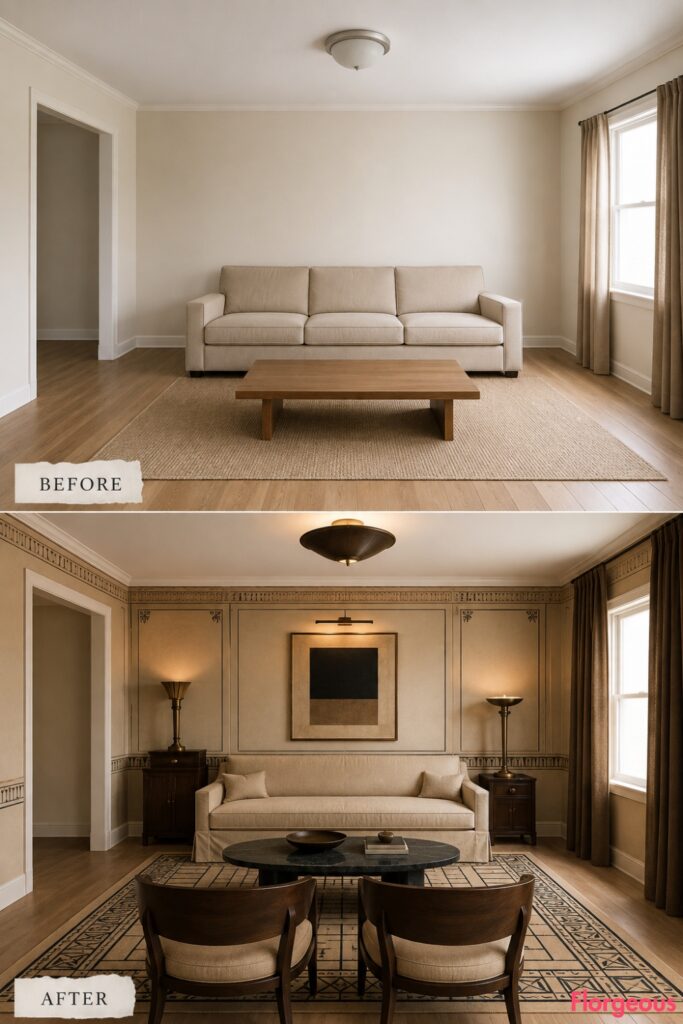
Empire-era fascination with Egyptian design can be referenced without adding literal themed objects.
Choose warm sand walls with narrow geometric borders, a tailored flax sofa, two dark walnut chairs with tapered sculptural profiles, and a black stone oval table. Add a sand-and-black geometric rug, deep brown linen curtains, and bronze lighting with very subtle lotus or papyrus-inspired shapes.
There are no statues, hieroglyphs, pyramids, or novelty accessories. The influence stays in form and geometry.
Common Mistake: One Egyptian Revival reference feels intriguing. Five competing references make the room look like a theme set.
11. Finish With a Cream, Ebonized Wood, and Antique Silver Gallery Salon
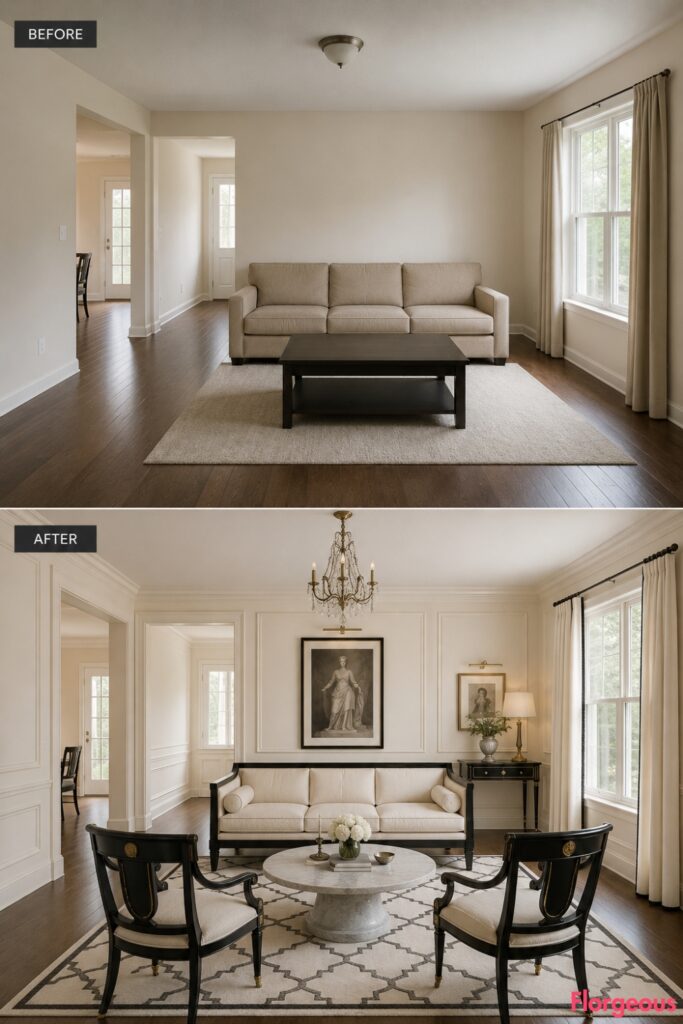
The final transformation treats the living room as a highly edited collector’s space.
Soft cream walls receive crisp symmetrical molding. An ebonized sofa frame with ivory upholstery anchors one side, while two black lacquer carved chairs face it. Use a pale gray marble pedestal table, a graphic cream-and-charcoal rug, ivory curtains with narrow dark edging, and antiqued-silver lighting.
Instead of filling the room with objects, create one controlled grouping of monochrome classical-inspired and abstract artwork. Keep every frame free of readable text.
How to Choose the Right Empire Look for Your Living Room
A successful Empire Living Room does not depend on filling the space with antique-looking objects. The strongest versions usually begin with one clear structural idea, such as symmetry, architectural molding, a substantial dark wood piece, sculptural chairs, or a strong stone surface.
If your room receives limited light, the ivory, parchment, dusty rose, or limestone-gray schemes are easier starting points. Forest green, charcoal, tobacco, and sand create stronger atmosphere, but they benefit from pale upholstery or stone to stop the space from feeling visually dense.
Renters can focus on removable molding, tall ready-made curtains, freestanding storage, vintage wood furniture, rugs, and plug-in lighting. Small rooms should prioritize slim silhouettes and open floor area before decorative detail.
Before buying a sofa, pair of chairs, or oversized console, mark their dimensions on the floor and walk the main circulation route. Once the layout feels effortless, choose one dominant wood tone and one historical reference, then let the remaining materials support them rather than compete.