Our starting point is deliberately ordinary. The living room has warm off-white walls, a straight beige sofa against the main wall, a bare rectangular coffee table, a simple neutral rug, short curtains, basic ceiling lighting, and almost no styling. It is clean and functional, but there is no real focal point or material identity.
For every transformation, we kept the exact same camera angle, doorway, window, flooring footprint, ceiling height, wall proportions, furniture scale, entry route, and open central circulation. Only the design changes.
These 21 Industrial Modern Living Room ideas show just how varied the style can become. Instead of repeating concrete, black steel, brown leather, and exposed bulbs, each makeover explores a different palette, architectural material, metal finish, furniture silhouette, lighting idea, focal point, and mood.
1. Build a Warm Brutalist Loft With Board-Formed Concrete
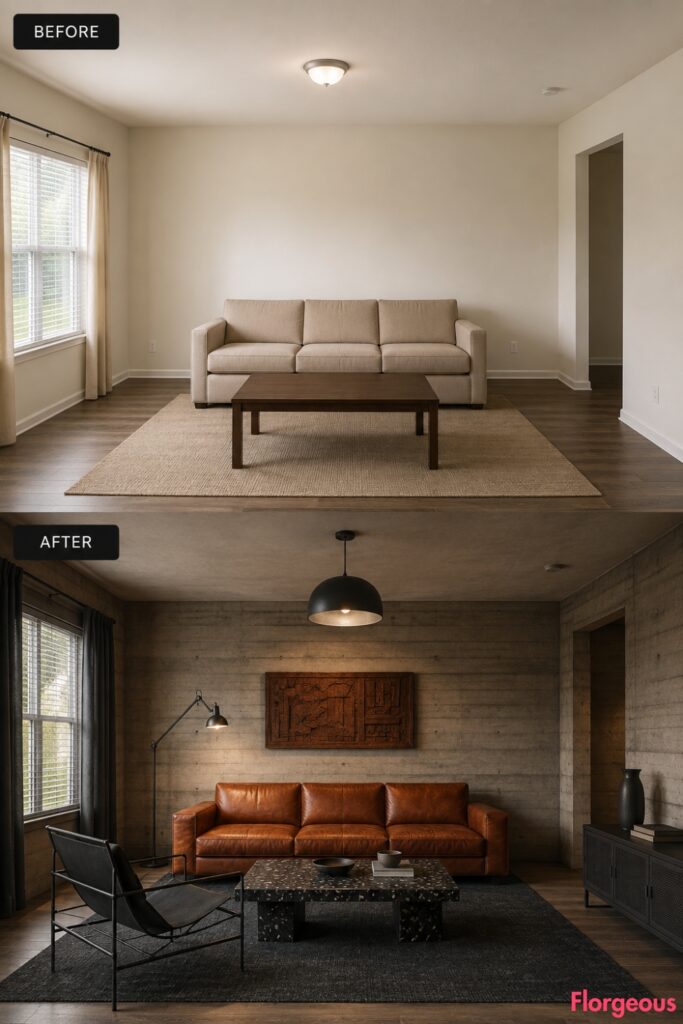
Before: Warm off-white walls, a straight beige sofa, bare rectangular coffee table, neutral rug, short curtains, and a basic ceiling light leave the room feeling visually flat. There is no strong material contrast or focal point.
After: Warm board-formed concrete wraps the room in subtle linear texture. A structured saddle-leather sofa sits against the main wall, balanced by a blackened-steel canvas chair, dark terrazzo table, charcoal wool rug, and graphite curtains. A spun-steel dome pendant, articulated floor lamp, carved timber relief, and perforated-steel media cabinet complete the architectural composition.
Why it works: Concrete provides visual weight while leather, timber, canvas, and wool keep the harder materials comfortable.
Try this: Use a textured mineral finish if authentic board-formed concrete is unrealistic for your space.
2. Turn the Room Into a White-Brick Walnut Atelier
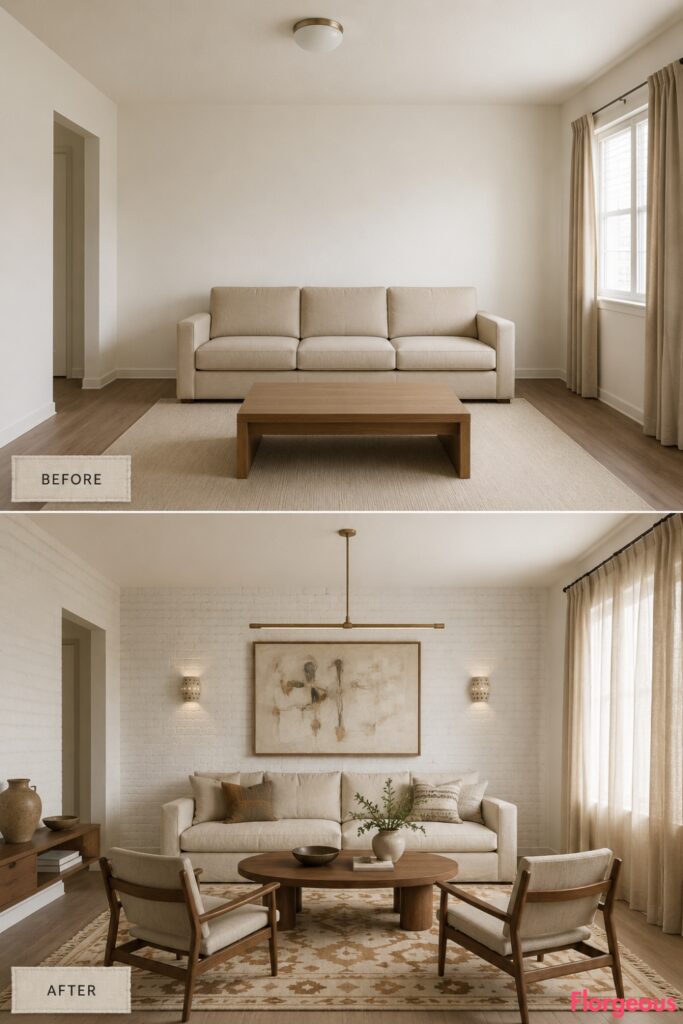
Before: The same neutral room feels generic, with flat painted walls, undersized curtains, basic upholstery, and little visual warmth beyond the beige sofa.
After: Limewashed white brick introduces soft masonry texture while keeping the space luminous. An oatmeal linen sofa is paired with two walnut-framed flax chairs, an oval walnut coffee table, a cream-caramel kilim, and full-height natural linen curtains. Aged-brass lighting and a floating walnut media shelf add refinement without making the room feel formal.
Why it works: White brick provides industrial character while walnut and linen make the room unmistakably residential.
3. Create an Aubergine Foundry Evening Lounge
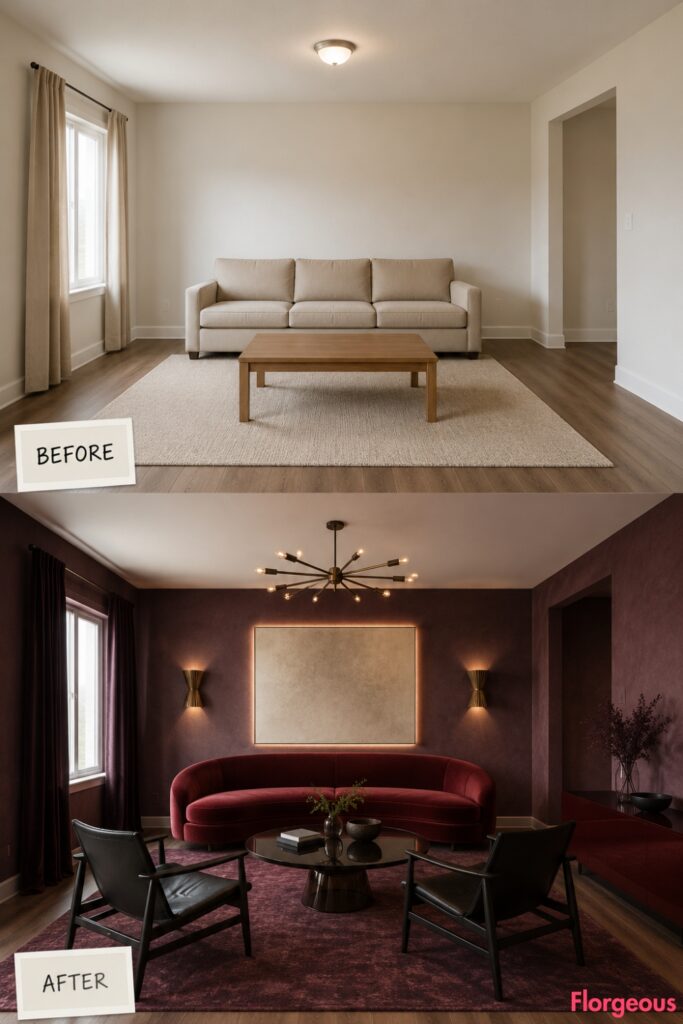
Before: The builder-grade palette has very little depth. The beige sofa and off-white walls make the room feel bright but emotionally neutral.
After: Deep aubergine Roman clay changes the atmosphere completely. A crescent oxblood velvet sofa becomes the centerpiece, with two ebonized-wood sling chairs, a smoked-glass pedestal table, plum-burgundy rug, and espresso velvet curtains. Gunmetal and bronze lighting introduce industrial character without a single exposed bulb.
Why it works: Rich color replaces the usual dependence on dark gray, creating a more memorable industrial mood.
Lighting Tip: Choose shaded or diffused fittings so dark walls receive pools of warm light rather than harsh glare.
4. Make Industrial Style Almost Weightless With Champagne Metal
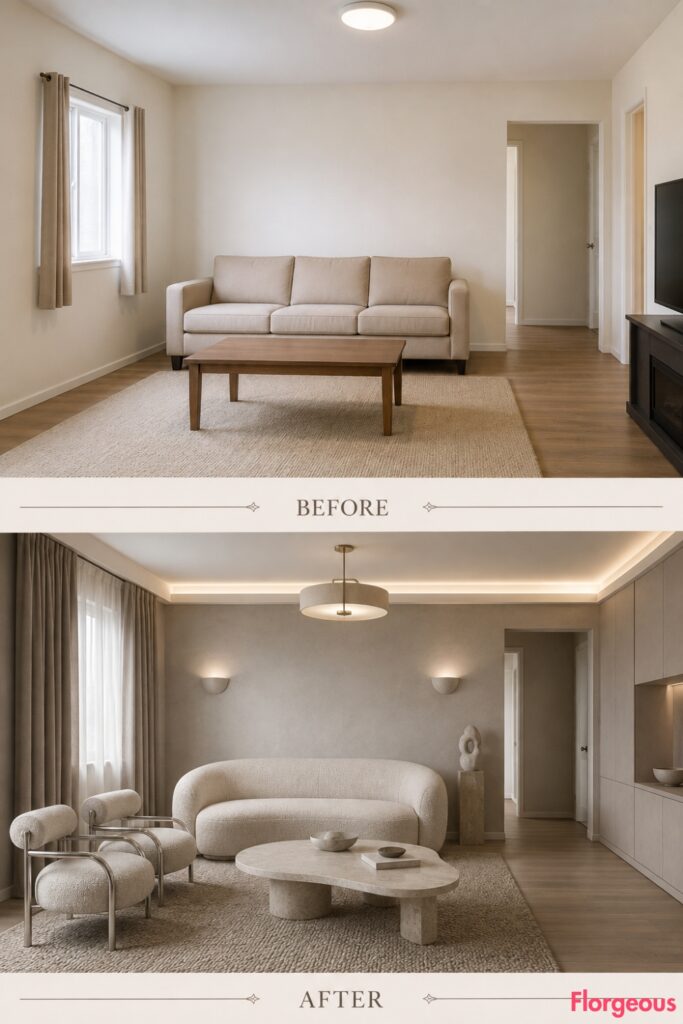
Before: The original room has no distinctive surface treatment, and its straight furniture makes the layout feel static.
After: Pale greige microcement creates a seamless architectural shell. A curved pearl boucle sofa, brushed-stainless lounge chair, sculptural travertine table, pebble-shaped rug, and softly shimmering curtains replace the heavy loft vocabulary with lighter forms. Champagne-toned metal and concealed lighting provide the industrial precision.
Why it works: The room uses industrial materials without relying on dark colors or distressed finishes.
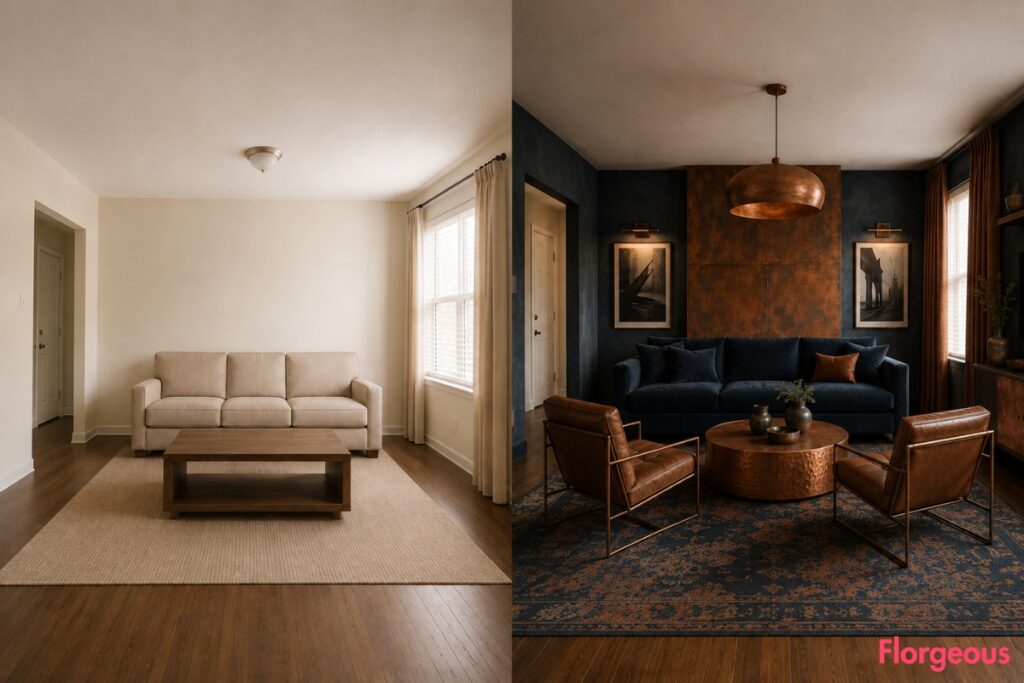
5. Build the Room Around Oxidized Copper and Indigo
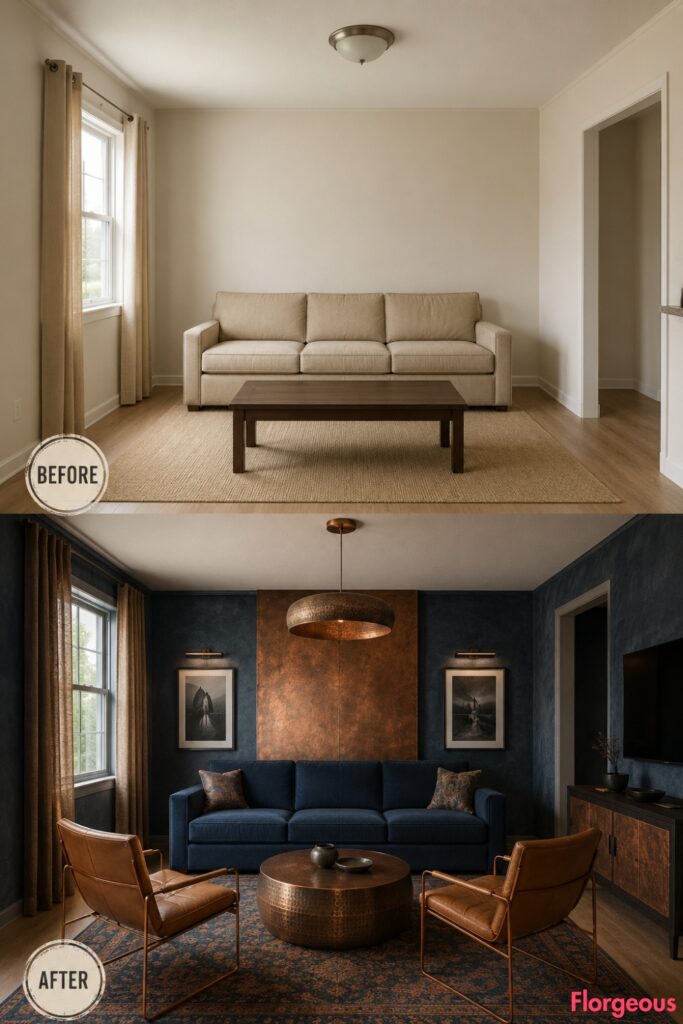
Before: The neutral walls and beige upholstery produce a safe palette with almost no contrast or distinctive architectural detail.
After: Muted indigo mineral paint surrounds an oxidized-copper focal panel. A deep-blue mohair sofa and caramel leather chairs reinforce the saturated palette, while a hammered-copper table, dark walnut storage, tobacco curtains, and a patinated disc pendant make copper the room’s defining industrial material.
Color Story: The blue-green tones in oxidized copper become much stronger against deep indigo.
6. Strip the Look Back to a Blackened-Timber Japandi Workshop
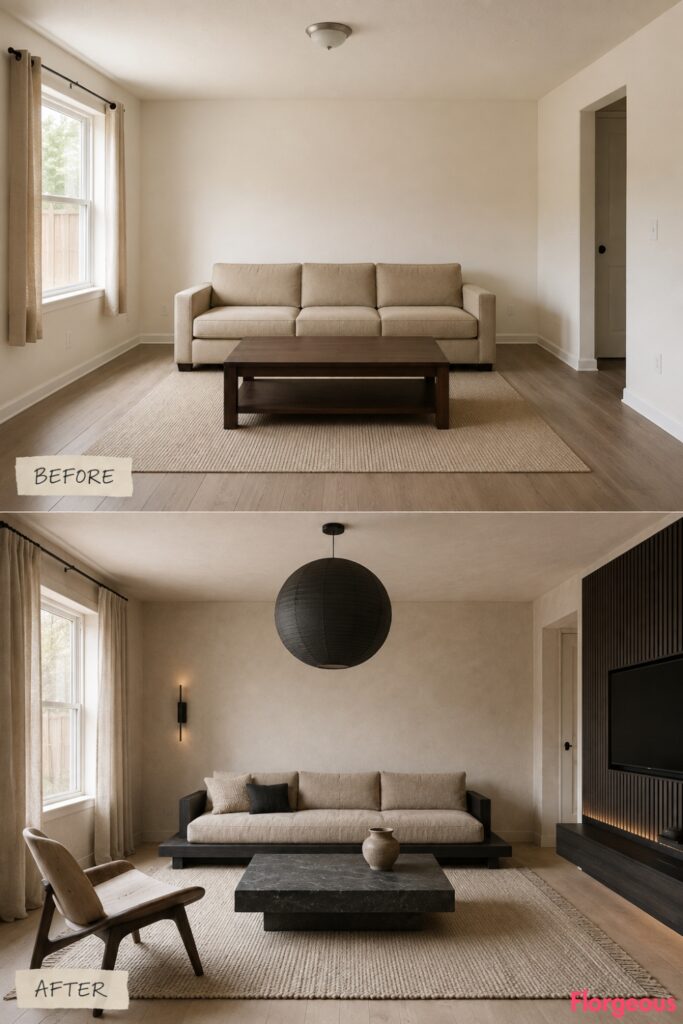
Before: The straight beige sofa, bare table, and short curtains make the existing room feel more unfinished than intentionally minimal.
After: Pale putty limewash becomes the quiet backdrop for a low blackened-oak sofa with hemp cushions. A sculptural pale-ash chair, soapstone table, undyed wool rug, flax curtains, black paper lantern, and slatted timber media wall create a low, restrained composition.
Why it works: The industrial influence comes from blackened wood, stone, iron, and disciplined proportions rather than decorative factory references.
Common Mistake: Do not add unnecessary black accessories once the major dark architectural element is in place.
7. Mix Parisian Curves With Precision Ironwork
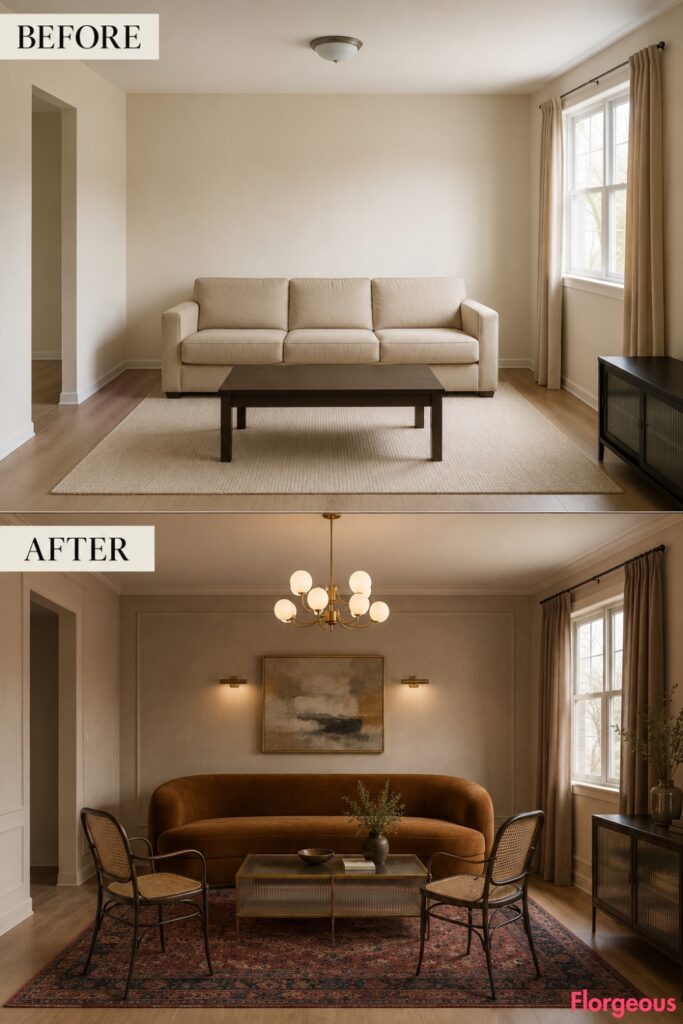
Before: The generic room has no architectural detailing, while the straight beige sofa and basic fixtures make everything feel builder-standard.
After: Warm plaster and shallow molding introduce Parisian structure. A curved tobacco mohair sofa is balanced by two wrought-iron cane chairs, an aged-brass reeded-glass table, garnet-blue rug, opaline chandelier, and a fluted-glass media cabinet framed in dark iron.
Why it works: Curves, molding, and mohair prevent the ironwork from making the room feel commercial.
8. Use Weathered Zinc for a Nordic Coastal Industrial Room
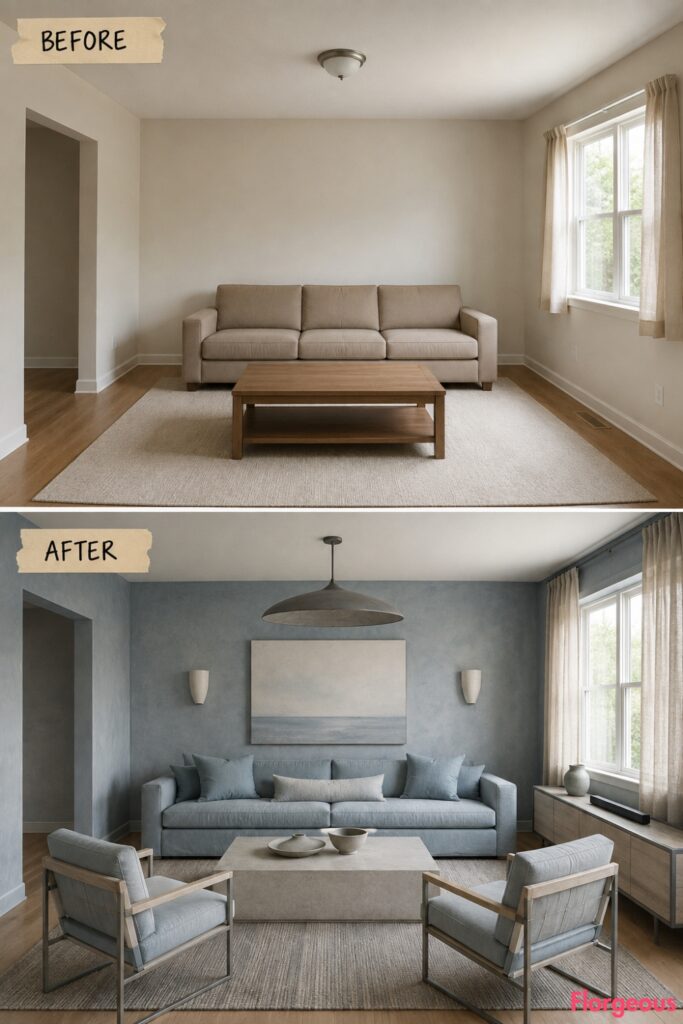
Before: The beige room feels warm but lacks freshness, verticality, and any meaningful connection to the natural light entering through the window.
After: Chalky blue-gray walls create a cooler backdrop for a long pale-blue linen sofa. Bleached ash and weathered zinc appear on two lounge chairs, while cast concrete, flax curtains, ceramic sconces, and a broad zinc pendant add industrial structure without losing the breezy mood.
Try this: Create a coastal feeling through weathered materials and pale color instead of literal nautical decor.
9. Turn Greenery Into an Architectural Steel Feature
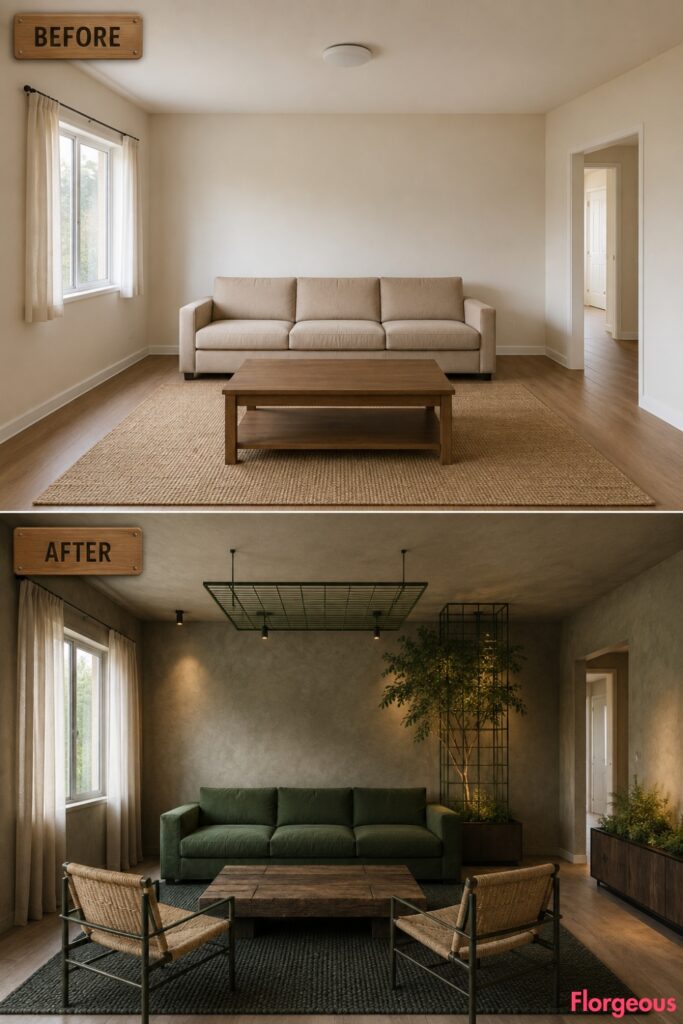
Before: Empty walls leave the standard room without a focal point, while the limited styling makes the space feel disconnected from nature.
After: Moss-gray clay plaster surrounds a forest-green linen sofa and two woven rush chairs framed in dark-green steel. A reclaimed elm table adds age, but the real centerpiece is a steel trellis supporting one indoor tree and controlled climbing greenery.
Why it works: Treating planting as architecture creates far more impact than scattering many small pots around the room.
10. Create a Pearl-Toned Industrial Design Gallery
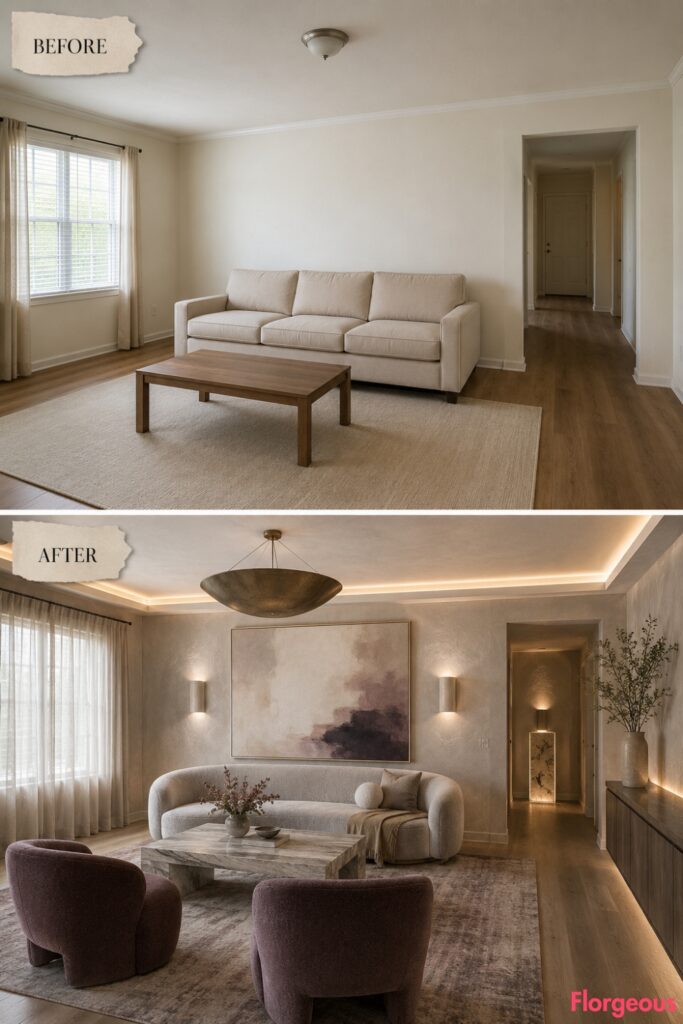
Before: The plain room offers no hierarchy. The sofa, coffee table, walls, and rug all occupy a similar neutral visual register.
After: Luminous mineral plaster creates a soft gallery shell. A curved pearl-gray mohair sofa is paired with muted-plum sculptural chairs and a honed quartzite table. Smoked-eucalyptus cabinetry, cast bronze, translucent curtains, cove lighting, and an illuminated stone plinth make every detail feel intentionally composed.
Designer Tip: Use one exceptional stone surface rather than several competing statement materials.
11. Design a Transformable Micro-Loft Around Folding Furniture
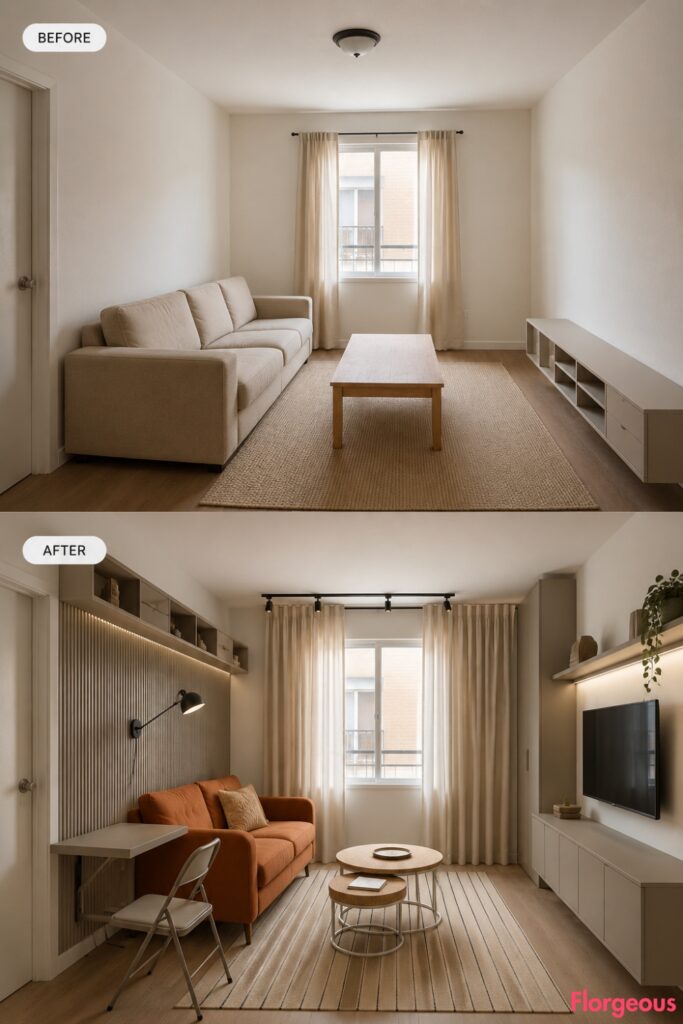
Before: The existing straight sofa and fixed coffee table consume valuable floor area without offering any flexibility.
After: A compact burnt-orange loveseat reduces the seating footprint. A folding steel chair, cork-aluminum nesting tables, narrow rug, vertical ribbed-metal storage, wall-mounted media cabinet, and fold-down desk allow the room to change function while keeping the central walkway clear.
Small Space Tip: Push storage to the room perimeter and preserve an uninterrupted visual line through the center.
12. Make the Industrial Look Completely Renter-Reversible
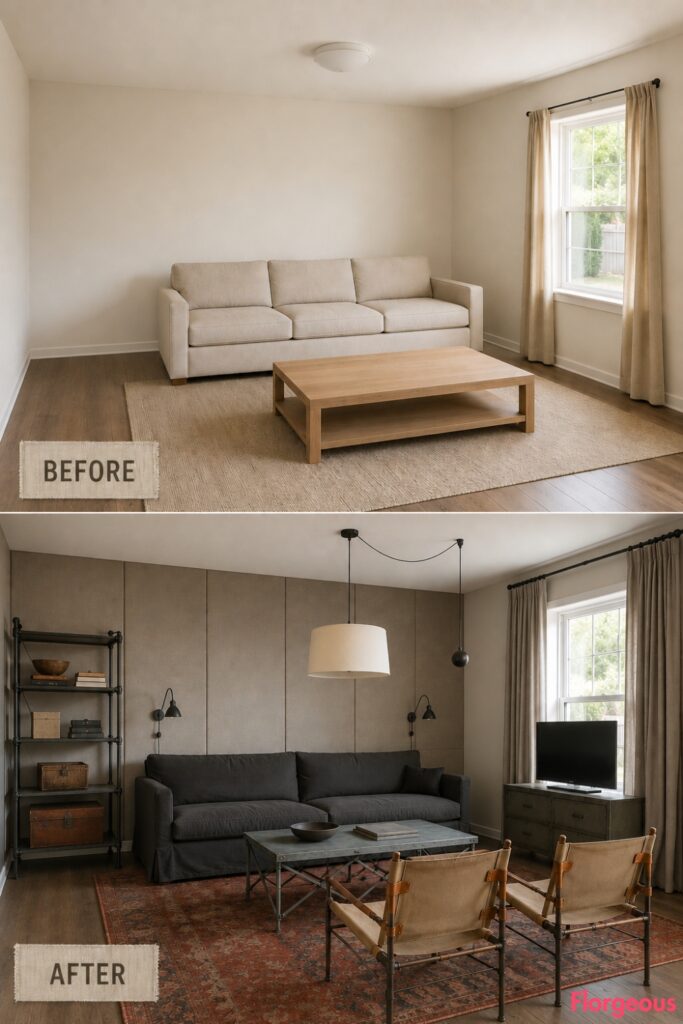
Before: The builder-grade walls and lighting offer little personality, but permanent alterations may not be appropriate in a rental.
After: Removable warm-gray canvas wall panels add texture without construction. A charcoal slipcovered sofa, tan campaign chair, folded galvanized-metal table, removable faded rug, clamp lights, plug-in pendant, scaffold-inspired shelving, and movable metal media chest create an industrial workshop character that can all be taken away later.
Budget Version: Start with freestanding storage and one oversized plug-in light before changing any wall treatment.
13. Build a Family Industrial Room Around Cork and Rounded Forms
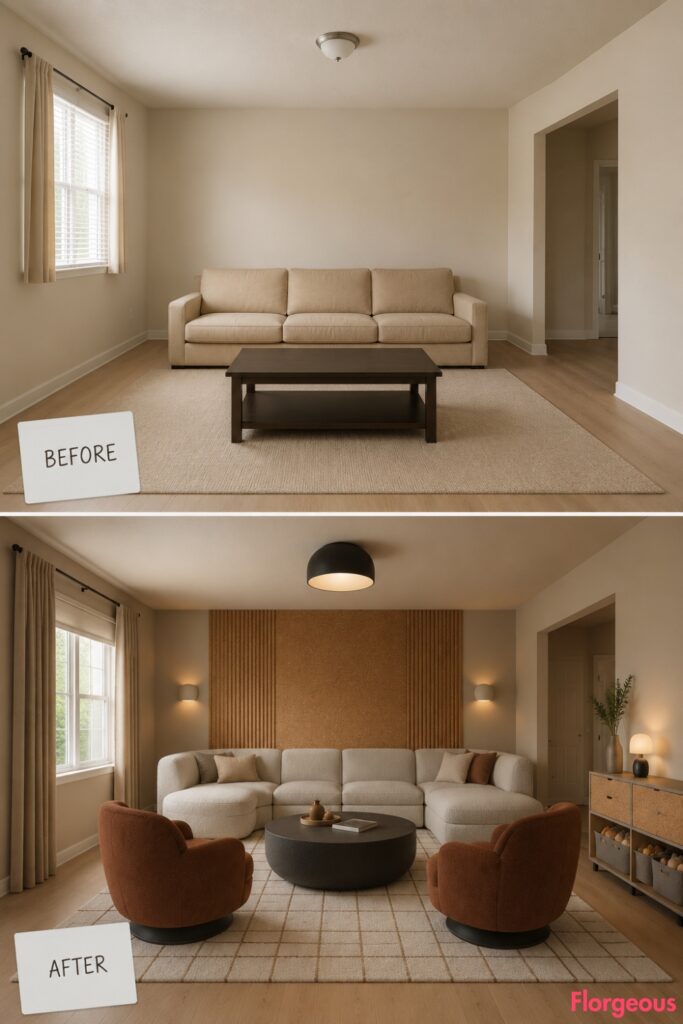
Before: The room is visually plain, but simply adding heavy steel furniture would make it less practical for children and everyday family use.
After: A large cork acoustic panel becomes the focal surface against washable mushroom walls. A rounded performance sectional, rust swivel chairs, rubber-resin coffee table, washable rug, protected lighting, and cork-fronted toy storage introduce durability without sharp corners.
Why it works: Industrial character comes from material honesty, not from making every object hard or heavy.
14. Rework the Room as a Restored Railway Workshop
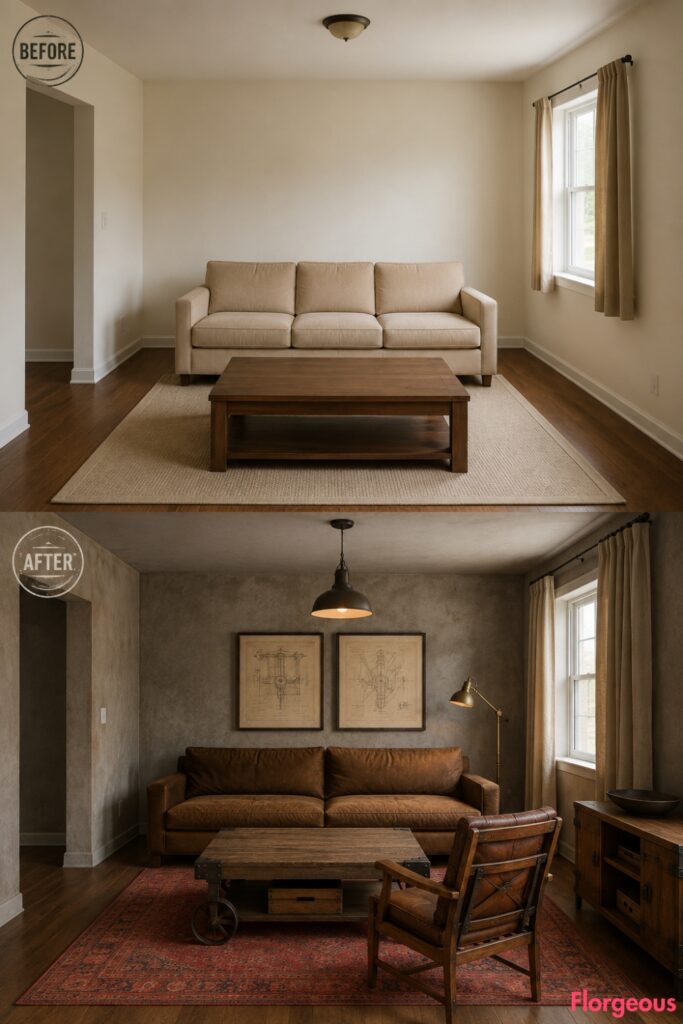
Before: The generic furnishings lack history, texture, and any sense that the pieces have been collected over time.
After: Mottled plaster creates an aged shell for a waxed-canvas sofa and one restored oak-and-leather railway chair. A trolley-inspired oak table, enamel station pendant, brass task light, brick-red rug, technical drawings without readable text, and iron-cornered media cabinet reference railway workshops specifically.
Style Note: A focused historical influence looks more convincing than a mixture of unrelated factory antiques.
15. Go Graphic With Bauhaus Black, White, and Aluminum
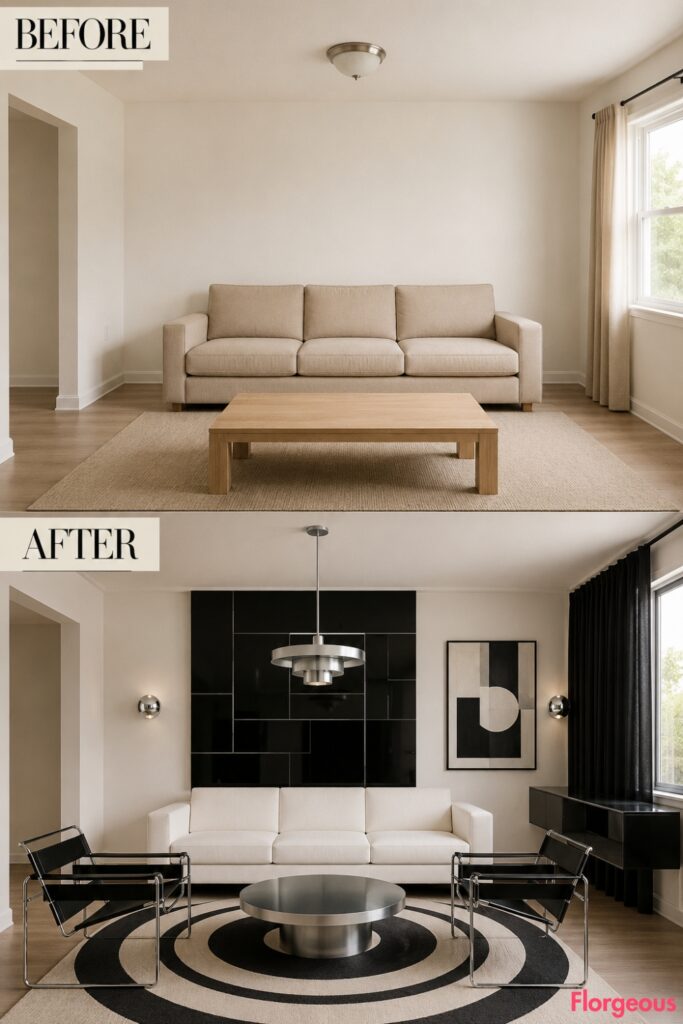
Before: Beige-on-neutral styling gives the room almost no graphic rhythm or contrast.
After: Crisp warm-white walls frame one lacquered black geometric panel. A straight white wool sofa faces two polished-aluminum tubular chairs, while a circular aluminum table and concentric rug reinforce the machine-age geometry. Chrome globe sconces and a floating black media cabinet keep the composition exact.
Why it works: This room uses industrial manufacturing language instead of rustic workshop imagery.
16. Combine Desert Color With Foundry Materials
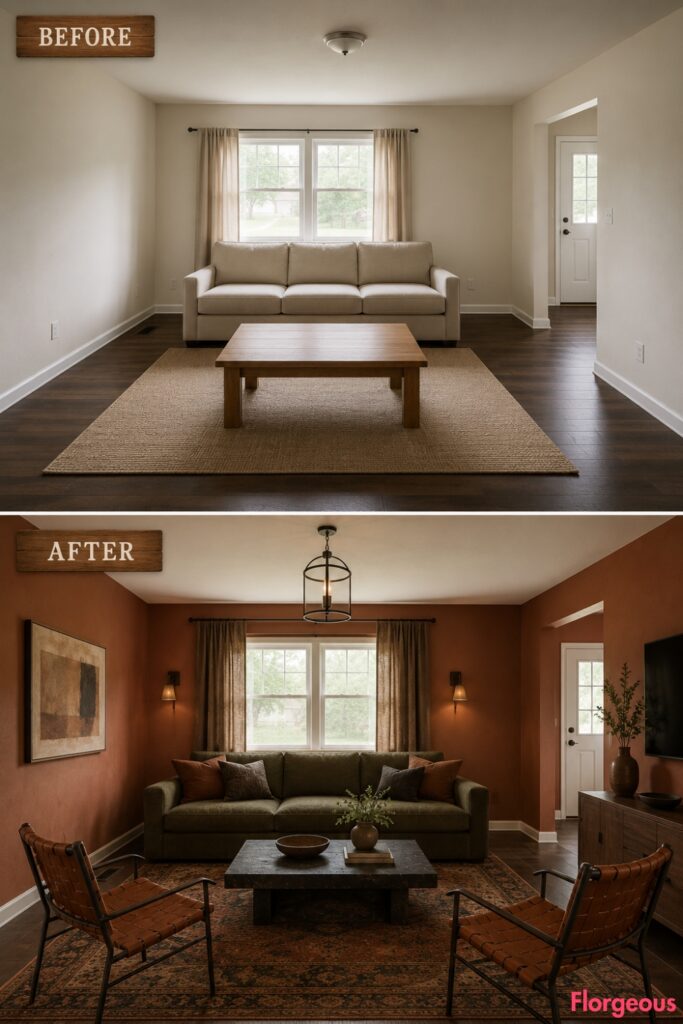
Before: The original room is warm but visually washed out, with no strong earthy pigment or tactile contrast.
After: Burnt-sienna clay paint gives the walls substantial color. A deep olive linen sofa, aged iron chairs with cognac woven seats, a basalt table, rust-and-charcoal rug, brown linen curtains, enclosed iron pendant, bronze sconces, and walnut storage make the room feel earthy and grounded.
Try this: Use desert influence through mineral colors rather than Western accessories.
17. Turn the Space Into a Minimal Industrial Art Museum
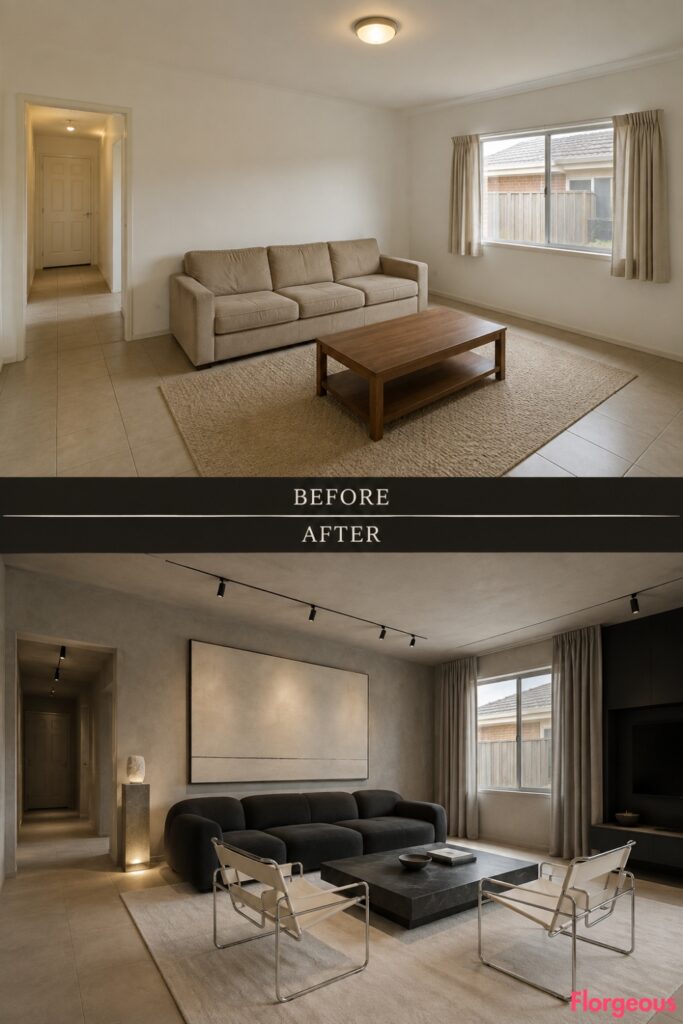
Before: Empty walls currently look unfinished rather than intentional because there is no artwork or designed negative space.
After: Pale cementitious walls provide a gallery-like background for one enormous contemporary artwork. A sculptural charcoal sofa, tubular chrome chairs, monolithic slate table, oversized cream rug, silver-gray curtains, museum track lighting, and an illuminated pedestal support the focal piece without competing with it.
Common Mistake: Do not fill every blank wall after introducing oversized art.
18. Use a Circular-Economy Material Palette
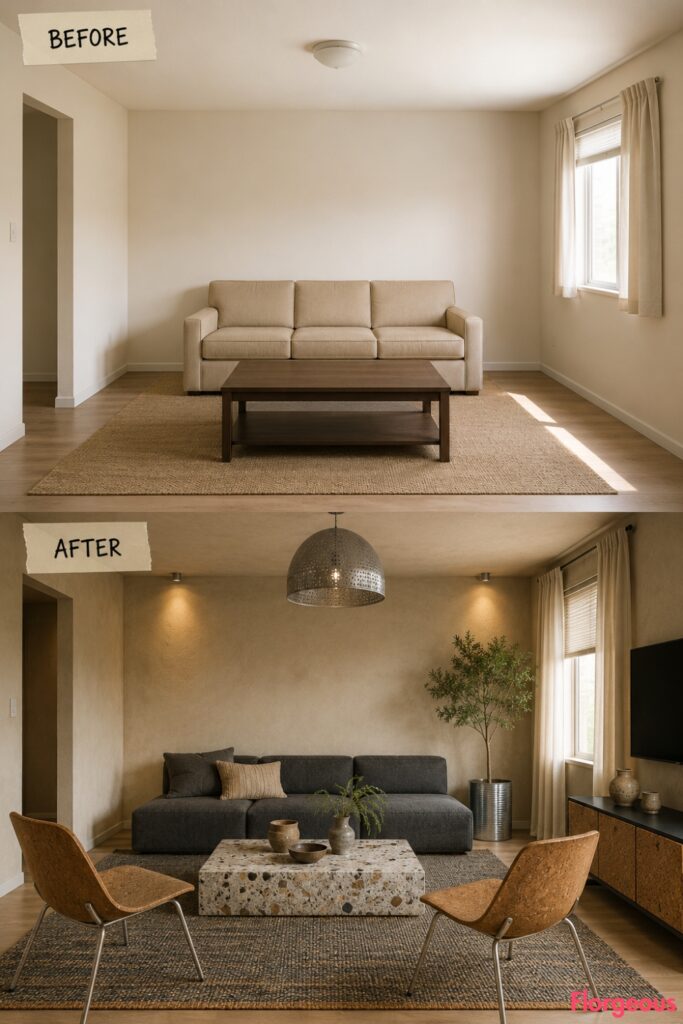
Before: The existing room relies on generic mass-market surfaces without giving the materials any particular identity.
After: Hemp-lime plaster provides a breathable textured background. Recycled graphite wool covers a modular sofa, molded cork forms the lounge chairs, reclaimed stone becomes terrazzo, recycled aluminum appears in the lighting, and cork-faced cabinetry provides storage.
Material Note: Sustainable interiors look more finished when reclaimed materials are paired with precise contemporary proportions.
19. Create a Boutique Lounge Through Layered Amber Light
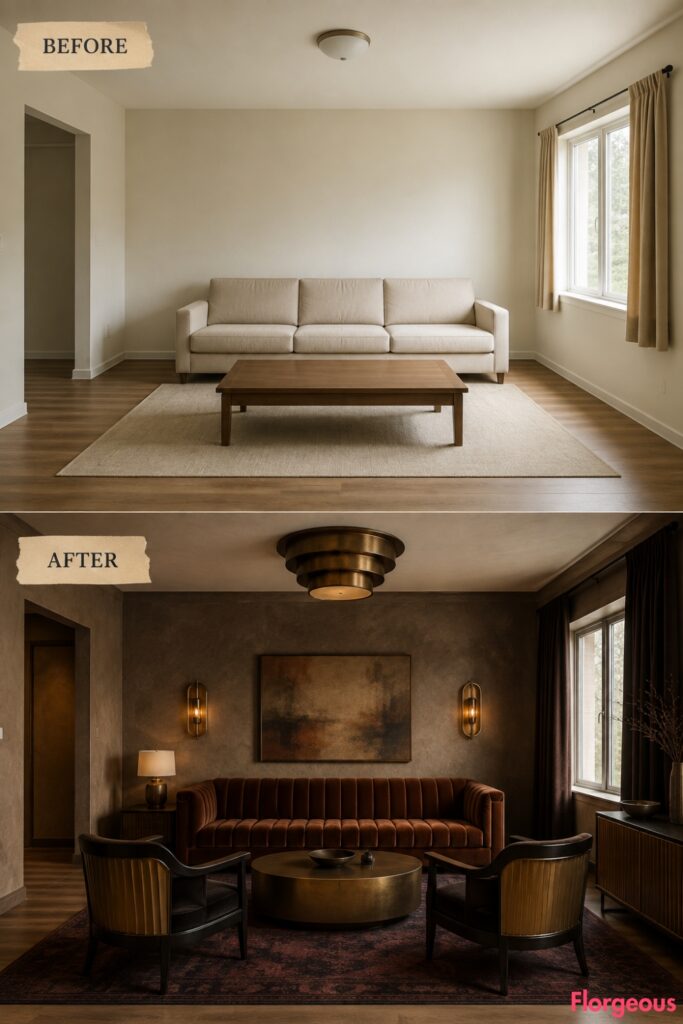
Before: The single basic ceiling fixture makes the original room look flat after sunset and provides little atmosphere.
After: Deep mushroom Venetian plaster surrounds a channel-tufted tobacco velvet sofa. Dark-ash chairs with ribbed bronze, a bronze-clad table, burgundy-charcoal rug, espresso curtains, amber glass sconces, a shaded floor lamp, and a layered ceiling fixture create several overlapping pools of light.
Lighting Tip: Combine ceiling, wall, and floor-level lighting instead of simply installing a brighter central fixture.
20. Make Fluted Glass the Architectural Centerpiece
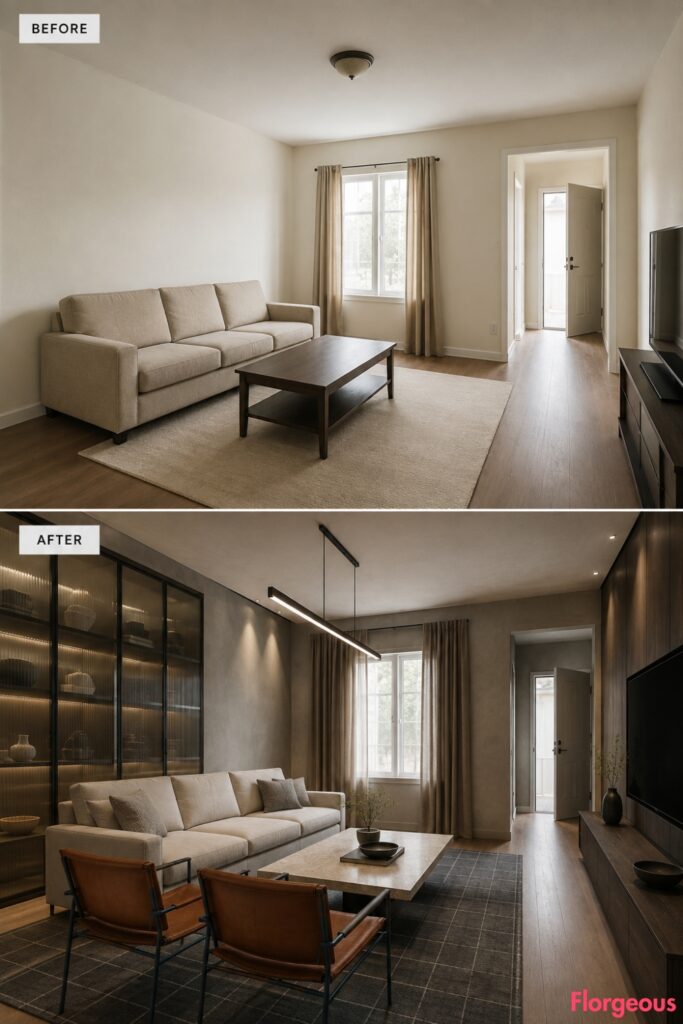
Before: The basic room has no built-in storage or architectural feature beyond its existing doorway and window.
After: A full-height steel-framed fluted-glass storage feature creates the appearance of custom architecture without changing either opening. A structured flax sofa, saddle-leather chairs, Jura limestone table, blued steel, dark oak, taupe curtains, and integrated wall washers make the room feel carefully resolved.
Why it works: Fluted glass adds depth and partial concealment without the visual weight of a solid cabinet wall.
21. Finish With a Lunar Monochrome Industrial Room
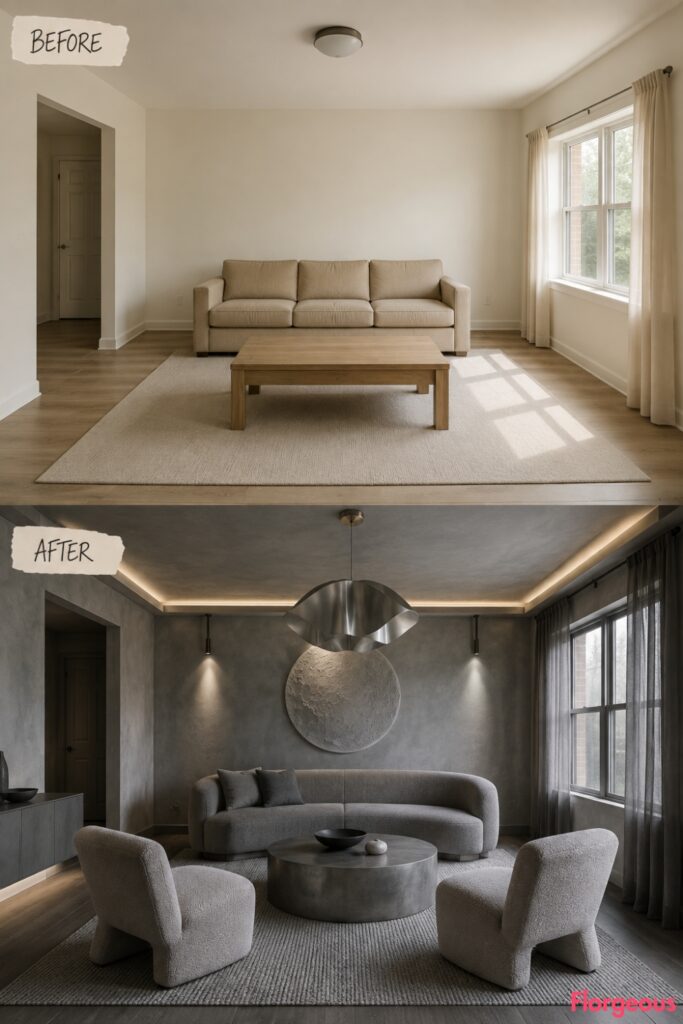
Before: The beige and off-white room is technically neutral, but the lack of material and tonal variation makes that neutrality feel unfinished.
After: Clouded metallic-mineral gray plaster introduces subtle reflection across the walls. A curved gray wool sofa, stone-colored sculptural chairs, cast-zinc table, looped-wool rug, smoke-gray curtains, folded-metal pendant, concealed perimeter lighting, narrow wall washers, and moonlike plaster relief create depth without adding a contrasting accent color.
Why it works: Shape, reflection, fiber, shadow, and sheen replace conventional color contrast.
How to Choose the Right Industrial Direction for Your Living Room
These rooms show why industrial modern design should be treated as a material language rather than a decorating theme. Board-formed concrete produces a completely different atmosphere from fluted glass, cork, oxidized copper, blackened timber, or polished aluminum.
Start by looking at the natural light and architecture you already have. A dark aubergine or mushroom room needs a very different lighting strategy from a pale zinc-and-linen scheme.
Next, select one dominant architectural finish, one metal, one wood or natural material, and one soft textile. That simple hierarchy helps prevent the room from becoming a collection of unrelated industrial objects.
Furniture placement matters just as much. Keep secondary chairs oriented toward the sofa, maintain comfortable clearance around the coffee table, preserve the doorway and window, and leave the main circulation path open.
For a successful Industrial Modern Living Room, make those major material and spatial decisions before buying decorative objects. If the walls, seating, lighting, rug, storage, and focal point already work together, you will need surprisingly little styling to make the room feel complete.