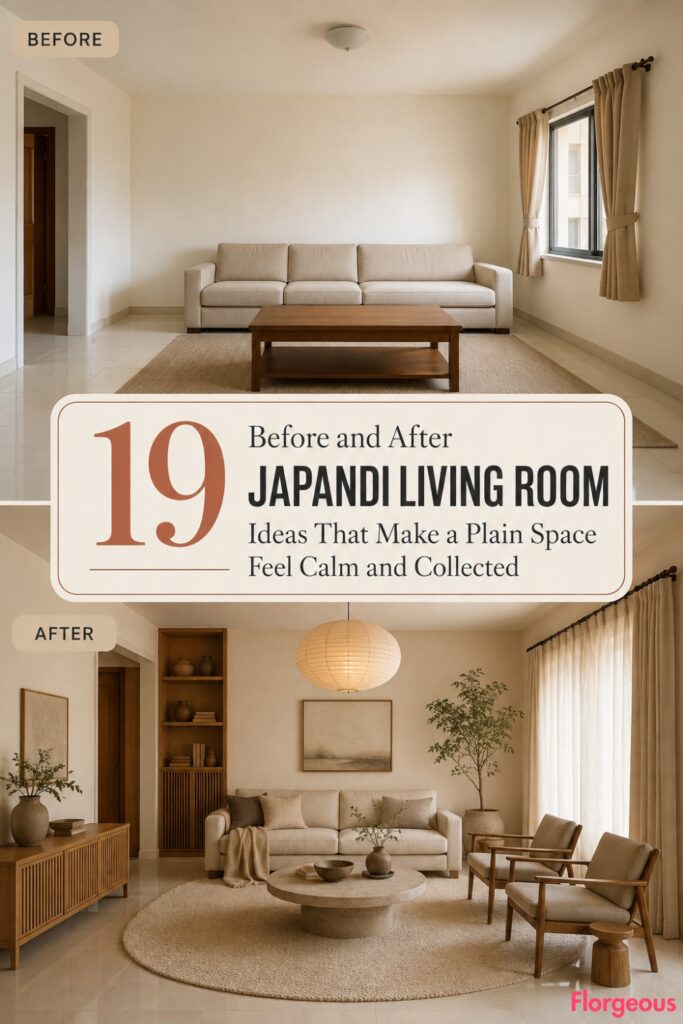
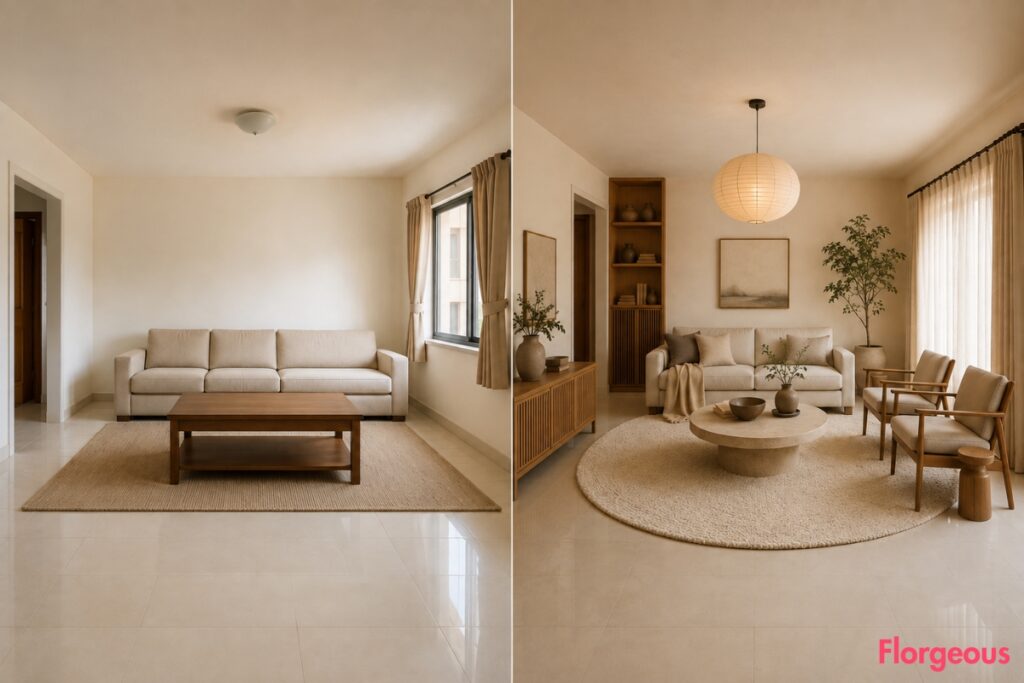
A builder-grade living room can be perfectly functional and still feel strangely empty. Neutral walls, a basic beige sofa, short curtains, and a bare coffee table create a clean starting point, but they rarely give the room warmth, rhythm, or personality.
These 19 Japandi Living Room makeovers begin with that exact same plain space. The architecture never changes, yet each version develops a completely different mood through wood tones, natural finishes, furniture shapes, lighting, storage, and carefully edited decor.
Some ideas are pale and airy. Others explore charcoal, clay, weathered textures, vintage pieces, coastal colors, or hotel-style luxury. Keep scrolling to see how much variety can exist within one calm design philosophy.
1. Turn a Plain Room Into a Warm Oak and Ivory Retreat
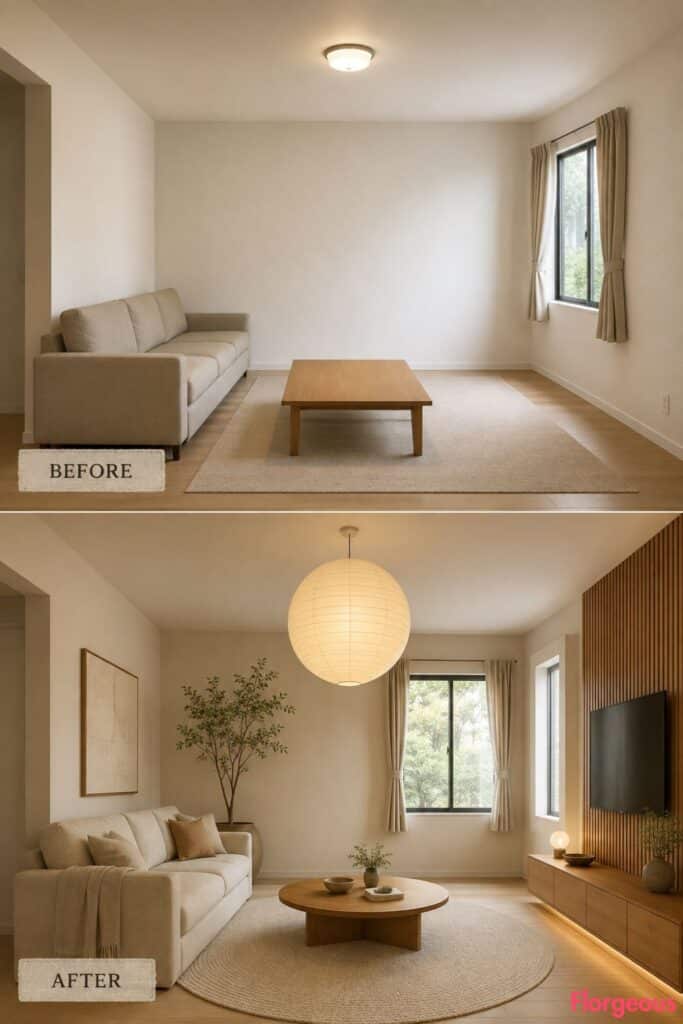
This classic interpretation is an approachable place to begin. Warm ivory walls, honey-toned oak, woven wool, and softly rounded furniture make the room feel brighter without becoming stark.
Before: Warm off-white walls, a straight beige sofa, bare rectangular table, neutral rug, short curtains, and basic lighting.
After: Add an oatmeal linen sofa, an oak slatted media wall, a rounded wool rug, a low oak cabinet, and one oversized rice-paper lantern.
Why it works: The restrained palette lets grain, texture, and craftsmanship create visual interest.
Designer Tip: Keep at least one wall mostly empty. Negative space is part of the design, not an unfinished area.
2. Give the Same Space a Wabi-Sabi Limewash Finish
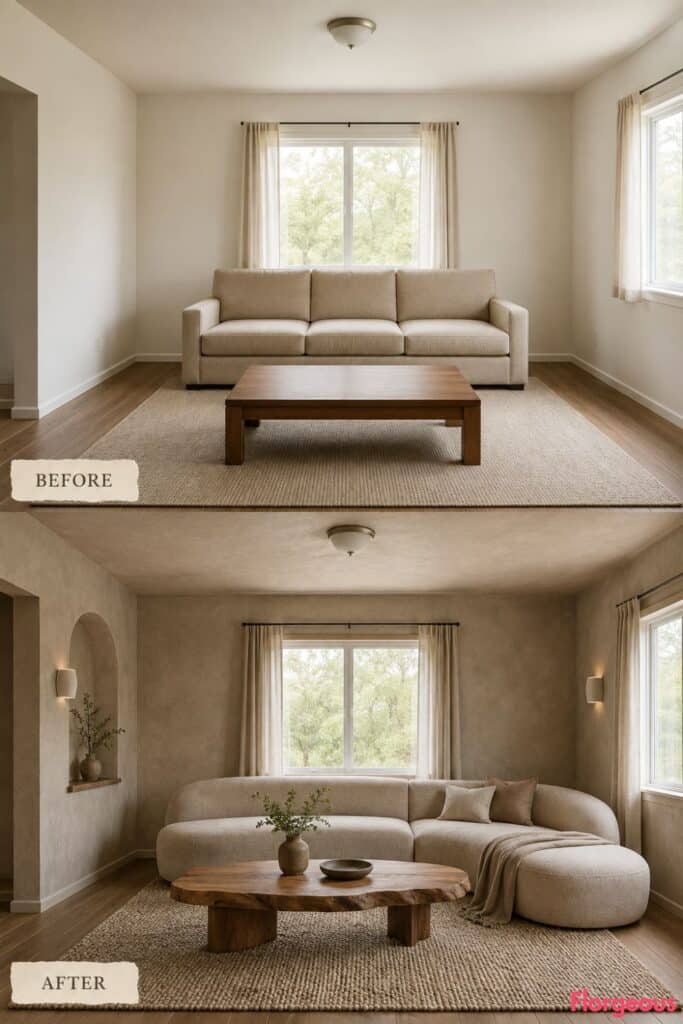
A wabi-sabi approach replaces flat perfection with surfaces that look softly aged. Mushroom limewash, irregular ceramics, and an elm table give the room quiet depth.
Before: The same generic neutral room feels smooth, bare, and visually flat.
After: Introduce a low flax-colored curved sectional, mottled taupe limewash, a live-edge elm table, a plaster display niche, and handmade ceramic sconces.
Try this: Limewash one focal wall rather than the whole room for a simpler, more affordable update.
3. Create a Pale Scandinavian Japandi Space With Ash Wood
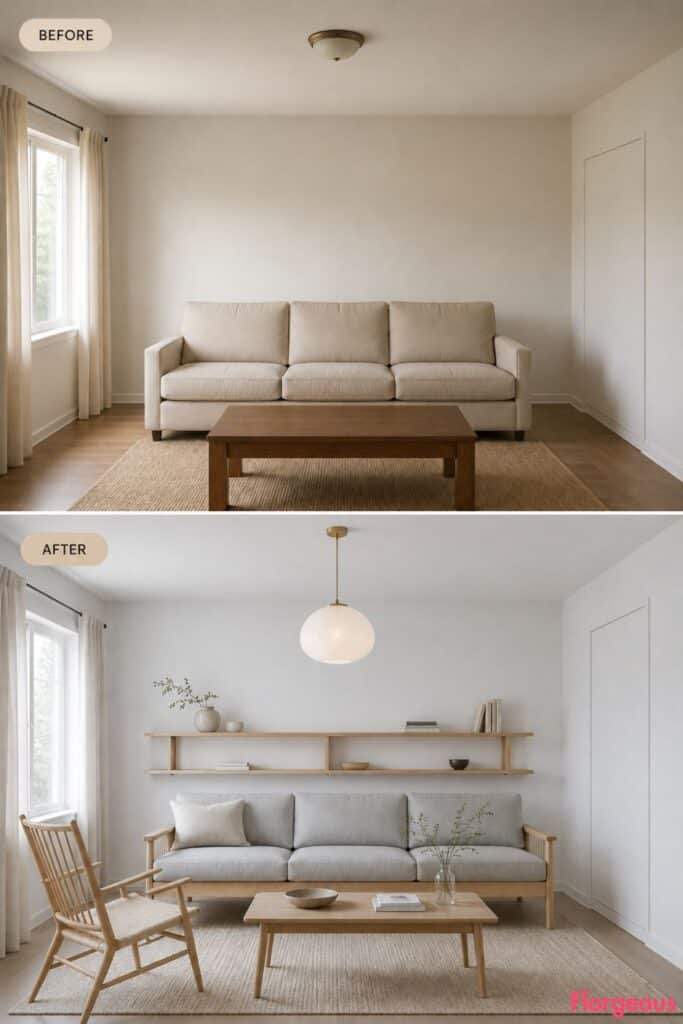
This lighter variation feels crisp, practical, and welcoming. Pale ash furniture introduces structure while cool whites and misty gray textiles prevent the room from looking yellow or overly beige.
Before: The unchanged room has generic furniture and no architectural focal point.
After: Use an ash-framed sofa with gray wool cushions, a slim ash shelving grid, a pale woven rug, an opal glass pendant, and one spindle-back lounge chair.
Why it works: Fine furniture frames keep the room airy while still showing clear craftsmanship.
4. Create a Moody Lounge With Walnut and Charcoal
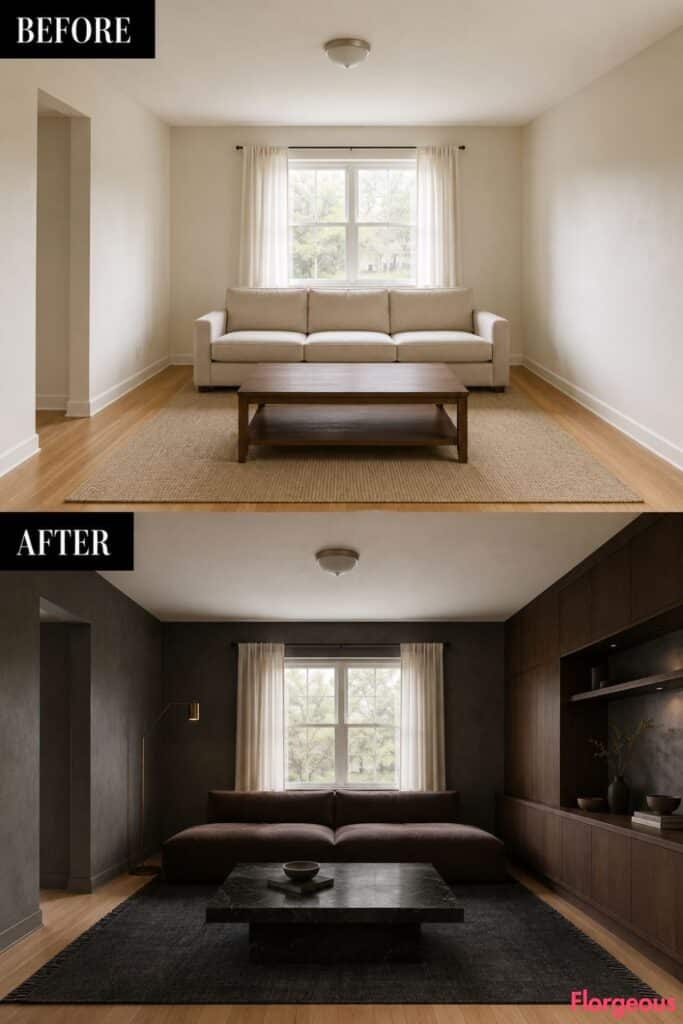
Japandi does not need to be pale. Charcoal clay walls, dark walnut cabinetry, and deep brown upholstery create a cocooning room that still feels restrained.
Before: The same beige room lacks contrast, depth, and a clear visual anchor.
After: Add a low chocolate-brown sofa, flush walnut storage, a black stone table, an ink-colored rug, and a slender aged-bronze floor lamp.
Common Mistake: Do not fill every dark surface with accessories. A moody palette needs empty areas to remain calm.
5. Reimagine the Room as a Japanese Tea-House Retreat
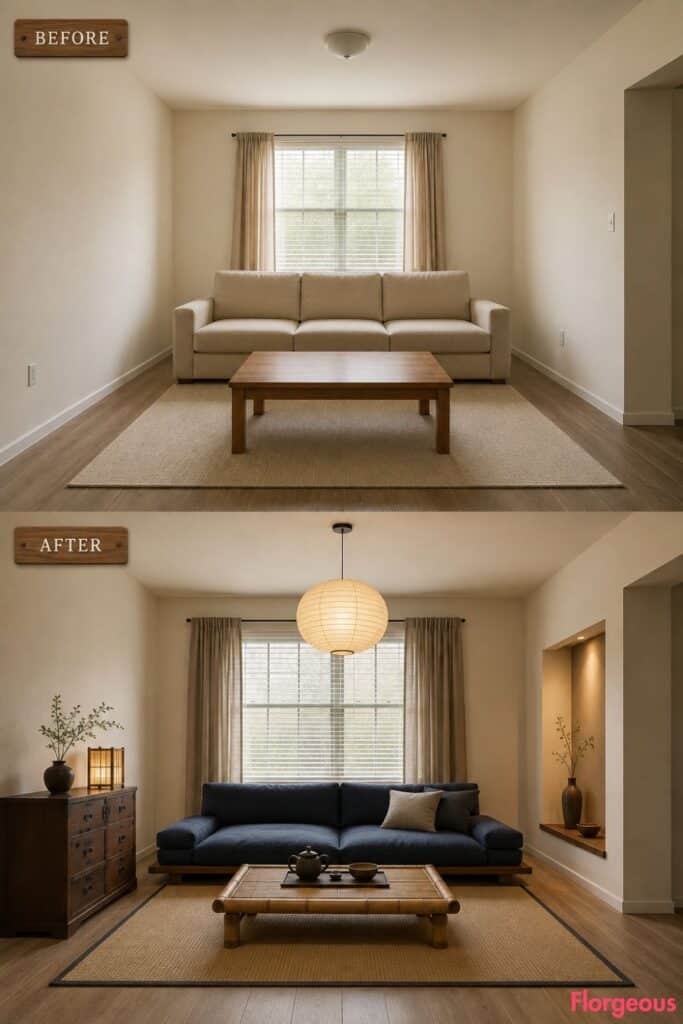
This version takes inspiration from tea rooms without turning the living room into a themed set. Low furniture, woven surfaces, paper light, and one art niche create a slower atmosphere.
Before: The unchanged room feels upright, conventional, and disconnected from the floor.
After: Use a low indigo linen sofa, bamboo tea table, rush-style floor mat, compact tansu-inspired chest, washi pendant, and a restrained alcove display.
Try this: Replace excessive tabletop decor with one branch arrangement in an uneven ceramic vessel.
6. Build a Biophilic Indoor-Garden Retreat
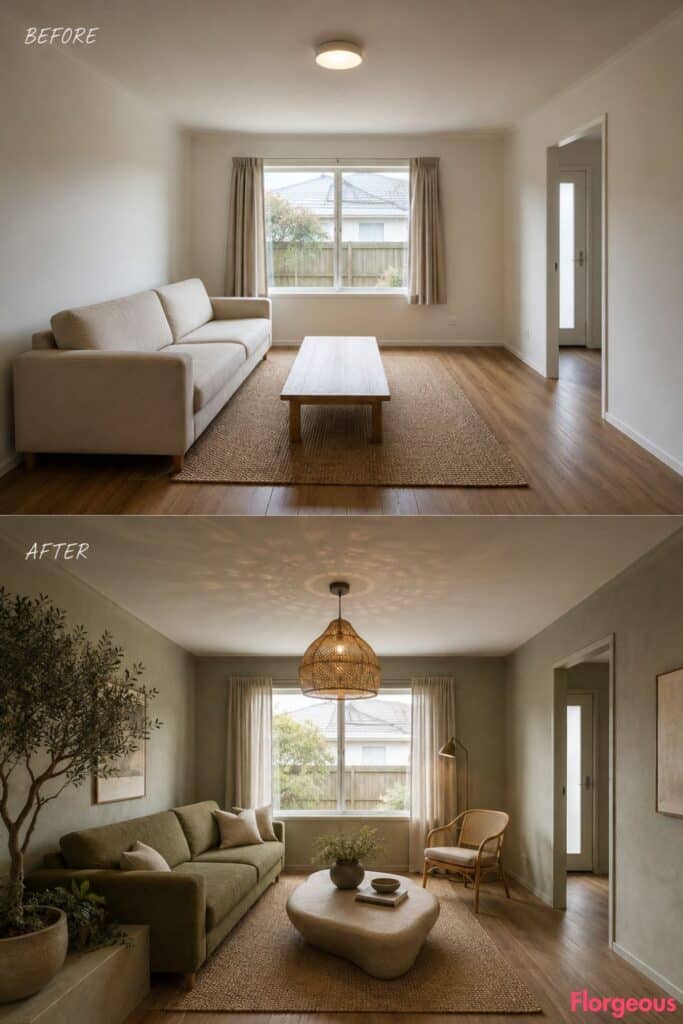
Plants become most effective when they are treated as part of the composition rather than scattered accessories. This room uses greenery to soften structure and frame the seating area.
Before: The plain room has soft daylight but no connection to nature beyond the windows.
After: Add sage mineral plaster, a moss-green woven sofa, a rattan lounge chair, a pebble-shaped table, an indoor tree, and a built-in planter bench.
Why it works: Different plant heights create depth while leaving the main walkway open.
7. Warm the Room With Clay and Terracotta Tones
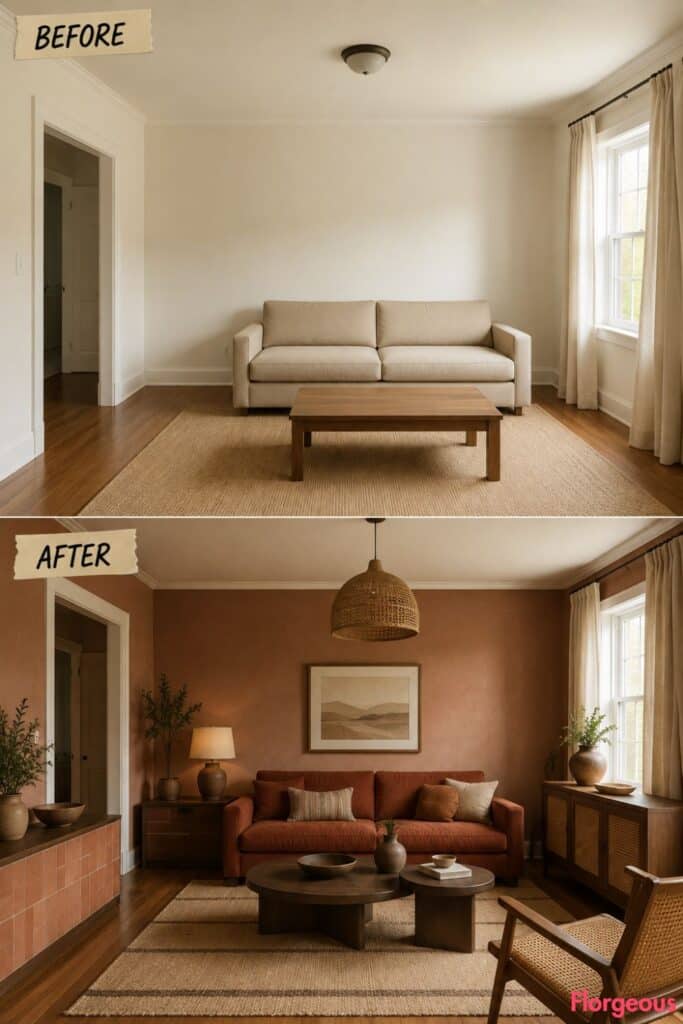
Earthy color can feel calm when it is softened with natural fibers and simple silhouettes. Dusty clay walls and terracotta accessories bring warmth without making the room visually busy.
Before: The neutral room feels cool, generic, and short on tactile detail.
After: Choose a rust wool sofa, smoked-oak side tables, a clay-tile console, a flat-weave rug, a cane-front cabinet, and a basket-like pendant.
Color Story: Use several muted earth tones rather than one bright orange accent.
8. Strip the Palette Back to Stone and Plaster
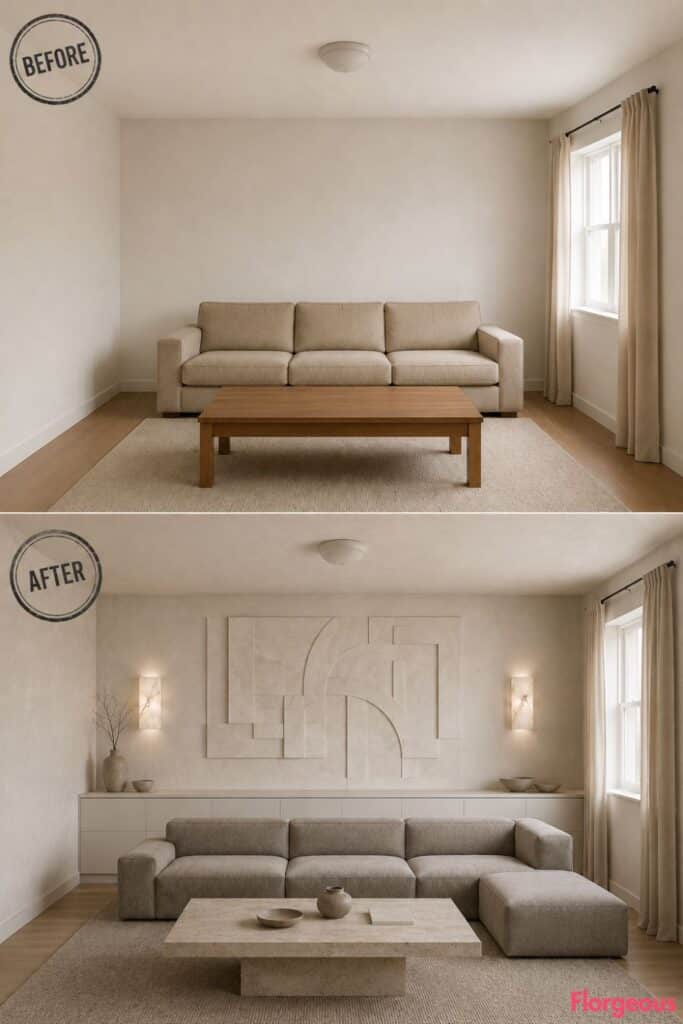
A monochrome room can still feel layered when every surface has a different finish. Chalky plaster, honed stone, brushed wool, and alabaster create subtle contrast.
Before: Flat painted walls and basic furniture leave the room looking unfinished.
After: Add mineral-white plaster, a stone-gray modular sofa, a monolithic travertine table, a sculpted wall relief, hidden white drawers, and softly glowing alabaster lights.
Try this: Mix matte and honed surfaces so the room does not feel like one continuous block of beige.
9. Soften Minimalism With Layered Textiles
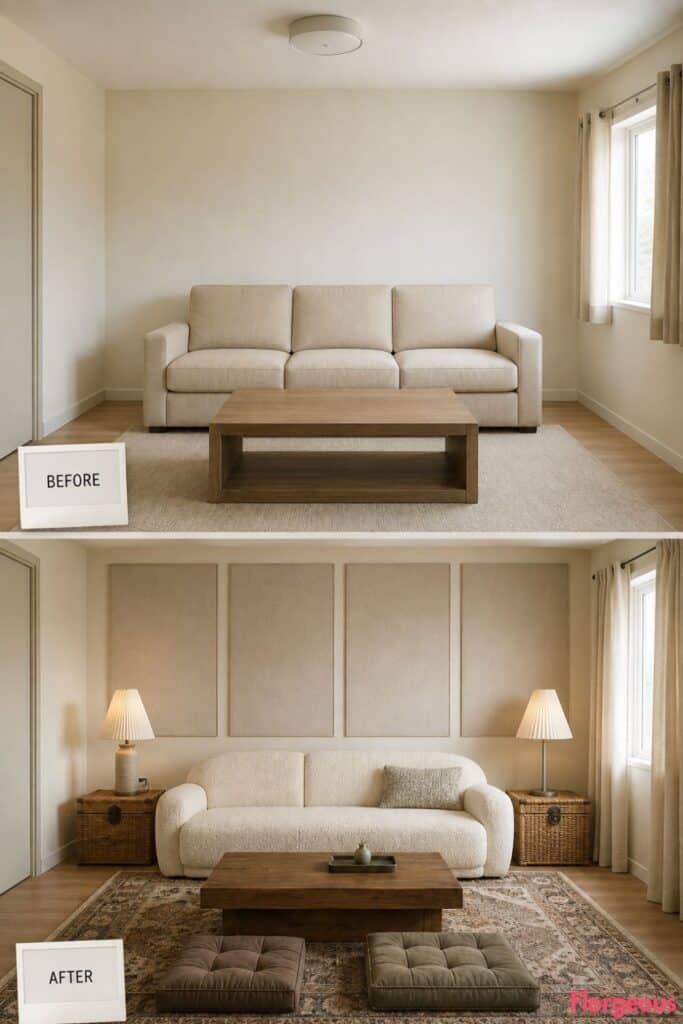
This cozy version relies on fabric rather than decorative objects. Wool, linen, quilted cotton, and woven storage make the room comfortable while preserving a quiet visual rhythm.
Before: The room contains a rug and curtains, but the textiles feel thin and disconnected.
After: Add an ivory bouclé loveseat, a hand-knotted wool rug, quilted floor cushions, fabric wall panels, pleated linen lamps, and two lidded woven trunks.
Why it works: Repeating texture creates warmth without requiring strong pattern or color.
10. Make the Living Room Feel Like a Sculptural Gallery
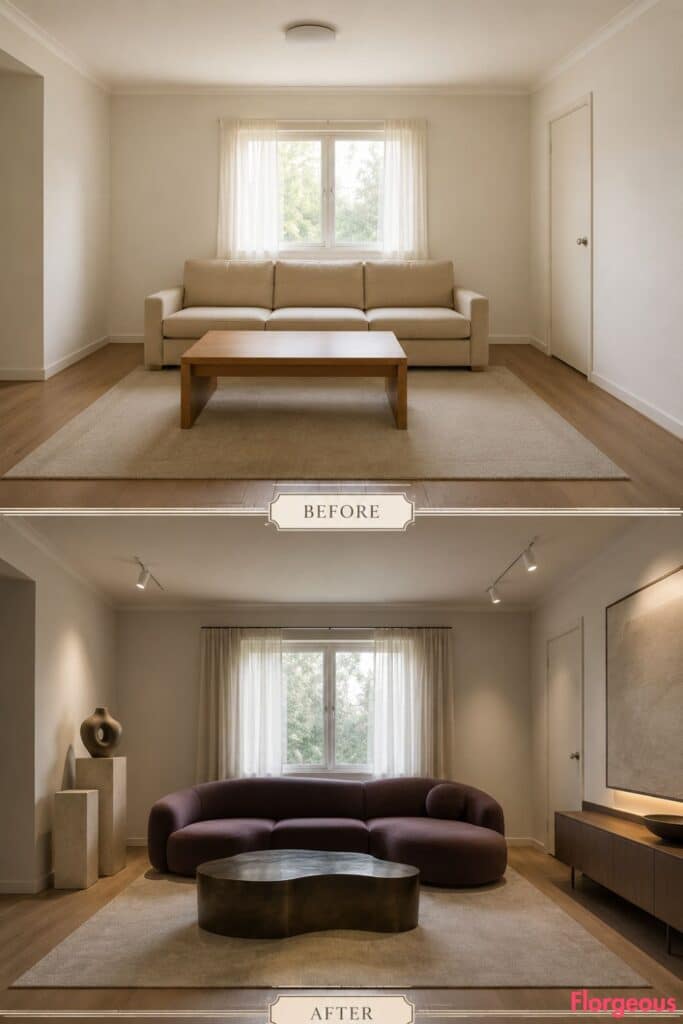
Gallery-like Japandi interiors focus on form, shadow, and placement. A few expressive pieces can make a stronger impression than shelves full of small decor.
Before: Empty walls and generic furniture create blankness rather than intentional negative space.
After: Use a muted aubergine sculptural sofa, two pale plaster plinths, an irregular bronze table, a low gallery credenza, one ceramic sculpture, and directional ceiling spots.
Try this: Group objects by shape and material, then leave generous space around the arrangement.
11. Design a Compact Japandi Layout for a Small Space
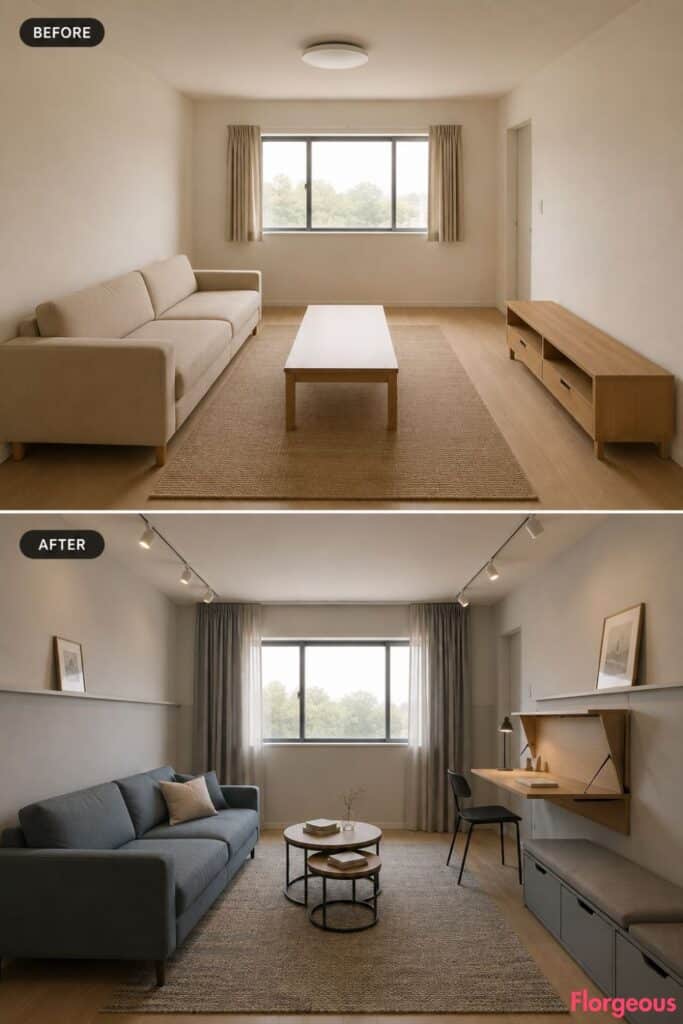
A smaller room benefits from furniture that performs more than one job. Wall-mounted elements keep the floor visible and make circulation feel easier.
Before: The standard sofa and table occupy space without offering useful storage or flexibility.
After: Add a muted blue-gray loveseat, nesting tables, a wall-mounted folding desk, a shallow storage bench, a slim picture rail, and adjustable track lighting.
Small Space Tip: Choose furniture with visible legs so the flooring continues underneath and the room feels wider.
12. Create a Renter-Friendly Reversible Makeover
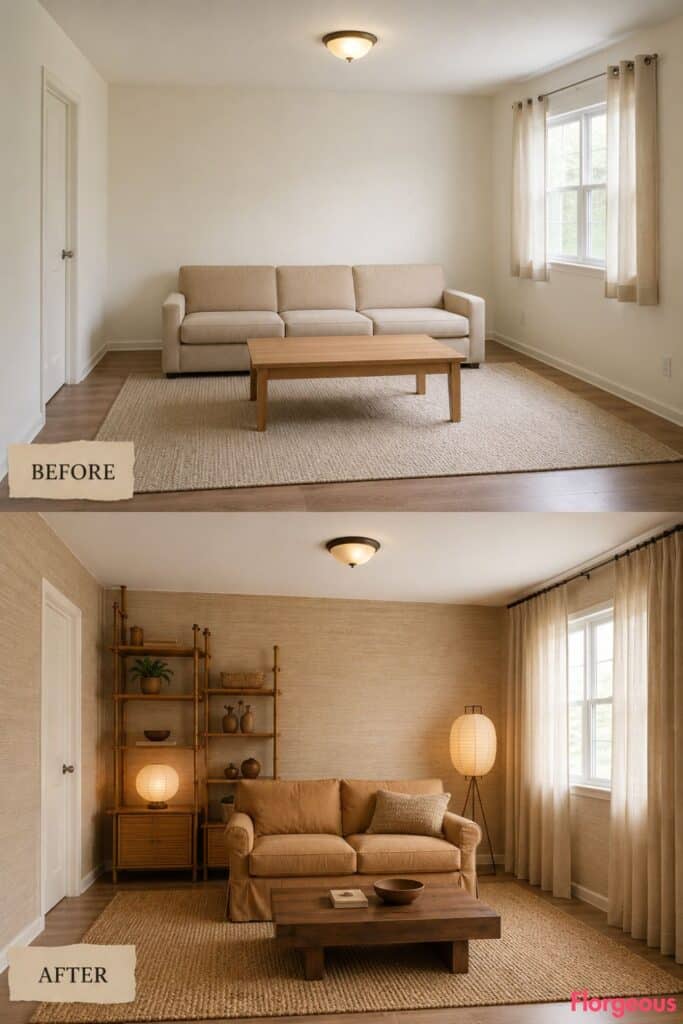
A convincing renter update does not require permanent paneling or custom cabinetry. Removable finishes and freestanding furniture can create the same warmth and order.
Before: The builder-grade room feels temporary because nothing looks intentionally coordinated.
After: Use removable grasscloth wallpaper, a camel slipcovered loveseat, modular bamboo shelves, a peel-and-stick woven floorcloth, plug-in paper lights, and full-length ready-made curtains.
Budget Version: Wrap existing furniture in linen-look slipcovers before replacing major pieces.
13. Make the Room Flexible Enough for Family Life
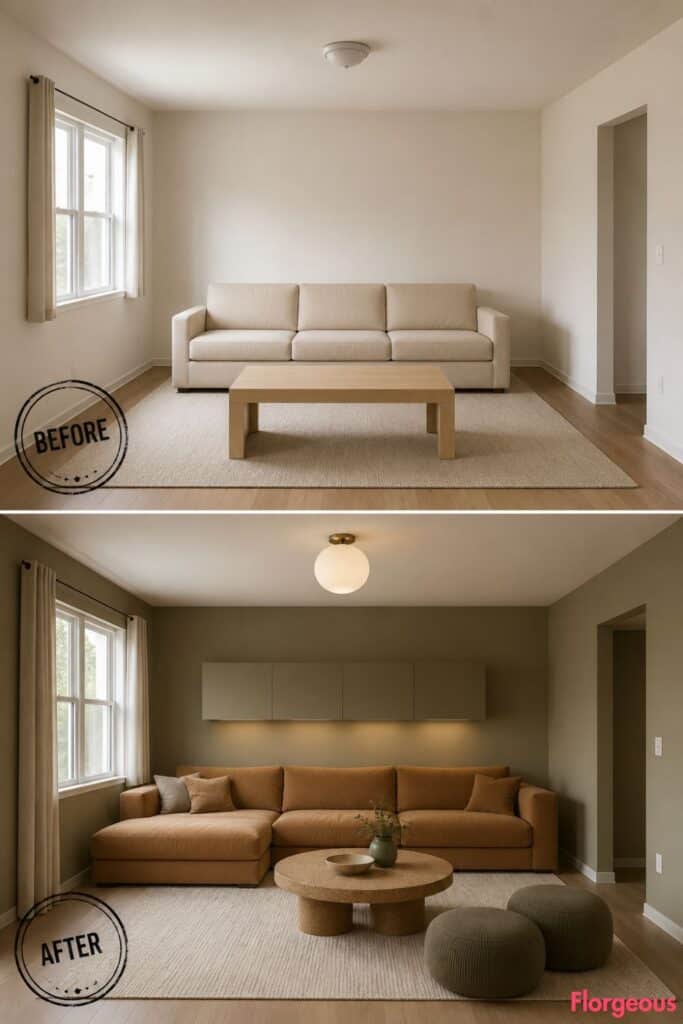
Family-friendly minimalism works best when the room is easy to reset. Rounded furniture, washable fabric, and closed storage keep the calm appearance realistic.
Before: Bare surfaces look tidy, but the room has no solution for toys, games, blankets, or changing activities.
After: Add a caramel performance-fabric sectional, a rounded cork table, washable olive rug, wall-mounted closed cabinets, soft poufs, and a cluster of frosted globe lights.
Why it works: Durable materials reduce the pressure to keep every surface perfect.
14. Add Character With Vintage Japanese and Scandinavian Pieces
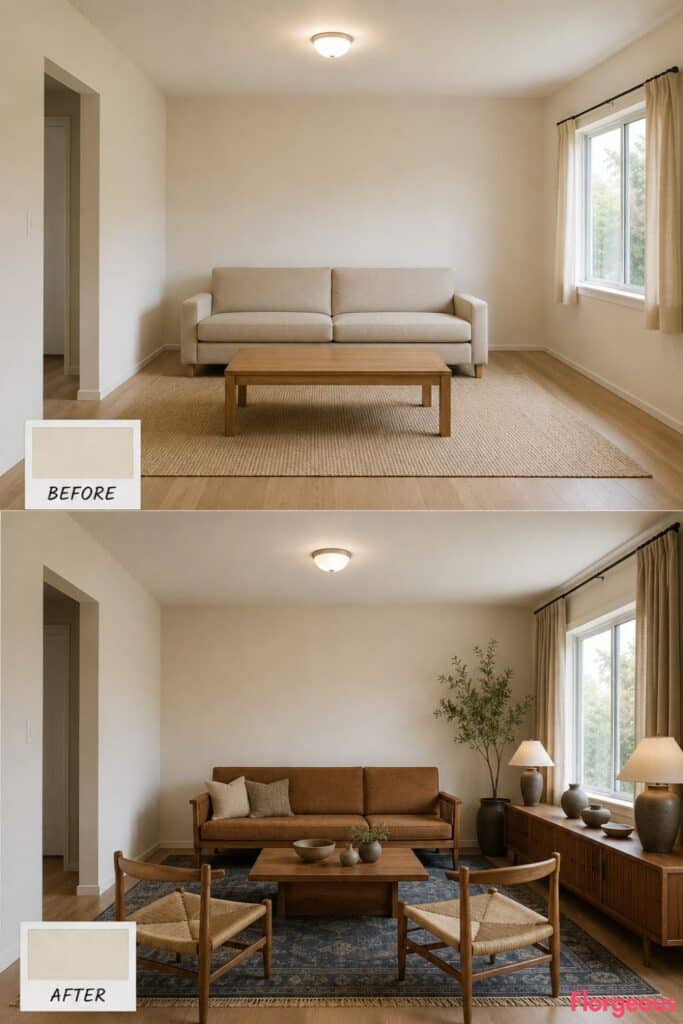
Vintage furniture gives a minimalist room history without adding clutter. The key is choosing a few useful pieces with strong materials and simple construction.
Before: New, generic furniture makes the space feel visually anonymous.
After: Pair a vintage teak sofa with rush-seat chairs, a faded indigo rug, a long Scandinavian teak sideboard, handmade pottery, and two softly shaded ceramic lamps.
Try this: Let vintage wood tones vary slightly. Perfect matching can make a collected room feel staged.
15. Bring in a Light Coastal Japandi Mood
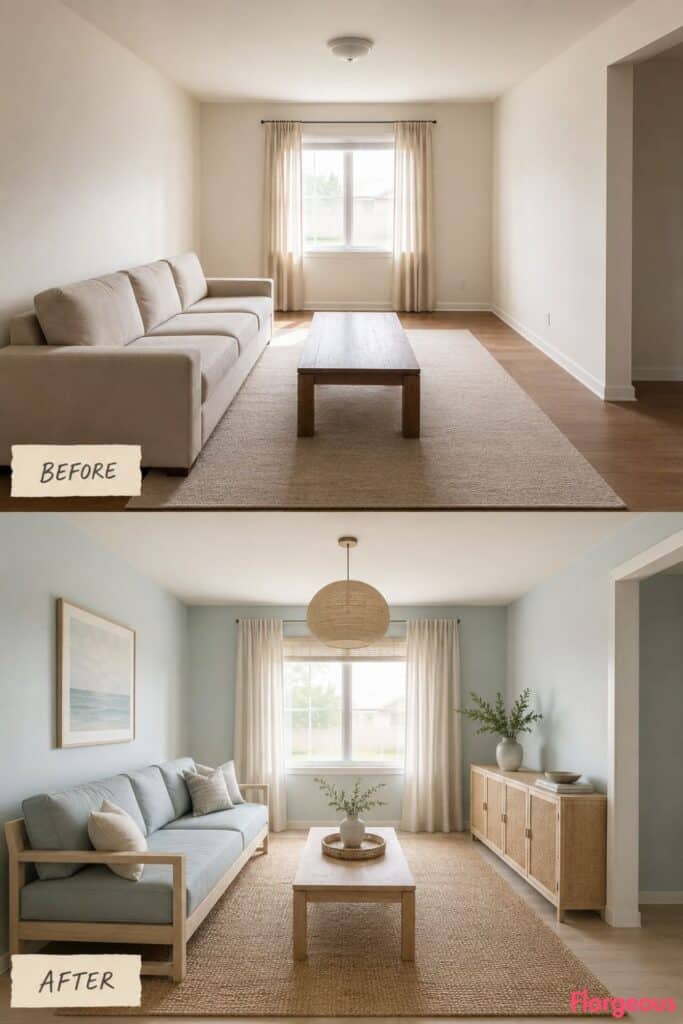
Coastal styling feels more refined when obvious beach motifs are removed. Sea-salt colors, bleached timber, woven fibers, and washed linen suggest the coast quietly.
Before: The plain neutral room receives daylight but does not respond to it.
After: Add misty sea-salt walls, a bleached-pine framed sofa with pale blue linen cushions, a jute-wool rug, a rope-paper pendant, and seagrass-front storage.
Why it works: The cool palette is balanced by tactile natural fibers rather than warm beige paint.
16. Create a Blackened-Wood Minimalist Salon
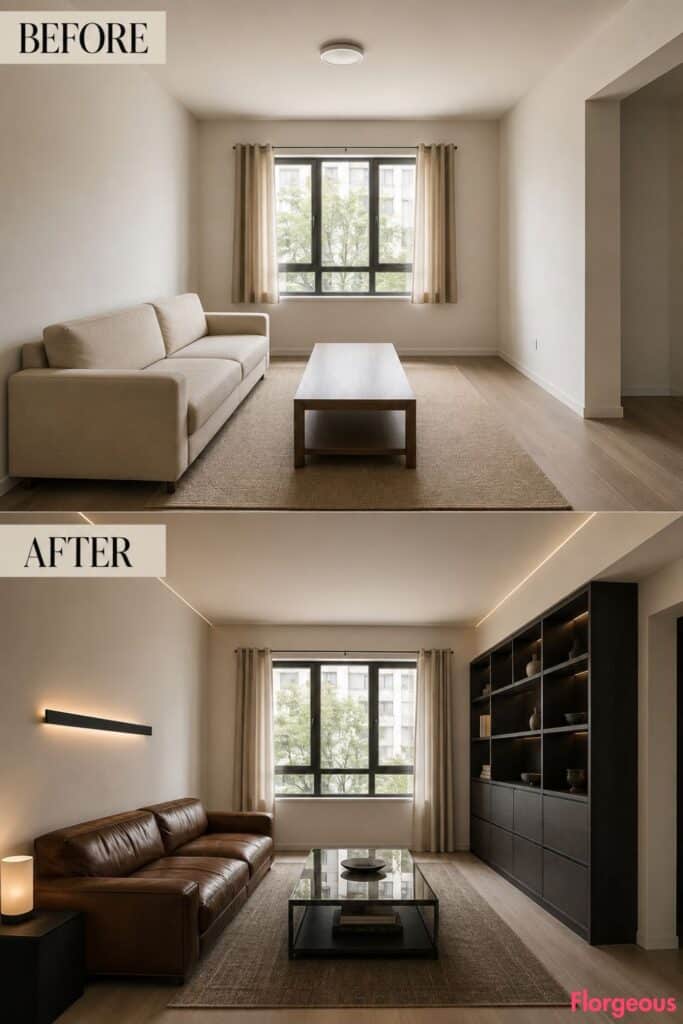
Blackened timber provides graphic structure while bone-colored walls and warm leather prevent the room from feeling severe. The result is disciplined but still residential.
Before: The light neutral room lacks strong lines and visual focus.
After: Install a blackened-timber storage grid, add a low saddle-leather sofa, smoked-glass table, narrow wool runner, and discreet linear ceiling lighting.
Common Mistake: Avoid combining black timber with too many shiny metals. Matte finishes keep the space quiet.
17. Give the Room a Refined Japandi Hotel Feeling
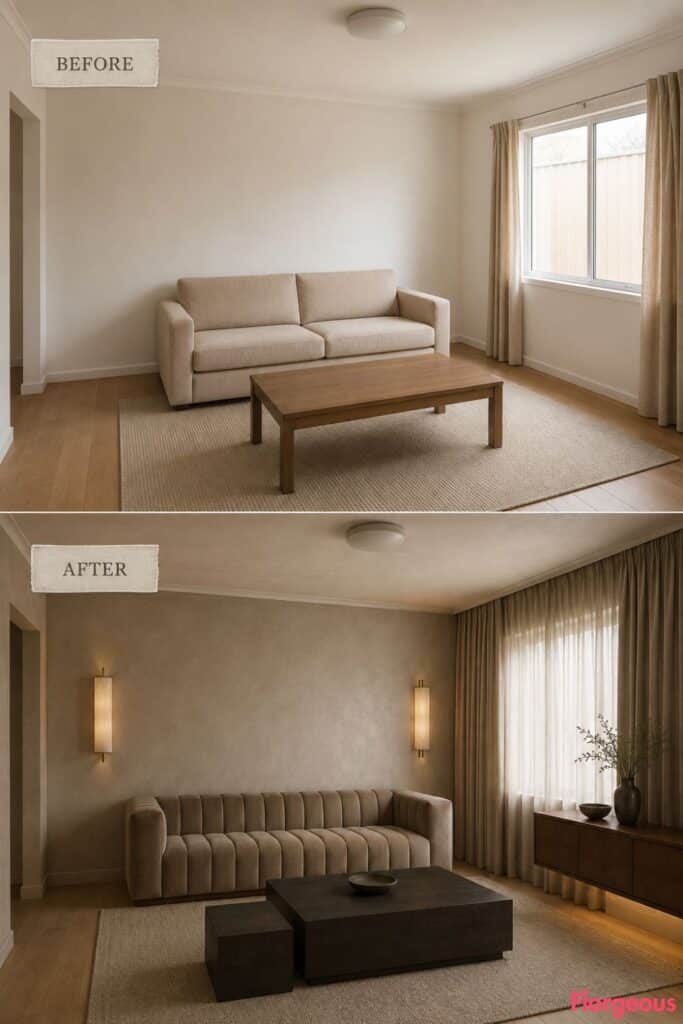
Hotel-inspired interiors feel restful because every element has a clear place. Full-length curtains, tailored upholstery, concealed storage, and layered lighting create that sense of order.
Before: Short curtains and one basic ceiling fixture make the room look less finished.
After: Use warm mushroom microcement, a channel-tufted taupe sofa, dark-ash tables, a floating leather-front credenza, full-height curtains, and slim linen wall lamps.
Try this: Put lighting on separate switches so ambient, reading, and accent light can be controlled independently.
18. Focus on Sustainable Handcrafted Materials
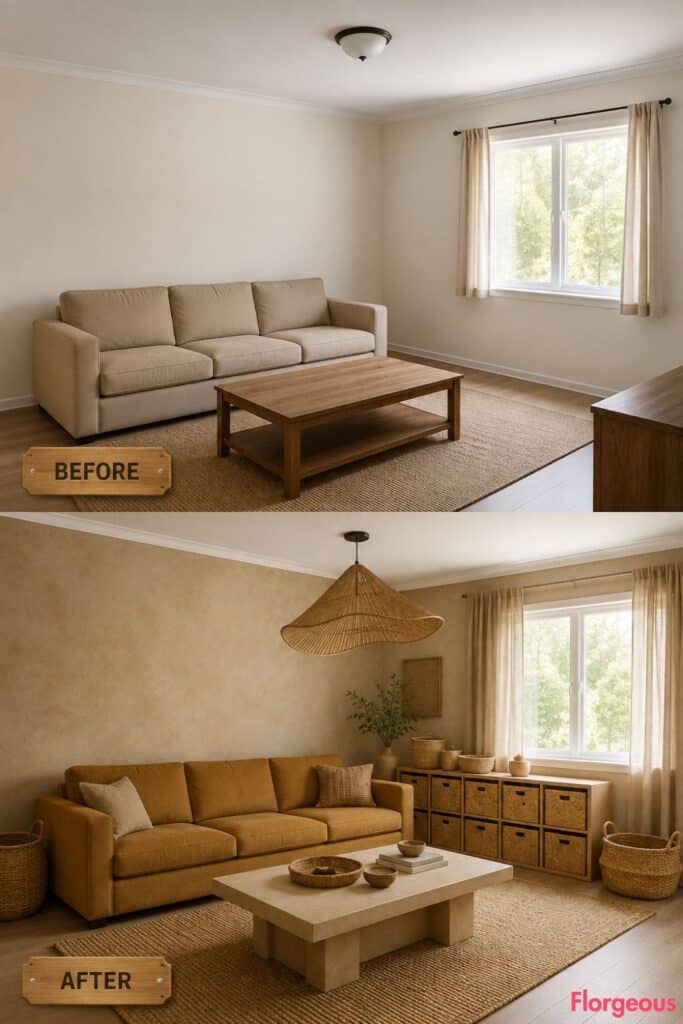
This design direction celebrates honest materials that age well. Cork, hemp, recycled wool, woven reed, and paper composite surfaces bring texture without relying on excessive decoration.
Before: The basic room feels disposable because its finishes lack visible craft or material character.
After: Add natural hemp plaster, a recycled-wool sofa in muted ochre, a paper-composite table, stackable cork storage, handwoven baskets, and a sculptural reed pendant.
Style Note: Sustainable design looks most convincing when materials are allowed to show irregular grain, weave, and color variation.
19. Finish With a Polished Contemporary Luxury Interior
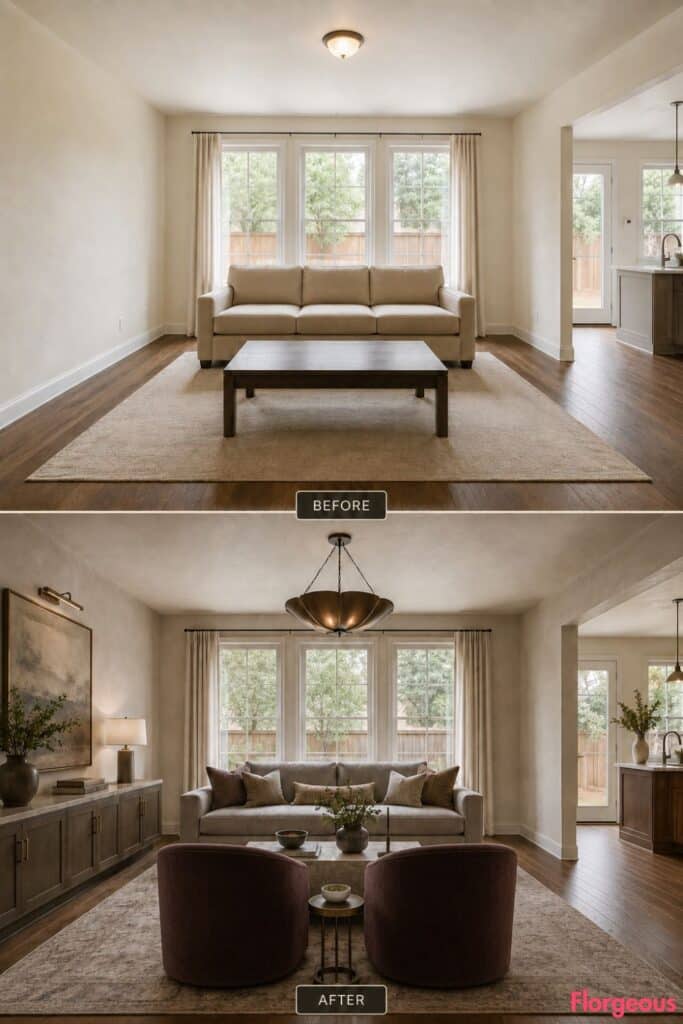
The final room keeps Japandi restraint while introducing richer finishes. Pearl plaster, smoked eucalyptus veneer, silk-wool upholstery, quartzite, and brushed bronze create luxury through quality rather than excess.
Before: The unchanged builder-grade space feels clean but lacks material depth and tailored detail.
After: Add a pearl-gray mohair sofa, smoked-eucalyptus cabinetry, a honed quartzite table, muted plum lounge chairs, a silk-wool rug, and a sculptural brushed-bronze pendant.
Why it works: The palette is sophisticated, but the furniture remains low, functional, and carefully spaced.
Choosing the Right Japandi Direction for Your Room
The strongest makeovers do more than replace beige furniture with another neutral set. They choose a distinct material story, establish one clear focal point, solve a practical problem, and leave enough open space for the room to breathe.
Before recreating one of these Japandi Living Room ideas, decide what your current room lacks most. A dark room may benefit from pale ash and reflective plaster. A busy family space may need closed storage and washable textiles. A generic rental may only require longer curtains, warmer lighting, removable texture, and one beautifully made wooden piece.
Choose one direction as your foundation, then repeat its key materials two or three times. That simple editing step will make the room feel intentional without losing the relaxed, imperfect character that makes Japandi design so inviting.