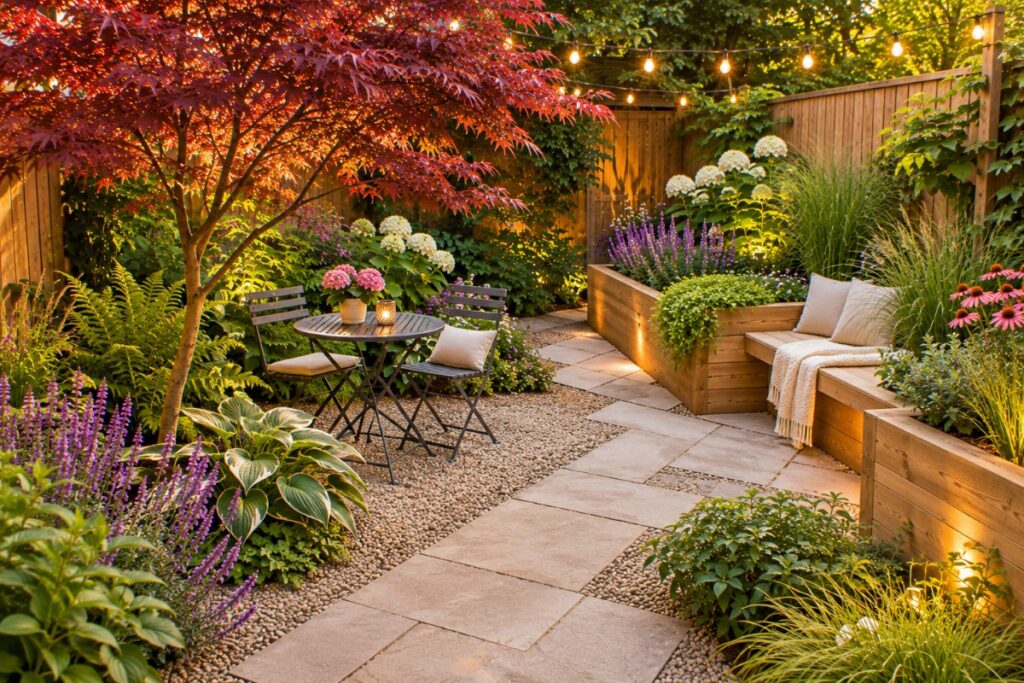
A small backyard can feel like a list of things you can’t have: no room for a big lawn, a dining table and a vegetable patch all at once.
But small spaces have a real advantage. They’re quicker to build, cheaper to finish and easier to keep looking good.
The secret to a great small backyard isn’t fitting everything in. It’s deciding what you’ll actually use, then designing every corner to do more than one job.
These 21 small backyard landscaping ideas will help you make a tiny yard feel bigger, greener and more useful. For larger spaces, see our backyard landscaping ideas.
Small Backyard Design Tricks
| Trick | Why it works |
|---|---|
| Divide it into zones | Makes a small yard feel larger and more purposeful |
| Grow upward | Adds greenery without using floor space |
| Use multi-purpose features | Benches with storage, planters that seat people |
| Hide the boundaries | Planting along fences blurs where the yard ends |
| Keep materials simple | Two or three materials look calm, not cluttered |
1. Divide the Yard Into Small Zones
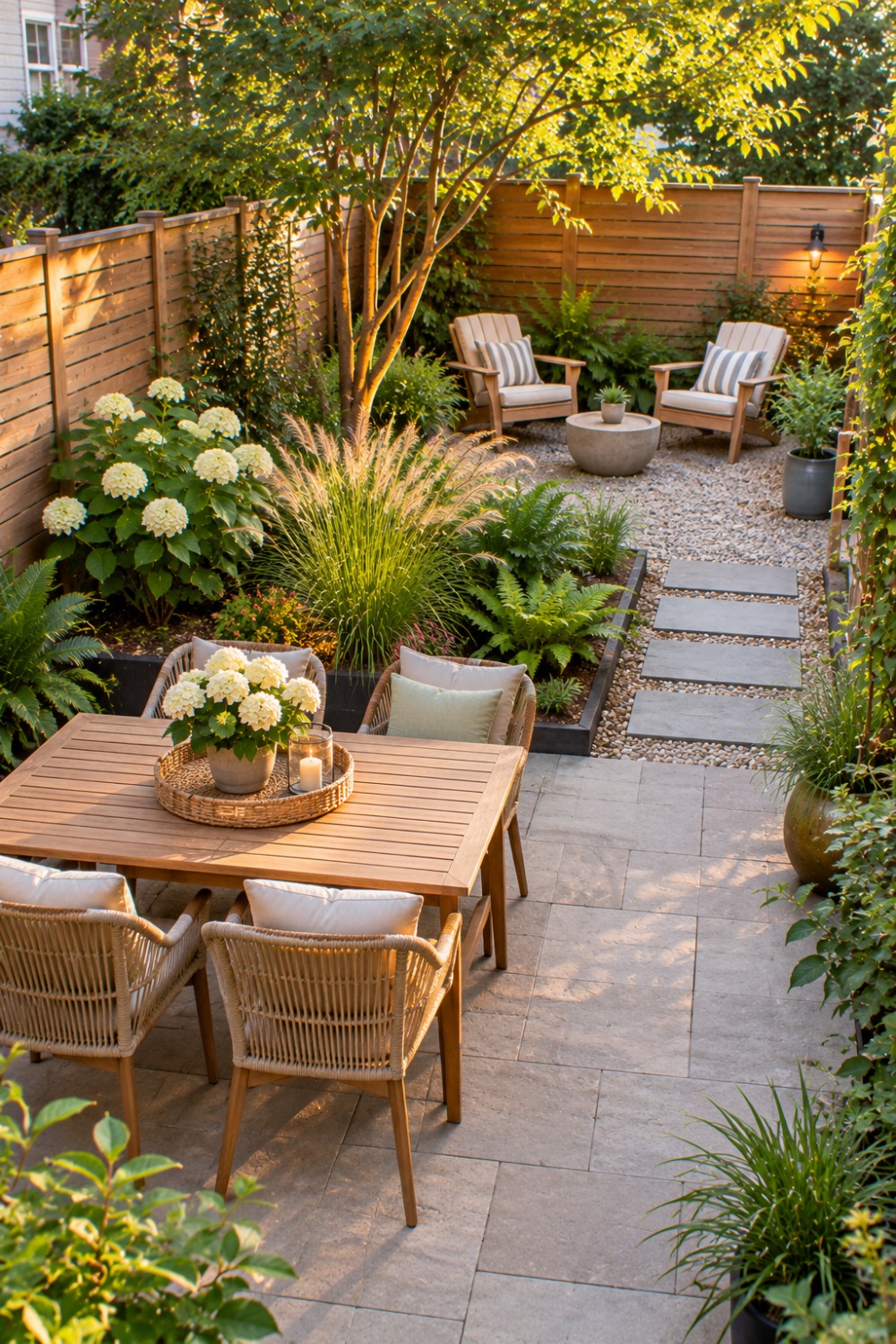
It sounds backwards, but splitting a small yard into two or three zones makes it feel bigger.
A dining spot, a planted area and a small lounge corner each give the eye somewhere to land, and the space reads as a series of rooms.
Use a change in paving, a planter or a step to mark each zone.
How to do it:
- List the two or three things you most want to do outside.
- Sketch a zone for each, keeping clear walkways between them.
- Mark zones with paving changes, planters or screens.
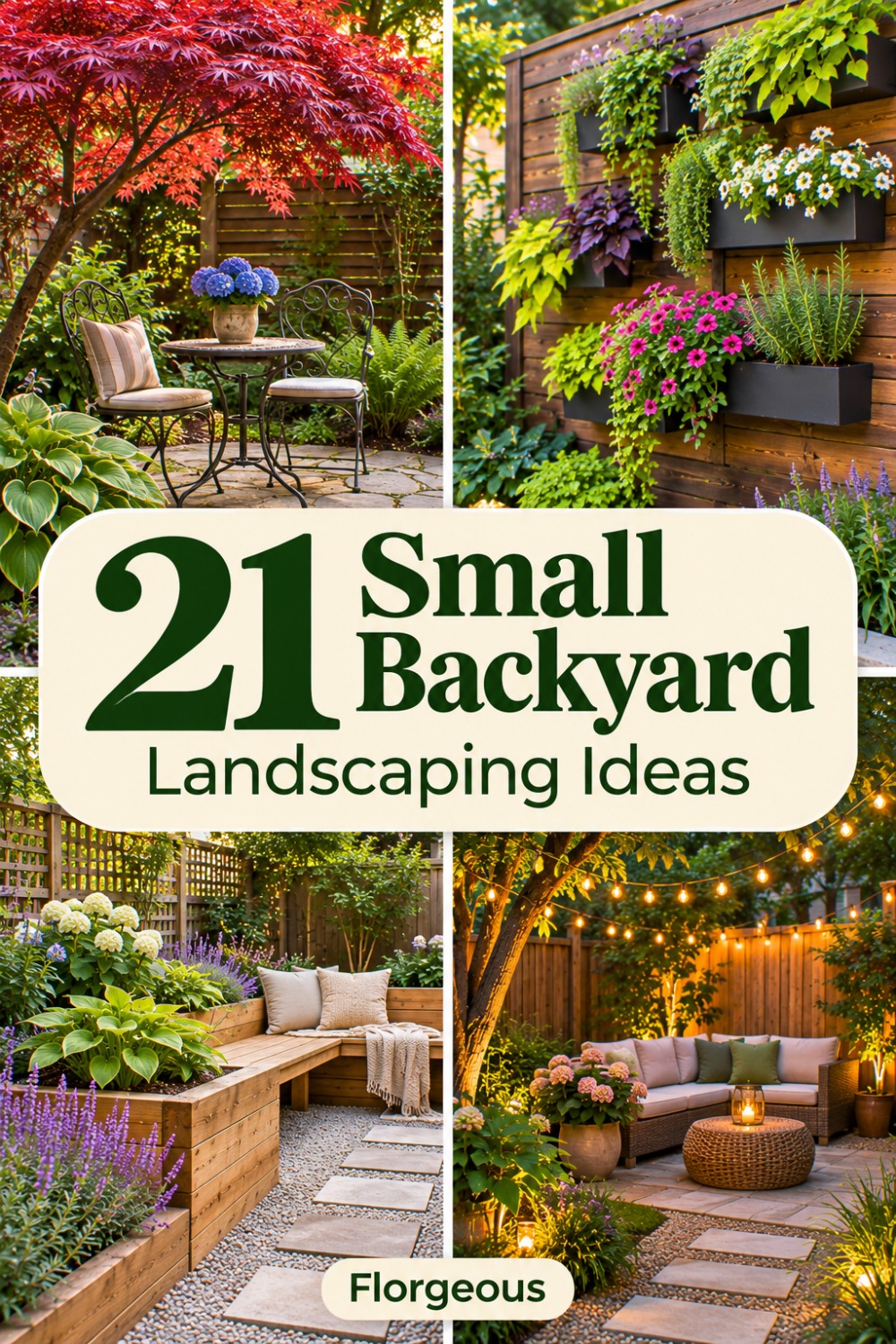
2. Plant Along the Fences to Blur the Edges
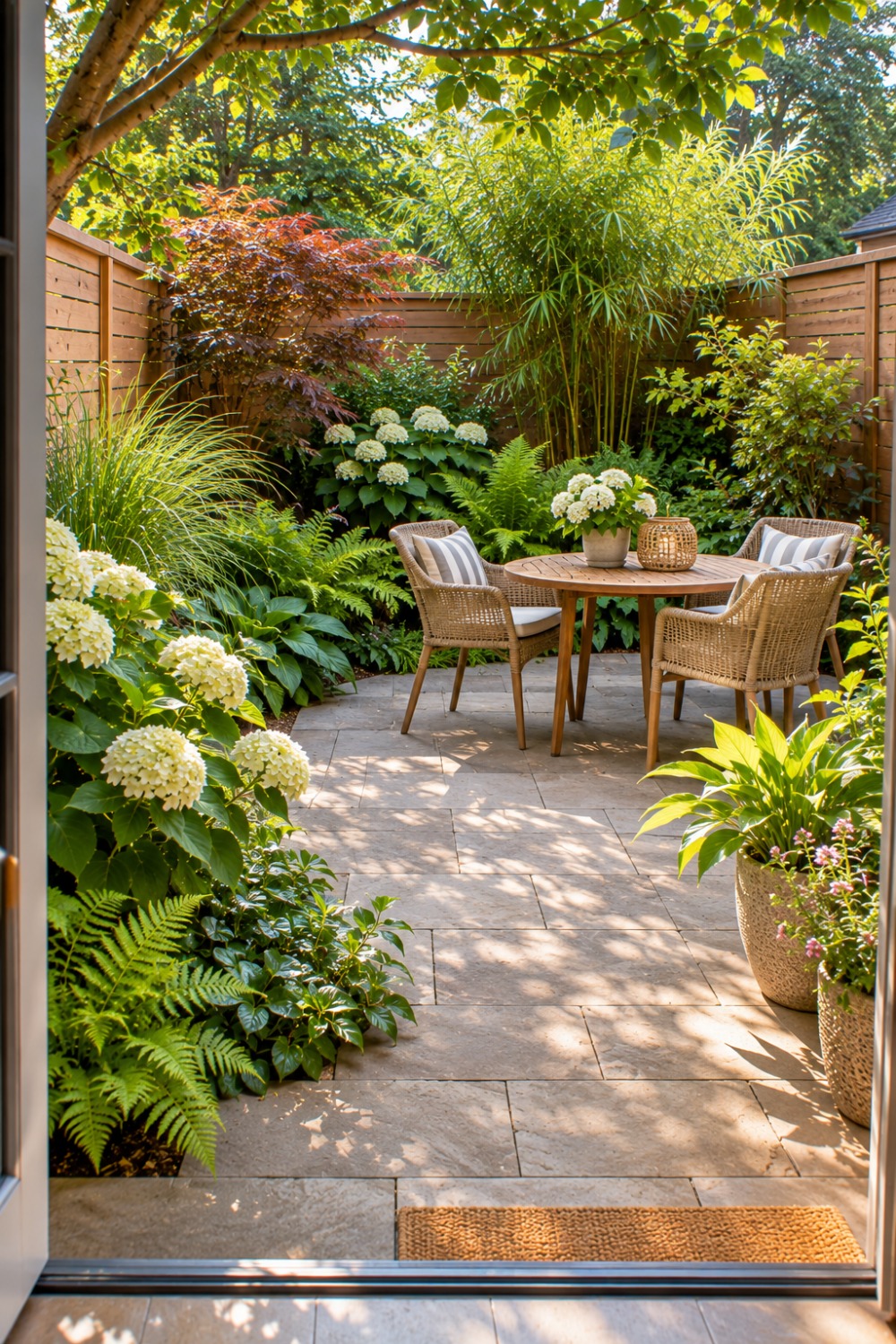
Bare fences make a small yard’s limits obvious.
Deep planting along the boundaries hides them, so the garden seems to carry on beyond the fence line.
Layer tall shrubs or climbers at the back with lower perennials in front.
How to do it:
- Widen the beds along the fences if you can.
- Plant tall screening plants at the back.
- Add mid-height and low plants in front for depth.
3. Grow a Vertical Garden on a Wall
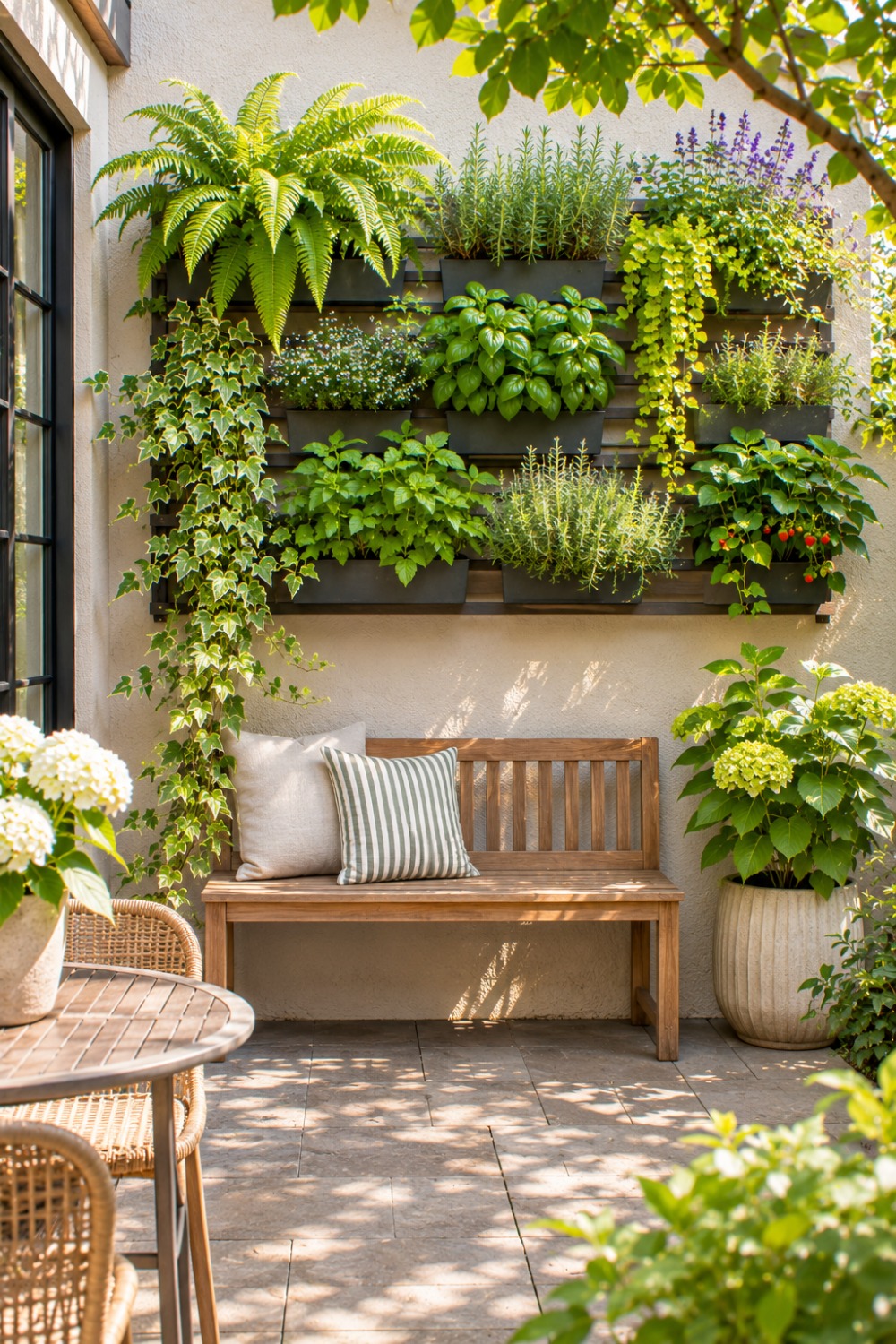
When ground space is limited, walls and fences become prime planting space.
Wall-mounted planters, pocket systems or a simple grid of hanging pots can hold herbs, ferns, trailing plants or strawberries.
Make sure you can water them easily, since vertical planters dry out fast.
How to do it:
- Choose a wall that gets the right light for your plants.
- Fix sturdy planters or a pocket system to it.
- Set up drip irrigation or a watering routine.
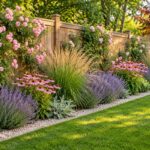
4. Choose One Small Tree for Shade and Height
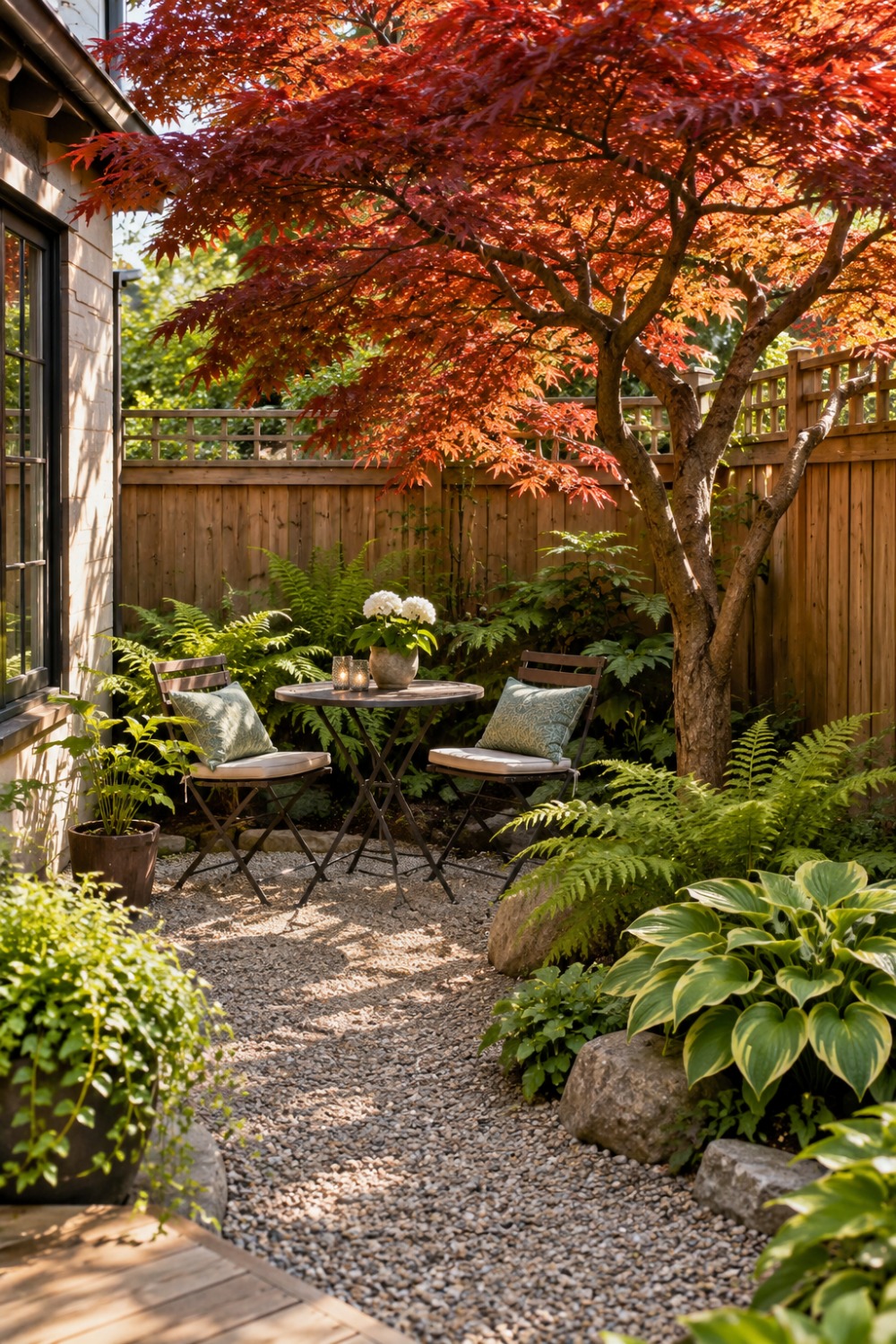
Even a tiny backyard has room for one small tree, and it makes a big difference.
A tree adds height, privacy from upstairs windows and dappled shade for a seat.
Japanese maple, serviceberry, crabapple and dwarf fruit trees stay in proportion with small spaces.
How to do it:
- Check the tree’s mature height and spread.
- Plant it where it screens a view or shades a seat.
- Underplant with shade-tolerant perennials.
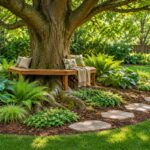
5. Replace the Lawn With Gravel and Pavers
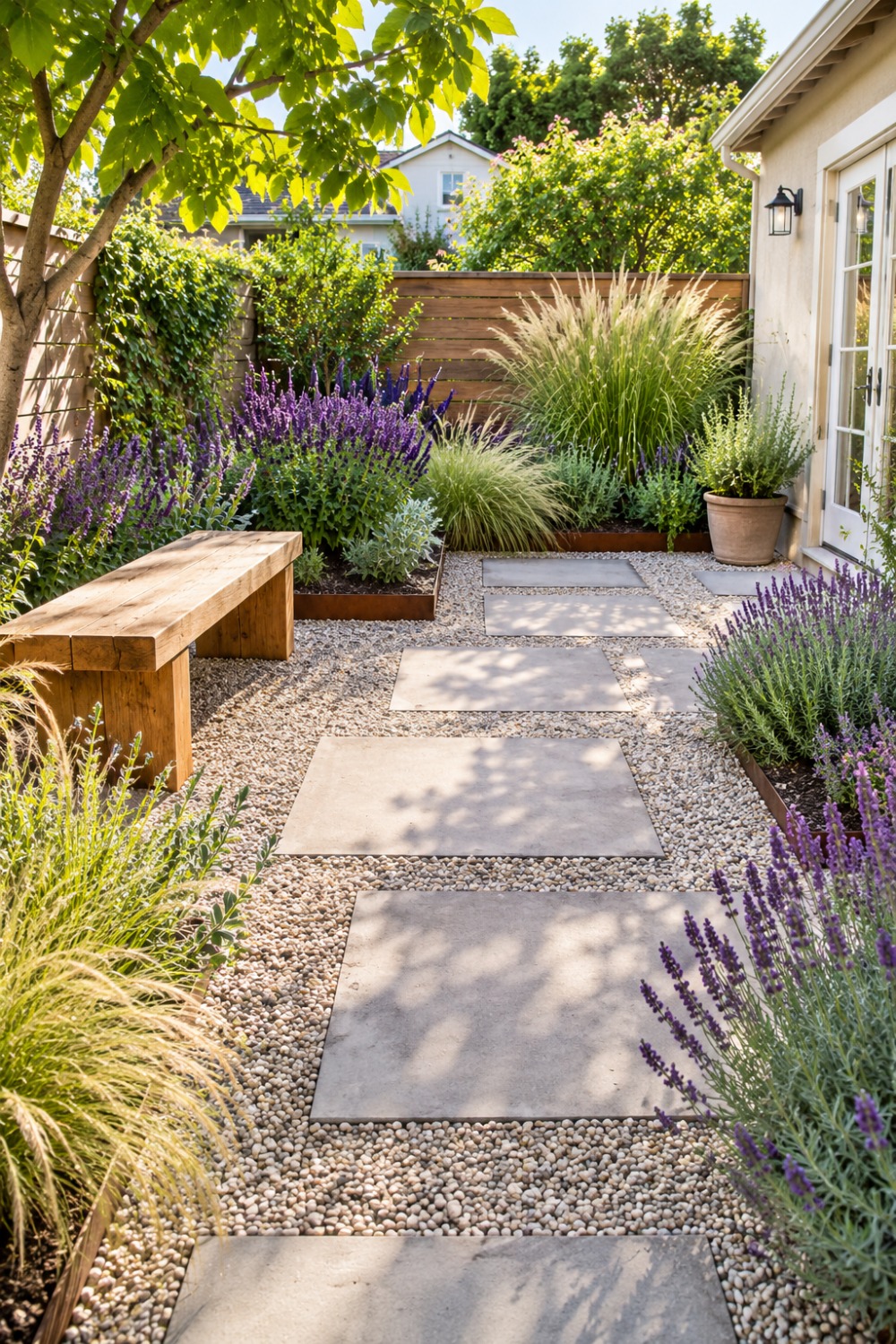
A small patch of lawn is often more work than it’s worth, especially in shade or heavy use.
Gravel paired with large pavers or stepping stones gives you a practical, all-weather surface that still drains well.
Plant generously around the edges so it feels like a garden, not a car park.
How to do it:
- Remove the turf and level the area.
- Lay landscape fabric and a compacted base.
- Set pavers and fill around them with gravel.
6. Build Seating Into Raised Beds
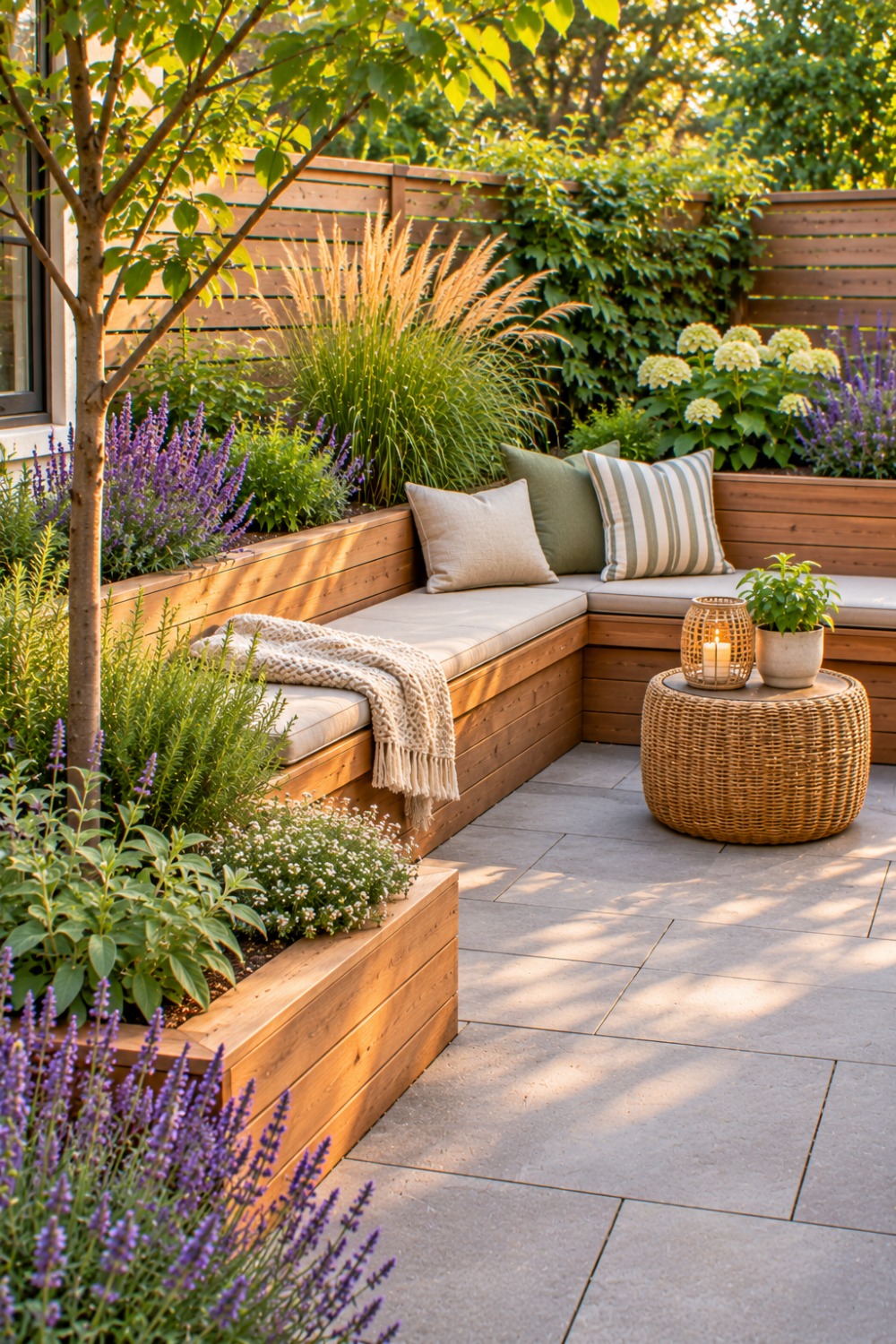
Raised beds with a wide timber cap give you planting and seating in the same footprint.
They’re perfect around a small patio, where a separate bench would crowd the space.
Plant them with herbs or flowers you’ll enjoy up close.
How to do it:
- Build the beds about seat height.
- Add a wide timber cap for sitting.
- Plant herbs or fragrant flowers at the back of the bed.
7. Use a Diagonal Layout to Stretch the Space
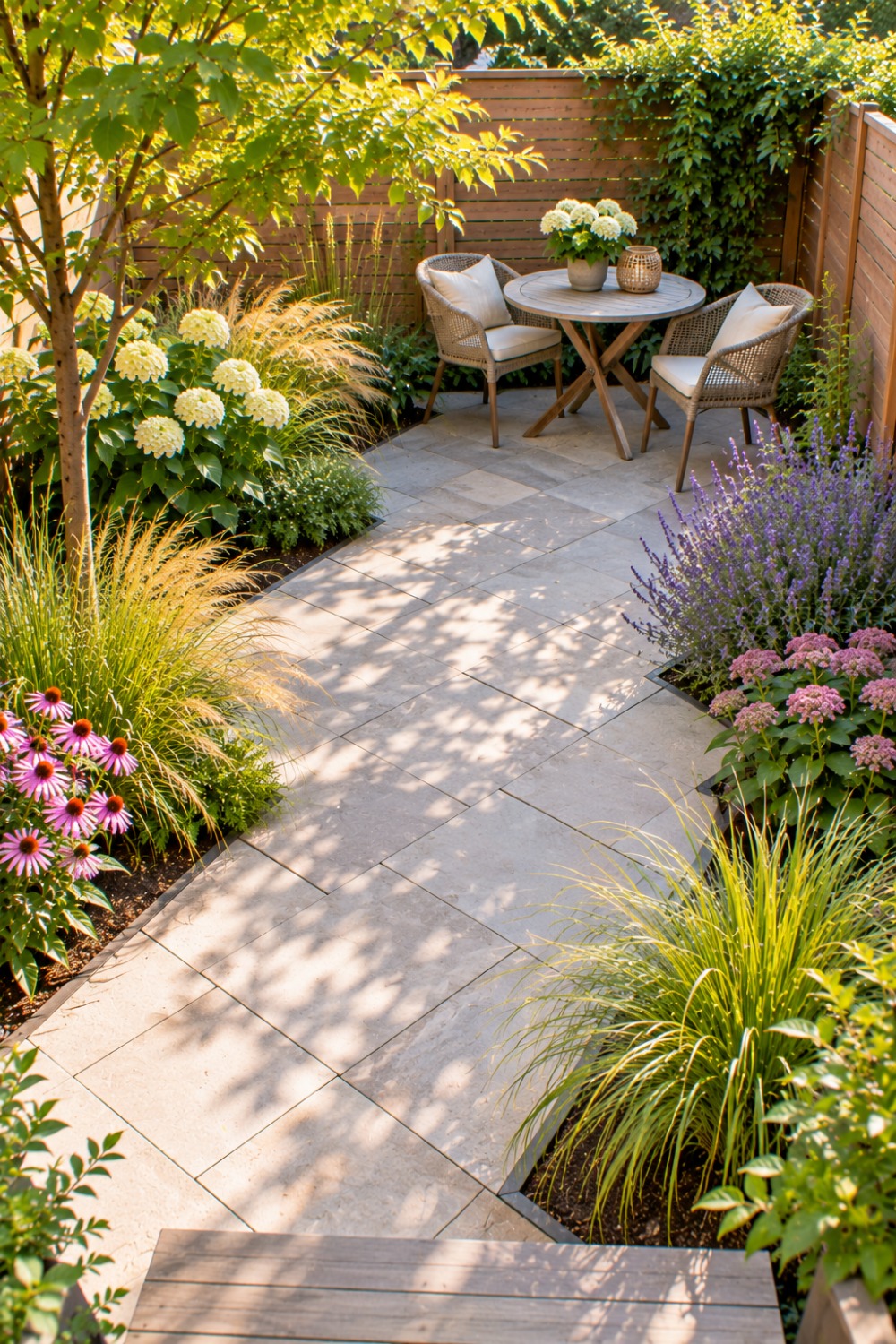
Turning paving or a deck at 45 degrees draws the eye across the longest line of the yard.
It’s a classic trick that makes small, boxy spaces feel wider.
Large pavers laid diagonally look especially good in narrow yards.
How to do it:
- Find the longest line through your yard, usually corner to corner.
- Lay paving or decking along that diagonal.
- Fill the triangular corners with planting.
8. Add a Small Deck for Outdoor Living
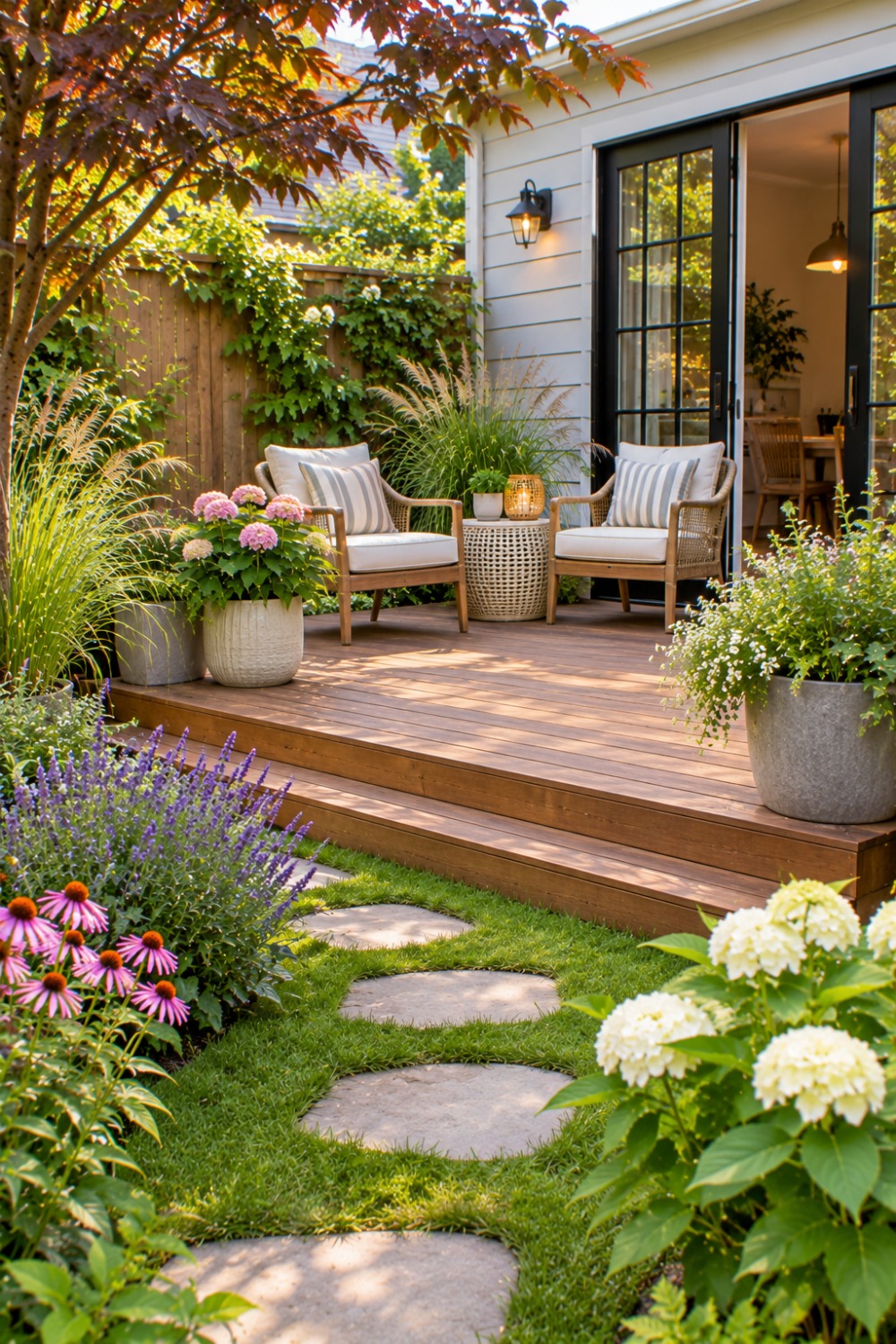
A small deck creates a level, dry place for chairs and a table right outside the back door.
Low decks are simple to build and work well on gentle slopes.
Edge it with planters or a low bench so it doesn’t feel like a platform.
How to do it:
- Choose a spot close to the back door.
- Keep the deck low and simple.
- Frame the edges with planters or built-in seating.
9. Plant in Containers You Can Move
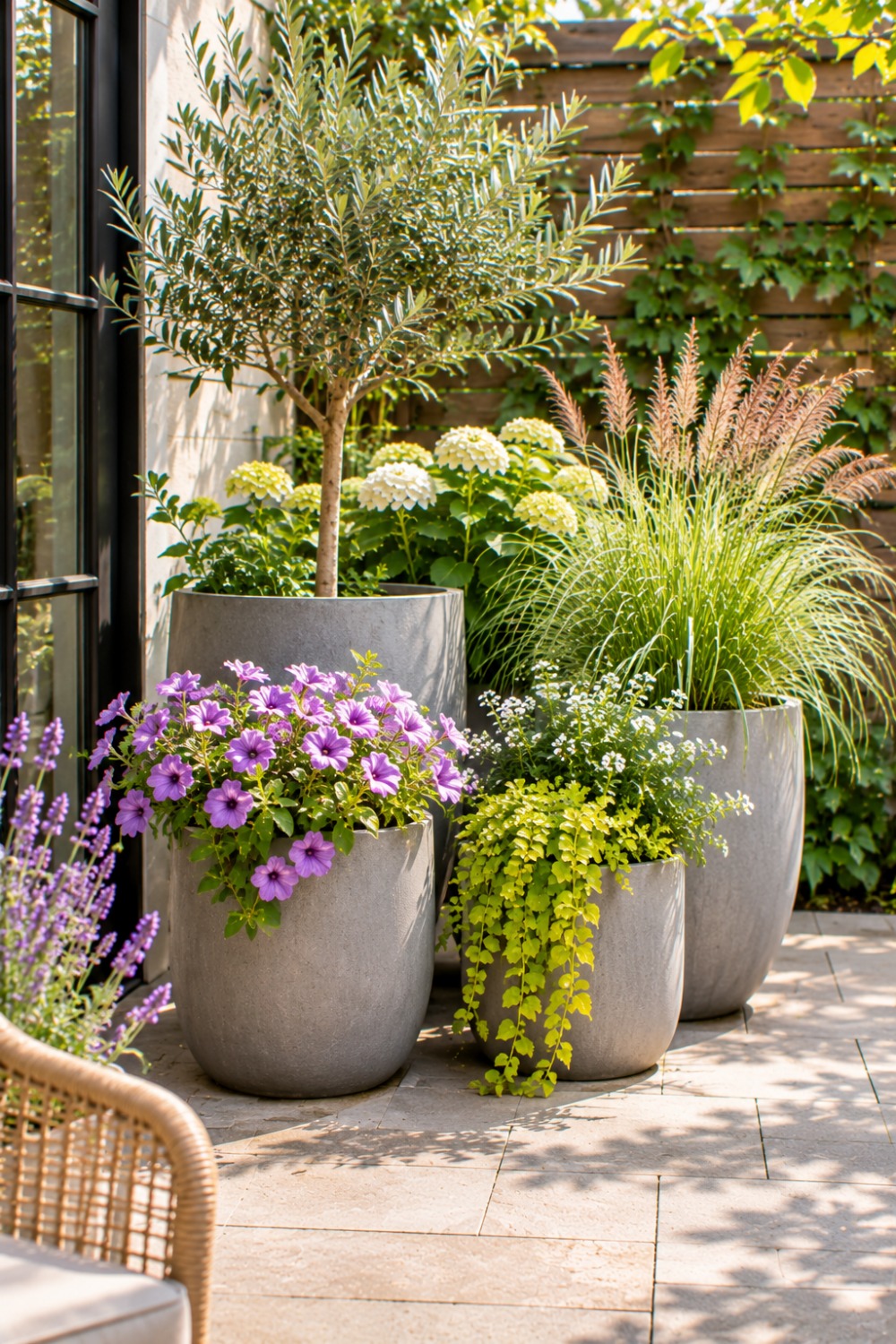
Containers make a small backyard flexible.
You can move them to follow the sun, shift them for a party or swap plants with the seasons.
Group pots in different sizes for impact, and choose a few large ones over many small ones.
How to do it:
- Choose a few large pots in matching materials.
- Plant a mix of evergreen and seasonal plants.
- Use pot feet or caddies so they’re easy to move.
10. Hang String Lights to Create a Ceiling
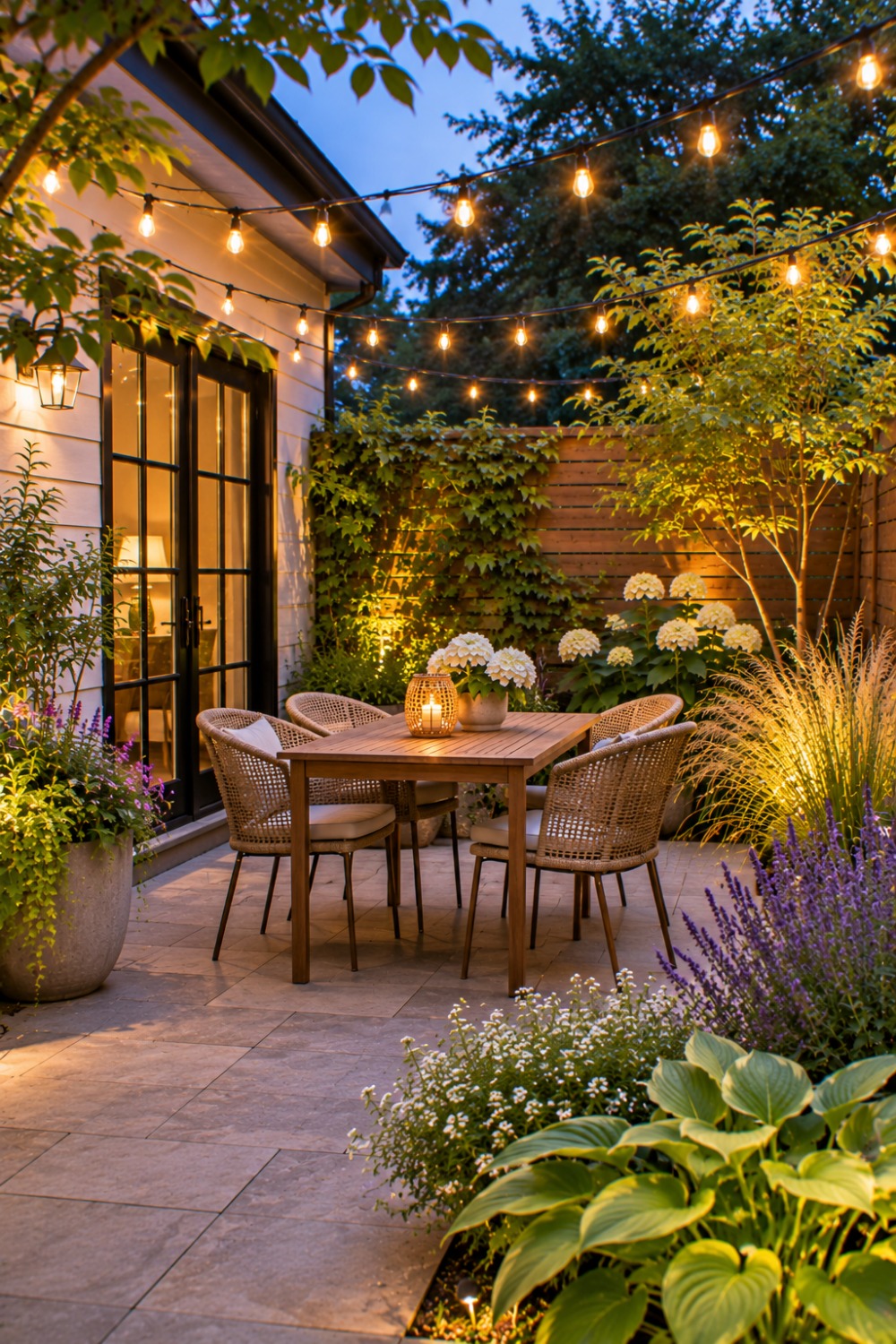
String lights strung overhead make a small backyard feel like a cozy outdoor room.
They also draw the eye up, which makes a tight space feel taller.
Zigzag them between the house, fences and a post or tree.
How to do it:
- Plan the anchor points around the space.
- Use a sturdy guide wire for longer spans.
- Choose warm white bulbs on a timer.
11. Make Room for a Bistro Dining Spot
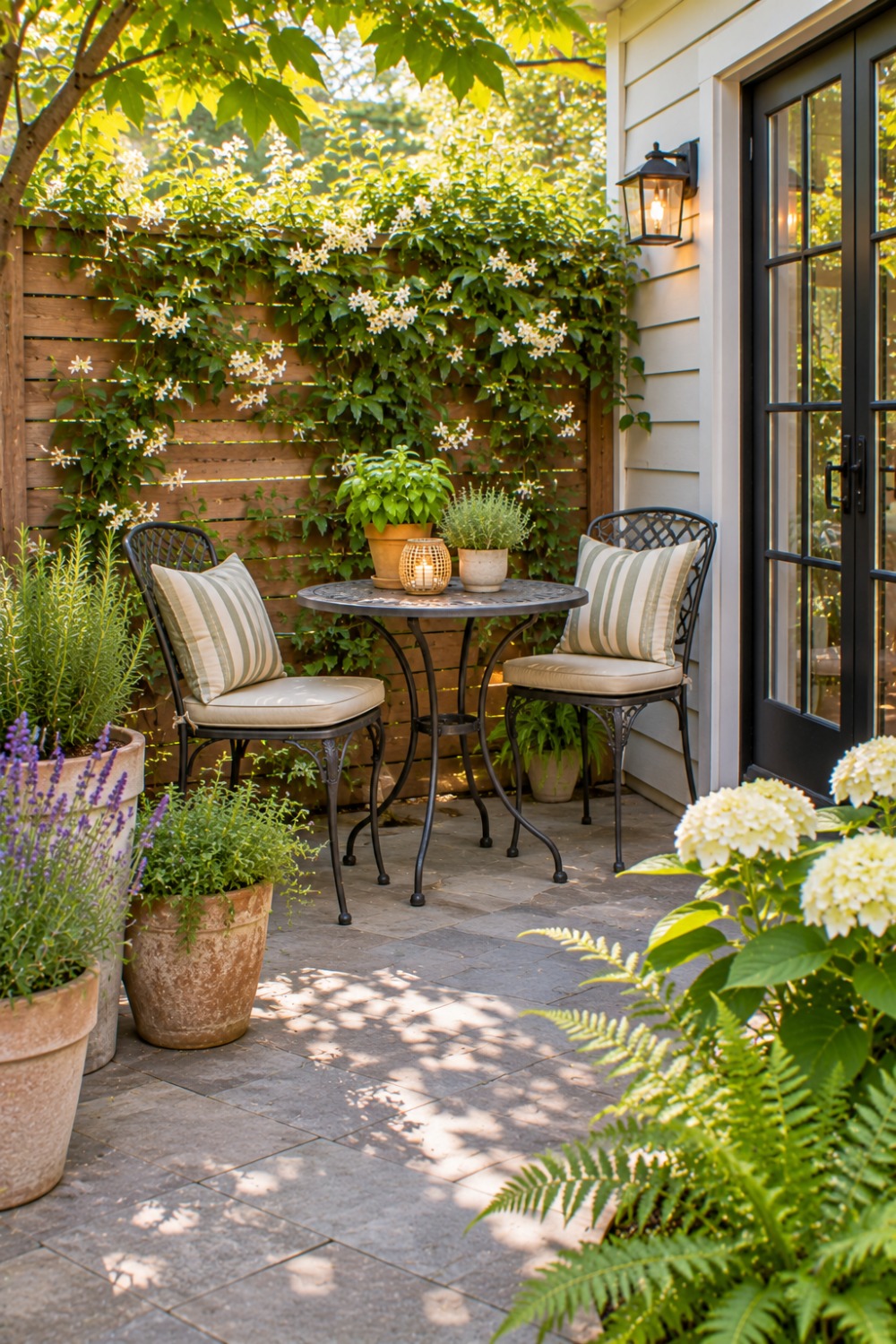
You don’t need a big table to enjoy meals outside.
A round bistro table and two or four folding chairs fit in a tiny corner and leave room to move.
Set it near the kitchen door for easy carrying.
How to do it:
- Measure the space, leaving room to pull chairs out.
- Choose a round table, which needs less space than a square one.
- Add a pot of herbs or flowers alongside.
12. Hide Storage Behind a Planted Screen
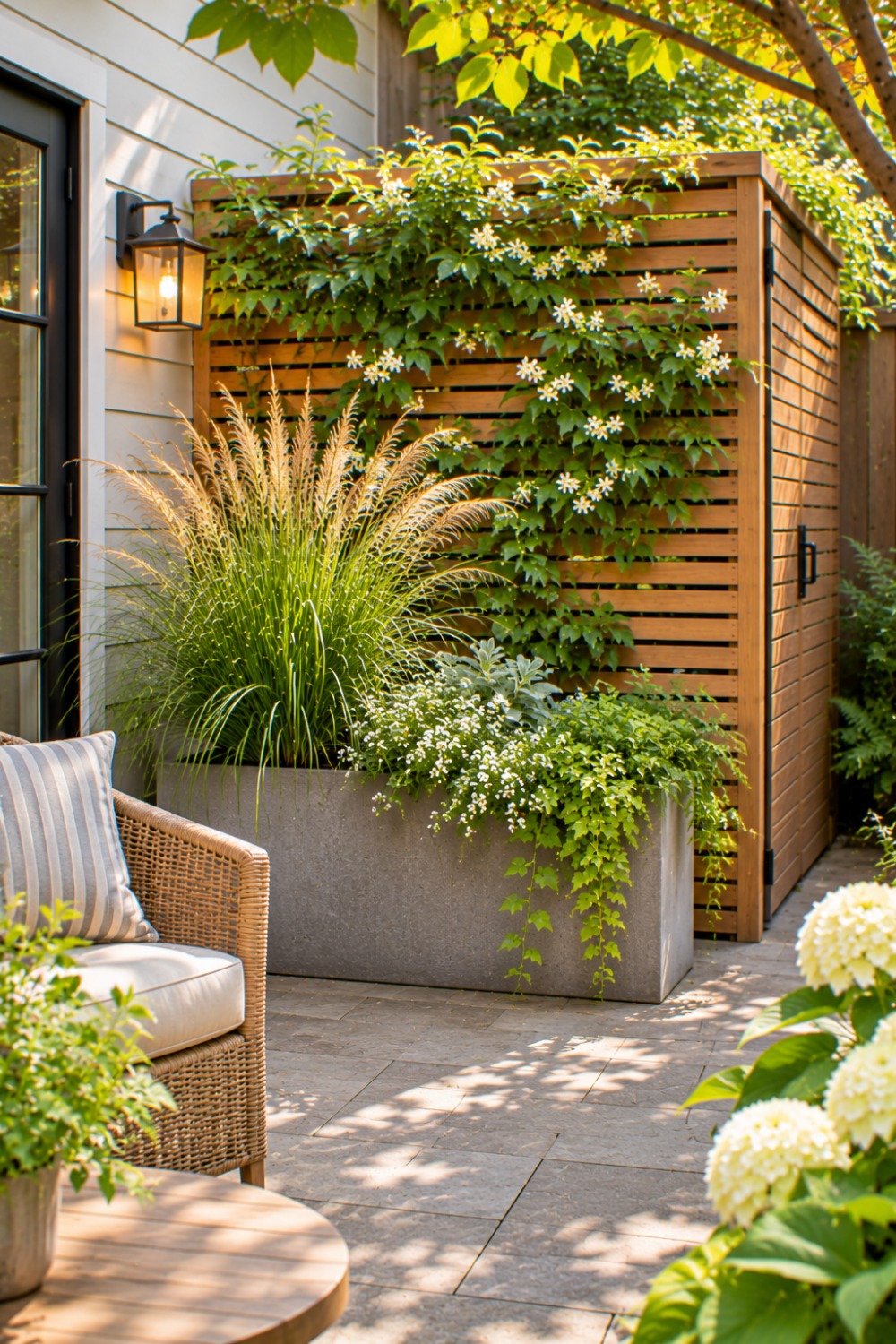
Bins, bikes and tools take up a surprising share of a small yard.
A slatted screen with climbers or a narrow planter in front hides them and adds greenery at the same time.
A slim storage bench is another way to keep clutter out of sight.
How to do it:
- Choose a spot for storage that’s easy to reach.
- Build a slatted screen around it.
- Plant climbers or tall grasses in front.
13. Add a Compact Water Feature
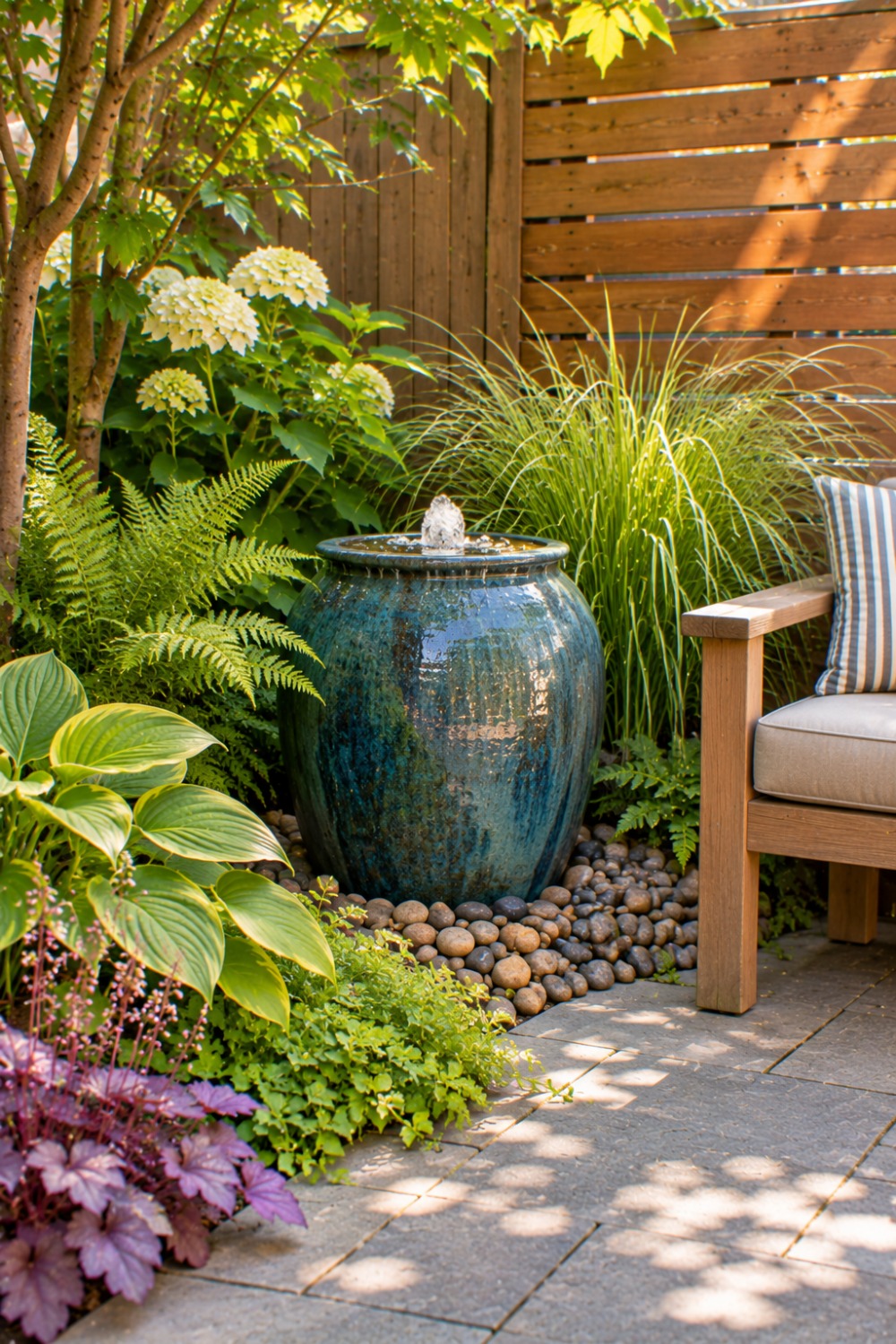
The sound of water masks traffic and neighbors and makes a small yard feel calm.
A self-contained bubbling urn, small wall fountain or bowl feature fits in the tightest corner.
Solar or plug-in pumps make it easy to install.
How to do it:
- Choose a feature sized for your space.
- Place it where you’ll hear it from your seat.
- Surround it with ferns, grasses or pebbles.
14. Grow Climbers on an Arch or Arbor
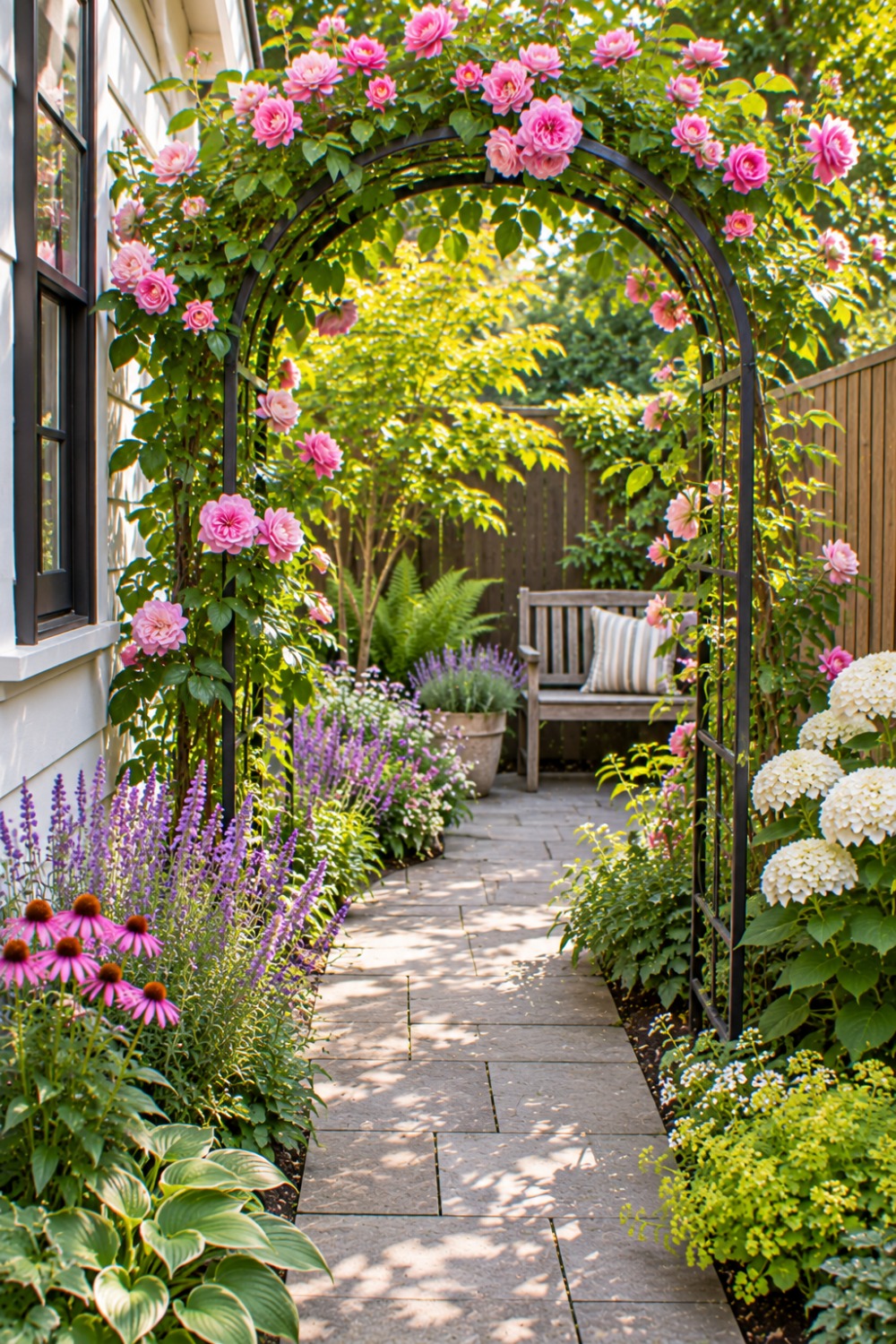
An arch over a path or gate adds height and a sense of journey to a small garden.
Cover it with a climbing rose, clematis or a vine that suits your light.
Even in a tiny yard, walking under greenery makes the space feel special.
How to do it:
- Install a sturdy metal or timber arch over a path.
- Plant a climber at each post.
- Tie in new growth regularly.
15. Keep a Simple Color Palette
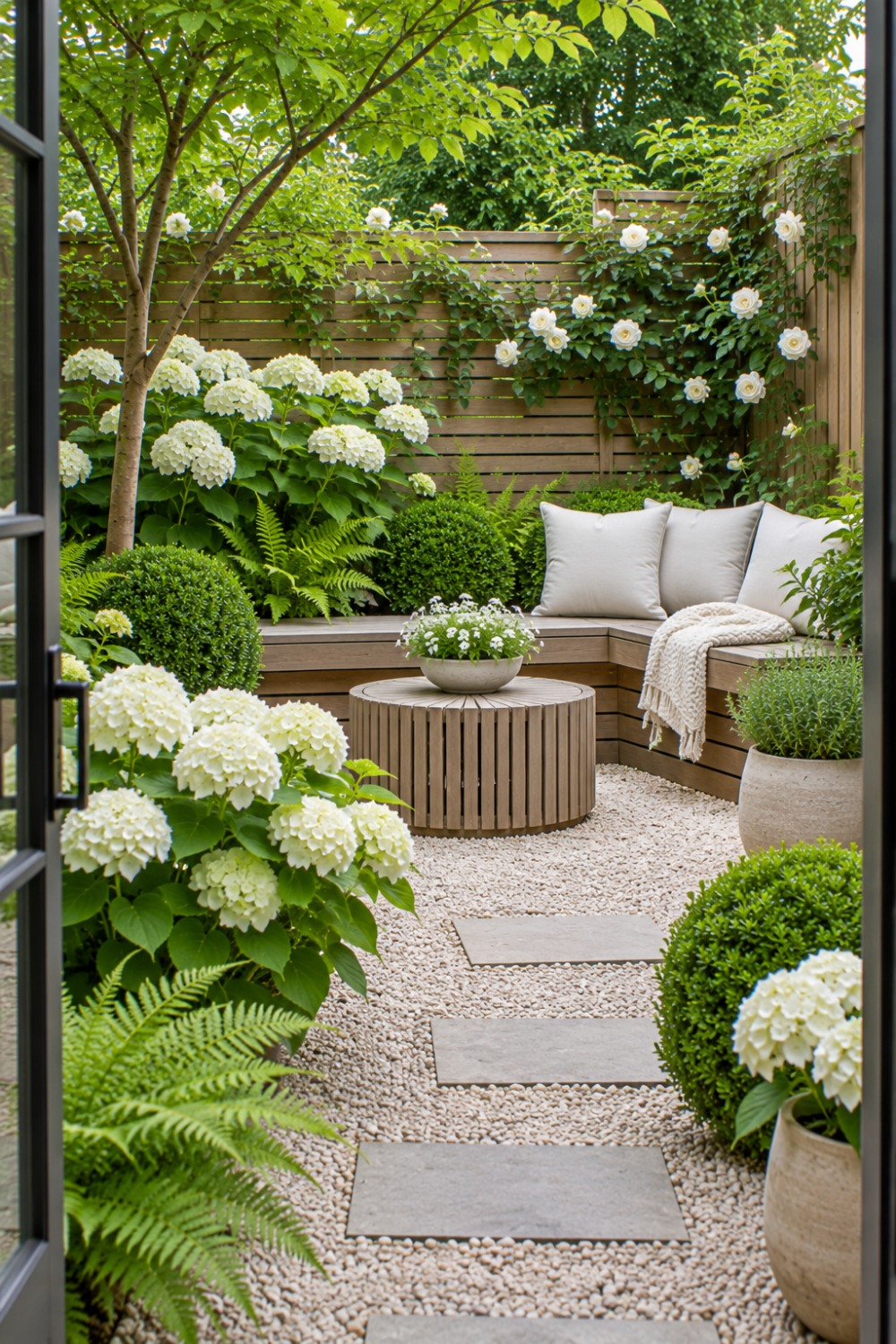
In a small space, too many colors and materials quickly look busy.
Choose two or three main colors for plants, cushions and pots, and repeat them throughout.
Green foliage with white and one accent color is an easy, calming choice.
How to do it:
- Pick a main foliage color plus one or two flower colors.
- Repeat those colors in pots, cushions and accessories.
- Limit hard materials to two or three types.
16. Use Mirrors to Fake Extra Depth
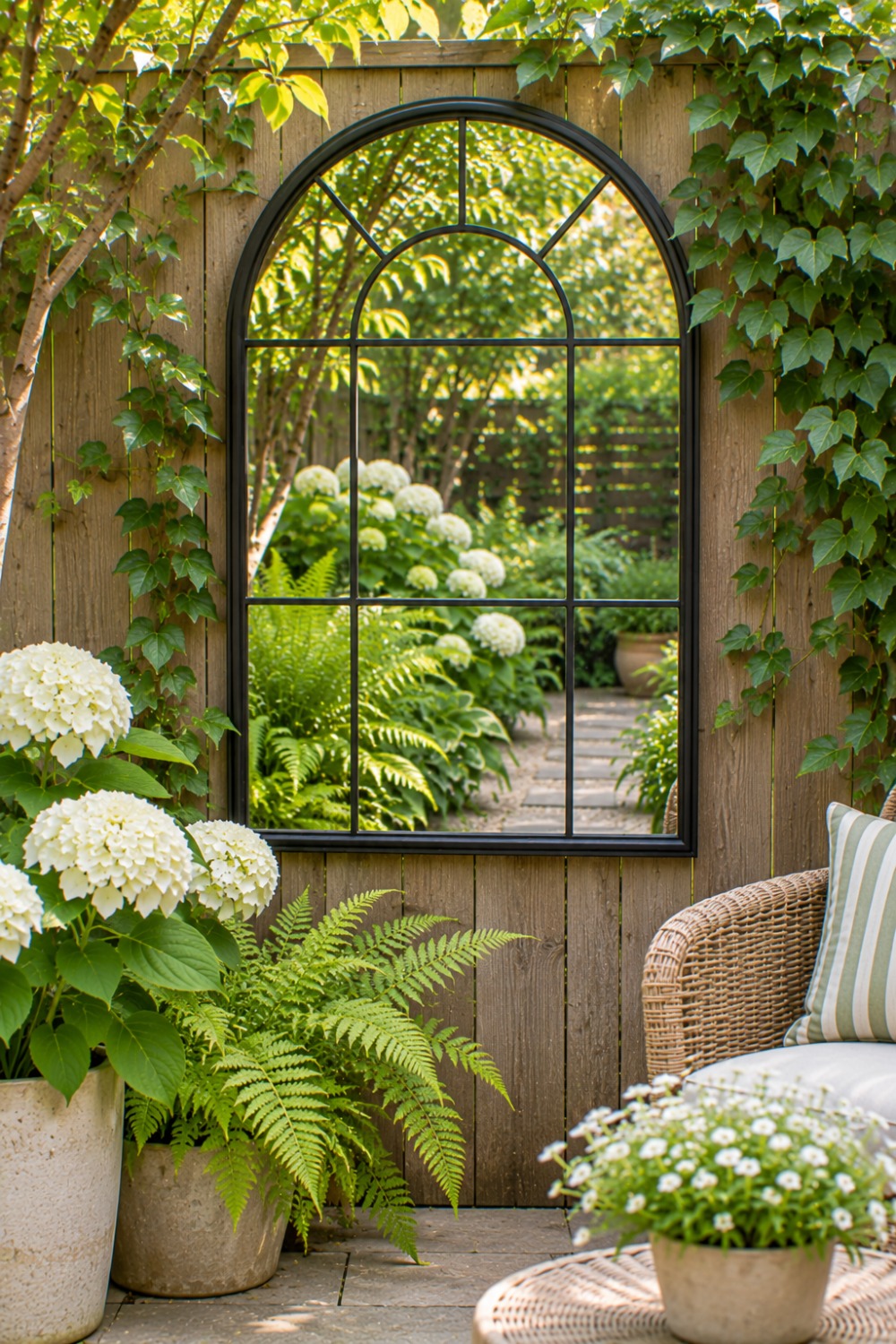
A weatherproof garden mirror on a fence reflects planting and light, making the yard feel larger.
Frame it like a window or arch and plant around it so it looks like an opening.
Angle it slightly so it doesn’t reflect the sun into the house or confuse birds.
How to do it:
- Choose an outdoor-rated mirror with a sturdy frame.
- Fix it securely to a fence or wall.
- Frame it with climbers or planting.
Tip: add decals or hang it at a slight angle so birds don’t fly into it.
17. Plant a Compact Kitchen Garden
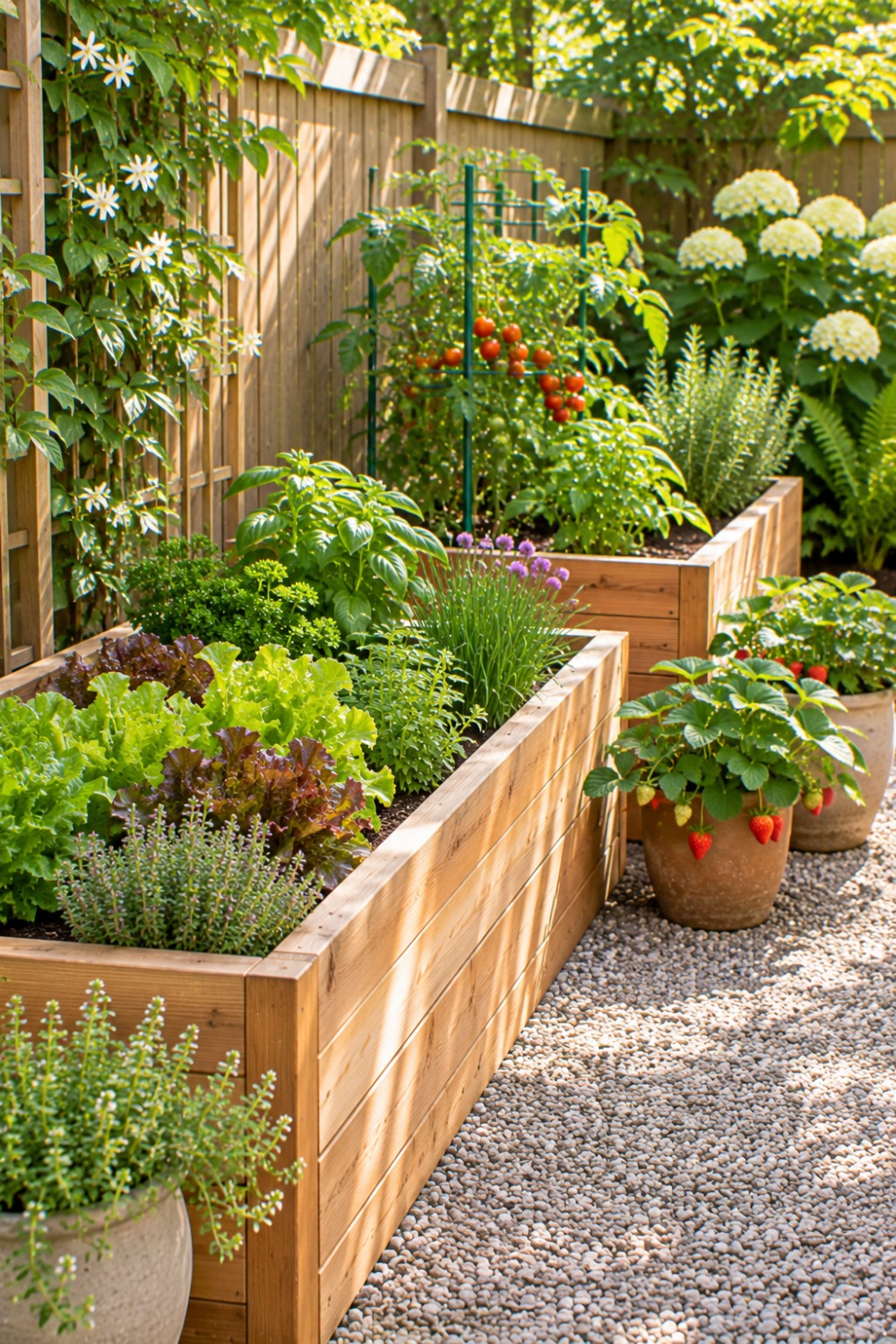
A small backyard can still grow plenty of food.
One or two raised beds of salad greens, herbs and dwarf tomatoes, plus a few pots of strawberries, produce a surprising harvest.
Put them in the sunniest spot, close to the kitchen.
How to do it:
- Find the spot with at least six hours of sun.
- Build one or two raised beds.
- Plant compact varieties and harvest often.
18. Create a Cozy Fire Pit Corner
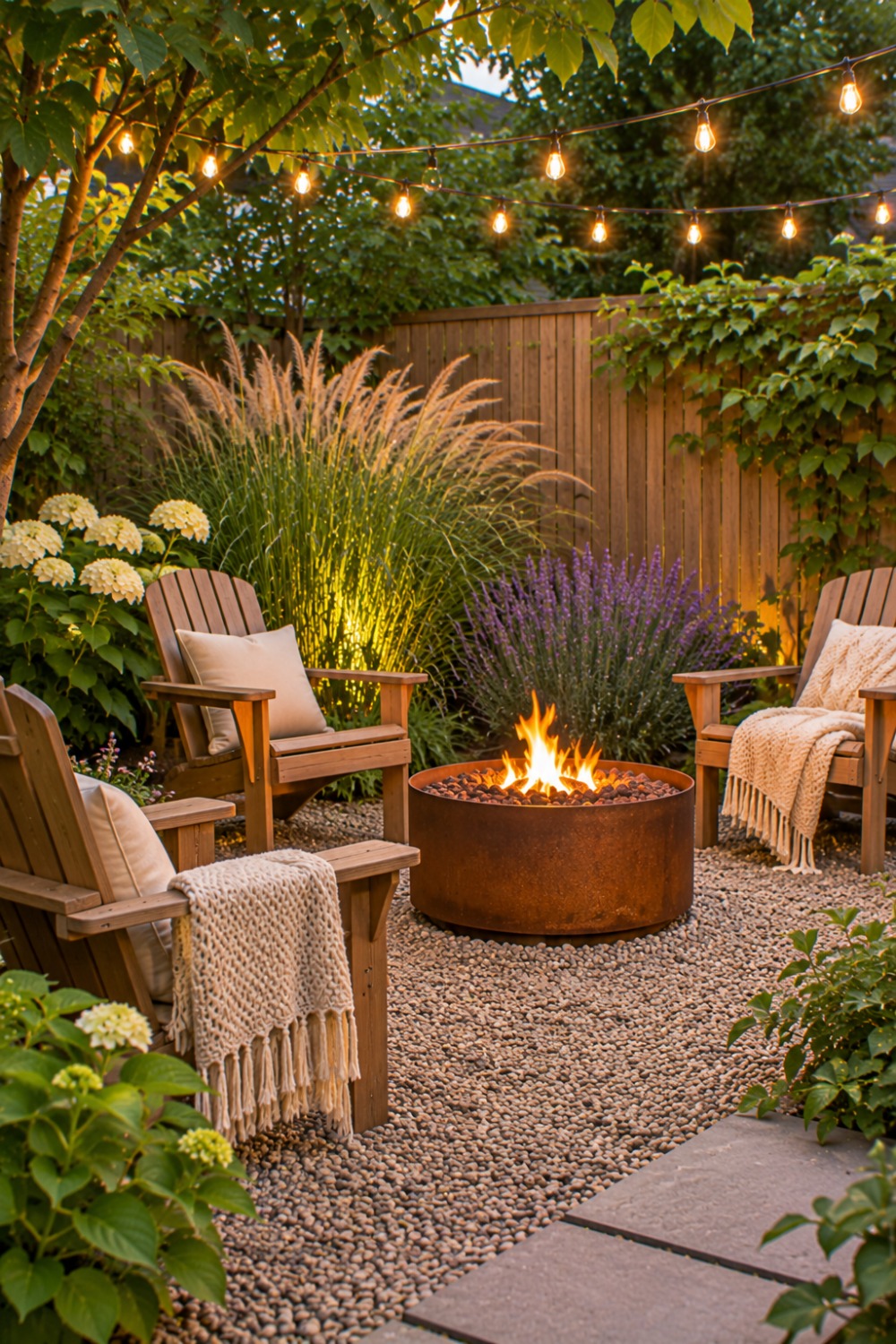
A small fire pit or chiminea extends your evenings outside even in a compact yard.
Keep it on a non-flammable base, well away from fences and overhanging branches. Our backyard fire pit ideas have more design tips.
Check local rules on outdoor fires before you buy.
How to do it:
- Choose a compact fire pit and a safe, open spot.
- Set it on gravel or pavers.
- Add two or three chairs and a basket of throws.
Safety note: keep clearance around and above the fire pit, and never leave it unattended.
19. Add Privacy With Slatted Screens
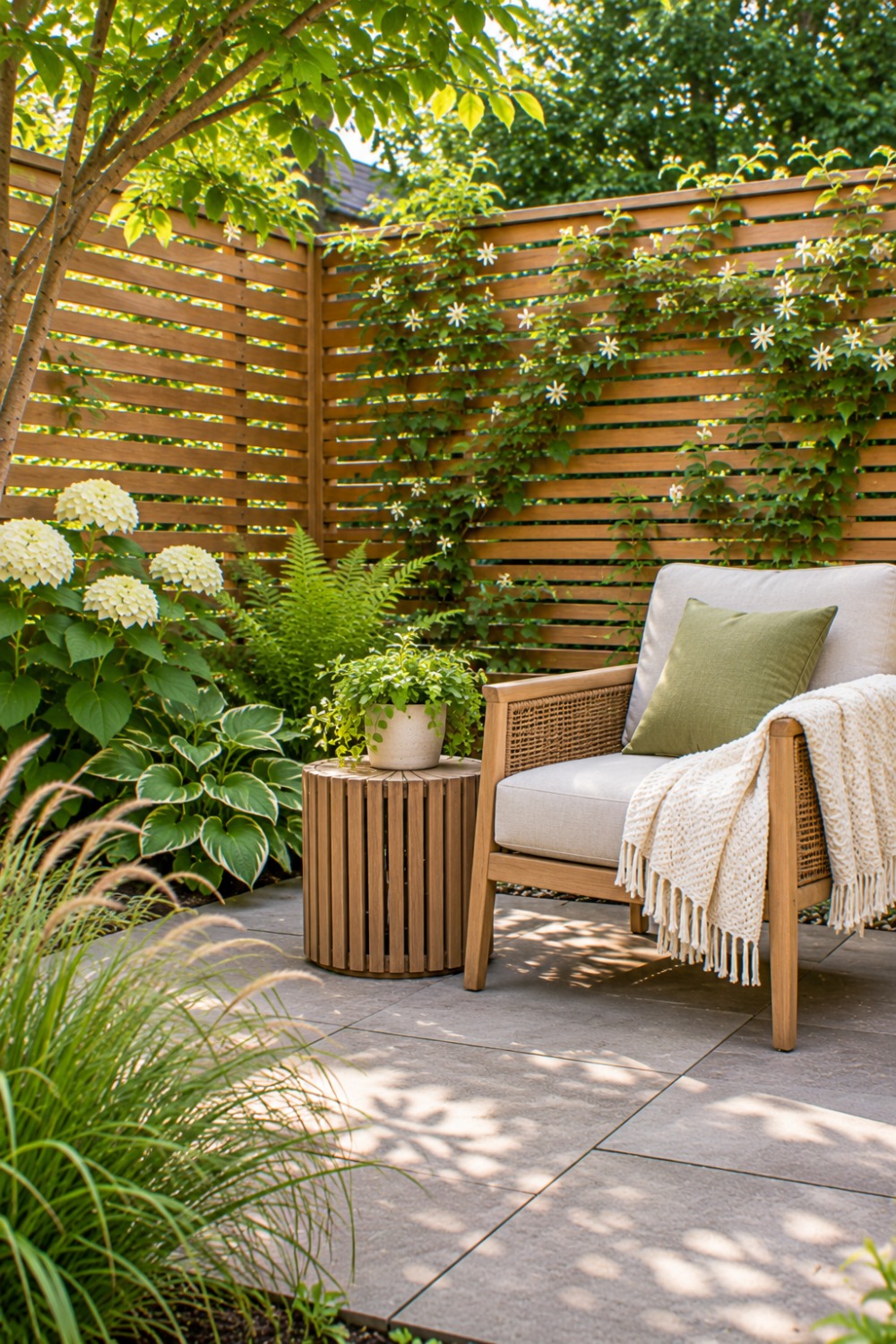
In small backyards, neighbors’ windows can feel very close.
Freestanding slatted screens or taller trellis panels on top of a fence give privacy while still letting light and air through.
Check local height rules before building.
How to do it:
- Identify where you need privacy most.
- Install slatted screens or trellis extensions.
- Grow climbers on them to soften the look.
20. Light Paths and Plants for Evenings
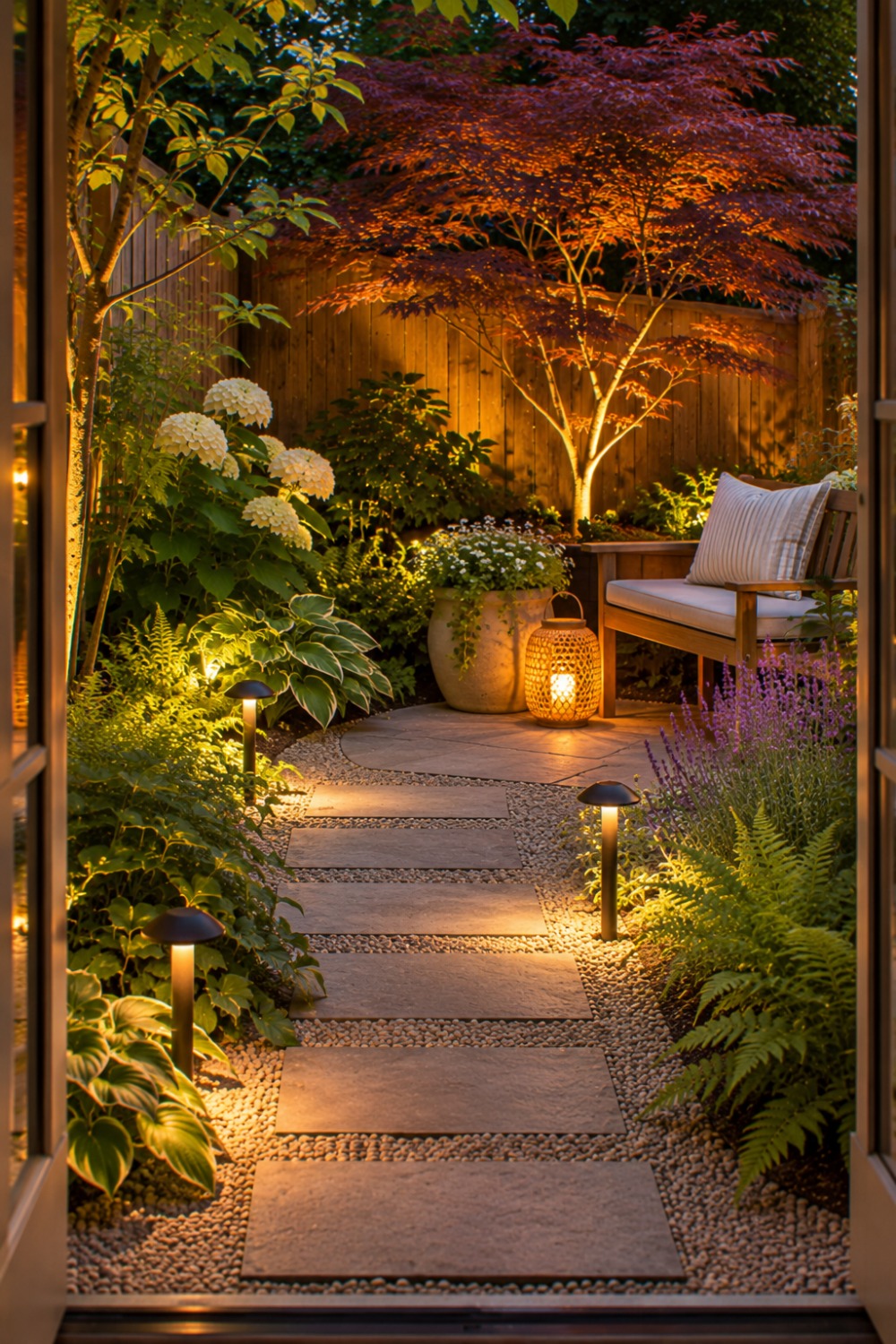
Lighting makes a small backyard usable after dark and creates depth by highlighting the far corners.
Uplight a tree or wall planting at the back, add low lights along paths and keep a soft light near seating.
Solar lights are an easy, cable-free option.
How to do it:
- Light the farthest feature to make the yard feel deeper.
- Add low path lights where people walk.
- Use warm white light throughout.
21. Choose Multi-Season Plants
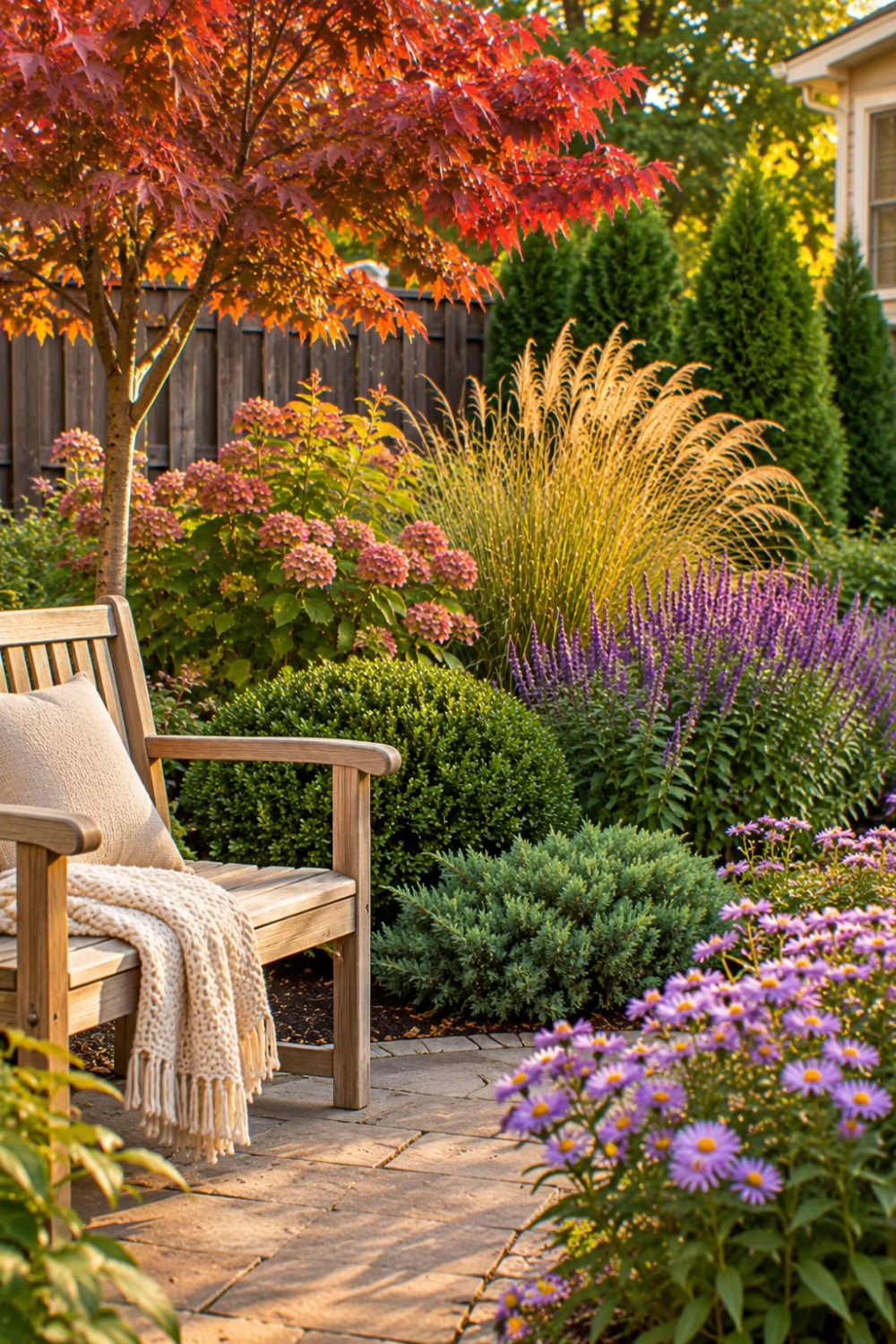
In a small yard you see every plant every day, so each one needs to look good for more than a few weeks.
Choose evergreens for structure, long-blooming perennials for color and plants with fall foliage or winter berries.
Grasses and ferns add texture between flowering times.
How to do it:
- List plants with at least two seasons of interest.
- Mix evergreen, flowering and foliage plants.
- Replace short-season plants with longer performers.
Frequently Asked Questions
How can I make my small backyard look bigger?
Divide it into zones, plant along the fences to hide the boundaries, use diagonal paving, grow plants vertically and keep colors and materials simple. Lighting the far corners at night also adds depth.
What is the cheapest way to landscape a small backyard?
Replace lawn with gravel and a few pavers, plant perennials and grasses from small pots, use containers you already own and add solar string lights. Doing it in stages spreads the cost.
What plants are good for small backyards?
Compact trees such as Japanese maple and serviceberry, clumping grasses, ferns, hostas, lavender, herbs, dwarf shrubs and climbers like jasmine and clematis all work well in small spaces.
Should a small backyard have grass?
Not necessarily. In tiny or shady yards, gravel, paving and planting are often easier and more useful than lawn. If you love grass, keep it to one simple shape with a clear edge.
Final Thoughts: Big Ideas for a Small Space
A small backyard works best when every element has a job.
Start by choosing the two or three things you’ll use most, like eating outside, growing food or simply sitting in the green.
Then give each one a zone, and plant deeply along the fences so the boundaries disappear.
Use vertical space, compact trees and multi-purpose features to fit more in without crowding.
Keep materials and colors simple so the space feels calm.
Finish with lighting and a few favorite pots, and adjust as you learn how you really use the space.
Small spaces change fast, so enjoy experimenting until your backyard feels just right.