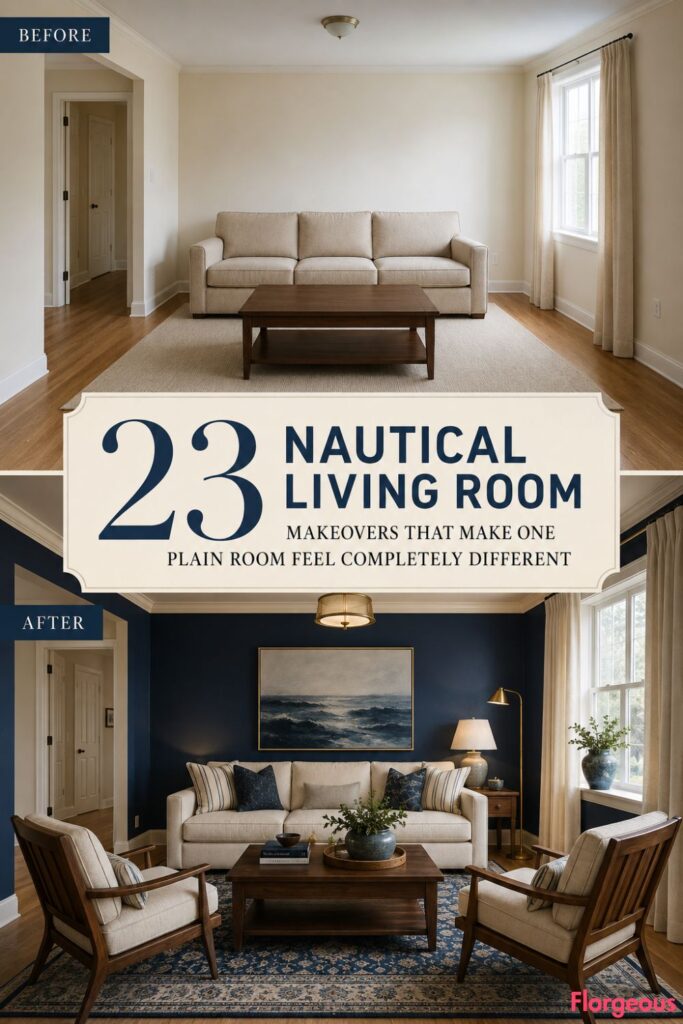
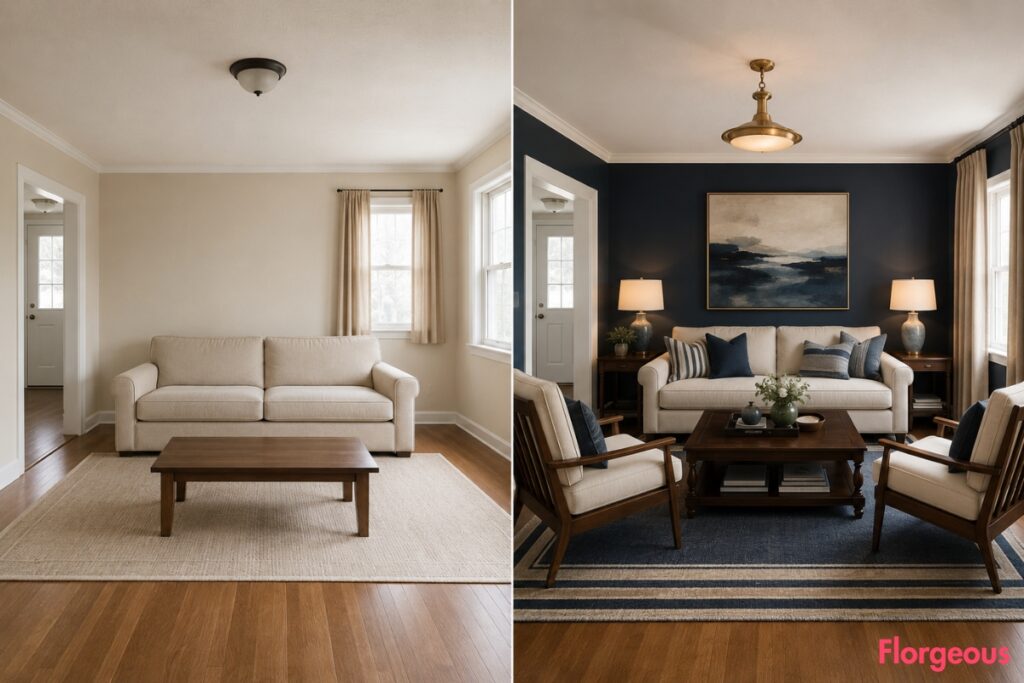
The starting room could belong to almost anyone: warm off-white walls, a straight beige sofa, a bare rectangular coffee table, a simple neutral rug, short curtains, a basic ceiling light, and almost no decoration. It is functional, but visually it stops there.
For every makeover below, that room remains locked. The doorway, window, flooring footprint, ceiling height, proportions, circulation, furniture scale, camera height, lens perspective, and framing never change.
What does change is the personality. These 23 Nautical Living Room ideas move from crisp yacht-club tailoring to weathered sailing materials, dark maritime salons, sea-glass minimalism, renter-friendly updates, family-ready schemes, and glamorous ocean-liner references.
The goal is nautical style without the costume. No rooms overloaded with anchors, fishing nets, life rings, shells, or novelty signs. Instead, the maritime feeling comes from timber, color, textiles, metalwork, craftsmanship, and a few carefully controlled references.
1. The Classic Yacht Club Formula: Navy, Ivory, Mahogany
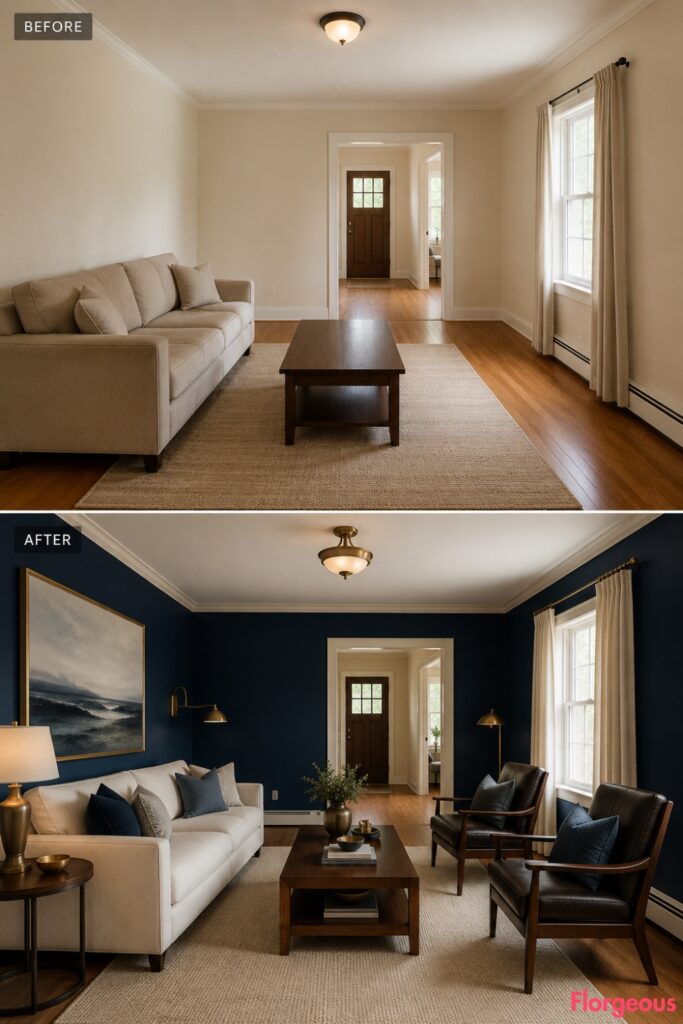
Before: The unchanged builder-grade living room has warm off-white walls, a straight beige sofa, bare rectangular coffee table, neutral rug, short plain curtains, basic ceiling light, empty walls, minimal styling, and soft daylight.
After: Deep navy walls frame an ivory linen sofa and two mahogany armchairs. A polished walnut table, oatmeal wool rug, parchment curtains, aged-brass lamps, and one abstract ocean painting create a tailored club-room atmosphere.
Designer Tip: Use navy as architecture, not decoration. Once the walls establish the maritime mood, you need very few themed accessories.
2. Trade Formal Navy for Teak and Sailcloth
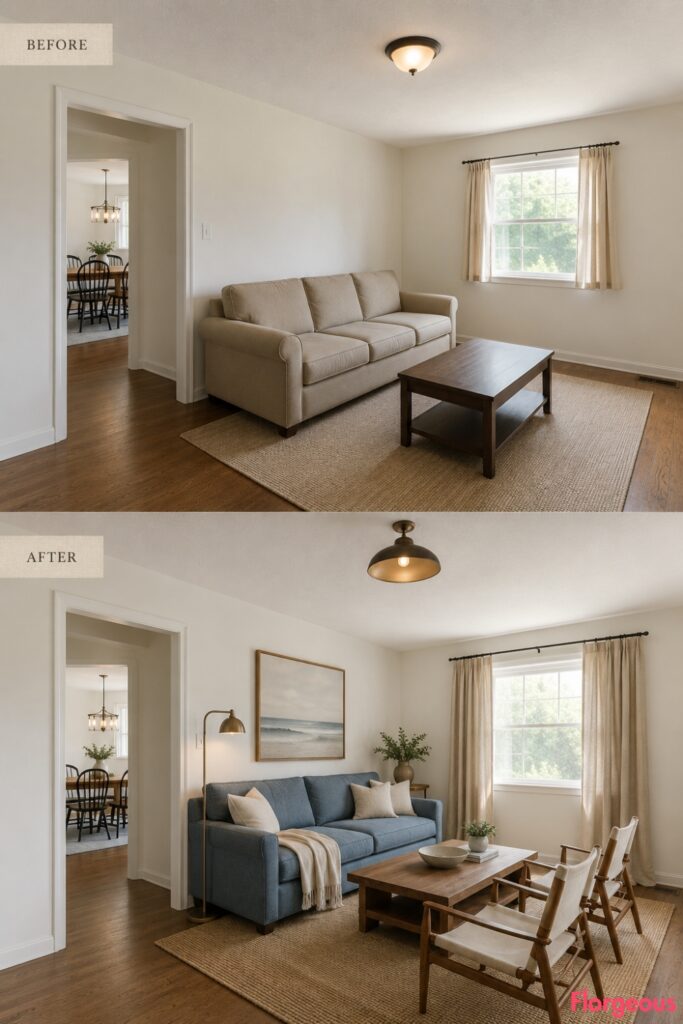
This interpretation feels closer to a well-crafted sailing interior than a coastal drawing room.
Before: The identical builder-grade room remains warm off-white, beige, bare, minimally styled, and softly lit by daylight.
After: A faded Atlantic-blue sofa meets teak-framed chairs upholstered in natural canvas. A low teak coffee table, flax curtains, sisal-wool rug, antique-bronze lighting, and cream sailcloth cushions create a tactile, practical maritime scheme.
3. Let a Stormy Palette Do the Heavy Lifting
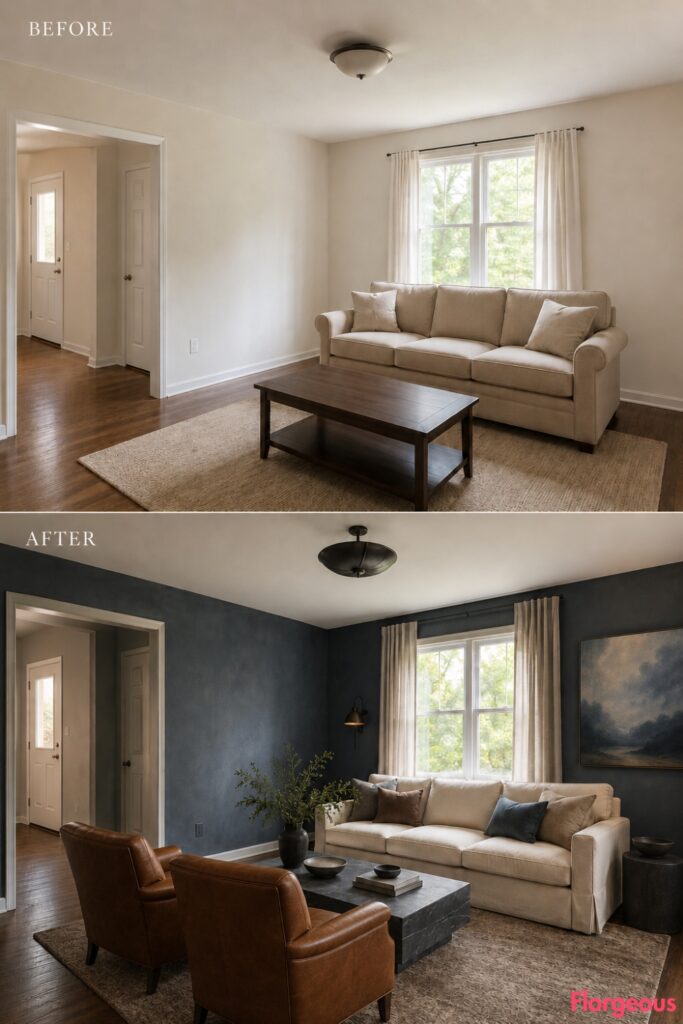
Instead of bright seaside color, this room borrows from clouded water and dark skies.
Before: The same warm off-white builder-grade room with beige sofa, bare table, neutral rug, short curtains, basic light, empty walls, and daylight.
After: Storm-blue mineral paint surrounds a parchment sofa, cognac leather chairs, and a charcoal soapstone coffee table. Mushroom wool, natural linen curtains, blackened-metal lamps, and smoky blue artwork keep the room grounded.
4. New England Character Without the Souvenir-Shop Look
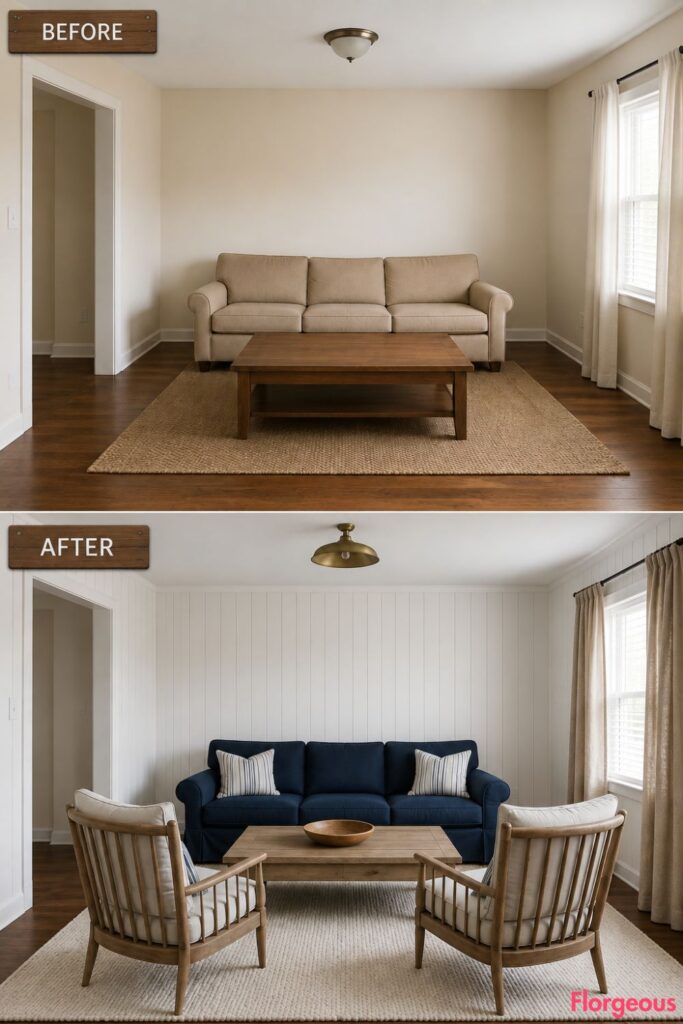
Traditional nautical design becomes far more refined when the architecture and textiles carry the idea.
Before: The original plain builder-grade room remains completely unchanged.
After: White-painted vertical paneling becomes the backdrop for a tailored navy sofa, weathered-oak chairs, an oak coffee table, pale wool rug, flax curtains, and aged-brass ceiling light. Fine ticking appears only on two cushions.
Common Mistake: Do not combine rope, anchors, stripes, shells, model boats, and nautical signs in one room. One subtle motif is enough.
5. What If Nautical Style Were Pale and Almost Weightless?
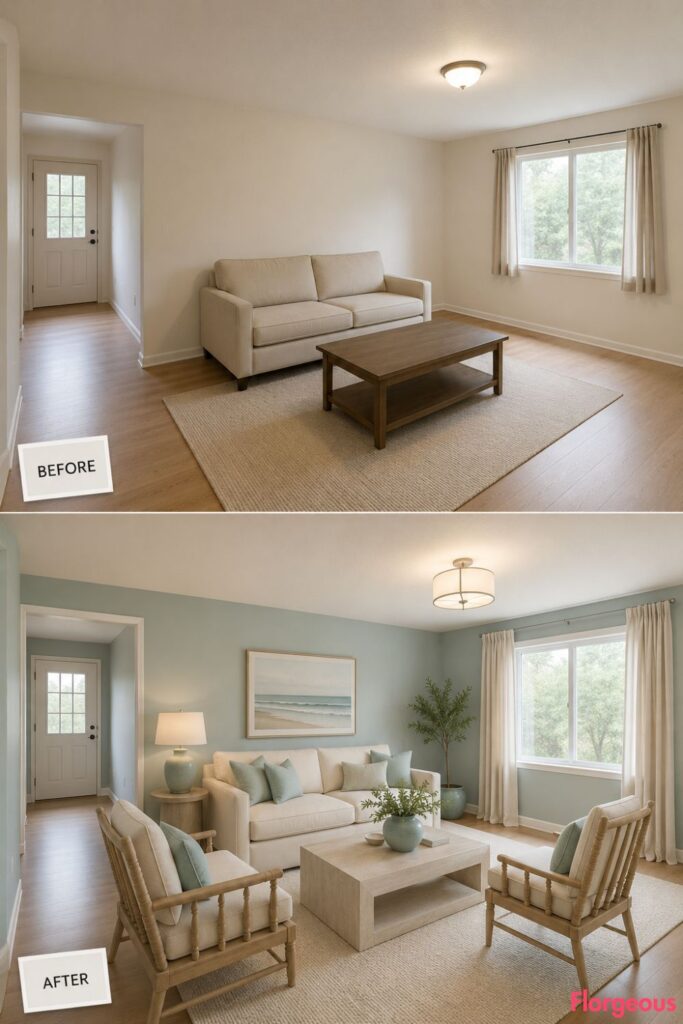
Dark blue disappears completely in this softer interpretation.
Before: The fixed beige-and-off-white builder-grade room remains unchanged.
After: Sea-glass blue-green walls meet a creamy linen sofa, pale-oak spindle chairs, a rounded limestone coffee table, ivory flatweave, gauzy flax curtains, brushed-nickel lighting, and translucent blue-green ceramics.
Why It Works: The palette still recalls water, but the light timber and mineral finishes make it feel airy rather than themed.
6. Midnight Ink Turns the Room Into a Maritime Salon
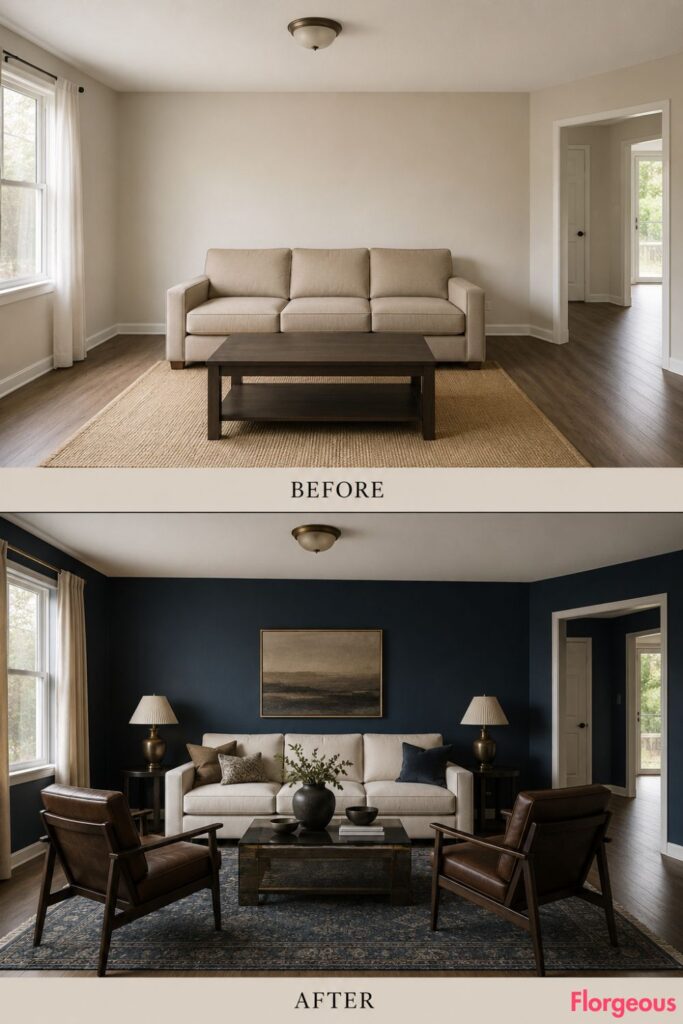
This direction is richer, quieter, and intentionally atmospheric.
Before: The same plain room retains its warm off-white walls, beige sofa, bare table, neutral rug, short curtains, basic light, and daylight.
After: Ink-blue walls wrap around an ivory sofa and dark-walnut lounge chairs. Smoked glass, faded indigo wool, parchment curtains, antique bronze, and smoky ceramics suggest the polished intimacy of an old sailing salon.
7. Give the Room the Patina of an Old Regatta Club
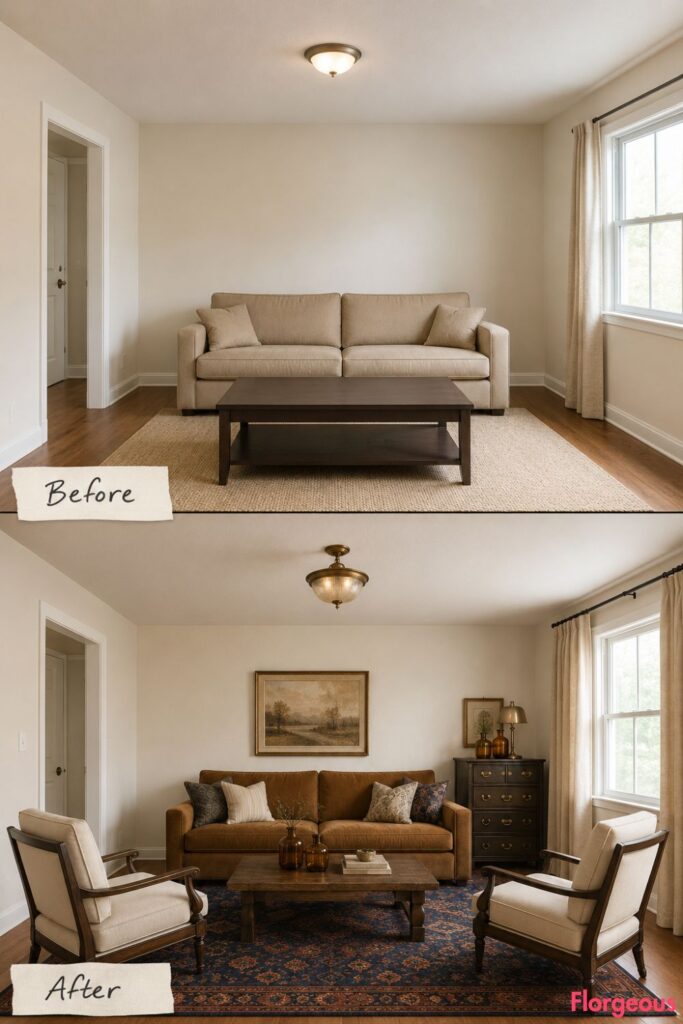
This makeover looks collected rather than freshly coordinated.
Before: The unchanged builder-grade room stays neutral, generic, and lightly unfinished.
After: Tobacco linen upholstery combines with cream-upholstered mahogany chairs, a faded navy-and-rust rug, narrow campaign-style storage, amber glass, flax curtains, antique brass, and dark wood.
Try this: Introduce aged color through the rug before buying decorative accessories. It creates a more convincing sense of history.
8. Strip Maritime Style Down to Color and Shape
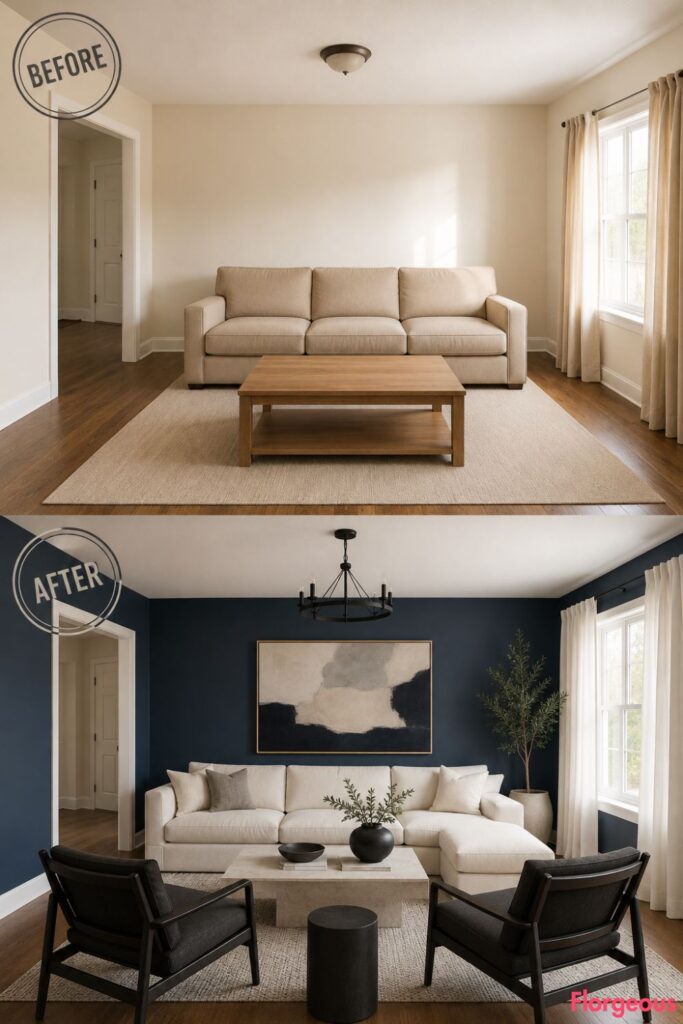
This is the cleanest interpretation of the entire group.
Before: The exact original beige builder-grade room remains unchanged.
After: A single Atlantic-blue feature wall sits behind a warm ivory modular sofa. Blackened-oak chairs, a pale honed-stone table, cream-gray wool rug, crisp curtains, and one oversized blue-gray artwork replace all obvious theme decor.
9. One Burgundy Accent Changes a Navy Room Completely
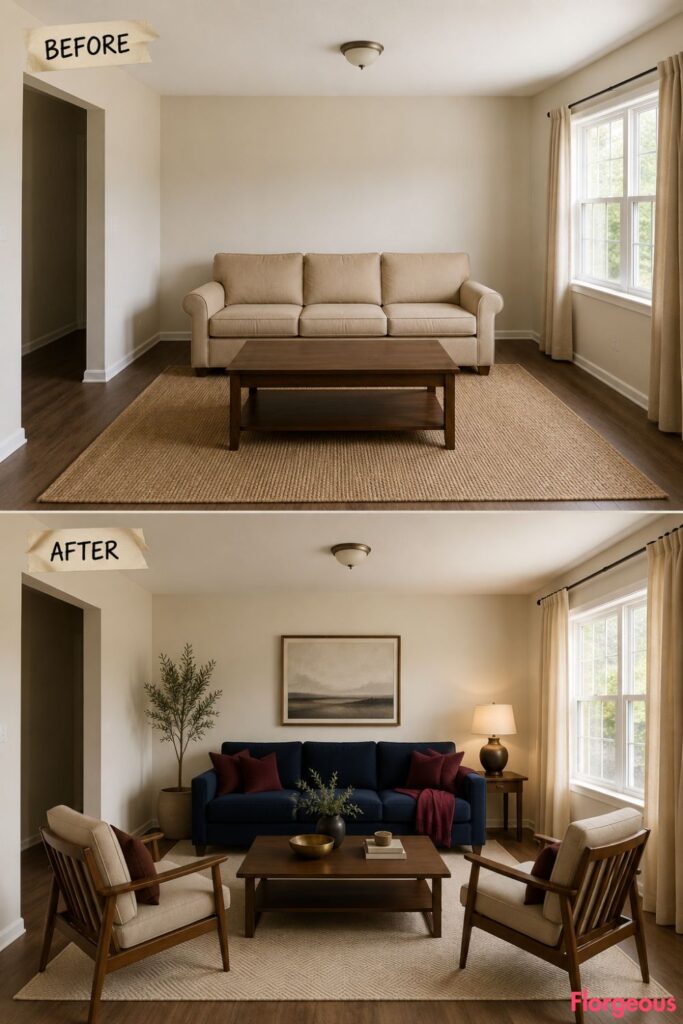
Traditional maritime red works best when almost everything else is restrained.
Before: The original off-white, beige, bare builder-grade room stays fixed.
After: Cream walls support a deep navy sofa, walnut chairs, parchment curtains, ivory herringbone wool, and antique-bronze lighting. Burgundy is limited to two cushions and one muted throw.
10. Cool Everything Down With Powder Blue and White Oak
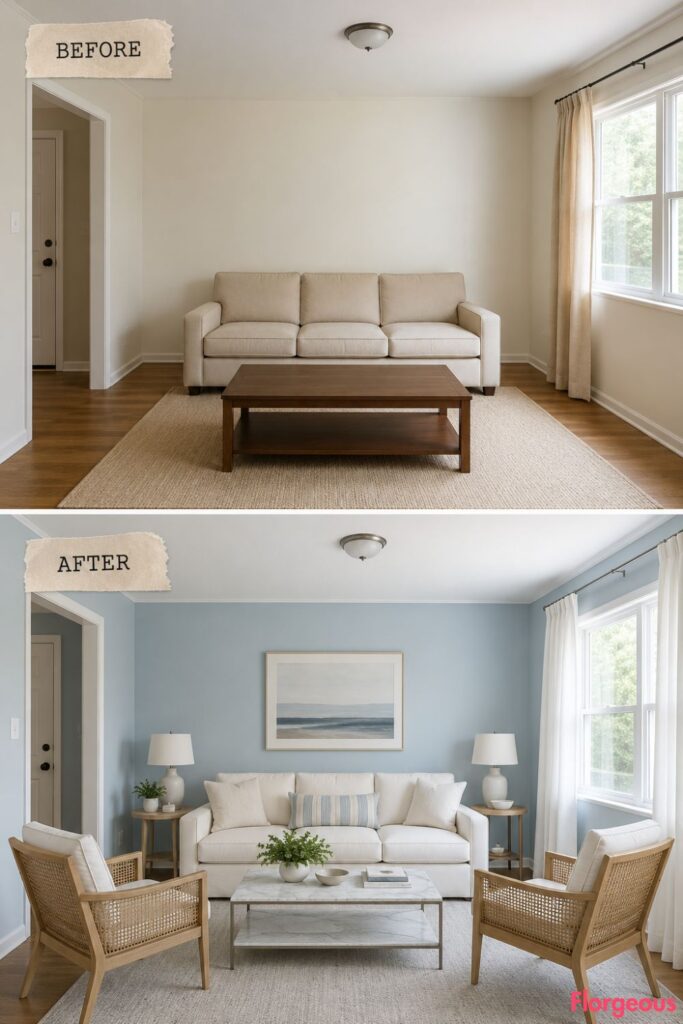
This look is crisp and polished without relying on dark wood.
Before: The same unchanged builder-grade living room remains the neutral starting point.
After: Powder-blue walls surround a warm-white sofa, two white-oak woven-back chairs, a honed marble coffee table, pale gray wool rug, floor-length white linen curtains, and brushed-nickel lighting. One narrow striped lumbar provides the pattern.
11. Build the Nautical Story Around a Reading Library
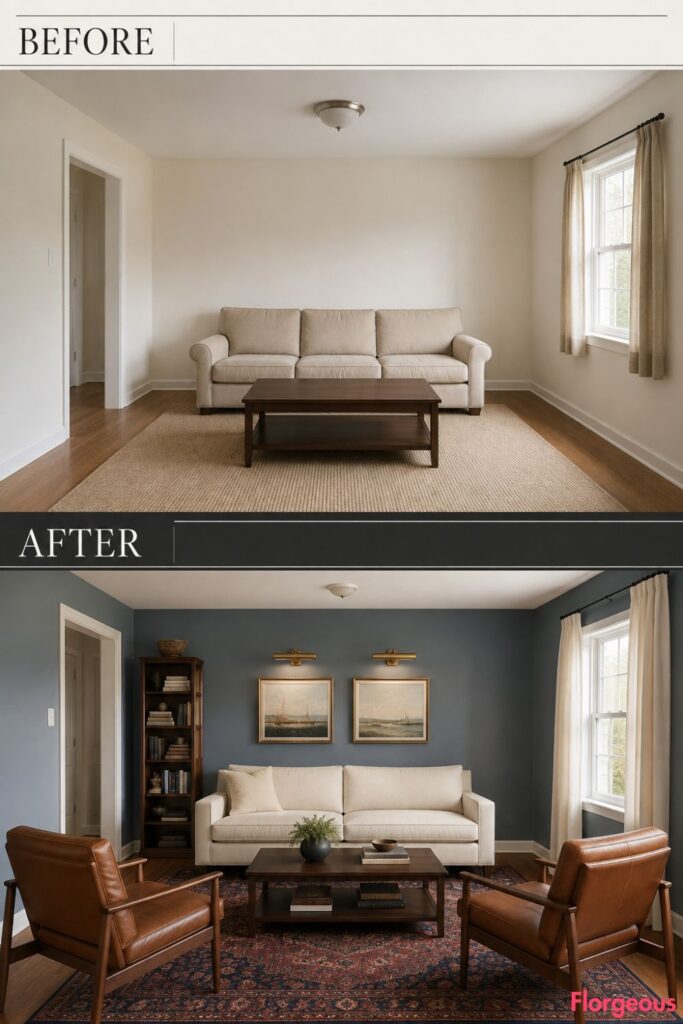
Books and rich materials make this version feel more scholarly than coastal.
Before: The exact canonical builder-grade room remains unchanged.
After: Blue-gray walls frame a parchment sofa, cognac leather chairs, dark-walnut table, and narrow walnut bookcase. A faded burgundy-blue rug and aged-brass picture lights turn the room into a comfortable maritime reading space.
12. The No-Renovation Nautical Room for Renters
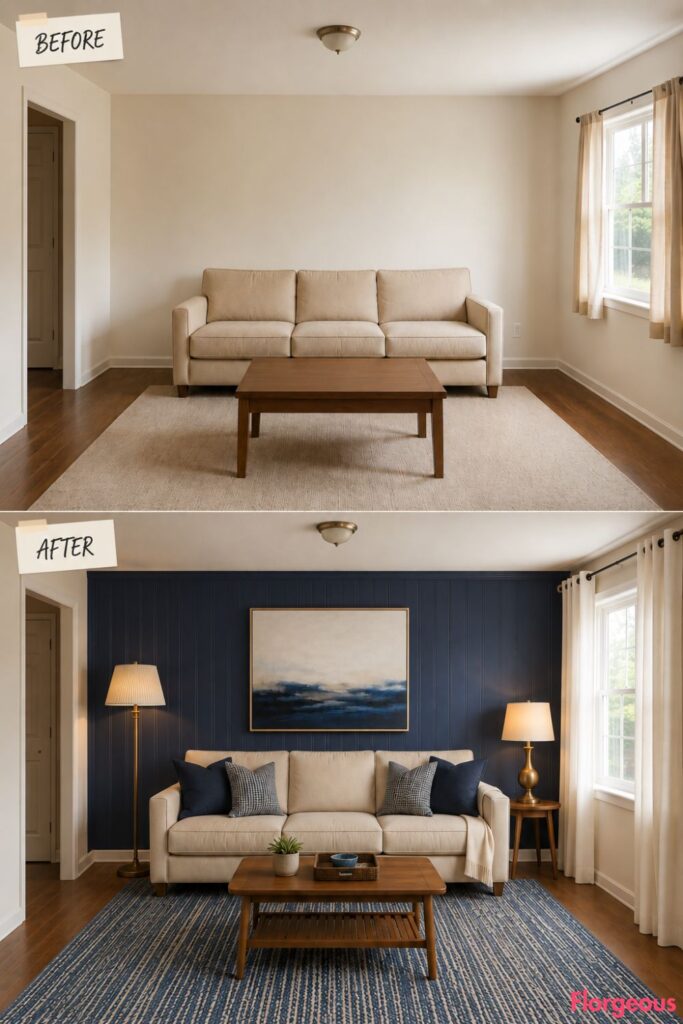
Nothing permanent changes here.
Before: The existing off-white builder-grade room, beige sofa, bare table, neutral rug, short curtains, and basic light remain intact.
After: The beige sofa stays, but removable navy panel-effect wallpaper, indigo cushions, a washable flatweave, ready-made ivory curtains, plug-in brass lamps, a teak side table, and removable artwork completely shift the mood.
Budget Version: Start with curtains, rug, cushions, and lighting. Those four changes create most of the visual payoff.
13. A Small Room Needs Less Furniture, Not Smaller Nautical Props
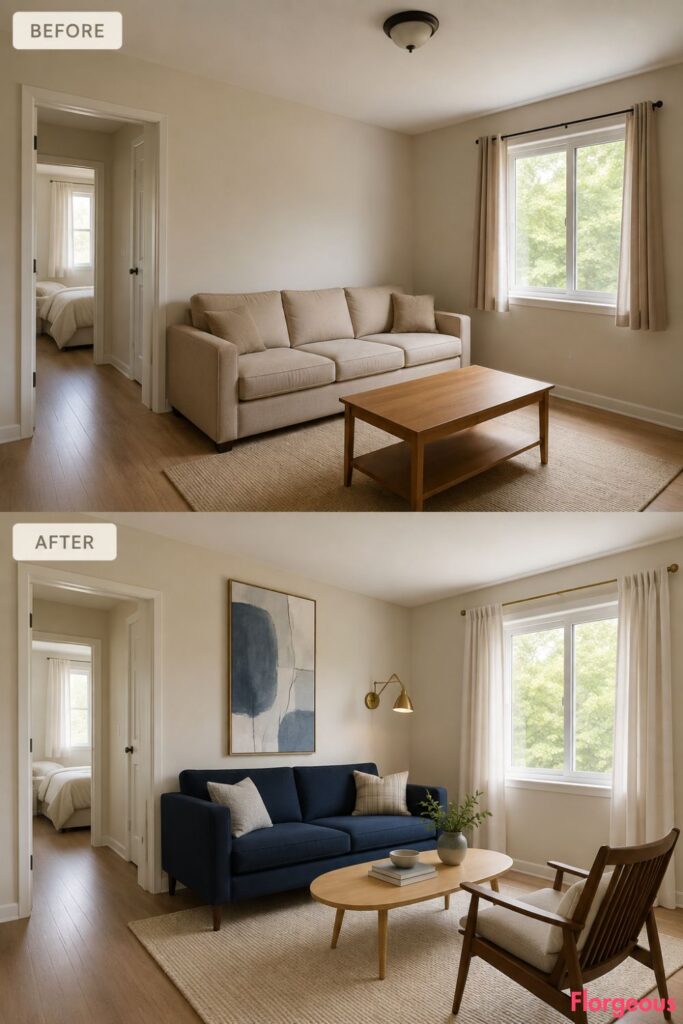
This layout focuses on negative space.
Before: The same plain builder-grade room remains fixed.
After: A compact navy settee is paired with one slim teak lounge chair placed outside the entry route. A narrow oval pale-oak table, pale sisal rug, ivory curtains, wall-mounted brass light, and tall blue-gray artwork keep the floor open.
Small Space Tip: One correctly scaled chair often works better than squeezing in a decorative pair.
14. Denim Blue Makes Maritime Style Ready for Real Family Life
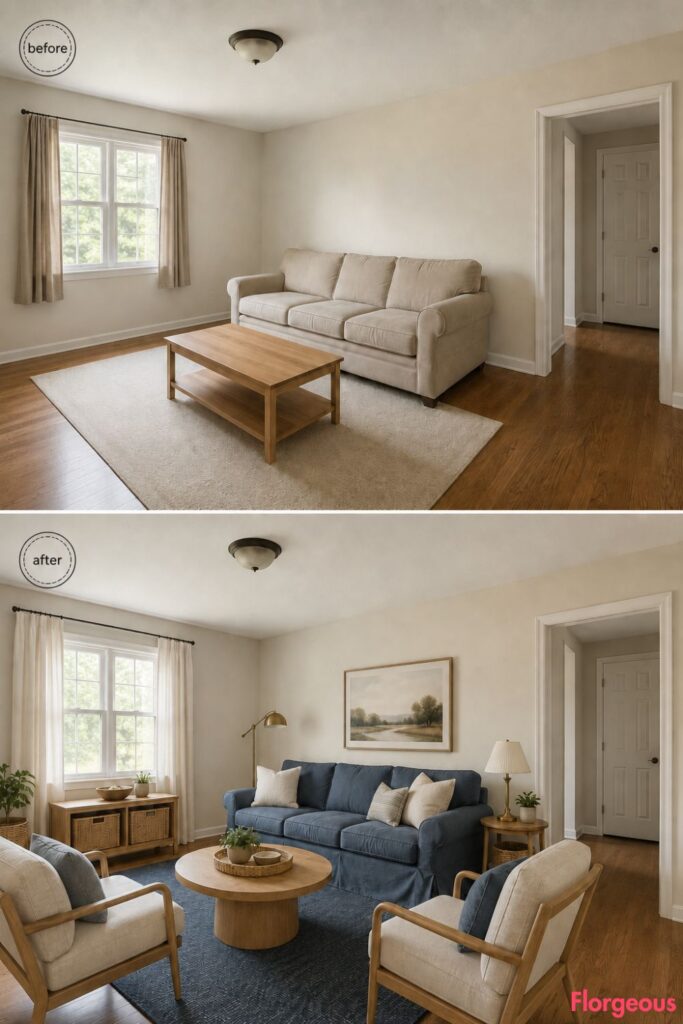
Durability becomes part of the visual concept.
Before: The canonical builder-grade room remains exactly as established.
After: A washable denim-blue slipcovered sofa sits with rounded white-oak chairs and a soft-edged oak coffee table. A washable navy flatweave, ivory cotton curtains, woven closed storage, and brushed-brass lamps handle daily use without looking utilitarian.
15. Keep the Beige Sofa and Spend the Budget Somewhere Smarter
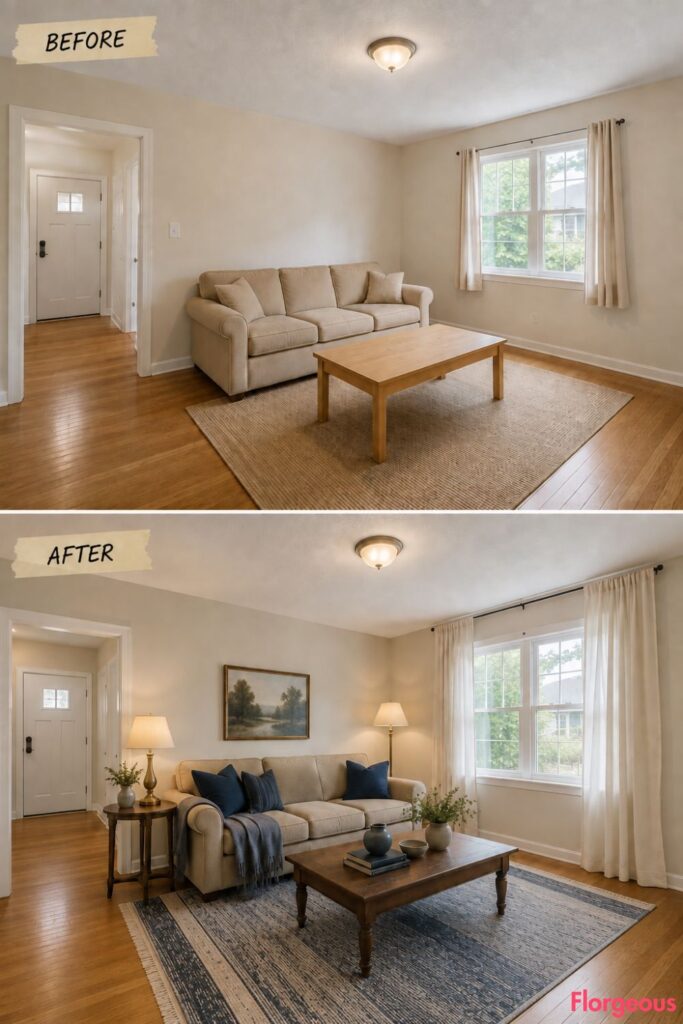
This version makes the most of what is already in the room.
Before: Warm off-white walls, the original beige sofa, bare table, neutral rug, short curtains, basic light, and empty walls remain unchanged.
After: Navy cushion covers, a faded indigo throw, ready-made ivory curtains hung higher, a secondhand dark-wood coffee table, striped flatweave, thrifted blue-gray ceramics, and inexpensive warm-metal lamps recast the original sofa.
16. See What Happens When Nautical Goes Investment-Level
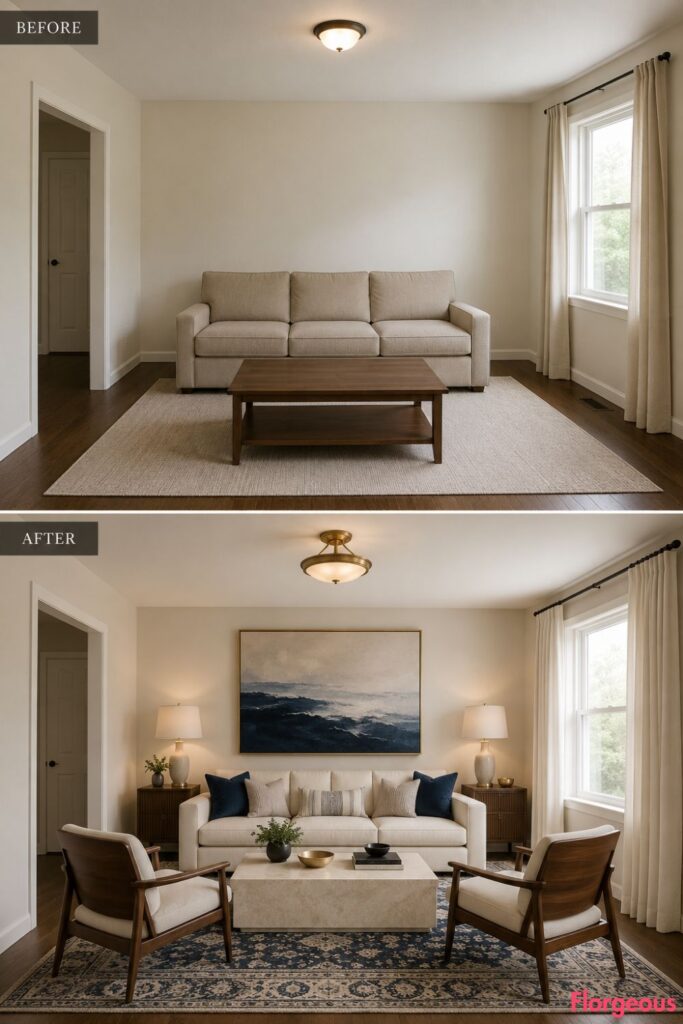
The maritime influence becomes quieter as craftsmanship increases.
Before: The exact basic builder-grade room remains the control image.
After: Custom ivory wool-linen upholstery, sculptural walnut chairs, a honed marble coffee table, hand-knotted navy-and-parchment rug, tailored drapery, walnut detailing, antique-brass lighting, and a single oversized artwork create yacht-like precision.
17. Flax and Faded Indigo Feel Like Years of Sun and Salt Air
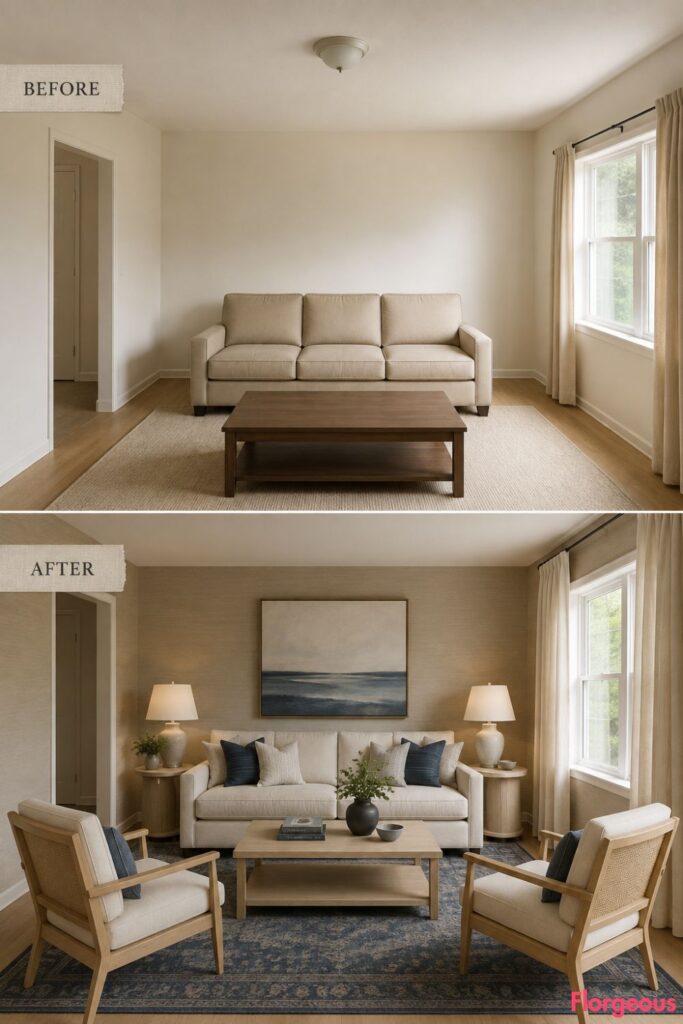
This scheme looks comfortably worn in rather than polished.
Before: The original builder-grade space remains unchanged.
After: Flax-colored walls, oatmeal linen upholstery, pale ash chairs, bleached oak, washed-indigo wool, natural canvas curtains, and cream ceramics create a softer textile-led sailing mood.
18. An Urban Apartment Can Still Read Nautical
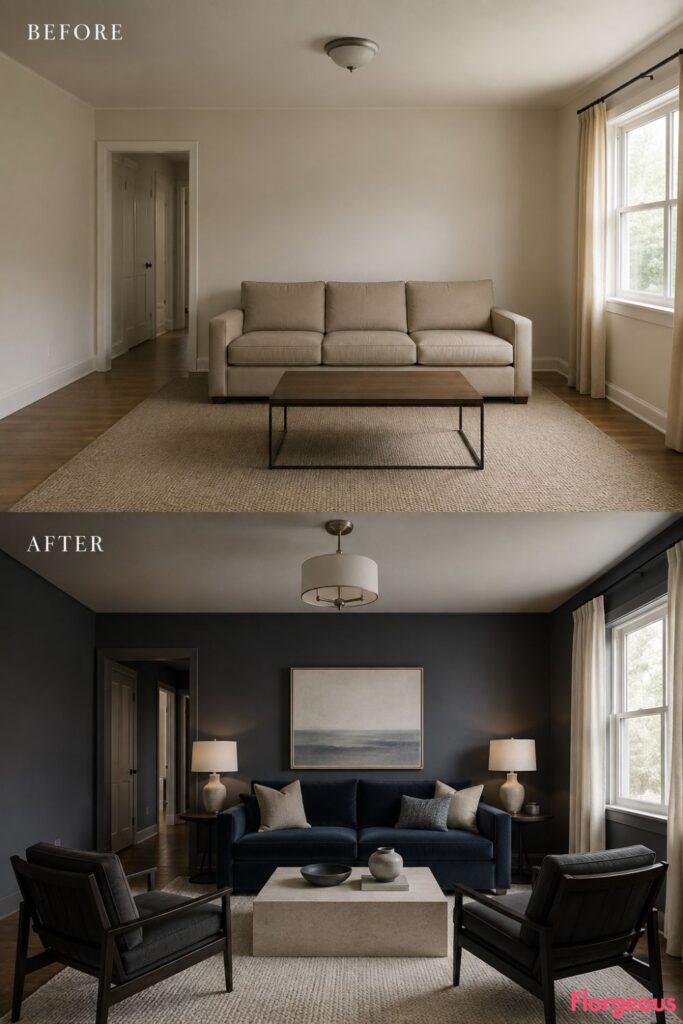
The coastal location disappears, but the maritime palette remains.
Before: The fixed neutral builder-grade room continues unchanged.
After: Charcoal walls meet an Atlantic-blue sofa, blackened-oak chairs, pale limestone, cream-gray wool, brushed nickel, and off-white curtains. The contrast feels graphic and architectural rather than seaside.
Color Story: Charcoal is useful when you want ocean blue to feel modern rather than decorative.
19. Weathered Wood, but Make It Tailored
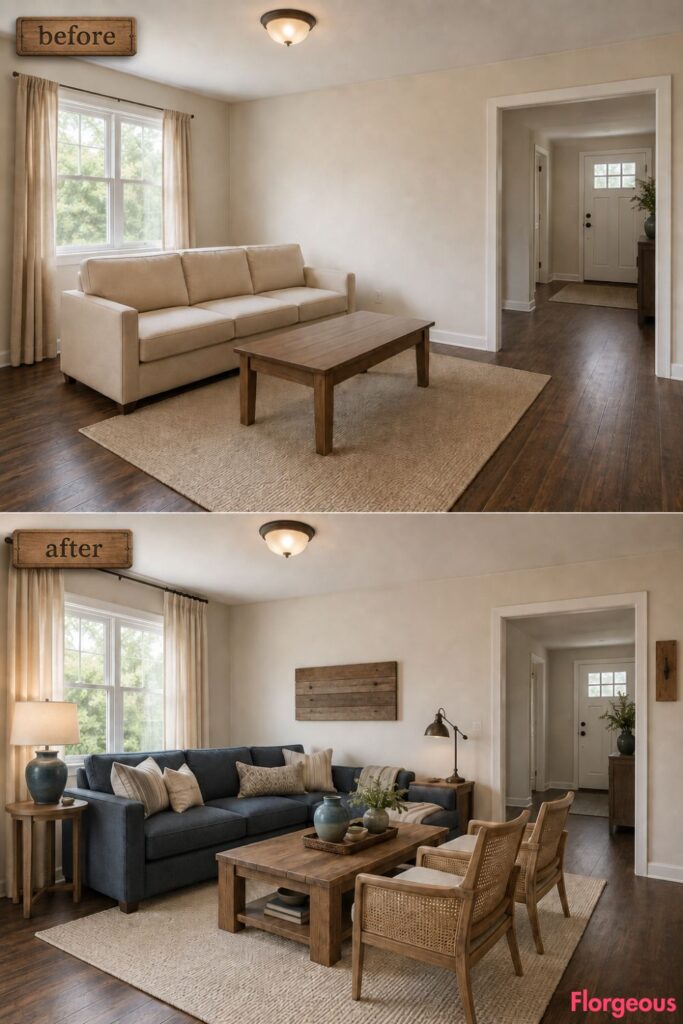
Rougher timber becomes sophisticated once every textile around it is controlled.
Before: The same beige and warm off-white builder-grade room stays fixed.
After: A storm-blue linen sofa sits with weathered-oak chairs and a substantial reclaimed-look oak table. Crisp parchment curtains, a tightly woven ivory rug, dark bronze, and glazed ceramics stop the room from sliding into rustic farmhouse territory.
20. Take the Palette to an Old European Port City
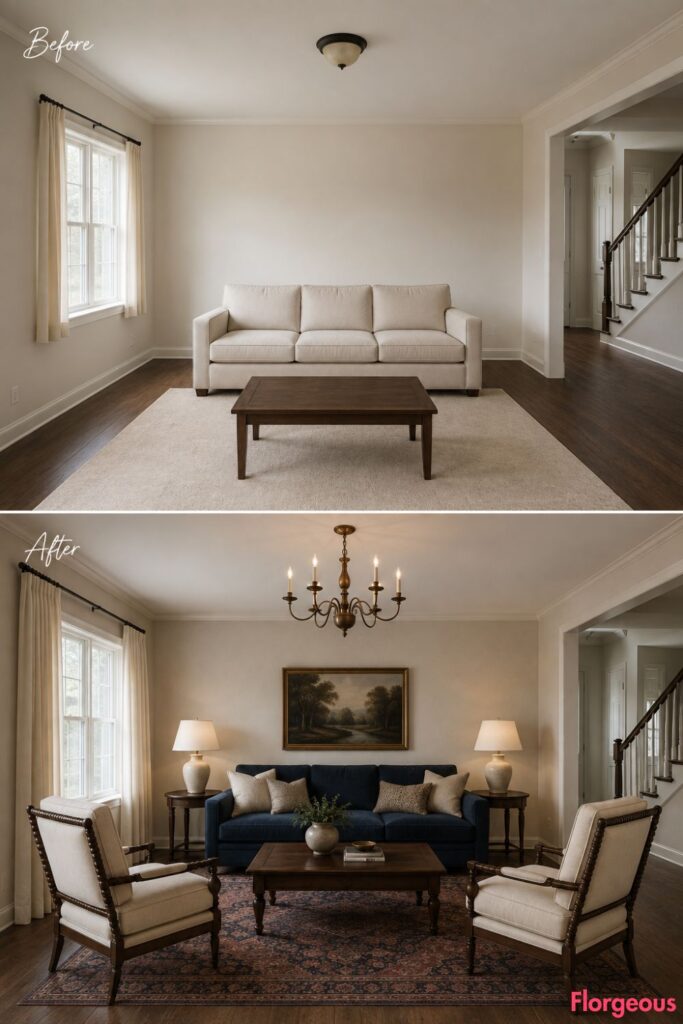
This room is warmer, darker, and more historic than the classic American nautical schemes.
Before: The canonical builder-grade living room remains completely untouched.
After: Parchment walls frame a deep blue sofa, carved walnut chairs, a faded burgundy-and-navy rug, dark walnut table, cream drapery, antique-bronze chandelier, and ceramic lamps.
21. The Sun-Bleached Deckhouse Uses Almost No Blue
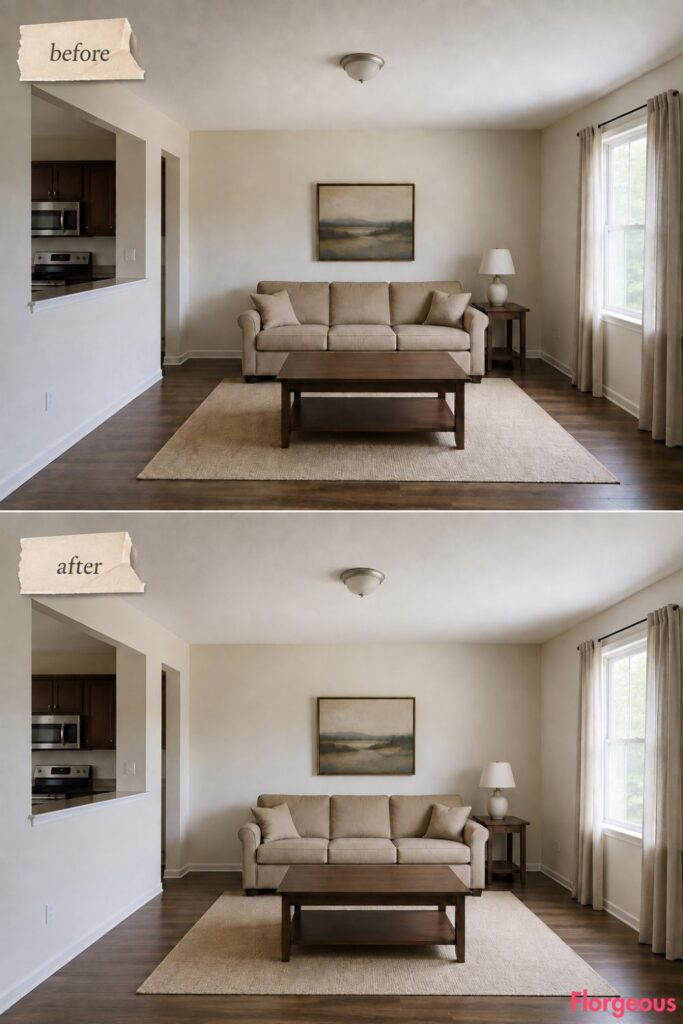
This makeover relies on sail-inspired materials instead of an ocean-colored wall.
Before: The exact original builder-grade living room remains fixed.
After: Chalky white walls, sand-colored sailcloth upholstery, bleached-teak chairs, a pale slatted teak table, warm jute-wool rug, off-white canvas curtains, and restrained navy piping suggest a deckhouse faded by sunlight.
22. Deep Sea-Green Proves Nautical Rooms Do Not Need Navy
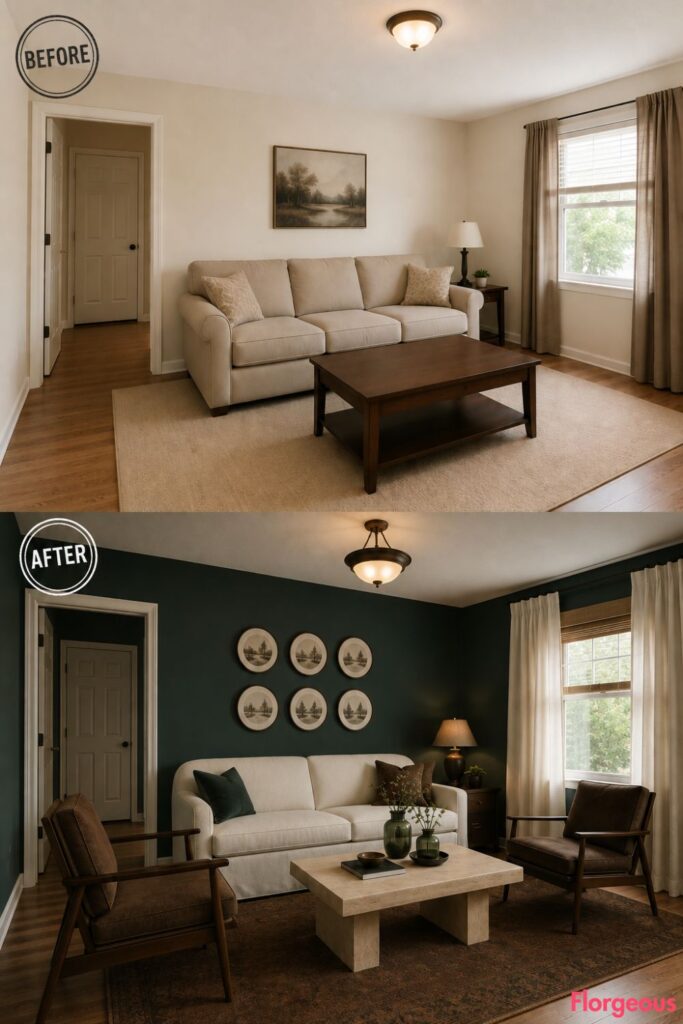
This is one of the least predictable palettes in the gallery.
Before: The same plain builder-grade room stays unchanged.
After: Deep blue-green walls sit behind a parchment sofa, dark-oak chairs, honed travertine, tobacco wool, muted ivory curtains, oxidized-bronze-toned lighting, and bottle-green glass.
Why It Works: Sea-green and weathered metal reference harbors and marine materials without turning into literal theme decor.
23. End on a Completely Different Note With Ocean-Liner Glamour
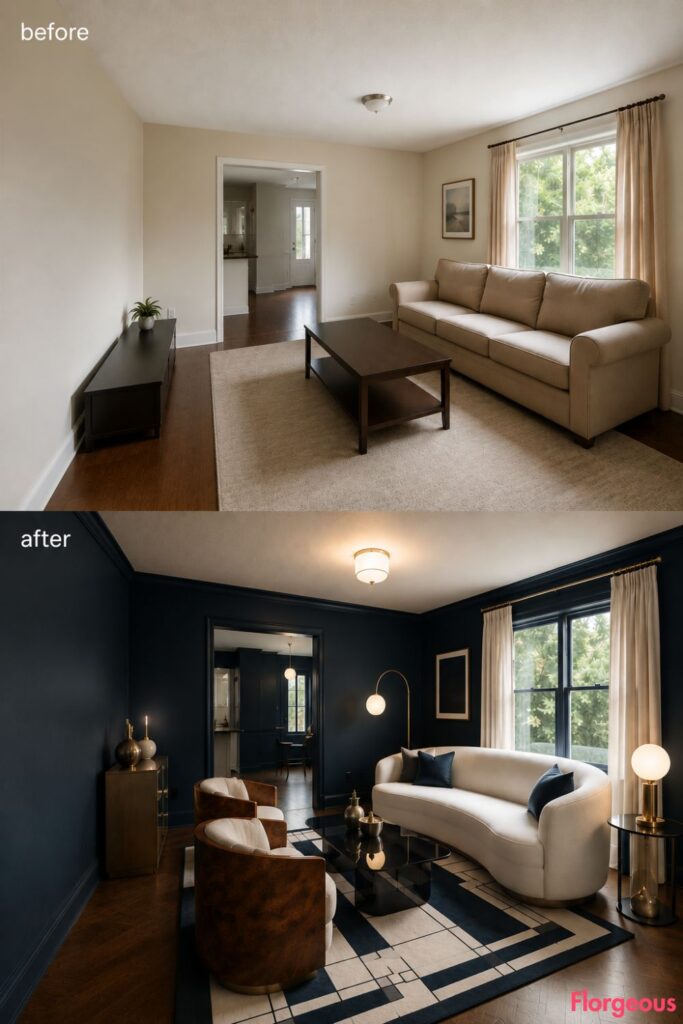
The final transformation looks to early transatlantic interiors rather than sailing cottages.
Before: The familiar builder-grade room remains warm off-white, beige, bare, and unchanged.
After: Lacquered midnight-bue walls surround a curved ivory sofa and streamlined walnut-burl chairs. A dark glass coffee table, geometric navy-and-cream rug, polished nickel, opaline globe lighting, and restrained brass create an ocean-liner mood with a subtle Art Deco edge.
Pick the Maritime Ingredients Before You Start Decorating
The most convincing nautical rooms usually communicate their identity before a single recognizable maritime object appears. The wood tone, wall color, upholstery, metal finish, rug, and quality of light do far more than an anchor or decorative ship wheel ever could.
For rooms with limited natural light, sea-glass blue, powder blue, flax, ivory, and pale timber are forgiving starting points. Bright rooms can comfortably support ink, midnight navy, charcoal, sea-green, walnut, tobacco, cognac, and burgundy.
Lifestyle should narrow the options further. Families may prefer washable denim and flatweaves. Renters can rely on textiles, removable surfaces, and plug-in lighting. Compact living rooms benefit from fewer furniture pieces and stronger material choices. Higher budgets can be directed toward excellent upholstery, stone, timber, and lighting rather than more accessories.
Before buying anything for your Nautical Living Room, select one dominant maritime color, one timber tone, and one restrained reference such as ticking stripe, sailcloth, aged brass, or abstract ocean art. Once those three choices are working together, let the room breathe.