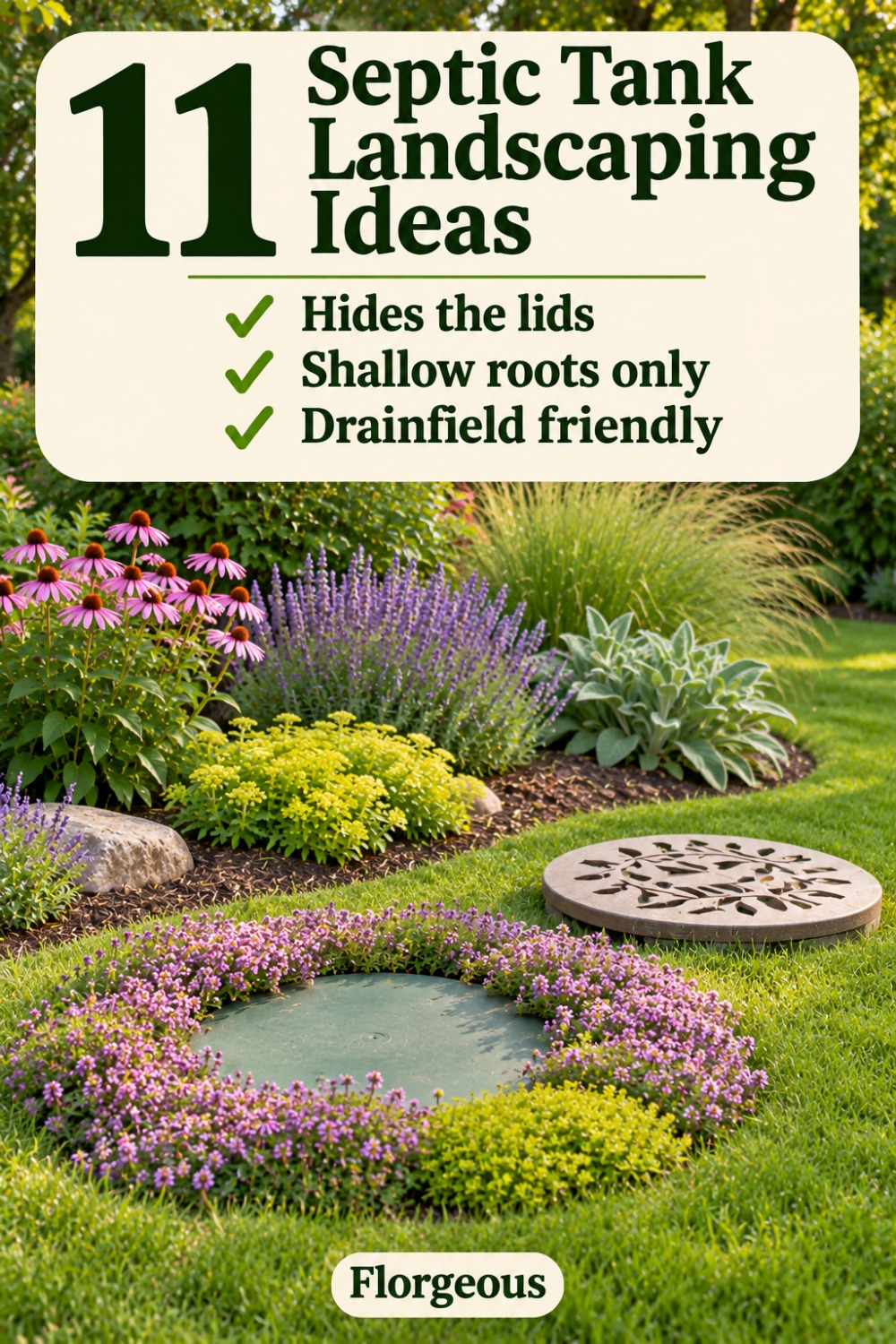
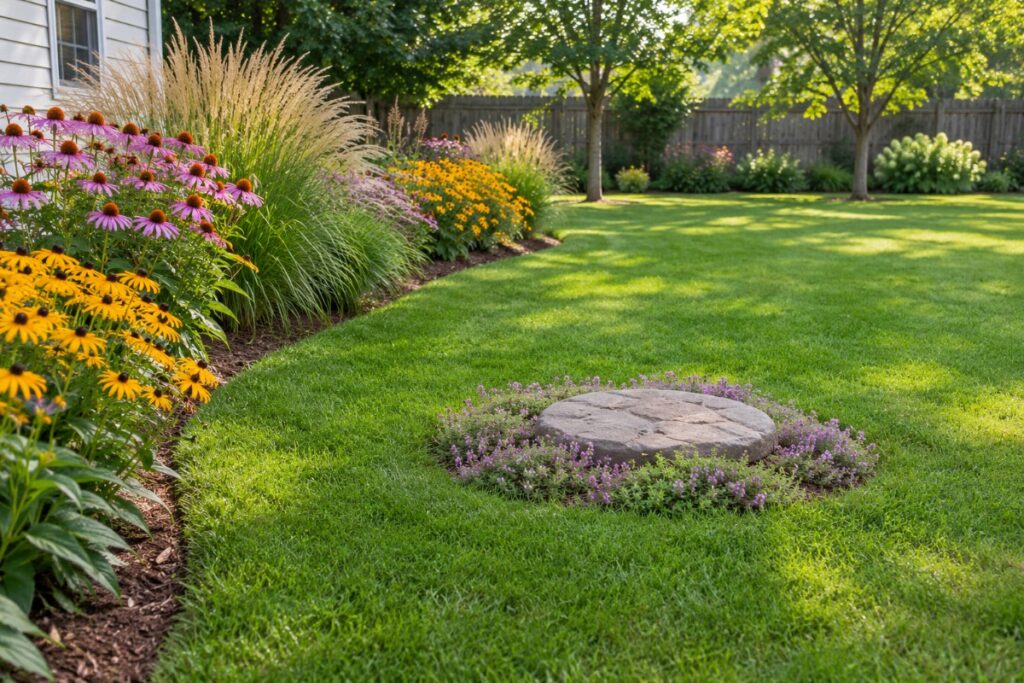
Septic lids poking up through the lawn are never anyone’s favorite feature.
Neither is the bare, oddly shaped patch over the drainfield that you’re not quite sure what to do with.
The secret to septic tank landscaping isn’t hiding everything under heavy plants and features. It’s choosing shallow-rooted plants, keeping access open and leaving the drainfield free to do its job.
These 11 septic tank landscaping ideas will help you soften the tank, lids and drainfield so they blend into the yard, without risking costly repairs.
What to Plant (and Skip) on a Septic System
| Area | Good choices | Avoid |
|---|---|---|
| Over the tank | Turf, low ground covers, shallow-rooted perennials, light movable covers | Shrubs, heavy planters, anything that blocks the lids |
| Over the drainfield | Turf, native grasses, wildflowers, shallow-rooted perennials | Trees, shrubs, vegetables, raised beds, irrigation, paving |
| Septic mound | Grasses and wildflowers with fibrous roots | Woody plants on the mound |
| Around the edges | Shrubs and small trees at a safe distance | Water-loving trees such as willow and birch near the lines |
Always check your system’s layout and your local health department or septic professional’s guidance before planting.
1. Map the Tank, Lids and Drainfield First
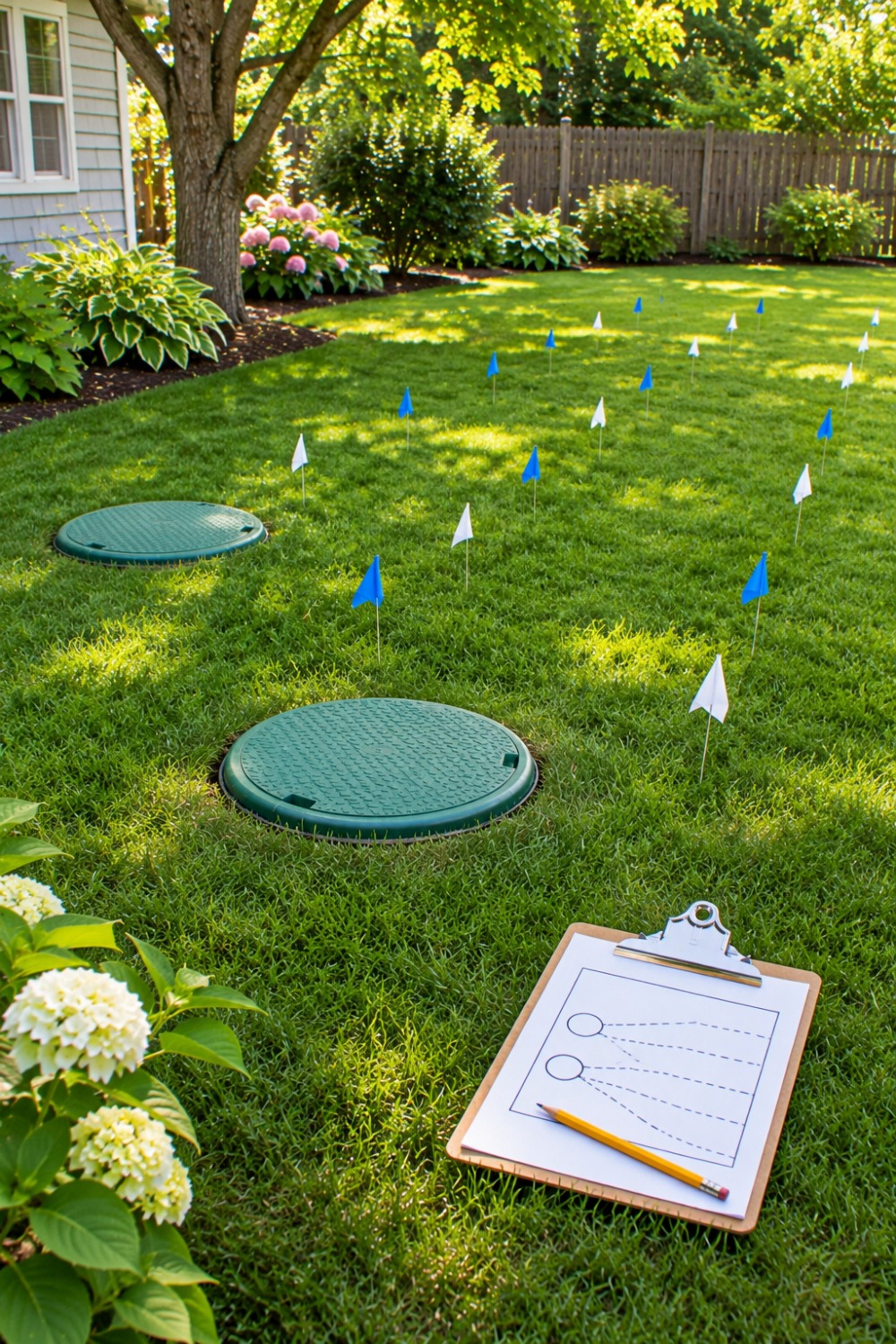
Before you plant anything, you need to know exactly where your system is.
Your county or local health department often has the permit drawing. A septic professional can also locate the tank and lines during a routine pump-out.
Mark the tank, the lids, the drainfield and any reserve area with flags, and sketch them on a plan of your yard.
How to do it:
- Request your system’s permit drawing or ask your septic service.
- Mark the tank, lids and drain lines with small flags.
- Keep a sketch with measurements for future projects.
2. Keep Turf or Low Grass Over the Drainfield
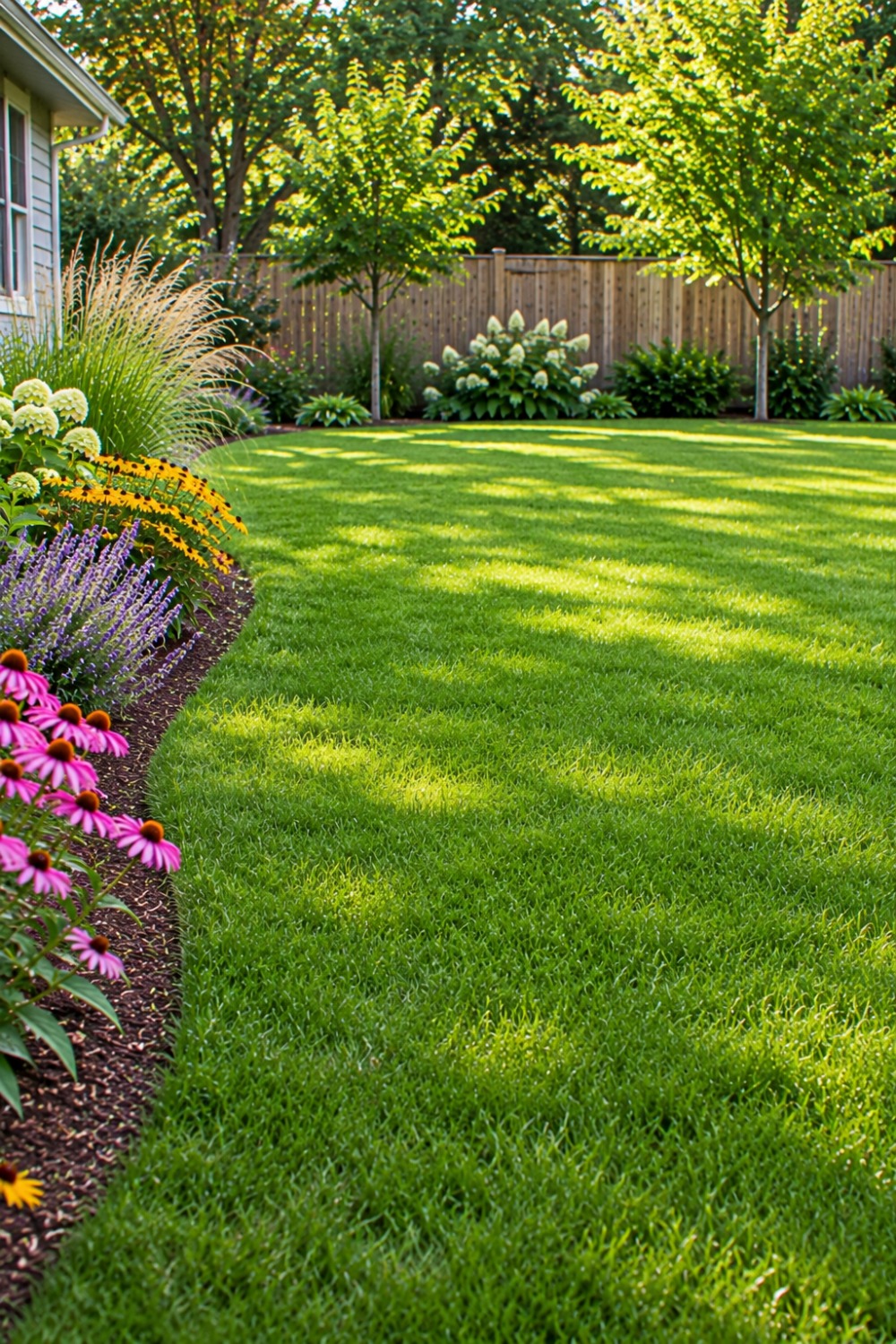
Grass is one of the best covers for a drainfield.
Its shallow, fibrous roots hold the soil, help evaporate moisture and won’t damage the lines.
Choose a grass suited to your climate, mow it regularly and skip extra fertilizer and irrigation over the drainfield.
How to do it:
- Seed or sod bare areas with a grass suited to your region.
- Mow at a normal height, and avoid driving heavy mowers over it when the soil is wet.
- Don’t add irrigation over the drainfield.
3. Plant Shallow-Rooted Perennials Near the Lines
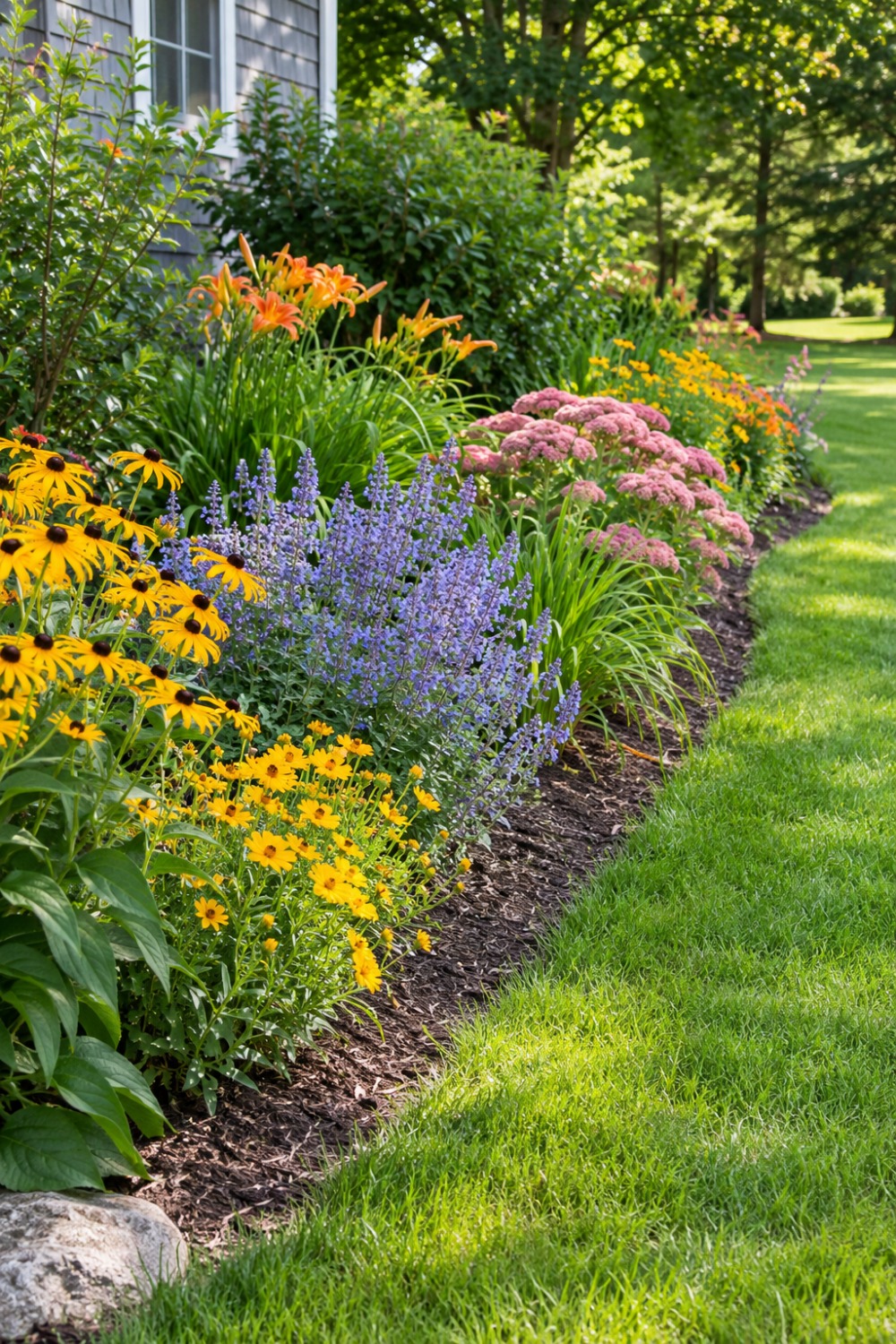
If you want more color than lawn, shallow-rooted perennials are the safest choice near a drainfield.
Black-eyed Susan, coreopsis, catmint, daylilies, sedum and hardy geraniums add flowers without deep, aggressive roots.
Plant them in drifts around the edges of the drainfield to frame the lawn.
How to do it:
- Choose perennials that don’t need frequent dividing or digging.
- Plant small sizes, which need only shallow planting holes.
- Wear gloves when working the soil near the system.
4. Hide the Lids With Lightweight Decorative Covers
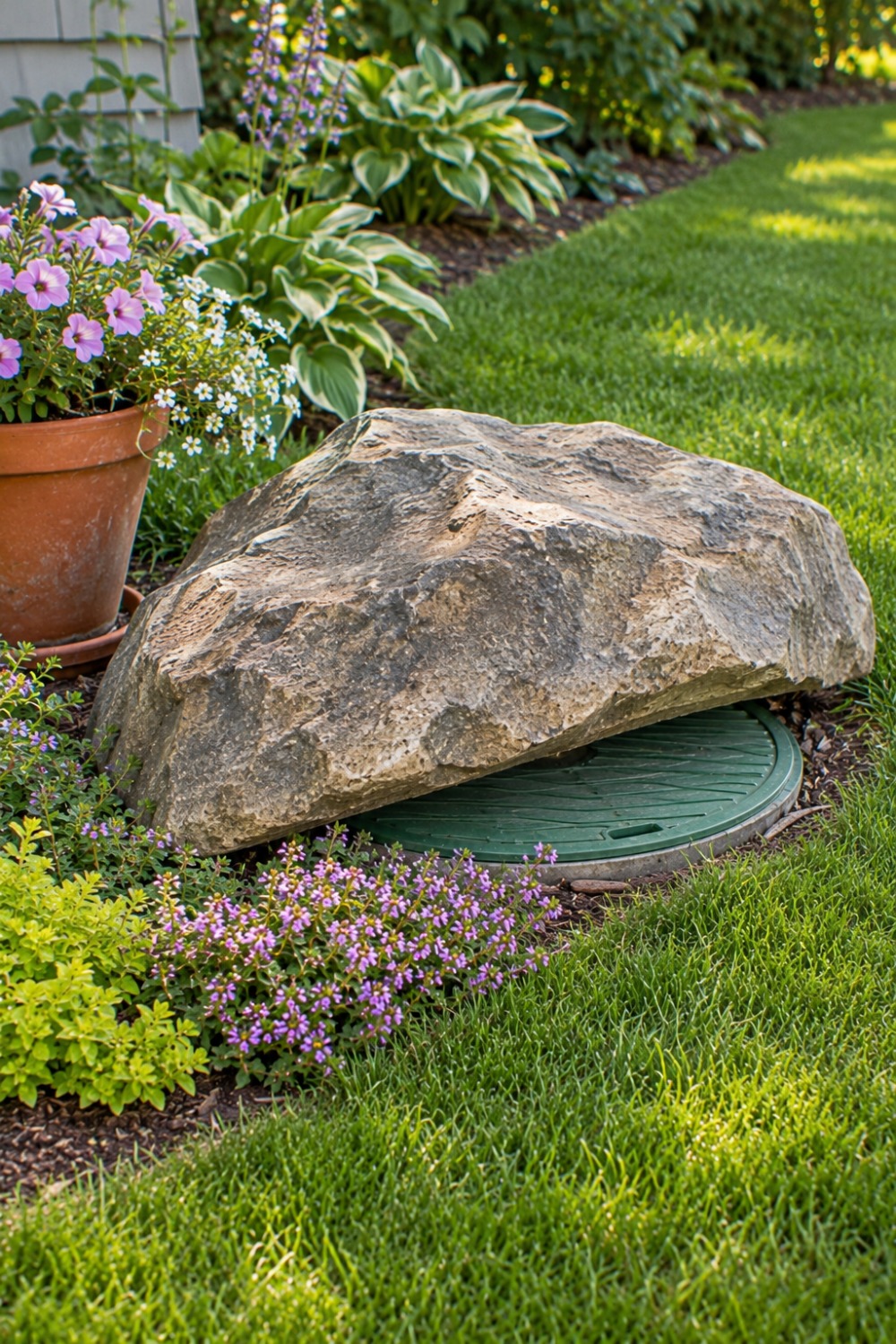
Septic lids need to stay accessible for pumping and inspections, so don’t bury them or plant over them.
Instead, set a lightweight cover on top, such as a hollow faux rock, a small plant stand or a light planter you can lift easily.
Your septic service will thank you, and the lids disappear into the garden.
How to do it:
- Measure each lid and riser.
- Choose a cover that one person can lift and move.
- Check under it each season to make sure the lid stays clear.
5. Ring the Lids With Low Ground Cover
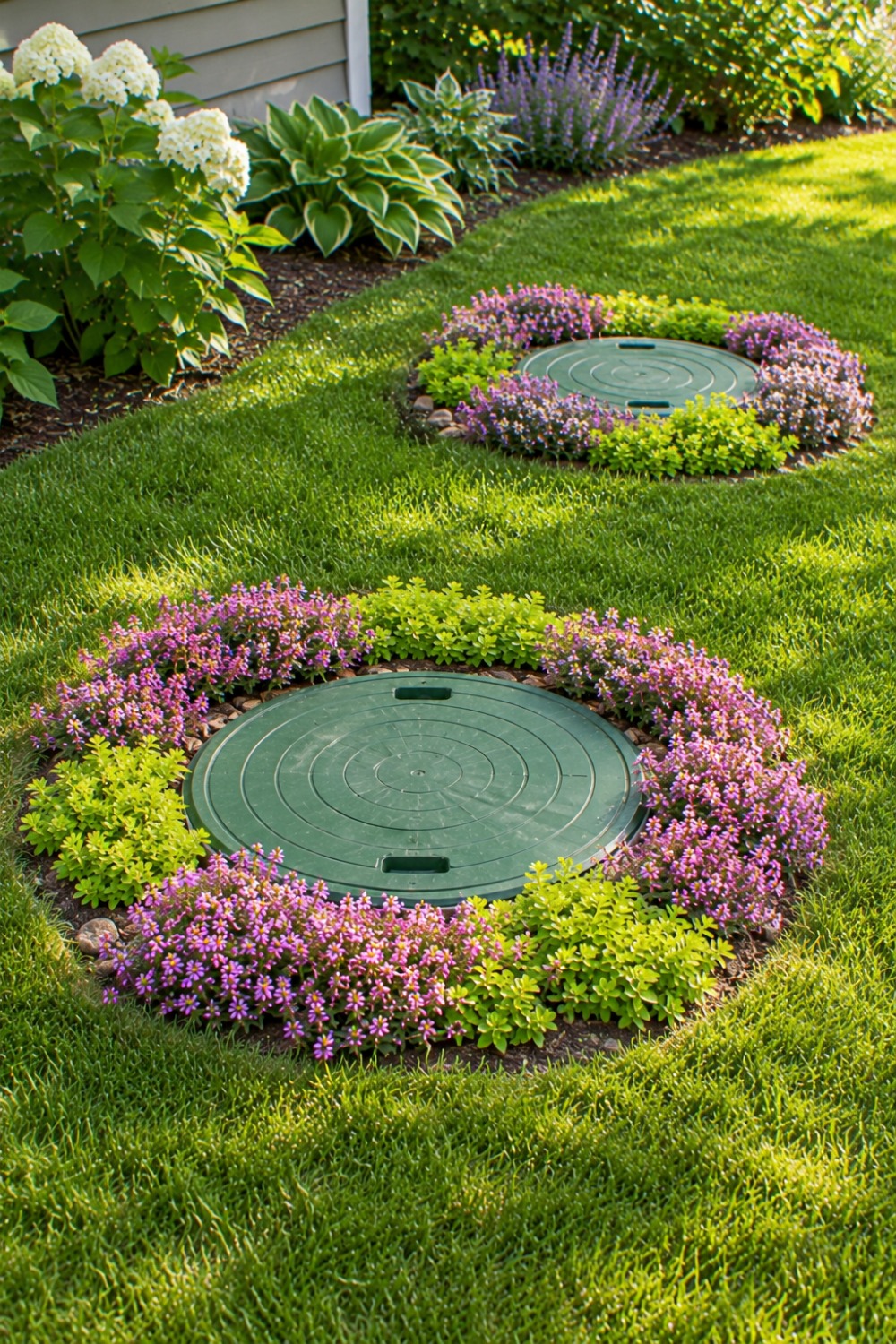
A ring of low ground cover around the lids makes them look intentional instead of awkward.
Creeping thyme, low sedums and creeping phlox stay short and recover quickly if they’re stepped on during a service visit.
Keep the plants back from the lid itself so it can be opened without digging.
How to do it:
- Remove grass in a ring about 1 to 2 feet around the lids.
- Plant small plugs of low ground cover.
- Keep a few inches clear around the edge of each lid.
6. Sow a Native Wildflower Meadow on the Drainfield
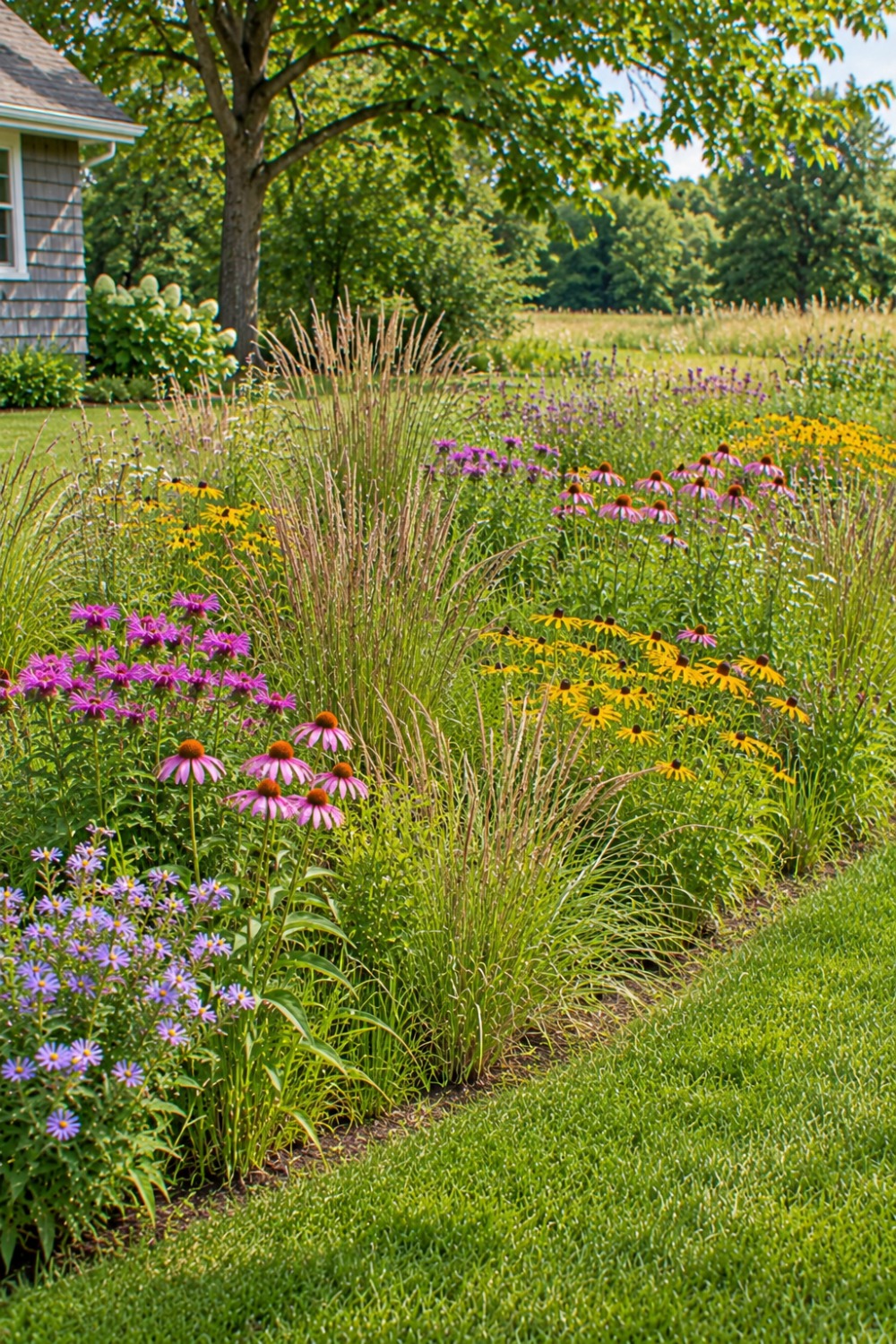
If you’d rather not mow, a low meadow of native grasses and wildflowers is a beautiful option.
Many native grasses and wildflowers have fibrous roots and need no watering or fertilizer once established, which suits a drainfield well.
Mow once a year in late winter to keep woody seedlings from getting started.
How to do it:
- Choose a regional native seed mix with grasses and wildflowers.
- Sow into lightly raked soil without deep tilling.
- Mow once a year and pull out any tree seedlings.
7. Dress a Septic Mound With Grasses and Wildflowers
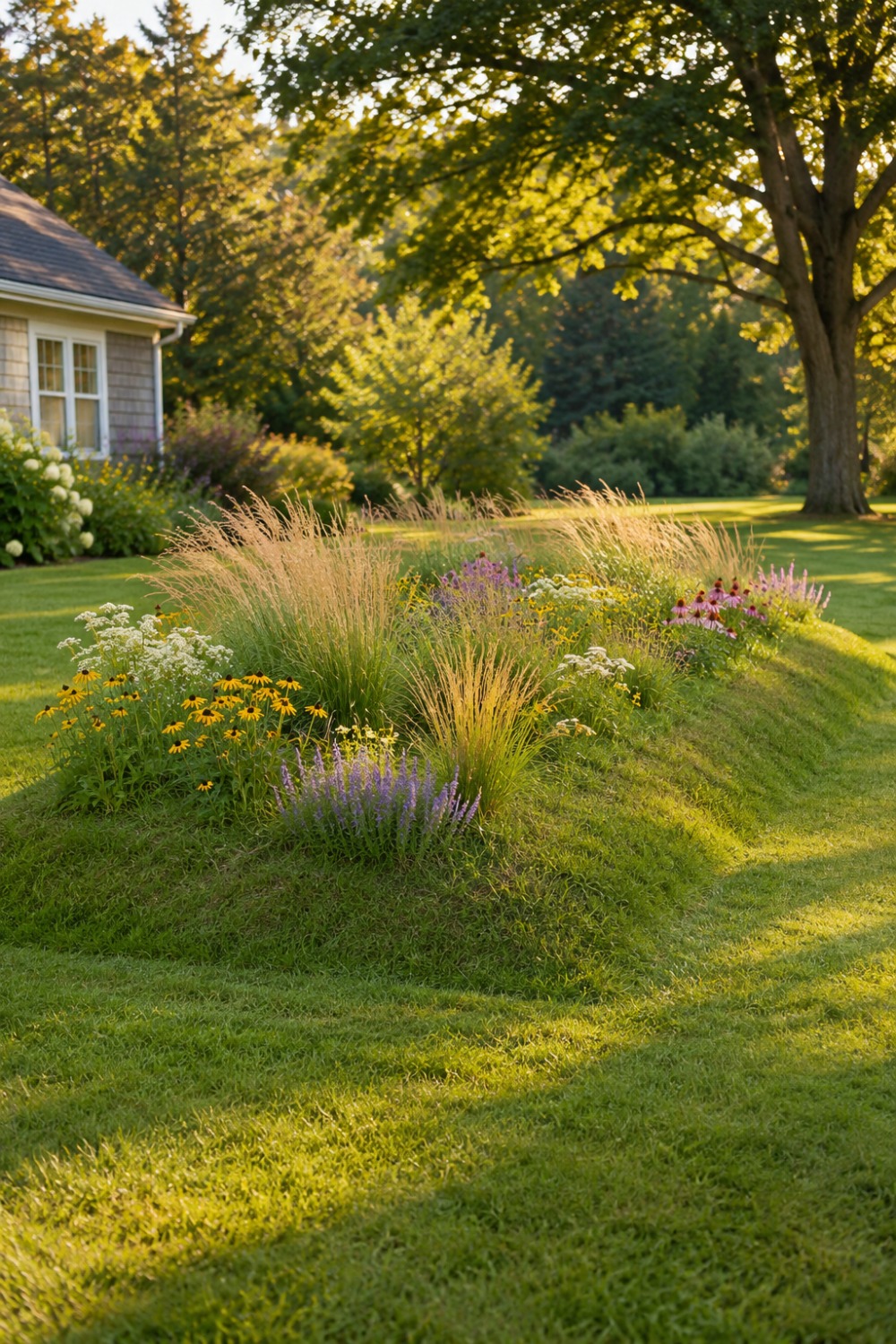
Mound systems stand out in a flat yard, but planting can turn them into a gentle, natural-looking feature.
Use only herbaceous plants on the mound itself. Grasses are especially good because their fibrous roots hold the soil.
University of Minnesota Extension advises keeping trees at least 20 feet from the edge of the mound.
How to do it:
- Plant grasses and wildflowers in loose drifts across the mound.
- Skip woody plants on the mound.
- Frame it from a distance with shrubs and trees.
8. Keep Trees and Large Shrubs Well Away
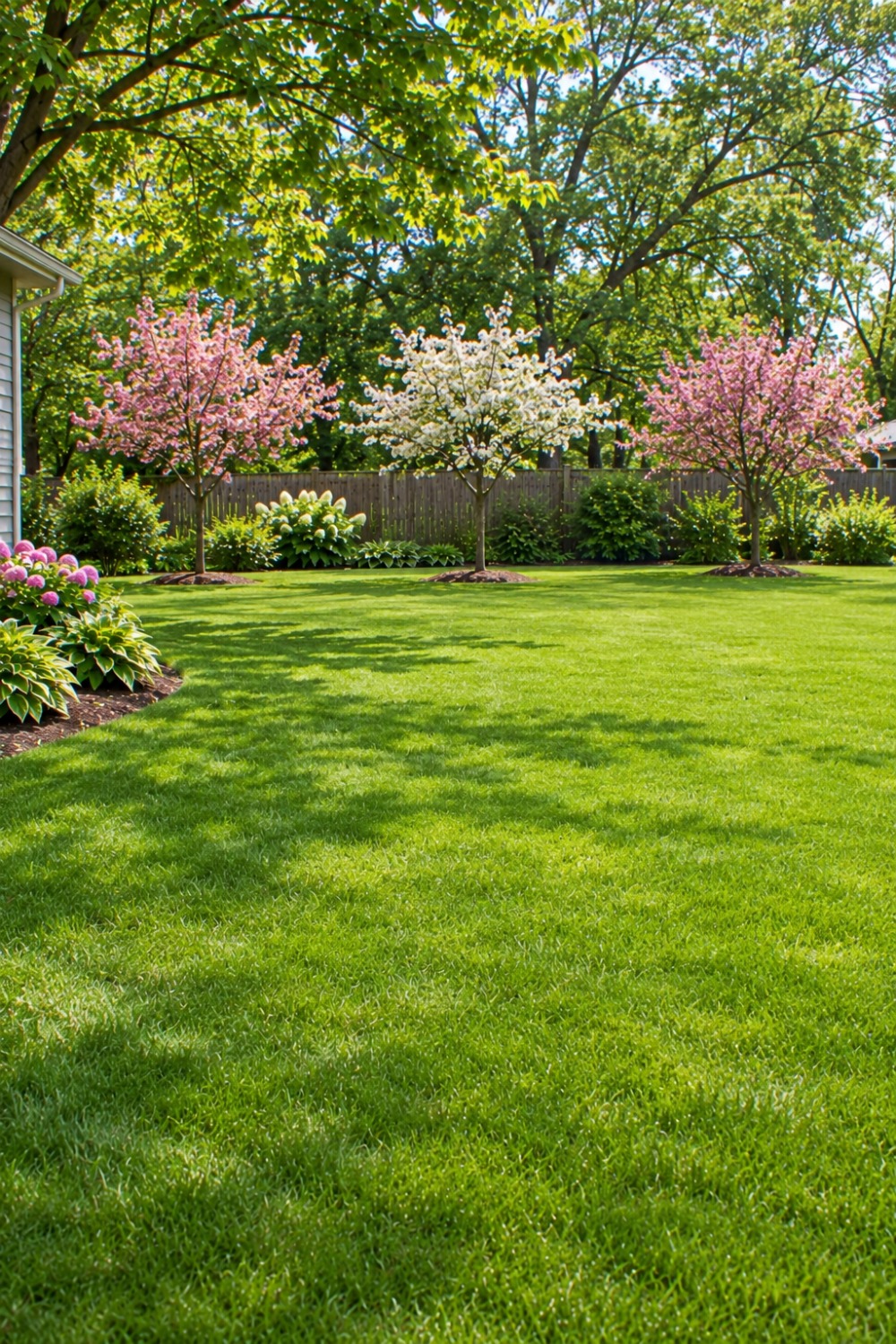
Tree and shrub roots are the biggest threat to drain lines, which can sit as little as 6 inches below the surface.
University of Georgia Extension suggests using a tree’s mature height as the minimum distance from the drainfield, then adding more. For a crabapple, that means at least 25 feet.
Willows, birches and other water-loving trees are the worst offenders, so keep them far away.
How to do it:
- Check each tree’s mature height before choosing a spot.
- Plant at least that far from the nearest drain line.
- Avoid willows, birches and other trees that seek out water.
9. Frame the Drainfield With a Border at a Safe Distance
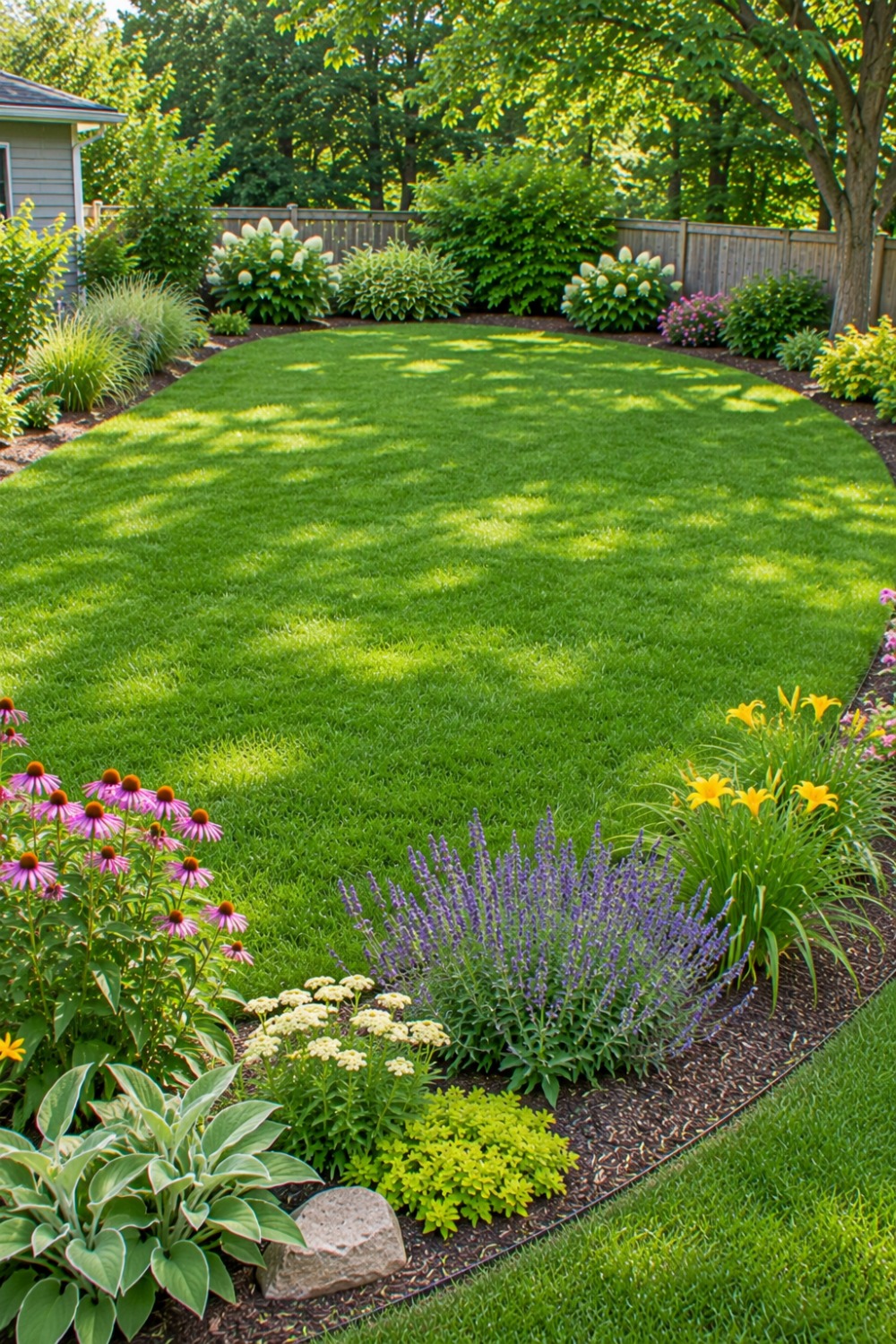
The drainfield itself works best as open lawn or meadow, so frame it rather than filling it.
A curved border of perennials and small shrubs around the outside makes the open area look like a planned lawn.
Keep woody plants in the outer part of the border, farthest from the lines.
How to do it:
- Mark the drainfield edges using your system sketch.
- Lay out a border outside that area.
- Put perennials closest to the drainfield and shrubs at the back.
10. Mark the Drainfield So No One Drives Over It
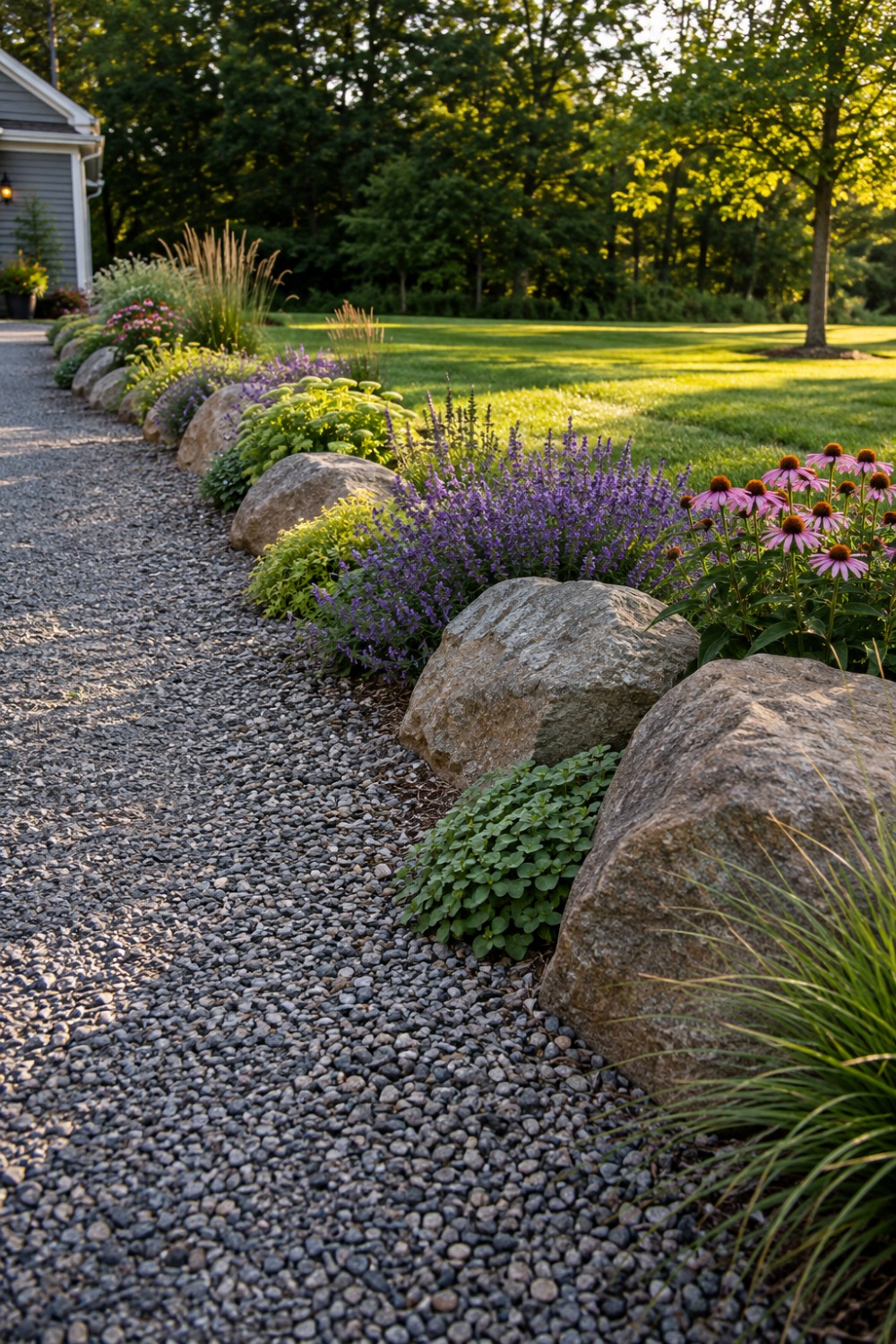
Cars, trucks and heavy equipment can crush pipes and compact the soil over a drainfield.
A few boulders, a low split rail section or a planted edge along the side closest to a driveway keeps vehicles off.
Place the markers outside the drainfield itself, not over the lines.
How to do it:
- Find where vehicles might cut across the drainfield.
- Set boulders or a short fence section just outside the area.
- Plant low perennials between them for a softer look.
11. Skip Vegetables, Raised Beds and Fabric Over the Lines
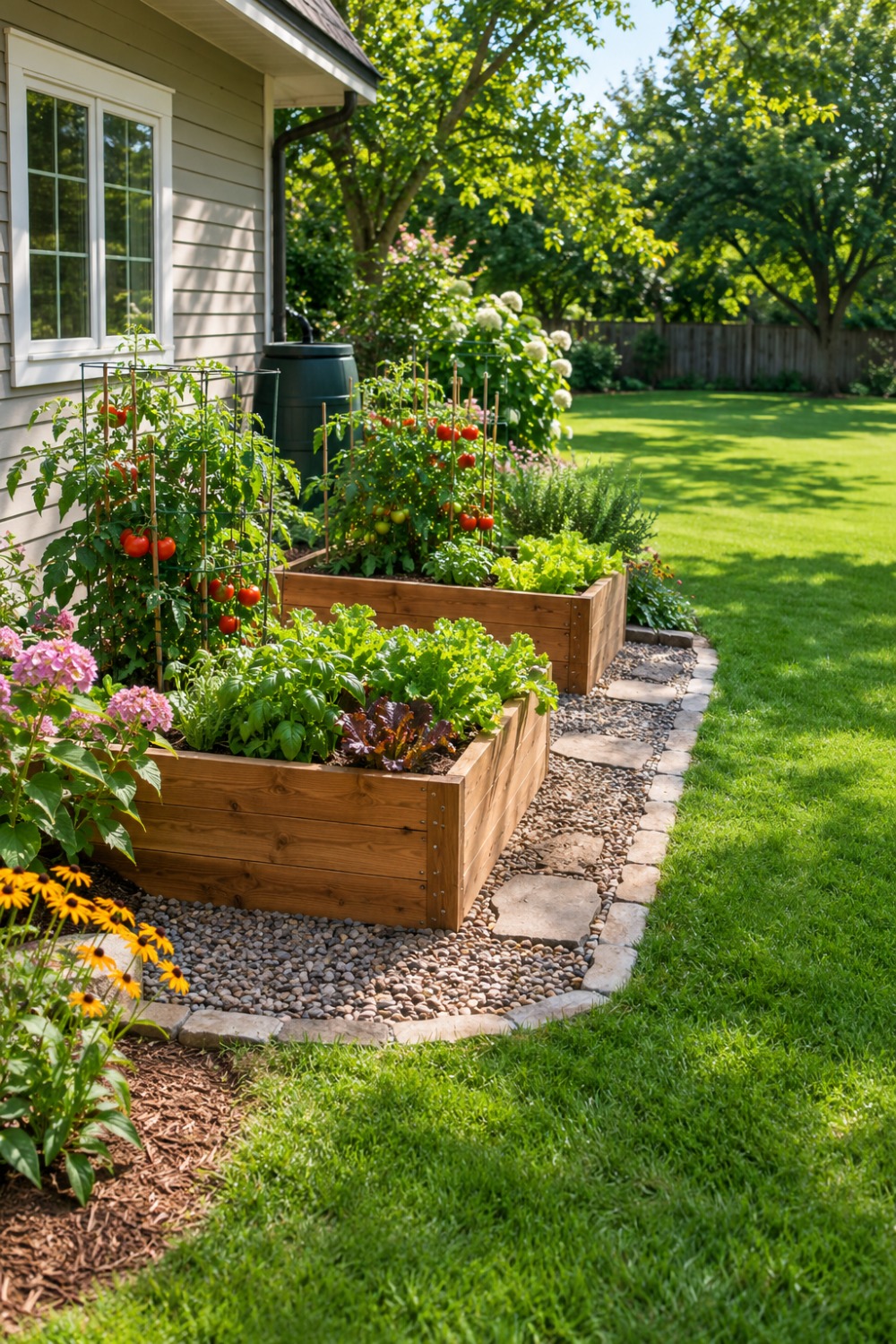
Some common garden projects don’t belong on a drainfield.
Extension services advise against vegetable gardens, raised beds, landscape fabric, plastic, paving and irrigation over the lines. They can block air exchange, add moisture, compact the soil or expose food to contamination.
Put your vegetable garden in a sunny spot well away from the system instead.
How to do it:
- Keep the drainfield to grass, meadow or shallow-rooted perennials.
- Place raised beds and vegetable gardens outside the area.
- Use only a thin layer of mulch, if any, near the lines.
Frequently Asked Questions
What can you plant over a septic tank?
Turf, low ground covers and shallow-rooted perennials are the safest choices. Keep the lids clear and accessible, and avoid shrubs and trees over the tank and drainfield.
How do you hide septic tank lids?
Use lightweight decorative covers such as faux rocks or small planters you can lift easily, and ring the lids with low ground cover. Never bury lids or plant over them.
How far should trees be from a septic drainfield?
A good rule of thumb is at least the tree’s mature height, and farther is better. Keep willows, birches and other water-loving trees well away from the system.
Can I put a vegetable garden over my septic drainfield?
No. Extension services advise against it because of possible contamination of food crops and damage to the lines from digging. Grow vegetables in a separate spot away from the system.
Final Thoughts: Plant Light Over the Lines
Good septic tank landscaping starts with knowing where everything is.
Map your tank, lids and drainfield, and keep that sketch for every future project.
Cover the drainfield with turf, native grasses, wildflowers or shallow-rooted perennials, and skip trees, raised beds, vegetables and irrigation.
Make the lids easy to reach but easy on the eye with lightweight covers and a ring of low ground cover.
Frame the area with a border at a safe distance, and keep vehicles off with boulders or a short fence section.
When in doubt, check with your local health department or septic professional before you plant.
If you’re planning other front yard changes too, our cheap simple front yard landscaping ideas include low-cost ways to finish the space.
Start with a lid cover and a ring of ground cover this weekend. It’s a small change that makes the whole area look cared for.