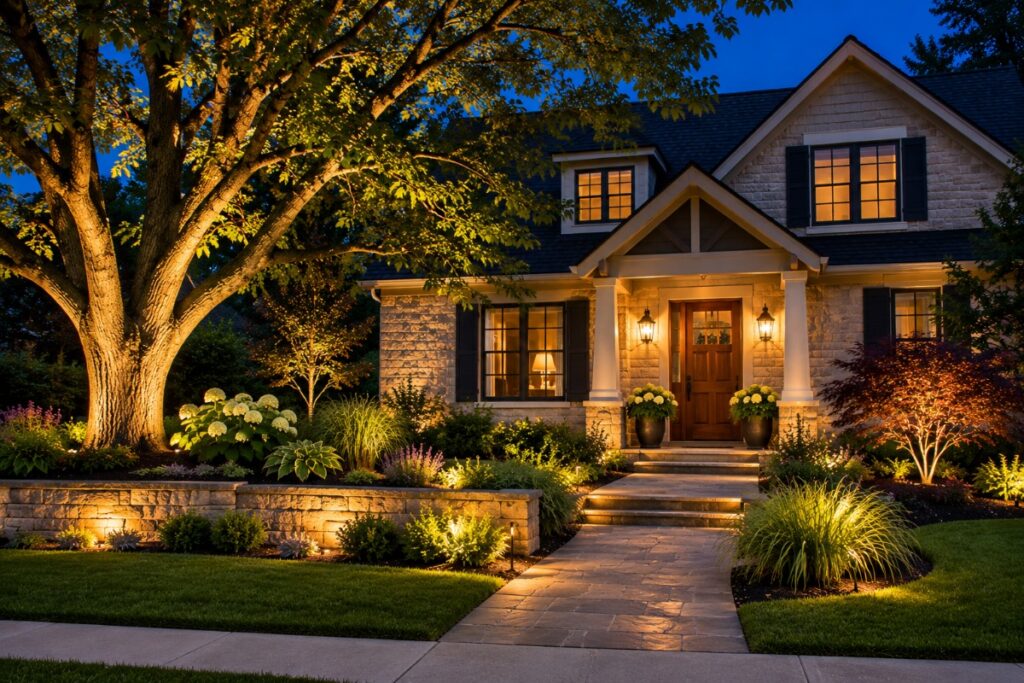
A garden can look completely different after sunset.
With the right lighting, trees become sculptures, stone walls gain texture and the front door feels warm and welcoming.
The secret to good landscape lighting isn’t adding as many lights as possible. It’s choosing a few features to light well, with soft, warm, shielded light that leaves some shadows in place.
These 13 landscaping lighting ideas focus on techniques and planning, so your yard looks magical at night without glare or a runway effect.
Lighting Techniques at a Glance
| Technique | What it does | Best for |
|---|---|---|
| Uplighting | Lights a feature from below | Trees with interesting canopies, house facades |
| Moonlighting | Light from high in a tree shining down | Soft, natural light over lawns and patios |
| Grazing | Light close to a textured surface | Stone walls, brick, tree bark |
| Washing | Wide, soft light across a surface | House walls, fences, hedges |
| Silhouetting | Light behind a plant onto a wall | Sculptural plants like agave or Japanese maple |
| Downlighting | Light from above onto an area | Dining tables, steps, seating |
1. Plan the Layout Before You Buy Fixtures
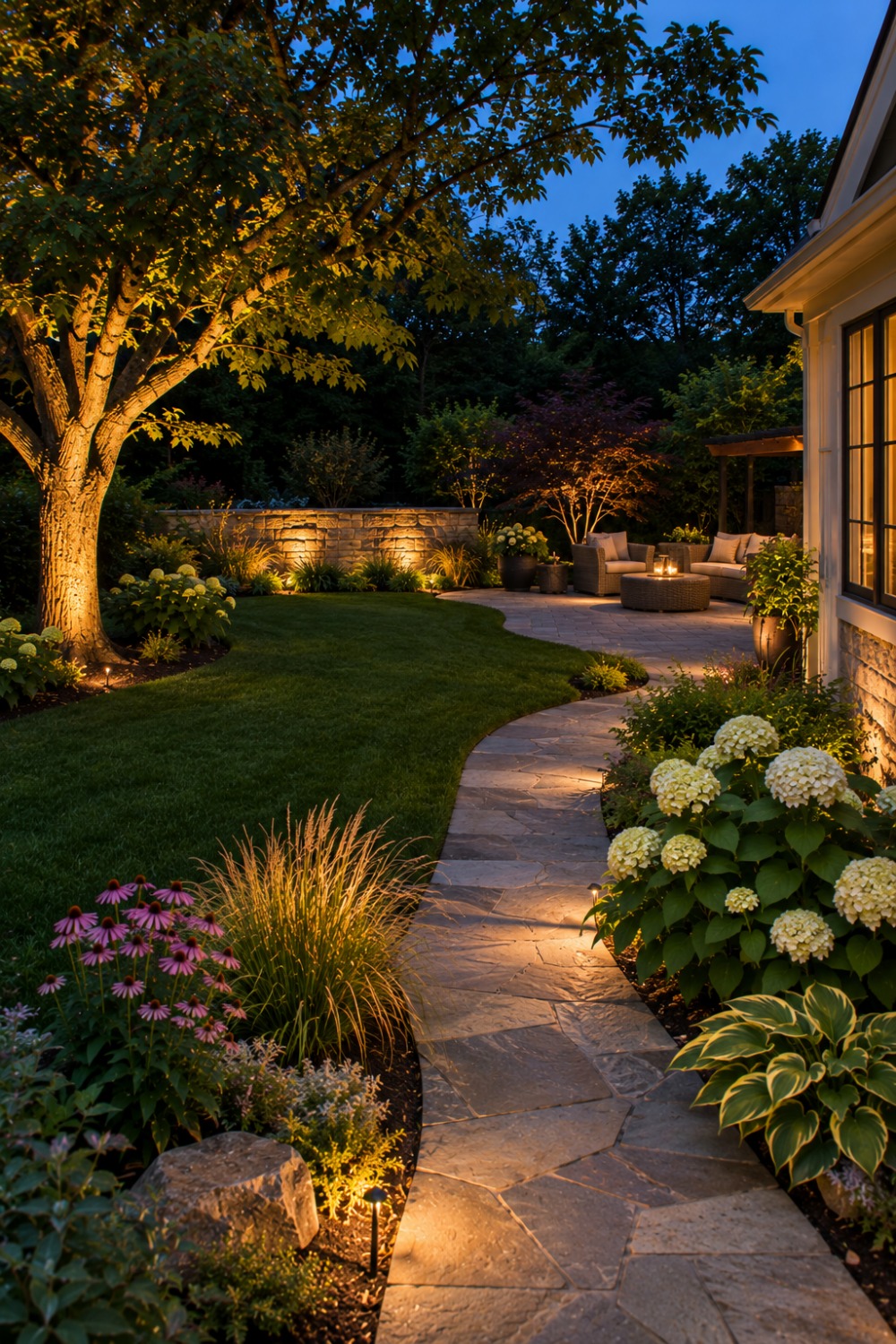
Good lighting starts on paper, not in the store.
Walk the yard at dusk and pick three to five things worth lighting: a tree, the front door, a wall, a seating area.
Then decide how each one should be lit, and where you need light for safety.
How to do it:
- Sketch your yard and mark features, paths and seating.
- Choose a technique for each feature.
- Count fixtures and plan wire runs before buying anything.
2. Choose Warm White Light
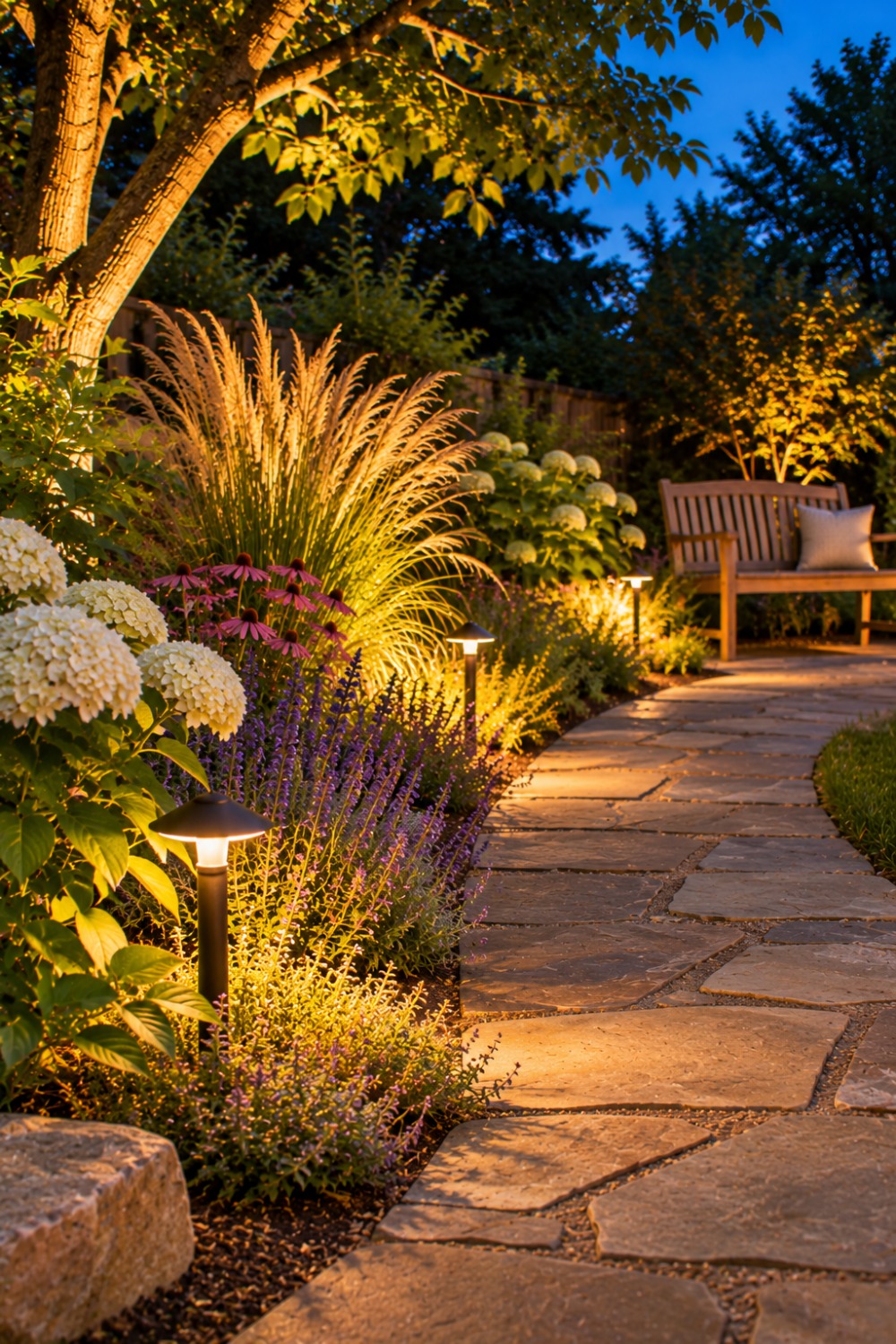
The color of light makes a huge difference.
Warm white, around 2700 to 3000 kelvin, flatters plants, stone and wood and feels cozy and inviting.
Cool, bluish light can look harsh and clinical in a garden.
How to do it:
- Check the color temperature (kelvin) on the packaging.
- Use the same color temperature throughout the yard.
- Test one fixture at night before buying the full set.
3. Use Shielded Fixtures to Cut Glare
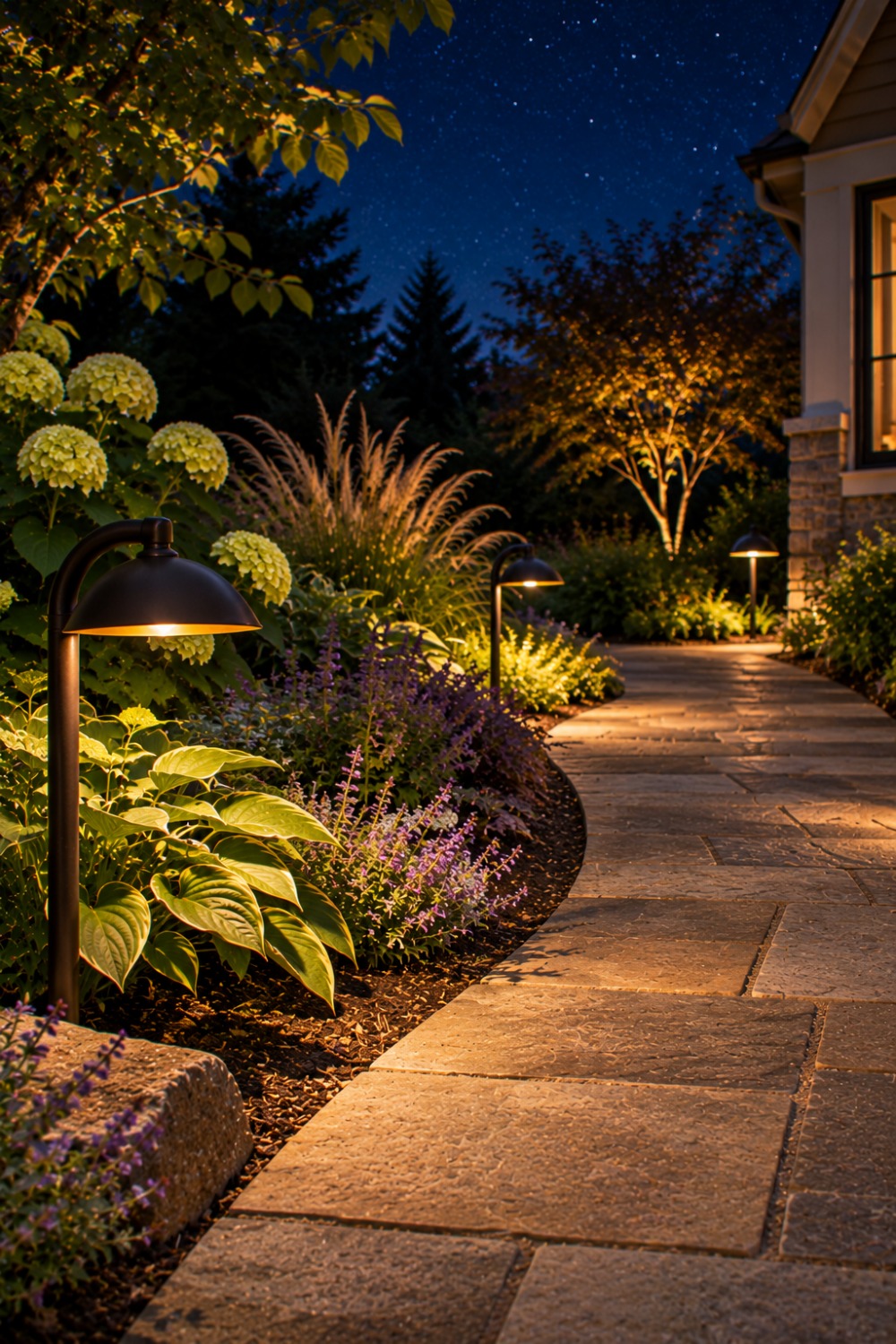
Bare bulbs shining into eyes, windows or the sky ruin the effect.
Shielded fixtures, such as hooded spotlights and downward-facing lights, put light where you want it and hide the source.
They also reduce light pollution, which helps wildlife and keeps the night sky visible.
How to do it:
- Choose fixtures with hoods, louvers or glare guards.
- Aim lights away from windows, neighbors and the street.
- Point lights down wherever you can.
4. Moonlight From High in a Tree
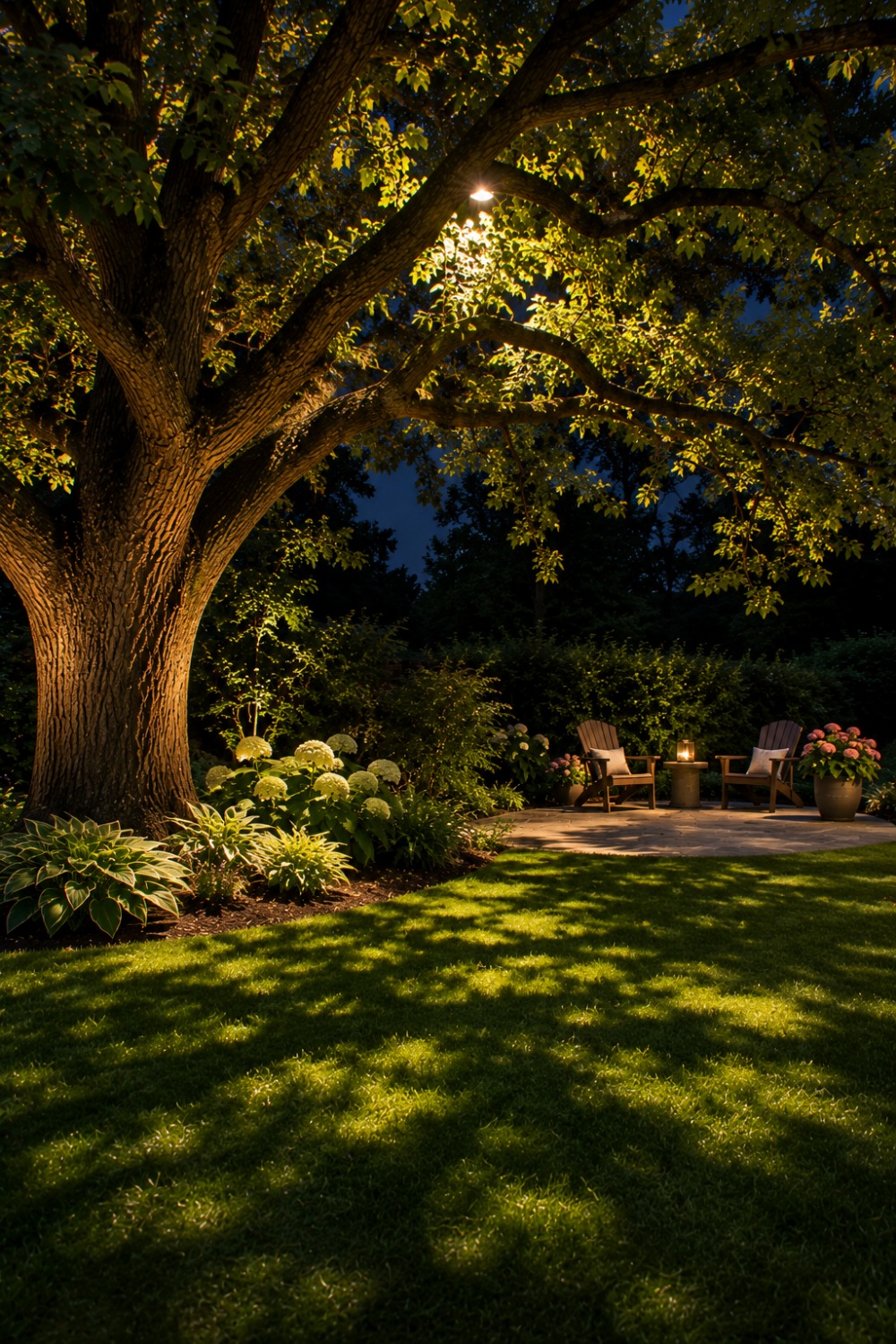
Moonlighting places a fixture high in a mature tree, angled down through the branches.
It casts soft, dappled shadows on the lawn or patio below, just like real moonlight.
It’s one of the most natural-looking effects in landscape lighting.
How to do it:
- Choose a large tree near a patio or lawn.
- Mount a shielded downlight high in the canopy with a strap, not nails.
- Angle it through the branches so you see the leaf shadows.
5. Wash the Front of the House Gently
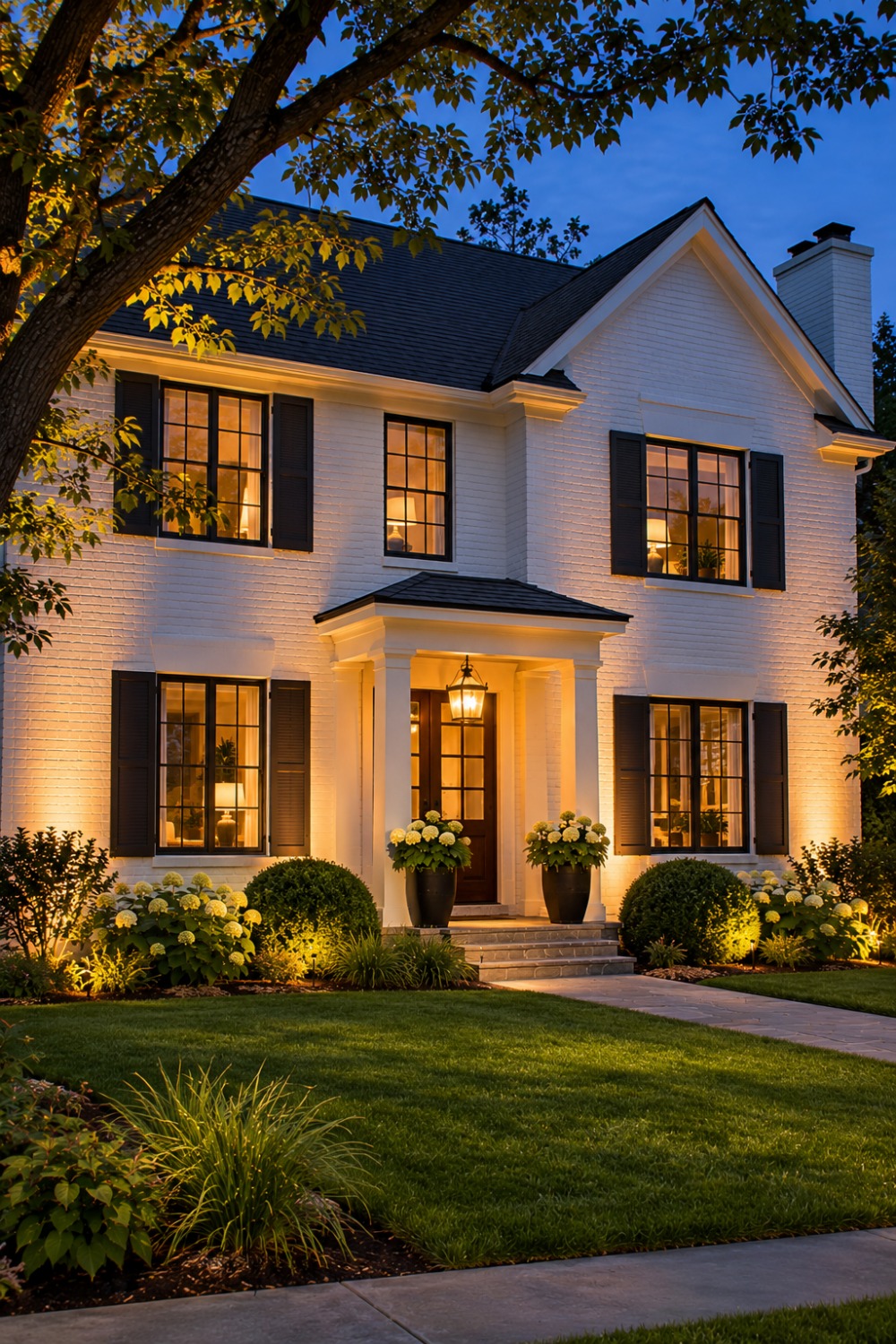
Gentle light across the front of the house makes it look welcoming and gives it depth at night.
Place wide-beam fixtures in the front beds, angled up at the walls between windows.
Keep the light soft so it doesn’t flood the bedrooms.
How to do it:
- Place lights between windows rather than under them.
- Set them a foot or two away from the wall for an even wash.
- Use lower wattage on light-colored walls.
6. Graze a Stone Wall to Show Its Texture
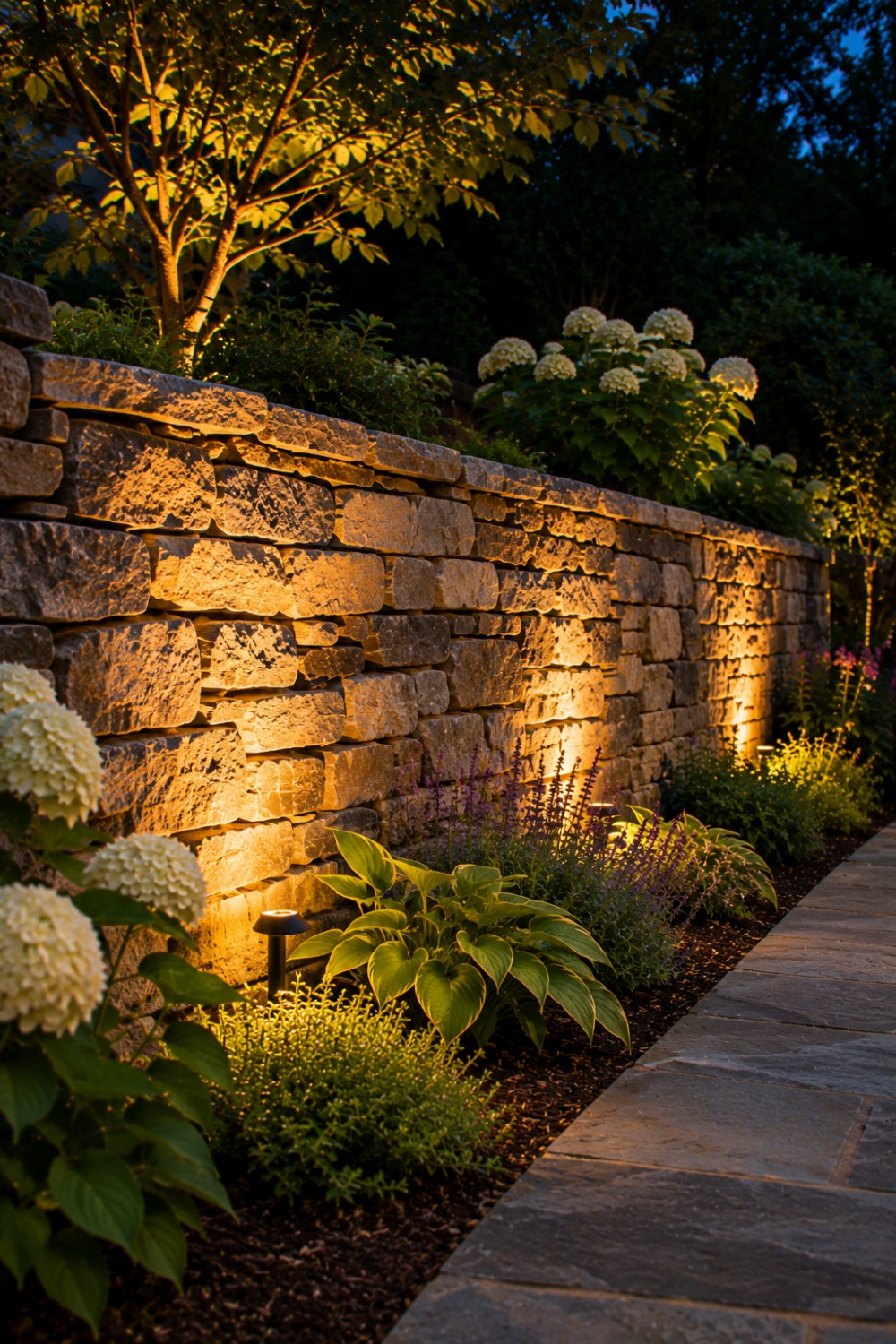
Grazing places a light very close to a textured surface, shining up or across it.
Every stone, brick or bark ridge casts a little shadow, so the texture comes alive.
It’s stunning on dry-stone walls, chimneys and old trees.
How to do it:
- Place the fixture a few inches from the wall.
- Aim it straight up or across the surface.
- Space several fixtures evenly along long walls.
7. Silhouette a Sculptural Plant
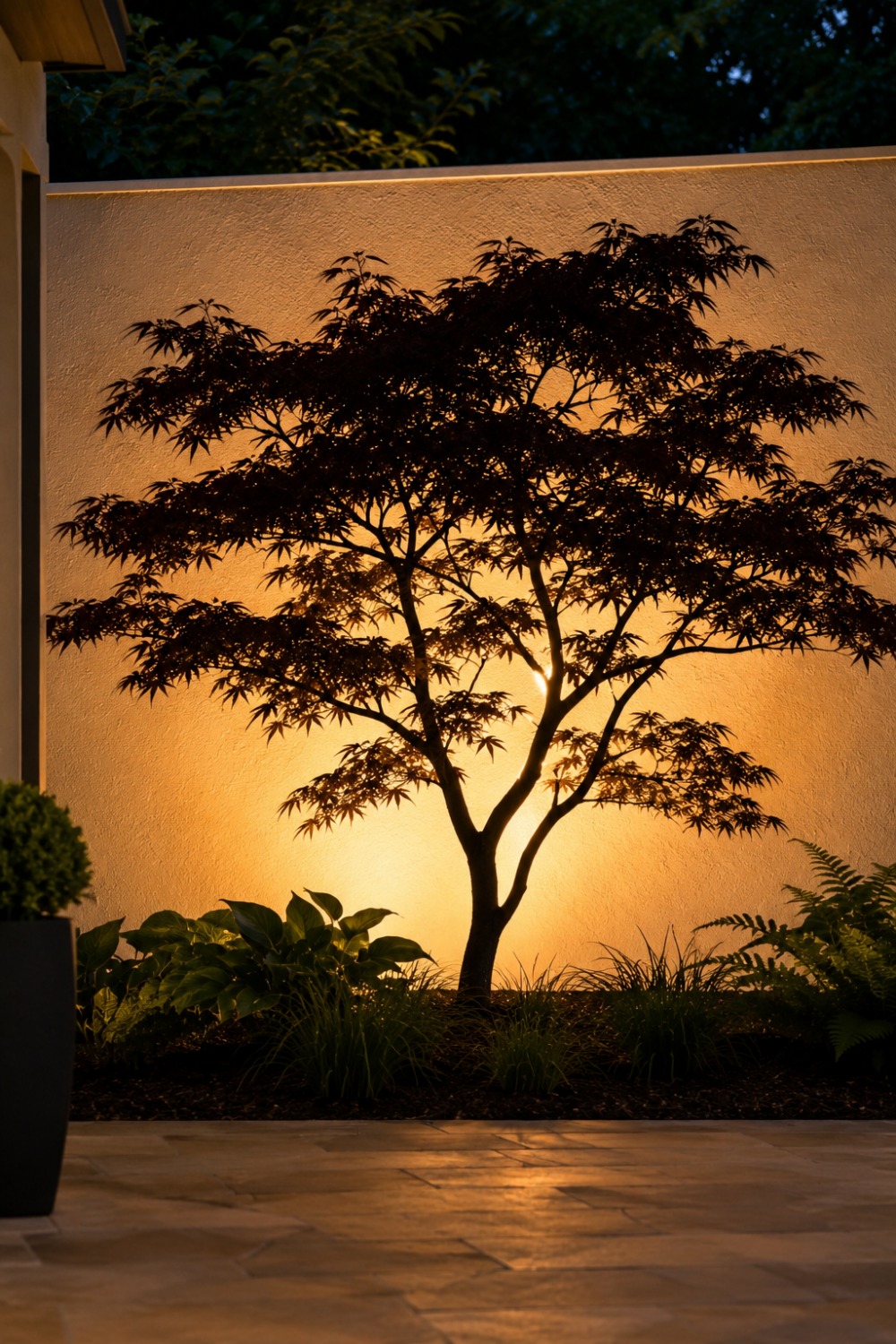
Silhouetting puts the light behind a plant, aimed at the wall or fence behind it.
The plant appears as a dark, crisp shape against a glowing background.
It works best with bold shapes such as Japanese maple, agave, yucca or a clipped topiary.
How to do it:
- Choose a plant with a strong outline in front of a pale wall or fence.
- Hide the fixture behind or beside the plant, aimed at the wall.
- View it from the patio or a window to check the effect.
8. Light the Front Door and House Number
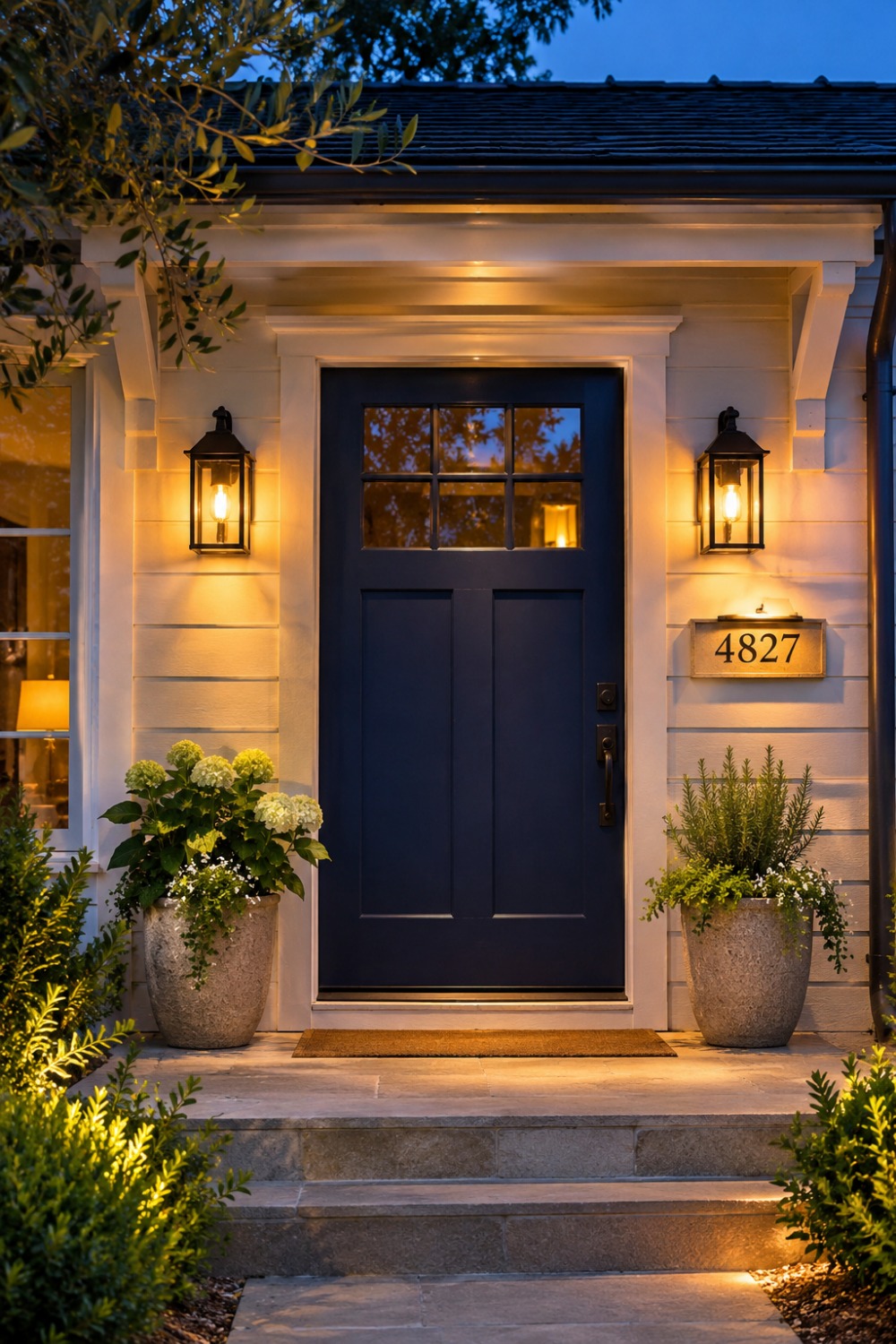
The front door is the most important place to light.
Wall lights on each side of the door should be bright enough to see keys and faces, but warm and shielded.
Make sure your house number is lit so visitors and emergency services can find you.
How to do it:
- Fit a matching pair of wall lights at about eye level.
- Light the house number with a small spotlight or lit number plate.
- Put the door lights on a dusk-to-dawn sensor.
9. Light a Water Feature
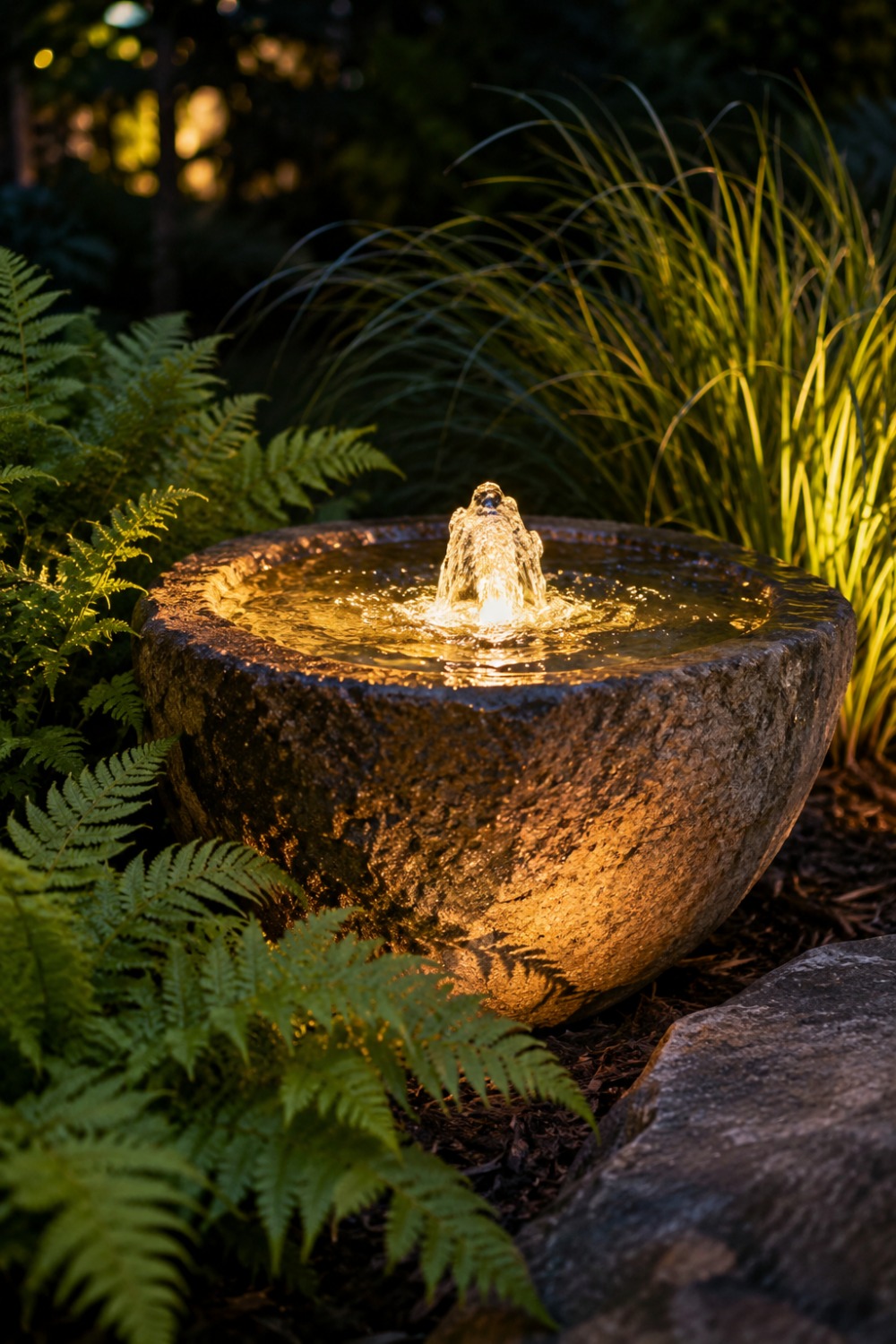
Water and light are a magical combination.
A small submersible light in a fountain basin or pond makes the water sparkle and move.
Even a simple bubbling bowl looks special at night.
How to do it:
- Use lights rated for underwater use.
- Aim them at the moving water or the edge of a waterfall.
- Keep fixtures clean so algae doesn’t dim them.
10. Hang Festoon Lights Over a Dining Area
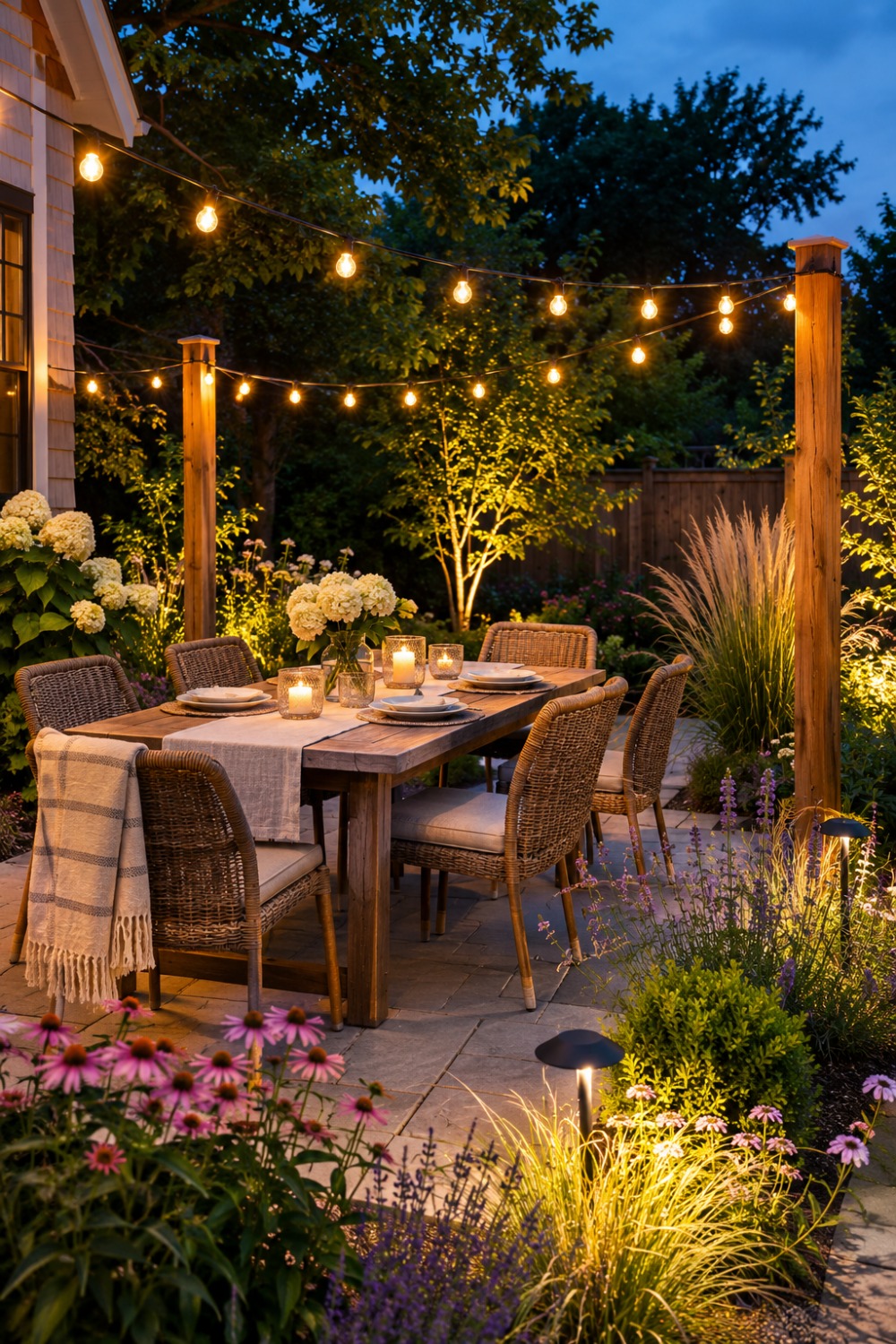
String lights over a dining area create an instant party atmosphere.
Run them in a zigzag between posts, the house and trees, at least 7 to 8 feet above the ground.
Use warm white bulbs and add a dimmer to set the mood.
How to do it:
- Install sturdy posts or hooks for anchor points.
- Use a guide wire to take the weight off the light strand.
- Choose outdoor-rated, warm white bulbs.
11. Use a Low-Voltage LED System With a Timer
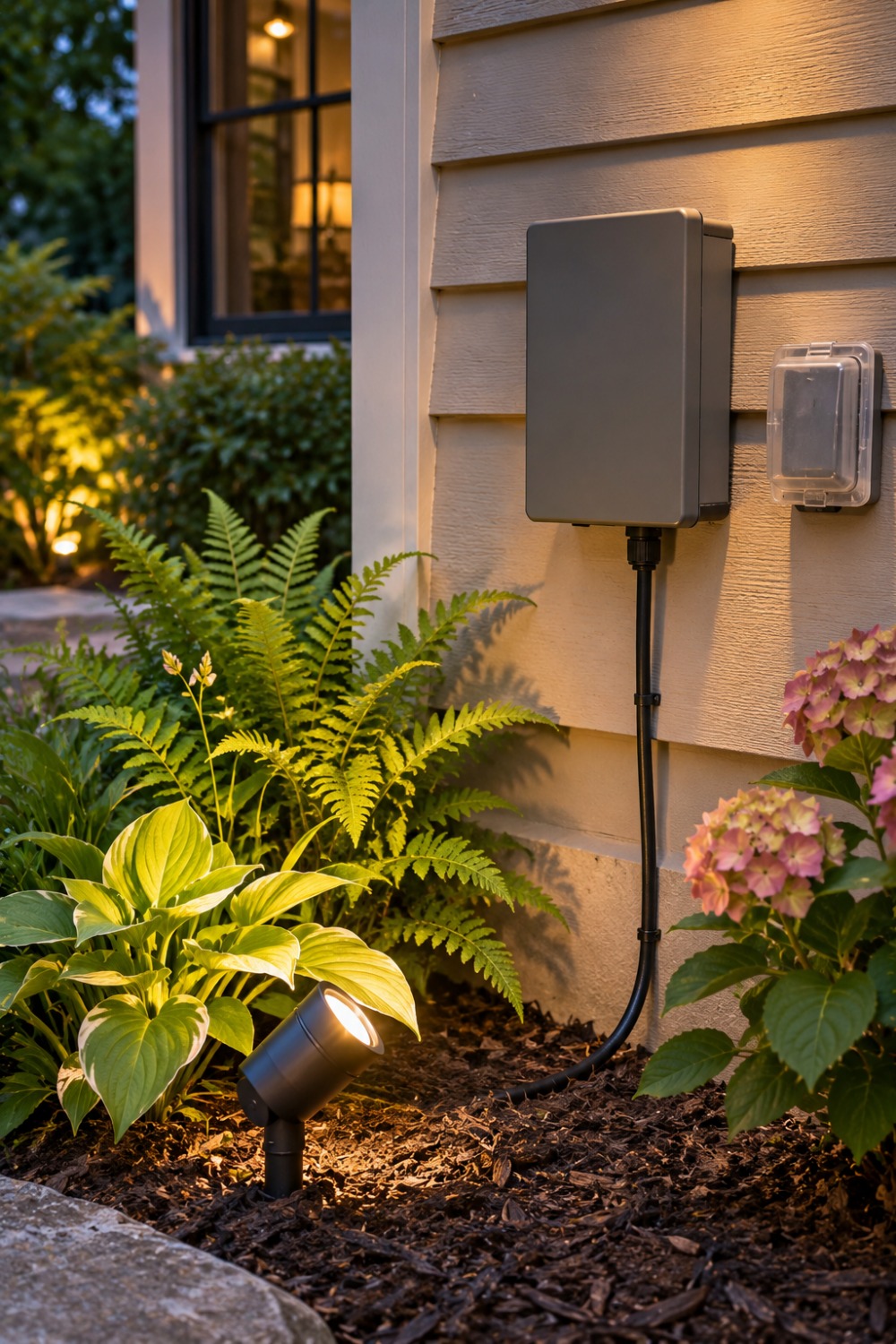
Low-voltage LED systems are efficient, long-lasting and much easier to install than line-voltage wiring.
A transformer plugs into an outdoor outlet and powers 12-volt lights connected by buried cable.
Add a timer or photocell so the lights come on at dusk and turn off late at night.
How to do it:
- Size the transformer to the total wattage of your fixtures plus a margin.
- Bury cable a few inches deep, away from where you dig.
- Set a timer that turns lights off by late evening.
Common mistake: relying only on cheap solar stakes for key features. They’re fine for accents but often too dim and short-lived for focal lighting.
12. Tuck Lights Under Wall Caps and Seat Walls
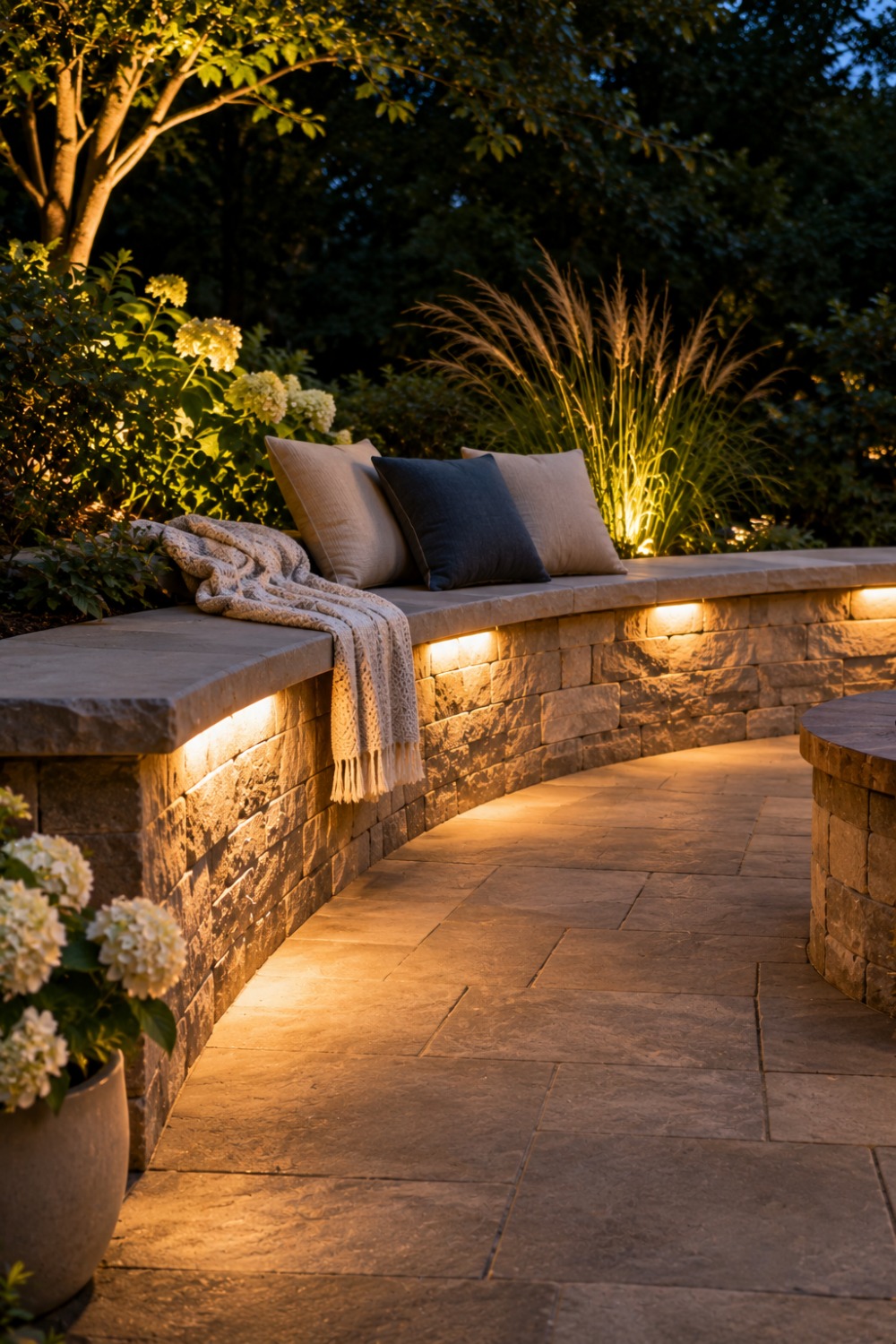
Hidden lights under the cap of a seat wall or retaining wall cast a soft glow downward.
You see the light, not the fixture, which looks clean and modern.
It’s also a good way to light the edge of a patio without glare.
How to do it:
- Use slim under-cap fixtures made for walls.
- Fit them during construction or under removable caps.
- Space them evenly along the wall.
13. Leave Some Areas Dark
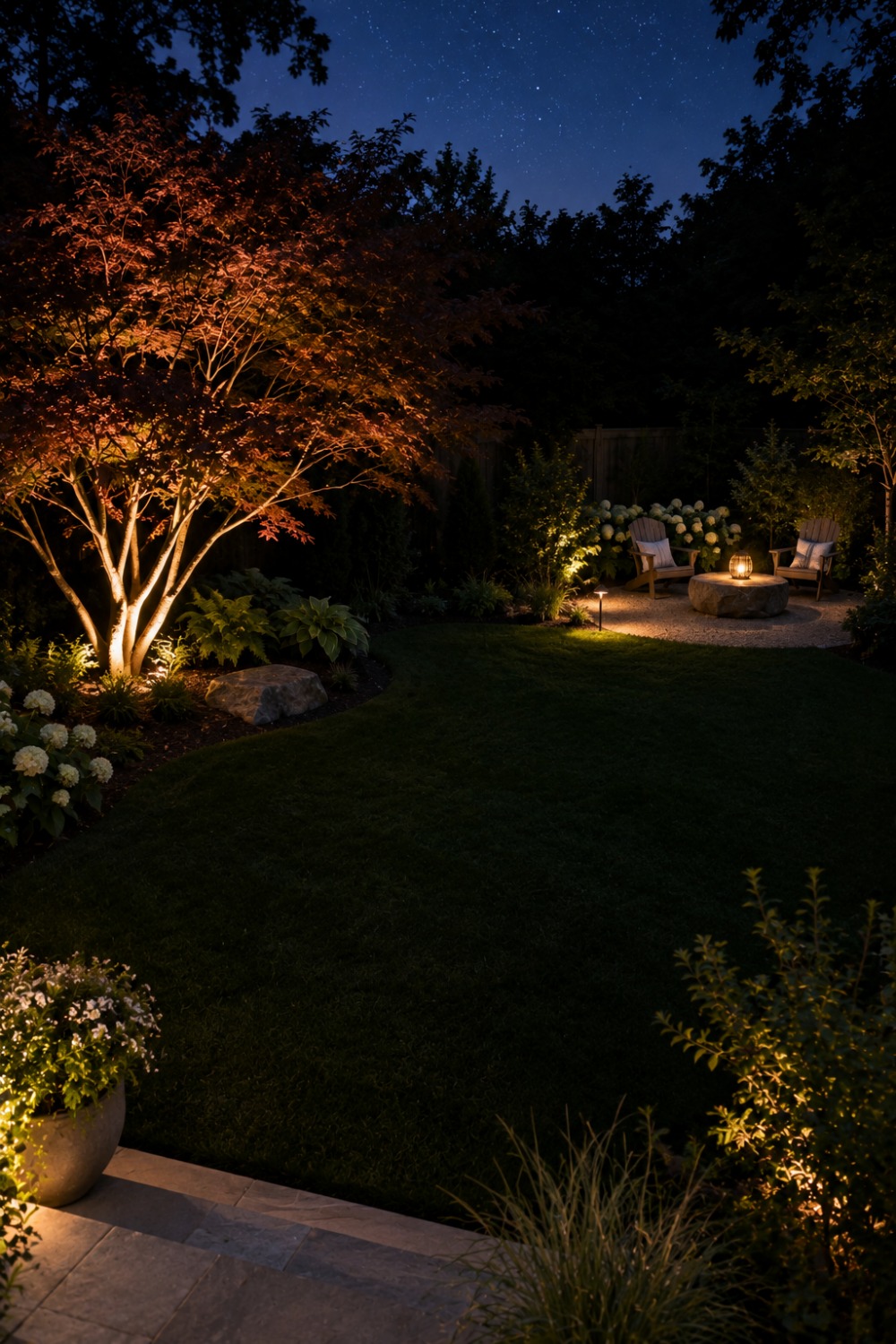
The most beautiful night gardens have contrast.
Lighting everything flattens the view, wastes energy and disturbs wildlife.
Leave darker gaps between lit features so each one stands out.
How to do it:
- Light only your chosen focal points and paths.
- Leave back corners and wildlife areas dark.
- Turn lights off late at night with a timer.
For ideas on lighting a gathering spot, see our backyard fire pit landscaping ideas.
Frequently Asked Questions
What color temperature is best for landscape lighting?
Warm white, around 2700 to 3000 kelvin, looks best on plants, wood and stone. Use the same color throughout the yard for a consistent look.
Is low-voltage landscape lighting worth it?
Yes, for most homes. Low-voltage LED systems are efficient, safe to install and long-lasting. Solar lights work for small accents but are often too dim for focal points.
How many landscape lights do I need?
Fewer than you think. Pick three to five main features plus the front door and key paths. Leaving some areas dark gives the garden contrast.
How do I avoid light pollution in my yard?
Use shielded fixtures, point lights downward or at specific features, keep brightness modest and use a timer to switch lights off late at night.
Final Thoughts: Light the Garden, Not the Sky
The best landscape lighting feels natural, warm and quietly dramatic.
Start with a plan: walk the yard at dusk and choose a handful of features worth showing off.
Use the right technique for each one, whether it’s moonlighting a tree, grazing a stone wall or silhouetting a sculptural plant.
Stick to warm white light and shielded fixtures, and aim everything away from windows and the sky.
Light the front door and house number well, and leave other areas softly dark.
A low-voltage LED system on a timer keeps everything easy and efficient.
If you’re planning the rest of the front yard too, our front yard landscaping ideas are a good companion read.
Start with one feature this week, such as your favorite tree, and you’ll see how much a single well-placed light can do.