Your front walkway is the first thing guests walk on and the last thing they see when they leave.
A narrow, cracked or confusing path can make even a lovely house feel unwelcoming.
The secret to a great front walkway isn’t expensive stone. It’s a path that’s wide enough, clearly leads to the door and is framed by planting that guides the eye.
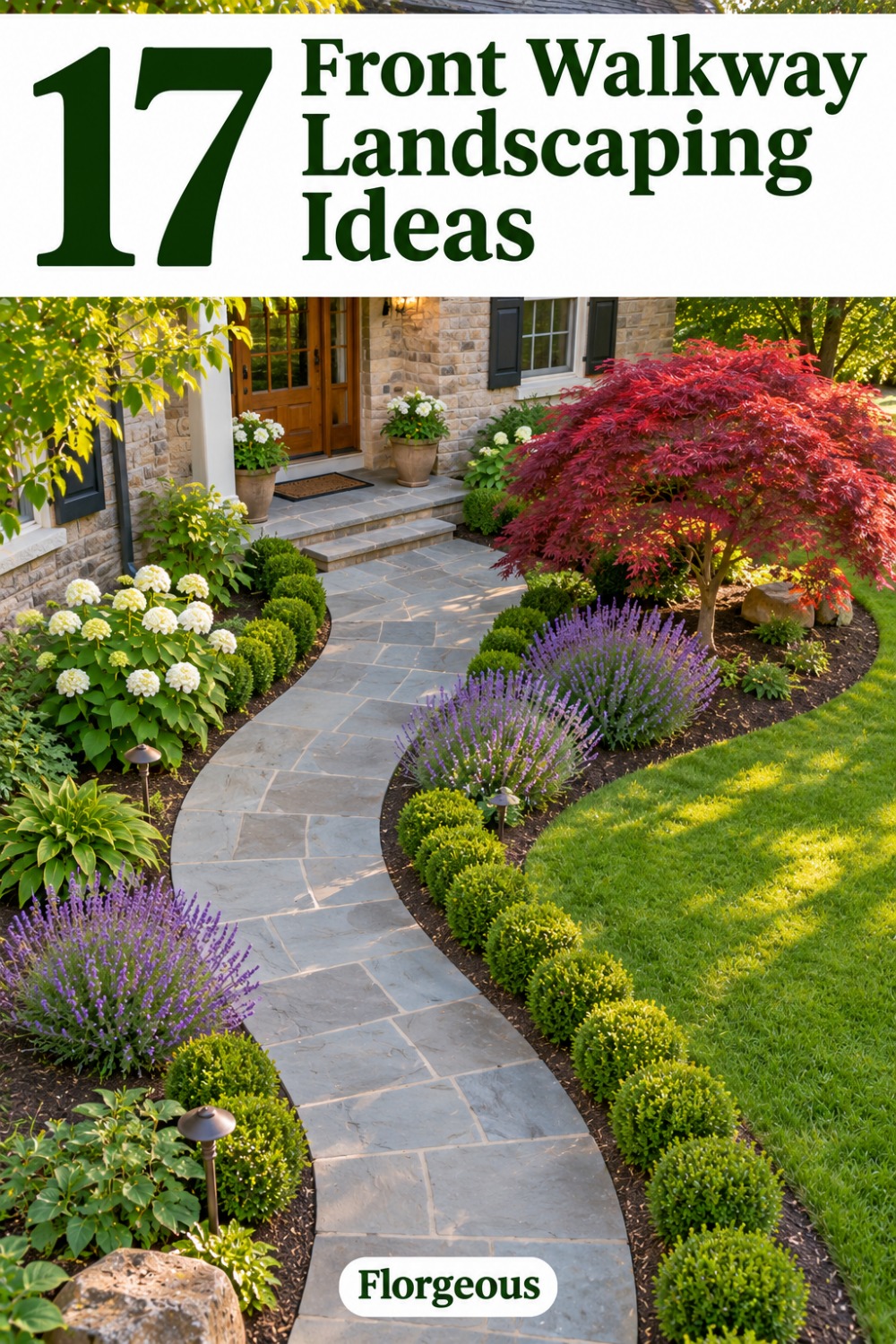
These 17 front walkway landscaping ideas cover layout, materials and planting, so your path feels as good to walk as it looks from the street.
Front Walkway Materials Compared
| Material | Look | Cost | Notes |
|---|---|---|---|
| Poured concrete | Clean, simple | Low to medium | Can be stamped or tinted; may crack over time |
| Brick | Traditional, warm | Medium | Suits colonial and craftsman homes; laid in patterns |
| Natural flagstone or bluestone | Rustic or classic | Medium to high | Irregular or cut shapes; set on a firm base |
| Large-format concrete pavers | Modern | Medium | Clean lines with crisp joints |
| Gravel or decomposed granite | Relaxed, informal | Low | Needs firm edging; less suited to wheels |
| Permeable pavers | Practical | Medium to high | Let rain soak through to cut puddles and runoff |
1. Make the Walk Wide Enough for Two
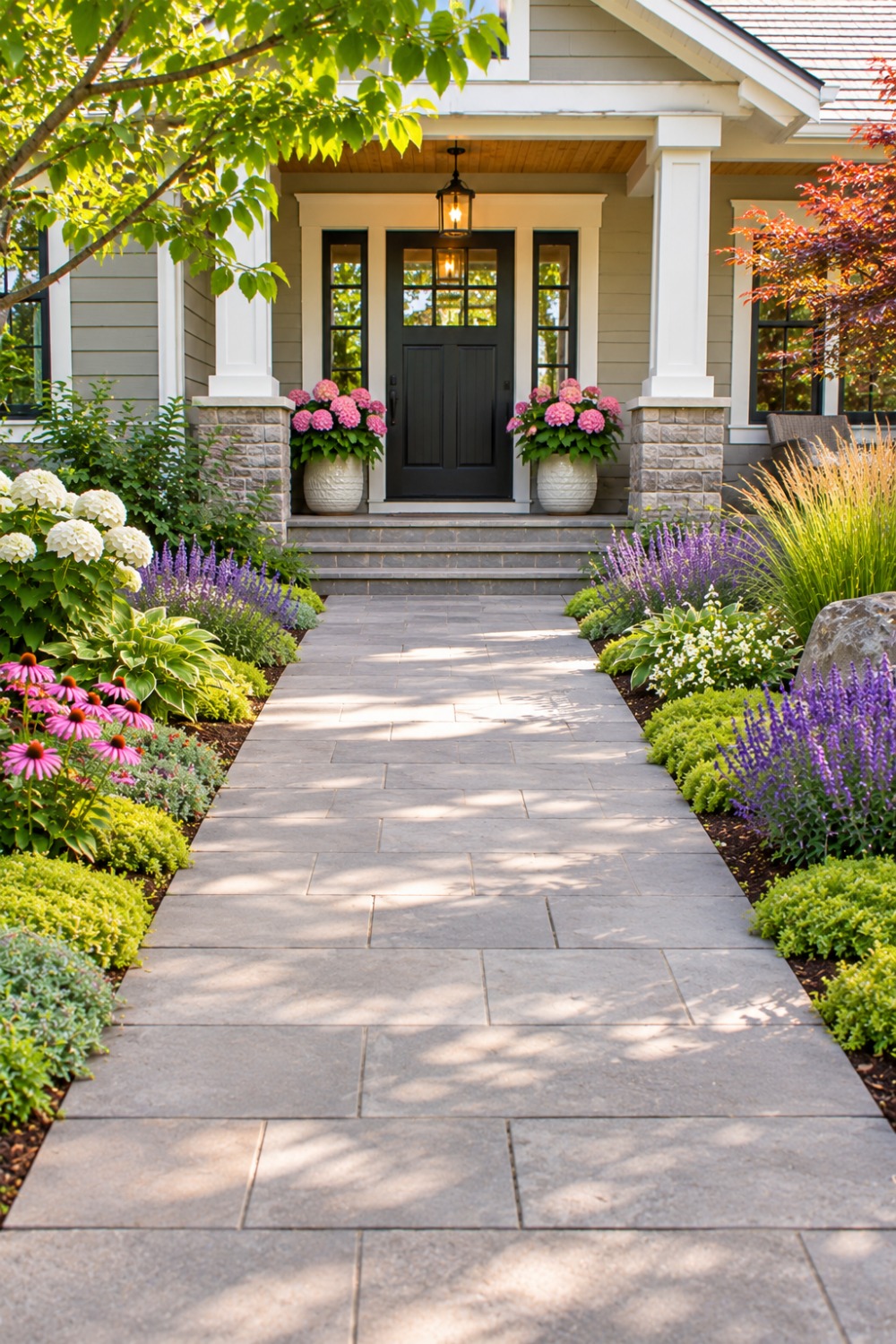
Many builder walkways are only 3 feet wide, which feels cramped and forces guests to walk single file.
A walk of 4 to 5 feet lets two people walk side by side and looks far more generous from the street.
If you can’t widen the paving, borders of low ground cover make it feel wider.
How to do it:
- Measure the current width and the space on each side.
- Add a band of pavers or brick along both edges to widen it.
- Keep plants at the edge low so they don’t crowd the path.
2. Curve the Walk Gently Toward the Door
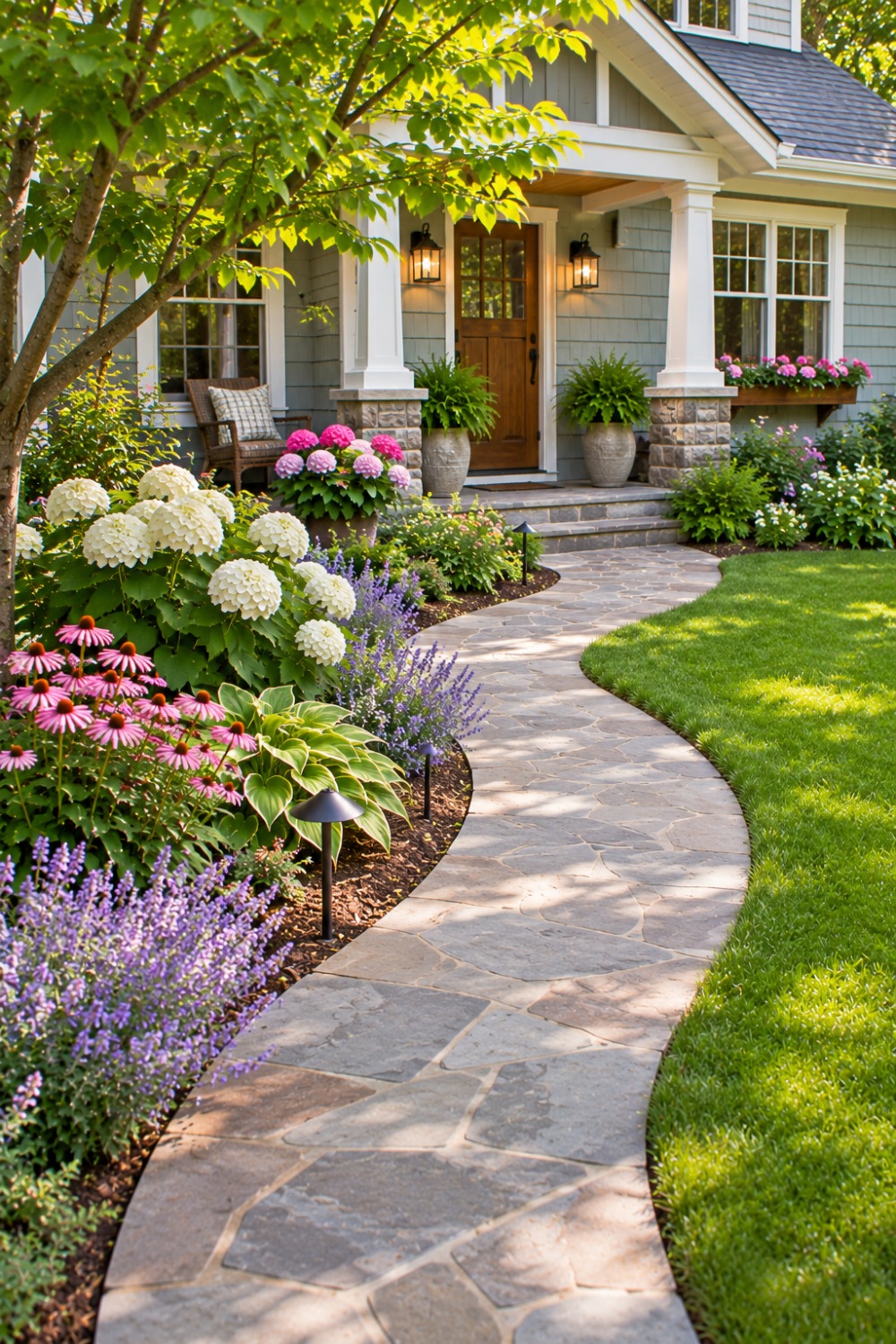
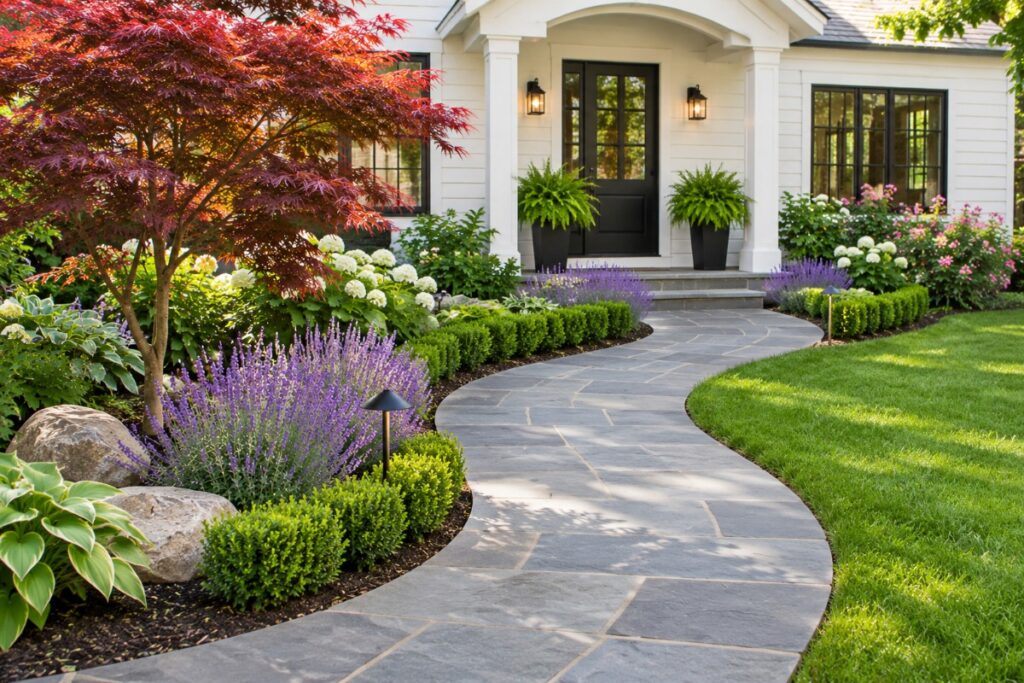
A gentle curve feels more relaxed and natural than a ruler-straight line, especially on wider lots.
Keep the curve soft so guests don’t cut across the lawn to take a shortcut.
A straight walk still suits formal, symmetrical houses best.
How to do it:
- Lay a garden hose to test the curve from the street or driveway to the door.
- Walk the line to check it feels natural.
- Plant something at the inside of each curve to justify the bend.
3. Lay Large-Format Pavers for a Modern Entry
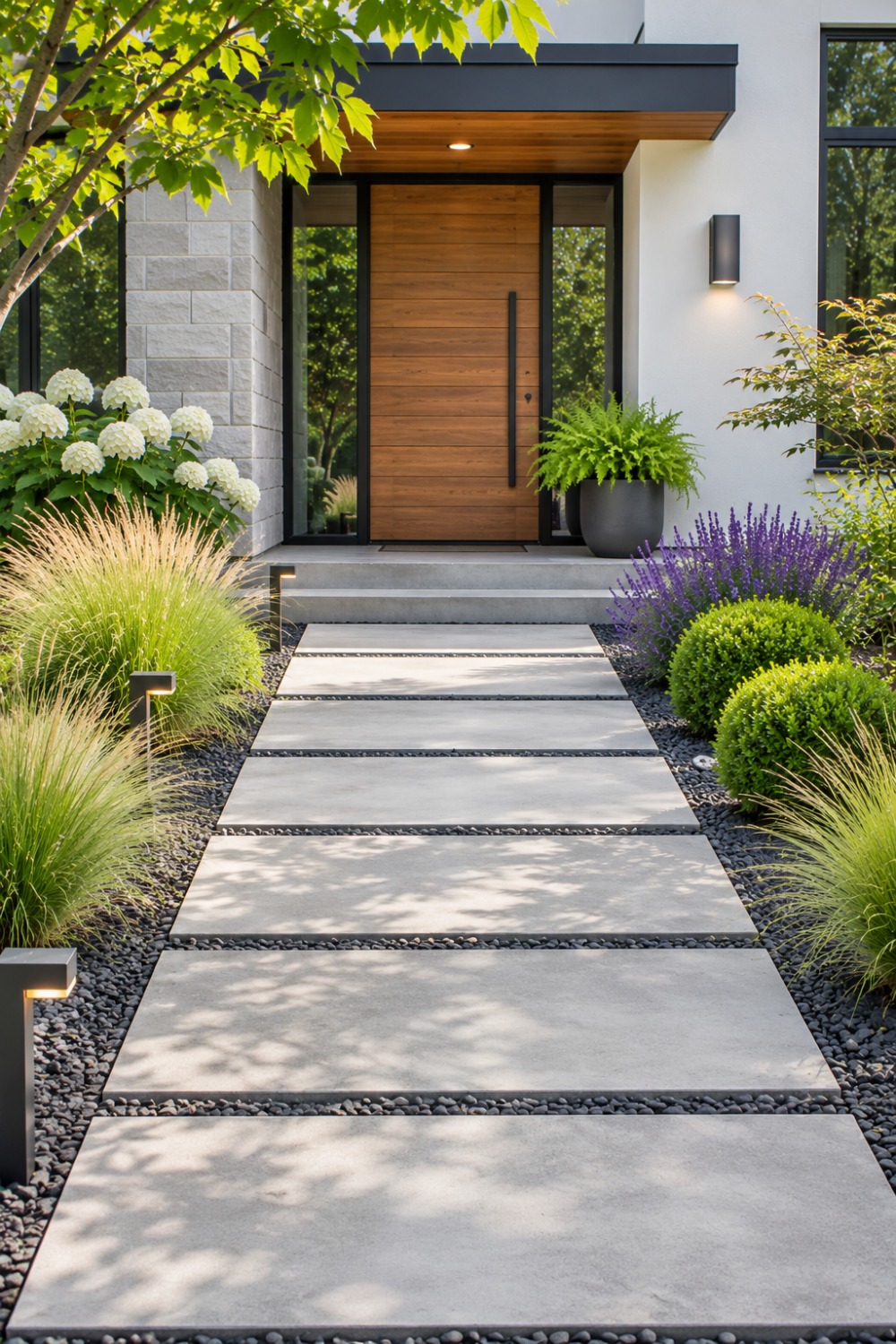
Big rectangular pavers create clean lines that suit modern and mid-century homes.
Set them with narrow joints for a sleek look, or wider gravel joints for a softer, garden feel.
Pair them with simple planting, such as ornamental grasses and a few clipped shapes.
How to do it:
- Prepare a compacted gravel base.
- Set pavers on a bedding layer, checking levels as you go.
- Fill joints with fine gravel or polymeric sand.
4. Lay Reclaimed Brick in a Herringbone Pattern
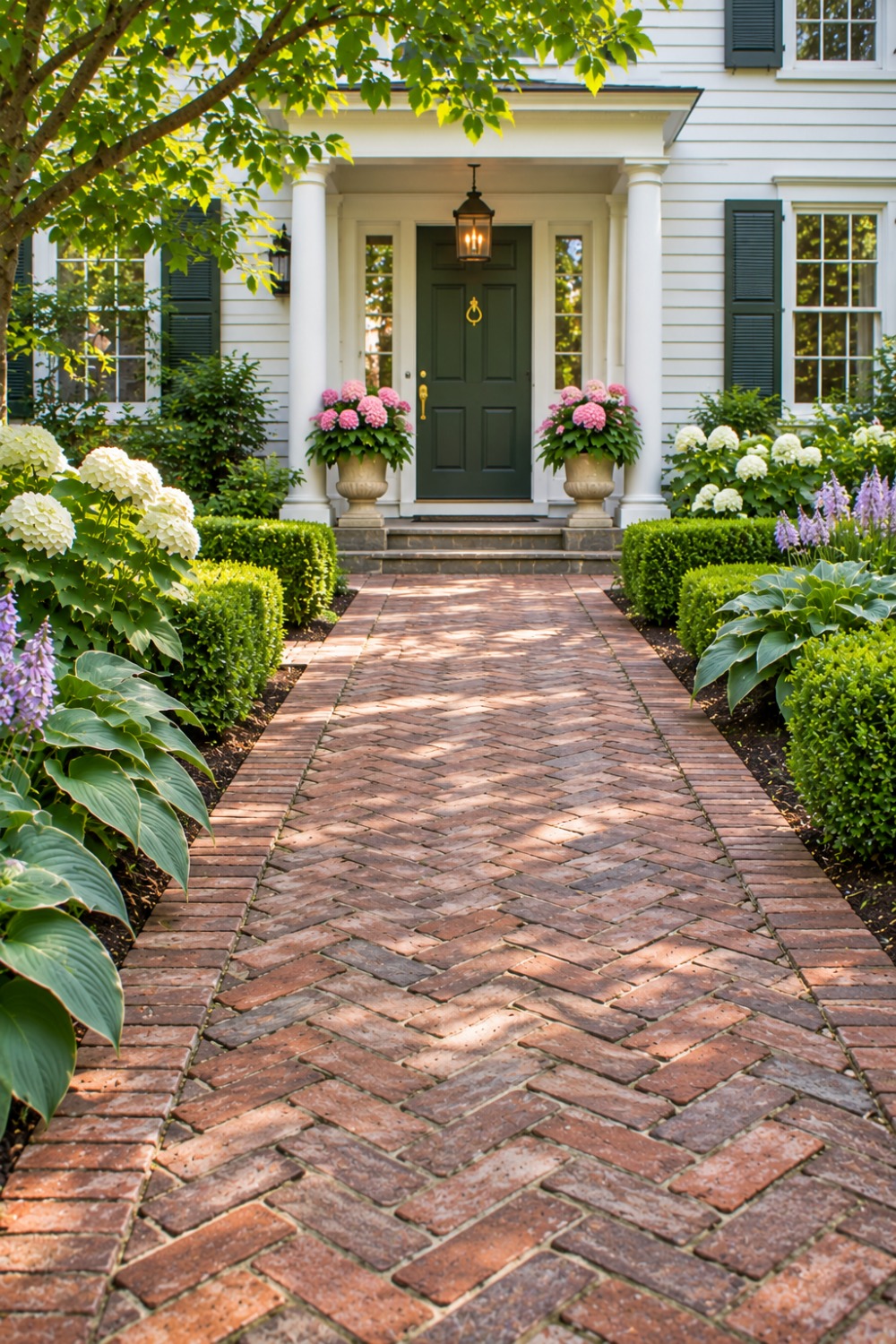
Reclaimed brick gives instant character and suits traditional, cottage and colonial houses.
A herringbone pattern looks classic and locks the bricks together well.
Finish the edges with a soldier course of bricks laid on end to hold the pattern in place.
How to do it:
- Excavate and compact a gravel base with a sand bedding layer.
- Install a firm edge restraint on both sides.
- Lay the herringbone pattern and sweep sand into the joints.
5. Set Bluestone in a Crisp, Classic Grid
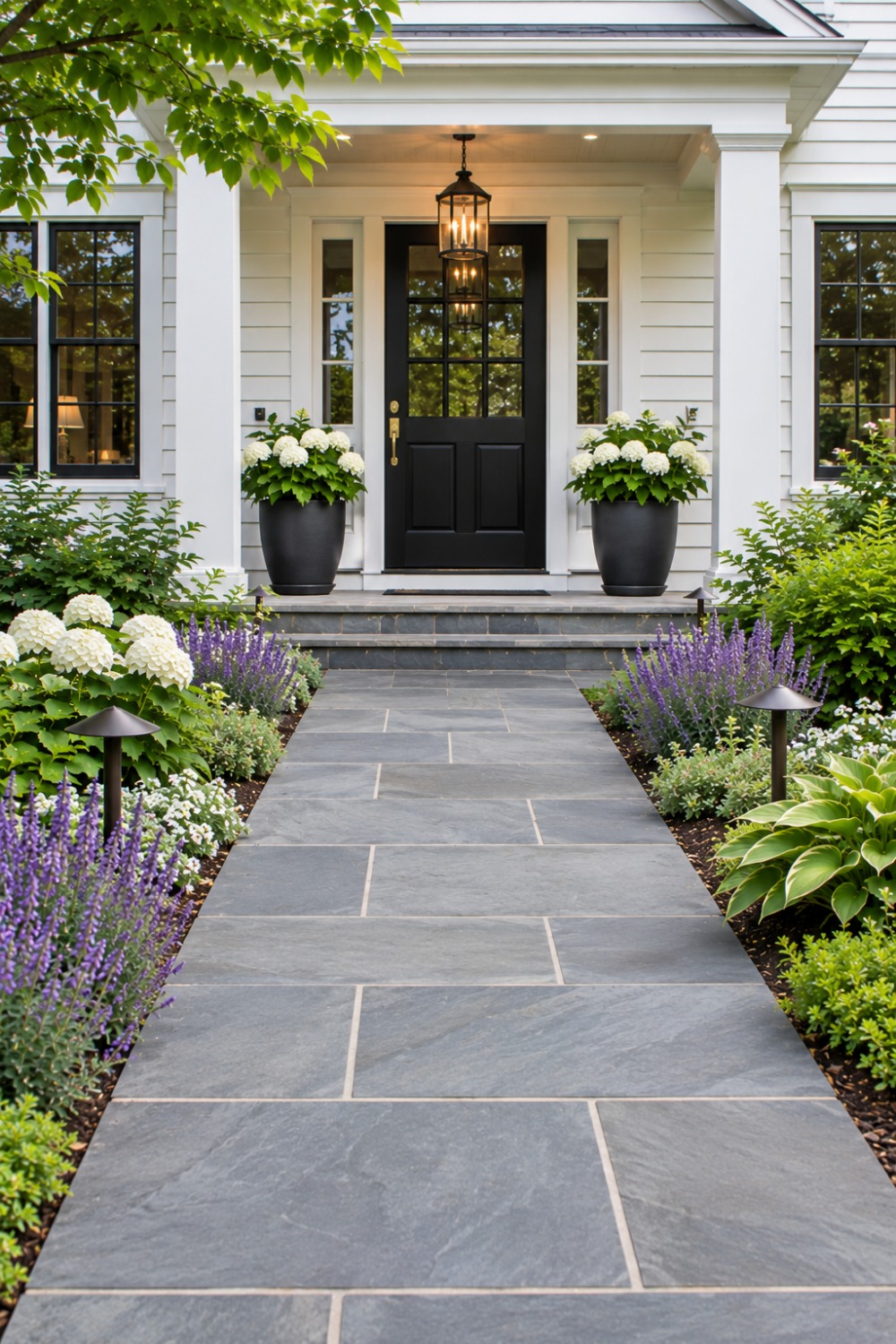
Cut bluestone in a regular pattern looks timeless and works with almost any house.
Its cool gray-blue tone pairs beautifully with white, gray and brick facades.
Set it on a solid base so the slabs stay level for decades.
How to do it:
- Choose a thermal finish for better grip when wet.
- Set slabs on a compacted base with a mortar or sand bed.
- Keep joints narrow and even.
6. Add a Landing on a Long Walk
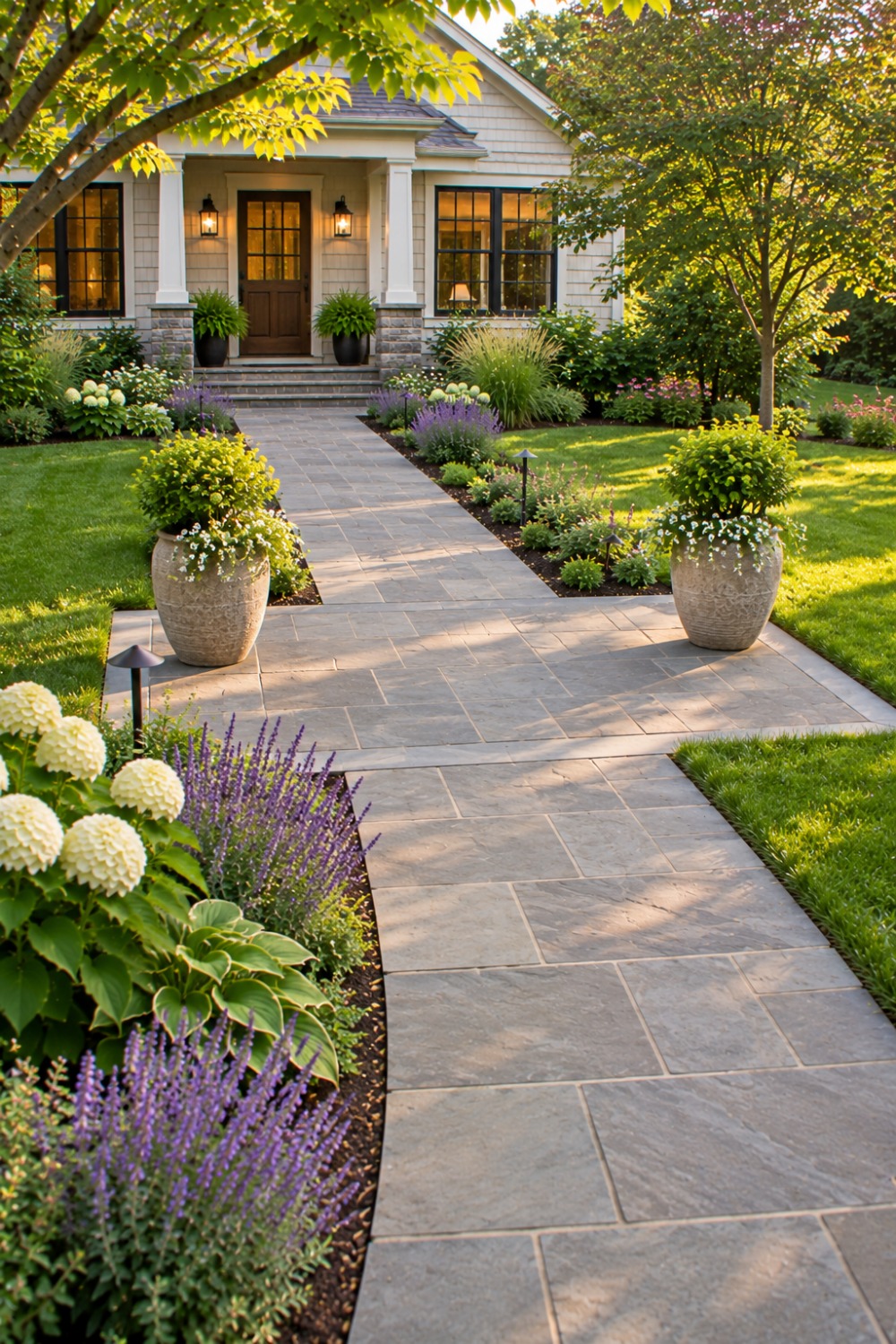
A long walk from the street to the door can feel like a hallway.
A wider landing partway along breaks it up and gives a natural pause point.
Add a pair of planters, a small tree or a bench to make the landing feel like a destination.
How to do it:
- Find the midpoint or the spot where the walk changes direction.
- Widen the paving into a square or circle there.
- Frame it with planters or planting.
7. Mark the Start of the Walk With a Change in Paving
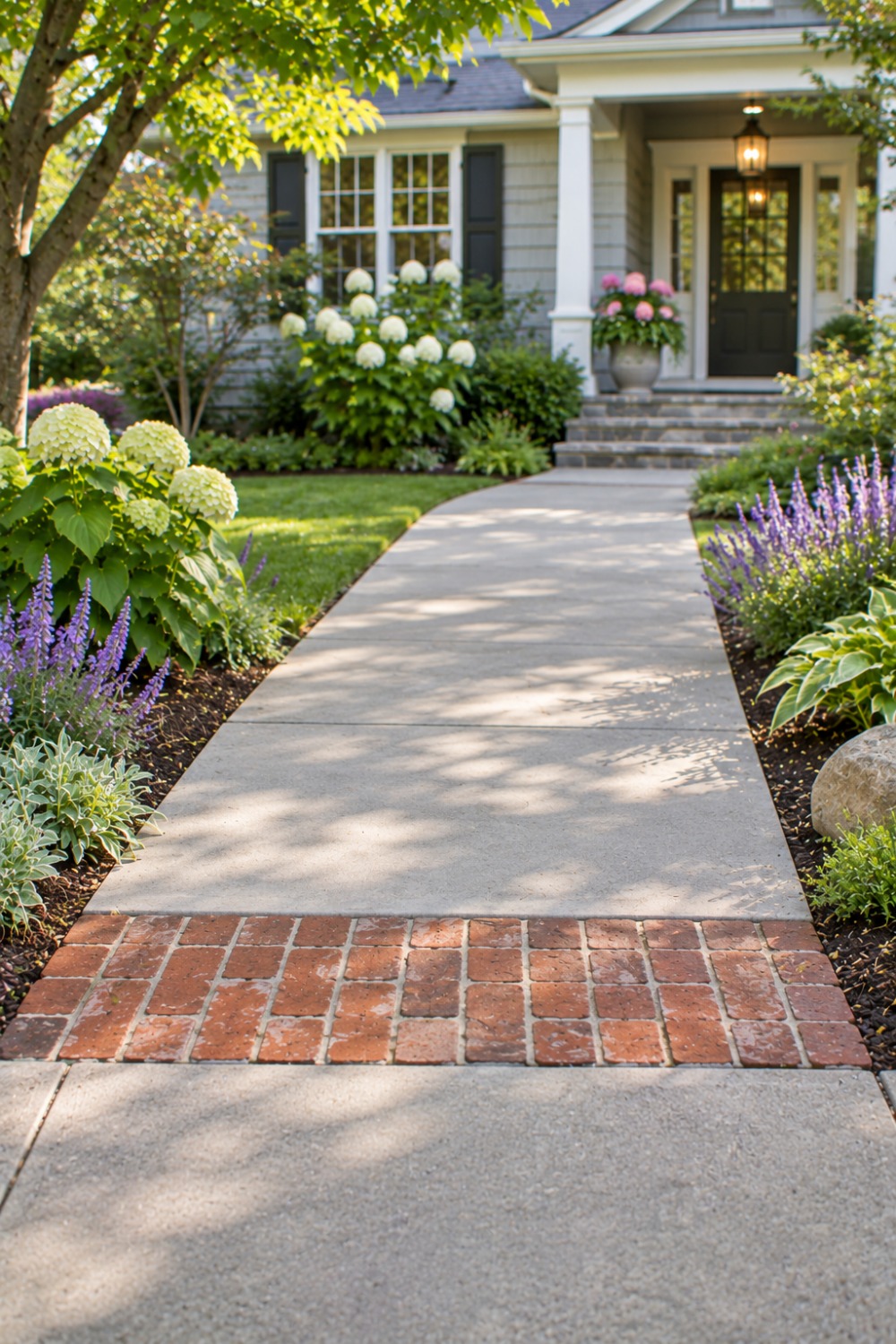
Guests should know at a glance where the walk begins.
A band of contrasting brick, cobble or a wider threshold slab at the sidewalk or driveway works like a welcome mat.
It also gives a crisp, finished edge where two surfaces meet.
How to do it:
- Choose a material that contrasts with the main walk.
- Lay a band 12 to 24 inches deep at the start.
- Repeat the same material at the door step if you like.
8. Line the Walk With Low Clipped Boxwood
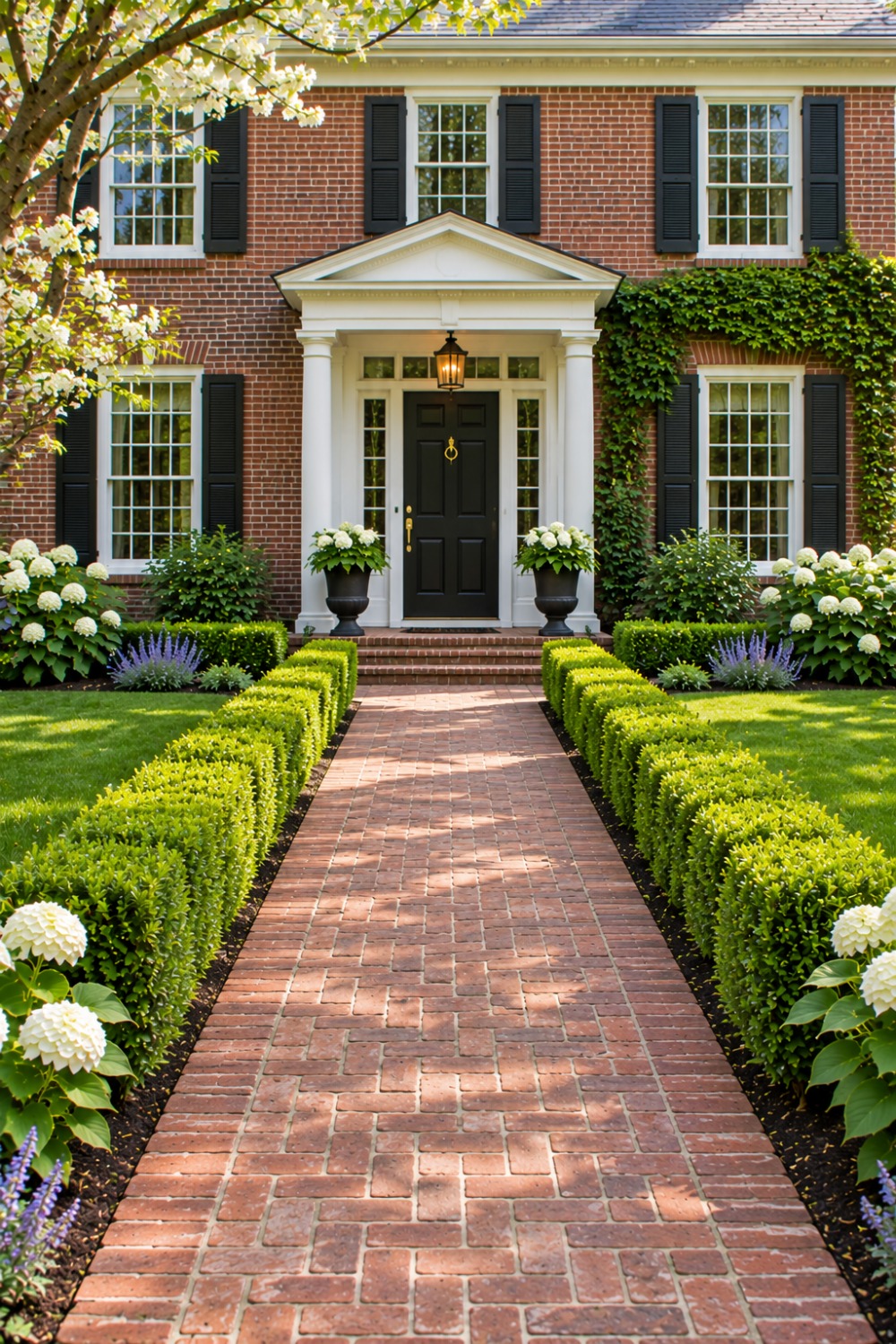
A low clipped hedge on each side gives a walkway a classic, structured look.
Boxwood is traditional, but dwarf yaupon holly, Japanese holly or inkberry can work where boxwood struggles.
Keep the hedge low, around 1 to 2 feet, so it frames rather than encloses the path.
How to do it:
- Choose a compact variety suited to your climate.
- Plant a foot or more back from the edge so it doesn’t overhang.
- Trim lightly once or twice a year.
9. Plant Spring Bulbs Along the Edges
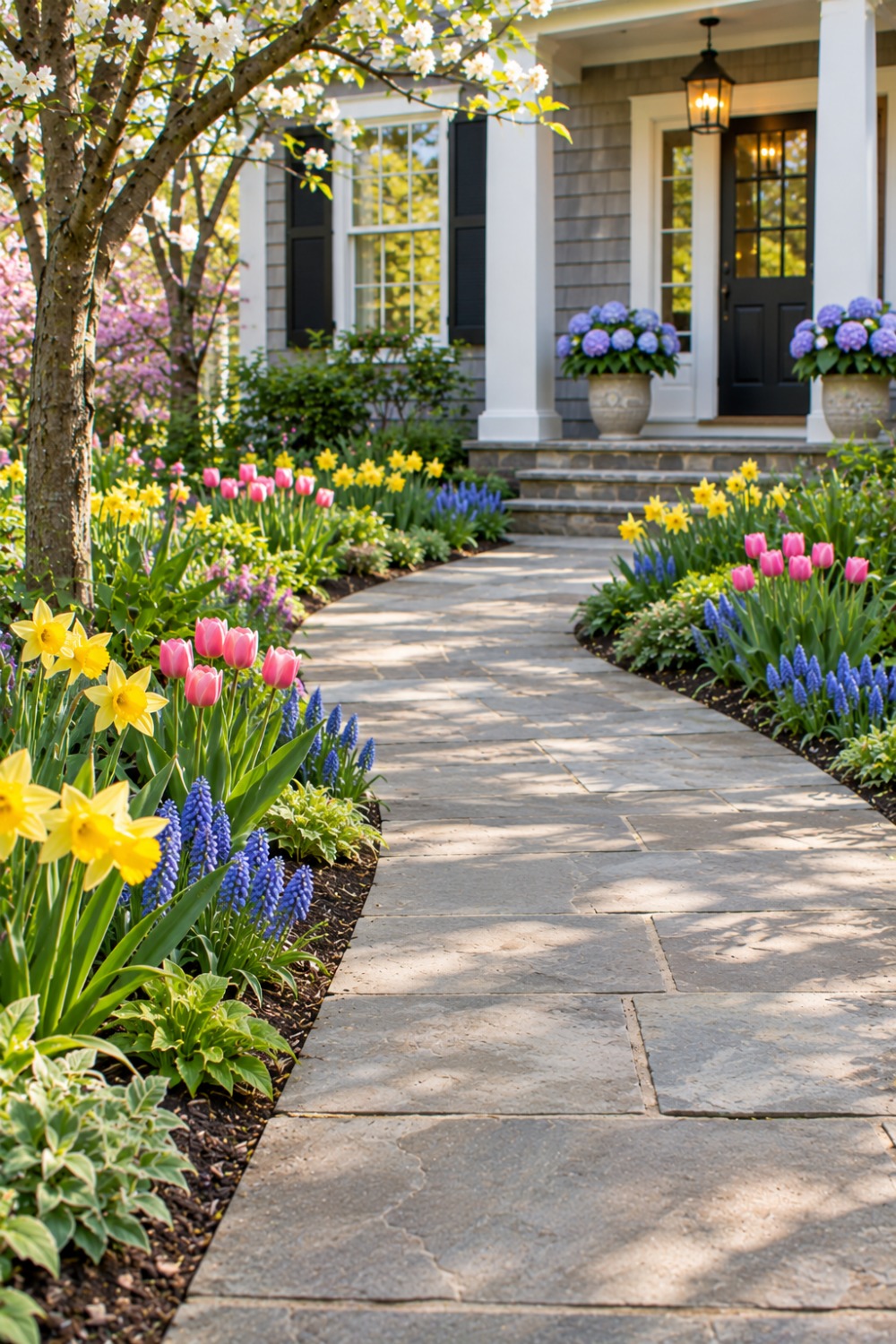
Bulbs along the walk give a burst of color just when everyone is tired of winter.
Plant daffodils, grape hyacinths, crocus and tulips in loose drifts between perennials.
Their fading leaves are hidden as the perennials grow up around them.
How to do it:
- Plant bulbs in fall, at about three times their own depth.
- Group them in clusters rather than single rows.
- Let the leaves die back naturally before cutting them off.
10. Use Wide, Shallow Steps on a Sloped Walk
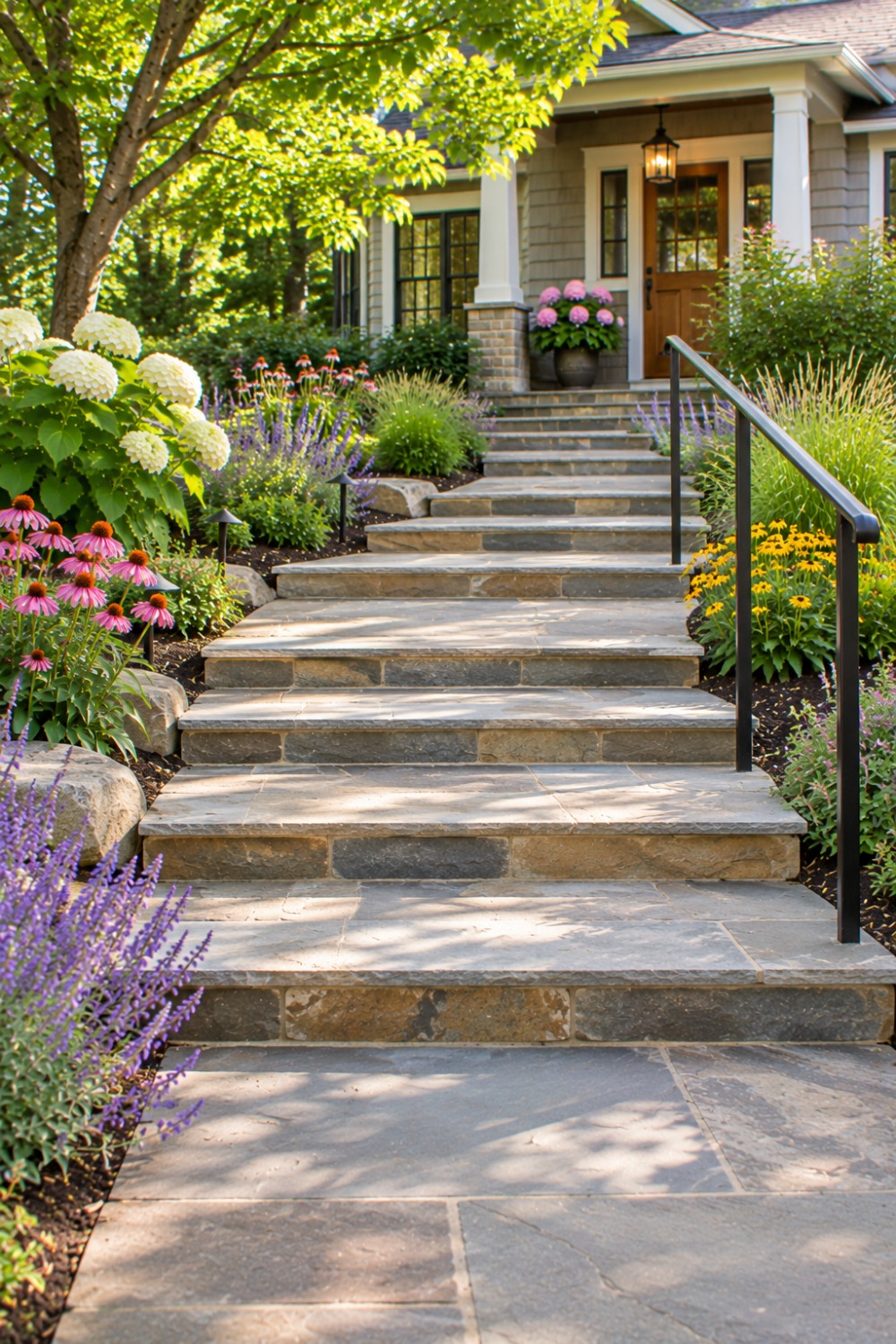
A steep walk is tiring and can be slippery.
Breaking it into wide, shallow steps makes the climb comfortable and looks gracious.
Comfortable outdoor steps are usually shallower and deeper than indoor stairs.
How to do it:
- Measure the total rise and plan evenly spaced steps.
- Keep every riser the same height so no one trips.
- Add a handrail where the slope is steep.
11. Plant a Cottage Border on One Side Only
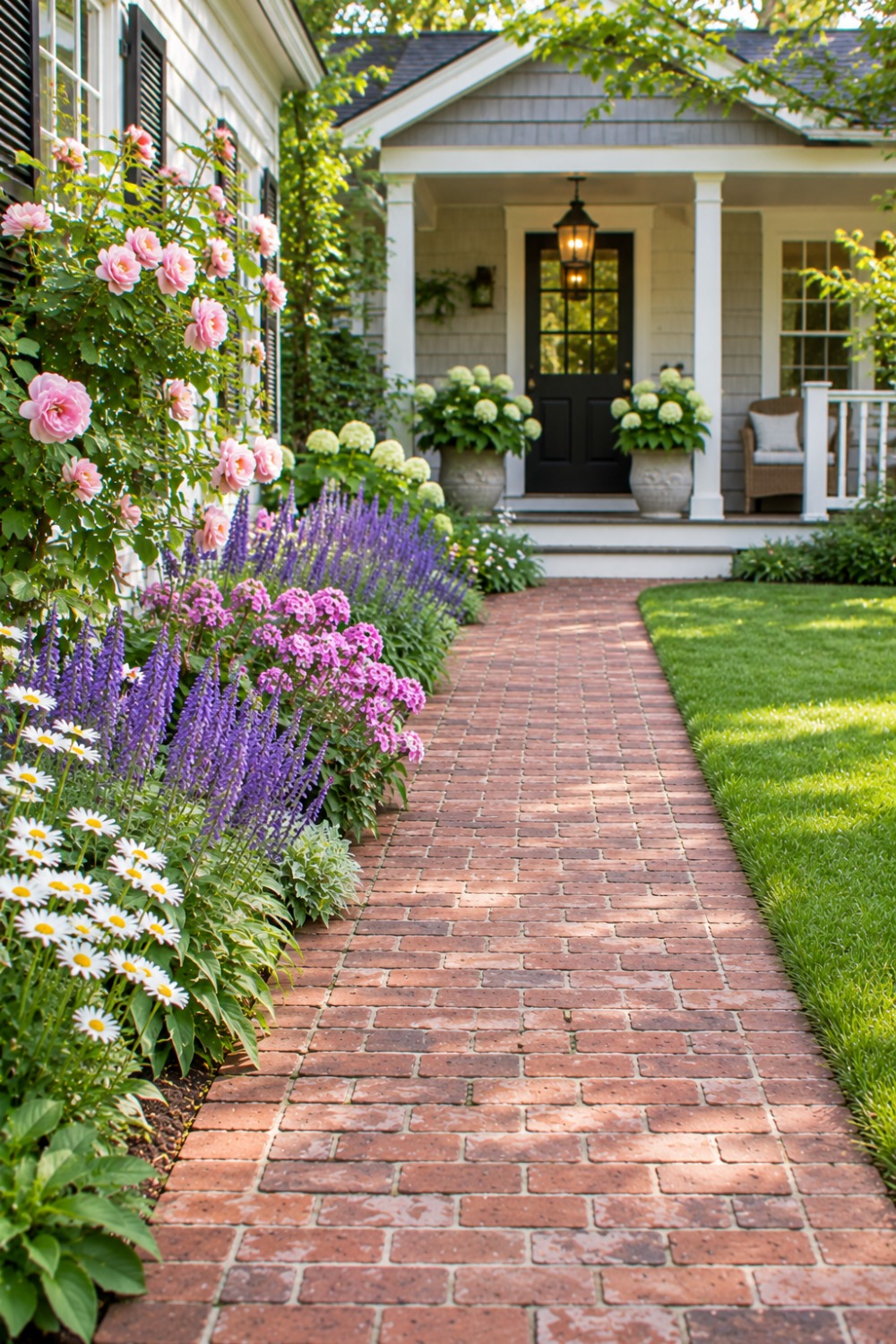
A border on both sides of a narrow walk can feel crowded.
Planting a deep cottage border on one side and keeping the other side open gives a lush look without closing in the path.
Use roses, salvia, phlox and daisies, with lower plants nearest the paving.
How to do it:
- Choose the side that gets more sun.
- Make the border at least 3 feet deep.
- Keep plants nearest the walk under about 18 inches.
12. Widen the Walk Into a Small Courtyard at the Door
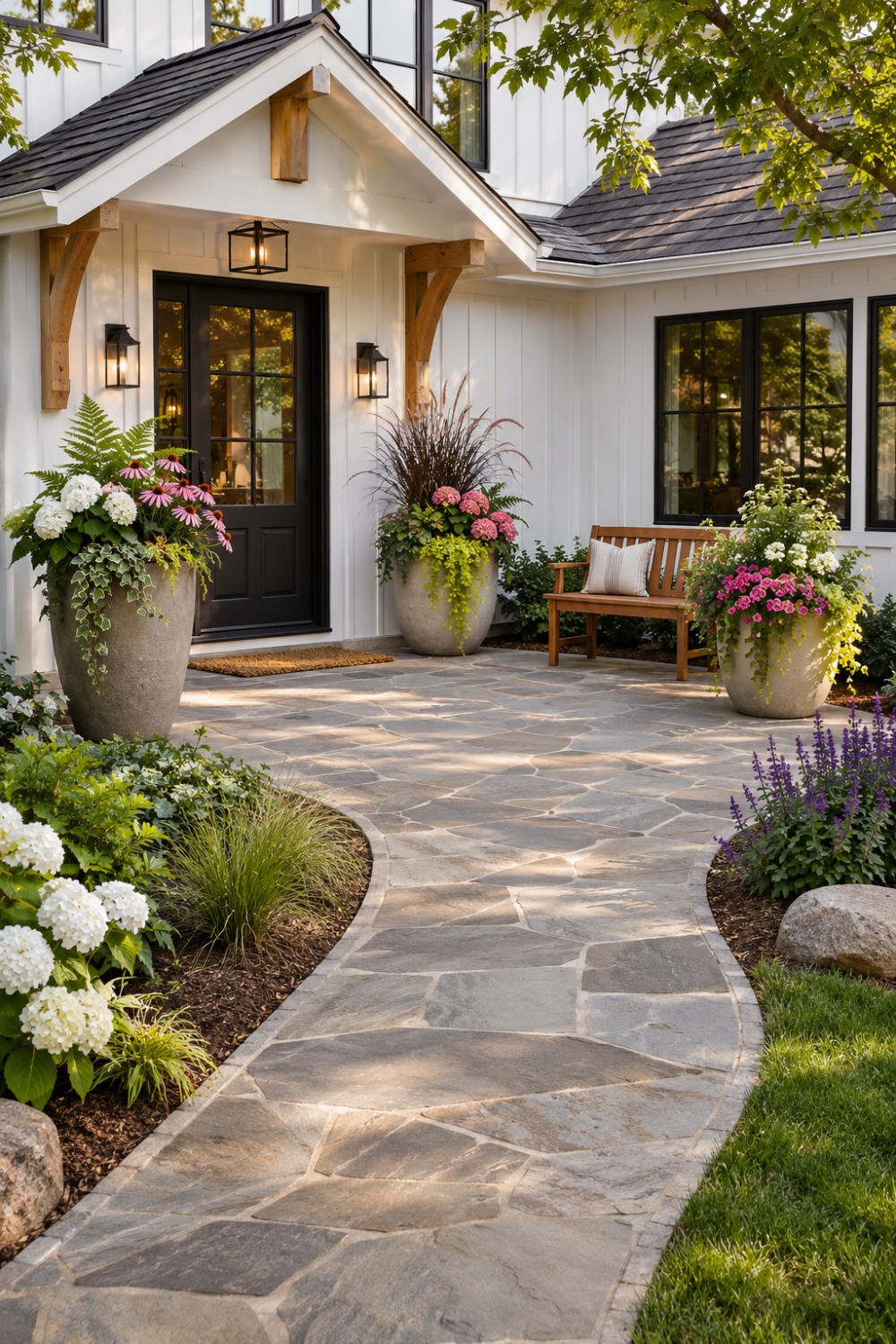
Where the walk meets the front steps, a wider paved area gives guests room to gather.
It also creates space for large pots, a small bench or a seasonal display.
This works especially well where there’s no porch.
How to do it:
- Widen the paving near the door into a square or rectangle.
- Use the same material as the walk so it reads as one design.
- Add two or three large planters.
13. Use Permeable Pavers to Stop Puddles
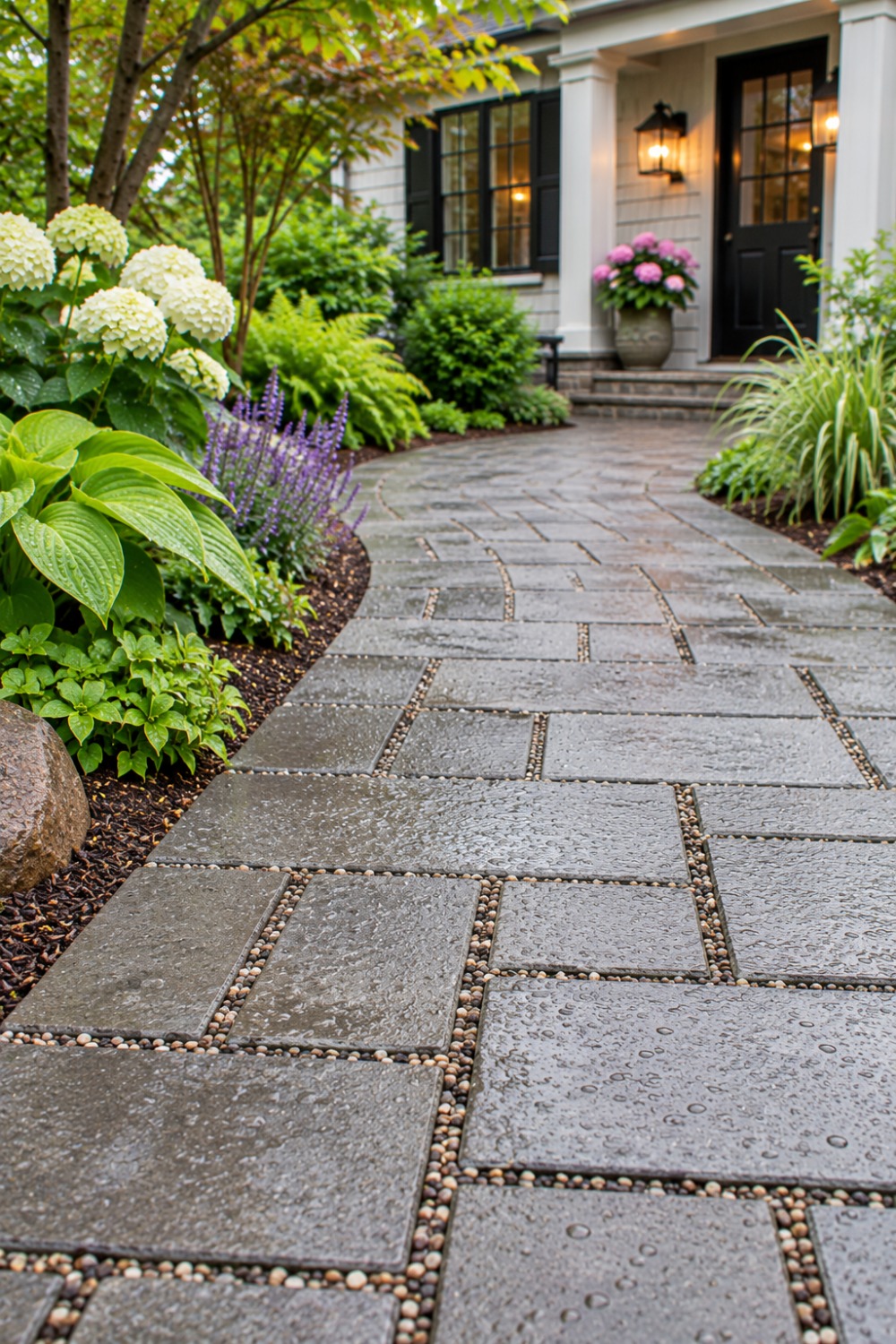
If your walk turns into a puddle after every storm, permeable pavers can help.
Water soaks through the gaps and into a deep gravel base instead of pooling or running into the street.
They’re a good choice where drainage is poor or local rules limit hard surfaces.
How to do it:
- Excavate deeper than for standard pavers to fit the gravel reservoir.
- Use clean, open-graded stone in the base and joints.
- Sweep the joints clean once or twice a year.
14. Choose a Non-Slip Surface for Wet and Icy Weather
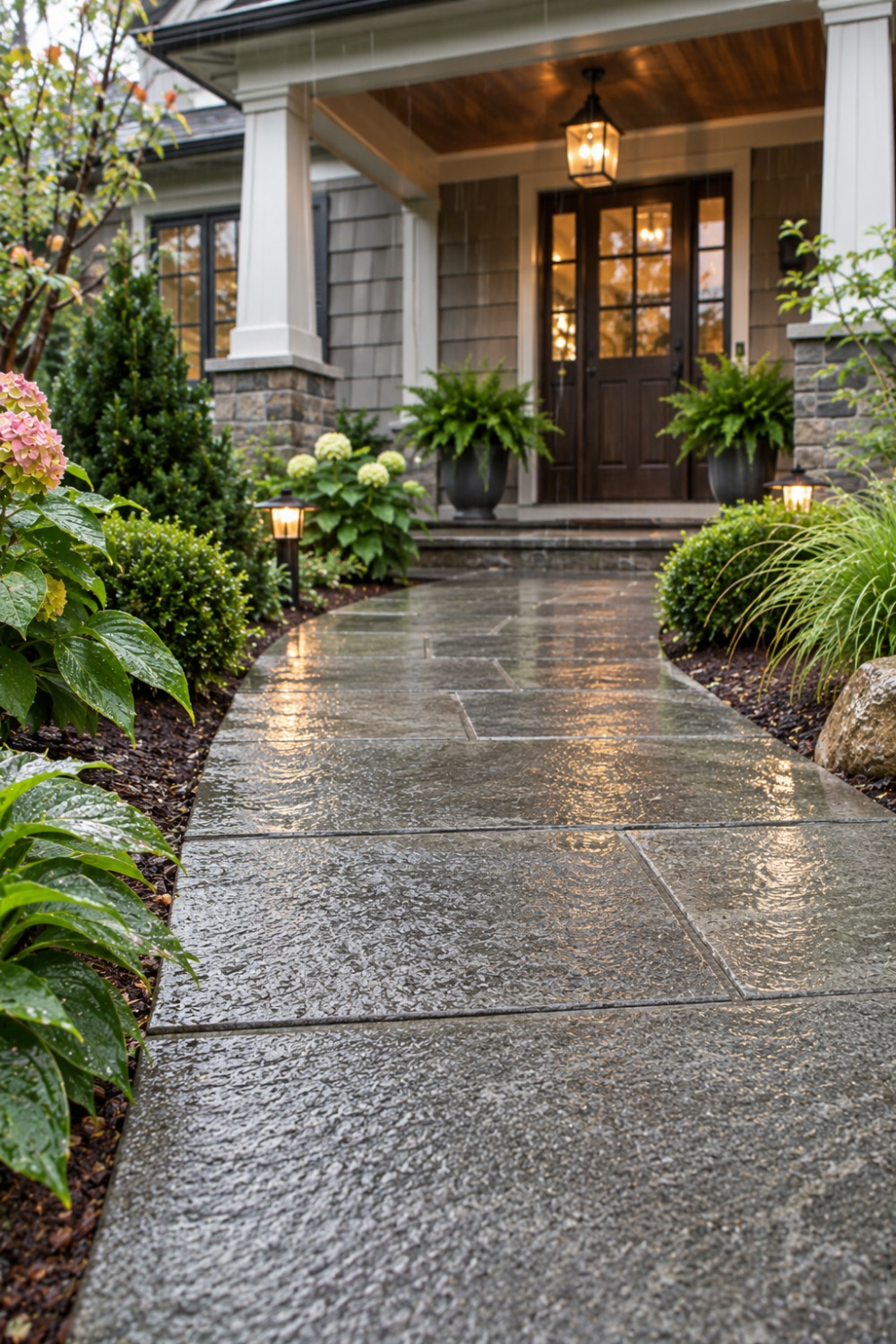
A beautiful walk is no good if guests slip on it.
Textured finishes such as thermal bluestone, brushed concrete and tumbled pavers grip far better than polished stone.
In cold climates, choose materials rated for freeze-thaw and use sand rather than harsh de-icers.
How to do it:
- Check the finish before buying stone or pavers.
- Ask about freeze-thaw ratings in cold areas.
- Clear leaves and moss regularly, especially in shade.
15. Keep Plants Low Enough to See the Door
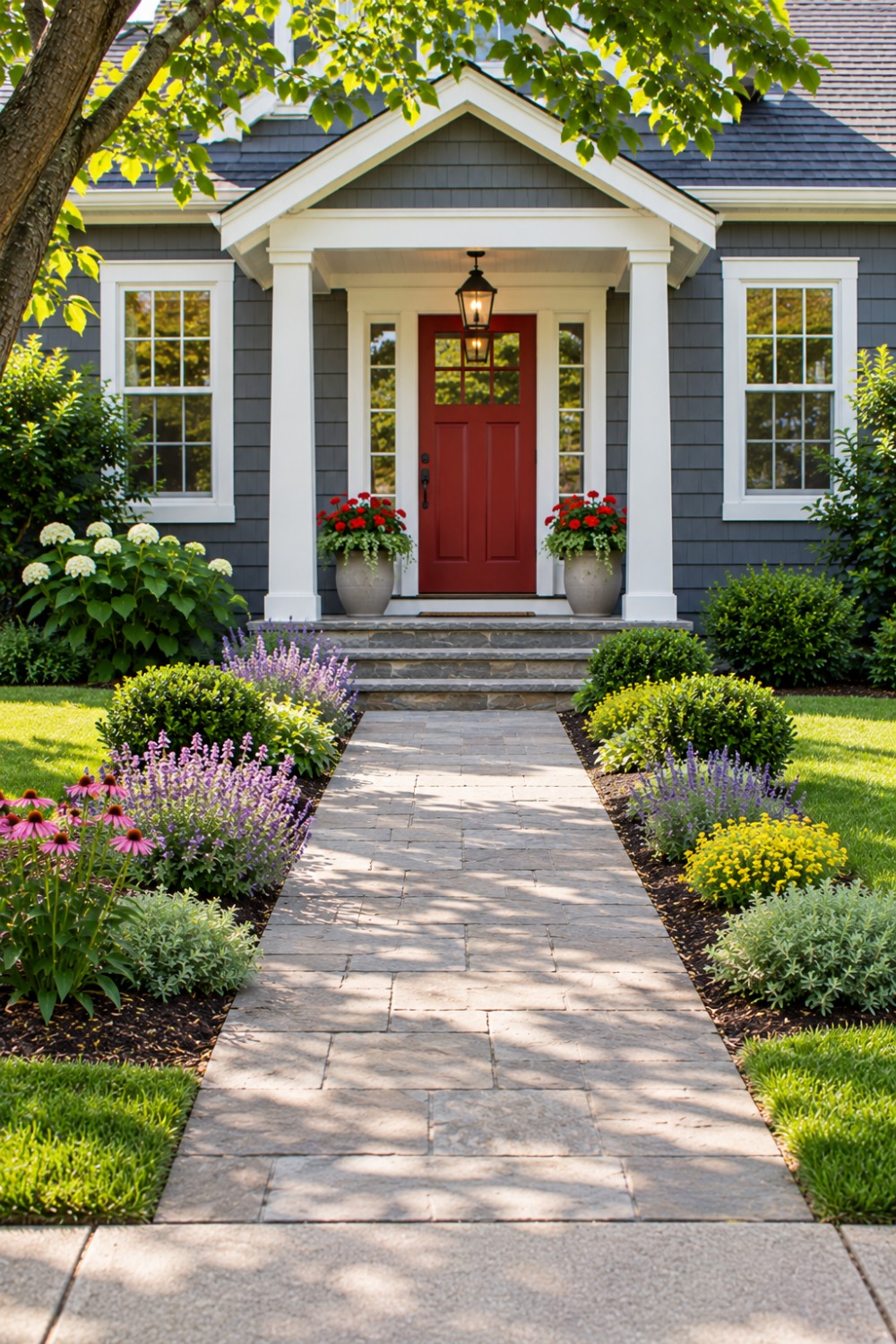
Guests should be able to see the front door from the street.
Tall shrubs along the walk can hide the entrance and make the house feel closed off.
Keep plants near the walk low and save taller shrubs and trees for the corners of the house.
How to do it:
- Stand at the street and check the view of the door.
- Replace or prune shrubs that block it.
- Choose plants with a mature height under about 3 feet near the walk.
16. Place a Specimen Shrub Where the Walk Turns
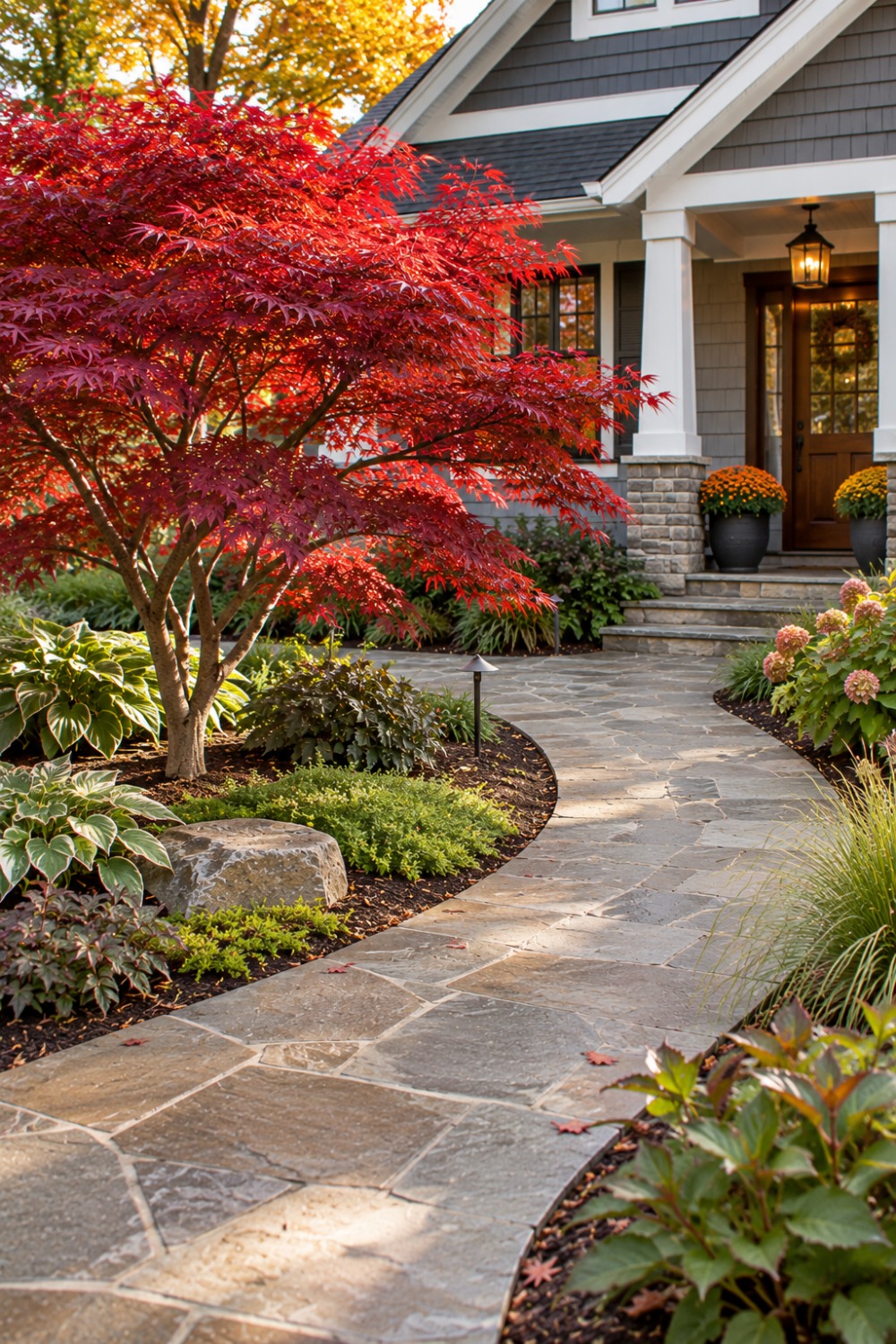
Every curve or corner in a walk is a chance for a focal point.
A specimen plant such as a Japanese maple, dwarf conifer or flowering shrub at the turn draws the eye and explains why the path bends.
It also stops people cutting the corner.
How to do it:
- Find the inside of each curve or corner.
- Plant one striking shrub or small tree there.
- Underplant with low ground cover.
17. Match the Walk Material to Your House
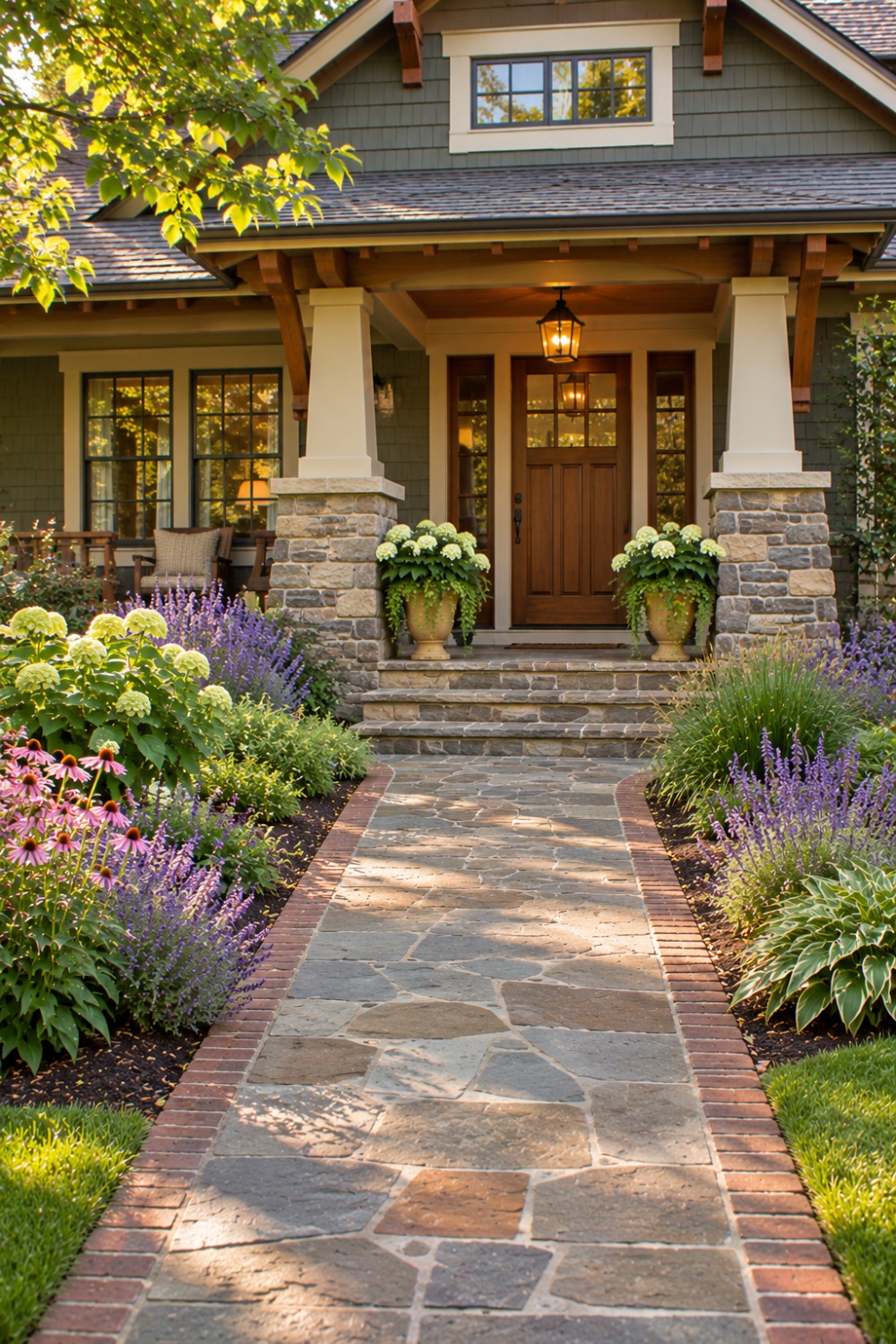
The best walkways look like they were built with the house.
Pick up a material or color already on the facade: brick to match brick, stone to match a stone base, or concrete pavers to match a modern exterior.
It ties the front yard together and makes the entrance feel intentional.
How to do it:
- Note the main materials and colors on your house.
- Choose paving that matches or complements one of them.
- Repeat it at the steps or porch for a cohesive look.
For more front yard ideas built around the entry, see our front yard landscaping ideas.
Frequently Asked Questions
How wide should a front walkway be?
Four to five feet lets two people walk side by side comfortably. Three feet is a common minimum but feels narrow, especially on a long walk.
What is the best material for a front walkway?
It depends on your house and budget. Concrete is affordable, brick suits traditional homes, bluestone and flagstone look timeless, and large pavers suit modern houses. Choose a textured, non-slip finish.
What can I plant along a front walkway?
Low plants such as boxwood, lavender, catmint, hardy geranium and spring bulbs keep the path clear and the door visible. Save taller shrubs for the house corners.
Should a front walkway be straight or curved?
Straight walks suit formal, symmetrical homes. A gentle curve feels more relaxed and suits wider lots, but keep it soft so people don’t cut across the lawn.
Final Thoughts: Make the Walk Feel Like a Welcome
A good front walkway is easy to find, comfortable to walk and leads clearly to the door.
Start with the basics: a width that fits two people, a firm non-slip surface and a layout that doesn’t invite shortcuts.
Choose a material that echoes your house, and mark the start of the walk so guests know where to go.
Then frame it with planting: a low hedge, a cottage border on one side, spring bulbs and a specimen shrub at the turn.
Keep everything near the walk low enough that the door stays in view.
If your walk meets the driveway, our mailbox landscaping ideas can help you finish the street edge too.
Start with one improvement this season, whether it’s widening the edges or replanting the borders, and your entry will feel more welcoming right away.