A plain city bedroom can have good light, decent furniture, and still feel strangely anonymous. The most interesting Urban Jungle Bedroom designs solve that problem without simply filling every empty corner with another plant.
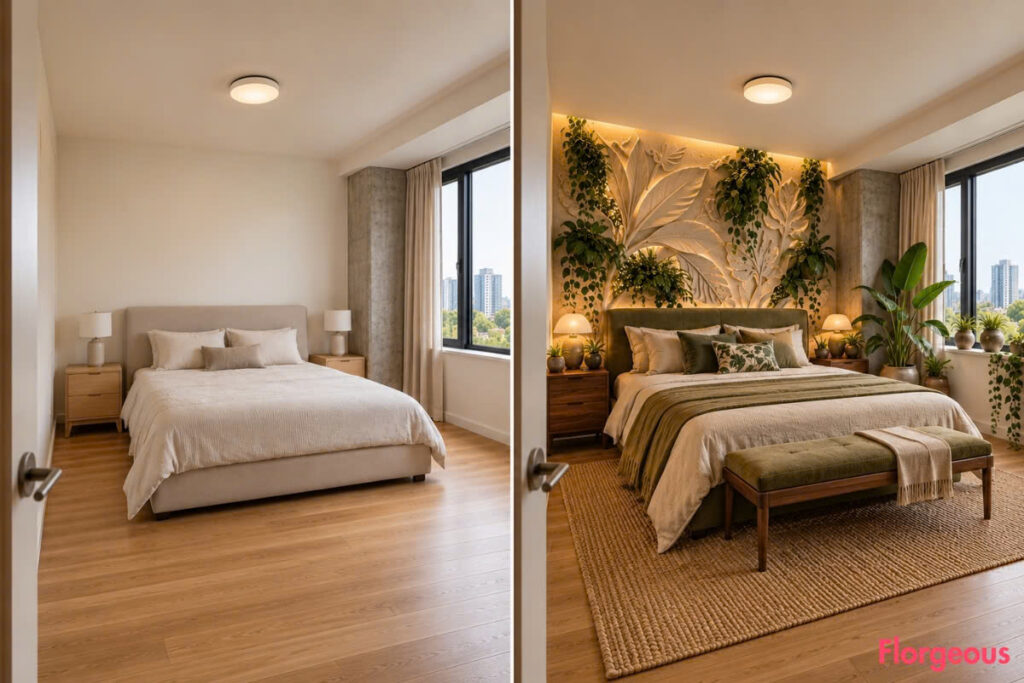
For all 21 transformations, the architectural shell stays locked: a wide urban apartment bedroom with a solid rear bed wall, front-left entry, structural concrete column at the rear-right corner, large horizontal window on the right wall with a deep sill, shallow ceiling beam near the window, flat off-white ceiling, medium-warm oak flooring, warm off-white walls, oatmeal upholstered bed, two simple pale-wood nightstands, plain curtains, and minimal styling.
The difference is what happens after. Greenery becomes sculpture, furniture, spatial structure, light, texture, and living artwork.
1. Turn the Concrete Column Into a Living Green Totem
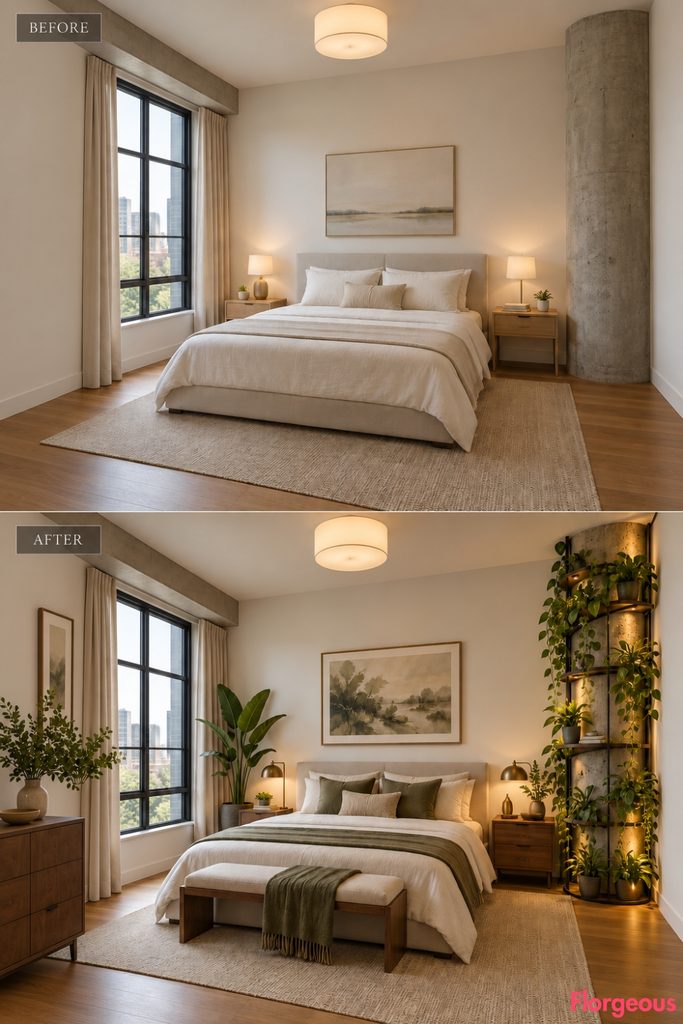
Before: The exposed structural column feels accidental beside the bed.
After: A custom blackened-steel exoskeleton wraps loosely around the column, creating narrow climbing paths for a single vigorous vine. Small directional lights graze both concrete and leaves so the column reads like a botanical sculpture.
Walnut furniture and ivory linen remain restrained.
Why it works: The room’s most urban architectural feature becomes its strongest jungle feature.
2. Make the Window Sill Feel Like a Botanical Vitrine
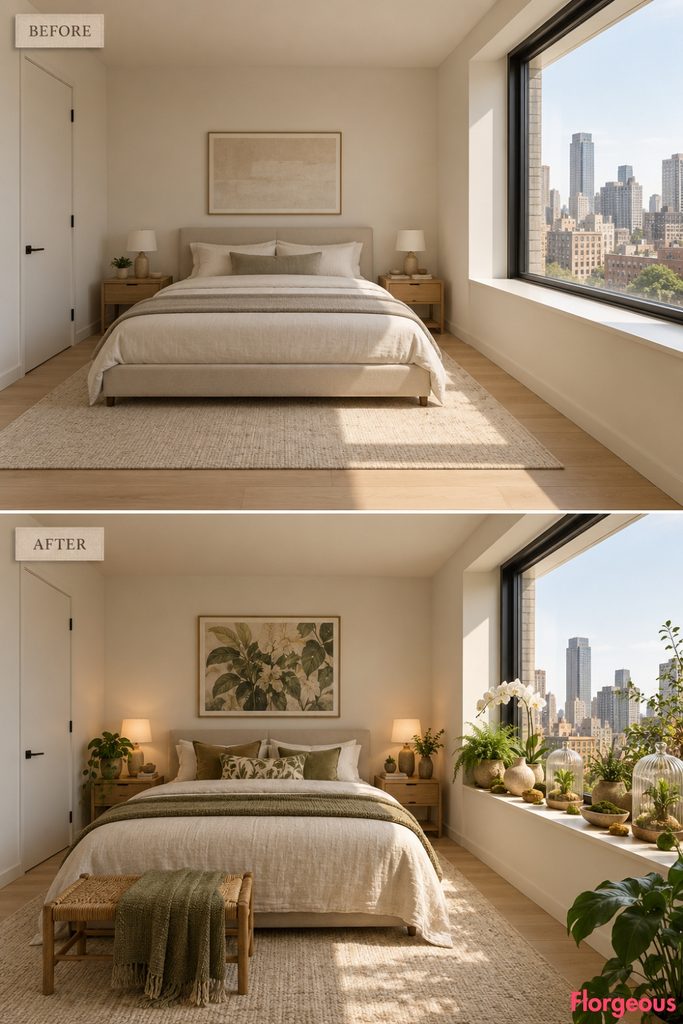
This is not simply a line of pots.
The deep window sill becomes a carefully composed display case with sculptural ceramic vessels, clear ribbed-glass plant cloches, compact ferns, orchids, moss and small trailing species arranged like collected objects.
The black window frame and skyline beyond remain visible.
Designer Tip: Leave negative space between groups so every plant has its own silhouette.
3. Sculpt a Headboard Wall From Plaster and Greenery
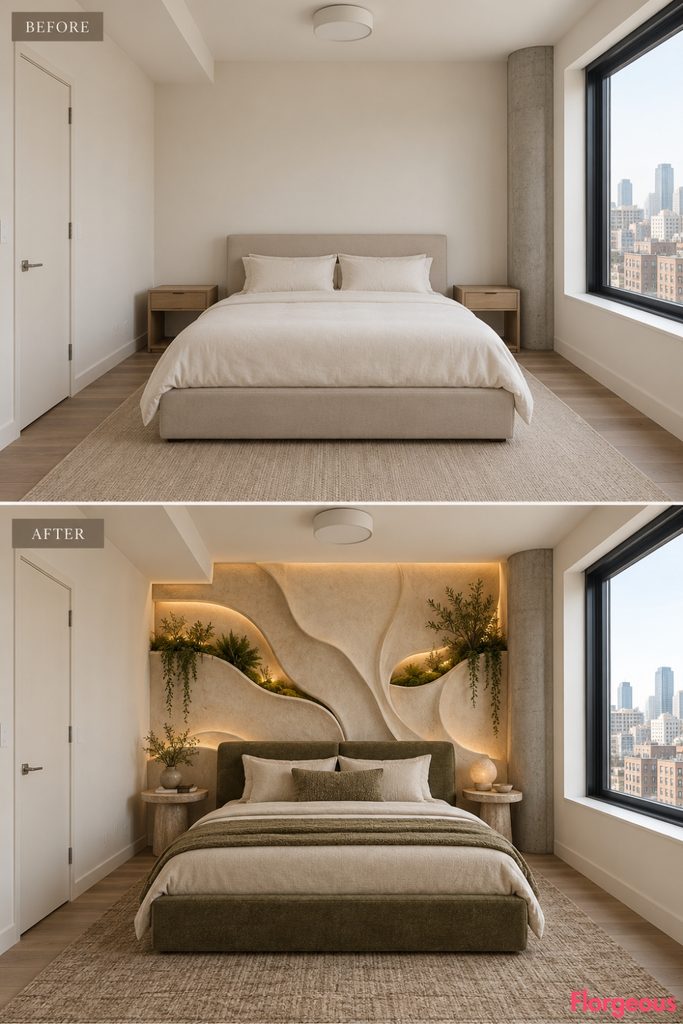
The bed wall becomes three-dimensional artwork.
Shallow hand-formed mineral-plaster relief panels rise behind the bed in overlapping organic shapes. Selected gaps between the relief forms hold narrow integrated planters with controlled philodendron and fern foliage.
The wall looks carved rather than decorated.
Why it works: Plants are embedded into a sculptural composition instead of sitting in front of a painted wall.
4. Suspend a Floating Vine Beam Across the Window Zone
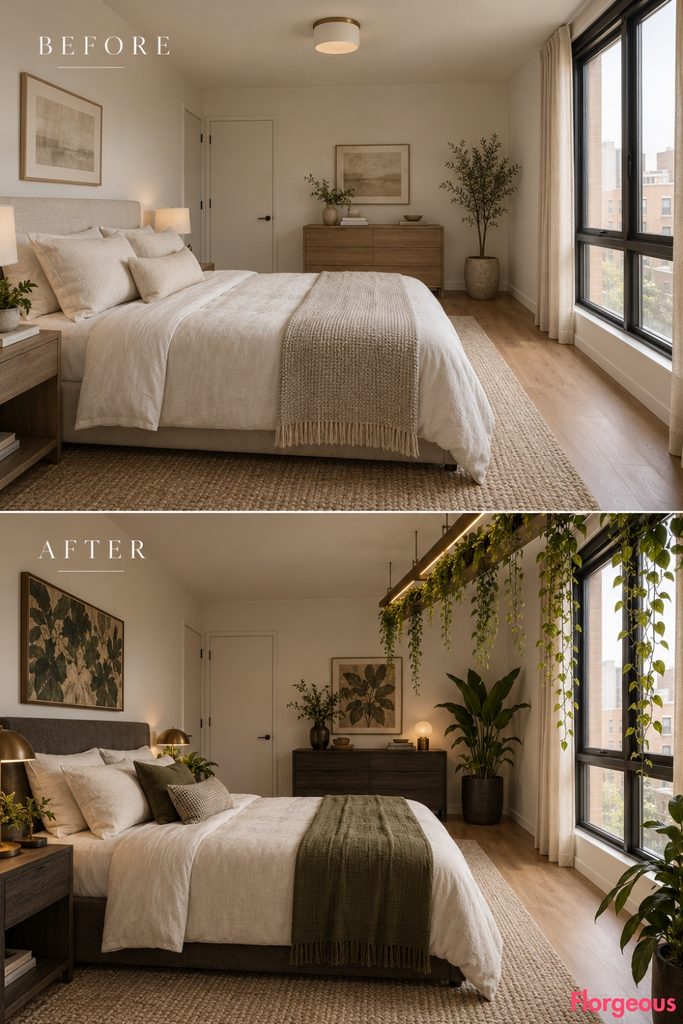
The ceiling remains untouched visually except for one precise intervention.
A slim bronze horizontal structure hangs parallel to the window, carrying a sequence of trailing plants that form one floating green line.
It feels architectural, almost like a suspended garden beam.
5. Turn the Blank Left Wall Into a Plant Library
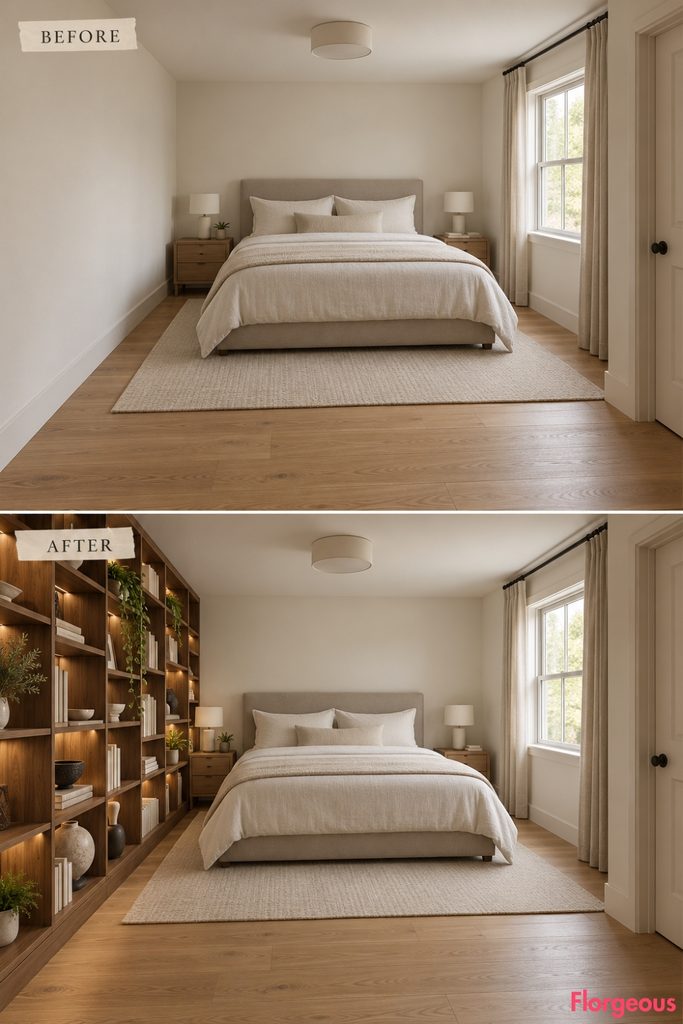
This concept combines plants, storage, and display.
A full-height walnut shelving composition occupies the left wall, but the grid is deliberately irregular. Some compartments hold books with blank spines, others contain ceramics, directional lighting, trailing greenery, or larger planted volumes.
The result feels closer to a collector’s library than ordinary shelving.
6. Build a Terracotta Landscape Behind the Bed
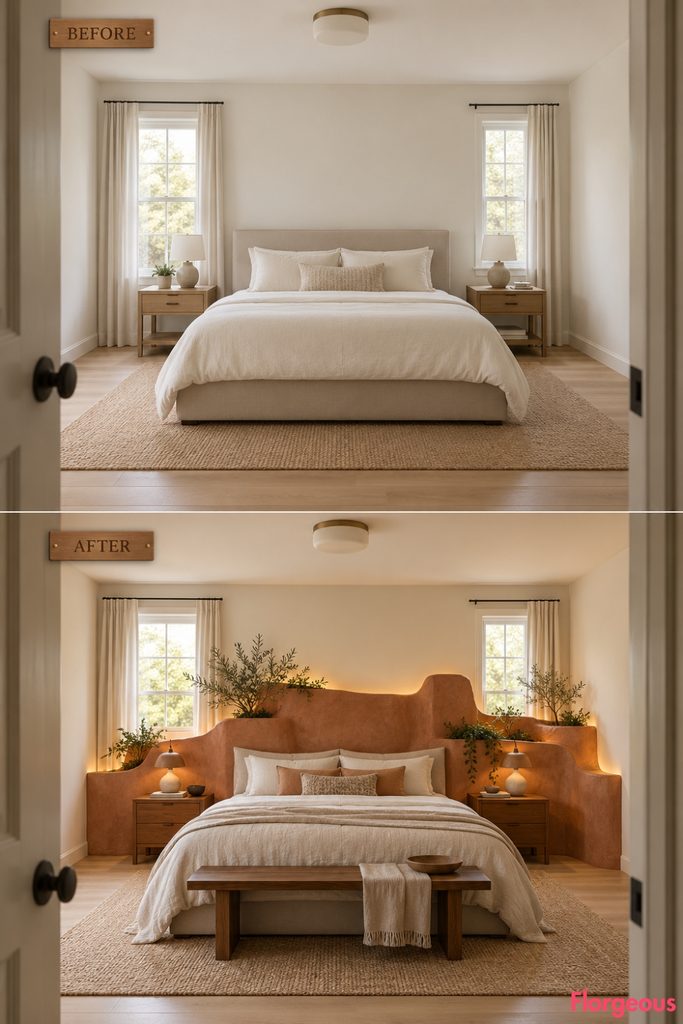
Rather than creating another conventional headboard, use one low sculptural mass.
A long freestanding terracotta-plaster plinth stretches behind the bed. Its top shifts gently in height, producing several planting pockets for upright leaves, low ferns and trailing greenery.
The bed sits slightly forward so the planter reads like an indoor landscape.
Color Story: Clay, olive, tobacco and linen make foliage feel richer without relying on bright green paint.
7. Surround the Bed With a Botanical Canopy Sculpture
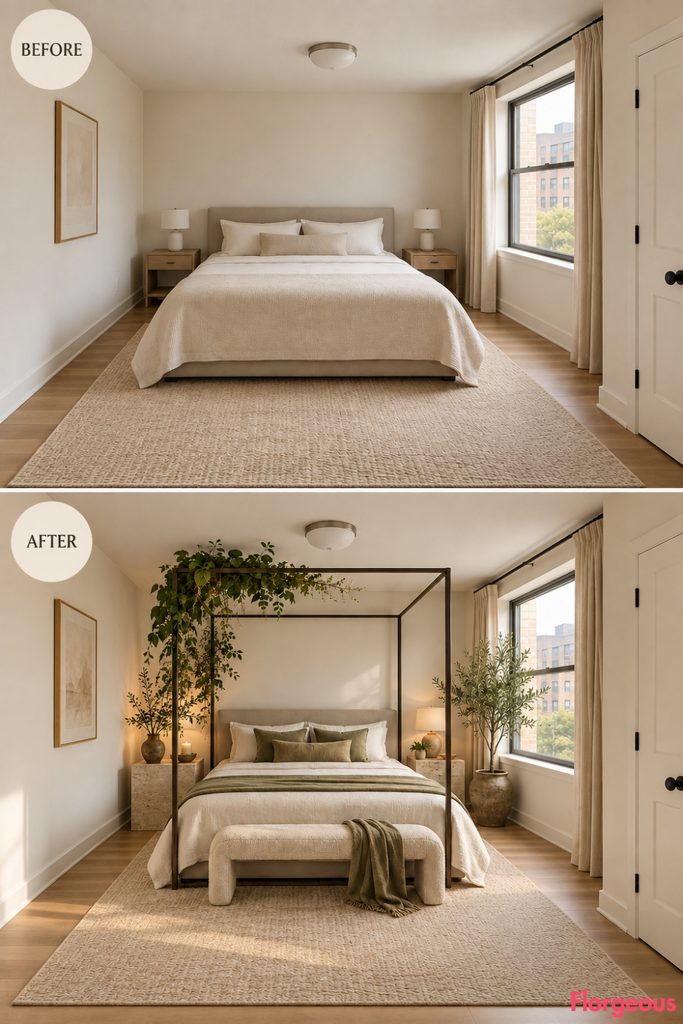
The canopy itself becomes a piece of furniture-scale art.
An asymmetric dark-metal frame rises around only three sides of the bed. One upper corner carries a concentrated cascade of greenery while the rest remains deliberately bare.
This imbalance makes the structure feel designed rather than like a standard four-poster.
8. Paint a Botanical Fresco Across the Rear Wall
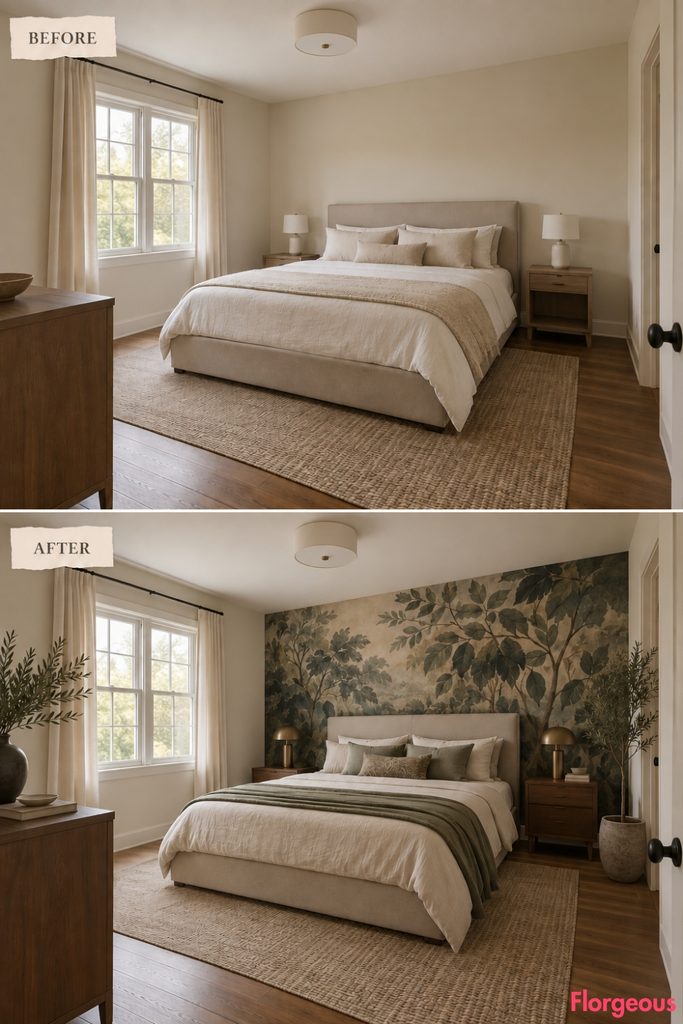
Here, art carries most of the jungle feeling.
The rear wall receives a hand-painted oversized botanical fresco using softened charcoal, moss, eucalyptus and muted forest green. The brushwork feels artistic and imperfect.
Only two large real plants are used.
Why it works: The eye reads a lush landscape without filling the floor with containers.
9. Carve Out a Window-Side Reading Grove
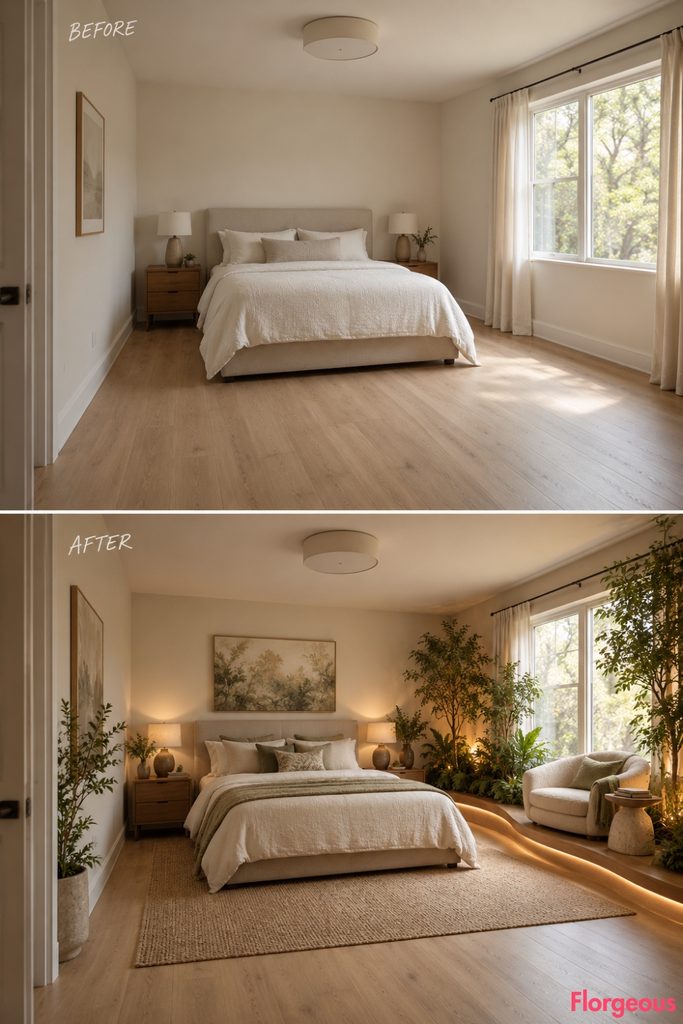
The plants create a room within the room.
A curved low timber platform sits near the bright window corner, supporting one compact lounge chair and stone side table. Layered foliage arcs around the chair, while a slim floor light illuminates the leaves from behind.
The bed remains visually quiet.
Small Space Tip: Concentrating greenery around one activity zone prevents the whole bedroom from feeling crowded.
10. Frame the Bed With a Pair of Indoor Trees
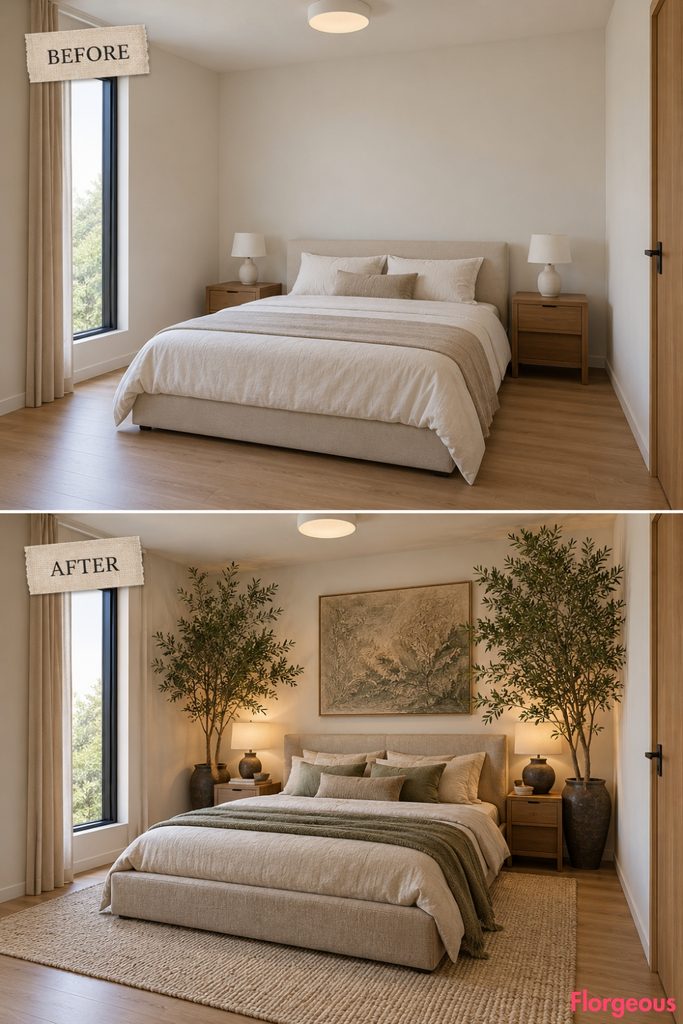
The design gesture is simple but architectural.
Two tall narrow trees stand beyond the nightstands and rise nearly to the shallow beam line. Their branching forms frame the sleeping zone like a natural portal.
A low bed keeps the trees visually dominant.
11. Make a Travertine Botanical Gallery
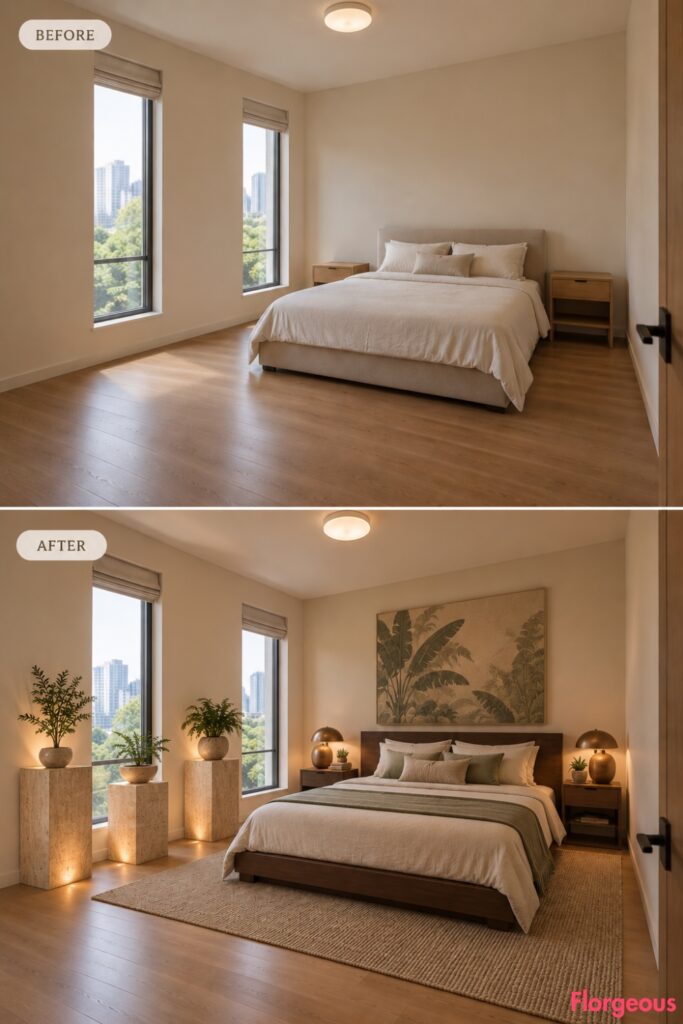
This concept treats foliage like museum objects.
Freestanding travertine blocks in three different proportions are composed along one side of the rear wall. Each supports one extraordinary plant specimen rather than several small ones.
Thin concealed uplights produce gallery-style shadows.
Why it works: Large leaves against solid stone feel far more intentional than a cluster of unrelated pots.
12. Create a Woven Cane Botanical Relief
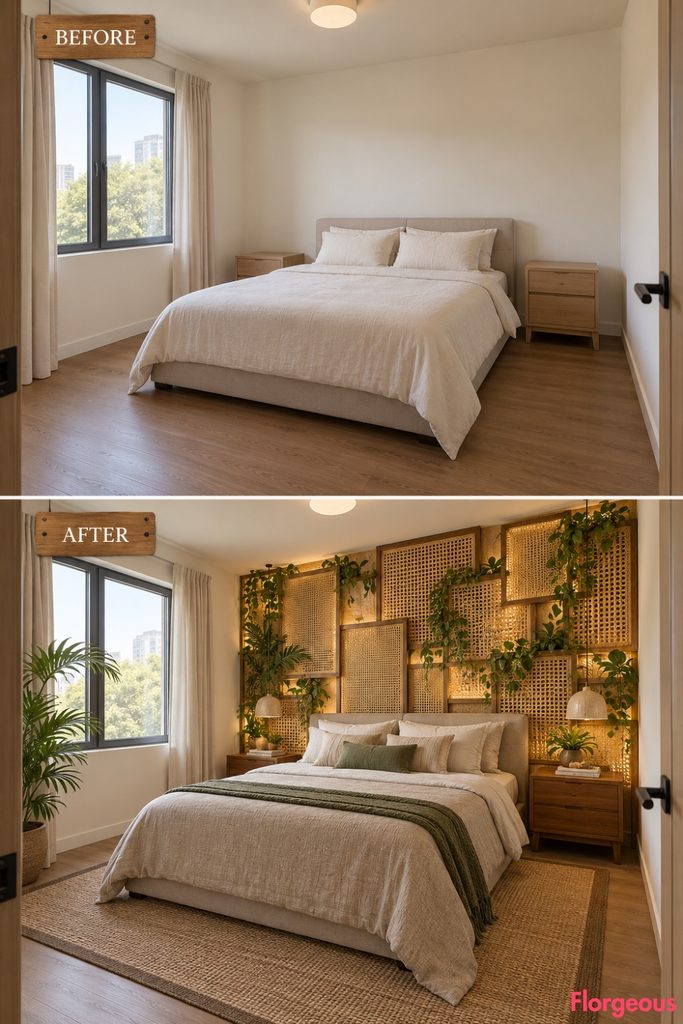
Instead of a flat cane screen, make the wall three-dimensional.
Several oversized woven-cane panels overlap at shallow depths behind the bed. Dark timber battens frame the pieces, and selected climbing plants weave through only a few openings.
The cane itself stays visible as artwork.
13. Design a Hydroponic Light Wall
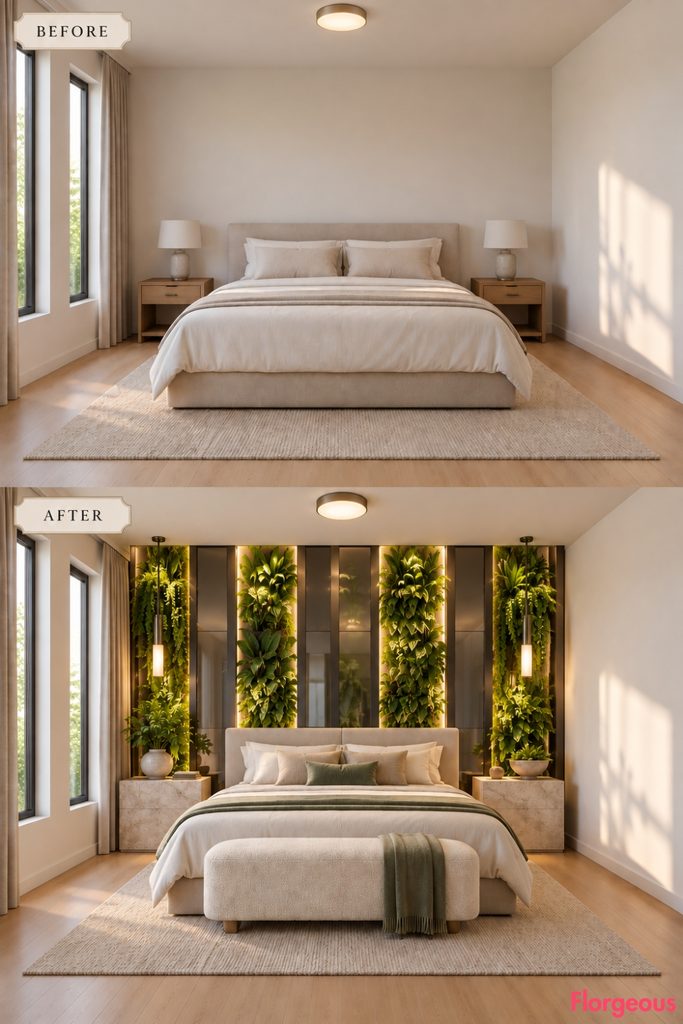
This is urban jungle translated into precise contemporary architecture.
A slim hydroponic system spans part of the bed wall as several illuminated vertical green strips separated by smoked-glass and graphite panels.
The lighting is architectural rather than decorative.
Practical Note: Any real hydroponic system should use professionally waterproofed irrigation and separate electrical channels.
14. Turn Leaf Shadows Into the Main Artwork
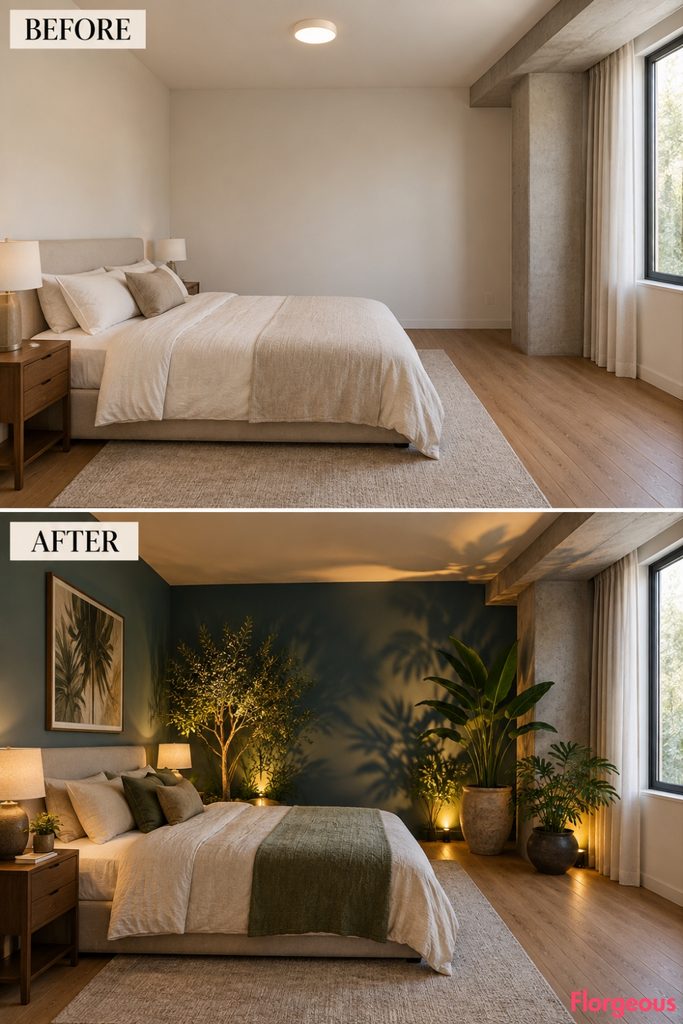
Very little physical decor is needed here.
Three carefully positioned plants stand away from a deep blue-green wall. Concealed floor-level lights project enlarged leaf silhouettes across the wall, column and shallow ceiling beam.
The room changes character as daylight fades.
15. Wrap the Window in a Bronze Conservatory Frame
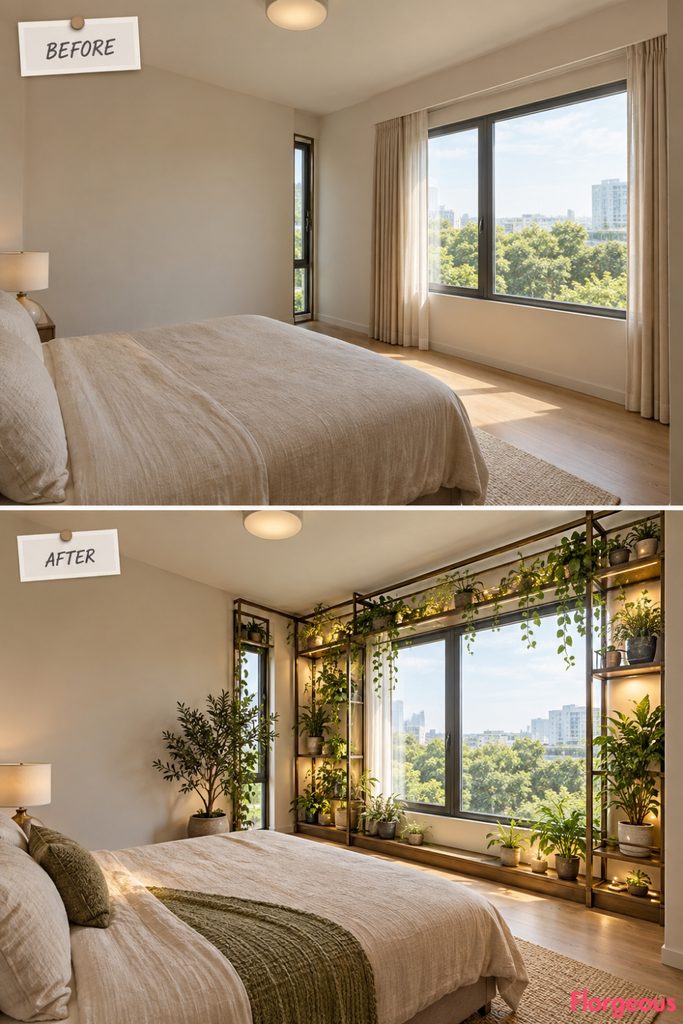
The existing window becomes a piece of botanical architecture.
A slender freestanding bronze framework follows the perimeter of the deep window reveal without changing the glazing. Narrow side ledges and small crossbars support climbing vines, ferns and a few suspended plants.
Most of the window remains clear.
16. Create a Mirrored Botanical Portal Along the Left Wall
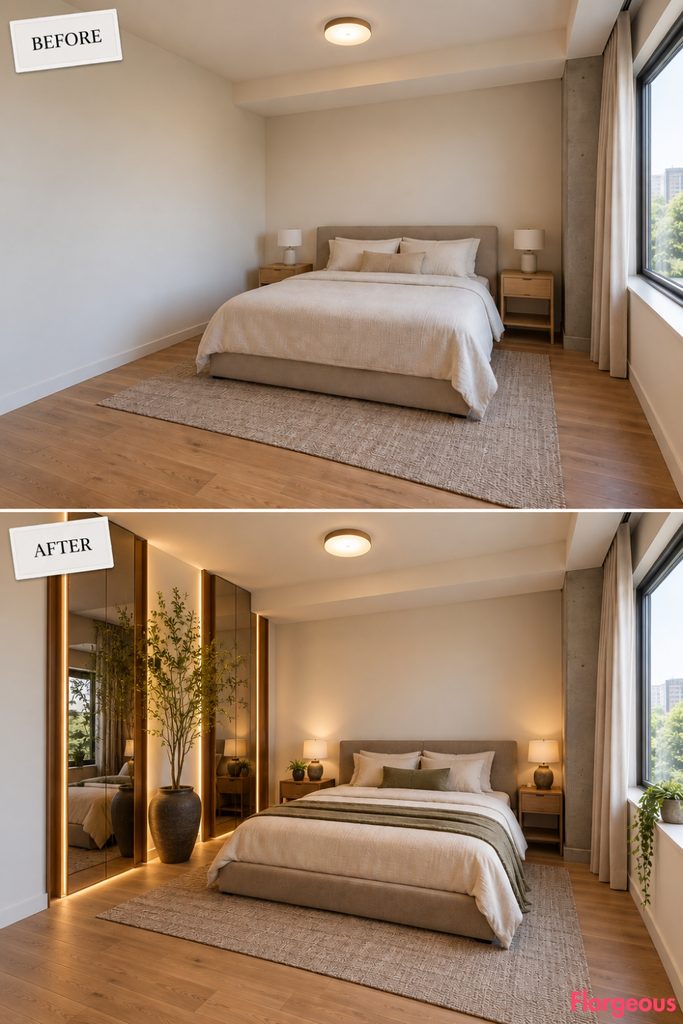
Use reflection to make the room feel greener without adding more plants.
Before: A plain neutral bedroom with a bare left wall.
After: Add two bronze-tinted mirror panels with slim walnut fins and one tall branching plant in a dark-stone planter between them. Concealed wall lighting creates layered botanical reflections.
Why it works: The mirrors multiply greenery and add depth without clutter.
Try this: Choose bronze-tinted mirror for a softer, more atmospheric effect.
17. Hang a Kokedama Constellation on a Balcony Beside the Bedroom
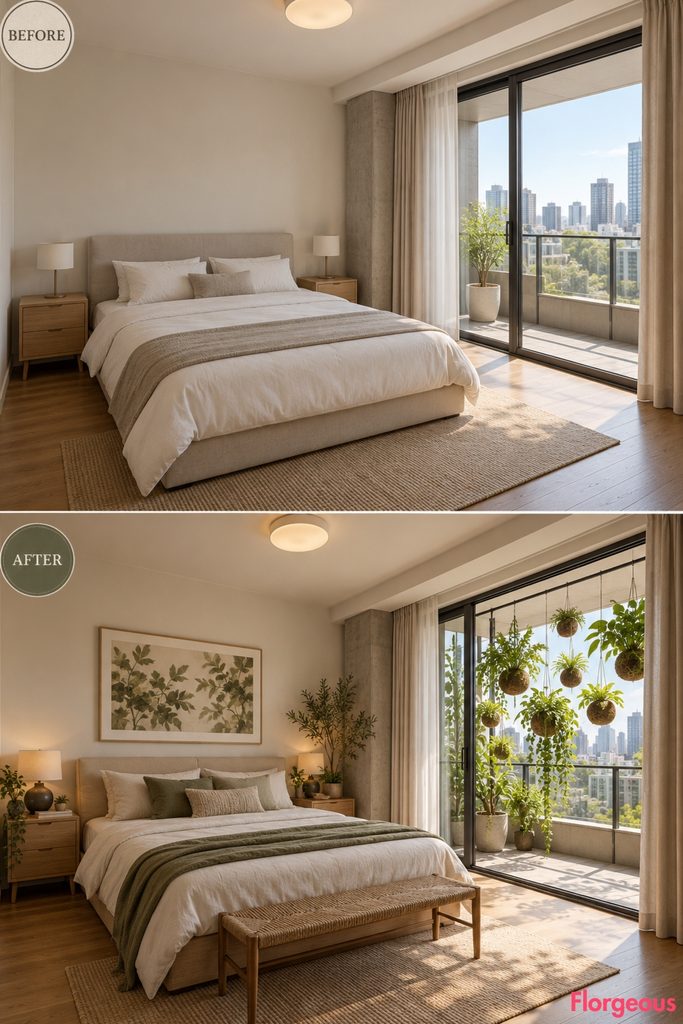
Move the suspended greenery outside the sleeping zone so the room stays calm while the balcony becomes the main botanical feature.
Before: A plain neutral urban bedroom with basic furniture and minimal styling.
After: Add a slim balcony beside the bedroom and suspend moss-wrapped kokedama spheres at varied heights from a dark-metal rail, creating a floating garden visible from the bed.
Why it works: The greenery feels immersive without cluttering the bedroom.
Try this: Vary the hanging heights and keep enough space between each kokedama.
18. Create a Moss Bas-Relief Horizon
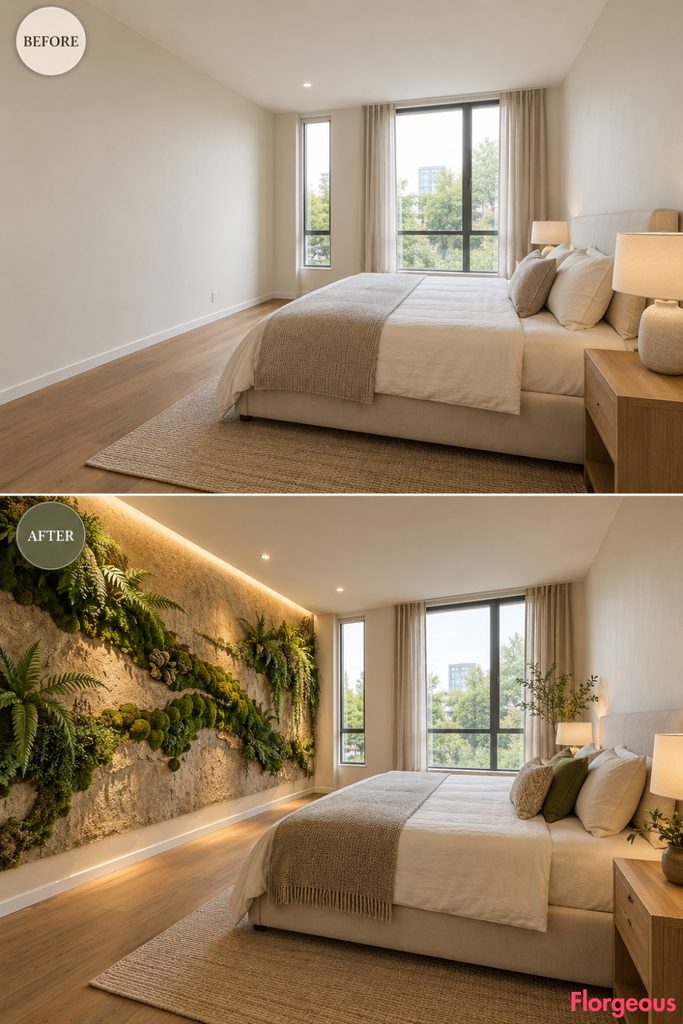
The jungle effect becomes tactile and almost landscape-like.
A long shallow sculptural panel stretches across the left wall at chest height. Preserved moss, textured mineral plaster and small pockets of fern create an abstract horizontal landscape.
The installation feels closer to a contemporary artwork than a plant wall.
19. Create a Sculptural Root Headboard
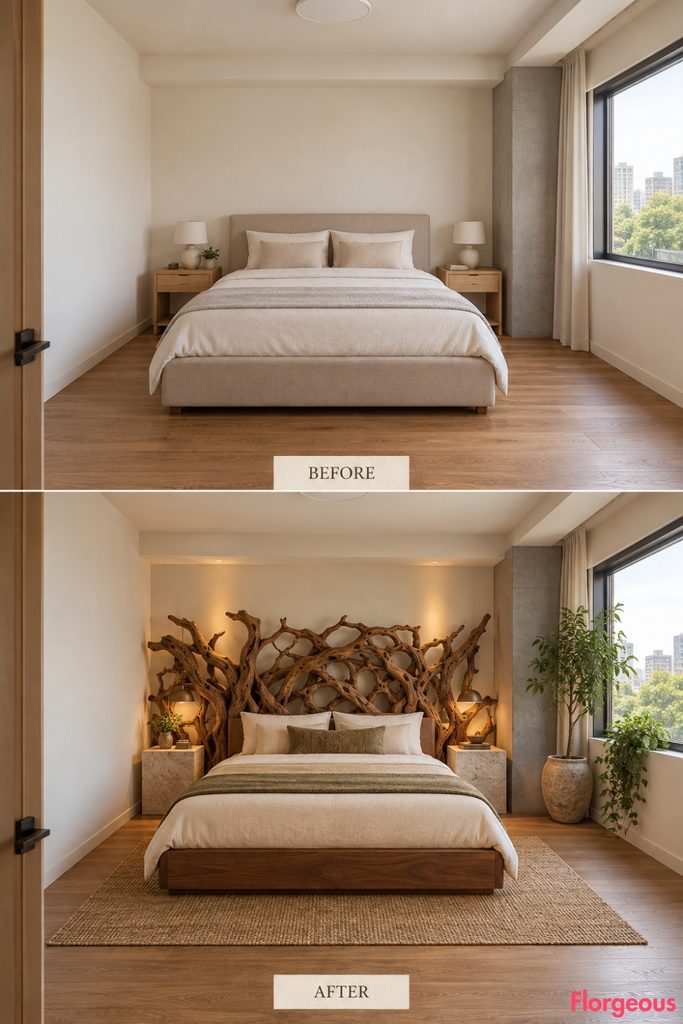
Use natural root forms as the main artistic statement instead of another plant installation.
Before: A plain neutral bedroom with a simple upholstered bed and no focal point.
After: Replace the basic headboard with a wide custom sculptural headboard made from intertwined reclaimed rootwood and hand-shaped dark timber, forming an organic branching silhouette behind the bed. Add only a few restrained plants near the window so the carved root structure remains the focus.
Why it works: It brings the jungle idea into the furniture itself, creating a raw natural form that feels completely different from living walls or botanical displays.
Try this: Keep the bedding quiet in flax, ivory, and warm stone so the rootwood silhouette stays visually dominant.
20. Make a Ceramic Rain Garden on the Left Wall
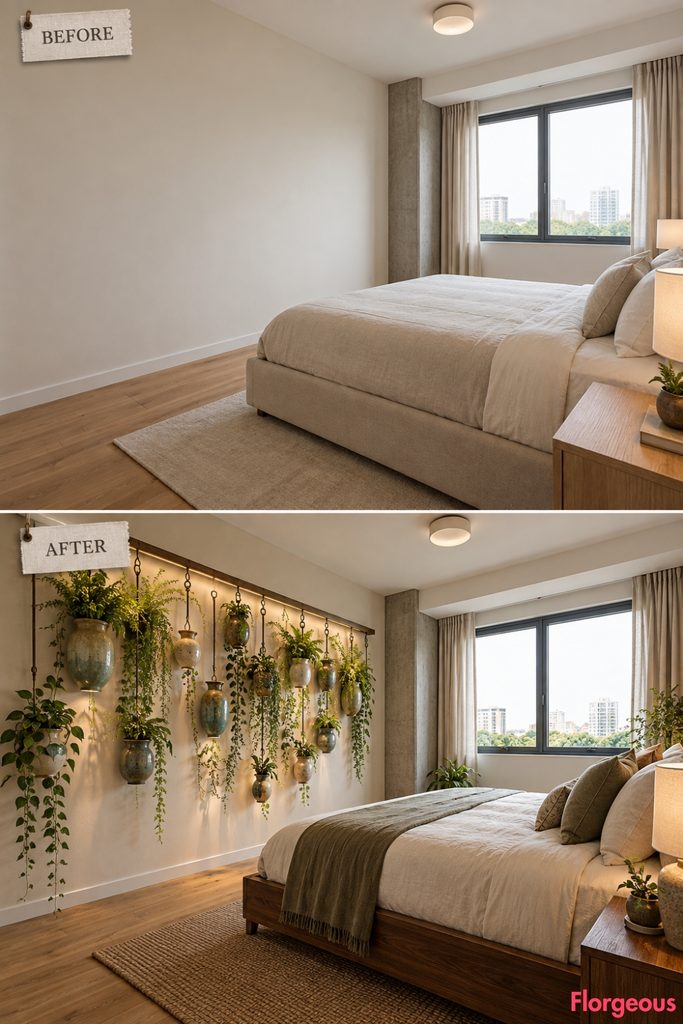
This is one of the most artistic plant displays in the series.
Hand-glazed ceramic vessels in earthy green and clay tones are mounted at different heights across a slim structural rail system. Ferns and trailing plants fall downward from the vessels like botanical rain.
The arrangement is intentionally irregular but balanced.
Why it works: Planters become an art medium rather than accessories.
21. Create a Sculptural Epiphyte Wall
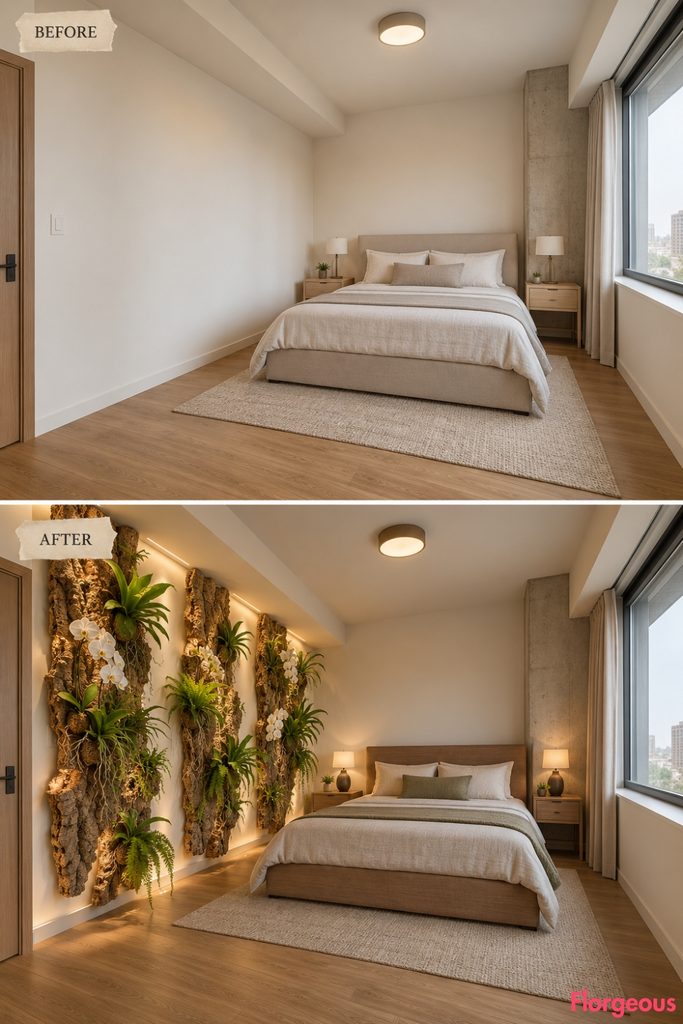
Turn the solid left wall into a living artwork using natural cork-bark forms rather than conventional planters.
Before: A plain neutral bedroom with a completely bare left wall.
After: Mount several large sculptural cork-bark slabs vertically with generous spacing, then attach orchids, small ferns, and epiphytic plants directly to selected bark surfaces. Soft wall washing highlights the rough texture and delicate roots, while the rest of the room stays restrained in walnut, flax, and warm stone.
Why it works: The greenery feels like a curated fragment of forest growing directly from the wall, giving the Urban Jungle Bedroom a completely different artistic identity.
Try this: Keep most of the wall visible so the bark forms read as sculpture rather than a dense living wall.
How to Choose an Urban Jungle Bedroom That Still Feels Like a Bedroom
The biggest difference between a designed Urban Jungle Bedroom and a room full of houseplants is composition.
Start by deciding what greenery is supposed to do. It might define the entrance, frame the bed, turn a structural column into art, create a reading retreat, soften hard city architecture, or become part of an installation on the wall.
Then choose one dominant botanical gesture. A sculptural headboard garden does not need a plant library beside it. A kokedama constellation does not need another hanging-plant feature. Giving each idea one clear visual hierarchy keeps the room restful.
Real plants should also follow the actual daylight conditions. The right-window zone can support light-loving species, while deeper parts of the room may need tolerant plants, preserved botanical materials, or artwork instead.
The most successful Urban Jungle Bedroom is not necessarily the greenest one. It is the one where city architecture and natural forms feel deliberately designed together.