
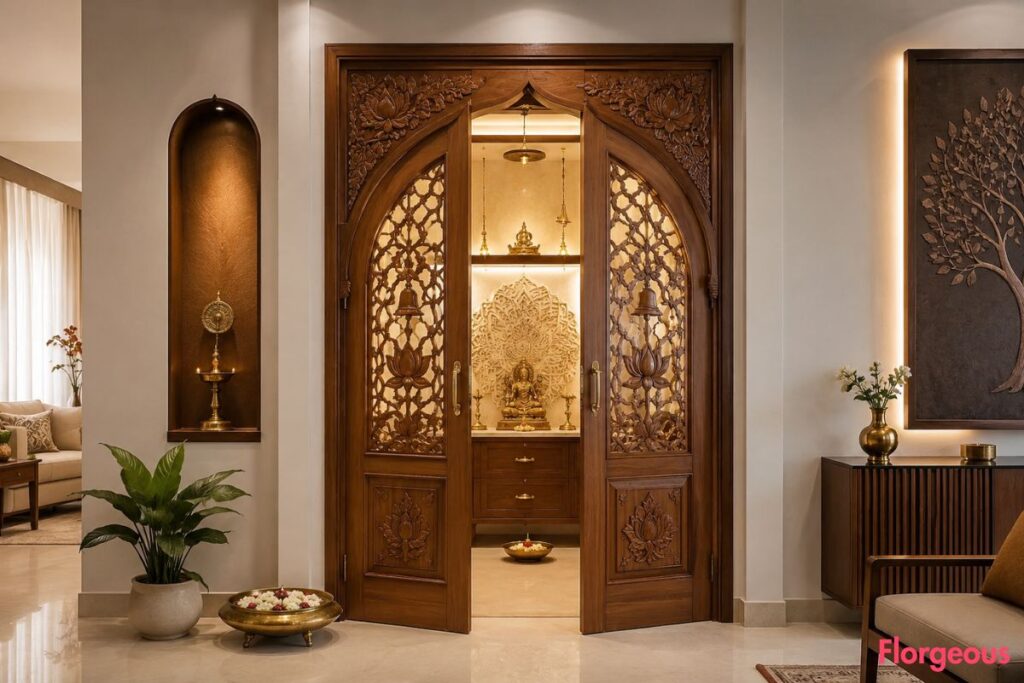
A pooja room door is never just a door.
It sets the mood before you even step inside. The right pooja room door design can make a small prayer niche feel peaceful, a modern apartment feel warmer, and a traditional home feel more complete.
But the most beautiful designs are not always the most obvious ones. Beyond the usual carved wooden door, there are clever details, layered materials, soft lighting ideas, and temple-inspired motifs that can make your sacred entryway feel personal and memorable.
Here are 19 unique pooja room door design ideas that feel stylish, practical, and full of meaning.
1. Layered Wooden Arch Pooja Room Door Design
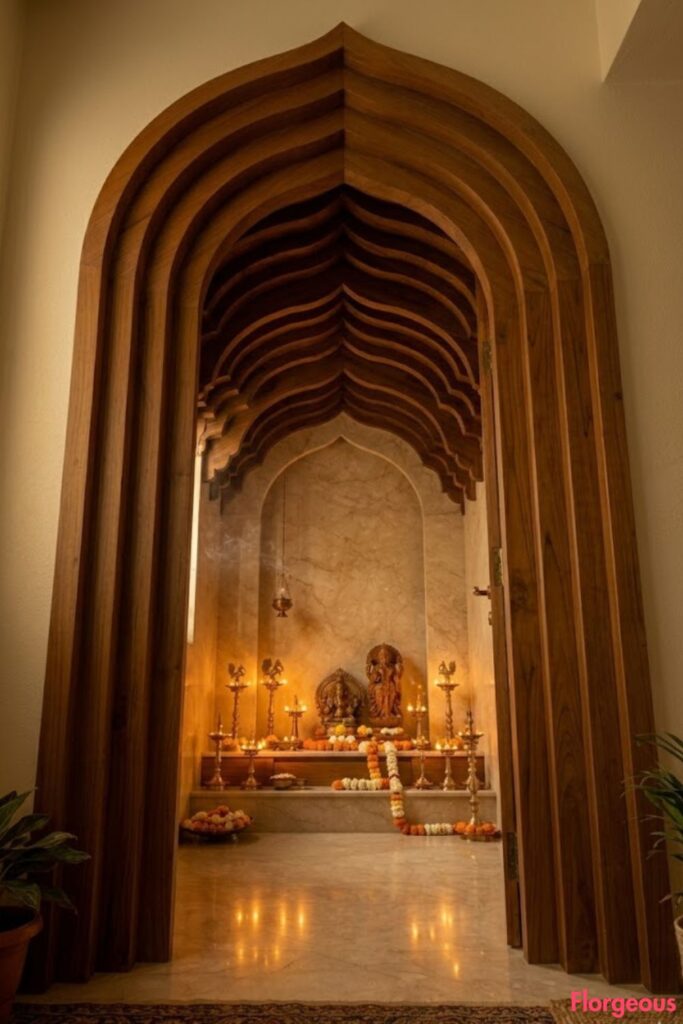
An arched pooja room door already feels sacred, but a layered arch makes it look more custom.
Instead of one flat frame, use two or three slim wooden arch outlines around the doorway. The tiny gaps between the layers create soft shadows, almost like the entrance of a small temple.
Teak, walnut, or oak works beautifully for this idea. Keep the actual door panel simple so the layered arch becomes the main detail.
2. Floating Jaali Panel Door
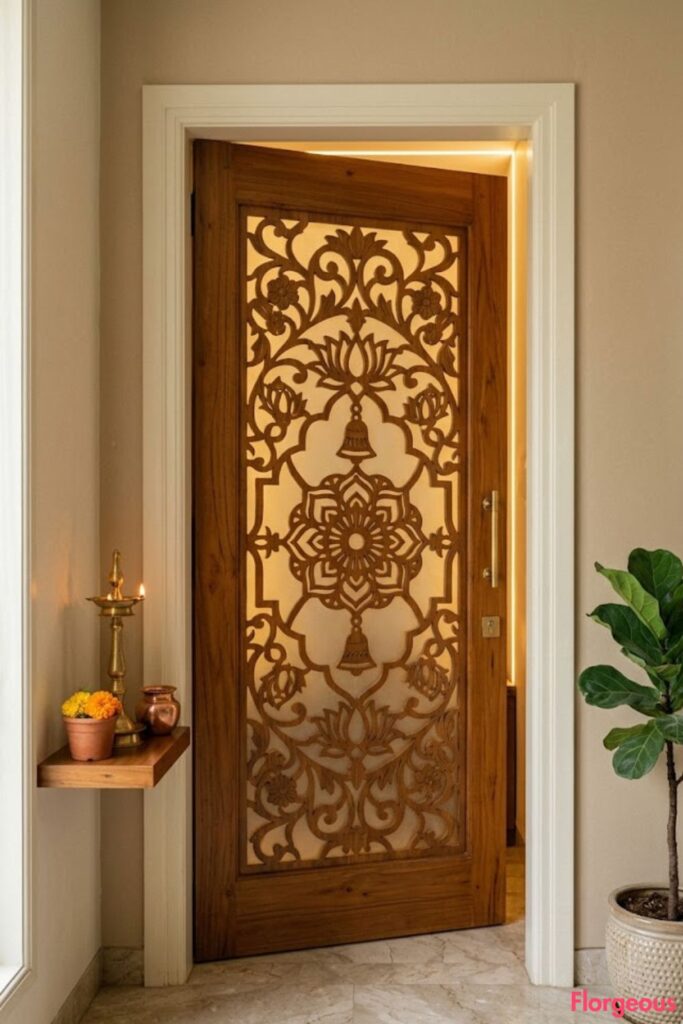
A floating jaali panel is a fresh way to add depth to your pooja room door.
The carved panel sits slightly in front of a plain glass, acrylic, or wooden backing. This small gap creates a shadow effect, especially when warm light glows from inside the pooja room.
Choose lotus, bell, diya, or mandala patterns for the jaali. This design feels traditional at heart, but the layered construction gives it a more modern designer look.
3. Half-Solid, Half-Jaali Pooja Door
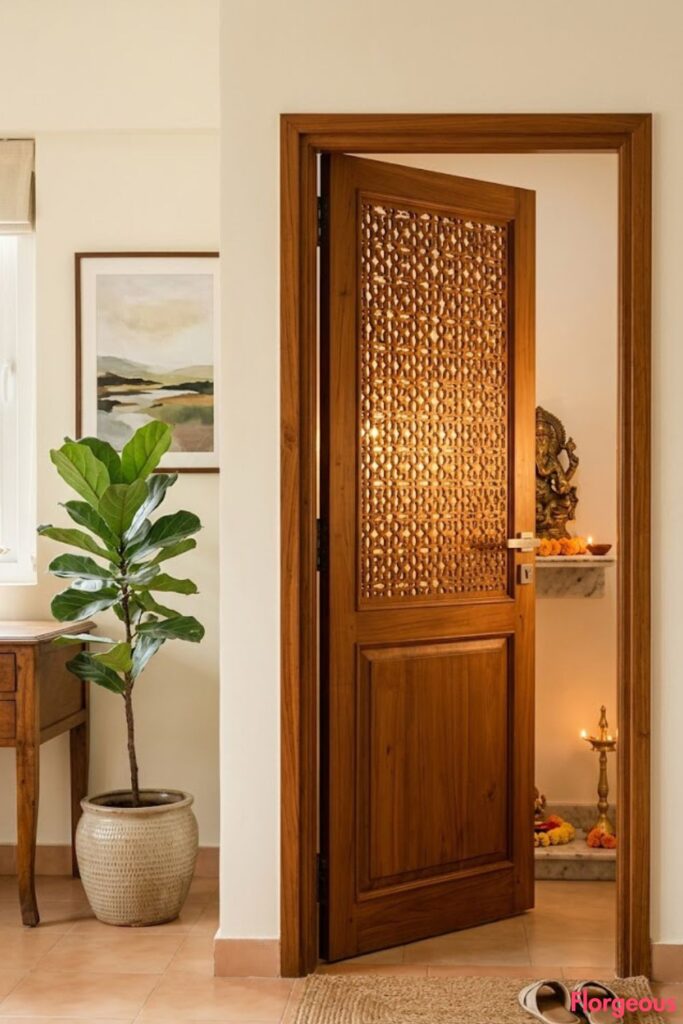
A half-solid, half-jaali door is practical and beautiful.
Use a solid wooden panel at the bottom for privacy and a carved jaali section at the top to let light and air pass through. It gives the pooja room a soft visible glow without exposing everything inside.
This is perfect for pooja rooms that open into a living room, dining area, or hallway. It feels open, but still respectful and contained.
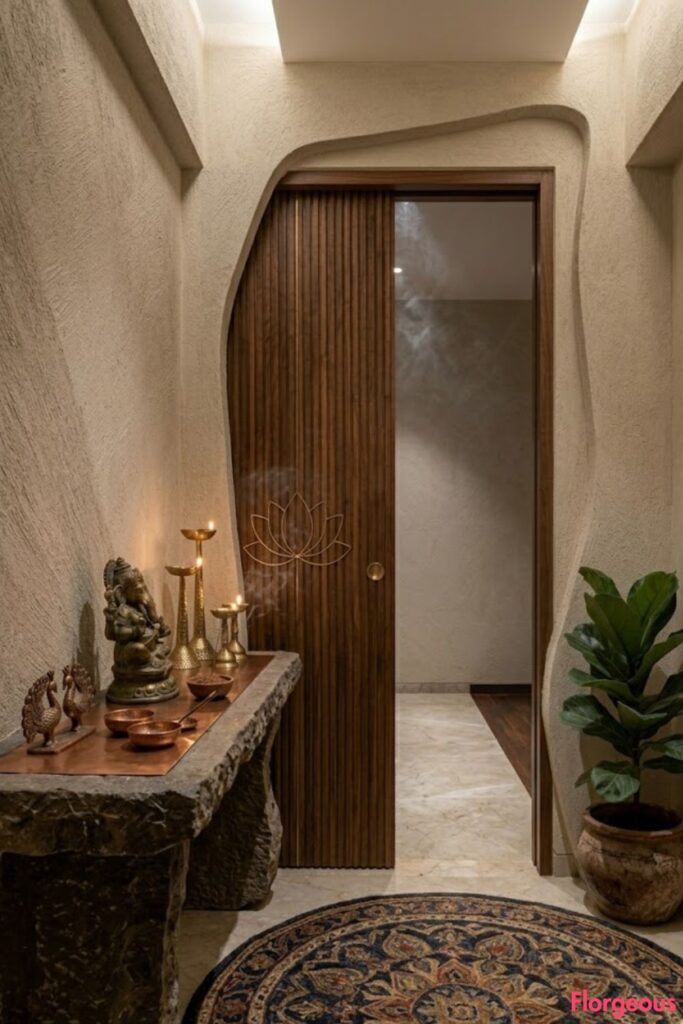
4. Ribbed Wood Door With Hidden Brass Linework
For a modern pooja room door design, try ribbed wood with fine brass linework.
The vertical wooden grooves add texture, while slim brass strips can form a subtle Om, lotus, temple arch, or diya outline. From far away, it looks like a refined contemporary door. Up close, the sacred detail becomes visible.
This idea works beautifully in homes with neutral walls, marble floors, and minimal brass decor.
5. Antique Reclaimed Door for a Soulful Entry
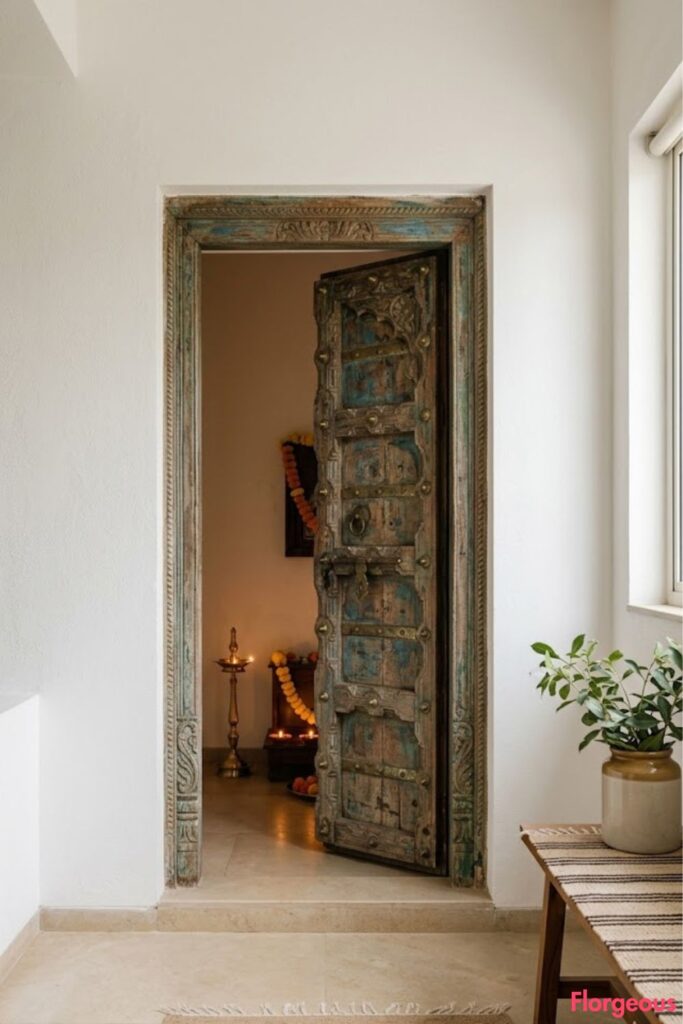
A reclaimed antique door can make a pooja room feel rich with memory.
Look for old carved teak panels, faded painted wood, brass studs, or traditional Indian motifs. The imperfections are part of the charm.
To keep it from looking too heavy, pair the antique door with clean white walls, simple flooring, and soft lighting. Let the door be the character piece.
6. Glass Door With Etched Mandala Design
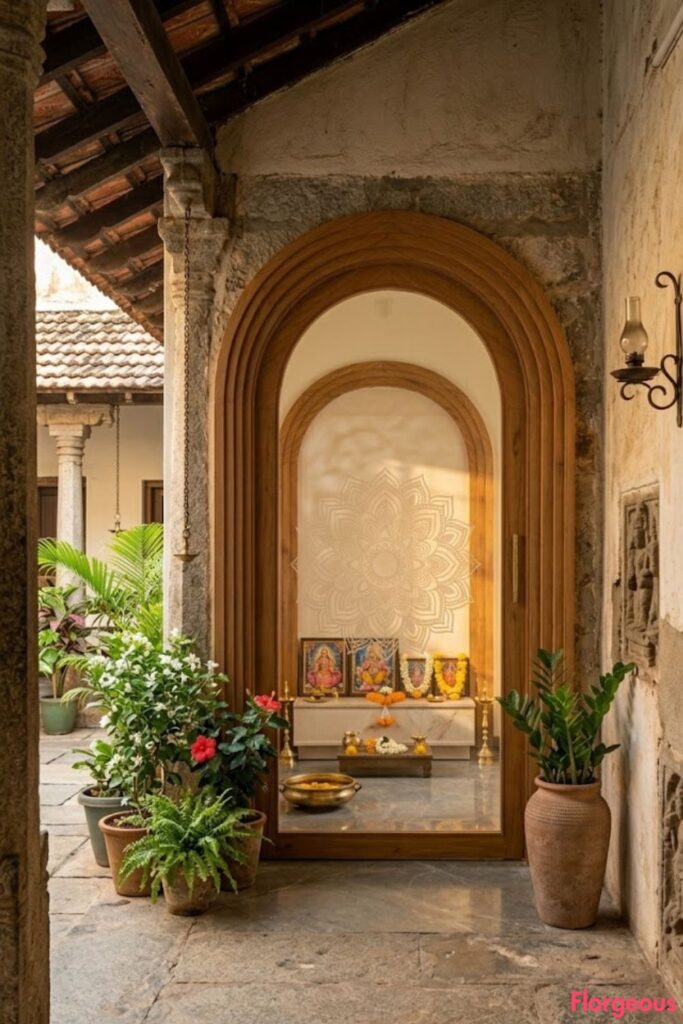
A glass door with an etched mandala feels peaceful and elegant.
The mandala can sit in the center of the panel, or it can spread softly across the glass like a delicate pattern. Frosted etching gives privacy while still allowing light to move through the space.
This is a lovely choice for apartments because it keeps the pooja room from feeling closed off. Use a slim wood or brass frame to make it look warmer.
7. Pooja Door With Inlaid Stone Motifs
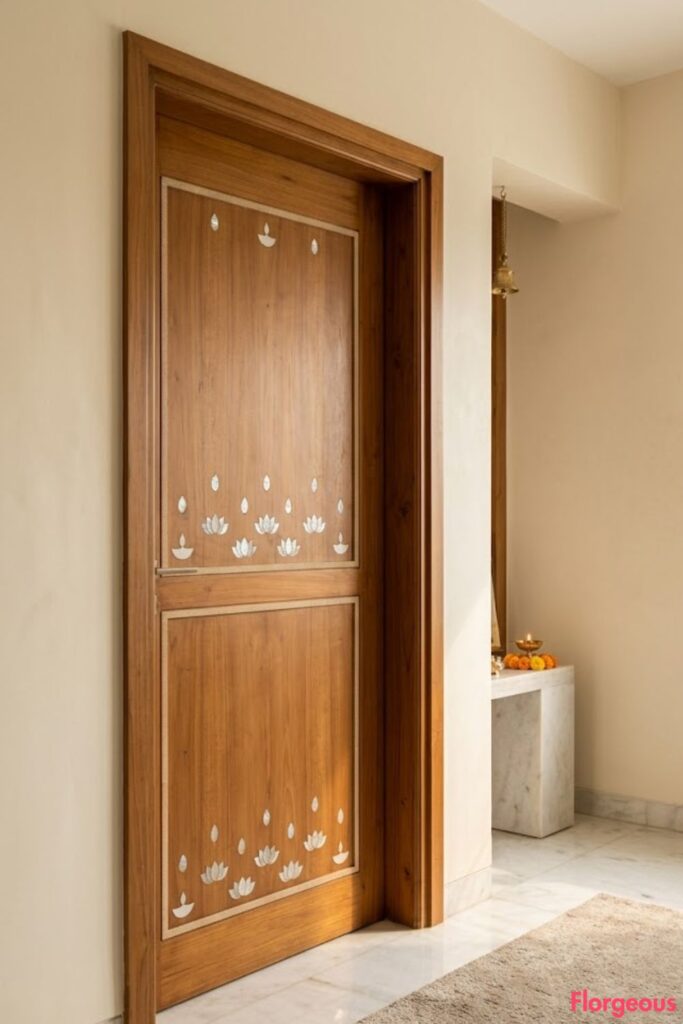
Stone inlay makes a pooja door feel unique and handcrafted.
You can add small lotus petals in mother-of-pearl, marble diya shapes, sandstone borders, or tiny semi-precious stone accents. The detail should be delicate, not overly busy.
This design pairs beautifully with marble flooring, brass diyas, cream walls, and warm wood. It feels luxurious, but still calm and devotional.
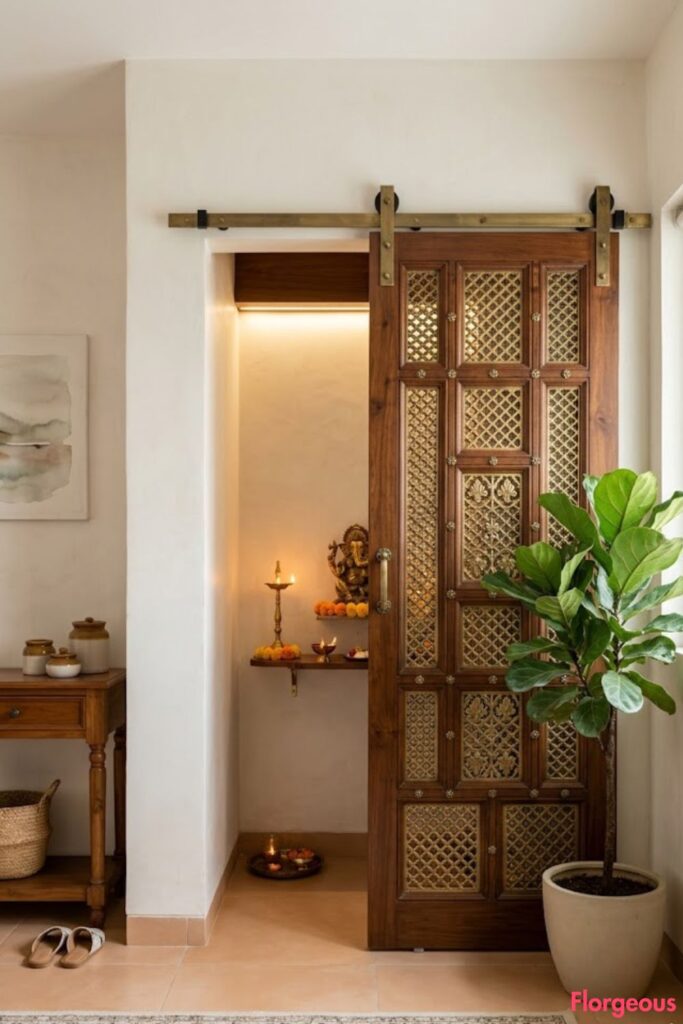
8. Sliding Temple Screen Door
A sliding screen door is ideal for small homes where a swing door takes up too much space.
Instead of a plain sliding panel, choose a temple-inspired screen with carved wood, laser-cut MDF, or metal jaali. The door can slide across the pooja niche when not in use and reveal the sacred space when opened.
Hide the track inside a wooden pelmet for a cleaner look. For a more rustic style, use an exposed brass or black rail.
9. Brass Bell Border Door
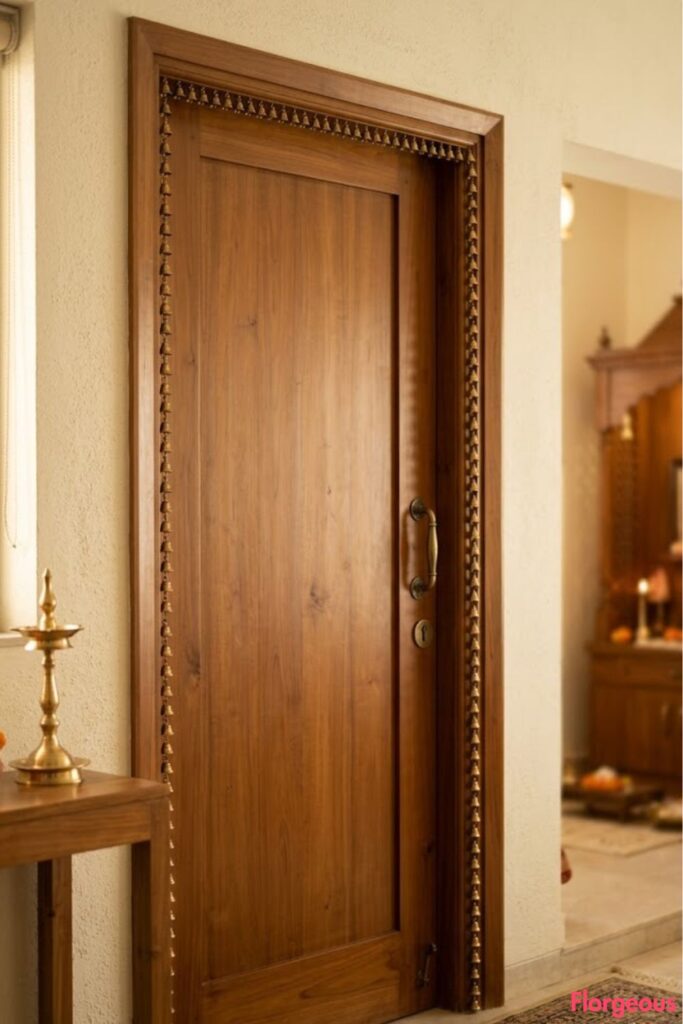
Instead of covering the whole door with decoration, add a border of small brass bells.
The bells can run across the top, along both sides, or in a narrow vertical strip near the handle. This creates a gentle temple feeling without making the door look crowded.
Use this idea with a plain teak or walnut door. The contrast between simple wood and tiny brass bells feels charming, festive, and easy to style.
10. Fluted Glass Pooja Room Door Design
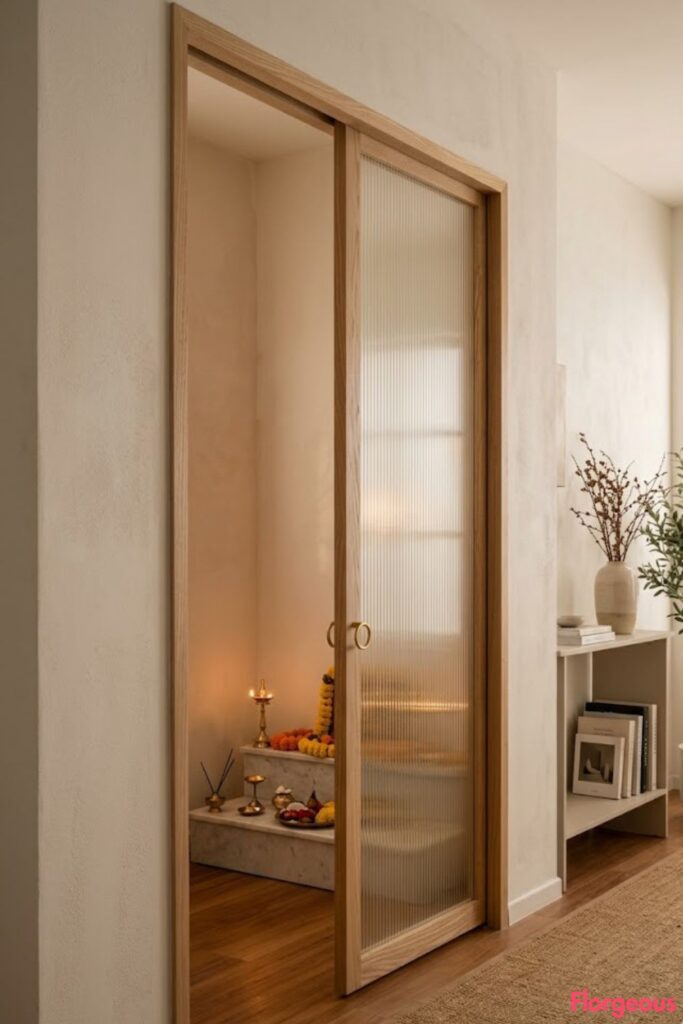
Fluted glass is a stylish option for a modern sacred space.
Its vertical texture gently blurs the view inside while letting light pass through. It feels softer than clear glass and more current than basic frosted glass.
Pair fluted glass with a brass frame for a warm, elegant look. For a quieter design, use pale wood framing and simple round handles.
11. Carved Door With a Single Oversized Lotus
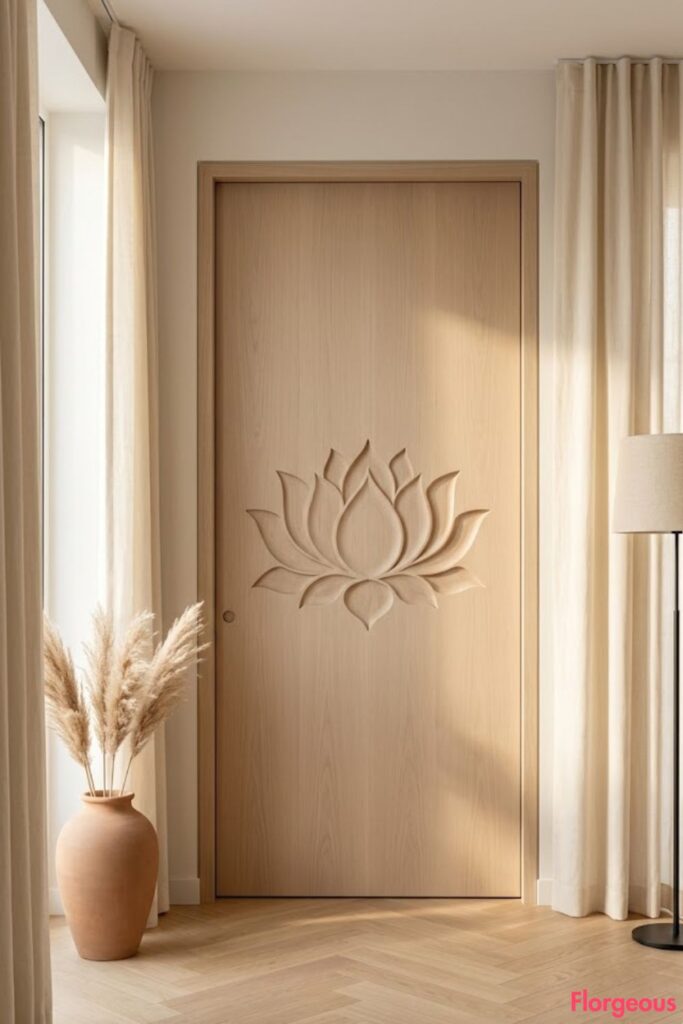
Instead of many small carvings, choose one oversized lotus as the main feature.
The large lotus can be carved into wood, cut into metal, etched into glass, or applied as a raised panel. This gives the door a strong focal point without visual clutter.
A matte finish works best here. Avoid too much shine, because the shape itself should feel graceful and sacred.
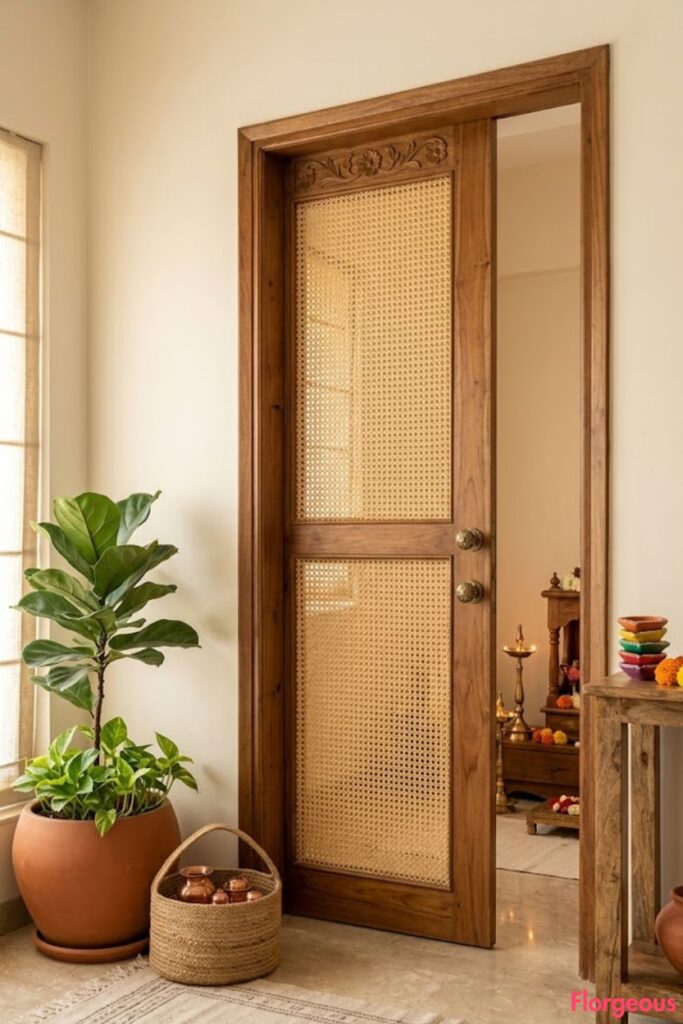
12. Cane and Wood Door for an Earthy Pooja Corner
Cane brings softness and texture to a pooja room door.
Use cane panels within a wooden frame for a natural, breathable design. This style feels especially beautiful in homes with indoor plants, clay decor, woven baskets, and warm neutral colors.
Choose tight cane weaving if you want more privacy. Add small brass knobs or a carved top frame to connect the look back to traditional Indian design.
13. Backlit Cutwork Door With Sacred Motifs
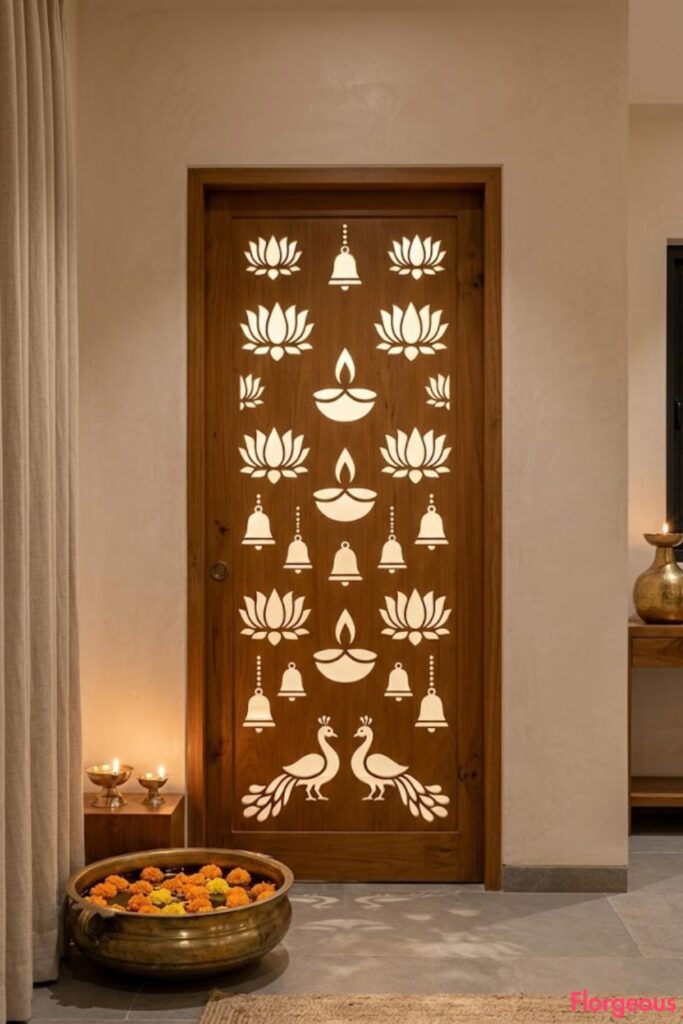
A backlit cutwork door can look magical in the evening.
The door may include laser-cut lotus, diya, bell, peacock, or temple arch patterns. When warm light shines from behind, the motifs cast soft shadows on the floor and nearby walls.
Use warm white lighting, not cool white. It will feel more peaceful and devotional, especially during evening prayers.
14. Pocket Door With Subtle Om Pattern
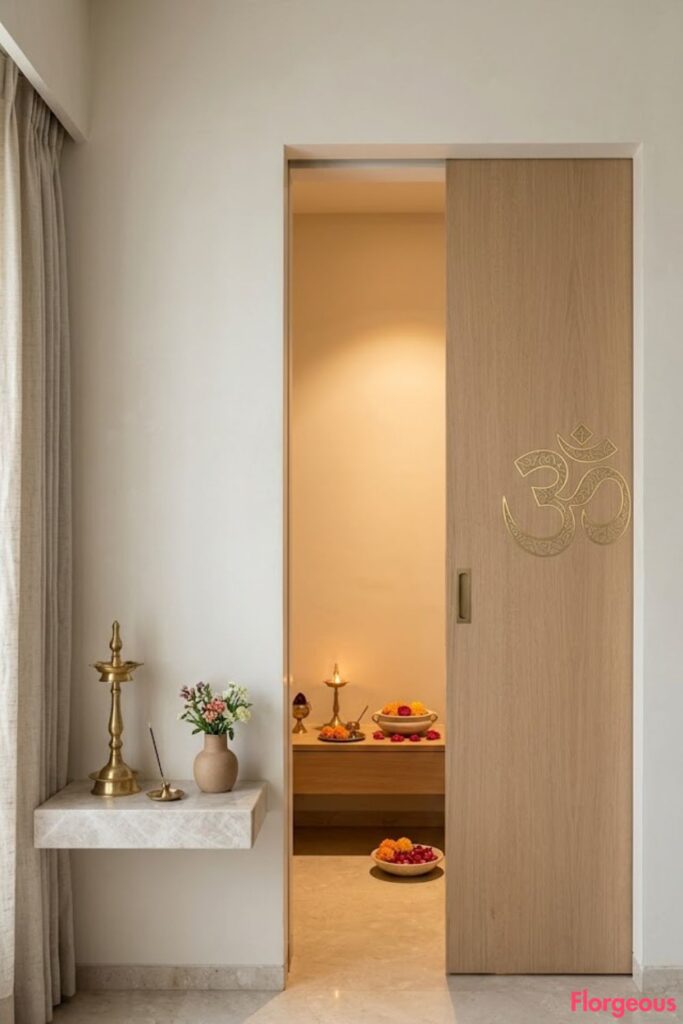
A pocket door slides into the wall, which makes it perfect for compact pooja rooms.
To make it special, add a subtle Om pattern through etching, brass inlay, or light carving. The design can be almost hidden during the day and more visible when the interior light is on.
This is a smart choice for modern apartments where every inch matters, but the pooja area still deserves a thoughtful entry.
15. White Door With Carved Gold Recesses
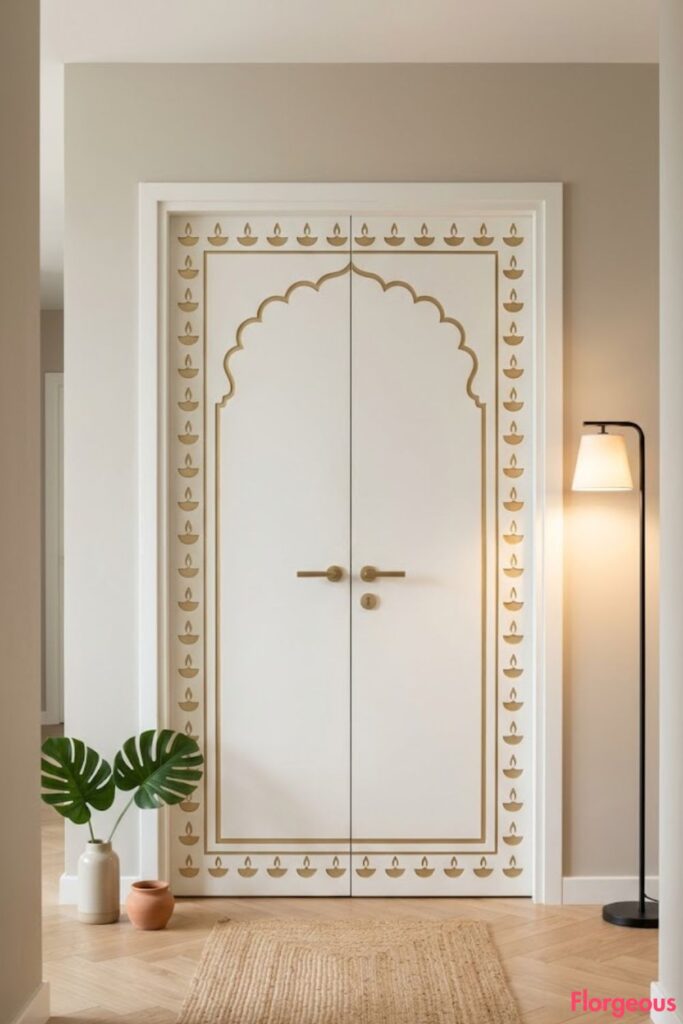
A white pooja door can feel bright and serene, especially in small homes.
To make it unique, add shallow carved recesses filled with muted gold or brushed brass paint. The design could be a temple arch, lotus border, or repeating diya pattern.
Keep the gold soft rather than shiny. A satin finish looks more graceful and less flashy.
16. Double Door With Uneven Decorative Panels
Most double pooja doors are perfectly symmetrical, but a slightly uneven design can feel more custom.
For example, one side can have a narrow bell panel, while the other side has carved lotus work. Or one shutter can be mostly solid, while the other has jaali.
The key is balance. Keep the materials and colors the same so the different panels feel intentional, not mismatched.
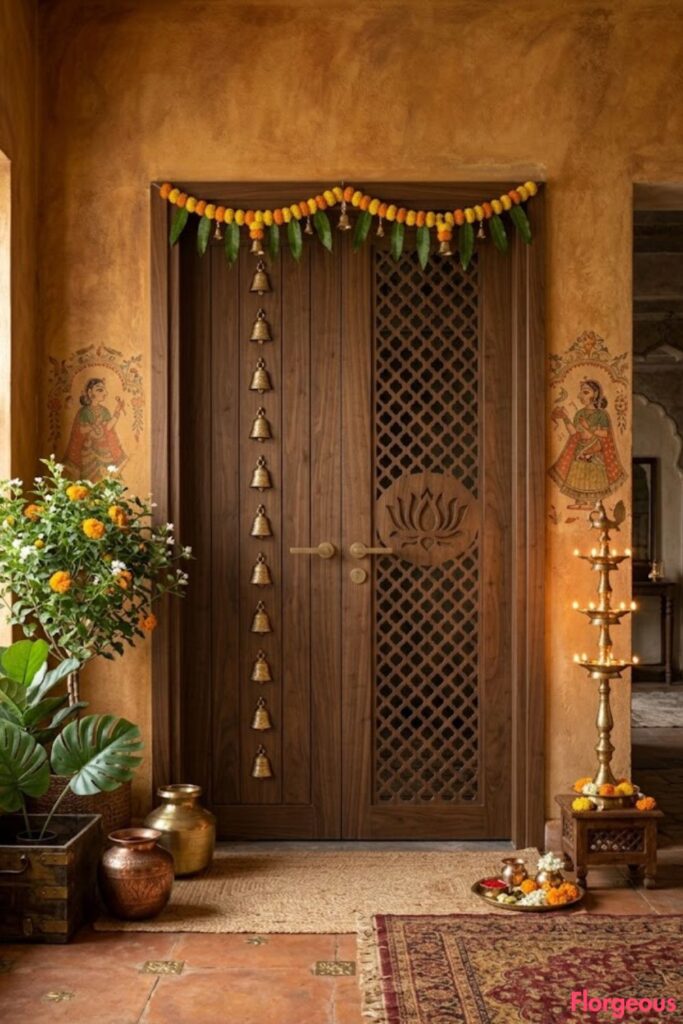
17. Pooja Door With Mini Niche Frame
Add a tiny niche above or beside the pooja room door for a diya, small brass idol, or flower bowl.
This detail makes the entrance feel like part of the ritual, not just a passage. The door itself can stay simple, while the niche adds meaning and depth.
Use stone, wood, or plaster for the niche frame. Add a small spotlight or concealed LED strip if you want it to glow softly at night.
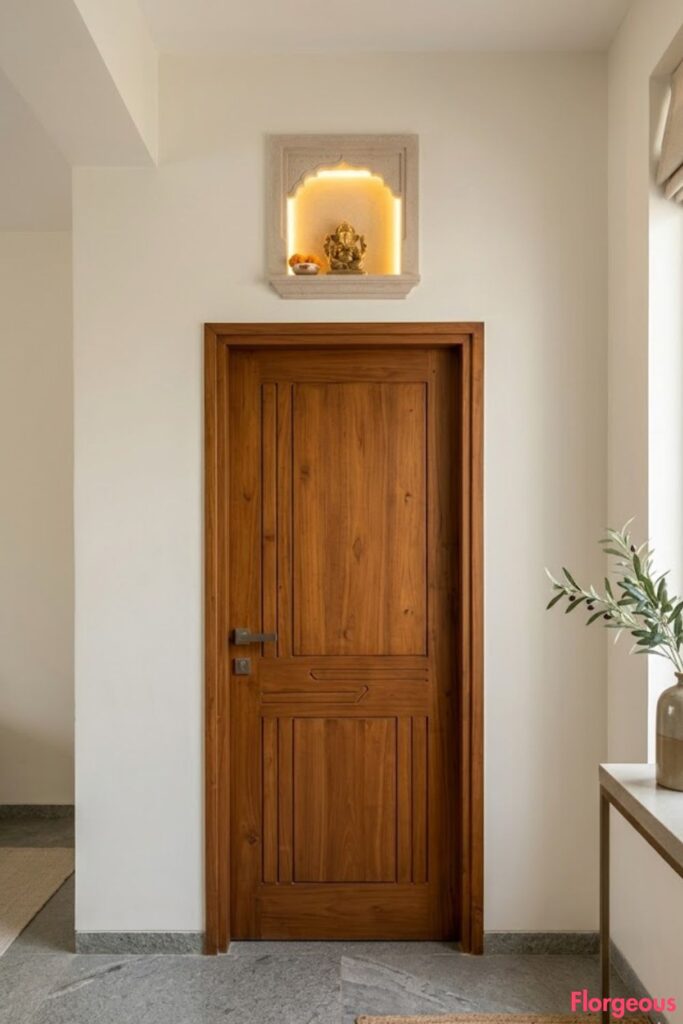
18. Matte Black Metal Door With Temple Cutouts
A matte black metal pooja door can look surprisingly beautiful in a modern home.
Use fine temple-inspired cutouts instead of heavy ornamentation. Think slim arches, tiny diyas, small bells, or a repeating lotus pattern.
This style works well in contemporary interiors with black window frames, stone floors, or minimalist furniture. Add warm brass handles so the door does not feel too stark.
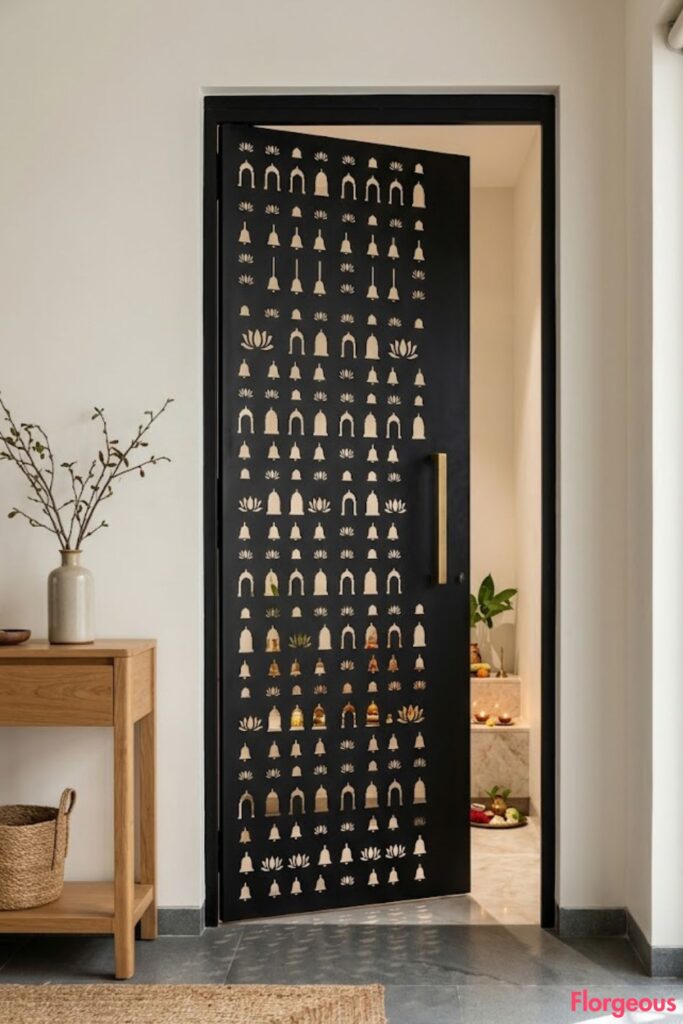
19. Fabric-Lined Wooden Lattice Door
For a softer and more unusual pooja room door design, line a wooden lattice door with fabric from the inside.
Choose raw silk, cotton, linen, or a subtle block-printed textile in ivory, saffron, beige, or muted gold. The fabric filters light beautifully and adds a handcrafted feel.
This idea is especially lovely for renters or budget-conscious decorators because the fabric can be changed seasonally. Use a removable inner panel so it stays easy to clean.
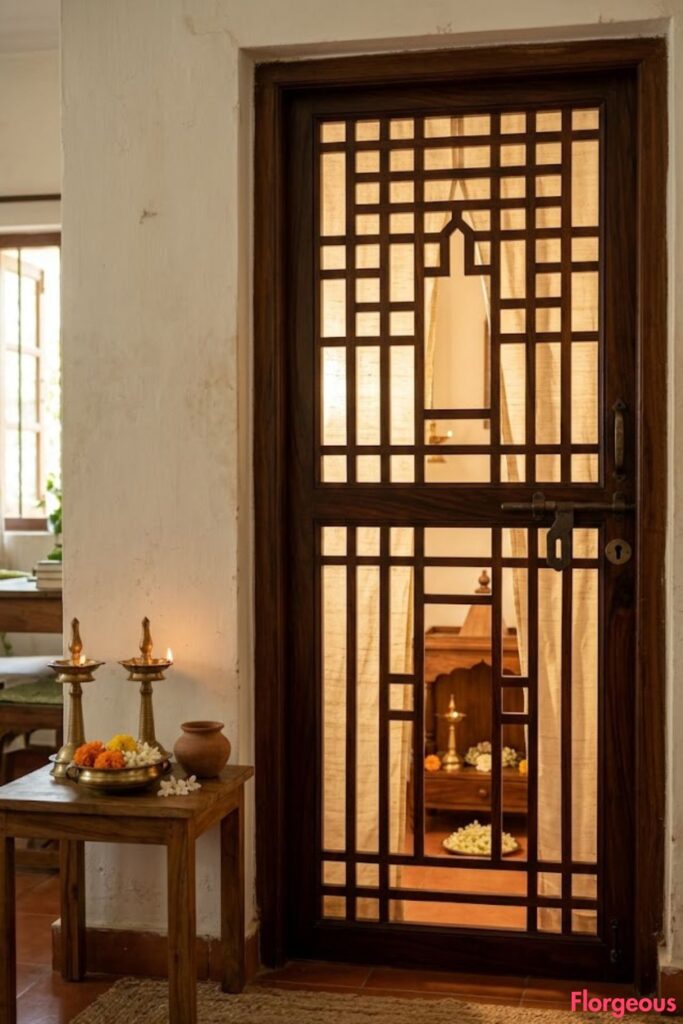
Choosing a Pooja Room Door Design That Feels Personal
The best pooja room door design should feel sacred, practical, and connected to the rest of your home.
A carved wooden door may suit a traditional space, while fluted glass, ribbed wood, or matte black metal may feel better in a modern apartment. If your home is small, sliding doors, pocket doors, and half-jaali designs can save space without losing beauty.
Think about the feeling you want before choosing the material. Warm wood feels grounding. Glass feels light. Brass feels festive. Jaali work feels soft and spiritual. Stone inlay feels crafted and special.
Your pooja room door does not have to be the most expensive feature in the house. It simply needs the right detail, the right finish, and a design that makes the moment before prayer feel calm, beautiful, and intentional.