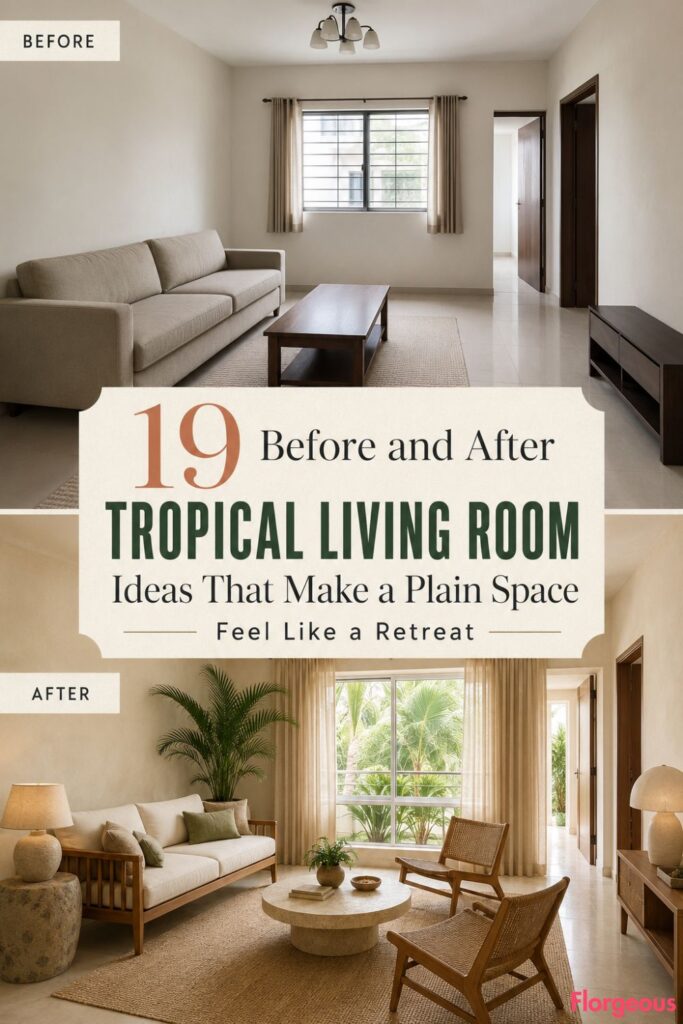
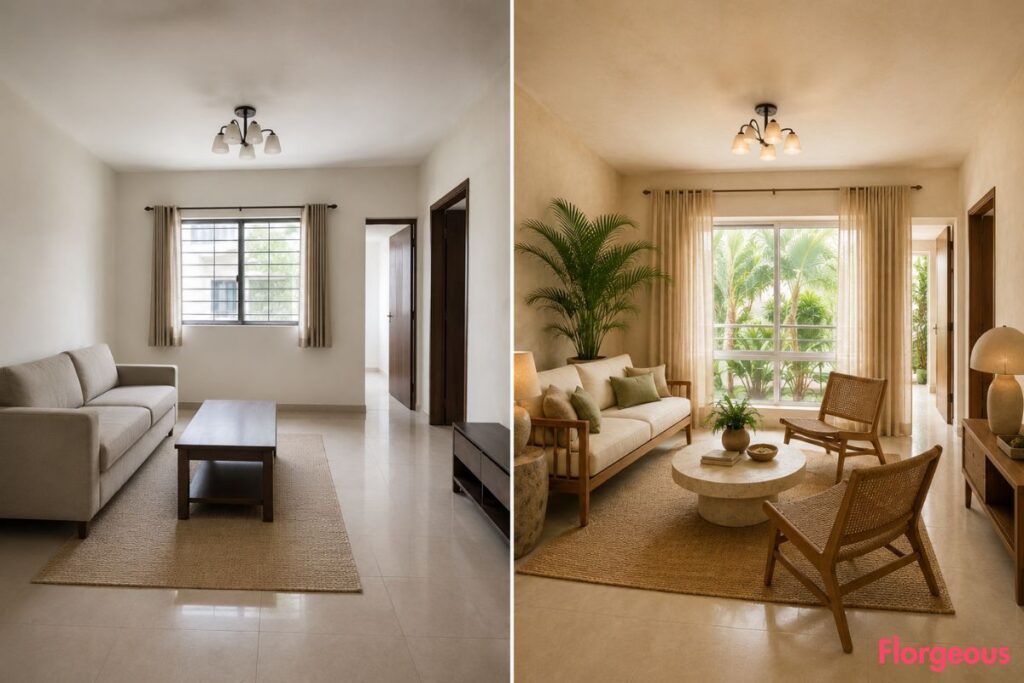
A plain living room can be perfectly functional and still feel unfinished. Neutral walls, generic furniture, short curtains, and flat ceiling lighting provide a clean starting point, but they rarely create a room anyone remembers.
These 19 Tropical Living Room makeovers begin with that exact same builder-grade space. Each after version takes a completely different path, from pale teak minimalism and sun-faded Caribbean color to Brazilian modernist curves, deep rainforest drama, indoor gardens, and architectural resort seating.
The most interesting part is how little these rooms rely on obvious tropical clichés. Carefully chosen wood, stone, woven texture, filtered light, and one intentional plant can say far more than a room filled with palm prints.
1. Turn the Plain Room Into an Airy Teak and Linen Retreat
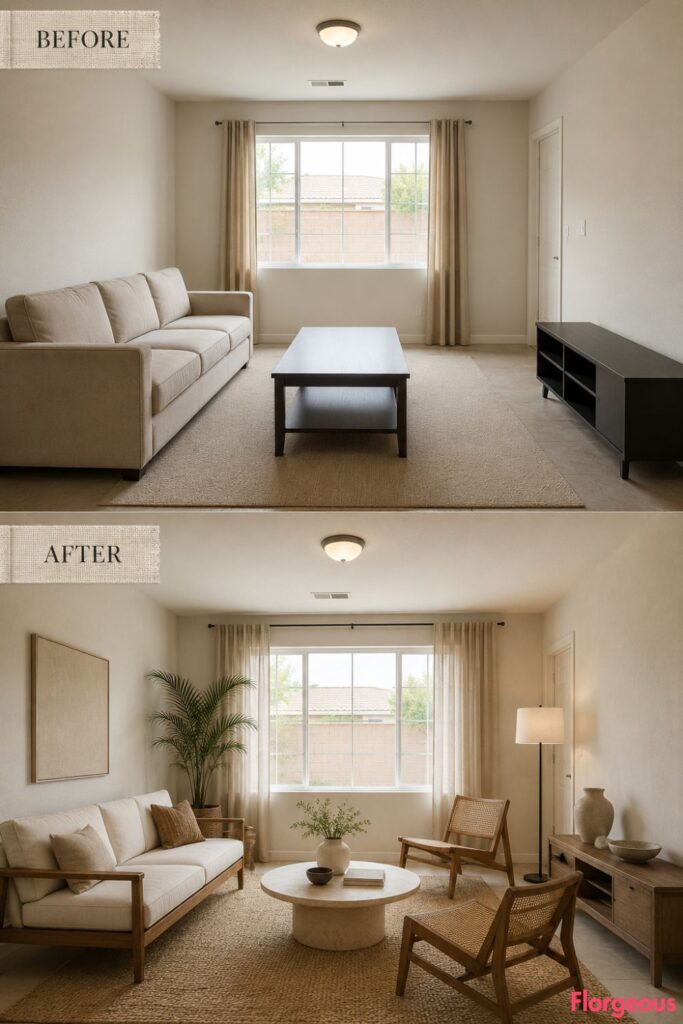
This approachable makeover uses light materials and an open conversation layout. Nothing feels oversized, and the tropical character comes from texture rather than pattern.
Before: Neutral walls, a basic straight sofa, a bare rectangular coffee table, generic rug, short curtains, standard ceiling lighting, and minimal decor.
After: A slim teak-framed sofa faces two cane lounge chairs across a round limestone table. Warm ivory plaster, a seagrass rug, full-height flax curtains, one kentia palm, and a linen floor lamp create an airy finish.
Why it works: Pale surfaces reflect daylight, while teak and cane prevent the room from feeling sterile.
Try this: Begin with one woven material and one large plant before adding smaller accessories.
2. Wrap the Room in a Deep Rainforest Reading Lounge
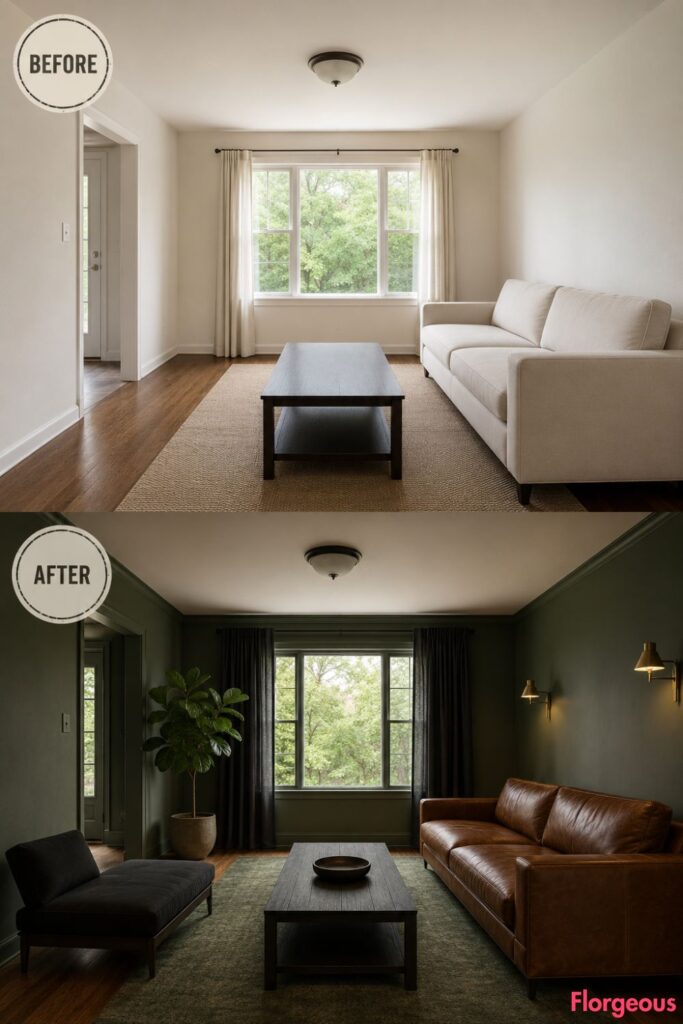
Instead of using multiple bright greens, this room relies on one enveloping forest tone. Tobacco leather and blackened wood give the scheme weight and maturity.
Before: The same neutral builder-grade room with basic furniture, bare surfaces, short curtains, flat lighting, and no focal point.
After: A tobacco leather sofa sits against matte forest-green walls, paired with a blackened-timber chaise and a smoked-oak side table. Charcoal curtains, antique-brass sconces, a moss rug, and one rubber tree complete the room.
Color Story: Keep the trim and walls close in color so the room feels calm rather than visually divided.
3. Create a Balinese-Inspired Floor-Level Tea Room
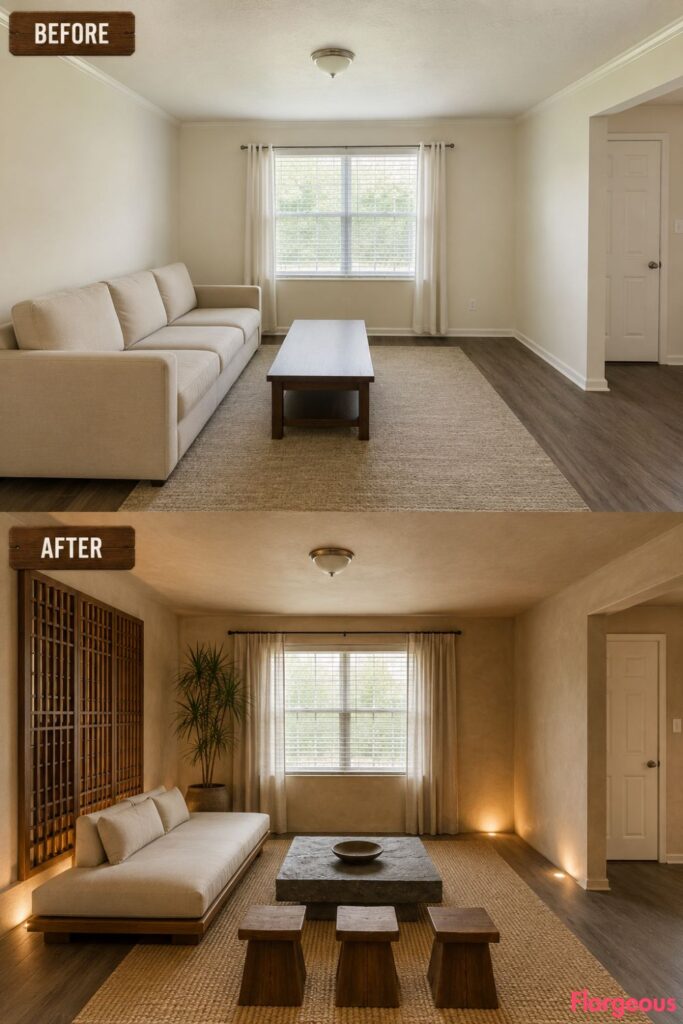
This transformation changes the height and function of the room. Low seating, volcanic stone, and a carved screen create a grounded setting for conversation or tea.
Before: The same plain living room with neutral walls, a basic sofa, bare coffee table, generic rug, short curtains, and standard light.
After: A low oatmeal daybed sits perpendicular to the window, facing three backless timber stools around a square volcanic-stone table. Sand plaster, a carved slatted screen, a flatwoven mat, concealed floor lighting, and one dracaena complete the scene.
Style Note: Use carved details as one architectural feature, not as decoration on every surface.
4. Rework the Space With Brazilian Modernist Curves
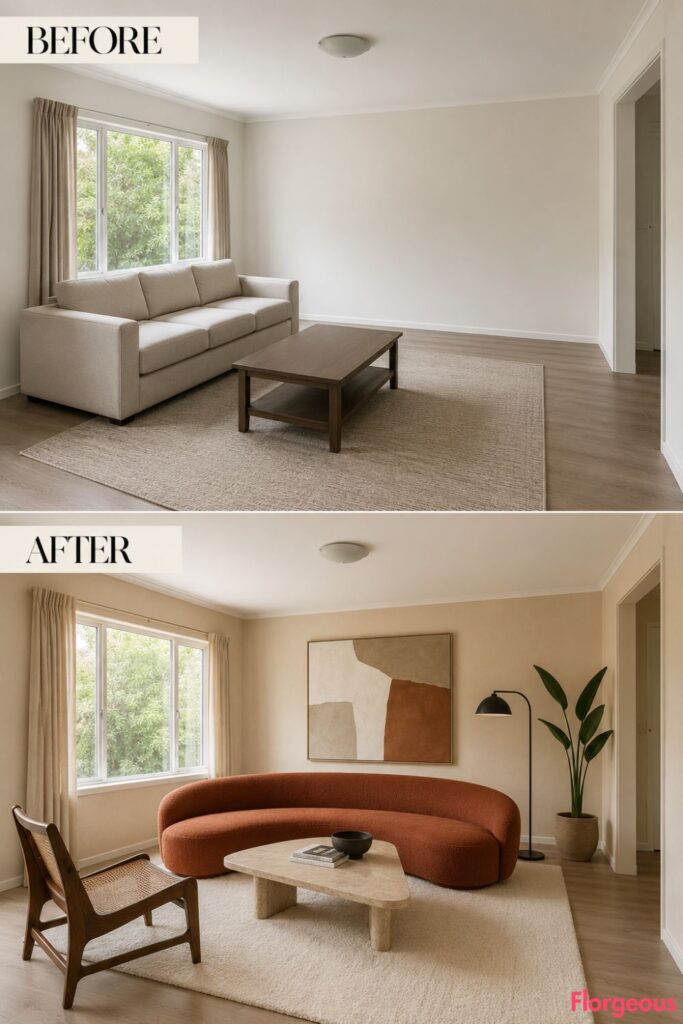
Tropical materials can feel bold and architectural. Sculptural furniture turns warm timber and rust upholstery into a distinctly modern composition.
Before: The same neutral room with generic furniture, flat lighting, and no visual anchor.
After: A curved rust sofa floats in the center, joined by one carved walnut chair and a triangular pale-stone table. A cream wool rug, oversized abstract artwork, a black floor lamp, and one bird-of-paradise plant finish the room.
Why it works: Floating the sofa gives the room depth and allows its shape to become the focal point.
5. Add Sun-Faded Caribbean Color With a Window Banquette
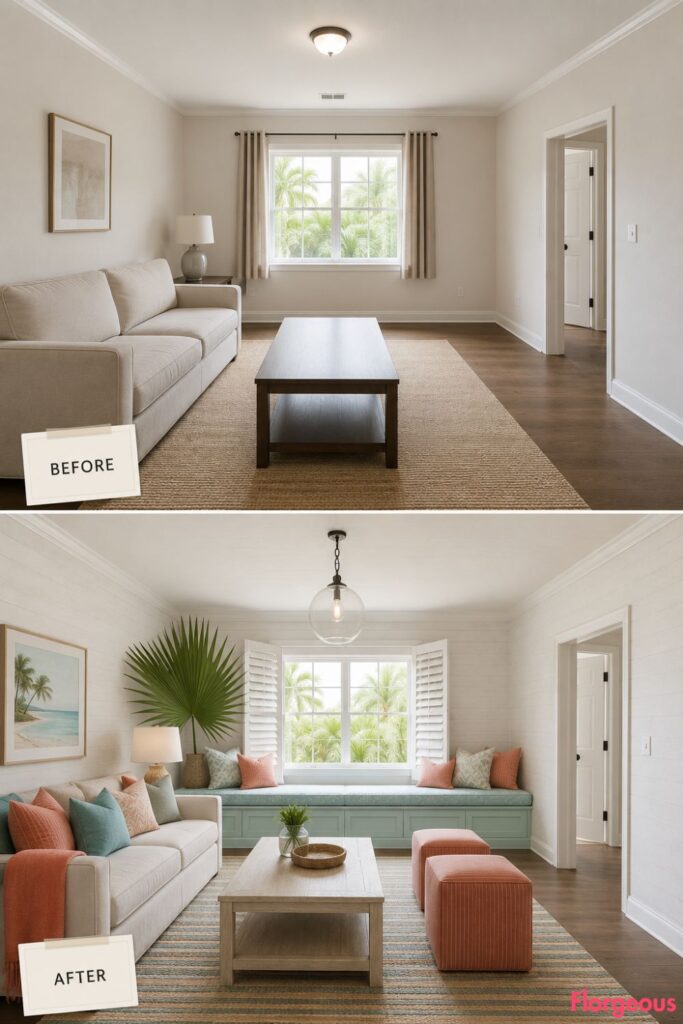
This room introduces color through architecture rather than loose accessories. A built-in banquette gives the window wall a new purpose.
Before: The same plain room with short curtains, standard seating, generic rug, and an empty window wall.
After: A pale turquoise banquette runs beneath the window, paired with two coral ottomans and a bleached timber table. Whitewashed walls, louvered shutters, striped woven flooring, a glass pendant, and one fan palm create a cheerful island mood.
Budget Version: Paint a freestanding storage bench turquoise to imitate the built-in effect.
6. Form a Quiet Tropical Minimalist Island
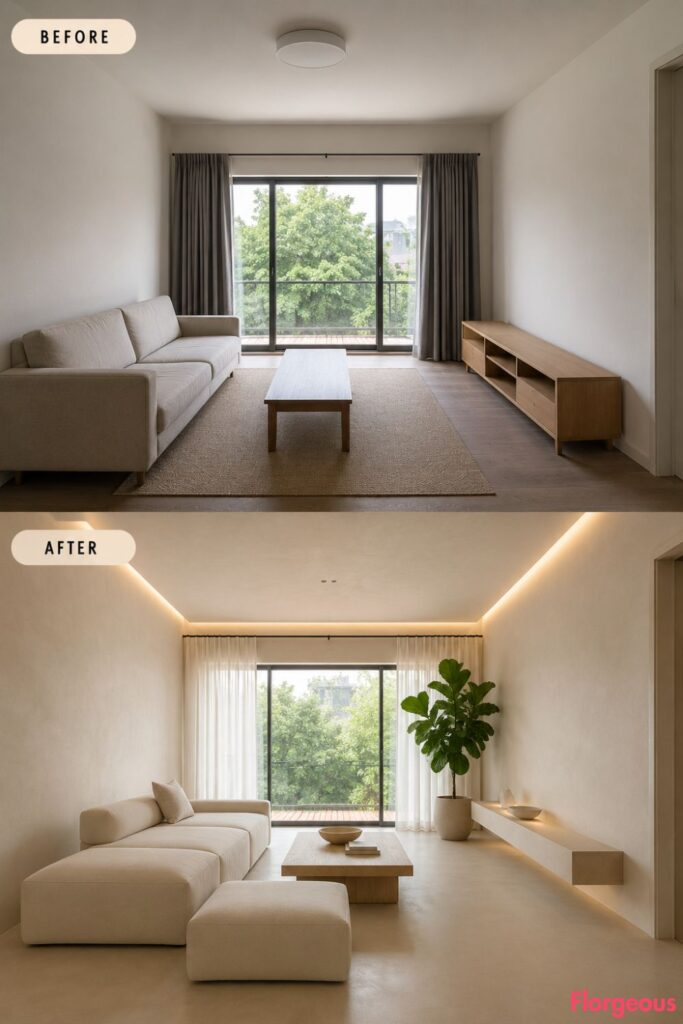
This version removes visual noise. Furniture floats away from the walls, while a single oversized tree supplies nearly all the organic drama.
Before: The same builder-grade room with neutral walls, a straight sofa, rectangular table, short curtains, and flat lighting.
After: A low cream modular sofa forms a central island around a pale-oak table. Seamless sand microcement replaces the rug, concealed ceiling lights replace the basic fixture, and one oversized fiddle-leaf fig stands in the brightest corner.
Common Mistake: Avoid adding baskets, stools, and small plants simply to fill empty space.
7. Layer Terracotta Plaster With Olive Upholstery
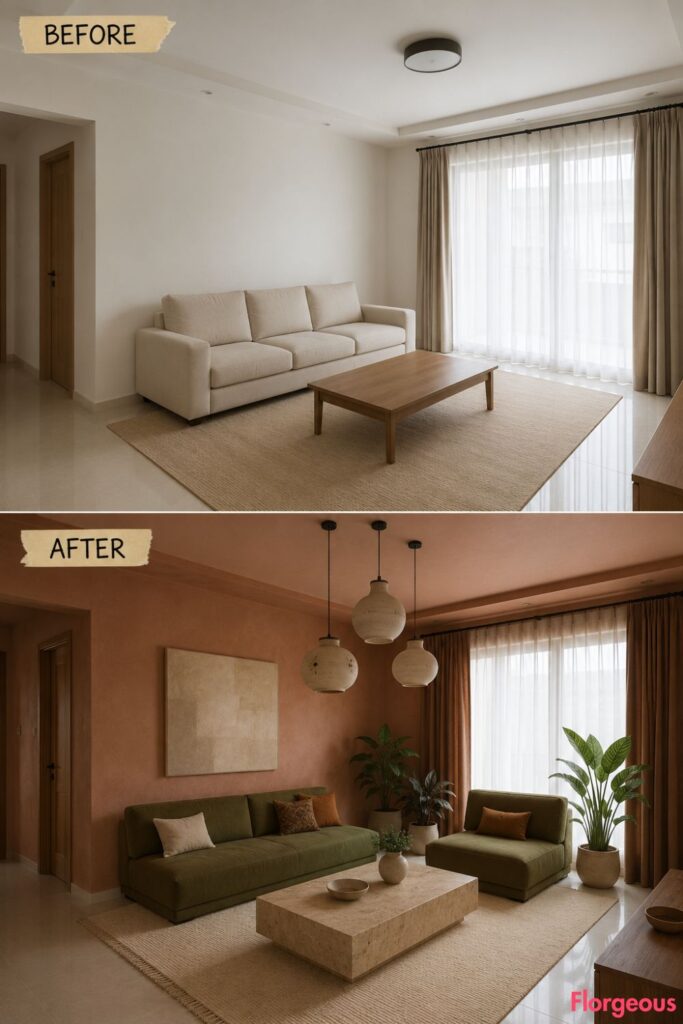
Clay color, olive fabric, and handmade ceramic create a warm tropical room without using botanical motifs.
Before: The same neutral living room with generic finishes and no focal point.
After: Two armless olive settees meet at a right angle around a chunky travertine table. Terracotta plaster, a cream wool flatweave, tobacco curtains, three ceramic pendants, and a grouped trio of calatheas create the after scene.
Try this: Repeat terracotta in the walls and one small accessory only. Too much clay color can flatten the palette.
8. Open the Living Room Into a Fern Courtyard
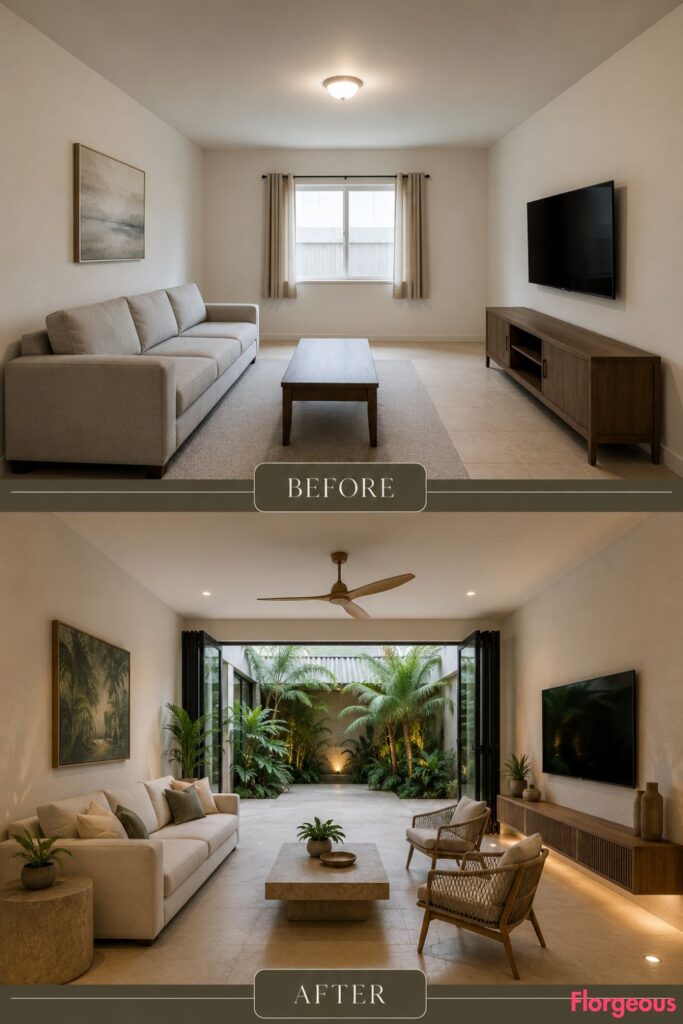
Here, the tropical atmosphere comes mostly from outside. The room remains restrained while folding doors and continuous flooring blur the boundary with the courtyard.
Before: The same builder-grade room with short curtains and an ordinary window connection.
After: Folding glazed doors open onto a planted fern courtyard. Pale limestone flooring runs through both spaces, while a weather-resistant cream sofa faces two woven rope chairs and a broad stone table. A timber-blade fan provides practical airflow.
Climate-Friendly Choice: Outdoor-grade upholstery is useful in humid climates and strongly sunlit rooms.
9. Replace the Sofa With a Four-Chair Tropical Salon
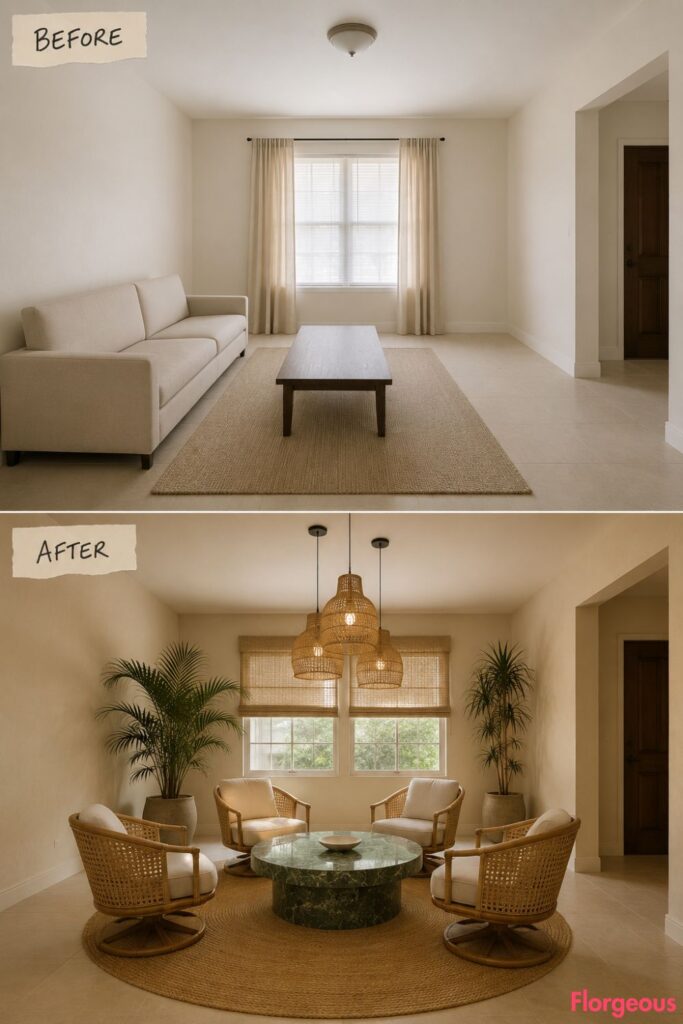
A circular arrangement encourages conversation and makes the room feel more like an intimate hotel lounge.
Before: The same plain room with a straight sofa, rectangular table, and generic rug.
After: Four compact cane swivel chairs form a circle around a green-marble table. A round jute rug defines the salon, while three small woven pendants hang at staggered heights. Sand walls and two tall plants balance opposite corners.
Why it works: A radial plan makes every seat equally important and removes the need for a television-centered layout.
10. Make Botanical Artwork the Only Green Statement
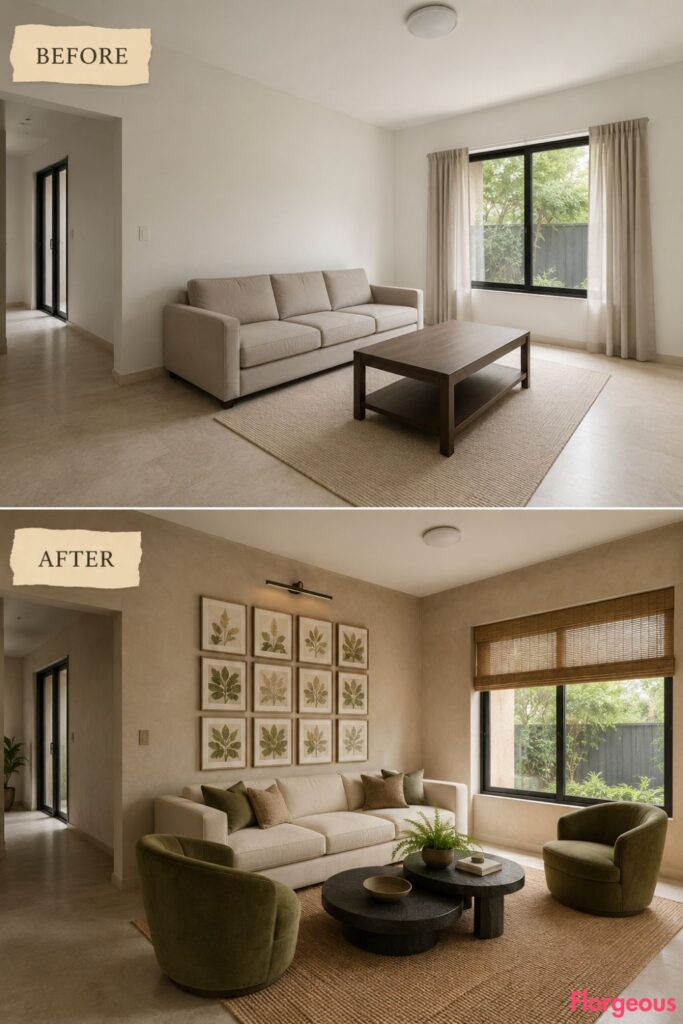
This makeover proves that tropical character does not require a room full of plants. Framed leaf studies provide the visual theme in a precise, controlled way.
Before: The same neutral room with bare walls and minimal styling.
After: A tailored cream sofa sits beneath nine botanical studies arranged in a strict grid. Two moss swivel chairs face it across black-stone nesting tables. A tan flatweave, bamboo blinds, one low fern, and a slim picture light complete the design.
Designer Tip: Use matching frames and equal spacing to keep botanical artwork from feeling cluttered.
11. Bring In Coastal Tropical Texture With Indigo and Grasscloth
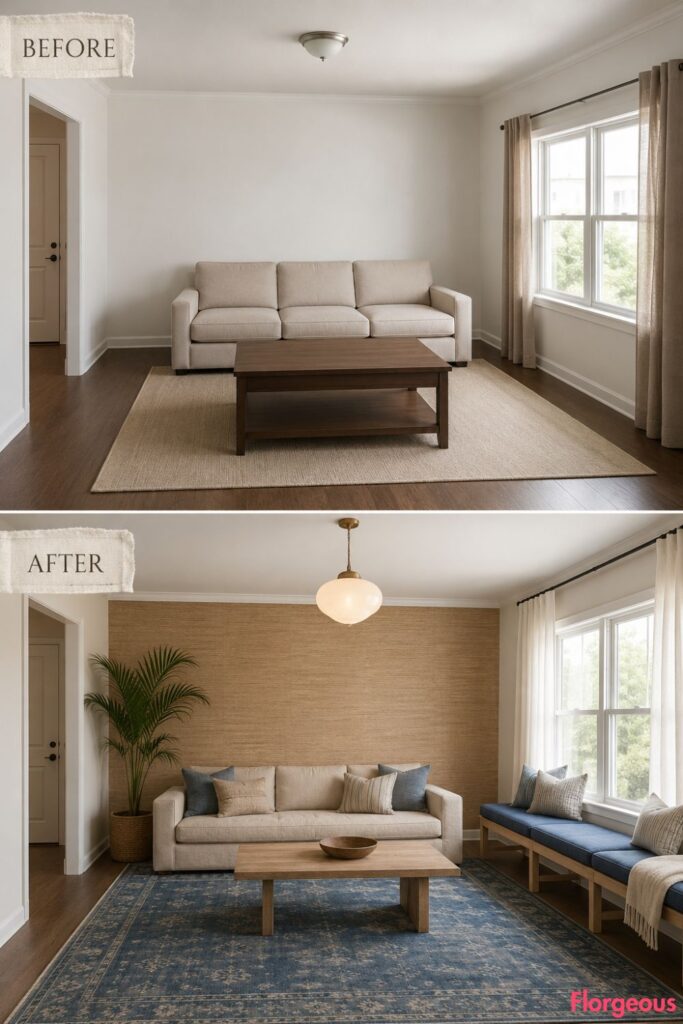
Blue, bleached timber, and woven walls create a coastal interpretation without anchors, shells, or nautical signs.
Before: The same plain living room with neutral walls, generic furniture, and short curtains.
After: A flax sofa faces a long bleached-oak bench with loose ocean-blue cushions. Grasscloth covers the main wall, while an indigo dhurrie, white curtains, an opal pendant, and one areca palm soften the room.
12. Design a Dark Tropical Cocktail Room
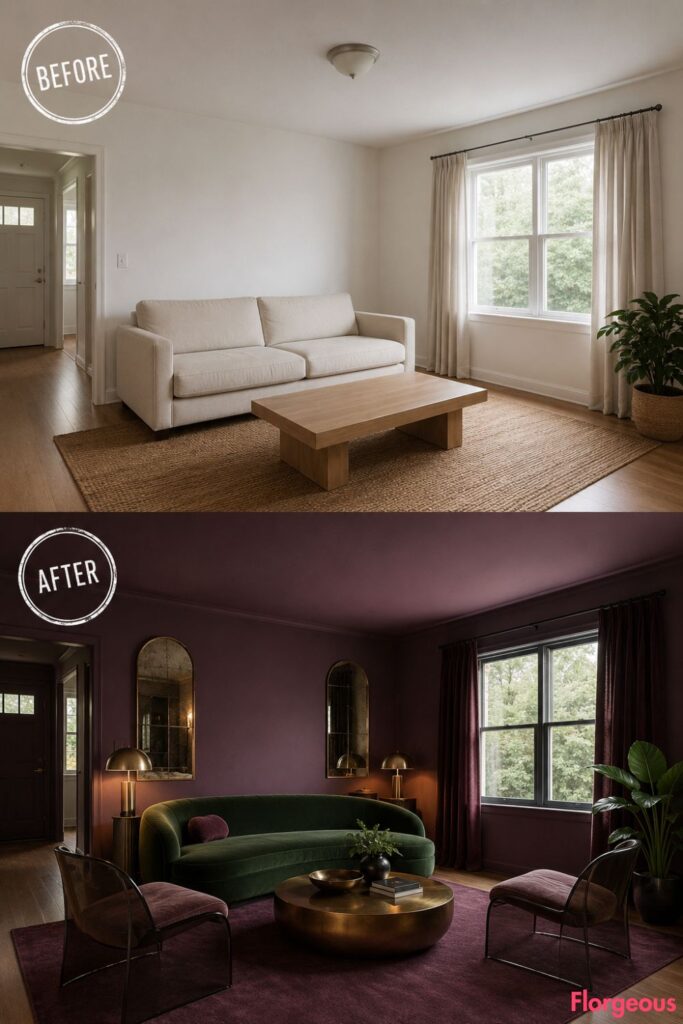
This is the most glamorous transformation in the collection. Reflective materials and saturated color create an evening-focused room rather than another casual lounge.
Before: The same plain room with flat lighting and no architectural interest.
After: An emerald mohair sofa curves around a low brass cocktail table, accompanied by two smoked-glass slipper chairs. Aubergine walls, mirrored niches, a plum rug, antique-brass lamps, and one sculptural philodendron create the mood.
Style Note: Keep every surface matte except the glass chairs, brass table, and mirrored niches.
13. Turn the Window Wall Into a Reading Retreat
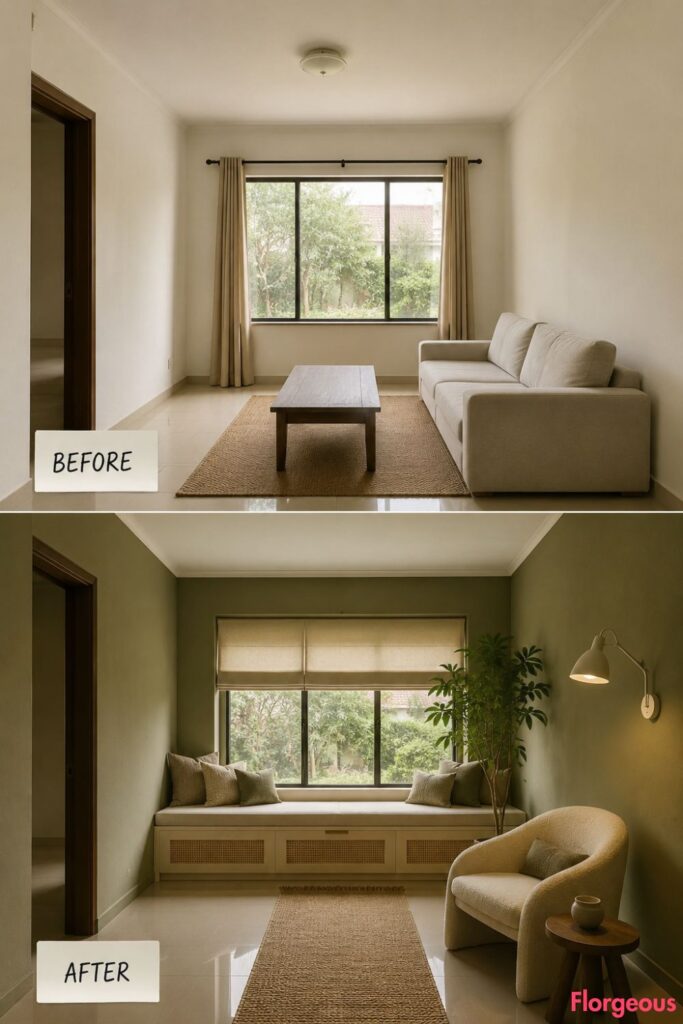
A multifunctional built-in gives the room a purpose that the original layout lacked. Storage, seating, and task lighting are combined in one compact zone.
Before: The same neutral living room with an underused window and basic freestanding furniture.
After: An oatmeal daybed stretches beneath the window with cane-front drawers below. One curved reading chair, a tiny timber table, a narrow woven runner, linen shades, an adjustable ceramic lamp, and one tall schefflera complete the nook.
Small Space Tip: A daybed can provide lounging, occasional sleeping, and storage without occupying the middle of the room.
14. Build an Indoor Jungle Garden Beneath the Window
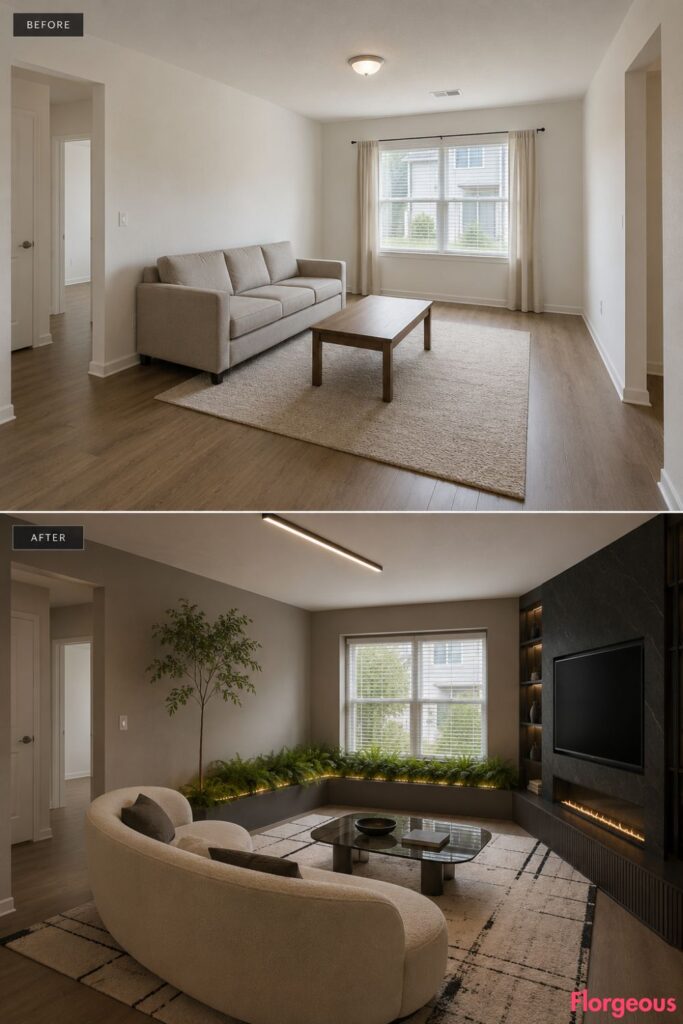
Instead of moving pots around the room, this makeover integrates planting directly into the architecture.
Before: The same builder-grade room with generic furniture and no focal wall.
After: A curved oatmeal sofa faces a blackened-stone media wall. Beneath the window, a narrow built-in planting bed holds ferns and one slender tree. A black-and-cream rug, smoked-glass table, linear ceiling light, and concealed grow lights sharpen the look.
Plant Care Note: Group plants with similar watering and humidity needs inside a permanent bed.
15. Create a Handcrafted Tropical Textile Salon
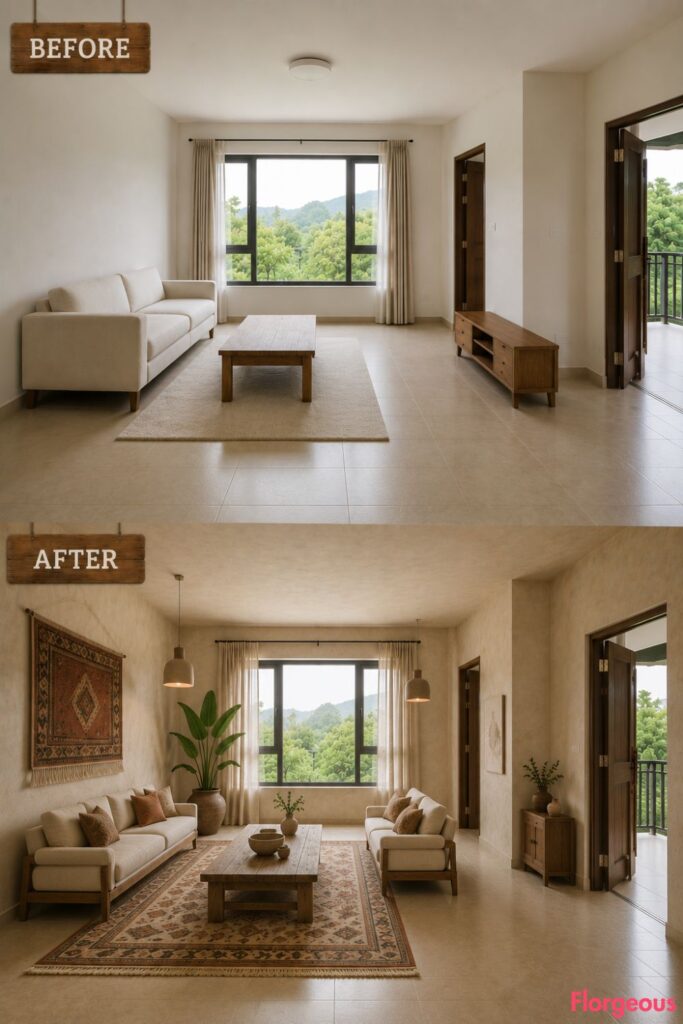
Craft becomes the focal point in this room. The tropical mood comes from weaving, printing, timber, and ceramic rather than an architectural renovation.
Before: The same plain room with empty walls, generic upholstery, and a bare coffee table.
After: Two compact linen settees face each other across a reclaimed timber table. A monumental woven wall textile anchors the room, supported by a muted block-printed rug, two ceramic pendants, flax curtains, and one banana plant.
Try this: Choose one oversized textile instead of several small wall hangings.
16. Make a Compact Room Work With Vertical Greenery
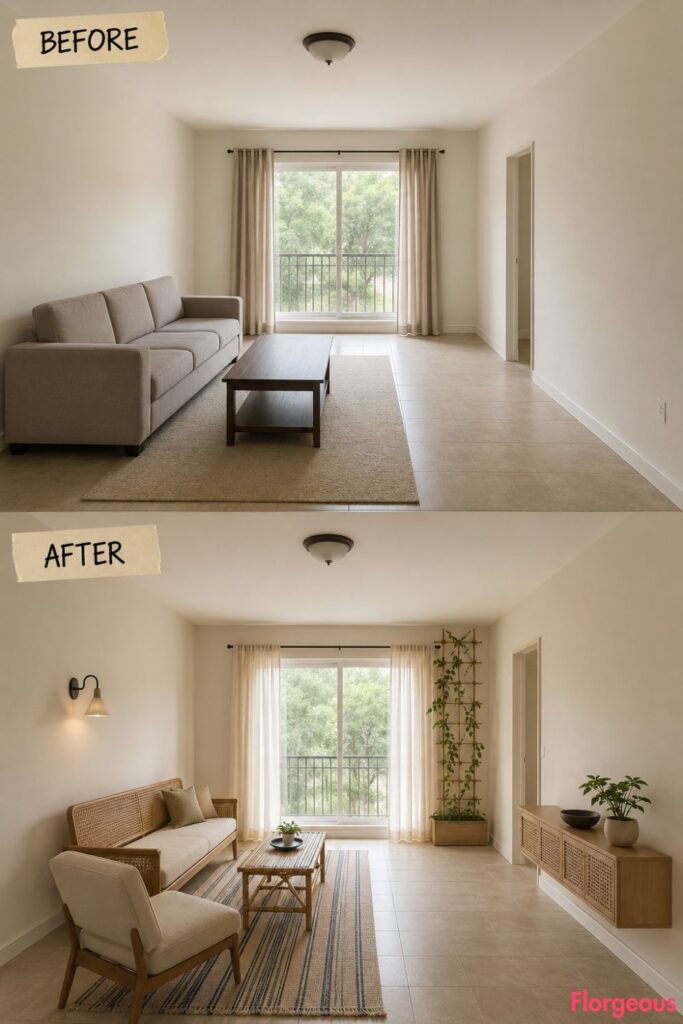
This small-space transformation uses walls instead of floor area. Lightweight furniture can move easily, and every large object stays close to the perimeter.
Before: The same plain room with a basic sofa, generic table, and limited usable floor space.
After: A slim cane loveseat sits against the longest wall with one movable armless chair. A floating cabinet, narrow bamboo table, striped runner, compact wall lamp, and climbing trellis beside the window preserve the central walkway.
Small Space Tip: Use one narrow runner rather than a large rug that visually compresses the room.
17. Build a Raised Resort Lounge With Concealed Light
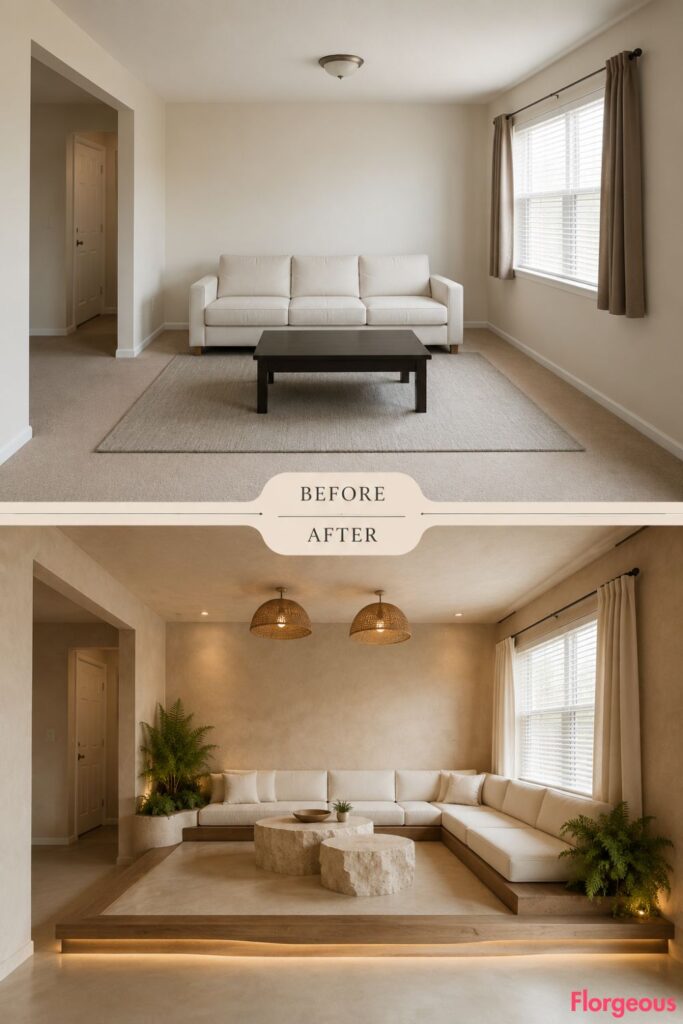
A shallow platform creates the feeling of a sunken lounge without excavating the floor. It is the most architectural seating transformation in the list.
Before: The same neutral room with freestanding furniture and no defined lounge zone.
After: A timber-edged platform supports a low U-shaped upholstered bench. Two irregular stone tables replace the standard coffee table. Sand plaster, concealed step lighting, two woven ceiling shades, and small fern clusters complete the room.
Why it works: The platform defines the seating zone without using a rug or bulky partitions.
18. Make the Ceiling the Tropical Focal Point
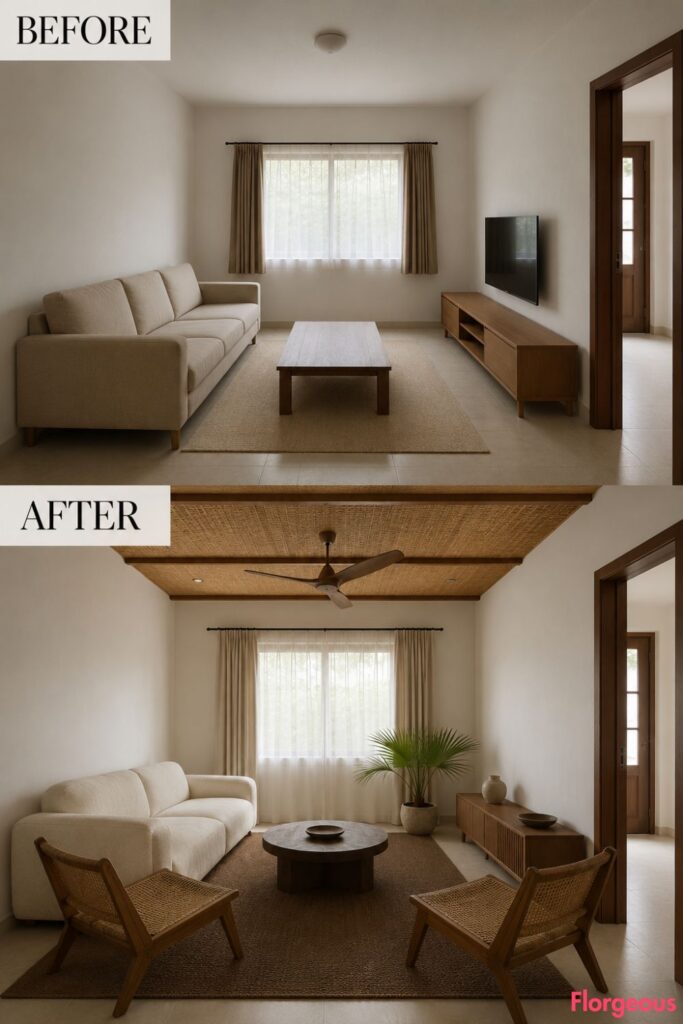
This makeover keeps the walls and furniture deliberately quiet. Woven matting, timber beams, and a sculptural fan draw attention upward.
Before: The same plain room with a standard ceiling light and no architectural detail.
After: A cream sofa and two low timber chairs sit beneath woven ceiling matting framed by slender teak-toned beams. A sculptural timber-blade fan, cocoa rug, round dark-wood table, neutral curtains, and one low palm complete the space.
Common Mistake: Avoid repeating the woven ceiling texture on walls, furniture, and lighting. One dominant application is enough.
19. Finish With a Tailored Tropical Conservatory
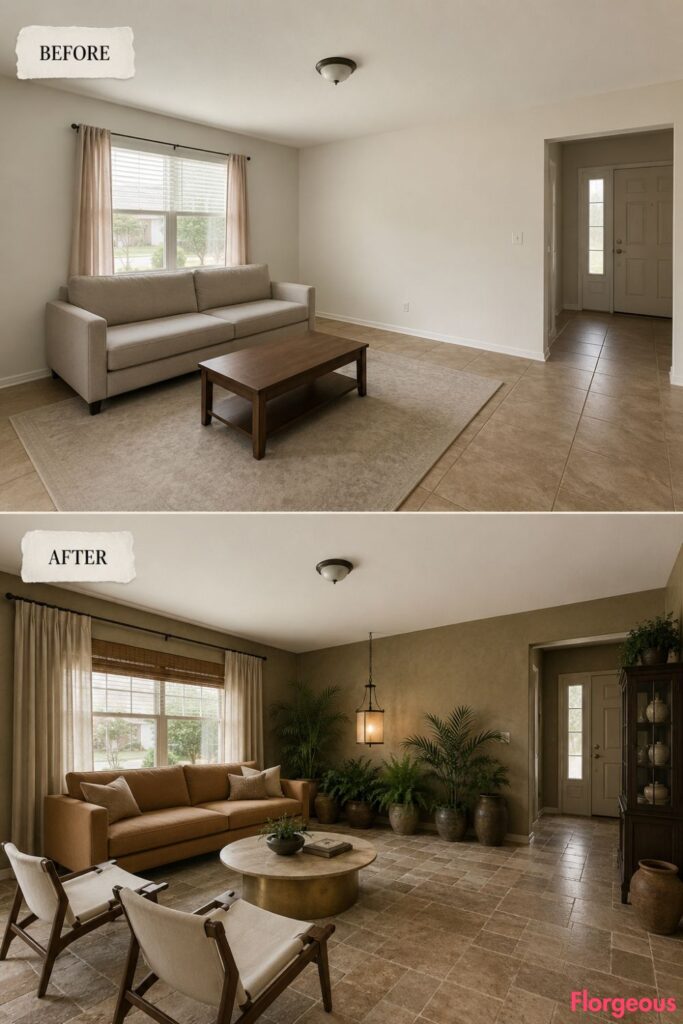
The final makeover is layered but highly controlled. Plants, cabinetry, flooring, and tailored furniture make the room feel like a contemporary conservatory rather than an indoor jungle.
Before: The same builder-grade living room with neutral walls, generic furniture, short curtains, flat lighting, and no focal point.
After: A camel sofa faces two cream sling chairs across a round brass-and-stone table. Olive plaster frames a glass-front cabinet, while patterned stone flooring replaces the rug. Palms and ferns form one curated group beneath a frosted-glass lantern.
Pinterest-Worthy Detail: Patterned hard flooring creates movement without requiring botanical wallpaper.
How to Choose the Right Tropical Look for Your Living Room
Start by deciding what you want the room to feel like. Pale plaster, linen, and light timber suit a breezy retreat, while forest green, leather, and brass create a quieter evening room. Clay, olive, and handmade ceramic work well when you prefer warmer, earthier interiors.
Next, study the natural light before selecting plants. Bright rooms may support palms, bird-of-paradise plants, or fiddle-leaf figs. Darker rooms may benefit more from botanical artwork, woven texture, or one carefully chosen shade-tolerant plant.
A successful Tropical Living Room does not need every available natural material. Choose one dominant wood or woven finish, one clear color direction, and one distinctive focal point. Test the furniture arrangement first, then add plants, screens, lighting, and decorative layers without narrowing the walking paths.