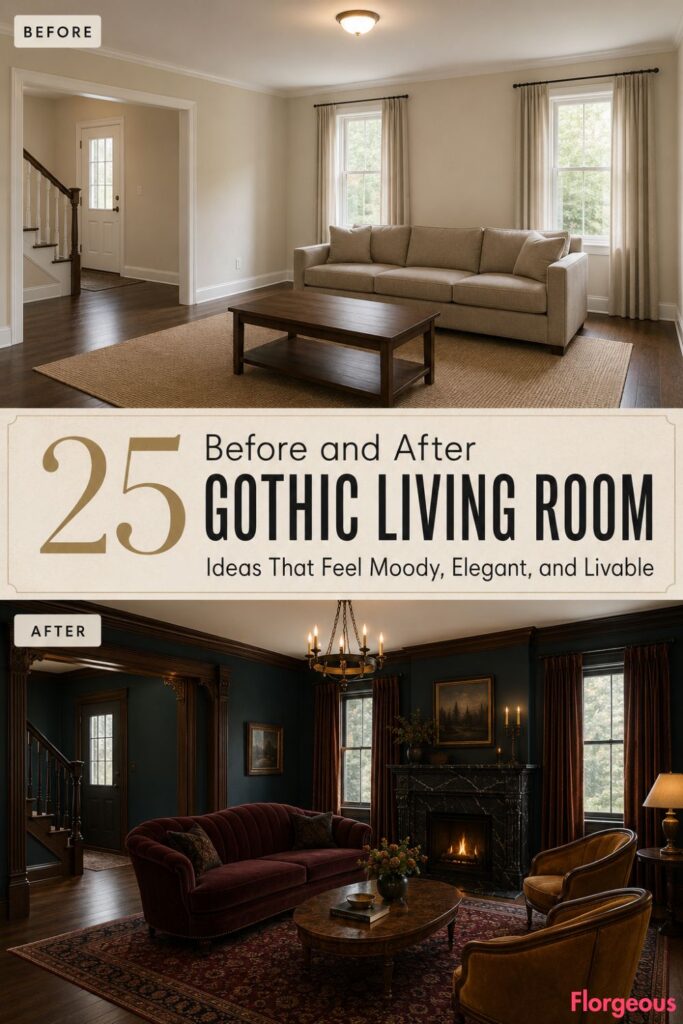
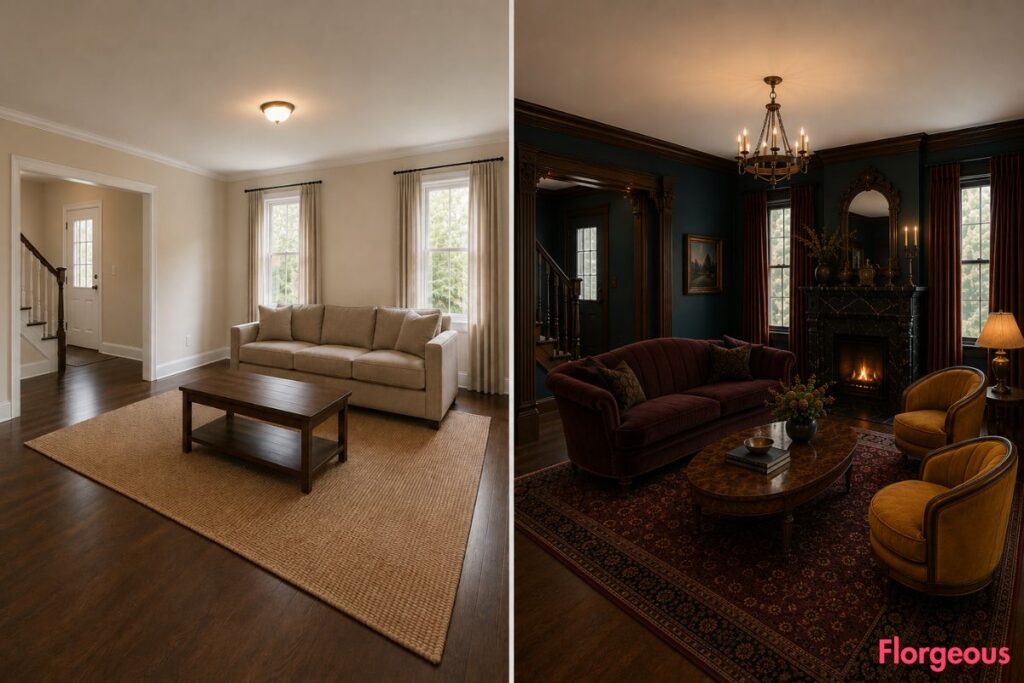
A plain builder-grade living room can be perfectly usable and still feel forgettable. Warm off-white walls, a basic beige sofa, short curtains, and an empty coffee table provide function, but there is no focal point or sense of personality.
To see how much design direction can change a space, we reimagined that exact room in 25 completely different ways. Every Gothic Living Room makeover keeps the same architecture and camera angle, while changing the layout, materials, colors, furniture, lighting, and practical purpose.
Some ideas are dark and richly layered. Others use pale stone, linen, modern silhouettes, greenery, or renter-friendly details. The common thread is thoughtful Gothic influence without Halloween props, sacred imagery, or rooms that feel like theatrical sets.
1. Turn the Plain Room Into a Formal Gothic Living Room Parlor
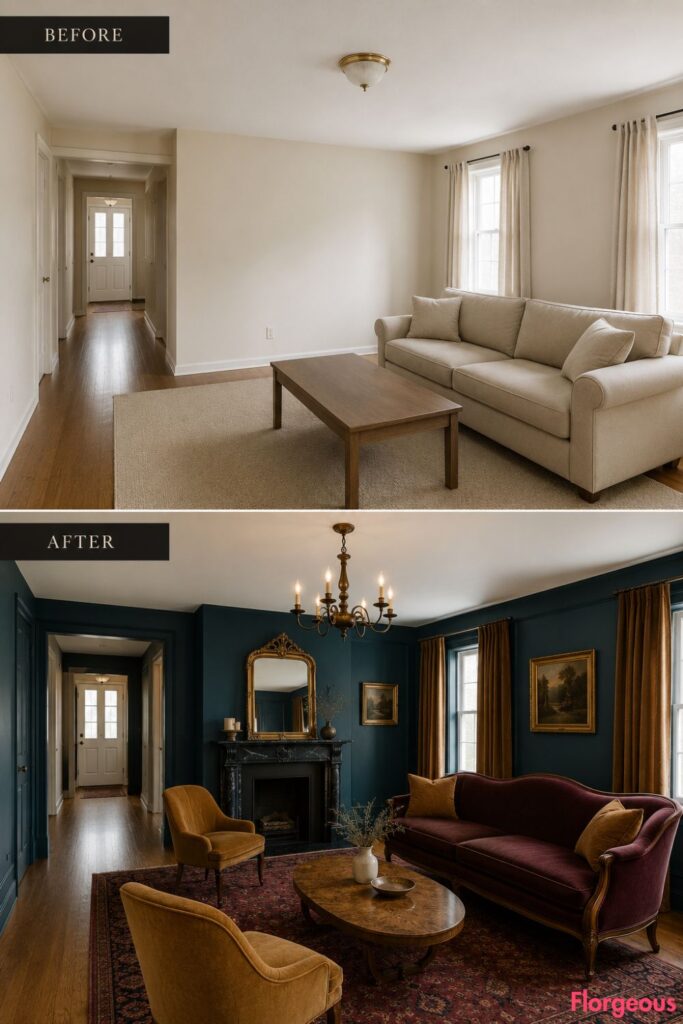
A black marble fireplace becomes the first strong focal point, framed by peacock-blue walls and a tall carved-oak mirror.
Before: Warm off-white walls, a straight beige sofa, bare rectangular table, generic rug, short curtains, standard light, and empty walls.
After: A plum camelback sofa faces the hearth, with two ochre balloon-back chairs set at right angles. An oval burl table, oxblood-bordered rug, tobacco curtains, and bronze gasolier complete the room.
Why it works: The fireplace supplies architectural weight, while jewel-toned seating prevents the dark finishes from feeling cold.
Try this: Use a freestanding faux mantel if structural work is not possible.
2. Build a Dark Academia Library Across the Main Wall
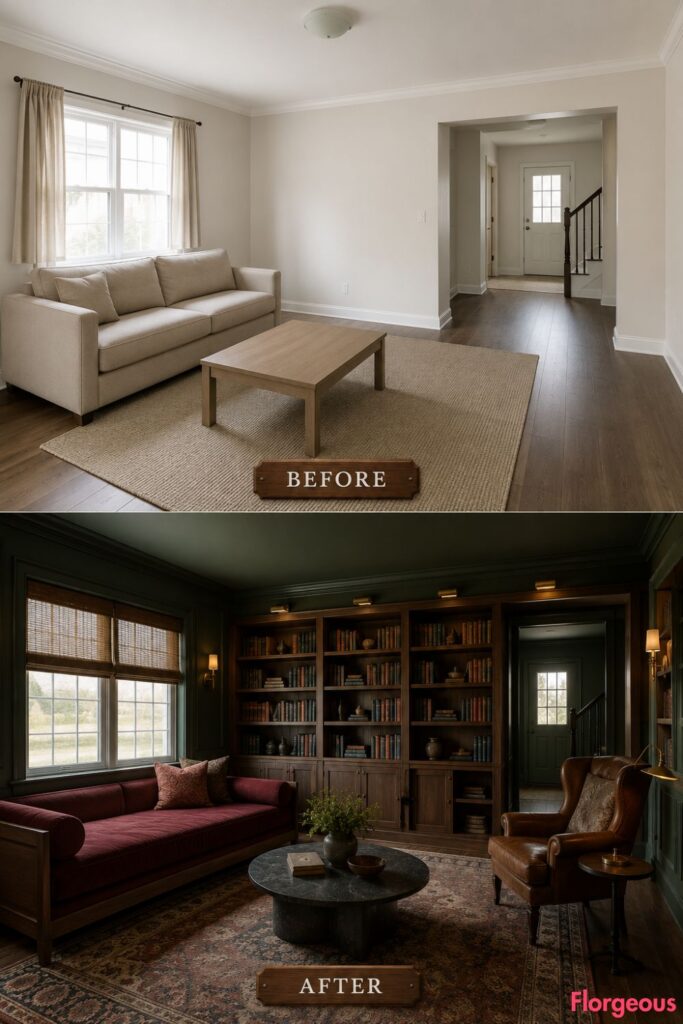
Floor-to-ceiling walnut bookcases turn the blank wall into a useful reading feature.
Before: The same neutral living room with generic furniture, flat lighting, and no focal point.
After: Forest-green walls surround walnut shelving filled with plain, unlabelled books. An oxblood daybed sits opposite a tobacco leather reading chair, with a round soapstone table and faded patterned rug between them.
Why it works: The daybed introduces a relaxed reading function without requiring a large sectional.
Try this: Paint affordable bookcases and the wall behind them in one continuous color.
Designer Tip: Use warm 2700K bulbs. Cold white light can flatten green, walnut, and oxblood finishes.
3. Soften the Style With a Romantic Plum Salon
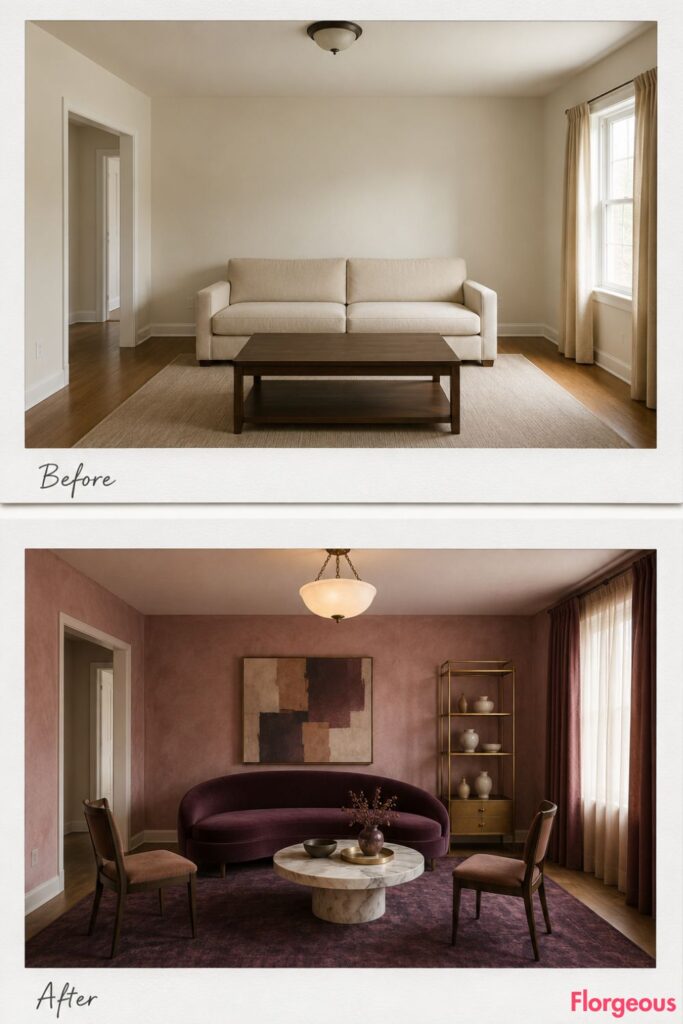
Dusty rose plaster creates a gentler background than charcoal or black.
After: A curved plum settee anchors the room, paired with two slender walnut chairs and a round alabaster table. An aubergine rug, layered blush-and-tobacco curtains, opaline pendant, and brass étagère add warmth and reflection.
Why it works: Rounded furniture and powdery walls balance the heavier Gothic materials.
Try this: Choose washable velvet-look curtains rather than delicate silk.
4. Create a Light Gothic Room With Pale Stone and Linen
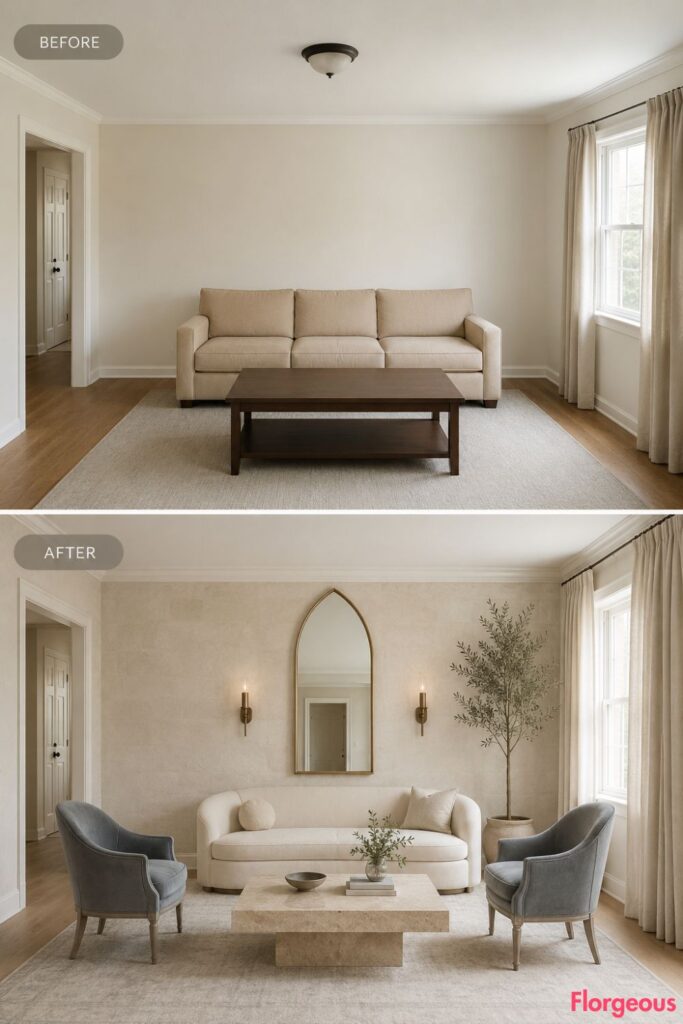
Gothic influence can come from shape and proportion instead of dark color.
After: Warm limestone walls frame a tall lancet-shaped mirror. An ivory settee, two pale blue-gray chairs, a rectangular travertine table, mist-colored wool rug, and full-height linen curtains keep the space bright.
Why it works: A few dark bronze outlines give the pale room definition.
Try this: Use one lancet mirror rather than repeating arches throughout the room.
5. Pair Blackened Steel With Deep-Veined Marble
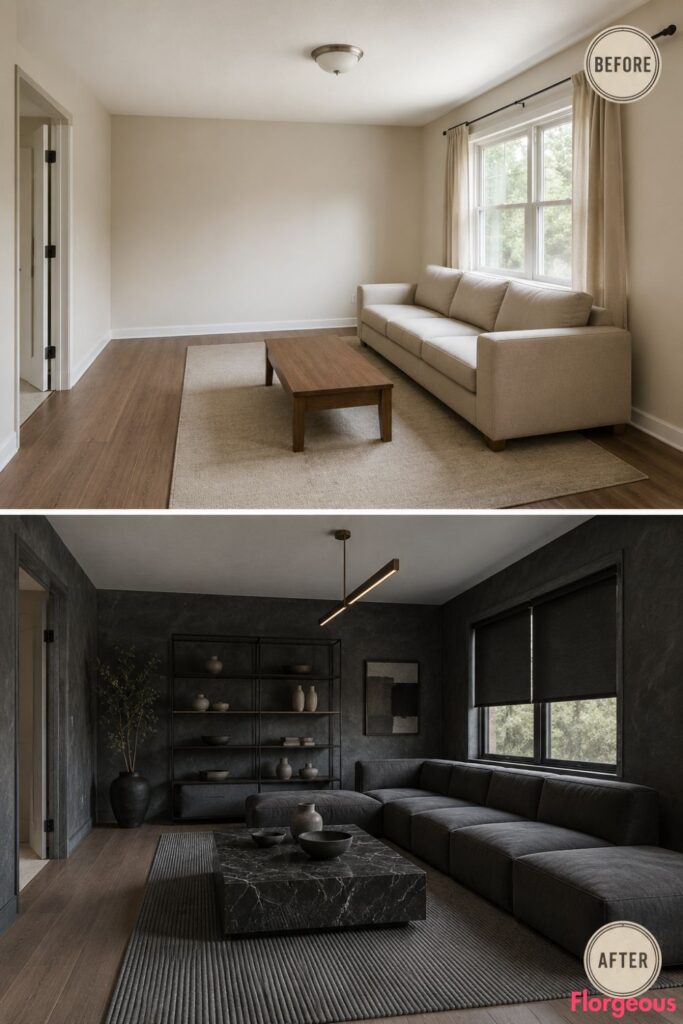
This modern version removes traditional carving and relies on material contrast.
After: Charcoal limewash surrounds a low graphite modular sofa, blackened-steel shelving, and a broad marble table with expressive pale veining. A ribbed gray rug and dark roller shades sharpen the composition.
Why it works: Heavy stone and shadowed metal create Gothic atmosphere without period furniture.
Try this: Substitute marble-look laminate and powder-coated shelving for the real materials.
6. Form a Tudor Conversation Circle With Warm Oak
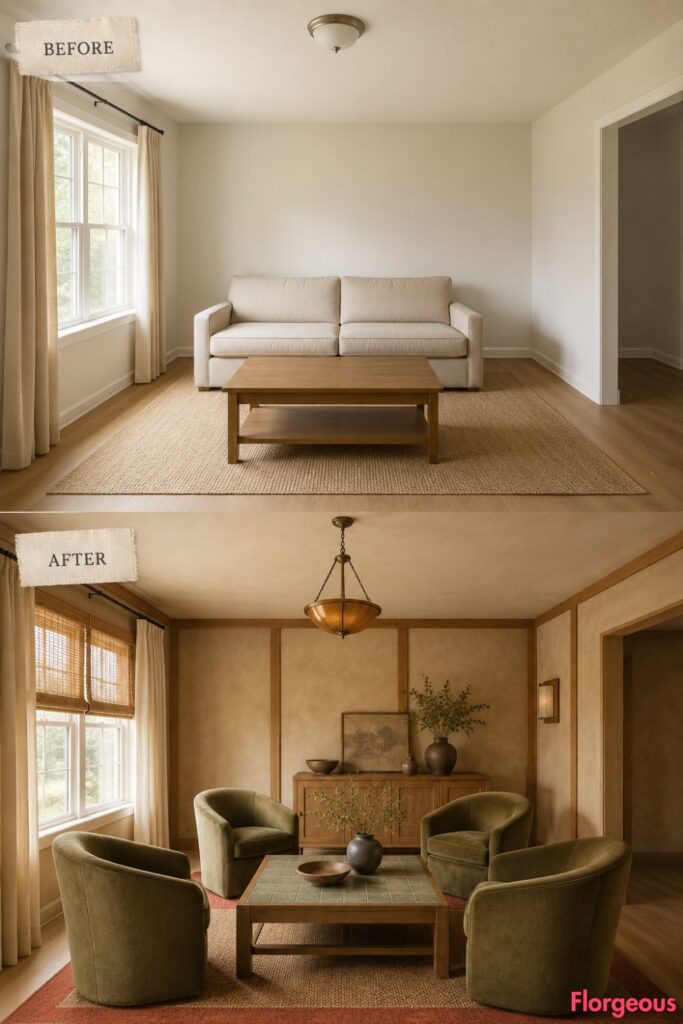
This layout removes the sofa and replaces it with four compact chairs.
After: Oak battens warm the plaster walls, while four olive mohair chairs surround a square tile-topped table. A rust-bordered rug, woven shades, linen panels, and amber mica pendant create an earthy palette.
Why it works: Every seat has equal access to the table, making the room useful for conversation and games.
Try this: Select open-arm chairs to reduce visual bulk.
Small Space Tip: Leave a clear path behind at least two chairs so the group never blocks the entrance.
7. Add Pale French Tracery to the Empty Wall
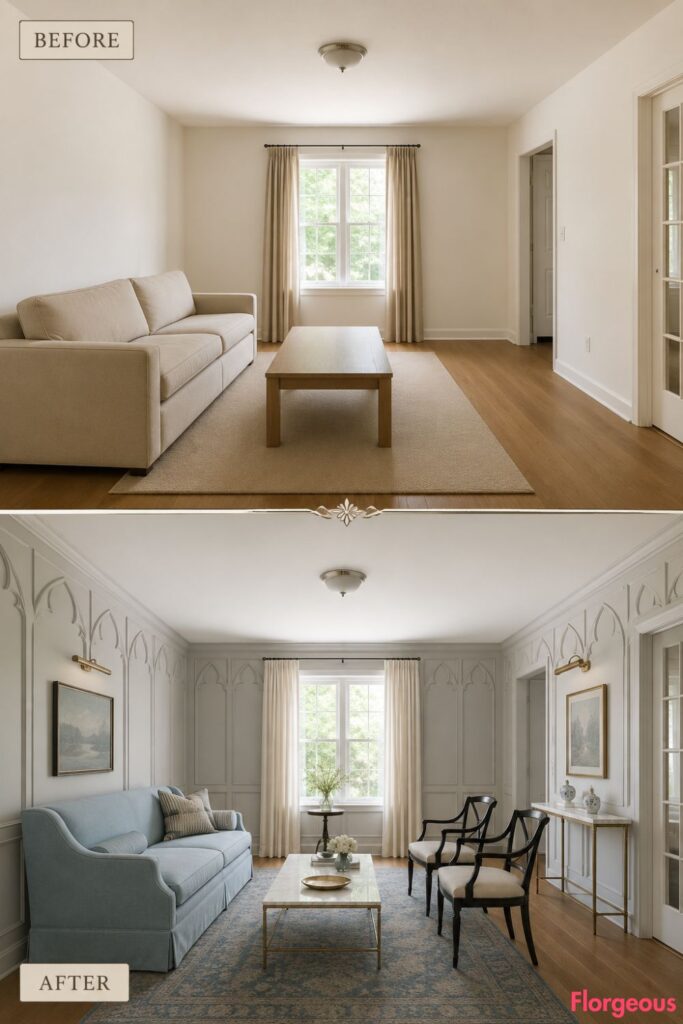
This French Gothic interpretation uses painted architectural detail instead of dark timber.
After: Pale gray tracery-inspired paneling covers the main wall. A powder-blue settee sits perpendicular to the window, with two ebonized chairs, a slim marble console, and faded blue rug.
Why it works: The pale paneling creates shadow and rhythm while preserving natural light.
Try this: Build the pattern with lightweight molding attached to painted panels.
8. Create a Renter-Friendly Room With Removable Damask
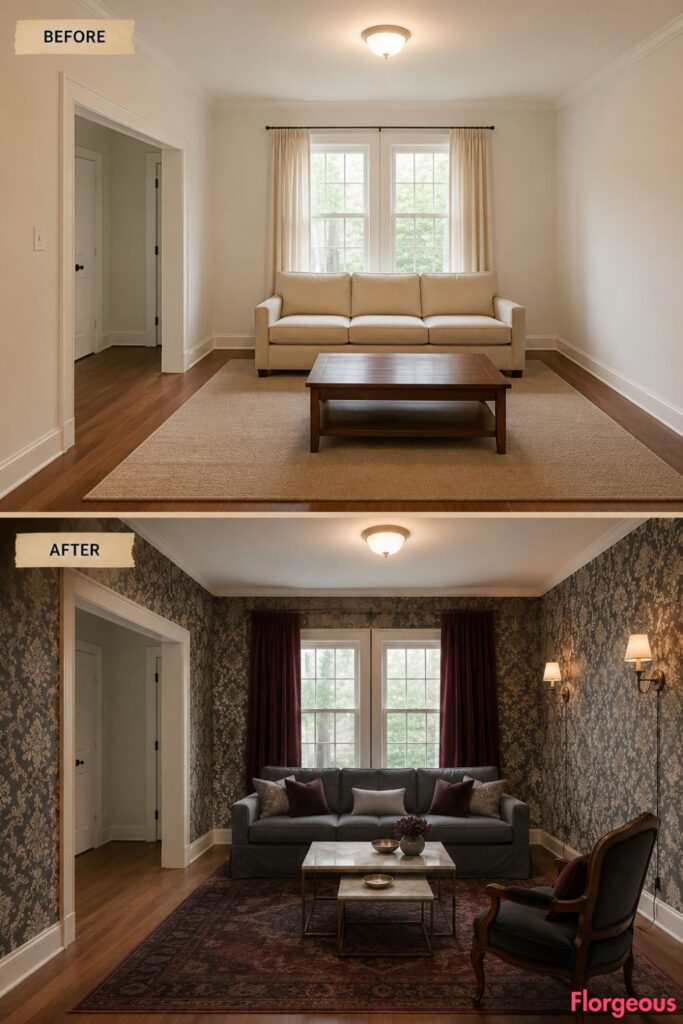
No permanent paneling or built-ins are required for this makeover.
After: Charcoal-and-parchment peel-and-stick damask wallpaper frames a deep-gray slipcovered sofa. A carved walnut chair, marble-look nesting tables, washable burgundy rug, and plug-in sconces complete the space.
Why it works: The wall treatment carries most of the visual impact, allowing the furniture to stay practical.
Renter-Friendly Version: Frame removable wallpaper with adhesive molding strips that can be lifted later.
9. Center the Room on a Pale Castle-Inspired Hearth
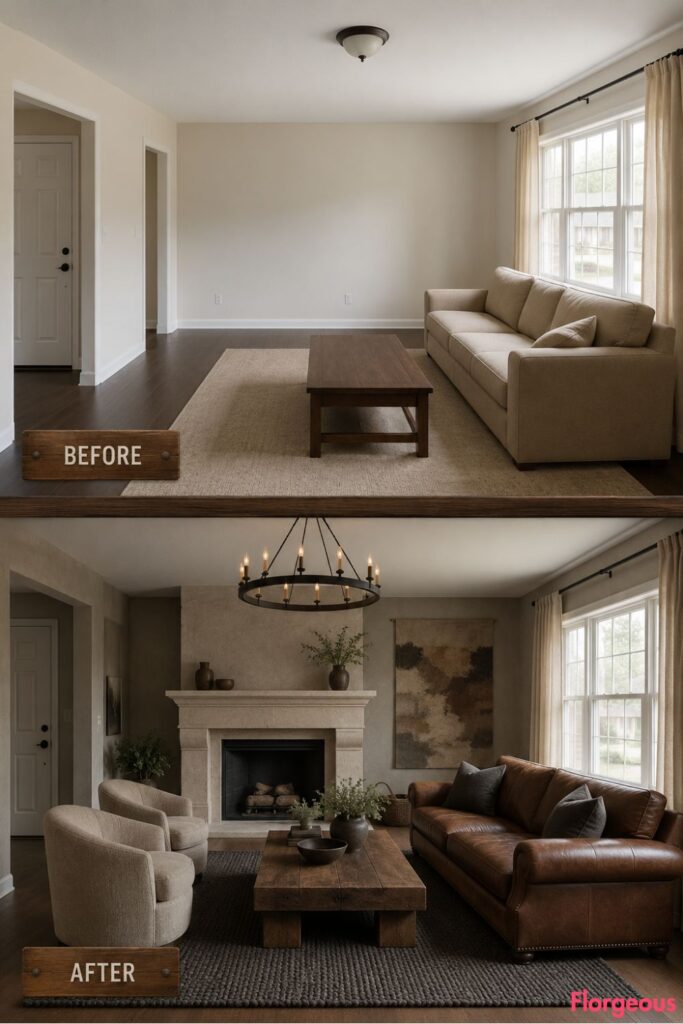
A broad limestone-style fireplace brings weight to an otherwise simple arrangement.
After: A tobacco leather sofa faces the hearth, with two oatmeal wool chairs and a heavy rectangular oak table. Warm gray plaster, canvas curtains, a charcoal flatweave, and iron ring chandelier keep the palette grounded.
Why it works: One substantial architectural feature removes the need for excessive ornament.
Try this: Use a stone-effect mantel surround rather than full masonry.
10. Turn the Room Into an Ironwork Conservatory
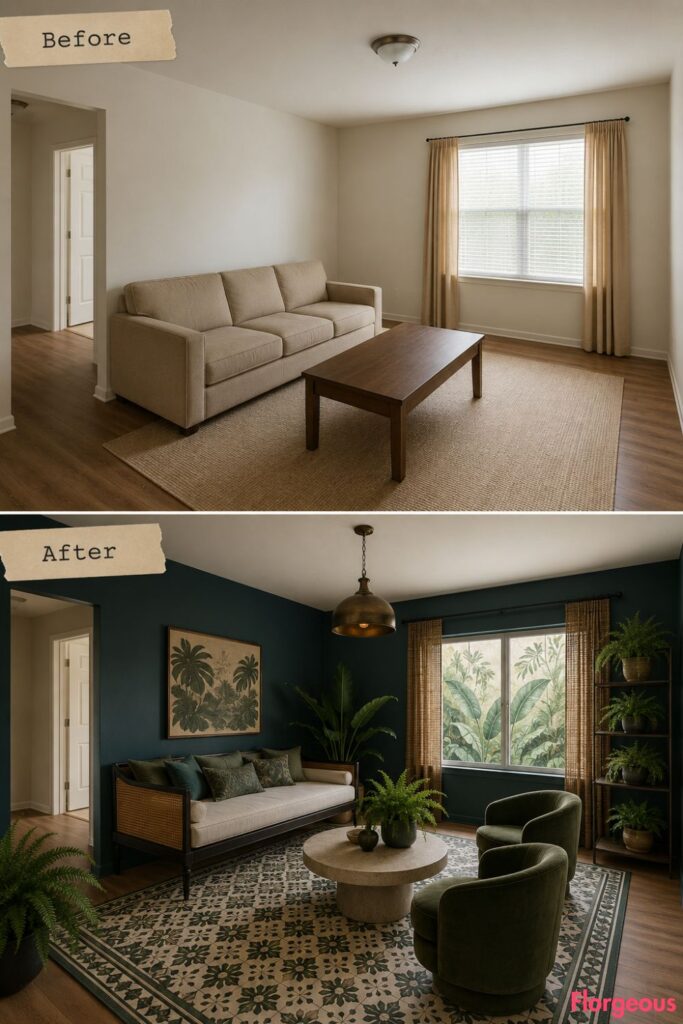
Plants and iron framing create a Gothic conservatory without altering the architecture.
After: Deep teal walls surround an iron-framed plant shelf. A cane daybed faces two moss chairs, with a round stone table and tile-pattern rug creating a casual sitting area.
Why it works: Greenery softens the ironwork and keeps the dark palette lively.
Try this: Limit plants to one shelf and two floor-level specimens so the room remains easy to maintain.
11. Layer Sapphire, Aubergine, and Aged Brass
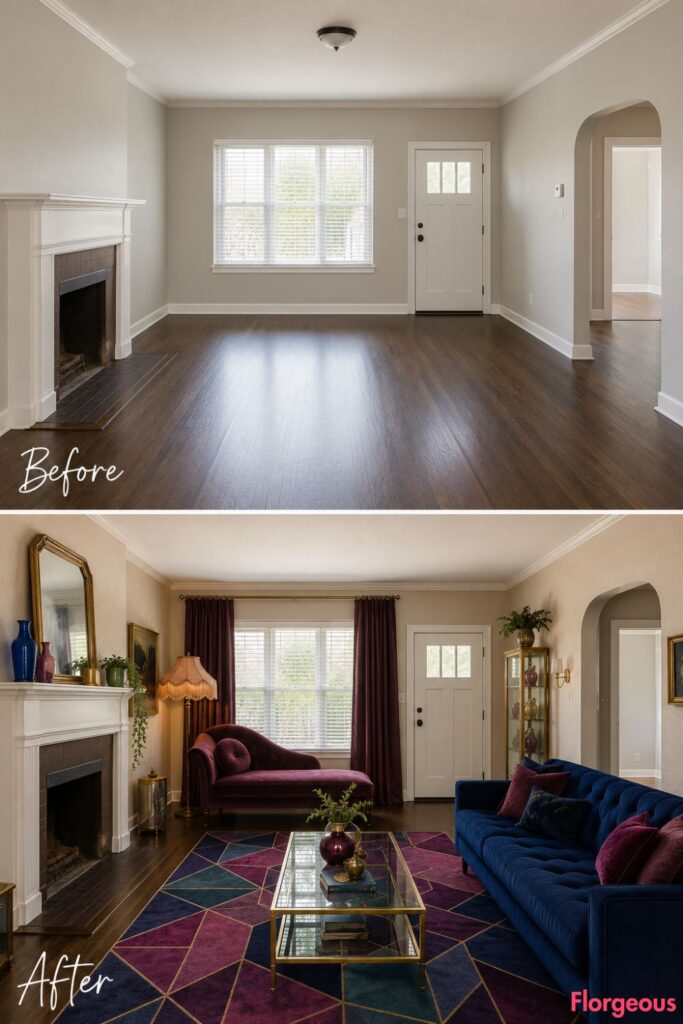
This jewel-toned room avoids the expected black-and-red combination.
After: A sapphire velvet sofa faces an aubergine chaise in an open L-shaped arrangement. A low brass-and-glass table, geometric rug, plum curtains, fringed floor lamp, and mirrored cabinet add light.
Why it works: Two saturated colors are repeated in controlled amounts rather than spread across every surface.
Color Story: Use parchment walls to give sapphire and aubergine enough breathing room.
12. Give Industrial Gothic a Softer Finish
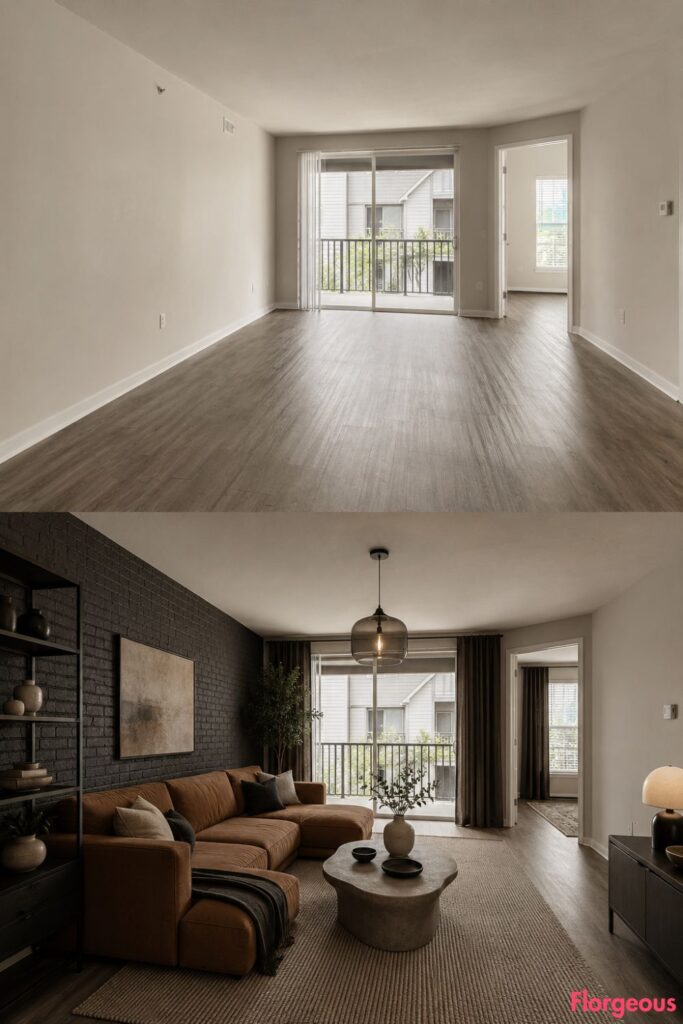
Charcoal brick texture and black steel establish an urban backdrop.
After: A cognac leather sectional follows one corner without crossing the entrance. An irregular concrete table, taupe ribbed rug, dark linen curtains, smoked-glass pendant, and open steel shelving add structure.
Why it works: Cognac leather introduces warmth against the charcoal surfaces.
Try this: Use removable brick-effect wallpaper on only one wall.
13. Reduce the Look to One Strong Arched Silhouette
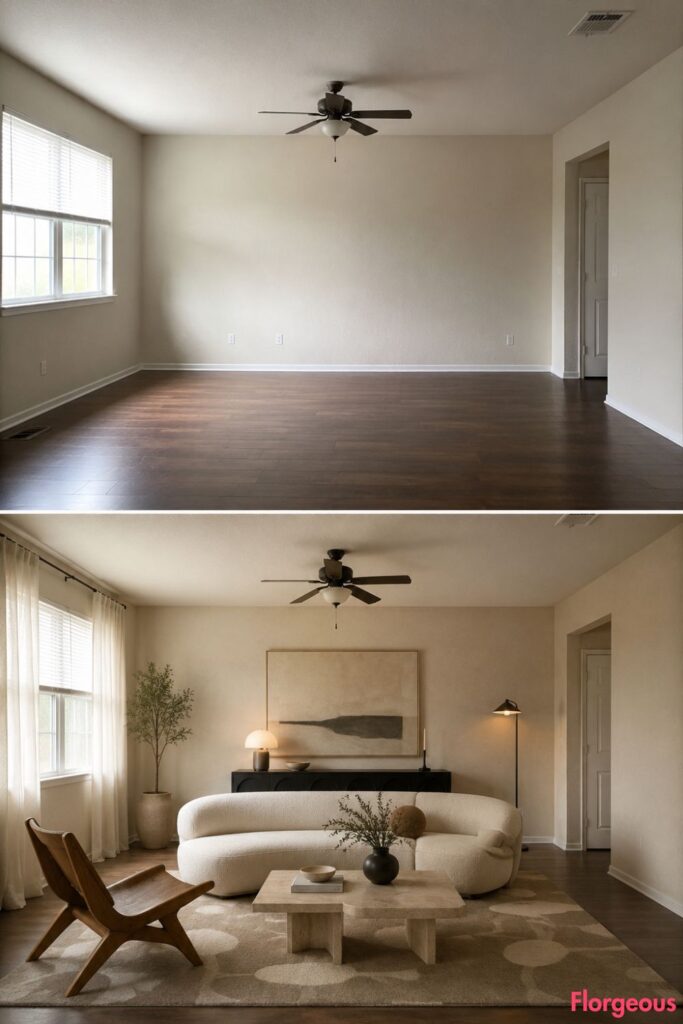
This minimal concept leaves most of the room quiet.
After: A tall black arched console stands against parchment walls. A low cream sofa, sculptural walnut chair, rectangular travertine table, mushroom rug, translucent curtains, and slim iron floor lamp maintain generous negative space.
Why it works: One distinctive shape communicates the style without themed accessories.
Try this: Keep artwork oversized and abstract rather than arranging many small pieces.
14. Blend Gothic Character With Arts and Crafts Warmth
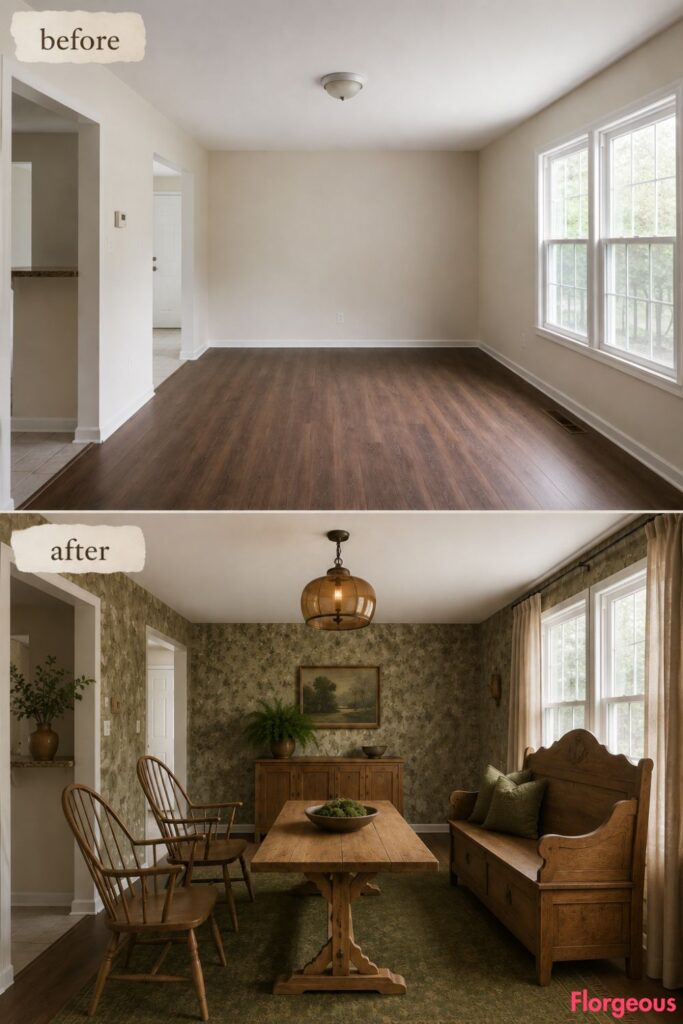
Handcrafted timber replaces glossy stone and metal in this comfortable crossover.
After: Muted olive botanical wallpaper frames a carved oak settle and two spindle-back chairs. A trestle table, moss wool rug, natural curtains, amber pendant, and low cabinet complete the room.
Why it works: Tall furniture proportions and dark outlines provide Gothic structure, while oak and wool make the room informal.
Try this: Choose one carved piece and keep the remaining furniture simpler.
15. Introduce Italianate Warmth With Sienna and Marble
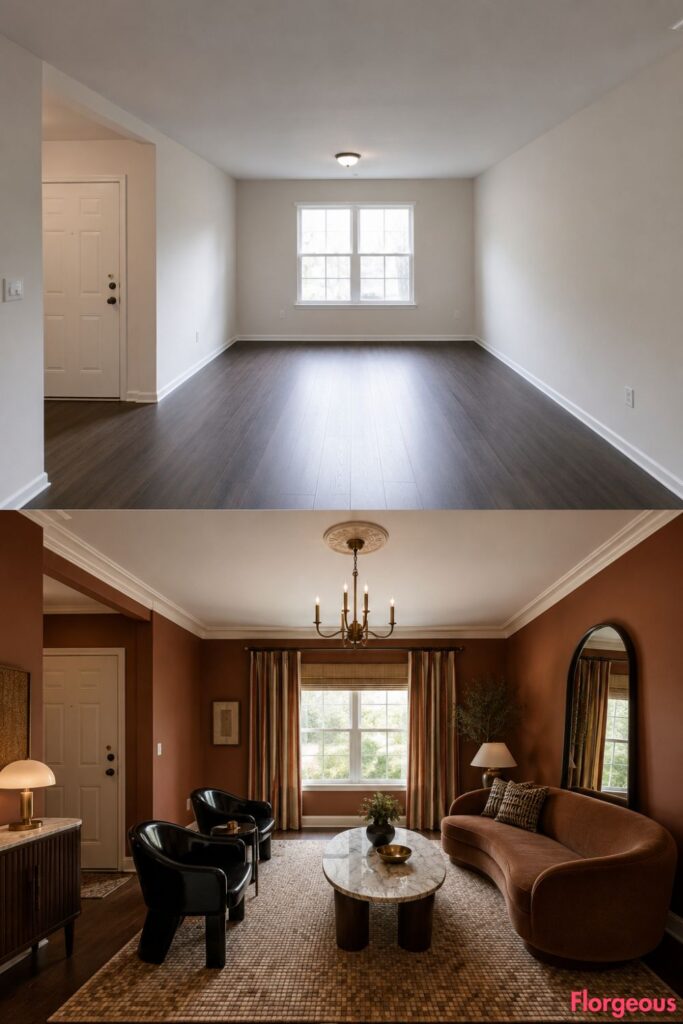
Sienna walls and fine cornices give this version a sun-warmed character.
After: A curved walnut sofa faces two narrow black lacquer chairs across an oval marble table. A mosaic-pattern rug, striped silk-look curtains, tall arched mirror, and bronze chandelier add polish.
Why it works: The warm wall color prevents the black furniture from feeling severe.
Try this: Use a narrow furniture profile to preserve the entry route.
16. Combine Art Nouveau Curves With Inky Teal
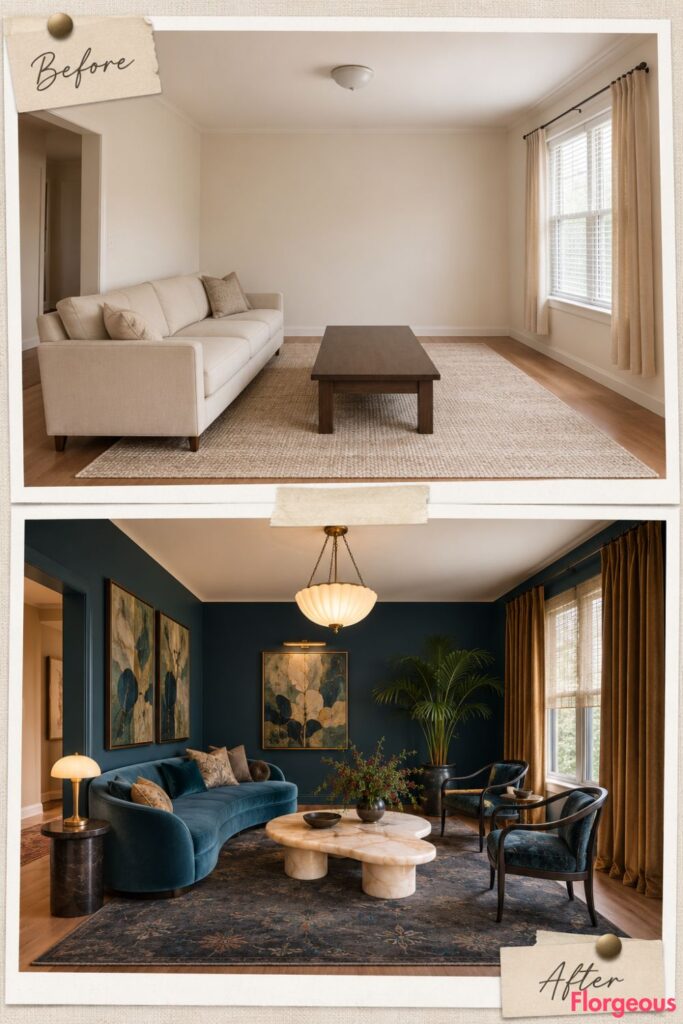
Flowing furniture lines create a distinctly different expression from carved Gothic Revival pieces.
After: An inky teal room contains a crescent peacock-blue settee, two sinuous ebonized chairs, and a kidney-shaped alabaster table. Abstract botanical glass panels and an opaline pendant add glow.
Why it works: Curved forms soften the deep color and dark wood.
Try this: Use polished brass in small amounts to reflect warm light.
17. Reimagine the Space as a Gothic Music Salon
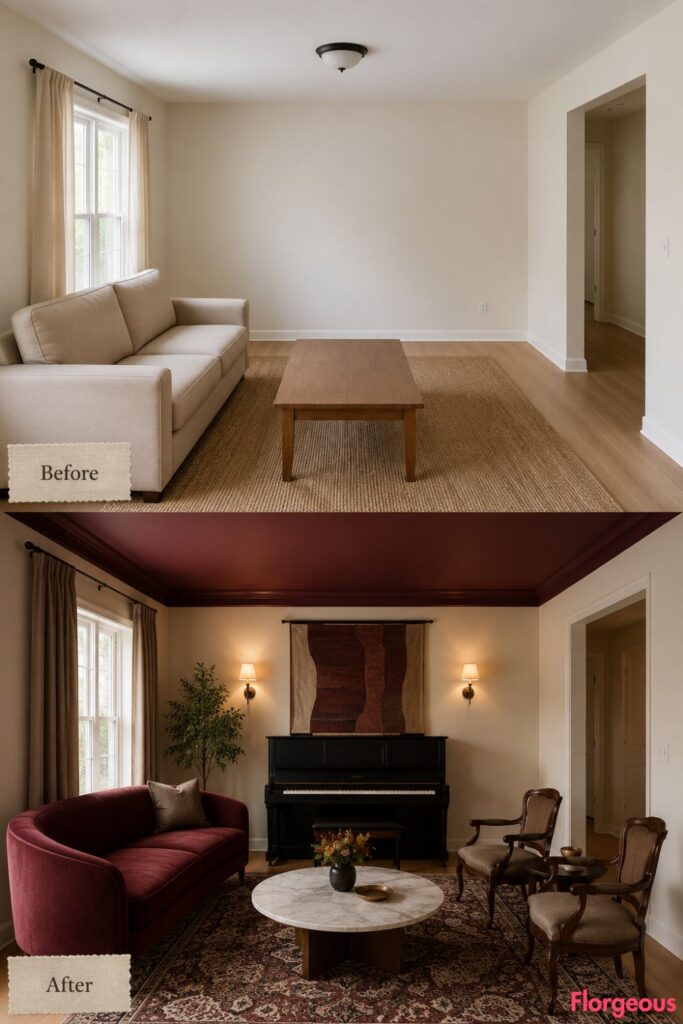
A compact upright piano gives the room a clear purpose without blocking the window.
After: Warm cream walls support a wine-colored ceiling. A burgundy settee and two straight-backed walnut chairs face the piano, with a small marble table, wool rug, tall taupe curtains, and shaded wall lights completing the arrangement.
Why it works: The piano becomes the focal point, so few decorative objects are needed.
Try this: Use acoustic textile panels with abstract patterns rather than framed prints.
18. Arrange Two Settees for an Intimate Tea Room
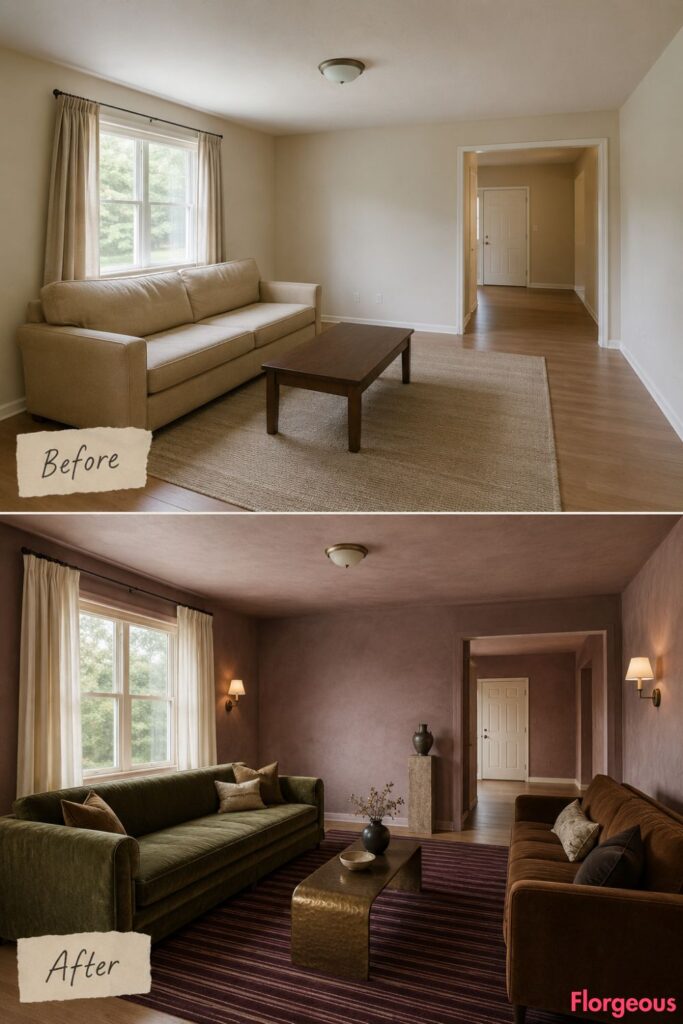
Instead of a sofa and chairs, this room uses two matching-length settees facing one another.
After: Smoky mauve plaster surrounds a moss settee and a tobacco settee. A narrow hammered-brass table sits between them, grounded by a striped plum rug and softened with ivory curtains.
Why it works: The symmetrical seating encourages conversation while leaving the far end of the room open.
Try this: Use compact armless settees in a narrow living room.
19. Build a Window Reading Retreat With Hidden Storage
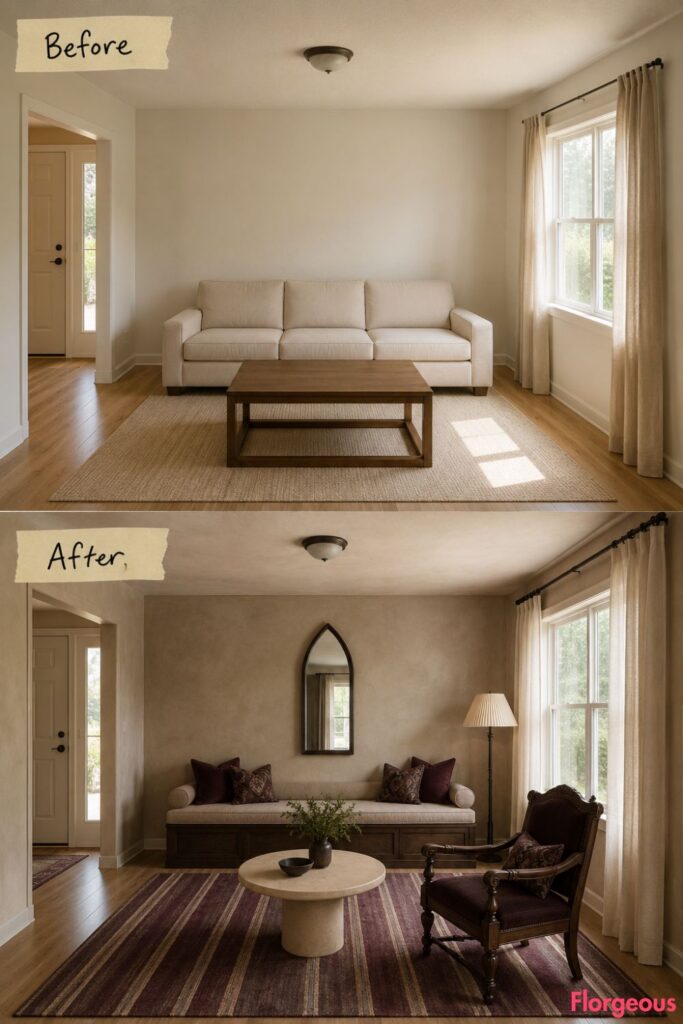
A fitted bench makes the window wall functional and eliminates the need for a full sofa.
After: Mushroom plaster surrounds an upholstered window bench with storage drawers. Aubergine cushions, one carved walnut chair, a pedestal table, striped rug, linen curtains, lancet mirror, and shaded floor lamp create a compact retreat.
Why it works: Seating and storage occupy the same footprint.
Try this: Use freestanding drawer benches if built-ins are not possible.
20. Hide the Television Behind Sliding Tracery Panels
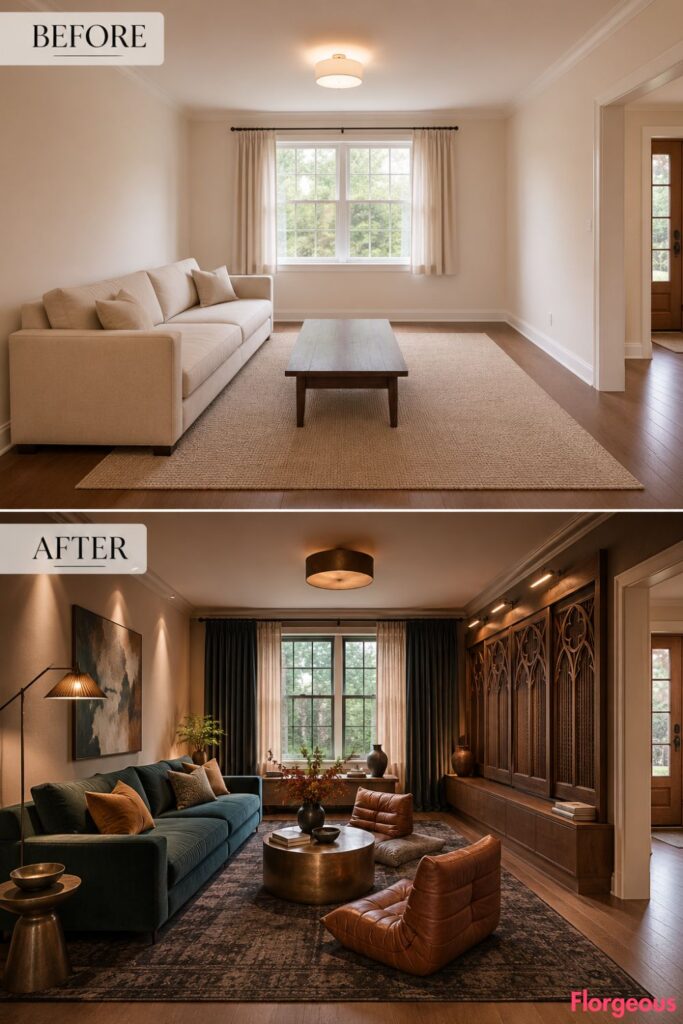
This practical room keeps modern technology out of sight when it is not being used.
After: A smoked-oak media wall contains flat sliding panels with simplified tracery lines. A deep teal sofa, two black leather floor seats, bronze drum table, charcoal flatweave, dark curtains, and wall-wash lighting create a low, relaxed arrangement.
Why it works: The closed panels read as architecture rather than media furniture.
Try this: Apply thin molding to ordinary sliding cabinet doors.
21. Use Carved Pale Oak for a Soft Neutral Interpretation
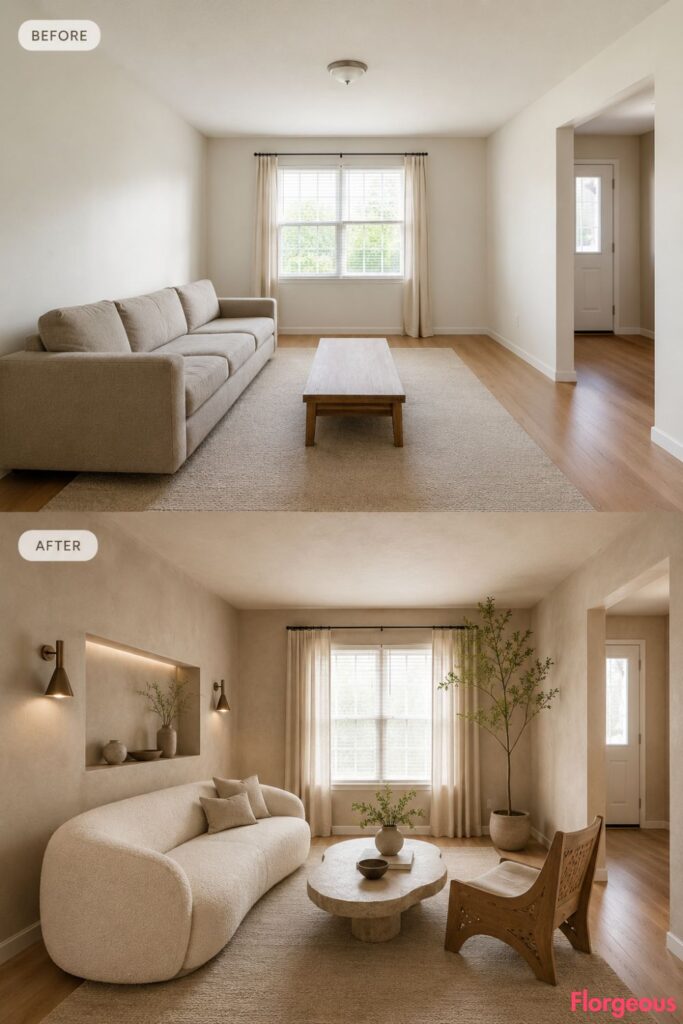
Chalky mushroom plaster and pale timber produce a calm room with no saturated colors.
After: An oatmeal boucle sofa faces one carved pale-oak chair across an irregular limestone table. A taupe hand-knotted rug, flax curtains, bronze wall lights, shallow niche, and slender tree complete the room.
Why it works: Craftsmanship and tall proportions remain visible even in a nearly neutral palette.
Try this: Mix no more than two wood tones to maintain the quiet effect.
22. Design a Collector’s Parlor Around One Tall Cabinet
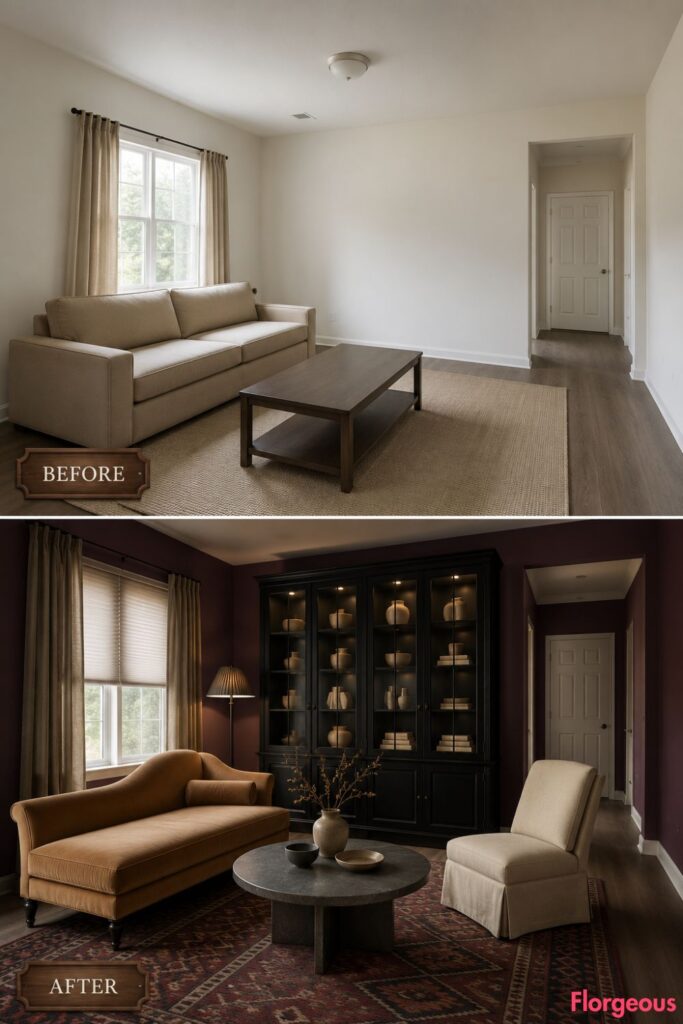
The focal point is a single ebonized cabinet rather than a fireplace, television, or gallery wall.
After: Muted aubergine walls frame a cabinet filled with plain ceramics and unlabelled books. A camel chaise and upright linen chair form an asymmetrical sitting area with a round soapstone table.
Why it works: One tall piece draws the eye upward and gives small collections a controlled home.
Common Mistake: Do not fill every shelf. Empty areas help dark cabinetry retain its shape.
23. Add Great Hall Rhythm With a Ribbed Ceiling
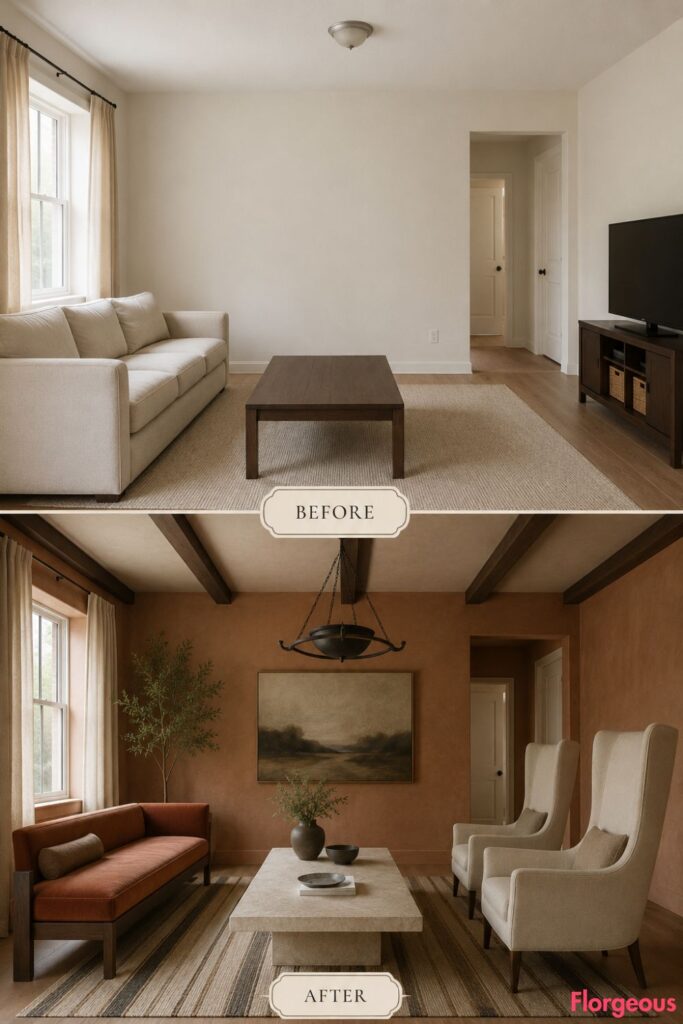
The design interest moves overhead rather than concentrating on a feature wall.
After: Simplified dark-oak ceiling ribs lead toward a long pale-stone table. A rust upholstered bench sits on one side, with two parchment high-back chairs opposite. Warm clay walls and a broad striped rug keep the room grounded.
Why it works: Repetition creates a sense of length and structure without decorative clutter.
Try this: Lightweight faux beams can provide the rhythm without structural work.
24. Merge Neo-Gothic Architecture With Art Deco Glamour
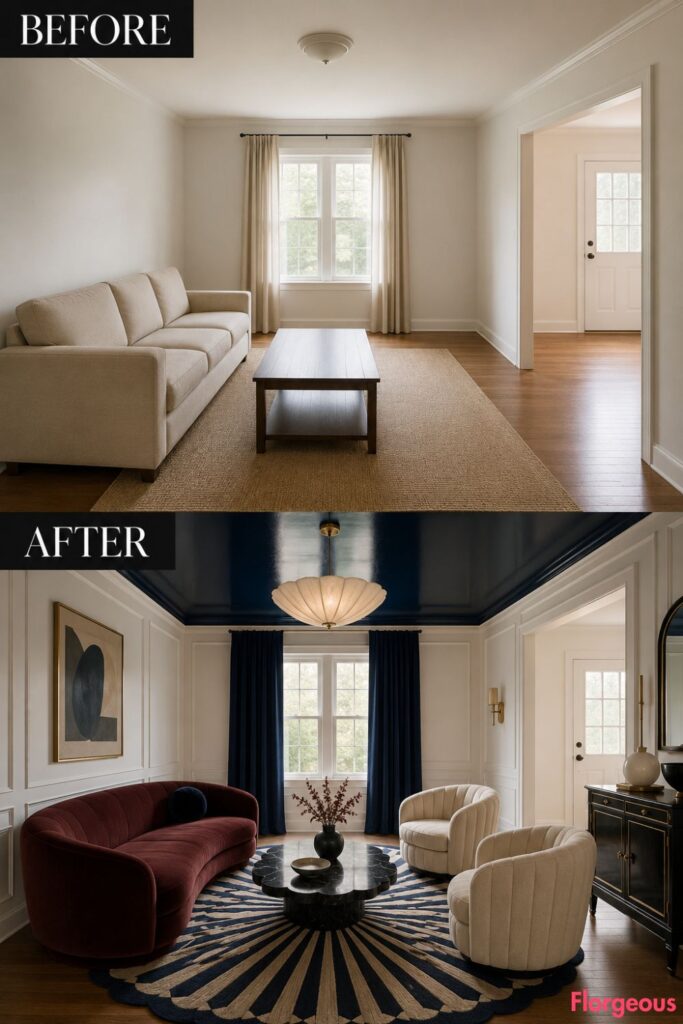
This urban crossover uses streamlined furniture rather than carved antiques.
After: Warm ivory paneling meets a glossy ink-blue ceiling. A curved oxblood sofa and two ivory channel chairs surround a scalloped black marble table. A fan-pattern rug, black lacquer cabinet, navy curtains, and alabaster pendant finish the room.
Why it works: Art Deco provides the furniture geometry, while the deep ceiling and tall paneling create Gothic atmosphere.
Try this: Keep the layout compact and cocktail-like rather than filling every wall.
25. Float a Canopy Daybed in the Center of the Room
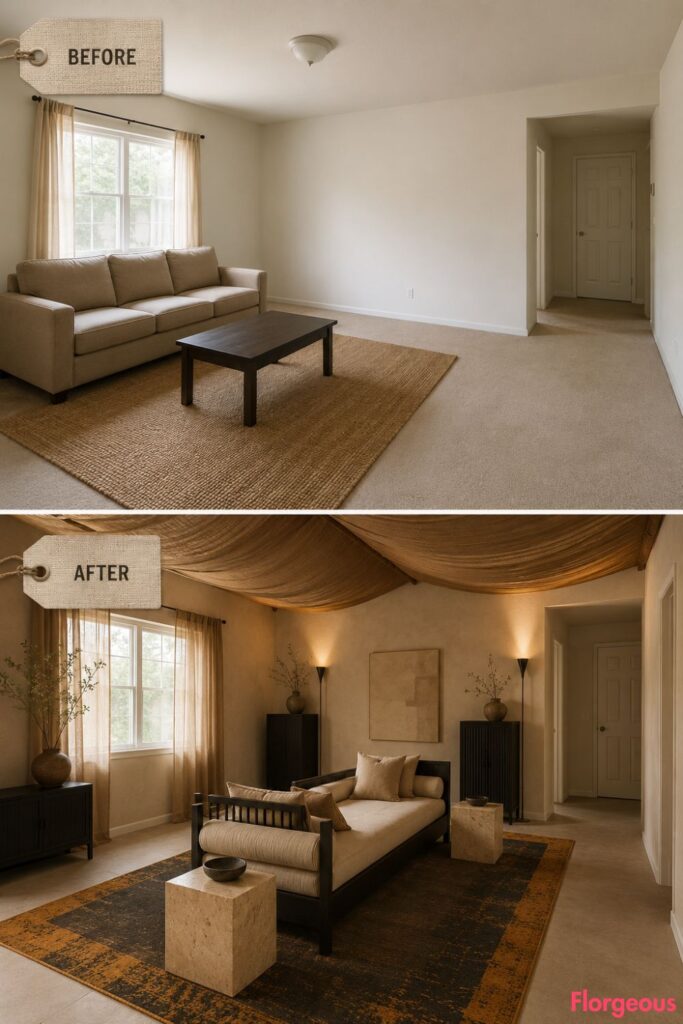
The final idea abandons the usual wall-facing sofa arrangement.
After: A double-sided oatmeal daybed with a blackened-oak frame floats centrally beneath sheer tobacco canopy panels mounted on ceiling tracks. Two stone plinth tables, a saffron-and-charcoal rug, pale clay walls, bronze uplights, and slim storage cabinets complete the room.
Why it works: The atmosphere comes from space, proportion, and fabric rather than literal medieval decoration.
Try this: Use lightweight ceiling-mounted curtain tracks instead of permanent canopy posts.
How to Choose the Right Gothic Look for Your Living Room
Start with one feature that gives the room a clear direction. This could be a carved cabinet, a stone hearth, a deep wall color, a sculptural ceiling, a lancet mirror, or a distinctive light fixture. Keeping the rest of the furniture quieter will make that feature look intentional.
Test dark paint in both daylight and evening light before covering the entire room. Forest green, aubergine, charcoal, peacock blue, and oxblood gain depth when they are balanced with pale stone, linen, warm plaster, polished marble, aged brass, or natural timber.
A Gothic Living Room still needs to support daily life. Measure entrances before buying heavy furniture, protect the main walking route, and leave negative space around carved pieces. For a simpler first step, begin with full-height curtains, warm bulbs, and one strong vintage-inspired item before adding architectural treatments.