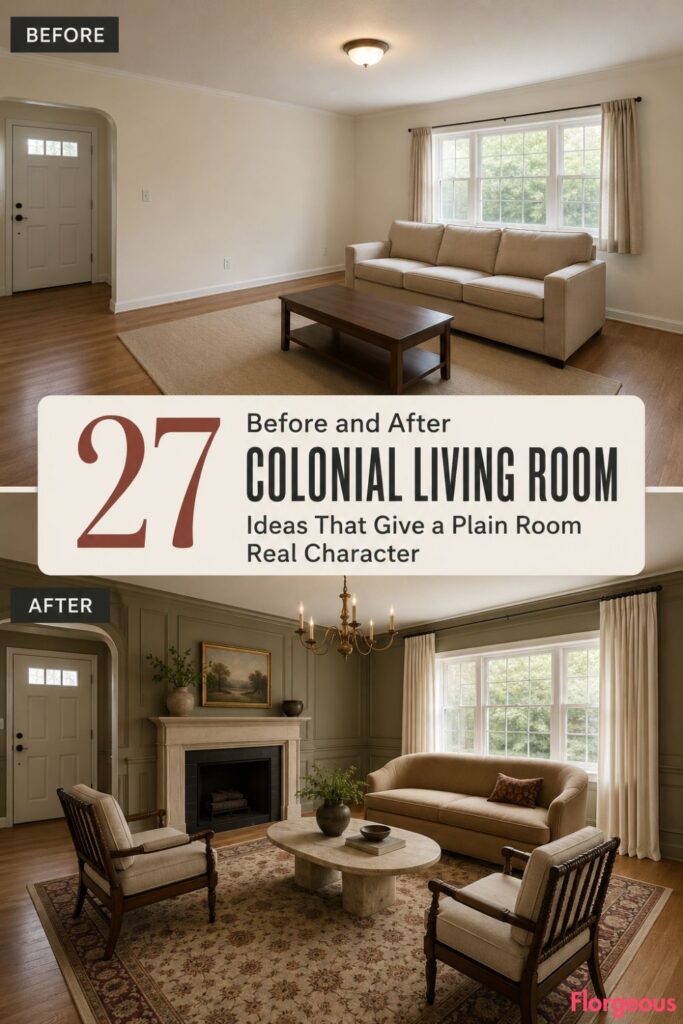
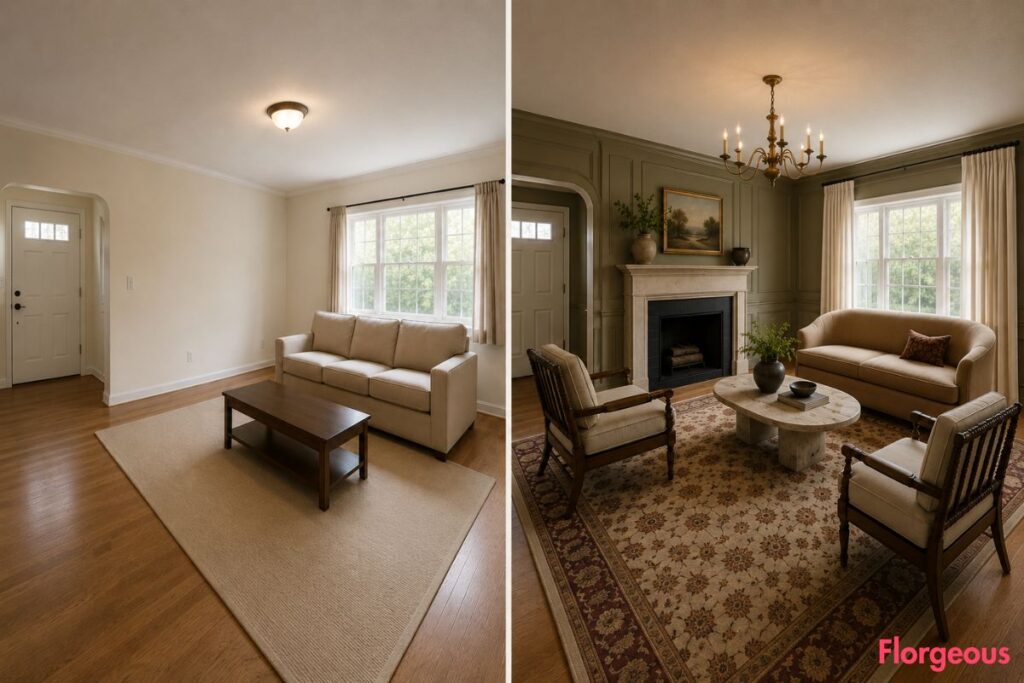
A builder-grade living room can be perfectly usable and still feel anonymous. Neutral walls, basic furniture, short curtains, and a standard ceiling fixture create a clean starting point, but they rarely give the room a memorable identity.
For these makeovers, the exact same plain room is redesigned 27 different ways. Its dimensions, windows, doorway, flooring footprint, and camera position remain unchanged. Only the interior design evolves.
Rather than presenting a Colonial Living Room as one fixed formula, these ideas explore architecture, furniture craftsmanship, regional references, and later revival styles. The focus stays on design, proportion, materials, and practical decorating, without romanticizing colonial rule or relying on stereotypical themes.
1. Give the Bare Room a Light New England Colonial Mood
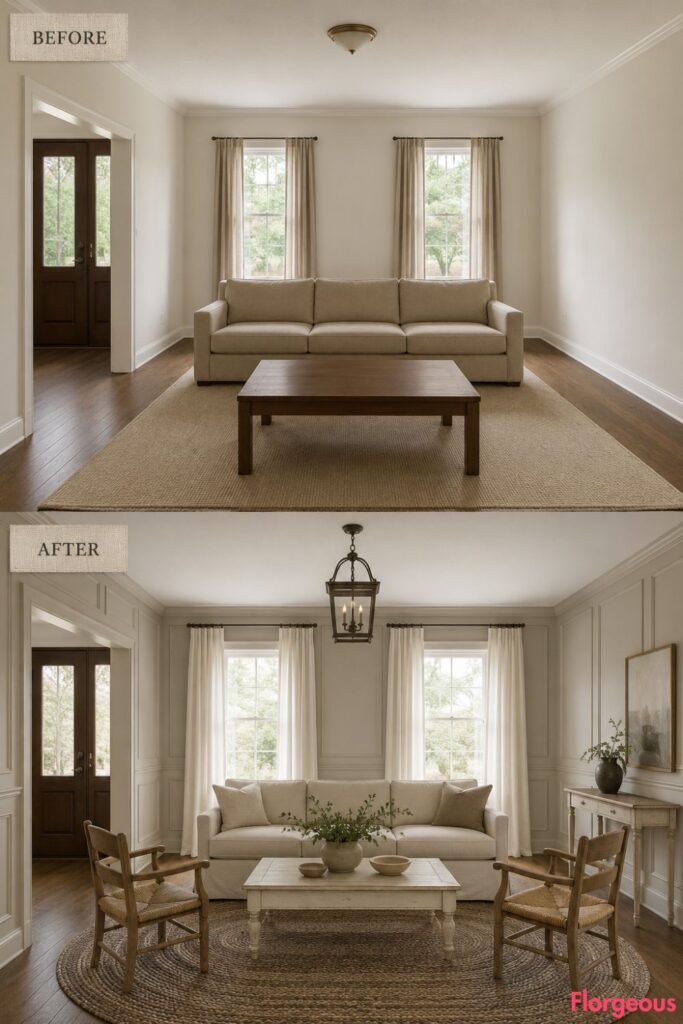
Painted timber and modest furniture make this first transformation approachable rather than formal.
Before: Warm off-white walls, a beige sofa, bare table, neutral rug, short curtains, and flat lighting.
After: Soft putty paneling surrounds a flax sofa, two rush-seat chairs, a painted pine table, braided wool rug, ivory curtains, and a simple iron lantern.
Try this: Paint affordable wall battens the same color as the wall for subtle architectural depth.
2. Build a Balanced Georgian-Style Salon
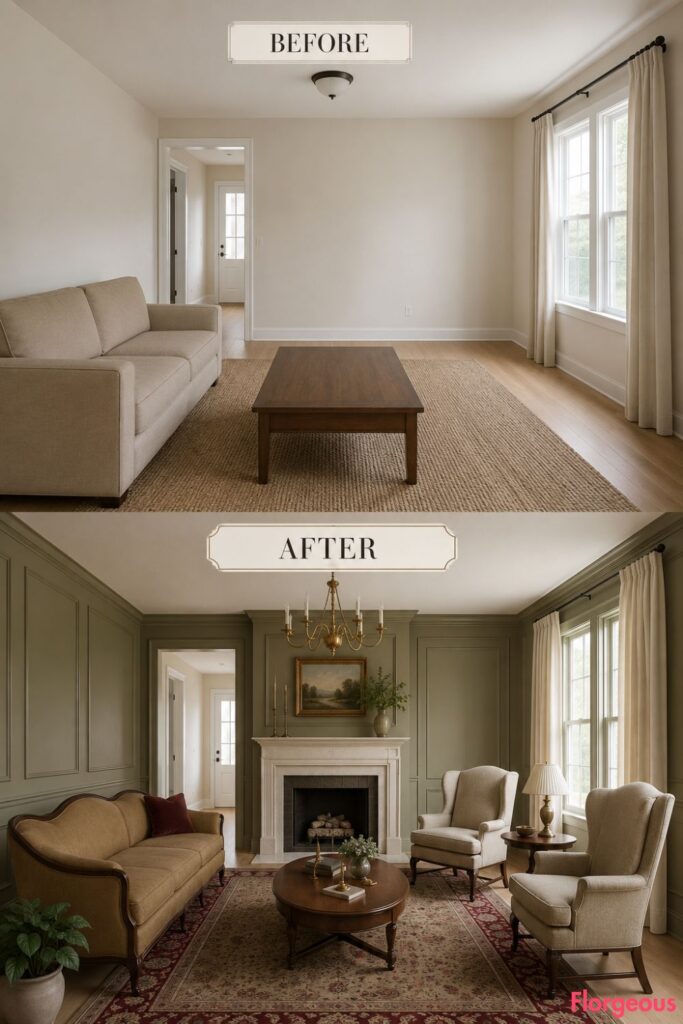
Georgian-inspired rooms depend on proportion and symmetry, but they can still feel comfortable.
Before: The plain room lacks a central feature or visual hierarchy.
After: Muted olive raised paneling frames a pale limestone fireplace, camelback sofa, matching wing chairs, oval walnut table, burgundy-bordered rug, and full pinch-pleat curtains.
Why it works: The fireplace establishes a strong axis, while soft upholstery prevents the arrangement from feeling rigid.
3. Refine the Space With Federal-Inspired Curves
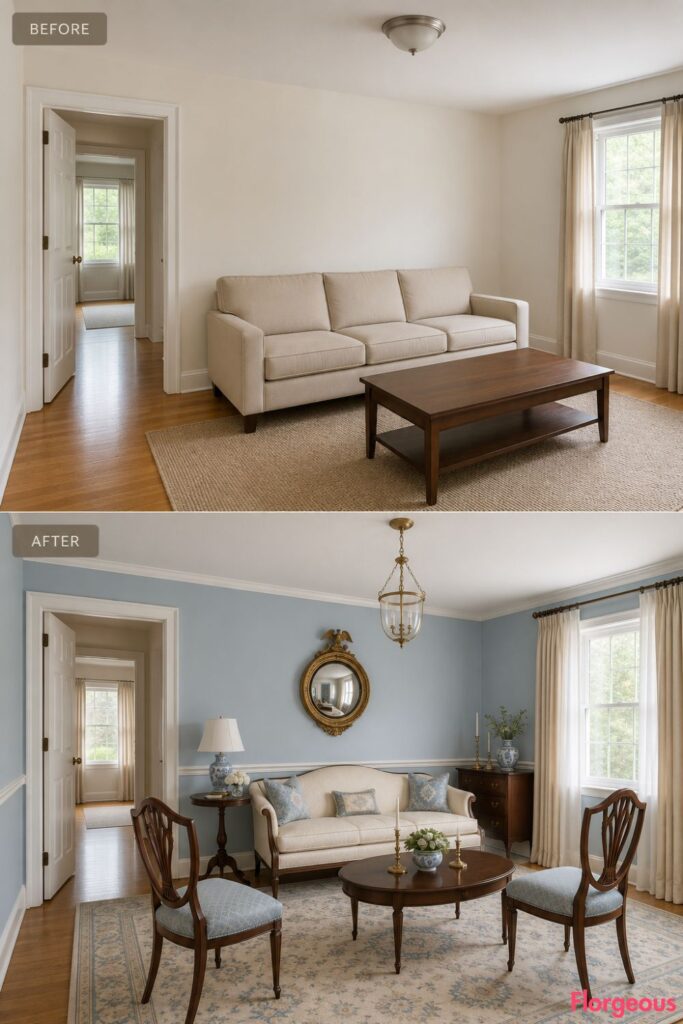
Federal design introduces lighter profiles and graceful oval forms instead of visual heaviness.
Before: The straight sofa and rectangular table make the original room feel boxy.
After: Powder-blue walls sit above a white chair rail, paired with an ivory settee, two shield-back chairs, an oval mahogany table, pale patterned rug, and convex mirror.
Designer Tip: Limit mahogany to one or two pieces so its rich color remains special.
4. Create an Unfussy Early American Hearth Room
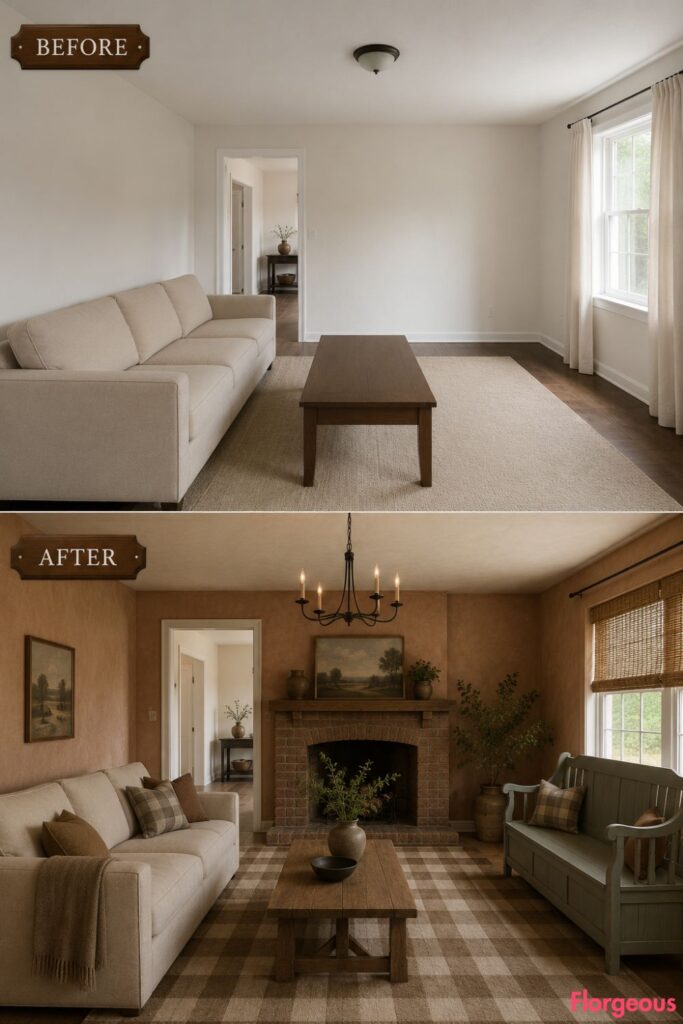
Simple materials give this version warmth without elaborate ornament.
Before: The neutral base feels tidy but too generic to remember.
After: Clay-colored plaster, a modest red-brick hearth, flax slipcovered sofa, painted settle, oak trestle table, checked wool rug, woven shades, and iron lighting create practical character.
Budget Version: A freestanding painted mantel can suggest a hearth without structural work.
5. Warm the Room With Dutch Colonial Character
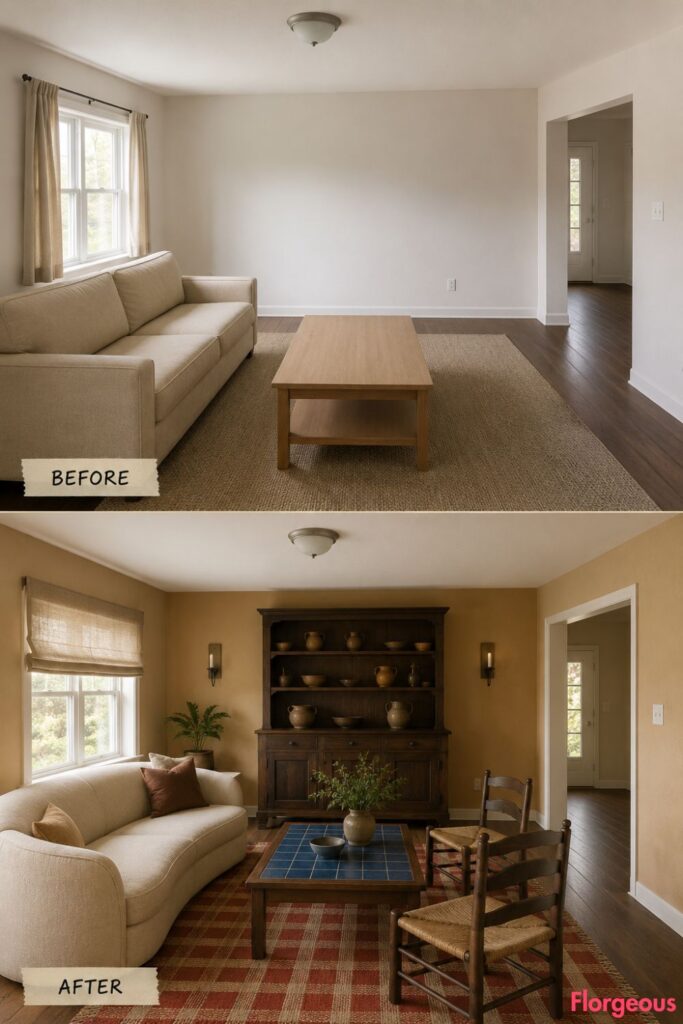
Practical cabinetry and domestic pattern give this room its identity.
Before: Empty walls offer no storage or visual anchor.
After: Creamy ochre paint surrounds a dark oak hutch, curved oatmeal sofa, rush-seat chairs, blue-tile-topped table, red checked flatweave, linen Roman shade, and pewter sconces.
Why it works: One substantial cabinet adds heritage character without requiring permanent built-ins.
6. Introduce Restrained Southern Colonial Formality
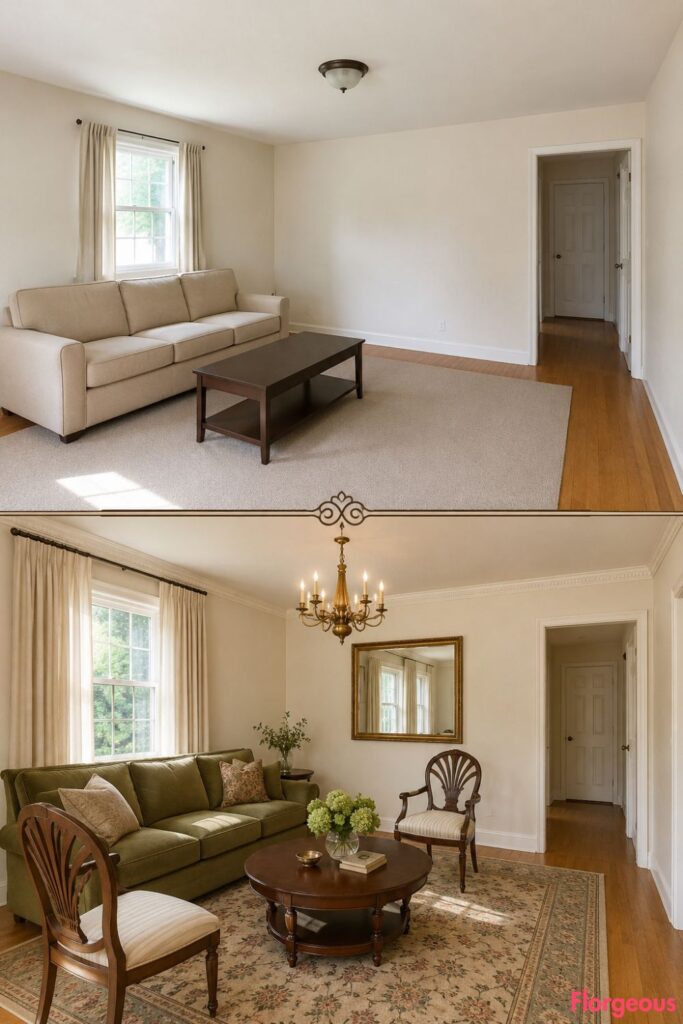
A formal plan does not require excessive ornament or nostalgic plantation references.
Before: The standard furniture lacks scale and a clear relationship to the room.
After: Warm ivory walls, restrained dentil molding, moss-green sofa, two fan-back chairs, round mahogany table, faded floral rug, tall cream drapes, brass lighting, and a large traditional mirror establish order.
Common Mistake: Avoid purchasing every furniture piece in the same wood finish.
7. Make Colonial Revival Style Feel Comfortable
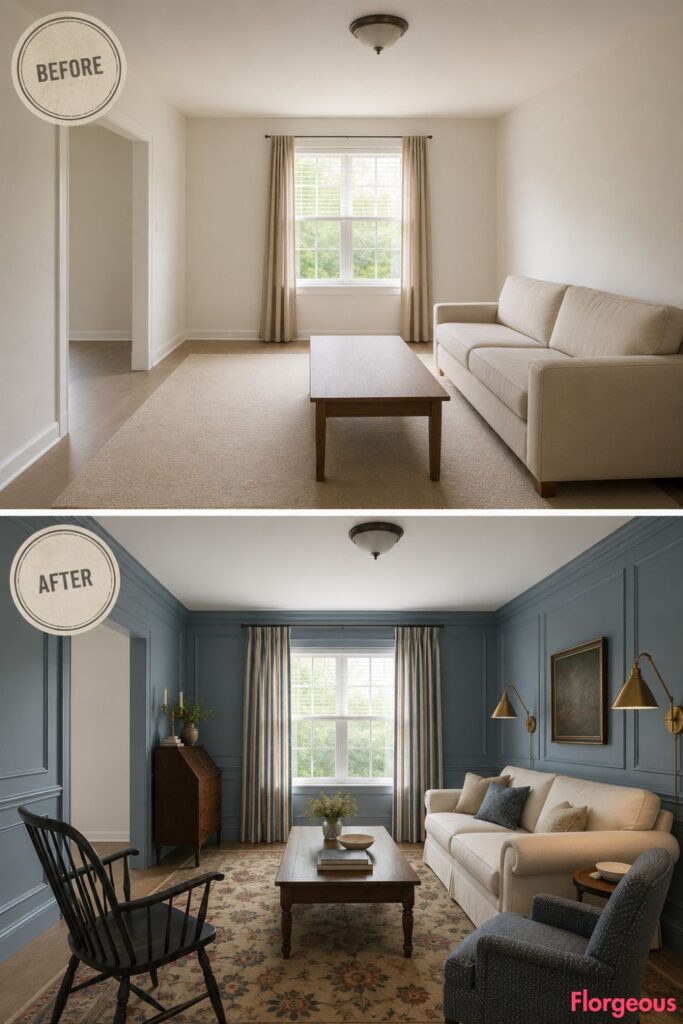
Historic references become easier to live with when paired with generous modern upholstery.
Before: The room has seating but lacks visual layering and useful storage.
After: Dusty blue panel molding, cream roll-arm sofa, upholstered club chair, spindle chair, cherrywood table, floral rug, striped curtains, library sconces, and a compact secretary create an inviting everyday room.
8. Open the Room With Caribbean Colonial Lightness
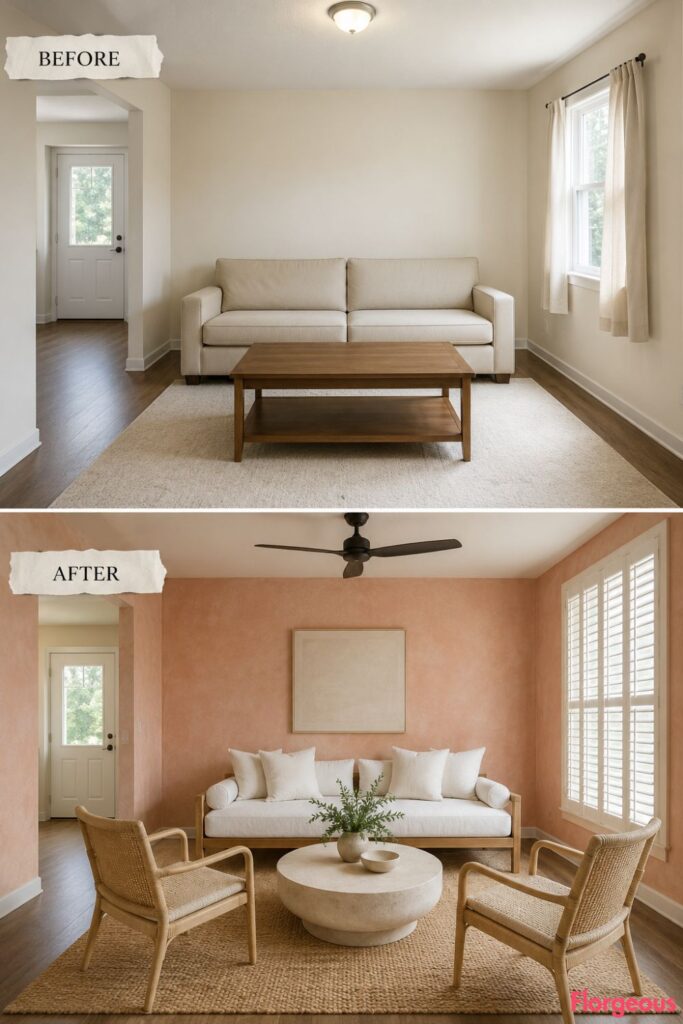
Ventilation, pale fabrics, and shutters shape this relaxed interpretation.
Before: Short curtains make the room feel visually lower and disconnected from the window.
After: Pale coral limewash, white linen daybed, two lightweight cane chairs, round limestone table, woven floor mat, full-height shutters, and a restrained dark ceiling fan create an airy composition.
Color Story: Coral works best when softened with chalky white and natural fibers.
9. Layer a Calm French Colonial-Inspired Interior
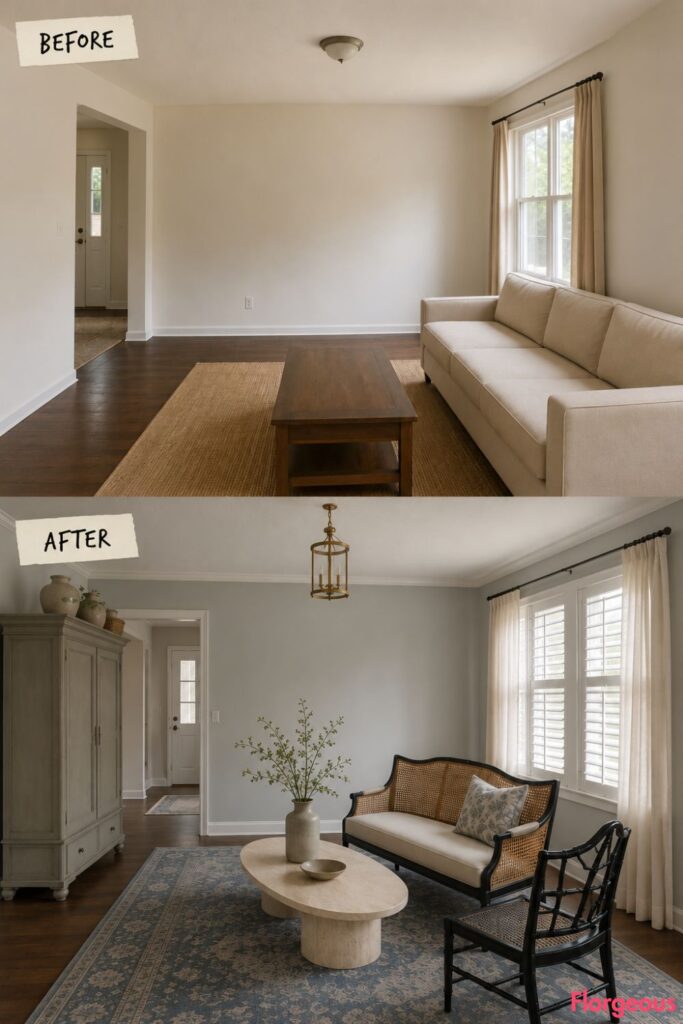
Painted furniture, linen, shutters, and woven details create refinement without stiffness.
Before: The beige sofa and blank wall provide little variation in height.
After: Dove-gray walls support a tall painted armoire, cane-backed settee, black lacquer chair, oval travertine table, faded indigo rug, sheer linen panels, shutters, and a slim brass lantern.
Try this: Let one tall cabinet provide vertical presence while keeping the remaining furniture low.
10. Add Spanish Colonial Weight With Plaster and Timber
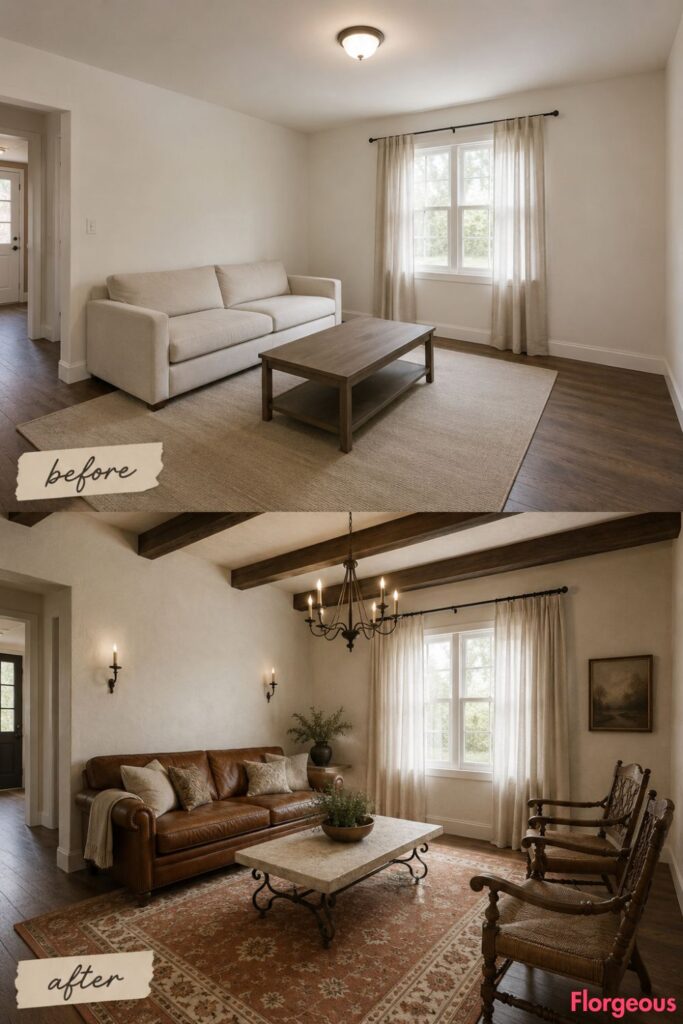
Texture carries this makeover, allowing the color palette to remain restrained.
Before: Smooth walls and lightweight furniture make the room visually flat.
After: Warm white plaster, dark ceiling beams, cognac leather sofa, carved oak chairs, iron-base stone table, terracotta-patterned rug, full linen curtains, and a wrought-iron chandelier add substance.
11. Use Cape Dutch Contrast With Restraint
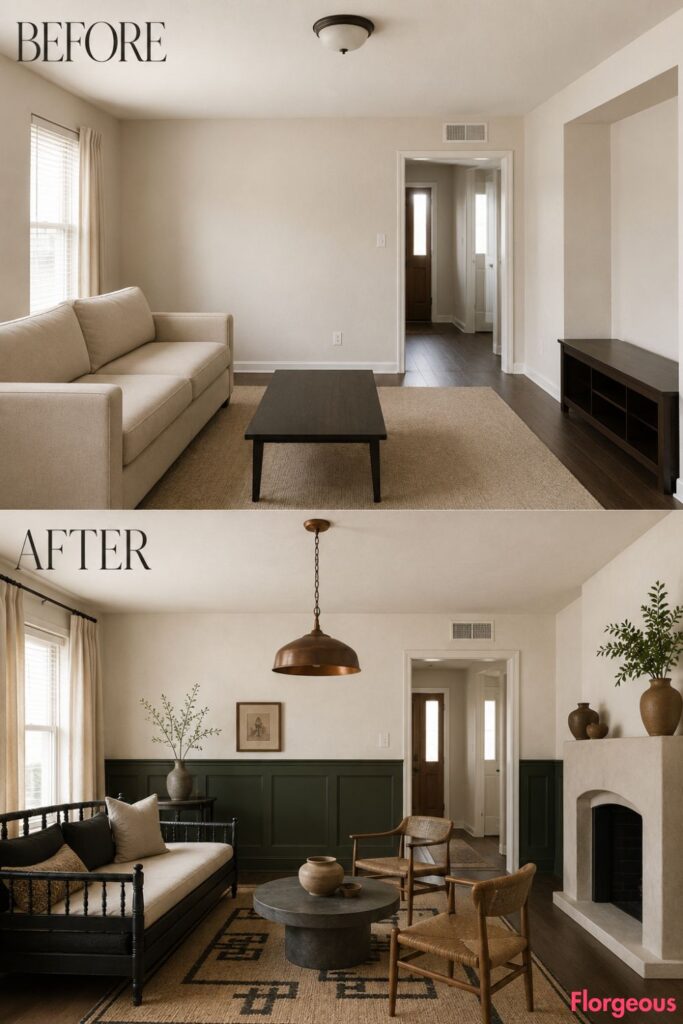
Chalky plaster and dark timber create a crisp composition rather than a heavy one.
Before: The plain walls provide no contrast between the architecture and furniture.
After: Chalk-white plaster, deep green lower paneling, a restrained curved mantel, black-stained daybed, elm chairs, round soapstone table, graphic wool rug, cotton curtains, and copper lighting create a sculptural room.
Historical Note: Architectural curves can reference Cape Dutch forms without copying an entire historic façade.
12. Brighten the Space With East Coast Colonial Style
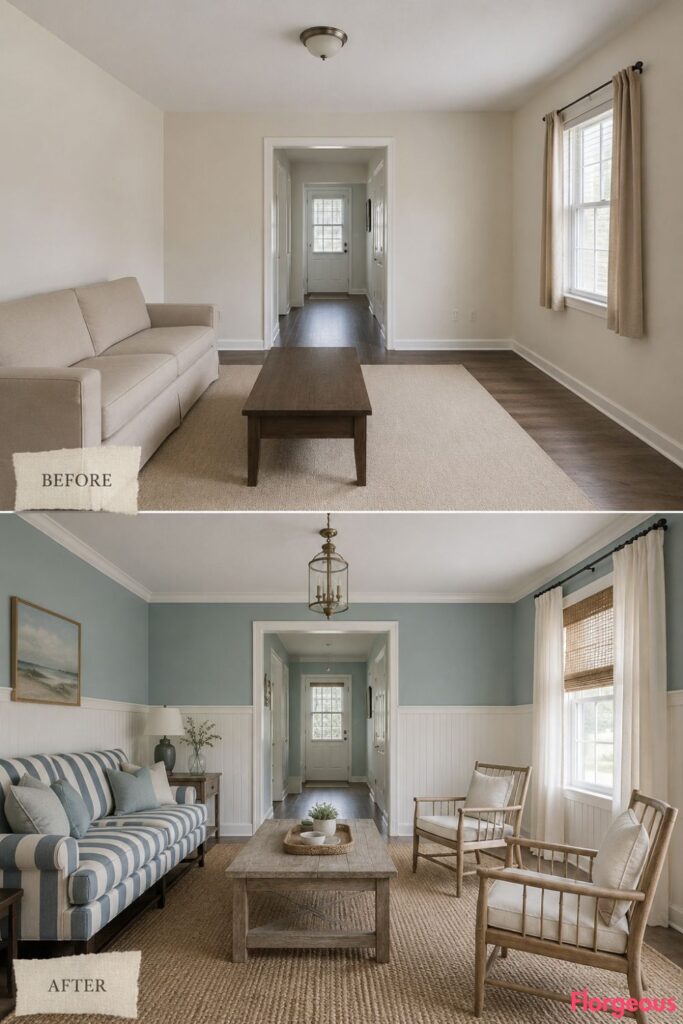
This coastal interpretation uses traditional details without relying on nautical props.
Before: Short curtains and a generic rug make the room feel visually compressed.
After: Faded aqua walls rise above white beadboard, paired with a navy-striped settee, bleached-oak chairs, weathered table, sisal rug, woven shades, airy side panels, and an aged-brass lantern.
Try this: Texture and faded color communicate the coastal setting more effectively than signs or themed accessories.
13. Turn One Wall Into a Collected Heritage Library
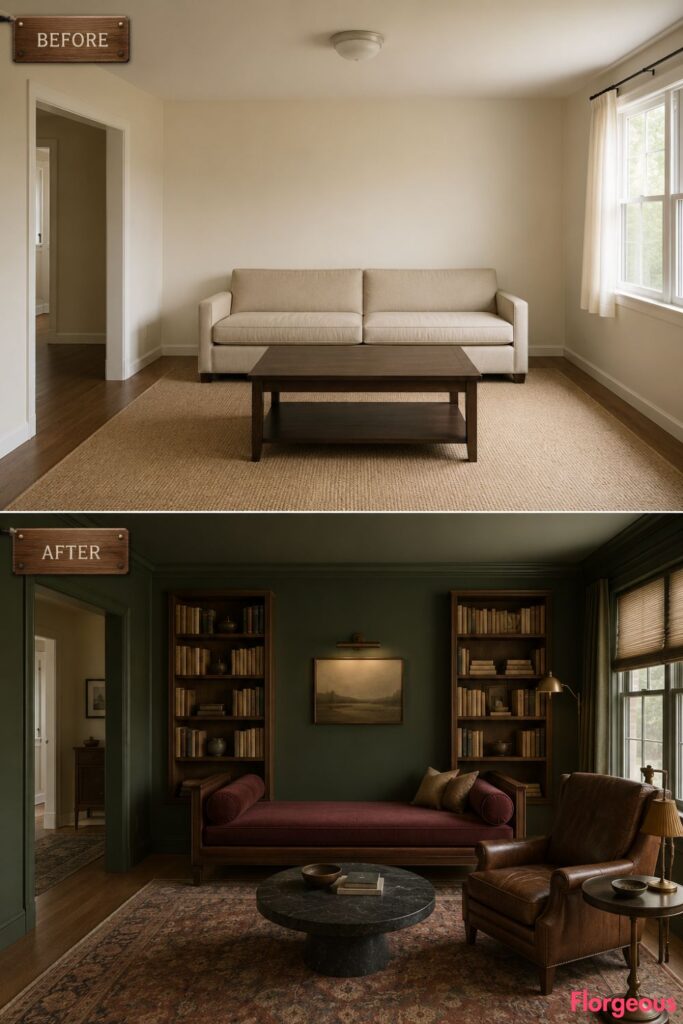
A library treatment succeeds when storage and seating remain balanced.
Before: The empty wall contributes nothing to the room’s function.
After: Forest-green walls, shallow walnut bookcases, unlabelled books, oxblood daybed, tobacco reading chair, round soapstone table, faded rug, pleated shades, and aged-brass picture lights create a focused retreat.
Small Space Tip: Choose shallow shelving so storage does not reduce circulation.
14. Shape a Garden Room Around Soft Green
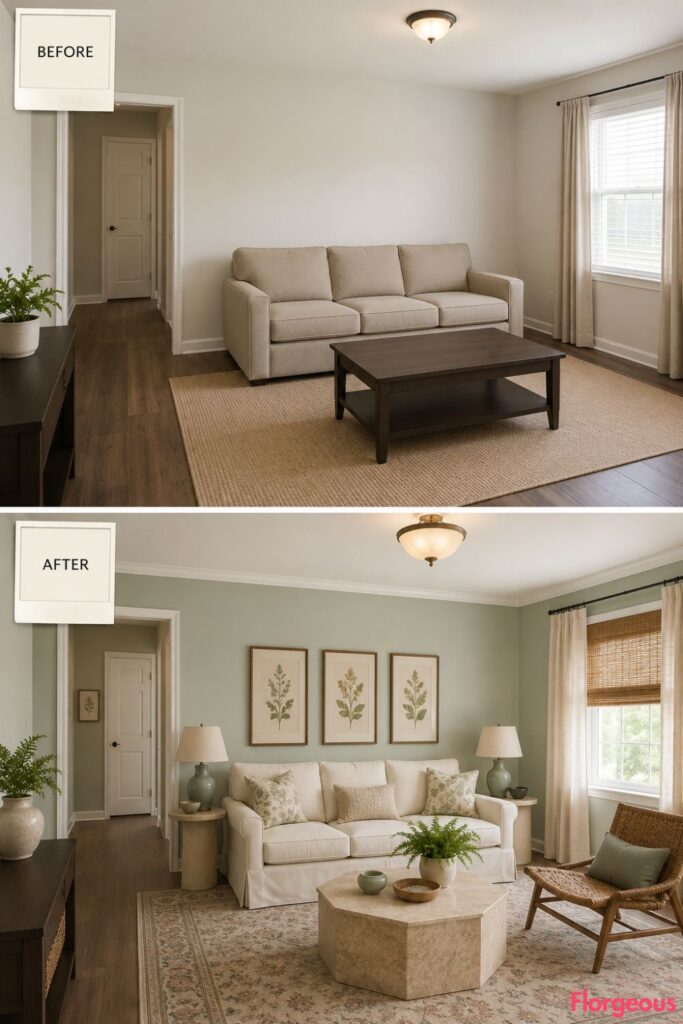
Botanical references feel more convincing when paired with practical furniture and restrained greenery.
Before: The original room has no visual connection to the window or garden.
After: Celadon walls frame an ivory settee, woven lounge chair, octagonal stone table, floral flatweave, bamboo shade, linen side panels, ceramic lamps, subtle botanical art, and one healthy fern.
15. Make Colonial Revival Architecture Feel Pale and Airy
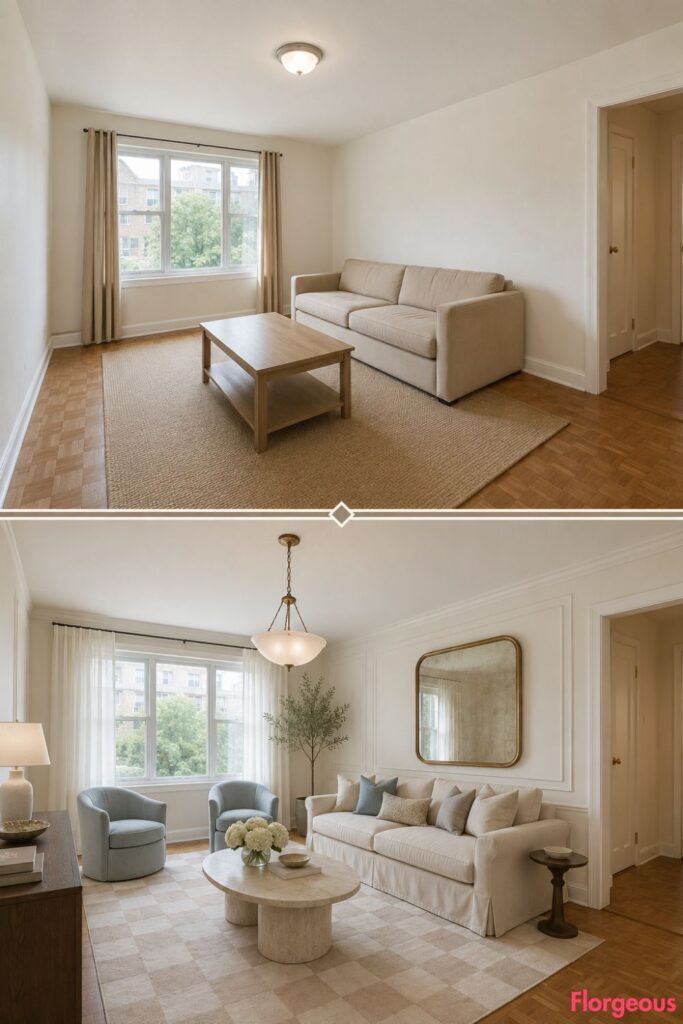
Historic detail can remain visible without dark paint or heavy furniture.
Before: The plain surfaces lack definition, even in good natural light.
After: Warm white picture rails and slim molding surround a sand skirted sofa, powder-blue chairs, oval limestone table, pale checker rug, sheer curtains, frosted pendant, and oversized foxed mirror.
Why it works: The molding creates gentle shadow while the pale palette protects the sense of space.
16. Strip the Look Back for Modern Colonial Minimalism
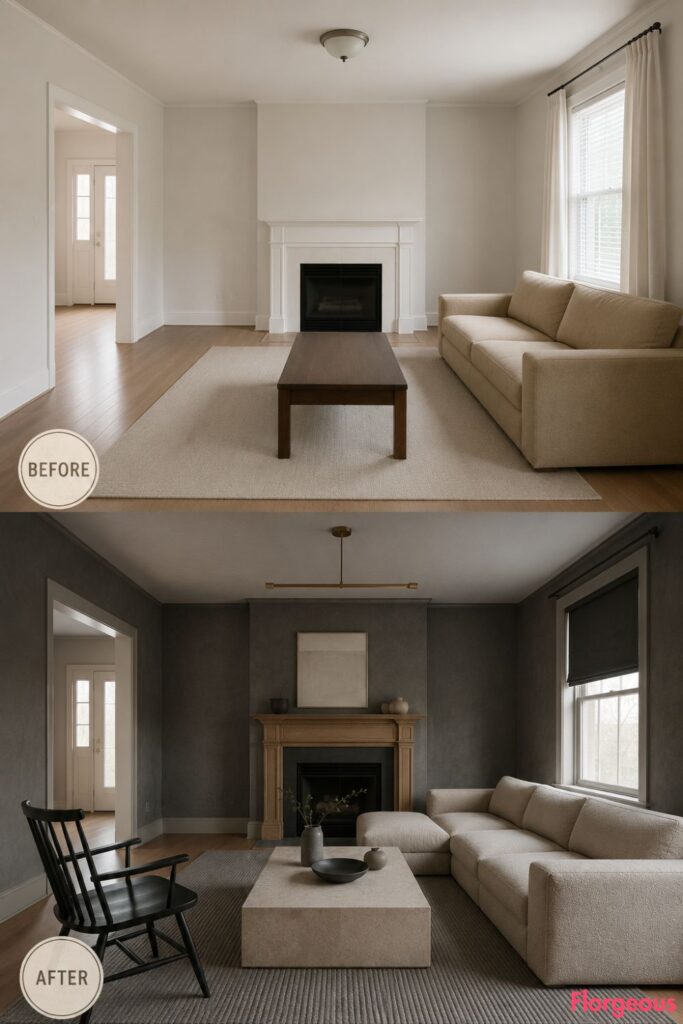
One historic feature can carry a room when everything else remains quiet.
Before: The original space is minimal, but it feels accidental rather than intentional.
After: Charcoal limewash surrounds a simple carved-oak mantel, low oatmeal modular sofa, black spindle chair, monolithic limestone table, ribbed gray rug, dark roller shade, bronze ceiling light, and restrained ceramics.
Common Mistake: Do not scatter small antique accessories everywhere. Let the architectural feature remain dominant.
17. Blend Heritage Molding With Transitional Furniture
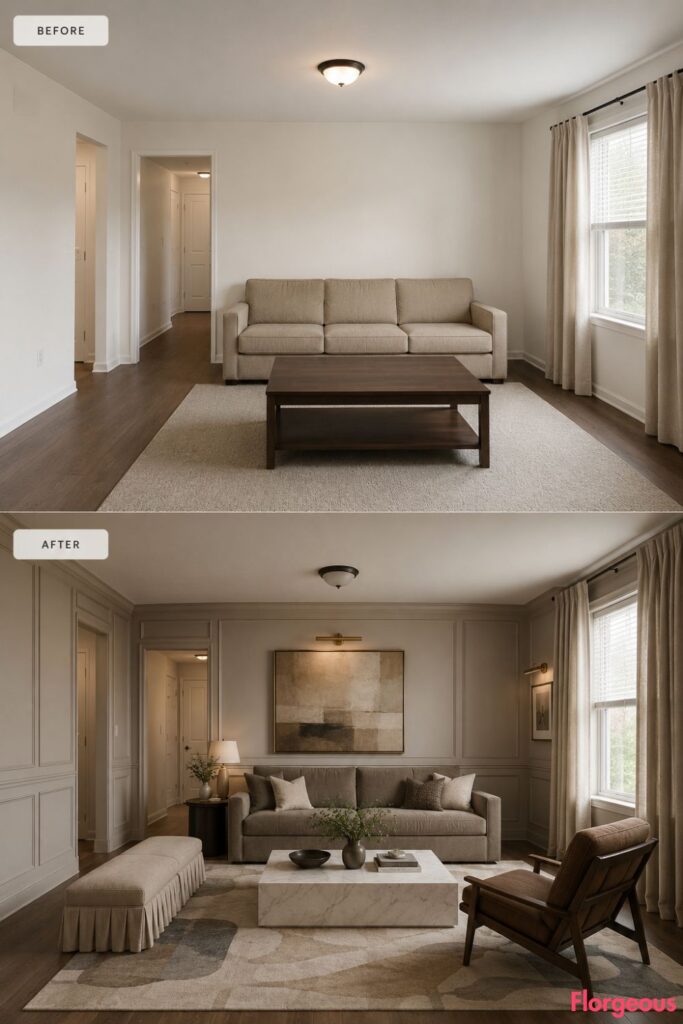
This approach suits newer homes that need character without a complete period treatment.
Before: The furniture and architecture feel disconnected because neither creates a focal point.
After: Mushroom panel molding, taupe track-arm sofa, walnut lounge chair, skirted bench, rectangular marble table, abstract wool rug, full curtains, brass picture lights, and large nonfigurative art create balance.
18. Create a Renter-Friendly Colonial Makeover
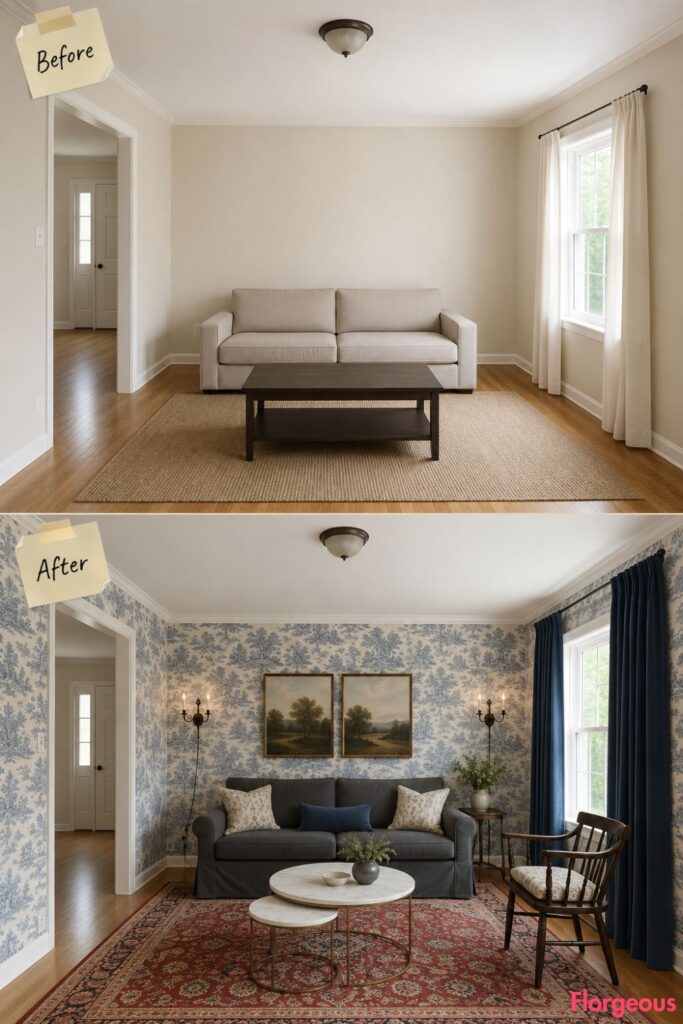
Pattern and lighting can suggest heritage style without permanent construction.
Before: Blank walls and a basic fixture make the rental feel temporary.
After: Removable blue toile-inspired wallpaper, deep-gray slipcovered sofa, walnut spindle chair, marble-look nesting tables, washable red medallion rug, ready-made velvet curtains, plug-in sconces, and framed landscapes add depth.
Renter-Friendly Version: Apply removable wallpaper to one focal wall and protect every original finish.
19. Fit Heritage Character Into a Small Living Room
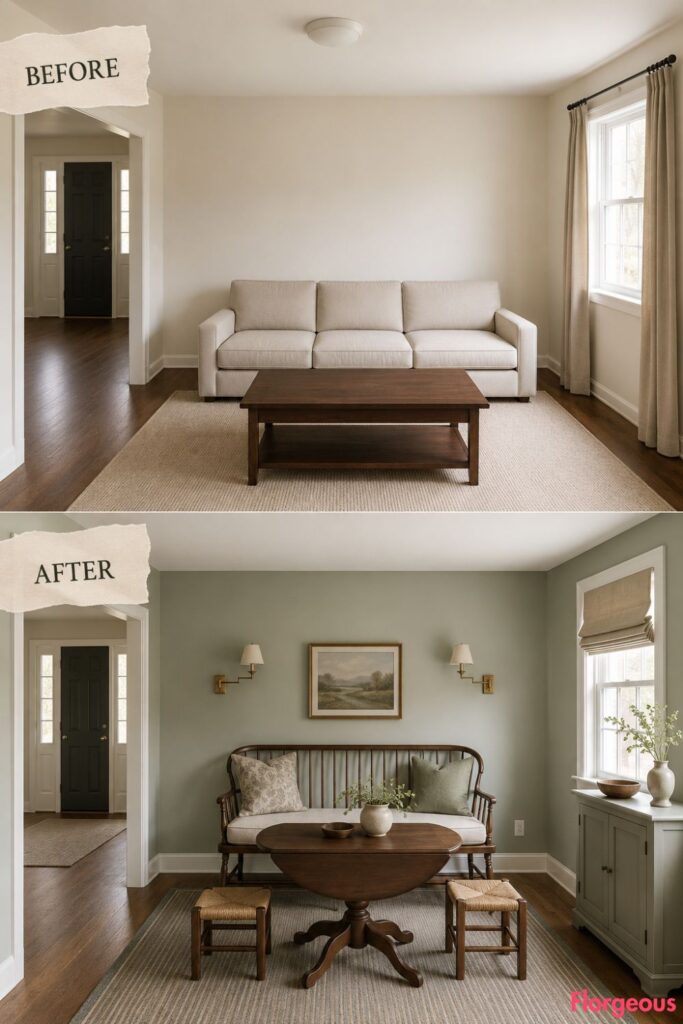
Compact furniture and wall-mounted lighting preserve valuable floor space.
Before: Standard-size furniture makes the modest room feel less flexible than it could be.
After: Pale sage walls, compact spindle-back settee, two rush stools that tuck away, drop-leaf pedestal table, narrow flatweave, Roman shade, swing-arm sconces, and a shallow painted cabinet improve function.
Small Space Tip: Furniture with visible legs keeps more flooring in view.
20. Use Bold Color in a Contemporary Colonial Room
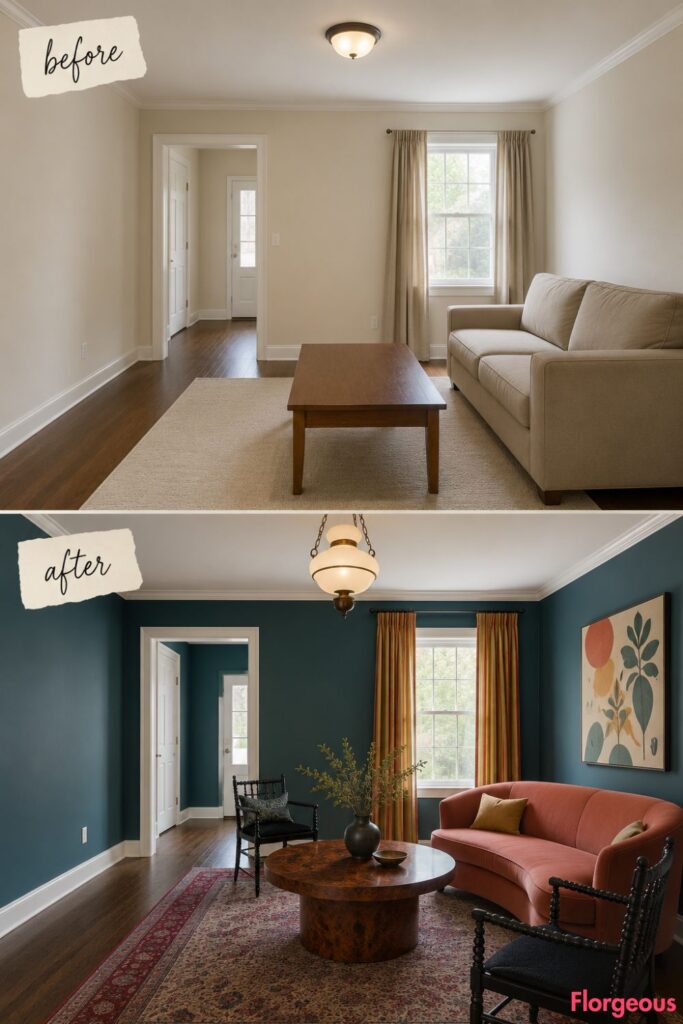
Colonial references do not need to remain within brown, beige, and cream.
Before: The neutral room has no contrast or memorable silhouette.
After: Peacock-blue walls frame a curved coral sofa, ebonized spindle chairs, round burl table, oxblood-bordered rug, saffron-striped curtains, opaline lantern, and one large botanical-inspired abstract.
Color Story: Repeating each strong color only once keeps the room energetic rather than chaotic.
21. Layer British Colonial-Inspired Materials Carefully
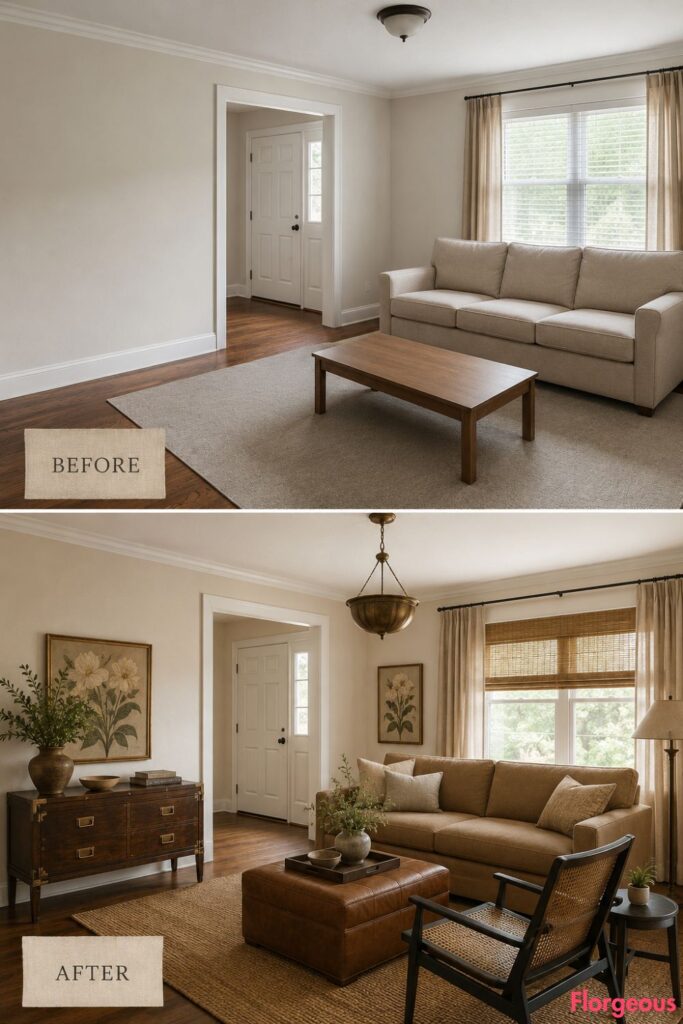
The strongest interpretation focuses on useful furniture, airflow, and natural texture rather than explorer clichés.
Before: The basic room has little material variation or purposeful storage.
After: Warm parchment walls, camel linen sofa, one dark cane lounge chair, walnut campaign-influenced console, square leather ottoman, jute rug, woven shades, linen panels, aged-brass pendant, and restrained botanical paintings create depth.
Style Note: Avoid trophies, maps, safari motifs, and anonymous cultural objects.
22. Create a Moody Federal-Inspired Evening Salon
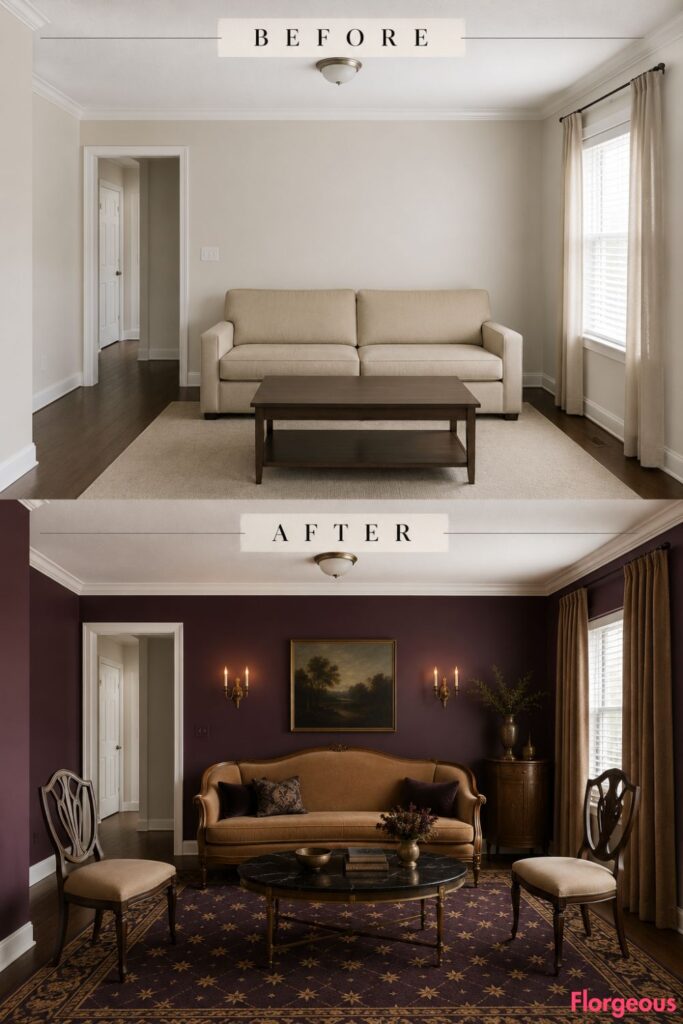
Deep color feels refined when furniture profiles remain graceful.
Before: Flat lighting gives the beige furniture no depth.
After: Aubergine walls, curved camelback settee, delicate shield-back chairs, oval black marble table, star-patterned wool rug, tobacco silk-linen curtains, brass sconces, and a narrow neoclassical demilune cabinet create evening drama.
Try this: Test aubergine on several walls because it can shift toward brown or purple as daylight changes.
23. Replace the Sofa With a Four-Chair Conversation Room
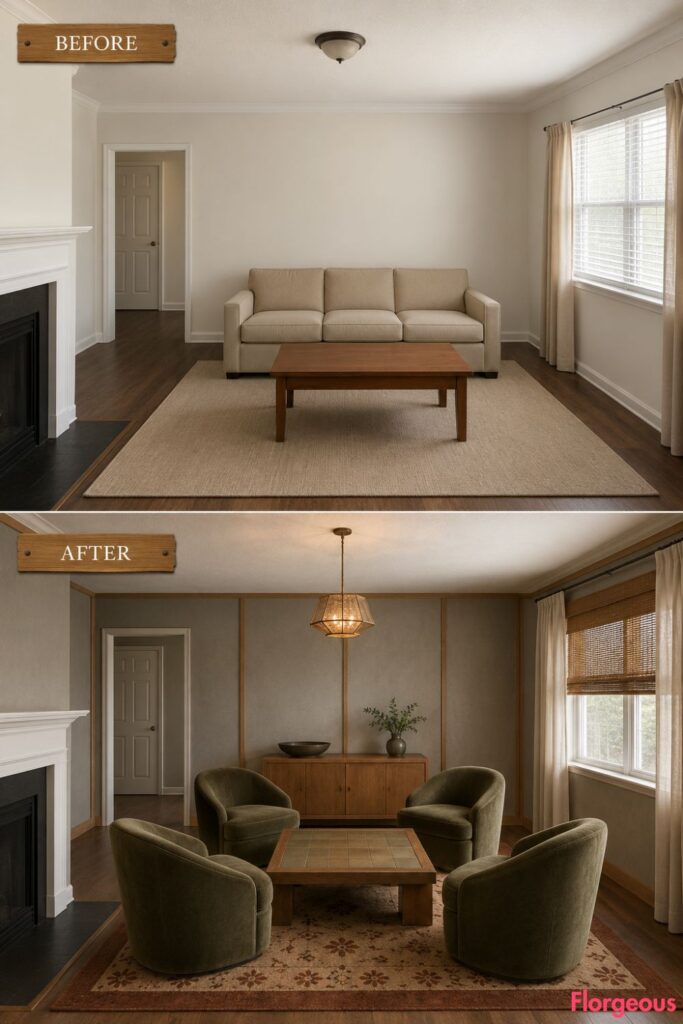
Room planning can create as much character as decorative architecture.
Before: The straight sofa automatically directs the entire layout toward one wall.
After: Warm gray plaster, slim oak battens, four olive mohair chairs, square tile-topped oak table, rust-bordered rug, woven shades, linen panels, amber mica pendant, and a low oak cabinet create an intimate salon.
24. Build the Room Around a Deep Colonial Window Seat
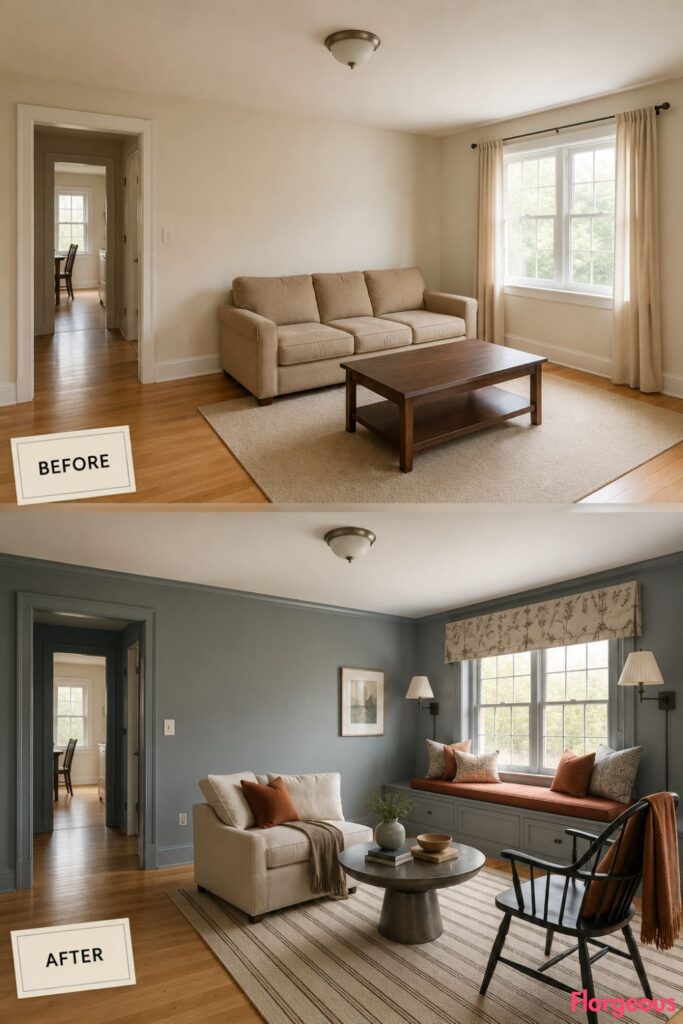
This makeover makes the window functional rather than treating it as background architecture.
Before: Short curtains leave the window visually disconnected from the rest of the room.
After: Soft gray-blue walls, a deep painted window seat with drawers, rust cushions, a compact oatmeal loveseat facing the window, one Windsor chair, round pewter table, striped wool rug, tailored valance, and wall-mounted reading lamps create a quiet retreat.
Why it works: The window seat adds seating and storage without narrowing the main walkway.
25. Draw Attention Upward With a Painted Statement Ceiling
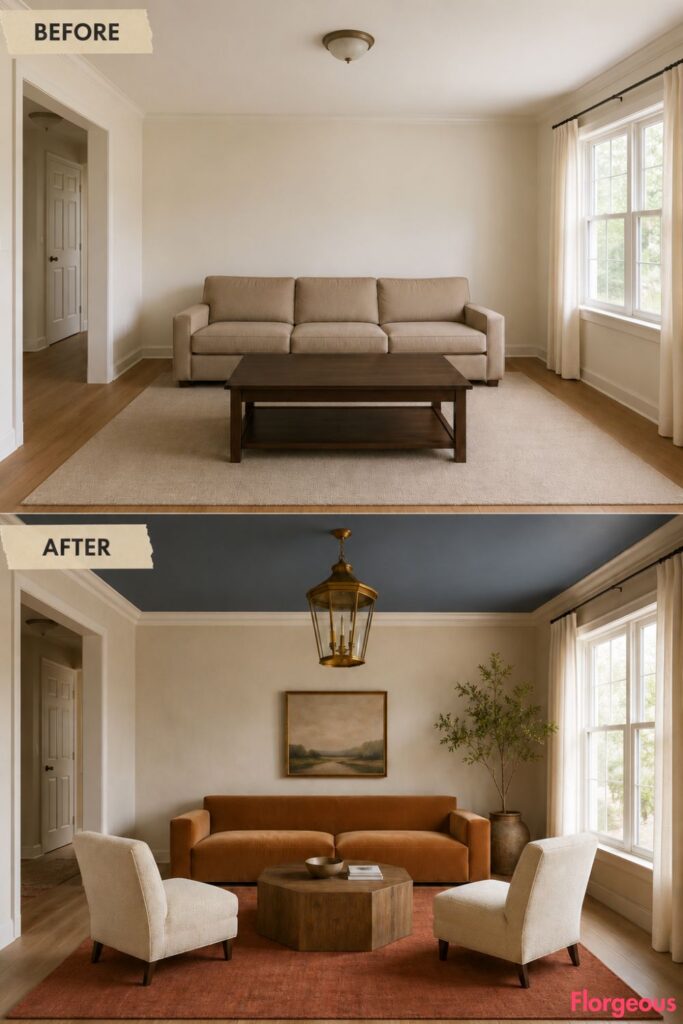
A ceiling treatment creates historic character without adding another large furniture piece.
Before: The standard ceiling light makes the upper half of the room feel forgotten.
After: Pale stone walls support a muted indigo ceiling with restrained white perimeter molding, a low camel sofa, two oatmeal slipper chairs, octagonal oak table, plain rust rug, ivory curtains, and a broad aged-brass lantern.
Designer Tip: Keep the walls quiet when the ceiling carries the strongest color.
26. Conceal Modern Technology Behind Paneled Cabinetry
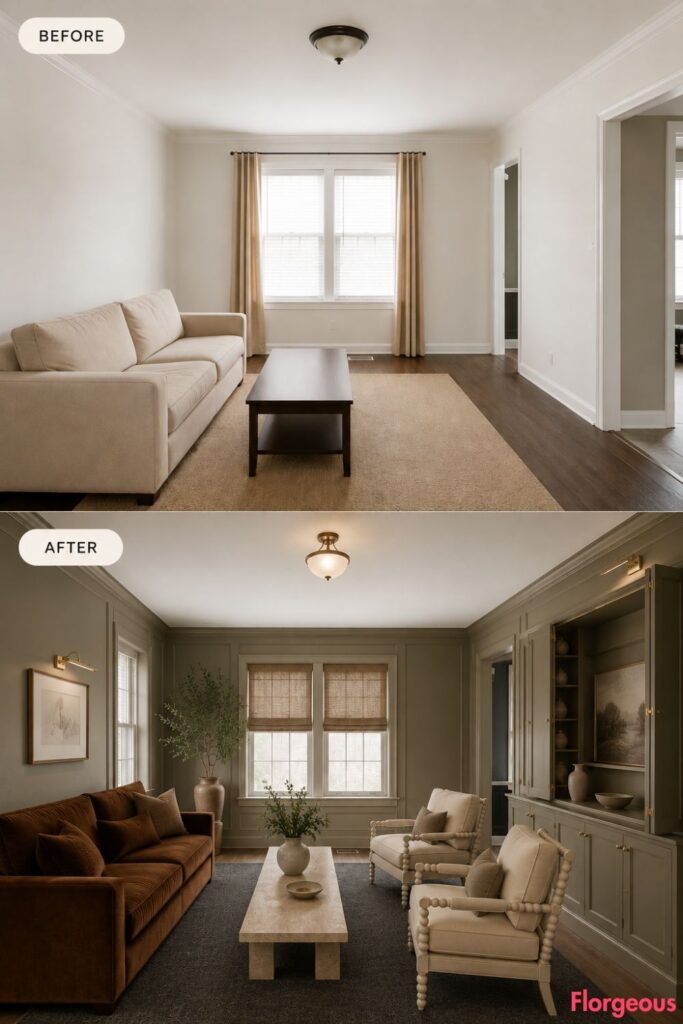
This version preserves everyday function without allowing a television to dominate the design.
Before: The empty focal wall has no purpose, storage, or visual structure.
After: Pale olive paneled cabinetry conceals a television behind folding doors, paired with a tobacco velvet sofa, two cream bobbin chairs, long narrow stone table, charcoal flatweave, tailored shades, and discreet picture lights.
Practical Detail: Include ventilation and cable access inside any concealed media cabinet.
27. Let One Historic Mantel Anchor a Contemporary Room
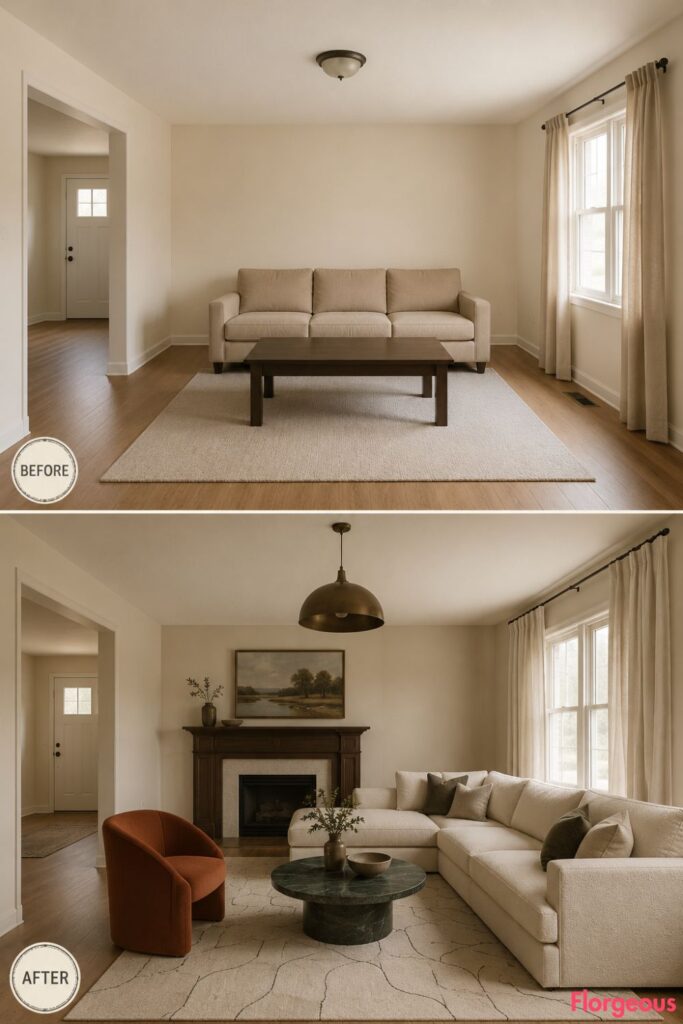
The final makeover shows how a single colonial-inspired feature can coexist with clearly modern furniture.
Before: The plain room lacks any element strong enough to organize the design.
After: Warm chalk walls frame a dark walnut mantel with simple classical proportions, an asymmetrical ivory sectional, sculptural terracotta chair, round green-stone table, abstract cream rug, linen curtains, modern bronze pendant, and one restrained landscape.
Why it works: The mantel supplies permanence, while contemporary furniture keeps the room from feeling like a period reproduction.
How to Choose the Right Colonial Direction for Your Living Room
The strongest colonial-inspired rooms do not depend on piles of themed accessories. They use a small number of deliberate choices, such as paneling, shutters, a traditional furniture silhouette, a distinct textile direction, or one beautifully scaled timber feature.
Begin with your property’s architecture, natural light, and room size. Georgian symmetry may suit a balanced space with a clear central wall, while a compact apartment may benefit from shallow storage, smaller spindle furniture, and wall-mounted lighting. A darker room will usually need lighter upholstery to balance rich timber or deep paint.
Before beginning a Colonial Living Room makeover, measure the walking routes and identify which existing pieces are worth keeping. Choose one regional or revival direction, one dominant wood tone, one primary textile family, and one focal point before buying decorative accessories.
Test paint colors beside the flooring and upholstery, then map the furniture footprint with tape. This reveals blocked doors, cramped chair placement, and undersized rugs before money is spent.