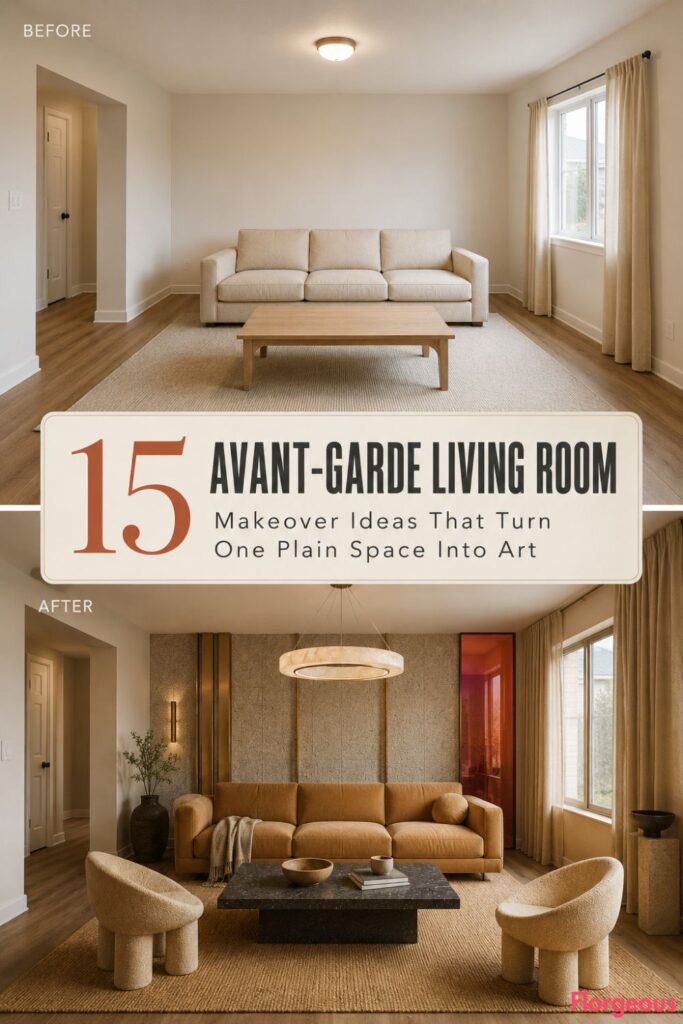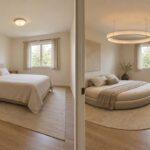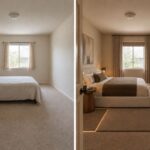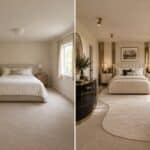
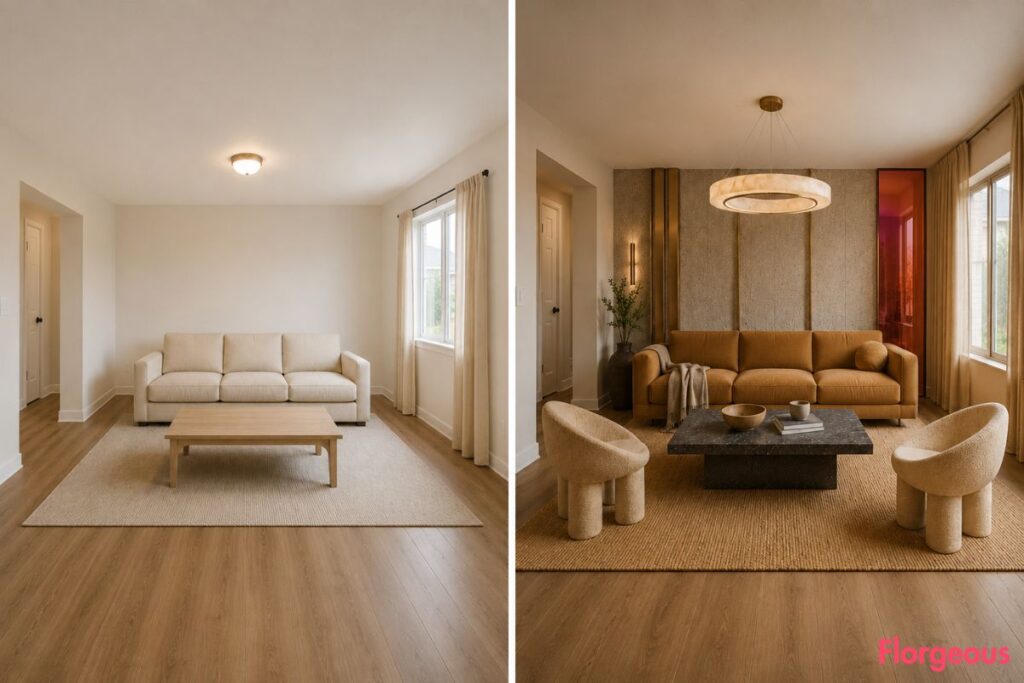
A beige sofa, empty walls, and a builder-grade ceiling light can make a living room feel perfectly functional but completely forgettable. That ordinary starting point is what makes an experimental makeover so compelling.
For every transformation below, the same windows, doorway, flooring, proportions, and camera angle remain unchanged. Only the furniture, color, materials, lighting, and artistic direction shift.
These Avant-Garde Living Room ideas show how one basic space can become an organic retreat, an optical-art composition, a surreal salon, a flexible small-space system, or a highly refined contemporary interior. Each approach is imaginative, but every room still works for conversation, relaxation, and everyday living.
1. Turn the Plain Room Into an Organic Futurist Landscape
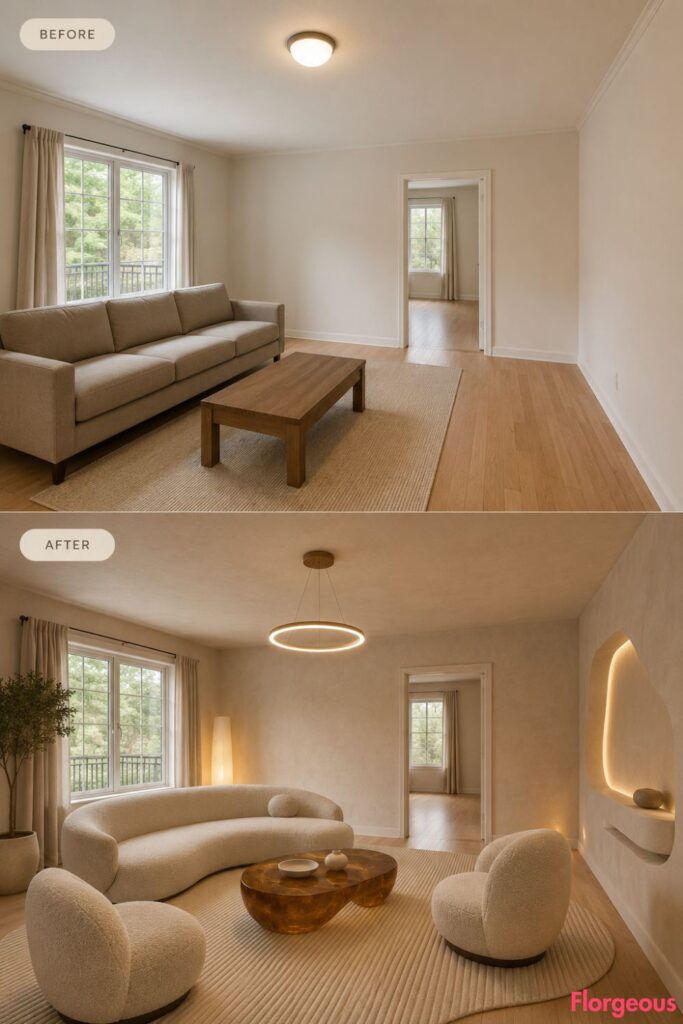
Before: The warm off-white walls, straight beige sofa, bare rectangular table, neutral rug, short curtains, and basic ceiling light create a flat, unfinished room without a clear focal point.
After: Mushroom plaster wraps the room in a soft mineral finish. A low oatmeal sofa curves like a cloud, two pebble-shaped wool chairs face it, and a translucent amber resin table sits at the center. A sculpted wall niche holds one oversized ceramic form, while a halo pendant casts a gentle wash of light across the rounded surfaces.
This direction feels futuristic without becoming cold because almost every material is tactile. Wool, plaster, resin, and woven curtains soften the unusual silhouettes.
Designer Tip: Choose one dominant curve, such as the sofa, then echo it through smaller forms instead of filling the room with unrelated shapes.
2. Paint a Radical Geometric Color Composition
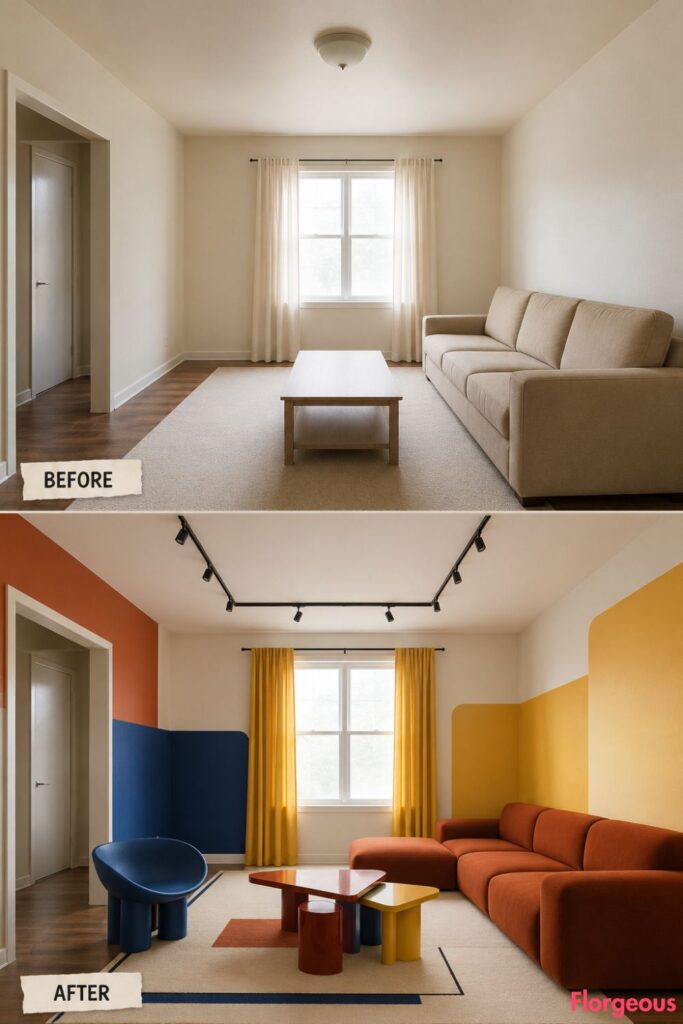
The neutral shell becomes a three-dimensional abstract painting through large planes of terracotta, cobalt, butter yellow, and warm white. A rust block sofa sits against the cobalt section, while a single blue pedestal chair faces it across two triangular lacquered tables.
The furniture arrangement stays simple so the color can carry the drama. A restrained graphic rug repeats only two wall colors, preventing the scheme from feeling scattered.
Color Story: Give every major color a second appearance through upholstery, curtains, a rug, or one small accent. Repetition makes even a daring palette feel controlled.
A renter can recreate the effect with large painted canvas panels or removable wall film.
3. Create a Surrealist Dreamscape With Familiar Objects
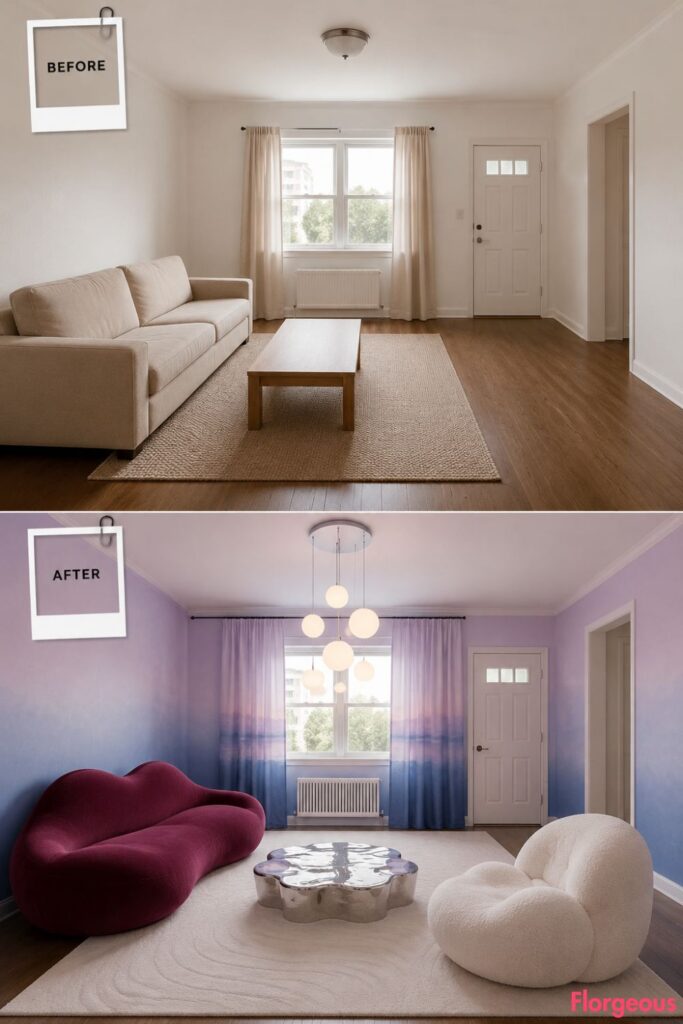
This room feels recognizable and strange at the same time. Pale lavender walls fade into misty blue near the ceiling, while a burgundy lip-shaped sofa faces one cloudlike white lounge chair. A polished steel table appears to ripple like liquid.
Instead of conventional artwork, an abstract horizon curtain stretches across the window wall. Floating globe lights at different heights add to the dreamlike effect without obstructing the walking route.
Why It Works: The palette remains soft and atmospheric, allowing the unusual furniture to feel poetic rather than theatrical.
Keep accessories to a minimum. Surreal pieces need empty space around them to remain visually powerful.
4. Use Deconstructivist Angles to Break the Box
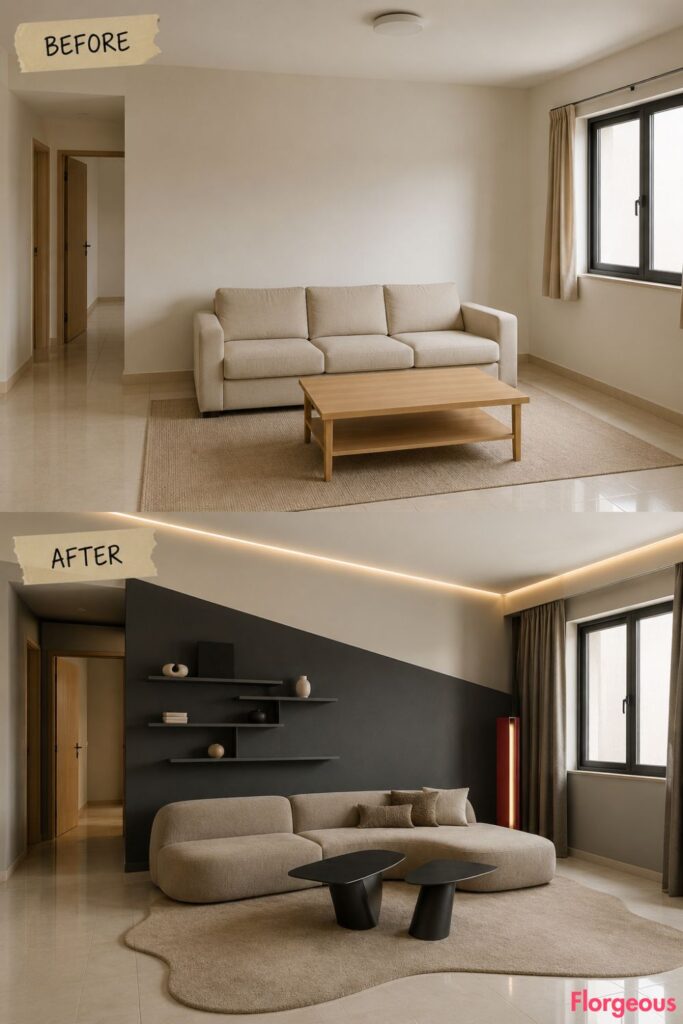
A diagonal charcoal wall plane changes the perceived geometry of the room without altering its actual structure. An irregular sand-colored sectional follows a staggered line, while offset black shelving climbs one side of the wall.
Two thin metal tables lean at contrasting angles, and one narrow red floor lamp creates a sharp vertical interruption. The composition looks fractured, but the furniture still forms a comfortable conversation area.
Common Mistake: Do not place angular objects randomly. Align each piece with one of two or three intentional directional lines.
This design is most successful when the irregularity comes from removable surfaces and furniture rather than inconvenient architectural changes.
5. Curate a Gallery-White Collectible Design Salon
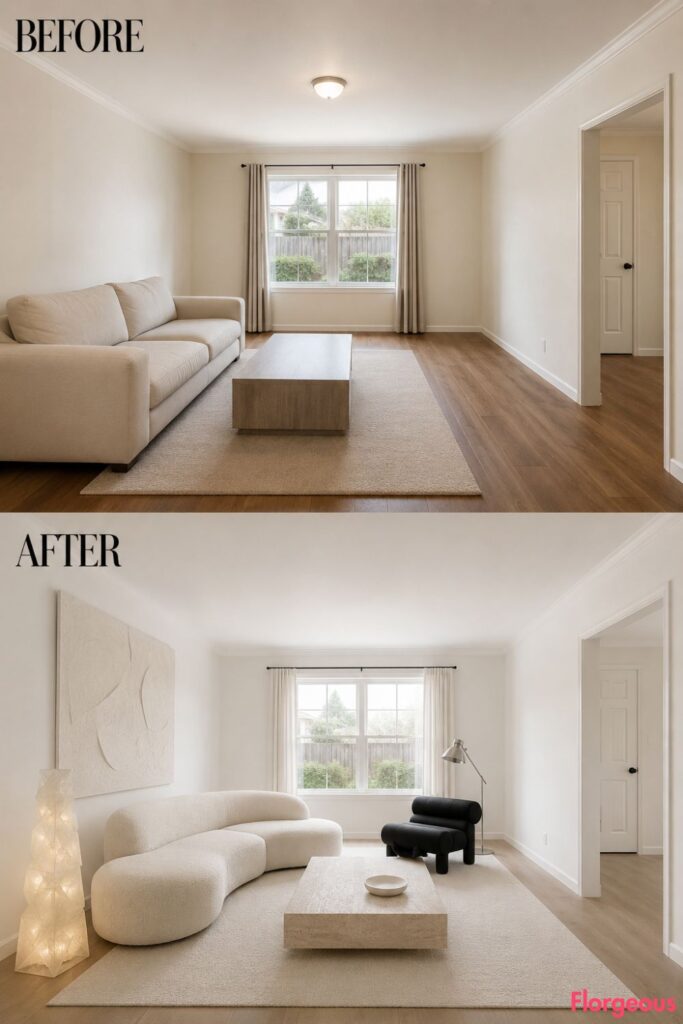
The builder-grade living room becomes a quiet exhibition space with luminous white walls and carefully spaced sculptural furniture. A cream architectural sofa anchors the room, a black tubular lounge chair faces it, and a monolithic limestone table provides visual weight.
Three collectible-looking elements act as the decoration: a translucent resin floor sculpture, a folded-metal lamp, and a large textured wall relief. Nothing else competes for attention.
This direction works well for anyone who prefers experimental form over bold color.
Style Note: Negative space is part of the design. Leave visible floor and wall area around every statement piece.
6. Turn One Wall Into Black-and-White Optical Art
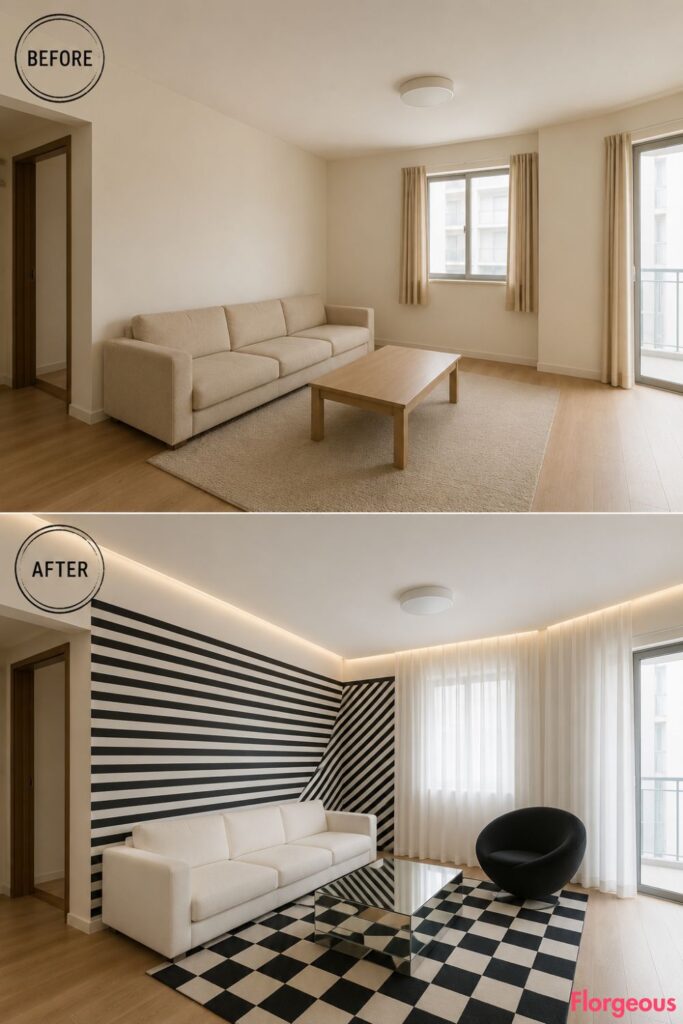
A sweeping black-and-white stripe pattern wraps one corner and appears to stretch the depth of the room. A clean white sofa sits against the pattern, balanced by a circular black chair and a mirrored cube table.
A smaller checkerboard rug continues the visual rhythm without covering the entire floor. Soft perimeter lighting reduces the harshness of the contrast and makes the stripes feel architectural.
Budget Version: Apply removable striped wallpaper to one wall and paint the adjoining return black.
Keep curtains, cushions, and accessories solid. Additional patterns would weaken the optical focal point.
7. Build a Chromatic Maximalist Conversation Room
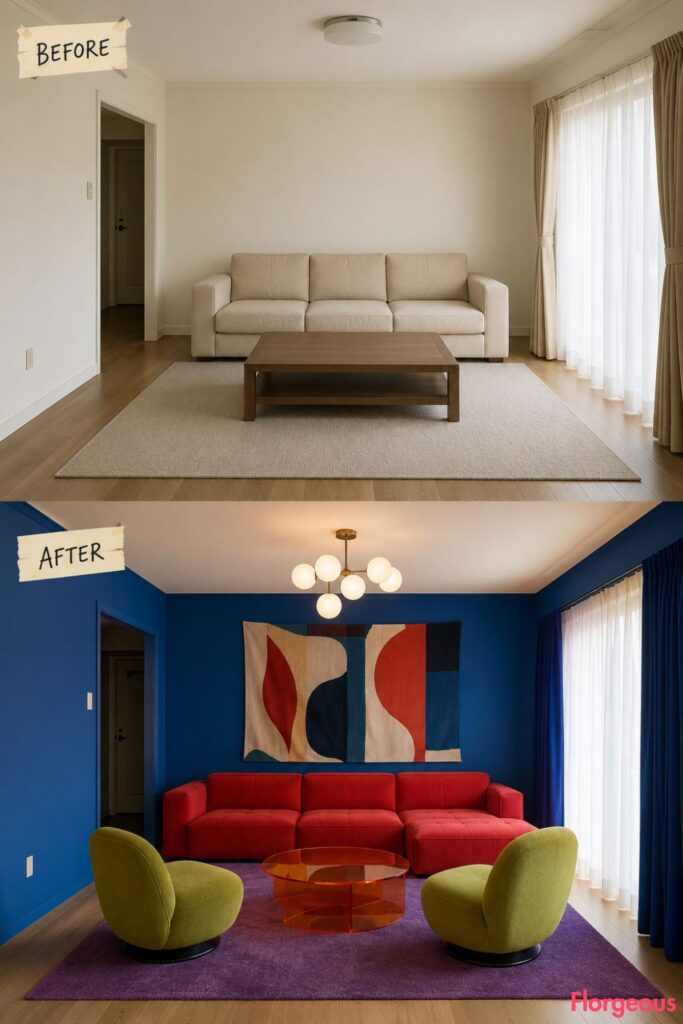
Electric blue walls establish the background for a tomato-red modular sofa, two chartreuse chairs, an orange glass table, and a violet rug. The colors collide boldly, but the furniture layout remains straightforward and practical.
One oversized abstract textile introduces pattern without turning every surface into a competing focal point. Cobalt curtains deepen the walls, while clustered opal lights add a soft contrast to the saturated palette.
Designer Tip: Use solid upholstery on the largest furniture pieces. Reserve pattern for one rug, textile, or curtain treatment.
The result feels energetic and collected rather than cluttered.
8. Reimagine Retro Space-Age Design With Biomorphic Forms
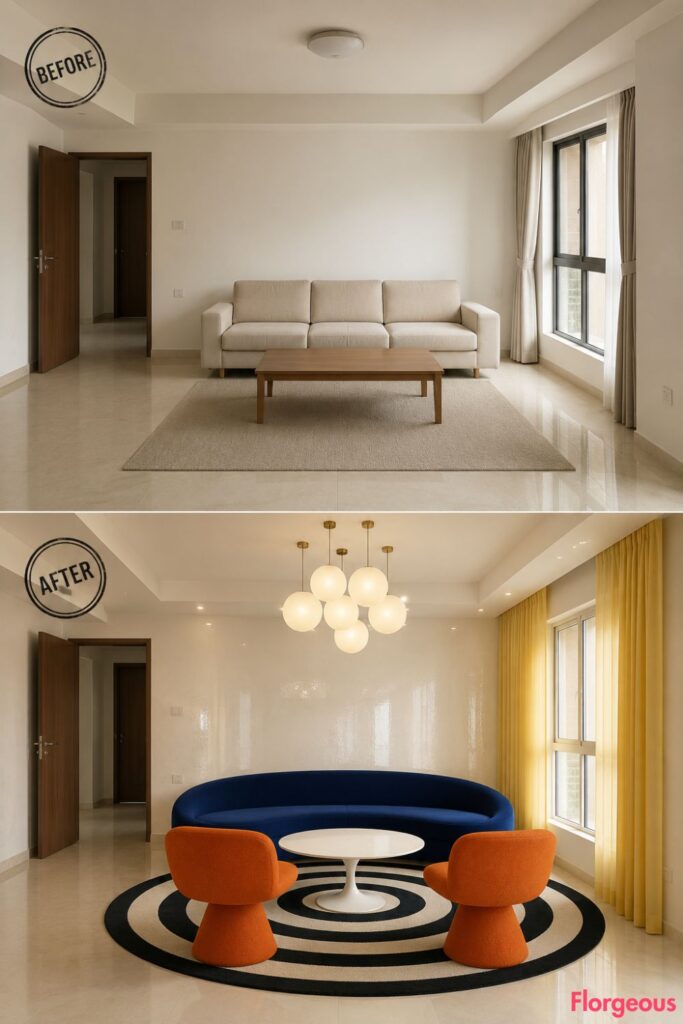
Glossy ivory walls create a bright backdrop for a low cobalt crescent sofa and two orange pedestal chairs. A round white tulip table replaces the rectangular builder-grade piece, while a black-and-cream target rug reinforces the circular geometry.
Clustered globe lighting completes the retro-futurist atmosphere. The room feels playful, but the symmetrical seating plan keeps it polished and usable.
Why It Works: Low furniture allows the sculptural forms to remain visible without making the room feel crowded.
Avoid adding novelty accessories. The silhouettes and color contrast already communicate the concept.
9. Balance Brutalist Concrete With Warm Textiles
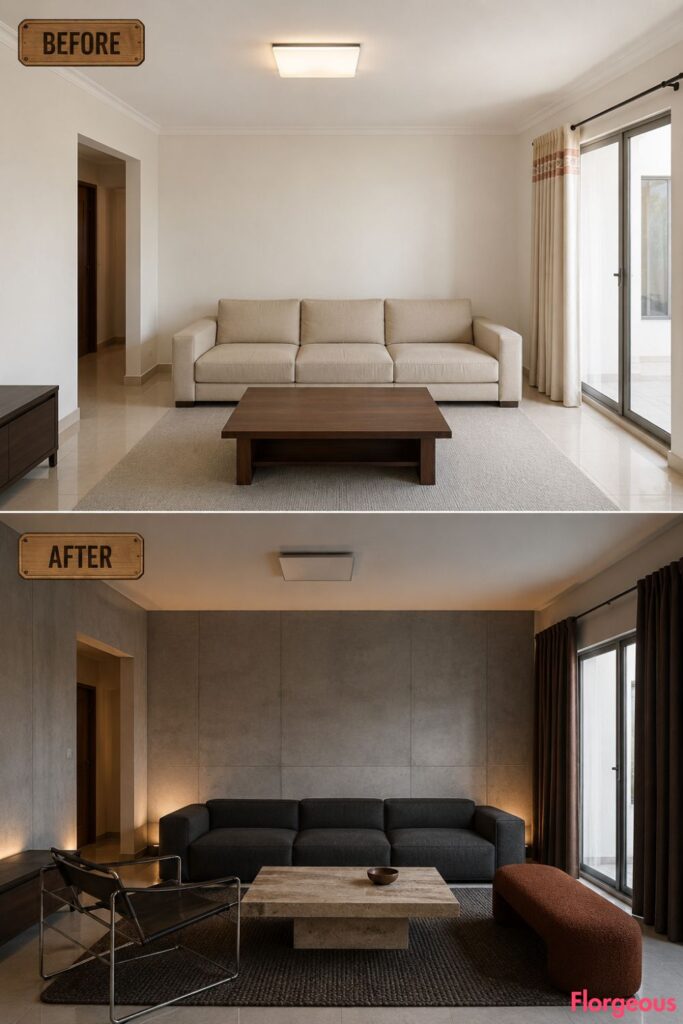
Concrete-effect wall panels, a charcoal block sofa, a raw steel sling chair, and a thick travertine table give this room a strong architectural character. The arrangement is grounded and deliberately heavy, with each piece appearing almost carved from a single material.
Rust bouclé, deep brown wool curtains, and a braided rug introduce warmth. Low wall lights graze the concrete texture instead of filling the ceiling with decorative fixtures.
Budget Version: Use mineral-effect paint and lightweight concrete-look sheets rather than real poured concrete.
Limit the raw metal to one or two pieces. Too much can make a domestic room feel unfinished.
10. Filter the Room Through Acrylic and Colored Glass
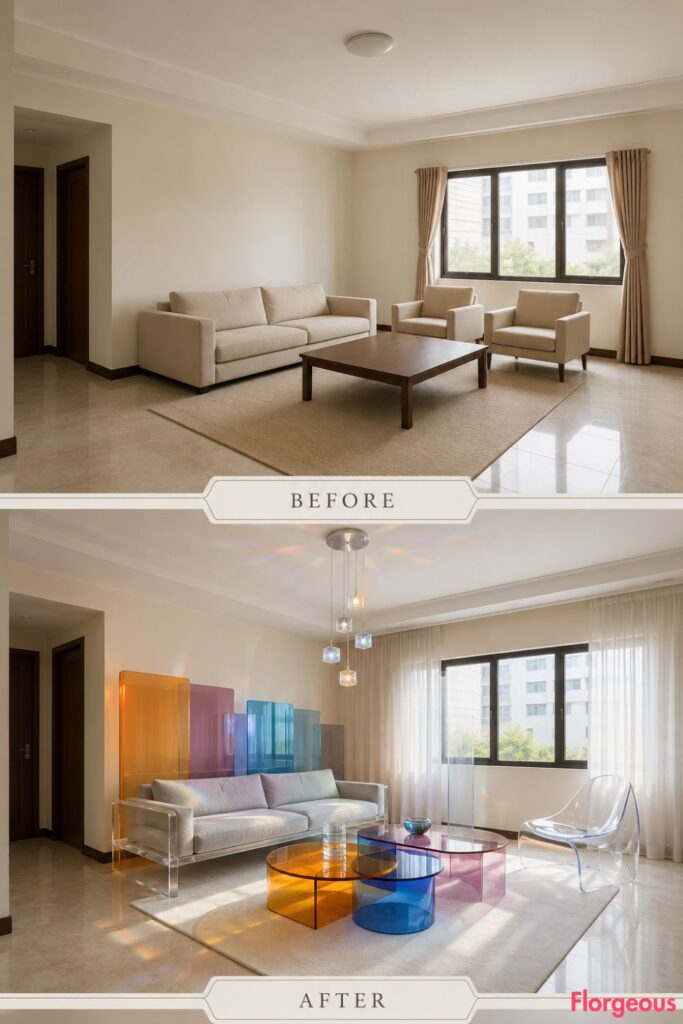
Transparent materials make this transformation feel visually light despite its intense color. A clear acrylic sofa frame supports pearl-gray cushions, while overlapping glass tables in amber, cobalt, and plum form a jewel-like centerpiece.
Freestanding translucent panels stand just in front of the wall, creating a reversible installation that renters can remove. Sheer curtains and a prismatic pendant scatter tinted light across the room.
Small Space Tip: Transparent furniture preserves long sightlines, helping sculptural pieces feel less bulky.
Use one opaque rug beneath the seating area so the composition does not appear to float without structure.
11. Introduce Kinetic Art and a Changing Digital Focal Point
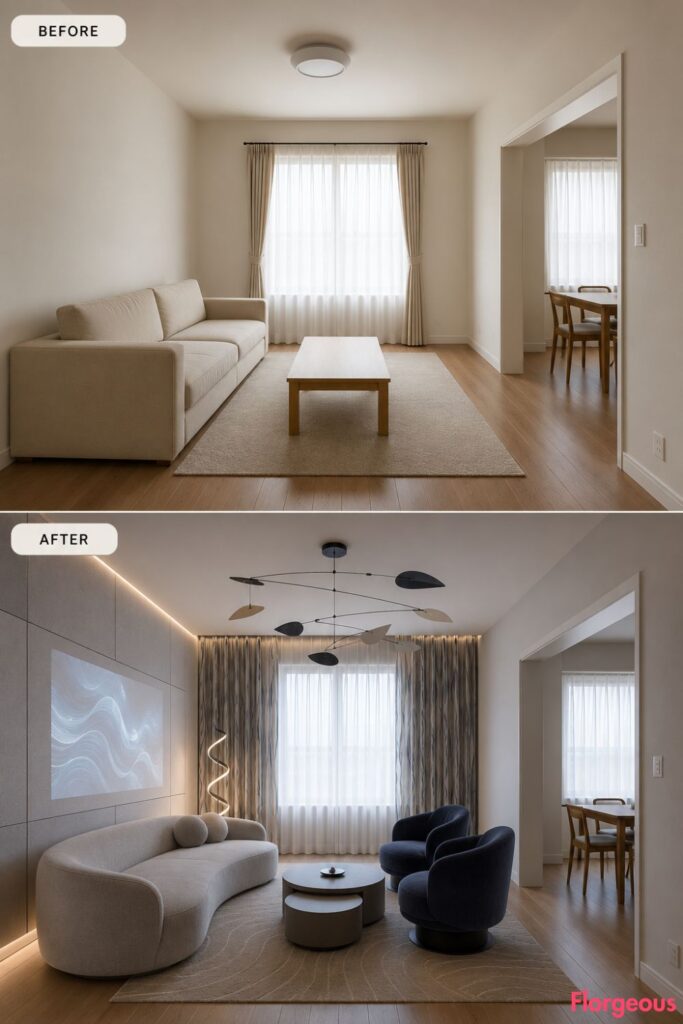
A balanced ceiling mobile floats above a slim silver-gray curved sofa and two navy swivel chairs. Nested circular tables allow the center arrangement to shift, while a spiraling floor lamp leads the eye upward.
On the main wall, a concealed projection surface displays slow-moving abstract digital art. When switched off, it disappears into the pale acoustic finish, preventing technology from dominating the room.
Common Mistake: Avoid visible cables, multiple screens, and competing illuminated objects. One changing digital artwork is enough.
Hang the mobile outside the main walking route and well above head height.
12. Create a Soft-Sculpture Textile Landscape
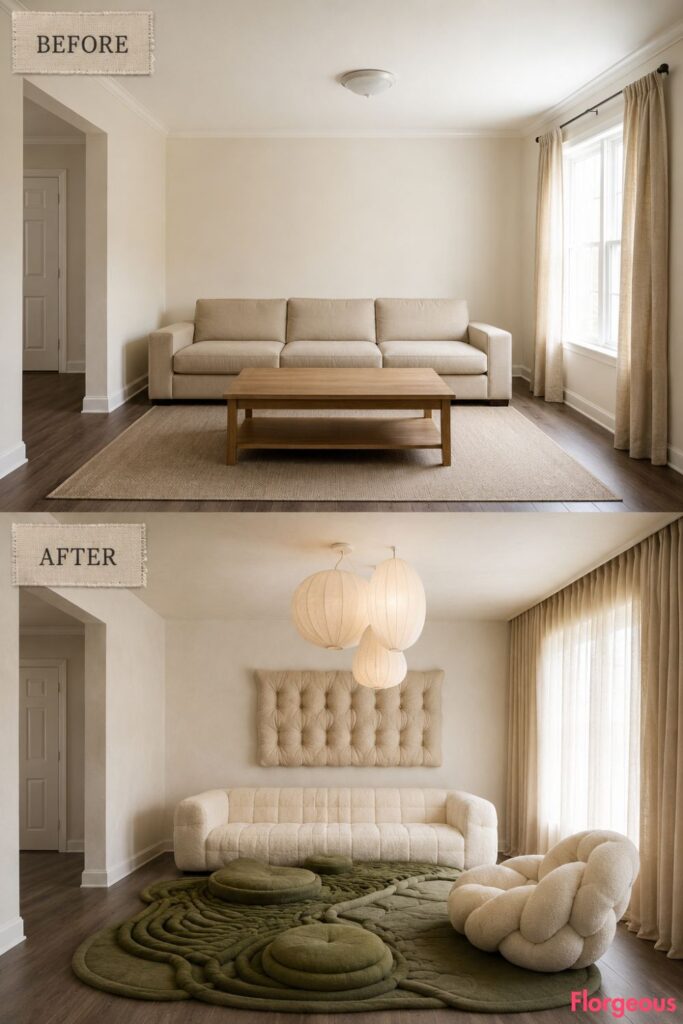
Hard furniture edges disappear in this tactile interpretation. A quilted cream sofa sits opposite a giant knotted lounge chair, while a thick moss-green floor textile rises into padded platforms that work as footrests or low tables.
Pleated curtains, a tufted wall piece, and diffused fabric lanterns continue the soft language. The walls remain warm clay white, allowing seams, folds, and volume to become the decoration.
Practical Detail: Choose washable or removable upholstery covers for oversized textile pieces, especially in homes with children or pets.
Keep the central pathway smooth and level even if the rug becomes sculptural around the seating.
13. Mix Neo-Baroque Drama With Experimental Furniture
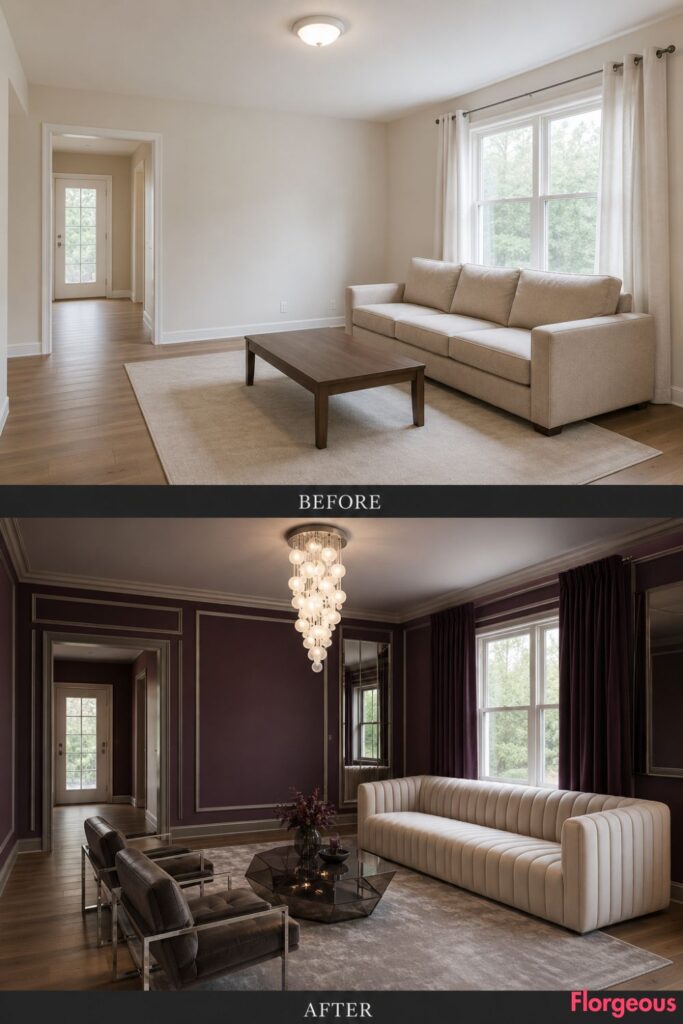
Deep plum walls and oversized taupe molding give the room a theatrical envelope. An ivory channel-tufted sofa faces two chrome-framed smoke-gray chairs, while a faceted smoked-glass table reflects the rich surfaces around it.
A narrow mirrored panel rises toward the ceiling, exaggerating the room’s height. Instead of a traditional chandelier, cascading opal globes create an irregular sculptural canopy.
The room feels luxurious because historical richness is paired with sharply contemporary forms.
Style Note: Choose one enlarged classical detail, such as molding or a mirror. Repeating ornate motifs everywhere can make the room feel themed.
14. Design a Compact Modular Room That Changes Function
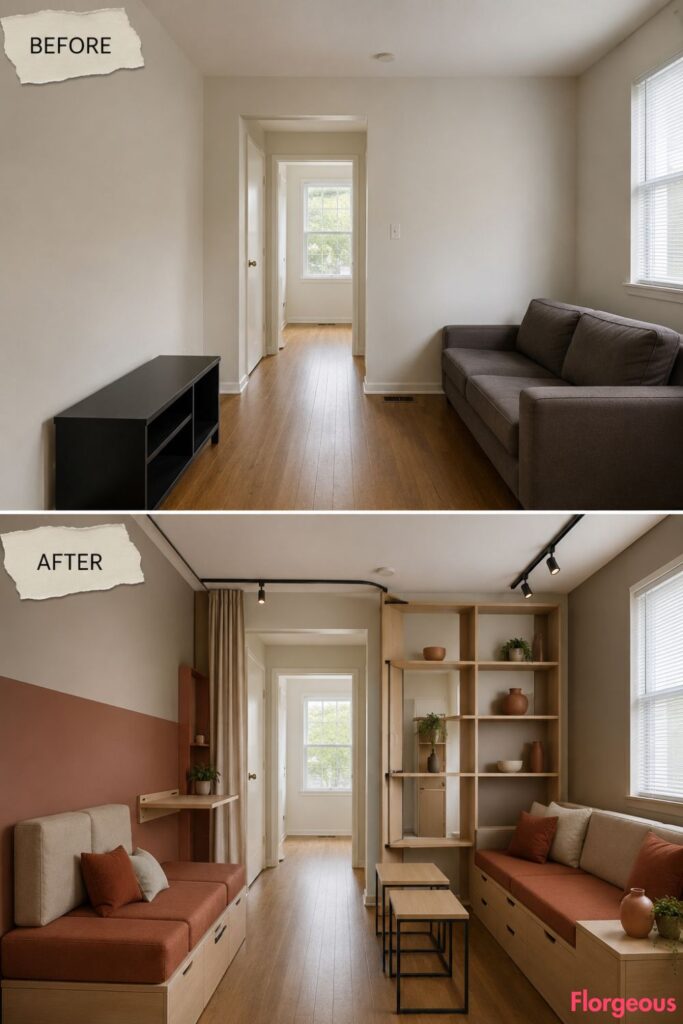
Warm gray and terracotta color blocking frame a set of sand-and-rust seating blocks. The modules can form a sofa, two loungers, a chaise, or a low conversation area without adding new furniture.
Lightweight nesting tables move easily, a pivoting shelf acts as an open divider, and a shallow concealed work surface folds away after use. A ceiling curtain track can temporarily separate the work zone from the seating area.
This concept combines avant-garde form with genuine small-space practicality.
Small Space Tip: Select modules with matching seat heights and hidden storage. Consistent dimensions make every arrangement look purposeful.
15. Finish With a Sustainable Avant-Garde Living Room
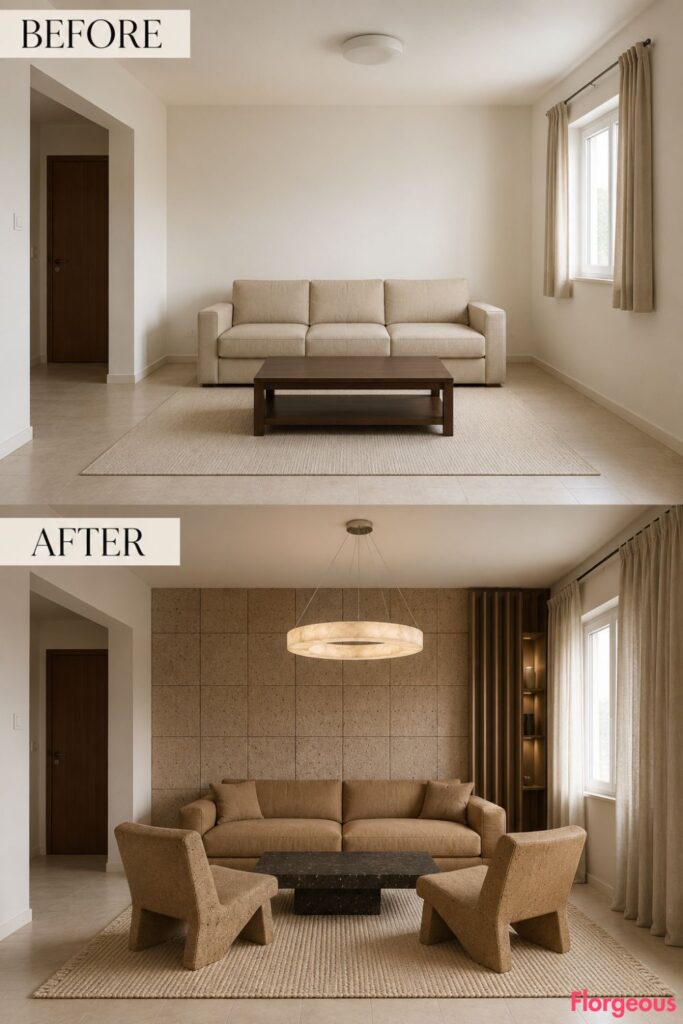
The final interpretation is experimental, environmentally considered, and quietly luxurious. Recycled-paper acoustic panels create a refined grid behind a camel-colored hemp sofa. Two pale molded-cork chairs face it across a dark recycled-stone table.
Bronze wall fins conceal slim storage, while flax curtains and an undyed wool rug soften the geometry. An alabaster halo pendant becomes the room’s single decorative flourish.
This design avoids novelty by focusing on excellent proportions and materials with visible texture. It is the most restrained makeover in the collection, but the unusual combination of cork, recycled paper, hemp, bronze, and composite stone still feels unmistakably forward-looking.
Designer Tip: Ask how materials are sourced, repaired, and eventually recycled. Sustainable design is stronger when durability supports the visual concept.
Choosing an Avant-Garde Direction That Works at Home
A successful experimental room does not need several competing statements. Decide whether color, silhouette, movement, material, technology, or layout will carry the concept, then allow the other elements to support it.
Before ordering sculptural furniture, mark its dimensions on the floor with painter’s tape. Confirm that the doorway, windows, and main walking path remain clear, and check that every chair still relates comfortably to the main sofa.
For a gradual makeover, begin with one reversible feature such as an unusual chair, removable wall panel, sculptural lamp, or graphic rug. A strong Avant-Garde Living Room often starts with one confident decision rather than a complete renovation.