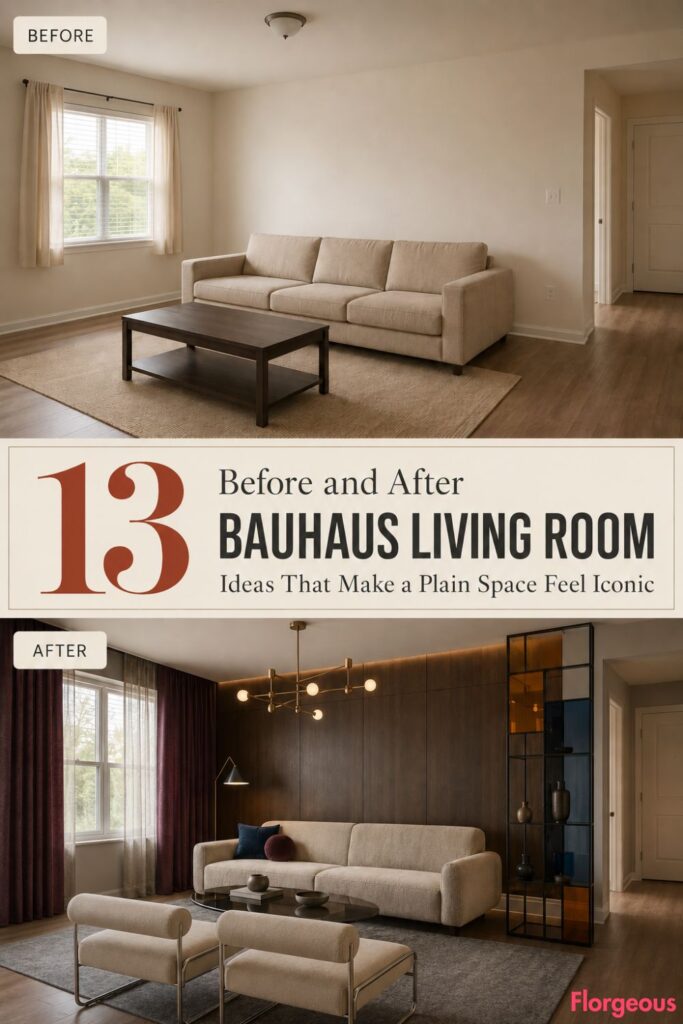
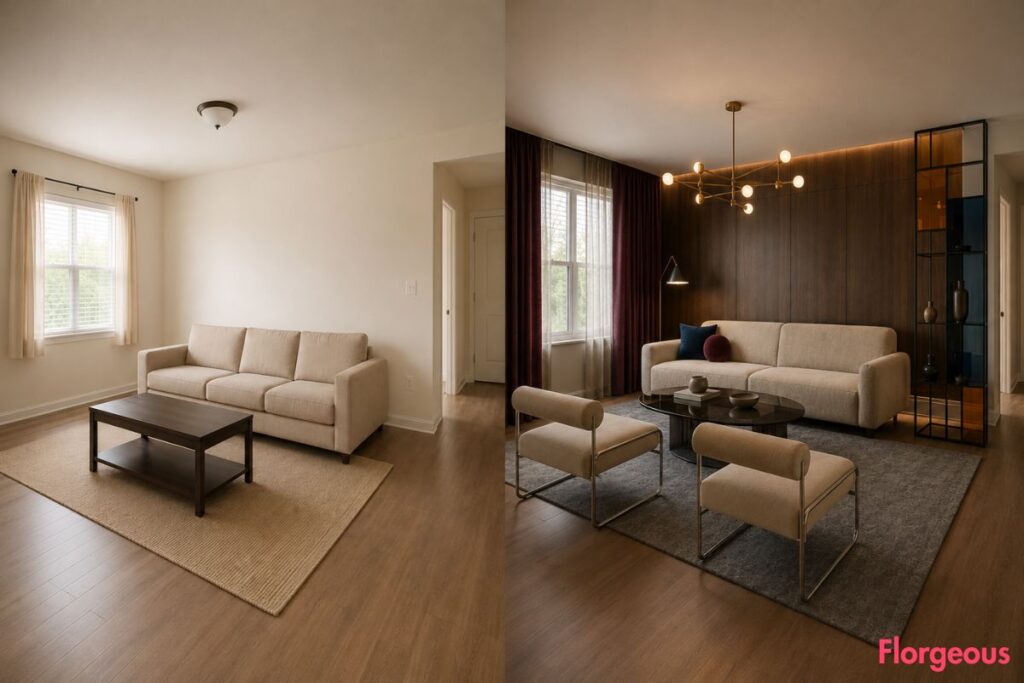
A builder-grade living room can be clean, comfortable, and still feel strangely unfinished. Beige seating, short curtains, blank walls, and one basic ceiling fixture provide function, but they do not create visual order or personality.
These 13 makeovers begin with the exact same plain room. The windows, doorway, flooring, proportions, ceiling height, circulation, and camera position remain unchanged. Only the after design is different.
Each Bauhaus Living Room transformation explores a separate idea, from recognizable Dessau color to warm timber, textile craft, industrial materials, compact storage, and refined contemporary luxury. No two versions use the same focal point, furniture arrangement, or decorative formula.
1. Turn a Beige Room Into a Classic Dessau Color Composition
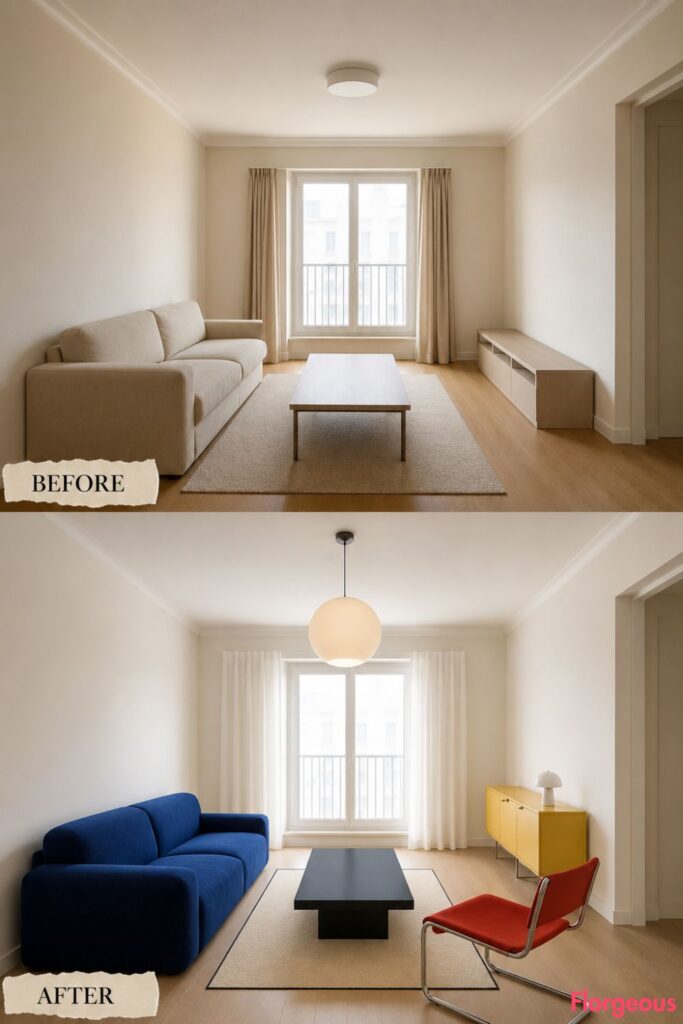
This transformation uses the familiar Bauhaus palette without covering every surface in primary color.
Before: The straight beige sofa, bare rectangular table, neutral rug, short curtains, and warm off-white walls feel practical but visually disconnected.
After: A low cobalt sofa anchors the main wall. One red cantilever chair faces it, while a slim yellow storage cabinet marks the reading corner. A black rectangular table and ivory rug with fine geometric outlines keep the color arrangement structured.
An opal globe pendant softens the hard geometry and gives the room a comfortable residential finish.
Designer Tip: Let neutral surfaces occupy at least half the room. The primary colors will look more intentional and less playful.
2. Replace Builder-Grade Blandness With an Optical Black-and-White Grid
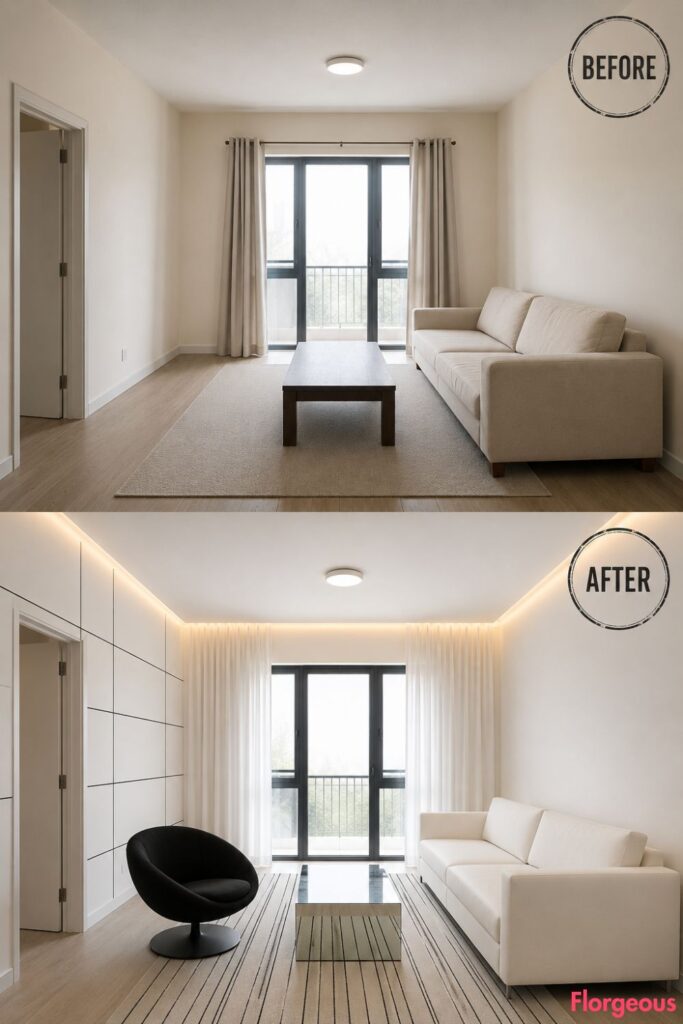
A monochrome room can feel just as recognizably Bauhaus as a primary-color interior.
Before: The neutral room has no contrast, architectural rhythm, or strong focal point.
After: A black grid painted over one white wall creates a measured backdrop for a straight ivory sofa. A circular black lounge chair introduces a contrasting curve, while a mirrored cube table and narrow striped rug sharpen the graphic composition.
White full-length curtains and concealed perimeter lighting prevent the black details from making the room feel heavy.
Why It Works: The grid connects the wall, furniture, and lighting through repeated alignments.
3. Create a Tubular-Steel and Leather Functionalist Lounge
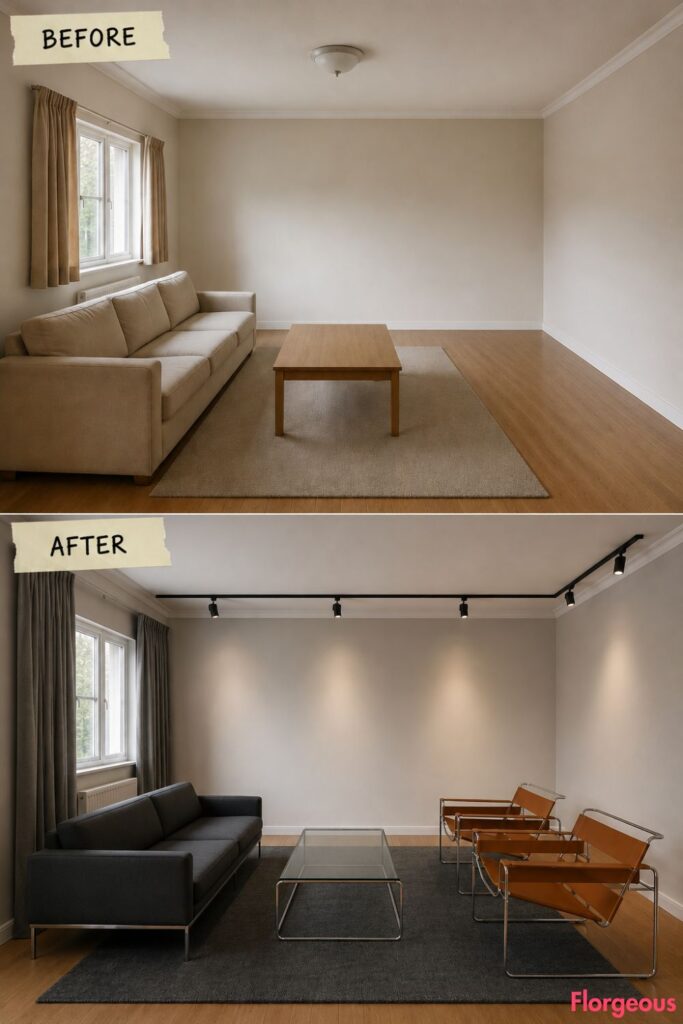
Here, the furniture construction becomes part of the visual language.
Before: The bulky beige seating and plain table perform their basic functions but add no material interest.
After: A slim charcoal sofa sits opposite two cognac leather sling chairs with polished tubular-steel frames. A rectangular glass coffee table reveals its chrome structure, while a slate wool rug defines the conversation area without interrupting the walkway.
Adjustable black rail lights replace the generic central fixture and direct light toward the sofa, chairs, and reading area.
Try This: Vintage chrome furniture can provide the look without the cost of collectible originals.
4. Warm Up Bauhaus Geometry With Walnut, Wool, and Plywood
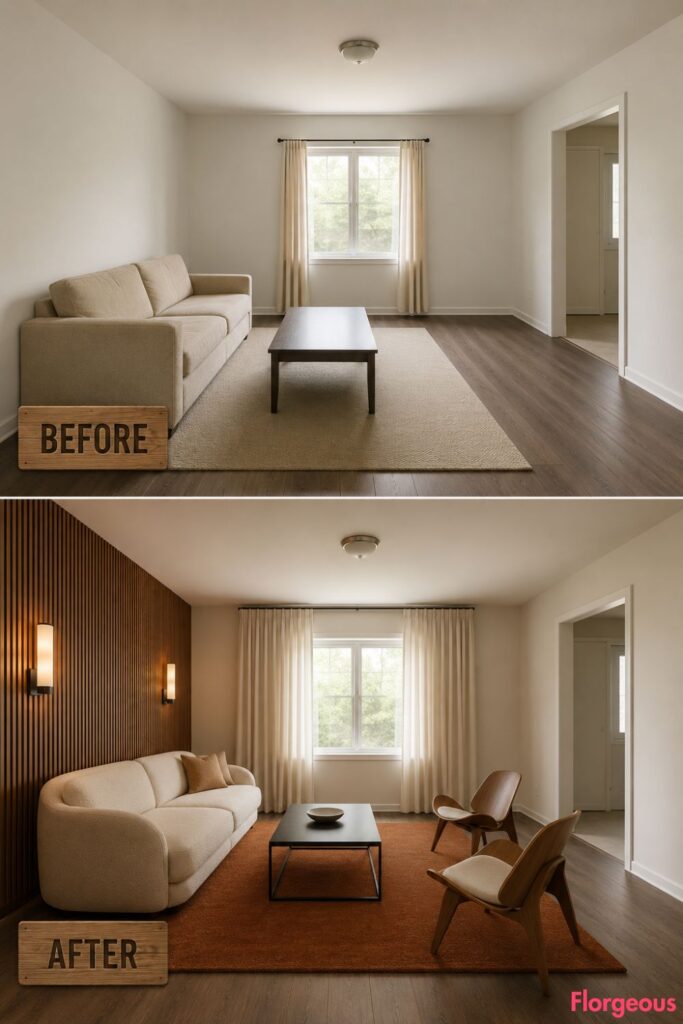
Bauhaus design does not need to feel stark. Natural materials can bring warmth while preserving clarity and function.
Before: The warm off-white shell and beige upholstery feel safe, but the room lacks depth.
After: A walnut slat wall creates an orderly vertical rhythm behind an oatmeal sofa. Two molded plywood lounge chairs face the sofa across a black steel table. A rust wool rug, cream curtains, and cylindrical opal wall lights add warmth without decorative clutter.
The seating remains open at the sides, preserving easy access to the doorway and windows.
Style Note: Use timber in one dominant location. Too many different wood tones can weaken the graphic structure.
5. Use Architectural Color Blocking to Zone the Room
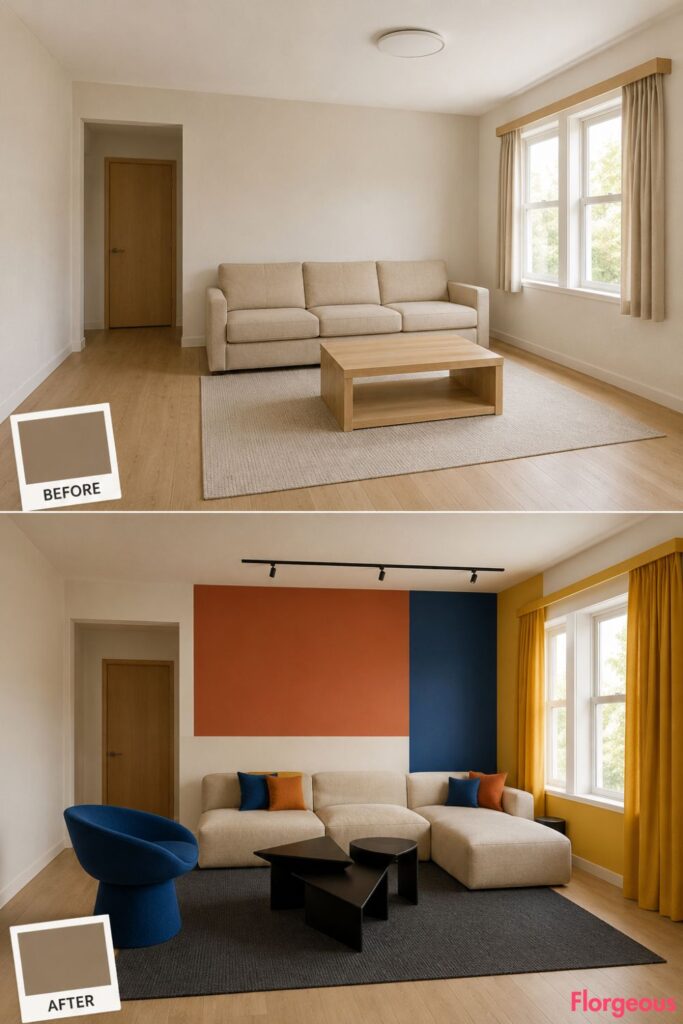
This version uses painted geometry to organize different activities rather than simply decorate the walls.
Before: The blank warm off-white walls provide no hierarchy between lounging, reading, and storage areas.
After: Terracotta frames the sofa zone, a cobalt rectangle identifies a compact reading corner, and a muted yellow strip visually connects the window wall. A sand modular sofa, black triangular tables, and one cobalt pedestal chair follow the same geometric logic.
A charcoal flatweave rug grounds the central seating without repeating the wall pattern.
Budget Version: Mock up the composition with large pieces of colored paper before buying paint.
6. Build the Room Around Bauhaus Textile Workshop Craft
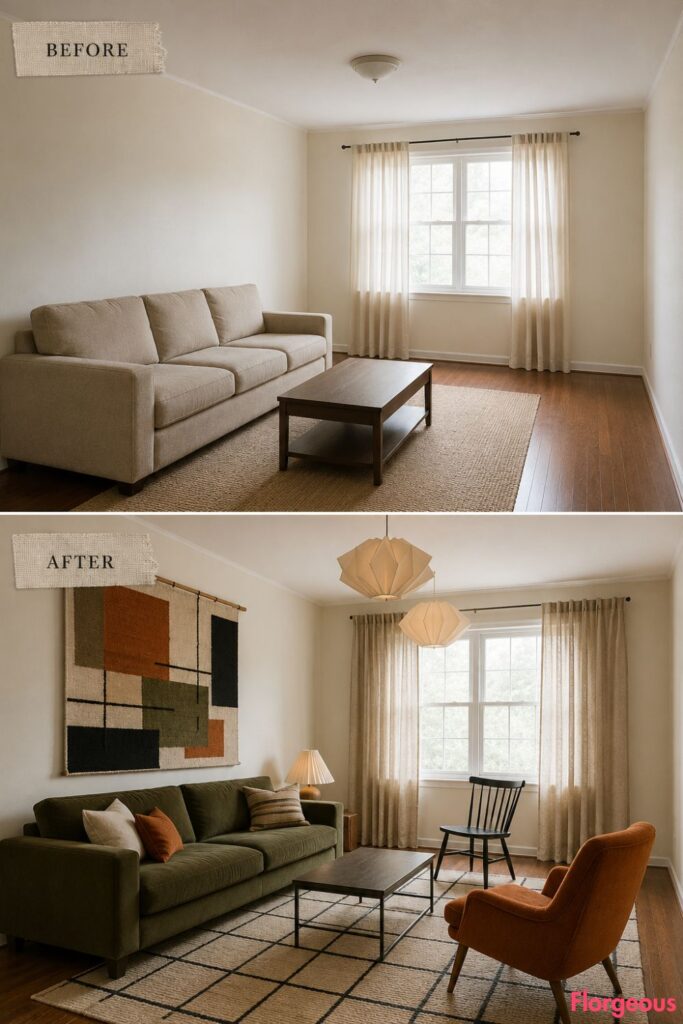
Woven surfaces introduce softness, pattern, and visible craftsmanship without losing the disciplined Bauhaus structure.
Before: The short curtains and basic neutral rug add little texture or visual interest.
After: A large woven wall hanging with muted rust, black, cream, and olive geometry becomes the focal point. An olive sofa is paired with one orange wool lounge chair and a black spindle-back chair, creating an intentionally asymmetric conversation area.
A gridded flatweave rug, flax curtains, and folded-paper lanterns complete the workshop-inspired setting.
7. Make the Room Feel Weightless With Glass and Chrome
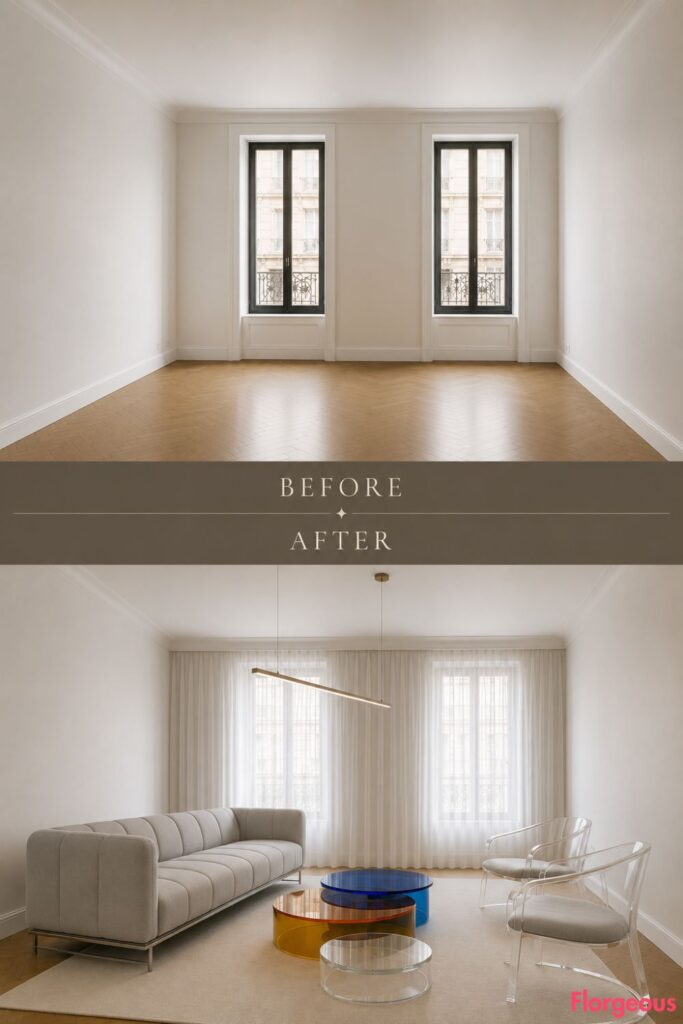
Transparent furniture allows strong shapes and colors to appear without visually shrinking the room.
Before: The solid beige sofa and rectangular table make the modest room feel heavier than it is.
After: A pearl-gray sofa with a polished chrome base faces two transparent acrylic chairs. Overlapping amber, cobalt, and clear glass tables create a layered focal point, while a pale opaque rug prevents the furniture from disappearing into the floor.
Sheer curtains and a slim linear pendant preserve the airy quality.
Common Mistake: Do not use transparent furniture everywhere. One substantial upholstered piece keeps the room comfortable and grounded.
8. Turn the Blank Walls Into a Bauhaus Art Collector Gallery
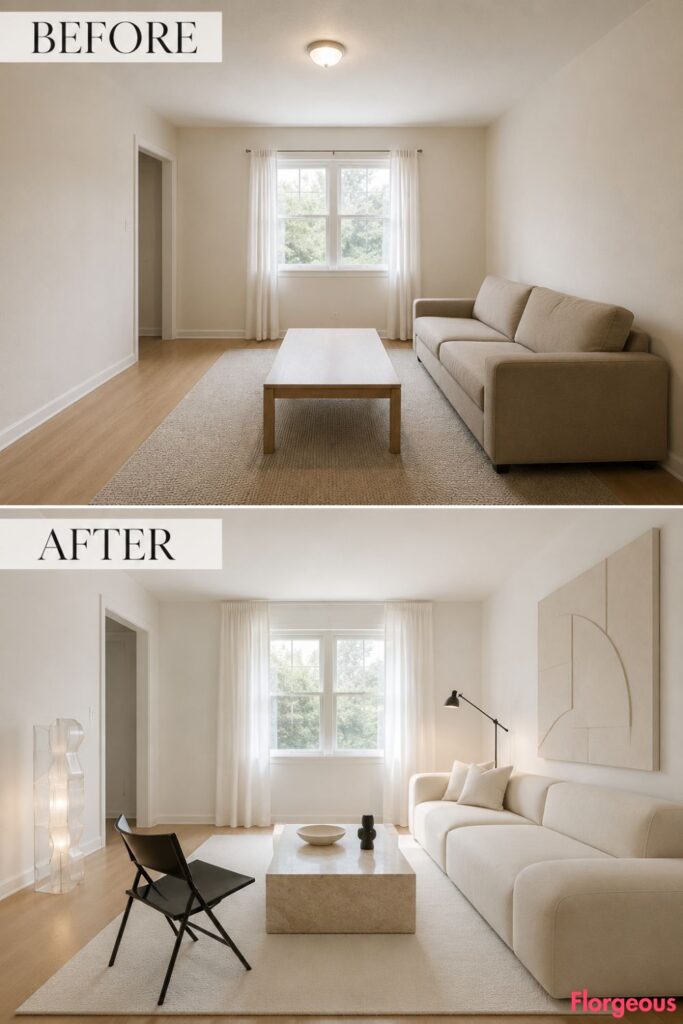
An art-focused version relies on negative space rather than decorative abundance.
Before: Empty walls and generic furniture give the eye nowhere to settle.
After: Gallery-white walls frame one oversized geometric relief and a translucent resin floor sculpture. A cream architectural sofa, black folded-metal chair, monolithic limestone table, and seamless pale rug form a quiet base around the artwork.
A single adjustable reading lamp provides practical light without competing with the focal pieces.
Why It Works: The furniture is low and restrained, allowing the artwork to control the vertical composition.
9. Make Sculptural Lighting the Center of the Design
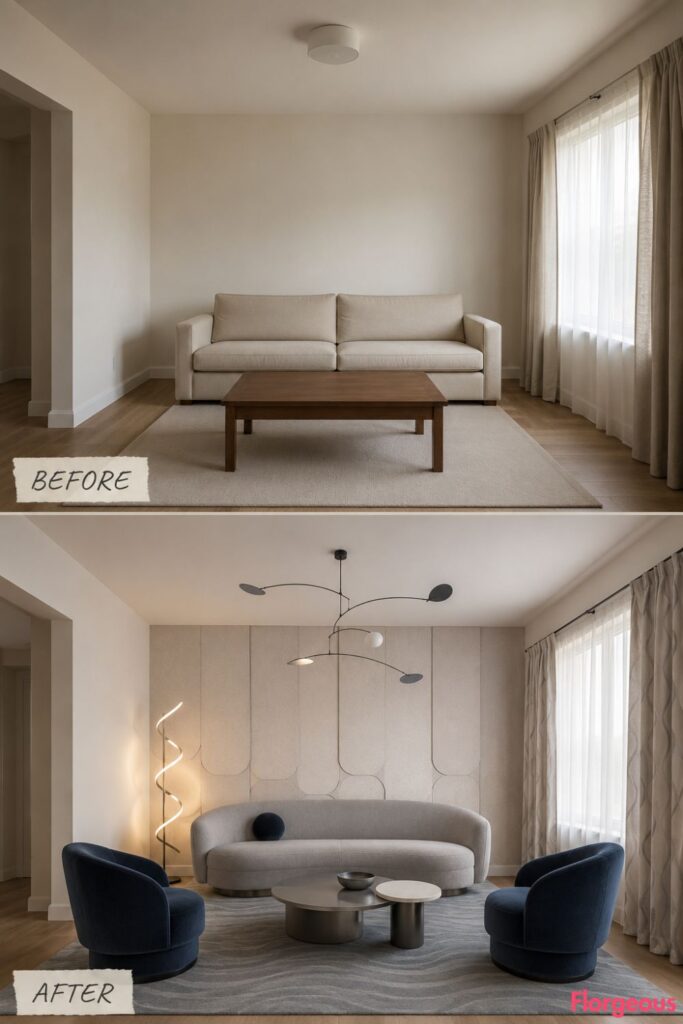
This transformation uses light to create movement and define the conversation area.
Before: A basic ceiling fixture spreads flat light across the room and leaves the corners dull.
After: A slim silver-gray curved sofa faces two navy swivel chairs around nested circular tables. Above them, a balanced mobile-like ceiling fixture creates a dynamic focal point. A spiraling floor lamp illuminates the reading chair, while wave-pattern curtains continue the sense of movement.
The walls remain pale so the unusual lighting silhouettes stay visible during the day.
10. Solve a Compact Apartment With Folding and Wall-Mounted Functions
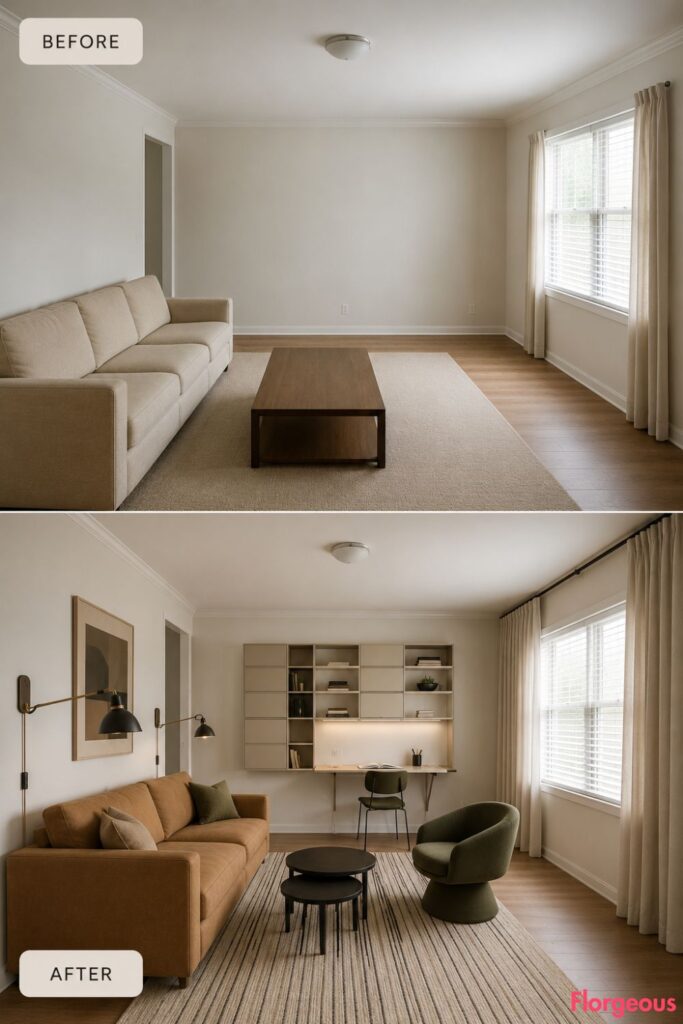
Small living rooms benefit from Bauhaus thinking because every element must earn its place.
Before: The standard sofa and coffee table consume floor area without offering storage or flexibility.
After: A compact camel loveseat sits beside one olive swivel chair and lightweight nesting tables. A narrow wall-mounted grid unit combines closed storage, open display space, and a concealed fold-down work surface.
Ceiling-track curtains increase the sense of height, while swing-arm lights free the tables from bulky lamps.
Small Space Tip: Choose furniture that rotates, folds, nests, or provides concealed storage.
11. Create a Fully Reversible Bauhaus Room for Renters
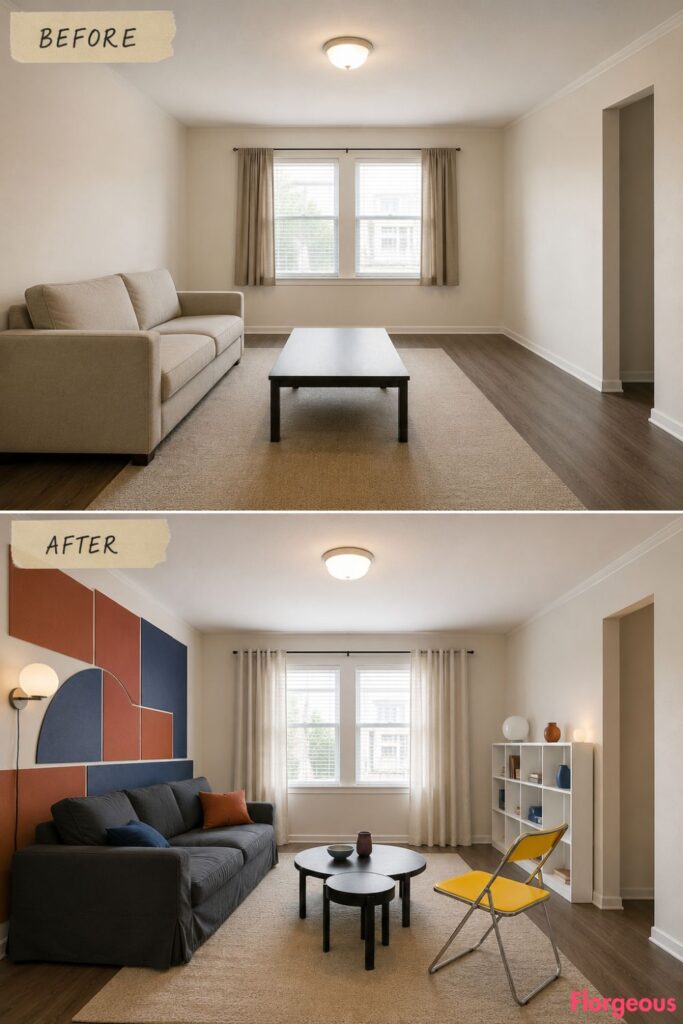
Bold geometry can be introduced without painting permanent color blocks or installing built-ins.
Before: The neutral rental room feels generic, but the walls, floors, and electrical fittings cannot be altered.
After: Removable terracotta and cobalt wall panels form an asymmetric composition behind a charcoal slipcovered sofa. A yellow folding chair, lightweight black tables, flat-pack white grid shelf, and plug-in opal sconce complete the design.
Ready-made full-length curtains hide the short builder-grade window treatment without changing the architecture.
Budget Version: Paint lightweight MDF or foam-board panels and lean them against the wall instead of attaching anything permanently.
12. Combine Biophilic Materials With Functional Geometry
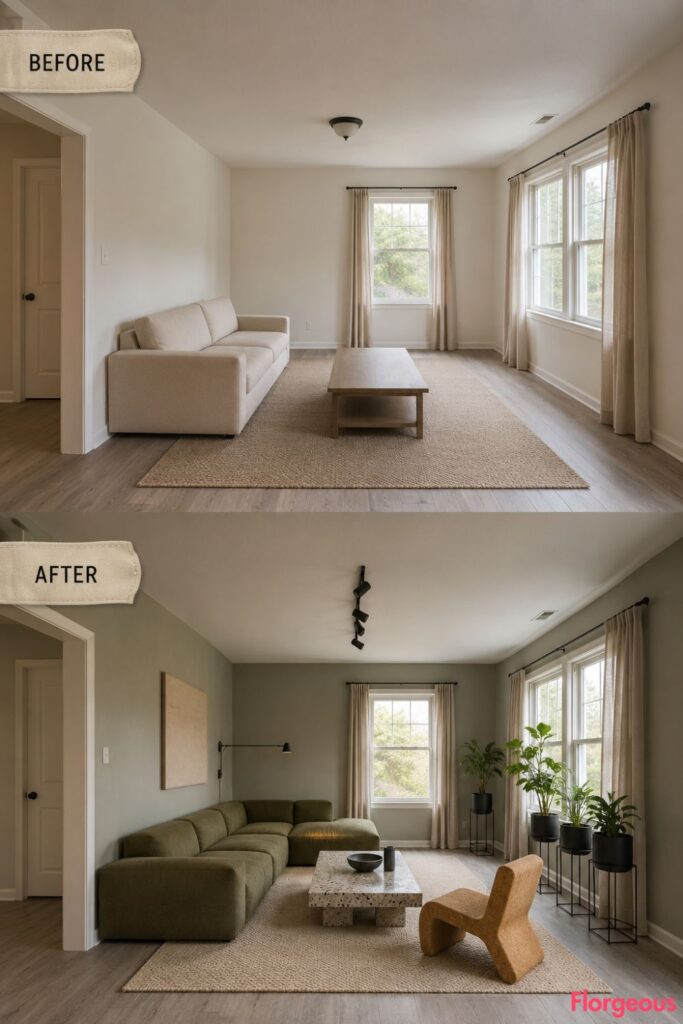
Natural elements feel most Bauhaus-inspired when they follow an ordered layout rather than a loose botanical theme.
Before: The room receives soft daylight but has no meaningful connection to natural materials.
After: Gray-green walls frame an olive modular sofa, molded cork chair, and recycled terrazzo table. Tall plants sit in identical black tubular stands aligned beside the window, keeping the greenery organized and clear of the walkway.
An undyed wool rug, flax curtains, and adjustable black lighting complete the calm material palette.
Color Story: Use green as a structural color, then let cork, wool, stone, and timber provide subtle variation.
13. Finish With a Refined Contemporary Bauhaus Living Room
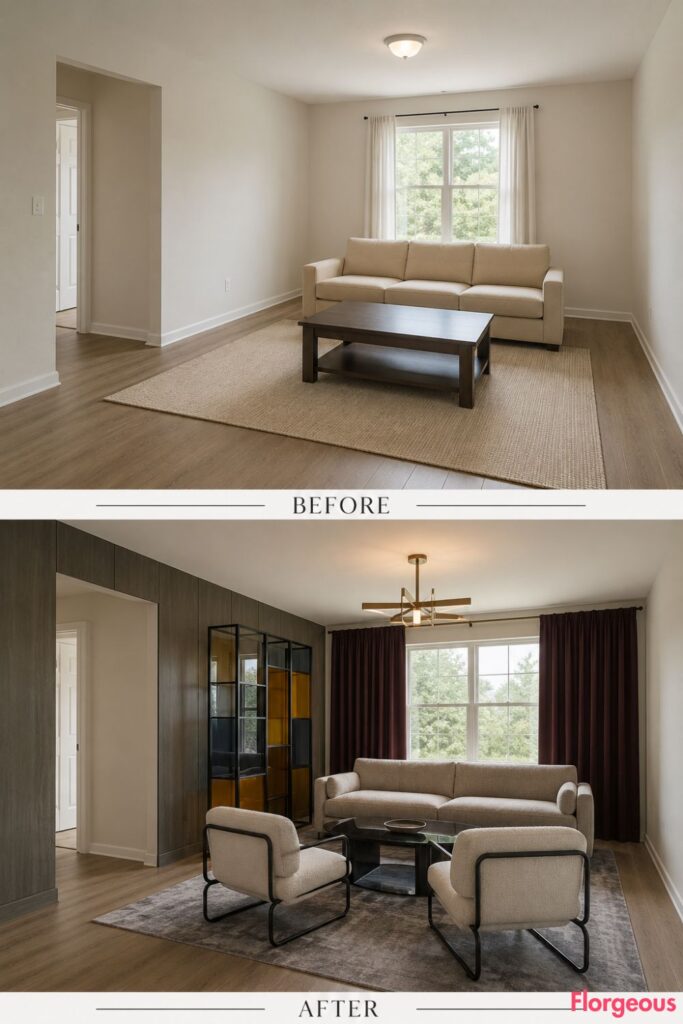
The final design combines strong geometry with luxurious materials and a comfortable residential layout.
Before: The familiar beige room remains usable but has no contrast, architectural focal point, or visual rhythm.
After: A freestanding black steel divider with amber and smoked-blue glass panels anchors the room without blocking the doorway. A sand mohair sofa faces two ivory tubular-frame chairs across an oval smoked-glass table.
Smoked-eucalyptus wall panels, a silver-gray wool rug, aubergine curtains, and a bronze geometric chandelier create depth while keeping the silhouettes clean.
Try This: Invest in one architectural focal point, then keep the remaining pieces quieter and highly functional.
How to Choose the Right Bauhaus Direction for Your Home
A convincing Bauhaus room does more than place red, yellow, and blue accessories against white walls. It creates order through furniture placement, clear geometry, useful storage, honest materials, and carefully controlled contrast.
Begin with the layout. Protect the route between the doorway and windows, decide how the seating should support conversation, and identify one strong focal point. That focal point could be a geometric wall, a sculptural light, an art piece, a transparent table arrangement, or a functional storage system.
Next, choose one dominant design language. Pair tubular steel with leather, walnut with wool, chrome with glass, or cork with terrazzo. Avoid combining every Bauhaus reference in one room.
A successful Bauhaus Living Room can be vivid, monochrome, warm, natural, compact, or luxurious. The shared principle is purpose. Improve the function first, introduce two or three clear shapes, and use color only where it strengthens the composition.