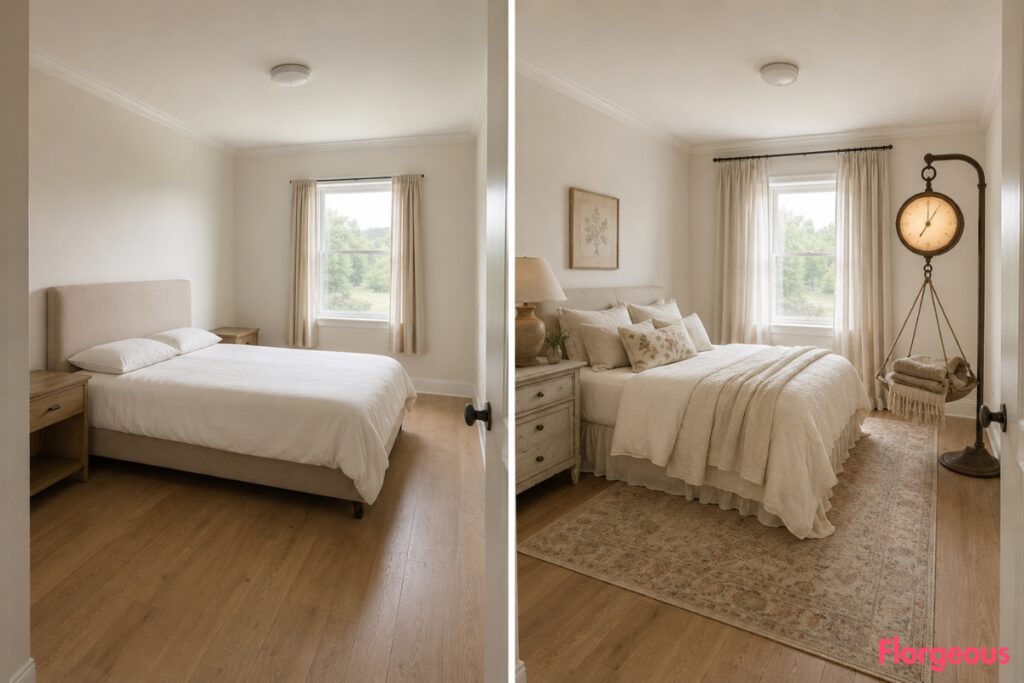
A plain builder-grade bedroom can be perfectly usable and still feel strangely anonymous. Warm off-white walls, a basic bed, cream bedding, two bare nightstands, short curtains, and soft daylight provide a clean starting point, but there is nothing that makes the room feel collected or personal.
That makes it an ideal canvas for Shabby Chic Bedroom ideas that move beyond distressed white furniture and predictable floral bedding.
For these eleven makeovers, the architectural shell stays locked. The doorway, window, flooring footprint, ceiling height, room proportions, camera position, lens, framing, and circulation remain unchanged within every BEFORE and AFTER pair.
The builder-grade BEFORE also keeps the same walls, bed, bedding, nightstands, curtains, minimal styling, and daylight. Only its deliberately ordinary lighting fixture changes from concept to concept so no BEFORE lighting system repeats.
Every AFTER takes a separate design route, using different furniture logic, spatial composition, focal point, textile strategy, and lighting system while staying unmistakably shabby chic.
1. Give the Foot of the Bed an Antique Canterbury Quilt Rack
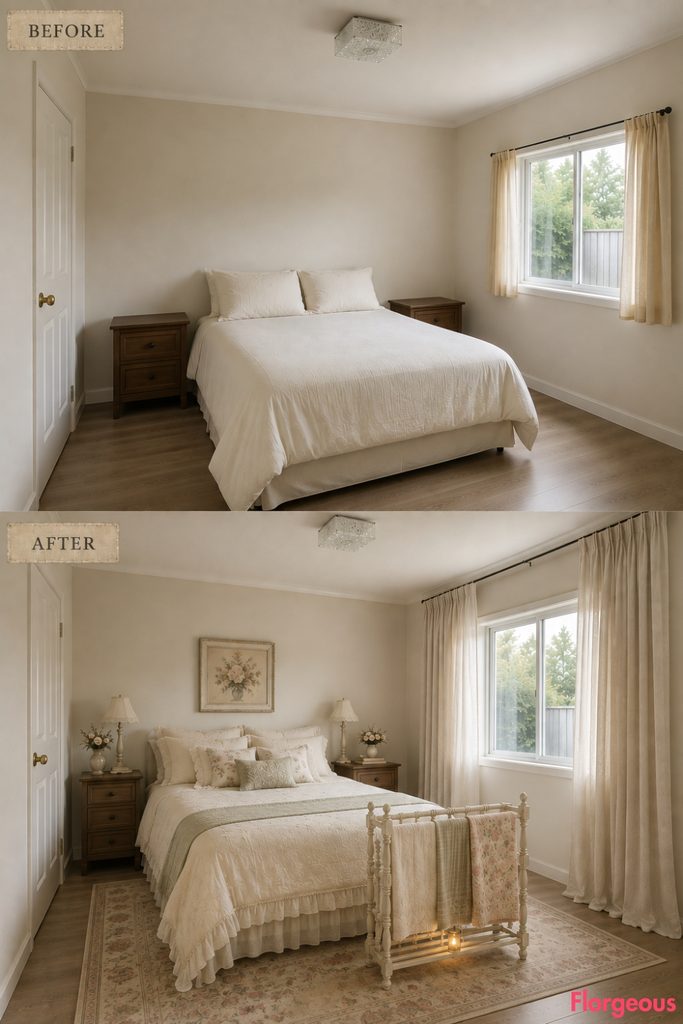
Instead of adding another bench, trunk, or footboard feature, give folded textiles their own open piece of furniture.
Before: The locked bedroom has warm off-white walls, a basic neutral bed, simple cream bedding, two bare nightstands, short curtains, minimal styling, and a shallow white prismatic glass ceiling block.
After: Shift the bed slightly toward one side while keeping the main walkway completely clear. Place an antique Canterbury-style rack beyond one outer foot corner rather than directly across the foot of the bed.
Its narrow divisions hold three loosely folded textiles: washed ivory linen, faded sage ticking, and one tea-rose quilt.
Choose weathered painted timber with slim spindle divisions so the rack stays visually light.
A tiny amber glass bead light is recessed into the lower stretcher, softly illuminating the textiles upward without turning the rack into a modern display cabinet.
Why it works: Folded textiles become part of the furniture composition instead of simply being stacked on the bed.
Try this: Keep one section of the rack empty. Shabby chic usually looks more authentic when storage is not packed to capacity.
2. Make an Embroidered Bell Pull the Tallest Detail in the Room
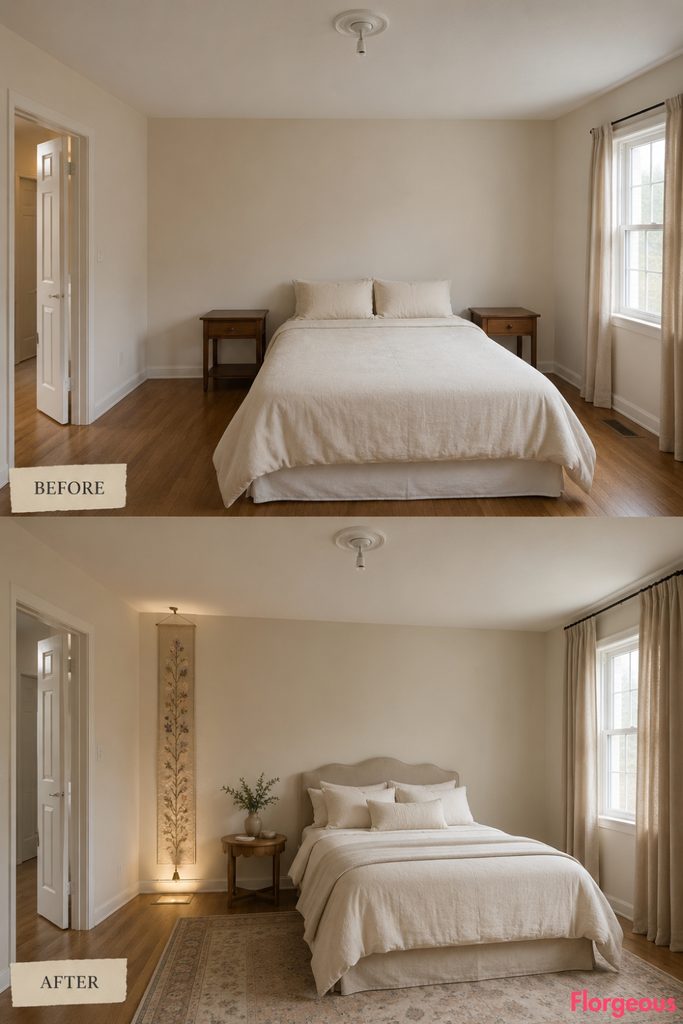
This makeover uses one narrow textile rather than another large wall treatment.
Before: Keep the same builder-grade room base and use a simple white ceramic ceiling rose with a short bare frosted candle bulb.
After: Move the bed modestly away from one side of the main wall. Beside it, hang an extra-long antique-style embroidered bell pull from close to ceiling height.
The textile is narrow, heavily faded, and stitched with muted climbing flowers in parchment, dusty lilac, old sage, and pale rose. At the bottom, a small aged-brass bell weight finishes the vertical line.
Use one petite scalloped bedside table on the opposite side only.
Rather than spotlighting the textile, mount a miniature frosted glass floor well immediately beneath it, sending a gentle vertical wash upward.
Style Note: The bell pull should remain narrow. Making it broad turns the concept into another tapestry wall.
3. Create a Linen Display With an Antique Dumbwaiter Stand
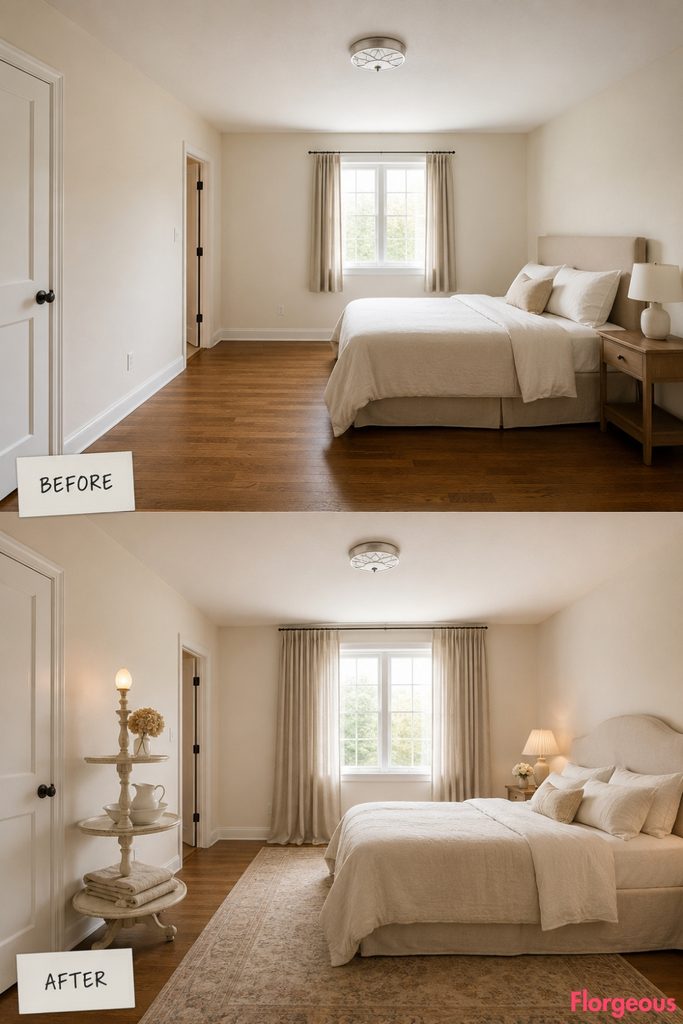
A traditional multi-tier dumbwaiter introduces height without becoming another shelf, armoire, or bedside cabinet.
Before: The same neutral bedroom uses a simple pressed-metal quatrefoil flush fixture in plain white.
After: Position a three-tier antique dumbwaiter stand in the open side zone of the room.
Use a slender turned central stem with three increasingly small circular trays finished in softly rubbed warm ivory. Style the lowest tier with folded linen, the middle with two small ironstone pieces, and leave most of the upper tier empty except for one faded hydrangea stem.
Shift the bed slightly away from the stand to give the object a deliberate pocket of space.
A small luminous opal finial replaces the decorative top knob of the dumbwaiter, creating a soft glow that travels downward across the three trays.
Designer Tip: Resist filling every level with accessories. The shape of the furniture should remain visible.
4. Use an Antique Luggage Scale as a Blanket Sling
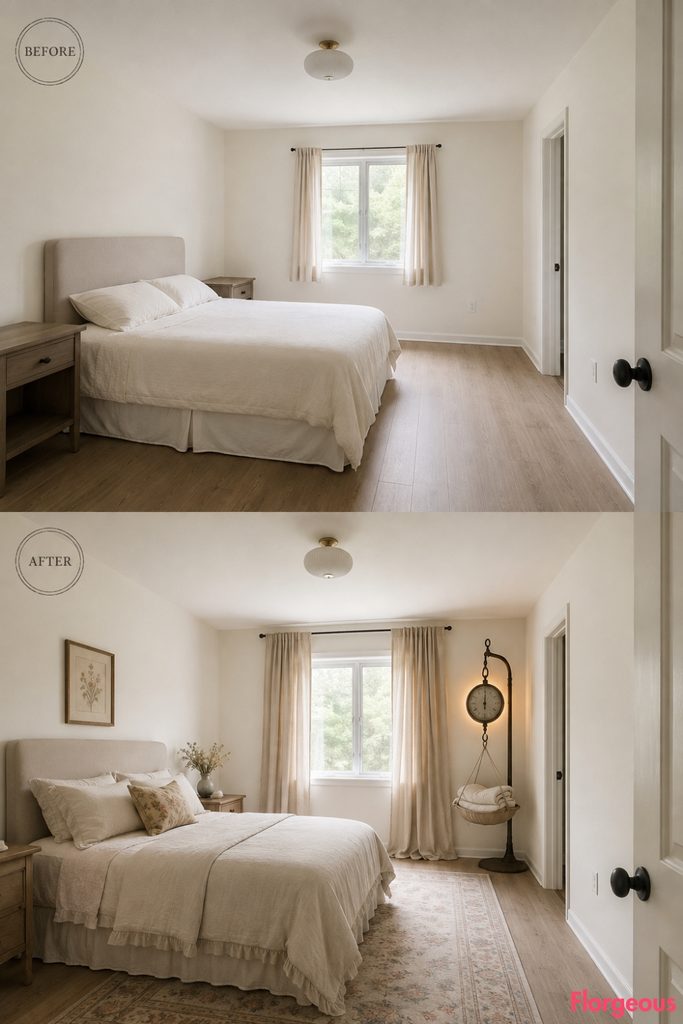
This concept gives one mechanical vintage object a surprisingly soft purpose.
Before: Keep the locked base bedroom and light it with a compact ribbed porcelain cylinder mounted directly to the ceiling.
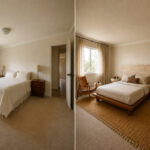
After: Place a tall antique luggage scale in the deeper side zone.
Instead of hanging luggage from the weighing hook, suspend a shallow removable linen sling from the scale arm. Use it for one loosely folded quilt and one small rolled throw.
Finish the metal in a softly oxidized dark bronze, keeping the worn measurement dial visible but without readable numbers.
The bed shifts toward the opposite side and uses pale oatmeal linen with one faded botanical cushion.
A tiny milk-glass capsule is hidden behind the scale dial, creating a halo around the old circular mechanism.
Why it works: Hard aged metal and soft washed linen give the room the imperfect contrast that suits shabby chic.
5. Turn a Revolving Lace Sample Drum Into the Room’s Softest Sculpture
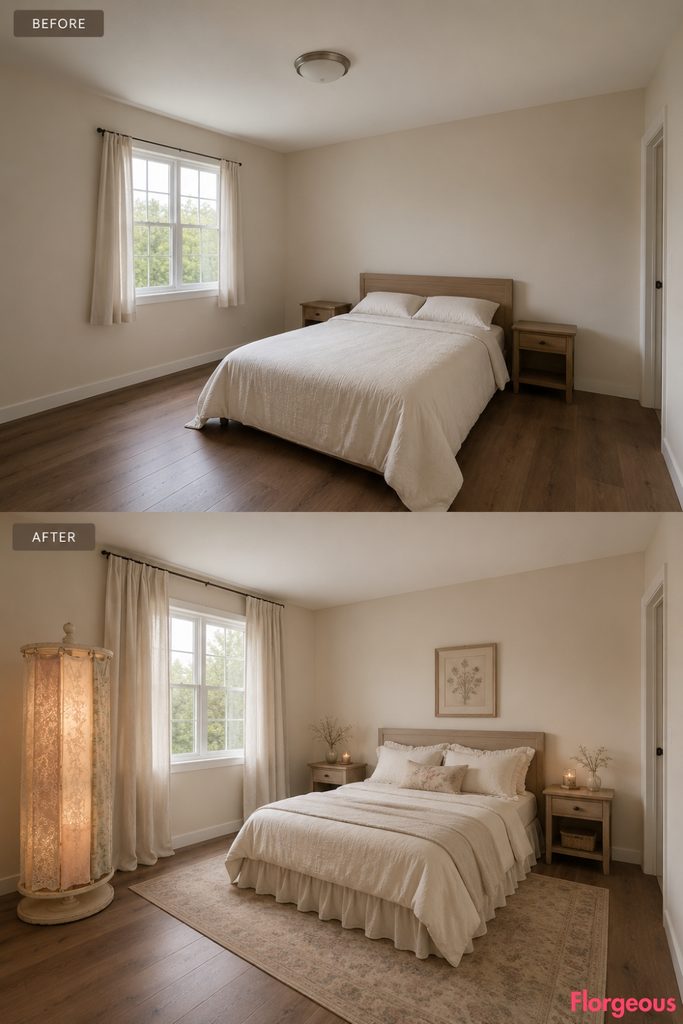
Instead of hanging lace on the bed or wall, give it a freestanding form.
Before: The base room remains identical, with one shallow cream metal saucer fixture and an opaque center lens.
After: Place a narrow revolving sample drum in an open corner. The frame is weathered ivory timber built around a vertical spindle, allowing several narrow lace and embroidered fabric samples to hang around its circular perimeter.
Use only four samples, each different in texture but related in color: tea-stained lace, faded blush embroidery, ivory cotton eyelet, and muted sage floral linen.
Keep the bed low and visually simple so the circular textile form remains distinct.
A concealed warm light sits inside the drum’s central spindle and glows outward through the textiles without visibly illuminating the whole room.
6. Replace One Nightstand With an Antique Butler’s Tray
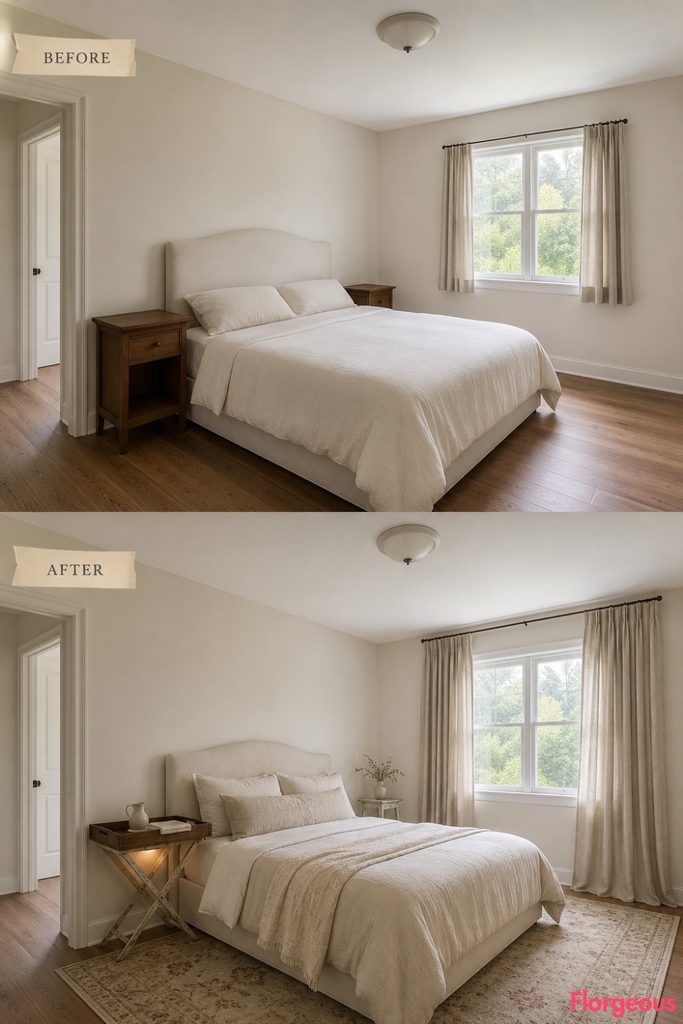
A portable tray creates a lighter bedside arrangement than another chest or pedestal.
Before: Keep the same builder-grade base with a plain shallow oval enamel ceiling fixture.
After: Remove one nightstand and replace it with an antique butler’s tray resting on a collapsible X-frame stand.
Choose rubbed pale putty paint on the stand and a slightly darker old timber tray with softly rounded corners.
Style it sparingly with one small ceramic jug and a folded linen hand towel. On the opposite bedside, leave a narrow painted stool so the composition remains intentionally mismatched.
Shift the bed only enough to maintain comfortable clearances.
A small flat opaline puck is fixed beneath the outer tray lip, casting indirect light downward onto the X-frame and floor rather than onto the bed.
Budget Version: An old removable serving tray on a vintage folding stand can achieve the same effect.
7. Add an Antique Bedstep Instead of a Conventional Bedside Table
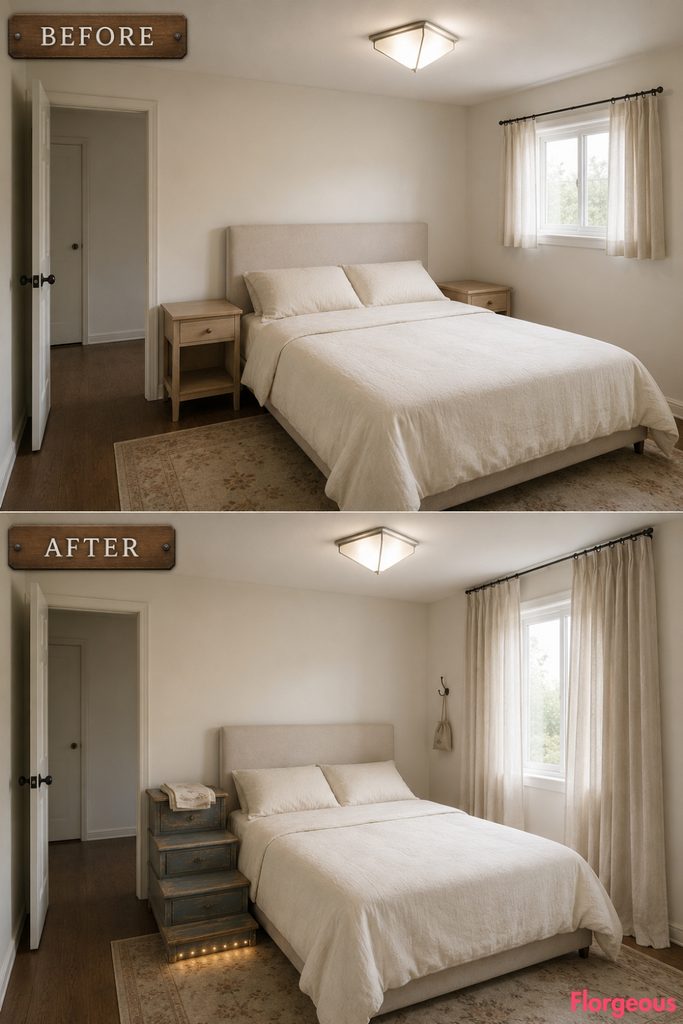
Historically, high beds were sometimes paired with steps. Used carefully, that forgotten furniture type creates a different shabby chic bedside silhouette.
Before: Keep the room base and use a plain triangular frosted-glass ceiling box mounted tight to the ceiling.
After: Replace one nightstand with a compact three-step antique bedstep.
The bottom two steps contain shallow pull-out compartments for spare pillowcases, while the top remains clear except for a folded embroidered cloth.
Finish the timber in weathered blue-gray paint with worn natural wood appearing only at the front edges.
On the opposite side, use no table at all. Instead, keep one wall hook for a small linen sachet.
A narrow line of warm glass beads sits underneath the lip of the lowest step, illuminating the floor immediately around the furniture.
Small Space Tip: Keep the bedstep narrower than the mattress depth so it does not intrude into the walking path.
8. Give an Empty Corner a Victorian Ribbon Carousel
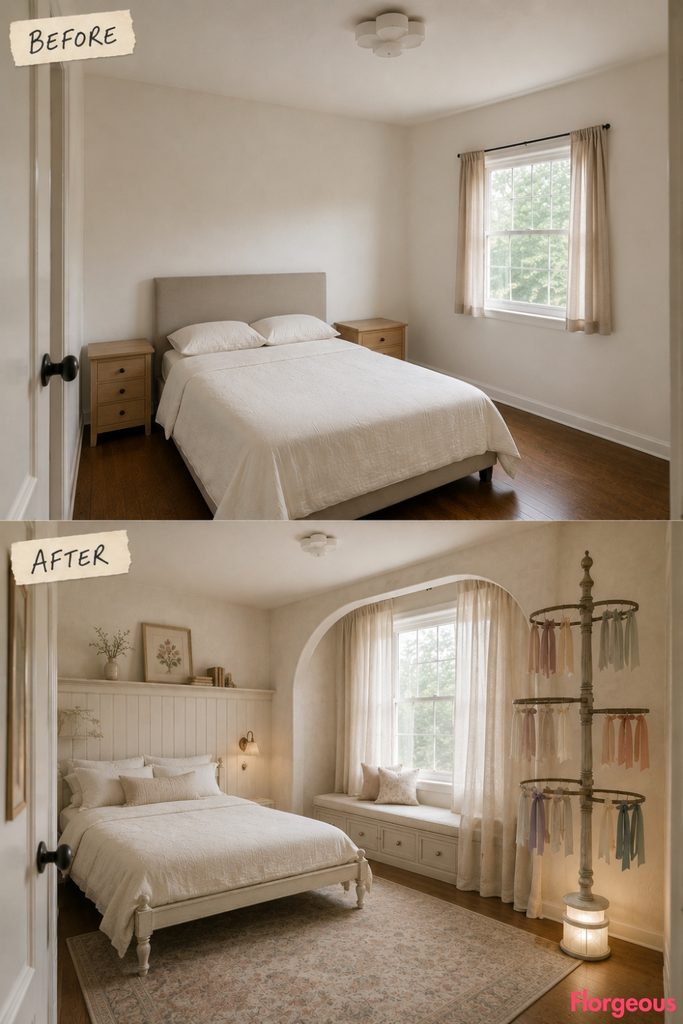
This room uses a rotating decorative object rather than another storage cabinet.
Before: Use the same plain room base with one small milk-white ceramic clover flush light.
After: Place a narrow antique ribbon carousel in the open corner.
The vertical timber spindle supports four lightweight circular arms at different heights. Hang only a few short ribbon lengths from each arm in faded sage, tea rose, old ivory, dusty lavender, and washed blue.
The carousel should remain mostly open so it feels airy rather than like craft storage.
Use a simple painted timber bed with plain linen and almost no pattern elsewhere.
At the bottom of the spindle, one luminous frosted porcelain collar casts light upward through the hanging ribbons.
Style Note: The color palette matters more than the number of ribbons. Keep the tones faded and slightly mismatched.
9. Create a Morning Flower Station With a Folding Tripod Stand
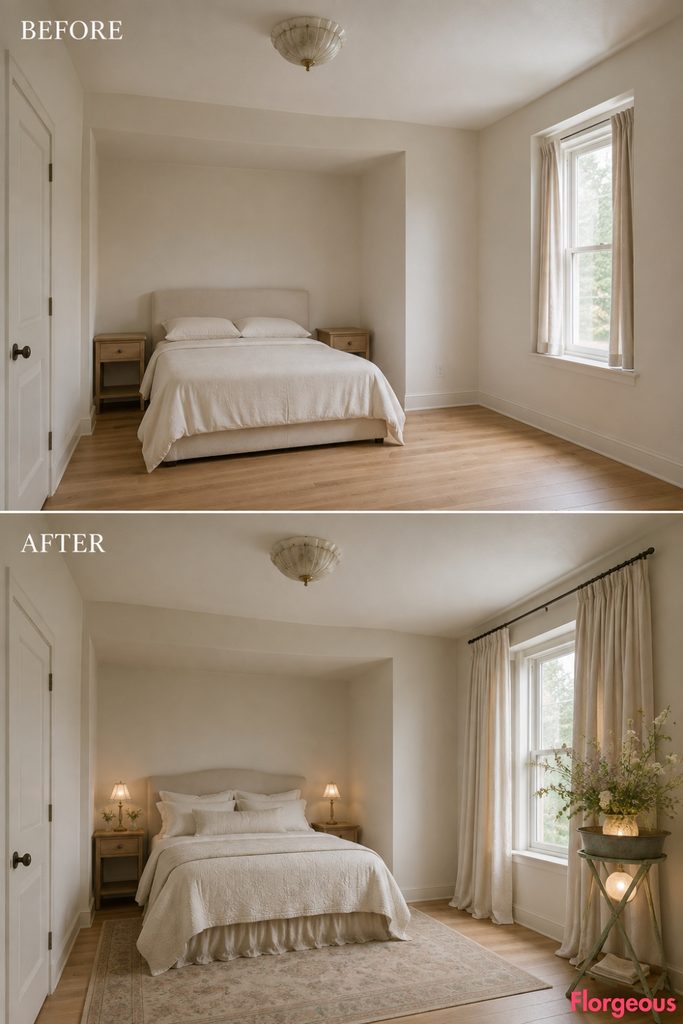
Instead of using another florist cart, pedestal grouping, or vanity, this idea uses one compact collapsible stand.
Before: The builder-grade room stays the same, with a low-profile scalloped pressed-glass ceiling cap.
After: Place a single antique folding tripod stand near the window side without blocking the glass or curtains.
The stand supports one shallow oval zinc basin filled with a restrained arrangement of loose garden stems. Below the basin, one small linen sling holds pruning cloths and a folded cotton hand towel.
The tripod is painted faded celadon with controlled edge wear.
Keep the bed on the opposite side in simple cream matelassé and washed linen.
A tiny rechargeable-looking fixture is avoided. Instead, a small frosted glass orb is integrated beneath the zinc basin so the flowers receive a diffuse upward glow from the stand itself.
Why it works: It gives the room a floral shabby chic character without covering the bedroom in floral prints.
10. Build a Bedside Composition Around a Victorian Canterbury Whatnot
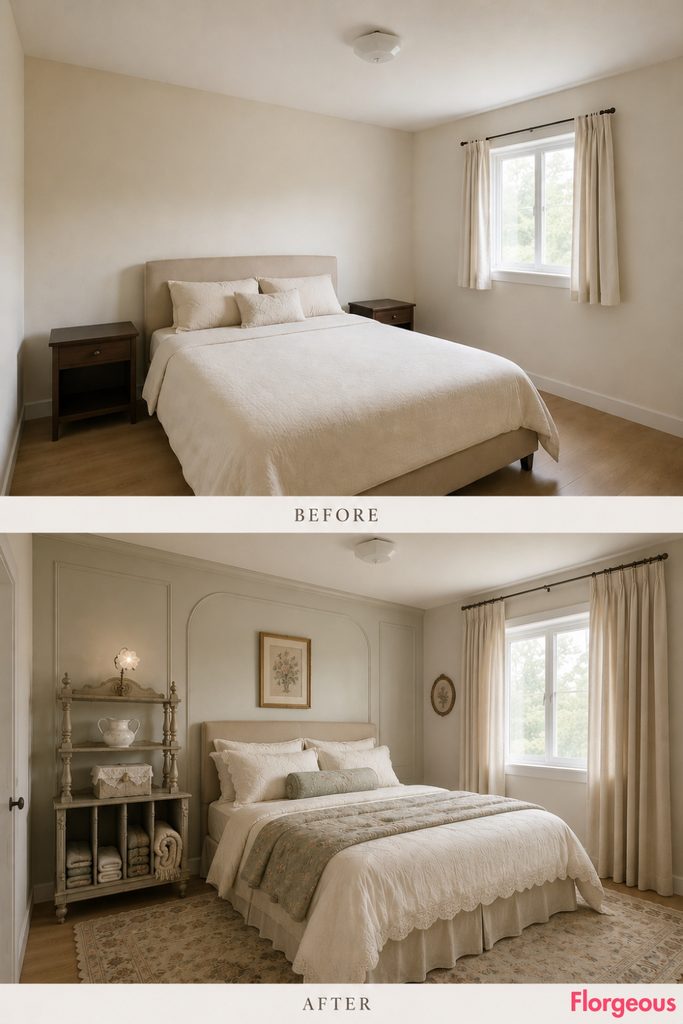
This concept uses a hybrid piece of furniture that is neither a bookcase, conventional shelf, nor nightstand.
Before: Use the same locked base room with one simple white porcelain hexagonal ceiling fitting.
After: Position a narrow Victorian Canterbury whatnot along one bedside edge.
The lower section contains divided open slots for folded fabric and one rolled lightweight throw. Above it rises a delicate two-tier open superstructure for a small ironstone vessel and one lace-covered keepsake box.
Use faded mushroom paint with worn walnut showing through around the turned edges.
Shift the bed slightly toward the opposite bedside and keep that side completely free.
Lighting comes from one small translucent porcelain flower embedded into the upper finial of the whatnot, creating a soft localized glow.
Common Mistake: Do not fill the upper tiers with books and collectibles. That would push the piece toward a library display.
11. Finish With a Curved Wicker Flower Cradle Beside the Window
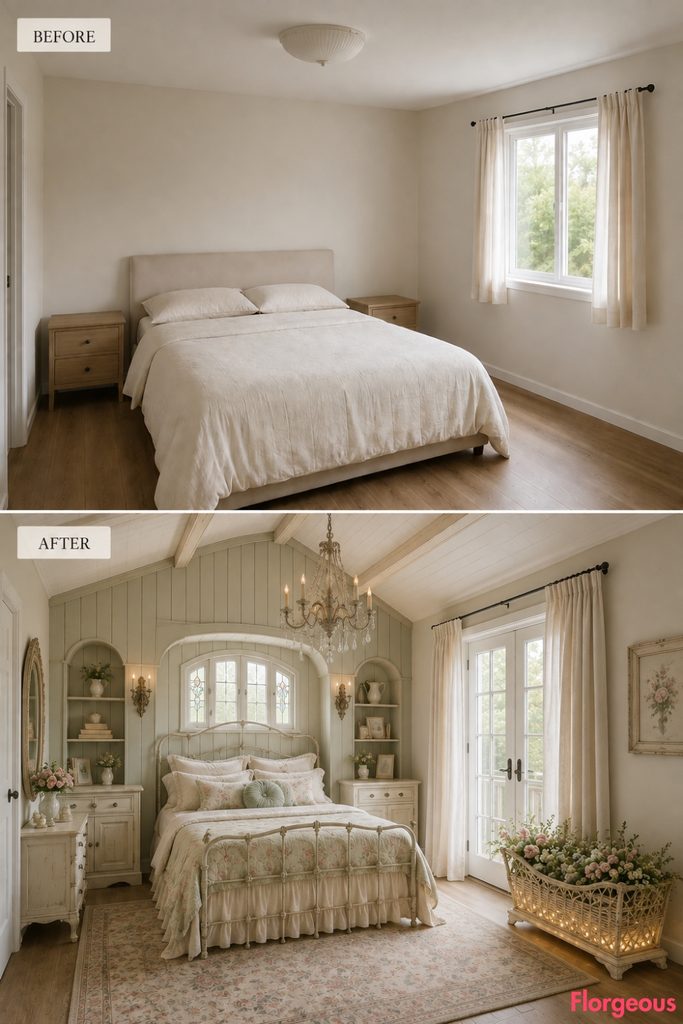
The final makeover uses one lightweight sculptural piece that feels romantic without becoming a reading nook or window bench.
Before: Keep the same builder-grade room base and use one shallow ribbed opal crescent fixture mounted directly to the ceiling.
After: Place a low curved wicker flower cradle beside the window wall, completely clear of the curtain sweep and window access.
The cradle is shallower than a bench and is not designed for sitting. Its open woven basket body contains removable zinc liners holding three loose groups of faded garden flowers and trailing greenery.
Finish the wicker in chalky warm ivory with patches of natural cane showing through.
Rotate the bed only a few degrees toward the opposite side to increase the visual separation between sleeping and floral zones without creating a diagonal-room layout.
Use plain parchment linen, one faded sage coverlet, and almost no additional decorative objects.
Lighting comes from a small string of pearl-like opaline nodes woven only through the bottom inner rim of the flower cradle, creating a gentle glow through the wicker without resembling fairy lights.
Why it works: Flowers become part of the furniture instead of simply appearing in another vase on another table.
How to Keep a Shabby Chic Bedroom Distinct Without Losing the Style
The most convincing Shabby Chic Bedroom does not come from repeating the same distressed furniture set with a different floral pattern.
Start with one object or furniture mechanism that changes how the room is read. An antique bedstep creates a completely different bedside silhouette from a suspended bell pull. A luggage scale gives soft textiles a mechanical counterpoint. A ribbon carousel introduces faded color vertically, while a flower cradle gives the window side a purpose without creating another seat.
Then make everything around that idea quieter.
Warm ivory, parchment, faded sage, tea rose, washed blue, dusty lilac, aged timber, oxidized metal, wicker, linen, eyelet, lace, and imperfect ceramics can establish shabby chic character without using all of them in every room.
Lighting should support the concept rather than repeat a standard formula. Instead of automatically placing two lamps beside the bed, allow each special object to generate its own pool of light. A finial can glow, a scale dial can develop a halo, a floor well can illuminate embroidery, or a furniture base can softly light folded fabric.
Most importantly, preserve the room around the styling. Keep the doorway route obvious, leave comfortable clearance beside the bed, and protect access to the window.
The room should feel like its unusual pieces were discovered over time and found a natural place to live, not like every vintage-looking object was added during the same decorating weekend.