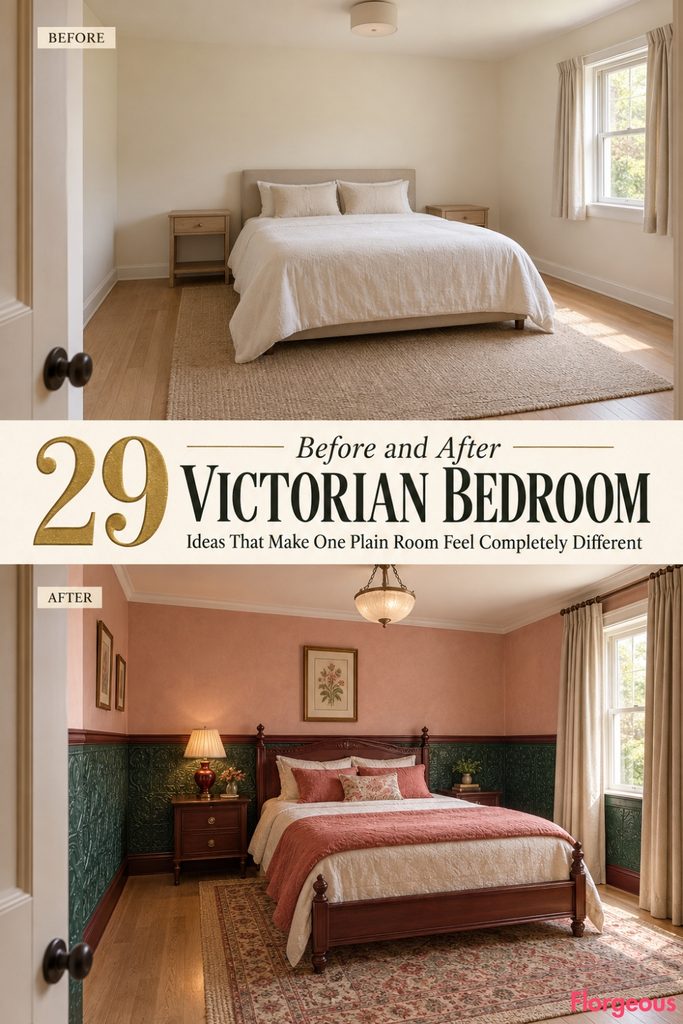
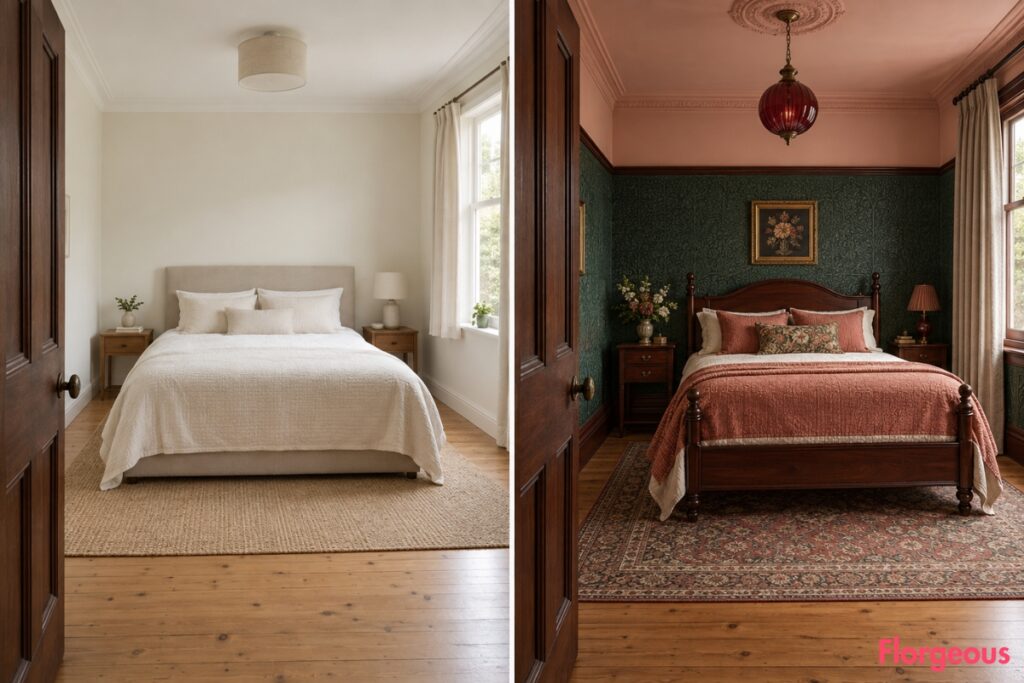
A plain builder-grade bedroom is the perfect test for how dramatically one room can change. With neutral walls, basic furniture, flat lighting, and no focal point, every design decision becomes easy to see.
For all 29 makeovers, the starting room stays exactly the same: warm off-white walls, a basic rectangular bed centered on the solid far wall, cream bedding, two bare nightstands, a right-side window with short plain curtains, light timber flooring, a generic central ceiling light, minimal styling, and soft daylight.
The Victorian Bedroom ideas below deliberately avoid one repeated formula. Each after has its own color story, layout, furniture language, wall treatment, textile direction, lighting strategy, and focal point.
1. Wrap the Lower Walls in Emerald Lincrusta
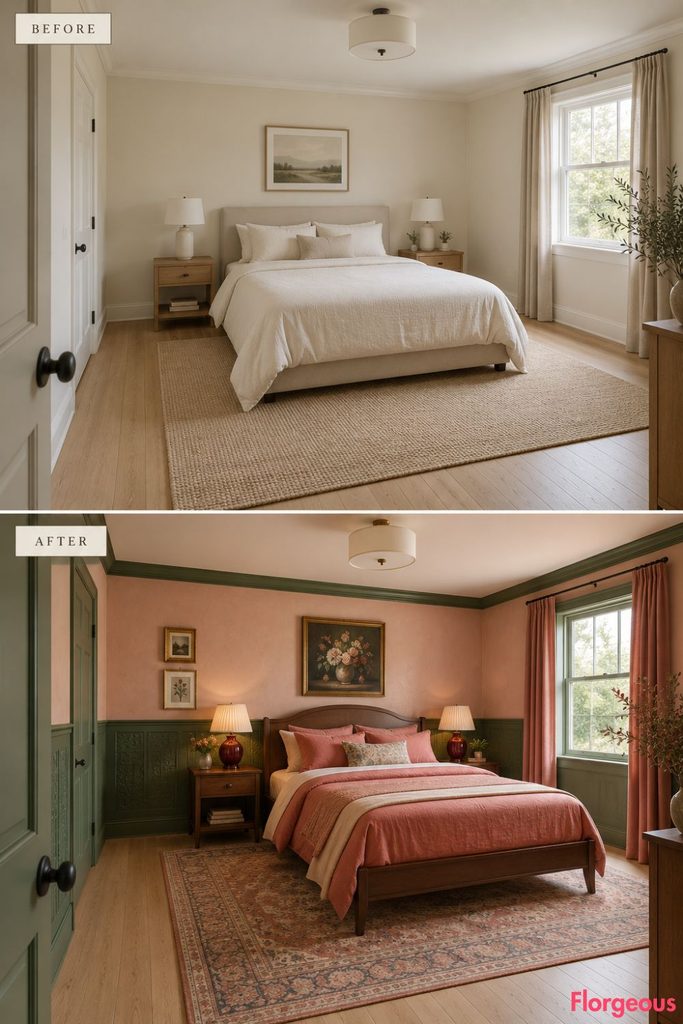
Before: Warm off-white walls, centered basic bed, cream bedding, two bare nightstands, short curtains at the right-side window, light timber flooring, generic ceiling light, and minimal styling.
After: Cover the lower walls in deep emerald embossed Lincrusta beneath dark cherry trim. Keep the upper walls shell pink, move a cherrywood bed slightly right, and layer coral and ivory bedding with one ruby glass lamp.
Budget Version: Paintable embossed wallcovering can suggest the same depth for less.
2. Frame the Bed With a Lavender Wall Corona
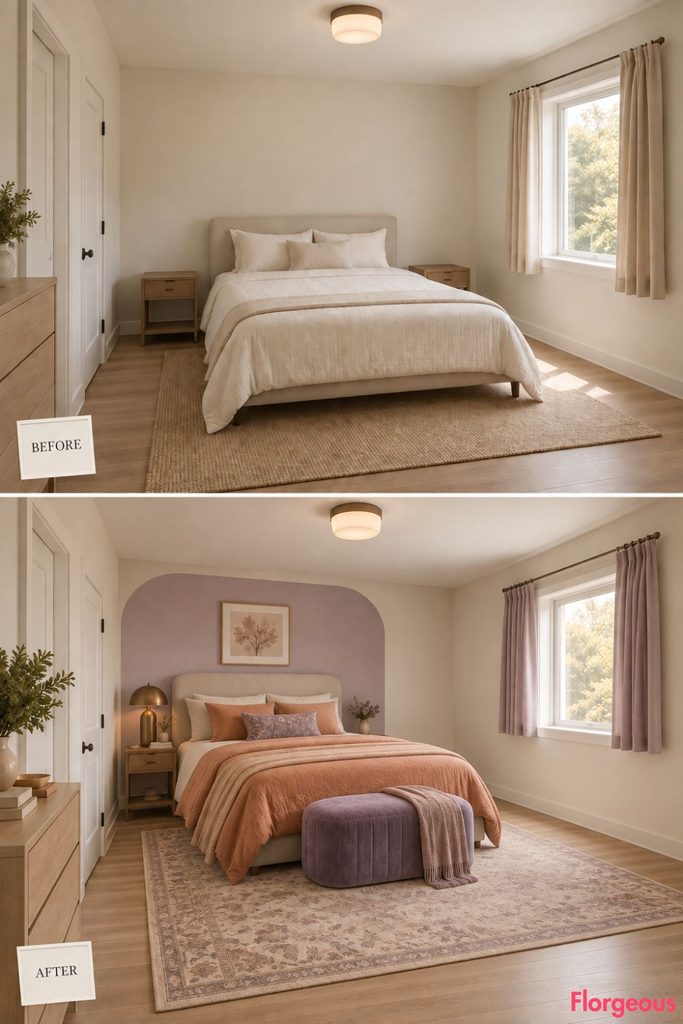
Before: The same plain bedroom remains unchanged, with the basic bed centered on the far wall, neutral surfaces, bare nightstands, short right-window curtains, and flat central lighting.
After: Move an upholstered bed rear-left beneath a compact wall corona with two short lavender fabric drops. Add apricot bedding, bronze braid, and a deep-violet buttoned ottoman while keeping the center route open.
3. Pair Black Papier-Mâché With Turquoise
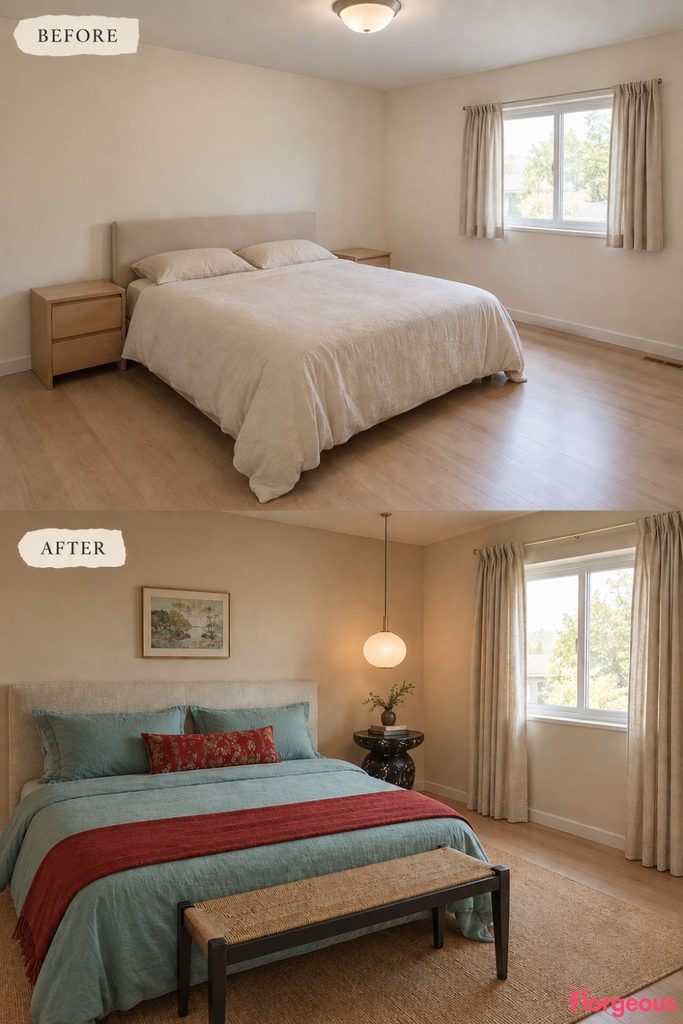
Before: The identical neutral bedroom begins with the centered basic bed, cream bedding, two empty nightstands, right-side window, plain floor, and generic ceiling fixture.
After: Shift the bed left and introduce one glossy black papier-mâché table with delicate mother-of-pearl decoration. Turquoise bedding, pale stone walls, and one cherry-red accent make the Victorian detail feel unexpectedly crisp.
4. Divide the Walls Into Saffron, Blue, and Burgundy
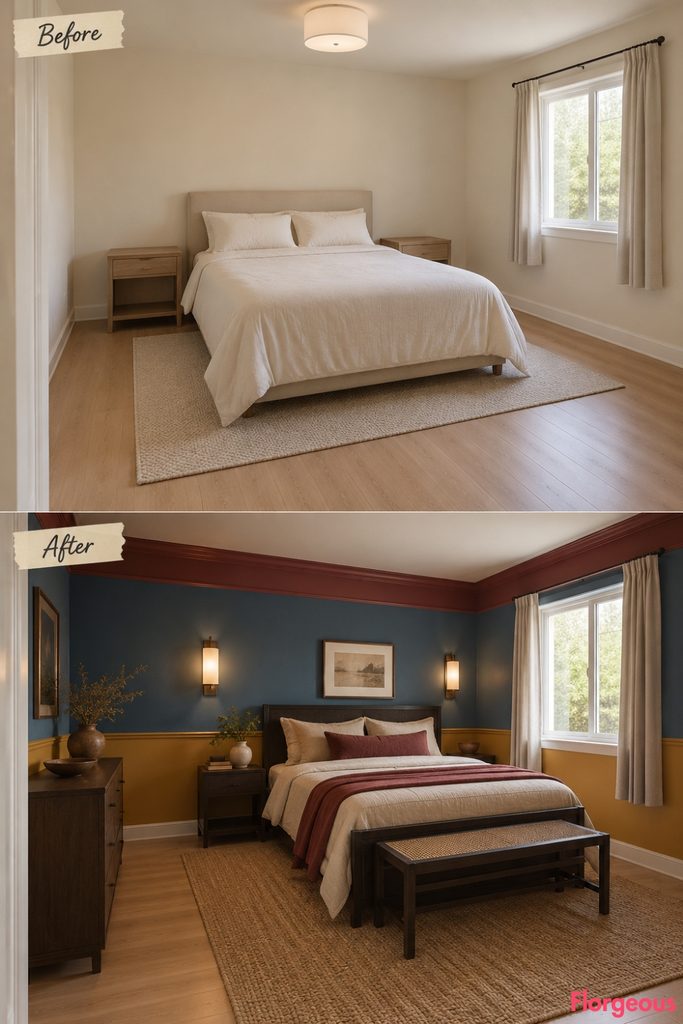
Before: Keep the fixed builder-grade bedroom exactly as before, including its off-white walls, centered bed, cream bedding, two bare nightstands, short curtains, and basic ceiling light.
After: Paint a saffron dado below a robin’s-egg-blue middle field, then add a narrow burgundy frieze near the ceiling. Use a restrained dark timber bed so the three-part wall composition remains the focal point.
5. Add a Raspberry and Sage Sewing Station
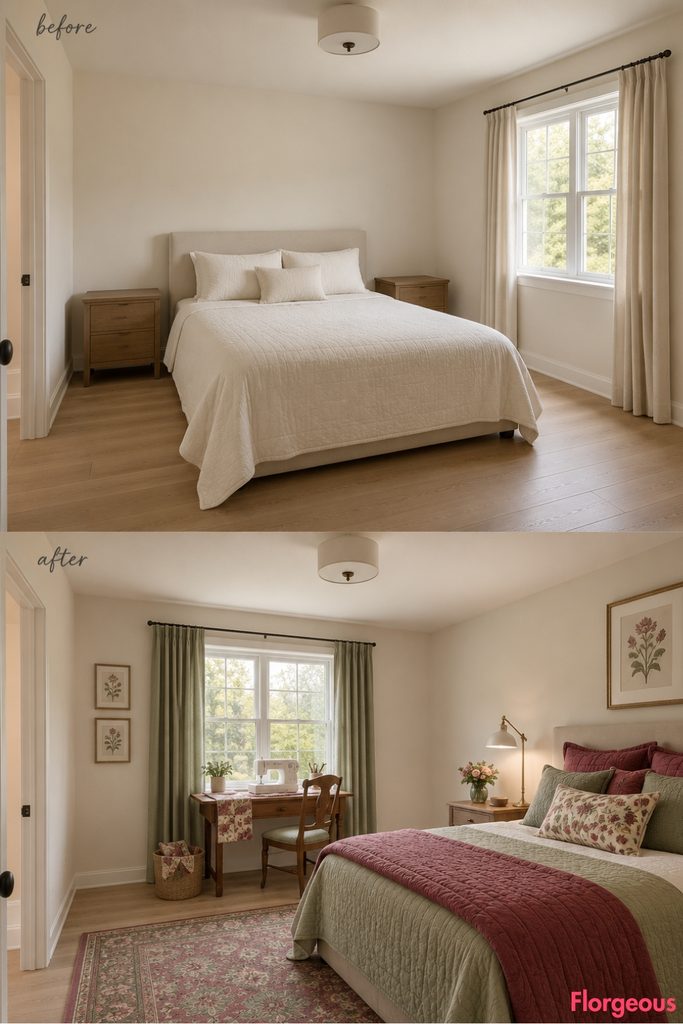
Before: The same neutral bedroom still contains the centered basic bed, cream bedding, bare nightstands, right-side window, plain timber floor, and minimal styling.
After: Shift the bed right and place a shallow walnut sewing workbox near the window with a chair tucked fully underneath. Use raspberry upholstery, sage bedding, flax linen, and a focused porcelain task lamp.
Designer Tip: Keep the workbox shallow enough that drawers never enter the walking route.
6. Make Powder-Blue Shutters the Main Feature
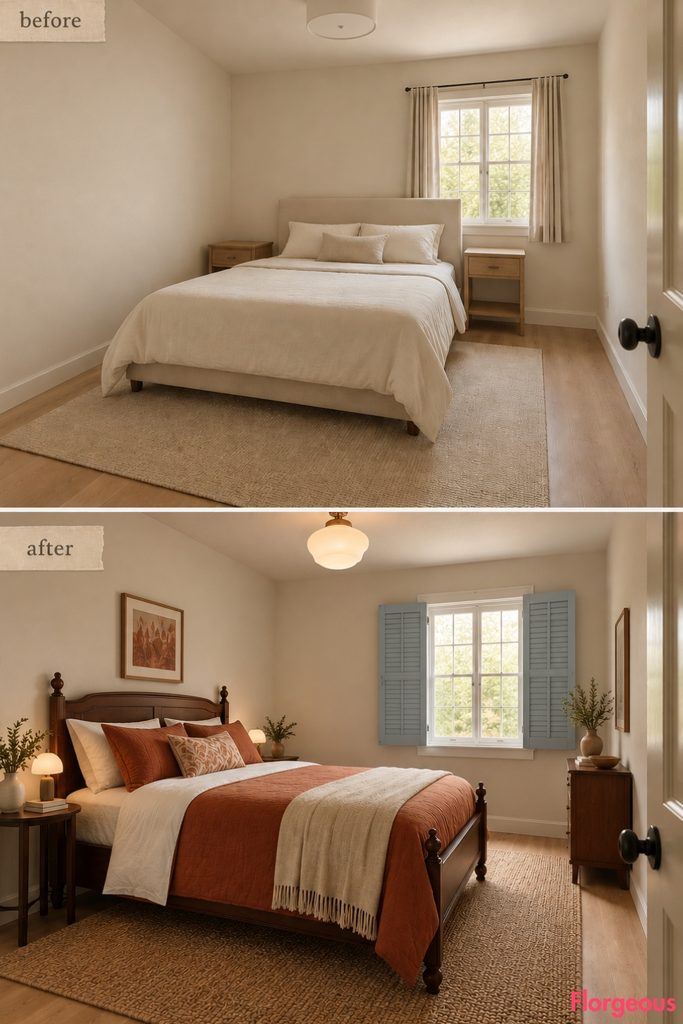
Before: Start again with the unchanged plain room, including its centered bed, cream bedding, bare nightstands, short right-window curtains, light timber flooring, and generic lighting.
After: Replace the short curtains with powder-blue painted interior shutters fitted inside the existing window. Move a dark cherry bed left, then add terracotta bedding, crisp white cotton, and a small milk-glass ceiling fixture.
7. Anchor the Room With a Cobalt Nursing Chair
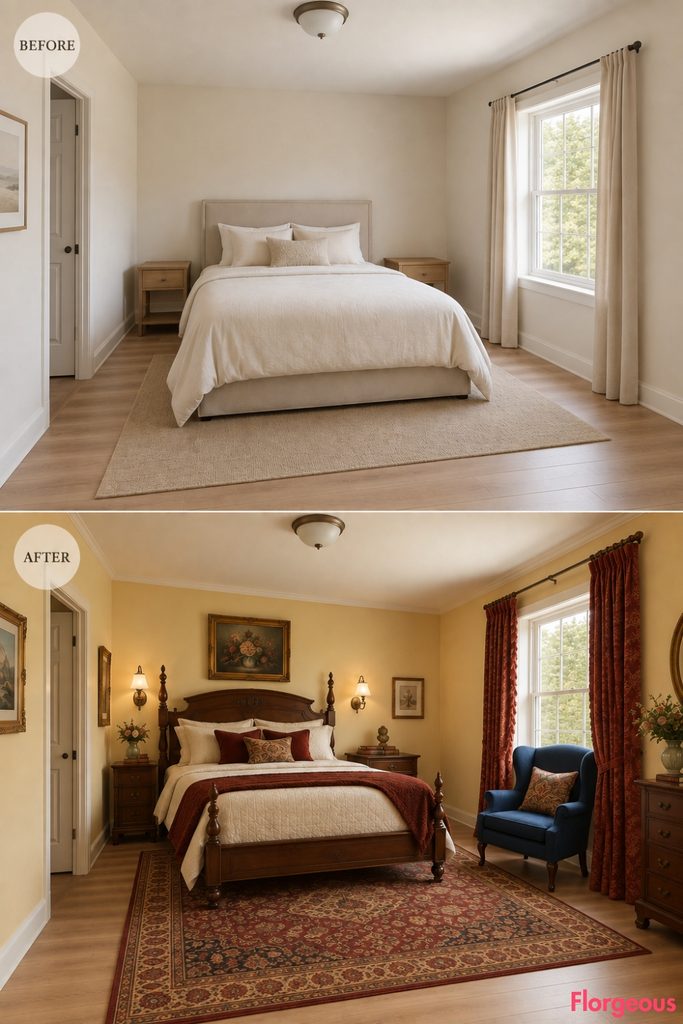
Before: The starting bedroom remains visually identical, with warm off-white walls, centered bed, neutral bedding, bare nightstands, short curtains, ordinary flooring, and minimal decor.
After: Place a low cobalt nursing chair near the foot of a rear-left walnut bed, with no side table beside it. Butter-yellow walls, oxblood wool, and ivory bedding create a bold four-color scheme.
8. Give the Bed a Mustard and Ink Valance
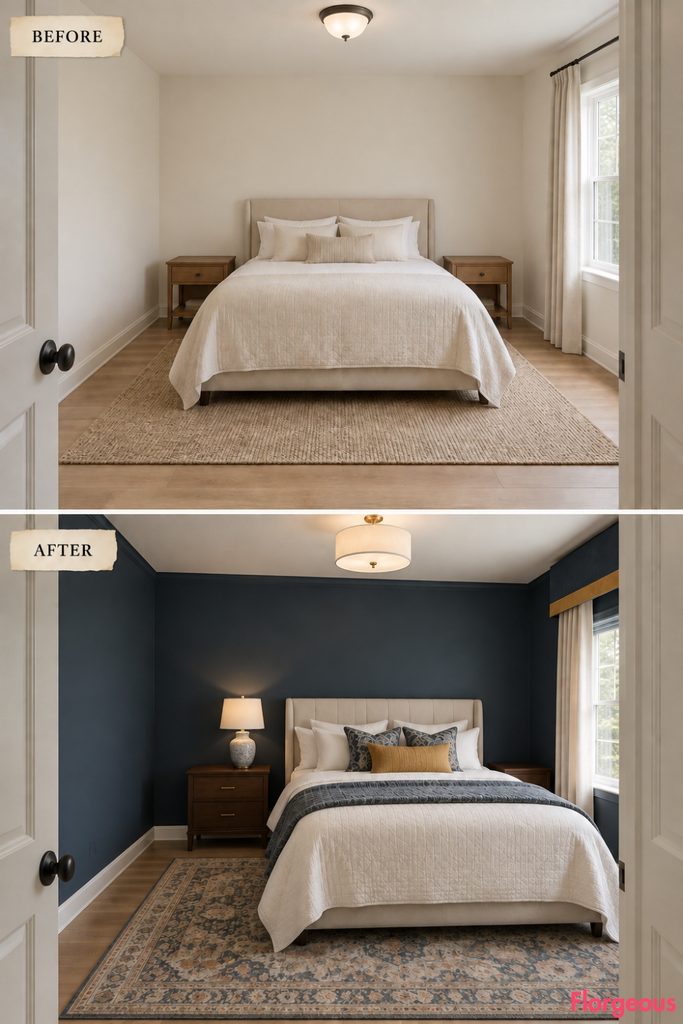
Before: Keep the same builder-grade setup, including the centered basic bed, cream bedding, two bare nightstands, short curtains, light floor, and generic central fixture.
After: Wrap the bed in a deep mustard-and-ink striped valance and keep the upper bedding ivory. Ink-blue walls and a narrow matching window pelmet move the visual weight down toward the floor.
9. Put an Emerald Portière at the Entry
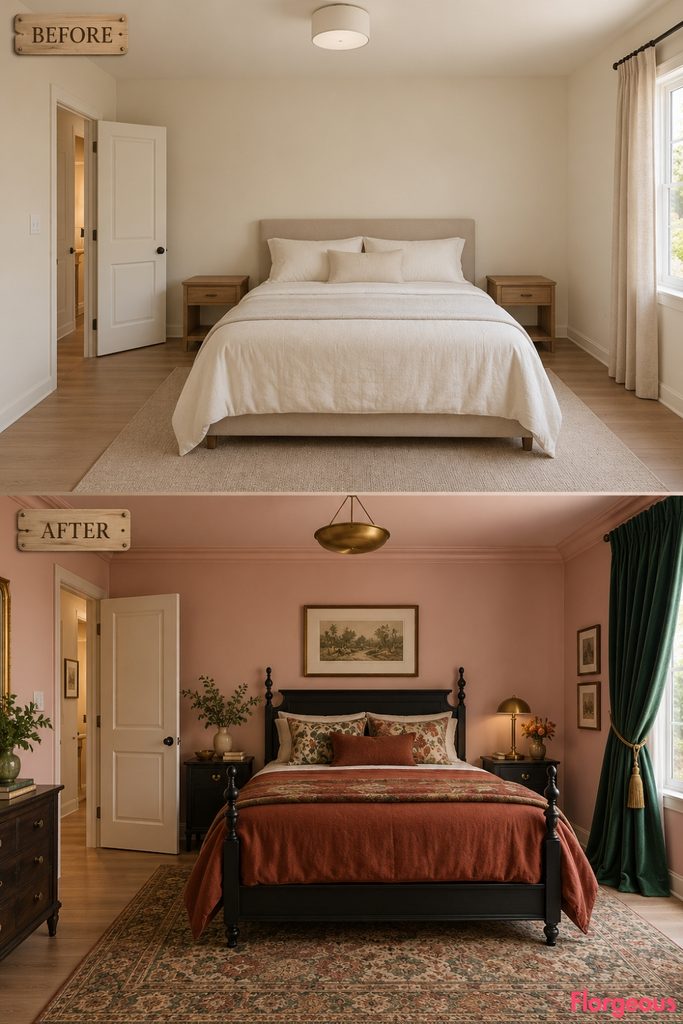
Before: The plain room stays unchanged with its centered bed, neutral walls, cream bedding, empty nightstands, right-side window, basic floor, and flat ceiling light.
After: Hang an emerald chenille portière from a brass rod inside the doorway and tie it fully aside. Pale-pink plaster, rust bedding, and blackened timber create a dramatic entry without narrowing circulation.
Common Mistake: Never let decorative doorway fabric reduce the usable opening.
10. Let a Crazy Quilt Carry Every Strong Color
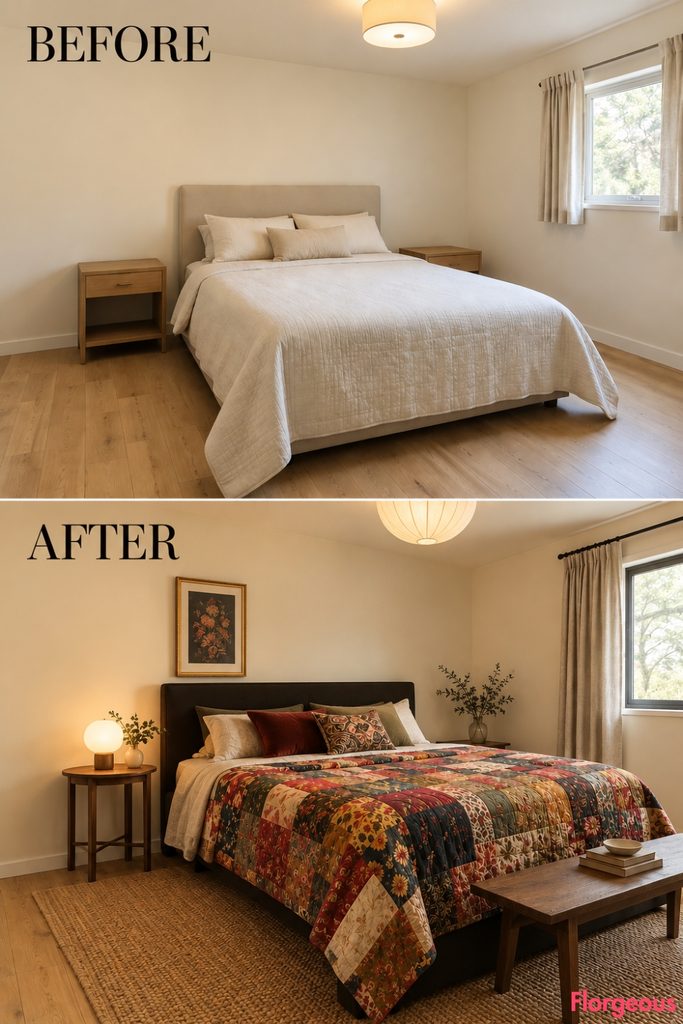
Before: Return to the fixed neutral room with its centered basic bed, cream bedding, bare nightstands, plain walls, short curtains, and ordinary ceiling fixture.
After: Keep the bed frame dark and simple, then cover it with a Victorian crazy quilt mixing ruby, cobalt, mustard, forest green, violet, and faded pink. Leave the rest of the room warm ivory.
11. Paint the Furniture Pale Aqua
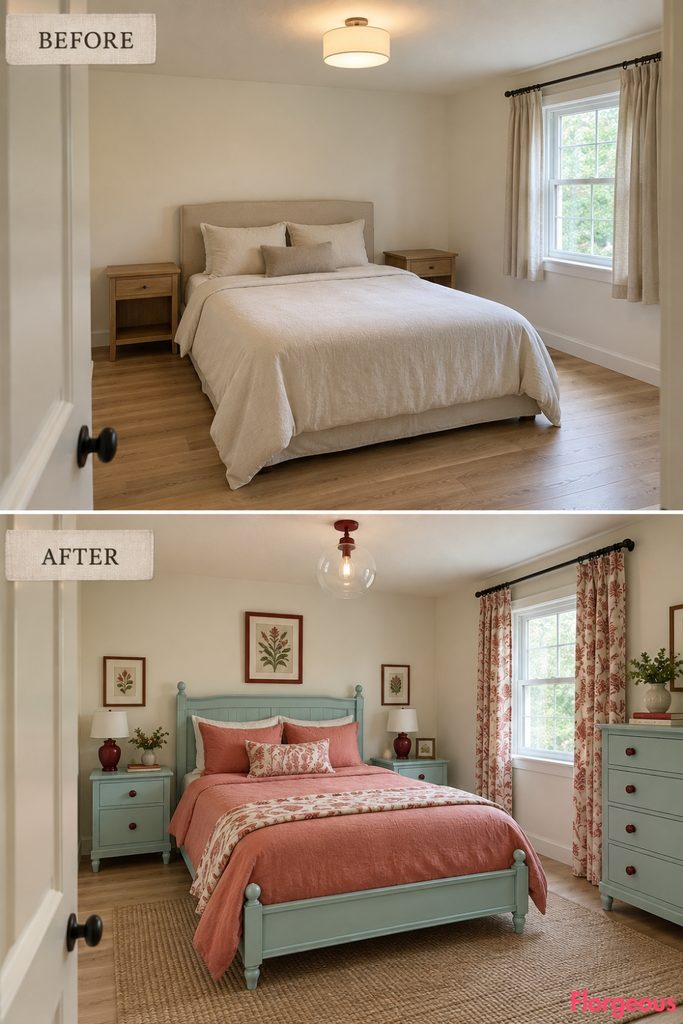
Before: The identical bedroom begins again with warm off-white walls, the centered basic bed, cream bedding, empty nightstands, short curtains, light flooring, and minimal styling.
After: Use a pale-aqua painted bed and compact chest with fine dark-red linework. Add coral bedding and a chocolate-bordered floor textile for a lighter Victorian scheme with no dark-wood dominance.
12. Make an Overmantel Mirror the Tallest Object
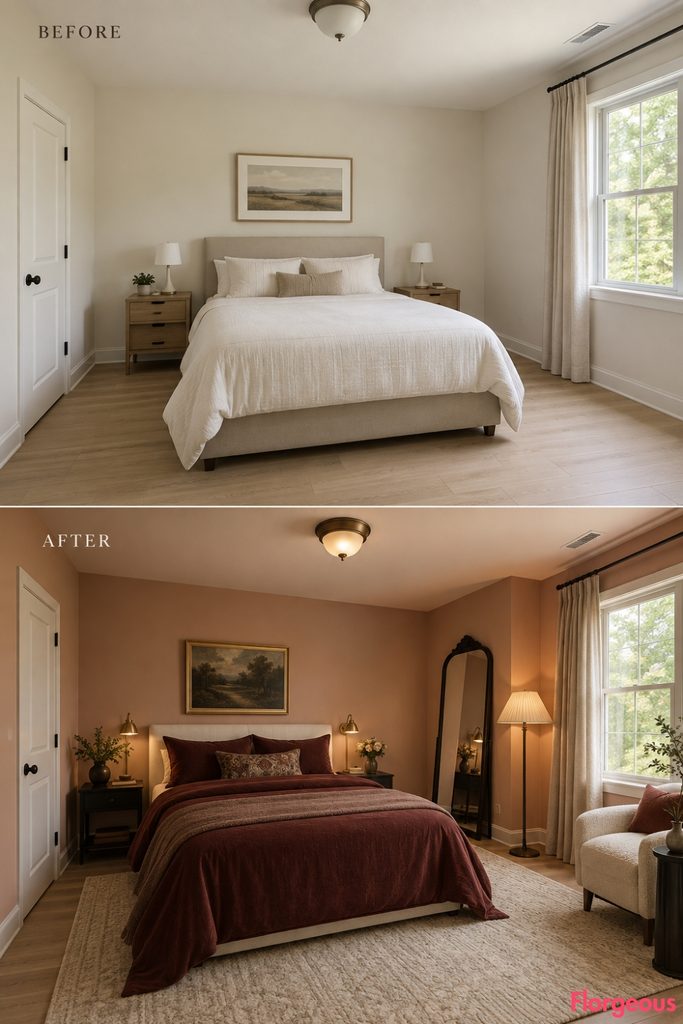
Before: Keep the base room unchanged, including its centered neutral bed, two bare nightstands, short curtains on the right, simple floor, and generic overhead light.
After: Position a tall black architectural mirror on a low console opposite a modest bed. Pale-peach walls reflect daylight, while oxblood bedding and a cream rug give the room visual weight.
13. Decorate With Plum, Turquoise, and Gold Passementerie
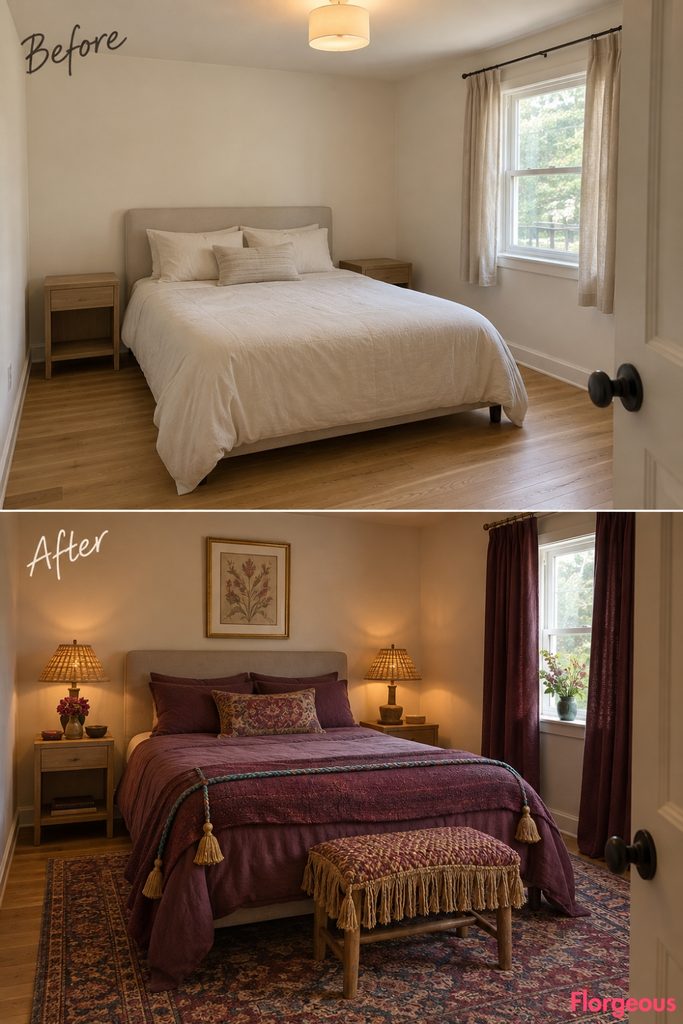
Before: The same lightly styled bedroom remains the starting point, with its plain off-white walls, centered bed, cream bedding, bare nightstands, short curtains, and generic light.
After: Keep the walls quiet and use trim as the decoration: plum cushions edged in turquoise cord, an old-gold tasselled stool, and one braided lampshade. Avoid adding another patterned surface.
14. Upholster the Bed Wall in Cobalt Stripes
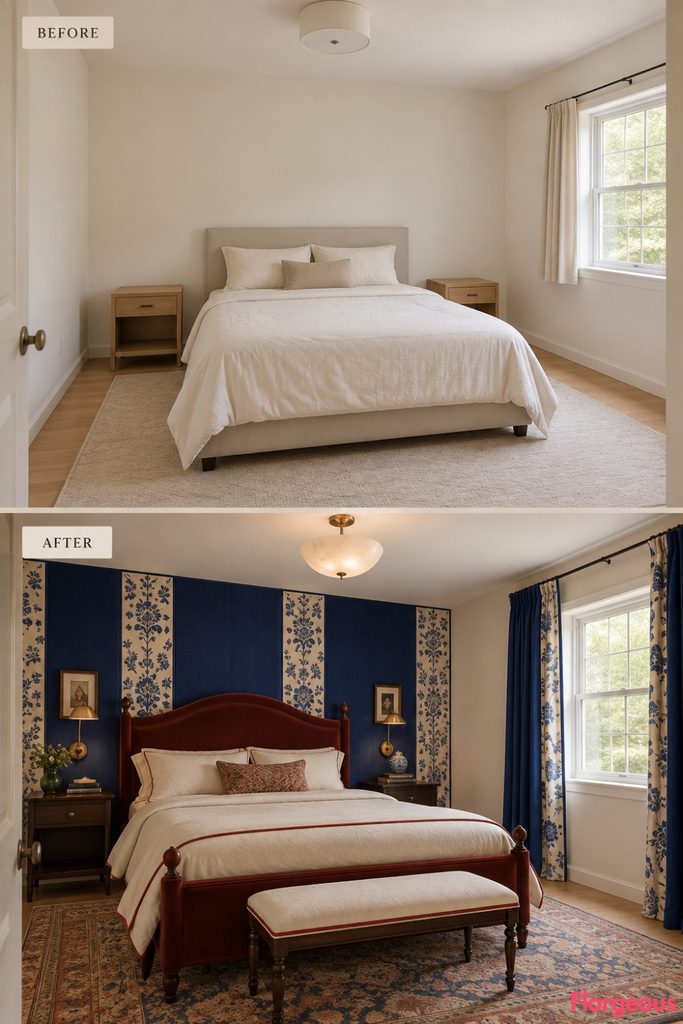
Before: Use the same builder-grade room with warm off-white walls, centered basic bed, cream bedding, two bare nightstands, short curtains, light flooring, and no strong feature.
After: Stretch matte cobalt-and-cream striped fabric across the entire bed wall. Pair it with a dark red-brown bed, ivory bedding, and thin tomato-red piping, leaving the wall free of artwork.
15. Give a Forest-Green Davenport Its Own Zone
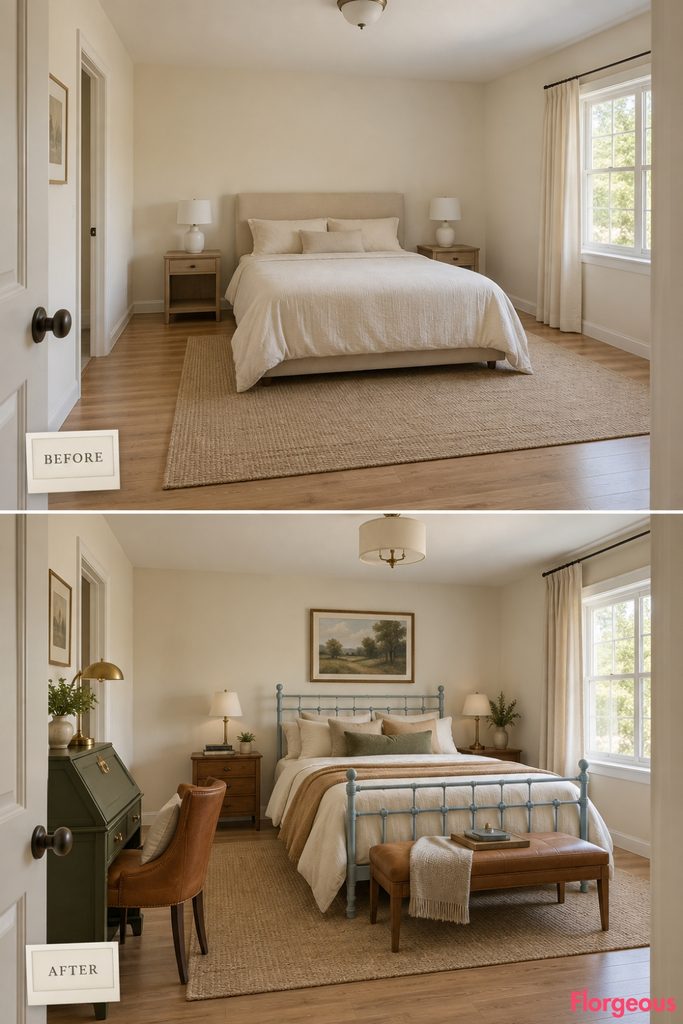
Before: The fixed room remains unchanged with its centered bed, plain walls, cream bedding, two empty nightstands, right-side window, light floor, and basic lighting.
After: Put a compact forest-green Davenport against the left solid wall and a pale-blue iron bed opposite. Camel leather, bone textiles, and one brass task lamp make the secondary function feel intentional.
16. Display Cranberry Quilts on a Dusty-Aqua Towel Horse
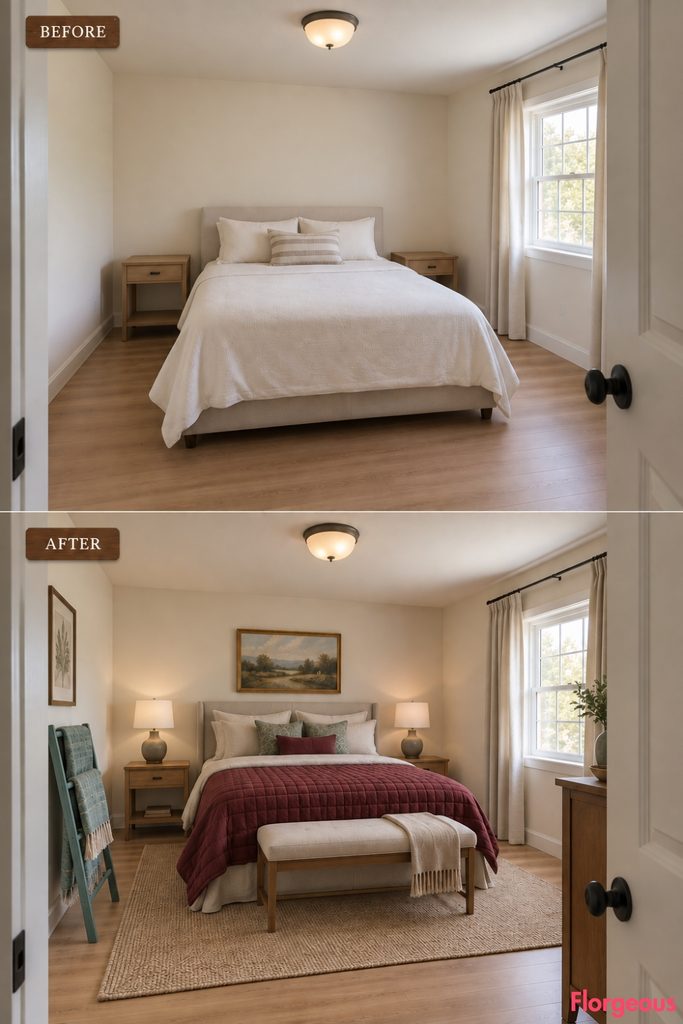
Before: Begin from the same neutral bedroom, keeping the centered bed, cream bedding, bare nightstands, short curtains, light timber flooring, and generic central light identical.
After: Move the bed deeper and place a turned towel horse against the left wall, painted dusty aqua and holding one cranberry quilt with biscuit linen. Leave the surrounding wall almost bare.
17. Build a Headboard Composition From Fabric Rosettes
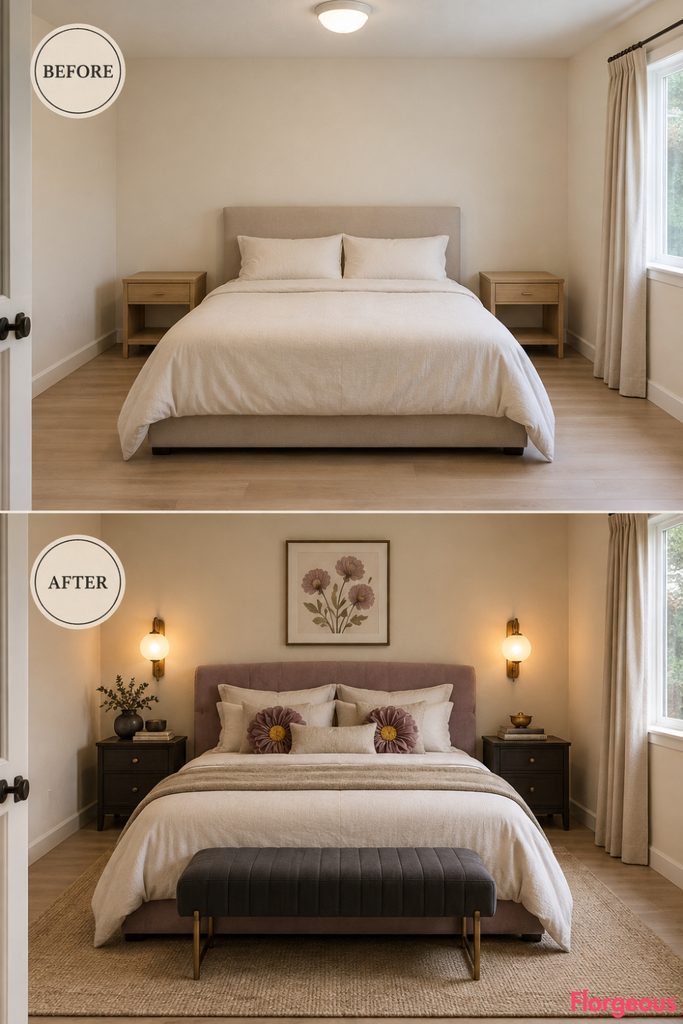
Before: The baseline remains the same simple bedroom with off-white walls, centered bed, neutral bedding, bare nightstands, short right-window curtains, and flat overhead lighting.
After: Arrange pleated mauve-gray fabric rosettes with tiny citron centers above a simple upholstered bed. Add charcoal furniture and cream bedding instead of artwork or wallpaper.
18. Make the Footboard More Important Than the Headboard
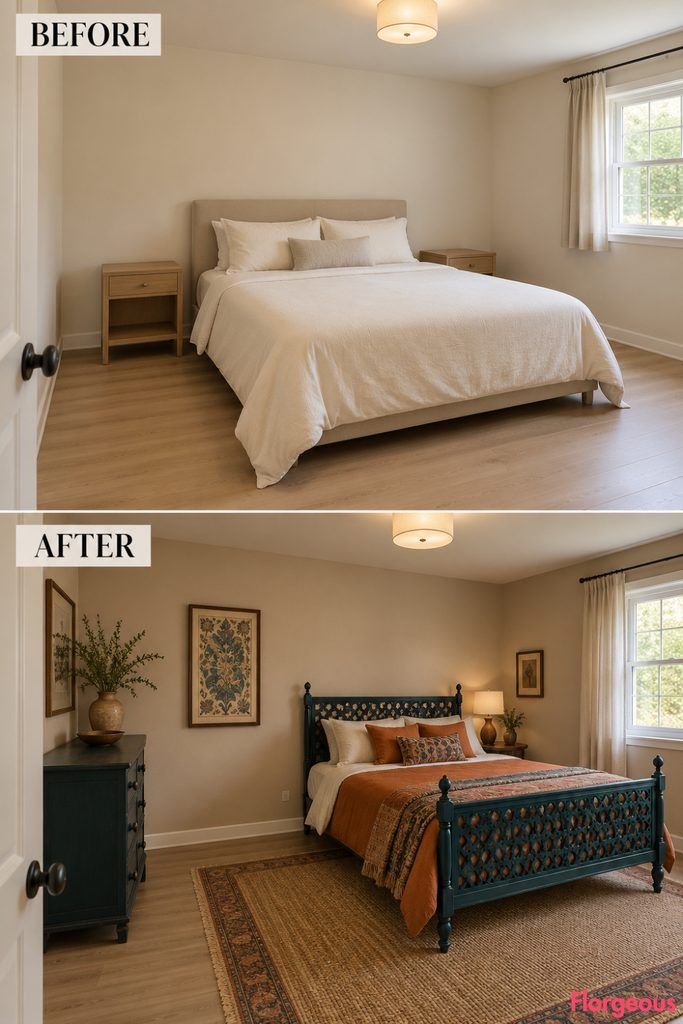
Before: Use the identical neutral setup with centered bed, cream bedding, off-white walls, bare nightstands, right-side window, light floor, and generic central light.
After: Choose a bed with a low headboard and a deep-teal pierced footboard. Burnt-orange bedding and oatmeal walls create contrast, while the wider viewpoint keeps the footboard from hiding the mattress.
19. Wrap Peacock Walls With an Embossed Leather Band
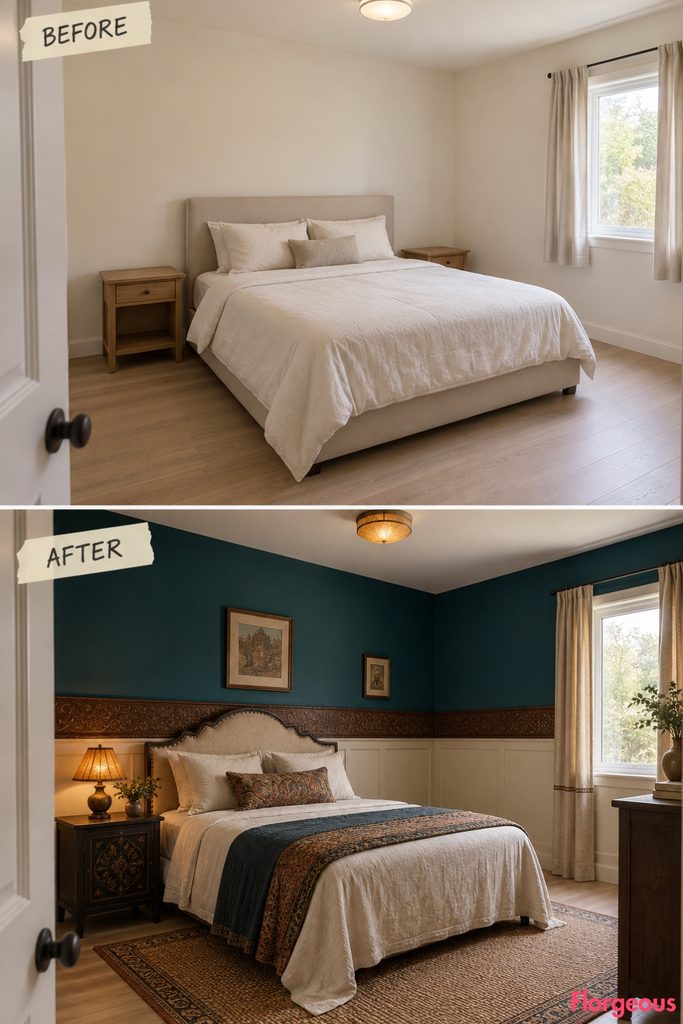
Before: The starting room remains unchanged, with neutral off-white walls, the centered basic bed, cream bedding, bare nightstands, short curtains, ordinary flooring, and minimal decor.
After: Run a narrow tobacco-brown embossed leather band around the room at chair-rail height. Paint the wall peacock blue above and bone below, then use pale linen on a medium timber bed.
20. Edge the Floor With Turquoise Ceramic Tile
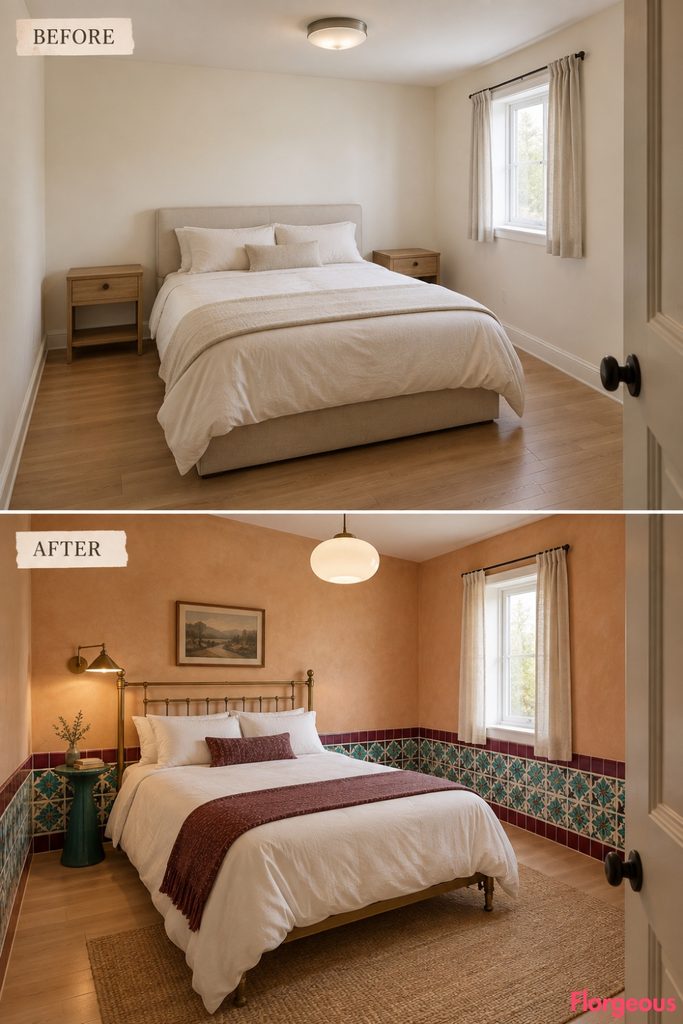
Before: Keep every baseline feature unchanged: warm off-white walls, centered bed, cream bedding, bare nightstands, short window curtains, light timber flooring, and generic overhead light.
After: Install a narrow glazed skirting band in turquoise, burgundy, and cream beneath pale-apricot plaster. Keep the bed simple and rear-left so the colored edge is visible along two walls.
Style Note: The tiles should read as an architectural border, not bathroom cladding.
21. Crown Primrose Walls With a Scarlet Frieze
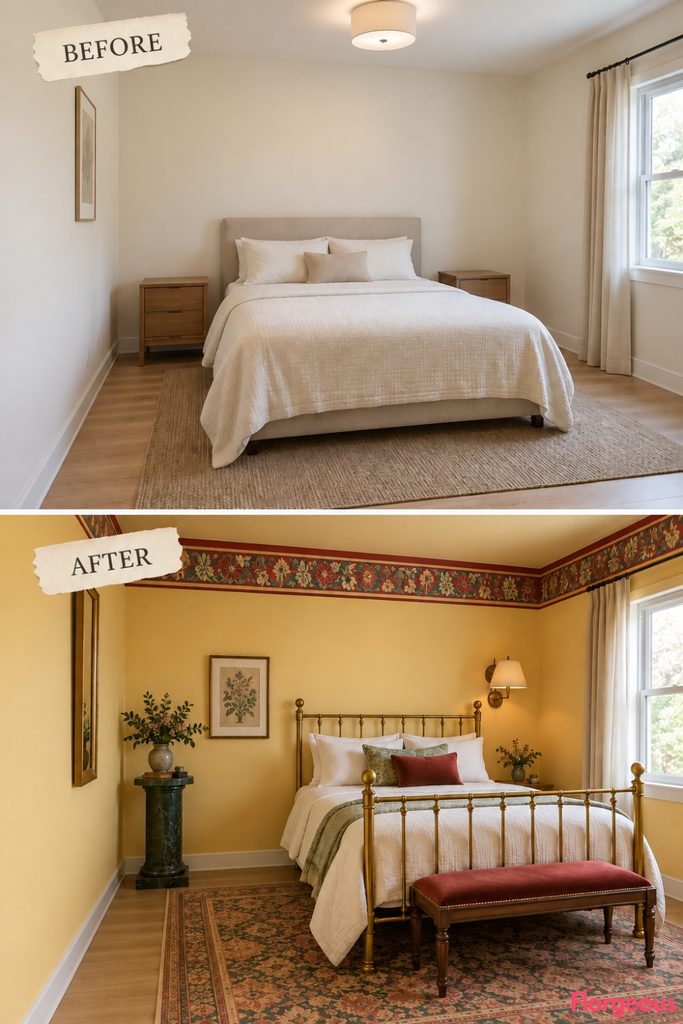
Before: Return to the same plain builder-grade bedroom, retaining its centered bed, cream bedding, bare bedside tables, short curtains, light flooring, and simple ceiling light.
After: Paint the room soft primrose and run a narrow scarlet-and-sea-green printed frieze just below the ceiling. Add a dark brass bed with crisp white bedding and one green pedestal.
22. Turn the Door Casing Olive Against Dusty Pink
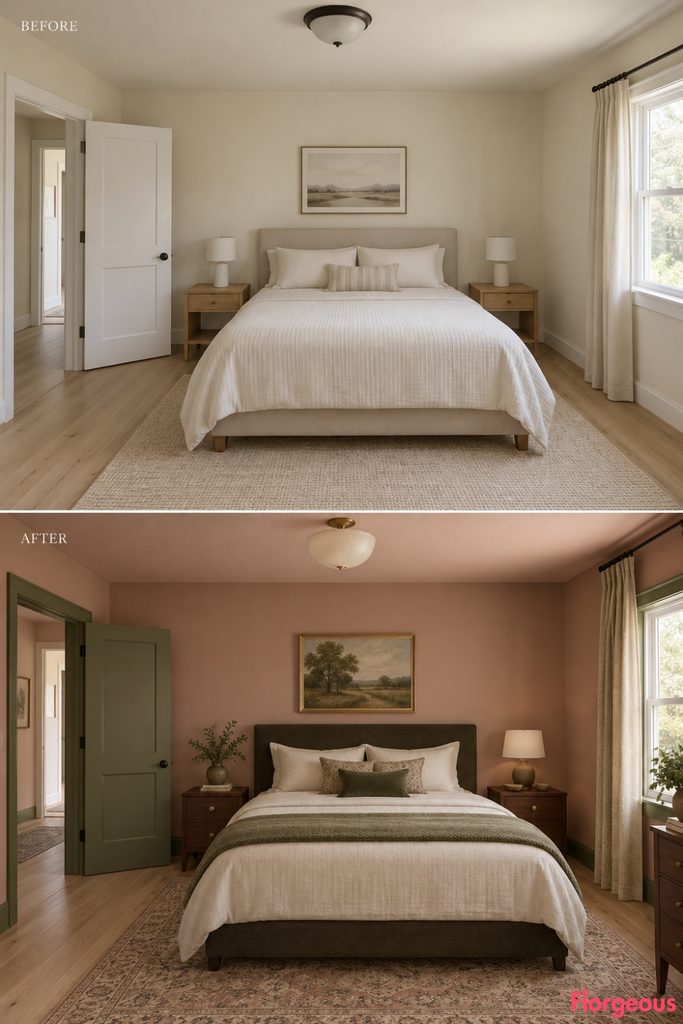
Before: The same neutral room stays intact with off-white walls, centered basic bed, cream bedding, two empty nightstands, right-side window, simple floor, and central ceiling fixture.
After: Make the doorway the focal point using deep-olive architraves, square corner blocks, and a shallow decorative overdoor panel against dusty-pink walls. Keep the bed dark and understated.
23. Replace Both Nightstands With One Aubergine Workbox
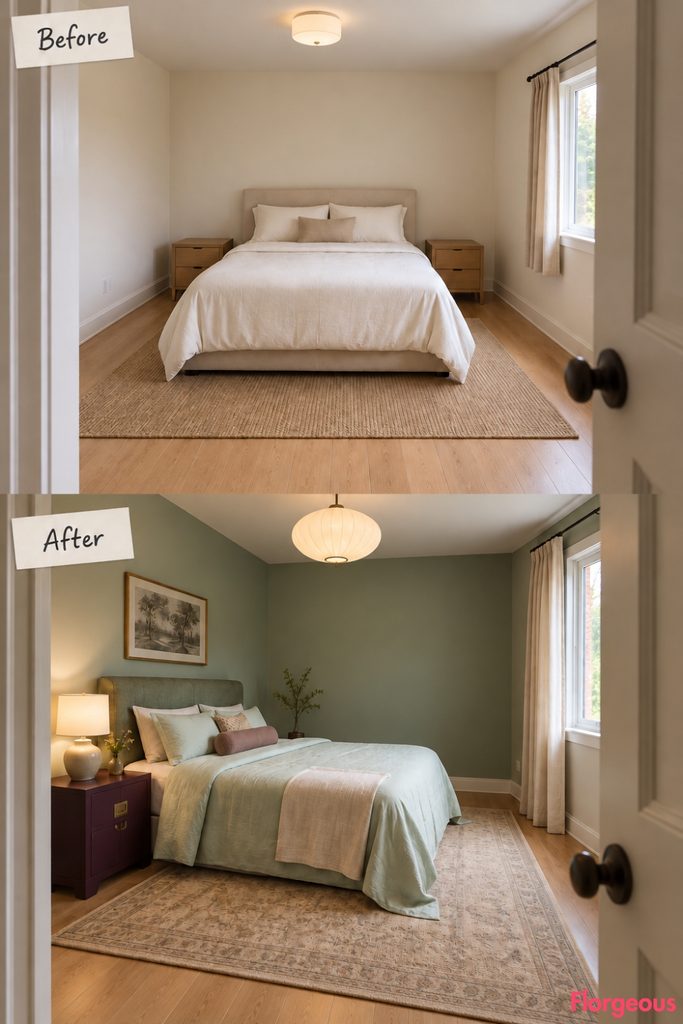
Before: Keep the starting bedroom identical, including the centered bed, cream bedding, two bare nightstands, short window curtains, off-white walls, light floor, and plain ceiling light.
After: Shift the bed left and replace both nightstands with a single aubergine pedestal workbox. Mint bedding and warm-white walls lighten the purple, while the opposite bedside remains intentionally empty.
Small Space Tip: Intentional asymmetry often looks calmer than two undersized furniture pieces.
24. Put Berlin Woolwork Against a Black Ground
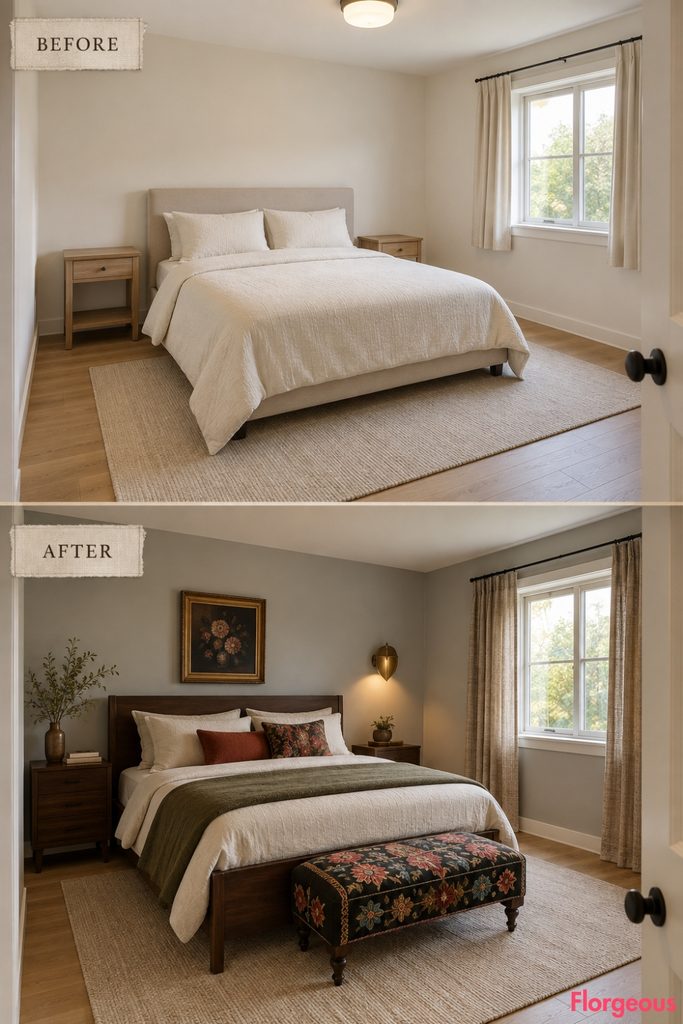
Before: The unchanged base room has neutral off-white walls, the centered basic bed, cream bedding, bare nightstands, short curtains, light timber flooring, and no decorative focal point.
After: Place a compact side-wall bench upholstered in black-ground Berlin woolwork using scarlet, emerald, cobalt, and gold. Keep the bed walnut, the walls pale gray, and the remaining textiles nearly plain.
25. Layer Icy-Blue Lace Behind Claret Drapes
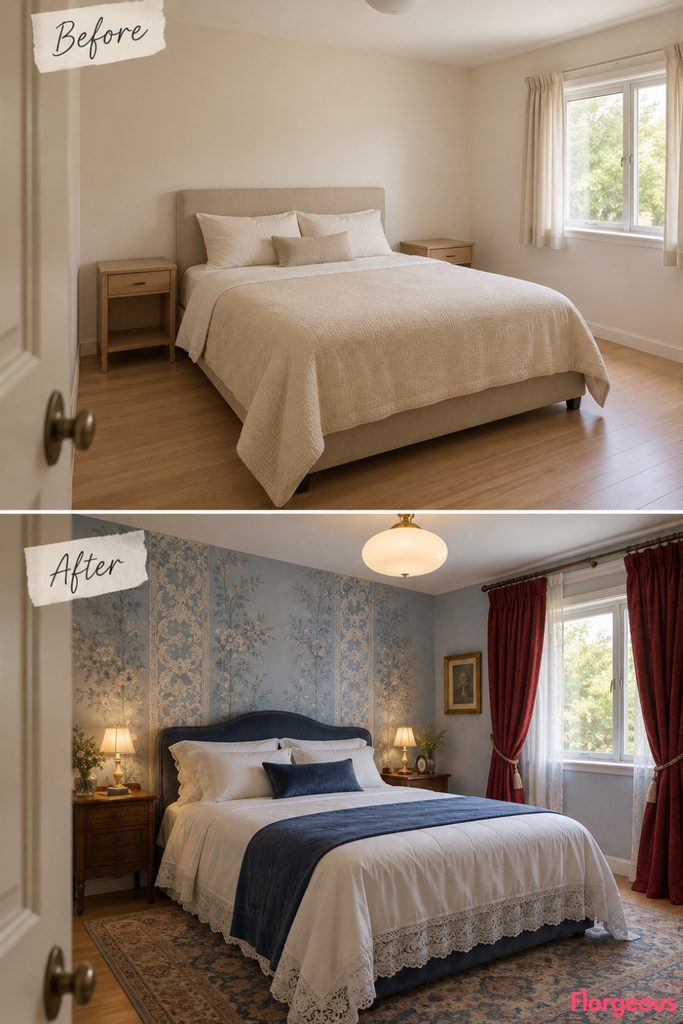
Before: Begin with the same warm off-white room, centered basic bed, cream bedding, bare nightstands, short right-window curtains, light floor, generic light, and minimal styling.
After: Move the dark timber bed away from the window and layer icy-blue machine-lace curtains behind restrained claret drapes. Keep the bedding white with one sapphire accent.
26. Add Lilac Around an Etched-Glass Overdoor
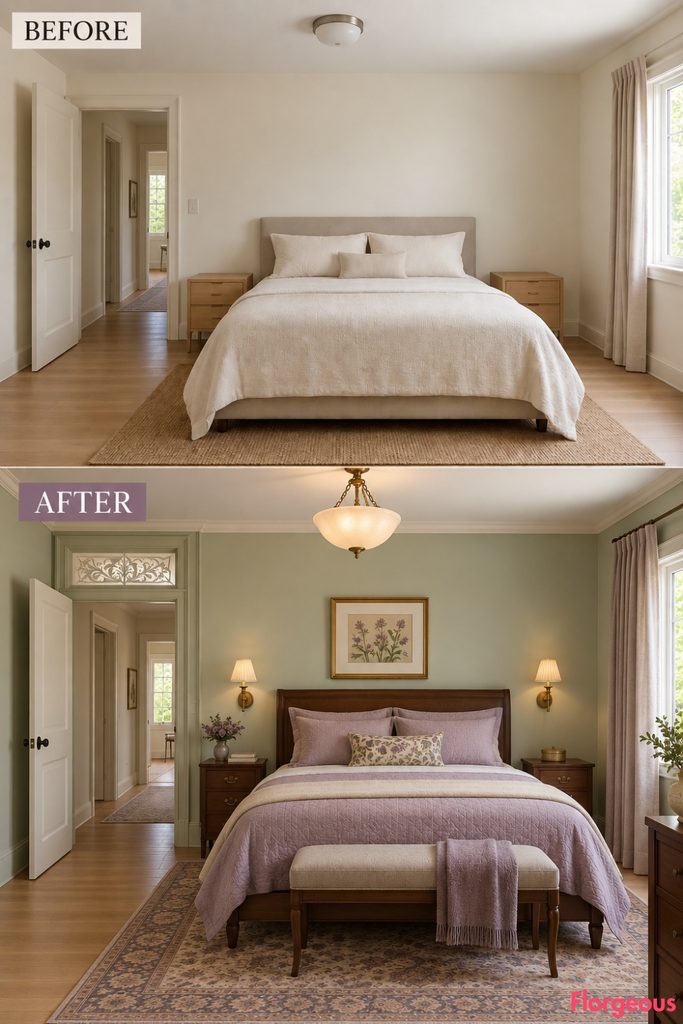
Before: The original bedroom remains exactly the same with off-white walls, centered bed, neutral bedding, bare nightstands, right-side window, basic timber floor, and flat overhead lighting.
After: Add a shallow etched-glass panel above the existing doorway with abstract vine linework. Pale-green walls, lilac bedding, medium walnut furniture, and antique-brass details keep the room delicate but colorful.
27. Put a Sapphire Ruched Bolster Against Blush
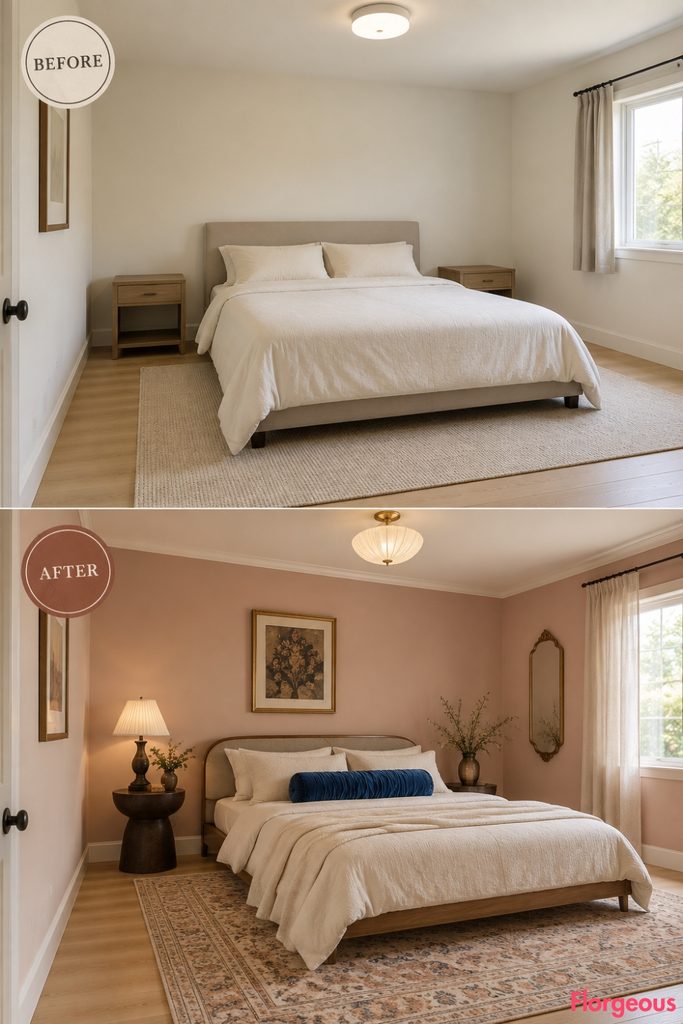
Before: Keep the fixed room intact: warm off-white walls, centered rectangular bed, cream bedding, two bare nightstands, short curtains, light timber flooring, and generic ceiling lighting.
After: Use one long sapphire silk bolster across a low upholstered bed against blush plaster. Cream sheets and dark-chocolate furniture sharpen the contrast without adding another patterned surface.
28. Draw a Black Textile-Braid Grid Across Terracotta
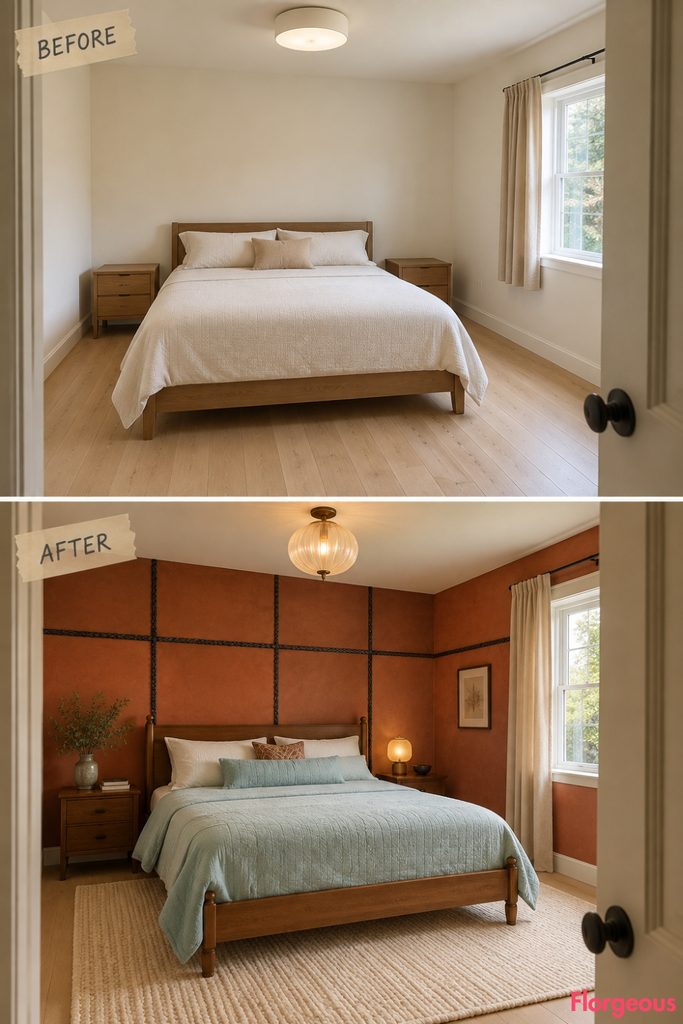
Before: The same builder-grade bedroom still contains the centered basic bed, cream bedding, two empty nightstands, short right-window curtains, plain off-white walls, light floor, and generic central light.
After: Apply narrow black textile braid in a restrained rectangular grid across a matte terracotta bed wall. Pale-aqua bedding cools the palette, while medium timber keeps the room grounded.
29. Finish With a Crimson and Slate Tester Rail
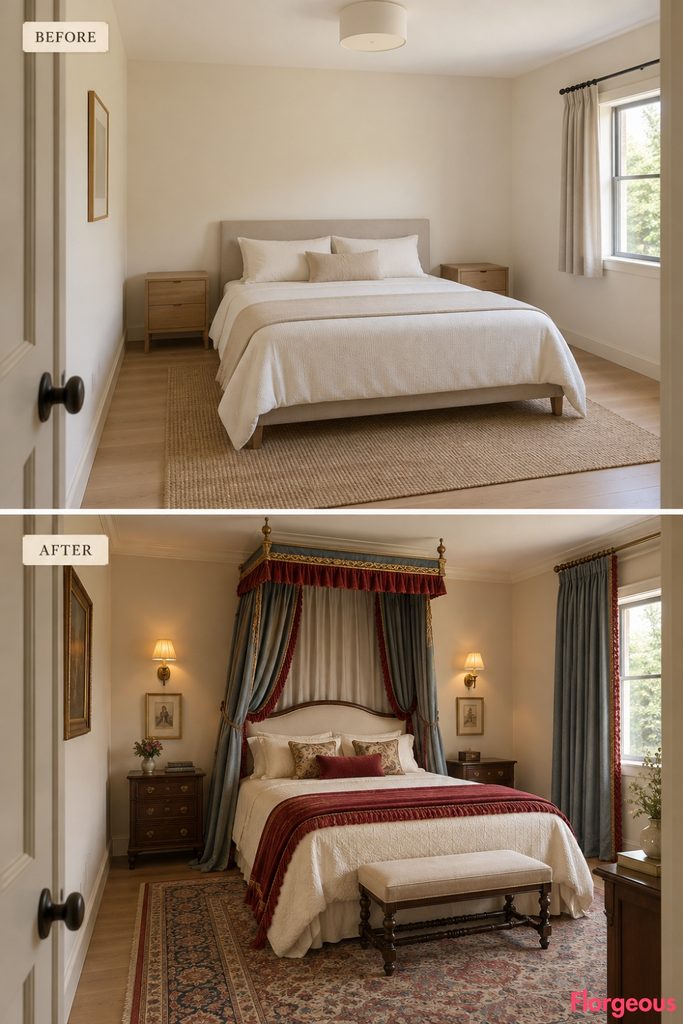
Before: The final makeover still begins with the exact same plain bedroom: warm off-white walls, centered basic bed, cream bedding, bare nightstands, short right-window curtains, light timber floor, generic ceiling light, and minimal styling.
After: Position the bed deeper and mount one narrow decorative rail high above it. Add pale-gold braid, short crimson fringe, and two slate-blue textile drops, leaving the ceiling completely open.
Choosing the Right Victorian Direction for Your Bedroom
The strongest Victorian-inspired bedrooms usually begin with one clear idea rather than a room full of antiques. Choose the feature that should carry the personality first. It might be an embossed wall treatment, an unusual piece of period furniture, a distinctive window treatment, decorative trim, colorful needlework, or an architectural detail around the doorway.
Then make the secondary decisions quieter. A multicolored crazy quilt needs calm walls. A vivid tile border works better with restrained furniture. A strong cobalt fabric wall does not need a gallery above it.
Before buying anything, map the route from the doorway to the bed and window. Protect those paths first, decide where the visual weight belongs, and then layer in color and texture. That is the easiest way to make a Victorian Bedroom feel distinctive, practical, and believable rather than crowded.