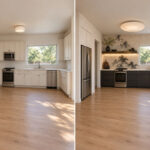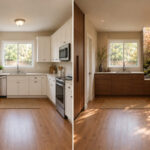

Our starting bedroom is deliberately ordinary: warm off-white walls, a basic cream bed, two bare nightstands, short plain curtains, ordinary flooring, a generic ceiling light, minimal styling, and soft natural daylight. It works, but nothing about it feels memorable.
Now take that exact room and reimagine it 27 different ways. These Southwestern Bedroom makeovers use desert architecture, crafted furniture, mineral surfaces, dry-climate colors, wool, clay, stone, wood, leather, and aged metal without falling into generic boho styling or costume-like Western decor.
More importantly, the transformations do not simply swap colors. Each one changes a different part of the design equation, from ceiling structure and circulation to furniture construction, storage, textiles, lighting, or an architectural focal point.
1. Give the Plain Room a Dramatic Viga-and-Latilla Ceiling

The first makeover moves the focal point completely overhead.
Before: The same warm off-white bedroom has a plain ceiling, basic cream bed, two bare nightstands, short curtains, ordinary floor, and generic lighting.
After: Add substantial rounded timber vigas crossed by slim latillas. Keep the lower half quiet with an oatmeal upholstered bed, one compact mesquite cabinet, chalky plaster, and tobacco wool accents.
Designer Tip: Let the beam rhythm do the decorating. Too many patterned textiles would compete with it.
2. Reorganize the Bedroom Around a Rounded Adobe Hearth

Here, the bed stops being the automatic architectural anchor.
Before: The identical base room has no focal point beyond its basic bed.
After: Form a compact rounded adobe-style hearth in one far corner and move a walnut bed to the adjacent wall. Add a narrow leather-topped bench, bone bedding, sienna wool, and plenty of exposed floor around the hearth.
3. Make a Rammed-Earth Wall Look Like Desert Geology

This room gets its personality from visible layers rather than applied pattern.
Before: Smooth neutral drywall makes the familiar starter bedroom feel flat.
After: Turn one long wall into striated rammed earth with bands of pale clay, gray, ochre and rust. Position a simple black timber bed perpendicular to it, with ivory linen and one walnut side table.
A low raking light makes the layers more dimensional after sunset.
4. Replace the Ordinary Floor With Burnished Earth

Instead of introducing Southwestern character through accessories, begin underneath everything.
Before: The same room has forgettable builder-grade flooring.
After: Use a seamless hand-burnished earthen floor in tobacco-clay. Contrast it with a pale ash bed, chalk-white walls, muted sage linen, and a narrow black timber dresser. Skip the rug so the floor remains the visual anchor.
Try this: Mineral-effect microcement can produce a similar mood with simpler maintenance.
5. Make a Mica-Faced Linen Cabinet the Hero Piece

Storage takes over as the room’s memorable detail.
Before: The same plain bedroom relies on anonymous matching furniture.
After: Place a tall walnut linen cabinet with translucent natural mica panels against one side wall. Pair it with an understated oatmeal bed, mushroom plaster, cream flooring, and a restrained amber blanket.
The mica catches daylight softly without becoming an illuminated cabinet.
6. Center the Room on a Rawhide-Laced Mesquite Bed

Furniture construction supplies nearly all the decoration here.
Before: The standard cream bed has no material identity.
After: Introduce a mesquite frame with taut rawhide head and foot panels secured by visible lacing. Add bone linen, deep brick wool, one compact plaster bedside table, and a narrow timber clothes chest opposite.
7. Use Horsehair Texture for a Tailored Ranch Bedroom

This is ranch influence without heavy cowboy imagery.
Before: The familiar neutral bedroom feels light and generic.
After: Use an espresso timber bed with a tightly tailored horsehair-style upholstered head panel. Add a slim cream drawer cabinet, a compact matching stool, putty-colored walls, tobacco linen, and gray wool underfoot.
A tiny bronze headboard light keeps the mood polished rather than rustic.
8. Run an Adobe Banco Along the Side Wall

A long banco gives the room a new function without becoming another storage wall.
Before: The same bedroom leaves one side wall empty and unresolved.
After: Build a continuous rounded plaster banco along that wall with a few firm wool cushions in muted ochre and charcoal. Move the mesquite bed toward the opposite side and use one small clay table instead of matching nightstands.
Small Space Tip: Keep the banco shallow enough to preserve a comfortable route between it and the bed.
9. Give a Storage Wall Woven Yucca Texture

Dry plant fiber becomes an architectural surface instead of a decorative accent.
Before: The same basic bedroom has no intentional storage treatment.
After: Install a low-to-medium height run of timber cabinets with tightly woven yucca-style fronts. Place a dark brown bed on the perpendicular wall, then use olive bedding, pale sand plaster, and one cream ceramic stool.
10. Pair Mesquite With Sand-Cast Aluminum

Southwestern materials can feel unexpectedly contemporary.
Before: The starter bedroom has little contrast between finishes.
After: Combine a chunky mesquite bed with a low sand-cast aluminum dresser whose matte granular surface feels almost geological. Use gypsum-white walls, smoke-gray bedding, and a single ochre wool throw.
Why it works: Warm irregular wood and cool cast metal create tension without relying on extra ornament.
11. Cool the Desert Palette With an Oxidized Zinc Chest

Not every Southwestern room needs to lean heavily into red and brown.
Before: The plain base room lacks patina or material age.
After: Add a long oxidized-zinc clothes chest along the side wall. Pair it with a pale oak bed, dusty eucalyptus linen, rust-brown wool, and warm ivory plaster.
A compact linen-shaded pendant provides a deliberately soft contrast to the weathered metal.
12. Wrap the Walls With One Continuous Mineral Horizon Band

Color becomes architecture in this version.
Before: The warm off-white walls of the standard room have no visual rhythm.
After: Brush a broad muted-ochre mineral band around every visible wall at a consistent height, leaving warm cream above and below it. Add a walnut bed, flax bedding, one black side table, and a pale stone-colored drawer chest.
13. Use a Flagstone Trail to Define the Entry Route

The floor now explains exactly how someone moves through the room.
Before: The same ordinary flooring does nothing to organize circulation.
After: Inlay a narrow irregular flagstone path into a pale mineral floor, running from the doorway toward a dressing area. Keep the warm oak bed well clear of the path, with cream linen and a compact sienna cabinet.
14. Replace Ordinary Nightstands With Tall Clay Columns

A simple change in bedside proportion makes this room read completely differently.
Before: Two standard nightstands flank the basic cream bed.
After: Use a dark juniper bed with two slender hand-finished earthen columns, each topped by a flat timber tray for practical bedside use. Chalk walls, cream linen, and deep green-black accents keep the composition restrained.
Common Mistake: Do not overcrowd the column tops. Their height and material are already enough of a statement.
15. Support a High Timber Shelf on Chunky Cottonwood Corbels

This room gets its character from craftsmanship above the headboard rather than a screen or alcove.
Before: The familiar bed wall is flat and empty.
After: Mount two substantial cottonwood corbels high on the wall to carry a shallow full-width timber shelf. Keep the bed low and cream, use dusty rose and charcoal textiles, and place a narrow blackened-iron cabinet on the side wall.
Small concealed lights above the shelf wash downward across the woodwork.
16. Turn the Room Into a High-Desert Field Station

This makeover is functional, dry, and intentionally utilitarian.
Before: The base bedroom’s matching pieces feel generic and slightly formal.
After: Replace them with a taut natural canvas bed on a timber frame, an enamel-coated bedside cabinet, a folding mesquite luggage stand, and dense charcoal wool bedding. Keep the walls warm chalk and the floor bare.
A practical clamp-style task light finishes the scheme.
17. Give the Walls a Pale Volcanic Texture

Instead of smooth plaster, this version uses a porous mineral finish.
Before: The same neutral walls appear flat and uniform.
After: Coat them in pale gray pumice-flecked plaster with tiny visible dark aggregates. Add a medium-brown timber bed, bone bedding, one muted mustard stool, and a low cream cabinet.
A narrow downward wall wash reveals the speckled surface without becoming the focal point itself.
18. Trade Sunset Colors for a Sonoran Monsoon Palette

This makeover changes the emotional temperature of the whole collection.
Before: The same cream bedroom feels neutral and visually flat.
After: Use storm blue-gray walls, a black walnut bed, wet-earth brown storage chest, muted creosote-green stool, and pale clay bedding accents. A diffuse ceiling bowl softens the darker colors.
Color Story: A little pale clay prevents the blue-gray and green from feeling too cool.
19. Give the Room a Dedicated Mesquite Worktable Zone

The second focal point becomes a place to work, sketch, or write.
Before: The standard bedroom leaves one long wall largely unused.
After: Run a shallow mesquite trestle worktable along that wall with one compact leather stool tucked beneath it. Move the cream upholstered bed deeper into the room and use chalk plaster, tobacco floorboards, and simple oatmeal linen.
20. Make Felted Wool Curtains the Soft Architecture

This transformation is built around mass and softness instead of masonry.
Before: Short plain curtains make the familiar window look undersized.
After: Replace them with full-height undyed felted-wool curtains extending well beyond the opening. Use an espresso bed, oat bedding, fog-gray walls, and a compact rust-colored ceramic cabinet.
A small floor uplight reveals the depth of the curtain folds.
21. Compose the Bed Wall With Handmade Clay Tube Sconces

Lighting becomes the room’s graphic gesture.
Before: The same blank wall is lit only by a generic overhead fixture.
After: Set a pale timber bed against soft cream plaster and mount three short clay cylinders at staggered positions, each casting light in a slightly different direction. Add terracotta-brown bedding and a blue-black cabinet.
22. Build a Dry-Stacked Fieldstone Luggage Wall

Stone becomes practical furniture instead of a bedside object.
Before: The plain side wall offers no destination for luggage or extra blankets.
After: Build a low dry-stacked fieldstone structure along that wall, wide enough for folded bedding and travel bags. Place a tobacco-stained timber bed opposite it, with cream linen and limestone-colored plaster.
One small shaded lamp rests on a properly level stone cap.
23. Leave Limewashed Adobe Bricks Visibly Imperfect

The construction itself becomes the texture.
Before: The starter bedroom uses perfectly smooth painted drywall.
After: Finish one wall in softly irregular adobe bricks coated in thin ivory limewash so the joints remain visible. Add a dark walnut bed, faded olive linen, a compact clay-colored chest, and a bare pale floor.
A small bronze ceiling light washes gently toward the masonry.
24. Bring in Territorial Character With an Iron-Strapped Wardrobe

One heavily constructed storage piece supplies the personality.
Before: The same neutral bedroom uses lightweight generic furniture.
After: Place a tall dark timber wardrobe on the side wall with broad flat blackened-iron straps across its doors. Balance it with a cream bed, dusty-red wool blanket, warm white walls, and a small timber stool tucked tight to the wardrobe.
Budget Version: Add removable flat iron-style strap hardware to an existing solid wood wardrobe.
25. Use a Hand-Thrown Terracotta Trough as the Main Evening Light

The lighting idea here is unlike a conventional pendant, sconce, or floor lamp.
Before: The same plain bedroom depends on a basic central ceiling fixture.
After: Mount a long shallow terracotta trough high on one wall with the light source hidden inside, reflecting warm illumination upward. Pair it with a low brown bed, bone linen, matte umber plaster, and a pale ash dresser.
26. Let a Charred-Juniper Clothes Press Dominate the Room

The storage furniture, not the bed, carries the visual weight.
Before: The ordinary room has no substantial handcrafted furniture.
After: Place a large freestanding charred-juniper clothes press against the widest side wall, with visible pegged construction and restrained asymmetrical doors. Use a simple sienna upholstered bed, chalk walls, and pale wool flooring.
A low parchment-shaded light softens the nearly black timber.
27. Finish With a Pale Gypsum Room and Sculptural Forged-Iron Bed

The last transformation ends on a completely different note: airy architecture paired with one dark linear object.
Before: The same builder-grade bedroom has a basic cream bed, two bare nightstands, neutral walls and no strong silhouette.
After: Coat the room in chalky pale gypsum and introduce a hand-forged iron bed with an irregular but restrained linear headboard inspired by dry desert branch forms, not literal imagery. Add one low mesquite drawer chest, off-white bedding, a muted saffron wool throw, and no rug.
Tiny shaded reading lights clip discreetly to the bed frame, leaving the pale walls untouched.
How to Choose the Southwestern Direction That Fits Your Bedroom
The strongest way to approach this style is to decide what will carry most of the character before buying accessories. In one room that might be a viga ceiling. In another it could be a rawhide bed, woven yucca cabinetry, a mineral wall treatment, heavy wool curtains, unusual ironwork, or simply a carefully controlled monsoon palette.
Once that hero element is established, let the supporting pieces become quieter. Rammed earth does not need another highly patterned wall. A charred-juniper clothes press benefits from a simple bed. Clay lighting looks more considered when nearby surfaces are calm.
Also consider how the room actually functions. Keep wardrobes accessible, maintain a clear route from the door to the bed, avoid placing chairs or storage pieces in circulation lanes, and judge large architectural additions from normal eye level before committing to them.
For a lower-cost makeover, color, curtains, bedding, lighting, hardware, and one strong piece of furniture can do plenty. Bigger renovations such as vigas, masonry, an adobe banco, earthen flooring, or a corner hearth make sense when construction work is already planned.
A successful Southwestern Bedroom should feel connected to the desert through material, light, craft, and color without looking like a themed set. Choose the direction that suits the architecture and lifestyle of the room first, then add only the details that strengthen that story.