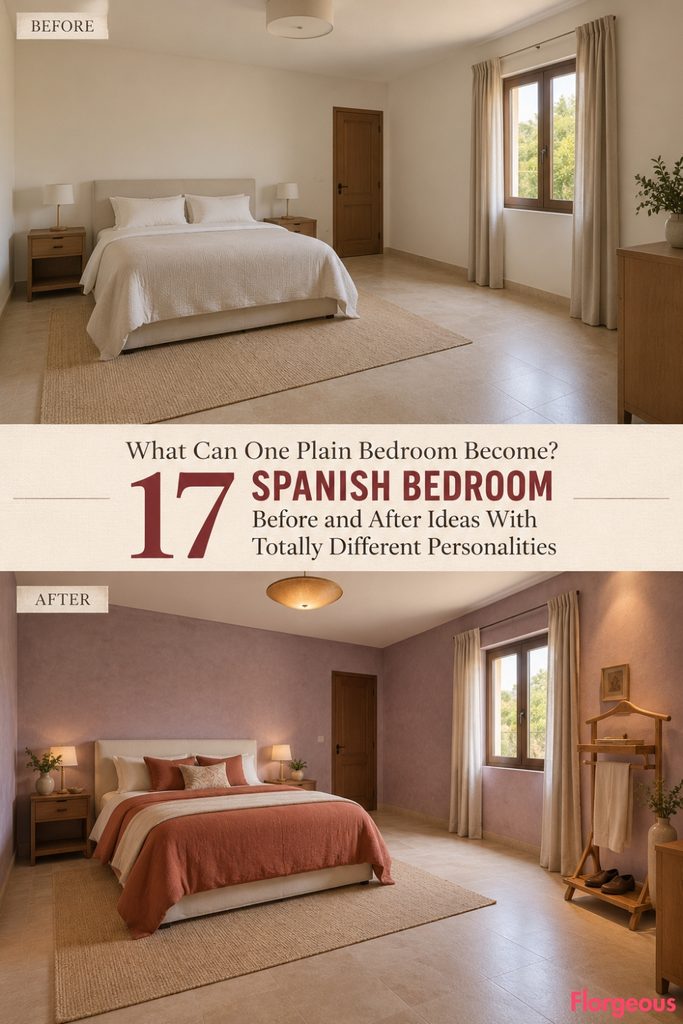
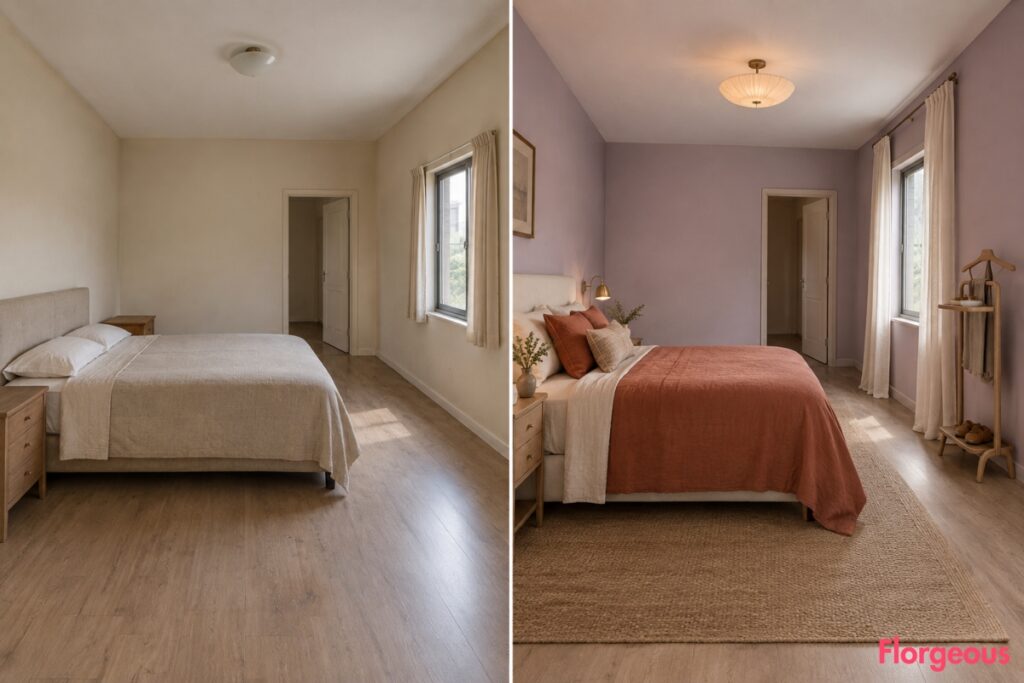
The starting bedroom is intentionally ordinary. Warm neutral walls, a basic rectangular bed, simple neutral bedding, two bare nightstands, short plain curtains, ordinary flooring, one generic ceiling light, empty surfaces, and soft natural daylight make it perfectly usable but visually forgettable.
That exact room remains the starting point for every makeover. The doorway, right-side window, ceiling height, floor footprint, and underlying architecture stay consistent. Within each before-and-after pair, the camera position, lens, framing, and daylight direction stay identical too.
What changes is the personality. These 17 Spanish Bedroom ideas move well beyond the familiar terracotta, dark-beam, and iron-bed formula. Some transformations rely on color, others on furniture traditions, ceramics, woodworking, textiles, storage, lighting, or one very specific architectural gesture.
The result is one plain bedroom behaving like 17 genuinely different interiors.
1. Turn the Existing Window Reveal Carmine and Leave the Rest Chalk White
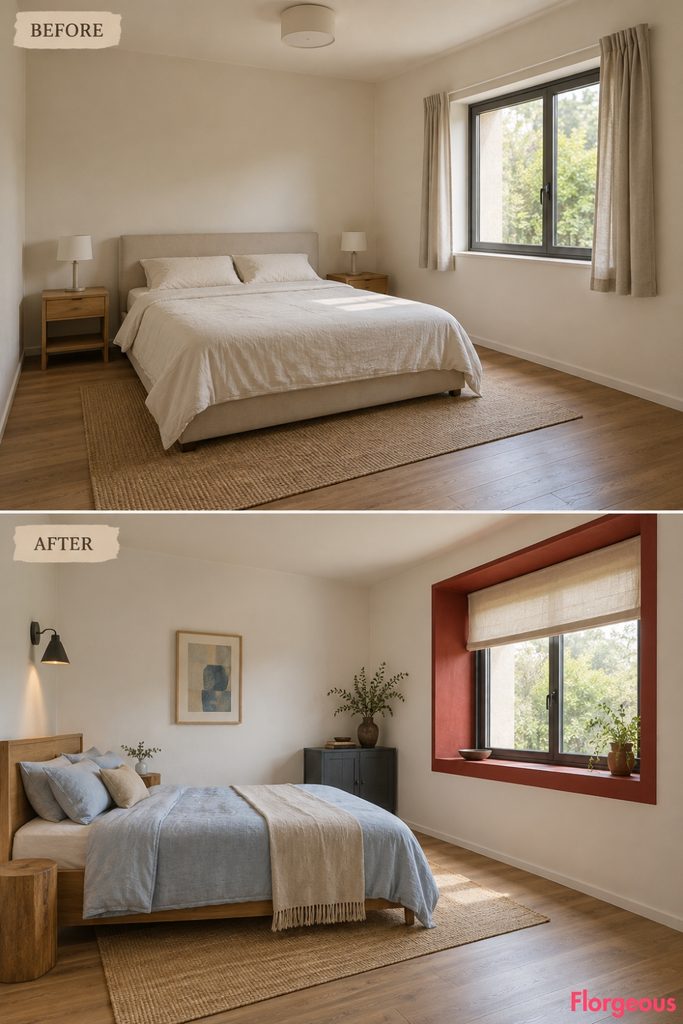
The first makeover is deliberately achievable.
Before: The same plain bedroom has warm neutral walls, short curtains, generic furniture, and no strong focal point.
After: Keep the walls chalk white, but paint only the deep inner reveal and sill of the existing window saturated carmine. Replace the short curtains with a simple linen roller shade.
Rotate a honey-oak bed toward the side wall and add powder-blue bedding with one compact charcoal cabinet.
The concentrated color makes the architecture feel intentional without adding tile, paneling, or permanent built-ins.
Style Note: Strong color often feels more sophisticated when it stops at a clear architectural boundary.
2. Make a Hand-Painted Timber Bed the Only Pattern in the Room
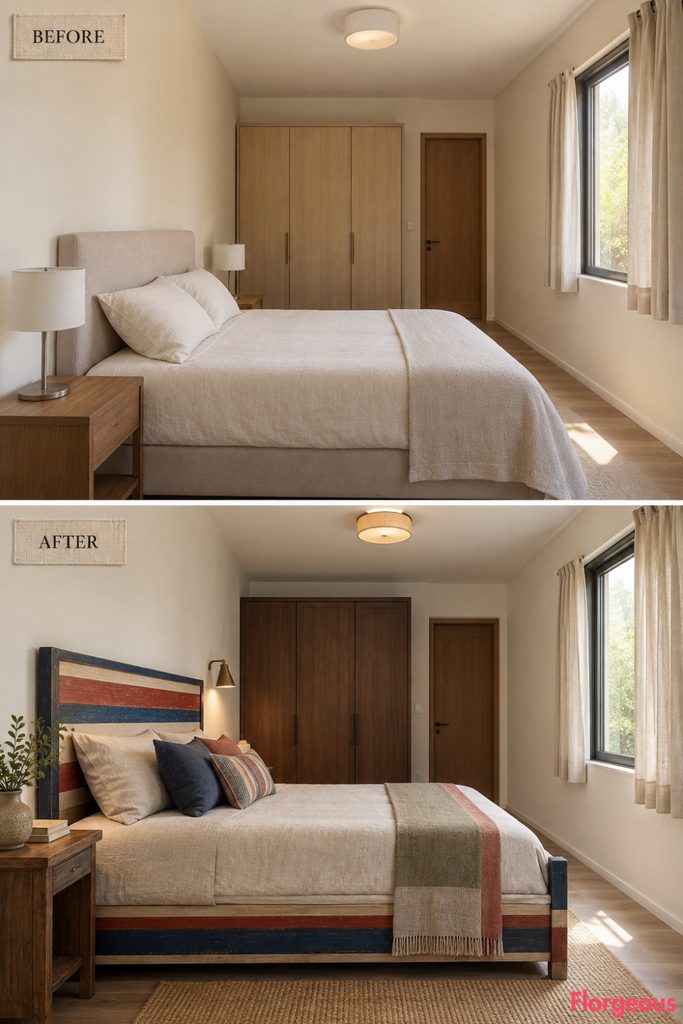
This version is renter-friendly because almost everything interesting can move with you.
Replace the generic bed with a simple timber frame painted in broad, restrained bands of indigo, faded tomato, moss, and ivory. Surround it with chalk walls, plain flax bedding, and a cocoa-brown wardrobe.
Skip patterned curtains, wallpaper, decorative floor tile, and busy cushions.
One patterned object has much more impact when the rest of the bedroom knows when to stop.
If painting a bed feels too permanent, the same approach works on a removable timber headboard.
3. Replace Both Nightstands With One Sillón Frailero-Inspired Chair
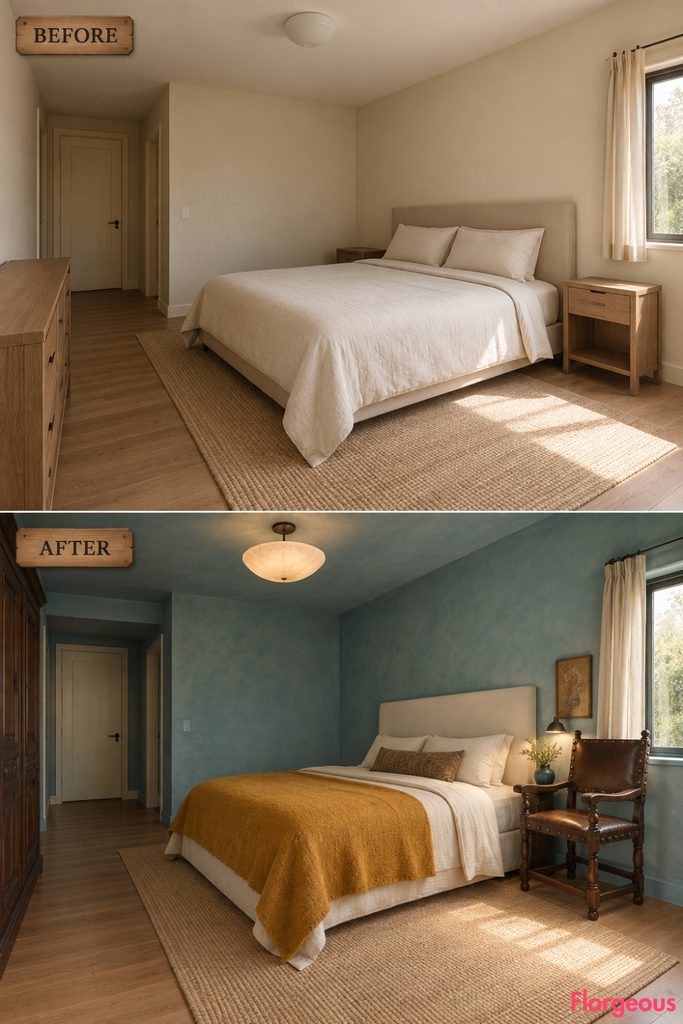
The furniture count drops dramatically here.
Move a cream upholstered bed closer to one wall and remove both ordinary nightstands. On the accessible side, place one substantial dark timber chair with a broad leather seat and back.
It works as real seating and can temporarily hold a book or folded clothing. Dusty turquoise walls and a saffron wool coverlet prevent the dark chair from making the room overly serious.
The opposite bedside area stays empty.
Why It Works: One useful furniture silhouette gives the room stronger identity than two generic matching tables.
4. Give the Empty Corner a Round Mesa Camilla-Inspired Dressing Table
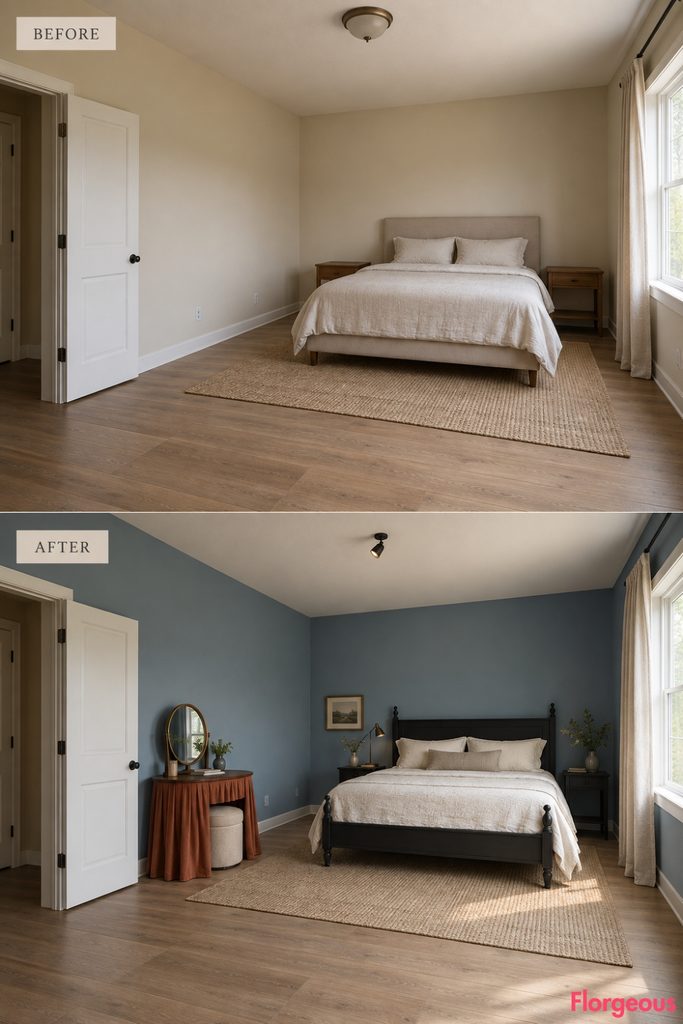
Most bedroom furniture is rectangular, so one round element can alter the composition immediately.
Move the bed deeper toward the rear-right side. In the open opposite corner, add a compact round dressing table with a tailored paprika fabric skirt, dark timber top, small mirror, and stool that tucks fully underneath.
Use dusty blue walls, an ebonized bed, and uncomplicated ivory bedding.
For a smaller room, keep the table around dressing-table scale rather than using a dining-size version.
5. Turn an Empty Wall Into a Bargueño-Inspired Writing Station
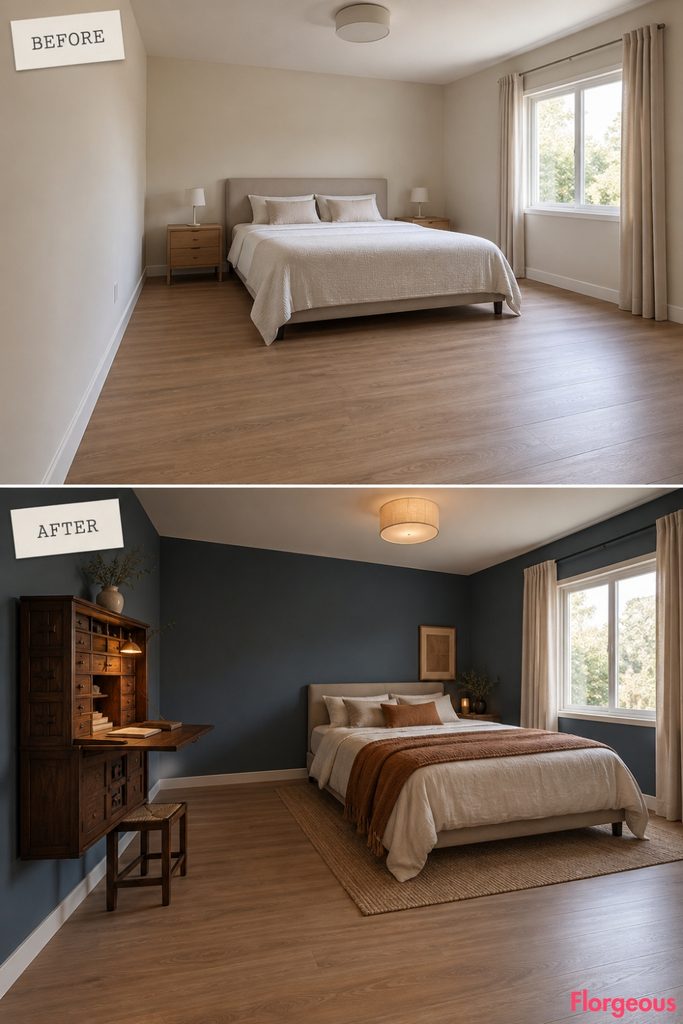
Now the makeover solves a practical problem.
Shift the bed toward the window side and place a compact walnut cabinet against the opposite wall. Its front folds down into a small work surface, while shallow internal compartments organize stationery, chargers, and personal items.
Smoky ink-blue walls, parchment bedding, and cinnamon wool give the room depth without competing with the detailed furniture.
A small shielded task light belongs inside the writing zone rather than beside the bed.
Budget Version: A secondhand secretary desk with internal cubbies can reproduce the spatial idea without requiring a collectible Spanish cabinet.
6. Run a Sparse Manises-Inspired Ceramic Gallery Along One Wall
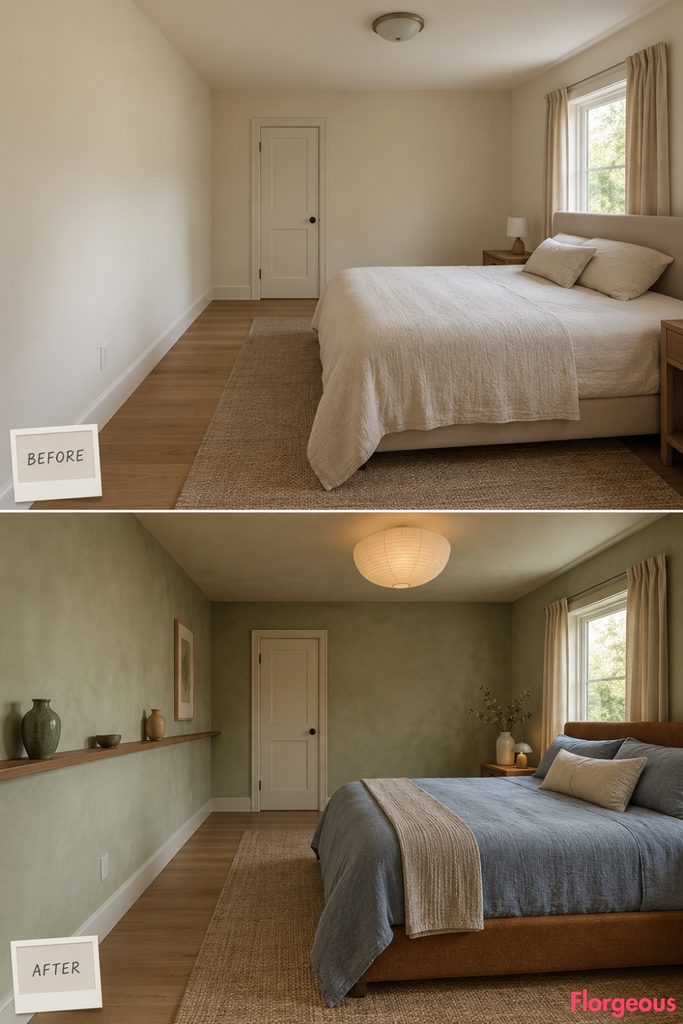
Ceramic does not have to mean a tiled floor or backsplash.
Mount one narrow timber display rail along the long wall and place only a handful of shallow glazed pieces across it, leaving wide gaps. The negative space is just as important as the ceramics.
Across the room, use pistachio plaster, a cinnamon upholstered bed, and washed-blue cotton bedding.
Picture ledges make this idea easy to recreate without permanent construction.
Common Mistake: Do not repeat the ceramic colors across every cushion, lamp, curtain, and rug. Let the display remain the decorative concentration.
7. Let One Taracea-Inspired Mirror Carry the Intricate Woodwork
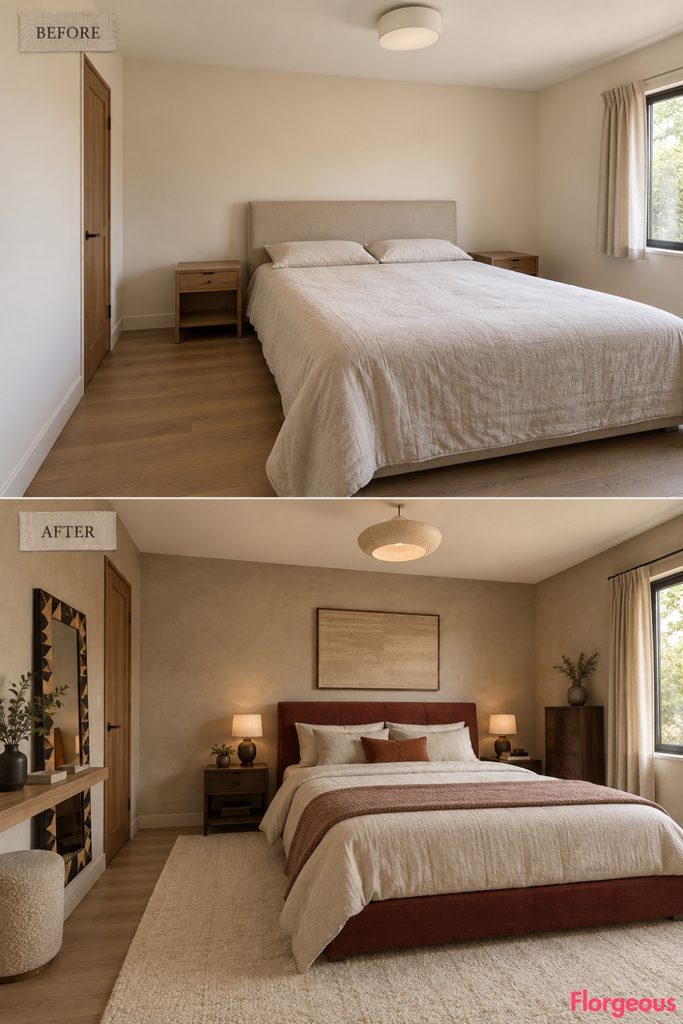
Intricate craft becomes easier to live with when its scale is controlled.
Use warm mushroom plaster and an oxblood upholstered bed placed slightly right of center. On the open left wall, add a narrow dressing ledge beneath one tall mirror framed with precise geometric marquetry.
Keep the remaining furniture plain: flax bedding, one dark oak clothes chest, and an ivory wool floor covering.
A small inlaid mirror or box can provide the same richness if a large custom piece is outside the budget.
8. Use a Dark Lyre-Leg Dressing Table Against Soft Gray-Green Plaster
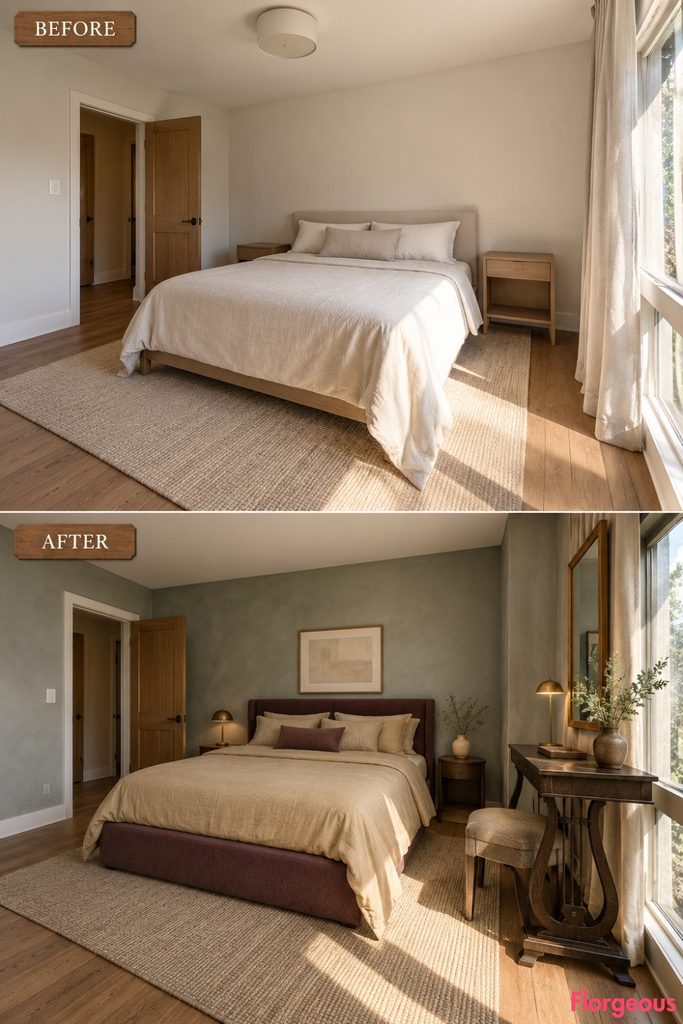
The bedroom gets its character from one furniture profile rather than a decorative surface.
Place a narrow dark timber dressing table with curved lyre-like supports near the window. Add a simple rectangular mirror and a stool that disappears underneath.
Across the room, move a plum upholstered bed deeper against the opposite wall and use pale ochre linen.
Because the table is freestanding, this concept works without changing the architecture. Leave at least comfortable stool clearance before committing to the layout.
9. Float a Row of Painted Valencian-Inspired Clay Panels Near the Ceiling
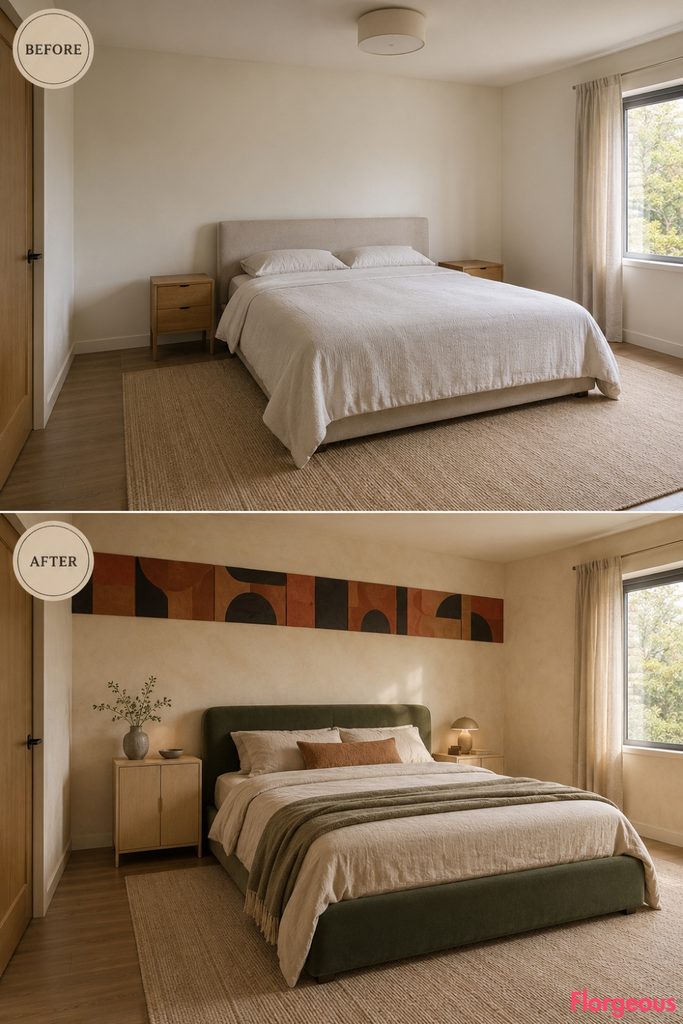
Instead of another headboard wall, move the decorative rhythm upward.
Mount a horizontal row of large matte clay panels high above the bed, leaving a wide band of plain cream plaster below them. Use restrained black and brick-red abstract marks rather than tiny ornate patterns.
Underneath, choose a bottle-green upholstered bed, oatmeal linen, and one pale birch cabinet.
The panels can also be interpreted as individual framed ceramic pieces if permanent installation is not practical.
10. Wrap the Existing Doorway in Two-Tone Esgrafiado-Inspired Plaster
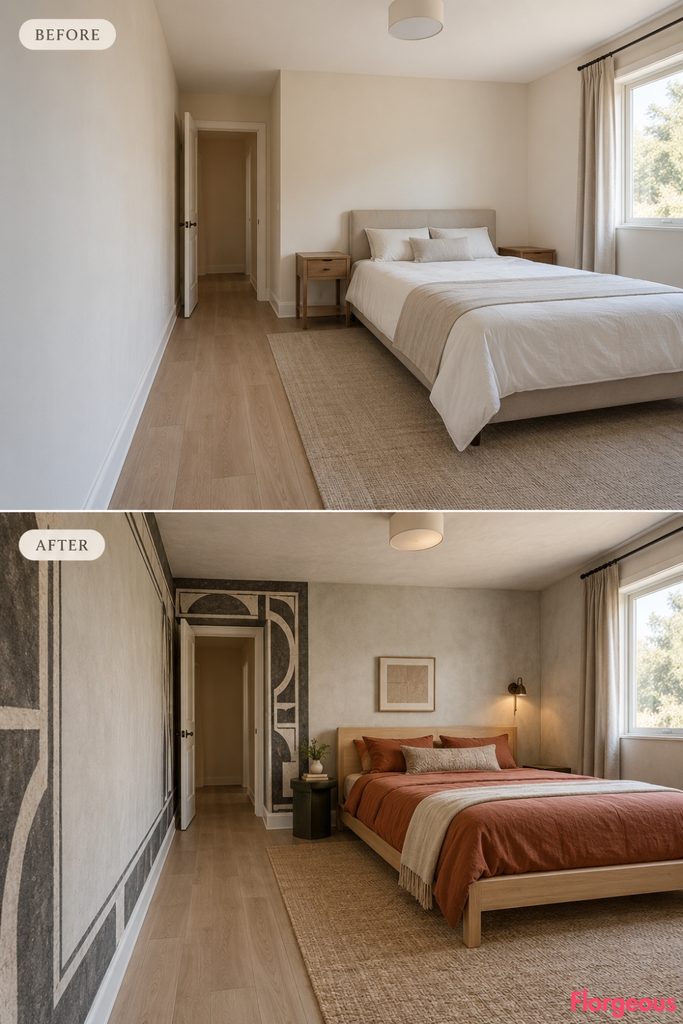
The focal point moves away from the bed again.
Keep most of the room pale mineral gray. Around the unchanged doorway, create a broad charcoal-and-chalk scratched plaster border with a large-scale geometric rhythm.
A blond timber bed sits deeper in the room with persimmon bedding and one dark moss side table.
The design works because the doorway already has a natural frame. You are emphasizing an existing boundary instead of inventing a new architectural feature.
Designer Tip: Use a broad motif with plenty of plain plaster around it. Tiny repeated pattern can quickly overpower a bedroom.
11. Make a Tiny Toledo-Inspired Inlaid Cabinet the Darkest Object in the Room
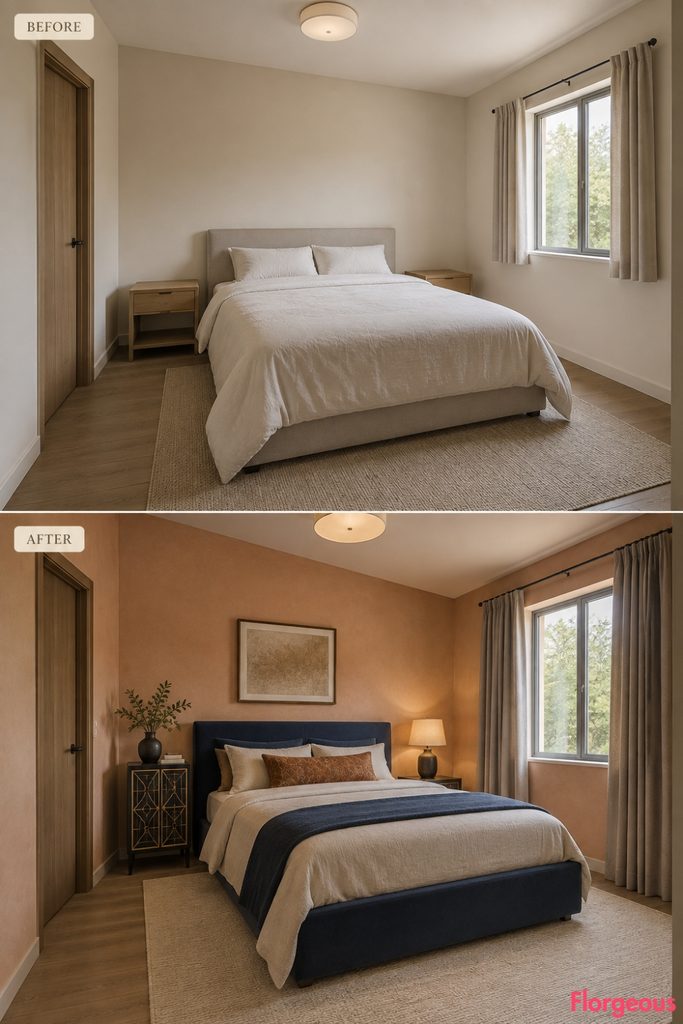
This is a detail-driven makeover rather than a room-sized intervention.
Paint the walls muted apricot and offset a navy upholstered bed toward the left. On the right, place one narrow matte-black cabinet detailed with very restrained metallic geometric inlay.
Warm gray curtains and an oatmeal floor prevent the contrast from becoming harsh.
Keep jewelry, handles, lamps, and other metalwork plain. Repeating the inlay effect elsewhere would weaken the small cabinet’s impact.
12. Pair a Jamuga-Inspired X-Chair With a Floating Vanity
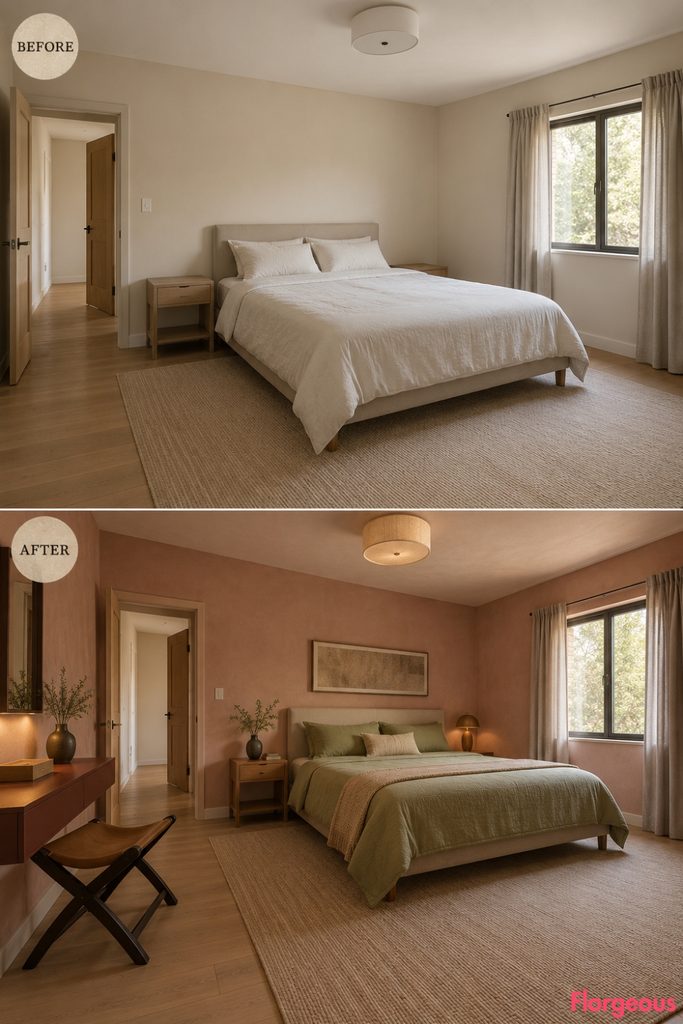
Here, the design is driven by silhouette and floor space.
Mount a shallow red-brown dressing shelf on the wall opposite the bed. Tuck a dark X-frame chair with a plain tan leather seat almost completely beneath it.
Shift the bed toward the far wall and use celery-green bedding against muted clay-pink plaster.
A fixed under-shelf task light keeps the vanity functional without occupying its tiny work surface.
This Spanish Bedroom direction works especially well where a full dressing table would narrow the walkway.
13. Move the Bed Sideways and Give the Former Bed Wall to One Wool Textile
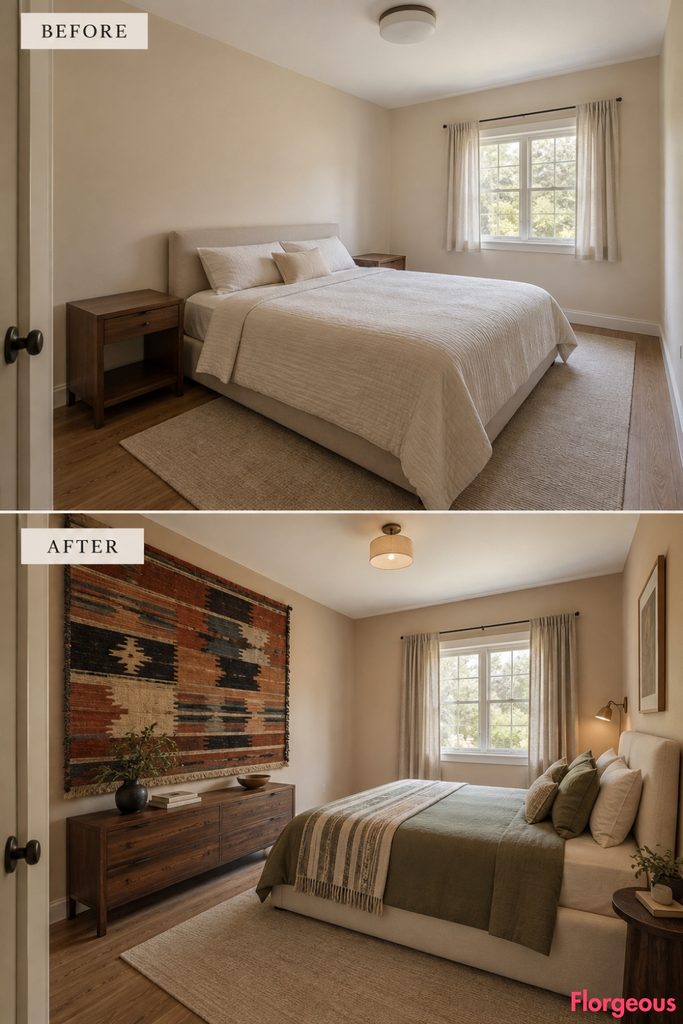
This is one of the biggest layout changes without altering the room shell.
Turn the bed so it runs lengthwise along a side wall. The wall that formerly held the headboard becomes almost gallery-like, carrying one large flatwoven wool textile in rust, black, parchment, and faded blue.
Place a narrow elm chest below it with enough breathing room that the textile still feels independent.
Keep the cream upholstered bed and olive bedding deliberately quiet.
The same idea can be recreated with a vintage flatweave rug hung securely as art.
14. Extend the Bed Footboard Sideways Into a Storage Cabinet
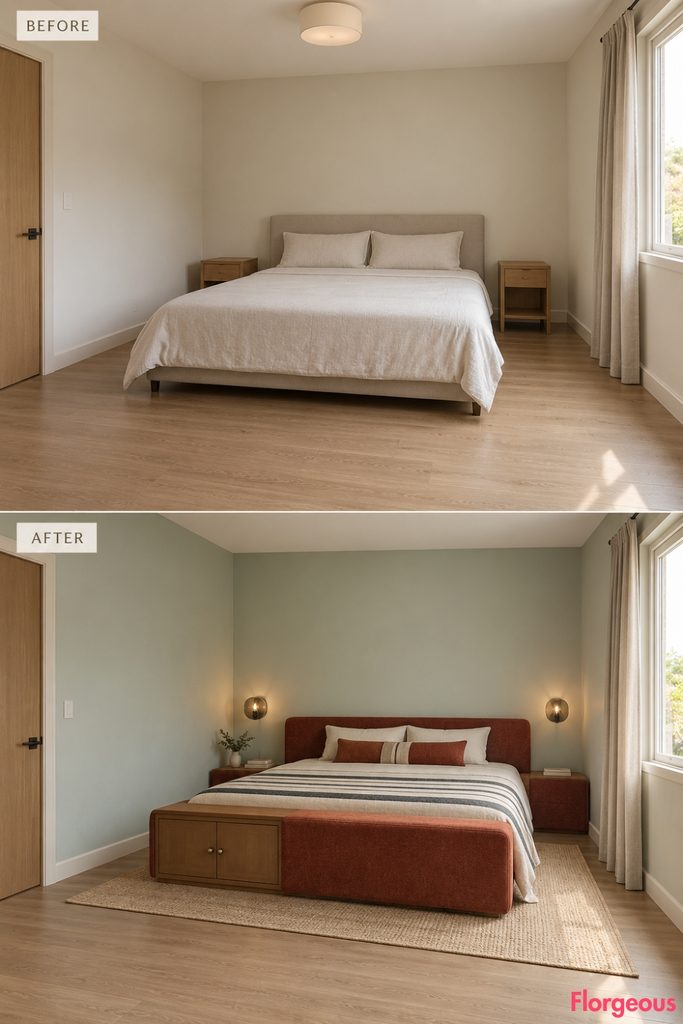
Rather than adding another wardrobe, this concept changes the bed itself.
Use a long rust-red upholstered bed whose timber footboard continues sideways at one end into a shallow cabinet with two flush doors.
The bed and storage should read as one continuous object, almost like a custom piece of Spanish contemporary furniture.
Pale celadon walls and cream-and-charcoal striped bedding keep the geometry crisp.
Use the cabinet for spare bedding rather than daily clothing so its low height remains practical.
15. Hide the Dressing Area Inside One Burnt-Orange Cabinet
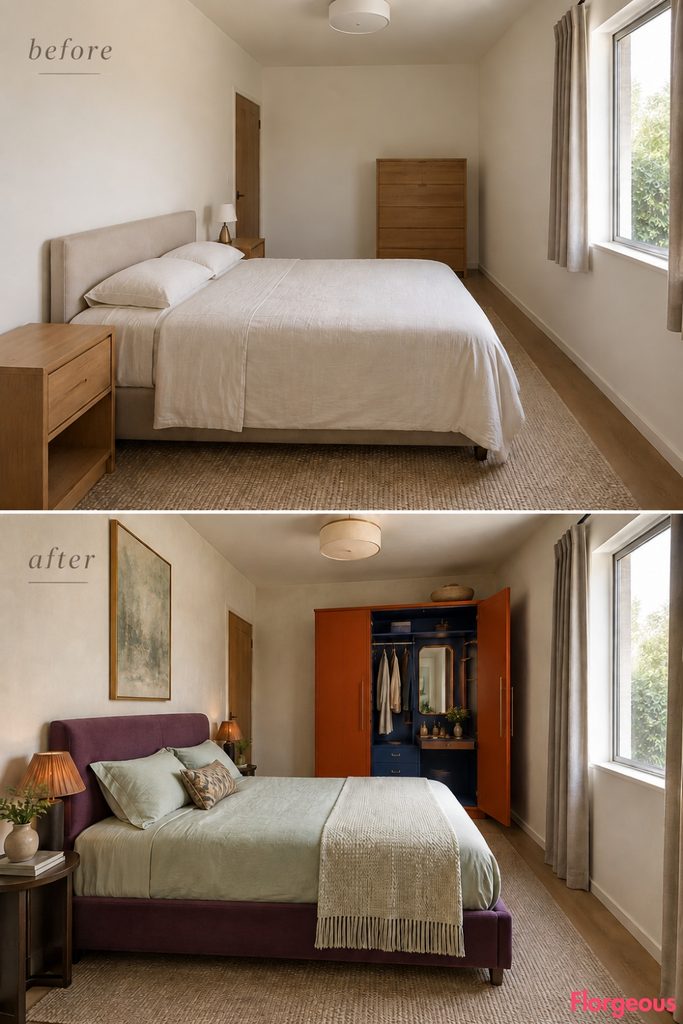
Closed, this piece looks like one calm block of color. Open, it reveals an entirely different interior.
Place a tall burnt-orange freestanding cabinet opposite a deep-plum bed running along the side wall. Inside the cabinet, use ultramarine blue for the drawers, hanging space, mirror surround, and small pull-out dressing shelf.
Warm off-white plaster lets both saturated colors breathe.
Daily accessories disappear when the doors close, making the bedroom visually quieter than a collection of separate dressing furniture.
Small Space Tip: Check the cabinet-door swing and the pull-out shelf depth against the walking route before choosing dimensions.
16. Let La Granja-Inspired Blown Glass Create the Evening Focal Point
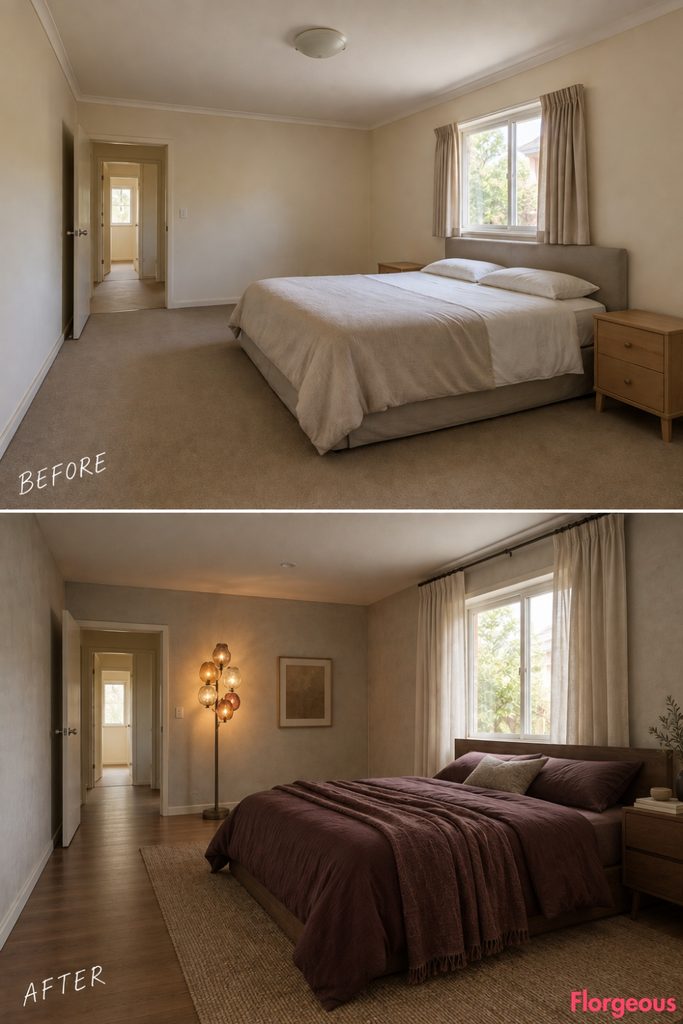
This room changes through light rather than another wall treatment.
Use pale stone-gray plaster and place a walnut bed closer to the window with deep mulberry bedding.
In the opposite open corner, add one tall floor standard carrying a restrained cluster of individually blown glass forms. Let the glass vary subtly in thickness and transparency so the light appears irregular and handmade rather than perfectly manufactured.
Keep all other artificial lighting extremely quiet.
A simpler version uses one hand-blown glass lamp on a tall floor stand rather than a custom cluster.
17. Finish With an Overscaled Galán de Noche as Open Bedroom Storage
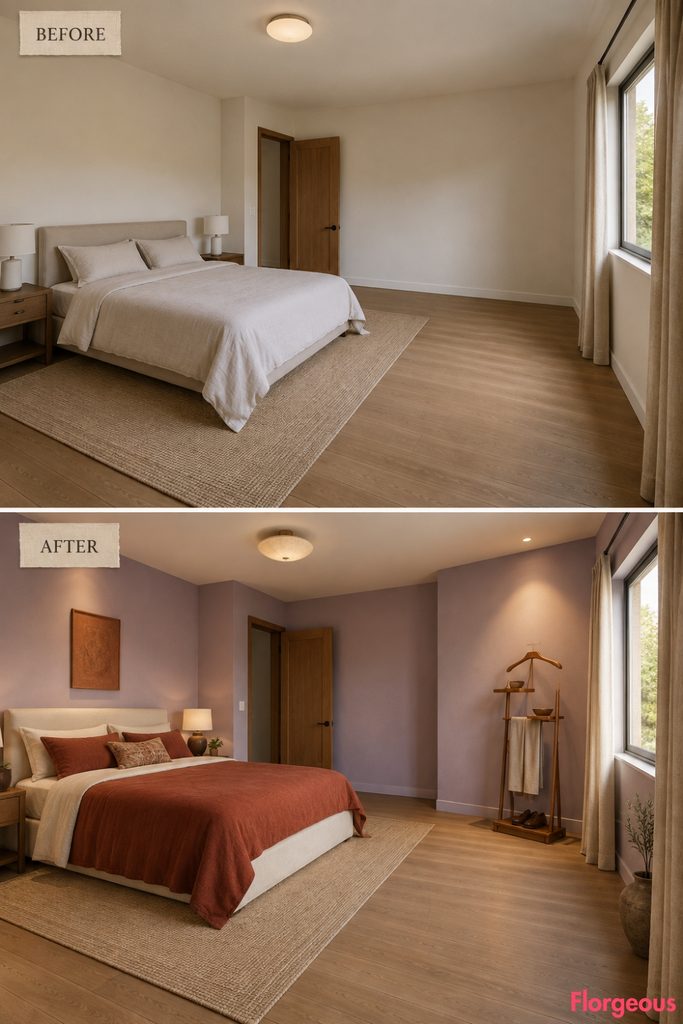
The last room avoids the conventional wardrobe entirely.
Keep an ivory bed slightly off center with paprika bedding against mineral lavender walls. Along the side wall, introduce an enlarged freestanding valet inspired by the Spanish galán de noche.
Use pale boxwood-toned timber, a sculpted shoulder-shaped hanging rail, a lower trouser bar, shallow tray for small items, and low shoe shelf. Leave the structure open so it never becomes another bulky cabinet.
This works best for clothes intended for the next day, not as a replacement for all household storage.
A narrow ceiling wash highlights the timber without making the structure appear luminous.
How to Choose the Right Spanish Bedroom Direction for Your Home
These makeovers work because they do not begin with a shopping list of Spanish-looking accessories. Each starts with one clear design decision.
A room that needs a workspace gets a writing cabinet. A bedroom that lacks a dressing area gets a compact vanity or concealed dressing cabinet. An empty wall can carry one textile, ceramic rail, or special mirror. A plain window can become the focal point with nothing more than carefully placed color.
Start by deciding what your bedroom actually needs. Then choose one Spanish reference that solves or strengthens that part of the room.
Color comes next. Carmine and chalk feel entirely different from turquoise and saffron, plum and mint, navy and apricot, or cinnamon and pistachio. There is no reason every Spanish-inspired room has to sit inside the same beige, brown, and terracotta family.
Finally, protect the negative space. Measure cabinet depth, door swing, stool clearance, window access, and the main route to the bed before adding smaller decor.
For your own Spanish Bedroom, choose one spatial idea, one hero craft or furniture element, and two or three supporting colors. If those choices already give the room a clear identity, resist adding another motif simply to make the style more obvious.