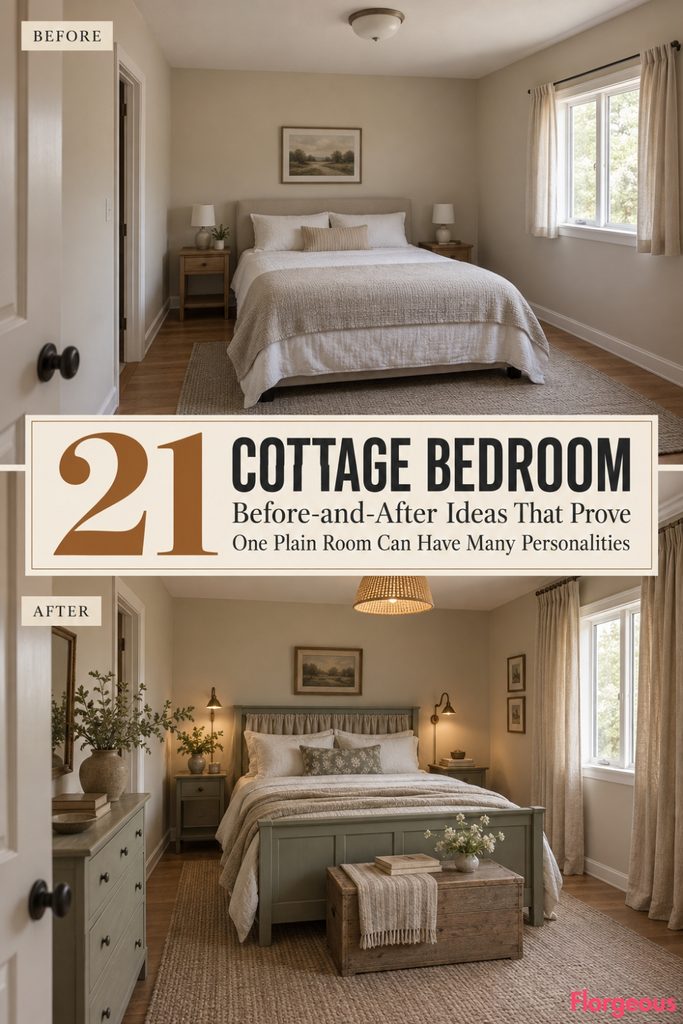
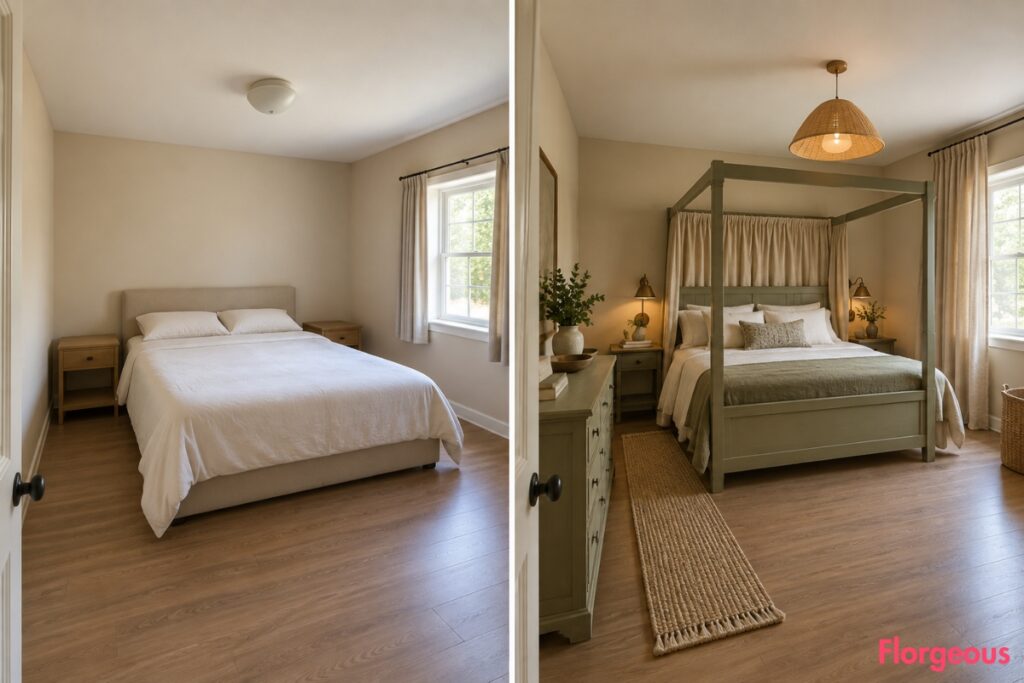
A bedroom does not have to be badly designed to feel unfinished. Warm neutral walls, a basic rectangular bed, simple neutral bedding, two bare nightstands, short plain curtains, ordinary flooring, one generic ceiling light, and minimal styling can be perfectly functional while still leaving the space with almost no personality.
For these Cottage Bedroom ideas, that exact same bedroom becomes the starting point twenty-one times. The walls, doorway, right-side window, ceiling height, corners, architectural openings, and floor footprint never change between BEFORE and AFTER.
Only the furniture, finishes, textiles, color, lighting, decor, and furniture arrangement are redesigned. Each section also uses a different camera composition, while the BEFORE and AFTER within that individual pair always share the exact same camera position, normal lens, framing, perspective, and daylight direction.
Most importantly, every AFTER is furnished as a complete bedroom. Each room has enough storage, lighting, textile layering, and practical furniture to feel finished, but no section is packed simply to fill space.
1. Turn the Plain Room Into a Painted Box-Bed Retreat
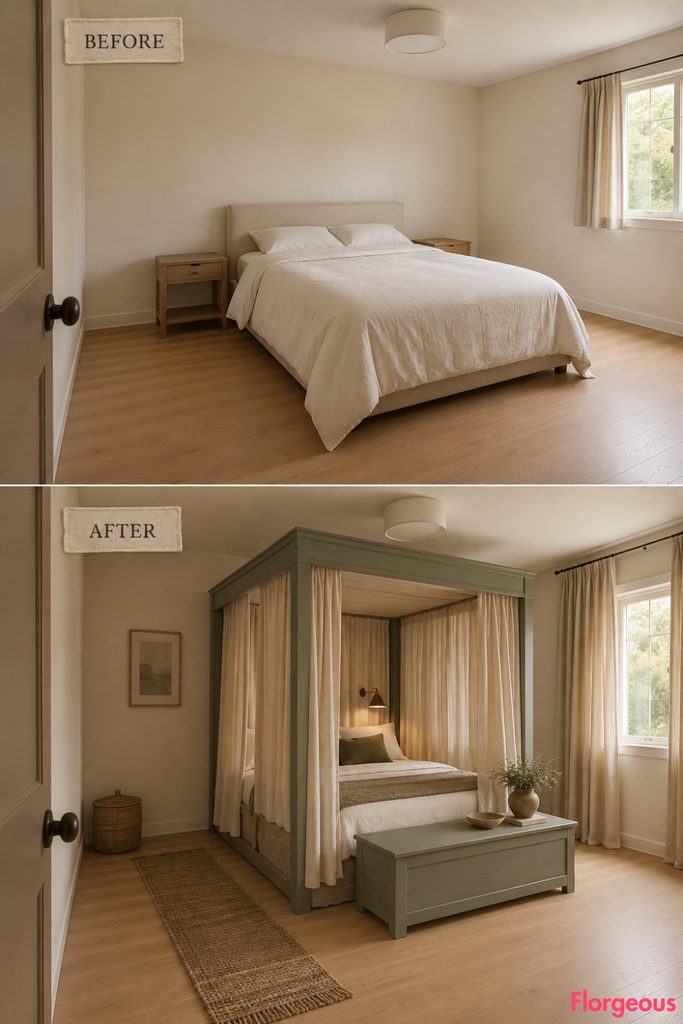
A freestanding timber box bed gives the room an entirely different silhouette without constructing an alcove.
Before: The standard plain bedroom with warm neutral walls, basic rectangular bed, simple neutral bedding, two bare nightstands, short plain curtains at the right-side window, ordinary flooring, generic ceiling light, minimal styling, and soft natural daylight.
After: A painted timber box bed with shallow end panels, partial overhead frame, and gathered inner curtain becomes the hero. Add a low painted linen chest along the side wall, narrow wool runner, compact reading light, and full-height natural linen curtains. Keep visible wall around the bed so it clearly remains freestanding furniture.
Designer Tip: The supporting pieces should stay visually quiet because the unusual bed already provides enough character.
2. Organize the Room With a Continuous Timber Peg Rail
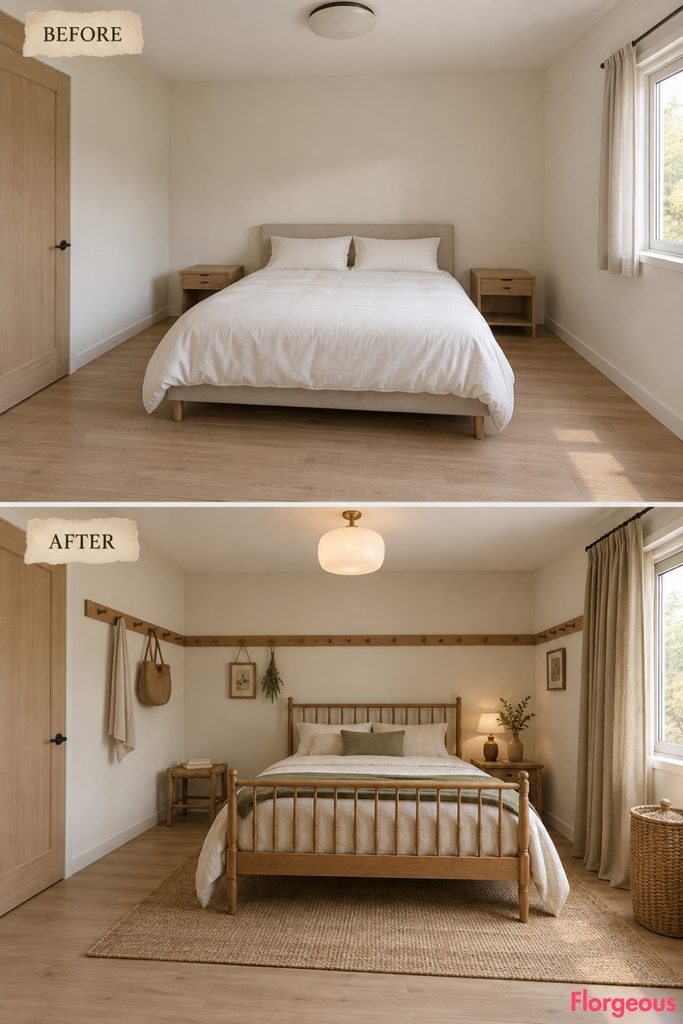
This makeover uses practical wall storage rather than bulky cabinetry.
Before: The same standard bedroom with neutral walls, basic bed, two bare nightstands, short curtains, ordinary flooring, generic ceiling light, and minimal styling.
After: A simple spindle bed sits beneath a continuous timber peg rail mounted onto the existing walls. Selected pegs hold a linen bag, robe, basket, and folded textile. Add one low rush-seated stool, a lidded woven hamper, plain bedding, long curtains, and a compact opal ceiling light.
The center of the room stays noticeably open.
3. Let a Welsh-Style Dresser Replace the Usual Wardrobe
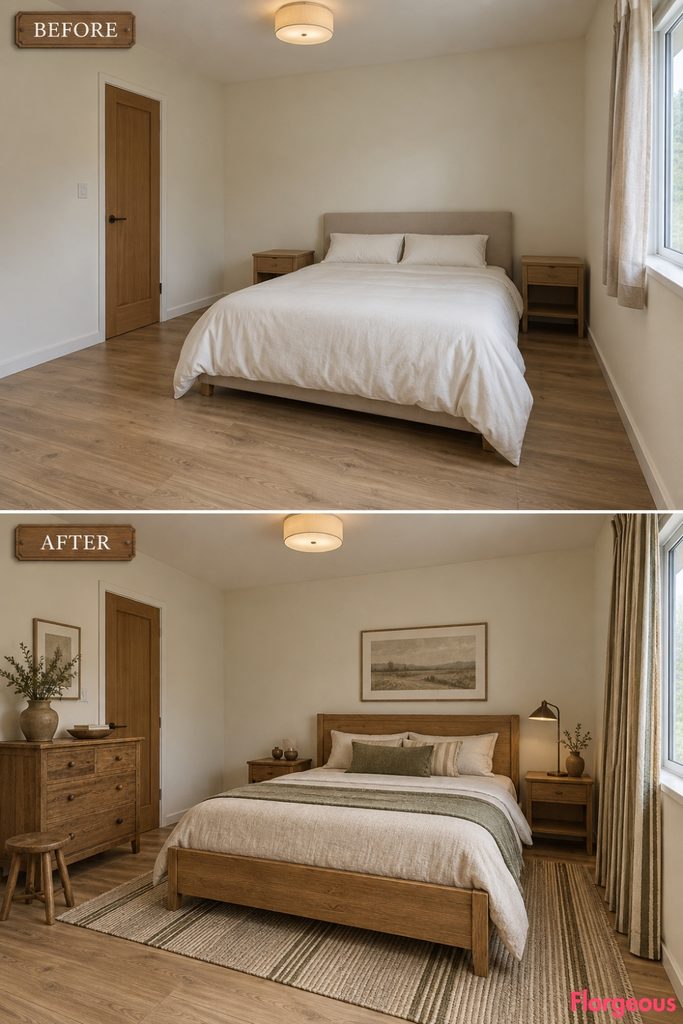
One substantial storage piece gives this room a much stronger furniture identity.
Before: The same plain warm-neutral bedroom with basic bed, bare nightstands, short curtains, ordinary floor, and generic lighting.
After: A warm oak bed faces a freestanding Welsh-style dresser with deep drawers below and shallow shelving above. Add a three-legged bedside stool, slim freestanding reading lamp, folded linens, a few pottery pieces, and soft striped curtains.
There is no conventional wardrobe competing with the dresser.
4. Make One Fully Skirted Round Table the Bedside Statement
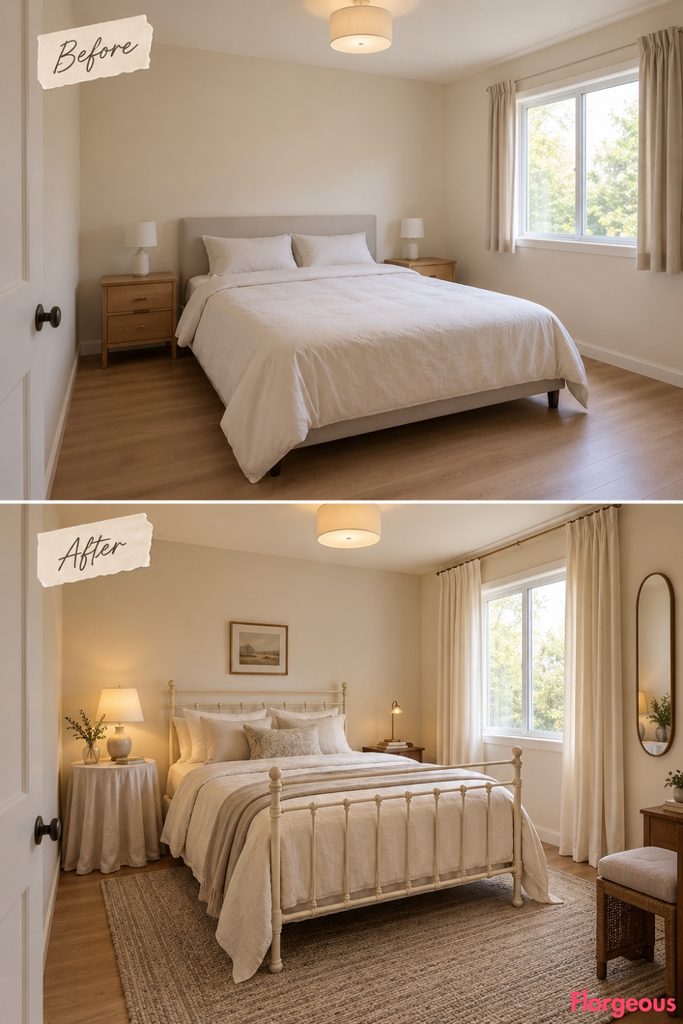
Traditional fabric treatment becomes the focal point instead of matching furniture.
Before: The same plain bedroom with basic rectangular bed, neutral bedding, two empty nightstands, short curtains, and minimal styling.
After: Replace the bed with a slender cream-painted iron frame. One side receives a round bedside table covered to the floor with gathered striped fabric and topped by a ceramic lamp. On the opposite side, use only a tiny reading light. Add a narrow freestanding oval mirror, small upholstered dressing stool, flatwoven rug, and cream full-length curtains.
Why It Works: The room feels furnished without repeating a symmetrical bed-plus-two-nightstands formula.
5. Put the Strongest Pattern on a Painted Canvas Floorcloth
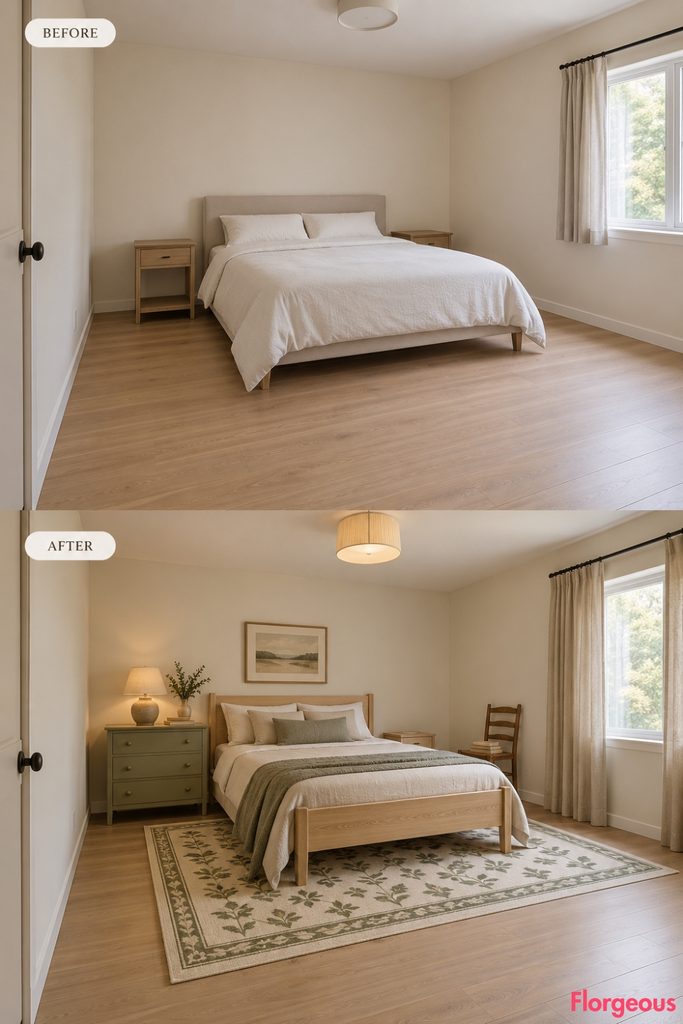
The floor becomes the decorative center of the room.
Before: The unchanged neutral bedroom with ordinary flooring, basic bed, bare nightstands, short curtains, and generic light.
After: Keep the original flooring intact, then lay a removable hand-painted canvas floorcloth beneath the lower part of a pale timber bed. Add one compact painted commode, ladder-back chair, solid linen bedding, restrained fabric shade, and low ceramic lamp.
Everything above floor level remains comparatively quiet.
Budget Version: A heavy primed canvas can give you the effect without permanently altering the floor.
6. Reconfigure the Bedroom With Two Rope-Strung Single Beds
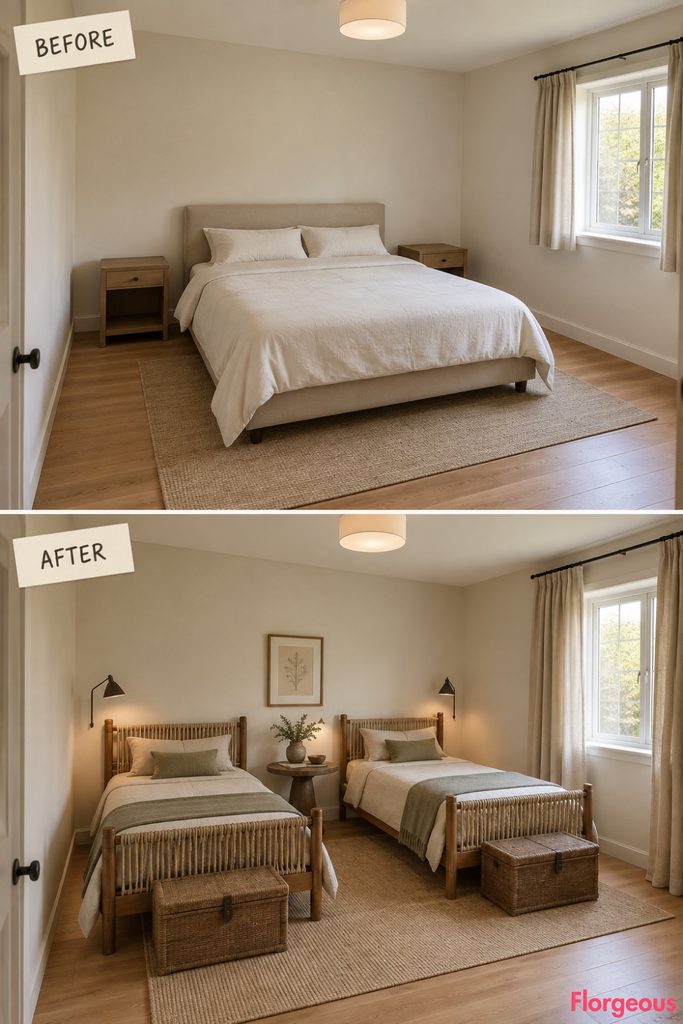
This transformation changes the room through layout rather than decoration.
Before: The same bedroom with one basic rectangular double bed, two empty nightstands, and minimal styling.
After: Use two narrow rope-strung timber single beds positioned parallel to one another. A shared round table sits between them, while a low lidded chest occupies the free side wall. Give each sleeper a compact reading light and finish the window with simple full-length curtains.
A broad central passage remains completely open.
7. Make the Existing Window the Main Decorative Feature
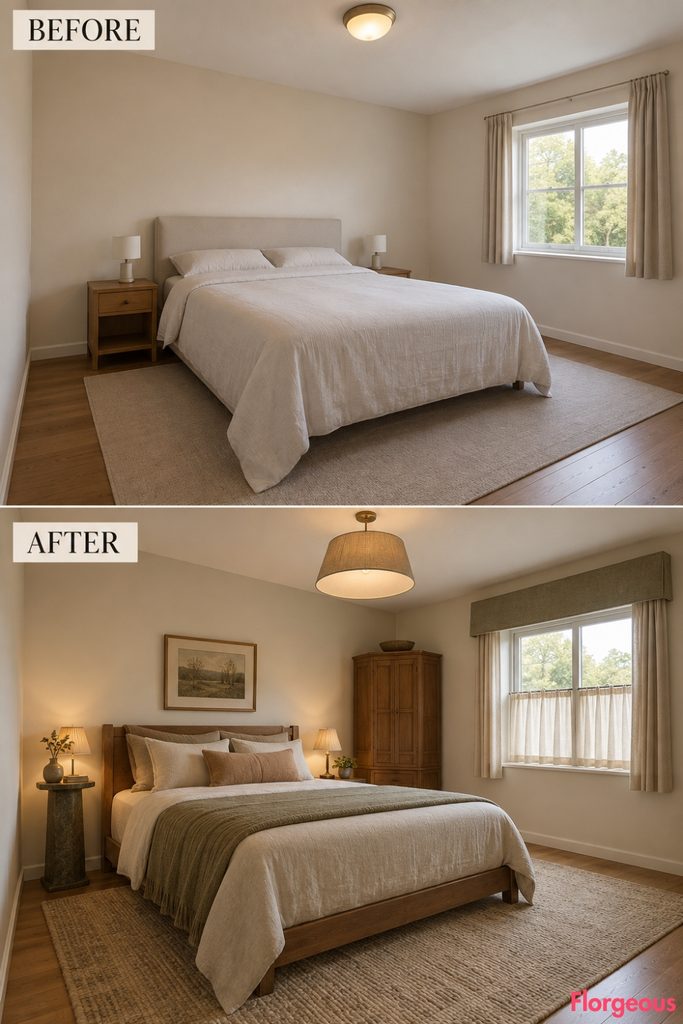
The window remains architecturally identical but becomes visually important through fabric.
Before: The same plain bedroom with short, basic curtains at the unchanged right-side window.
After: Add a deep upholstered pelmet above the existing opening and café curtains across its lower portion. Pair the treatment with a restrained timber bed, one narrow bedside pedestal, a small freestanding corner cupboard, plain wool rug, and shaded ceiling fixture.
Common Mistake: Never enlarge, lower, deepen, or reshape the window in the AFTER.
8. Suspend a Traditional Timber Quilt Airer Above the Bed
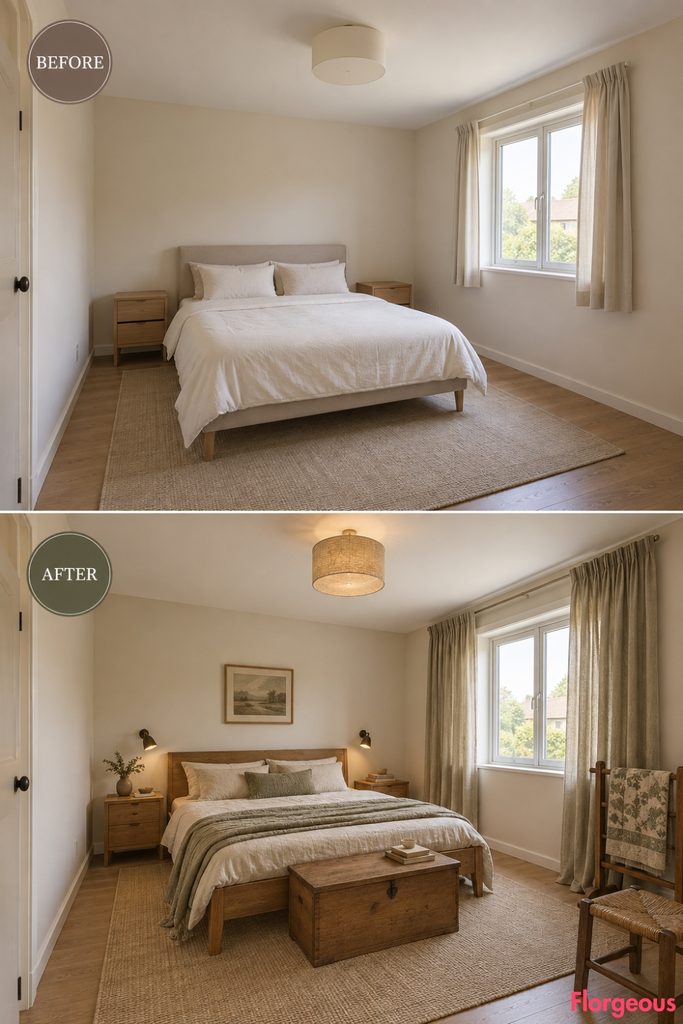
An old utility object provides the strongest visual feature.
Before: The same basic bedroom with generic ceiling light and no overhead furniture or decorative feature.
After: A low oak bed sits beneath a slender timber quilt airer suspended from the unchanged ceiling near the foot of the bed. Hang one folded quilt only. Add a rush bedside stool, compact blanket box along the side wall, two small reading lights, and full-height plain curtains.
9. Replace a Fixed Nightstand With a Gateleg Table
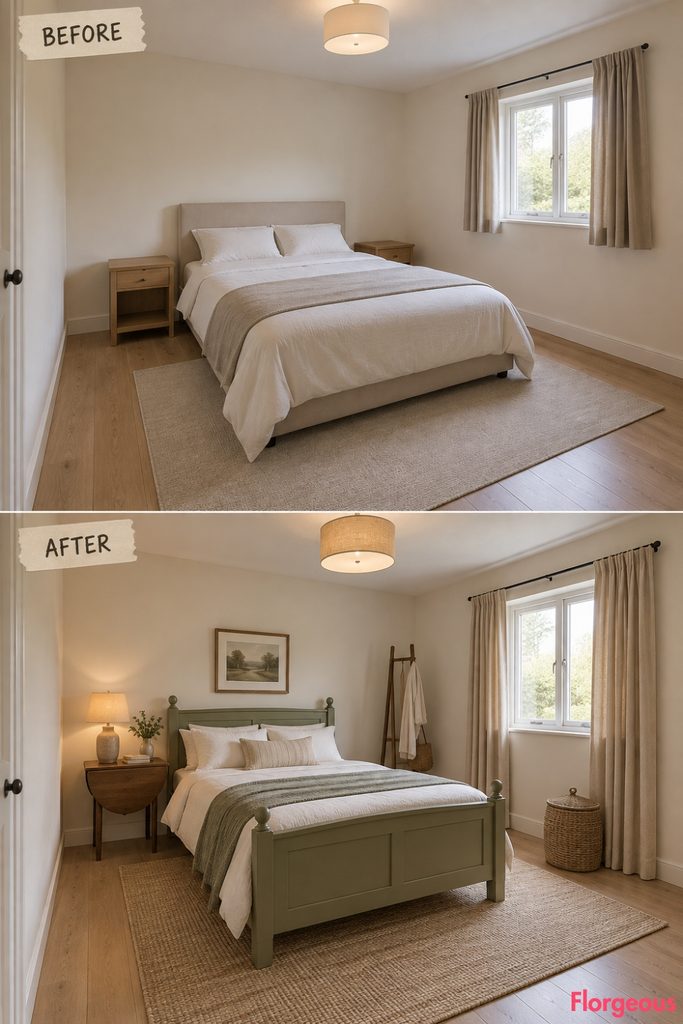
Flexible furniture makes this room more practical.
Before: The same plain bedroom with two conventional bare nightstands.
After: Use a painted timber bed and replace one nightstand with a compact gateleg table, opening one leaf toward the mattress. A slim freestanding clothes stand occupies another wall, while a low lidded basket stores extra bedding. Finish with a shaded lamp and plain long curtains.
Small Space Tip: Judge the gateleg table by its folded depth, not its fully opened width.
10. Change the Furniture Scale With a High Bed and Wooden Steps
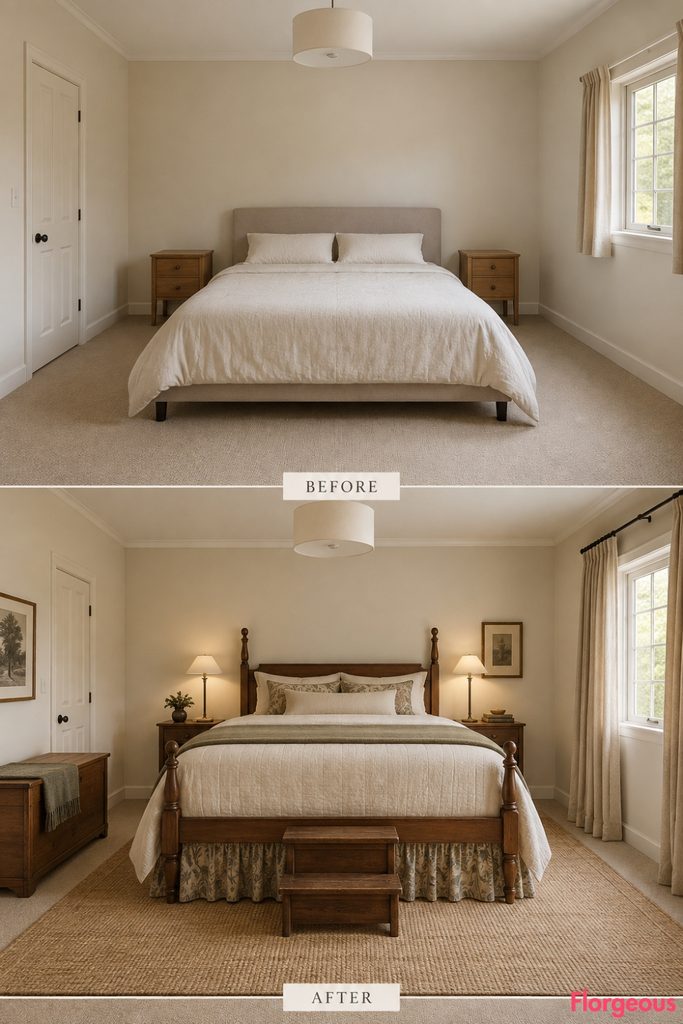
Height completely alters the character of the sleeping zone.
Before: The standard bedroom with a normal-height basic bed, two nightstands, and flat generic styling.
After: Introduce a tall timber bed with a deep mattress and simple valance. Add compact wooden bed steps on one side, a low blanket chest against the side wall, slender floor lamp, and long unpatterned curtains.
The bed becomes imposing without requiring a canopy.
11. Soften Storage With a Fabric-Lined Glazed Cupboard
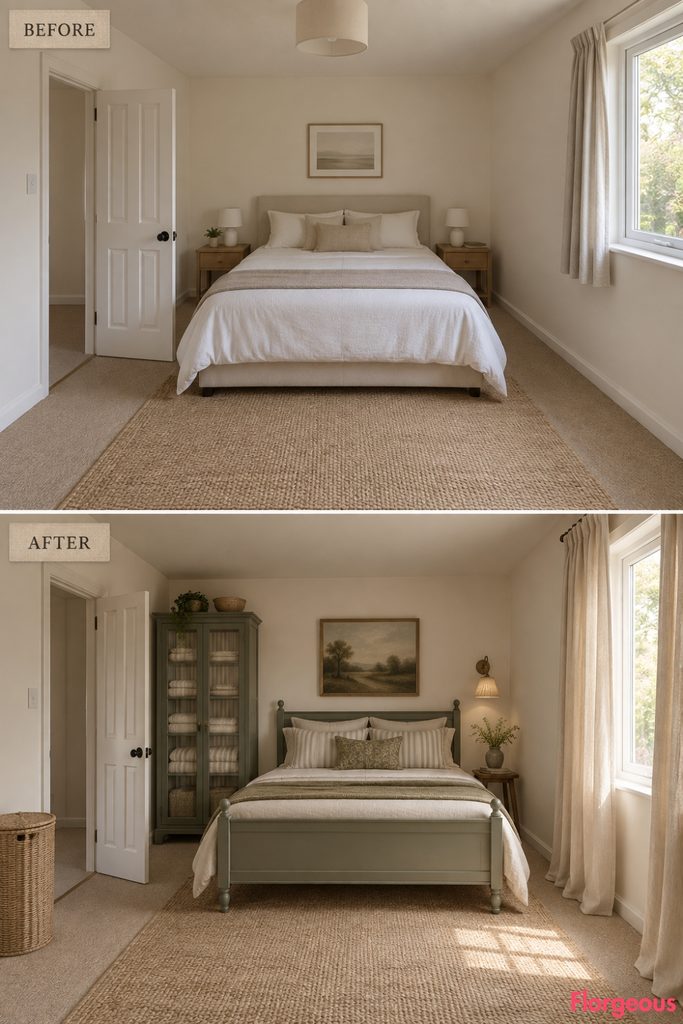
The main storage piece feels visually lighter than a solid wardrobe.
Before: The same plain bedroom with minimal storage and two empty nightstands.
After: Add a painted bed and a realistically deep freestanding glazed linen cupboard. Gathered ticking fabric sits immediately behind the clear doors to partly conceal folded linen. Add one painted bedside stool, woven laundry hamper, understated wall light, and full-length linen curtains.
The cupboard remains completely freestanding, with an ordinary flat wall behind it.
12. Build a Nearly White Bedroom Around Candlewick Texture
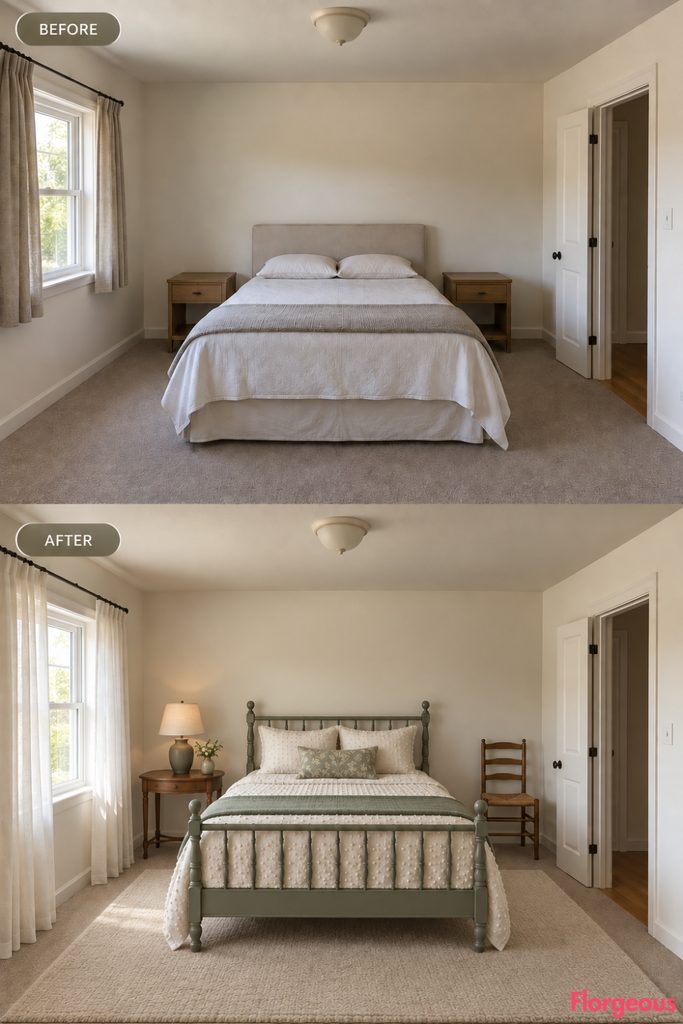
This makeover is quiet in color but rich in surface detail.
Before: The standard warm-neutral bedroom with plain bedding and little textile character.
After: Use warm white walls, a painted timber bed, and a white candlewick bedspread with raised tufted motifs. Add a compact oval washstand, matte ceramic lamp, plain timber chair near the window, soft solid wool rug, and sheer full-height curtains.
Style Note: Matte materials help the candlewick relief catch natural light without visual competition.
13. Let One Crewel-Embroidered Textile Carry All the Pattern
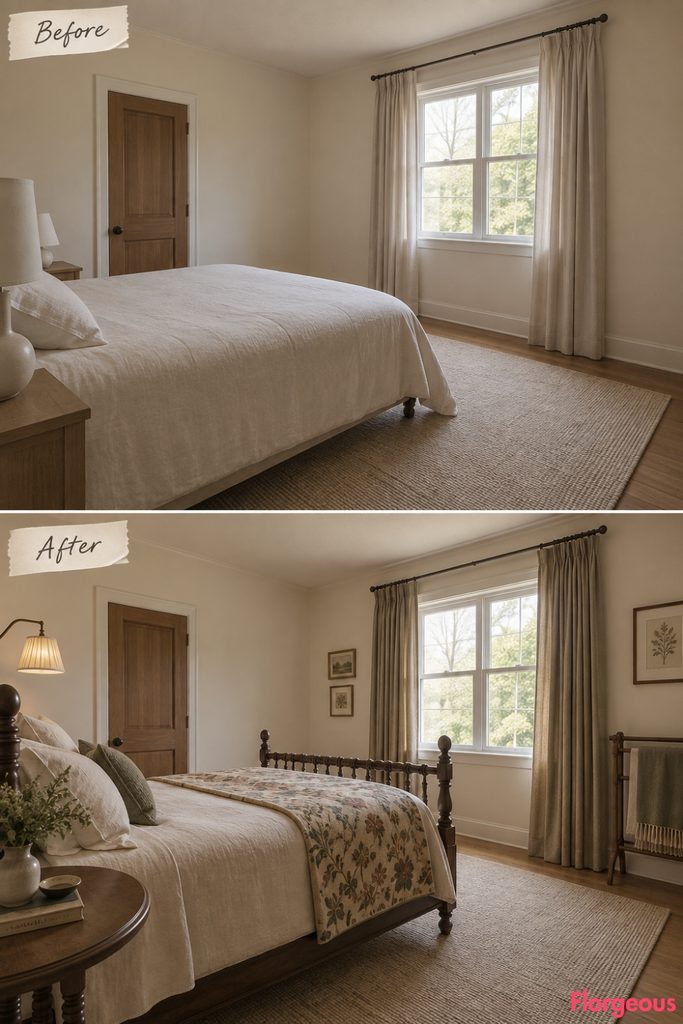
Instead of layering multiple motifs, use one exceptional textile.
Before: The same plain bedroom with neutral bedding, short curtains, and no strong decorative pattern.
After: A dark spindle bed wears plain linen with one crewel-embroidered throw across the lower third. Use a tiny oval pedestal table beside the bed, a freestanding blanket rail with one solid folded cover, plain curtains, and one shaded wall light.
Every other patterned element is removed.
14. Add Vertical Drama With a Tall Chimney Cupboard
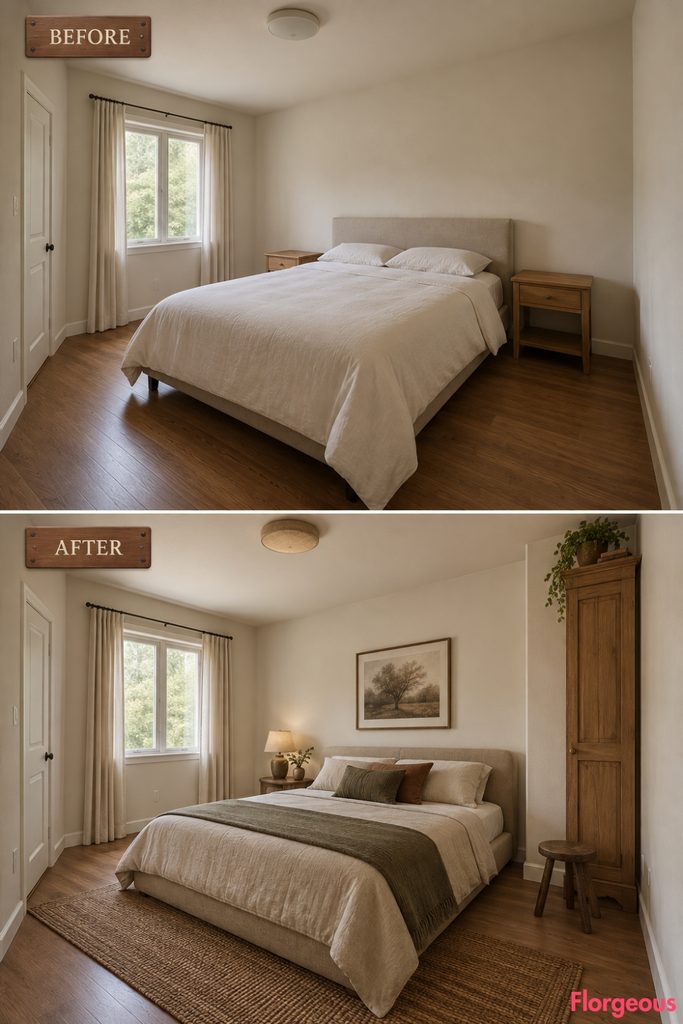
The storage strategy changes by going upward rather than outward.
Before: The unchanged bedroom with basic bed, two nightstands, and no significant storage furniture.
After: Pair a low upholstered bed with a tall, narrow freestanding chimney cupboard in dark timber. Add one square three-legged bedside stool, a slim woven runner, long plain curtains, and a shallow ceiling fixture.
Leave the adjacent wall mostly empty to emphasize the cupboard’s vertical proportion.
15. Give the Room a Quiet Schoolhouse Cottage Personality
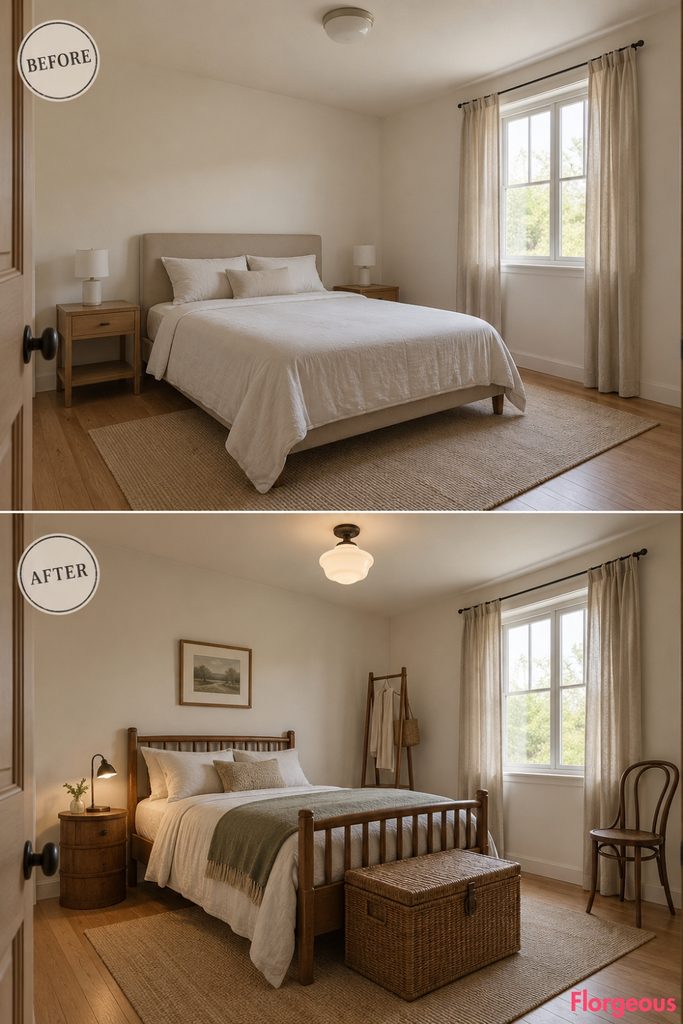
This version feels straightforward and practical rather than romantic.
Before: The same plain bedroom with generic furniture and ceiling light.
After: Use a compact straight-sided timber bed, bentwood chair, lidded wooden storage box along the side wall, and slim metal clothes stand near the entry. Replace the generic ceiling light with an opal schoolhouse fixture and add one tiny task lamp.
The textiles stay largely solid.
16. Turn an Apothecary Chest Into the Bedside Focal Point
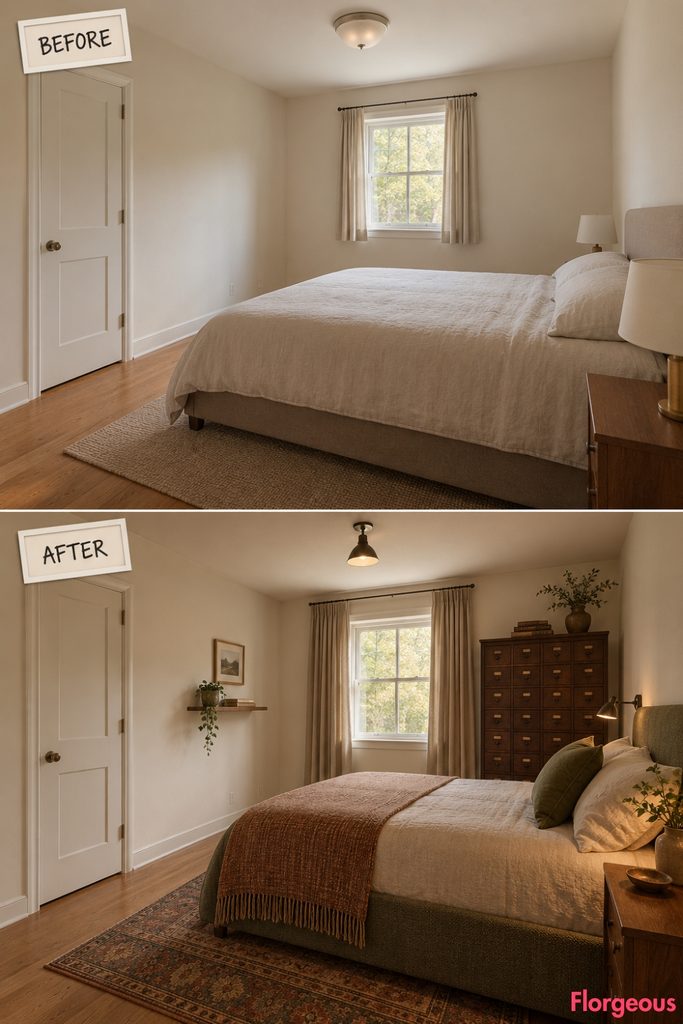
Furniture construction becomes the pattern.
Before: The standard room with two simple empty nightstands and no strong bedside focal point.
After: Use a simple upholstered bed with a compact apothecary-style cabinet on one side, featuring many shallow unlabeled drawers. On the opposite side, add only a tiny wall shelf. Finish with a solid floor runner, full-height curtains, and directional reading light.
The repeated drawer fronts provide enough visual rhythm on their own.
17. Place a Scrubbed Worktable Across the Foot of the Bed
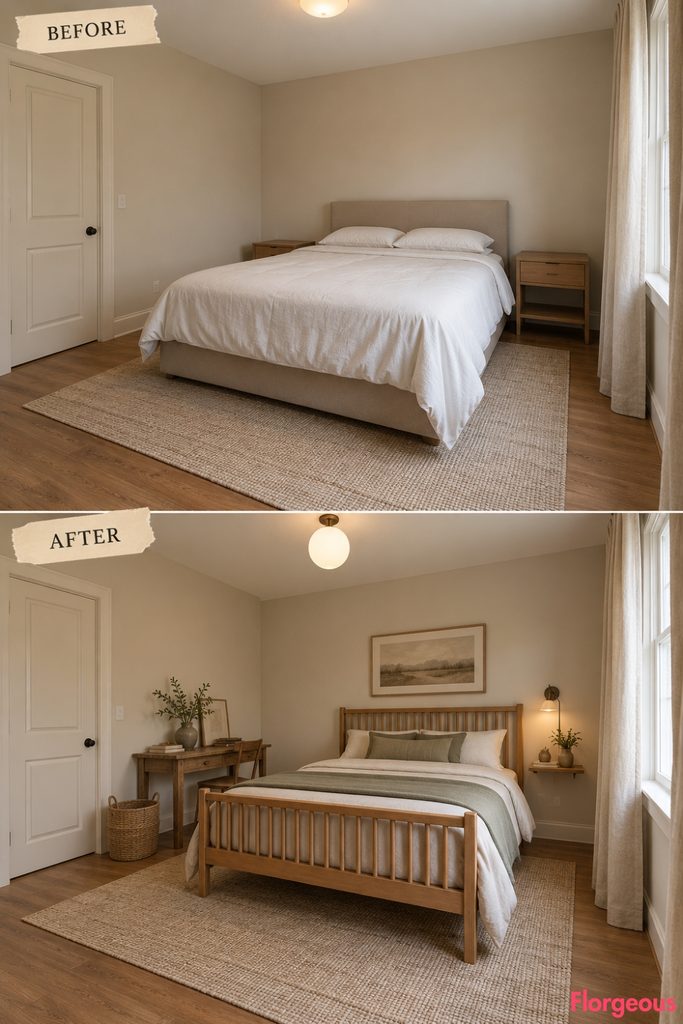
A functional table replaces the more expected bedroom bench.
Before: The same basic bedroom with empty floor at the foot of the bed.
After: Use a simple slatted timber bed and position a narrow scrubbed worktable across its foot, leaving clear walking space at both ends. Add one shallow bedside shelf, woven floor basket for linen, plain curtains, and a compact ceiling globe.
Only one folded blanket sits on the tabletop.
18. Add a Closed Drop-Front Bureau Without Making an Office
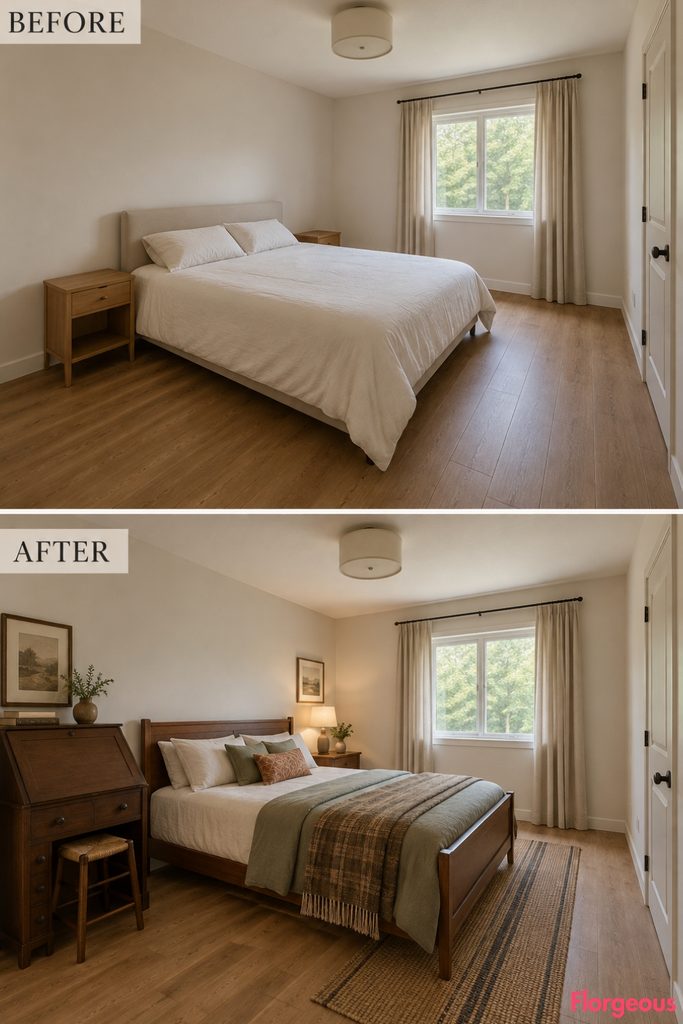
A secondary function appears without taking over the bedroom.
Before: The unchanged plain room with minimal furniture and no workspace.
After: Add a compact freestanding drop-front bureau along the side wall with the flap closed and a small armless stool tucked beneath it. Use a modest timber bed, one rectangular bedside table, narrow solid rug, plain curtains, and shaded lamp.
When the bureau is closed, the room still reads primarily as a bedroom.
19. Replace One Nightstand With a Miniature Bedside Hutch
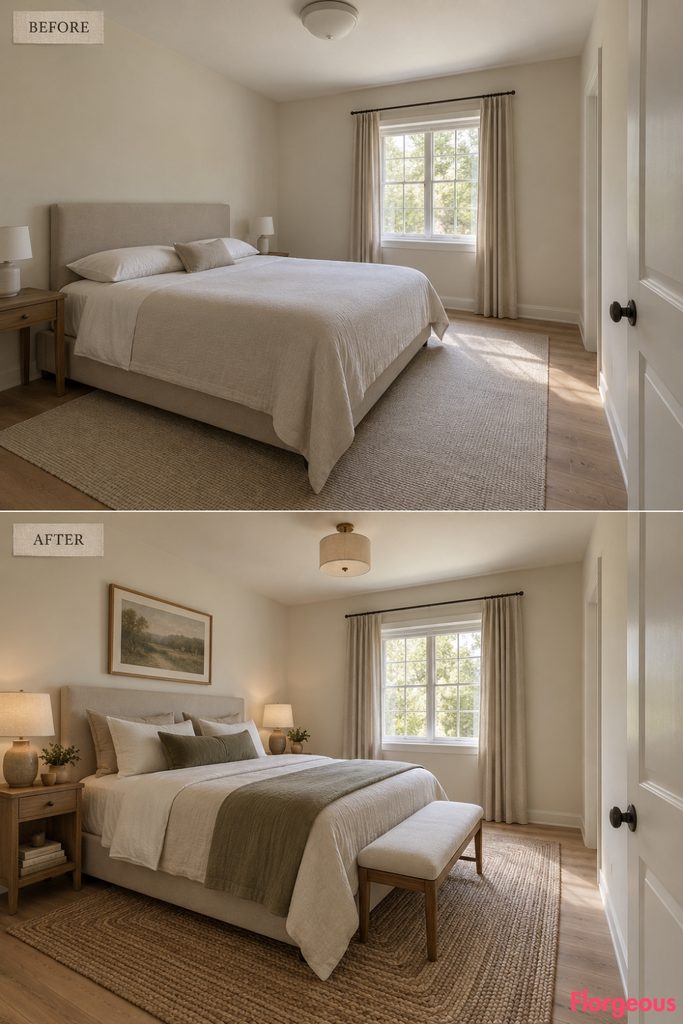
A familiar furniture form becomes interesting through scale.
Before: The same plain bedroom with two generic bare nightstands.
After: Use an upholstered cottage bed with a bedside-scale timber hutch on one side. The hutch combines a lower cupboard with shallow upper cubbies for a little pottery and folded linen. Add a low backless bench positioned clear of the window route, small braided oval rug, and compact ceiling light.
20. Let a Hand-Stenciled Chest Be the Room’s Only Ornament
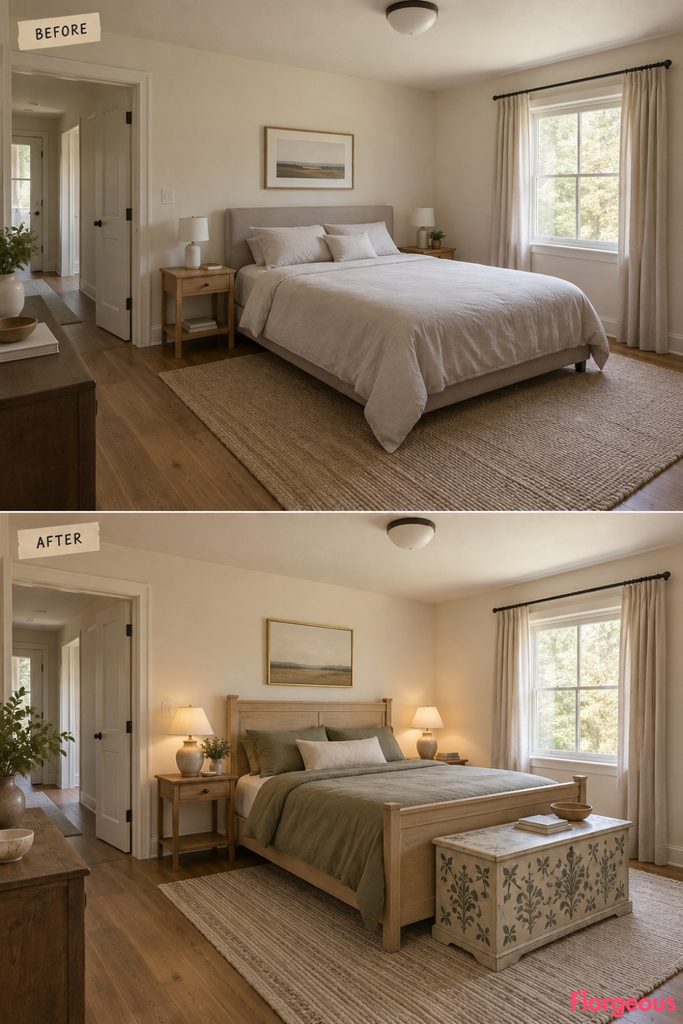
Every other surface becomes deliberately restrained.
Before: The same neutral bedroom with generic furniture and no particular focal point.
After: Use a simple pale timber bed, solid bedding, plain curtains, and one painted chest decorated with restrained hand-stenciled motifs. Add a compact plain washstand, unglazed ceramic lamp, and solid wool runner.
There are no other patterned fabrics or decorative motifs.
21. Finish With a Lightweight Folding Tray-Top Bedside Stand
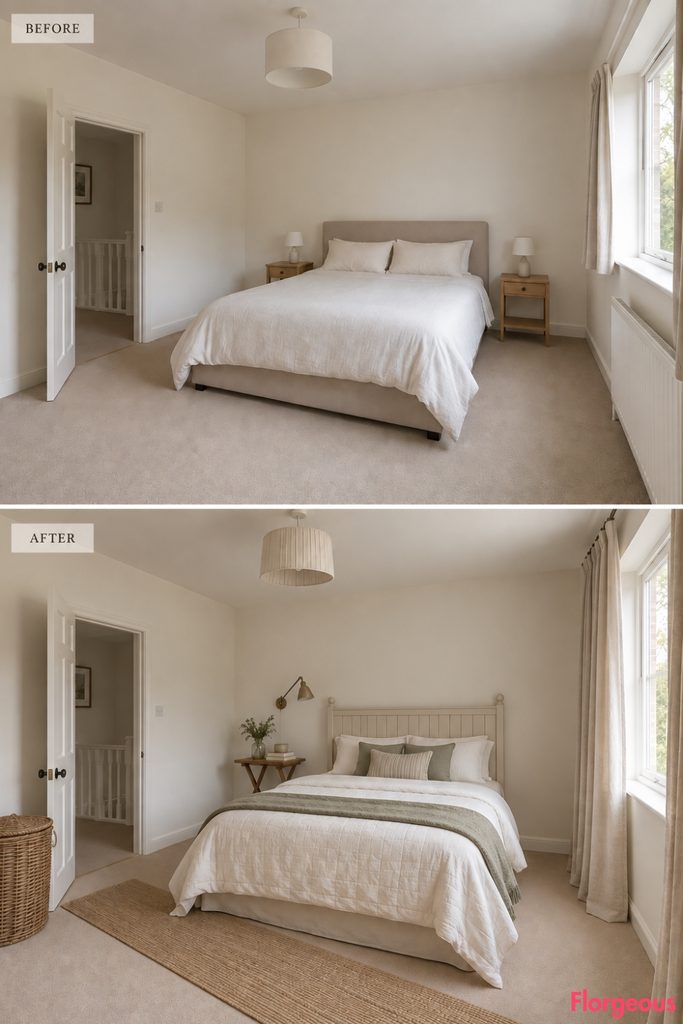
The final makeover proves a fully furnished bedroom can still feel spacious.
Before: The same plain base room with generic bed, two empty nightstands, short curtains, and minimal styling.
After: Use a simple cottage bed beside one lightweight folding timber stand with crossed legs and a removable tray top. Add a low woven laundry basket, full-height plain curtains, compact adjustable wall light, and narrow solid floor runner.
No extra occasional chair, cabinet, or decorative table is needed. The visible floor becomes part of the design.
How to Choose the Right Cottage Direction for Your Bedroom
The strongest makeovers here feel complete without relying on sheer furniture quantity. Each room has one clear hero idea, followed by just enough supporting furniture to make the bedroom useful.
For your own Cottage Bedroom, choose that hero first. It might be a distinctive bed, unusual storage piece, traditional textile, flexible table, practical utility object, or memorable window treatment.
Then solve the everyday functions. Make sure there is somewhere for bedside essentials, somewhere for clothing or linen, suitable reading light, usable curtains, and a clear route through the room.
Once those needs are covered, stop adding furniture. Visible flooring, blank wall, and negative space are part of a finished cottage room too.