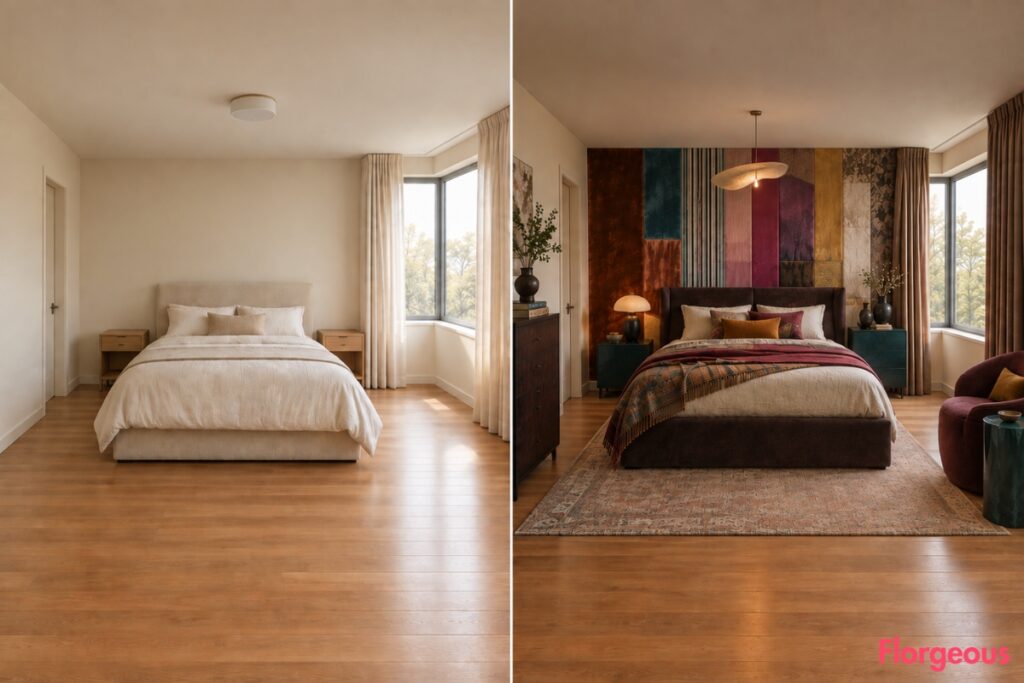
The starting bedroom is calm, clean, and a little forgettable. It has warm off-white walls, a basic neutral upholstered bed against the rear wall, simple bedding, two bare nightstands, pale curtains, oak flooring, and one compact ceiling light.
What makes the room memorable is its architecture. Every makeover begins with the exact same shell: one solid rear bed wall, one doorway on the left wall near the rear corner, and one bright L-shaped corner window wrapping the front-right corner. The ceiling stays flat, the floor stays level, and the circulation path stays clear.
From there, the personality shifts dramatically. These 19 Maximalist Bedroom ideas use color, trim, pattern, upholstery, lighting, decorative craft, and bold furniture pairings to show how one plain room can become wildly different without changing the architecture.
1. Create a Jewel-Toned Maximalist Bedroom With Passementerie and Fringe
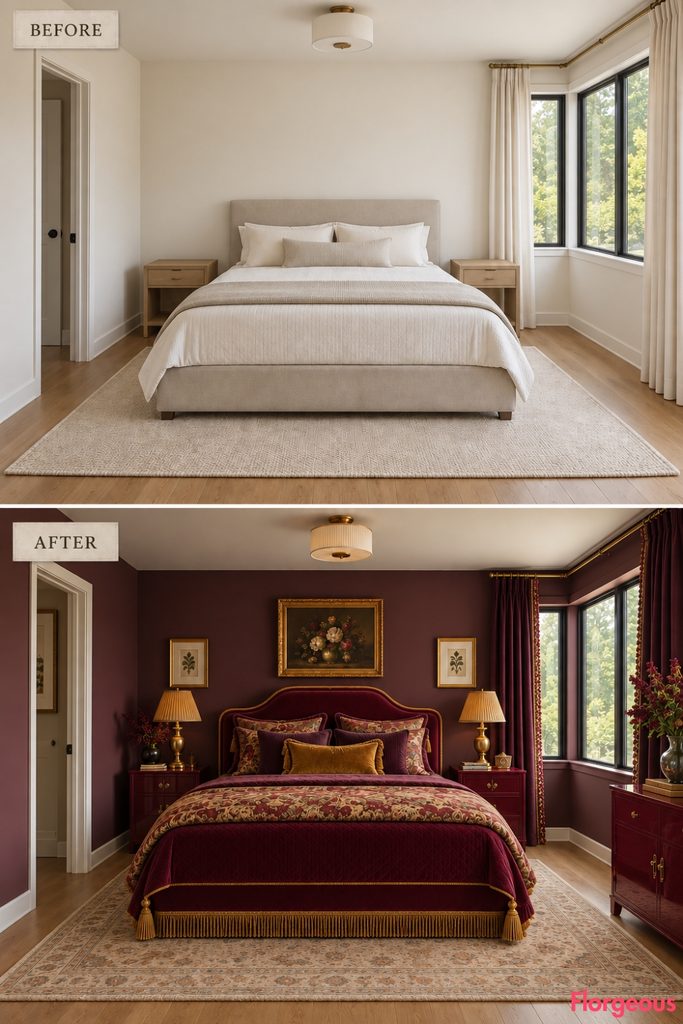
Before: The room feels plain and softly lit, with a simple neutral bed, two small bare nightstands, pale curtains, and no real focal point.
After: The bed becomes a rich garnet anchor with saffron braid, plum piping, tasselled corners, and deep bullion fringe along the base. Aubergine curtains gain contrast borders, a berry lacquered cabinet replaces one nightstand, and a parchment rug softens the floor. Layered pillows in claret, ochre, and olive make the room feel collected and lush.
Why it works: The maximalism comes from repeating one trim language across several surfaces, which makes the room feel rich instead of random.
2. Build the Room Around a Graphic Inlaid Floor and Saturated Layers
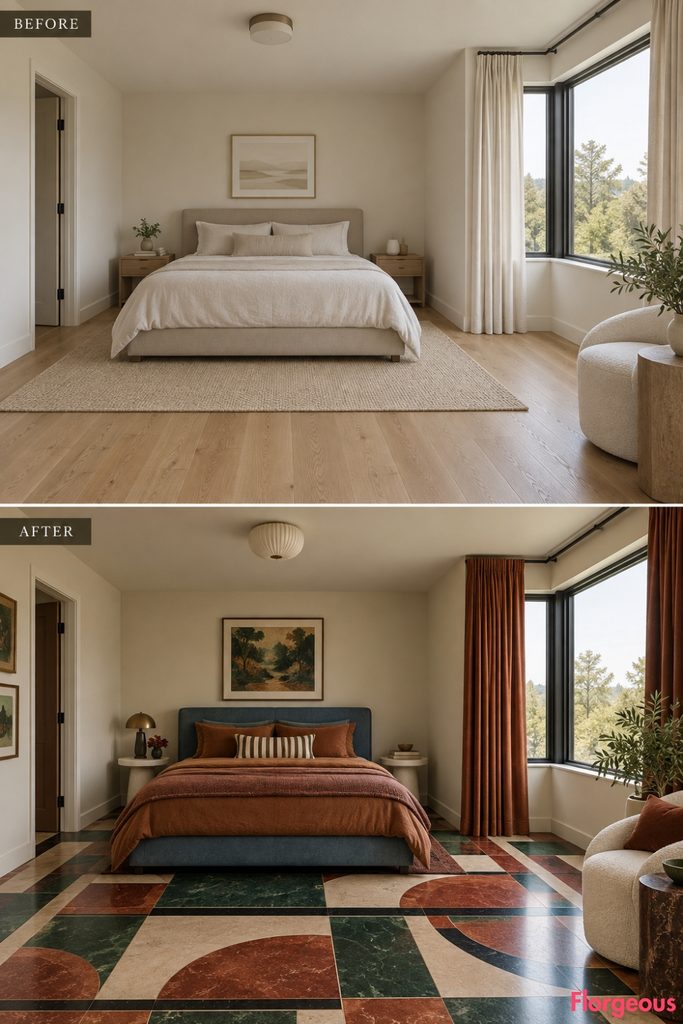
Before: The oak floor quietly disappears beneath a very plain bedroom setup.
After: The floor becomes the hero with a large inlaid linoleum design in bottle green, paprika, cream, and black. Above it, a muted blue bed, cinnamon bedding, striped lumbar pillow, cream side table, and rust curtains turn the room into a floor-led maximalist composition rather than a minimal box with one bold surface.
Try this: If a full new floor is not realistic, a painted floorcloth or one large custom rug can create a similar statement.
3. Replace a Plain Wall With a Patchwork Textile Backdrop
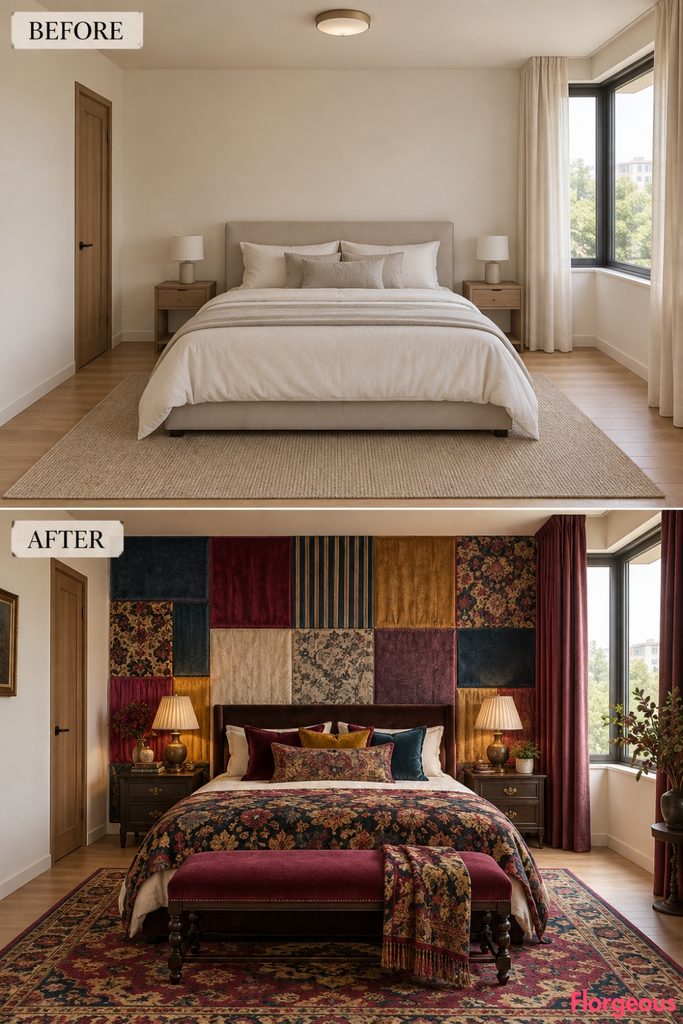
Before: The rear wall behind the bed is flat, blank, and softly painted, with almost nothing to hold the eye.
After: The bed wall becomes a layered textile composition using broad panels of velvet, moiré, striped cotton, linen, satin, and jacquard in tobacco, petrol, raspberry, saffron, mauve, and cream. A dark upholstered bed, patterned throw, pleated lamp, and graphic rug turn it into a full Maximalist Bedroom rather than just a fabric display.
4. Add a Beaded Screen and Glossy Color Contrast
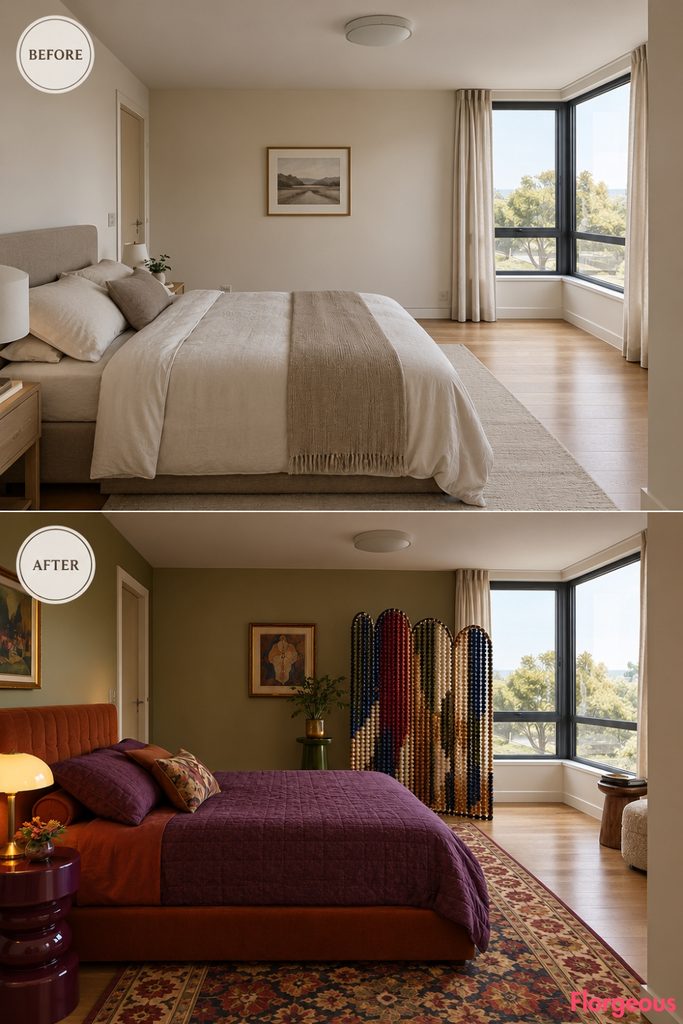
Before: The open zone near the corner window is bright but visually empty.
After: A freestanding beaded screen in cobalt, berry, tobacco, cream, and olive lightly defines the window-side area. A rust bed, plum quilt, patterned rug, glossy painted pedestal, and warm metallic lamp turn the screen into one part of a richer composition full of transparency, shine, and texture.
Why it works: The beaded screen gives the room a memorable silhouette, but the layered bedding and glossy furniture are what make it feel truly maximalist.
5. Paint a Theatrical Drapery Illusion and Layer Around It
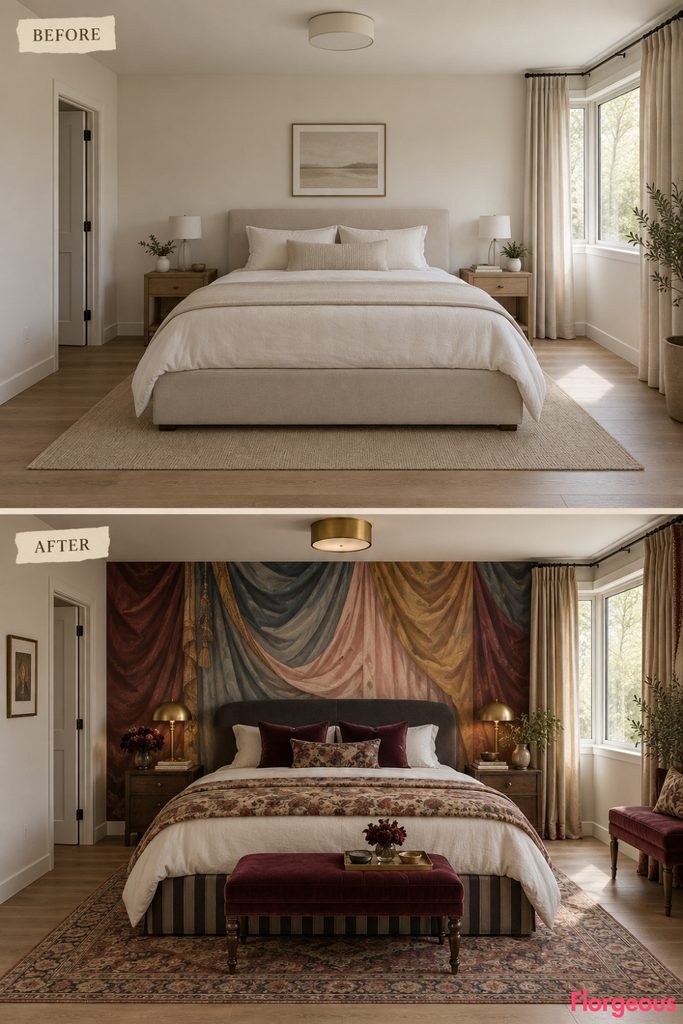
Before: The rear wall is plain and the bed arrangement is calm but generic.
After: The rear wall becomes a hand-painted trompe-l’oeil drapery scene in oxblood, smoky blue, blush, and saffron. A charcoal bed, striped bed base, pale bedding, brass lamp, berry curtain accents, and a patterned throw give the room supporting richness without competing with the mural.
6. Build a Soft-Relief Bedroom With Felt, Pattern, and Color
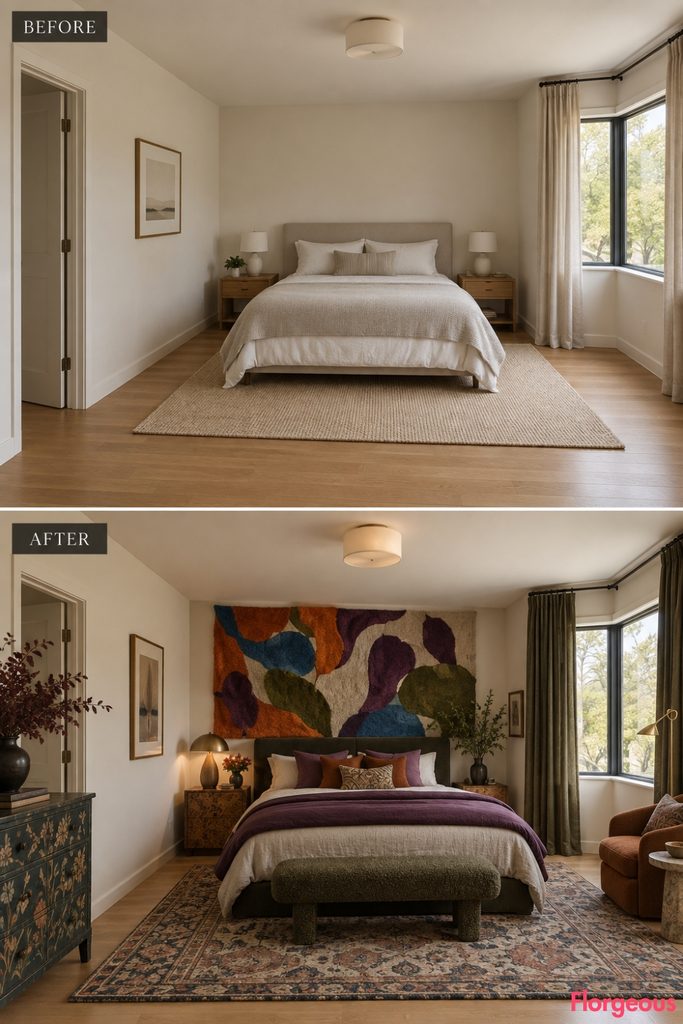
Before: The side wall near the front of the room is just another smooth painted surface.
After: Oversized wool-felt relief shapes in burnt orange, cerulean, aubergine, moss, and oatmeal climb the front-left wall. The bed becomes darker and richer, the rug gains a smaller-scale pattern, the curtains become deeper in tone, and a sculptural lamp plus painted chest make the room feel layered and intentional.
7. Make a Ceramic Console the Colorful Anchor
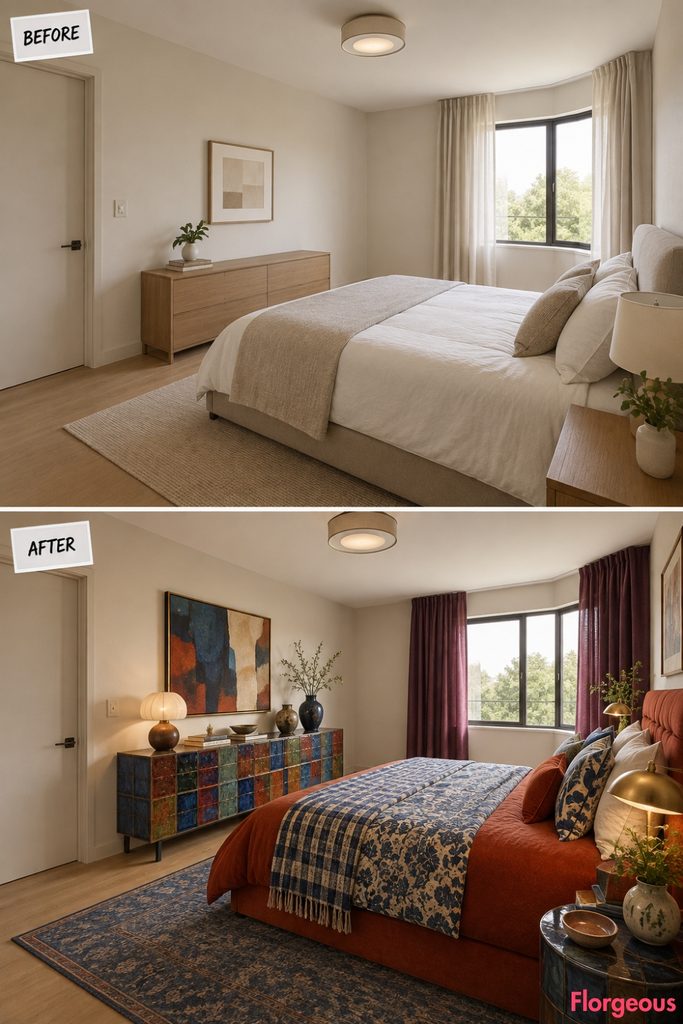
Before: The room has only basic bedside storage and very little personality.
After: A substantial freestanding ceramic-clad console runs along the solid front-left wall, using glazed tiles in paprika, blue, cream, green, and aubergine. The bed becomes paprika-upholstered, bedding picks up cobalt and cream pattern, curtains deepen to plum, and collected ceramics reinforce the palette.
Budget Version: Tiling only the drawer fronts can create the same effect with less cost.
8. Layer Three Rugs and Build the Room From the Floor Up
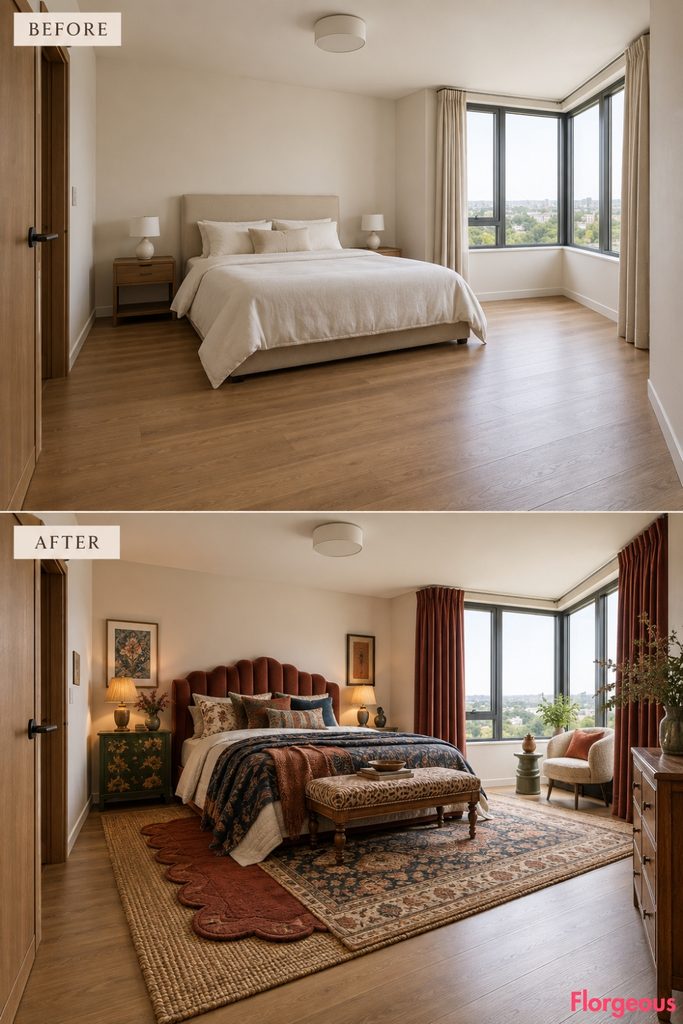
Before: The open oak floor between the bed and corner window feels empty and slightly unfinished.
After: A broad flatweave sits under the bed, a narrower patterned runner overlaps one side, and a rounded rug defines the window zone. The bed gains richer upholstery, the curtains deepen, one bedside piece becomes painted, and a cluster of textiles and objects creates a collected atmosphere.
9. Wrap the Lower Walls in Shirred Fabric and Add Bold Companions
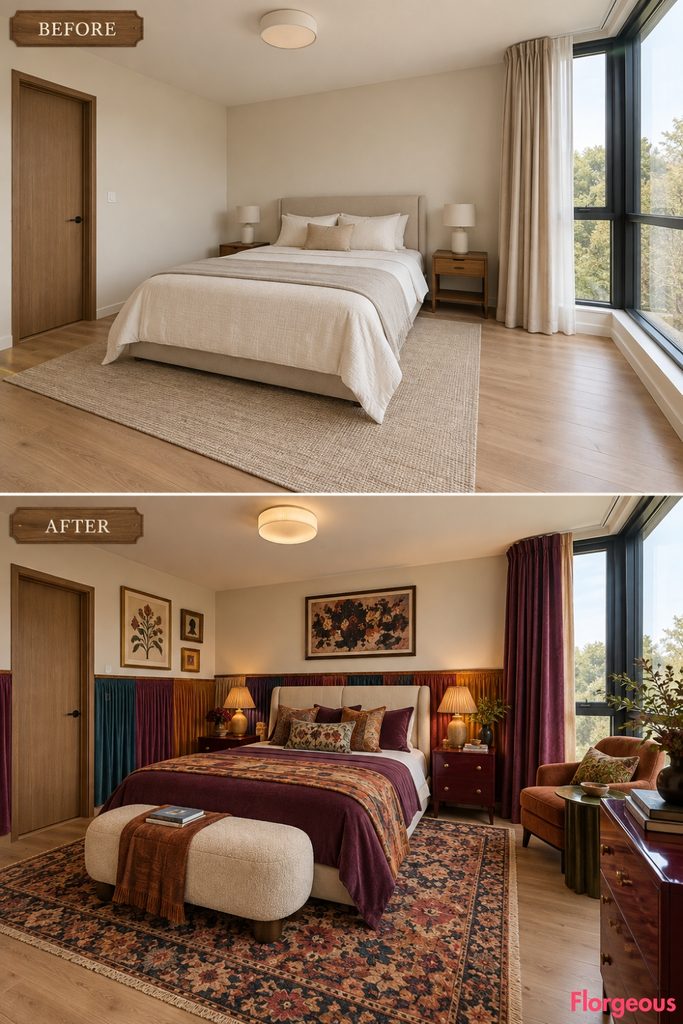
Before: Every wall surface is visually flat, with little contrast or detail.
After: The lower sections of the rear and front-left walls are wrapped in removable shirred fabric in petrol, mulberry, rust, and ochre. Above, pale walls keep the room balanced. A cream bed with plum bedding, glossy chest, patterned rug, and pleated lamp shade make the result feel rich and residential.
10. Turn a Cord-Wrapped Bed Into a Craft-Led Focal Point
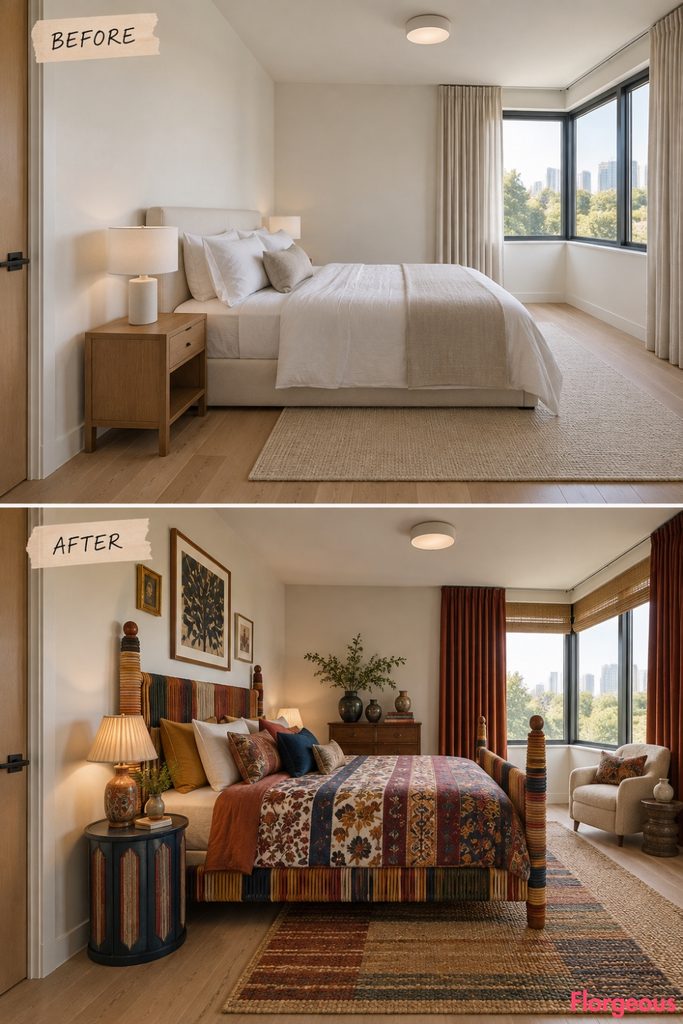
Before: The basic upholstered bed quietly blends into the soft neutral room.
After: A simple timber bed replaces it, with rails and posts wrapped in paprika, saffron, petrol, berry, olive, and cream cotton cord. Around it, a patterned quilt, saturated curtains, painted side table, woven rug, and collected ceramics create the full maximalist mood.
11. Replace Nightstands With Upholstered Sculptural Blocks
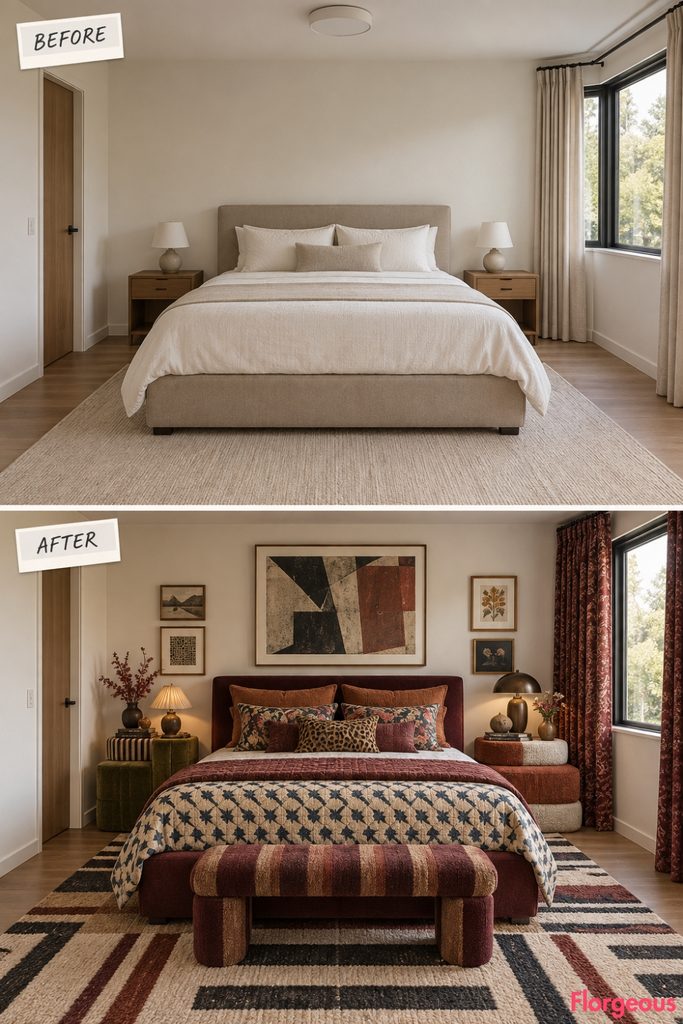
Before: Two identical bare nightstands make the arrangement feel standard and predictable.
After: One side of the bed gets a low velvet block with a striped cylinder above it, while the other gets a bouclé cube and firm wedge-like form. The bed is bolder, the rug is graphic, the curtains are richer, and lamps plus curated objects complete the composition.
Small Space Tip: Keep the sculptural blocks within the footprint of ordinary nightstands so the bed remains easy to access.
12. Scatter Color Across the Ceiling and Ground It Below
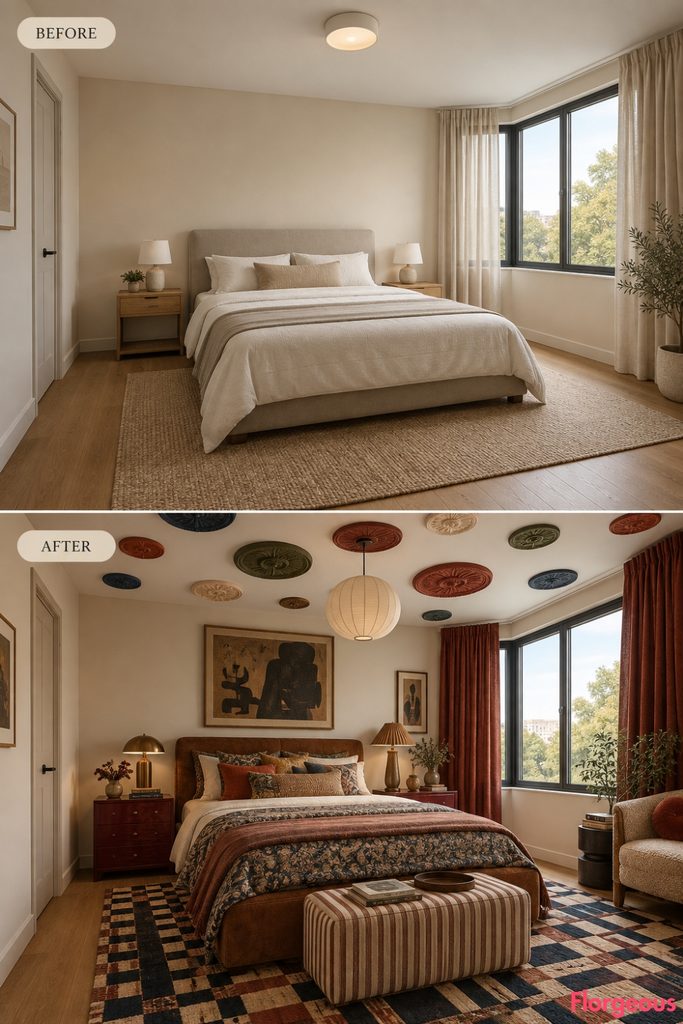
Before: The compact ceiling fixture sits alone on an uninterrupted flat ceiling.
After: Lightweight ceiling medallions in raspberry, cobalt, saffron, olive, aubergine, and cream spread across the ceiling like an overhead color field. Below, a tobacco bed, patterned bedding, strong curtains, lacquered bedside furniture, and a rug with smaller-scale motif create a room that feels layered from top to bottom.
Common Mistake: If the bed and floor stay too plain, the ceiling looks disconnected. Repeat its colors below.
13. Use Moiré, Satin, and Color Shift for Layered Drama
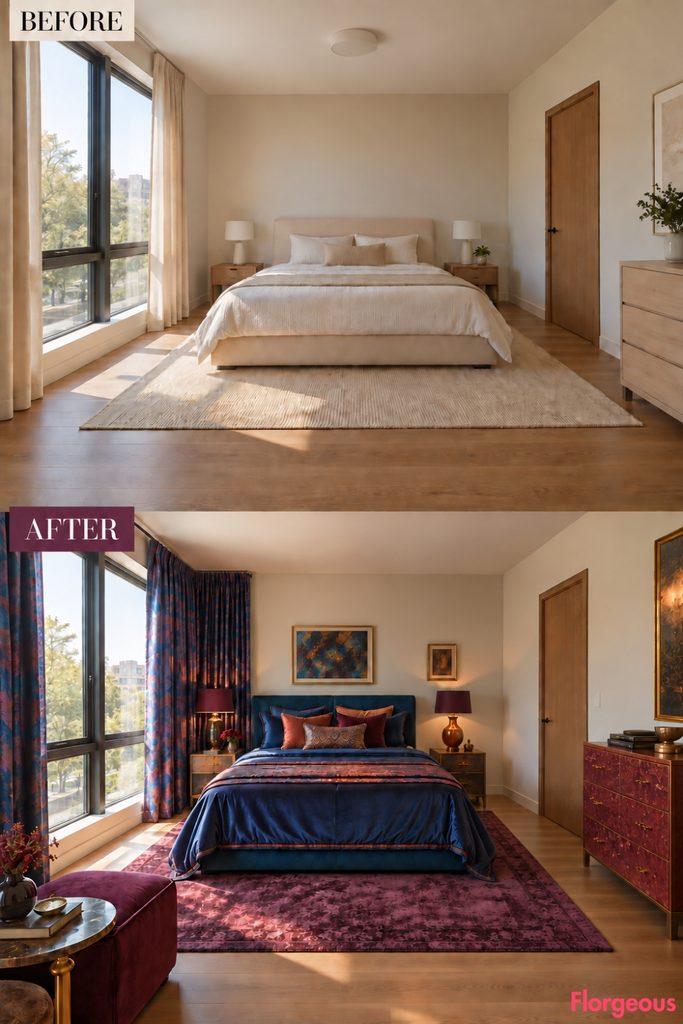
Before: The curtains and bedding are soft and plain, with little material contrast.
After: Petrol-violet moiré curtains wrap the corner window, a copper-berry shot-fabric chest shifts in the daylight, and deep-blue bedding with satin piping adds sheen. A dense plum rug, colored-glass lamp, and jewel-toned cushions turn the room into a richly layered Maximalist Bedroom without relying on heavy print.
14. Paint an Oversized Scalloped Border and Layer Against It
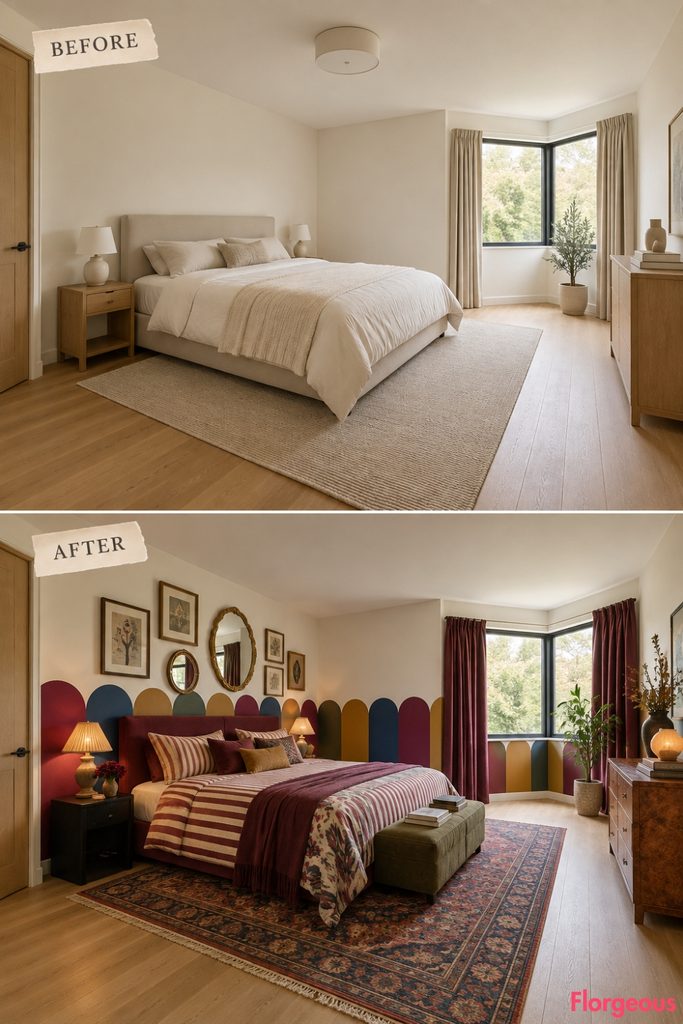
Before: The walls and floor edge have no strong visual definition.
After: Giant painted scallops in berry, cobalt, ochre, olive, and cream wrap the lower walls, stopping cleanly around the doorway and corner window. The bed shifts slightly off-center, while striped bedding, strong curtains, a low chest, and a mirror composition make the room feel fully decorated.
15. Draw Across the Upholstery With Dense Embroidery
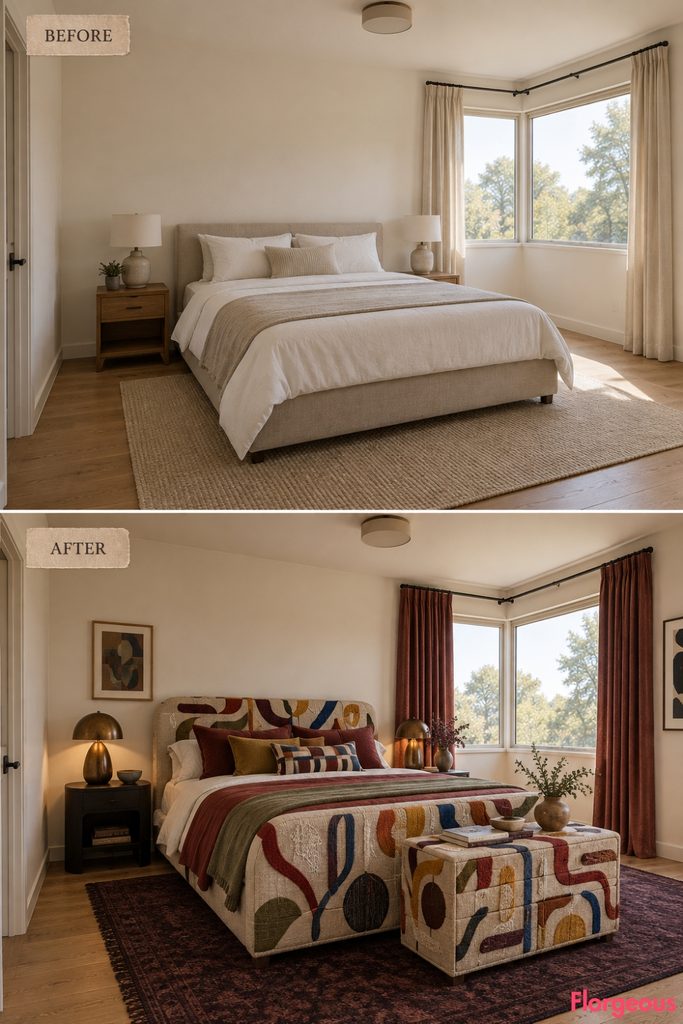
Before: The upholstered bed and small storage pieces are visually plain.
After: A flax bed becomes a canvas for abstract embroidery in paprika, cobalt, olive, burgundy, and mustard. The stitching spreads in denser fields across the bed and more quietly onto a freestanding chest. A dark rug, plain curtains, and sculptural lamp give the embroidered surfaces room to shine.
16. Turn the Corner Window Into a Layered Sheer Installation
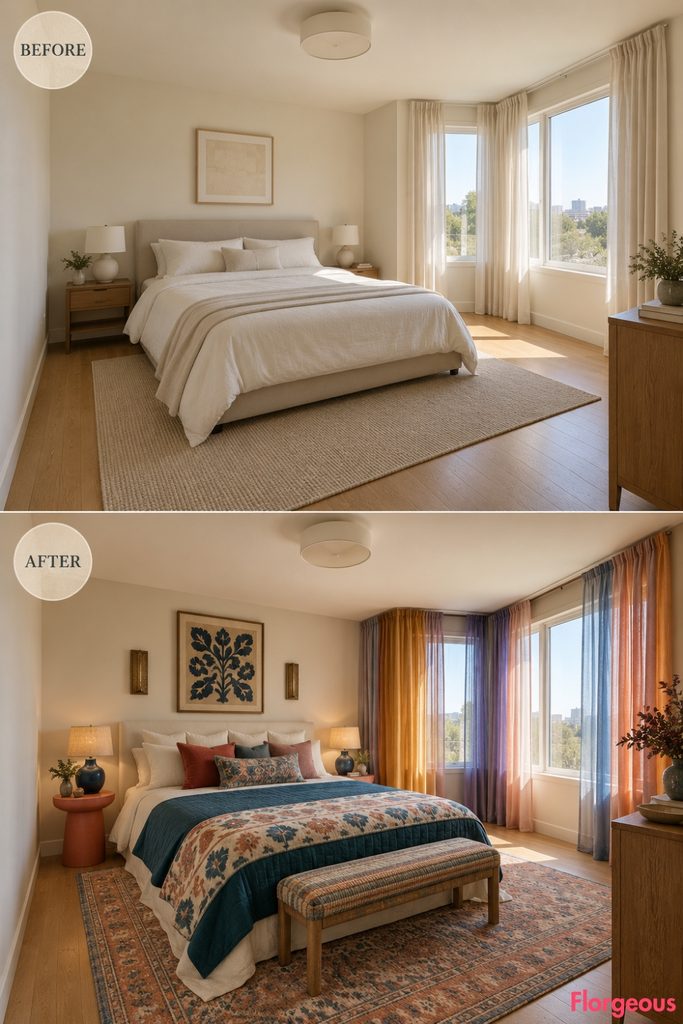
Before: Pale plain curtains sit around the corner window but do little with the architecture.
After: Separate translucent sheers in amber, lilac, dusty blue, and pale coral wrap both planes of the L-shaped window. Their overlap creates deeper mixed colors, while a cream bed, petrol blanket, coral pedestal, patterned coverlet, and soft rug make the rest of the room feel equally considered.
Why it works: The sheers make the window itself part of the maximalist composition rather than just a source of light.
17. Give the Bed a Hinged Textile Headboard and Build the Palette Around It
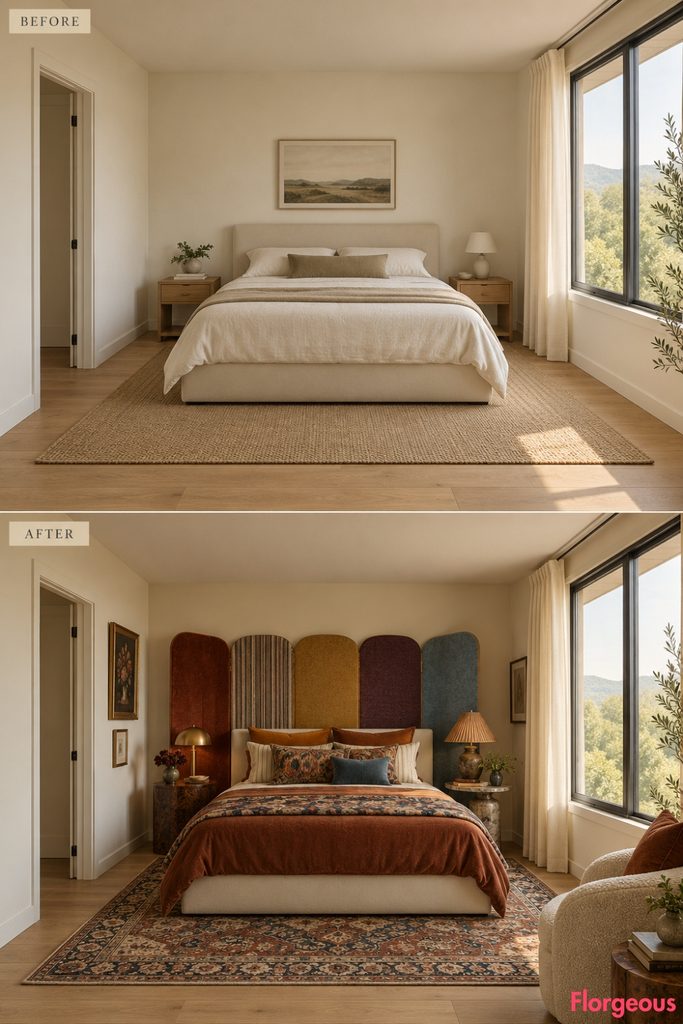
Before: A standard upholstered headboard sits flat against the rear wall.
After: Slim hinged panels behind the bed fold into a shallow zigzag, each upholstered in rust velvet, striped wool, ochre linen, plum bouclé, or dusty-blue cloth. The bedding, rug, side tables, and lamps all pull from those colors, making the headboard feel like the source of the room rather than an isolated feature.
18. Create a Low Landscape of Lacquered Storage
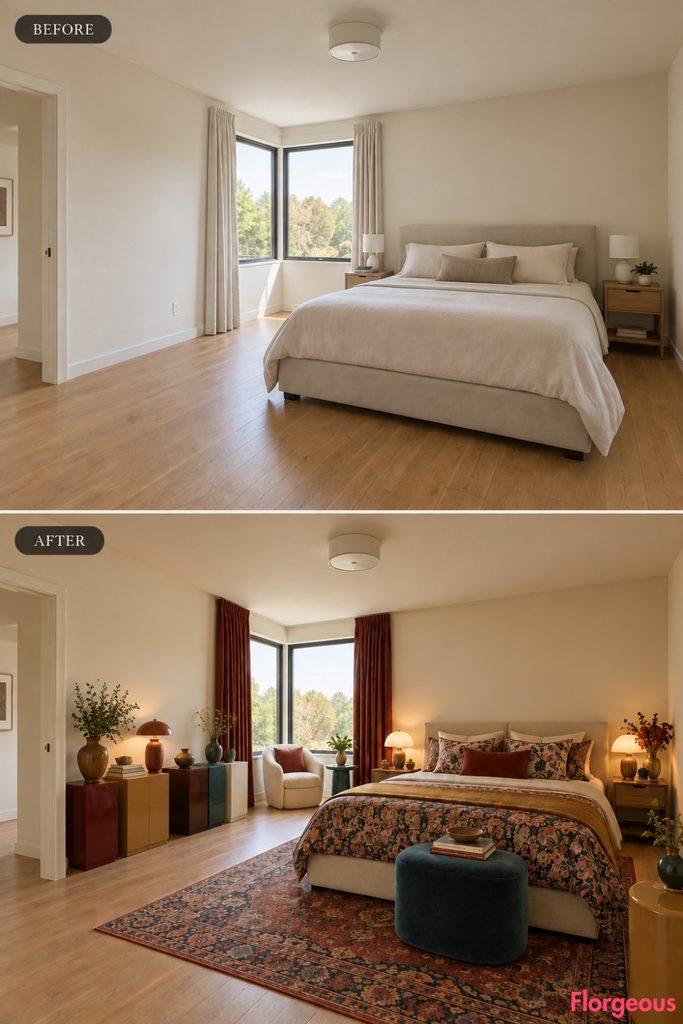
Before: The solid wall near the front-left zone is underused and visually quiet.
After: Low lacquered plinths in berry, ochre, black cherry, petrol, and cream step across that wall at varied heights and depths. Some pieces hold closed storage, others support a lamp or ceramics. Opposite them, the bed gains patterned textiles, strong curtains, and a rug that ties the whole palette together.
19. Finish With a Giant Rope-Loop Wall Sculpture
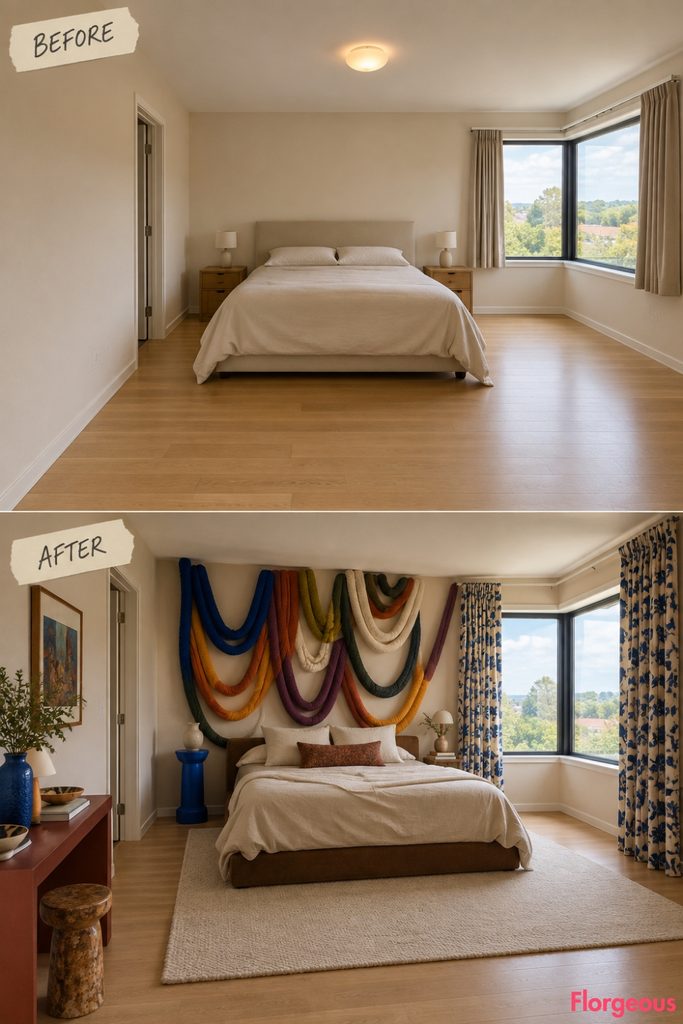
Before: The solid side wall remains blank, and the neutral furnishings provide very little energy.
After: Thick textile rope in cobalt, rust, saffron, plum, moss, and cream sweeps across the wall in huge overlapping loops. A low tobacco bed, cream bedding, blue pedestal, patterned curtains, simple wool rug, and collected ceramics support the wall sculpture without competing with it.
This final version feels bold, tactile, and unmistakably maximalist.
How to Make a Maximalist Bedroom Feel Rich Instead of Messy
The most successful rooms here are not simply full of more things. Each one has a clear visual engine, whether that is trim, flooring, embroidery, color-shifting fabric, sculptural storage, layered sheers, or a wall-scale installation.
If you want to build your own Maximalist Bedroom, start with one dominant feature first. Then repeat its colors or textures in smaller ways through bedding, lighting, storage, or curtains so the room feels connected rather than accidental.
Most importantly, protect the practical parts of the layout. Keep the route from the left-side doorway clear, preserve access to both planes of the corner window, use realistic full-depth storage, and give your strongest focal point enough visual breathing room to be seen.