
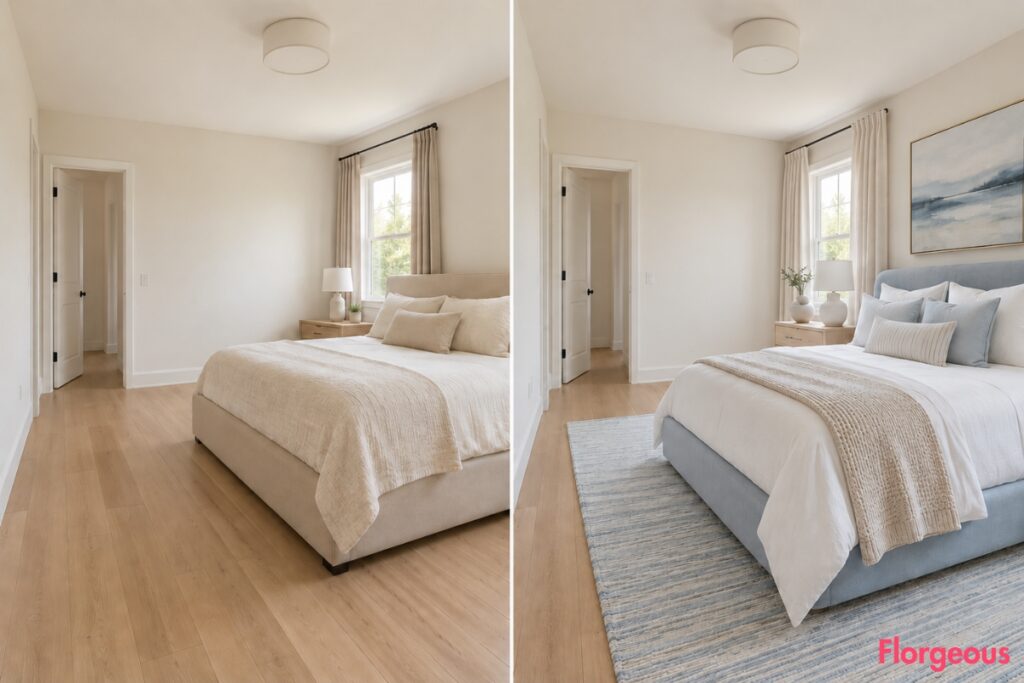
A plain bedroom can look clean and still feel unfinished. Our starting room has warm off-white walls, warm oak flooring, a basic neutral upholstered bed along the right wall, simple cream-beige bedding, two bare light-oak nightstands, a short plain window treatment, one compact ceiling light, and almost no styling.
The architecture stays deliberately straightforward so the design can do the work. The doorway sits on the rear-left, a tall rectangular window brings daylight through the rear-right, the left wall is solid, and the broad floor route on the left stays open.
Every Coastal Modern Bedroom below begins from this exact same room. The camera changes from section to section, but within each before-and-after pair the camera, lens, framing, room dimensions, doorway, window, ceiling, flooring footprint, and daylight direction remain identical.
These are not 23 small decorating swaps. Each after room has its own design logic, atmosphere, furniture language, palette, and focal point, while staying bright, relaxed, modern, and unmistakably coastal.
1. Build the Room Around a Soft Powder-Blue Cocoon Bed
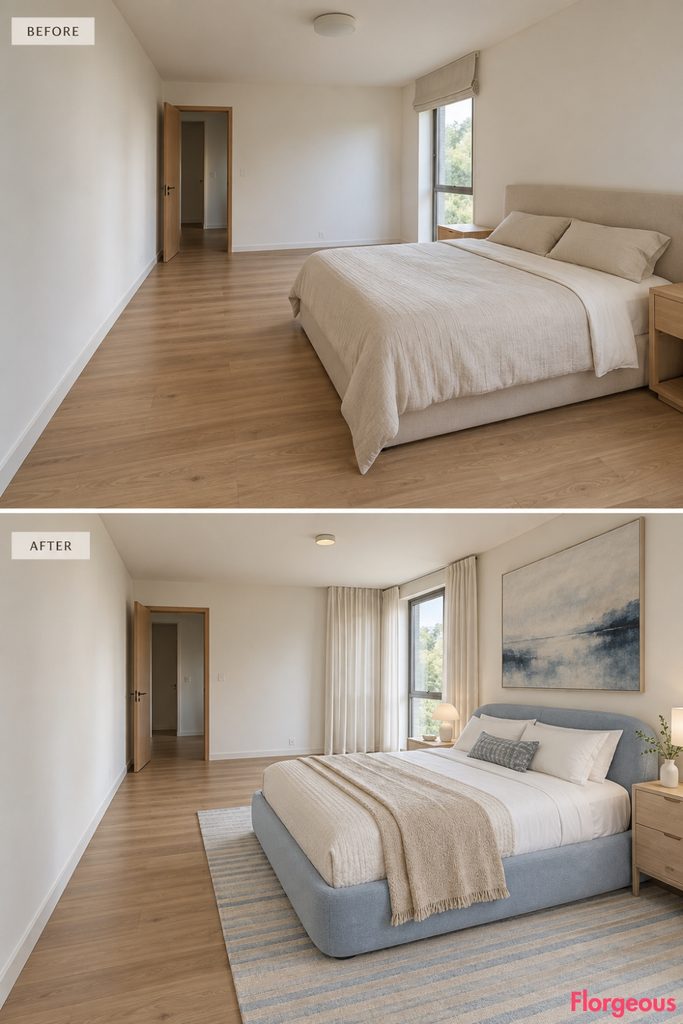
This version starts with color, but the room is designed around it rather than simply dropping in a blue bed.
Before: The same plain bedroom has a generic beige upholstered bed, basic bedding, two bare oak nightstands, short curtains, and little visual depth.
After: Introduce a generously upholstered powder-blue bed with softly rounded outer corners. Pair it with one compact limestone bedside block and one bleached-oak drawer table rather than a matching set. Layer white percale, a chalk matelassé quilt, and a loosely folded oatmeal blanket. A pale blue-and-ivory pinstripe rug runs parallel to the bed, while full-height ivory linen curtains soften the bright rear window. One broad abstract canvas in fog, cream, and faded denim finishes the wall without making it nautical.
Why it works: Blue is the emotional anchor, while stone, oak, linen, and negative space prevent the room from becoming sugary or themed.
2. Wrap the Sleep Zone in a Sun-Washed Dune Color Block
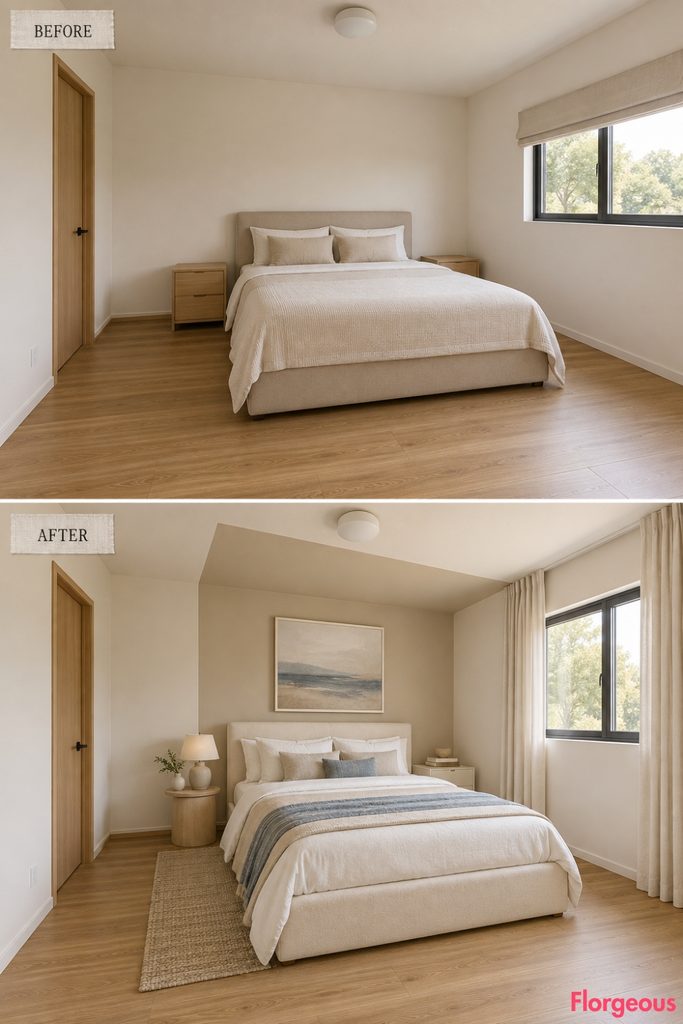
Instead of adding architectural paneling, paint creates the architecture.
Before: The neutral bed disappears slightly against the uninterrupted warm-white right wall.
After: Paint a large soft-edged rectangle of pale dune beige behind the bed, then continue the color approximately two feet across the ceiling above the sleeping zone. The rest of the ceiling and walls stay warm white. Use an ivory bed with a low, substantial silhouette, a pale maple pedestal table, a small ivory lacquer drawer unit, and bedding in white, flax, and one washed blue-gray stripe. A sculptural matte ceramic lamp and narrow sandy wool rug add weight without filling the room.
3. Give the Room an Indigo-Tailored Coastal Hotel Look
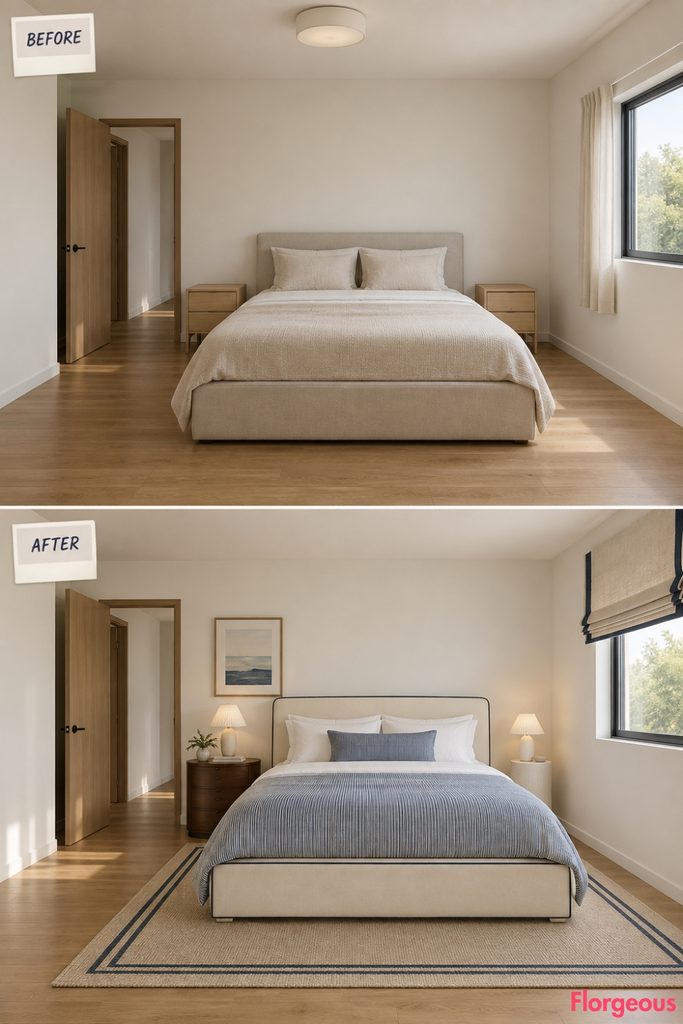
This room is sharper and more tailored than the first two.
Before: The same basic neutral bedroom has no strong line or graphic detail.
After: Keep the bed cream but finish the upholstery with narrow indigo grosgrain around its perimeter. Use crisp white bedding with an indigo micro-stripe duvet folded low across the mattress. One bedside table is dark walnut with rounded edges, while the other is a slim cream pedestal. The window gets a flax Roman shade with a navy outer border, and a large oatmeal rug with a double indigo line grounds the bed. A pair of pleated porcelain table lamps keeps the scheme refined rather than nautical.
Designer Tip: Dark blue works best here as a line, not a field of color.
4. Make Sea-Glass Green the Room’s Polished Furniture Color
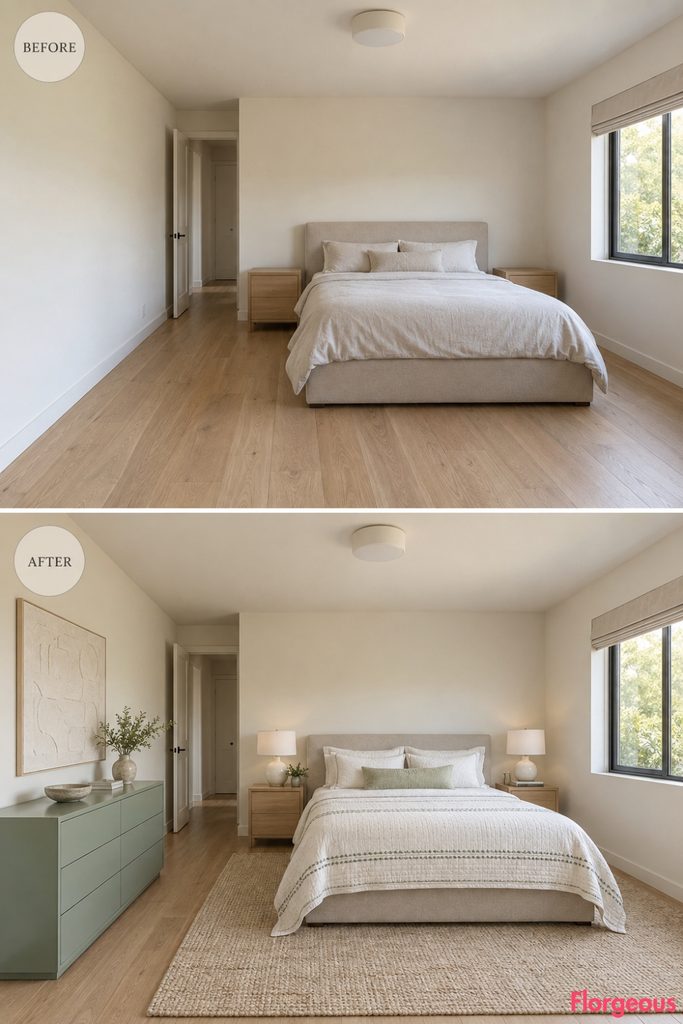
This makeover uses coastal green as a furniture finish rather than a wall color.
Before: The left wall is empty and both nightstands are plain light oak.
After: Place a low sea-glass lacquer dresser on the solid left wall, finished in a desaturated green with a subtle satin sheen. Keep the bed warm ivory, but introduce pale celadon piping along one lumbar cushion and a lightweight white coverlet with a green-gray stitched edge. Beside the bed, use creamy oak tables and rounded milky-glass lamps. Above the dresser, hang one large unframed plaster-relief artwork in warm white. A light natural rug keeps the room airy.
5. Warm Coastal Modern With Sun-Faded Clay and Chalk
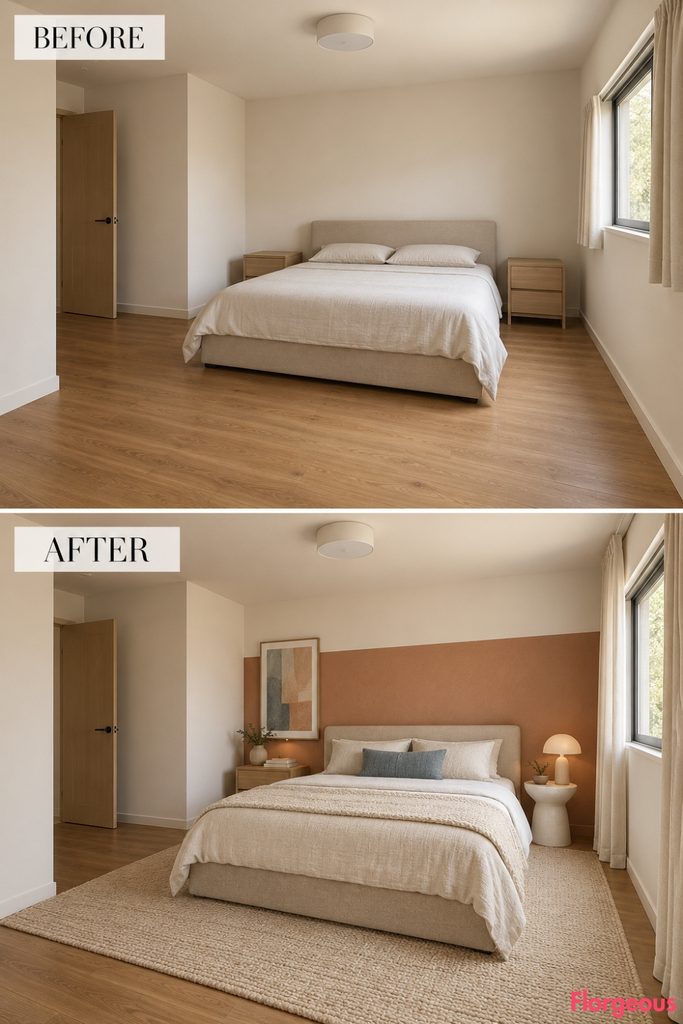
This room proves coastal does not have to mean blue.
Before: The neutral base room feels clean but visually cool and generic.
After: Wash the lower two-thirds of the right wall in a muted sun-faded clay tone and leave the upper wall chalk white. Use a sand-colored upholstered bed, chalk linen, a cream boucle-textured blanket, and one faded blue-gray cushion to cool the palette slightly. A pale oak bedside chest sits on one side and a chunky matte-white ceramic table on the other. Add a broad natural wool rug and one simple landscape-inspired artwork in clay, salt white, and gray-blue.
Color Story: Clay should look sun-bleached and dusty, never bright terracotta.
6. Turn Soft Sage Into a Calm Coastal Landscape Palette
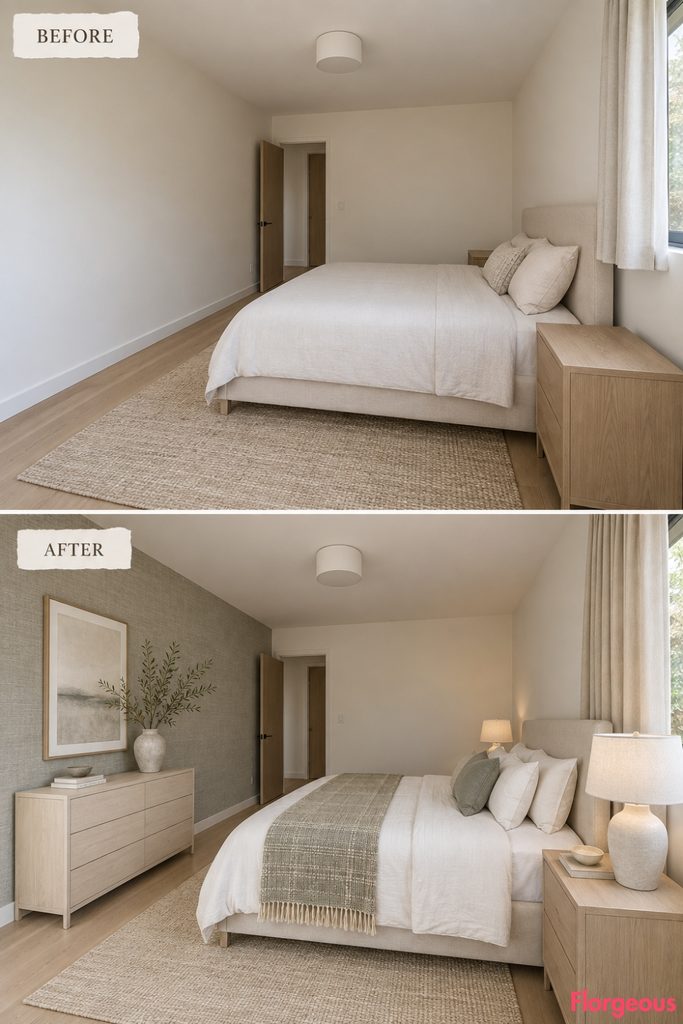
Green takes the room in a more grounded direction.
Before: The same warm-white bedroom has no connection between the bright window and the rest of the space.
After: Cover the solid left wall in a fine gray-sage linen wallcovering and leave the other walls untouched. Use a cream bed with pale oak feet, white cotton bedding, and a large sage-and-oyster woven blanket folded casually across the bottom. A bleached-maple chest, chalk ceramic lamp, and oversized vessel with a loose olive branch arrangement create height on the left. The window gets airy natural-linen curtains rather than colored drapery.
7. Create a Mist-Blue Ombré Wall That Feels Like Coastal Light
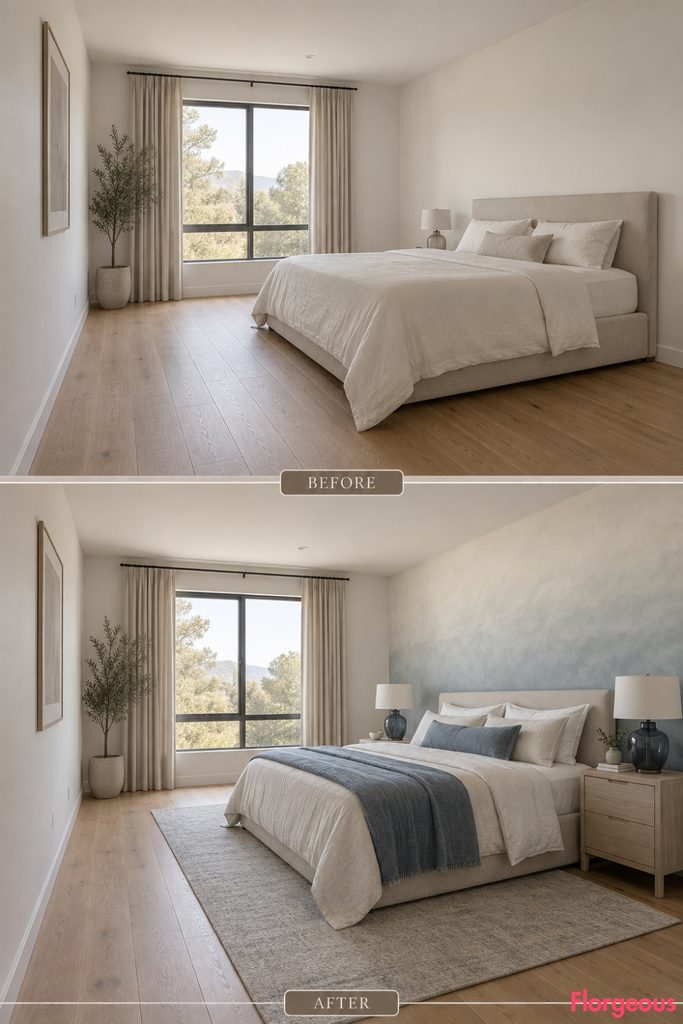
This is the most painterly room in the set.
Before: The right wall is a single flat warm-white surface.
After: Apply a hand-finished mineral wash that begins as misty blue-gray near the floor and gradually fades into warm white above headboard height. Keep the bed very simple in oatmeal linen so the wall remains visible around it. Use smoky blue glass lamps, one bleached oak bedside cabinet, a chalk-white cylindrical table, and a pale gray wool rug. Bedding stays mostly white with one thin washed-denim blanket.
Why it works: The gradient suggests changing coastal light without depicting sky or water literally.
8. Make an Almost-All-White Room Feel Rich Through Texture
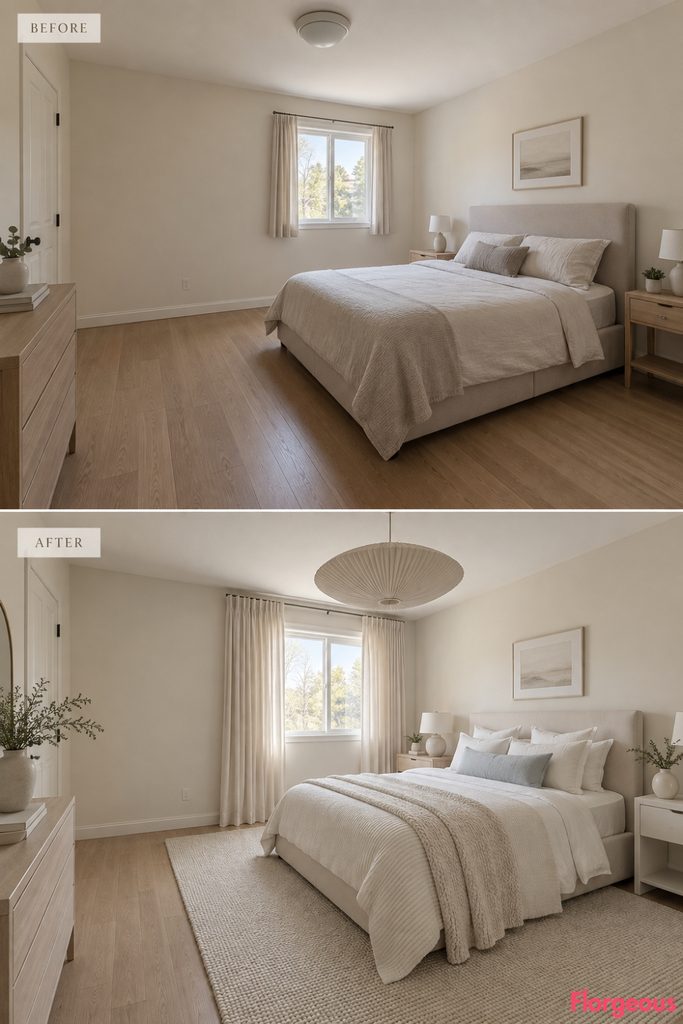
This makeover is intentionally low on color but not minimal in feeling.
Before: The plain room is neutral but visually flat.
After: Use a soft ivory bed with a deep upholstered frame, chalk-white linen sheets, a thick nubby cotton blanket, and a finely ribbed ivory coverlet. Add an off-white loop-pile rug that extends generously around the bed. One nightstand is bleached ash, the other is matte ivory. A broad pleated fabric pendant hangs high and shallow, while a white sculptural ceramic vessel and a pale timber frame artwork add quiet dimension. The only color is a very pale blue-gray lumbar cushion.
9. Give the Bedroom a Mediterranean-Coast Modern Warmth
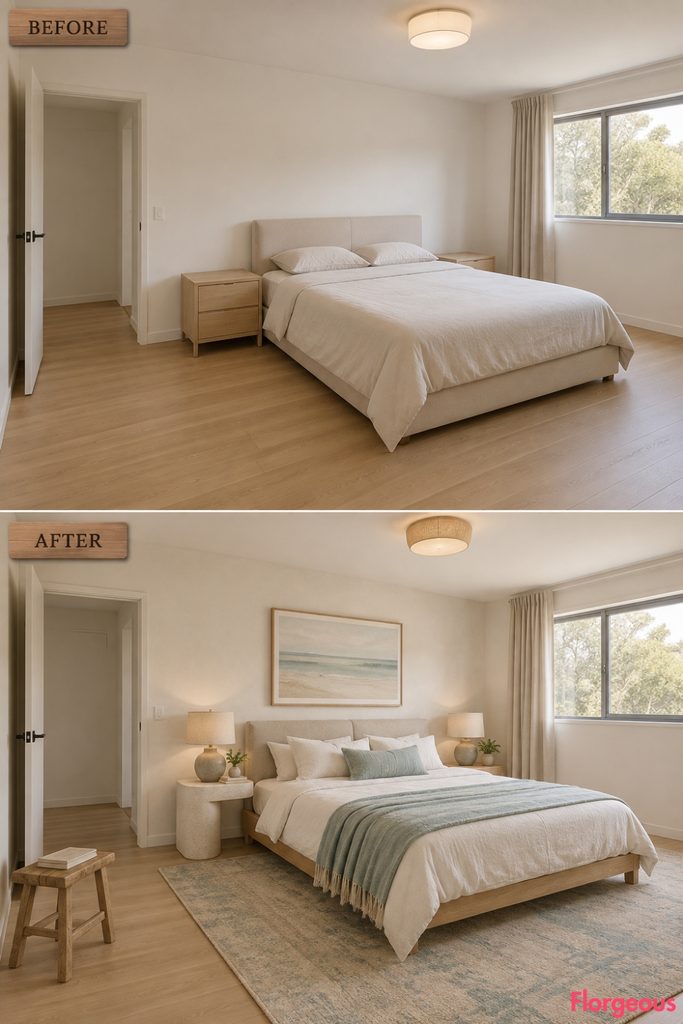
This room feels sunlit rather than cool.
Before: The original warm-white walls and basic oak furniture lack texture.
After: Apply a creamy chalk-lime finish to the walls, then use a low pale-oak bed with rounded rails and a softly upholstered oatmeal headboard. Add loose white linen, a faded aqua woven blanket, and small hand-thrown bedside lamps with sandy glaze. One side gets a thick cream table, the other a simple timber stool. A muted sand-and-aqua rug introduces pattern without reading Moroccan or bohemian.
Style Note: The room should feel coastal Mediterranean through mineral texture and sun-softened color, not through arches or themed accessories.
10. Take Coastal Modern in a Cooler Nordic Direction
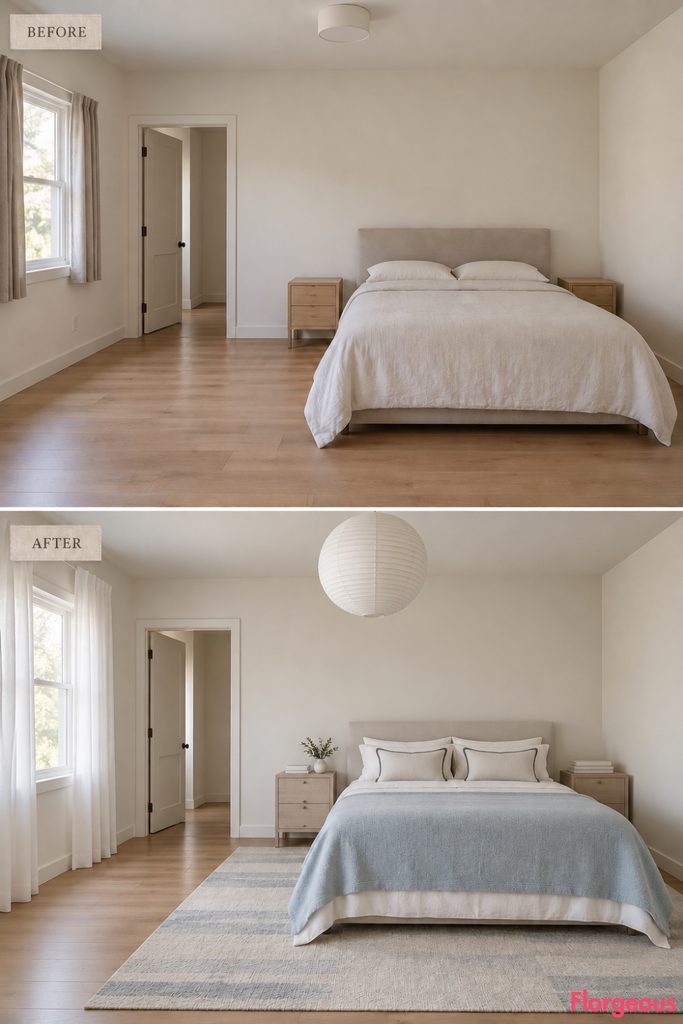
This bedroom is lighter, crisper, and quieter.
Before: The baseline room feels warm and generic.
After: Use a pale ash bed with squared edges, off-white bedding, a powdery ice-blue wool coverlet, and a narrow charcoal piping detail on just two cushions. Replace the nightstands with compact ash cabinets raised slightly on slim legs. A white paper lantern with subtle pleating hangs high overhead. The rug is a flatwoven blend of cream, pale gray, and icy blue, while the curtains are sheer white cotton.
11. Use Washed Denim as the Main Upholstery Instead of an Accent
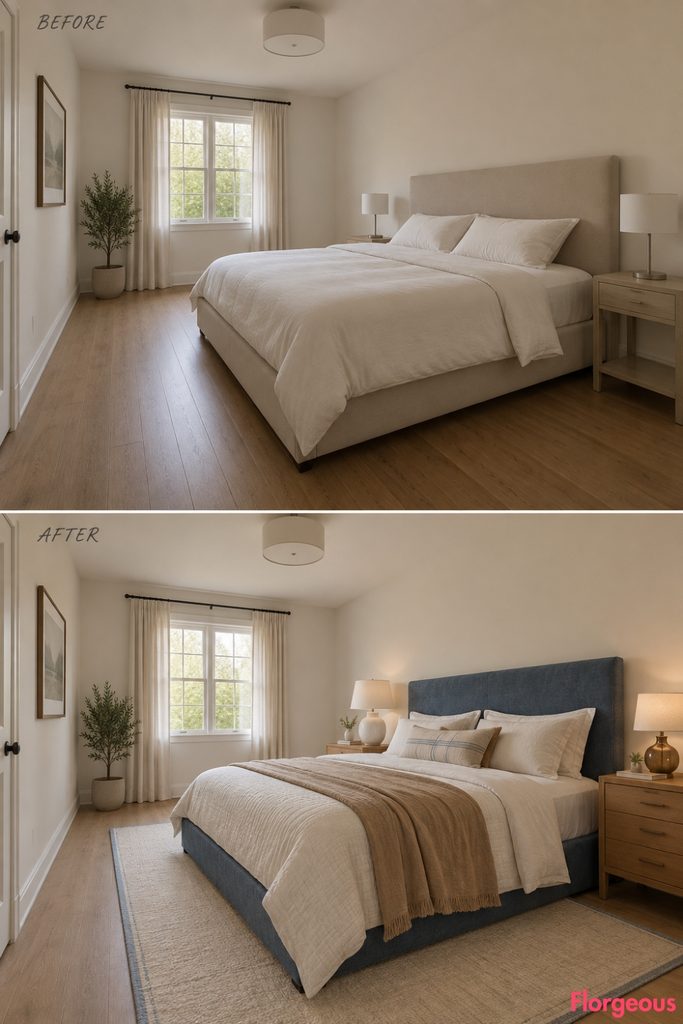
This version is deeper and more tactile.
Before: The basic beige bed disappears into the neutral room.
After: Replace it with a deep washed-denim upholstered bed, using a matte faded finish closer to vintage chambray than navy velvet. Layer it with ivory linen, camel-beige cotton, and one chalk-white quilt. Warm the look with honey-toned oak bedside furniture and a cream rug with a subtle blue edge. An oversized white ceramic lamp and a smaller caramel glass lamp make the asymmetry feel collected.
12. Make Fine Pinstripes the Room’s Main Architectural Pattern
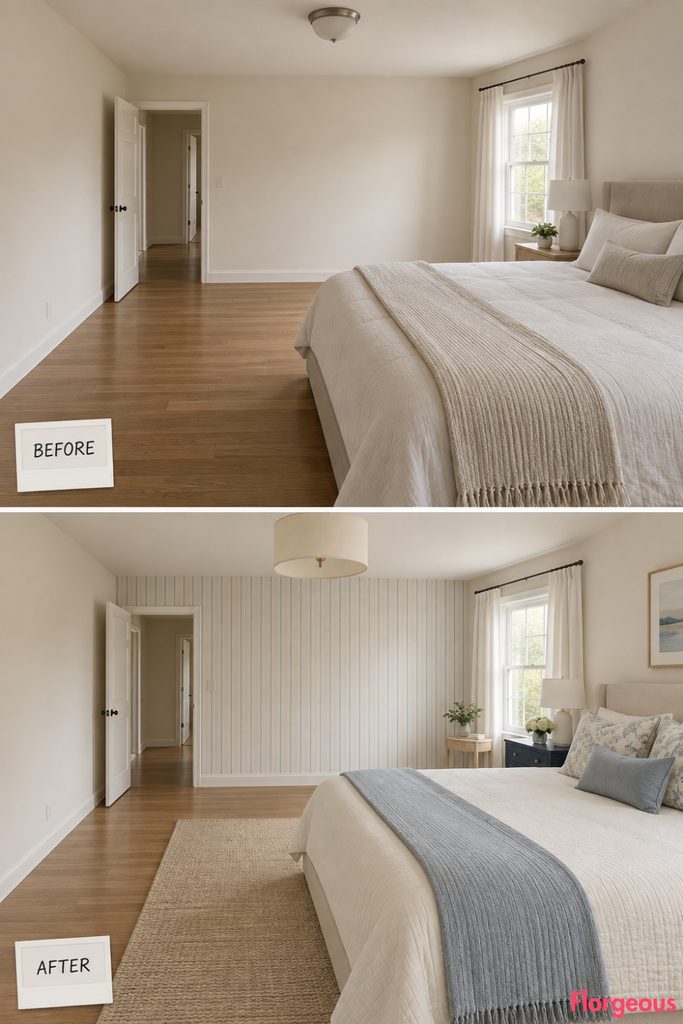
Rather than treating stripes as one small accessory, use them as the visual rhythm of the room.
Before: The rear wall around the doorway and window is plain.
After: Cover that rear wall in warm-white wallcovering with fine widely spaced dusty-blue pinstripes. Use an ivory bed with no pattern, a navy lacquer bedside chest on one side, pale birch on the other, and an oatmeal rug. White curtains frame the window without competing with the stripes. A simple cream drum pendant keeps the ceiling quiet.
13. Pair Shell Pink With Sea-Glass Green for a Softer Coast
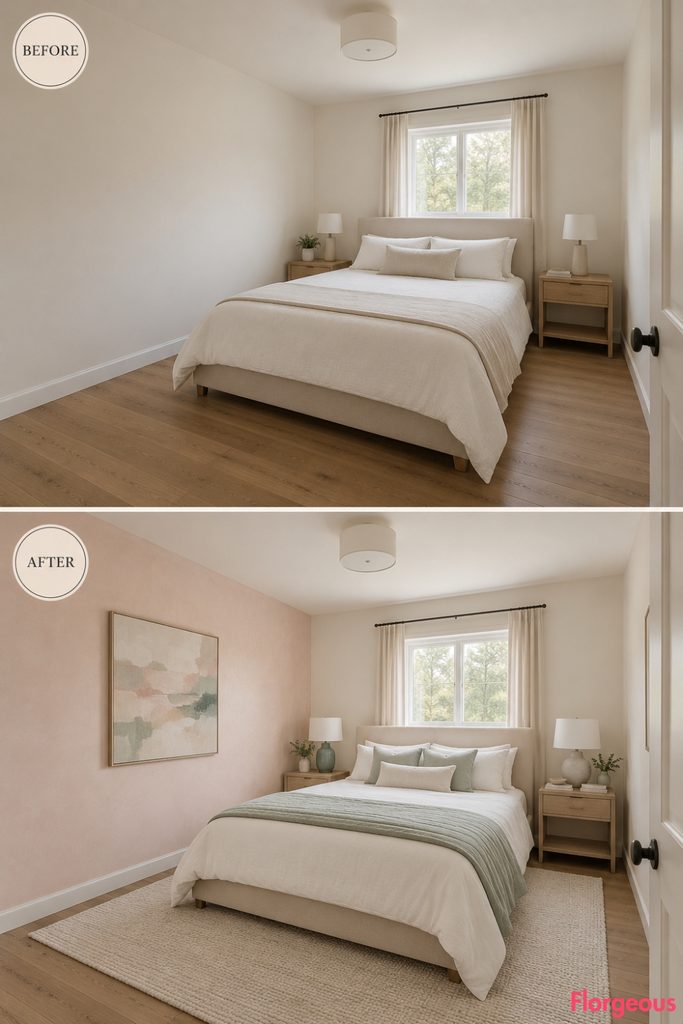
Coastal rooms do not need to stay inside beige and blue.
Before: The starting room is entirely neutral.
After: Use the palest shell-pink mineral paint on the solid left wall while keeping the bed wall warm white. Introduce a cream bed, white linen, a faded celadon quilt, and pale oak furniture. One bedside lamp has a glossy sea-glass green base, while the other is matte chalk ceramic. A soft ivory rug and one abstract artwork in pink, sand, and green make the palette feel intentional rather than feminine or tropical.
14. Make One Cobalt Gesture Carry an Otherwise Sandy Room
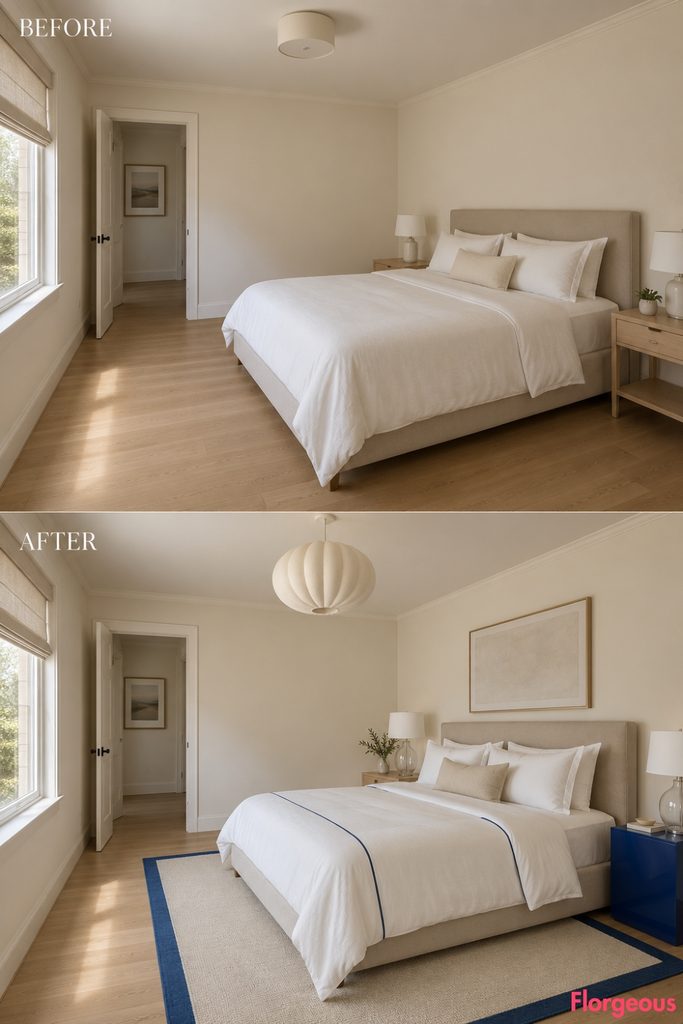
This room is more graphic and energetic but still controlled.
Before: The neutral bedroom has no memorable color moment.
After: Keep the walls warm white and use a sand-linen bed, pale timber furniture, and white bedding. Introduce one low cobalt lacquer bedside cube, then repeat that exact blue only in a wide border around an ivory rug and a thin stitched line on the duvet. A sculptural cream pendant and clear glass lamp prevent the room from feeling heavy.
Common Mistake: Do not scatter cobalt across five different accessories. The room works because the color appears in a few decisive places.
15. Float a Pale Sky-Blue Ceiling Above a Warm Oak Room
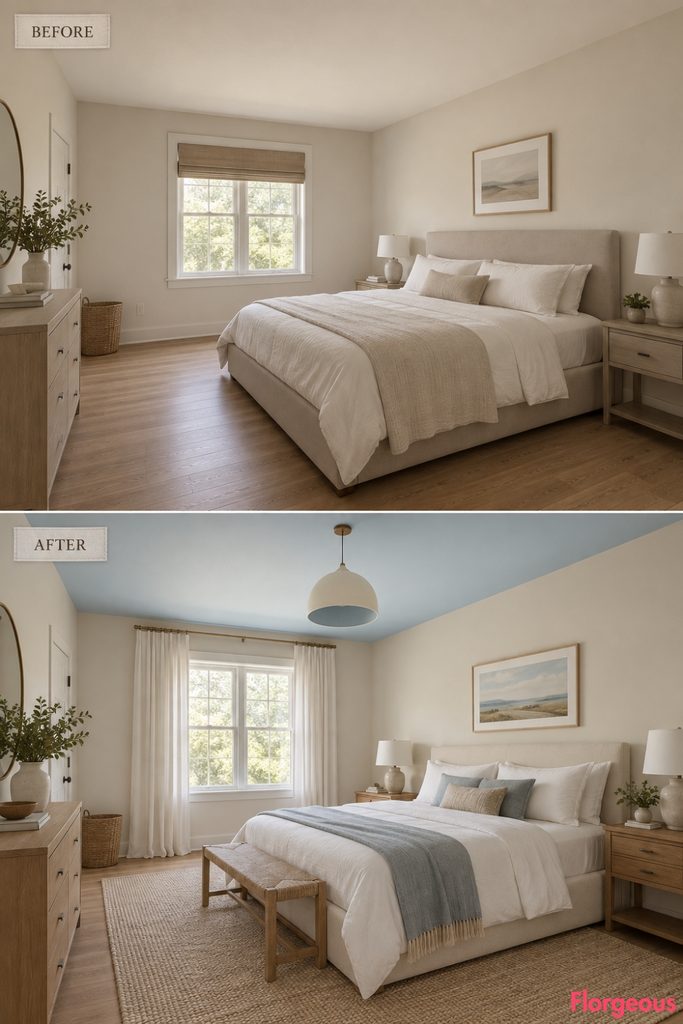
The ceiling becomes the calmest large color field in the bedroom.
Before: Walls and ceiling are all warm off-white.
After: Paint the ceiling a pale airy blue, slightly lighter than the powder blue used in section one. Below it, use a cream bed, medium honey-oak furniture, white bedding, and a textured flax rug. Full-height white linen curtains pull attention back toward the bright window. A ceramic pendant with a warm ivory exterior and blue-gray inner glaze ties the ceiling color down into the room.
16. Use Privacy Glass and Sheer Linen to Make the Window Feel Softer
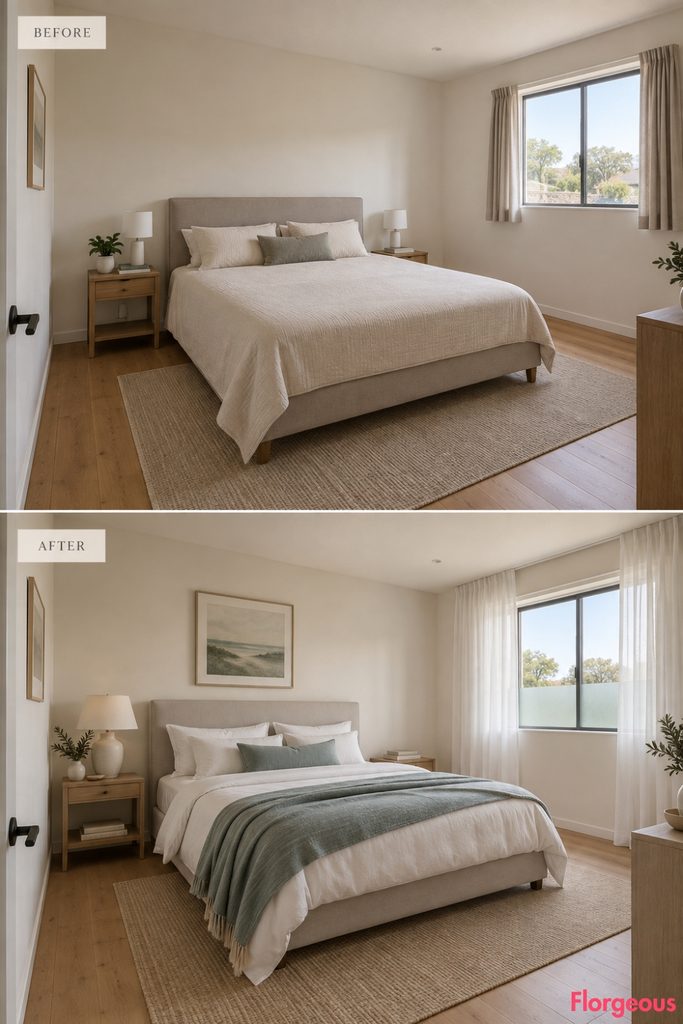
This idea is built around how daylight enters the room.
Before: The tall rear-right window has ordinary clear glazing and short curtains.
After: Add a translucent privacy treatment to the lower third of the glass using a very pale sea-glass tone, leaving the upper portion clear. Hang full-height white sheer linen panels beyond the window edges. Keep the bed pale ash and the bedding chalk white, then add one faded green-blue blanket and one creamy stoneware lamp.
Why it works: The light itself becomes part of the coastal palette.
17. Turn Chambray Into a Tailored, High-End Coastal Textile Story
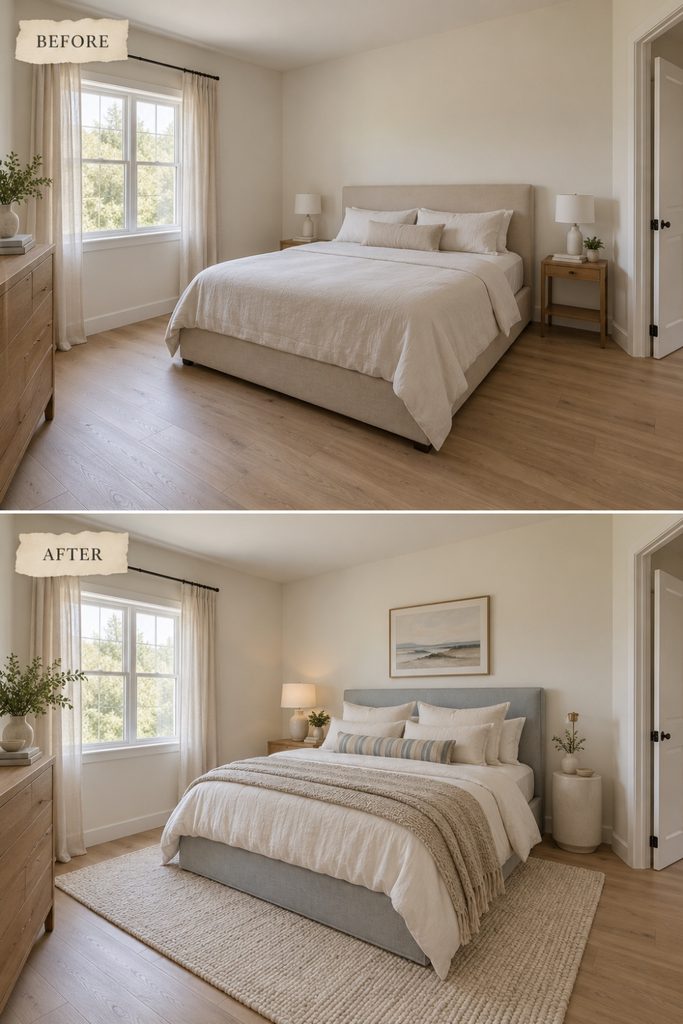
This room uses textile craftsmanship as the design language.
Before: Smooth beige upholstery and basic bedding make the room feel generic.
After: Upholster the bed in pale chambray with double topstitching rather than piping. Use a voluminous ivory linen duvet, a narrow striped bolster in blue-gray and sand, and an oversized natural-cotton blanket folded imperfectly at the foot. Add a light oak drawer table, a small off-white ceramic pedestal, and a soft ivory rug with visible handwoven irregularity.
18. Ground the Bright Room With Smoked Oak and Sea-Glass Accents
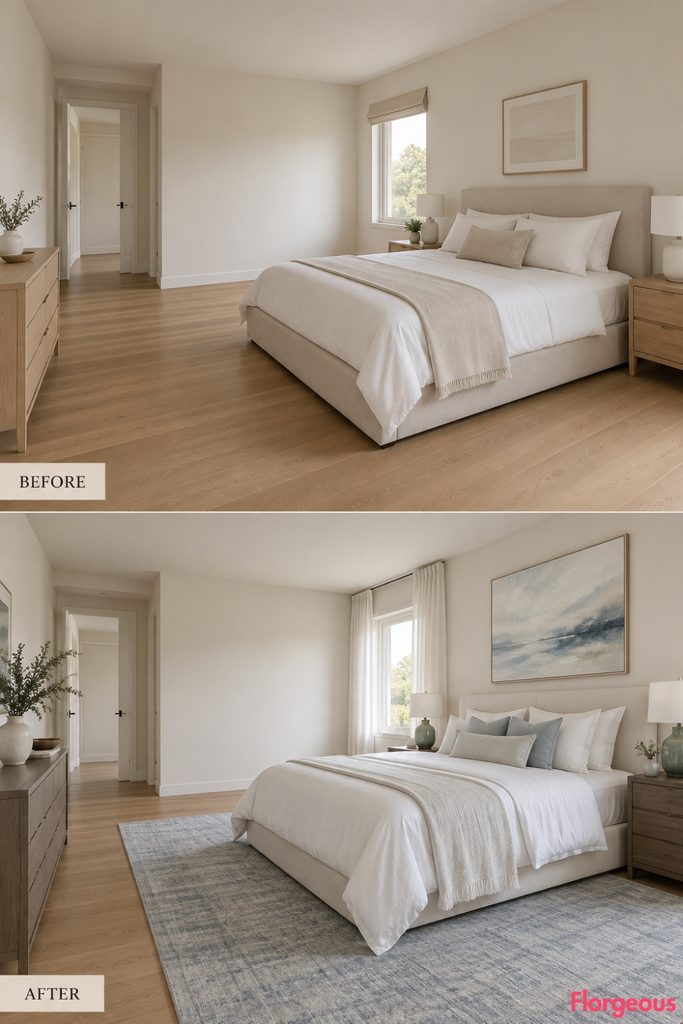
A coastal bedroom can handle a darker timber if the rest stays luminous.
Before: The original all-light furniture gives the room very little contrast.
After: Keep the bed soft cream but introduce one smoked-oak bedside chest and a wider smoked-oak dresser on the left wall. Use white linen, a pale blue-gray rug, and a sea-glass green lamp to keep the dark wood from feeling heavy. The window gets simple white sheers, while one large chalk-and-blue artwork sits above the dresser.
19. Make the Curtains Look Like a Faded Coastal Watercolor
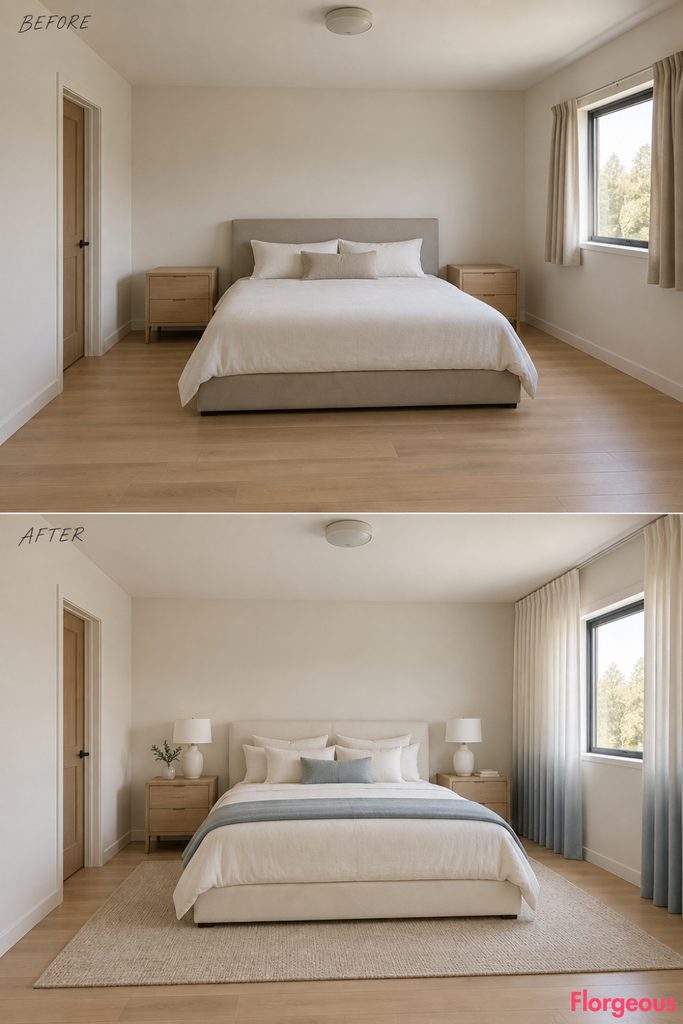
The window treatment becomes soft artwork without a print.
Before: The short plain curtains feel abrupt against the bright glass.
After: Use full-height linen panels that begin warm white at the top and gradually transition to mist blue near the hem through an extremely soft dip-dye effect. Keep the bed ivory, furniture pale oak, and rug oatmeal so the drapery can carry the color. Add only a narrow blue-gray coverlet and simple white ceramic lamps.
20. Add a Slim Pale-Wood Ceiling Fan to a Crisp White-and-Blue Room
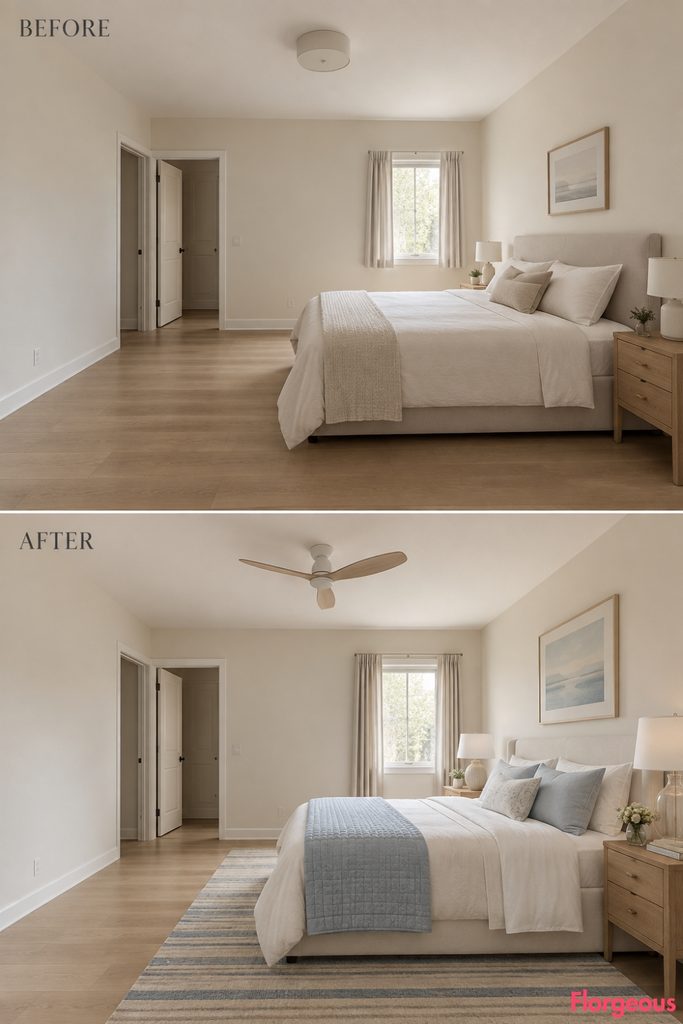
This room is practical first, but still carefully designed.
Before: The generic ceiling light has no relationship to the bedroom below.
After: Replace it with a slim three-blade fan using pale timber blades and a matte-white housing. Keep the room crisp with a white upholstered bed, powder-blue quilt, striped oatmeal-and-blue rug, and natural oak bedside cabinets. Use one pleated ceramic lamp and one clear glass lamp for a more collected look.
Small Space Tip: Keep the fan visually light and correctly sized so it does not make the ceiling feel lower.
21. Build a Quiet Coastal Art Story Around Architectural Photography
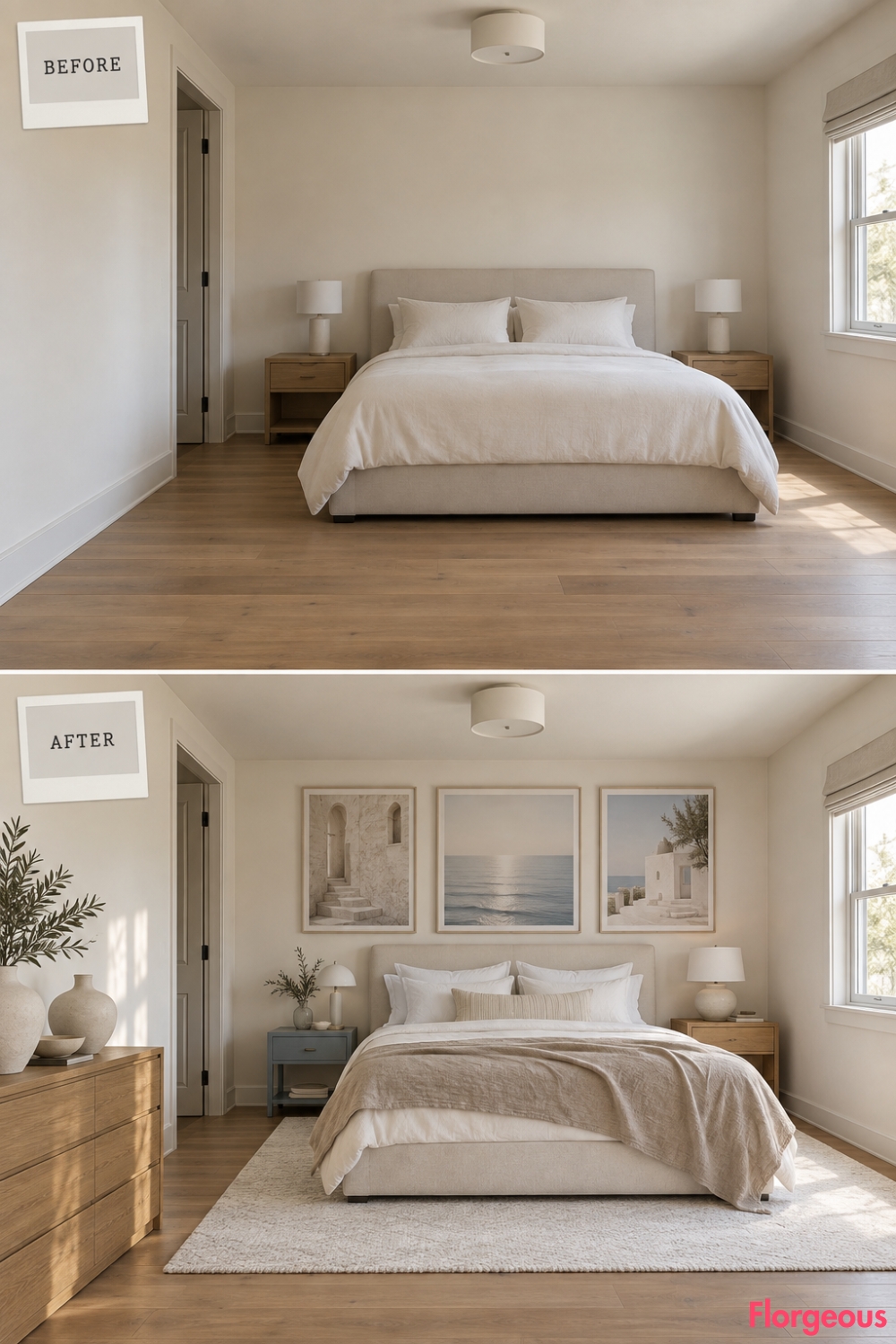
This room feels more editorial and less decorative.
Before: The walls are bare and visually anonymous.
After: Use a trio of large photographic prints showing abstracted whitewashed stone, bright horizon light, and pale coastal architecture, all without readable signs or obvious tourist imagery. Pair them with a warm ivory bed, mushroom linen blanket, chalk-white rug, and a single blue-gray lacquer bedside table. A low warm-oak chest anchors the opposite wall with only two sculptural ceramics on top.
22. Use Broad Faded-Blue Stripes as a Drapery Statement
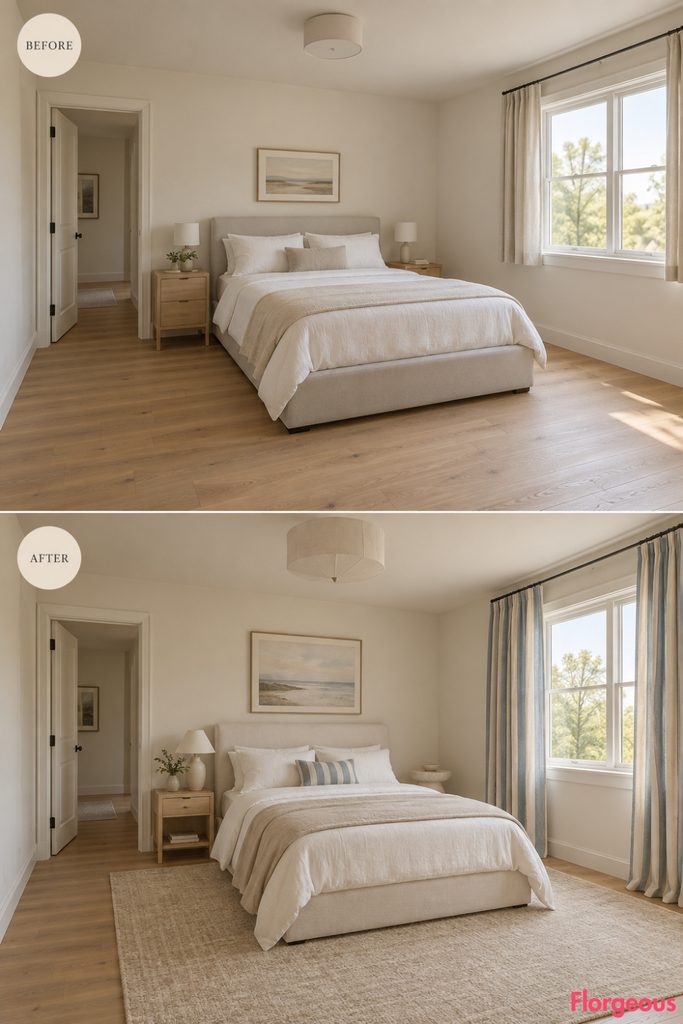
This is more graphic than the ombré curtain room but still soft enough for coastal modern.
Before: The rear window has a generic short treatment.
After: Hang full-height linen curtains with very broad vertical stripes in warm white and faded blue-gray. Keep the bed simple in chalk upholstery, but introduce a pale maple bedside table and a cream stone stool to break up matching furniture. The rug stays solid sand, while bedding uses white, flax, and one tiny striped cushion that echoes the curtains without copying them exactly.
23. Finish With a Pearl-Gray Coastal Room and Soft Reflective Details
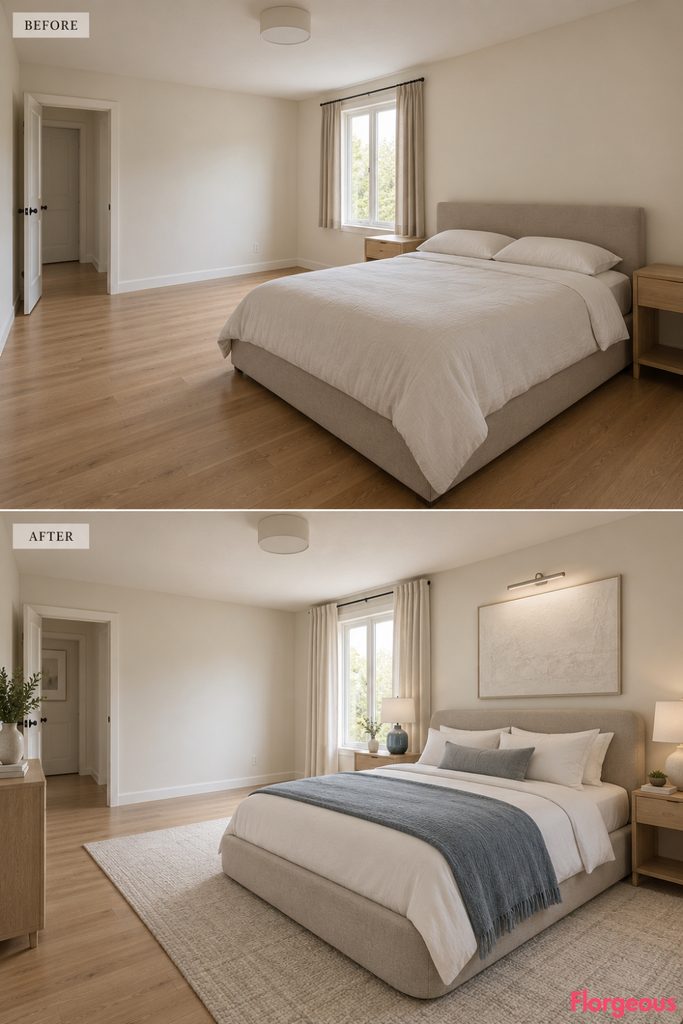
The last room is calm, polished, and slightly more luxurious without becoming glossy.
Before: The same plain bedroom has flat neutral finishes and very little depth.
After: Use a pearl-gray upholstered bed with a low rounded silhouette, chalk-white bedding, a pale oyster wool rug, and light oak furniture with soft matte finishes. Introduce a single smoked-blue glass lamp, one warm white ceramic lamp, and a narrow satin-nickel picture light over a large off-white textured artwork. The window gets natural-white linen panels, while a dusty sea-blue blanket is folded loosely at the foot. The entire room remains bright, but small reflective surfaces give the daylight more life.
How to Make Coastal Modern Feel Designed, Not Decorated
A strong Coastal Modern Bedroom does not come from buying a list of coastal accessories. It comes from deciding what the room should feel like, then choosing furniture, color, texture, lighting, and negative space that support that idea.
Some bedrooms above rely on color, others on material, tailoring, contrast, daylight, or composition. That is why they can all belong to the same style without looking like variations of one template.
Before changing your own room, look at the largest visual surfaces first. The bed, wall treatment, floor, window, and rug will shape the atmosphere more than a collection of small decorative objects.
Then check how the room works. Keep the route from the entrance open, avoid crowding the bright window, make sure bedside pieces are usable, and leave enough space for furniture to breathe. Around 90 cm along an important circulation route is a useful target when the room allows it.
Finally, choose restraint over repetition. If your bed already provides the blue, the curtains do not necessarily need to match. If a rug has strong stripes, let the bedding become quieter. A room feels polished when every choice contributes something different.