
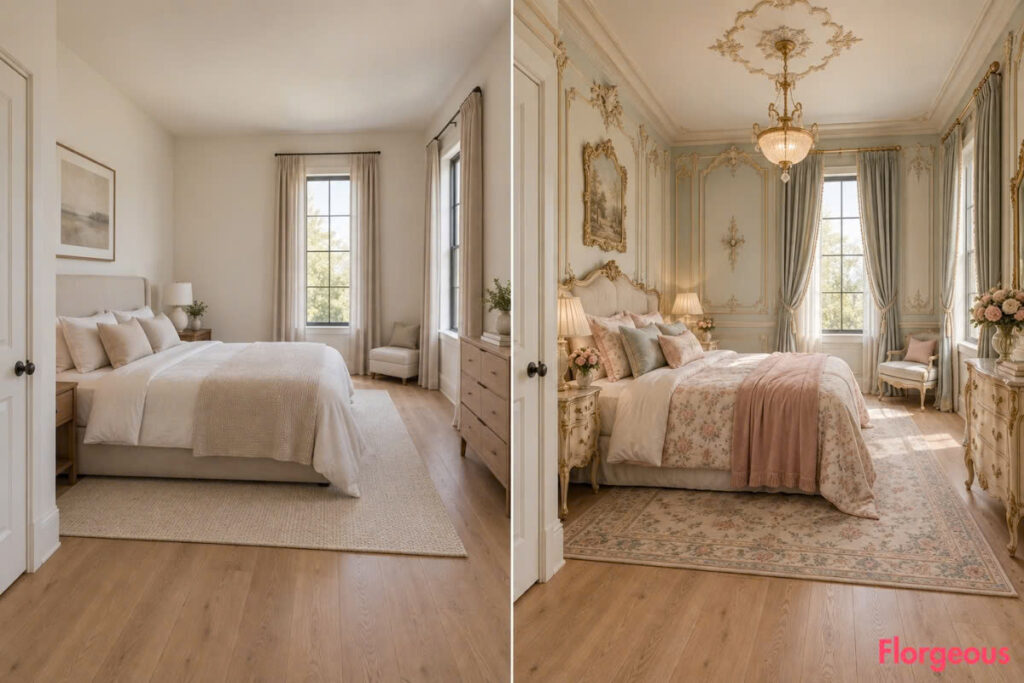
A plain bedroom can look clean and perfectly fine, yet still feel emotionally flat. That is exactly why it makes such a satisfying base for a more decorative style. Once the surfaces, lighting, trim, and finishing details begin to carry a point of view, the room starts to feel memorable.
For this Rococo Bedroom gallery, every idea begins with the same shell: a near-square bedroom, slightly wider than deep, with the bed centered on the left wall, one tall narrow window on the far wall slightly right of center, a second tall narrow window on the right wall near the far-right corner, and the entry door on the front wall slightly left of center. The room has a flat ceiling, light warm oak flooring, off-white walls, a simple upholstered bed, pale bedding, minimal styling, and soft daylight.
Only the after changes. The architecture stays locked. The camera changes from section to section for variety, but each before-and-after pair uses the exact same viewpoint.
1. Start With a Rocaille Parquet Floor That Feels Like Jewelry Underfoot
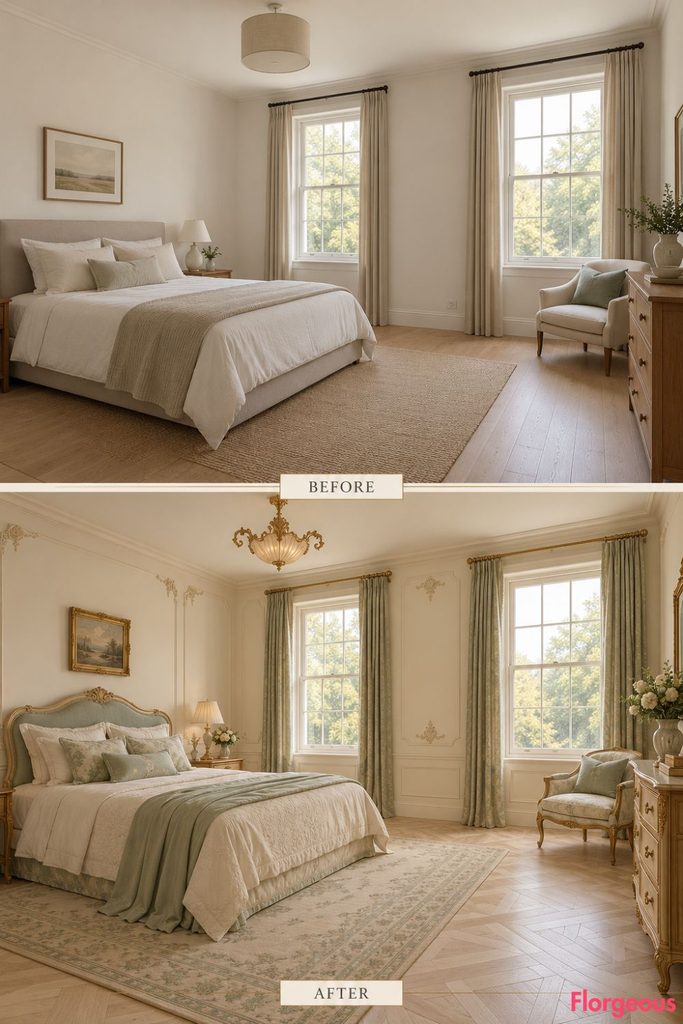
Before: The same quiet bedroom looks clean but generic, with straight oak planks, blank walls, plain bedding, and no strong focal point.
After: A pale oak parquet floor with a soft rocaille border sets the tone first. Warm ivory walls gain just a few tiny shell appliqués near the corners, while the bed is layered in parchment linen and a muted celadon quilt. A petite gilt-brass ceiling light with curved arms repeats the floor’s movement.
Why it works: The style begins at the floor and gently travels upward, which feels more artistic than relying on one big decorative object.
Try this: Keep the parquet tones close in value so the pattern reads elegant, not graphic.
2. Wrap the Lower Walls in Rose-Parchment Scagliola
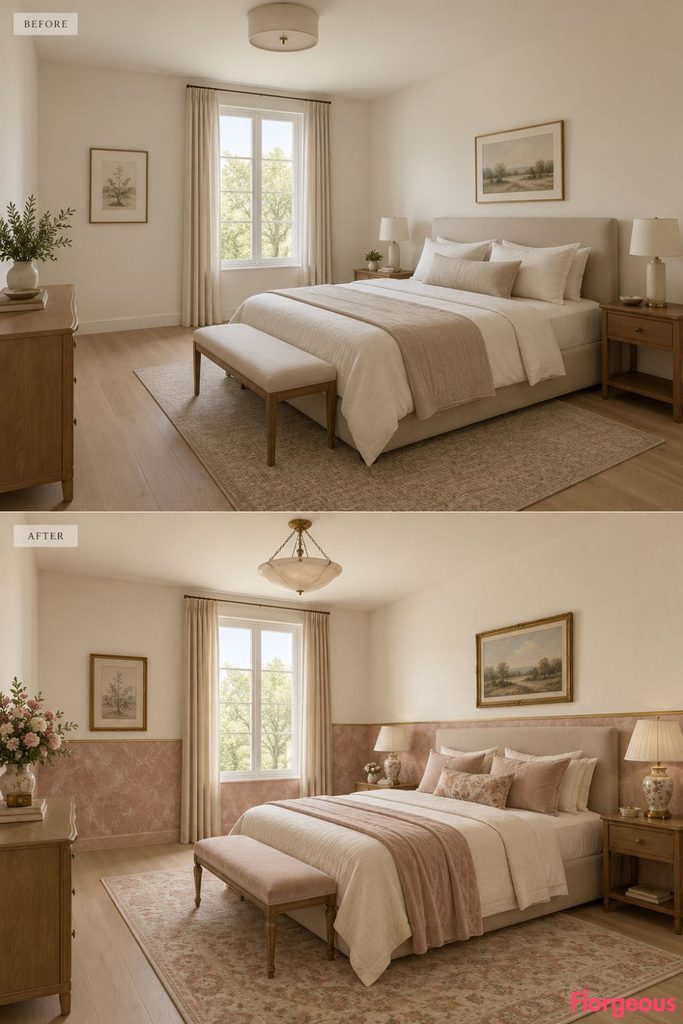
Before: The room still feels a little unfinished, with smooth plain walls and no architectural richness.
After: The lower third of the walls is finished in rose-parchment scagliola with soft veining, while the upper walls stay chalky ivory. A narrow irregular gilt line separates the two surfaces. The bed is dressed in cream and blush, and the lighting shifts to delicate porcelain-and-brass table lamps with a small matching ceiling fixture.
Why it works: Faux stone adds refinement without repeating the usual panel-molding approach.
Try this: Let the upper wall stay quiet so the scagliola can breathe.
3. Paint an Airy Blue-Gray Grisaille Across the Room
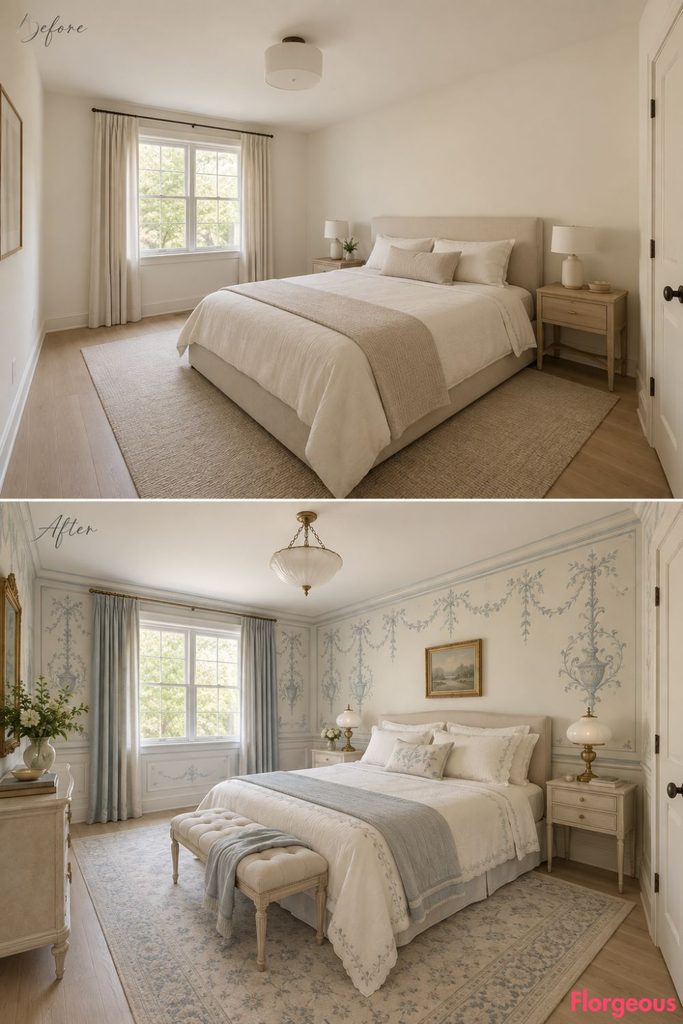
Before: The walls read as flat, basic, and visually silent.
After: A blue-gray grisaille arabesque of ribbons, shells, acanthus, and flower sprays drifts across the main visible wall and appears again in smaller fragments near the bed and between the windows. Bedding stays ivory with blue-gray embroidery, and the lighting combines aged brass with soft opaline shades.
Why it works: Painted ornament gives the room motion without physically crowding it.
4. Turn the Door Wall Into a Pastoral Rococo Scene
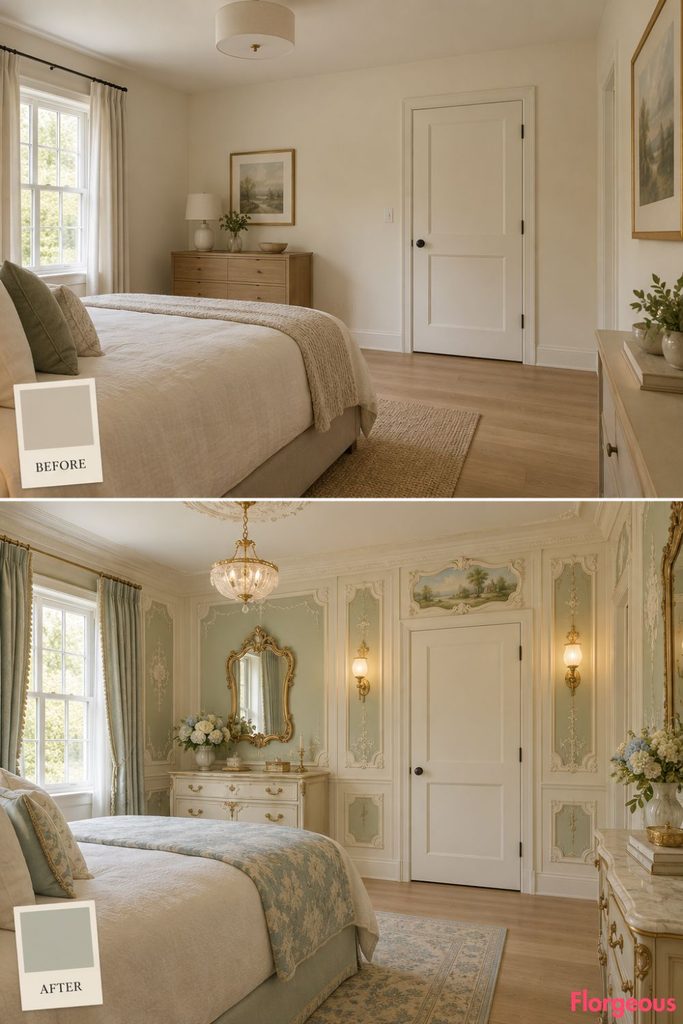
Before: The entry side of the room looks purely functional.
After: Above the existing door, a painted pastoral overdoor sits within an asymmetrical cream rocaille frame touched with restrained aged gold. The rest of the room picks up soft green, powder blue, and ivory through trim lines, bedding edges, and a small opaline pendant with leaf-like brass arms.
Style Note: The overdoor should feel lyrical, not grand. A bedroom still needs softness.
Why it works: It shifts attention to an area that is usually ignored, which makes the room feel more composed.
5. Replace Standard Wall Art With Sèvres-Inspired Porcelain Plaques
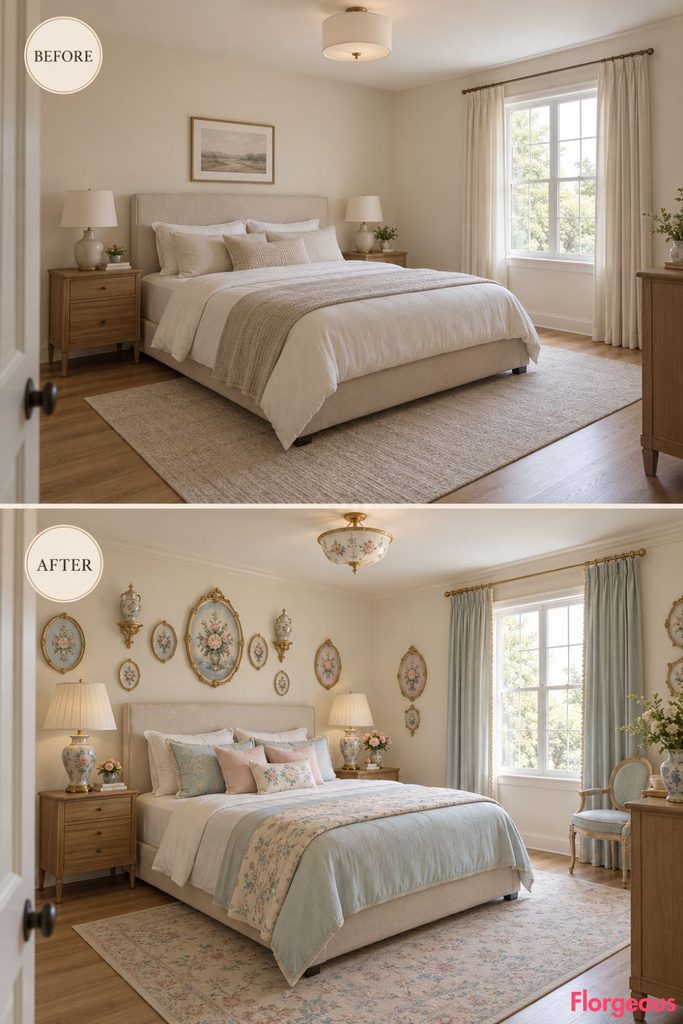
Before: The walls remain bare and slightly cold.
After: Small oval and irregular porcelain plaques in bleu céleste, blush, ivory, and pale green are scattered with generous spacing across the wall. Their palette returns in the bed pillows and trim. A compact ceiling fixture with ceramic detailing helps the entire room feel coordinated.
Why it works: Porcelain brings decoration, color, and craft in one move.
Try this: Space the plaques loosely so the wall still feels airy.
6. Use Rocaille Wall Brackets Like Tiny Sculptures
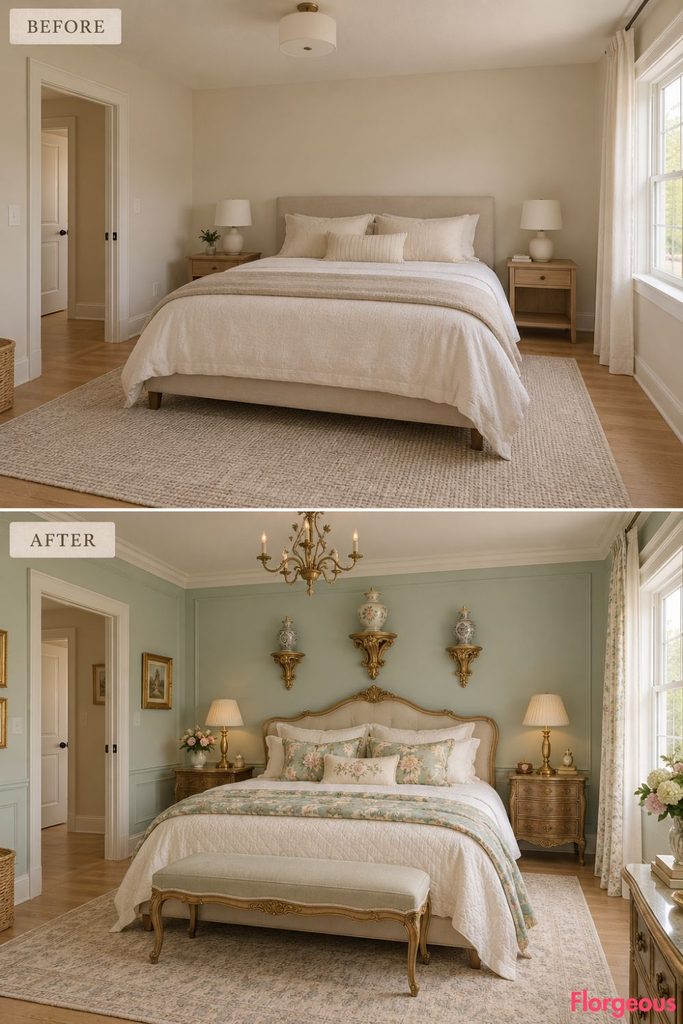
Before: The wall beside the bed feels empty and unresolved.
After: Three separate rocaille brackets, painted cream and touched with aged gold, hold single porcelain vessels. The wall color becomes pale celadon, while the bedding stays cream with a few floral cushions. The lighting is slim, curved, and brass-toned.
Why it works: Display becomes part of the architecture without introducing a shelf or cabinet.
Try this: Keep each bracket shallow so it never interrupts movement through the room.
7. Let a Louis XV Cartel Clock Carry the Vertical Accent
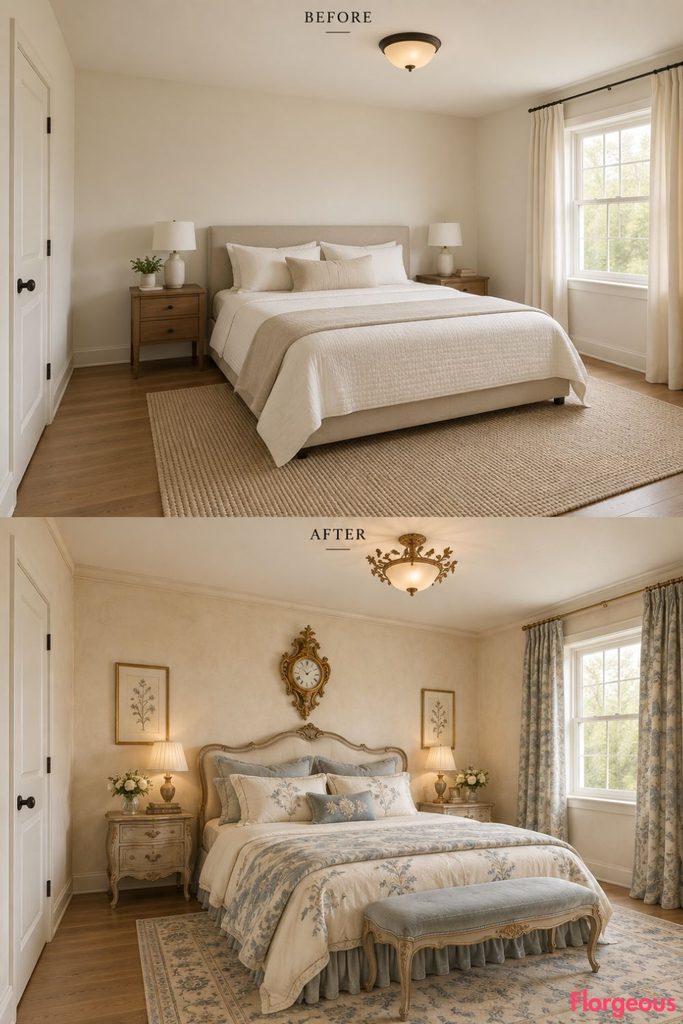
Before: The room has no visual punctuation on the wall.
After: A single tall cartel clock with flowing bronze curves and a pale face becomes the main vertical gesture. Around it, the room stays warm parchment and ivory, with faded blue in the bedding and a small ceiling light whose leaf details echo the clock.
Why it works: One distinctive object can anchor the room if everything around it is calm.
8. Add a Cream Faience Stove Without Turning the Room Into a Parlor
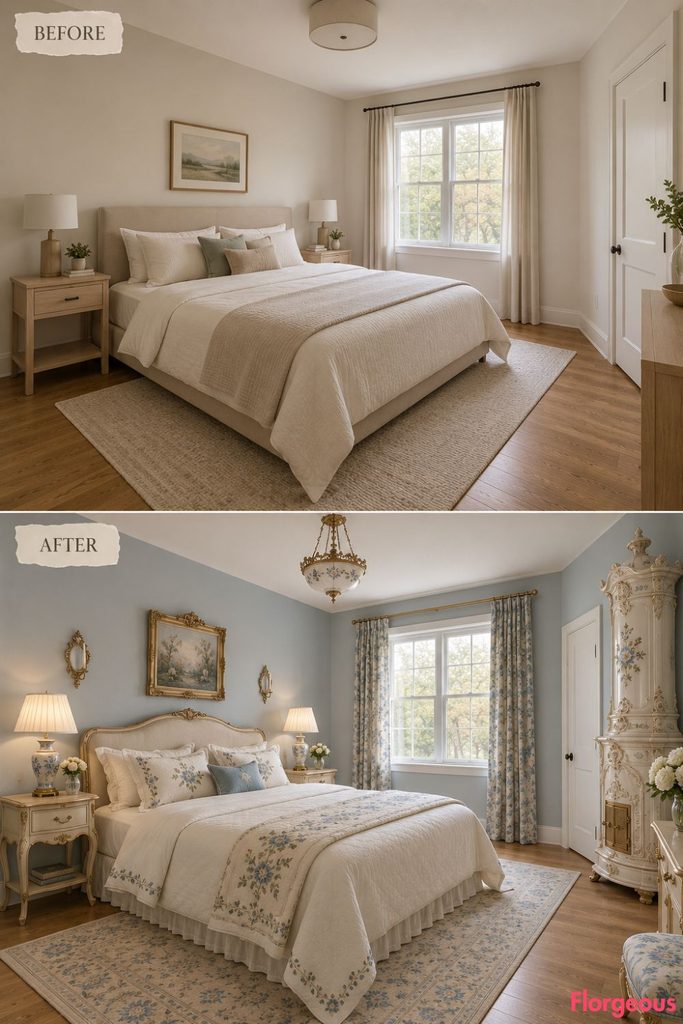
Before: The room is simple, light, and practical, but visually modest.
After: A slim cream faience stove stands against the right wall with shallow shell relief and a softly swelling silhouette. The walls shift to pale blue-gray, the bedding to ivory with floral piping, and the lighting to small porcelain-and-brass pieces that suit the ceramic focal point.
Designer Tip: The stove must stay slim and believable. Oversizing it would break the intimacy of the room.
9. Replace Curtains With Pierced Interior Shutters
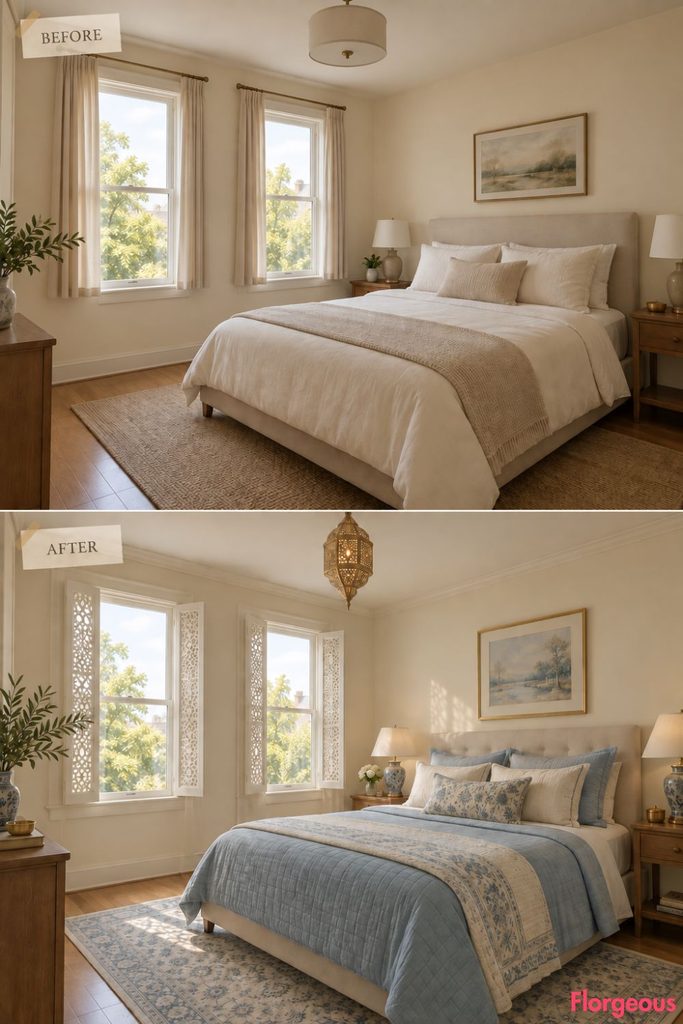
Before: Both windows wear simple short curtains and feel purely functional.
After: The existing windows gain ivory folding shutters with delicate shell, leaf, and C-scroll piercings. Their crisp geometry is balanced by pale cream walls, powder-blue bedding, fine gilt accents, and a small pierced-metal lantern that subtly echoes the shutter pattern.
Why it works: The windows become decorative without losing their usefulness.
Try this: Let the shutters fold neatly clear of the glass so daylight stays generous.
10. Paint a Celadon Trellis That Feels Like a Garden Whisper
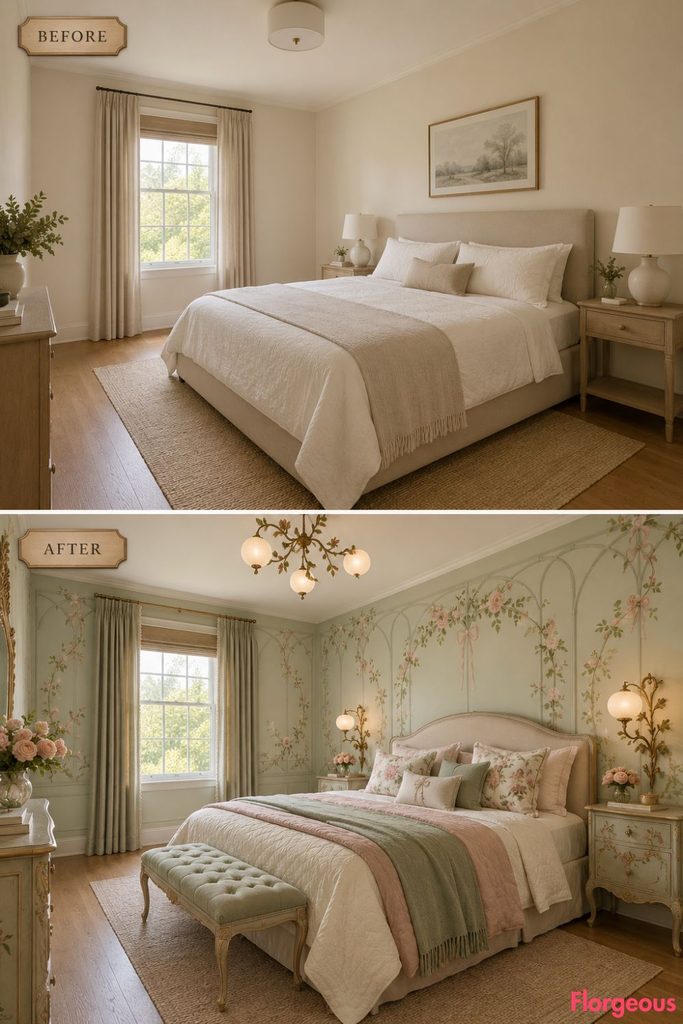
Before: The room looks open but has no sense of atmosphere.
After: A pale celadon trompe-l’oeil trellis with loose roses, ribbons, and climbing greenery drifts across selected walls, fading before it becomes too dense. The bed is softened with ivory, faded rose, and sage layers, while the lights use opaline glass and vine-like brass stems.
Why it works: The room feels ornamental and romantic without looking heavily staged.
11. Use Verre Églomisé to Catch and Scatter Daylight
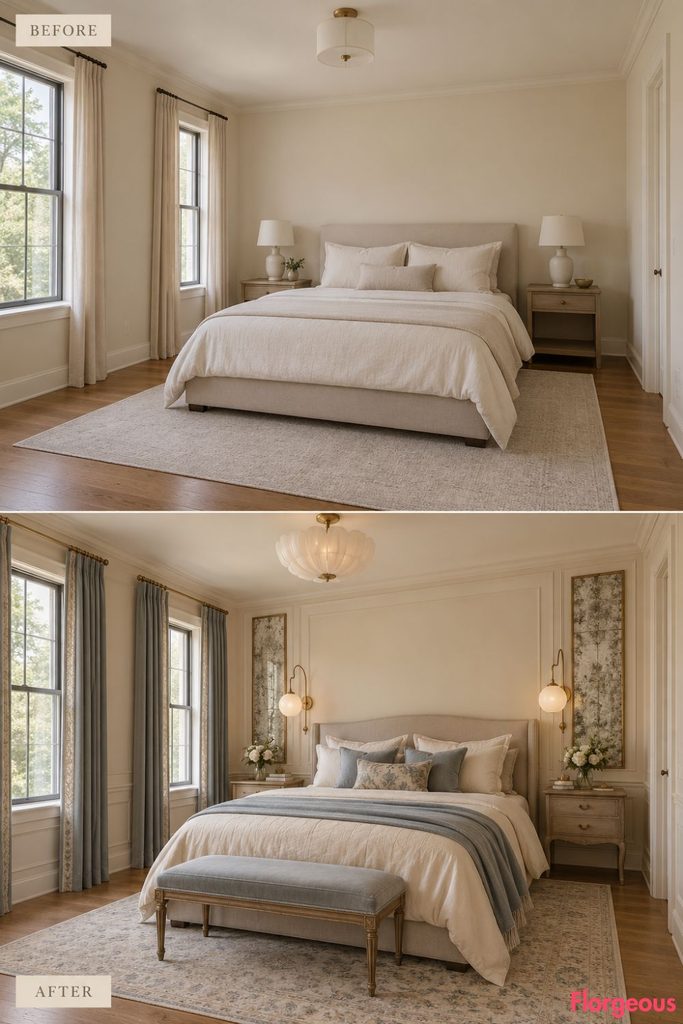
Before: The wall surfaces absorb light instead of interacting with it.
After: Narrow reverse-gilded glass plaques glow softly on the solid wall, catching daylight from both windows in broken reflections. The room stays warm ivory and champagne with touches of smoky blue-gray in the bedding. Small opaline globes on asymmetrical gilt arms keep the mood luminous.
Why it works: Reflection adds glamour, but in a softer, more poetic way than a large mirror.
12. Float a Ribbon-and-Flower Frieze Beneath the Ceiling
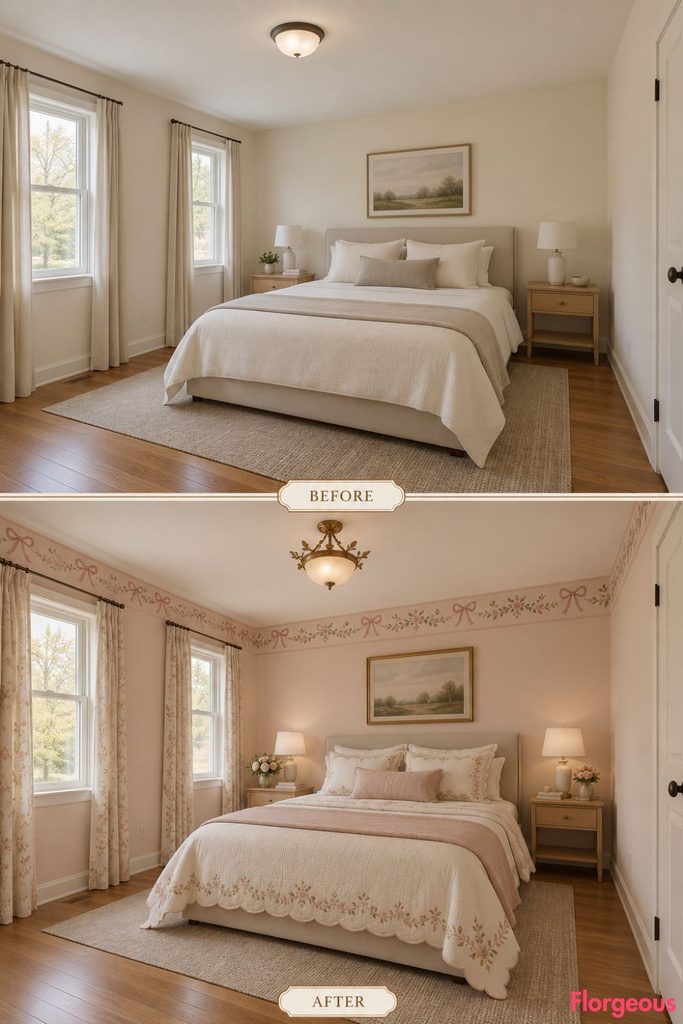
Before: The ceiling line is plain and forgettable.
After: A shallow relief frieze of ribbon bows, floral garlands, and curling leaves runs around the upper wall line. Below it, the walls stay pale blush and smooth. The bed is dressed in cream with a tiny floral border, and the ceiling light repeats the bow-and-leaf rhythm in miniature.
Why it works: It decorates the room while keeping the middle of the walls clean and elegant.
13. Make the Skirting the Signature Detail
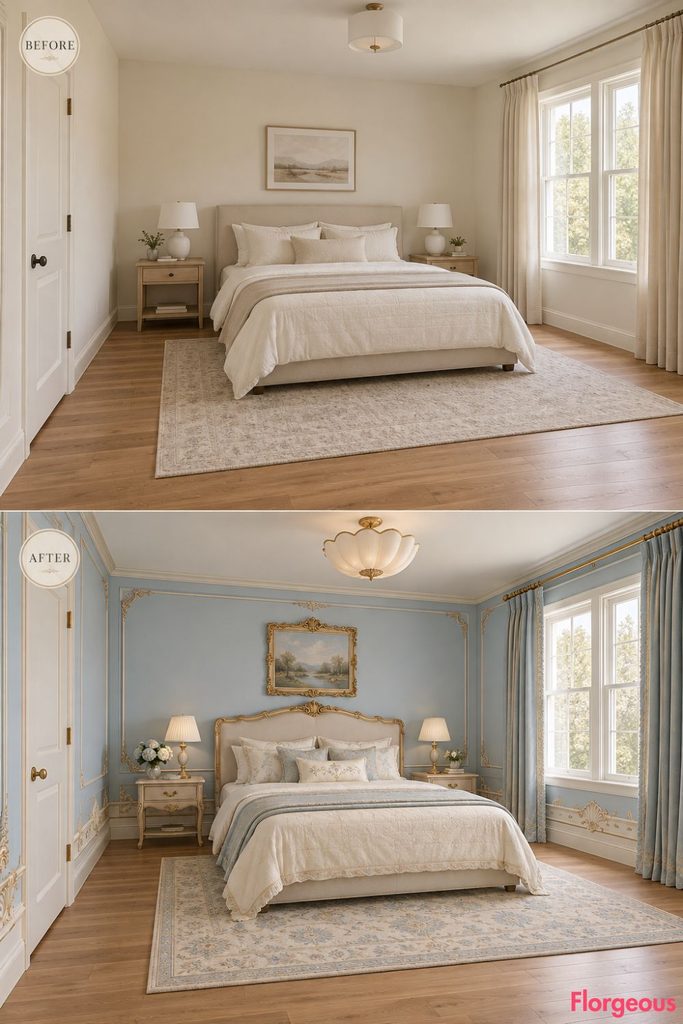
Before: The room feels plain right down to the floor line.
After: The simple baseboard becomes a taller ivory skirting with shell interruptions and soft leaf curves, traced by an almost invisible antique-gold line. Powder-blue walls and ivory bedding keep the room fresh, while a scalloped ceiling fixture adds one more quiet flourish.
Why it works: Decorative detail at floor level feels unexpected and subtly luxurious.
14. Refine the Existing Furniture With Ormolu Mounts
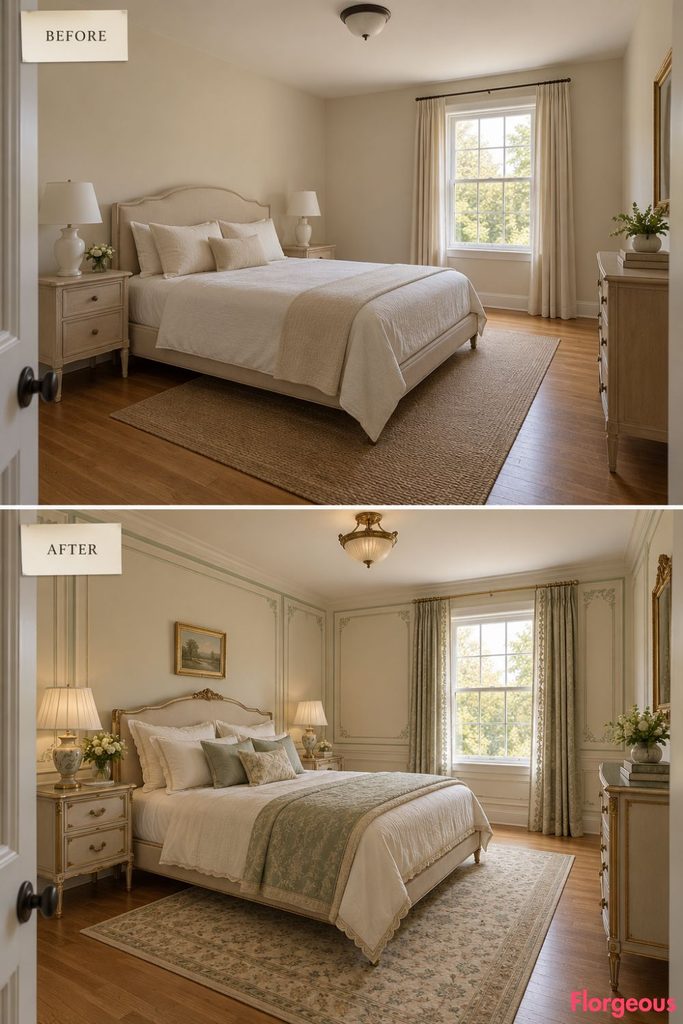
Before: The bedside pieces and bed frame are simple and slightly generic.
After: The furniture shapes stay the same, but delicate ormolu-style corner mounts, escutcheons, and foot sabots give them a more finished presence. The walls become parchment with fine painted borders, while the bedding turns ivory and celadon. A small aged-brass ceiling light ties the metalwork together.
Budget Version: Fine hardware can transform ordinary furniture more convincingly than replacing everything at once.
15. Make Decorative Fans the Art Form of the Room
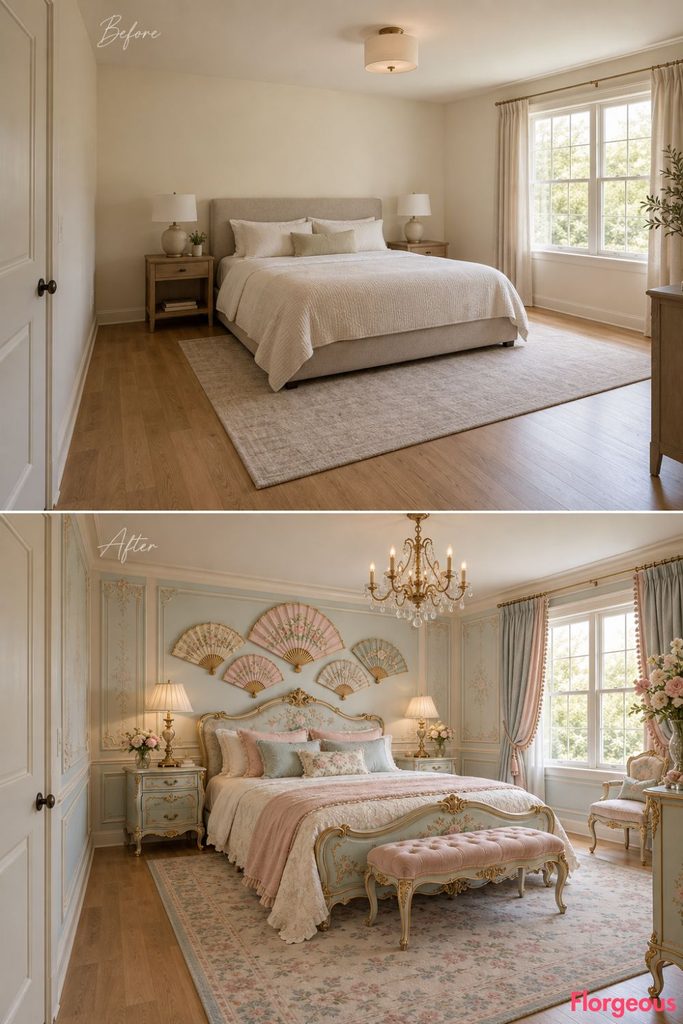
Before: The wall still feels a little too blank.
After: Five open fans in ivory, blush, celadon, and powder blue drift across the wall in an airy composition. Their shell and floral ornament is echoed in the painted bedside pieces, the edge of the coverlet, and the fine brass arms of the lamps.
Why it works: The irregular shapes feel playful and distinctly Rococo.
Try this: Keep the fans light and elegant, never crowded into a grid.
16. Add a Slender Jardinière for One Controlled Botanical Note
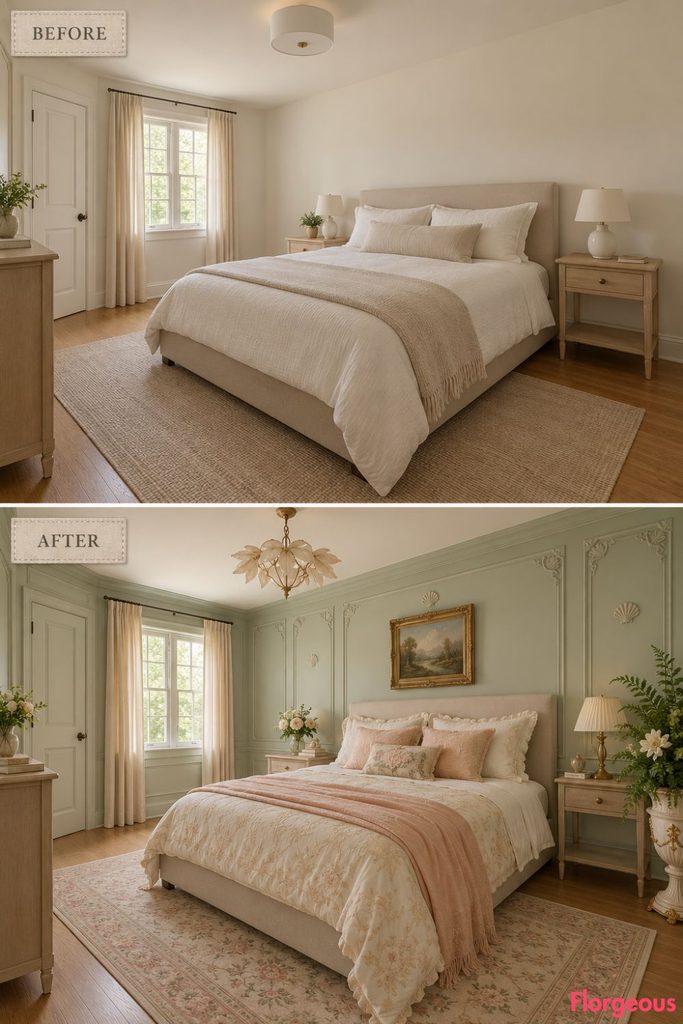
Before: The corner near the window feels empty but not intentional.
After: A slim ivory jardinière with scrolling supports holds one restrained fern arrangement and a few pale flowers. The walls shift to faded celadon with tiny painted shell details, while the bedding mixes cream and pale peach. A leaf-inspired pendant keeps the botanical story going overhead.
Why it works: A single botanical accent softens the room without turning it into a garden theme.
17. Let a Petite Embroidery Frame Introduce Rococo Domestic Charm
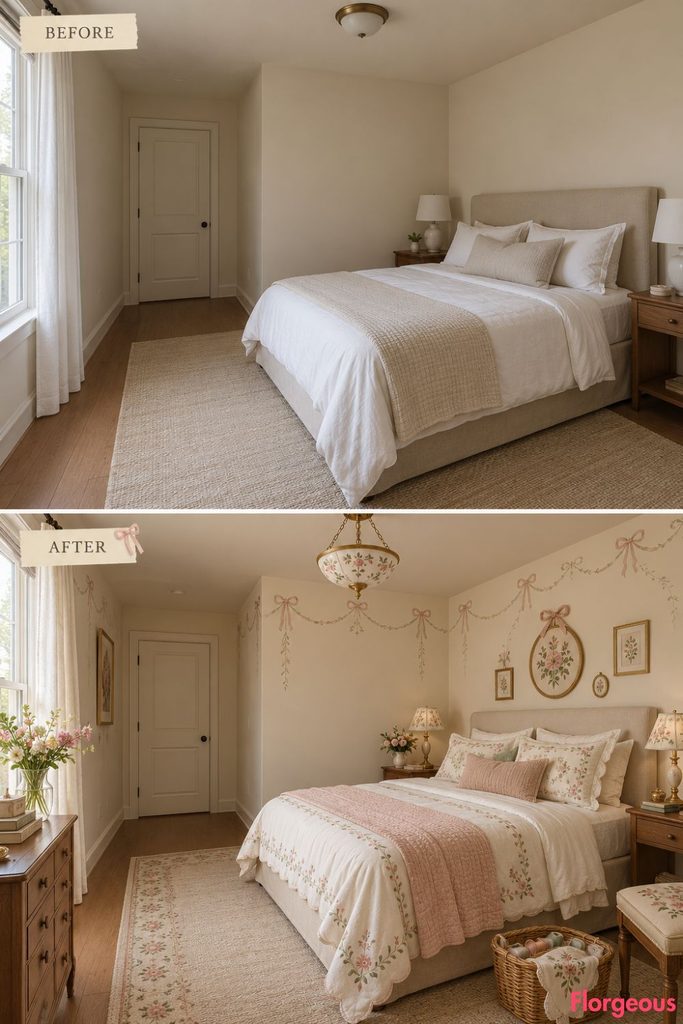
Before: The room has simplicity, but little sense of life.
After: A freestanding embroidery frame with unfinished floral needlework sits against the wall with a small basket of thread beneath it. Warm cream walls gain tiny ribbon motifs, the bedding has embroidered edges, and the lighting becomes delicate porcelain and brass.
Why it works: Craft brings intimacy to the room in a way that feels beautifully personal.
18. Treat Porcelain Scent Bottles Like Wall Jewelry
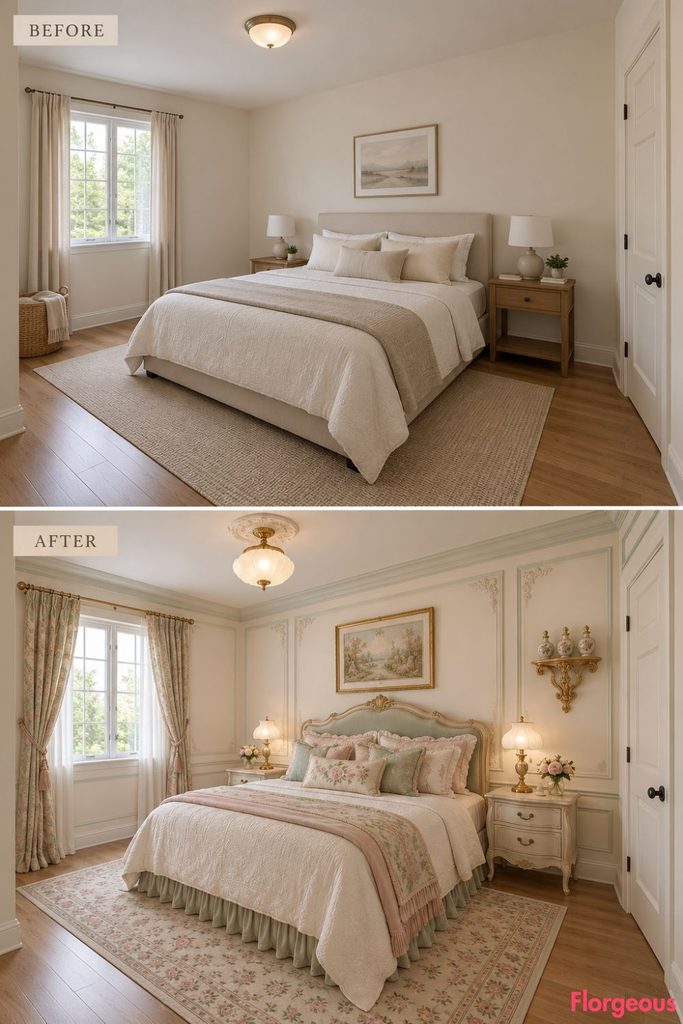
Before: The wall beside the bed remains visually slight.
After: A compact rocaille support holds four scent bottles in blush, celadon, ivory, and powder blue. Their palette is repeated in narrow trim lines, a softly upholstered benchless bedside scheme, and milky glass lights with warm brass details.
Why it works: Tiny objects can feel precious when the rest of the room is tuned to them.
19. Finish With an Embroidered Bell Pull and a Quietly Layered Scheme
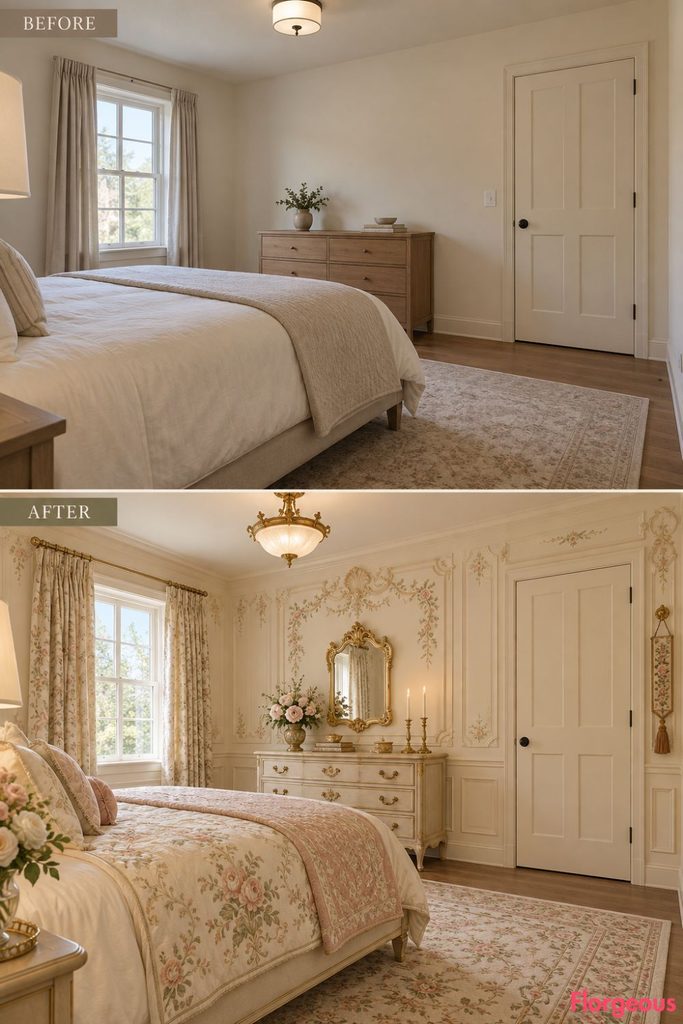
Before: The room is still simple, calm, and slightly unfinished around the entry.
After: An embroidered bell pull hangs beside the unchanged door, decorated with faded floral vines, shell motifs, fine braid, and a silk tassel. The same motifs quietly reappear in the bedding border and a tiny painted frieze near the door. Walls return to parchment ivory, and warm opaline lights with aged brass add the final glow.
The Best Way to Choose a Rococo Direction for Your Own Room
The most successful rooms here do not pile every Rococo symbol into one space. They choose one artistic idea, then let the walls, trim, lighting, bedding, and accents respond to it.
If you love porcelain, let the palette and lighting feel porcelain-like. If the beauty is in painted grisaille or a trellis mural, keep the furniture quieter. If the charm lies in embroidery or scent bottles, scale back larger statements and let intimacy carry the style.
That is what makes a Rococo Bedroom feel elegant instead of busy. Decorative, yes, but also coherent, atmospheric, and deeply considered