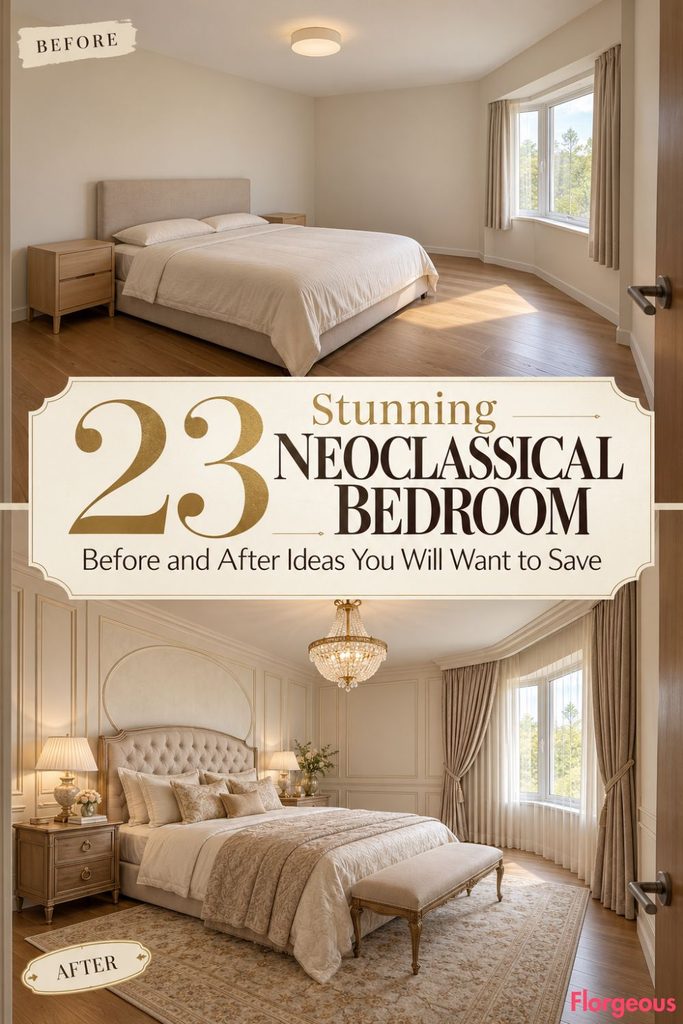
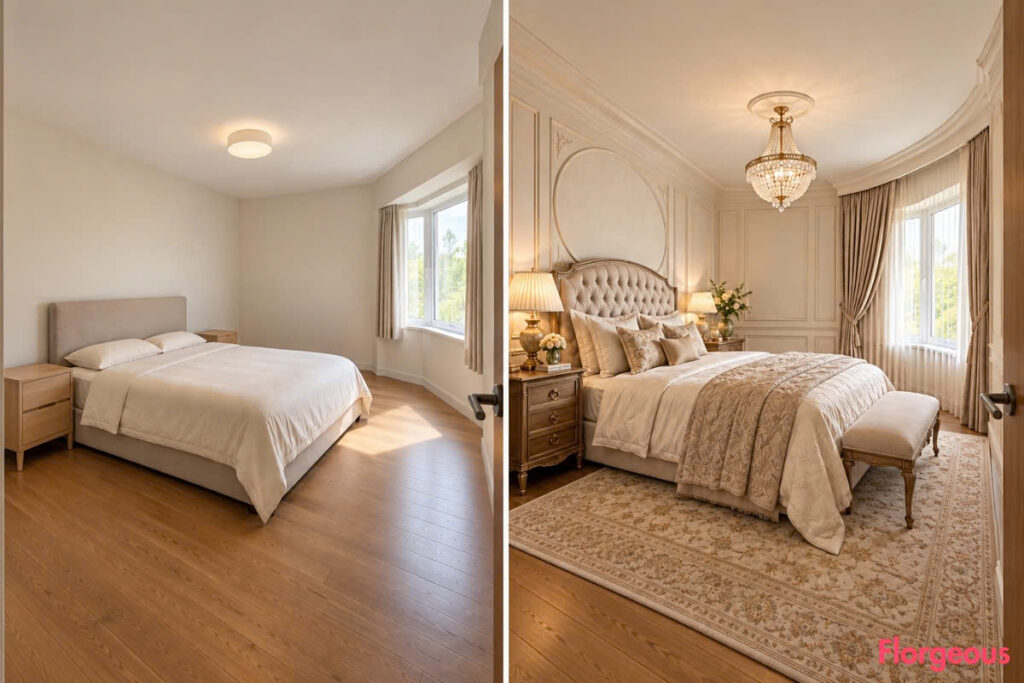
A plain bedroom can be tidy, functional, and still feel like it is waiting for its real identity. A basic upholstered bed, two bare nightstands, short curtains, and a generic ceiling light do the job, but they do not create much atmosphere.
For this gallery, every makeover begins with the exact same room shell: a modest bedroom with the bed centered on the left wall, a rectangular bay window projecting from the middle of the right wall, a flat far wall, an entry on the front-right wall, a flat ceiling, and medium-oak flooring. The camera changes from one idea to the next so the article stays visually fresh, but within each pair, the before and after always use the exact same angle, framing, and architecture.
The after is where the story changes. Each room fully leans into the language of a Neoclassical Bedroom through elegant molding, decorative ceiling detail, layered drapery, refined lighting, graceful furniture silhouettes, and a polished palette of ivory, taupe, greige, stone, champagne, and muted blue gray.
1. Turn the Bed Wall Into a Hand-Finished Scagliola Feature
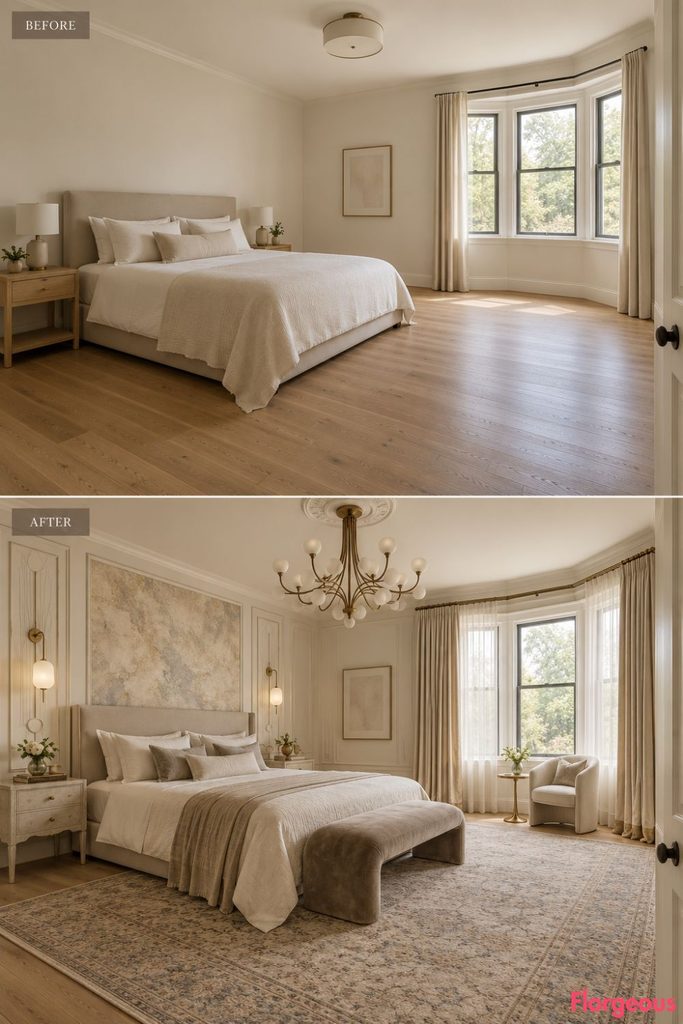
Before: The same plain bedroom with warm off-white walls, a basic upholstered bed, simple cream bedding, two bare nightstands, short curtains at the bay window, and a generic ceiling light.
After: The bed wall becomes a more artistic neoclassical composition with three tall ivory-plaster wall fields. The center field features a hand-finished scagliola panel in warm parchment, pale stone, and muted gray, while the side fields stay quieter with delicate linear reliefs. A tall champagne-beige upholstered bed, aged-brass wall lights with opaline shades, a sculptural bronze chandelier, full-height ivory silk-linen curtains, a curved taupe bench, and a parchment-toned rug complete the look.
Why it works: The scagliola panel adds craftsmanship and depth, so the room feels decorative, elegant, and unmistakably neoclassical without becoming too ornate.
Try this: Keep the faux-marble finish soft and cloudy rather than strongly veined for a more refined result.
2. Sharpen the Room With Greige Panels and Fine Black Trim
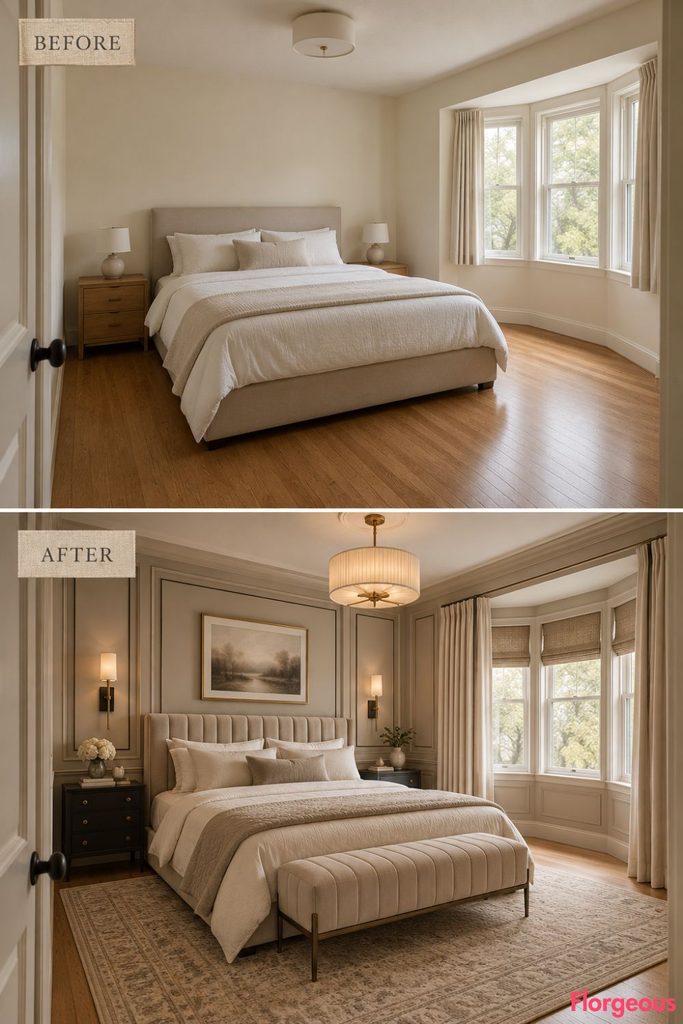
Before: The neutral shell looks slightly unfinished.
After: Soft greige walls gain elegant panel molding traced with very thin black lining. The bed becomes a structured channel-tufted design in oatmeal velvet, while black-and-brass sconces add sharper contrast.
Why it works: The black detailing gives the classical geometry more definition.
Try this: Keep the dark accents thin and disciplined so the room stays refined.
3. Wrap the Bed Wall in Champagne Silk and Bronze Glow
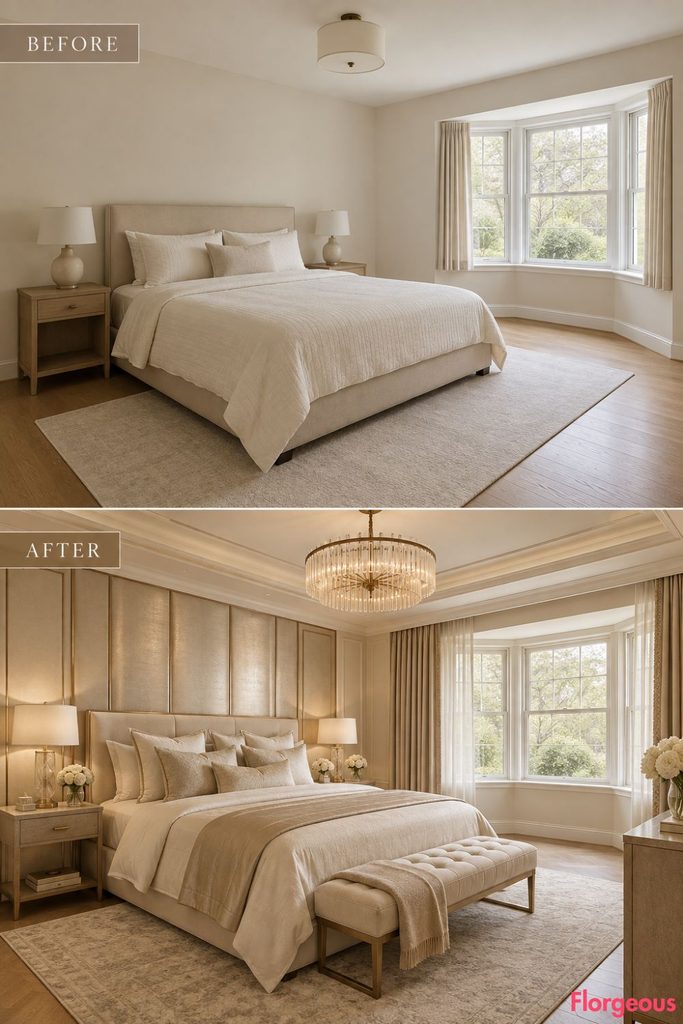
Before: The room has no real sense of occasion.
After: The bed wall gains framed champagne silk panels, the ceiling gets a refined border, and a bronze-and-glass chandelier adds warmth overhead. A low upholstered bench finishes the bed composition.
Why it works: Soft sheen makes the room look dressed without becoming flashy.
Designer Tip: In a classical bedroom, one polished surface feels luxurious. Too many polished surfaces feel hard.
4. Cool It Down With Blue Gray Panels and Gilded Mirrors
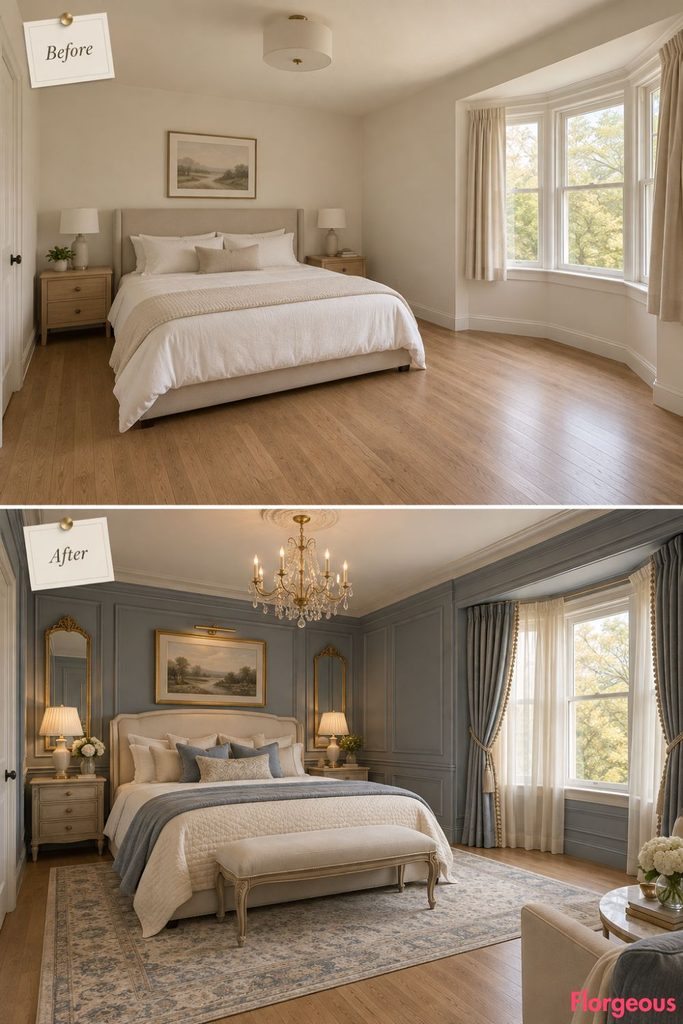
Before: The room feels calm, but it does not feel designed.
After: Dusty blue-gray walls are organized with pale panel molding, while a pair of slim gilded mirrors flank the bed. The chandelier is delicate, and the curtains combine pale sheers with flowing outer panels.
Why it works: Cool wall color makes warm metallic accents look richer.
Try this: Use gold only in mirrors and lighting so the room never tips into glamour.
5. Soften the Shell With Sage Walls and Antique Brass Sconces
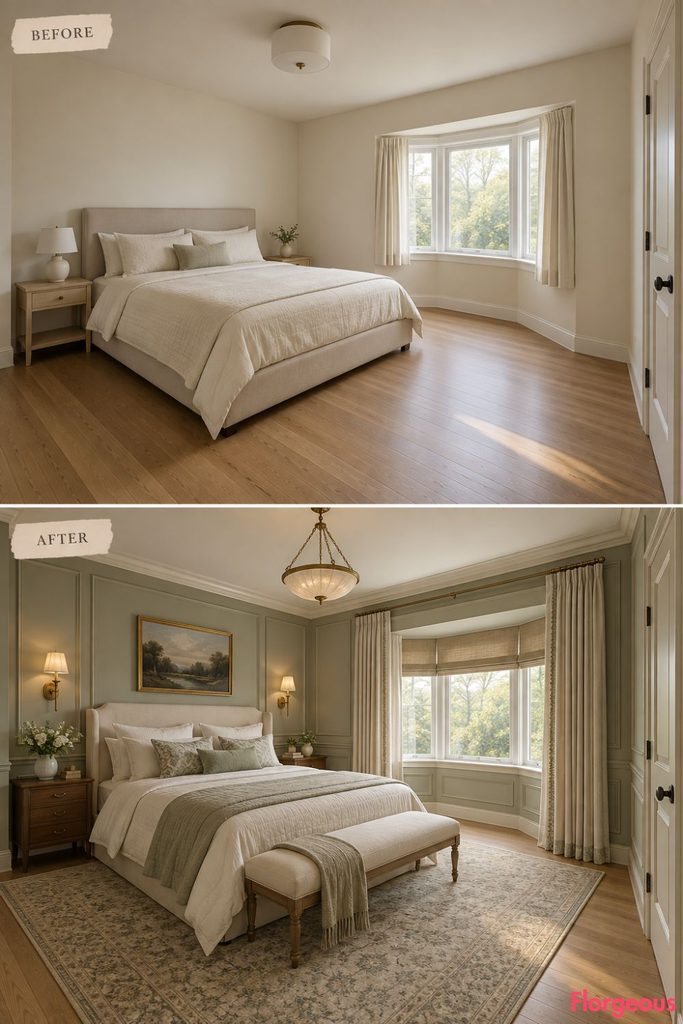
Before: The plain room has no color identity.
After: Muted sage walls, ivory molding, antique brass sconces, and a creamy upholstered bed create a gentler neoclassical mood. The bay window gets pleated curtains with an inner Roman shade for more layering.
Why it works: Sage feels decorative and calm at the same time.
Try this: Pair sage with warm cream and brass, not bright white and chrome.
6. Use Grisaille Wall Panels for a More Artistic Look
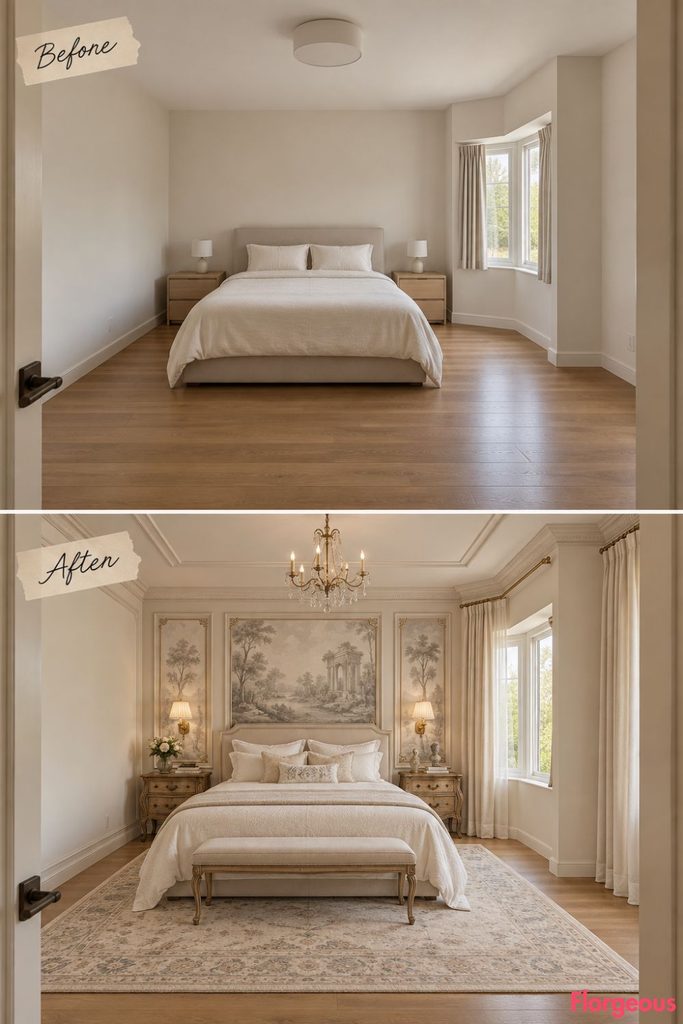
Before: The walls feel flat and forgettable.
After: Large classical wall frames behind the bed are filled with soft grisaille-style painted panels in stone and taupe. A small chandelier, carved side tables, and tailored ivory bedding complete the gallery-like effect.
Why it works: It gives the room artistic depth without adding visual clutter.
Color Story: Keep grisaille tones dusty and quiet so the room still feels restful.
7. Pair Taupe Wall Frames With Marble Nightstands
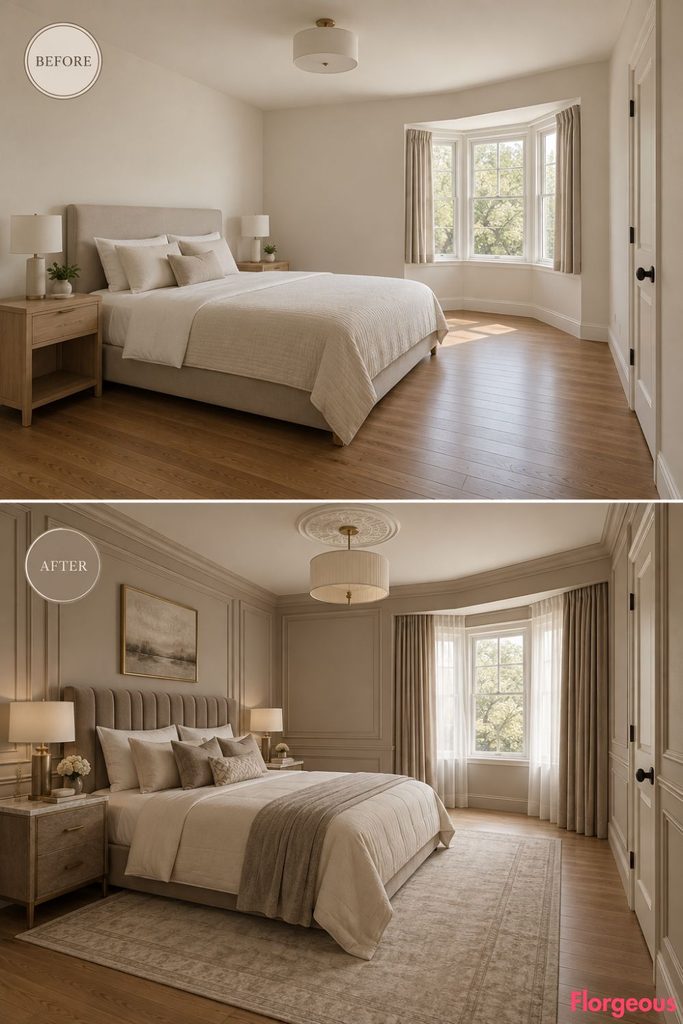
Before: The furniture feels too lightweight for the room.
After: Rich taupe wall molding, a tall mushroom-velvet headboard, marble-top nightstands, and a small ceiling medallion create a heavier, more luxurious composition. Sheers behind the outer curtains soften the bay.
Why it works: Marble adds a cool note that balances the warm taupe palette.
Try this: Let the marble appear in only one or two key places so it feels special.
8. Warm the Room With Walnut, Ivory, and a Bronze Lantern
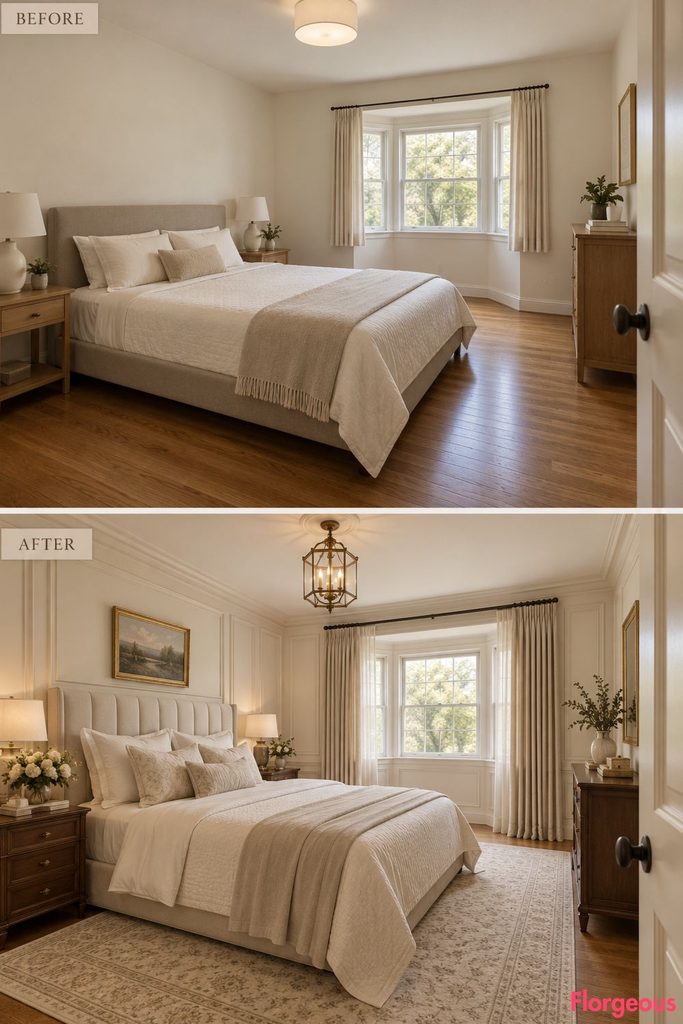
Before: The room lacks visual weight and depth.
After: Dark walnut furniture anchors the space, while ivory wall panels and a broad upholstered headboard keep it soft. A refined bronze lantern replaces the generic ceiling light, and the curtains fall in generous structured folds.
Why it works: Walnut gives the shell gravity, which makes the classical detailing feel more convincing.
Try this: Repeat walnut in the bed frame, one chest, and a bench for a more coherent palette.
9. Make the Bay Window the Main Event With a Tailored Pelmet
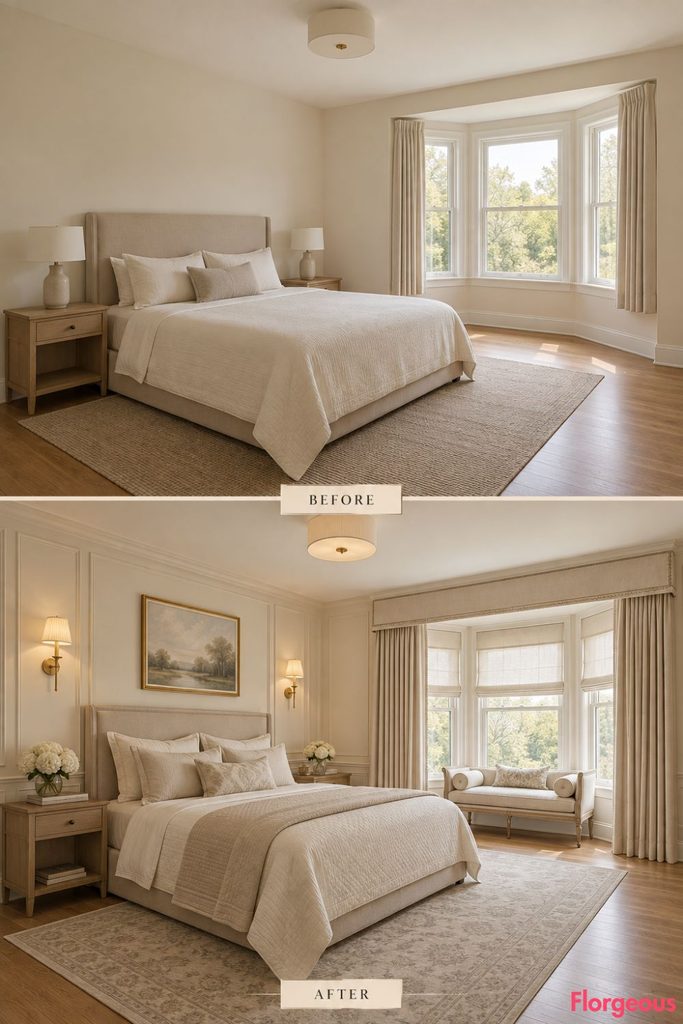
Before: The bay window feels useful but visually underdressed.
After: The window becomes the focal point with ceiling-height pleated drapery, an upholstered pelmet, and a slim inner shade. The bed remains elegant but secondary, supported by a carved bench and petite sconces.
Why it works: Treating the bay like architecture makes the whole room feel more complete.
Try this: Keep the pelmet straight and tailored, never fussy or scalloped.
10. Flank the Bed With Arch-Top Mirrors for Softer Geometry
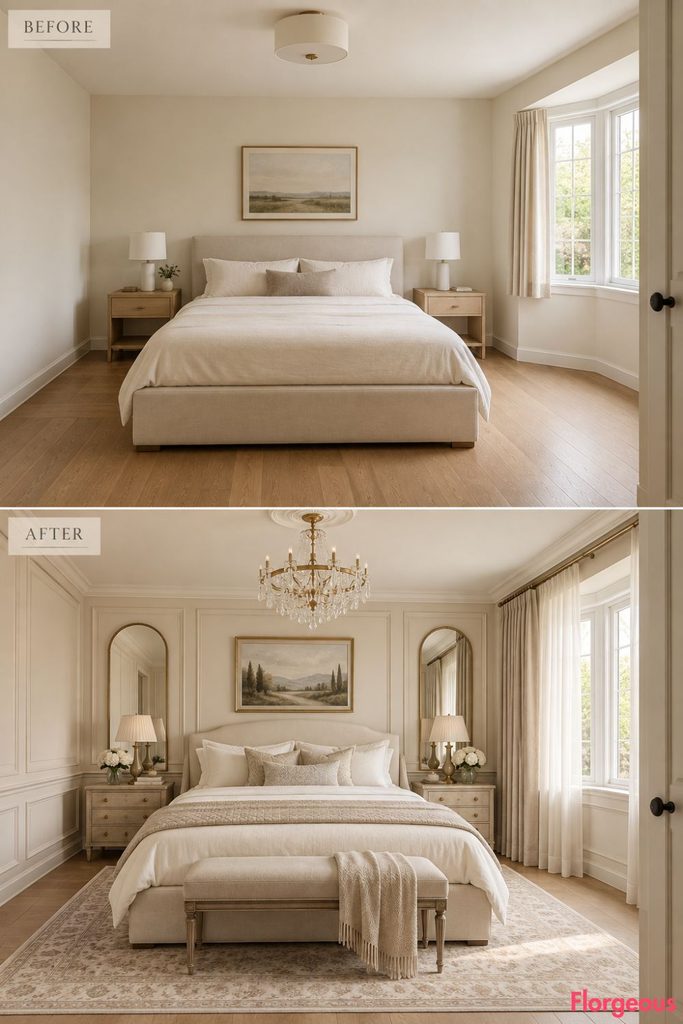
Before: The bed wall feels flat and ordinary.
After: A pair of narrow arch-top mirrors flank the upholstered bed inside a formal panel composition. A small crystal chandelier and pale gold accents make the room feel brighter and more polished.
Why it works: The arched forms soften the straight panel lines without breaking the classical order.
Small Space Tip: Mirrors help a paneled room feel lighter when the shell is not especially large.
11. Add a Decorative Cornice and a Blush-Beige Glow
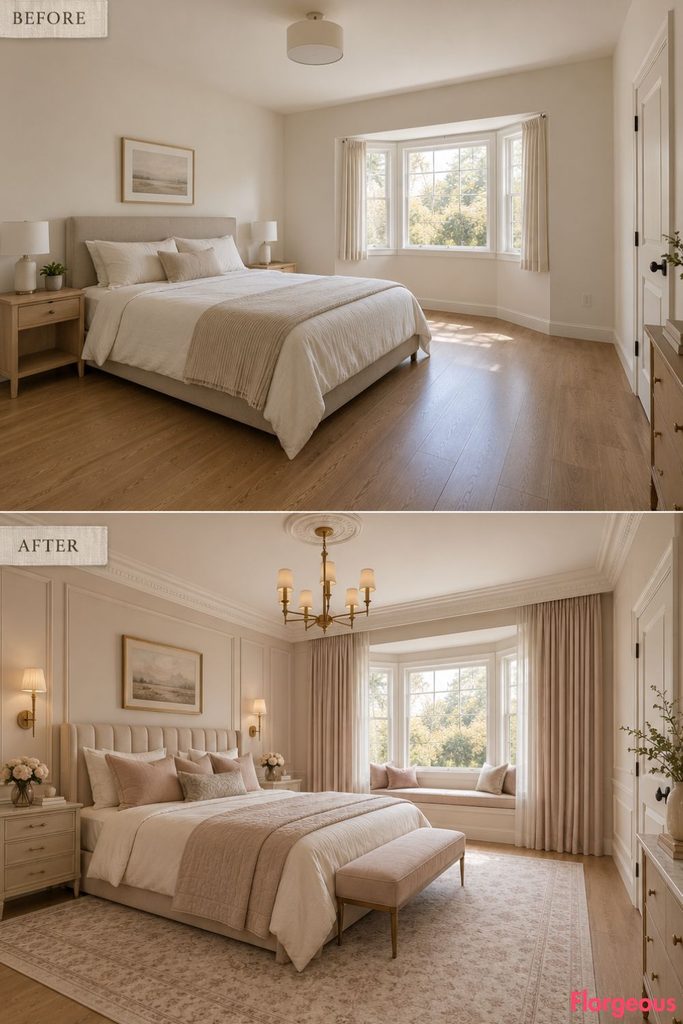
Before: The upper part of the room feels bare and unresolved.
After: A refined decorative cornice wraps the ceiling line, while blush-beige walls add warmth. The headboard becomes taller and more tailored, and the curtain lining quietly echoes the blush tone.
Why it works: The cornice gives the shell more finish, while the color keeps it inviting.
Try this: Think of blush as a warm neutral, not as a pink statement.
12. Create Soft Luxury With Upholstered Wall Panels
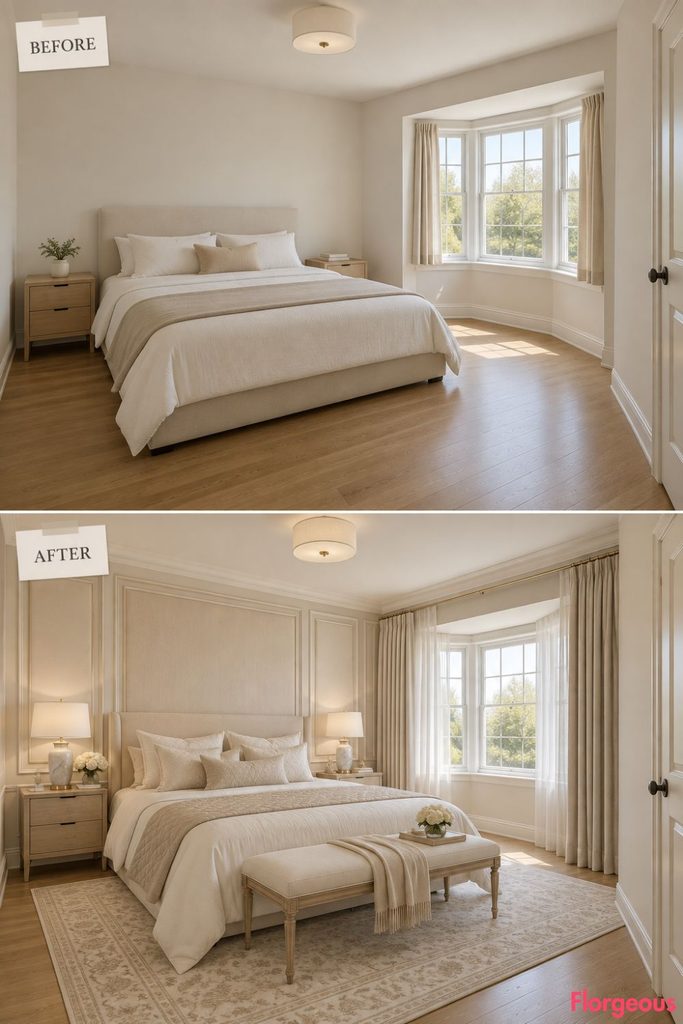
Before: The bed wall has no depth and no softness.
After: The central bed-wall panels are upholstered in ivory fabric and framed by slim molding, while the surrounding walls stay painted and restrained. Marble lamps and a slim bench reinforce the quiet luxury mood.
Why it works: Upholstered panels make the room feel calm, layered, and cocooning.
Try this: Match the panel fabric and headboard for a smoother, more luxurious result.
13. Paint a Trompe-l’Oeil Coffered Ceiling for Architectural Drama
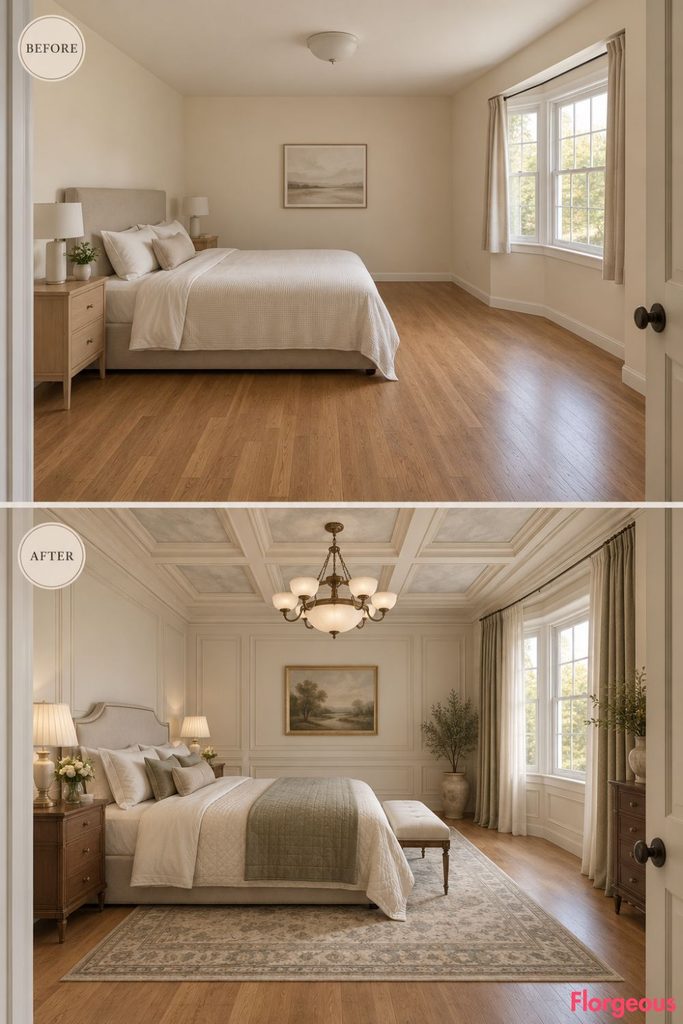
Before: The same plain bedroom with a flat ceiling, generic light, neutral bed, and minimal styling.
After: Keep the ceiling physically flat but transform it with a hand-painted trompe-l’oeil coffer pattern in ivory, pale stone, and soft gray, using delicate shadow work to create the illusion of classical depth. Pair it with a simple opaline-and-bronze chandelier, creamy walls, an elegant upholstered bed, restrained wall detailing, and softly layered bay-window drapery.
Why it works: The painted ceiling adds genuine artistic character and neoclassical architecture without changing the room shell.
Try this: Keep the faux coffers shallow and tonal so they feel sophisticated rather than theatrical.
14. Turn a Shallow Bas-Relief Frieze Into the Bed Wall’s Main Artwork
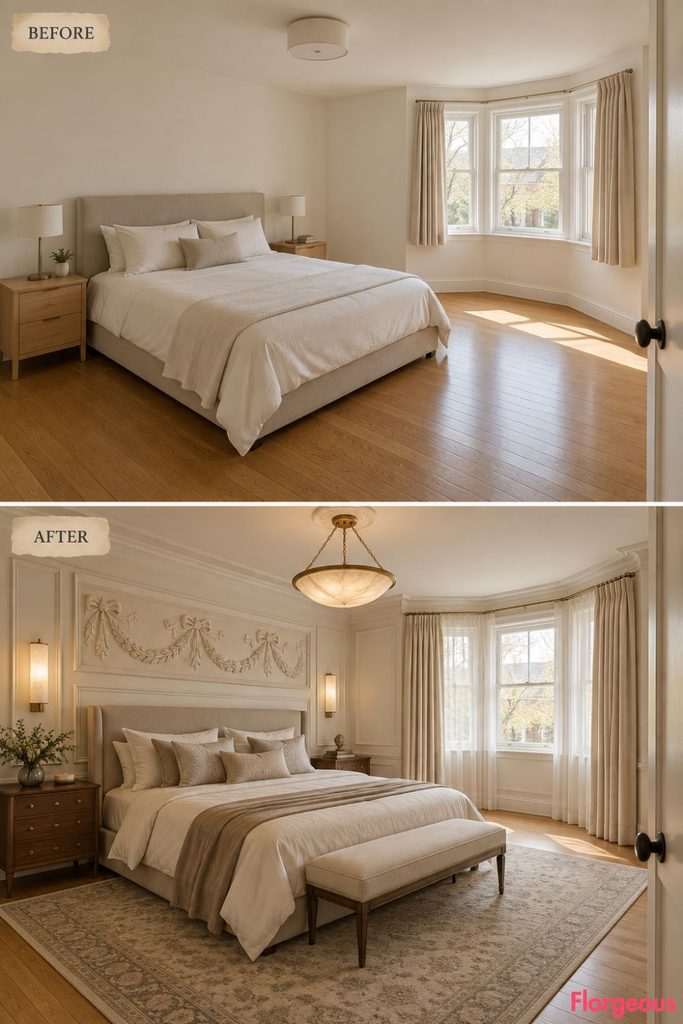
Before: The same plain room with a blank bed wall and basic furniture.
After: A long shallow plaster frieze runs horizontally above the headboard, featuring a restrained rhythm of stylized laurel garlands and ribbon forms in warm ivory relief. Below it, a broad champagne-beige bed, slim alabaster sconces, dark walnut bedside pieces, and full bay-window curtains create a richer, more sculptural composition.
Why it works: The frieze gives the room unmistakable classical artistry without repeating standard panel molding or upholstered walls.
Try this: Keep the relief low and monochromatic so the craftsmanship, rather than ornament density, becomes the focal point.
15. Brighten the Mood With Celadon Walls and White Trim
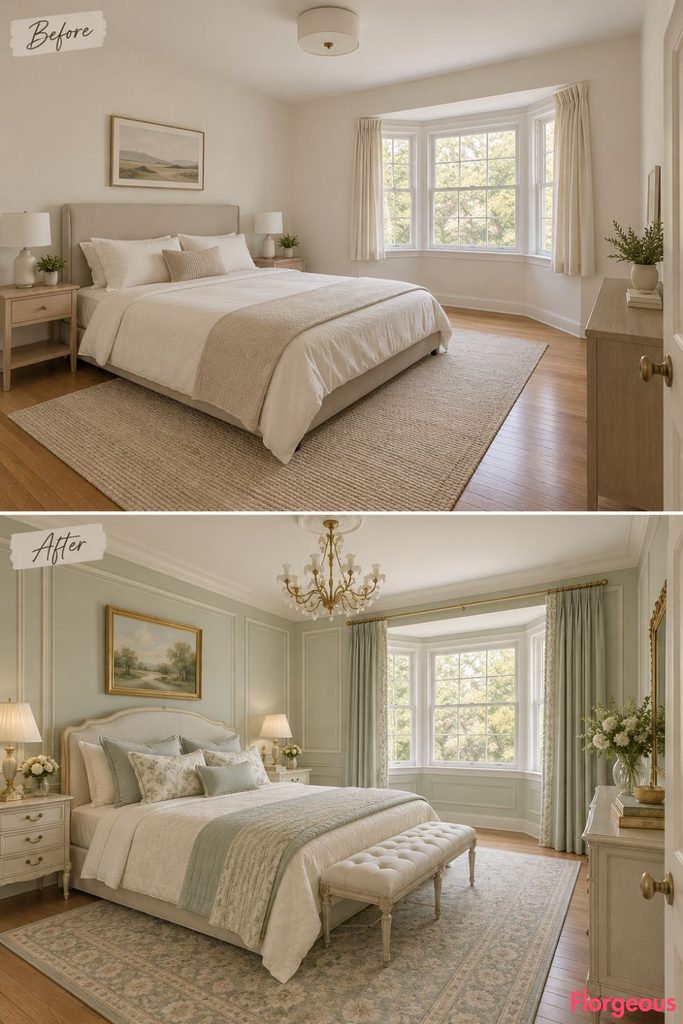
Before: The room feels neutral but not especially fresh.
After: Pale celadon walls, carved white trim, an elegant upholstered bed, and a floral-inspired chandelier bring in a lighter decorative mood. The bay window gets soft ivory drapery with a narrow trim edge.
Why it works: Celadon adds airiness and antique charm without becoming sweet.
Common Mistake: Too much decorative carving can push the room toward a different style. Keep the lines crisp and restrained.
16. Turn the Room Into a Refined Hotel-Style Suite
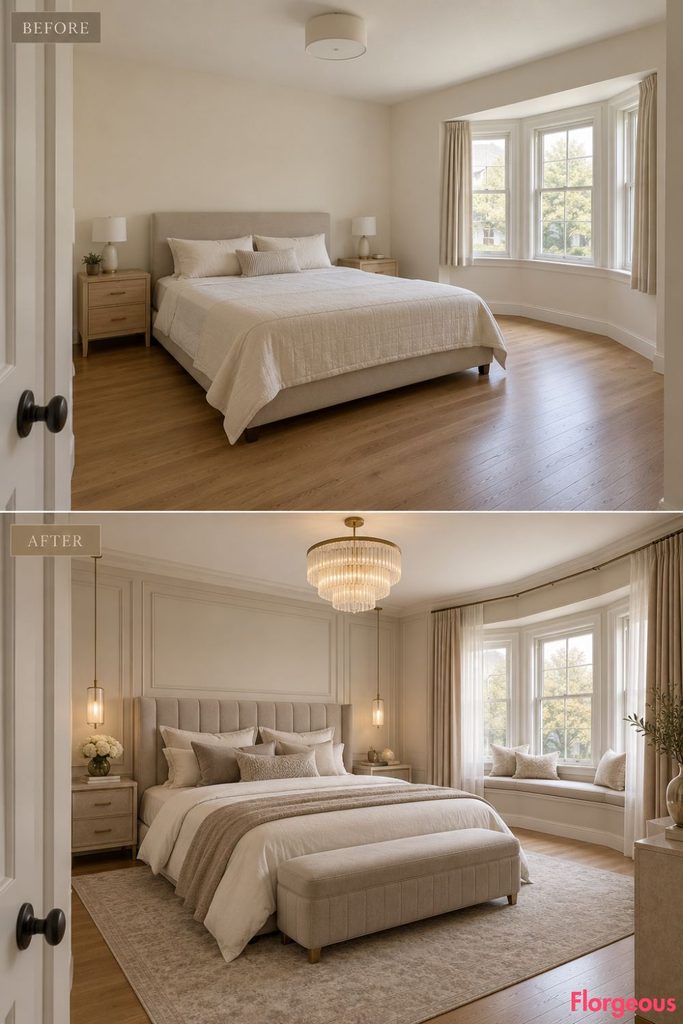
Before: The room feels more like a starter bedroom than a retreat.
After: Tall formal paneling, an oversized upholstered headboard, slim bedside pendants, and a discreet central chandelier create a luxury-suite feeling. A low bench tucked into the bay window makes the architecture work harder.
Why it works: It blends comfort and grandeur without cluttering the shell.
Try this: Use larger pillows and fuller bedding if you want the room to feel more professionally styled.
17. Turn the Far Wall Into a Neoclassical Tapestry Gallery
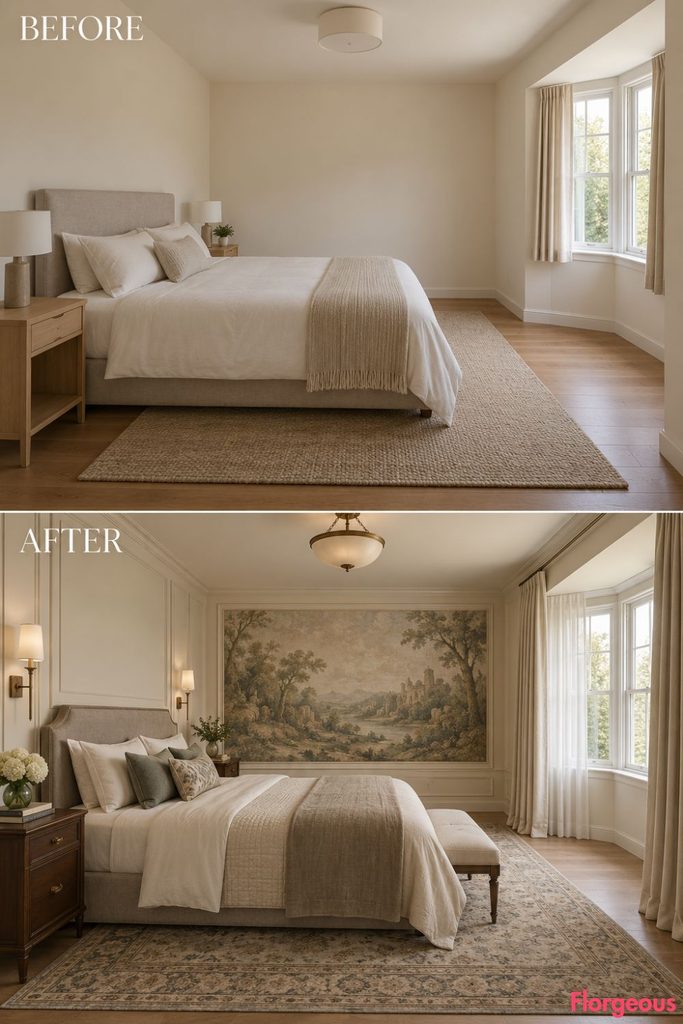
Before: The same plain bedroom with a blank far wall, basic neutral bed, and minimal styling.
After: The flat far wall becomes the artistic focal point with one oversized muted tapestry-style panel framed in slim ivory molding, using an abstracted classical landscape in faded stone, sage, and parchment tones. Keep the bed wall quieter with a tailored taupe upholstered bed, slim bronze sconces, and dark walnut bedside furniture. Add a refined opaline ceiling light and softly layered bay-window drapery.
Why it works: Moving the strongest decorative feature away from the bed makes the room feel more collected and gallery-like while staying clearly Neoclassical.
Try this: Keep the tapestry colors faded and tonal so it reads as sophisticated wall art rather than a themed mural.
18. Treat the Bed Wall Like Couture With a Painted Panel Mural
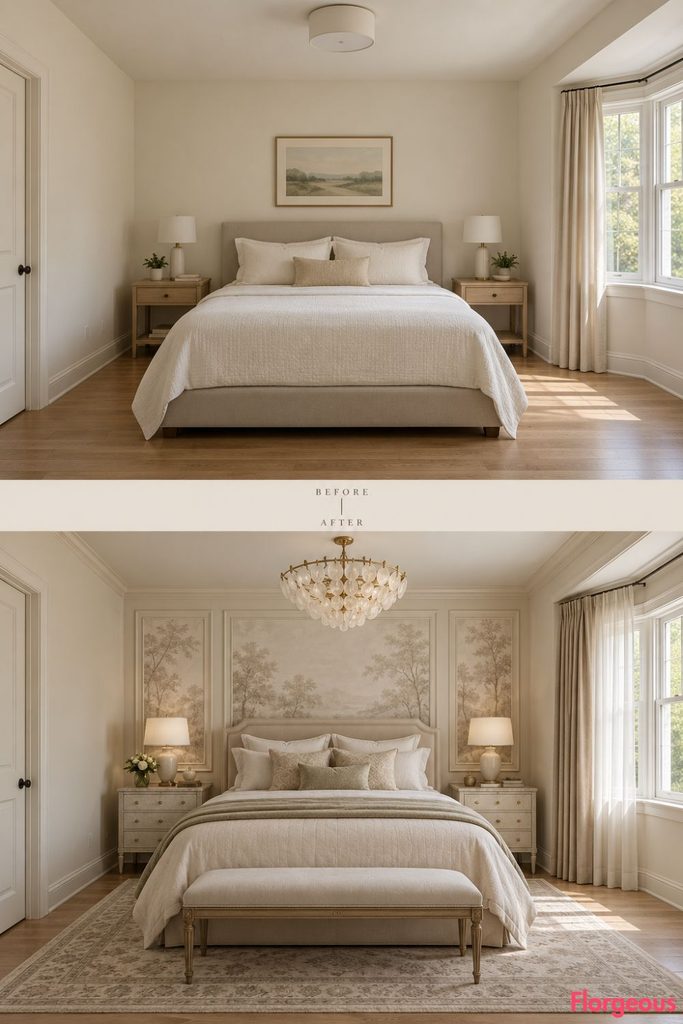
Before: The room feels plain and slightly underdesigned.
After: Symmetrical classical wall panels frame a soft painted mural effect behind the bed, while marble-top nightstands and a sculptural chandelier make the room feel custom-made. The palette stays pale and quiet.
Why it works: The wall becomes art, architecture, and focal point in one move.
Try this: Keep the mural tonal and airy so the room still feels serene.
19. Turn the Bed Wall Into a Pompeian-Inspired Painted Composition
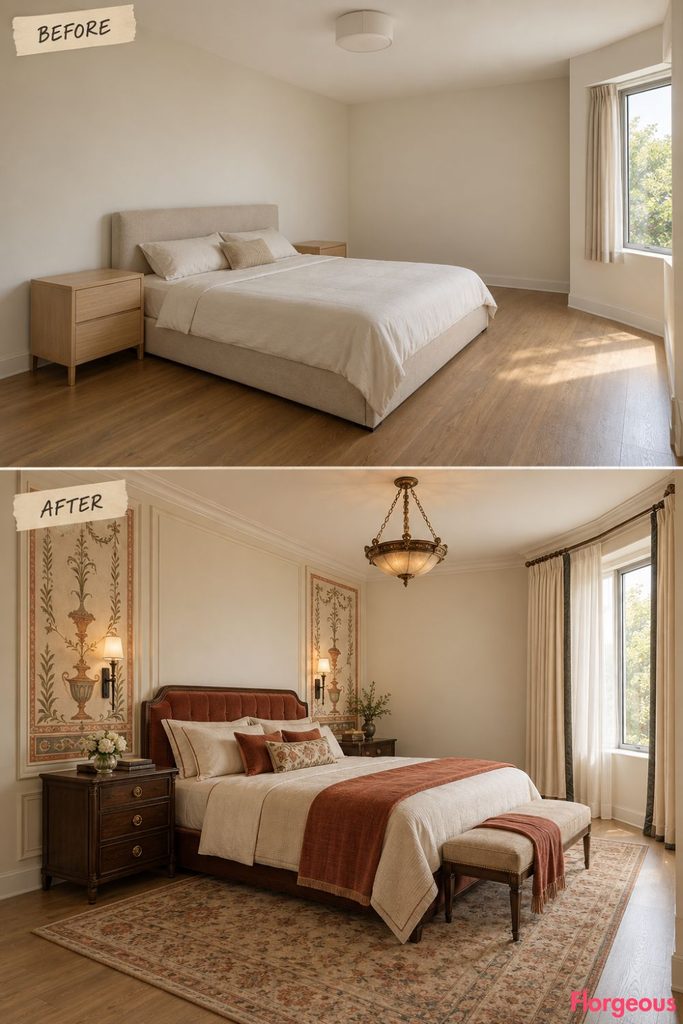
Before: The same plain bedroom with neutral walls, basic bed, bare nightstands, and minimal styling.
After: Two tall hand-painted decorative panels flank the bed, using delicate neoclassical arabesques, laurel stems, urn forms, and fine linear detailing in faded terracotta, charcoal, parchment, and muted olive. Pair them with a dark mahogany upholstered bed, blackened-bronze sconces, ivory curtains with narrow dark edging, and a softly faded rug.
Why it works: The painted panels bring genuine neoclassical artistry into the room without repeating molding, murals, tapestry, or sculptural plaster.
Try this: Keep the painted ornament fine and spacious so it feels architectural rather than theatrical.
20. Wrap the Lower Walls in a Painted Neoclassical Dado
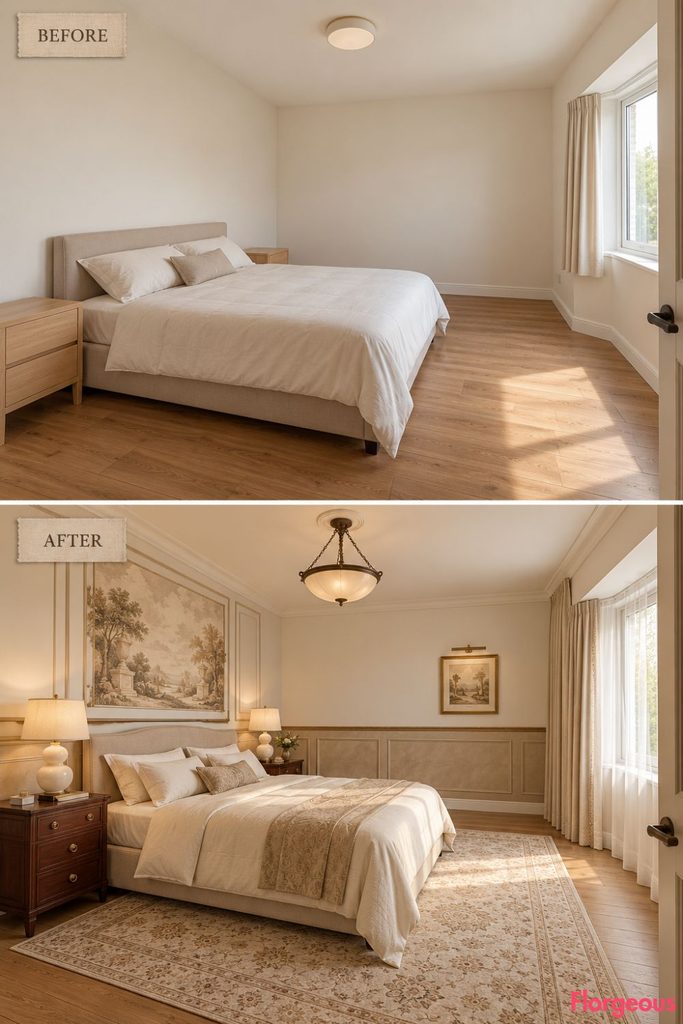
Before: The same plain neutral bedroom with flat walls and generic furnishings.
After: A tall painted dado wraps the lower portion of the room in warm parchment, separated from pale ivory upper walls by a slim dark-bronze rail. Delicate linear detailing gives the dado an architectural rhythm, while a pale upholstered bed, sculptural alabaster lamps, dark cherry furniture, and finely pleated bay drapery complete the composition.
Why it works: Moving the strongest architectural treatment to the lower walls gives the room a completely different visual structure from the panel-heavy sections.
Try this: Keep the dado slightly taller than a typical chair rail so it feels intentional and substantial.
21. Give the Far Wall a Marble Console and Trumeau Mirror
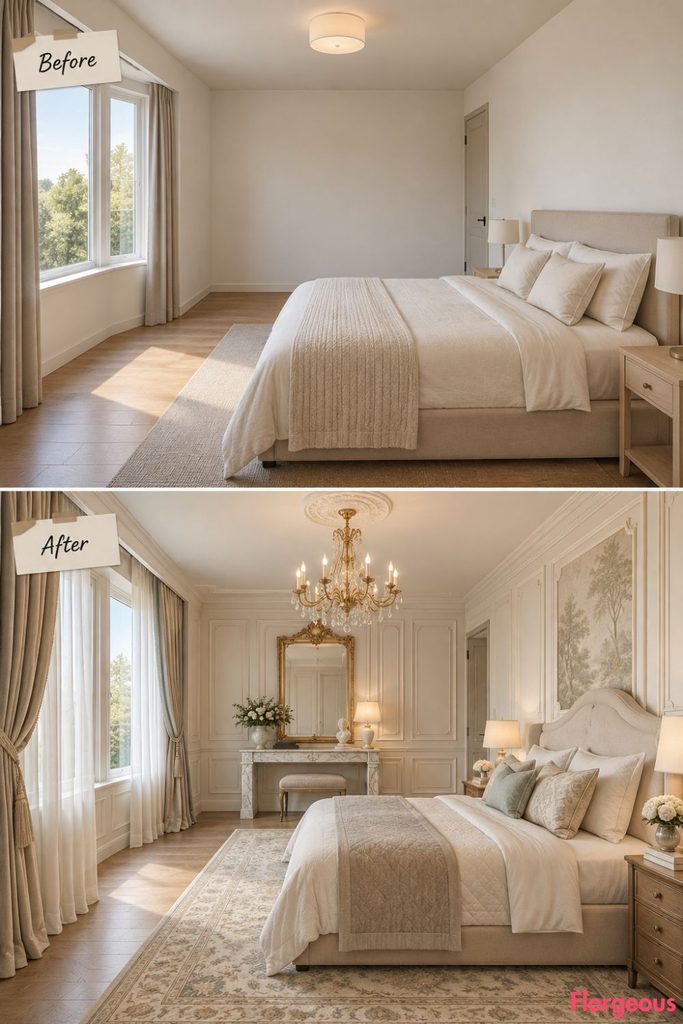
Before: The far wall does almost nothing for the room.
After: A slim marble console and a classical trumeau mirror turn the far wall into a formal secondary focal point. The bed wall stays elegant but quieter, while a delicate chandelier ties the composition together.
Why it works: The room feels complete because more than one wall participates in the design.
22. Stretch the Room With Tall Vertical Panels and a Slim Pendant
Before: The room feels slightly low and horizontally spread.
After: Tall narrow panels make the walls feel higher, while a slim elongated pendant reinforces the vertical emphasis. The bay curtains run almost uninterrupted from ceiling to floor, making the shell feel taller.
Why it works: Verticality changes the room’s apparent proportions without changing the architecture.
Try this: Stop the panels close to the ceiling line to exaggerate height.
23. Wrap the Room in Neoclassical Striped Silk for a Salon-Like Finish
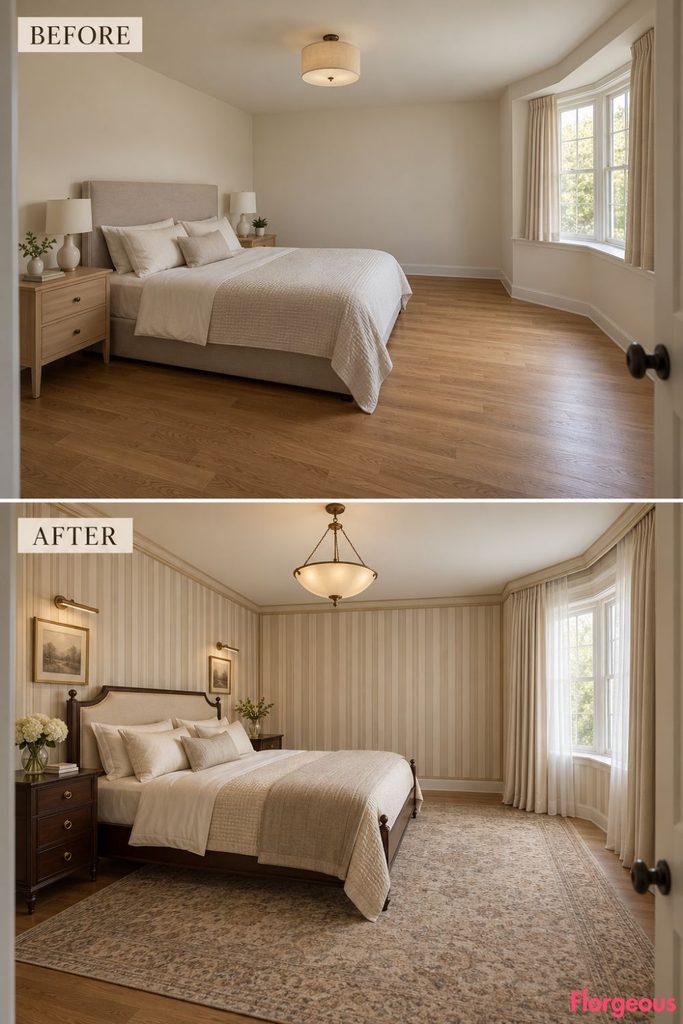
Before: The same plain neutral bedroom with flat walls, basic furniture, short curtains, and generic lighting.
After: The walls are wrapped in fine vertical silk-stripe fabric in parchment, ivory, and muted champagne, finished with narrow painted timber borders rather than conventional panel molding. Add a dark mahogany bed with a simple upholstered center, slim bronze picture lights, a sculptural opaline chandelier, tailored solid-ivory bay drapery, and a deep parchment rug.
Why it works: The striped silk gives the entire shell rhythm, softness, and classical formality without repeating panel molding, mural art, plaster relief, or upholstered wall panels.
Try this: Keep the stripe extremely fine and tonal so it reads as luxurious texture rather than decorative wallpaper.
What to Borrow From These Rooms Before You Start Decorating
The strongest rooms in this roundup all do the same thing well: they choose one leading idea, then let the wall treatment, lighting, furniture, curtains, and textiles all follow it. That is what makes the room feel artistic instead of random.
If your room is modest, start with the shell. Better molding, fuller curtains, one stronger light fixture, and a taller headboard will do more than a pile of accessories. If the shell already feels good, then you can push further with marble, a medallion, mural-style panels, a trumeau mirror, or a more expressive palette.
The easiest mistake is trying to use every classical gesture at once. A successful Neoclassical Bedroom should feel elegant, calm, and clearly composed, with enough luxury to feel special and enough restraint to stay timeless.