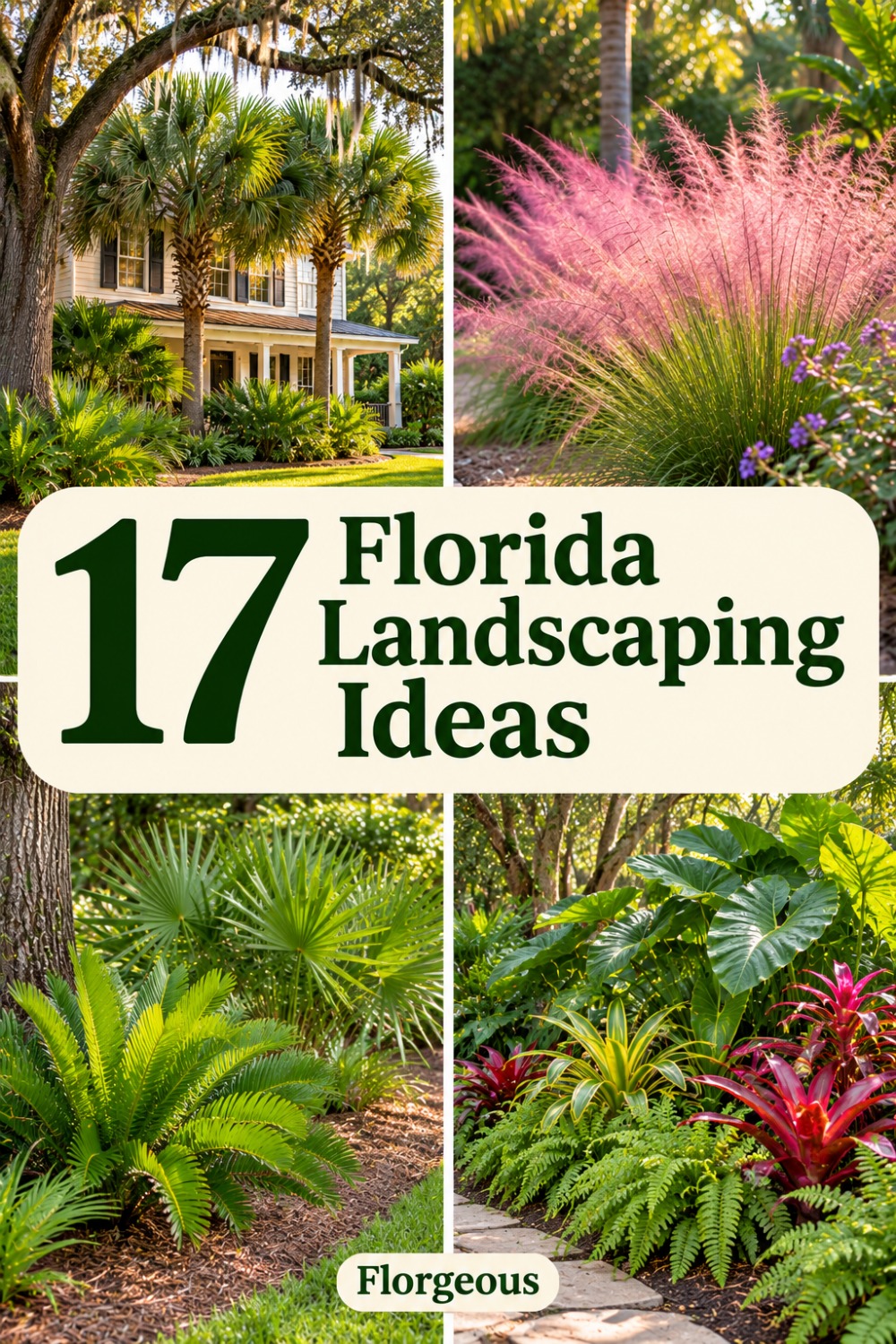
Gardening in Florida means sunshine almost all year, but also summer downpours, sandy soil, salt air and the occasional hurricane.
Plants that thrive up north often struggle here, while the right natives and Florida-friendly plants grow happily with little help.
The secret to a great Florida yard isn’t fighting the climate. It’s choosing plants that love it, and designing for heavy rain and strong wind.
These 17 Florida landscaping ideas will help you build a yard that stays lush with less water, fertilizer and stress. For more general inspiration, see our front yard landscaping ideas.
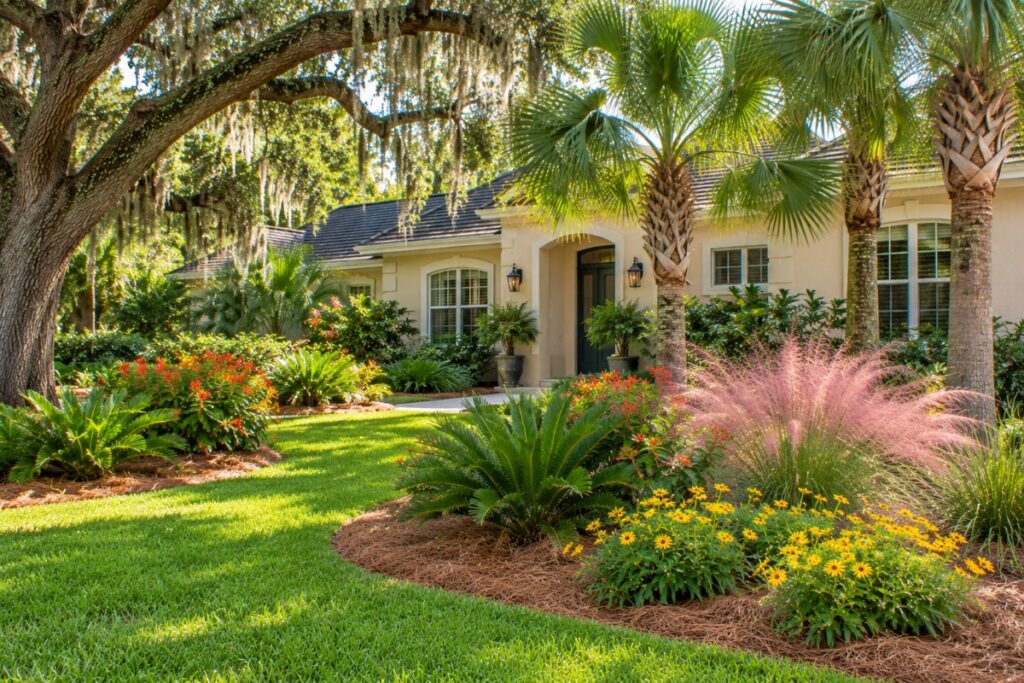
Florida Natives Worth Planting
| Plant | Type | Why it works |
|---|---|---|
| Sabal palm (Sabal palmetto) | Palm | Florida’s state tree and among the most wind-resistant |
| Firebush (Hamelia patens) | Shrub | Orange-red flowers for hummingbirds and butterflies |
| Coontie (Zamia integrifolia) | Cycad | Tough, glossy, low-maintenance ground layer |
| Muhly grass (Muhlenbergia capillaris) | Grass | Clouds of pink plumes in autumn |
| American beautyberry (Callicarpa americana) | Shrub | Bright purple berries for birds |
| Coreopsis (Coreopsis spp.) | Wildflower | Florida’s state wildflower, cheerful yellow blooms |
1. Follow the Florida-Friendly Landscaping Principles
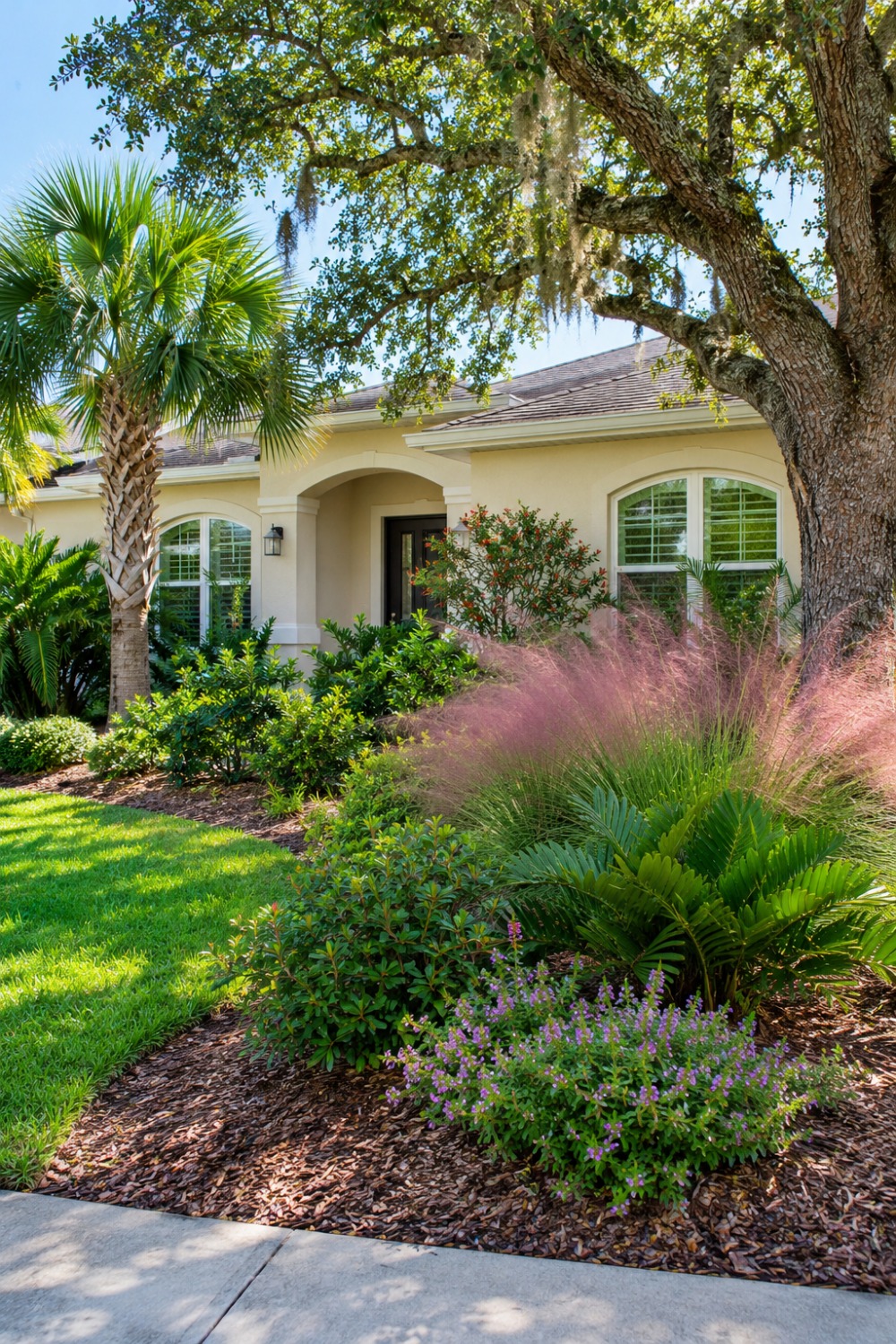
The University of Florida’s Florida-Friendly Landscaping program is a great starting point for any Florida yard.
Its nine principles cover the basics: the right plant in the right place, watering efficiently, fertilizing appropriately, mulching, attracting wildlife, managing pests responsibly, recycling yard waste, reducing stormwater runoff and protecting the waterfront.
Following them helps your yard look good while using less water and fertilizer.
How to do it:
- Read through the nine principles on the UF/IFAS Florida-Friendly Landscaping site.
- Pick one or two to start with, such as right plant, right place and mulching.
- Contact your county Extension office for free local advice.
2. Choose Plants for Your Part of Florida
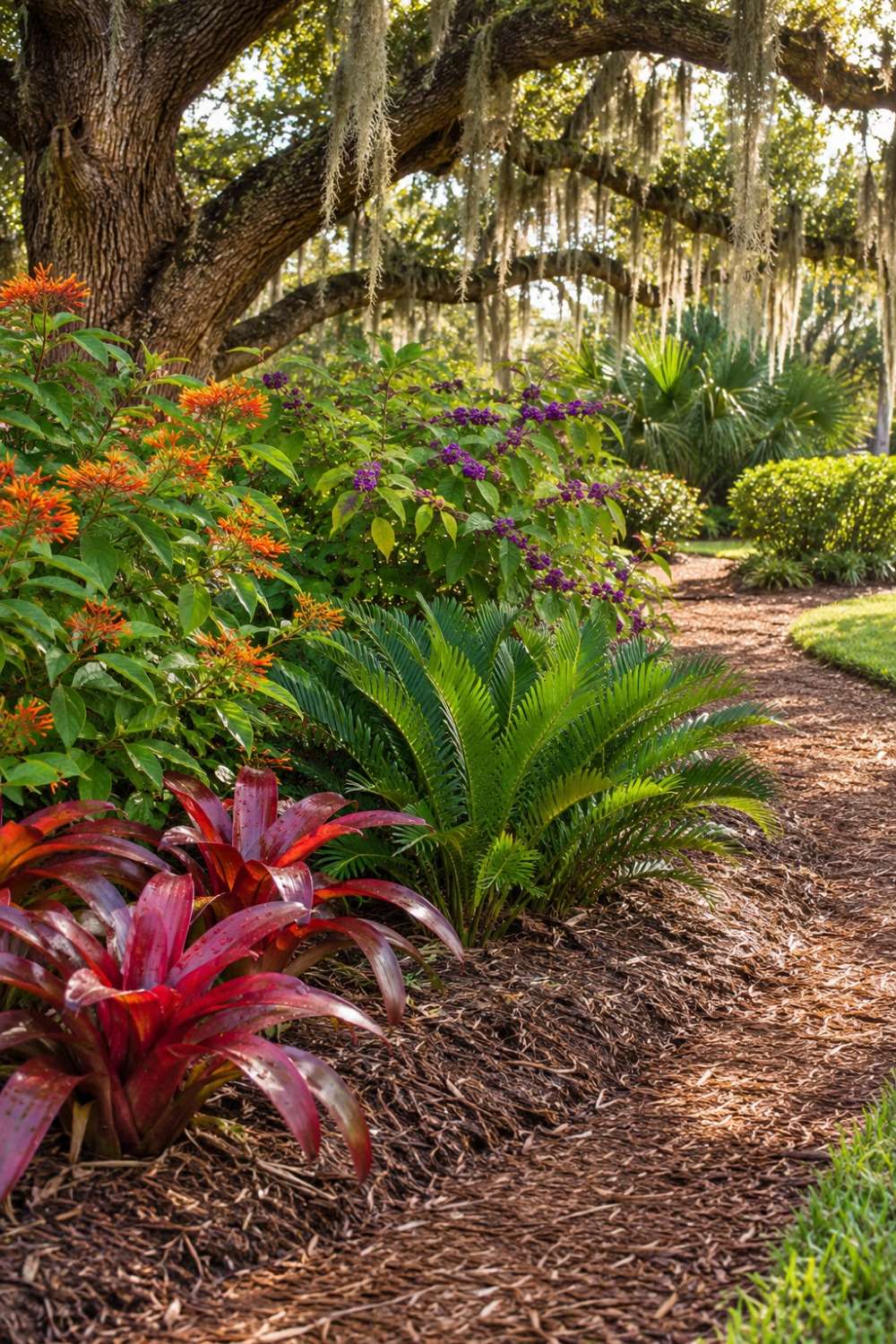
Florida is long, and its climate changes a lot from north to south.
North Florida gets regular winter frosts, while South Florida rarely freezes and can grow many tropical plants.
Choosing plants rated for your region means fewer losses after a cold snap.
How to do it:
- Check whether you’re in North, Central or South Florida and your hardiness zone.
- Look for plants recommended for your region in the Florida-Friendly plant guide.
- Protect cold-tender plants, or plant them in sheltered spots.
3. Plant Native Wildflowers for Year-Round Color
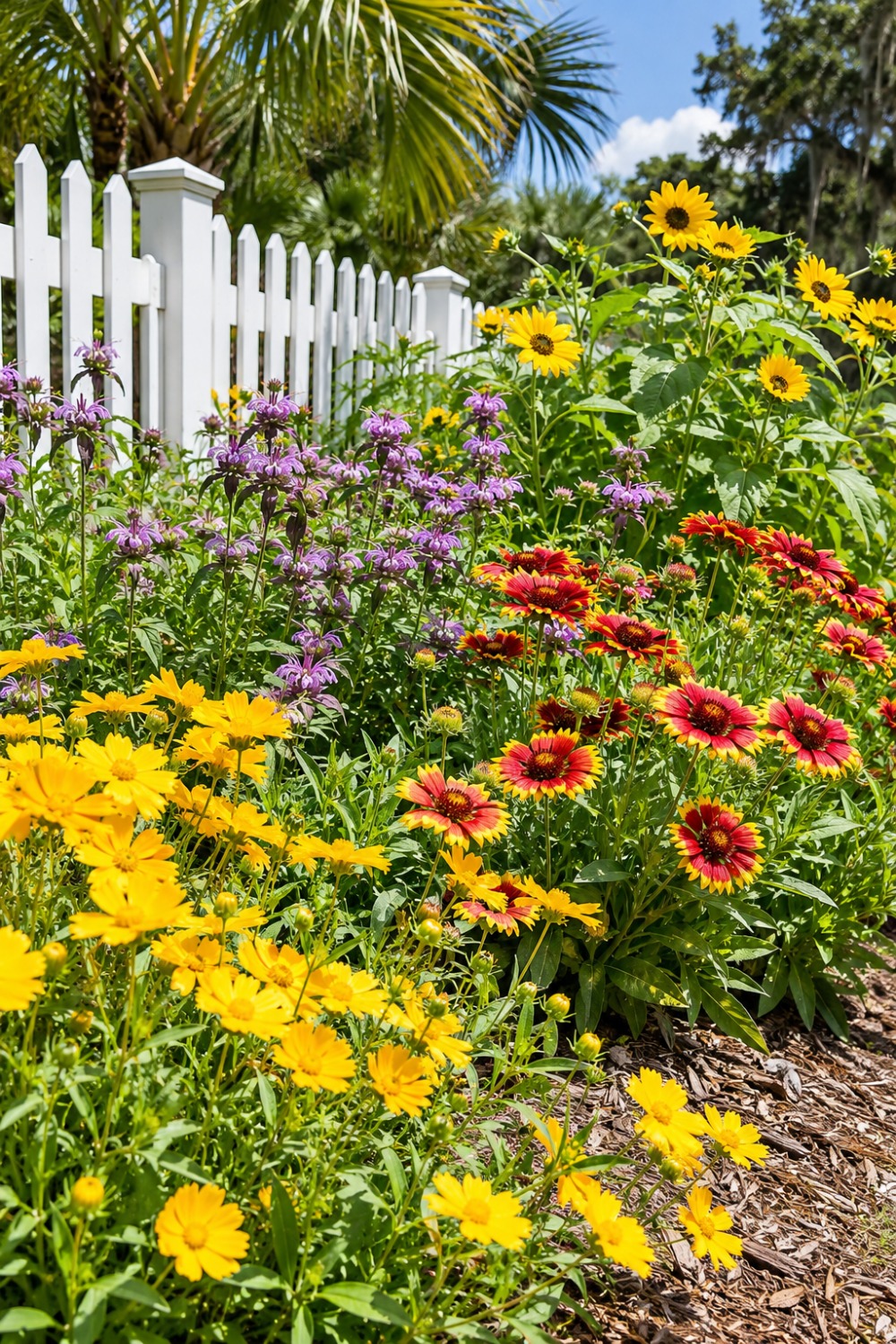
Florida’s native wildflowers are tough, colorful and adapted to sandy soil and heat.
Coreopsis, blanket flower, dune sunflower and dotted horsemint bloom for long stretches and feed pollinators.
Many reseed themselves, so the bed fills in a little more each year.
How to do it:
- Choose a sunny spot with well-drained soil.
- Plant young plants in spring or sow seed in autumn.
- Water until established, then let them handle most of the work.
4. Anchor the Yard With Sabal Palms and Live Oaks
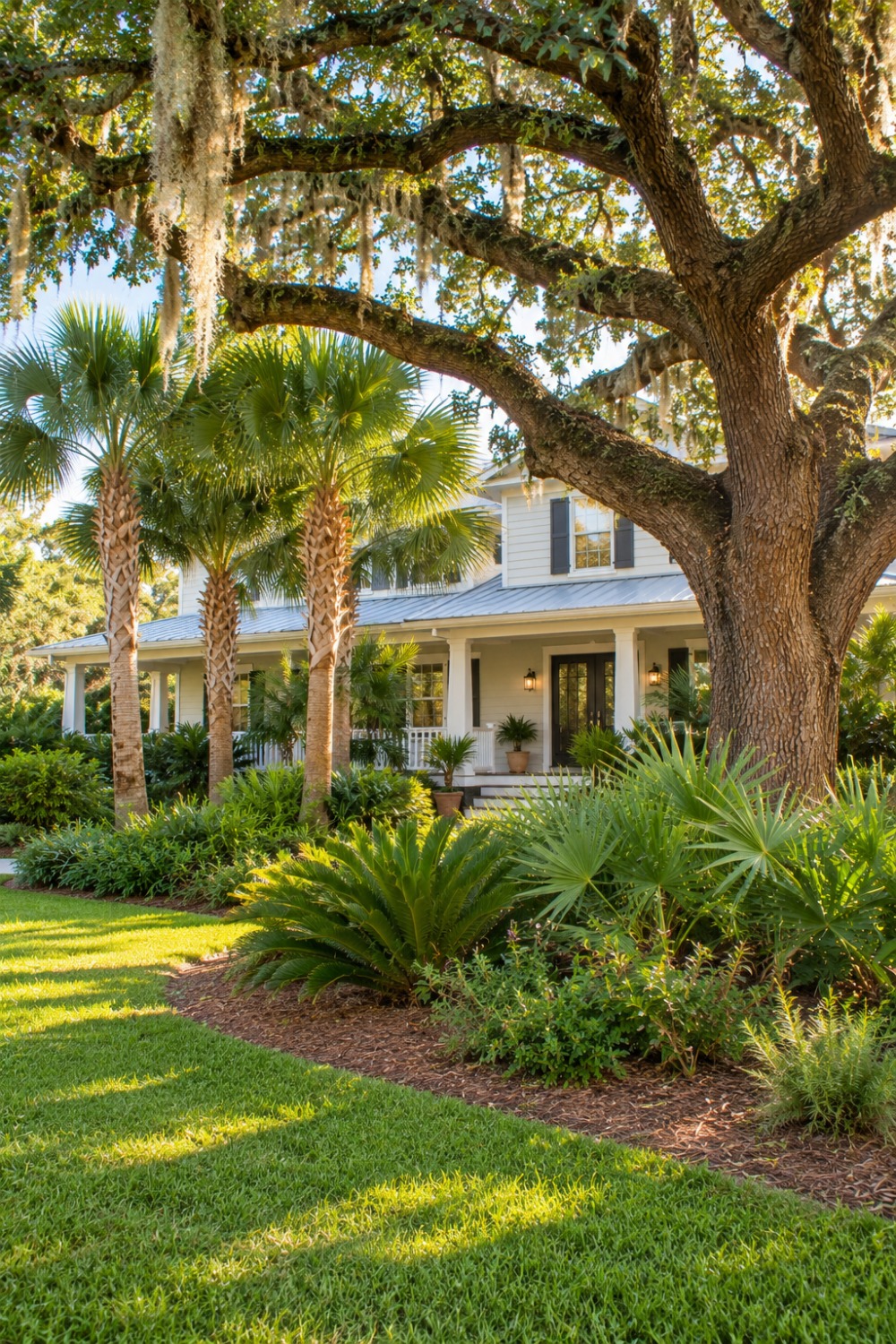
Trees are the backbone of a Florida yard, providing shade that cools the house and the ground.
UF/IFAS research after hurricanes found that species such as live oak, sabal palm and southern magnolia tend to hold up better in strong winds than many others.
Give large trees plenty of room and keep them well away from the house and power lines.
How to do it:
- Choose wind-resistant species suited to your area.
- Plant large trees well away from the house, driveways and utilities.
- Have a certified arborist prune them properly as they grow.
5. Replace Some Lawn With Perennial Peanut
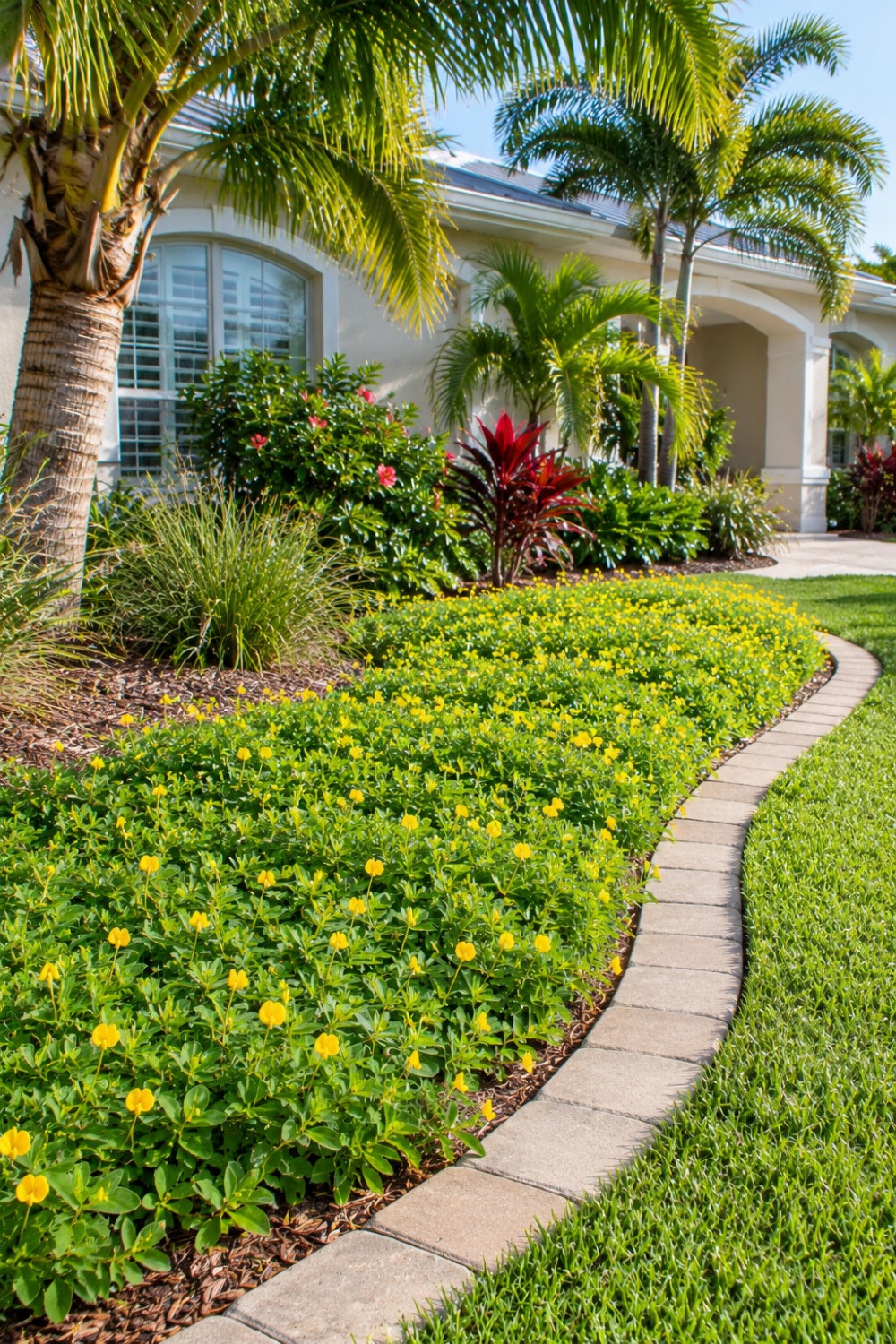
Turf grass needs a lot of water, fertilizer and mowing in the Florida heat.
Perennial peanut is a popular alternative ground cover with small yellow flowers that handles sun and drought once established.
It can take light foot traffic and only needs occasional mowing to keep it tidy.
How to do it:
- Choose an area with little foot traffic, such as a side strip or slope.
- Remove the existing grass and plant perennial peanut in late spring or summer.
- Water regularly until it fills in, then mow occasionally if you want a lawn-like look.
6. Use Coontie and Saw Palmetto for Native Texture
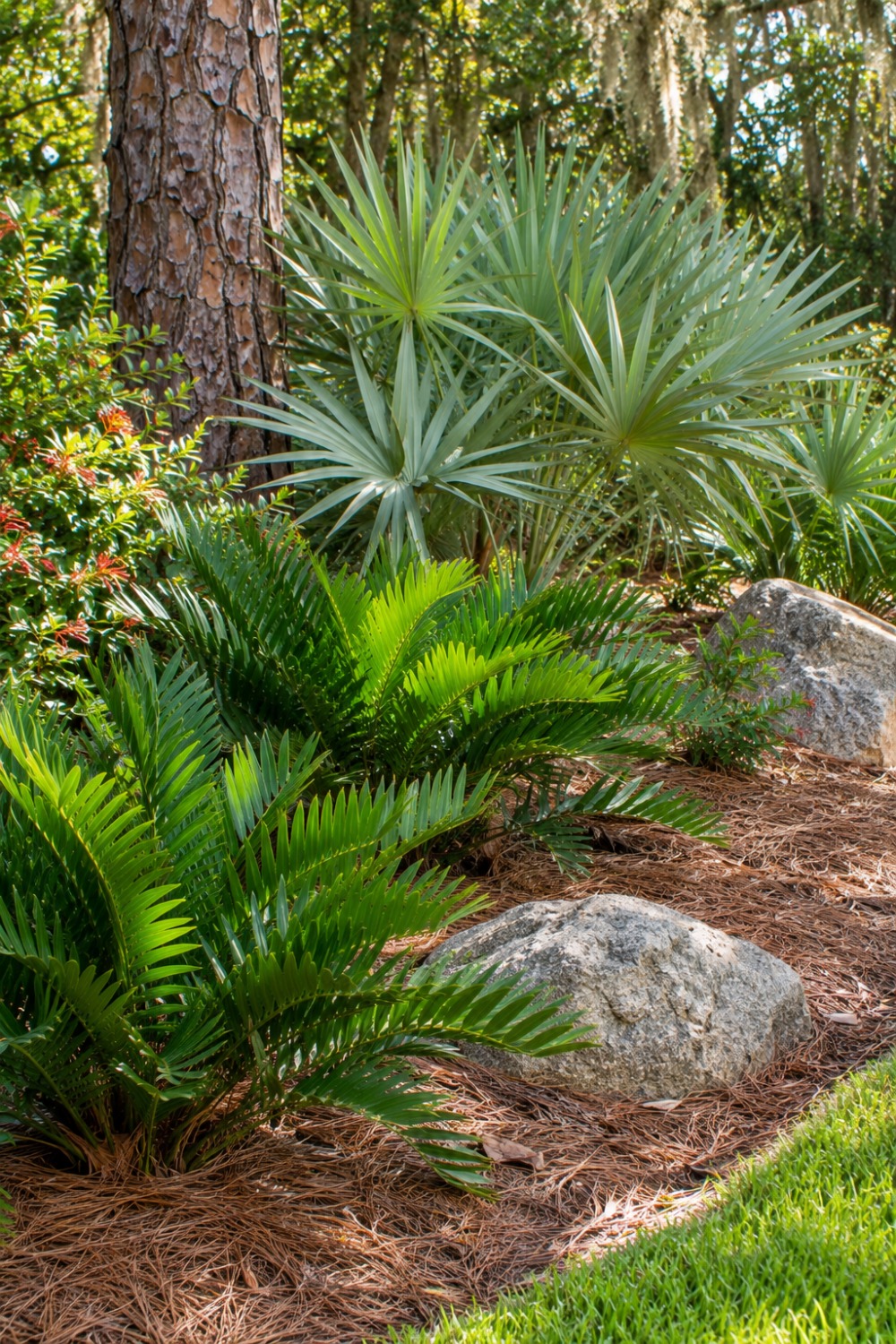
Coontie and saw palmetto give a Florida garden a lush, tropical look without the fuss.
Coontie is a low, glossy native cycad, and saw palmetto has striking fan-shaped leaves in green or silver.
Both are very tough, handle sun or part shade and need little care once established.
How to do it:
- Plant coontie in groups along borders or under trees.
- Give saw palmetto plenty of space, as it spreads slowly over time.
- Mulch around them with pine straw or pine bark.
7. Plant Muhly Grass for Pink Autumn Plumes
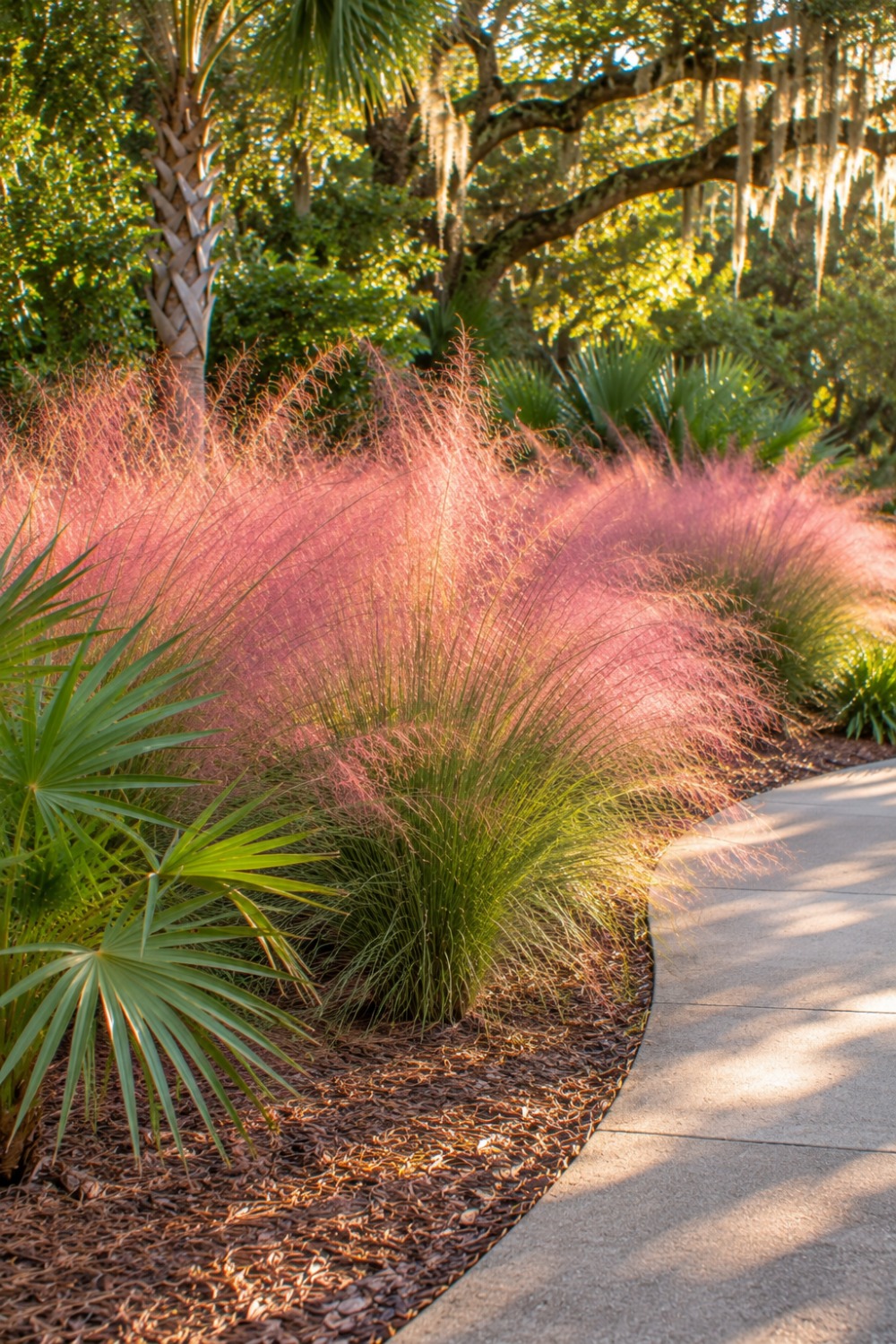
Muhly grass is a Florida native that looks neat all year and puts on a show every autumn.
Its clouds of pink plumes look stunning when the low sun shines through them.
It handles drought, heat and salt spray, so it works well even near the coast.
How to do it:
- Plant in groups of three or more in full sun.
- Space plants about 3 feet apart.
- Cut back old growth in late winter if it looks untidy.
8. Build a Rain Garden for Summer Downpours
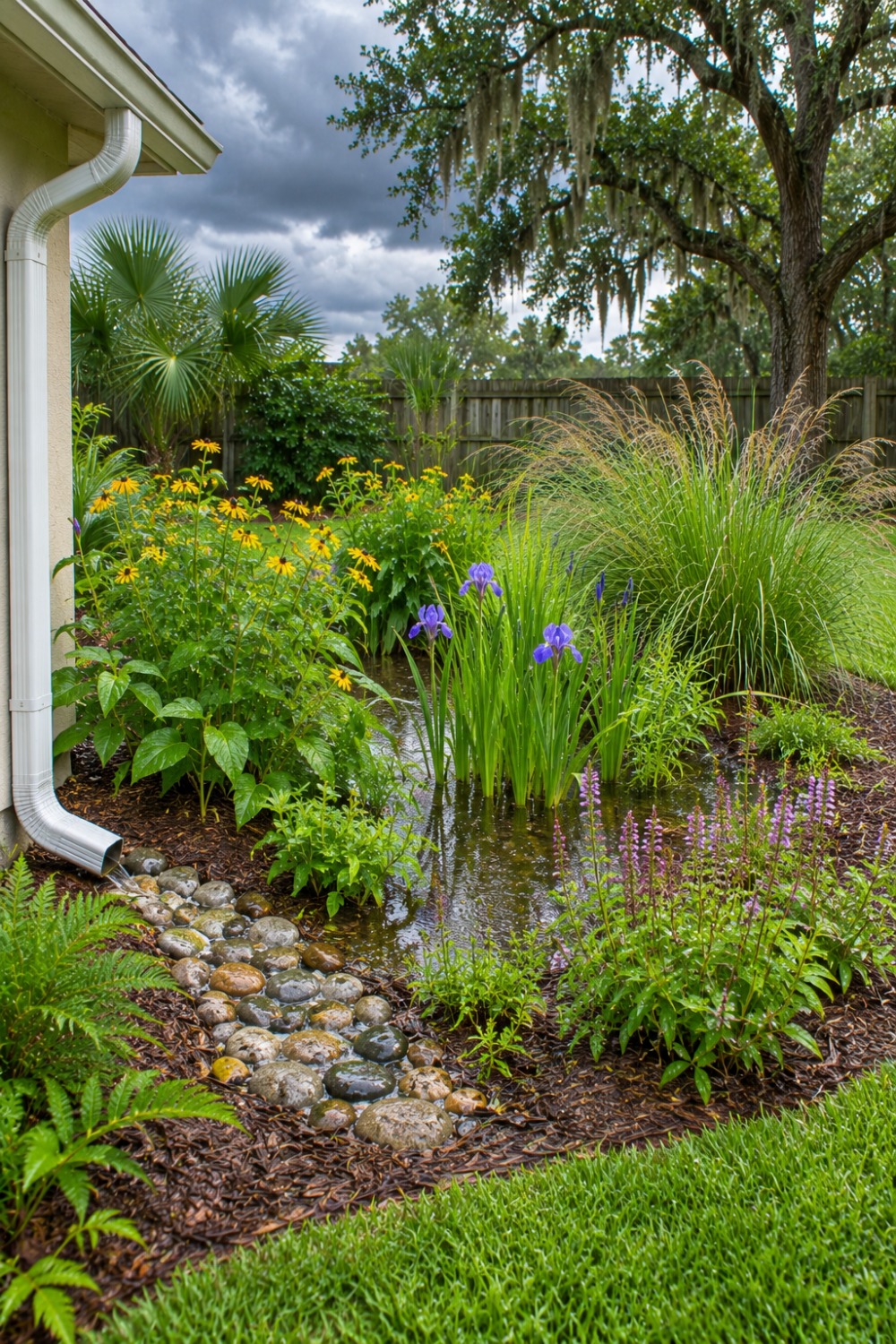
Florida’s summer storms can dump a lot of water in a short time.
A rain garden catches runoff from your roof or driveway and lets it soak slowly into the ground.
It reduces flooding and stops fertilizer and pollutants from washing into lakes, canals and the ocean.
How to do it:
- Pick a low spot at least 10 feet from the house.
- Dig a shallow basin and direct a downspout toward it.
- Plant natives that handle both wet and dry spells, such as Fakahatchee grass and swamp sunflower.
9. Mulch With Pine Straw or Pine Bark
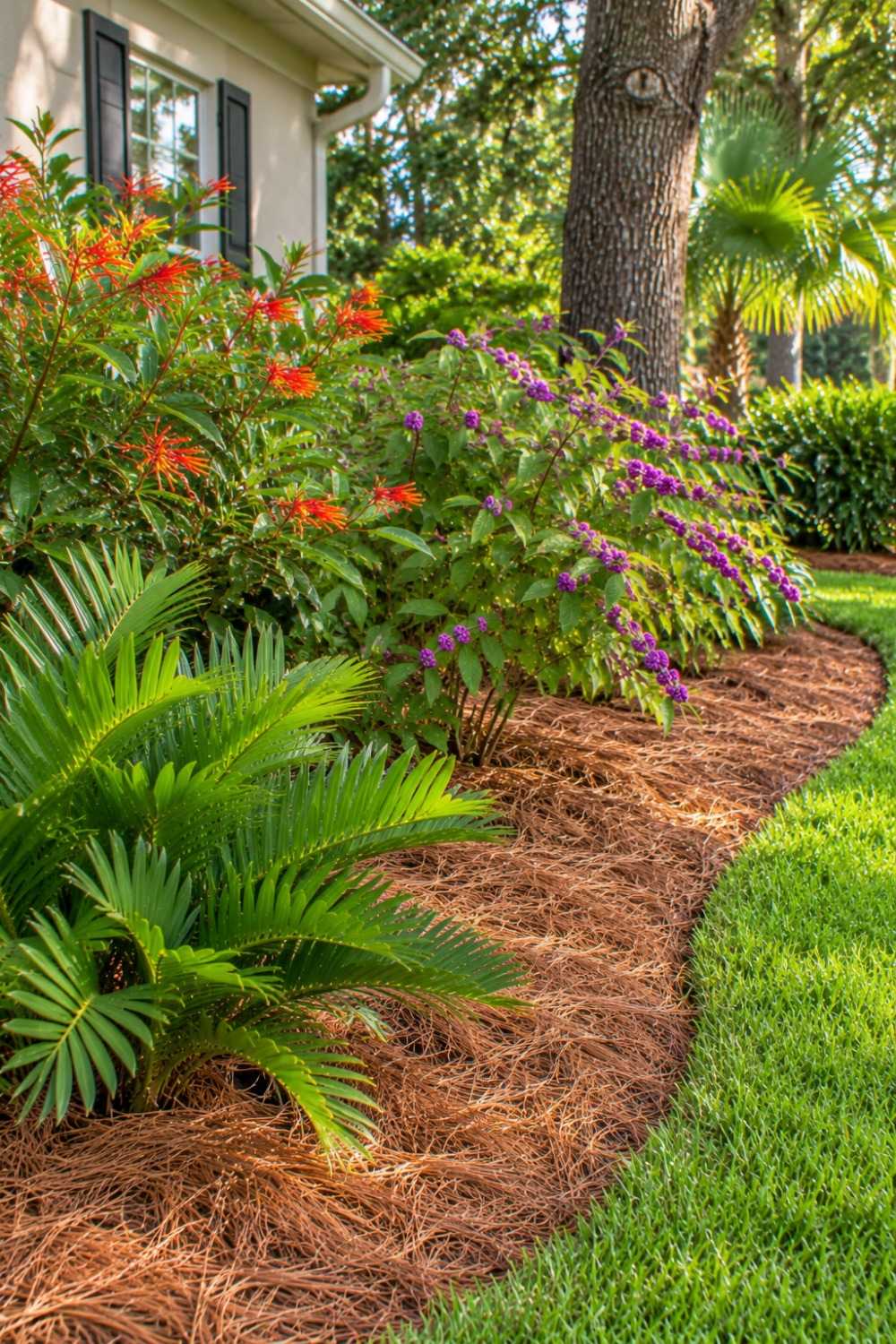
Mulch keeps Florida’s sandy soil moist, cool and weed-free.
Pine straw and pine bark are popular, renewable choices.
The Florida-Friendly Landscaping program suggests avoiding cypress mulch, as cypress is often harvested from wetlands.
How to do it:
- Spread 2 to 3 inches of mulch over beds.
- Keep it a few inches away from trunks and stems.
- Top up once or twice a year as it breaks down.
10. Create a Tropical Shade Garden With Bromeliads and Ferns
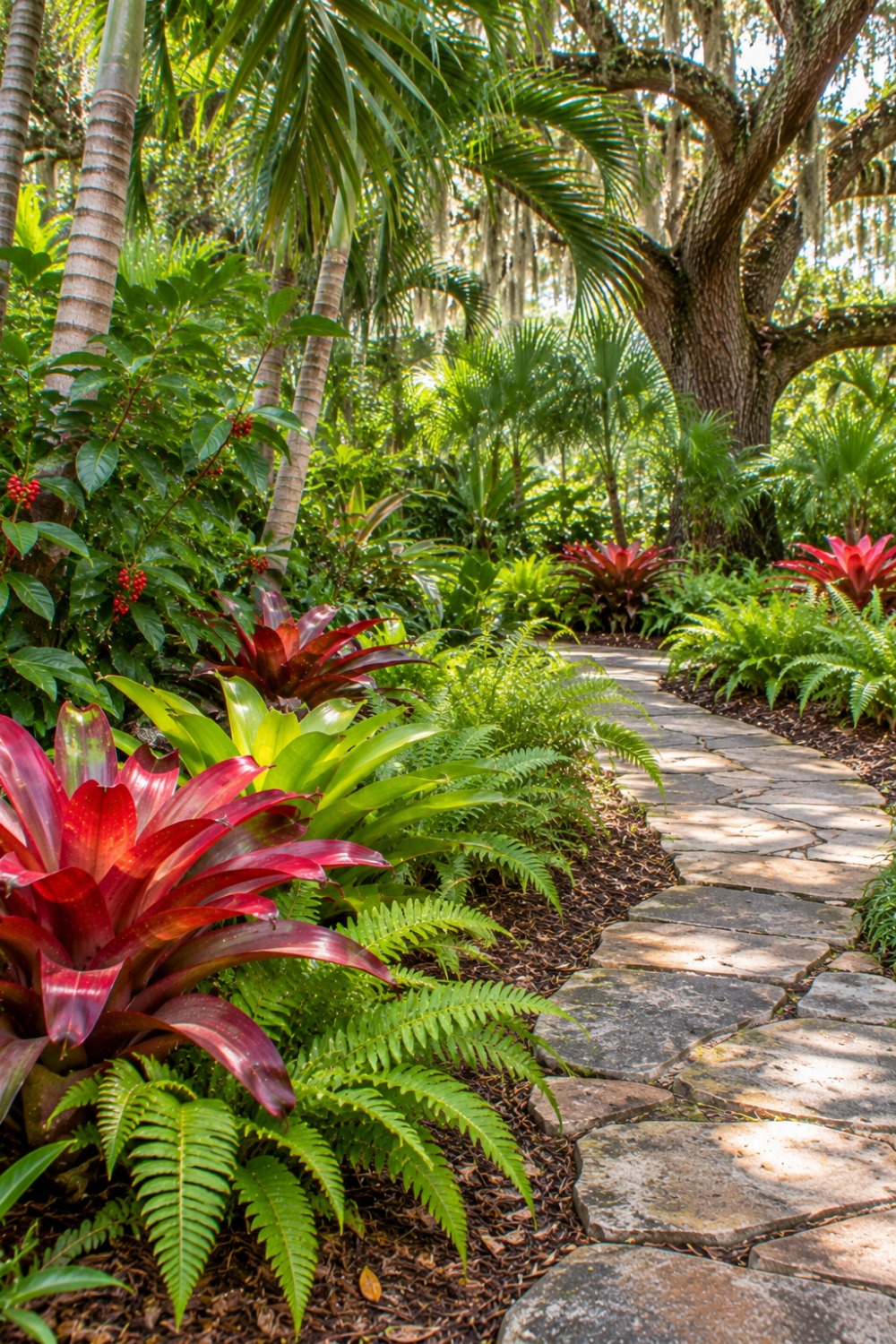
Florida’s shady corners are perfect for a lush, tropical look.
Bromeliads, ferns and the native wild coffee shrub love dappled shade and add bold color and texture.
In North Florida, protect tender bromeliads in winter or grow them in pots you can move.
How to do it:
- Choose a spot with filtered light under trees.
- Group bromeliads in clusters and fill around them with ferns.
- Mulch well and water during dry spells.
11. Plant a Native Hedge of Simpson’s Stopper
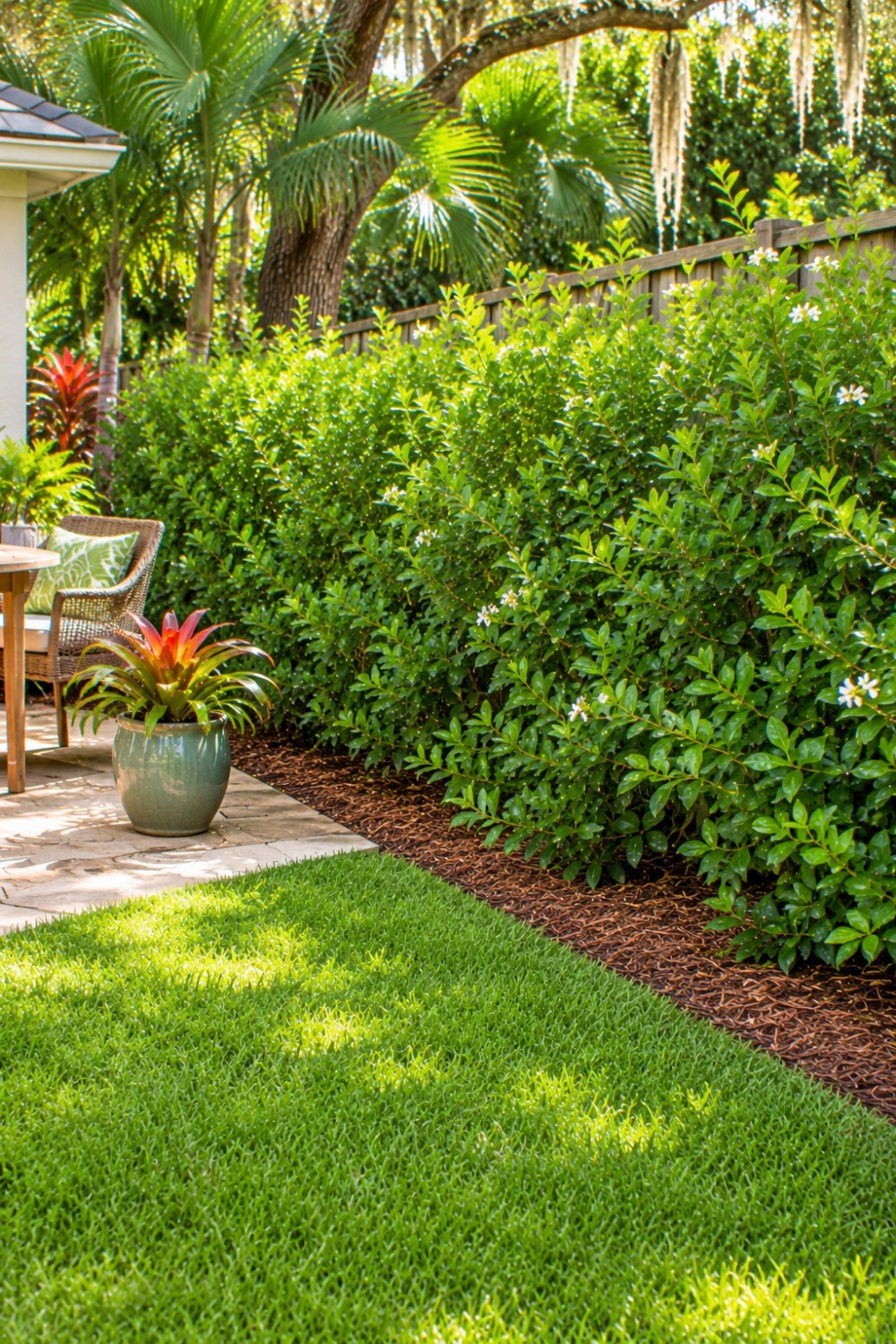
Simpson’s stopper is a native shrub that makes a dense, attractive hedge.
It has small glossy leaves, fragrant white flowers and orange berries that birds love.
It handles both sun and part shade, and it’s a native alternative to non-native hedges.
How to do it:
- Plant shrubs about 3 feet apart for a solid hedge.
- Water well until they’re established.
- Trim lightly to shape, or let them grow more naturally.
12. Add Host Plants for Florida Butterflies
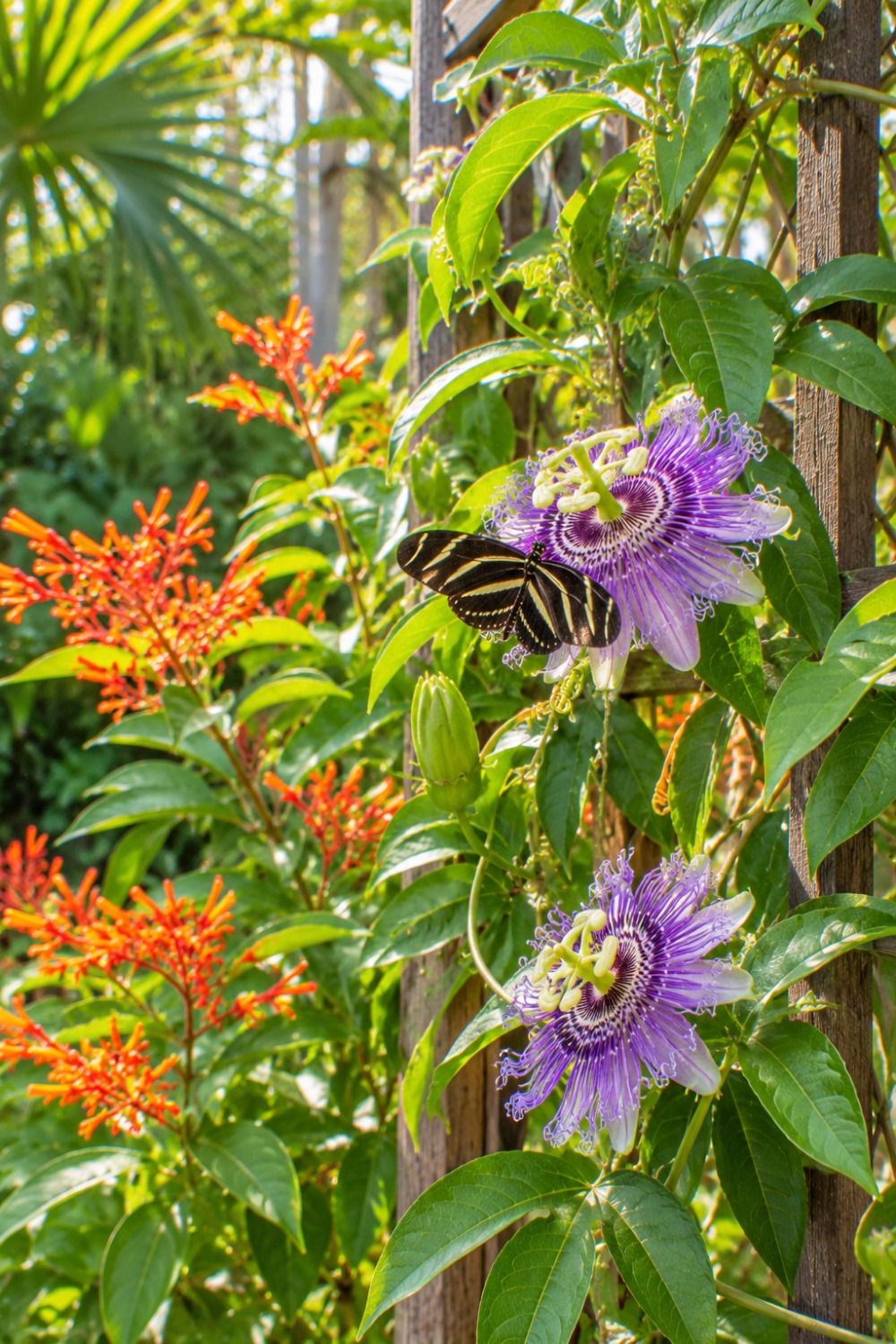
Butterflies need more than nectar. They need host plants where their caterpillars can feed.
Native passionflower feeds the zebra longwing, Florida’s state butterfly, and gulf fritillary caterpillars.
Pair host plants with nectar plants like firebush to see butterflies all year.
How to do it:
- Plant native passionflower on a trellis or fence.
- Add nectar plants nearby in a sunny spot.
- Avoid pesticides so the caterpillars can grow.
13. Choose Salt-Tolerant Plants Near the Coast
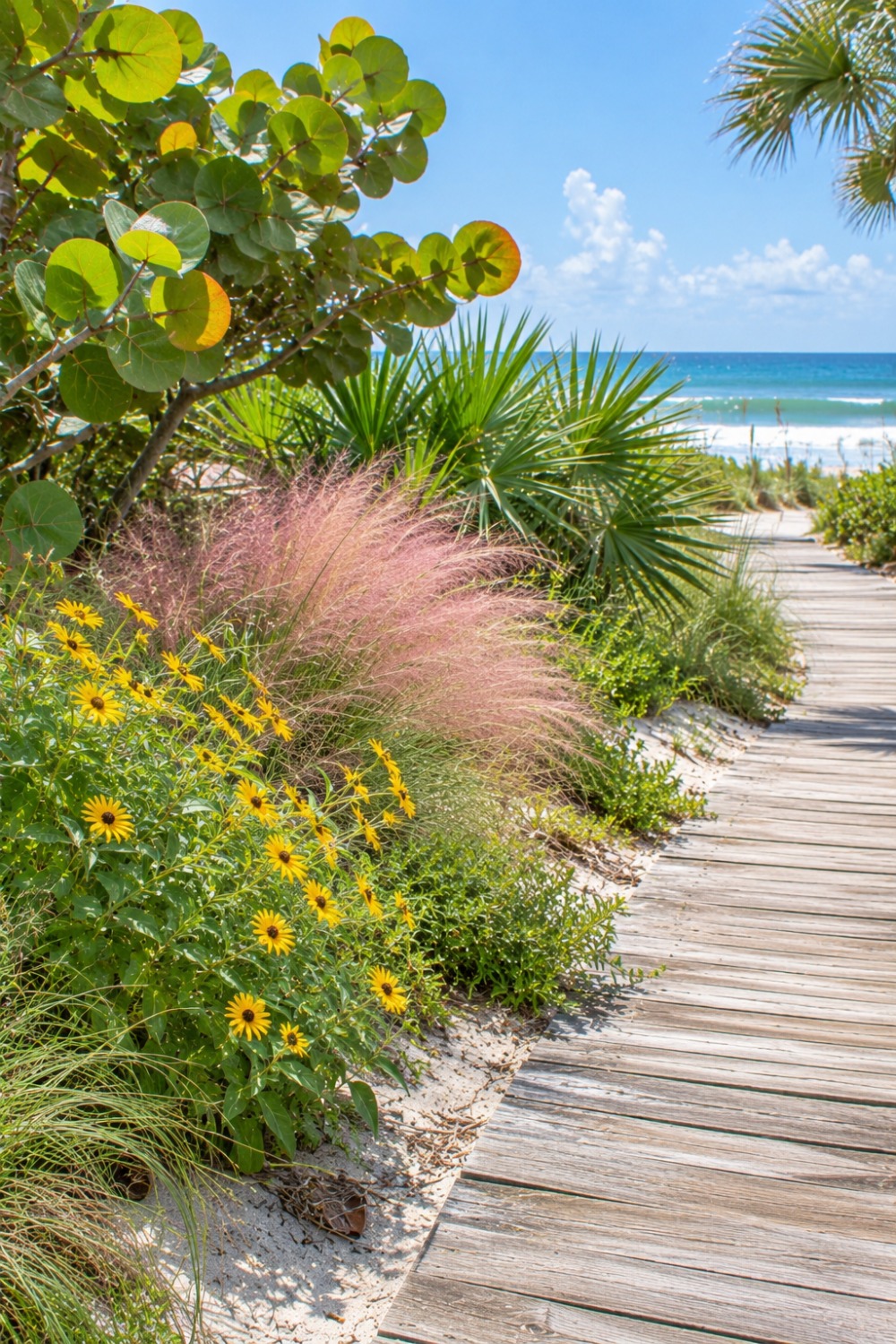
Near the coast, salt spray and sandy soil can damage many common plants.
Sea grape, dune sunflower, muhly grass, saw palmetto and coontie handle salt well.
Group the toughest plants on the side facing the water to shelter the rest of the garden.
How to do it:
- Check plant labels or the Florida-Friendly plant guide for salt tolerance.
- Place the most salt-tolerant plants closest to the water.
- Rinse foliage of sensitive plants with fresh water after storms.
14. Dress Up the Lanai With Containers
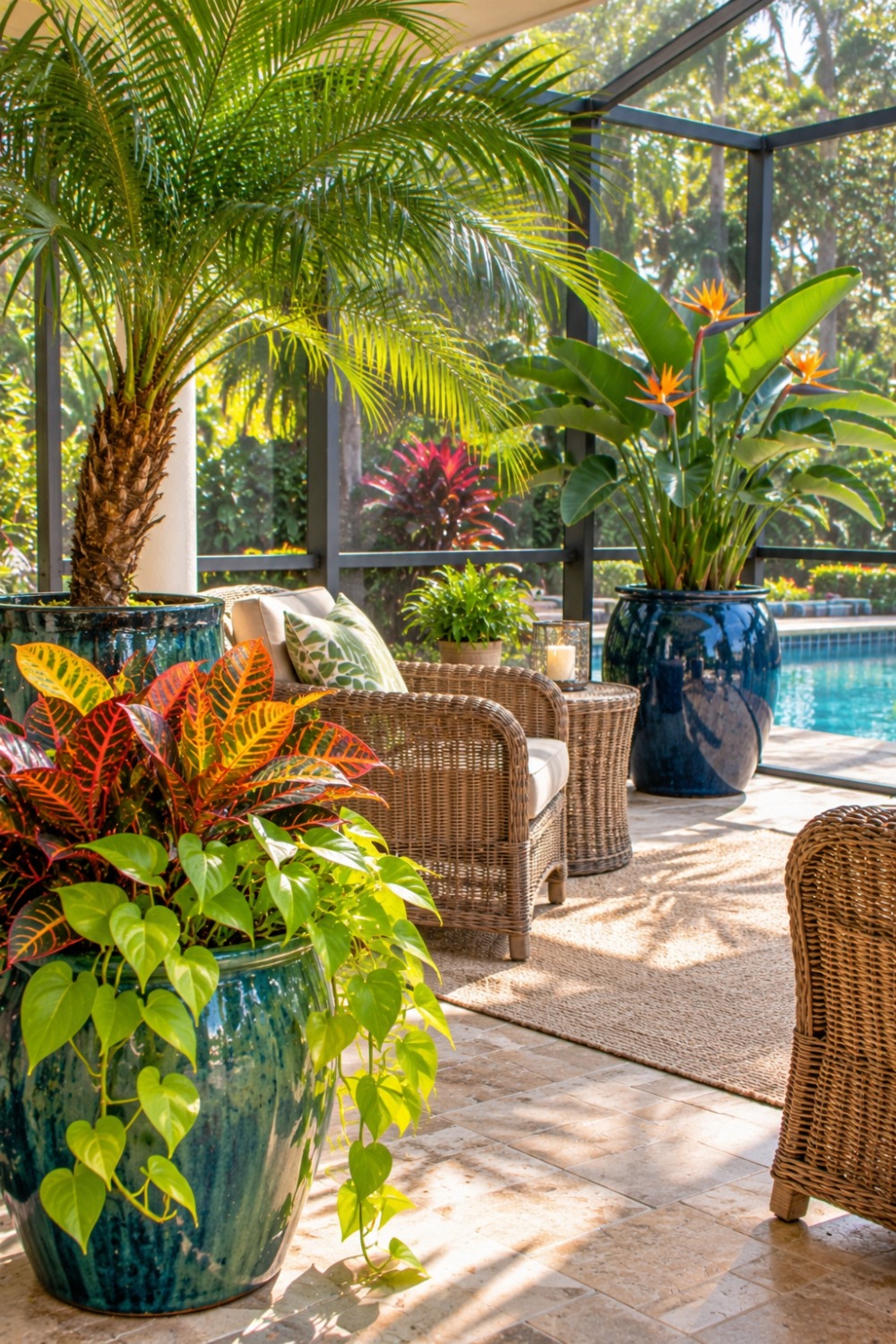
The screened lanai is where Florida families spend much of their time outdoors.
Large containers with palms, crotons and bird of paradise bring the garden inside the screen.
Choose pots with drainage holes and group them so the space feels lush but not crowded.
How to do it:
- Pick a few large containers rather than many small ones.
- Choose plants suited to the lanai’s light level.
- Water regularly, as screens reduce the rain plants receive.
15. Water Efficiently With Drip and a Rain Sensor
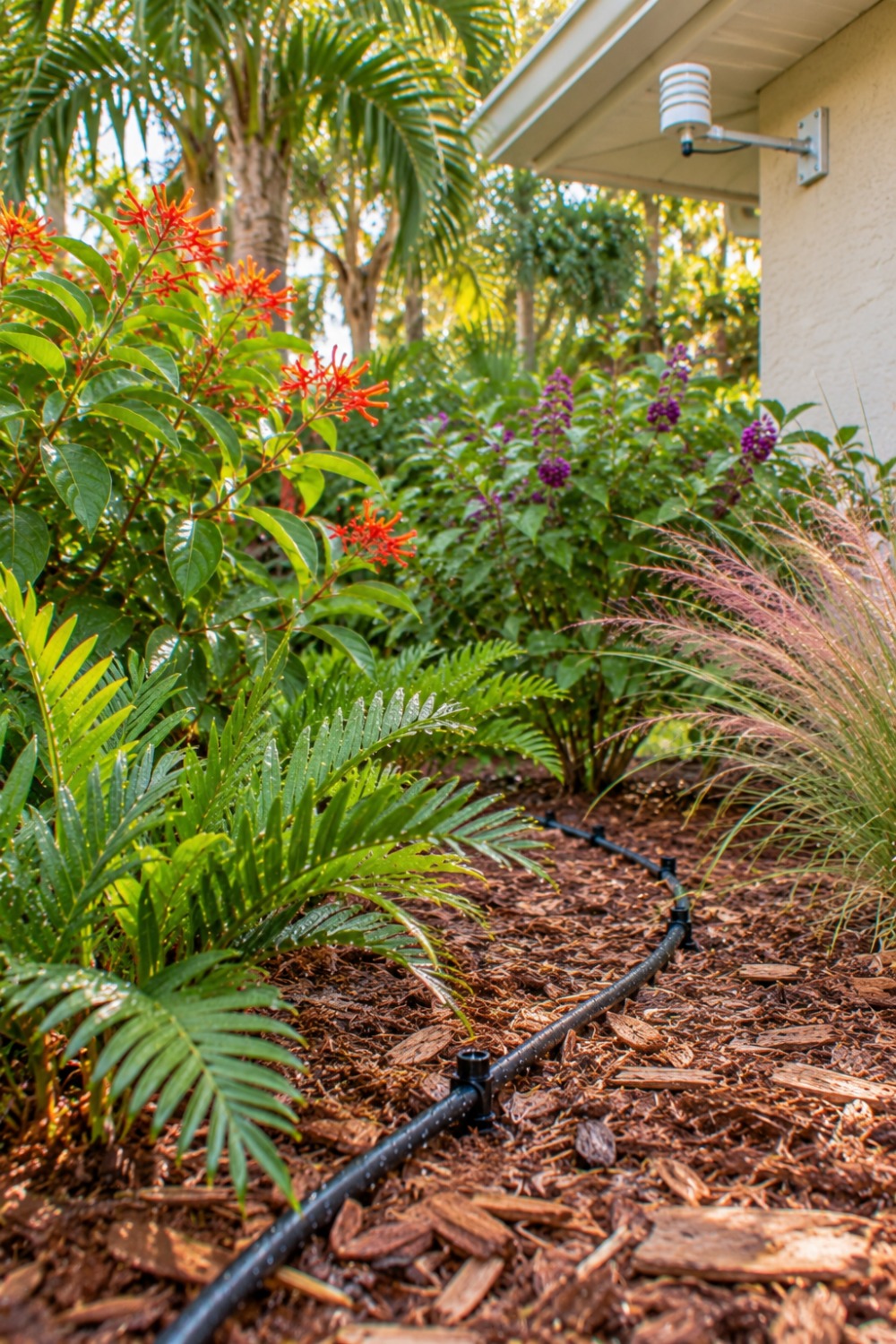
Florida’s sandy soil drains fast, but overwatering still wastes water and encourages weeds and disease.
Drip irrigation delivers water directly to roots, and a working rain sensor stops sprinklers from running during storms.
Many areas have watering day restrictions, so check the rules from your water management district.
How to do it:
- Convert beds from spray heads to drip where possible.
- Make sure your rain sensor or soil moisture sensor is working.
- Water early in the morning and only on your allowed days.
16. Plan Your Yard for Hurricane Season
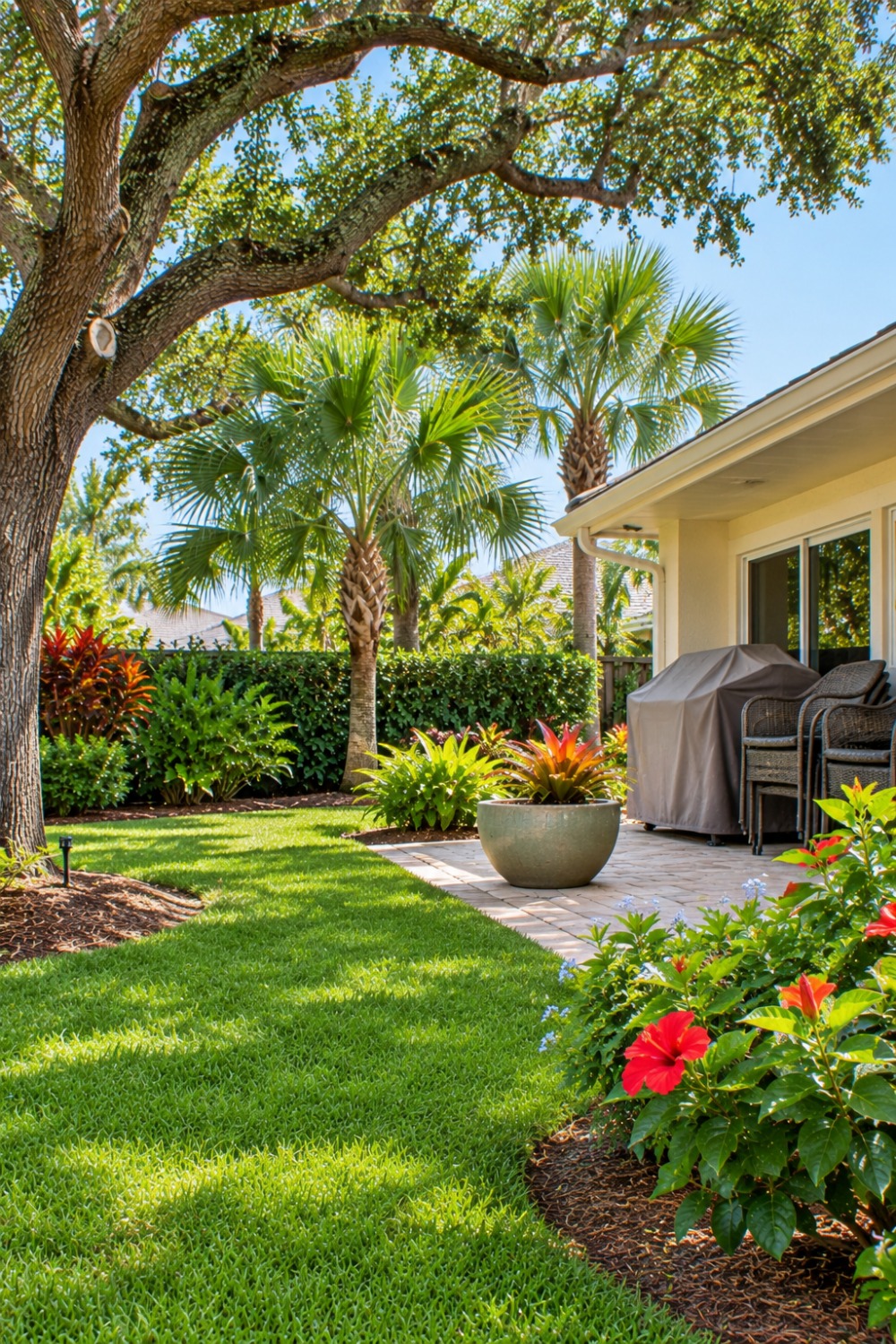
A little planning before hurricane season can protect your home and garden.
Well-pruned trees with strong structure hold up better in high winds than overgrown or damaged ones.
Light pots, loose decorations and small gravel near windows can become flying debris, so choose heavier materials or keep them sheltered.
How to do it:
- Have large trees inspected and properly pruned by a certified arborist.
- Choose heavy containers and plan where to store lighter ones.
- Avoid over-pruning palms, which can weaken them.
17. Use Turtle-Friendly Lighting Near the Beach
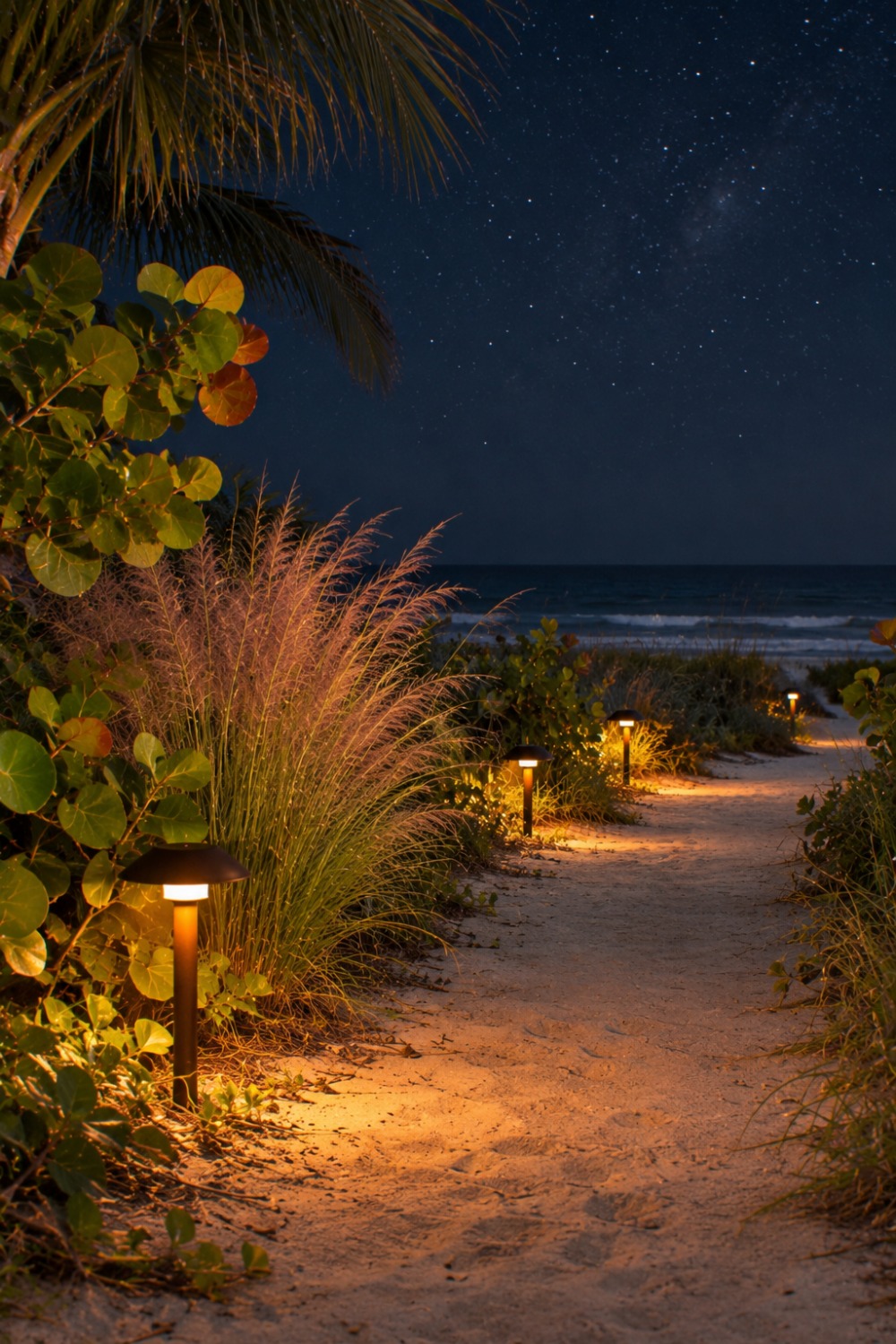
On Florida’s beaches, bright lights can confuse nesting sea turtles and hatchlings.
Many coastal communities have lighting rules during turtle nesting season.
Low, shielded, amber-colored lights let you see your path while keeping the beach dark.
How to do it:
- Check your local sea turtle lighting ordinance.
- Choose low, shielded fixtures that point down.
- Use amber or red wildlife-friendly bulbs near the beach.
Frequently Asked Questions
What are the best low-maintenance plants for Florida?
Native plants like coontie, firebush, muhly grass, beautyberry and saw palmetto are tough, adapted to Florida’s climate and need little care once established.
Is lantana a good choice for Florida gardens?
The common non-native lantana (Lantana camara) is considered invasive in Florida. Native alternatives such as pineland lantana or buttonsage are safer choices.
When is the best time to plant in Florida?
Many plants establish best at the start of the rainy season in late spring or early summer, or in the mild months of autumn. Check advice for your region.
Can I have a lawn in Florida?
Yes, but keeping lawn areas smaller and using Florida-friendly grasses or ground covers reduces water and fertilizer use. Some counties restrict fertilizer during the summer rainy season.
Final Thoughts: Garden With Florida, Not Against It
The best Florida yards work with the sunshine, sand, rain and wind.
Start by learning which part of Florida you garden in, and choose plants suited to it.
Then plant a few strong, wind-resistant trees for shade, and fill beds with natives and Florida-friendly plants.
Shrink the lawn where you can, and add mulch, drip irrigation and a rain garden to manage water.
Plant for wildlife, especially butterflies and birds, and avoid invasive species.
Prepare your yard for hurricane season, and use turtle-friendly lighting if you live near the beach.
For more ideas on low-maintenance rock and gravel features, see our front yard landscaping ideas with rocks.
Your local UF/IFAS Extension office is always a great source of free, local advice.