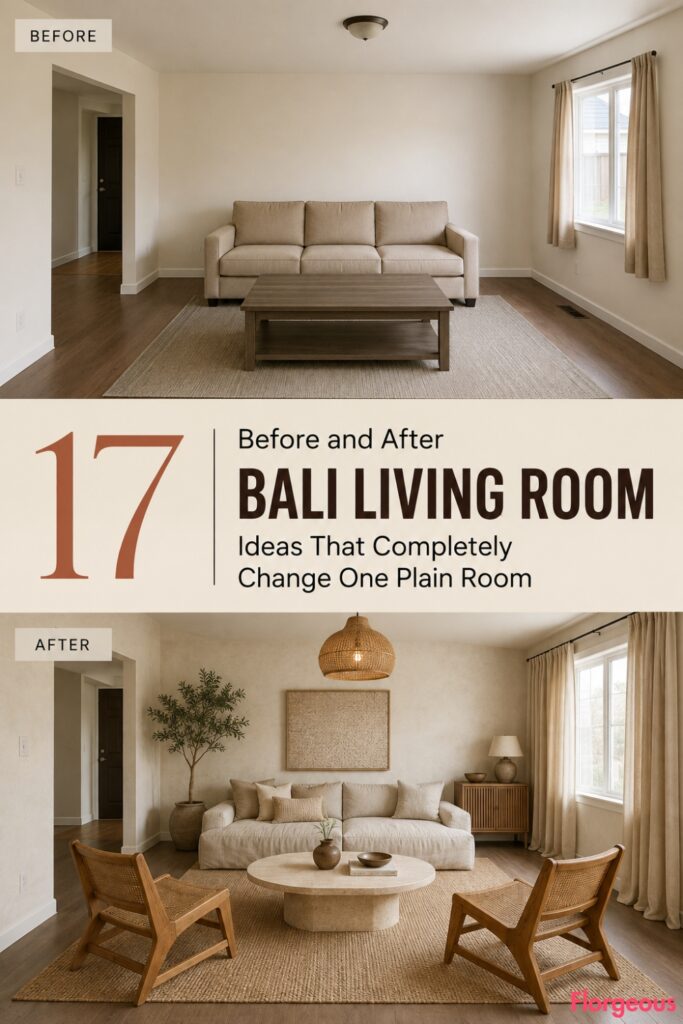
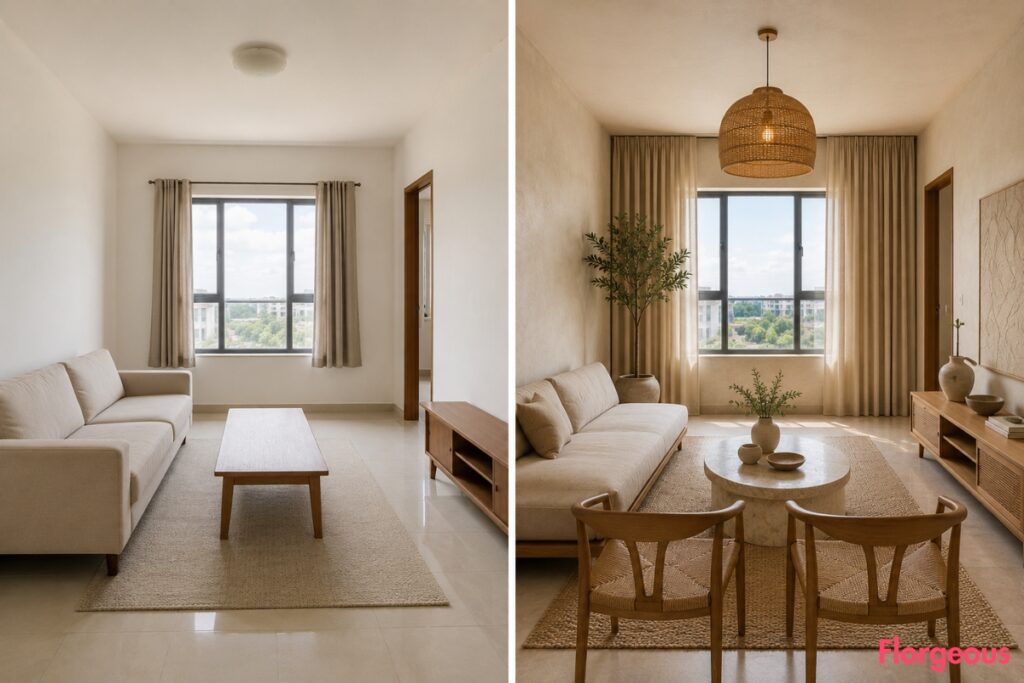
The starting point is deliberately ordinary: warm off-white walls, a straight beige sofa, a bare coffee table, short curtains, basic lighting, and no real focal point. The architecture is perfectly usable, but the room feels unfinished and generic.
For these Bali Living Room ideas, the room itself never changes. The doorway, window, dimensions, flooring footprint, circulation, daylight direction, and locked camera angle remain identical in every makeover.
What changes is the design language. Across 17 versions, the same room moves through limestone and teak, volcanic stone, clay plaster, dark timber, woven fibers, washable family-friendly finishes, compact layouts, artisan details, and quiet resort-inspired styling. Each makeover uses a different material story, furniture silhouette, mood, and practical strategy.
1. Turn the Plain Room Into a Sun-Washed Limestone Villa
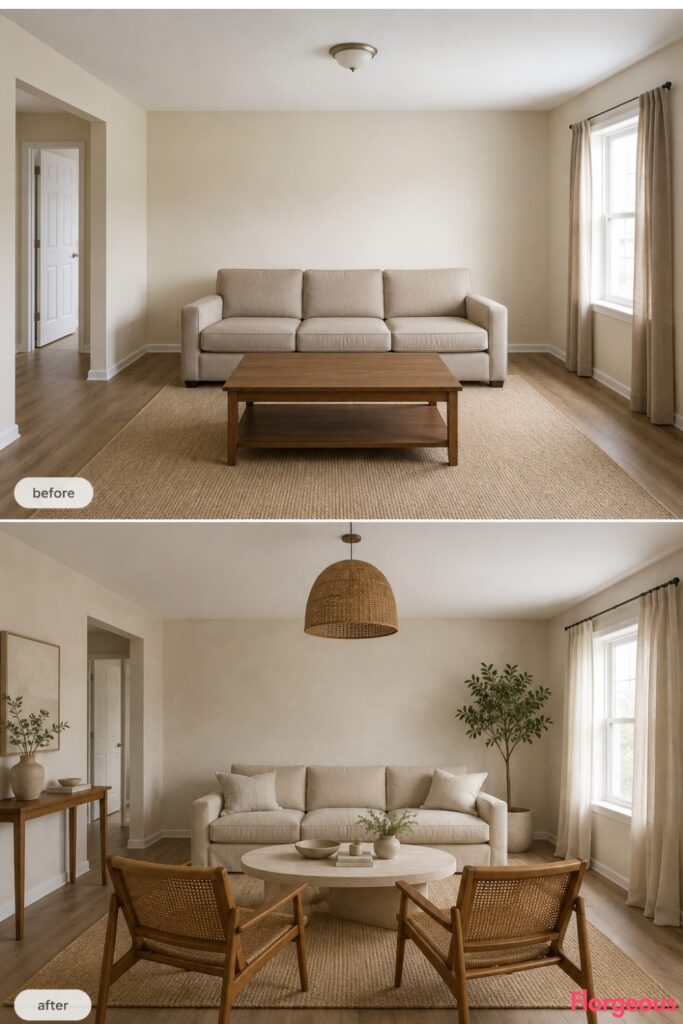
The first makeover uses pale mineral surfaces and honey-toned timber to create the relaxed brightness associated with contemporary tropical villas.
Before: A plain builder-grade living room with warm off-white walls, a straight beige sofa, a bare rectangular coffee table, a simple neutral rug, short plain curtains, a standard basic ceiling light, empty walls, minimal styling, bare surfaces, and soft natural daylight.
After: Chalky limestone-colored walls surround a low oatmeal linen sofa, two honey-teak sculptural chairs, an oval honed-limestone table, a jute-wool rug, long flax curtains, and a slim teak console. One tall ficus adds a controlled green accent.
Why it works: Similar pale values make the timber grain and tactile stone feel richer.
Designer Tip: Use substantial wood selectively. One excellent teak furniture group feels more convincing than matching wood everywhere.
2. Push the Same Architecture Into a Volcanic Charcoal Retreat
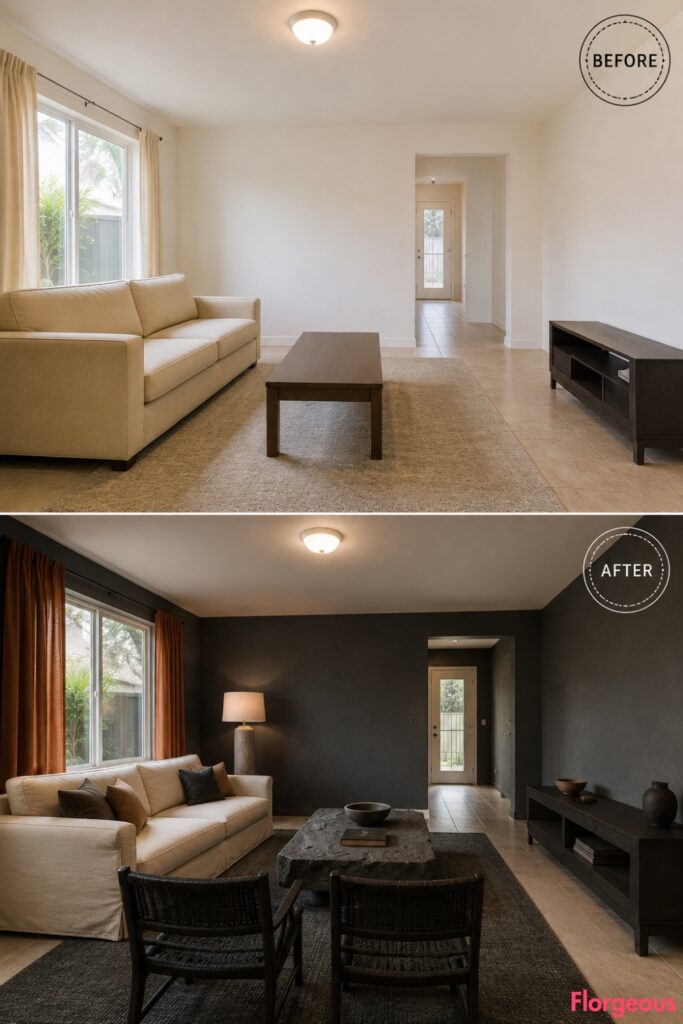
This version proves Bali-inspired rooms can be atmospheric without becoming heavy or theatrical.
Before: A plain builder-grade living room with warm off-white walls, a straight beige sofa, a bare rectangular coffee table, a simple neutral rug, short plain curtains, a standard basic ceiling light, empty walls, minimal styling, bare surfaces, and soft natural daylight.
After: Volcanic-charcoal mineral walls frame a parchment sofa, blackened-teak lounge chairs, a rough lava-stone drum table, a charcoal flatweave rug, tobacco linen curtains, and a dark low cabinet. A stone floor lamp provides the main glow.
Try this: Keep upholstery pale when both the walls and timber are dark.
3. Warm It With Terracotta Clay and Woven Reed
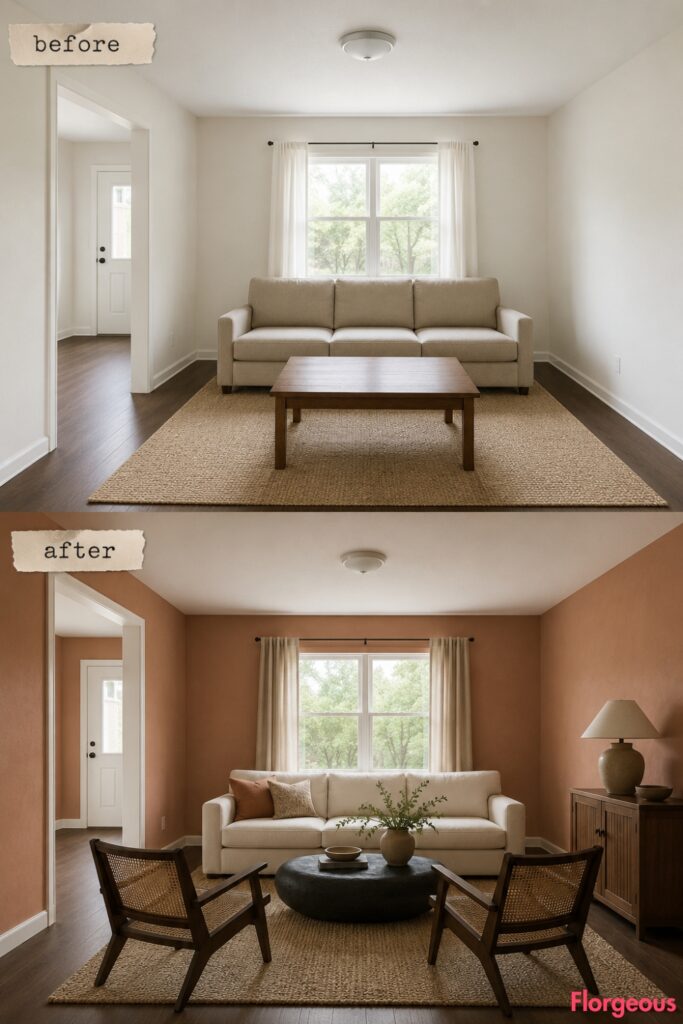
Instead of relying on beige, this room gets its warmth from dusty earthen color.
Before: A plain builder-grade living room with warm off-white walls, a straight beige sofa, a bare rectangular coffee table, a simple neutral rug, short plain curtains, a standard basic ceiling light, empty walls, minimal styling, bare surfaces, and soft natural daylight.
After: Muted terracotta clay plaster meets an ivory cotton sofa, low woven-reed chairs on dark timber frames, a black river-stone table, a pale hemp rug, sand curtains, and a compact carved-geometry timber cabinet.
Color Story: Choose terracotta with brown and mineral undertones rather than bright orange.
4. Build a Quiet Botanical Room Around Dusty Celadon
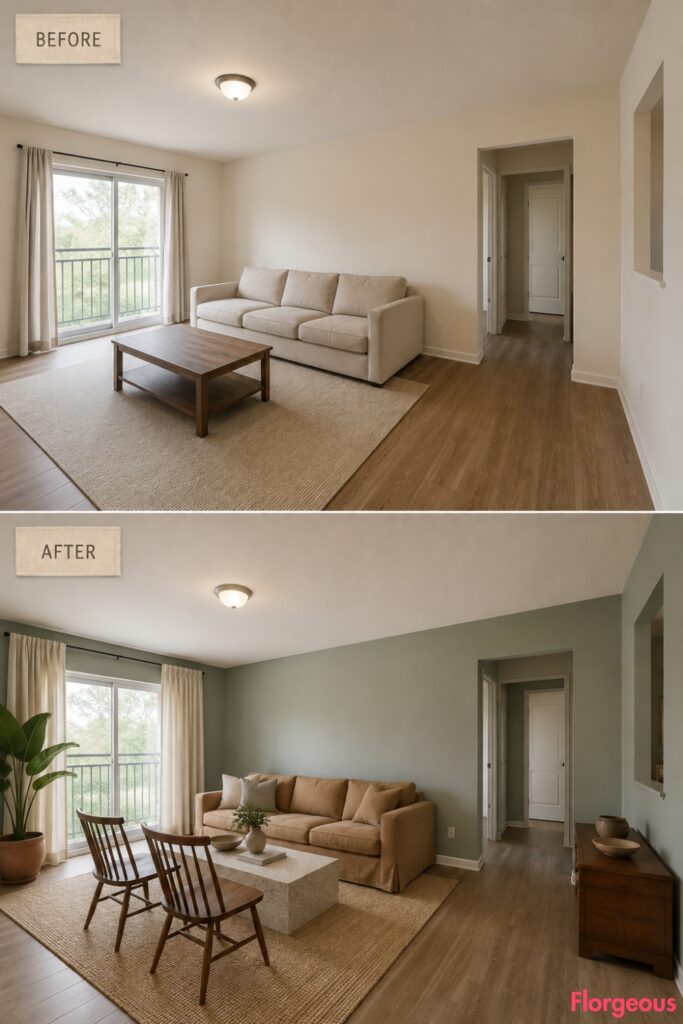
Here, color does the work that an abundance of plants often tries to do.
Before: A plain builder-grade living room with warm off-white walls, a straight beige sofa, a bare rectangular coffee table, a simple neutral rug, short plain curtains, a standard basic ceiling light, empty walls, minimal styling, bare surfaces, and soft natural daylight.
After: Dusty celadon mineral walls pair with a camel linen sofa, dark-teak spindle chairs, a pale terrazzo table, a straw-colored rug, full cream curtains, and one broad-leaf plant in a matte clay vessel.
Why it works: The green wall creates a lush feeling while a single plant keeps the composition disciplined.
5. Strip Everything Back With Chalk White and Blackened Timber
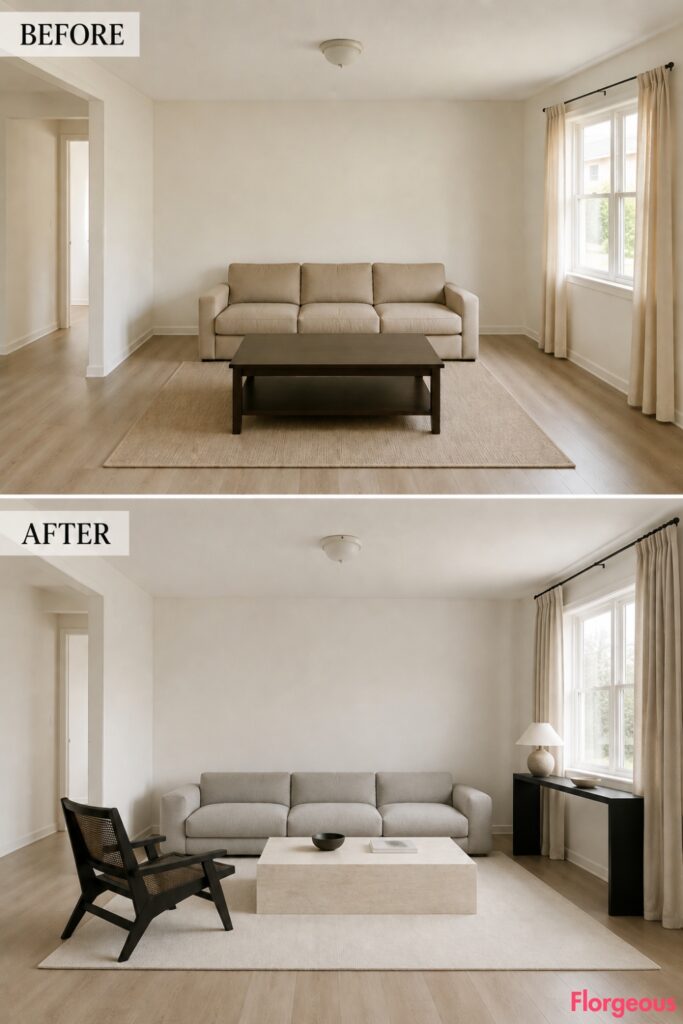
This is the most minimal interpretation of the entire series.
Before: A plain builder-grade living room with warm off-white walls, a straight beige sofa, a bare rectangular coffee table, a simple neutral rug, short plain curtains, a standard basic ceiling light, empty walls, minimal styling, bare surfaces, and soft natural daylight.
After: Soft chalk walls provide a quiet backdrop for a low stone-gray sofa, one broad blackened-timber chair, a monolithic pale-stone table, a thin parchment rug, plain flax curtains, and one narrow black timber console.
The room feels finished because the silhouettes are strong, not because it contains more objects.
6. Create a Renter-Friendly Sand and Cane Makeover
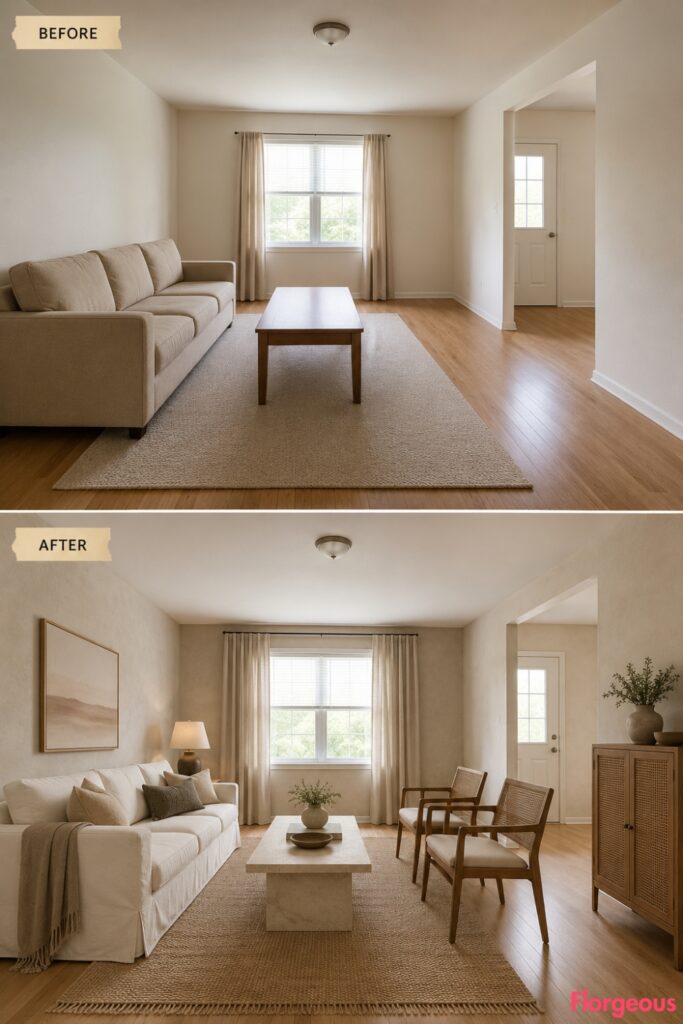
Nothing in this version requires permanent architectural work.
Before: A plain builder-grade living room with warm off-white walls, a straight beige sofa, a bare rectangular coffee table, a simple neutral rug, short plain curtains, a standard basic ceiling light, empty walls, minimal styling, bare surfaces, and soft natural daylight.
After: Removable sand-toned mineral-effect wall treatment backs an ivory slipcovered sofa, teak-look lounge chairs, a lightweight stone-look table, washable woven rug, ready-made linen curtains, and freestanding cane-front storage.
Budget Version: Spend on one handmade ceramic vessel and use affordable natural-look pieces elsewhere.
7. Rework the Room for a Compact Apartment Footprint
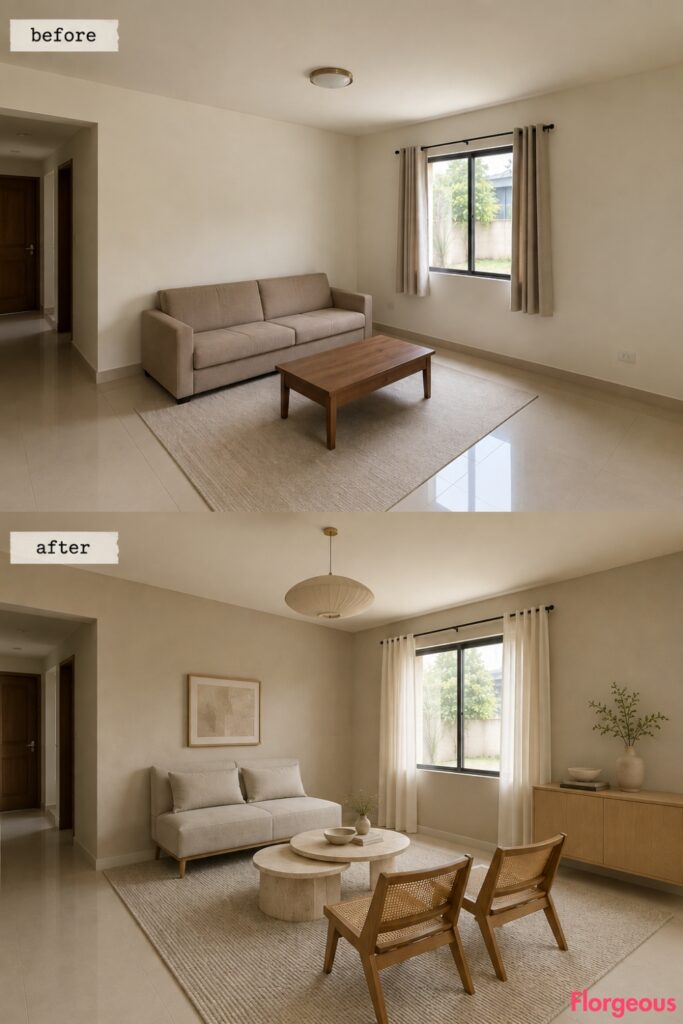
This makeover prioritizes physical clearance instead of visual drama.
Before: A plain builder-grade living room with warm off-white walls, a straight beige sofa, a bare rectangular coffee table, a simple neutral rug, short plain curtains, a standard basic ceiling light, empty walls, minimal styling, bare surfaces, and soft natural daylight.
After: Pale mushroom walls frame a compact armless flax loveseat, two narrow cane chairs, small nesting travertine tables, a tightweave greige rug, cream curtains, and shallow wall-hugging storage.
Small Space Tip: Armless seating and rounded nesting tables create more usable passage space without making the room feel under-furnished.
8. Make Natural Materials Work for a Busy Family
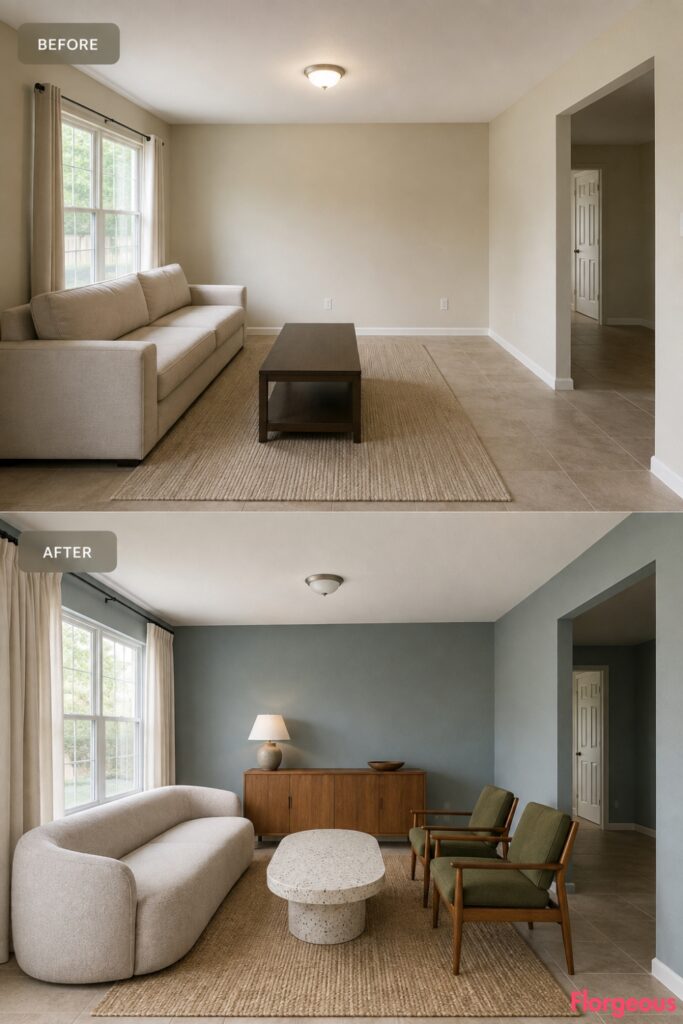
The visual language stays earthy, but the surfaces become much easier to live with.
Before: A plain builder-grade living room with warm off-white walls, a straight beige sofa, a bare rectangular coffee table, a simple neutral rug, short plain curtains, a standard basic ceiling light, empty walls, minimal styling, bare surfaces, and soft natural daylight.
After: Muted blue-gray mineral paint surrounds a rounded performance-linen sofa, solid timber chairs upholstered in washable olive fabric, a softly edged terrazzo table, a washable jute-look rug, and closed teak-look storage.
Common Mistake: Do not choose real jute automatically. In high-traffic homes, a washable woven substitute is often the smarter choice.
9. Let Reclaimed Suar Wood Create a Rustic Focal Point
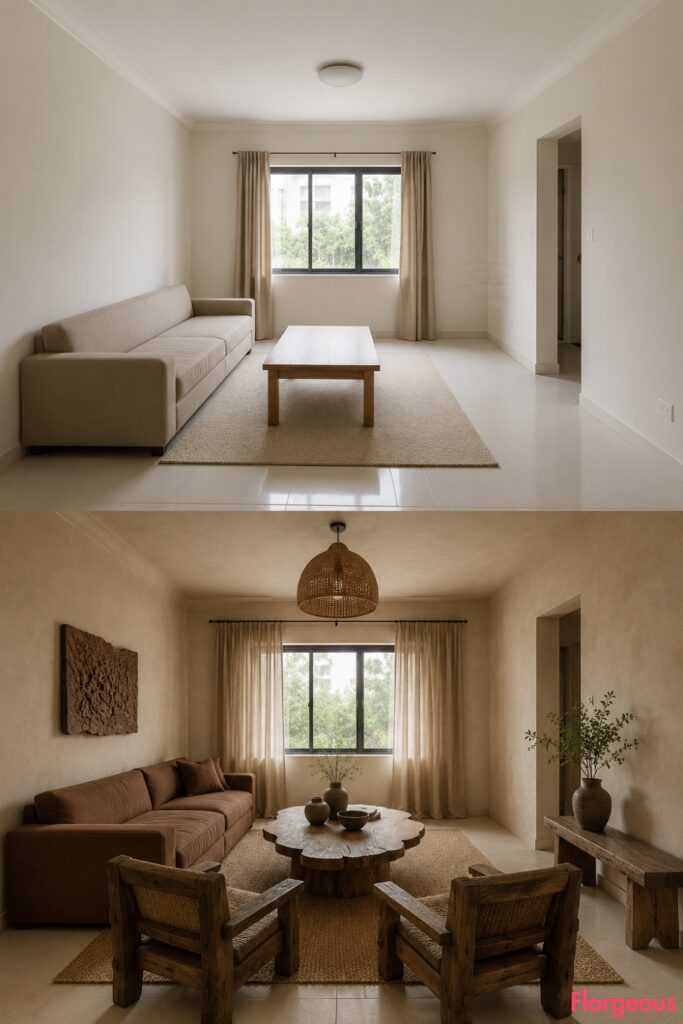
This room celebrates irregular grain and weathered surfaces rather than polished resort finishes.
Before: A plain builder-grade living room with warm off-white walls, a straight beige sofa, a bare rectangular coffee table, a simple neutral rug, short plain curtains, a standard basic ceiling light, empty walls, minimal styling, bare surfaces, and soft natural daylight.
After: Chalky plaster, a tobacco cotton sofa, two chunky reclaimed-timber chairs, a broad live-edge suar table, a handwoven wool rug, washed flax curtains, and a rough timber storage bench make the room intentionally imperfect.
10. Go Contemporary With Pale Microcement and Smoked Teak
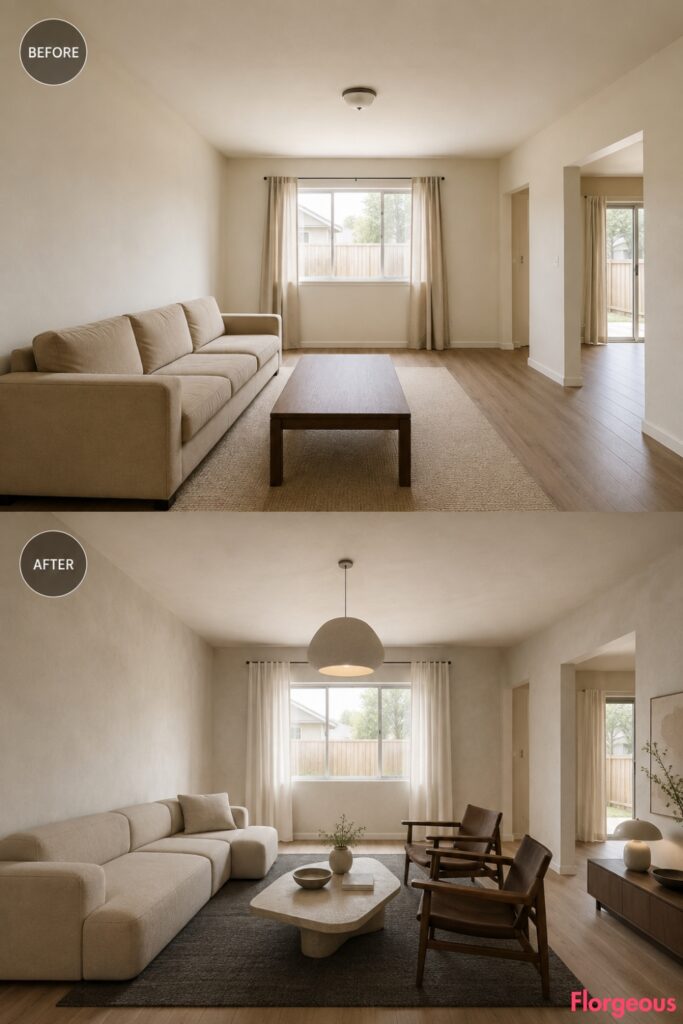
This room is cleaner and more architectural than the rustic versions.
Before: A plain builder-grade living room with warm off-white walls, a straight beige sofa, a bare rectangular coffee table, a simple neutral rug, short plain curtains, a standard basic ceiling light, empty walls, minimal styling, bare surfaces, and soft natural daylight.
After: Pale microcement-look walls pair with a streamlined sand modular sofa, smoked-teak frame chairs, an asymmetrical honed-stone table, charcoal flax rug, crisp ivory curtains, and a low linear cabinet.
Style Note: Handmade texture on only a few objects keeps contemporary tropical rooms from feeling sterile.
11. Design the Whole Makeover Around Evening Light
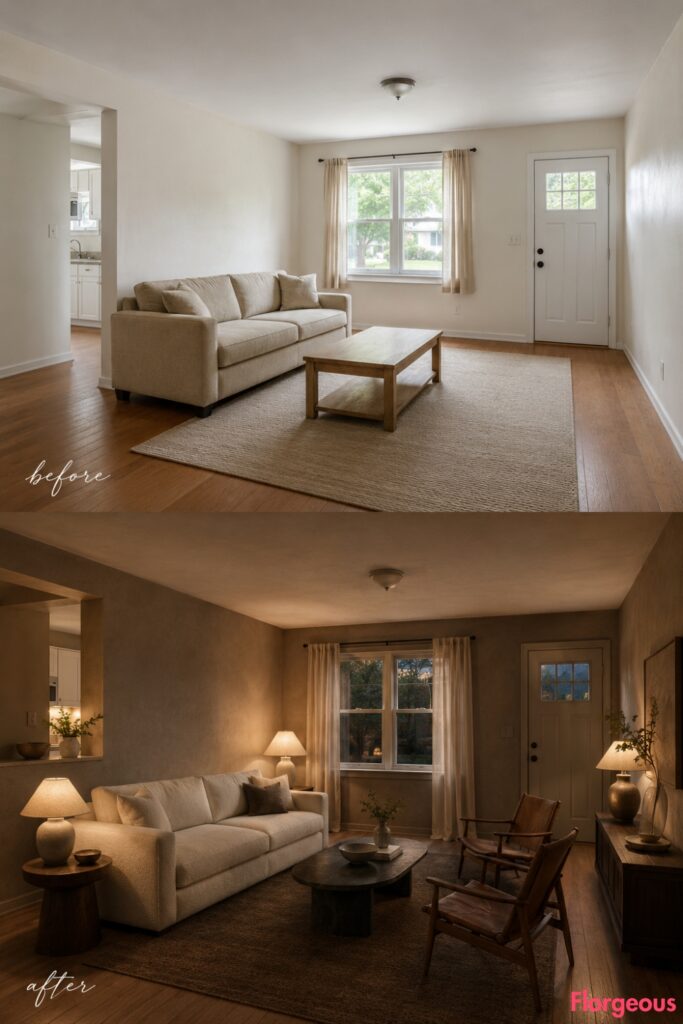
Here, lighting becomes the defining material.
Before: A plain builder-grade living room with warm off-white walls, a straight beige sofa, a bare rectangular coffee table, a simple neutral rug, short plain curtains, a standard basic ceiling light, empty walls, minimal styling, bare surfaces, and soft natural daylight.
After: Cocoa mineral walls surround a low parchment sofa, saddle-toned timber lounge chairs, a dark soapstone oval table, a cocoa wool rug, gauzy curtains, and several sculptural ceramic lamps placed at different heights.
No large plant is needed. Shadows, pottery, and warm pools of light provide the atmosphere.
12. Cool the Palette With Stormy Blue-Gray and Water Hyacinth
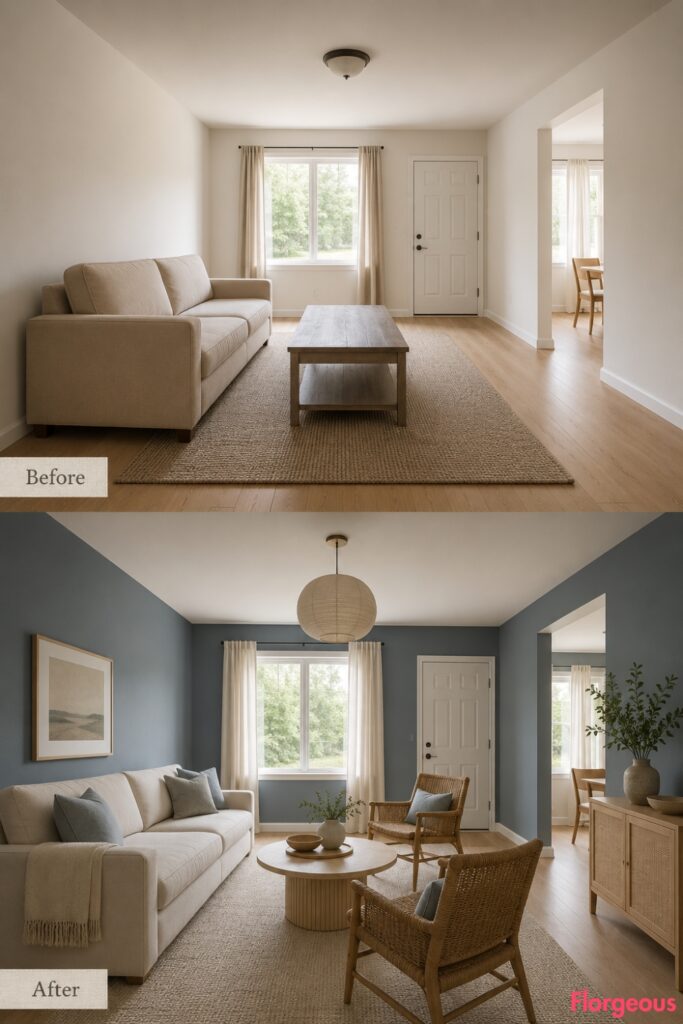
Bali-inspired design can also use quieter cool tones when the natural fibers stay warm.
Before: A plain builder-grade living room with warm off-white walls, a straight beige sofa, a bare rectangular coffee table, a simple neutral rug, short plain curtains, a standard basic ceiling light, empty walls, minimal styling, bare surfaces, and soft natural daylight.
After: Stormy blue-gray walls meet a bone linen sofa, woven water-hyacinth chairs, a pale timber drum table, a muted oat rug, parchment curtains, and a compact blond-wood cabinet.
Why it works: Warm woven fiber prevents the cooler walls from feeling coastal or icy.
13. Replace Formal Seating With a Deep Daybed Lounge
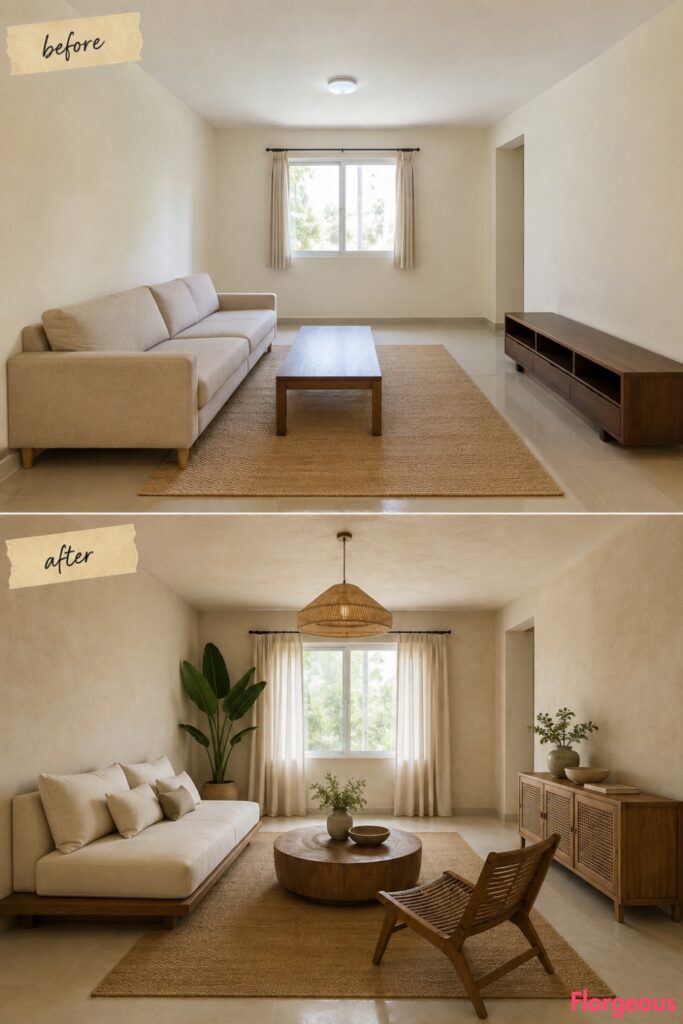
The furniture plan changes the mood without changing the room itself.
Before: A plain builder-grade living room with warm off-white walls, a straight beige sofa, a bare rectangular coffee table, a simple neutral rug, short plain curtains, a standard basic ceiling light, empty walls, minimal styling, bare surfaces, and soft natural daylight.
After: Sand limewash frames a deep ivory daybed-style sofa with loose cushions, one low slatted-teak lounge chair, a wide circular cedar-toned table, a banana-fiber rug, breezy curtains, and a cane-front chest.
Try this: Keep the daybed low and visually light so it does not consume the room.
14. Treat the Living Room Like a Quiet Artisan Gallery
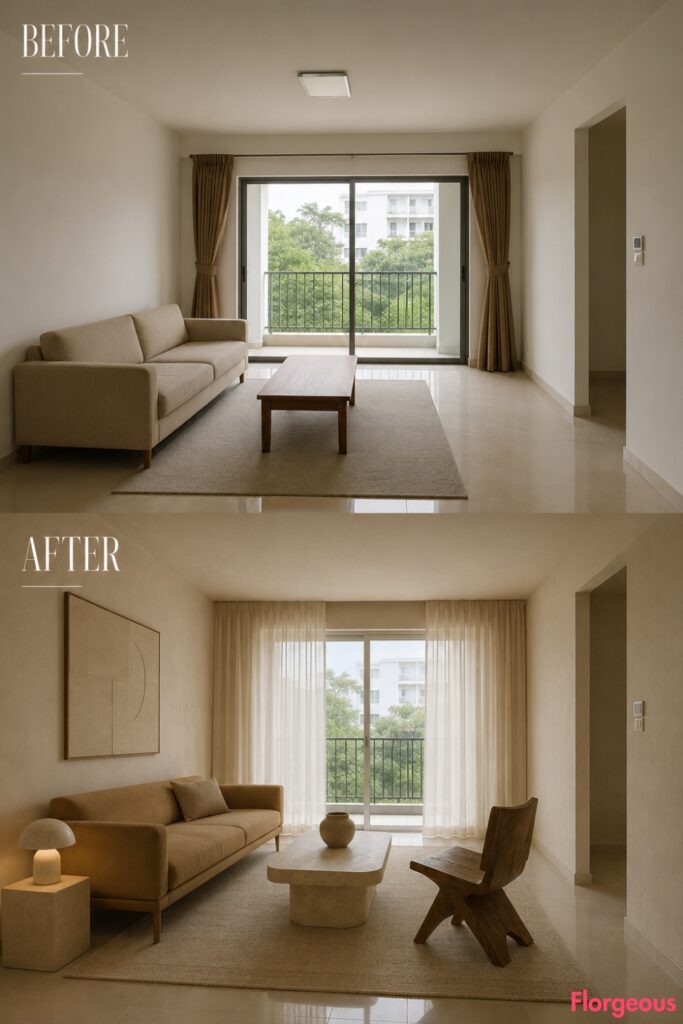
Instead of layering many accessories, this makeover gives a few handcrafted pieces room to breathe.
Before: A plain builder-grade living room with warm off-white walls, a straight beige sofa, a bare rectangular coffee table, a simple neutral rug, short plain curtains, a standard basic ceiling light, empty walls, minimal styling, bare surfaces, and soft natural daylight.
After: Rice-toned polished plaster surrounds a slim camel settee, one carved abstract timber chair, a limestone plinth-style table, a nearly tonal wool rug, translucent curtains, a single large ceramic vessel, and restrained abstract wall art with no text.
15. Refresh the Room on a Budget Without Replacing the Sofa
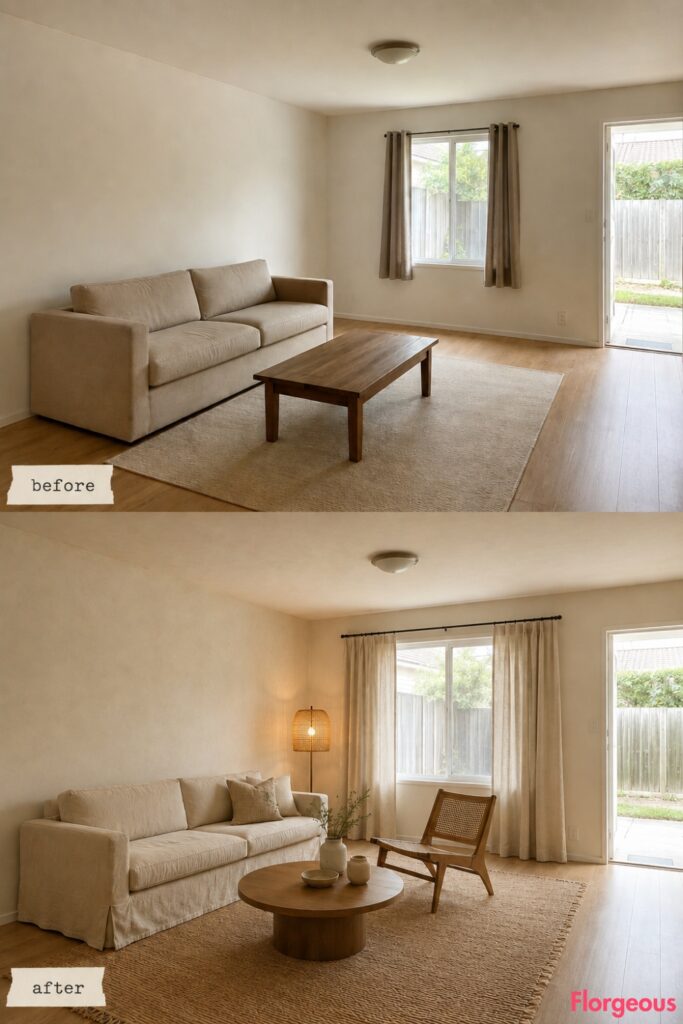
This concept starts with the useful question: what if the largest existing piece stays?
Before: A plain builder-grade living room with warm off-white walls, a straight beige sofa, a bare rectangular coffee table, a simple neutral rug, short plain curtains, a standard basic ceiling light, empty walls, minimal styling, bare surfaces, and soft natural daylight.
After: The existing beige sofa gains a loose flax slipcover and earthy cushions. Removable warm-ivory mineral-effect walls, a secondhand cane chair, a simple teak-look round table, a large washable woven rug, long ready-made curtains, and thrifted ceramics complete the update.
Budget Version: Prioritize curtain length and rug scale before buying small decor.
16. Use Deep Jungle Green Against Pale Travertine
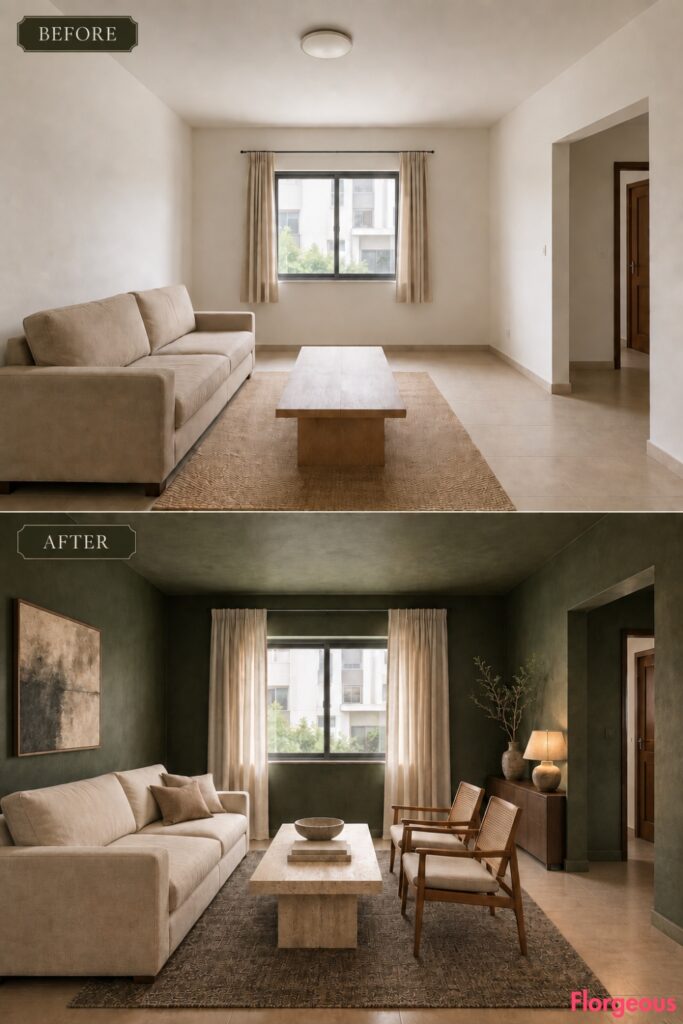
This is the strongest color contrast in the series.
Before: A plain builder-grade living room with warm off-white walls, a straight beige sofa, a bare rectangular coffee table, a simple neutral rug, short plain curtains, a standard basic ceiling light, empty walls, minimal styling, bare surfaces, and soft natural daylight.
After: Deep muted jungle-green plaster surrounds a parchment sofa, pale cane-backed teak chairs, a creamy travertine pedestal table, a flax-charcoal rug, warm ivory curtains, and a low dark-teak cabinet.
One sculptural branch replaces lush foliage, keeping the mood sophisticated.
17. Finish With an Architectural Slatted-Timber Retreat
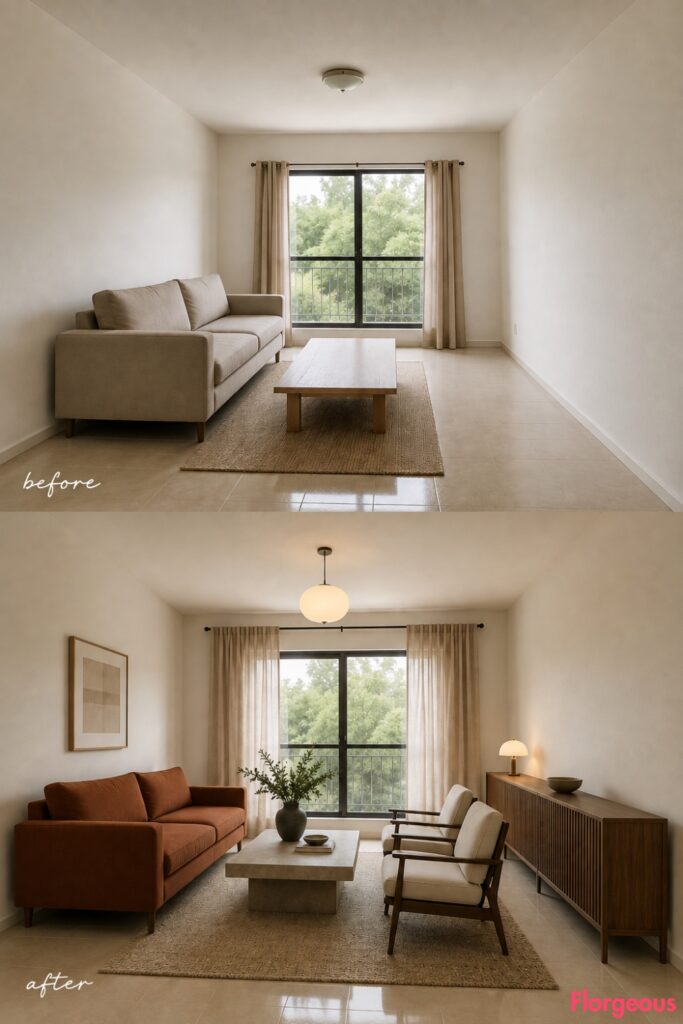
The final room takes its identity from rhythm and proportion rather than color or decorative layering.
Before: A plain builder-grade living room with warm off-white walls, a straight beige sofa, a bare rectangular coffee table, a simple neutral rug, short plain curtains, a standard basic ceiling light, empty walls, minimal styling, bare surfaces, and soft natural daylight.
After: Warm bone walls meet a compact rust-linen sofa, two parchment-upholstered dark-teak chairs, a square gray limestone table, a mushroom wool rug, full flax curtains, and a long freestanding slatted-timber storage piece positioned flush to an uninterrupted wall.
The repeating timber lines create an architectural focal point without changing the building.
Pinterest-Worthy Detail: Keep slatted furniture visually quiet. It works best when the surrounding surfaces are simple.
How to Choose the Right Bali-Inspired Direction for Your Room
The 17 rooms look markedly different because each one begins with a distinct design decision. Some depend on wall color, some on stone, some on timber, and others on lighting, furniture scale, durability, budget, or negative space.
For your own Bali Living Room, avoid starting with a shopping list of tropical accessories. Choose one defining material or atmosphere first. Teak, volcanic stone, clay plaster, woven fiber, travertine, or warm evening light can each become the anchor.
Next, measure the circulation route before buying furniture. Keep the doorway and window clear, then select one primary sofa, one complementary chair strategy, and one coffee table proportion that suits the available space.
Finally, edit. Bali-inspired interiors become more convincing when craftsmanship, texture, filtered light, and natural materials have room to be noticed. You do not need a room full of rattan, tropical plants, or decorative references to create the feeling.