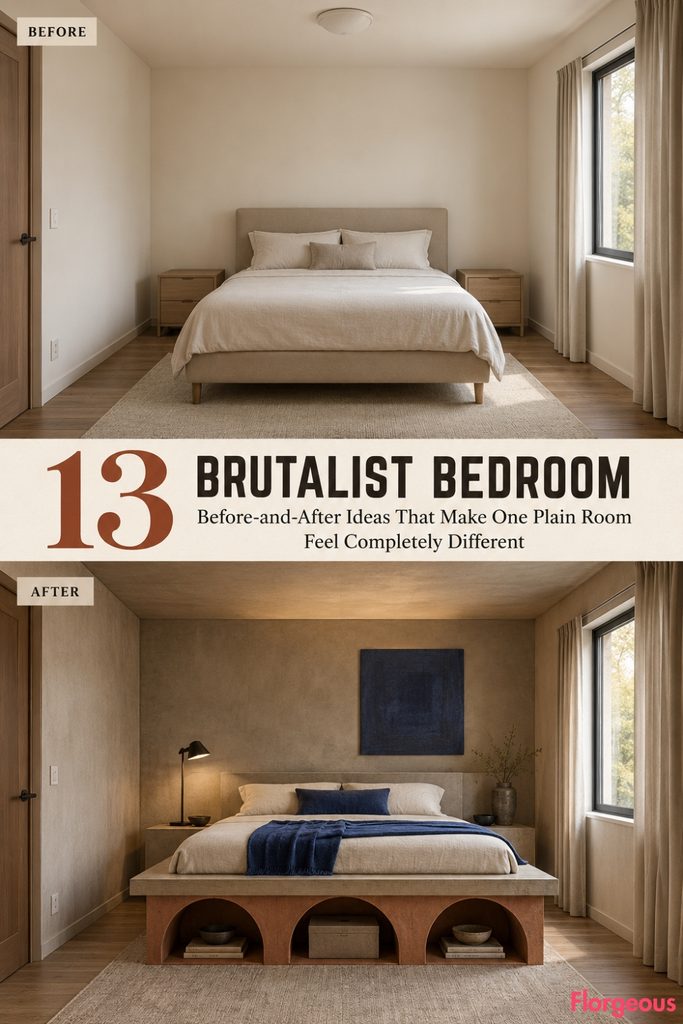
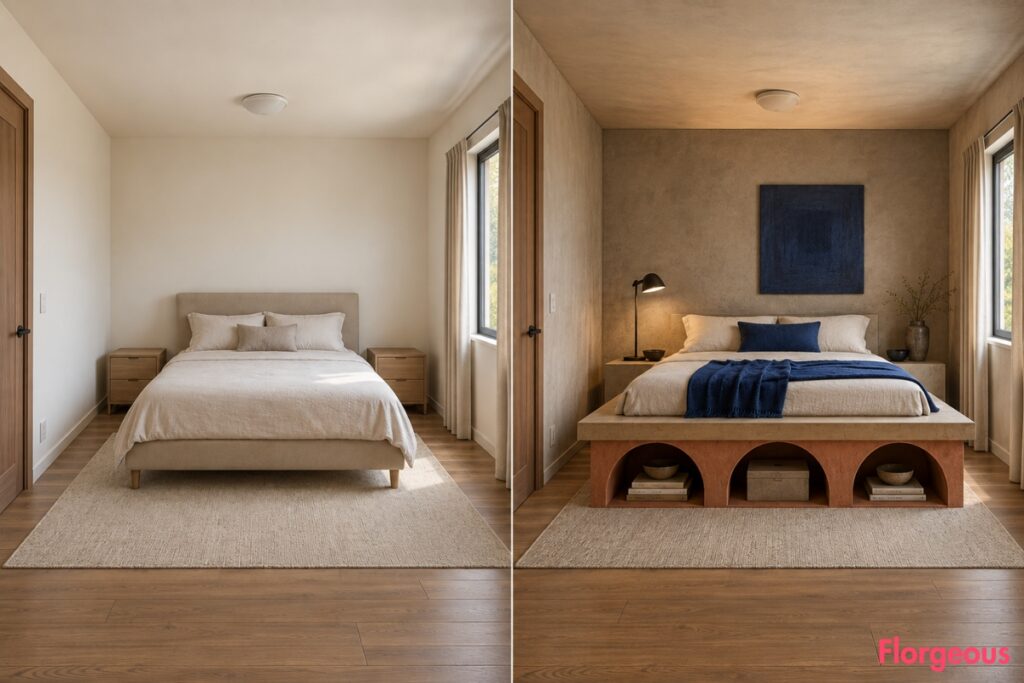
A plain bedroom does not need much to feel forgettable: warm off-white walls, a basic neutral bed, two bare nightstands, short curtains, simple lighting, and no real focal point.
For these Brutalist Bedroom makeovers, that exact starting room stays consistent, but the design logic changes completely each time. Some rooms are bed-led, others are organized around storage, work, reading, seating, mechanics, craft, color, or light.
The architectural shell never changes. It remains the same medium rectangular bedroom with a solid rear wall, front-left entry, right-side window toward the rear half, flat ceiling, continuous floor, and the same daylight direction. No new openings, niches, recesses, or built-ins are added.
1. Support the Bed on Hollow Ceramic Vaults
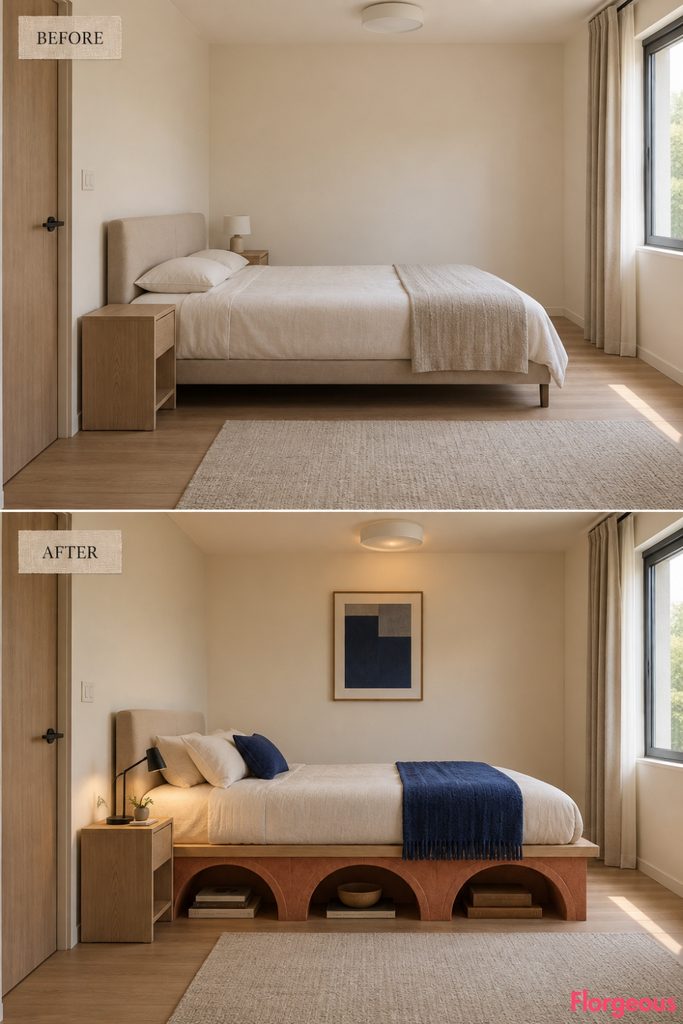
Handmade clay gives Brutalism a warmer starting point.
Before: Warm off-white walls, basic neutral rear-wall bed, simple bedding, two bare nightstands, short curtains, basic ceiling light, and minimal styling.
After: A thick ash sleeping deck rests on three large hollow terracotta vault modules, leaving usable open storage inside the arches. Cream linen and deep ultramarine soften the burnt-clay mass. One compact black reading lamp completes the arrangement, with the center route left open.
Designer Tip: Keep the ceramic modules visibly thick and load-bearing so they read as furniture, not decorative props.
2. Make Counterweighted Wardrobe Doors the Mechanical Focal Point
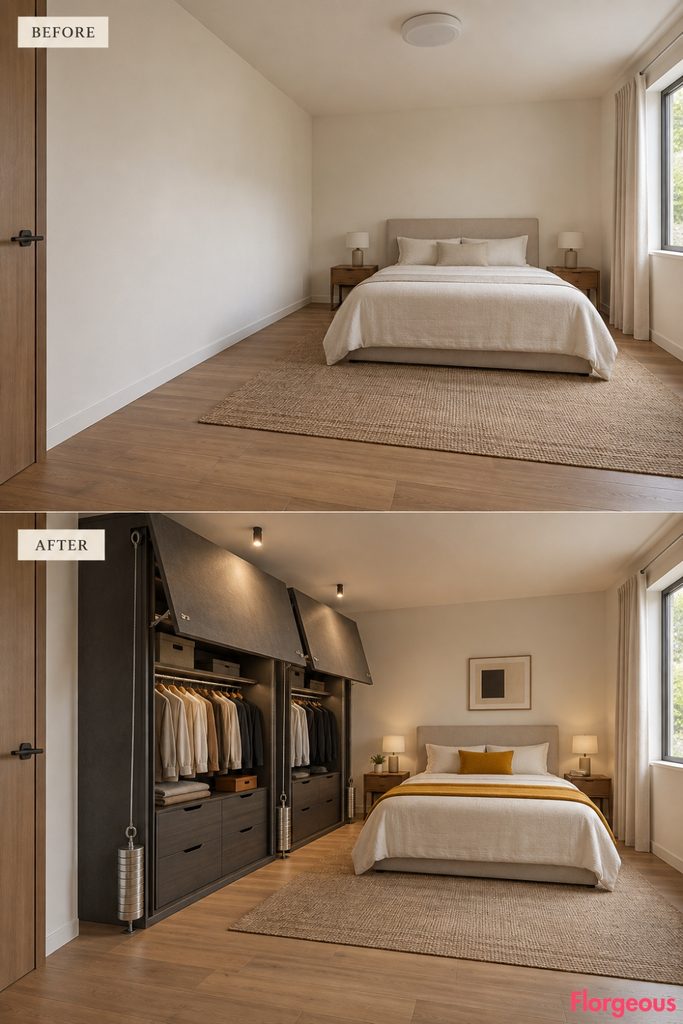
This room puts storage ahead of the bed.
Before: The same plain bedroom baseline with generic furniture and flat lighting.
After: A substantial full-depth wardrobe occupies the left wall. Two thick fiber-cement door slabs lift vertically using visible steel cables and counterweights, exposing normal hanging and folded storage behind them. A simple upholstered bed sits deeper on the rear wall, visually secondary.
Graphite, saffron, silver steel, and bone create a sharper technical palette.
3. Replace the Static Frame With a Lockable Rocking Cradle Bed
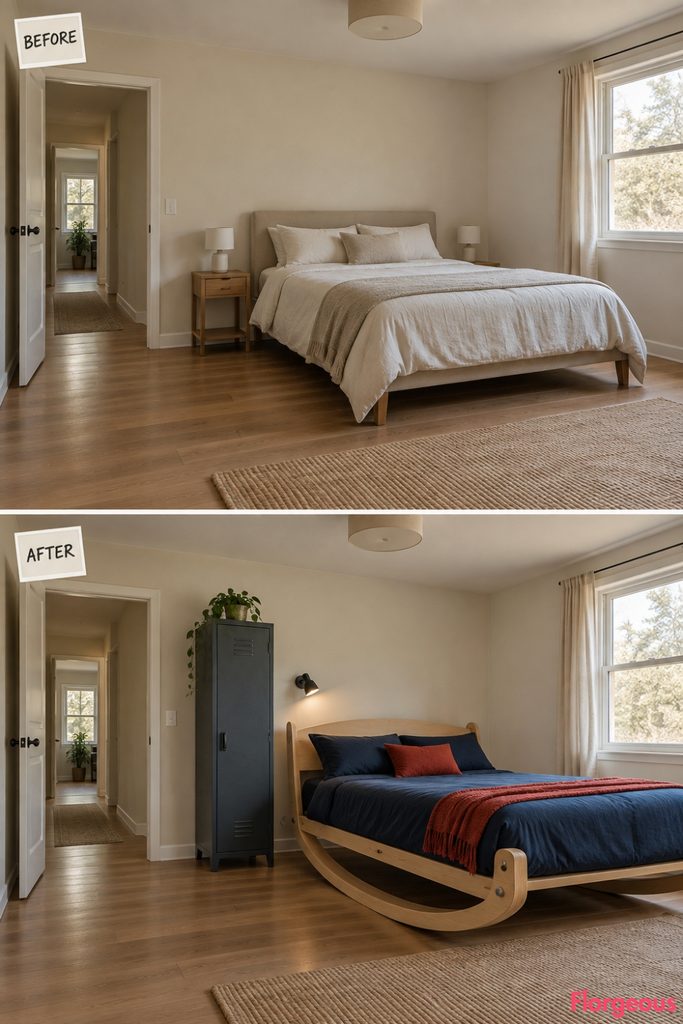
This is the playful room, but the movement has a practical limit.
Before: The identical warm-neutral bedroom with standard bed and two nightstands.
After: A full-size mattress sits inside a broad laminated-birch cradle frame with shallow curved runners and visible locking pins that secure it flat for sleeping. One compact steel clothes cabinet handles storage.
Pale birch, ink blue, tomato red, and cream make this version much brighter than conventional Brutalism.
4. Raise the Mattress on Four Manual Screw Jacks
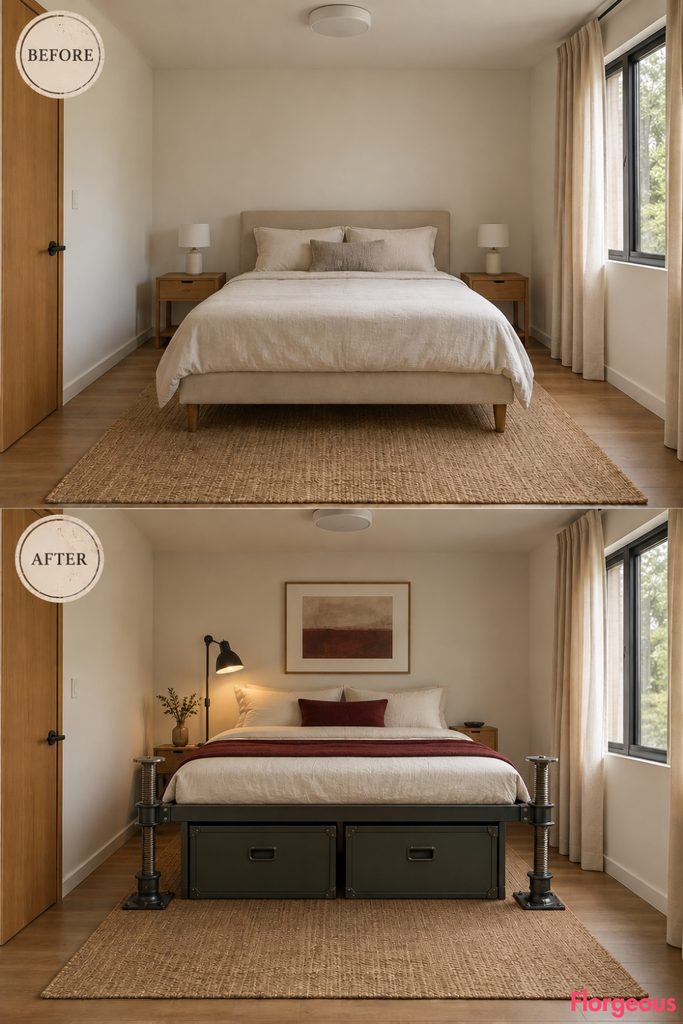
A mechanical bed gives this room an entirely different silhouette.
Before: Same plain bedroom with basic furniture, short curtains, and generic ceiling light.
After: A steel mattress deck stands on four large exposed screw-jack columns. The height can be adjusted manually, with two deep storage cases fitting below when the bed is raised. Oxblood wool and ivory linen warm the raw galvanized structure.
The bed is the hero, so no separate bedside furniture is added.
Why It Works: The mechanism provides an actual function rather than looking technical simply for effect.
5. Make a Deep Waffle Cabinet the Brutalist Bedroom Focal Point
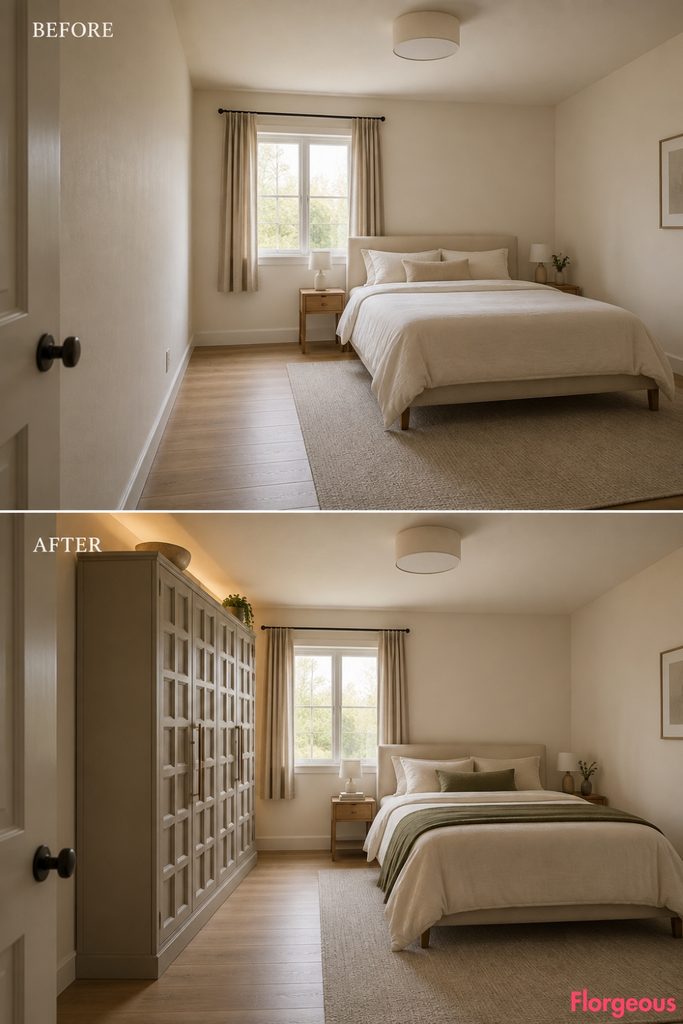
Here the strongest piece is a conventional cabinet pushed into unconventional proportions.
Before: The fixed basic bedroom with neutral bed and two empty nightstands.
After: A full-depth warm-gray clothes cabinet spans much of the left wall. Its doors form a deep square waffle relief, with several recesses functioning as handles rather than decorative niches in the wall. A restrained cream bed is offset toward the rear-right.
Black, warm gray, olive, and cream keep the mood severe but livable.
6. Float the Bed on Seismic-Isolator Supports
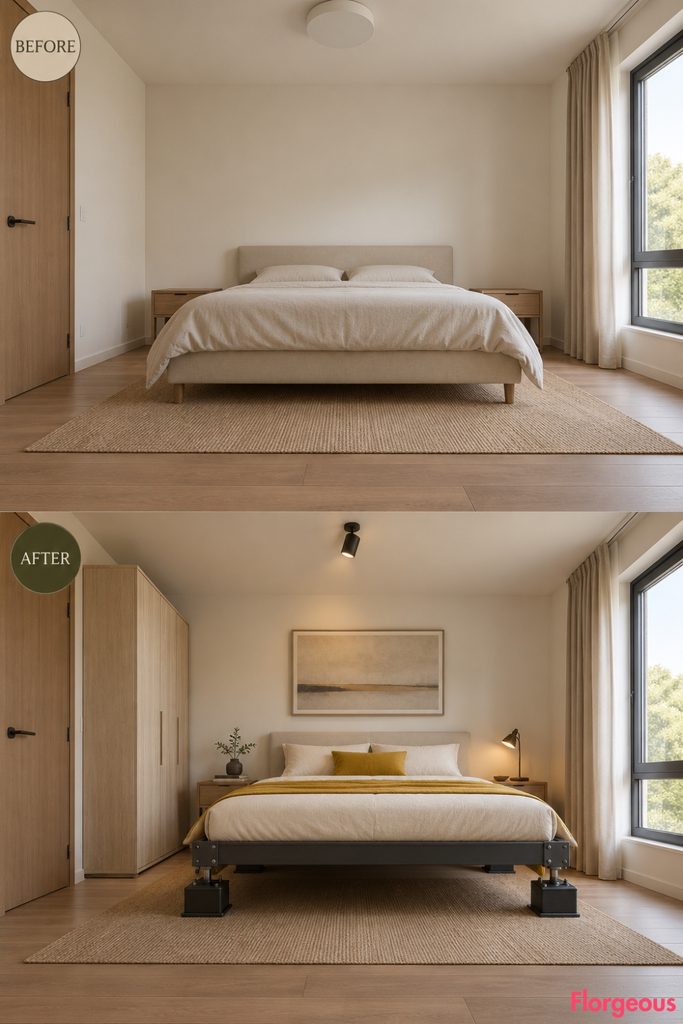
Instead of another solid platform, this makeover exposes a structural system beneath an otherwise simple bed.
Before: Warm off-white walls, a basic neutral bed, simple neutral bedding, two bare nightstands, minimal styling, a basic ceiling light, soft daylight, and no strong focal point.
After: A rigid charcoal-steel bed chassis sits at normal sleeping height on four oversized black elastomer isolation blocks with visible connection plates. Bone linen and a sulfur-yellow throw add color, while one full-depth pale-ash wardrobe provides practical clothing storage. A directional ceiling light picks out the supports, and clear floor space remains around both sides of the bed.
Why it works: The unusual support system makes the bed memorable without requiring extra decorative furniture.
Try this: Keep the rest of the room simple. The rubber supports need visible floor around them or the structural idea gets lost.
7. Let One Counterbalanced Light Mast Organize the Room
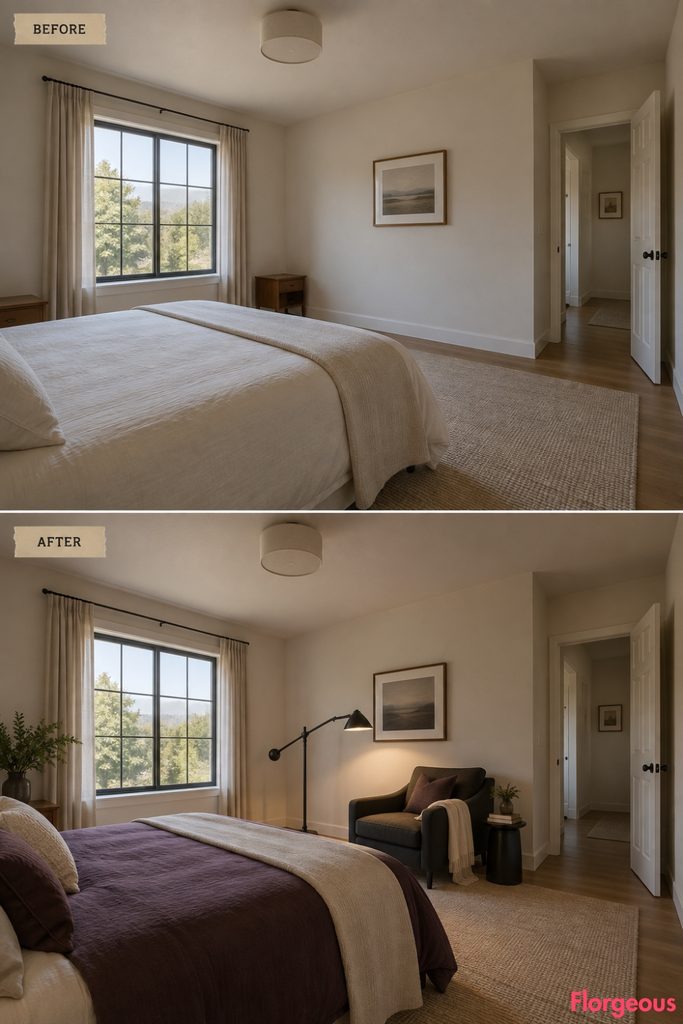
Lighting becomes furniture rather than an afterthought.
Before: The same generic neutral bedroom with one basic ceiling fixture.
After: A freestanding black steel mast stands between a simple bed and one deep reading chair. Its long counterweighted arm rotates horizontally so the same actual lamp head can serve either zone.
The bed stays deliberately quiet. Aubergine wool, charcoal, parchment, and bronze create a nocturnal palette.
Common Mistake: A reflector, counterweight, or metal arm should never appear to glow. Only the actual lamp source emits light.
8. Give the Work Zone a Ratcheting Drafting Slab
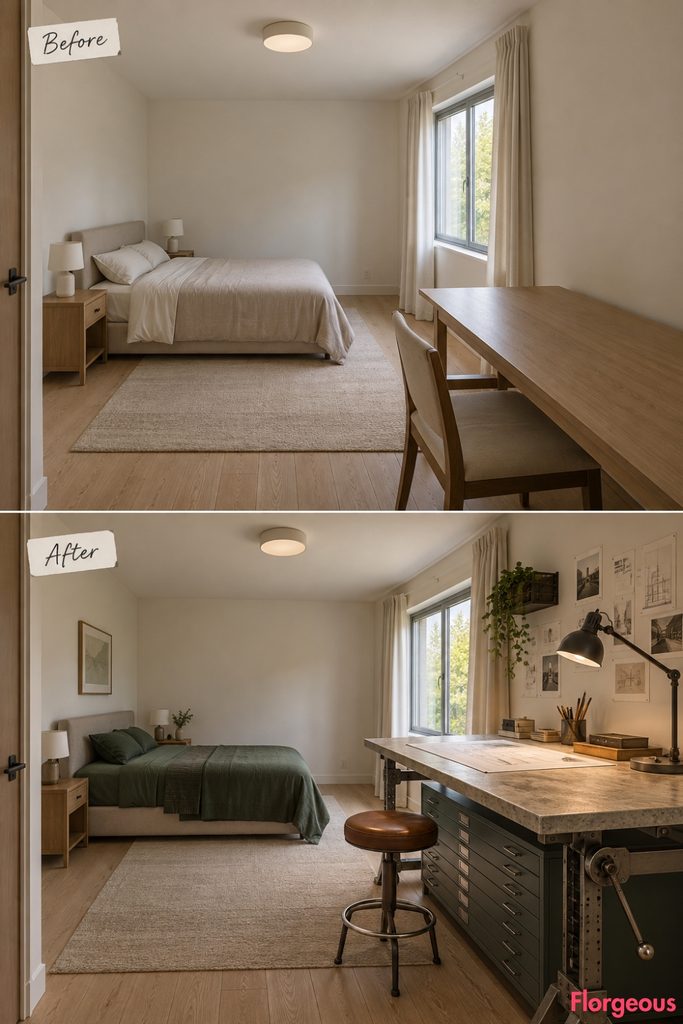
This version behaves more like a serious studio that happens to contain a bed.
Before: Plain bedroom baseline with neutral furniture and bare surfaces.
After: A large drafting table occupies the left side, built from a thick mineral-composite slab on a steel ratchet mechanism that adjusts its angle. A shallow but wide flat-file cabinet fits below. The simple bed sits across the room and remains secondary.
Pale cement, dark green, aluminum, and tobacco leather keep the workspace visually dominant.
9. Build the Dressing Zone on Cast-Glass Trestles
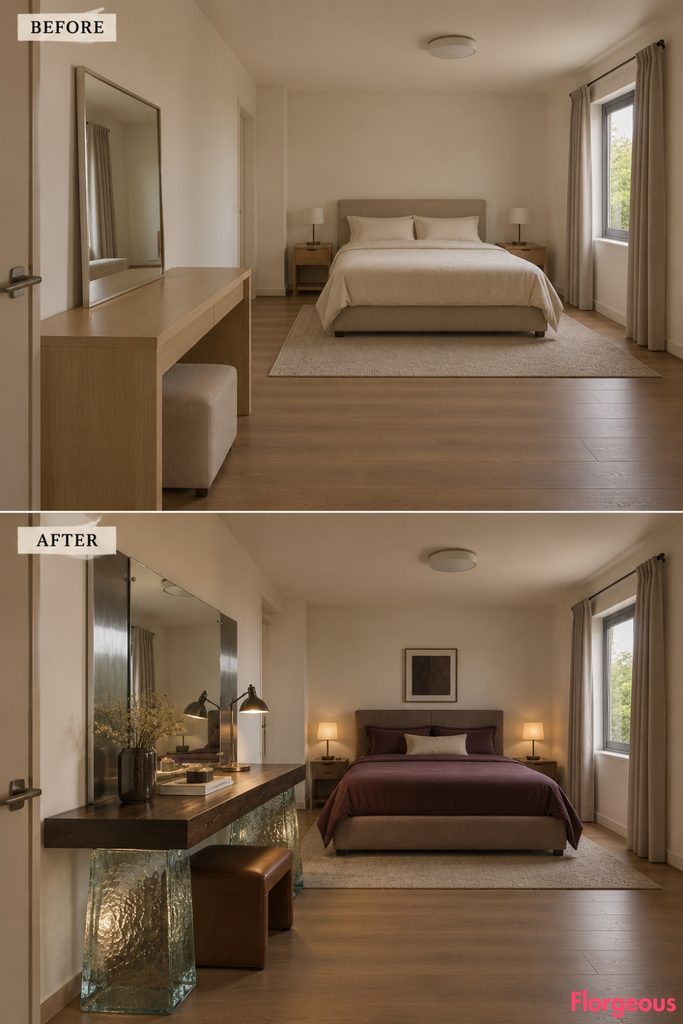
Brutalist mass becomes transparent instead of gray.
Before: The same plain room with two nightstands and no dressing area.
After: A thick smoked-oak dressing surface rests on two massive cast-glass trestles, with a brushed-steel mirror panel fixed securely to the tabletop structure. A compact upholstered bed moves deeper toward the rear-left, leaving the dressing zone dominant near the window.
Smoky glass, aubergine, oak, and silver create a glossy but restrained room.
10. Ventilate a Full-Depth Wardrobe With Terracotta Louvers
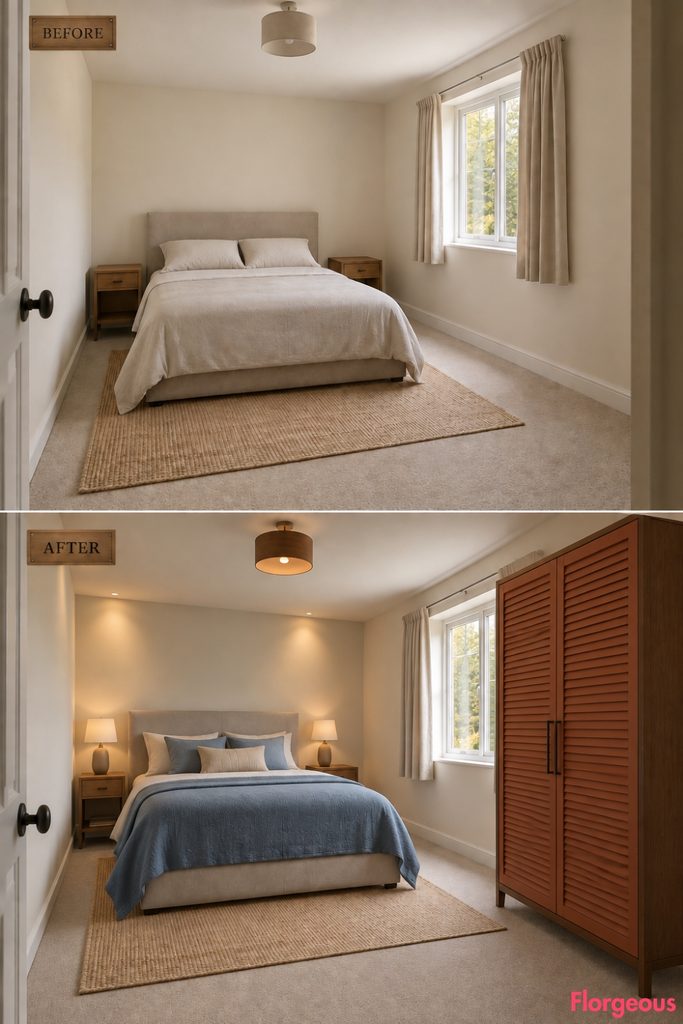
This is the craft-led storage room.
Before: Fixed neutral bedroom baseline.
After: A freestanding full-depth clothes press near the front-right wall uses thick horizontal terracotta louvers across its doors, allowing ventilation while concealing the hanging space behind them. A conventional pale-gray bed sits on the rear-left, giving the cabinet room to dominate.
Burnt orange, dusty blue, chalk, and dark walnut make the result warm and graphic.
Budget Version: A conventional cabinet with applied clay-colored timber battens can approximate the louver rhythm without custom ceramic fabrication.
11. Put the Mattress on a Cast-Iron Sled Frame
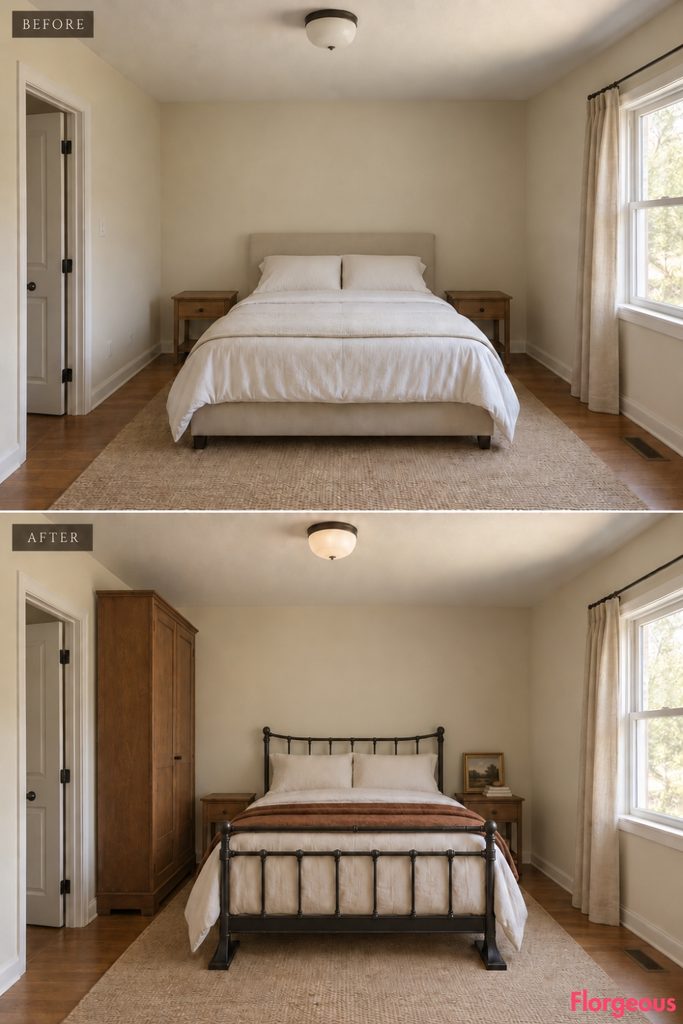
This is the hardest, most severe bedroom in the set.
Before: The same plain bedroom with lightweight generic furniture.
After: A heavy cast-iron bed frame rests on two broad sled-shaped runners instead of conventional legs. The runners curve only enough to visually connect the bed to the floor, without allowing it to rock.
One tall full-depth plywood clothes cabinet provides storage. Charcoal, bone, rust, and black create an intentionally austere palette.
12. Make an Oversized Reading Hood the Softest Object in the Room
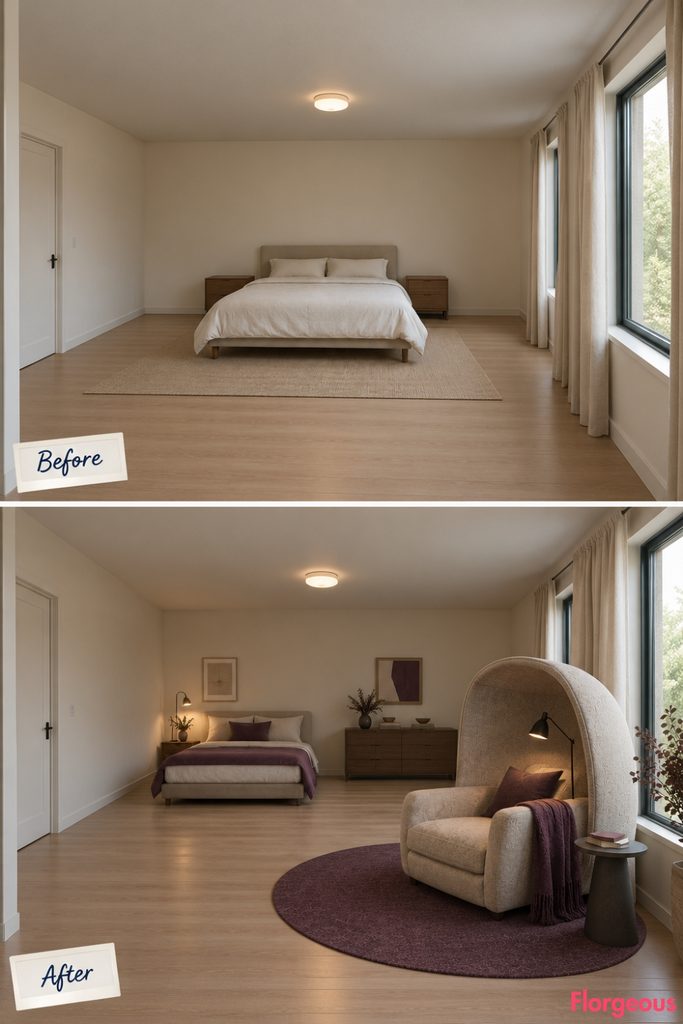
The focal point moves completely away from the bed.
Before: Plain bedroom baseline with no seating zone.
After: A deep high-back reading chair sits near the right-side window, wrapped by a thick semicircular felt hood that controls sound and glare without touching the architecture. A narrow secondary bed stays against the rear wall, with one closed drawer chest beneath its foot zone.
Oatmeal felt, plum, warm gray, and pale ash make the room quiet and cocooning.
13. Finish With a Freestanding Light Chimney
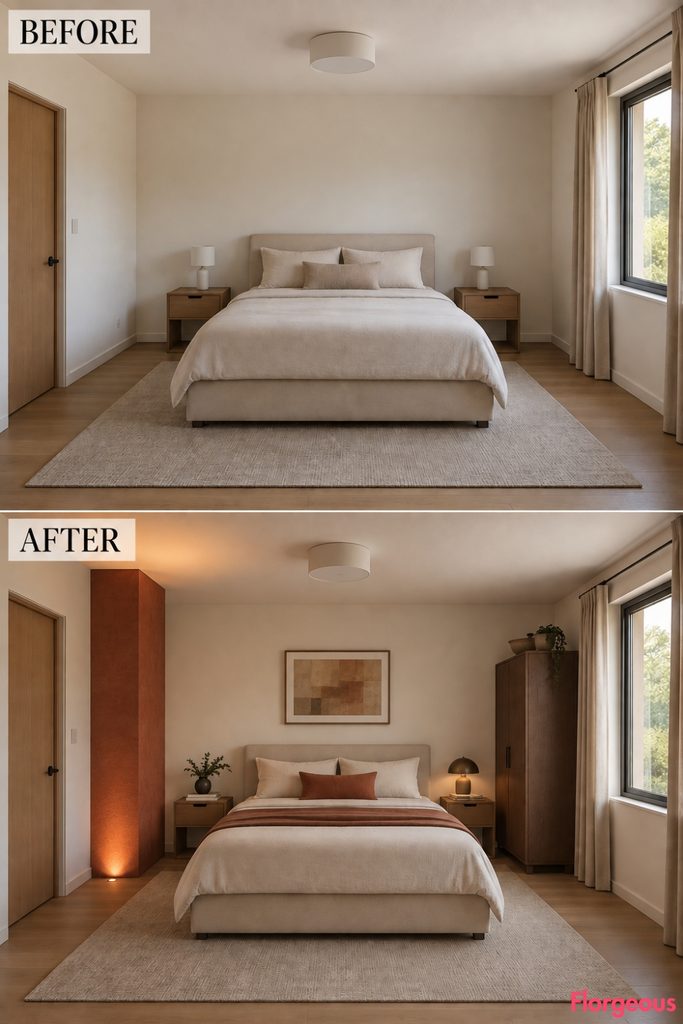
The final concept uses very little furniture, but it is not another empty low-bed room.
Before: Same warm off-white bedroom with generic bed, nightstands, and ceiling fixture.
After: A tall hollow mineral-plaster light chimney stands several feet from the wall. A concealed actual uplight inside its base throws light upward through the open top and onto the existing ceiling. A normal-height bed and one compact full-depth cabinet remain intentionally simple.
Brick red, chalk, deep brown, and cream give the room an architectural warmth.
The light chimney becomes the focal point, while furniture stays quiet and circulation remains generous.
How to Choose a Brutalist Direction Without Overfilling the Room
The strongest Brutalist Bedroom does not need the largest possible number of objects. What matters is deciding which function should lead.
A ceramic vault bed, rocking cradle, screw-jack sleeper, or cast-iron sled can carry a bed-led room almost by itself. Storage-led rooms need a substantial wardrobe and a quieter bed. Work, lounge, reading, dressing, and lighting concepts need the opposite hierarchy, with the sleeping furniture deliberately stepping back.
Before buying or commissioning anything oversized, mark its full depth on the floor. Check wardrobe-door movement, chair clearance, moving mechanisms, window access, and the route from the entry to the bed. Brutalism can feel massive and experimental without making an ordinary bedroom difficult to use.