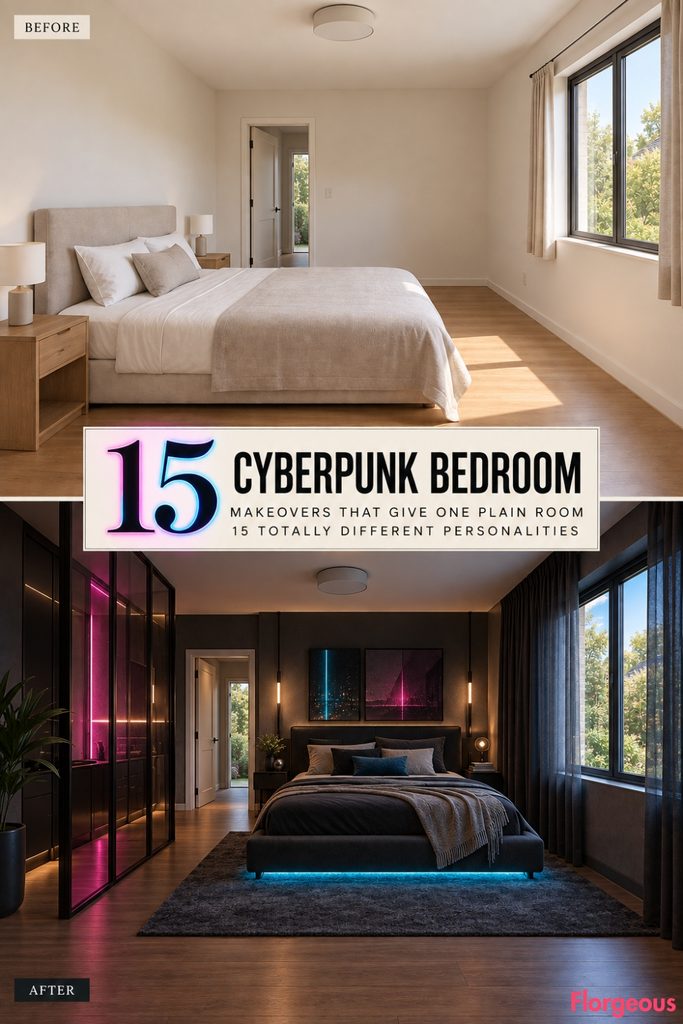
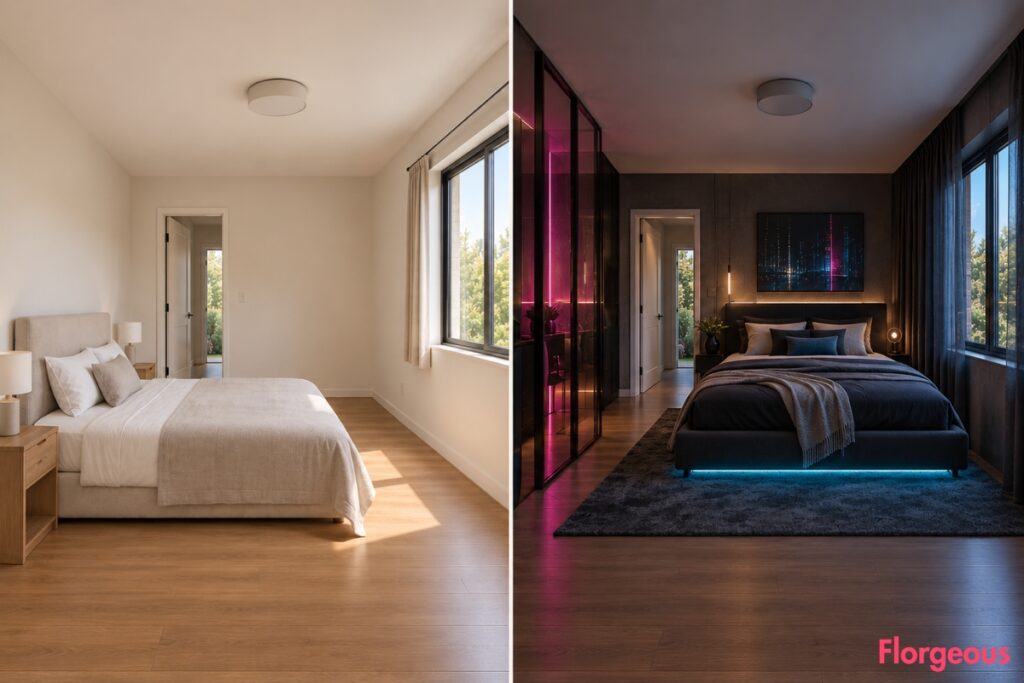
The plain bedroom is intentionally forgettable: warm off-white walls, a basic neutral bed, two bare nightstands, ordinary timber flooring, simple curtains, soft daylight, and one generic ceiling light. There is nothing wrong with it, but there is nothing memorable either.
That makes it the perfect base for a Cyberpunk Bedroom experiment. Every makeover keeps the exact same rectangular architecture, the same rear-wall doorway, the same wide horizontal window on the right wall, and the same solid front wall.
What changes is the interior system. Some rooms make the bed dominant. Others let storage, seating, light, transparency, or technical furniture lead the composition. The cyberpunk DNA stays consistent throughout: dark urban materials, layered artificial light, smoked or translucent surfaces, blackened metal, high-tech residential furniture, rich textiles, and controlled electric color.
1. Turn the Plain Room Into a Layered Neon-Noir Cyberpunk Bedroom
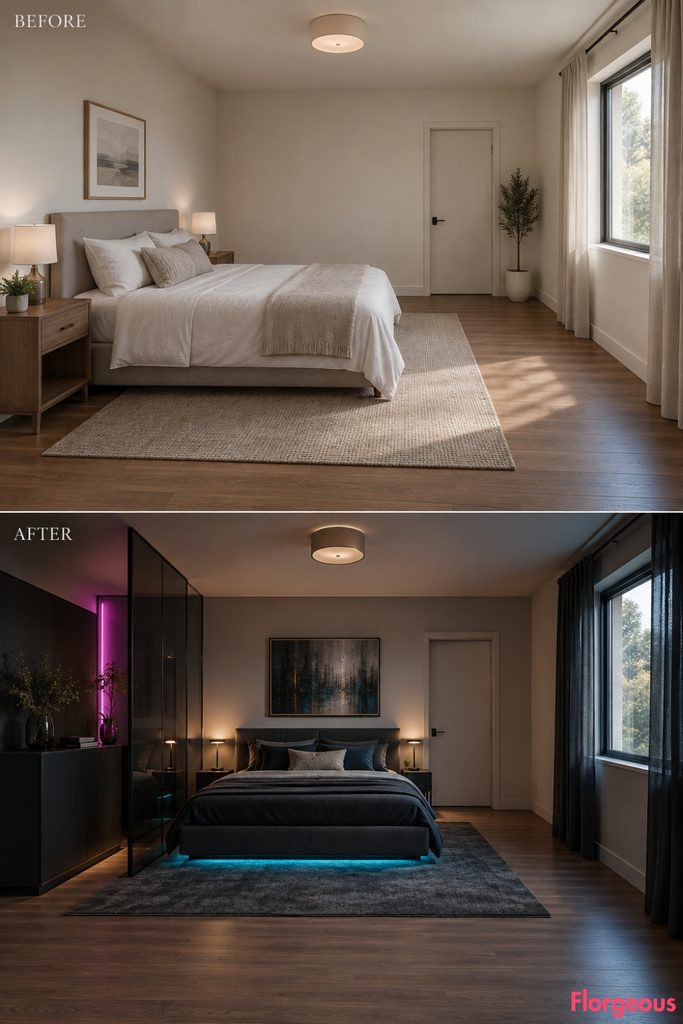
The most recognizable version of the look works best when it feels deep and atmospheric, not when every edge is covered in RGB strips.
Before: Warm off-white walls, a basic neutral upholstered bed midway along the left wall, simple neutral bedding, two bare nightstands, ordinary timber flooring, short plain curtains, a basic ceiling light, minimal styling, and soft natural daylight.
After: Relocate the bed to the solid front wall and make it a low graphite upholstered focal point with layered charcoal, dirty-ivory, and muted ink-blue bedding. Offset a freestanding smoked-glass screen along the left side, with one realistic full-depth matte-black storage cabinet visually receding behind it. Add a low charcoal rug and full-length dark sheers to soften the technical finishes. A real concealed cyan source under the bed creates a subtle floor glow, while restrained magenta light behind the smoked screen produces reflected color.
The center stays broad and uncluttered, and the route from the rear doorway to the right-wall window remains completely open.
Why it works: Hard reflective surfaces supply the city-night character, while upholstery, bedding, curtains, and rug keep the result luxurious enough to feel like a bedroom.
Try this: Start with one dark reflective surface and one colored light source. Add the second accent color only after the neutral layers feel balanced.
2. Frame the Bed With a Graphite Light Portal
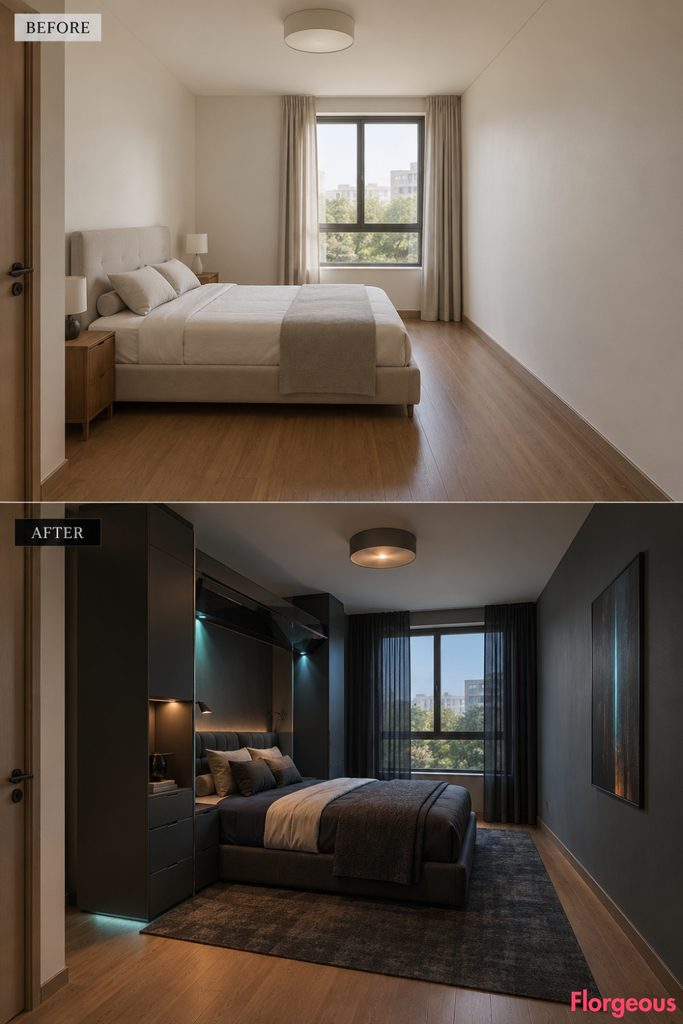
Instead of a screen, this room uses one strong freestanding furniture structure to make the sleeping zone feel technical and immersive.
Before: The same plain bedroom with the neutral bed on the left wall, two bare nightstands, minimal styling, and soft daylight.
After: Shift the bed slightly deeper along the left side and replace the simple headboard with a freestanding graphite portal made from two substantial vertical towers and a horizontal smoked-acrylic bridge that stops clearly below the ceiling. One tower contains closed bedside storage, while the other holds a recessed reading niche, keeping the composition asymmetrical.
Charcoal upholstery and dirty-cream bedding soften the frame. A cool cyan fixture concealed inside the acrylic bridge washes downward across the headboard, while a small warm amber reading source sits inside the niche. A full-depth black wardrobe stays quiet on the front wall.
Why it works: The bed still feels unmistakably cyberpunk, but the focal point comes from structural furniture rather than another glass screen.
Designer Tip: Keep the portal visually heavy at the sides and lighter overhead so it does not make a normal bedroom feel cramped.
3. Make a Smoked-Glass Storage Wall the Main Focal Point
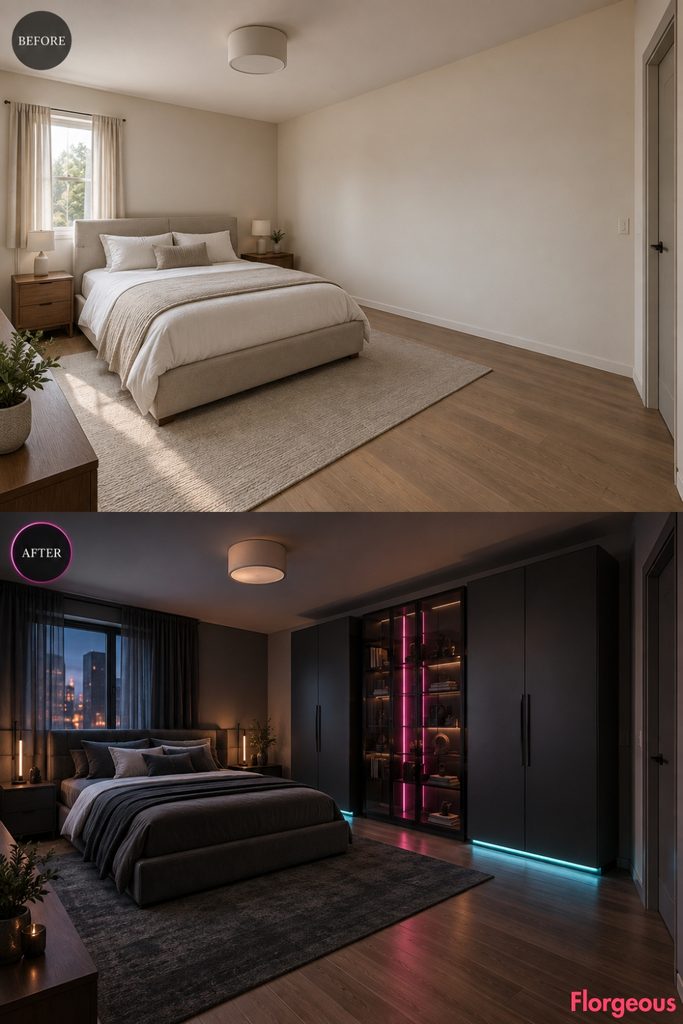
Here the bed takes a quieter role so storage can become the strongest visual element.
Before: The same warm-neutral starting room with the basic bed midway along the left wall.
After: Move the bed deeper rear-left and simplify it into a broad charcoal upholstered frame with layered graphite and ivory bedding. On the solid front wall, place three separate but closely aligned full-depth storage units: matte graphite on the two outer bays and smoked glass in the center.
The center cabinet contains hanging storage and a restrained vertical magenta light that glows through the tint. A thin cyan line beneath the outer cabinets creates a second layer of color close to the floor. Dark sheers and a graphite rug tie the room together without adding more furniture.
Why it works: The room still has the same dark technical DNA as section 1, but the visual hierarchy is completely reversed. Storage leads, bed follows.
Try this: If tinted glass feels too expensive, use smoked film only on one central cabinet rather than every door.
4. Stretch a Luminous Technical Spine Behind the Bed
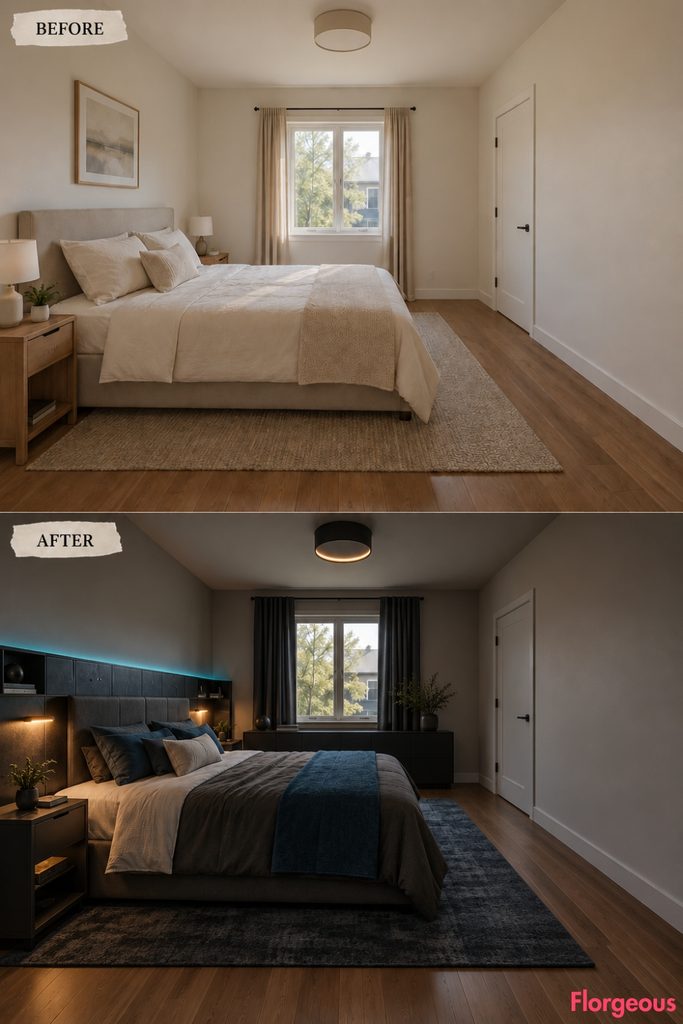
A long horizontal element can make the room feel engineered without turning it into a workshop.
Before: The same plain left-wall bed, bare nightstands, warm walls, and minimal styling.
After: Keep the bed on the left side but replace the small headboard with a long freestanding graphite technical spine extending well beyond the mattress in both directions. The center is softly upholstered, while the outer zones combine blackened metal panels, shallow ledges, and smoked inserts.
A thin cyan fixture runs behind one section of the spine, while two warm reading lights illuminate the bedding. The front wall carries one low full-depth storage piece in matte black, leaving more negative space above it.
The bed stays comfortable, with layered charcoal, cream, and deep-blue textiles rather than a hard sci-fi treatment.
Small Space Tip: One long horizontal furniture element can make a small room feel wider, especially when the rest of the storage stays visually low.
5. Build the Room Around a Black-Mesh Storage Grid
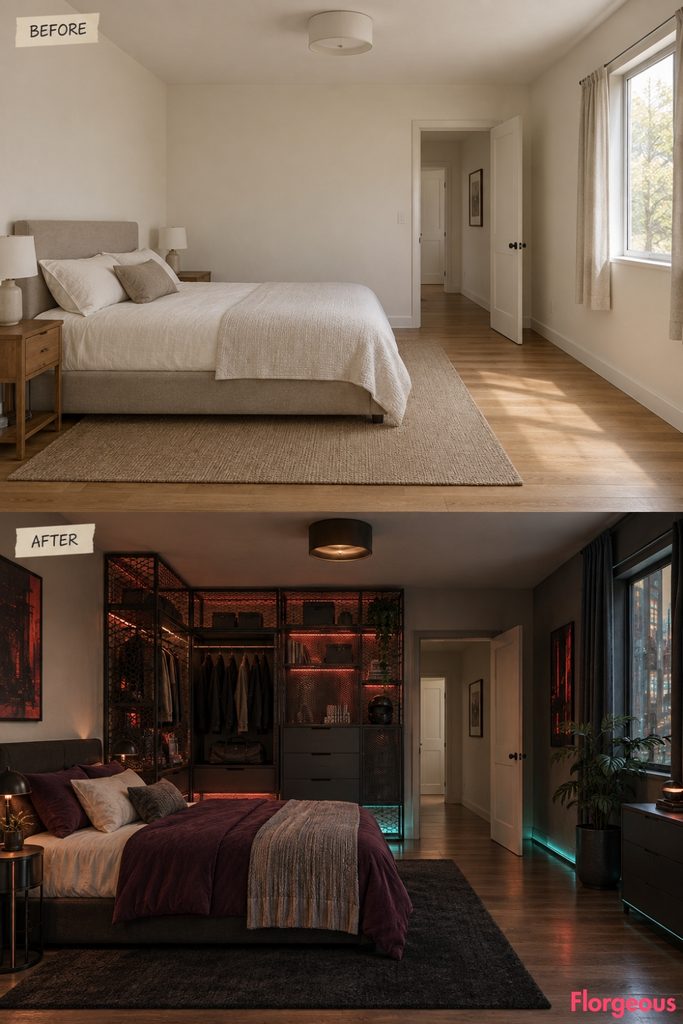
This makeover keeps the same dark city-night language but introduces porosity and shadow instead of glossy glass.
Before: Warm off-white walls, simple bed, two bare nightstands, timber floor, and a generic ceiling light.
After: Move a compact upholstered bed toward the front-left quarter and let a substantial black-metal mesh storage grid dominate the rear-left and front-wall junction. The freestanding system includes one full-depth hanging bay, deep closed drawers, and a few mesh-front compartments, but the central walkway stays open.
Deep plum bedding and dirty ivory soften the black metal. A muted red light sits behind selected mesh compartments, while a narrow cyan floor grazer runs along the base of the system. The mesh casts layered shadows instead of becoming a glowing object itself.
Why it works: The material changes dramatically, but the same cyberpunk core remains through dark technical furniture, colored light, and layered urban density.
Common Mistake: Too much open mesh will look like warehouse shelving. Keep most storage closed and let only a few bays remain visually porous.
6. Let a Low Night Lounge Take Over the Center
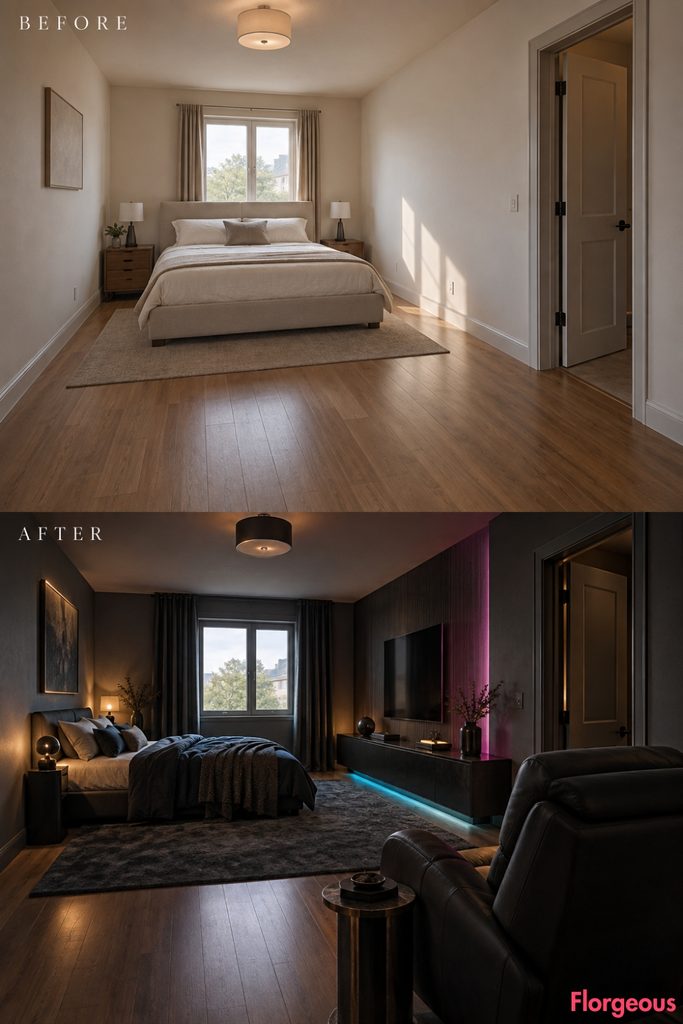
The bed does not have to be the main event in every bedroom. Here the room feels designed for long nocturnal hours as much as sleep.
Before: The same plain bedroom with the bed on the left wall and empty center.
After: Push a compact low bed deeper rear-left and introduce one generous black upholstered reclining chair in the center-right zone, angled toward a low smoked-black console on the front wall. The console contains closed storage and one dark non-readable display surface rather than a large glowing screen.
Cyan light grazes the floor beneath the console, while muted magenta light washes a narrow smoked panel behind the chair. The bed uses graphite, ink blue, and dirty-cream bedding, with one amber bedside lamp providing warmer relief.
Why it works: The lounge becomes the hero, but the same smoked surfaces, technical furniture, layered colored light, and nocturnal palette keep the bedroom firmly within the same cyberpunk world.
7. Layer Transparent Blue Tech Furniture Against a Dark Sleep Zone
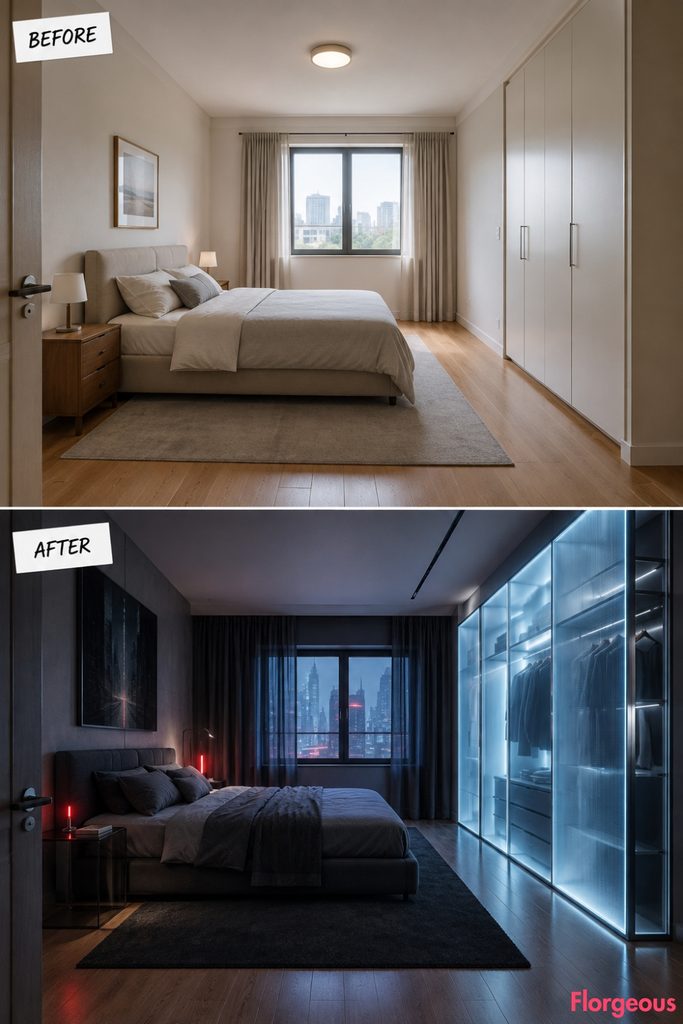
This room keeps the cyberpunk identity strong but feels lighter because part of the furniture almost disappears.
Before: The locked plain room with neutral walls and simple furniture.
After: Place a low charcoal bed deeper along the left side and create a full-depth front-wall storage composition with a dark internal cabinet carcass wrapped by translucent ice-blue polycarbonate doors and clear edge panels. One compact smoked-acrylic bedside table adds another transparent layer.
The room stays dark enough to preserve the night-city mood through graphite bedding, dark sheers, and a black rug. Cool white light inside the wardrobe diffuses through the blue panels, while one restrained red marker light near the bed gives the palette a sharper cyberpunk contrast.
Why it works: Transparency changes the visual weight of the room without abandoning the dark technical core.
Color Story: Ice blue works best when most of the surrounding surfaces remain charcoal, black, or dirty white.
8. Give the Bed a Mechanical Headboard With Acid-Green Signals
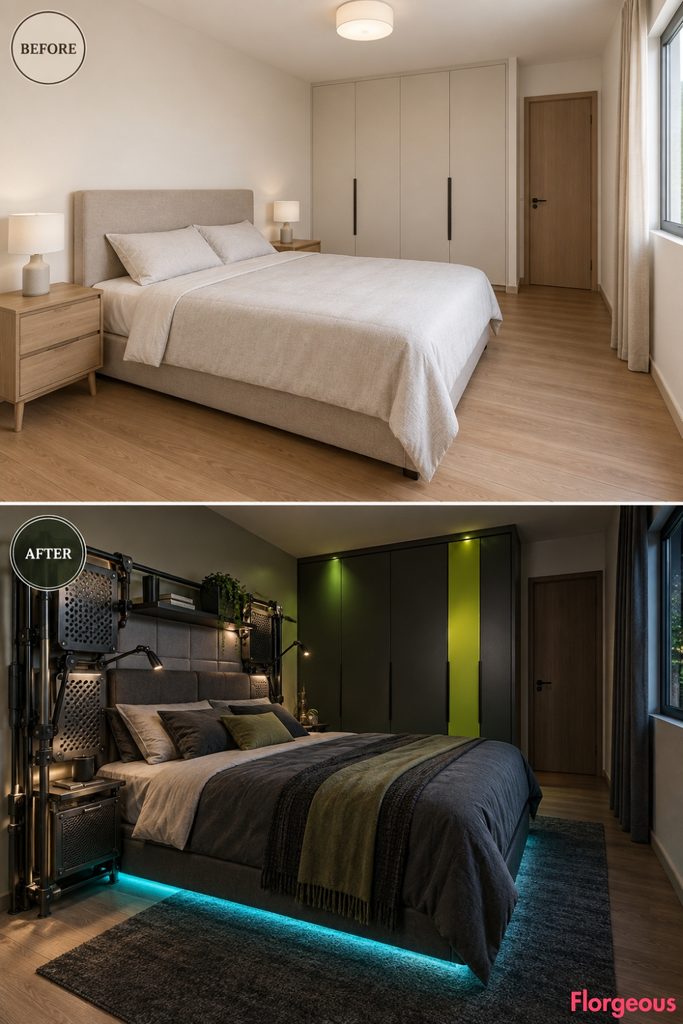
The strong color in this makeover is small but deliberate, like a signal inside a much darker technical system.
Before: The same plain bedroom with basic neutral bed and bare nightstands.
After: Keep the bed on the left wall but give it a freestanding graphite headboard frame with perforated panels, two articulated reading arms, one shallow metal shelf, and visible structural joints. The bed itself stays soft and substantial with charcoal, bone, and muted olive bedding.
A realistic full-depth matte-black wardrobe stands on the front wall with one narrow acid-green vertical panel. A controlled green fixture grazes only that panel, while neutral white task lights serve the headboard and a faint cyan under-bed source adds depth near the floor.
Why it works: Acid green behaves like technical signal color, not like a random decorative accent.
Try this: Use the strongest color on one narrow element rather than an entire wall or bedding set.
9. Use Black Chrome and Violet Reflection to Deepen the Room
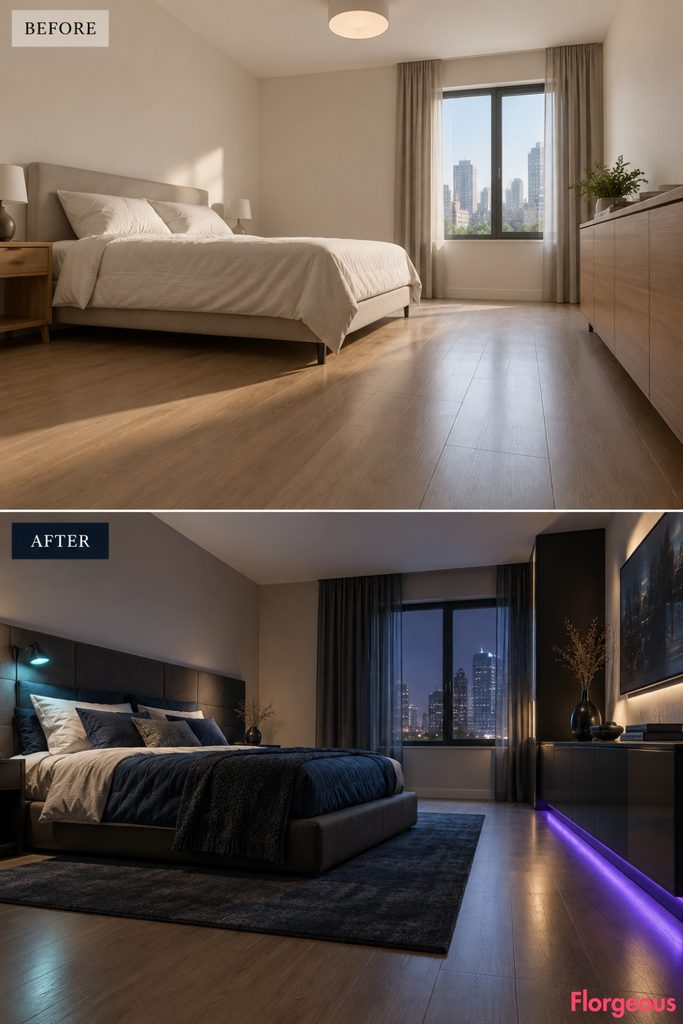
This makeover is reflective like section 1, but the reflection comes from solid furniture surfaces rather than a freestanding screen.
Before: Warm neutral walls, basic bed, two bare nightstands, timber flooring, and minimal styling.
After: Move the bed slightly toward the front-left and give it a broad matte-charcoal upholstered headboard. Along the solid front wall, place a long low black-chrome cabinet with one taller full-depth storage volume at the far left end. The reflective metal catches the room rather than behaving like a mirror.
A violet fixture concealed beneath the low cabinet creates a thin floor reflection, while a cool cyan reading light washes only one side of the headboard. Dirty ivory and ink-blue bedding keeps the room soft and high-end.
Why it works: Matte upholstery against dark reflective metal produces a richer cyberpunk contrast than using gloss everywhere.
10. Warm Up the Cyberpunk Core With Amber and Tobacco
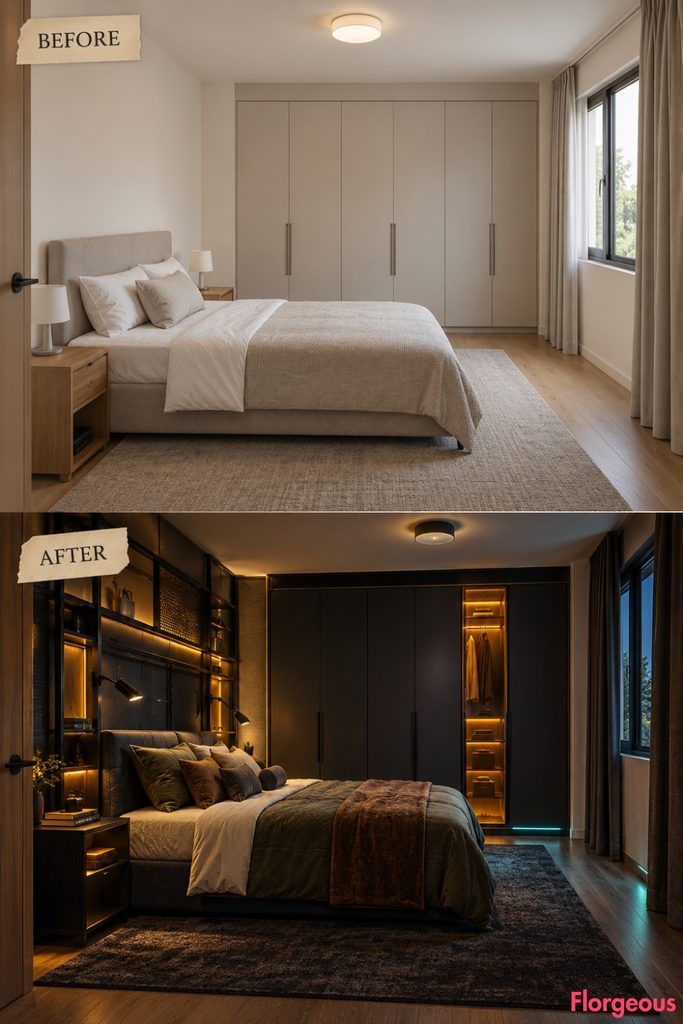
A warmer palette can still read as cyberpunk when the furniture remains technical and the contrast stays nocturnal.
Before: The same plain warm-neutral bedroom.
After: Shift the bed deeper rear-left and pair a dark upholstered frame with a substantial blackened-metal headboard containing smoked inserts and narrow amber-translucent panels. A full-depth charcoal wardrobe sits on the front wall with one amber-tinted door section and dark technical hardware.
Tobacco, olive, dirty cream, graphite, and black create the base. Warm amber fixtures illuminate the translucent inserts, while one faint cyan floor reflection prevents the room from drifting into vintage or rustic territory.
Why it works: The cyberpunk identity comes from the hardware, smoked surfaces, dark contrast, and integrated light, not from using a specific blue-purple palette.
Budget Version: Use amber acrylic inserts and black metal shelving details on an existing wardrobe rather than replacing the whole piece.
11. Create a Red-Lit Locker Wall Without Crowding the Bed
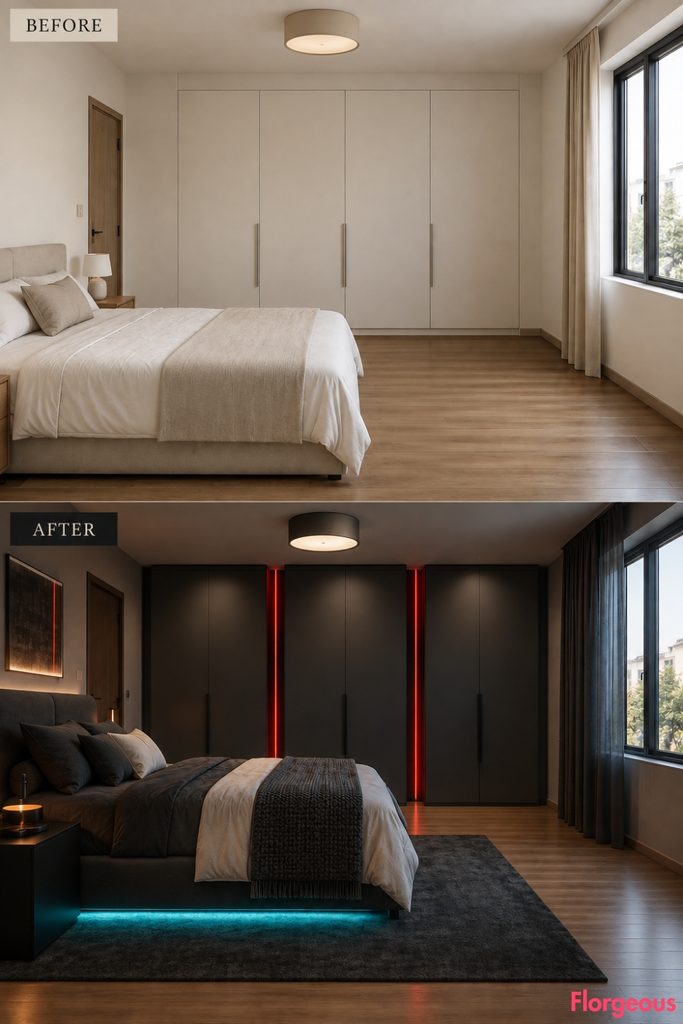
This concept uses dense storage, but its geometry stays clean enough for the room to remain calm.
Before: The same simple bedroom with no strong focal point.
After: Keep the bed relatively simple along the left side and turn the front wall into a rhythm of three separate full-depth graphite locker cabinets with narrow vertical gaps between them. The gaps contain real red linear fixtures set back from the cabinet fronts, creating thin luminous cuts rather than glowing furniture.
The bed gets thick charcoal and cream bedding, one low black bedside block, and a subtle cyan light beneath the frame. No other furniture competes with the locker wall.
Why it works: Strong repetition gives the room a dense urban technical feeling, while the red cuts keep the composition clearly cyberpunk.
Try this: Leave dark breathing space around strong linear lighting. The contrast is what makes it powerful.
12. Run a Low Tech Console Beneath the Window
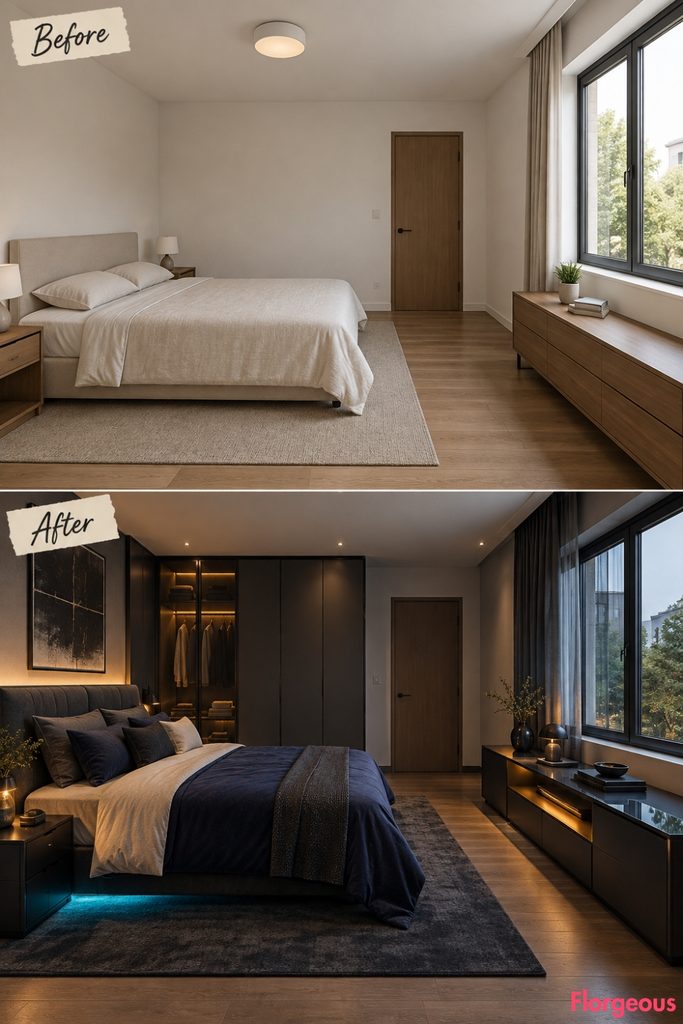
Instead of making the front wall do all the work, this room develops the right side while carefully preserving the existing window.
Before: Warm off-white walls, neutral left-wall bed, two bare nightstands, short curtains, and minimal styling.
After: Shift the bed toward the front-left zone and place a low blackened-metal console beneath the right-wall window, clearly below the sill and shallow enough to preserve comfortable access. The console combines closed storage, smoked-glass top panels, and one recessed amber light strip inside a narrow open slot.
The bed uses a graphite upholstered headboard, layered navy, charcoal, and cream bedding, and a restrained cyan fixture under one side of the frame. One full-depth wardrobe remains rear-left so the front wall can stay mostly open.
Small Space Tip: Low furniture beneath a window works only if it stays clearly below the sill and does not interfere with curtains or opening hardware.
13. Frame the Bed With Two Smoked Vertical Light Blades
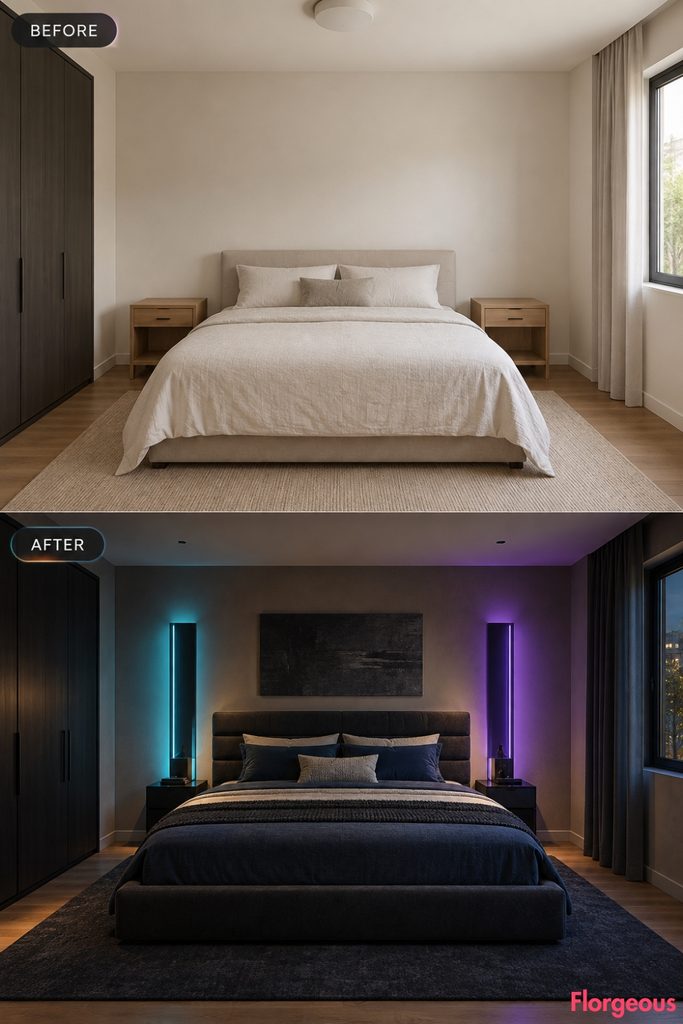
This room uses verticality to create drama without adding a bulky enclosure.
Before: The same plain bedroom with standard left-wall bed and no focal point.
After: Relocate the bed to the solid front wall and place two narrow freestanding smoked-acrylic light blades on either side of the headboard. Each blade has a concealed edge fixture mounted inside a black metal base, one cyan and one muted violet, so the transparent material catches light along its edges without appearing magically luminous.
The bed remains soft and substantial with charcoal, ink-blue, and dirty-ivory bedding. One full-depth black wardrobe sits rear-left, and the rest of the room stays deliberately sparse.
Why it works: The two vertical light elements create a strong cyberpunk silhouette while using very little floor area.
Common Mistake: Keep the blades narrow. If they become wide panels, the room starts looking like an exhibition installation rather than a bedroom.
14. Keep Everything Low With a Graphite Storage Horizon
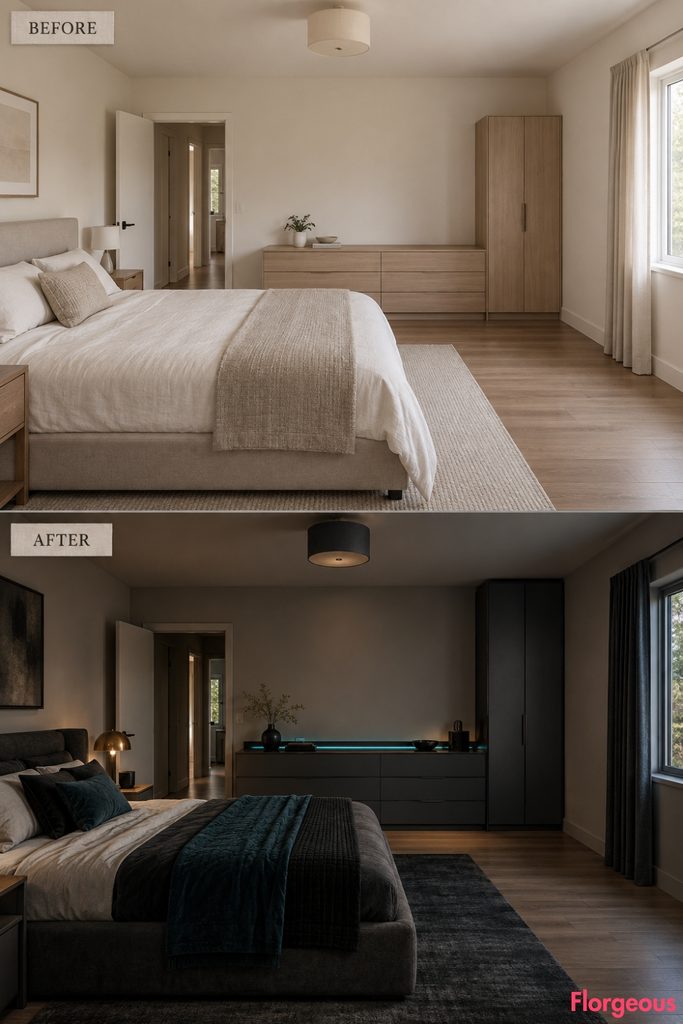
This is the quietest composition in the set, but the technical detailing and layered light keep it from becoming generic minimalism.
Before: Warm neutral walls, standard bed, bare nightstands, simple ceiling light, and empty surfaces.
After: Use a broad low charcoal bed along the left side and run a long freestanding graphite storage horizon across most of the front wall. The unit combines deep drawers, one full-depth hanging cabinet at the far end, a smoked top surface, and a narrow recessed cyan line beneath the upper edge.
The bedding uses dirty ivory, black, and deep petrol, with one compact amber reading lamp adding warmth. A low dark rug reinforces the horizontal composition while the upper walls remain almost empty.
Why it works: The silhouette stays low and calm, but the smoked top, technical proportions, cyan line, and dark city palette keep the room clearly within the same cyberpunk language.
15. Finish With an Asymmetric Night-City Composition
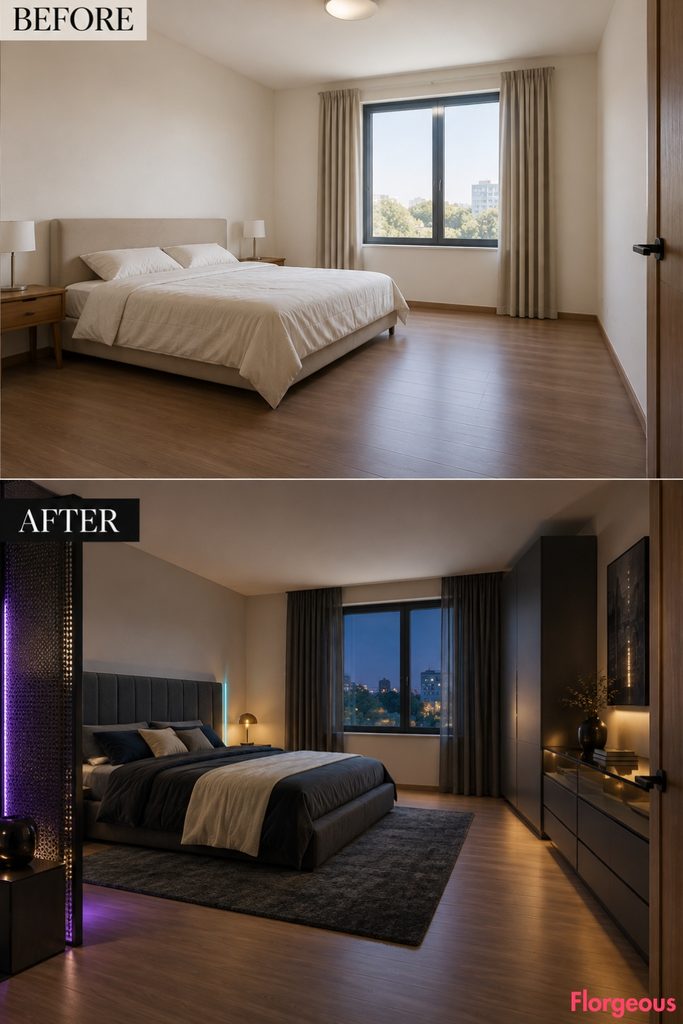
The final room combines several familiar cyberpunk cues, but organizes them asymmetrically so the space feels richer and less predictable than a centered feature wall.
Before: The same plain bedroom baseline with neutral finishes and no strong visual hierarchy.
After: Place a broad charcoal bed deeper rear-left with a tall black upholstered headboard edged by one thin cyan light source. On the front wall, offset a substantial graphite storage cabinet to the right and pair it with a lower smoked-glass chest extending toward the center. A narrow perforated-metal panel stands independently near the left foreground, creating one extra layer without blocking circulation.
Muted violet light behind the perforated panel, cyan at the bed, and a small amber bedside lamp create three carefully separated zones. Deep navy, charcoal, dirty ivory, black metal, and smoked glass tie everything together.
Why it works: The room feels complex and cinematic, but every element still belongs to one controlled residential composition.
How to Choose the Right Cyberpunk Direction for Your Bedroom
The easiest mistake with this style is starting with colored lighting and trying to invent the room around it. Reverse that order.
Choose the spatial idea first. Decide whether the bed, storage, lounge seating, headboard, or transparent layer should be the focal point. Then build a dark technical material palette around that hierarchy and use electric color only where it improves depth, function, or reflection.
The best Cyberpunk Bedroom ideas still work when the accent lights are switched off. Comfortable bedding, realistic storage, clear circulation, believable furniture depth, and a strong composition are what make the atmosphere feel intentional rather than theatrical.