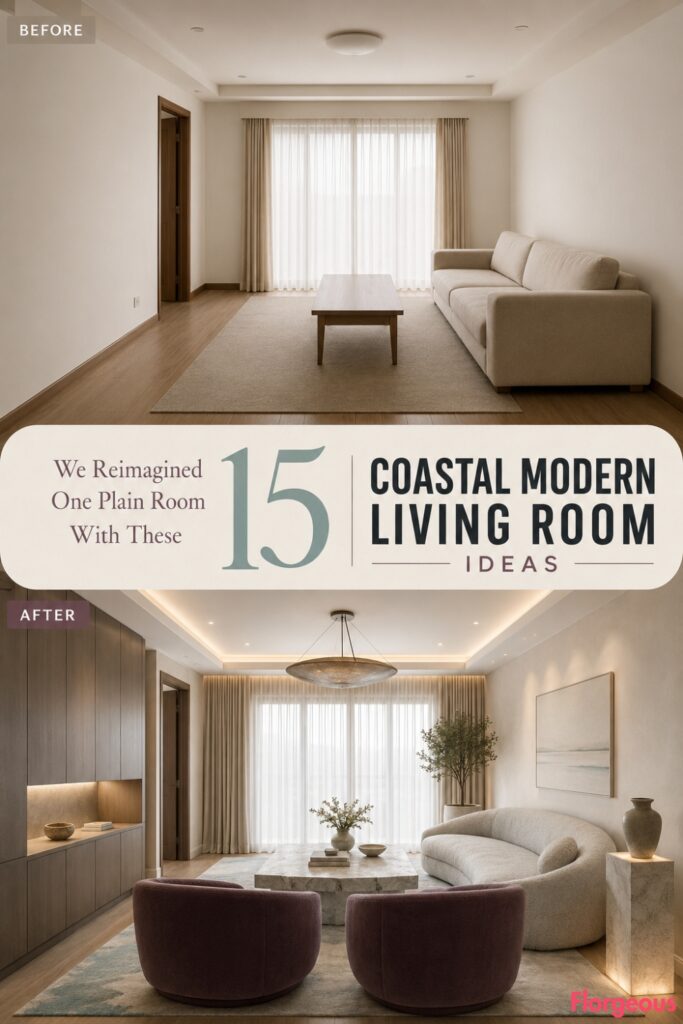
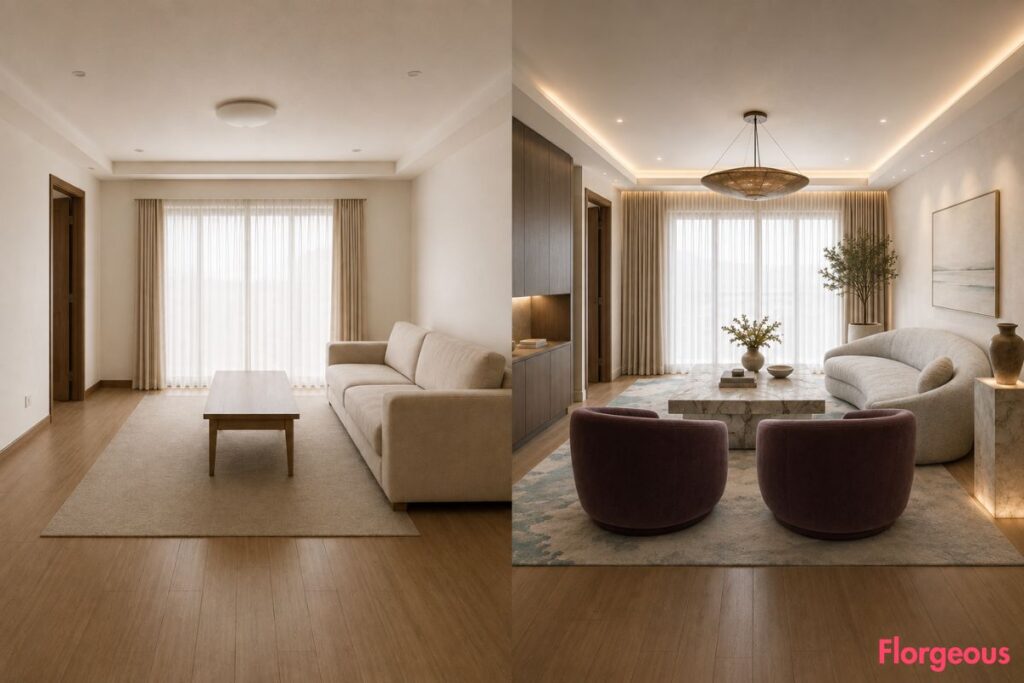
The original living room was clean, neutral, and completely forgettable. Warm off-white walls, a straight beige sofa, a bare rectangular coffee table, short curtains, and a basic ceiling light gave it function, but no real atmosphere.
For every makeover, we kept the architecture, doorway, windows, flooring, ceiling height, camera angle, proportions, and circulation exactly the same. Only the finishes, furniture, lighting, textiles, storage, and focal point changed.
These Coastal Modern Living Room ideas prove that coastal style can be warm, dark, sculptural, vintage, compact, sustainable, and luxurious. None of the rooms relies on anchors, shells, obvious stripes, rope accessories, or generic beach signs.
1. Turn the Plain Room Into a White Oak and Linen Retreat
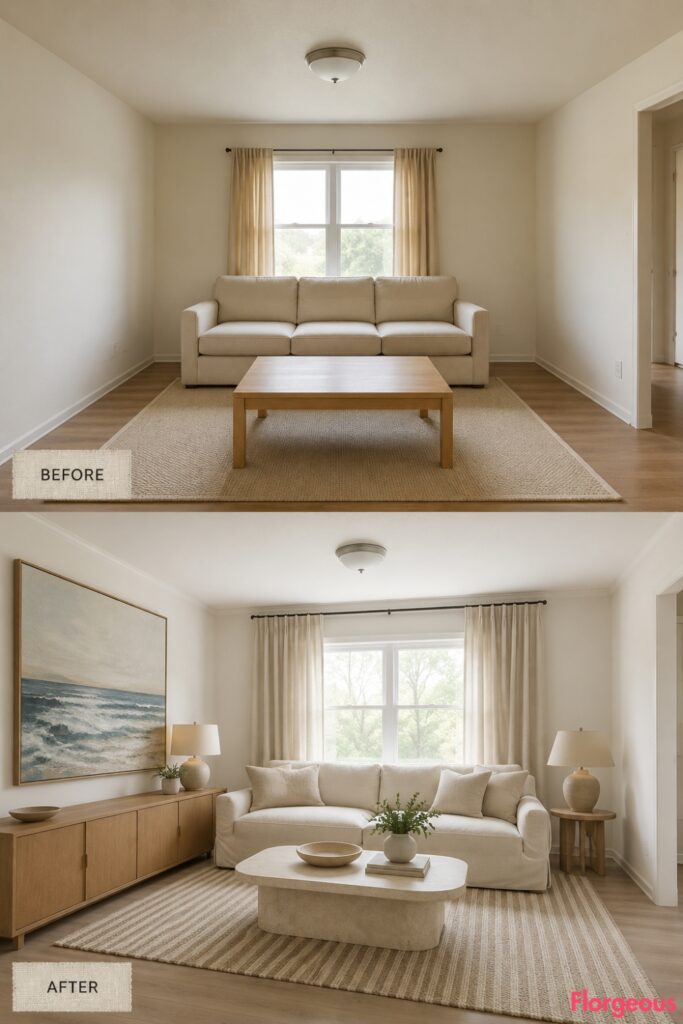
This timeless direction uses texture rather than strong color.
Before: Warm off-white walls, a straight beige sofa, bare rectangular table, neutral rug, short curtains, basic ceiling light, empty walls, and soft daylight.
After: Soft white walls brighten an oatmeal linen sofa. A long white-oak cabinet provides concealed storage, while a rounded limestone table and finely striped wool rug soften the straight room. Full-height flax curtains frame the window, and one oversized abstract seascape creates the focal point.
Designer Tip: Match the curtains closely to the walls to make the room feel taller and calmer.
2. Create a Sun-Washed California Coastal Lounge
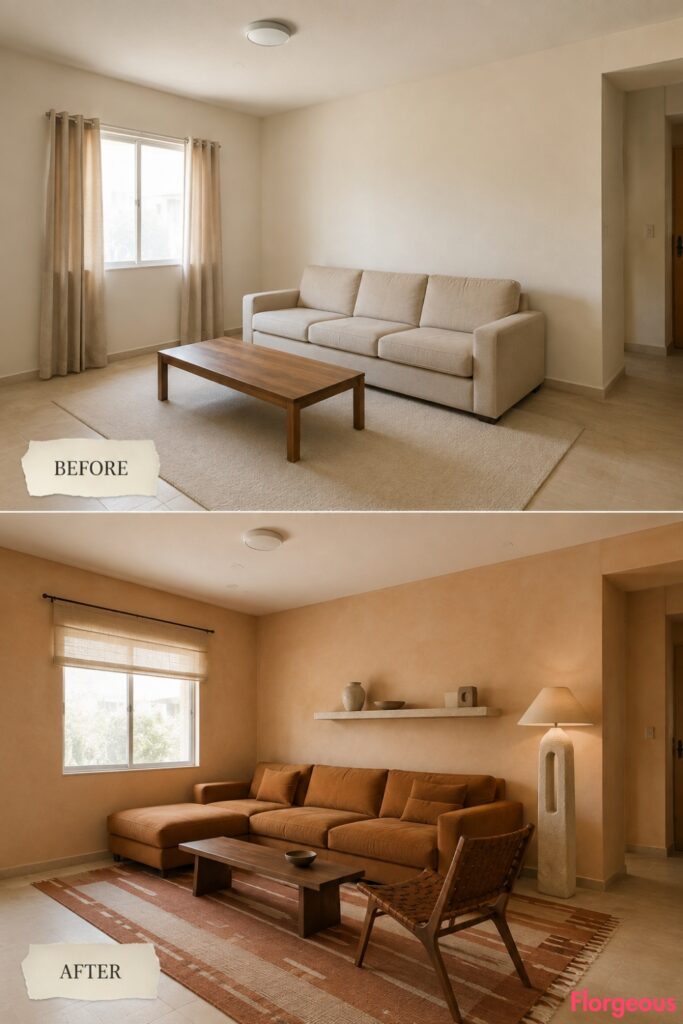
This makeover replaces cool seaside colors with sun-baked earth tones.
Before: The same neutral room feels flat because the sofa, walls, and rug sit within one narrow beige range.
After: Pale apricot mineral paint warms the room. A caramel sectional is paired with a woven leather chair and slim walnut bench. A rust-and-cream checkerboard flatweave adds pattern, while a long floating shelf displays three sculptural ceramic pieces. A plaster floor lamp provides a soft evening glow.
Why it works: Clay, caramel, walnut, and cream suggest a dry coastal landscape rather than a conventional blue-and-white beach house.
3. Build a Mist-Blue Conversation Room With Bleached Ash
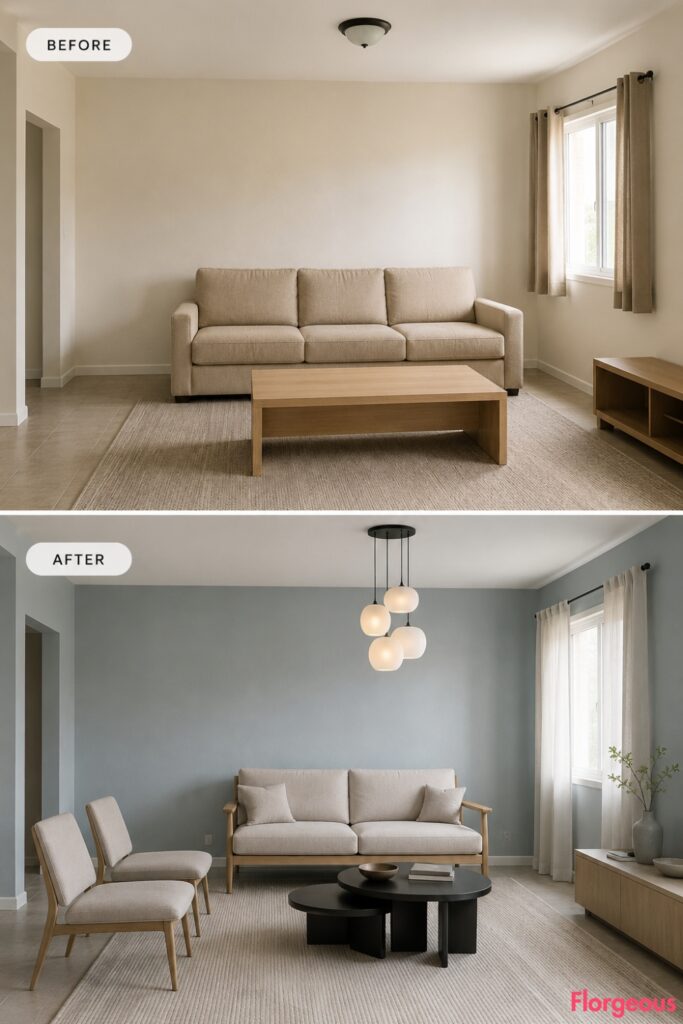
This version uses restrained blue and a lighter furniture arrangement.
Before: The original sofa and rigid table create a predictable layout with no clear conversation zone.
After: Mist-blue walls surround a compact flax loveseat with a bleached-ash frame. Two slim armless chairs face it across black lacquer nesting tables. A pale woven rug keeps the floor visually open, and translucent ceiling-height curtains diffuse the daylight. A cluster of opal-glass pendants becomes the main decorative feature.
Color Story: Choose gray-based blue rather than bright navy to keep the room quiet and contemporary.
4. Shape an Organic Sandstone and Bouclé Interior
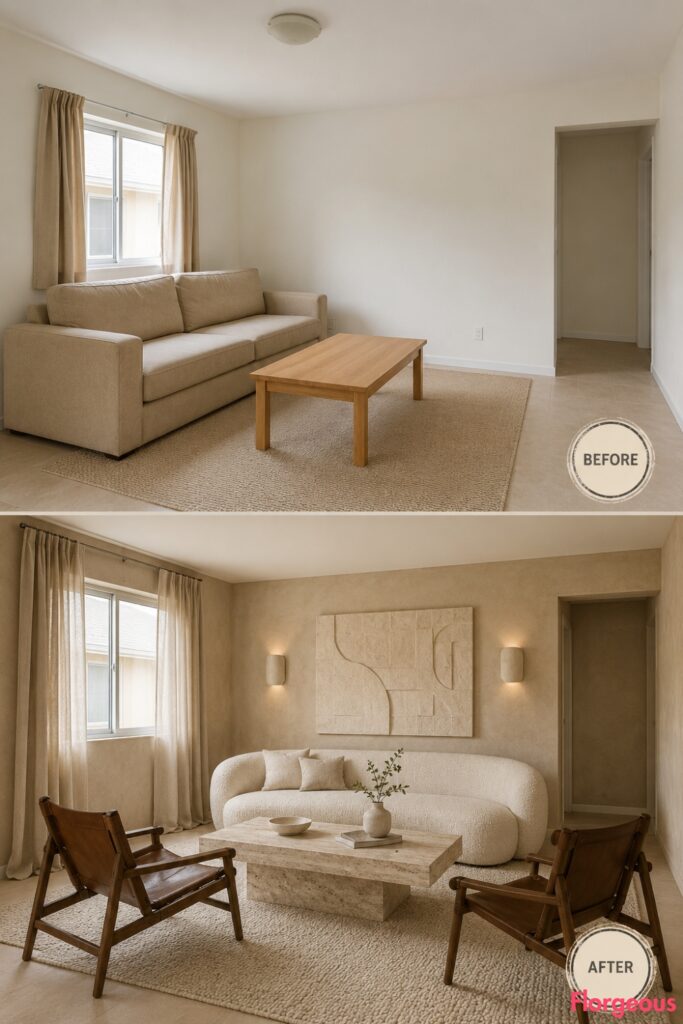
This concept is inspired by pale cliffs, smooth pebbles, and weathered stone.
Before: The straight sofa and rectangular table make the base room feel rigid.
After: Sandstone limewash adds soft movement to the walls. A curved ivory bouclé sofa faces two exposed-timber sling chairs placed side by side. A monolithic travertine table sits on a thick tonal wool rug. Handmade ceramic sconces and a shallow sculpted plaster relief complete the composition.
Every major form is rounded or irregular, separating this room from the straighter layouts elsewhere in the article.
5. Give the Room a Mediterranean Plaster Salon
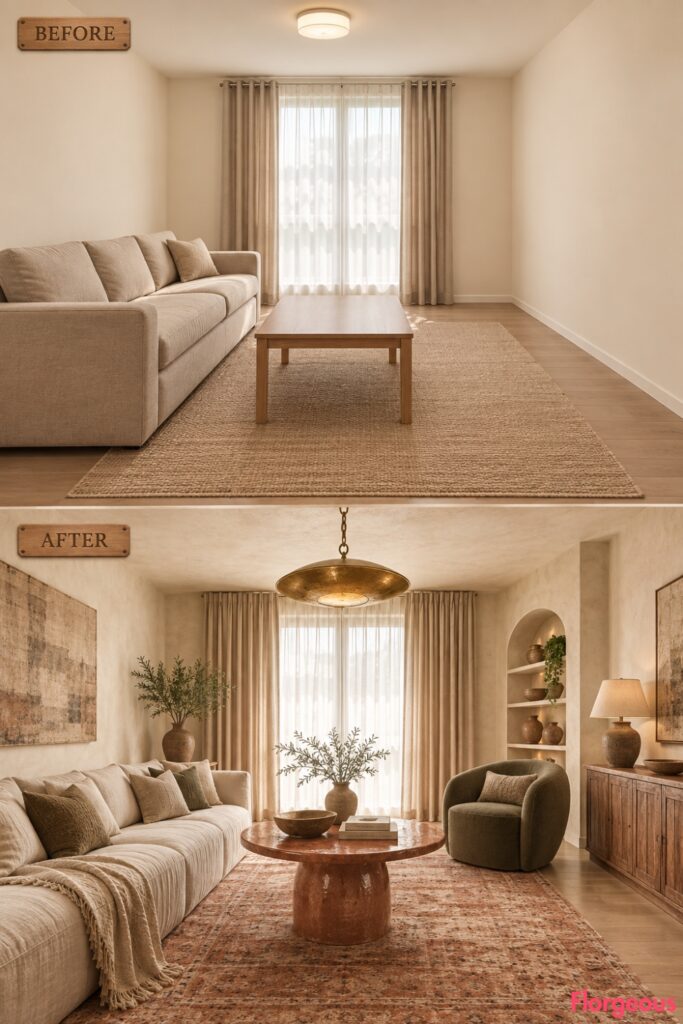
Mediterranean coastal design adds architectural character without changing the room itself.
Before: Blank walls and a single overhead fixture leave the space feeling unfinished.
After: Chalky cream plaster wraps the walls. A wall-length linen settee creates a built-in effect, accompanied by one olive barrel chair. A glazed terracotta pedestal table introduces color and shine, while a faded clay rug and aged timber cabinet add warmth. An arched freestanding display niche holds one oversized ceramic amphora.
Budget Version: Use matte mineral paint and a tall arched bookcase painted to match the wall.
6. Combine Sea-Salt Color With Coastal Japandi Restraint
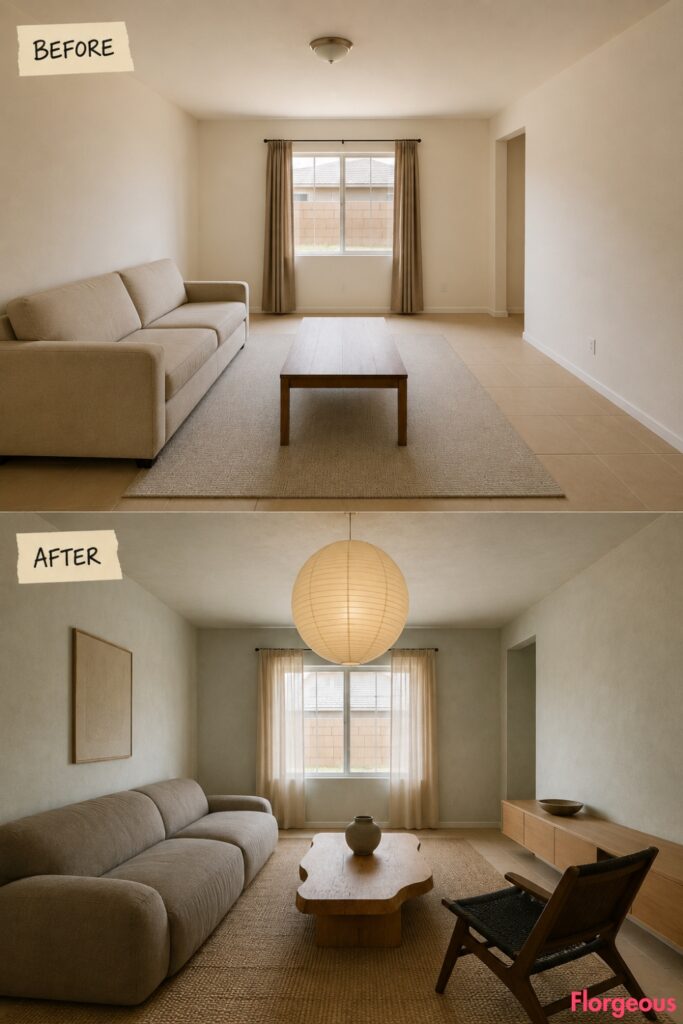
This room uses fewer pieces, stronger proportions, and deliberate negative space.
Before: The starting room is sparse, but it does not feel curated.
After: Sea-salt mineral walls surround a low mushroom linen sofa. One blackened-timber chair provides contrast, while a live-edge elm table introduces an organic shape. A rush-style mat replaces the conventional rug. Narrow oak storage and an oversized rice-paper pendant keep the room functional but visually quiet.
One handmade ceramic vessel is the only accessory.
Common Mistake: Do not fill every blank wall. Empty space is essential to this design direction.
7. Make the Room Graphic With Black, Cream, and Terrazzo
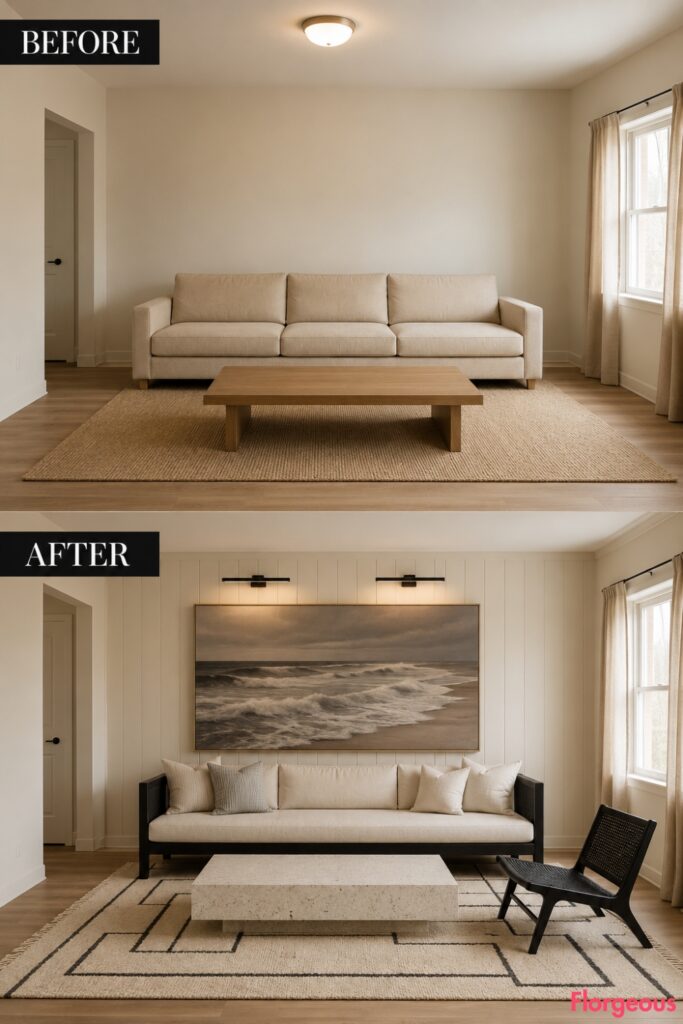
This is the sharpest and most editorial concept in the collection.
Before: Beige furniture blends into the walls, leaving no clear visual framework.
After: Vertical cream paneling forms a precise backdrop for a black timber-framed sofa with natural linen cushions. One woven black lounge chair sits at an angle beside a pale terrazzo slab table. A bold cream-and-charcoal rug creates graphic movement. Matte black picture lights illuminate an oversized abstract artwork inspired by tidal lines.
The high contrast makes the room feel coastal through rhythm and texture, not color clichés.
8. Create a Moody Storm-Blue Coastal Hideaway
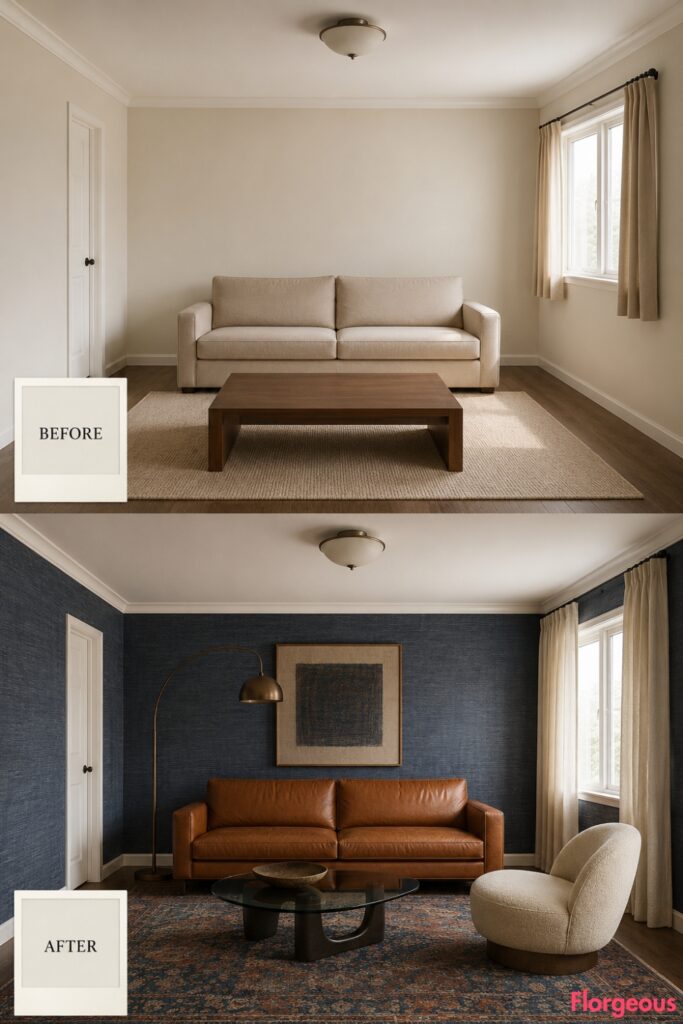
Dark walls make this room feel intimate and atmospheric.
Before: The base room has no strong contrast and remains visually flat from floor to ceiling.
After: Storm-blue textured wallpaper surrounds a tobacco leather sofa. A sculptural cream chair creates a bright counterpoint, while a smoked-glass coffee table keeps the center visually light. A faded indigo-and-rust rug adds depth. Pale linen curtains preserve brightness, and a tall bronze arc lamp replaces the central ceiling fixture as the evening focal point.
Why it works: Warm leather and rust balance the cool blue backdrop.
9. Introduce Tropical Modern Teak and Olive
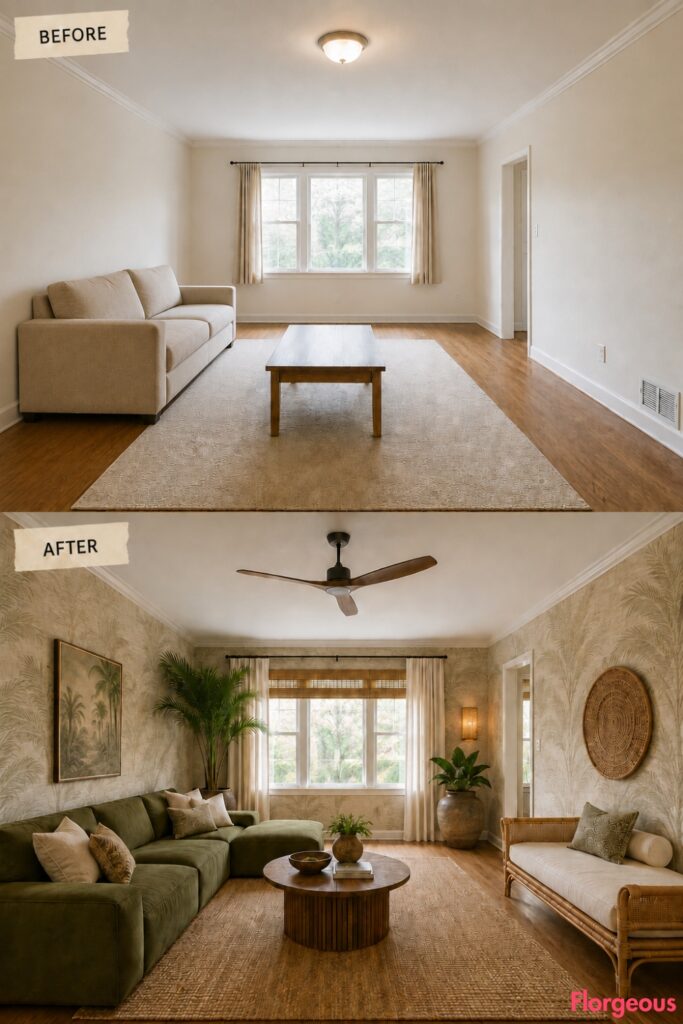
This concept connects coastal living with greenery and warm tropical materials.
Before: The generic room feels disconnected from the natural light and outdoor landscape.
After: Pale palm-leaf grasscloth covers the main wall. A deep olive modular sofa is paired with a woven rattan daybed rather than conventional armchairs. A dark teak drum table sits on a jute-and-wool rug. One tall indoor palm and two large sculptural planters create a living focal point. A timber-blade ceiling fan provides practical movement overhead.
10. Turn the Room Into a Compact Work-and-Lounge Space
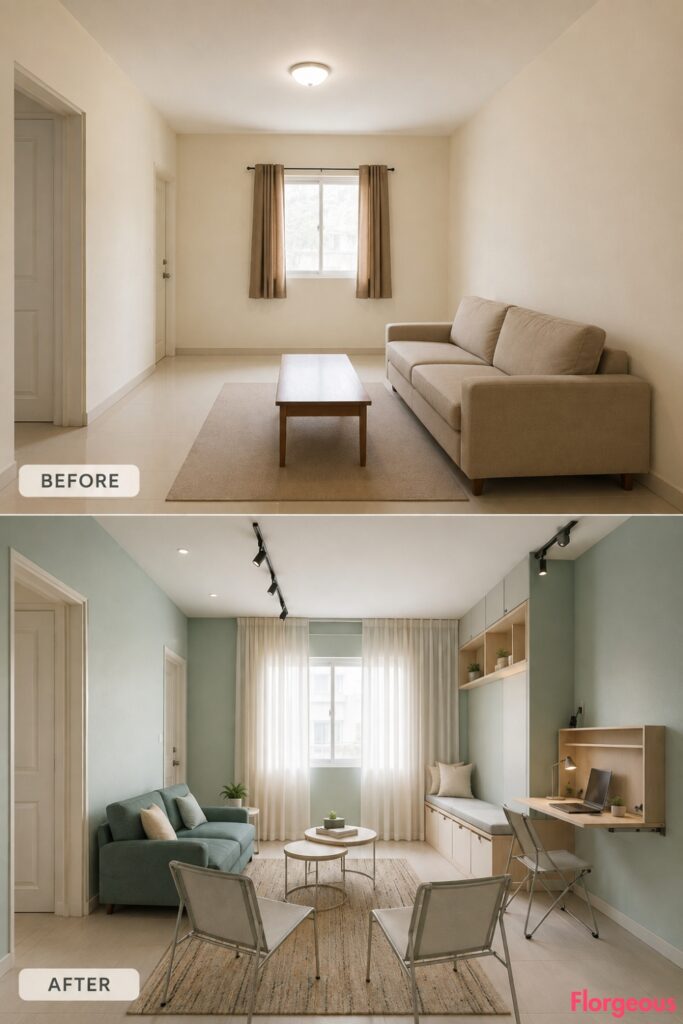
This transformation is driven by function rather than a decorative theme.
Before: The full-size sofa and fixed table use considerable floor area without offering flexibility or storage.
After: Pale seafoam walls frame a compact teal loveseat and two lightweight aluminum-framed chairs. Movable nesting tables replace the large coffee table. A narrow directional runner emphasizes the room’s length, while a window storage bench and folding wall desk provide two additional functions. Adjustable track lights illuminate the seating, desk, and artwork independently.
Small Space Tip: Furniture with visible legs exposes more flooring and makes a compact room appear larger.
11. Make the Coastal Makeover Completely Renter-Friendly
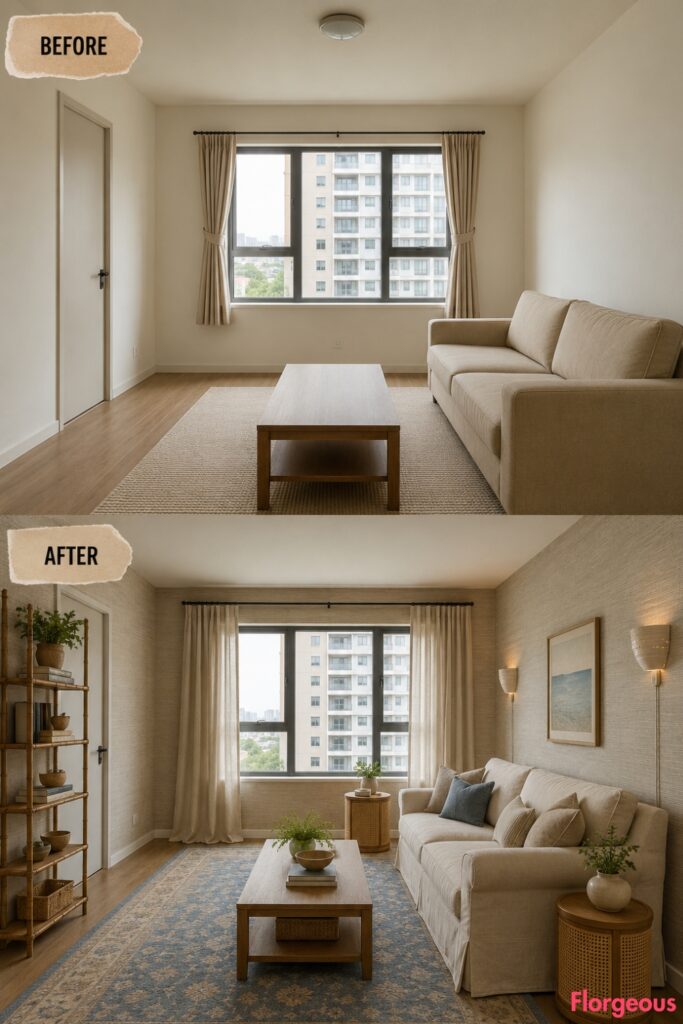
Every major change in this room can be removed or taken to a future home.
Before: Builder-grade finishes and short curtains make the original room feel temporary.
After: Removable oyster grasscloth wallpaper creates a textured feature wall. A flax slipcover refreshes the existing sofa, while freestanding bamboo shelving adds storage without construction. Cane-wrapped side tables are light enough to move easily. A washable blue-and-sand rug, removable curtain rods, and plug-in ceramic sconces complete the makeover.
Nothing is permanently attached beyond standard removable hardware.
12. Design a Family-Friendly Aqua and Cork Living Room
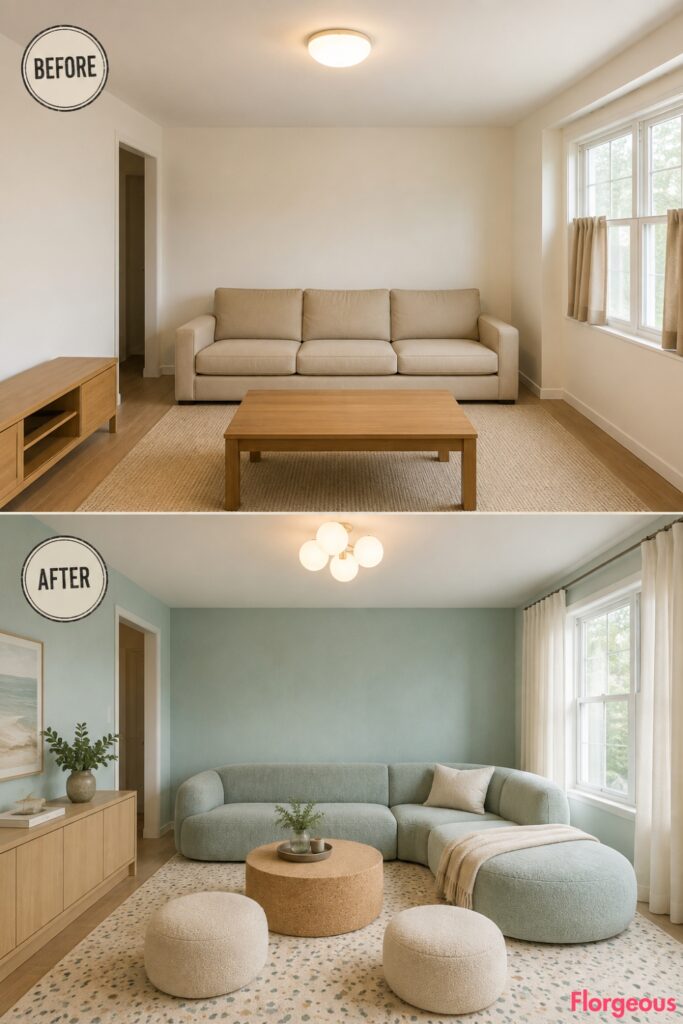
Durability, rounded forms, and concealed storage define this practical makeover.
Before: The simple room has no adaptable seating, soft-edged furniture, or hidden storage.
After: Washed-aqua paint surrounds a rounded performance-fabric sectional. A sealed cork table eliminates sharp corners, while a speckled washable rug disguises everyday marks. Closed white-oak cabinets hide toys, devices, and games. Two soft poufs act as seats, footrests, or play surfaces. Dimmable frosted globe lighting provides even illumination.
This room is visually different from the compact layout because it favors generous, grounded furniture rather than lightweight pieces.
13. Collect a Vintage New England Coastal Room
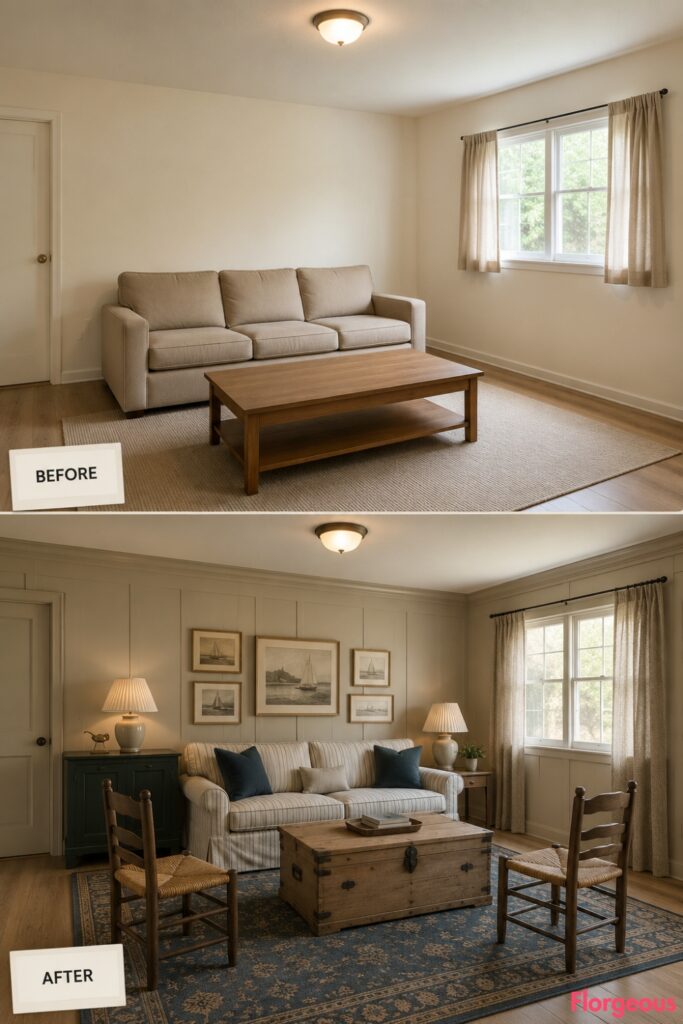
This makeover introduces history, patina, and traditional craft.
Before: The base room contains generic furniture with no sense of age or personal history.
After: Putty-painted paneling provides a quiet background for a ticking-stripe sofa. Two vintage rush chairs face it across a weathered pine trunk. A faded indigo hooked rug adds softness, while a bottle-green cabinet becomes the strongest color feature. Pleated ceramic lamps and a restrained group of antique coastal sketches complete the room.
There are no shells, signs, anchors, or decorative fishing objects.
14. Build a Sustainable Handcrafted Coastal Interior
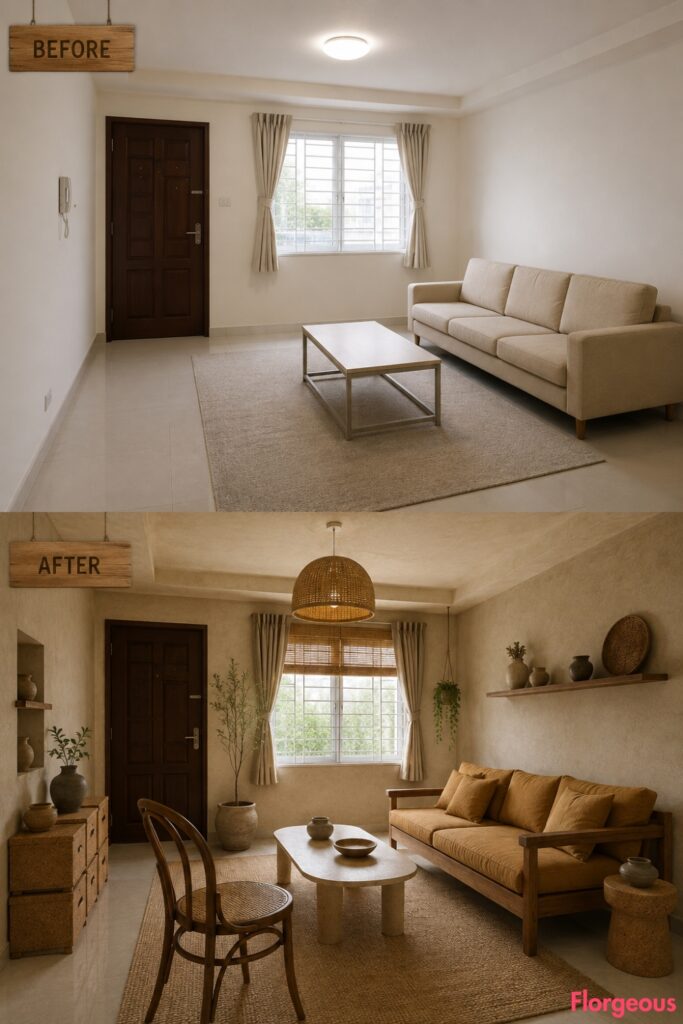
This concept celebrates reclaimed materials, local craft, and visible construction.
Before: The builder-grade room is functional, but every piece appears anonymous and mass-produced.
After: Natural hemp plaster gives the walls a warm, irregular finish. A reclaimed timber sofa frame with muted ochre linen cushions becomes the focal point through its visible joinery. A repaired bentwood chair, paper-composite coffee table, undyed handwoven rug, and stackable cork storage introduce distinct sustainable materials. A woven reed pendant and locally made ceramics complete the room.
Each object has a practical role, so very little extra decor is required.
15. Finish With a Contemporary Luxury Coastal Modern Living Room
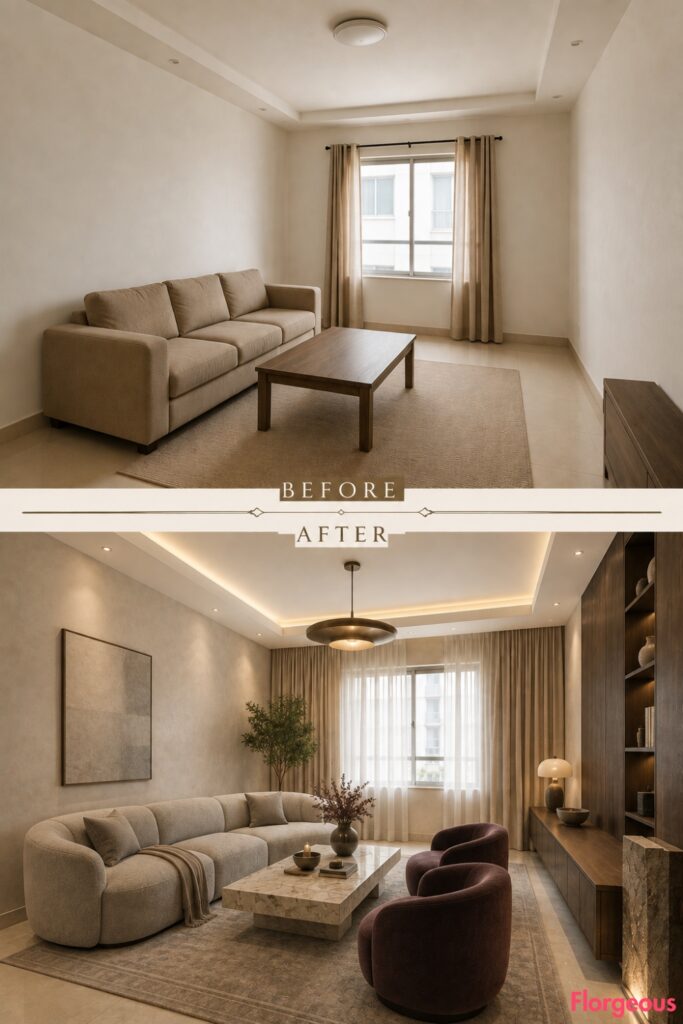
The final room uses polished materials, custom storage, and carefully controlled color.
Before: The unchanged space feels unfinished because the furniture is generic, lightly scaled, and visually disconnected.
After: Luminous shell-toned plaster wraps the walls. A curved pearl-gray mohair sofa faces two muted plum lounge chairs positioned side by side. A honed quartzite table anchors the center over a large silk-wool rug with subtle sea-glass detailing. Smoked-eucalyptus cabinetry conceals technology, while layered hotel sheers, integrated cove lighting, and a sculptural bronze pendant create a refined evening atmosphere.
An illuminated stone plinth holding one artisan ceramic object is the exclusive focal point.
How to Choose the Right Coastal Direction
A successful coastal room does not need literal beach decor. It needs a controlled palette, natural materials, clear circulation, and one strong visual idea.
Start by identifying the feature that matters most in your home. A dark room may benefit from white walls and flax curtains. A bright room could support storm-blue wallpaper, olive upholstery, or warm apricot mineral paint. A busy family may need performance fabric and closed storage, while a renter can rely on removable finishes and portable lighting.
Choose one dominant material story before shopping. White oak and limestone create a different mood from reclaimed timber and cork, just as polished plaster and quartzite feel entirely different from ticking stripe and weathered pine.
The best Coastal Modern Living Room will be the one that fits your daylight, architecture, household, and budget. Recreate the logic of your favorite idea rather than copying every individual object.