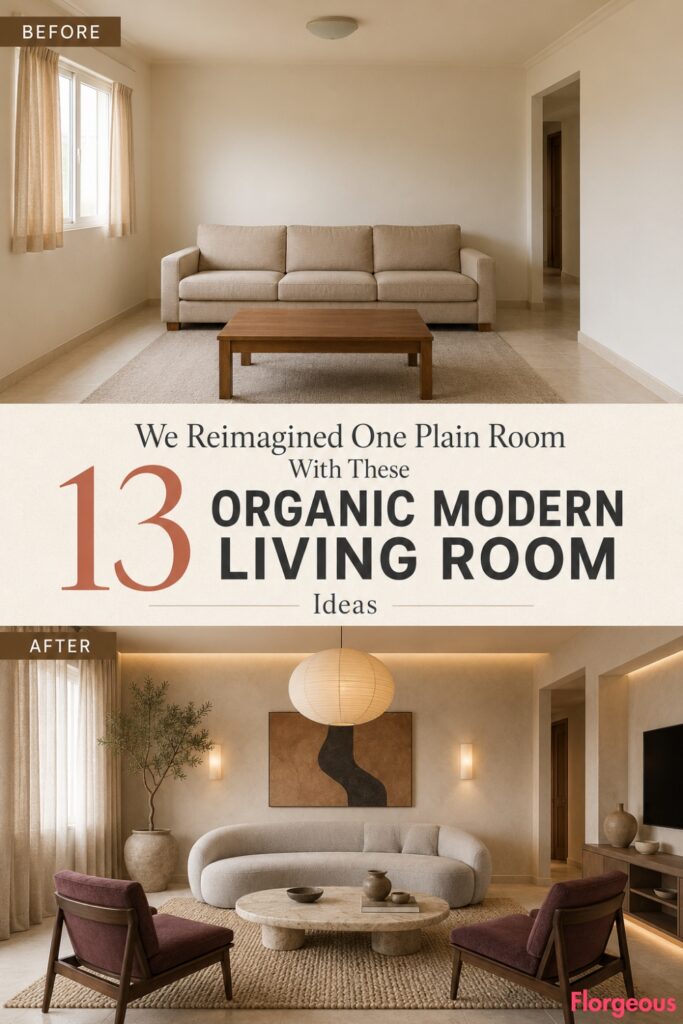
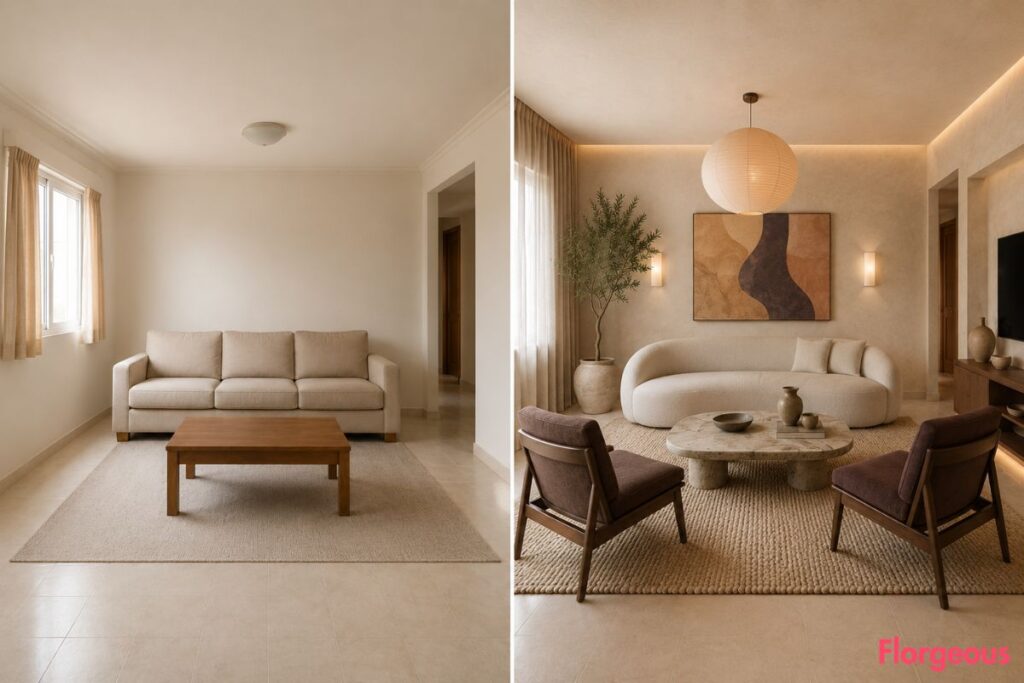
The original room is comfortable enough, but nothing in it feels intentional. Warm off-white walls, a straight beige sofa, a bare rectangular table, short curtains, and one basic ceiling light create a space that looks clean yet unfinished.
We kept the doorway, window, flooring, ceiling height, room proportions, camera angle, and circulation exactly the same. Then we redesigned the room 13 different ways using color, texture, furniture scale, natural materials, storage, and lighting.
These Organic Modern Living Room ideas prove that the style can be pale or moody, sculptural or practical, coastal or desert-inspired. Each transformation begins with the same builder-grade room, but no two finished spaces share the same complete palette, furniture package, focal point, or purpose.
1. Replace Builder-Grade Beige With White Oak and Oatmeal Linen
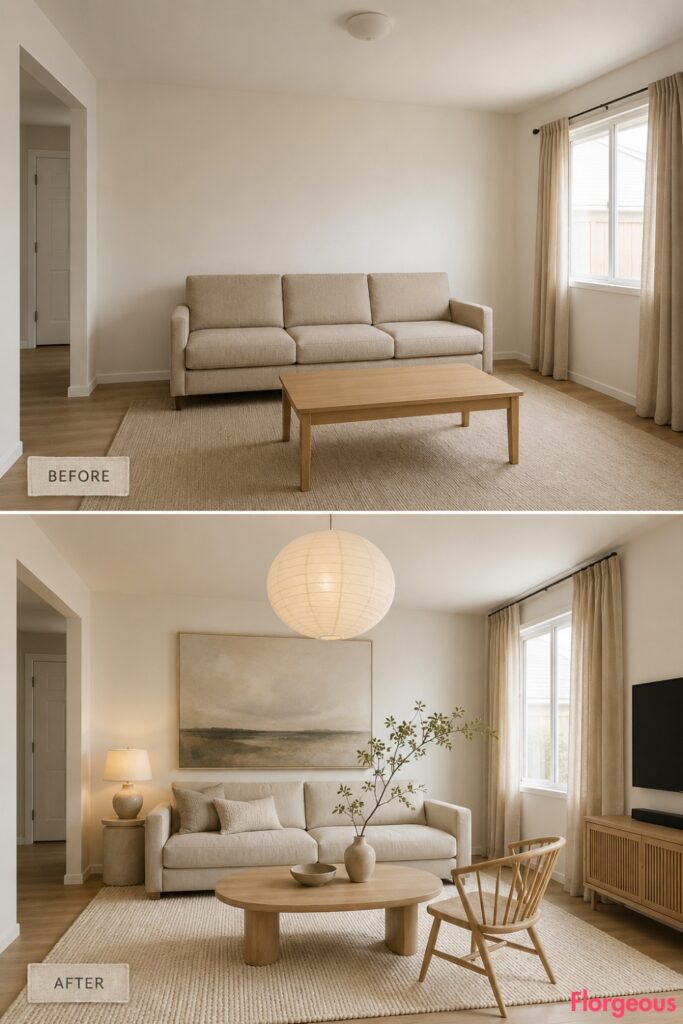
The first makeover is the most approachable. Warm white walls, tailored linen, and visible white-oak grain create a calm foundation that still feels finished and welcoming.
Before: The straight beige sofa, bare table, undersized curtains, and empty wall give the room no clear identity.
After: An oatmeal linen sofa sits against the main wall, accompanied by a white-oak spindle chair and a softly rounded rectangular oak coffee table. A cream bouclé-free wool rug adds texture beneath the seating. Full-height flax curtains make the window feel larger, while a rice-paper lantern and ceramic table lamp create two gentle layers of light.
A long slatted white-oak console hides the television, cables, and everyday clutter. One oversized abstract landscape and a single leafy branch provide enough visual interest without filling every surface.
Why it works: Linen, wool, paper, ceramic, and timber create variation even though the palette remains light.
Designer Tip: Repeat the same wood tone in the chair, table, and storage. Too many similar pale woods can make a neutral room look accidental.
2. Turn the Same Room Into a Sculptural Mushroom and Travertine Retreat
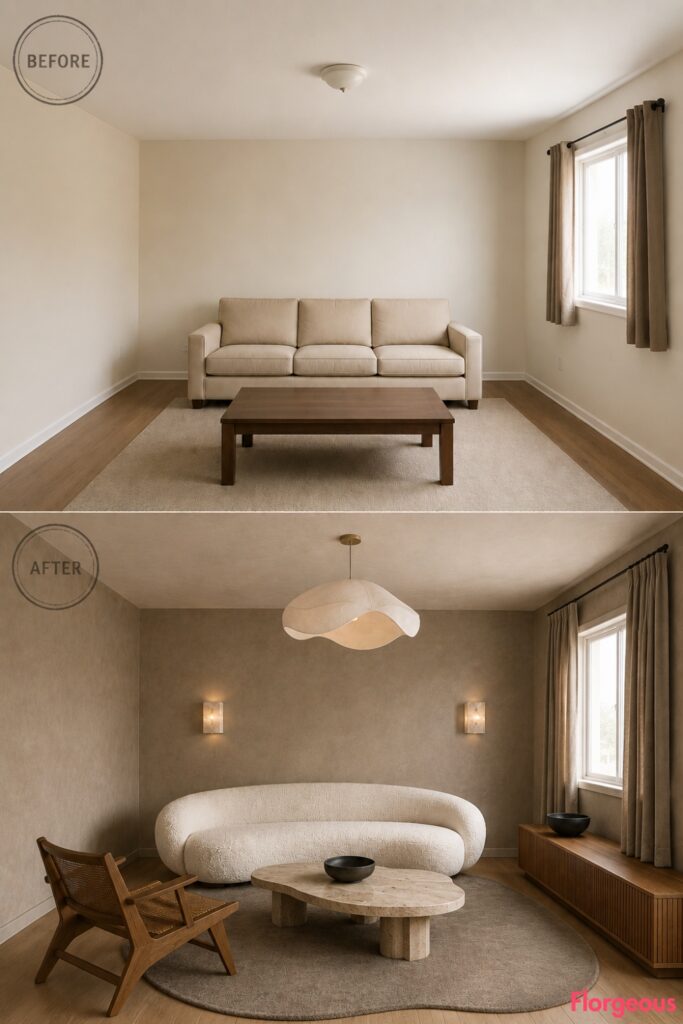
This interpretation uses volume and silhouette rather than pattern. Mushroom walls provide depth, while curved upholstery and an irregular stone table make the room feel softly architectural.
After: A low crescent-shaped ivory boucle sofa becomes the main gesture. Instead of matching armchairs, one carved medium-oak lounge chair introduces a sharper handcrafted form.
An asymmetrical honed travertine table rests on a pebble-shaped taupe rug. Mushroom silk-linen curtains soften the window, and a sculptural plaster pendant echoes the table’s pale mineral surface. Ribbed oak storage keeps the television and technology contained.
The focal point is the coffee table itself, styled only with one low black ceramic bowl.
Try this: Use a limestone-look or travertine-look composite table if genuine stone is too heavy or expensive.
3. Give Organic Modern Style a Moody Walnut and Charcoal Identity
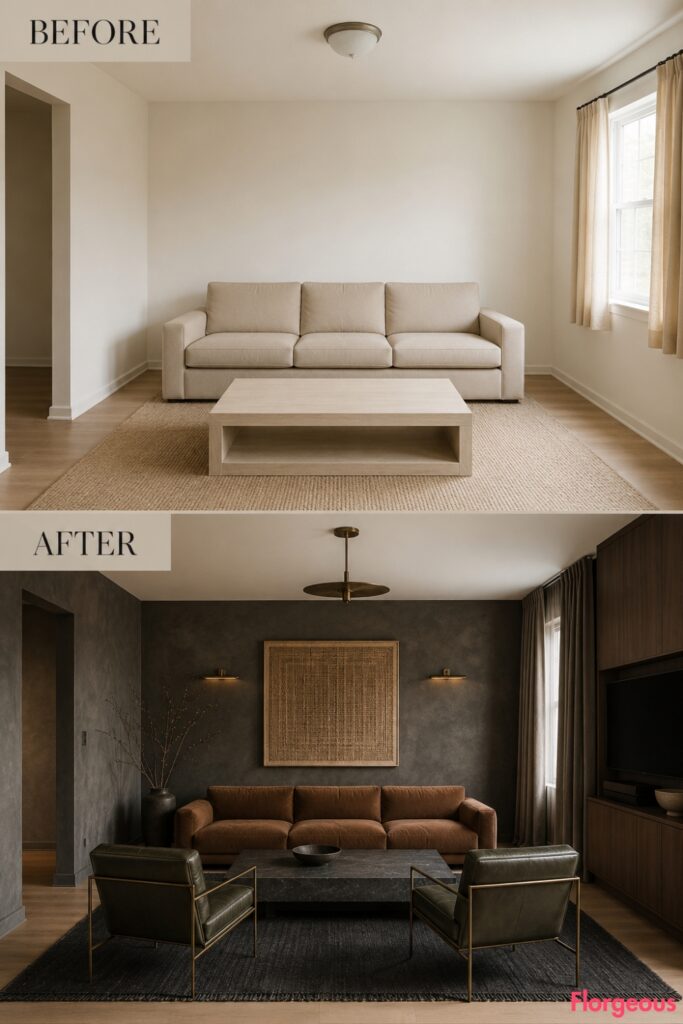
Organic modern design does not need to rely on pale neutrals. Charcoal plaster, tobacco upholstery, walnut, bronze, and dark moss create a cocooning room that still feels rooted in nature.
After: A low tobacco-colored wool sofa sits beside two narrow bronze-framed chairs upholstered in dark moss leather. A rectangular soapstone coffee table anchors an ink-toned flatweave rug.
Deep taupe curtains frame the window without disappearing into the wall color. Built-in walnut cabinetry conceals the television and cables, while bronze picture lights illuminate one large woven fiber artwork.
The surfaces remain edited. A sculptural branch in an earthenware vessel is the only tabletop decoration.
Color Story: Choose a charcoal with brown undertones. Blue-black walls can feel cold beside walnut and leather.
4. Warm the Living Room With Desert Clay and Sculptural Ceramics
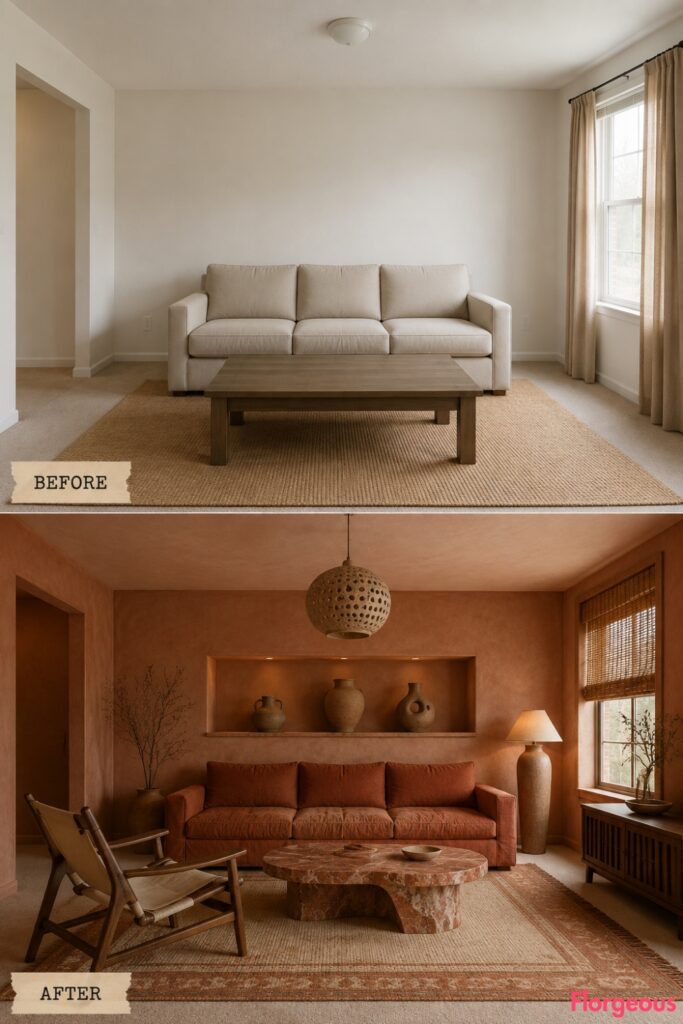
Clay, rust, sand, and red stone turn the plain room into a sun-baked retreat without filling it with bohemian accessories.
After: Dusty terracotta clay wash covers the walls, creating natural variation. A rust-colored linen sofa is balanced by one sand canvas sling chair with a dark acacia frame.
An irregular red travertine table provides a substantial center, while a handwoven rug introduces broad clay and cream stripes. Woven reed shades filter the window light. A perforated ceramic pendant casts a subtle pattern after dark.
A low acacia console provides closed storage, while a recessed display ledge holds three large handmade vessels instead of many small objects.
5. Create a Sage and Moss Indoor Garden Without Visual Clutter
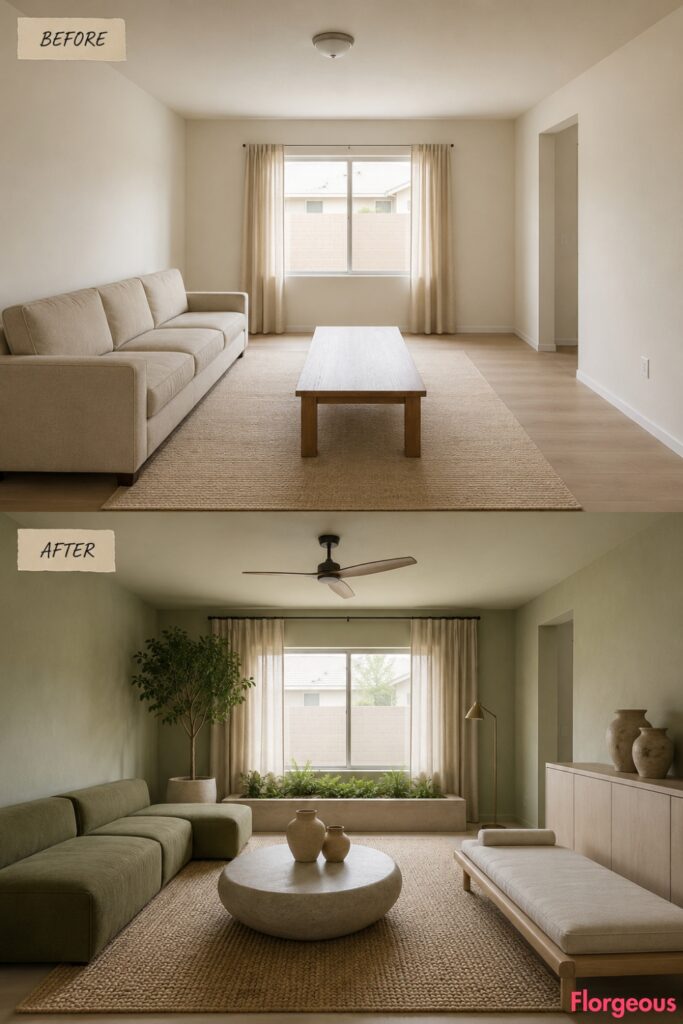
This biophilic room treats greenery as part of the architecture. Instead of covering shelves with small pots, it uses one significant indoor tree and a long integrated planter.
After: Muted sage casein paint wraps the room. A moss-green modular sofa sits beside a pale ash daybed, creating two flexible seating zones without closing the central path.
A smooth river-stone table rests on a braided jute-and-wool rug. Natural linen curtains soften the window, while a timber-blade ceiling fan and slim bronze floor lamp add movement and warm light.
Closed pale-ash cabinets hide technology and storage. One tall ficus in a limestone planter becomes the focal point, supported by a low planter bench with restrained groundcover.
Common Mistake: Several small plants can make a calm room feel scattered. Choose one tree that is large enough for the ceiling height.
6. Use Blackened Oak and Cream for Graphic Natural Contrast
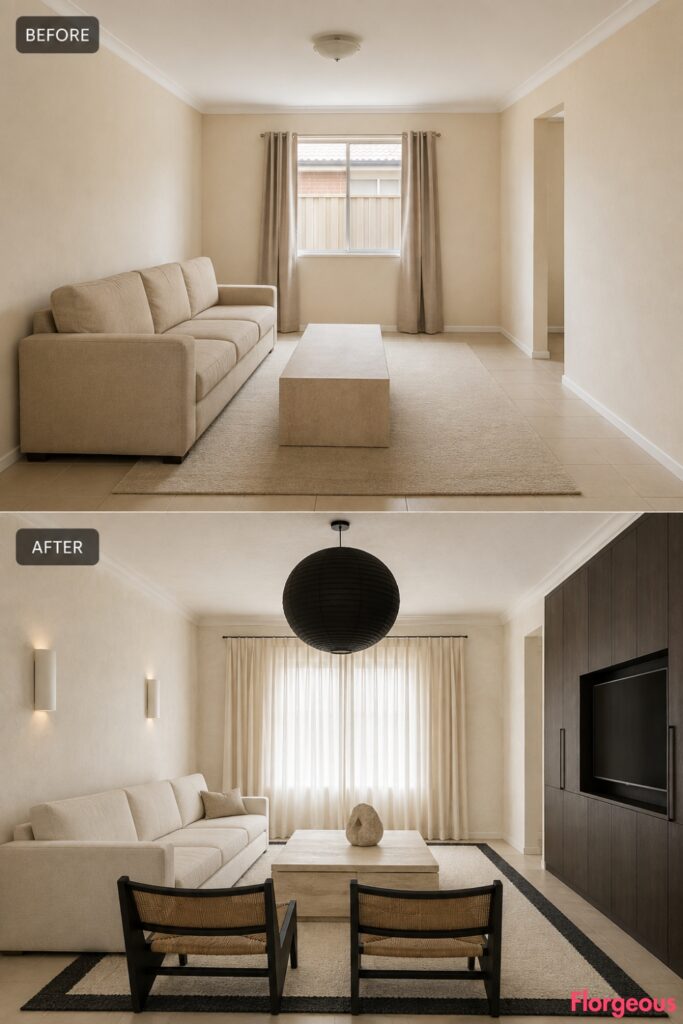
This room proves that organic materials can create a graphic interior. Cream hemp, blackened oak, pale limestone, and a restrained charcoal outline produce contrast without relying on bright color.
After: Chalky ivory microcement creates a smooth envelope around a straight cream hemp sofa. Two angular blackened-oak chairs with woven seats face the sofa in an orderly arrangement.
A square limestone slab table sits on a cream rug finished with a broad charcoal border. A black paper lantern and narrow off-white ceramic sconces repeat the dark and light contrast.
The main wall becomes a floor-to-ceiling blackened-oak storage grid. Closed doors hide electronics, while two open niches display a stone sculpture and one ceramic vessel.
7. Build a Breezy Coastal Organic Room Without Beach Themes
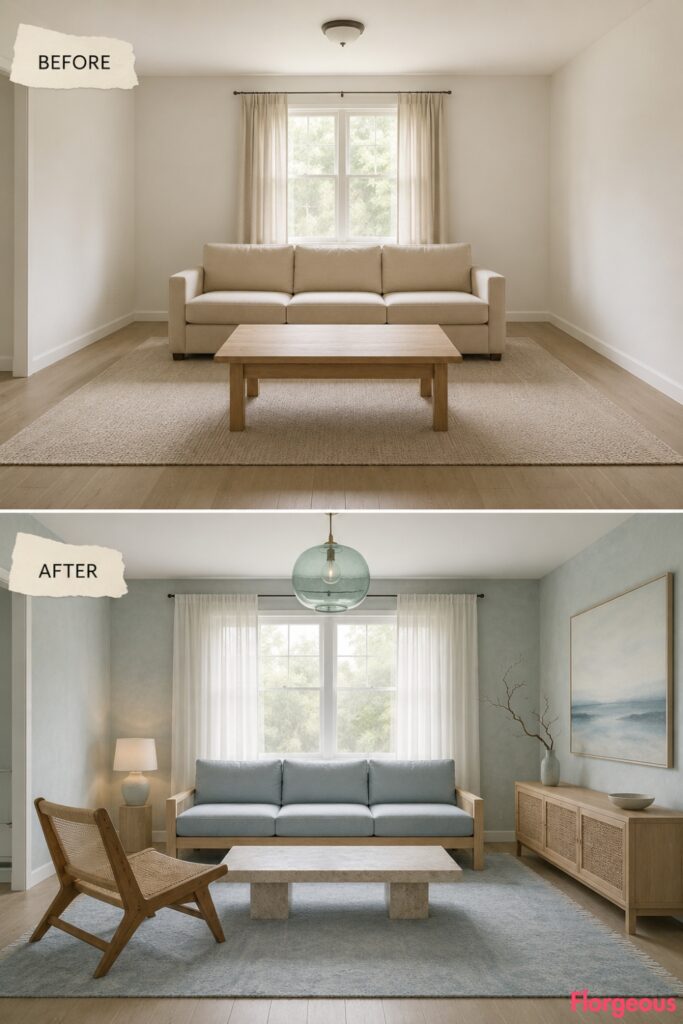
Sea-glass tones, bleached timber, limestone, and linen suggest the coast through light and material rather than shells, anchors, ropes, or navy stripes.
After: Sea-salt limewash brightens the walls with a cloudy finish. A bleached-timber sofa with mist-blue linen cushions becomes the main seat, joined by a sculptural cane lounge chair.
A long limestone table keeps the center visually low. A pale blue-gray wool rug and full-height white linen sheers maintain the airy palette.
Seagrass-front cabinetry hides media equipment. A handblown glass pendant and one oversized horizon-inspired artwork provide the only coastal references.
Style Note: Keep the palette mineral and misty. Strong nautical blue can pull the room away from organic modern design.
8. Lower the Furniture for a Quiet Japandi Organic Retreat
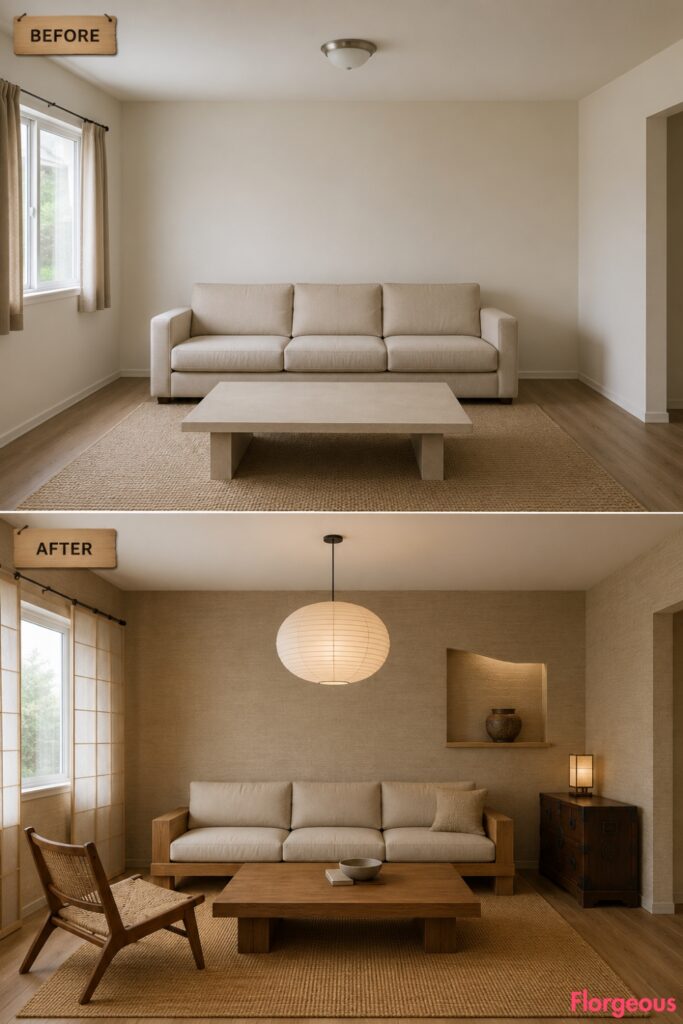
Low profiles and visible craftsmanship give the room stillness without making it feel empty or severe.
After: Warm stone-colored paper-texture wallcovering replaces the flat paint. A low solid-elm sofa with flax cushions sits close to the wall, paired with a single rush-seat lounge chair.
A broad tea-table-inspired oak piece occupies the center of a tightly woven natural rush rug. Translucent paper-panel curtains diffuse daylight. An oversized washi pendant and a compact timber lamp create soft pools of illumination.
A dark tansu-inspired chest stores media equipment, while a shallow asymmetrical alcove displays one hand-thrown vessel.
Try this: Leave at least one wall area completely unfilled. Negative space is part of the composition.
9. Give the Room a Sun-Washed Mediterranean Character
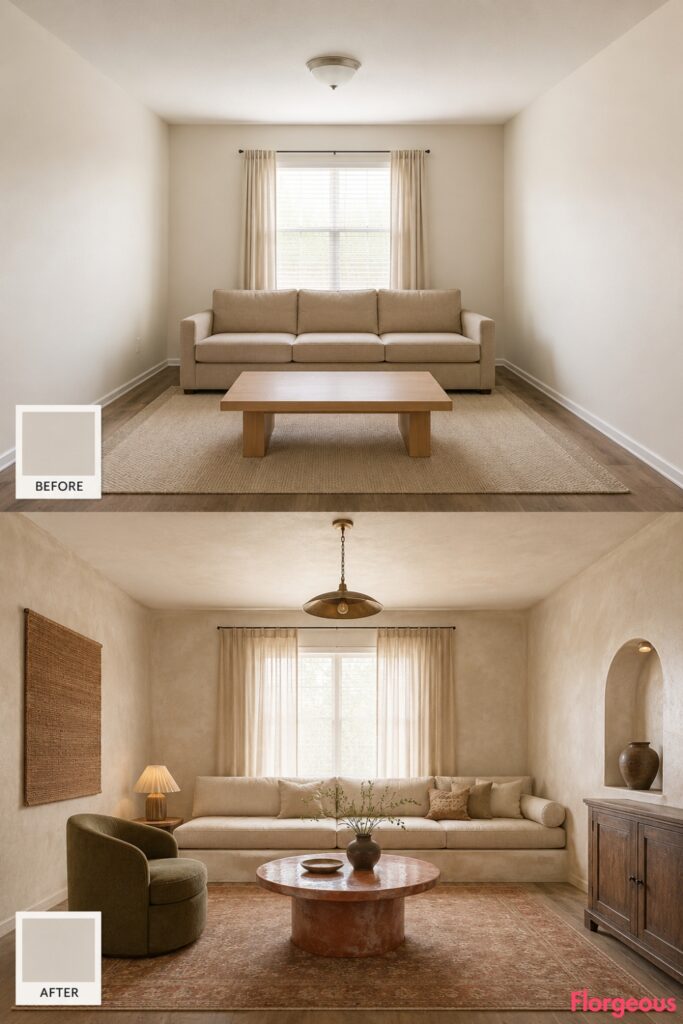
This interpretation feels aged by sunlight rather than deliberately rustic. Chalky plaster, faded clay, aged timber, olive upholstery, and forged brass create warmth with very little decoration.
After: Chalky cream tadelakt-style walls frame a wall-length pale-oat linen settee. One olive barrel chair creates a compact conversation area without crowding the doorway.
A glazed terracotta pedestal table sits on a faded clay wool rug. Gauzy flax curtains move softly at the window, while a forged brass pendant and pleated ceramic lamp provide warm light.
An aged timber cabinet handles storage. A shallow arched niche and one woven wall panel create two distinct focal moments without forming a busy gallery wall.
10. Make a Compact Living Room Flexible and Visually Open
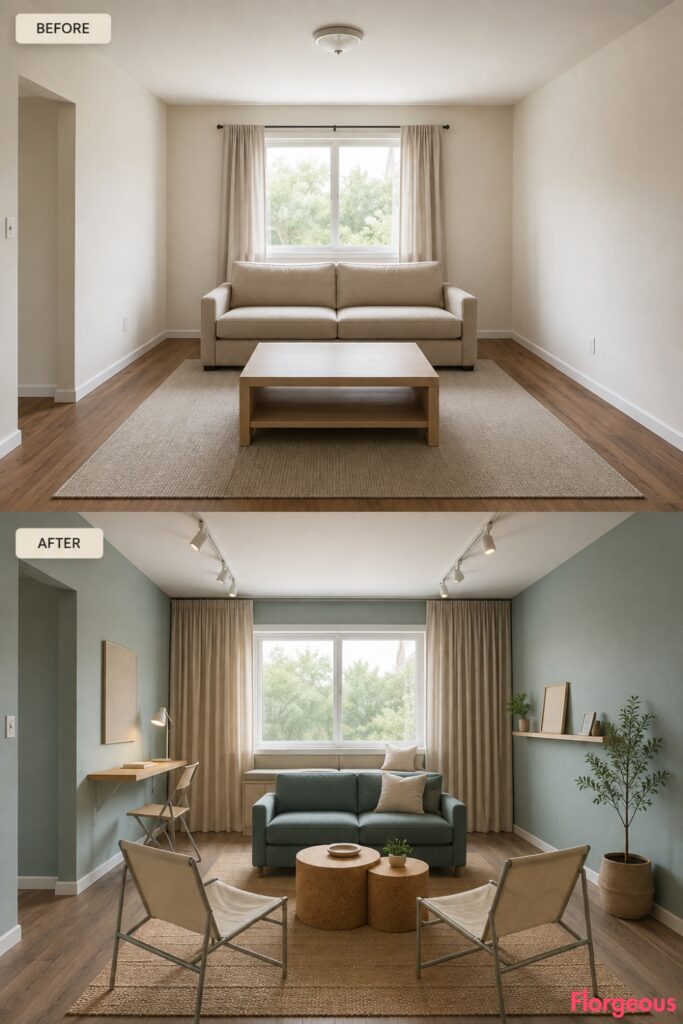
A smaller room benefits from furniture that moves, folds, nests, or stores more than one type of item.
After: Soft blue-green washable eggshell paint gives the walls a fresh but grounded color. A compact teal loveseat replaces the full-size sofa, while two lightweight aluminum-framed canvas chairs can be moved when needed.
Nesting cork tables replace the bulky rectangular coffee table. A narrow woven runner defines the seating zone but leaves more flooring visible.
A window bench provides concealed storage. A folding wall desk, adjustable track lighting, and full-height curtains help the room support relaxing, working, and hosting without blocking circulation.
Small Space Tip: Choose chairs with visible floor beneath them. The extra negative space makes the layout feel lighter.
11. Design a Family-Friendly Room Around Rounded, Washable Pieces
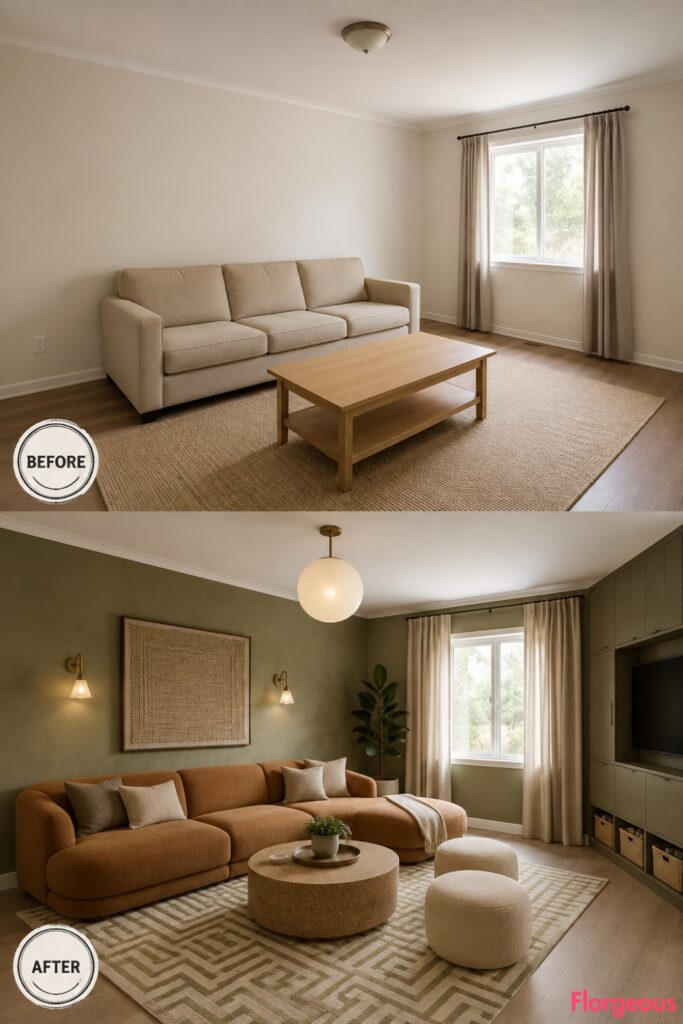
A family room can remain calm when durable materials are selected before decorative details.
After: Muted olive clay-based paint forms a forgiving background. A caramel performance-fabric sectional with rounded corners offers generous seating, while two soft wool poufs can serve as footrests, seats, or play surfaces.
A rounded cork drum replaces the hard-edged coffee table. A washable low-pile rug and machine-washable curtains make everyday maintenance easier.
Wall-mounted cabinets keep toys and media equipment off the floor. Pullout bins provide fast cleanup, while a large framed textile gives the room a soft, nonbreakable focal point.
Common Mistake: Avoid covering every durable surface with extra throws and cushions. Fewer washable pieces are easier to maintain.
12. Create a Renter-Friendly Room With Removable Architectural Texture
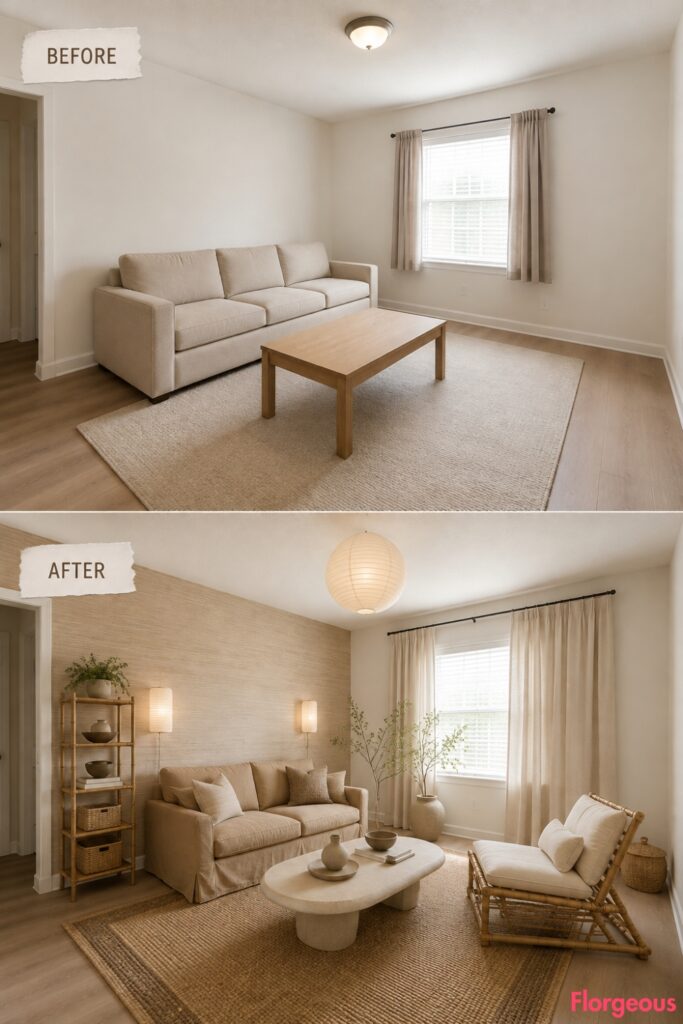
This makeover creates depth without permanent construction. Every major change can be removed, relocated, or reused in another home.
After: Peel-and-stick oyster grasscloth covers the wall behind a camel linen slipcovered loveseat. A modular bamboo lounge chair introduces an open, lightweight frame.
An oval plaster-look composite table rests on a woven floorcloth rather than an expensive rug. Ready-made oatmeal curtains are hung high and wide using minimal hardware.
Plug-in paper sconces eliminate rewiring. Freestanding bamboo shelves create vertical storage, while lidded baskets hide cables, controllers, and everyday clutter.
Budget Version: Cover one large removable panel with grasscloth wallpaper instead of treating the entire wall.
13. Finish With Quartzite, Mohair, Smoked Wood, and Architectural Light
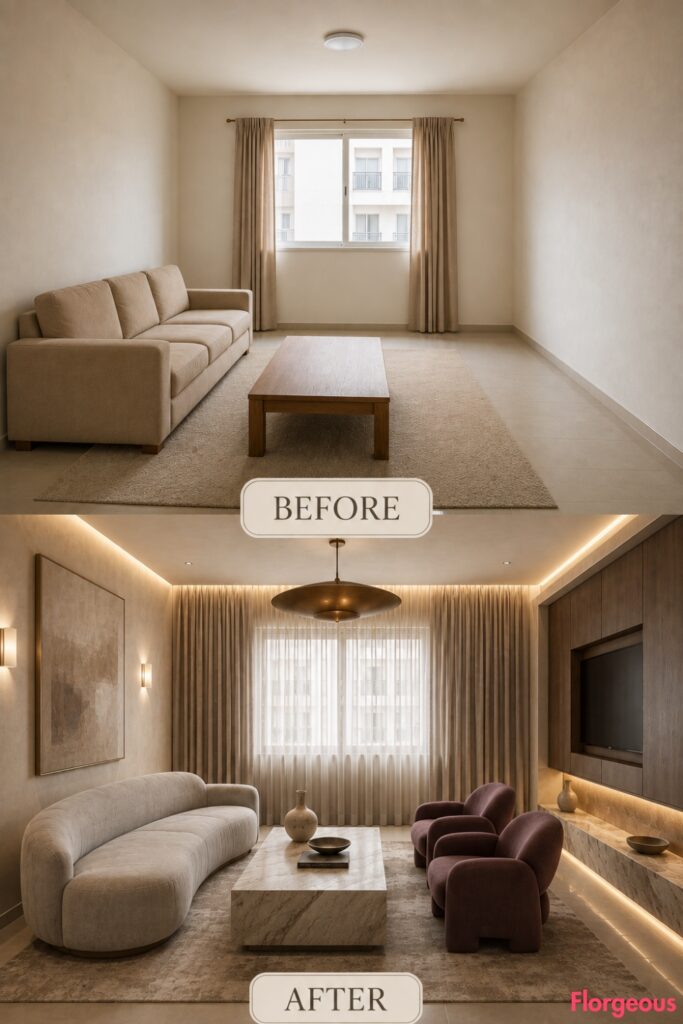
The final transformation is polished and luxurious, but the room remains calm because the material palette is controlled and the storage is nearly invisible.
After: Luminous shell-toned mineral plaster creates a glowing backdrop for a curved pearl-gray mohair sofa. Two sculptural chairs in muted plum face the sofa, giving the pale room a strong visual anchor.
A honed quartzite coffee table sits on a silk-and-wool rug with subtle mineral variation. Layered translucent curtains filter daylight without flattening it.
Smoked-eucalyptus cabinetry forms a seamless media wall. Bronze pendants, concealed cove lighting, plaster sconces, and an illuminated stone plinth provide several controlled layers of light. One oversized abstract canvas replaces small decorative art.
How to Choose the Right Organic Modern Direction for Your Living Room
These 13 transformations work because each room begins with a clear material and color story. White oak and linen create softness, walnut and charcoal provide depth, clay and terracotta add warmth, while limestone, quartzite, and architectural lighting create visual structure.
Start by identifying the weakest part of your existing room. It might be an empty focal wall, poor lighting, undersized curtains, visible technology, insufficient storage, or furniture that interrupts the walkway.
Next, choose one dominant natural material and commit to a light, medium, or dark palette. Select one appropriately scaled focal point, such as a stone table, large artwork, indoor tree, architectural niche, or integrated storage wall.
Test wall finishes, fabrics, and wood samples in the room during both morning and evening light. Remove small visual clutter before purchasing more decor. A successful Organic Modern Living Room feels complete because every object, material, light source, and area of negative space performs a clear role.