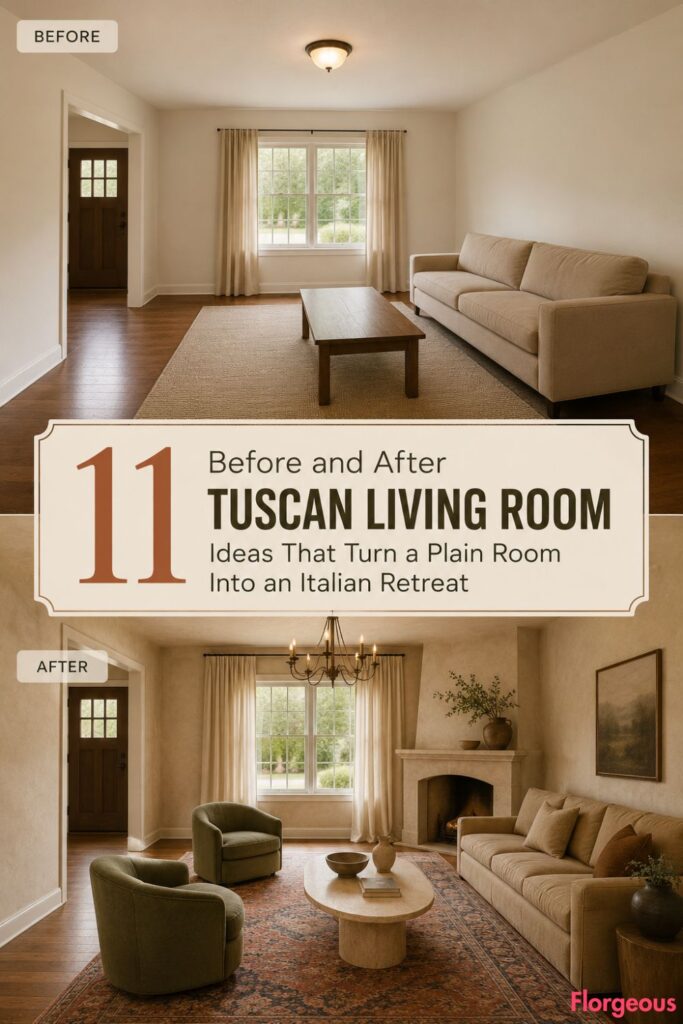
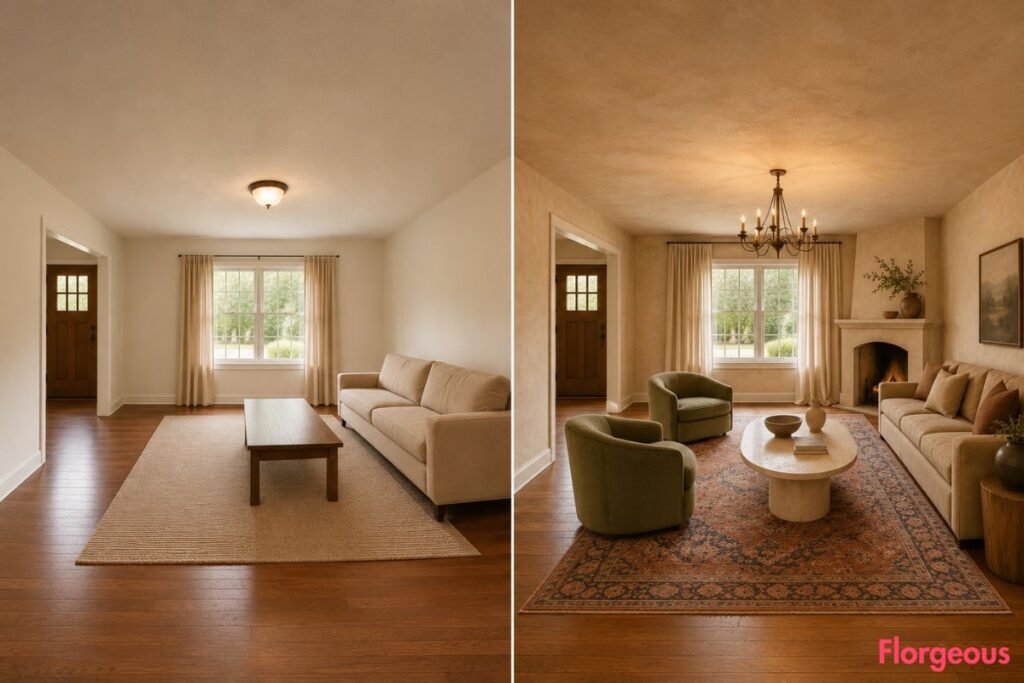
A basic beige sofa, bare coffee table, short curtains, and builder-grade ceiling light can leave a living room feeling clean but forgettable. Nothing is technically wrong, yet the room has no focal point, material character, or sense of warmth.
For these 11 makeovers, we kept that exact plain room as the starting point. The architecture, doors, windows, flooring footprint, camera position, and circulation remain unchanged in every version.
Each Tuscan Living Room makeover follows a completely different design direction. Some lean rustic and weathered, while others feel refined, pale, modern, dramatic, or practical for everyday family life. The contrast shows how much atmosphere can come from carefully chosen color, furniture, stone, wood, lighting, and textiles.
1. Turn the Plain Room Into a Sun-Washed Tuscan Living Room
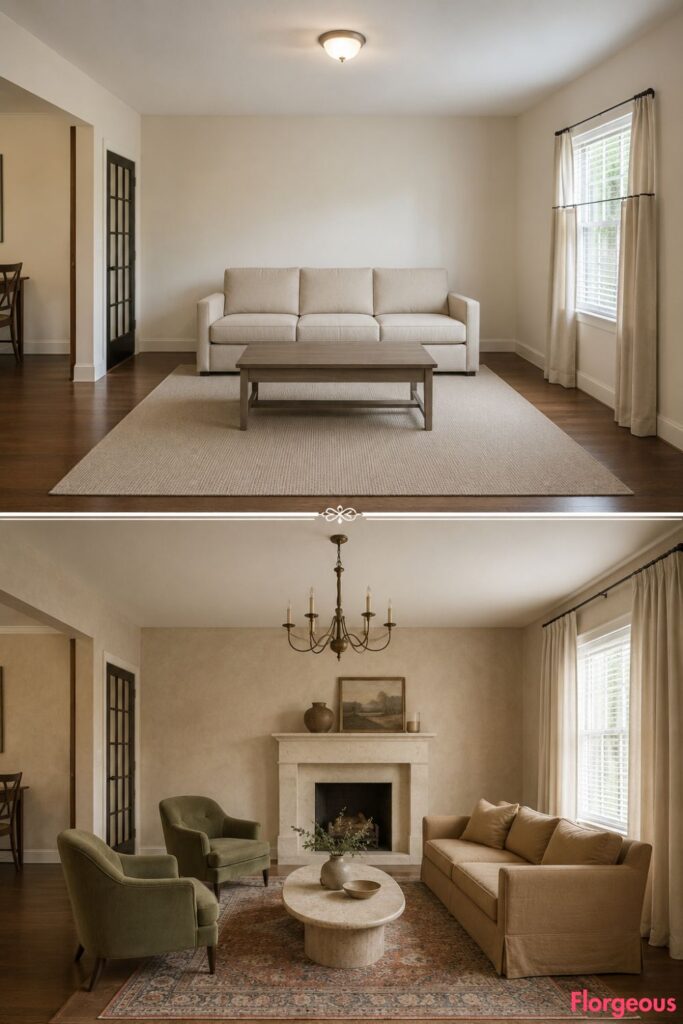
The first makeover captures the relaxed warmth of a countryside villa without filling the room with heavy furniture or themed accessories.
Before: Warm off-white walls, a straight beige sofa, bare rectangular coffee table, simple neutral rug, short plain curtains, standard ceiling light, empty walls, and soft natural light.
After: Sand-colored limewash surrounds a shallow pale-limestone fireplace. A camel linen sofa faces two muted olive armchairs, while an oval travertine table and faded rust-and-blue rug create an inviting conversation area. Full-length ivory curtains and an aged-brass chandelier soften the stone.
Why it works: The fireplace gives the room a permanent visual anchor, while the pale materials keep the design bright and comfortable.
Designer Tip: Choose either limestone or travertine as the dominant stone. Using several competing stones can make a modest room feel visually fragmented.
2. Create a Rustic Italian Farmhouse Gathering Space
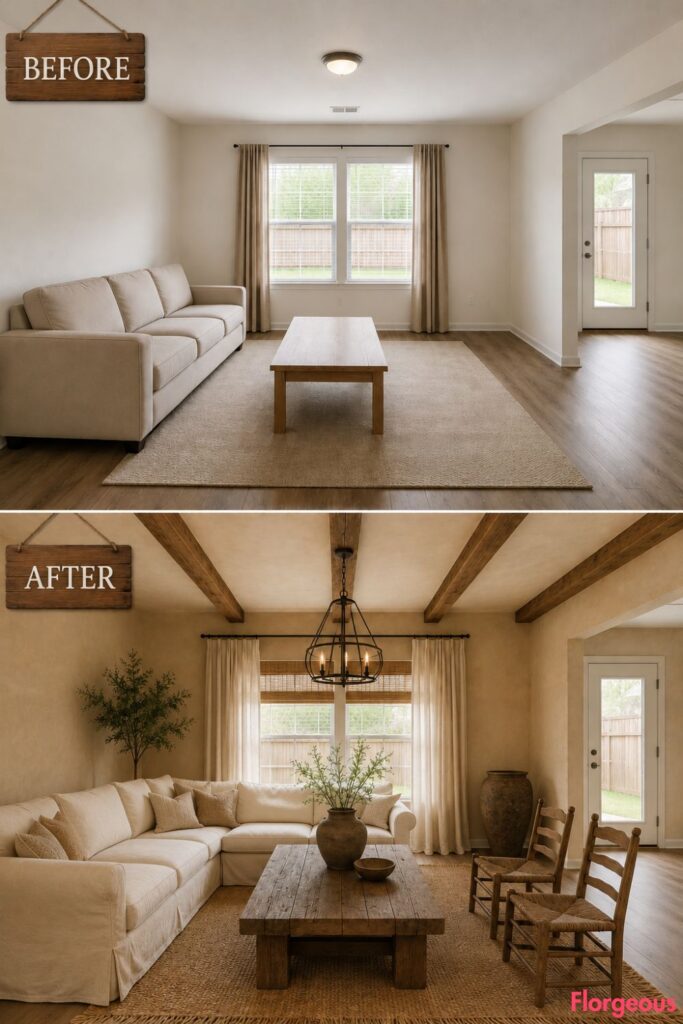
This version draws inspiration from hardworking country houses, where aged timber, washable fabric, and generous seating matter more than formal decoration.
Before: The same neutral room looks functional but lightly unfinished, with flat lighting and no architectural character.
After: Wheat-toned plaster and lightweight chestnut ceiling beams add immediate warmth. An oatmeal slipcovered sectional sits beside two ladder-back chairs, a thick aged-oak table, and a tightly woven rush rug. A simple forged-iron pendant provides contrast overhead.
The furniture arrangement leaves a wide route between the entrance and window, making the room practical for family use.
Budget Version: Use hollow faux beams and apply two slightly different stain colors. The variation creates a more convincing aged appearance.
3. Give the Room the Character of an Old Stone House
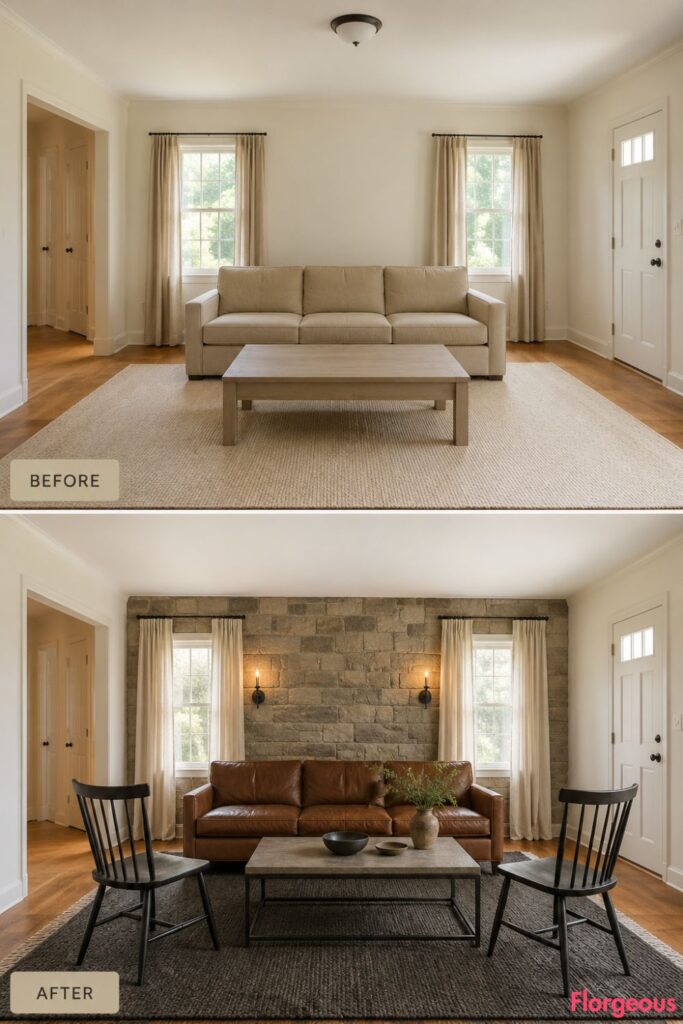
This makeover makes weathered stone the defining material and balances it with comfortable leather and wool.
Before: The original living room has no focal wall and the generic furniture appears disconnected from the architecture.
After: One uninterrupted wall receives thin gray-beige stone veneer with softly irregular joints. A cognac leather sofa sits opposite two black spindle chairs, with a rectangular iron-and-stone table between them. A charcoal wool rug and warm wall sconces make the space feel grounded.
Try this: Limit stone to one surface. Covering several walls can reduce natural light and make a standard living room feel smaller.
The result feels old and substantial, but the clean furniture placement keeps it suitable for daily life.
4. Introduce Refined Florentine Symmetry
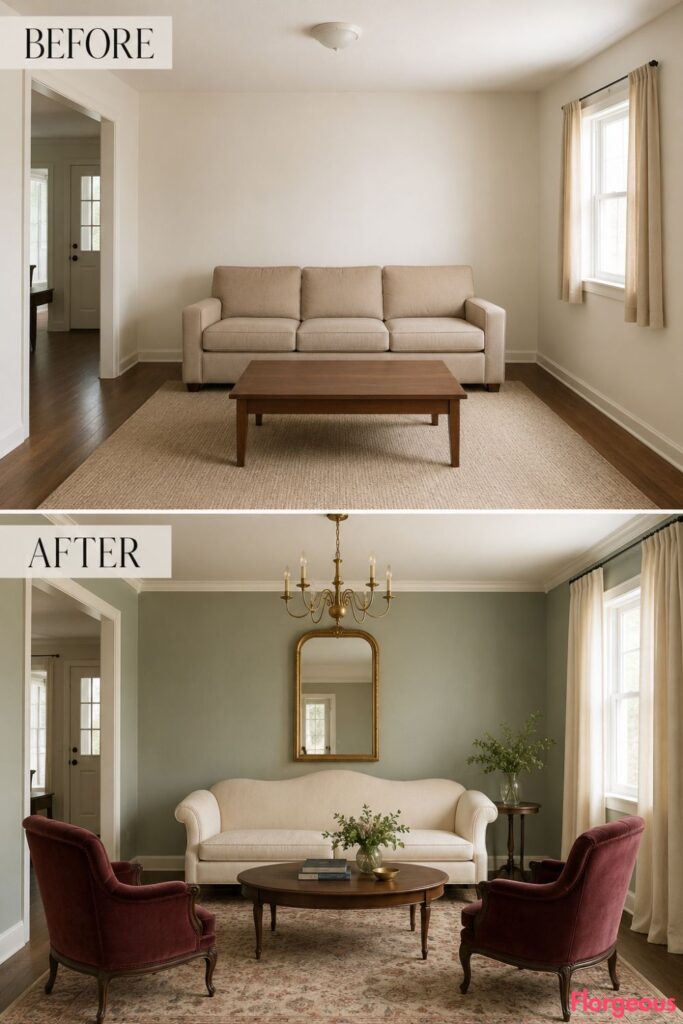
Tuscan style can be graceful and polished rather than rustic. This interpretation takes cues from Florentine salons, restrained classical proportions, and formal furniture placement.
Before: The plain beige room lacks balance and the empty walls offer no visual structure.
After: Muted celadon walls frame an ivory camelback sofa centered beneath a slim antiqued-gold mirror. Two faded burgundy velvet chairs sit opposite the sofa, balanced by an oval walnut table and a softly patterned traditional rug. A delicate aged-brass chandelier completes the symmetrical composition.
Why it works: The furniture shapes feel formal, but the faded finishes prevent the room from looking stiff or overly ornate.
Keep the central path open rather than placing extra stools or decorative tables near the entrance.
5. Strip Tuscan Style Back to Modern Minimalism
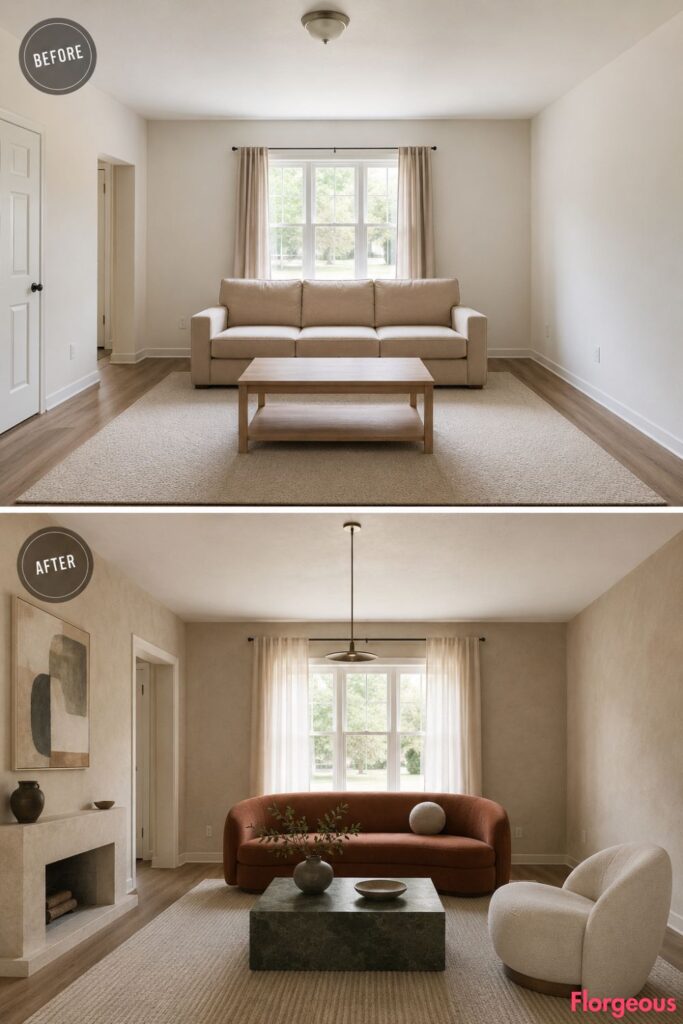
The Tuscan influence in this room comes from plaster, limestone, clay, bronze, and warm earth tones rather than carved details or decorative collections.
Before: The base room feels bland because every surface and piece of furniture has a similar visual weight.
After: Chalky taupe plaster surrounds a low linear cream-limestone mantel. A curved rust-colored sofa is paired with one sculptural ivory chair, a monolithic green-stone table, and a ribbed wool rug. A narrow bronze pendant adds a clean vertical line.
One large abstract artwork without writing replaces clusters of smaller accessories.
Common Mistake: Minimal Tuscan rooms still need softness. Linen, wool, and warm pools of light stop stone and plaster from feeling cold.
6. Wrap the Room in Muted Terracotta
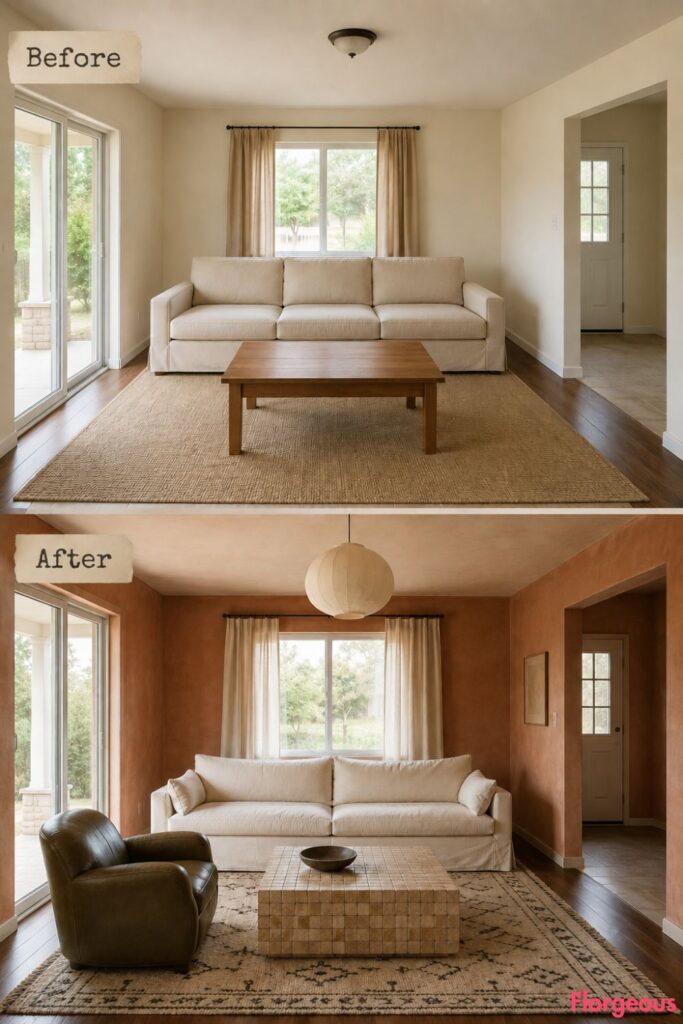
Terracotta becomes sophisticated when its warmth is balanced with creamy upholstery, dark green leather, and restrained pattern.
Before: The warm off-white walls feel flat, while the beige sofa and neutral rug create little contrast.
After: Muted baked-clay walls surround a relaxed cream sofa and one deep olive leather lounge chair. A low mosaic-tile table introduces pattern at the center, supported by a faded cream-and-black flatweave rug. Natural linen curtains and a chalky plaster pendant keep the room earthy.
Color Story: Let terracotta cover the walls, use cream on the largest furniture piece, then introduce olive in one concentrated accent.
Avoid matching terracotta curtains, rugs, cushions, and ceramics. The wall color should remain the clear visual leader.
7. Turn the Empty Wall Into an Olive Arched Library
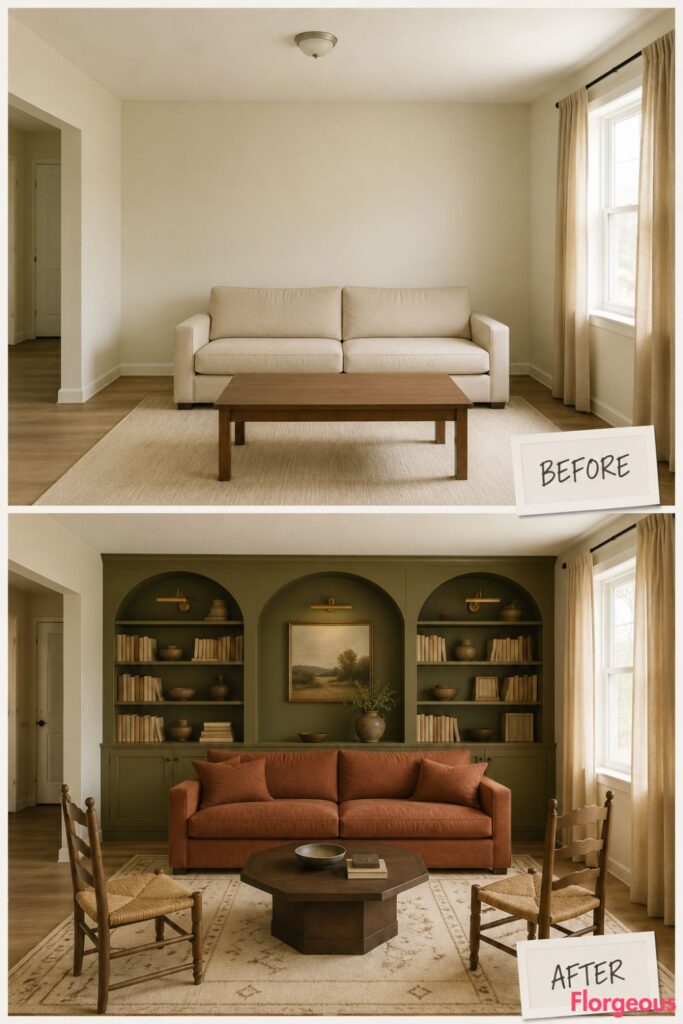
This makeover adds architectural rhythm, storage, and a clear purpose without changing the original doors or windows.
Before: The empty wall contributes nothing to the room, leaving the beige furniture floating without a focal point.
After: Shallow olive-painted cabinetry spans the blank wall. Three softly rounded arches frame low walnut bookcases, concealed storage, and a central art niche. A russet linen sofa, two rush-seated chairs, an octagonal walnut table, and a cream kilim form a compact reading and conversation area.
Small rechargeable library lights create the appearance of custom wiring without requiring major electrical work.
Why it works: The built-in color gives the architecture depth, while the closed lower cabinets keep everyday clutter hidden.
8. Create a Fresco-Inspired Tuscan Music Salon
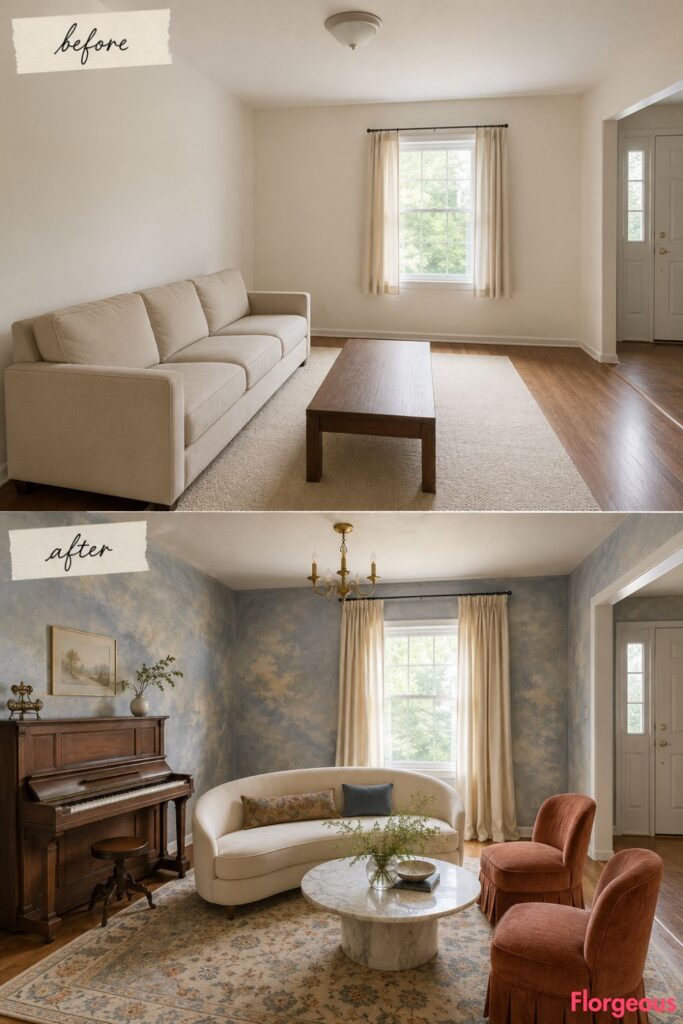
This design gives the living room a specific purpose while using wall color that resembles gently aged Italian frescoes.
Before: The original furniture faces no meaningful focal point, and the empty walls make the room feel temporary.
After: Clouded mineral-blue walls contain soft gray and ochre movement. An aged-walnut upright piano anchors one wall, while a curved ivory settee and two rust-colored slipper chairs form a separate listening area around a small round marble table.
A washed floral rug, silk-linen curtains, and a petite brass chandelier give the room a delicate evening atmosphere.
Budget Version: Use two related mineral paint colors and blend them with a damp brush instead of commissioning a painted mural.
9. Build a Dark Vineyard Heritage Room
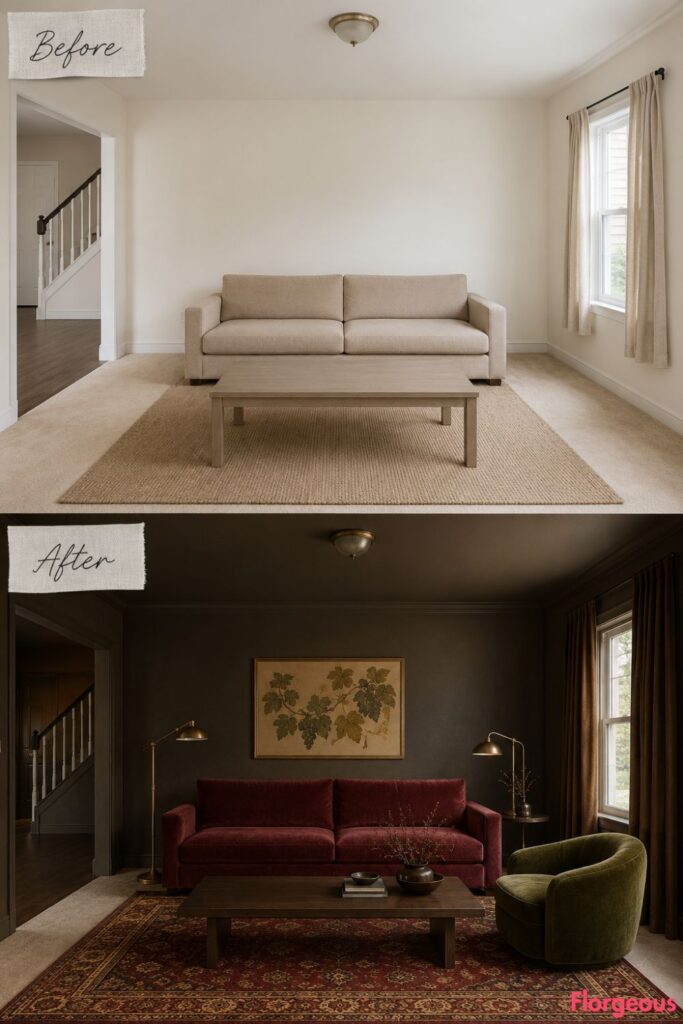
This room uses vineyard colors without relying on bottles, barrels, grape motifs, or novelty signs.
Before: The light neutral room feels generic and lacks a sense of history.
After: Deep espresso walls frame a faded wine-red mohair sofa, one moss velvet lounge chair, and a long dark-walnut library table. A restrained crimson-and-gold rug warms the floor, while antique-brass reading lamps create small pools of light.
Botanical vine studies without words provide a subtle connection to the Tuscan landscape.
Style Note: Leave some pale surfaces visible, such as lampshades, curtain lining, and sections of the floor. These lighter areas keep the dark palette from becoming oppressive.
10. Adapt Tuscan Character to a Small Apartment
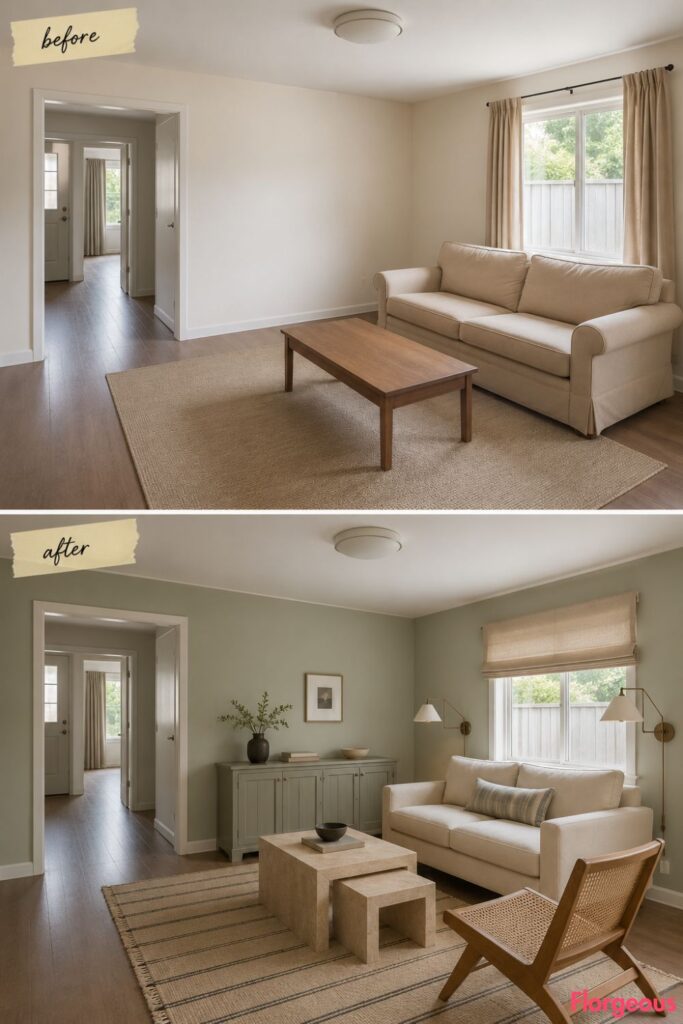
Large rolled-arm sofas, oversized hutches, and broad coffee tables are not necessary for creating an Italian countryside mood.
Before: The standard beige sofa and rectangular table consume more visual space than the room can comfortably support.
After: Pale sage walls surround a compact flax-linen loveseat and one cane lounge chair. Travertine nesting tables can be separated or stacked as needed, while a narrow striped wool rug directs the eye through the room. A tailored Roman shade replaces the short curtains.
A shallow painted cabinet and wall-mounted swing lights add storage and function without reducing the walkway.
Small Space Tip: Keep at least one furniture leg style visually open. Cane sides, slender timber legs, and nesting tables help more floor remain visible.
11. Conceal Modern Technology in Transitional Tuscan Cabinetry
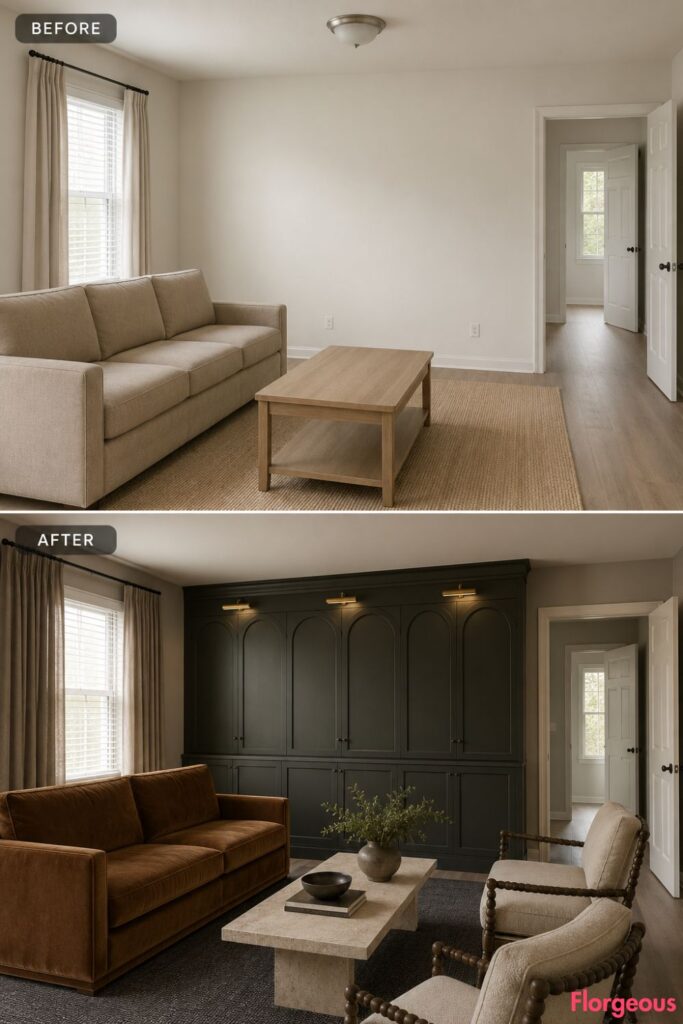
The final makeover shows how Tuscan materials can work in a contemporary family room with a television and practical storage.
Before: The plain room has no media solution, no storage, and no clear visual center.
After: Charcoal-olive cabinetry covers the main wall, with softly arched folding doors concealing the television. A tailored tobacco velvet sofa faces two cream bobbin chairs across a long narrow limestone table. A quiet charcoal flatweave, pleated curtains, and discreet brass picture lights complete the room.
The furniture shapes feel cleaner than traditional Old World pieces, but the stone, walnut, olive paint, and warm metal finishes keep the Tuscan connection clear.
Try this: Use freestanding cabinets painted the same color as the wall if custom millwork is outside the budget.
How to Choose the Right Tuscan Look for Your Home
The strongest rooms in this collection do not combine every Tuscan feature. Each makeover begins with one defining decision, such as a limestone fireplace, chestnut beams, stone cladding, Florentine symmetry, terracotta walls, arched cabinetry, or a dark vineyard palette.
Start by deciding whether your room should feel rustic, refined, pale, dramatic, contemporary, or compact. Then select one dominant natural material, one supporting color, and furniture that suits the actual dimensions of the space.
For a lighter update, begin with curtains, mineral-effect paint, a vintage-style rug, and one stone or aged-wood table. For a larger renovation, establish the architectural focal point before buying accessories.
A successful Tuscan Living Room should feel warm, grounded, and lived in, never crowded or themed. Check wall and fabric samples in daylight, protect every walking route, and choose authentic texture over novelty decor.