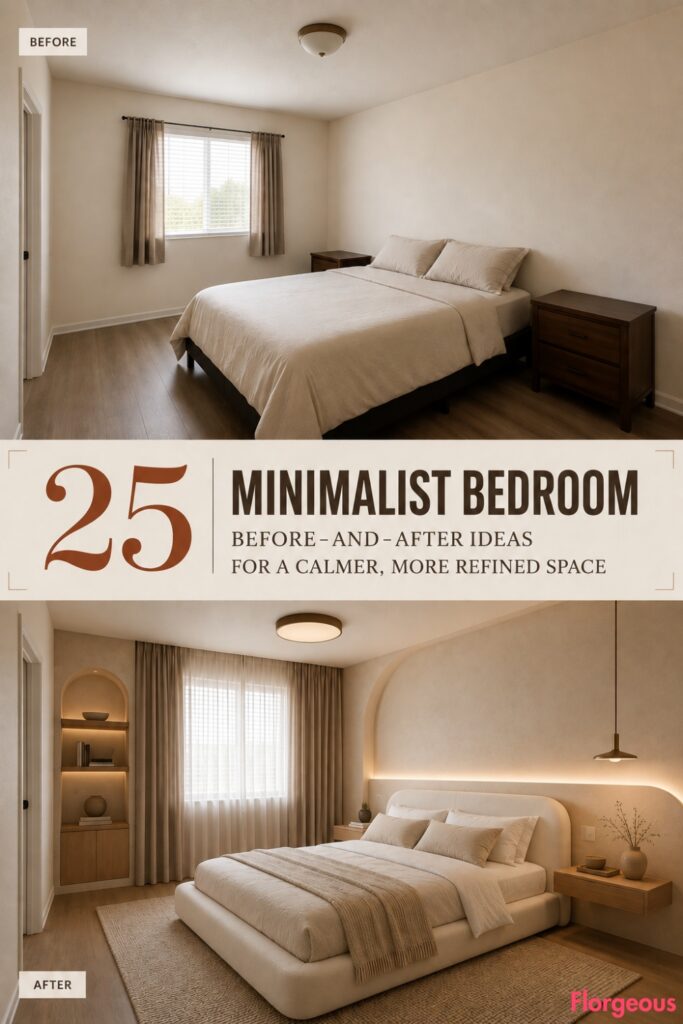
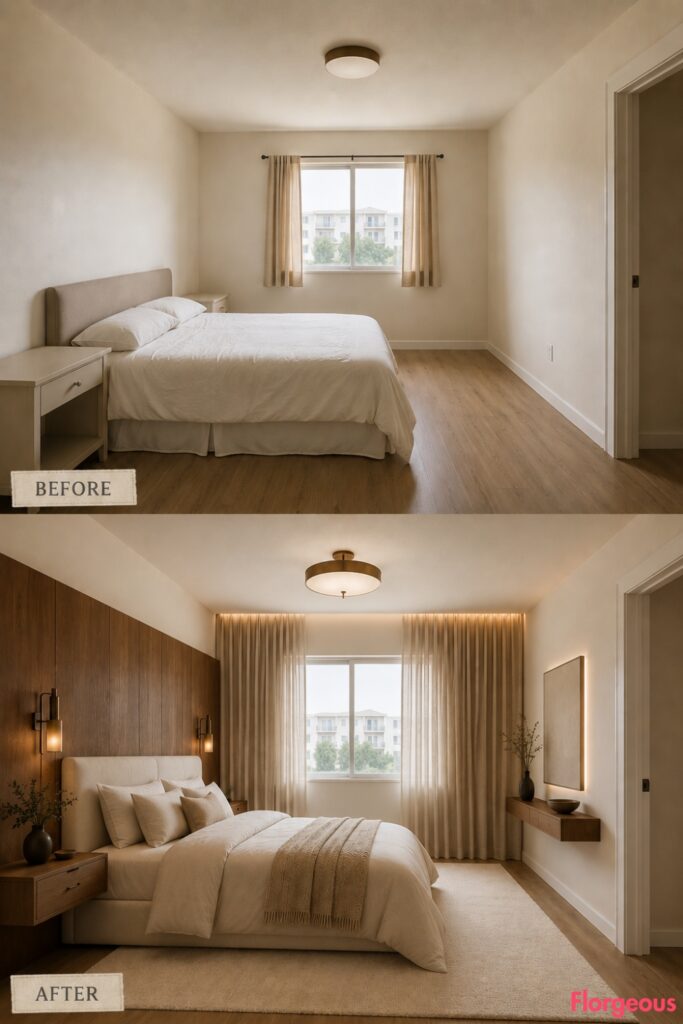
A plain bedroom can look clean yet still feel unresolved. The walls are neutral, the furniture works, and nothing is technically wrong, but there is no sense of intention.
For this gallery, we kept one ordinary builder-grade bedroom completely fixed and reimagined only the design inside it. The doorway, window, flooring, wall proportions, ceiling height, dimensions, camera position, lens, framing, daylight, and circulation never change.
The result is 25 very different Minimalist Bedroom ideas. Some rely on architecture, others on furniture placement, storage, texture, color, lighting, or a single strong material. None depends on filling the room with decoration.
The most interesting transformations are often the simplest ones.
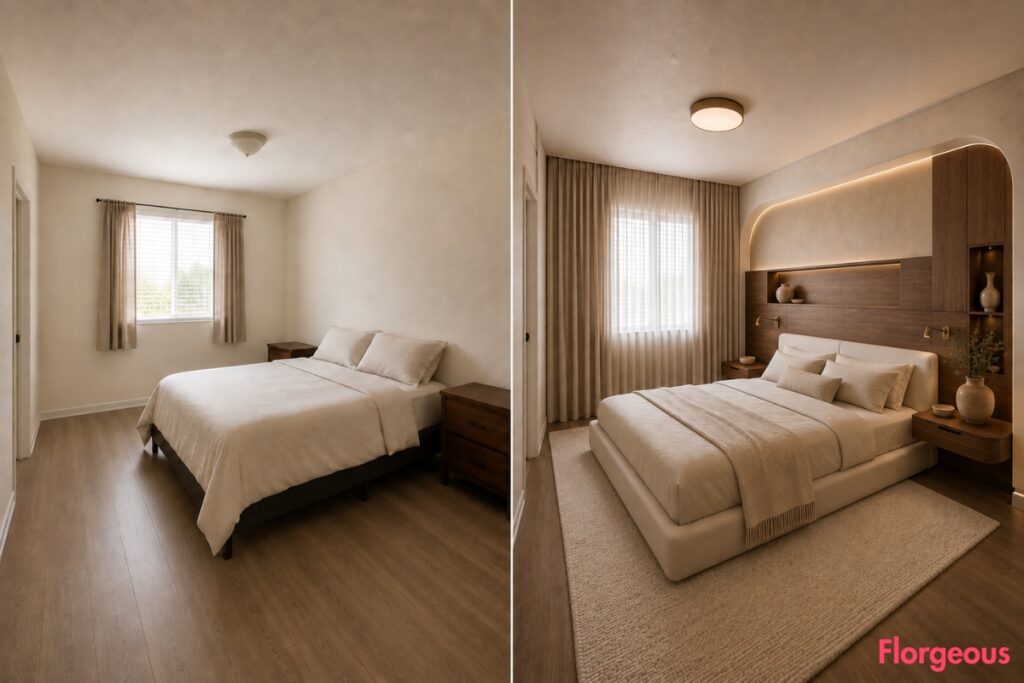
1. Stretch One Walnut Headboard Across the Bed Wall
A single horizontal gesture can organize an entire bedroom more effectively than several small decorative pieces.
Before: Warm off-white walls, basic bed with simple neutral bedding against the main wall, two bare nightstands, short plain curtains, basic ceiling light, simple flooring, empty wall surfaces, minimal styling, soft natural daylight, and no strong focal point.
After: Center a cream upholstered bed against a broad walnut headboard panel. Add floating walnut ledges, slim bronze reading lights, oatmeal linen bedding, an ivory wool rug, and ceiling-height flax curtains.
Designer Tip: Keep the timber grain and tone consistent so the headboard reads as architecture rather than furniture.
2. Drop the Furniture Low for a Japandi Mood
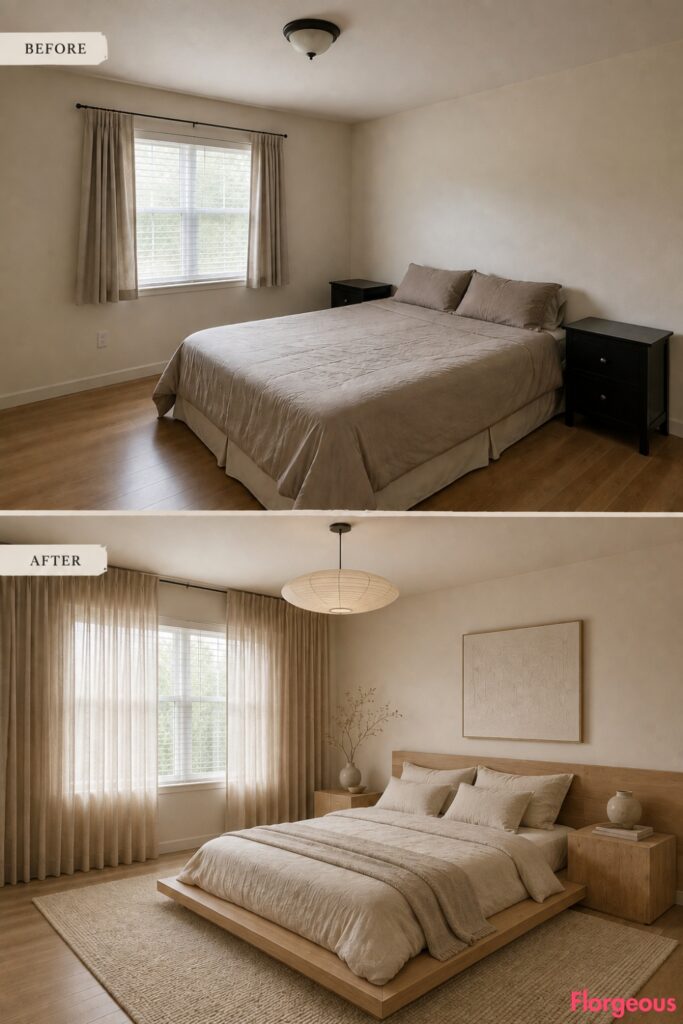
Instead of building upward, this version opens the room vertically.
Before: Warm off-white walls, basic bed with simple neutral bedding against the main wall, two bare nightstands, short plain curtains, basic ceiling light, simple flooring, empty wall surfaces, minimal styling, soft natural daylight, and no strong focal point.
After: Use a pale-oak platform bed with an extended base, compact oak blocks, relaxed flax bedding, a pale wool rug, and a paper-inspired pendant. Leave generous blank wall above the bed.
3. Build a Headboard That Quietly Becomes a Desk
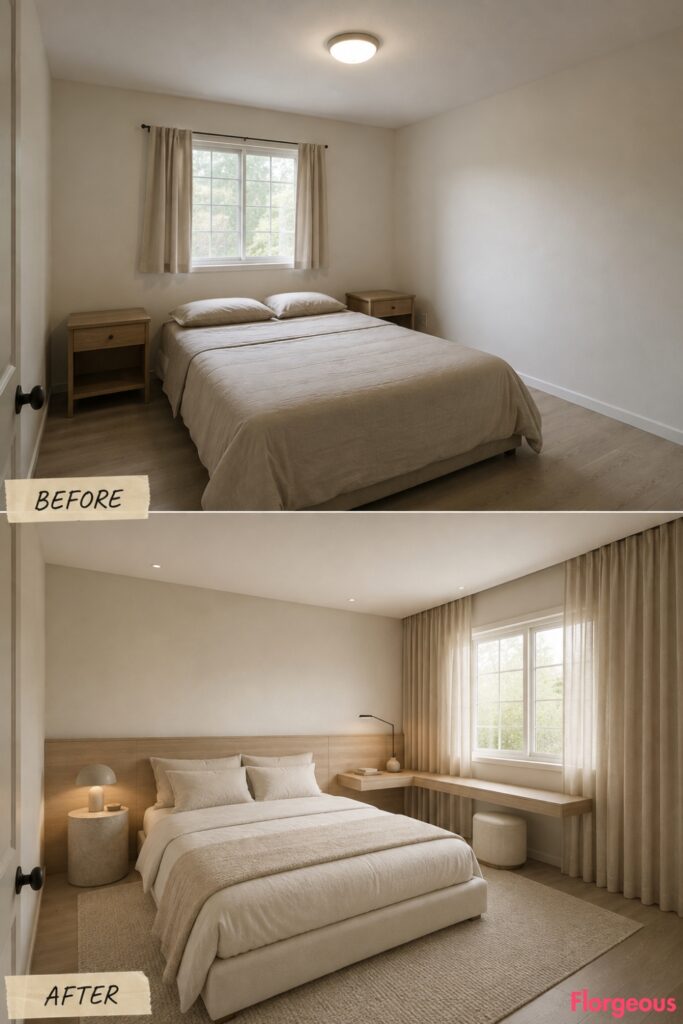
A bedroom can gain workspace without adding another obvious furniture zone.
Before: Warm off-white walls, basic bed with simple neutral bedding against the main wall, two bare nightstands, short plain curtains, basic ceiling light, simple flooring, empty wall surfaces, minimal styling, soft natural daylight, and no strong focal point.
After: Extend one side of a slim ash headboard into a narrow floating desk along the adjacent free wall. Tuck a simple upholstered stool completely underneath so the workspace nearly disappears when unused.
Keep the opposite bedside area deliberately simple with one stone pedestal and a small wall light.
Small Space Tip: The desk should remain shallow enough that it never intrudes into the main route around the bed.
4. Carve a Rounded Plaster Niche Behind the Bed
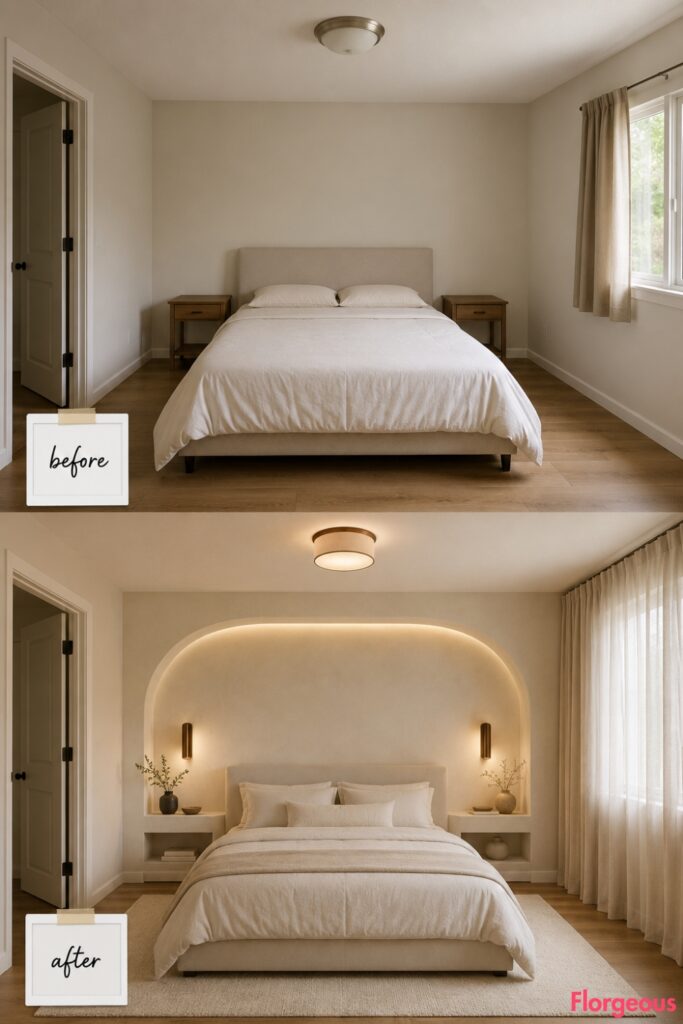
Here the wall itself becomes the focal point.
Before: Warm off-white walls, basic bed with simple neutral bedding against the main wall, two bare nightstands, short plain curtains, basic ceiling light, simple flooring, empty wall surfaces, minimal styling, soft natural daylight, and no strong focal point.
After: Form a broad shallow niche with softened corners behind an oatmeal bed. Integrate bedside ledges and concealed wall-washing light, then keep the rest of the room cream, flax, and pale wool.
5. Consolidate Storage Into One Seamless Wall
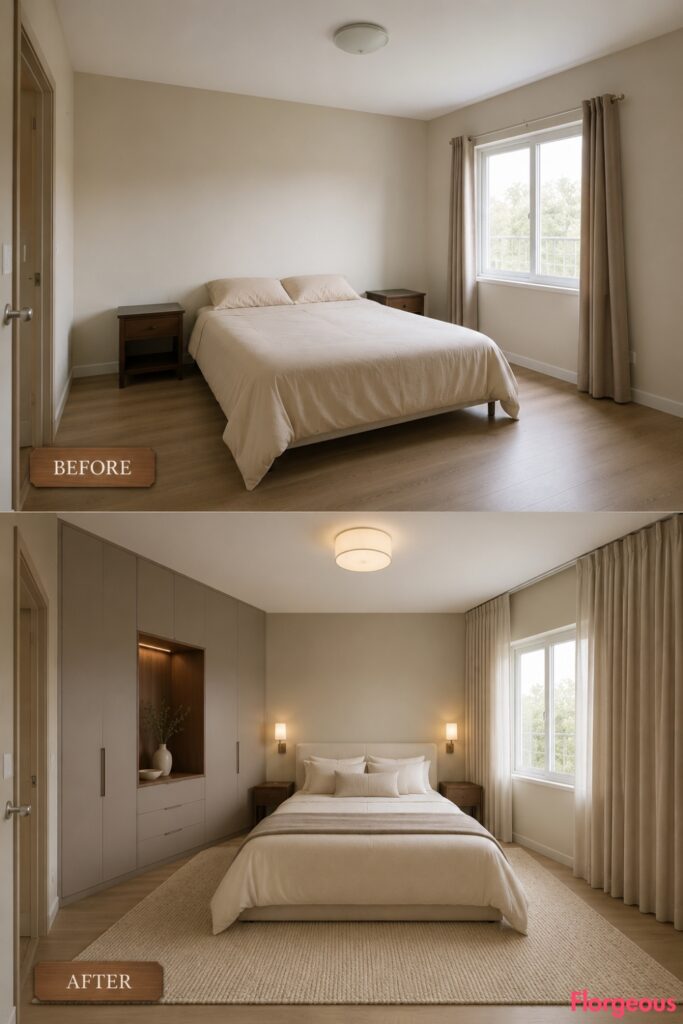
Scattered storage often creates more visual noise than the belongings themselves.
Before: Warm off-white walls, basic bed with simple neutral bedding against the main wall, two bare nightstands, short plain curtains, basic ceiling light, simple flooring, empty wall surfaces, minimal styling, soft natural daylight, and no strong focal point.
After: Install full-height matte mushroom cabinetry along one blank side wall outside circulation. Interrupt it with a single walnut-lined niche and keep every other storage element understated.
6. Upholster the Entire Bed Wall
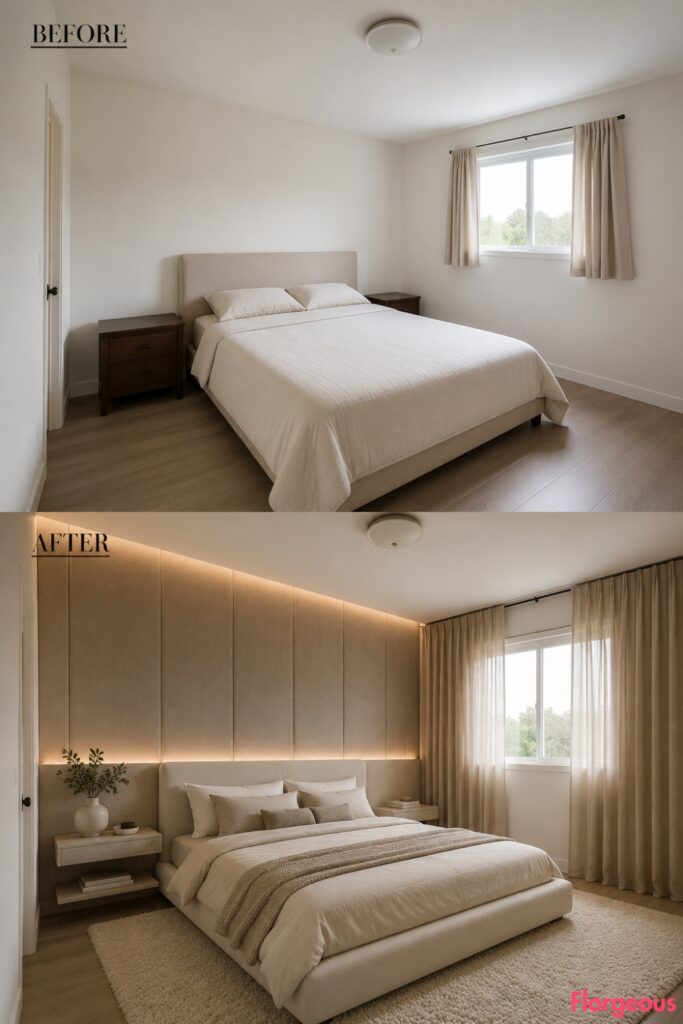
This version replaces several separate furniture pieces with one continuous soft surface.
Before: Warm off-white walls, basic bed with simple neutral bedding against the main wall, two bare nightstands, short plain curtains, basic ceiling light, simple flooring, empty wall surfaces, minimal styling, soft natural daylight, and no strong focal point.
After: Cover the full bed wall in warm taupe upholstery. Add a streamlined ivory bed, integrated bedside ledges, concealed warm lighting, and dense wool underfoot.
Why It Works: Upholstery softens both acoustics and visual edges.
7. Free the Floor in a Compact Bedroom
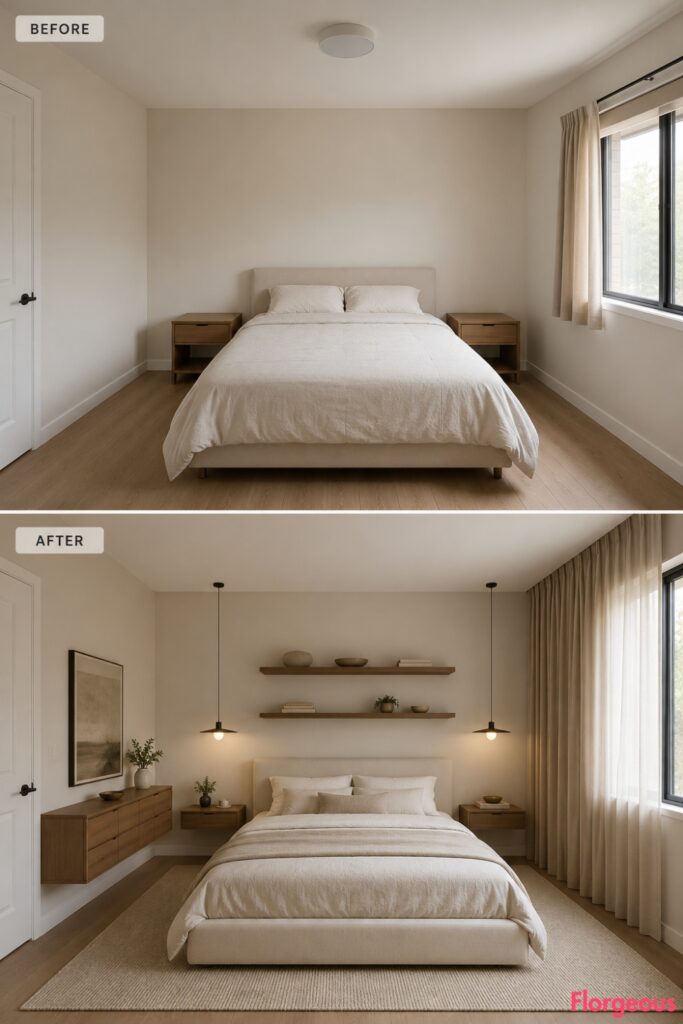
Small rooms benefit from visual lightness as much as physical clearance.
Before: Warm off-white walls, basic bed with simple neutral bedding against the main wall, two bare nightstands, short plain curtains, basic ceiling light, simple flooring, empty wall surfaces, minimal styling, soft natural daylight, and no strong focal point.
After: Choose a slim cream bed, floating bedside shelves, suspended reading lights, and a shallow dresser hugging one wall outside the entrance path.
Small Space Tip: More visible floor makes the furniture footprint feel smaller.
8. Make the Whole Makeover Renter-Friendly
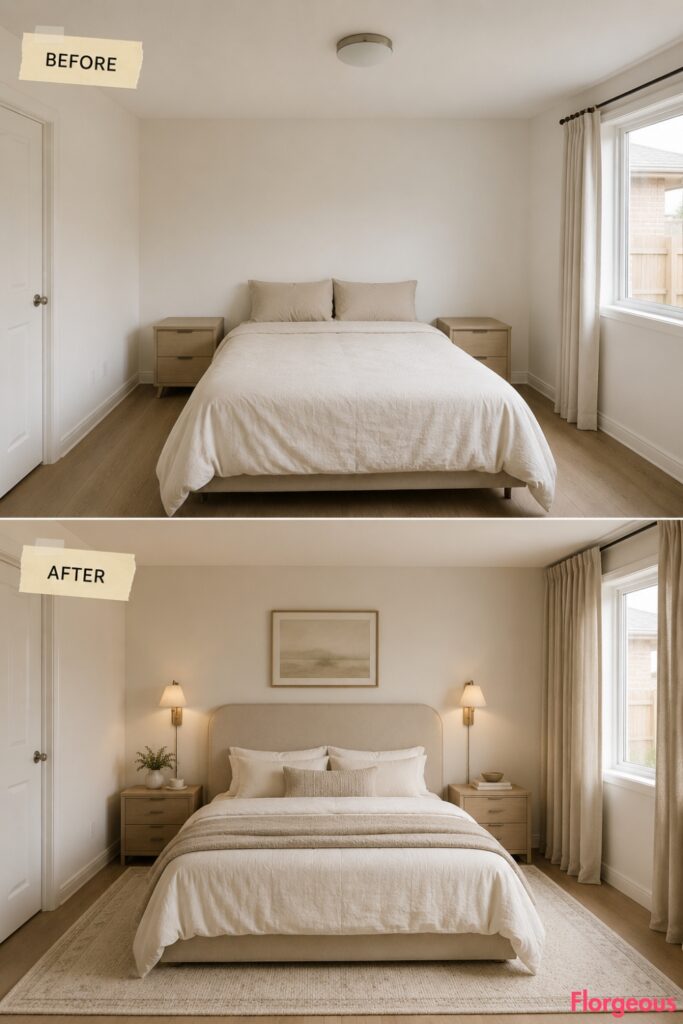
Minimalism can come from editing rather than construction.
Before: Warm off-white walls, basic bed with simple neutral bedding against the main wall, two bare nightstands, short plain curtains, basic ceiling light, simple flooring, empty wall surfaces, minimal styling, soft natural daylight, and no strong focal point.
After: Retain the bed, then add a removable upholstered headboard panel, plug-in sconces, matching slim tables, oversized neutral rug, fuller cream bedding, and ready-made ceiling-height curtains.
Budget Version: Wrap lightweight plywood in batting and fabric for the oversized headboard effect.
9. Push Minimalism Into Charcoal and Tobacco
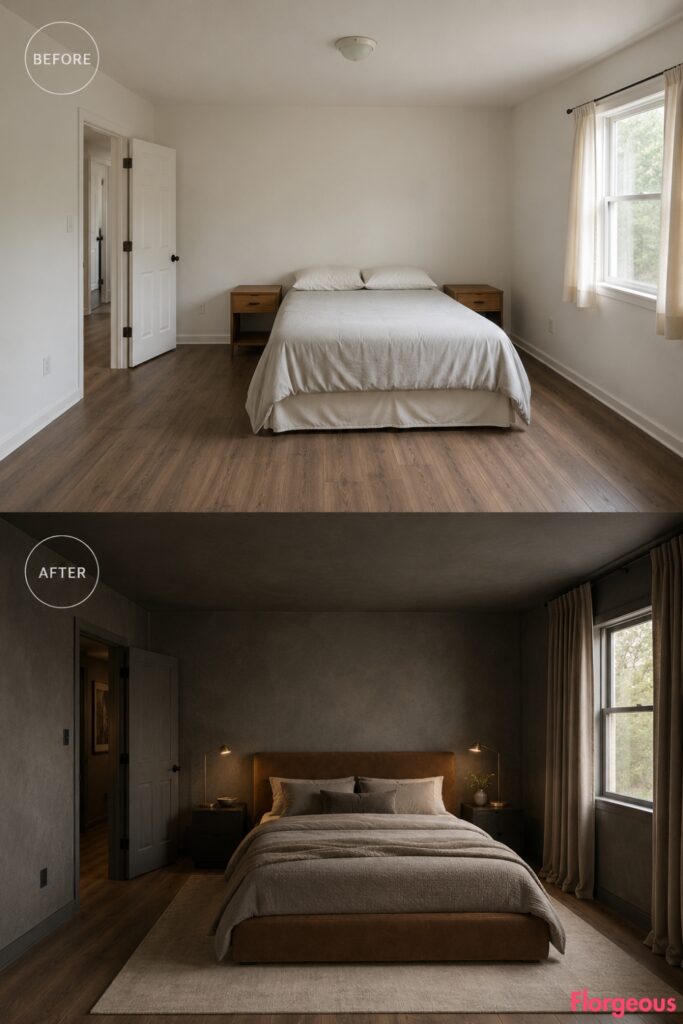
Dark surfaces can still feel quiet when the material count stays low.
Before: Warm off-white walls, basic bed with simple neutral bedding against the main wall, two bare nightstands, short plain curtains, basic ceiling light, simple flooring, empty wall surfaces, minimal styling, soft natural daylight, and no strong focal point.
After: Use charcoal mineral paint, a slightly deeper ceiling, tobacco upholstery, mushroom bedding, blackened-oak blocks, and one pale wool rug.
10. Use One Oversized Artwork Instead of Small Decor
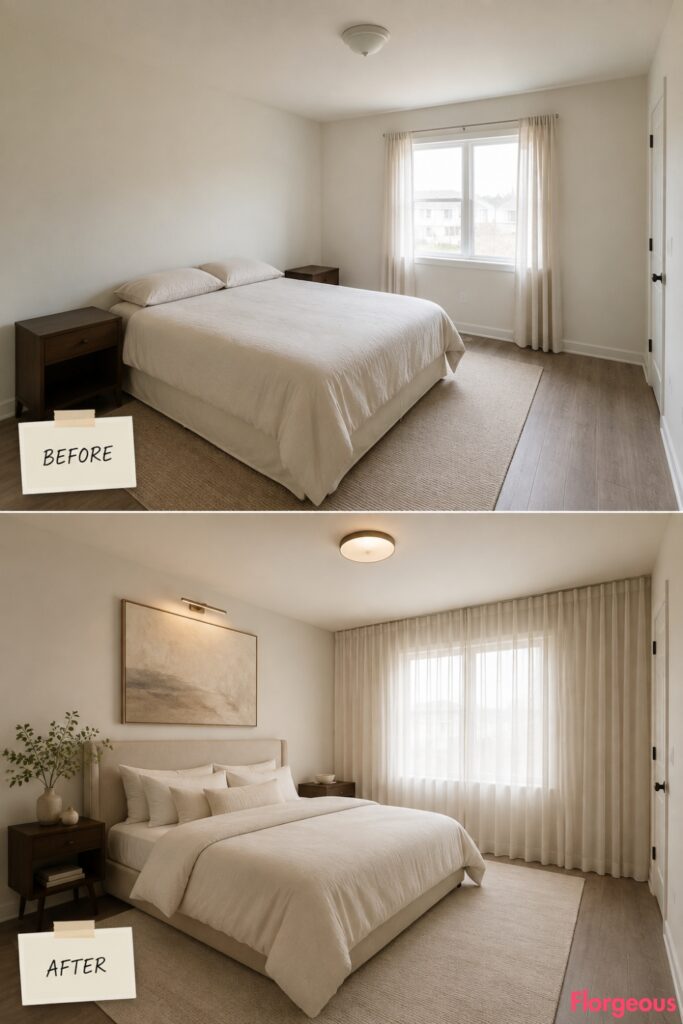
A minimalist bedroom can still have a strong visual anchor.
Before: Warm off-white walls, basic bed with simple neutral bedding against the main wall, two bare nightstands, short plain curtains, basic ceiling light, simple flooring, empty wall surfaces, minimal styling, soft natural daylight, and no strong focal point.
After: Place one oversized abstract neutral canvas above an oatmeal bed. Add a narrow picture light, tiny walnut tables, crisp ivory bedding, and otherwise bare walls.
11. Warm the Shell With Clay Limewash
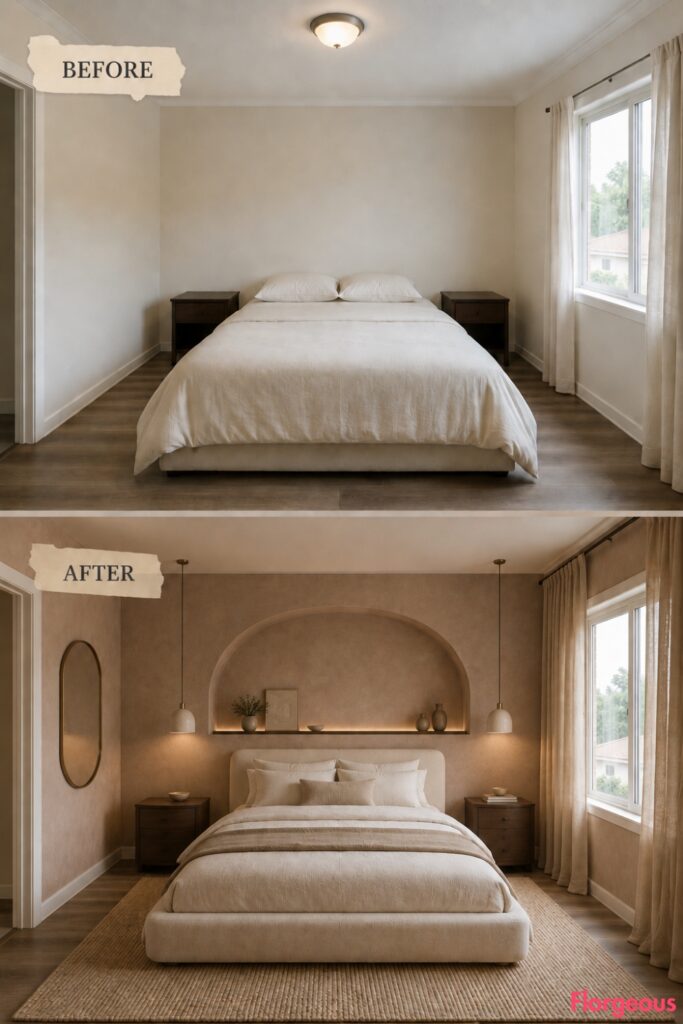
This room gets its character from imperfect texture rather than ornament.
Before: Warm off-white walls, basic bed with simple neutral bedding against the main wall, two bare nightstands, short plain curtains, basic ceiling light, simple flooring, empty wall surfaces, minimal styling, soft natural daylight, and no strong focal point.
After: Apply muted clay limewash, then layer a sand upholstered bed, deep brown tables, flax linen, handmade ceramic lamps, and a woven wool rug.
12. Build an Almost-All-Ivory Room From Texture
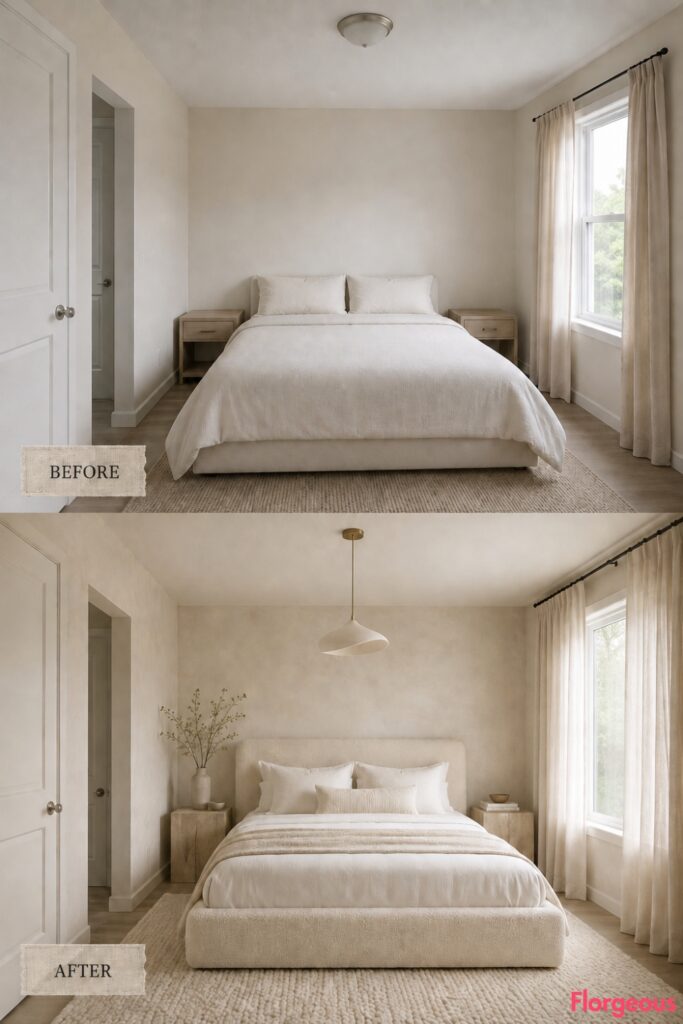
Monochrome becomes richer when each surface absorbs light differently.
Before: Warm off-white walls, basic bed with simple neutral bedding against the main wall, two bare nightstands, short plain curtains, basic ceiling light, simple flooring, empty wall surfaces, minimal styling, soft natural daylight, and no strong focal point.
After: Combine ivory plaster, bouclé, crisp cotton, bleached oak, thick wool, and gauzy curtains. Keep metal hardware almost invisible.
Style Note: Add texture before adding another color.
13. Turn the Window Wall Into a Full Curtain Composition
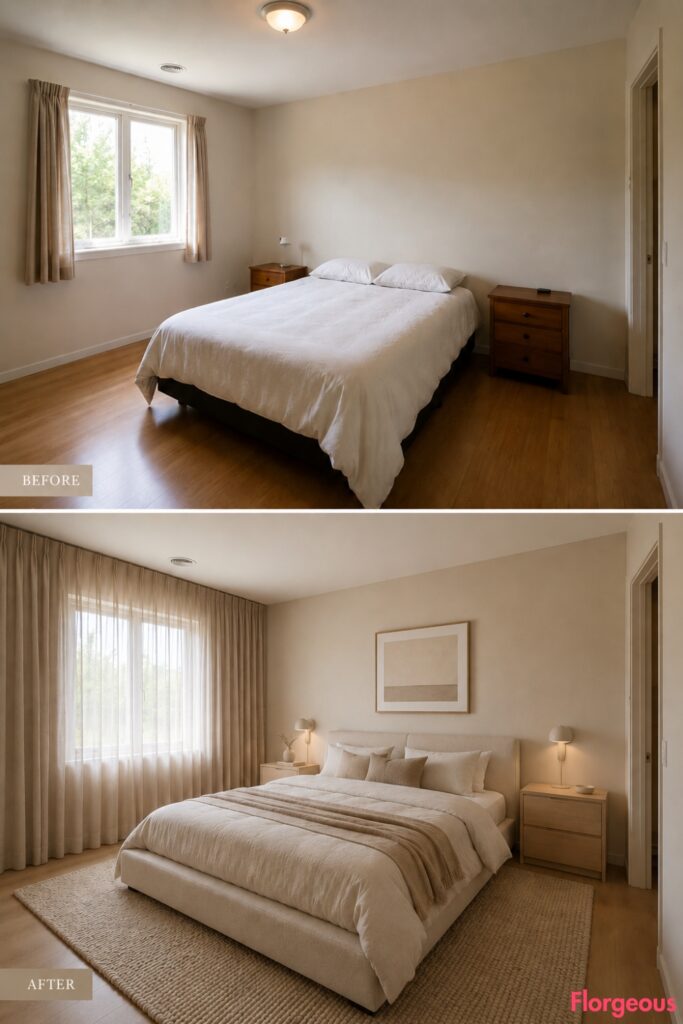
This Minimalist Bedroom idea treats fabric almost like architecture.
Before: Warm off-white walls, basic bed with simple neutral bedding against the main wall, two bare nightstands, short plain curtains, basic ceiling light, simple flooring, empty wall surfaces, minimal styling, soft natural daylight, and no strong focal point.
After: Run ceiling-mounted flax drapery across the entire window wall. Pair it with low pale furniture so the soft uninterrupted surface becomes the room’s dominant element.
14. Let the Ceiling Light Become the Only Sculpture
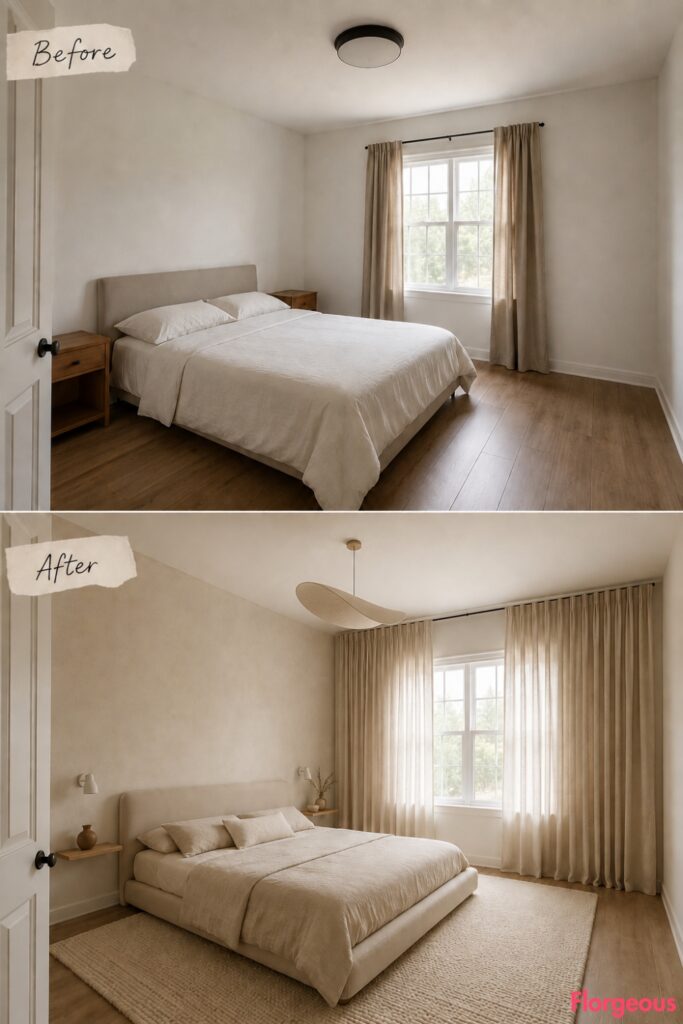
Instead of creating another feature wall, move the focal point overhead.
Before: Warm off-white walls, basic bed with simple neutral bedding against the main wall, two bare nightstands, short plain curtains, basic ceiling light, simple flooring, empty wall surfaces, minimal styling, soft natural daylight, and no strong focal point.
After: Keep the room very restrained and introduce one large asymmetrical paper-and-plaster pendant above the bed.
Common Mistake: Oversized lighting still needs comfortable head clearance.
15. Turn the Window Into a Quiet Reading Bench
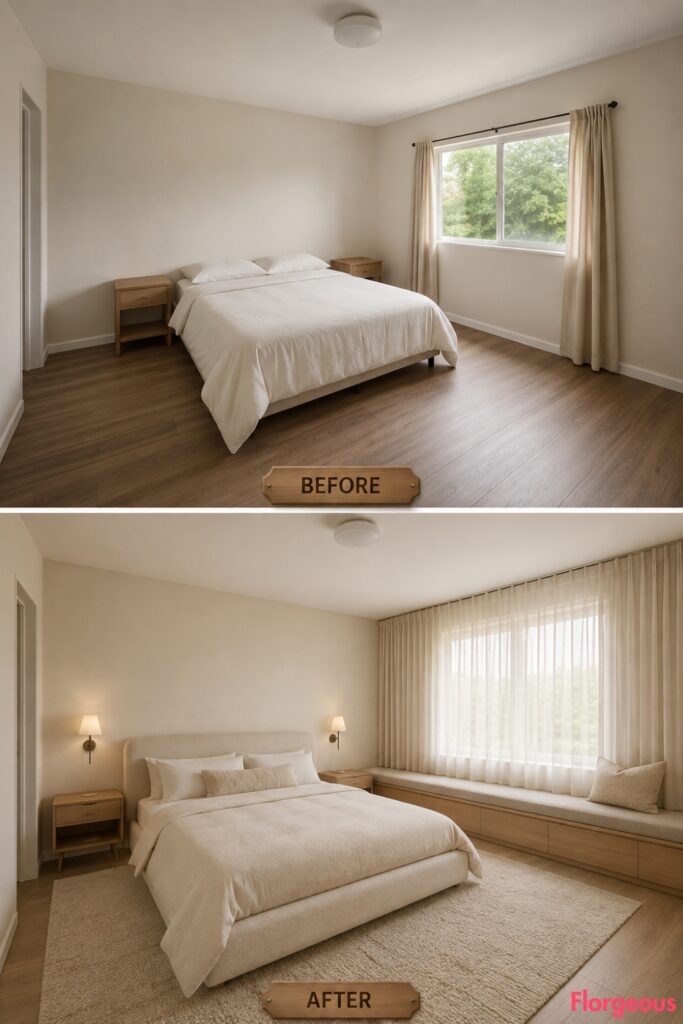
The best minimal features often serve more than one purpose.
Before: Warm off-white walls, basic bed with simple neutral bedding against the main wall, two bare nightstands, short plain curtains, basic ceiling light, simple flooring, empty wall surfaces, minimal styling, soft natural daylight, and no strong focal point.
After: Add a low oak bench beneath the window with concealed drawers and one tailored cushion. Keep the bed wall almost bare.
16. Remove Nightstands Completely
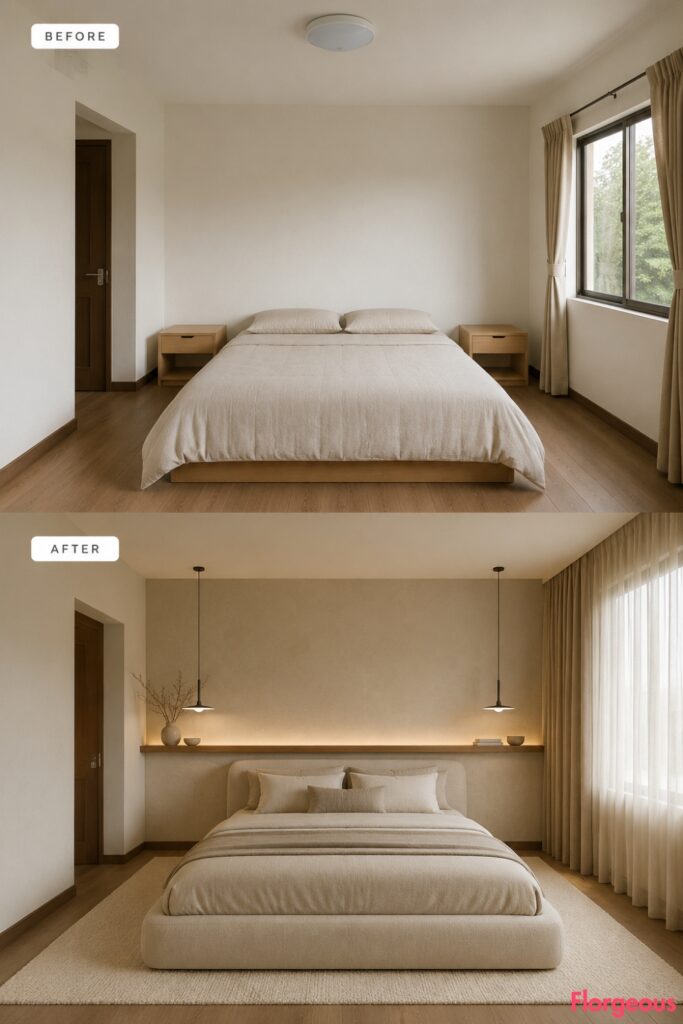
Subtracting an expected furniture type can make a room feel surprisingly different.
Before: Warm off-white walls, basic bed with simple neutral bedding against the main wall, two bare nightstands, short plain curtains, basic ceiling light, simple flooring, empty wall surfaces, minimal styling, soft natural daylight, and no strong focal point.
After: Run one slim oak shelf behind the full width of the bed. Suspend two reading pendants from the ceiling and leave both sides of the mattress visually open.
17. Replace Sharp Geometry With Rounded Forms
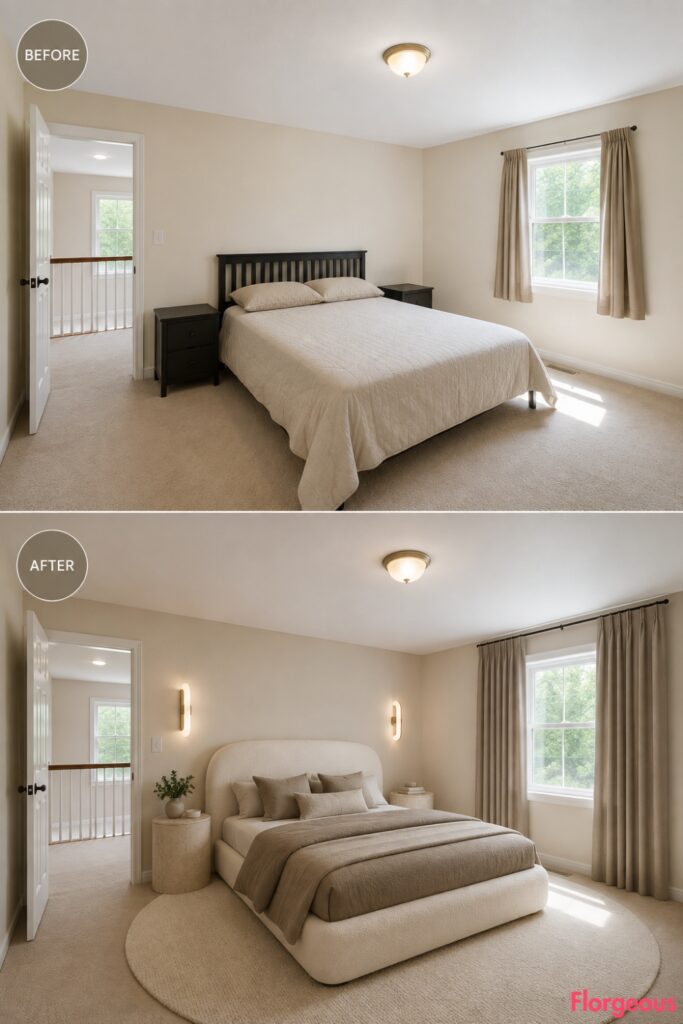
Minimalism does not need to feel severe.
Before: Warm off-white walls, basic bed with simple neutral bedding against the main wall, two bare nightstands, short plain curtains, basic ceiling light, simple flooring, empty wall surfaces, minimal styling, soft natural daylight, and no strong focal point.
After: Introduce a curved upholstered bed, cylindrical limestone tables, an oval rug, rounded sconces, and soft mushroom bedding.
18. Contrast Limestone With Chocolate Timber
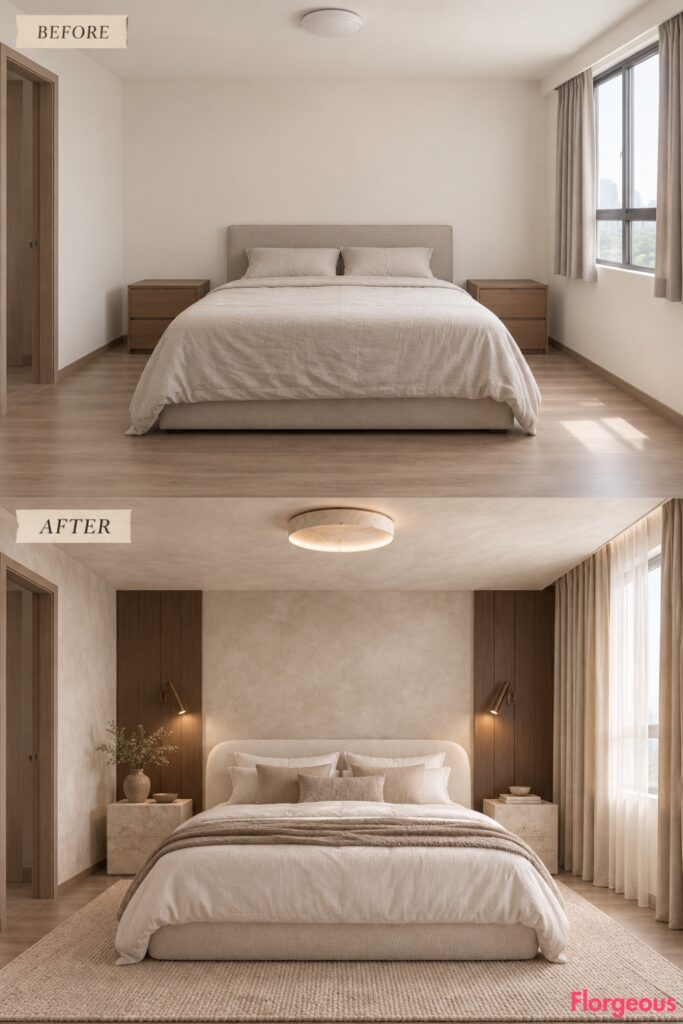
Two strong materials are enough to build a whole scheme.
Before: Warm off-white walls, basic bed with simple neutral bedding against the main wall, two bare nightstands, short plain curtains, basic ceiling light, simple flooring, empty wall surfaces, minimal styling, soft natural daylight, and no strong focal point.
After: Pair compact limestone bedside plinths with chocolate-stained timber details, then soften both with a cream bed and ivory textiles.
19. Draw the Room With Thin Black Lines
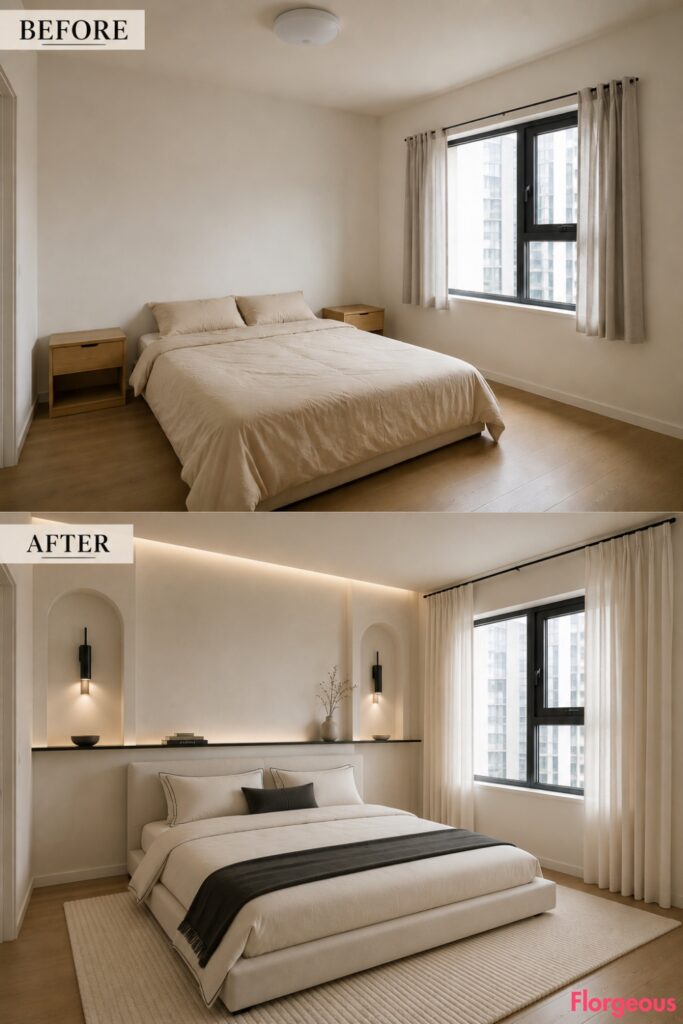
Graphic contrast works when black is treated as an outline rather than a mass.
Before: Warm off-white walls, basic bed with simple neutral bedding against the main wall, two bare nightstands, short plain curtains, basic ceiling light, simple flooring, empty wall surfaces, minimal styling, soft natural daylight, and no strong focal point.
After: Add a parchment bed, razor-thin black shelf, blackened-metal reading lights, dark piping, and one slim black curtain track.
20. Let Woven Materials Replace Decoration
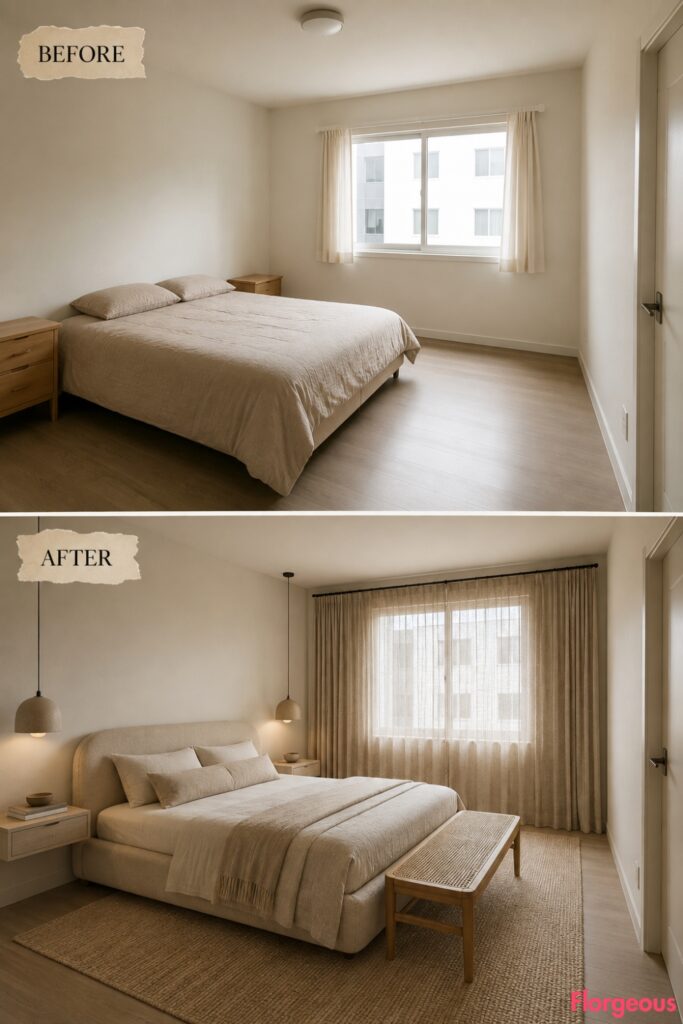
This version removes most decorative objects and brings warmth through fibers instead.
Before: Warm off-white walls, basic bed with simple neutral bedding against the main wall, two bare nightstands, short plain curtains, basic ceiling light, simple flooring, empty wall surfaces, minimal styling, soft natural daylight, and no strong focal point.
After: Combine flax bedding, flatwoven wool, pale ash, one restrained cane bench, and softly woven curtains.
Try this: Keep cane to one piece so the room does not drift into a themed look.
21. Place the Bed on a Monolithic Microcement Plinth
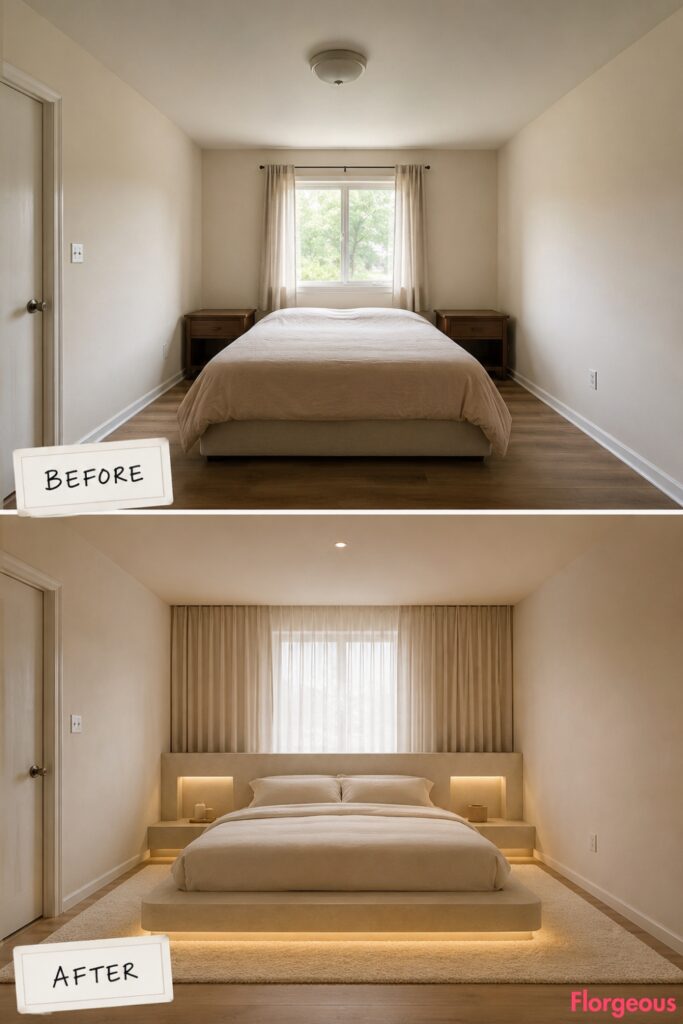
Instead of treating the bed as freestanding furniture, make it part of the architecture.
Before: Warm off-white walls, basic bed with simple neutral bedding against the main wall, two bare nightstands, short plain curtains, basic ceiling light, simple flooring, empty wall surfaces, minimal styling, soft natural daylight, and no strong focal point.
After: Build a broad low warm-stone microcement plinth with rounded edges. Recess tiny bedside niches into the composition and add subtle concealed lighting.
22. Carry Pale Oak Across Part of the Ceiling
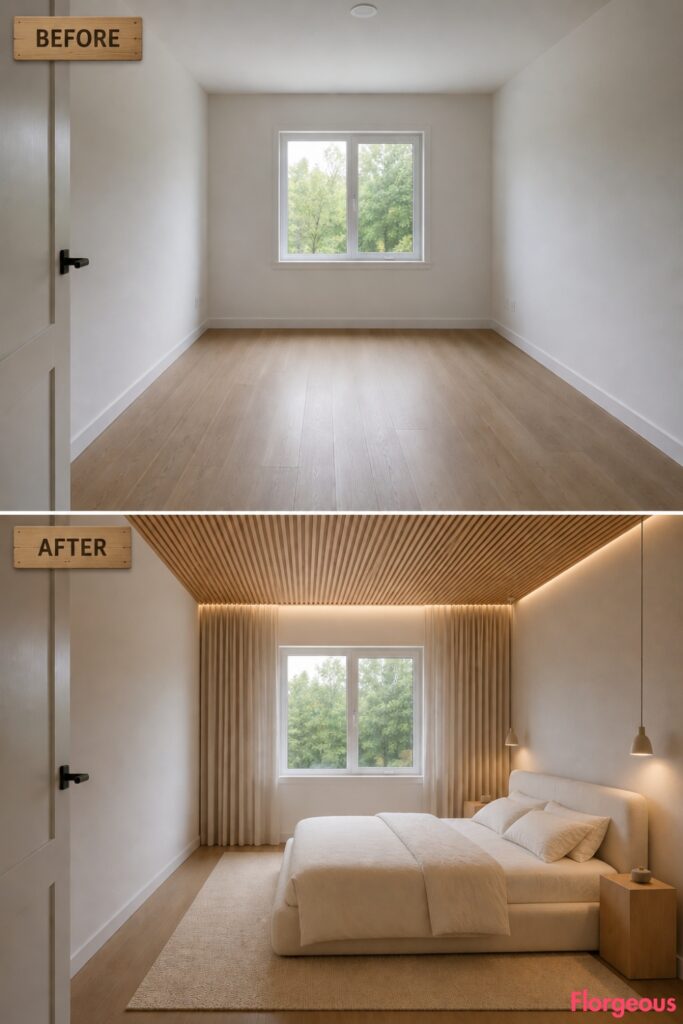
This idea shifts the feature away from the walls entirely.
Before: Warm off-white walls, basic bed with simple neutral bedding against the main wall, two bare nightstands, short plain curtains, basic ceiling light, simple flooring, empty wall surfaces, minimal styling, soft natural daylight, and no strong focal point.
After: Run a restrained band of pale-oak slats across the ceiling above the bed with integrated warm downlights. Keep every vertical surface quiet.
23. Add a Barely There Dressing Rail
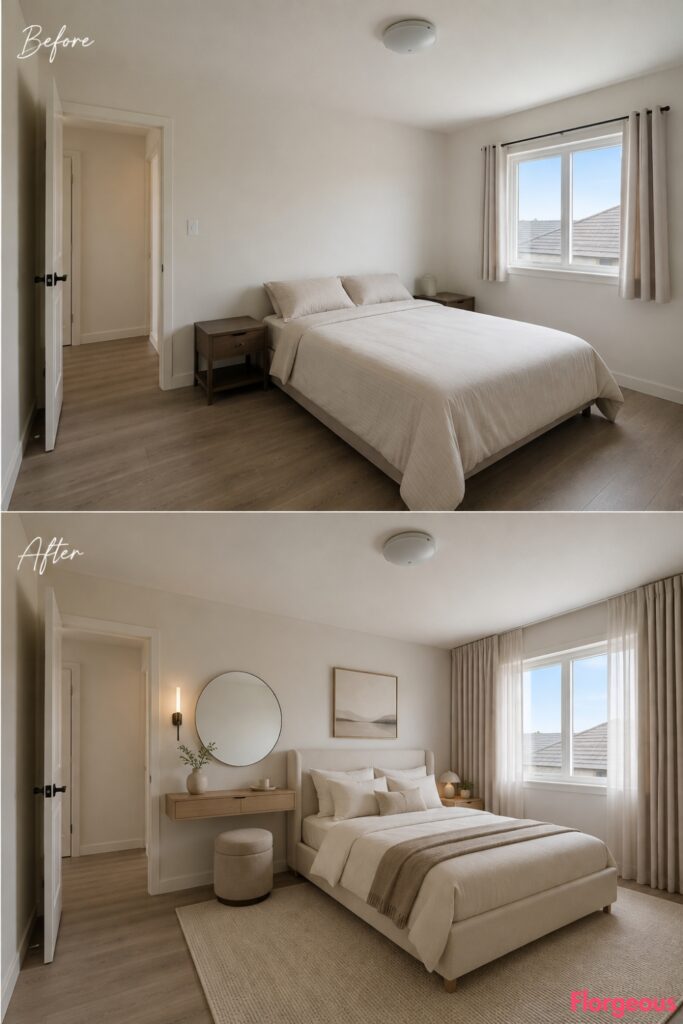
A dressing area can exist without introducing a bulky vanity.
Before: Warm off-white walls, basic bed with simple neutral bedding against the main wall, two bare nightstands, short plain curtains, basic ceiling light, simple flooring, empty wall surfaces, minimal styling, soft natural daylight, and no strong focal point.
After: Mount a slim floating oak rail on one safe wall, add a frameless round mirror, concealed drawer, and small stool that tucks completely underneath.
24. Break the Symmetry With an Intentional Offset Layout
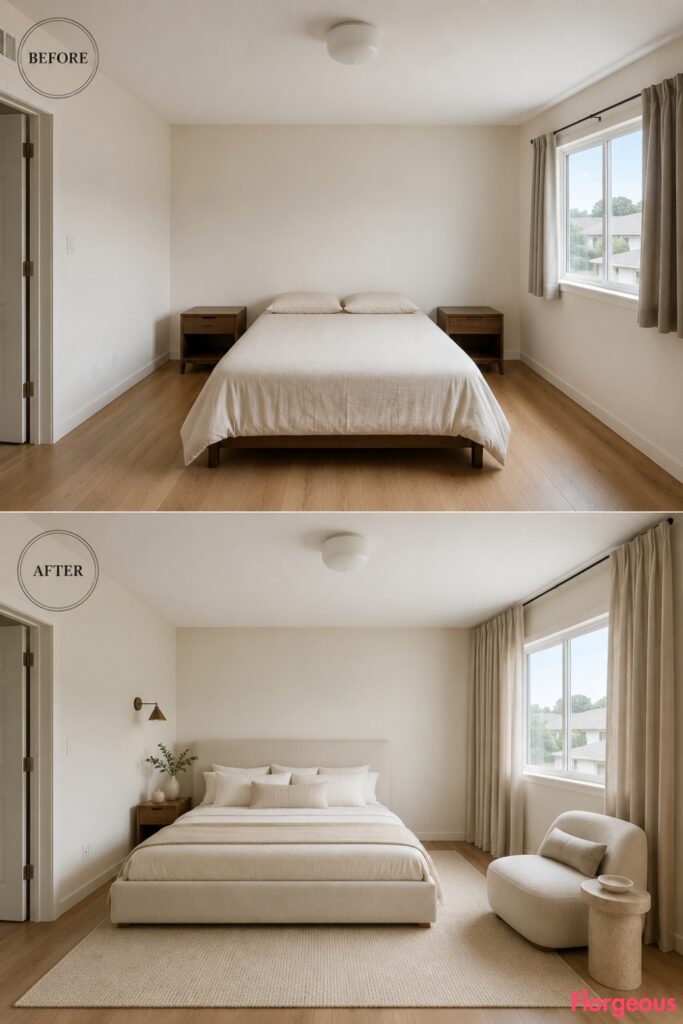
A centered bed is not the only way to create calm.
Before: Warm off-white walls, basic bed with simple neutral bedding against the main wall, two bare nightstands, short plain curtains, basic ceiling light, simple flooring, empty wall surfaces, minimal styling, soft natural daylight, and no strong focal point.
After: Shift the bed slightly toward one side while retaining comfortable access. Use the larger opposite zone for one low lounge chair and a tiny stone pedestal.
The composition feels more relaxed without becoming random.
25. Finish With a Bed That Appears to Float
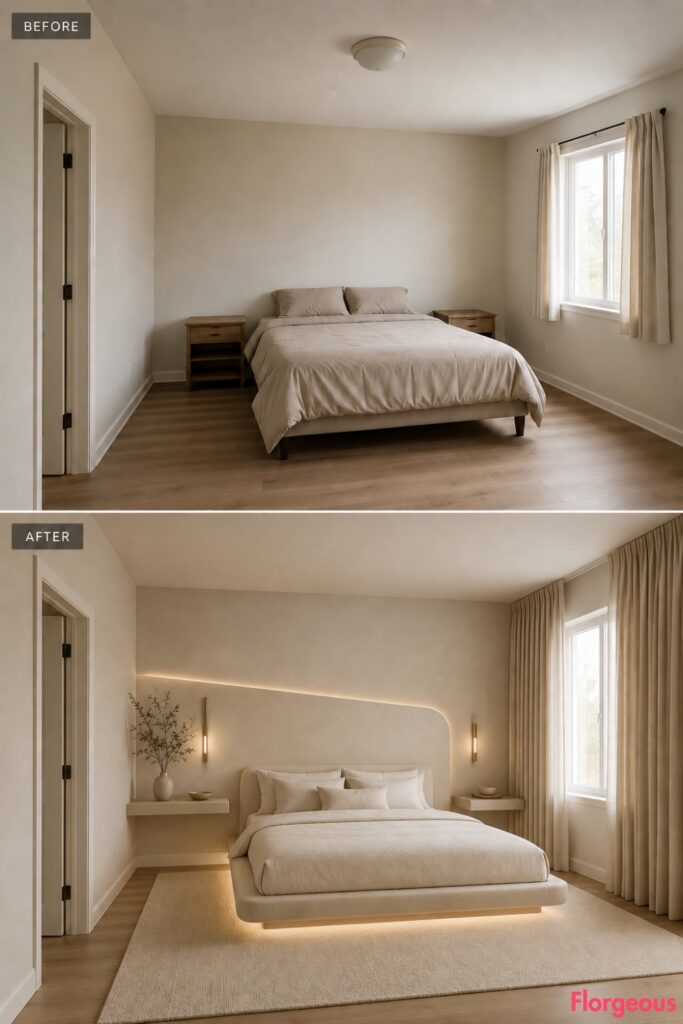
The final transformation uses light and shadow rather than additional furniture.
Before: Warm off-white walls, basic bed with simple neutral bedding against the main wall, two bare nightstands, short plain curtains, basic ceiling light, simple flooring, empty wall surfaces, minimal styling, soft natural daylight, and no strong focal point.
After: Mount a low cream bed on a deeply recessed hidden plinth so the base disappears from view. Add very soft warm under-bed illumination, minimal wall-mounted bedside ledges, dense wool, and ceiling-height flax curtains.
How to Choose the Right Minimal Direction for Your Bedroom
The strongest minimal rooms are not necessarily the emptiest. They are the ones where the furniture, storage, lighting, and materials have been edited until every visible element has a clear role.
If your room feels crowded, start with footprint and storage. Floating furniture, consolidated cabinetry, fewer bedside pieces, or a lower bed can immediately reduce visual noise. If it feels cold, work with linen, wool, timber, plaster, clay, or softer lighting before adding decorative objects.
If the room simply feels generic, choose one defining move from these Minimalist Bedroom ideas. A plaster niche, curtain wall, architectural bed platform, oversized artwork, sculptural ceiling light, or strong material pairing can carry the entire space.
Before changing anything, measure the walking clearance around the bed, identify what needs to be stored, check where task lighting is actually required, and test materials together in natural daylight. Once those practical decisions are solved, the bedroom usually needs far less decoration than expected.