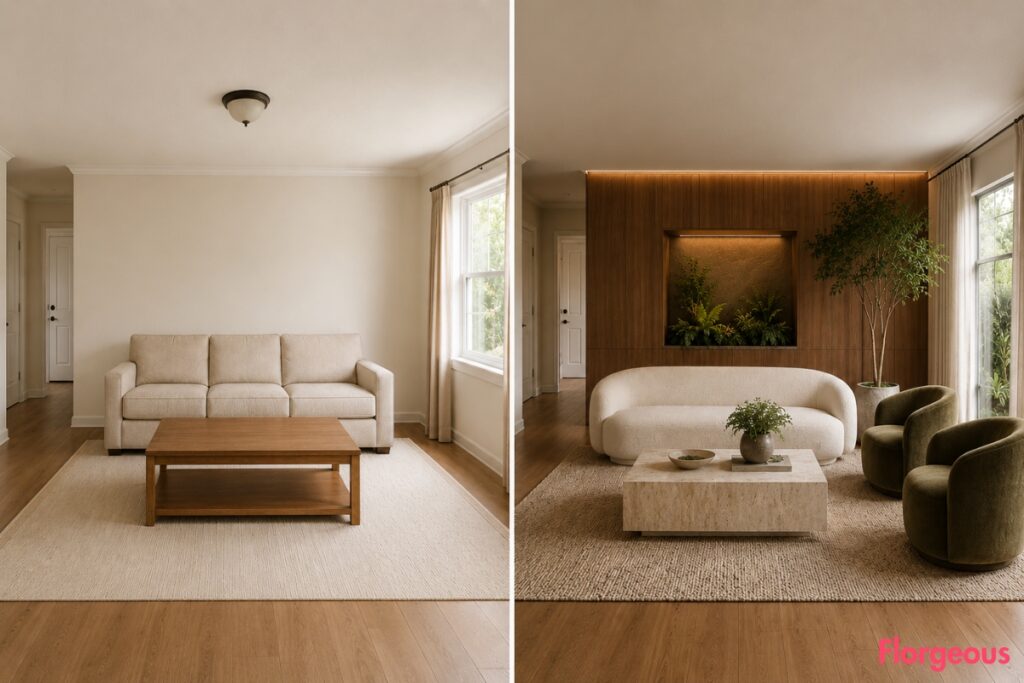
The original room is fine on paper, but visually flat: warm off-white walls, a basic beige sofa, bare coffee table, short curtains, generic lighting, and little connection to nature.
For these 21 makeovers, that shell never moves. The doorway, window, flooring, proportions, daylight direction, camera, and circulation remain locked while each Garden Oasis Living Room takes a completely different route, from restrained indoor trees and Mediterranean planting to forest-dark listening spaces, compact botanical walls, and high-end integrated greenery.
Some afters are genuinely lush. Others barely use plants at all, relying instead on stone, timber, garden colors, light, and carefully planned negative space.
1. Make One Indoor Tree the Room’s Living Sculpture
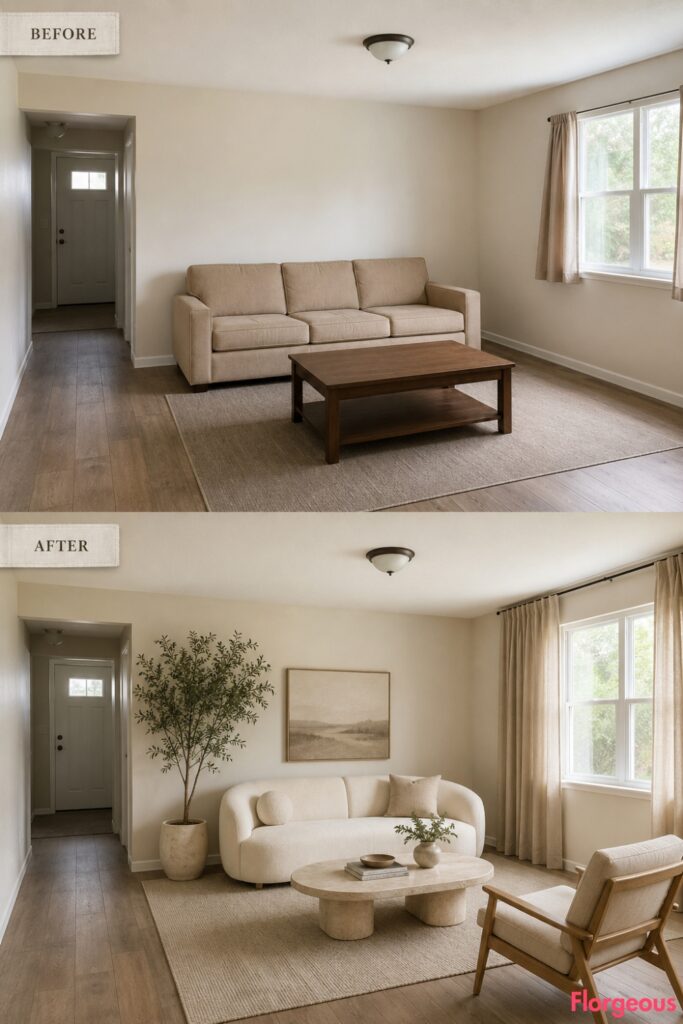
Instead of decorating around dozens of plants, give one mature ficus the visual importance of an artwork.
Before: The locked builder-grade room has warm off-white walls, straight beige sofa, bare rectangular table, neutral rug, short curtains, basic ceiling light, and minimal styling.
After: A curved ivory sofa sits against the main wall with an oversized ficus at one outer end. A broad oval travertine table, pale oak lounge chair, wool rug, and floor-length flax curtains keep the rest deliberately quiet.
Designer Tip: A single specimen plant looks most convincing when the planter has enough visual weight to match it.
2. Borrow Conservatory Lightness Without Building a Conservatory
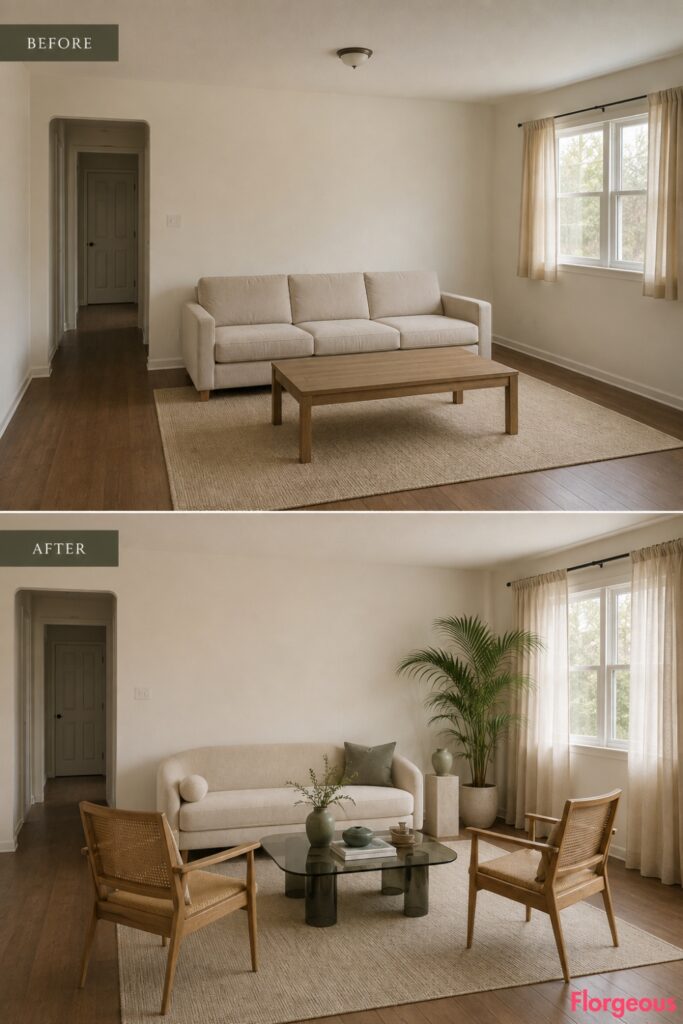
This interpretation uses transparent, slender furniture so the room feels garden-facing rather than furniture-heavy.
A slim oatmeal settee faces two open cane-and-oak chairs. A clear smoked-glass table, pale limestone side pedestal, kentia palm, and celadon ceramics create an airy winter-garden quality while the window remains completely accessible.
3. Turn the Same Shell Into a Sun-Baked Mediterranean Courtyard Room
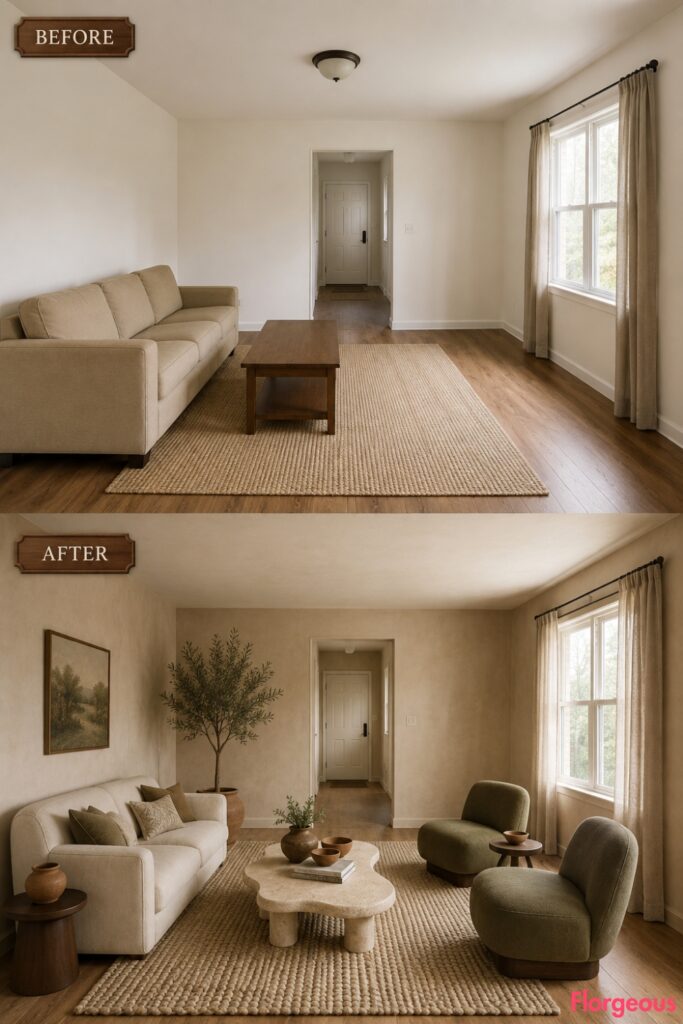
Here, greenery is sparse. The atmosphere comes from chalky surfaces and warm earth tones.
Muted clay limewash surrounds a cream sofa, two low olive chairs, an irregular limestone table, woven wool rug, handmade terracotta vessels, and a compact olive tree. The arrangement stays low and open, almost like an indoor courtyard.
Color Story: Terracotta works better here as dusty clay than saturated orange.
4. Create a Botanical Wall That Behaves Like Architecture
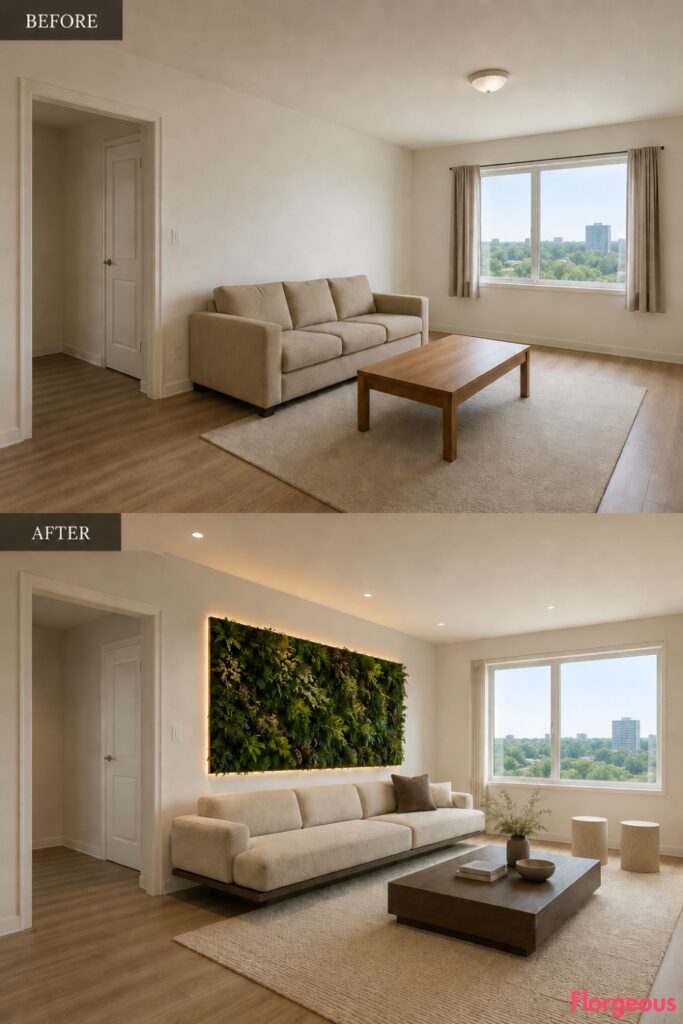
Instead of distributing plants around the room, concentrate almost all greenery into one professionally designed vertical plane.
A mushroom-colored floating sofa faces a rectangular fern and philodendron living wall. A low smoked-oak table and two stone stools leave a broad zone of empty floor between furniture and planting.
5. Go Quiet With a Japanese Garden-Inspired Low Layout
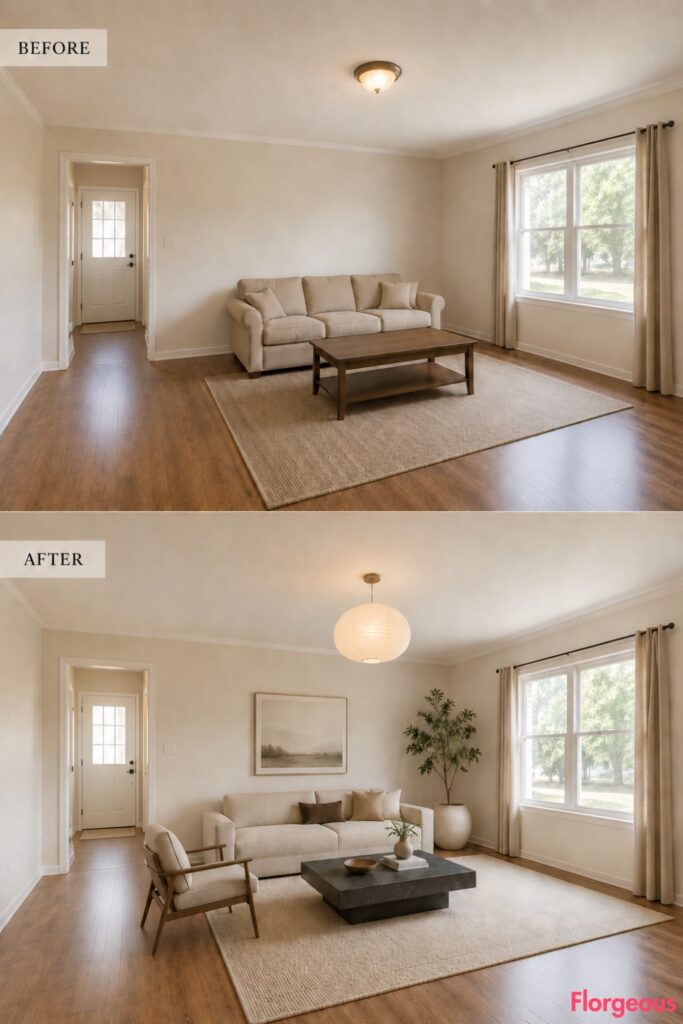
This version depends on space between objects more than foliage density.
A low oatmeal sofa, one ash-framed chair, honed charcoal stone table, pale wool rug, paper-inspired pendant, and a sculptural podocarpus create an asymmetrical composition with generous empty floor around it.
Why It Works: The room feels calmer because nothing is fighting for equal attention.
6. Build a Tropical Modern Room Around Deep Green Stone
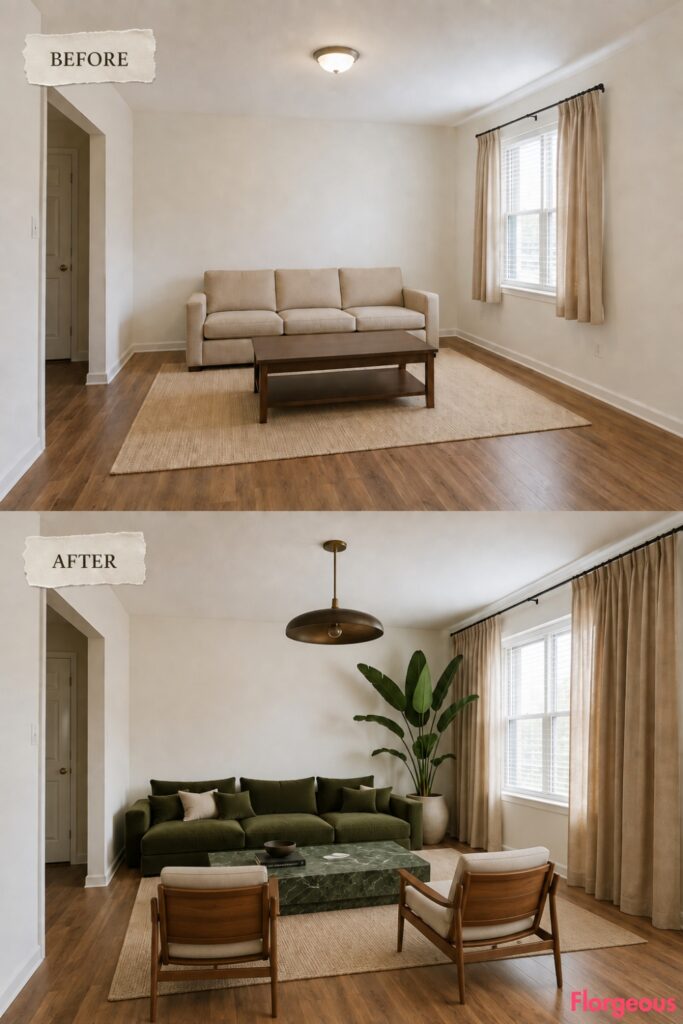
Forget palm-print cushions and excessive rattan.
A moss modular sofa faces two compact teak-framed chairs across a dramatic green-veined stone table. One bird-of-paradise plant provides height, while dark bronze lighting and sandy linen soften the tropical references.
7. Use a Suspended Plant Rail to Free Every Corner
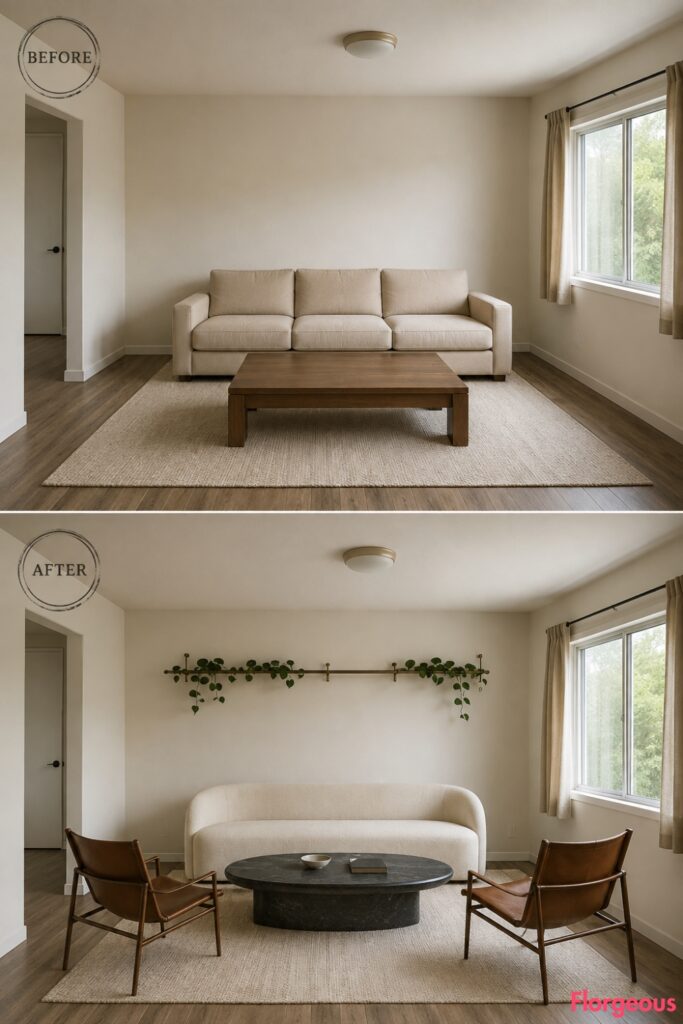
This room keeps the floor unusually clear.
A narrow blackened-bronze ceiling rail runs parallel to the wall, supporting a limited row of trailing plants above a cream settee. Two tobacco leather sling chairs and a small oval soapstone table create a compact conversation zone underneath.
Common Mistake: Hanging greenery should never drop into eye level or the circulation zone.
8. Turn the Room Into a Terracotta Reading Garden
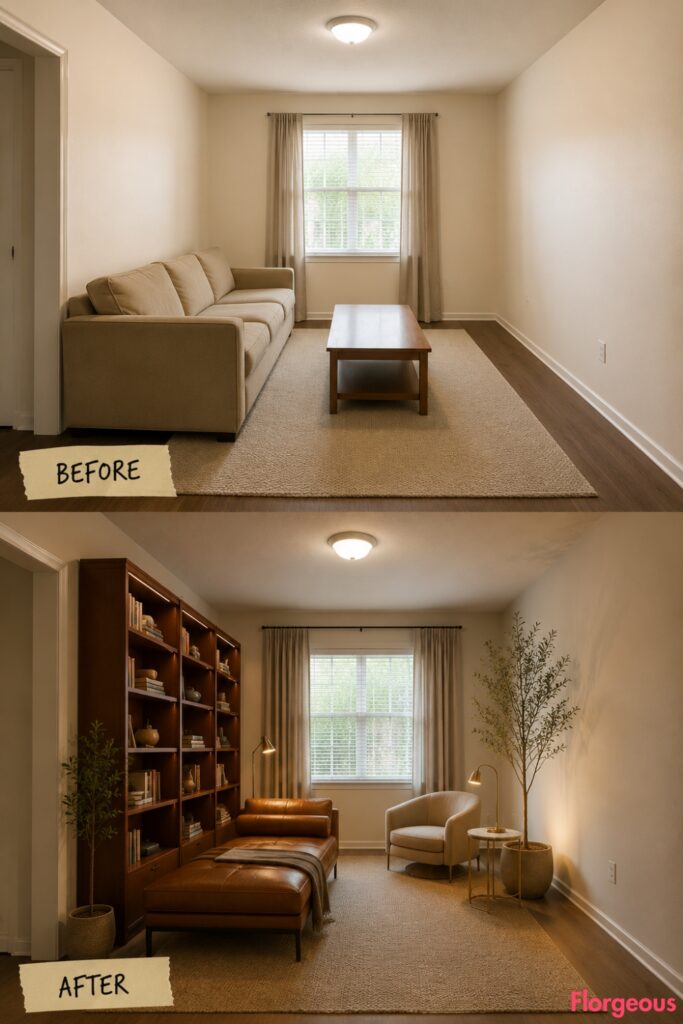
Plants become supporting characters in a library-like setting.
Tall russet-painted freestanding bookcases occupy one safe wall, while a tobacco chaise sits parallel to them. An oatmeal reading chair, brass-and-stone drink table, focused lights, and two architectural plants create a warm, collected retreat.
9. Replace Scattered Pots With One Linear Garden Ribbon
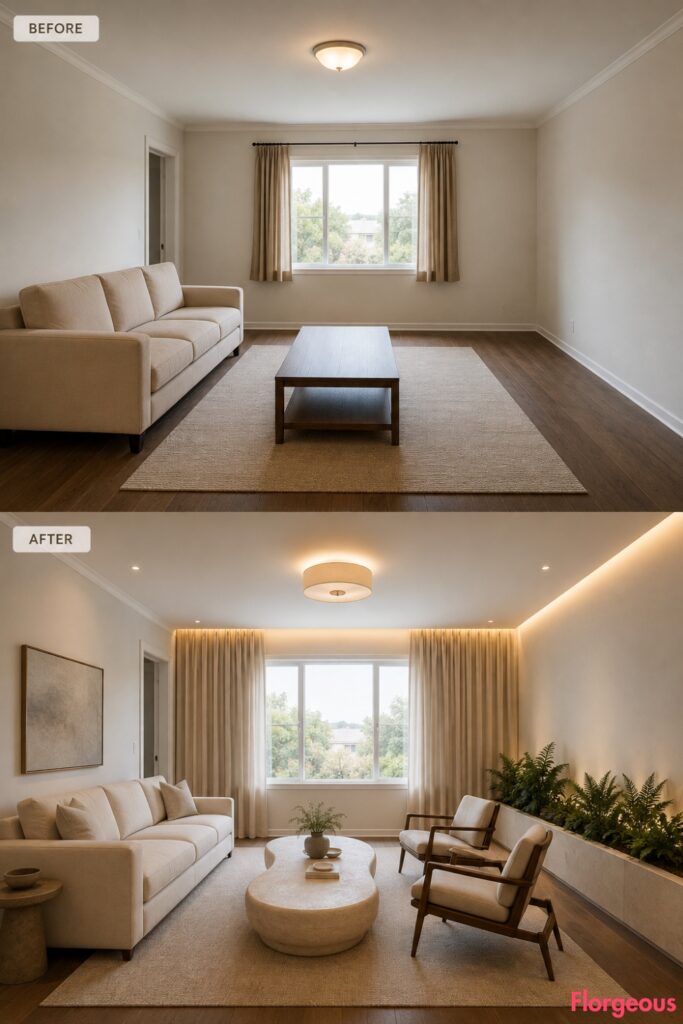
A slim planted strip can make greenery feel deliberately built into the furniture plan.
A tailored cream sofa sits opposite two walnut lounge chairs. Behind the chairs, a long narrow planter runs parallel to the seating line, filled with layered foliage below shoulder height. A substantial serpentine-stone table anchors the center.
10. Try a Dry Garden With Sculptural Low-Maintenance Foliage
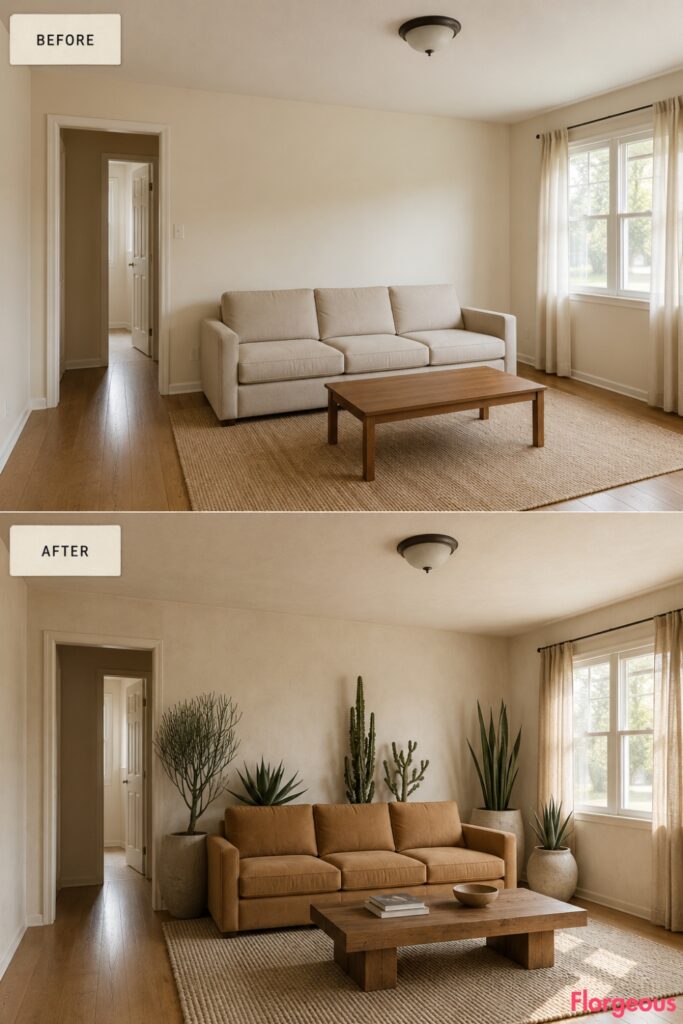
Garden oasis does not have to mean lush leaves.
Pale mineral walls, a caramel linen sofa, chunky oak table, flatwoven rug, and sculptural drought-tolerant plants create a dry garden mood. Large planters are grouped tightly along one wall rather than scattered through the floor plan.
Plant Care Note: Choose species according to your actual indoor light, not simply because they fit the visual concept.
11. Reframe the Window as the Heart of a Garden Oasis Living Room
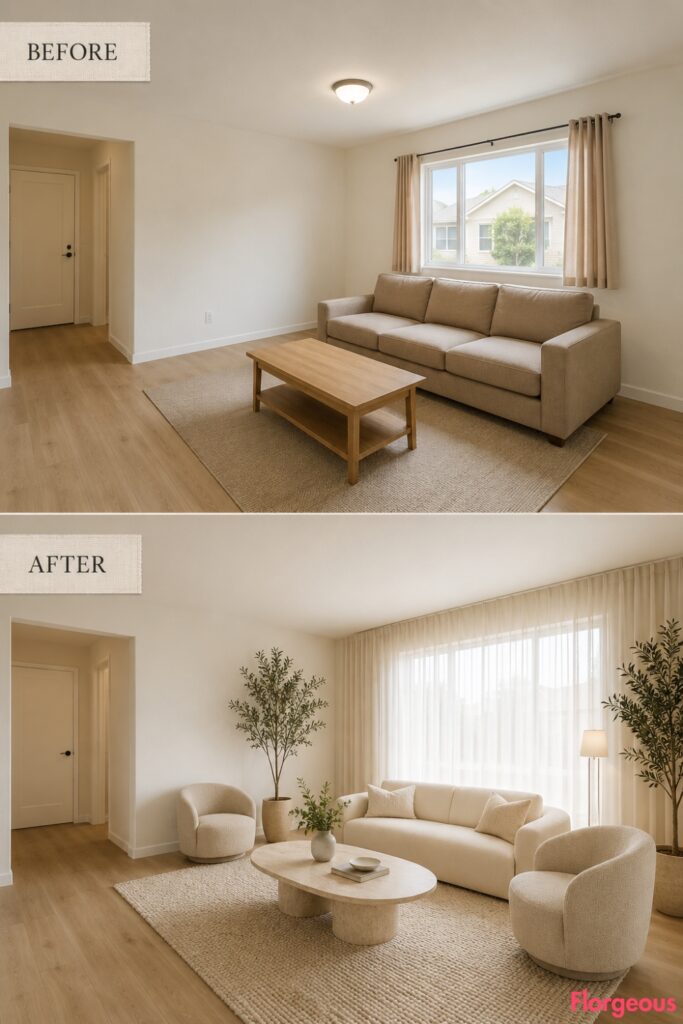
Rather than hiding the window behind plants, this makeover turns it into the brightest visual opening.
Two low swivel chairs sit near the window with a wide gap between them, angled back toward a compact cream sofa. Slender plants frame the outer edges of the glazing while sheer curtains filter daylight.
12. Make the Room Feel Garden-Like With Trellis Millwork, Not Plant Quantity
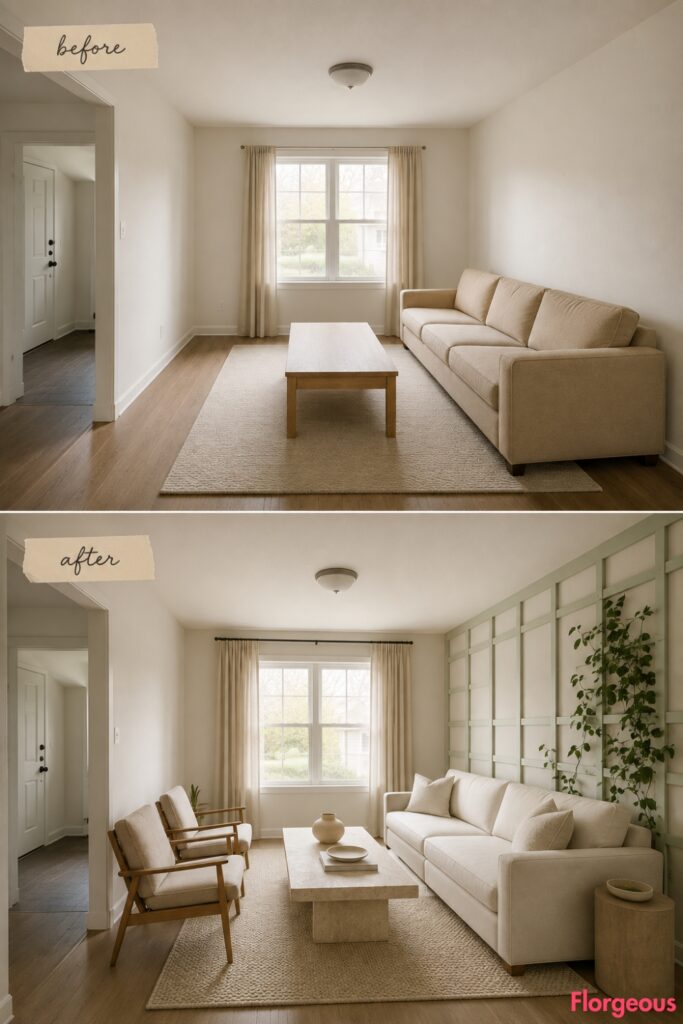
Here, the strongest botanical cue is crafted timber.
A pale sage geometric trellis treatment covers the main wall behind an ivory sofa. Only one climbing plant occupies a controlled section, while two compact oak chairs, a travertine table, and woven linen keep the rest architectural.
13. Build a Compact Urban Garden Up the Wall
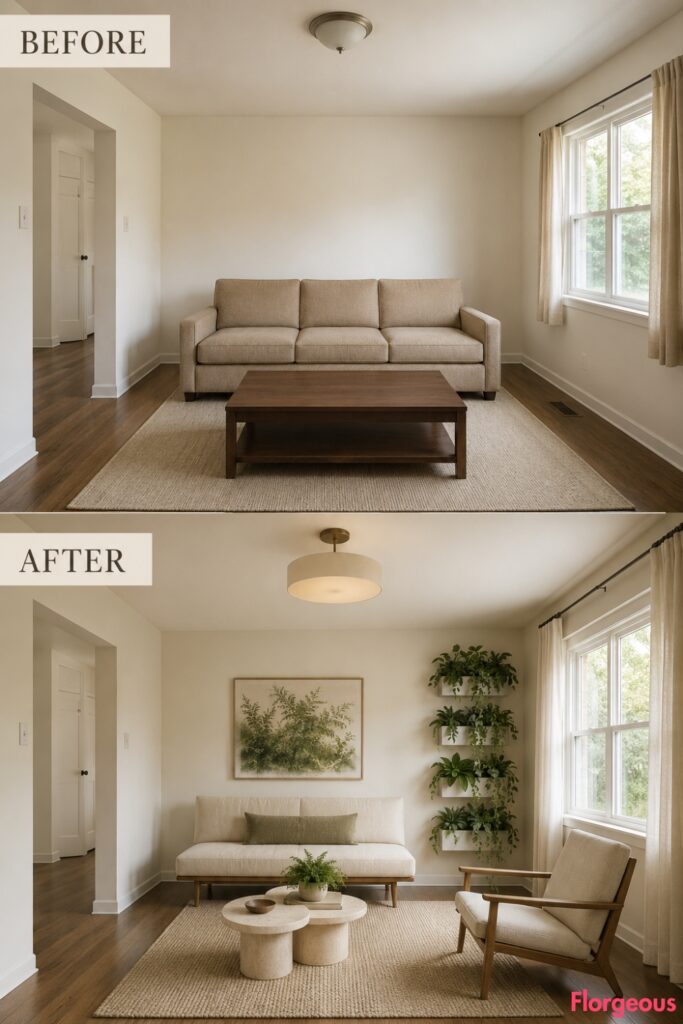
For a smaller living room, reducing furniture depth matters more than squeezing in extra plants.
A narrow cream settee replaces the deeper sofa. One slim ash chair and nesting stone tables occupy the center, while a disciplined column of wall-mounted planters provides greenery without consuming floor area.
Small Space Tip: Stop vertical planting well before the doorway so the wall does not visually narrow the entrance.
14. Make the Botanical Makeover Completely Renter-Friendly
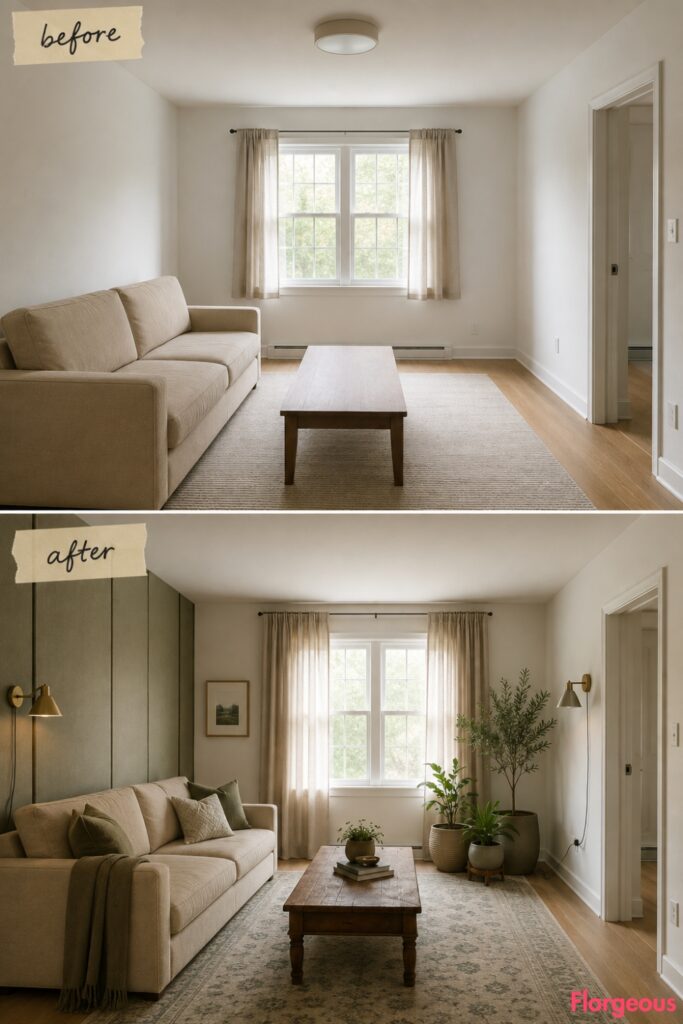
The original beige sofa stays, and nothing permanent is built.
Removable olive textile panels create a focal wall, ready-made full-height curtains improve proportion, and lightweight cachepots hold a small group of easy-care plants. A vintage walnut table and plug-in sconces add character without construction.
Budget Version: Coordinating existing planters with matching outer cachepots can make an inexpensive collection look intentional.
15. Create a Family Garden Room With Plants Above Reach
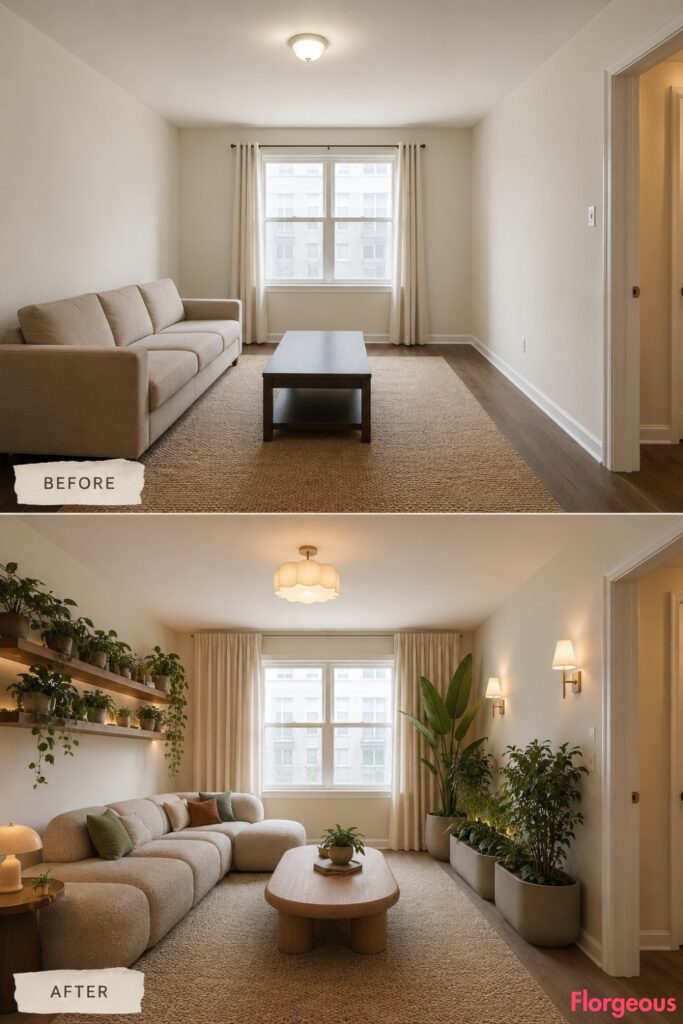
This version treats durability as part of the aesthetic.
A washable mushroom modular sofa sits around a rounded solid-oak table with softened corners. Most greenery moves to secured shelves and substantial wall-side planters, while a dense wool-blend rug and wall-mounted lights keep the floor safer and simpler.
16. Turn the Room Into a Moody Forest Listening Lounge
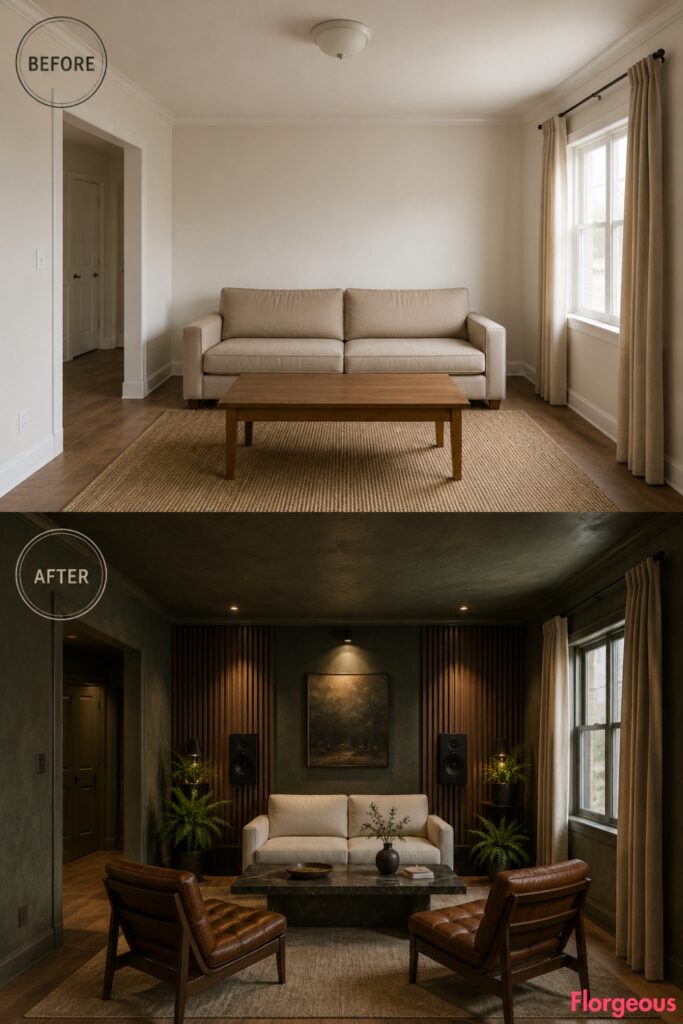
This makeover has a completely different purpose: sitting still and listening.
Deep woodland plaster forms a cocoon around a compact cream settee and two low tobacco listening chairs positioned opposite it. Fluted walnut acoustic panels, concealed speakers, a narrow stone table, fern-like foliage, and low amber lighting create a refined nocturnal atmosphere.
17. Use Citrus and Parchment for an Indoor Orangery Mood
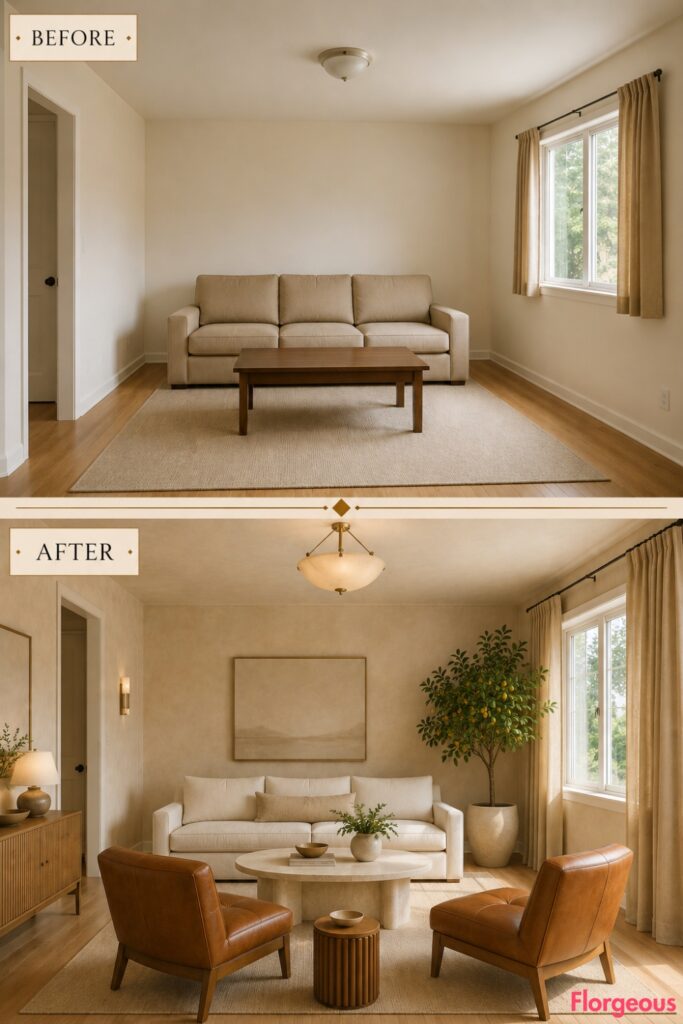
The garden reference here comes from fruiting greenery and warm sunlight rather than dense foliage.
Parchment plaster, an ivory sofa, two caramel leather chairs, honey-toned oak, an oval limestone table, and one compact citrus tree form a warm, cultivated composition.
18. Create a Botanical Gallery With Plants on Ceramic Plinths
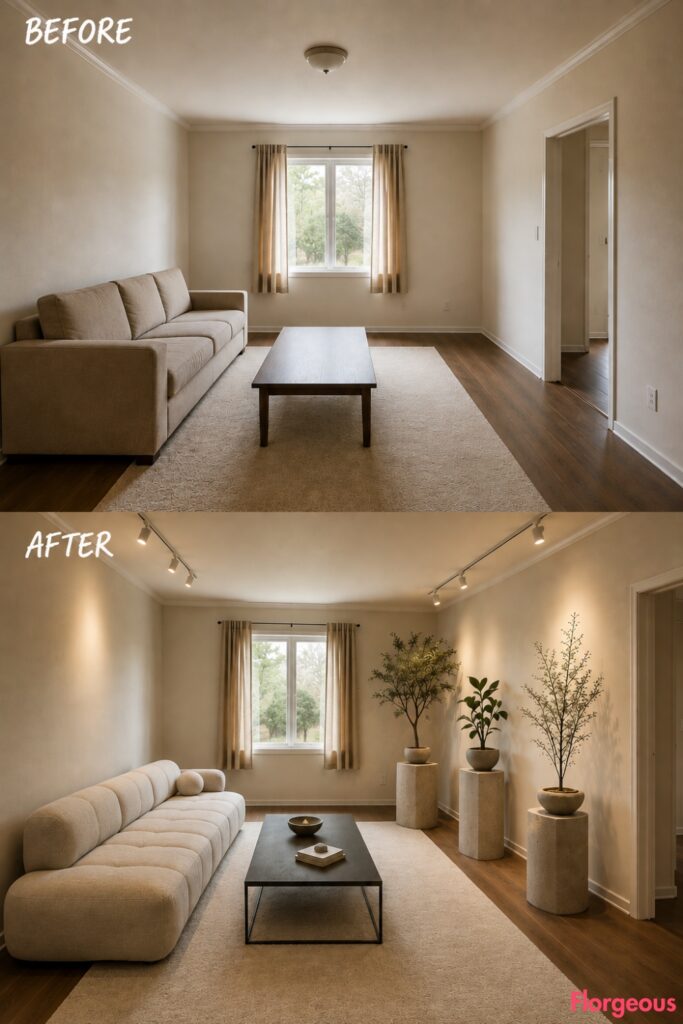
Instead of treating greenery like background decor, display a few plants like collected objects.
A long low stone-colored sofa sits opposite three asymmetrical handmade ceramic plinths, each holding a distinct sculptural plant. A thin blackened-metal table and directional picture lighting reinforce the gallery feeling.
19. Build the Palette Around a Pond-Inspired Blue-Green Stone
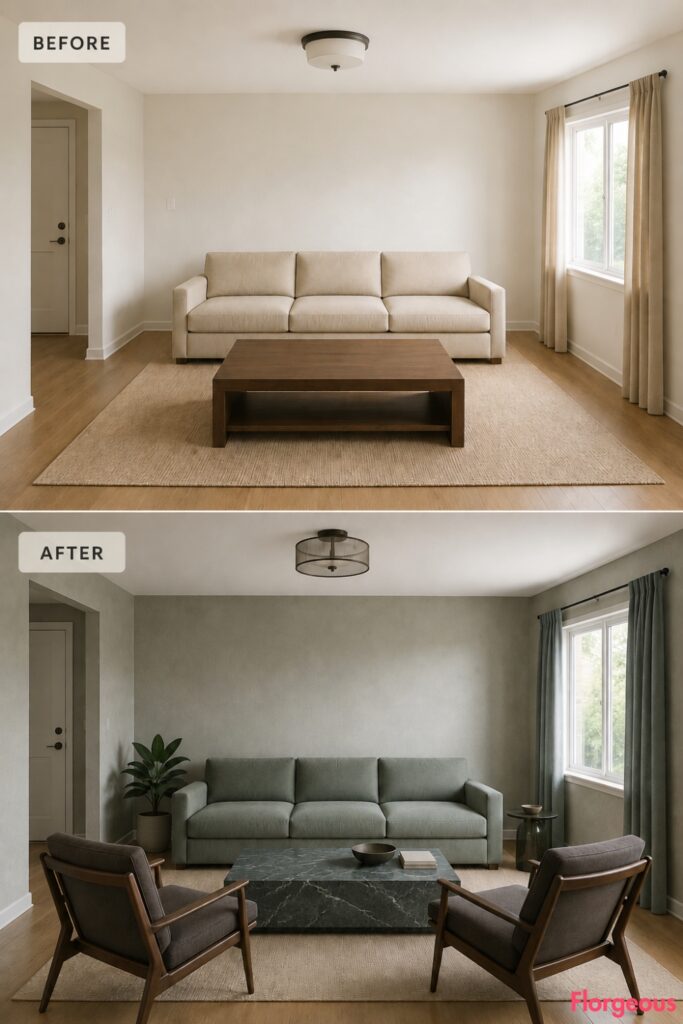
A garden oasis can reference water without installing an indoor fountain.
A celadon sofa and two dark walnut chairs surround a dramatic blue-green quartzite table. Mineral-gray walls, eucalyptus-toned curtains, low broad-leaf planting, and reflective smoked glass suggest the depth and coolness of a garden pond.
20. Integrate Greenery Into Luxury Walnut Joinery
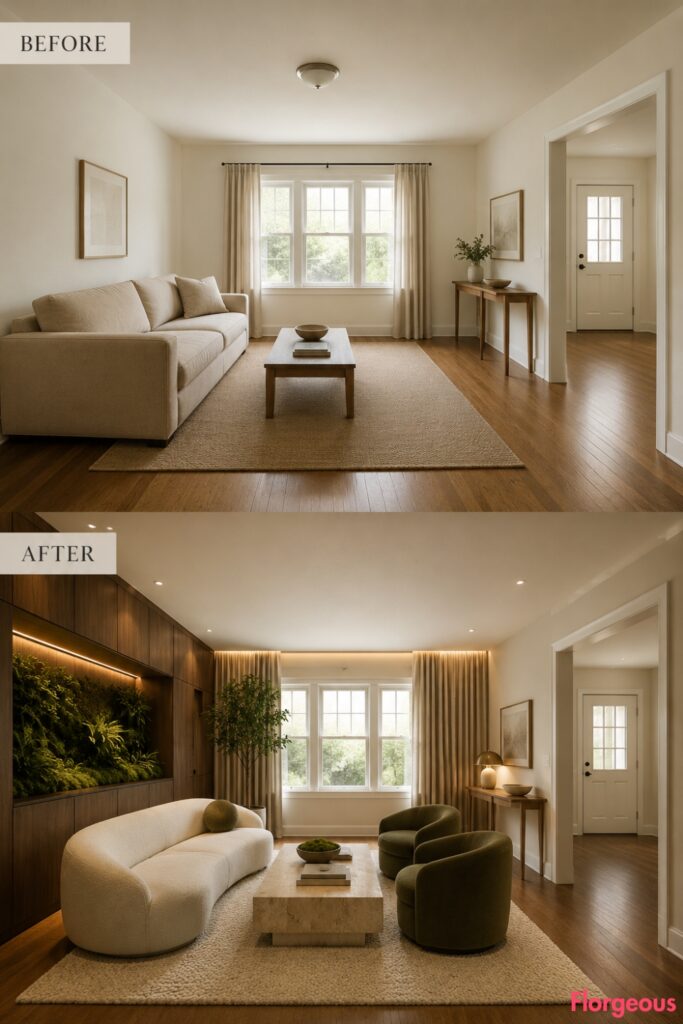
This is the most architectural interpretation in the collection.
A sculpted ivory sofa faces two compact moss mohair chairs across a monolithic travertine table. Floor-to-ceiling walnut joinery contains one recessed planting bay with concealed grow lighting and ventilation, turning greenery into part of the millwork.
Why It Works: The plants occupy one designed zone, so the room still feels calm despite the rich material palette.
21. Finish With a Night Garden Designed Almost Entirely Through Light
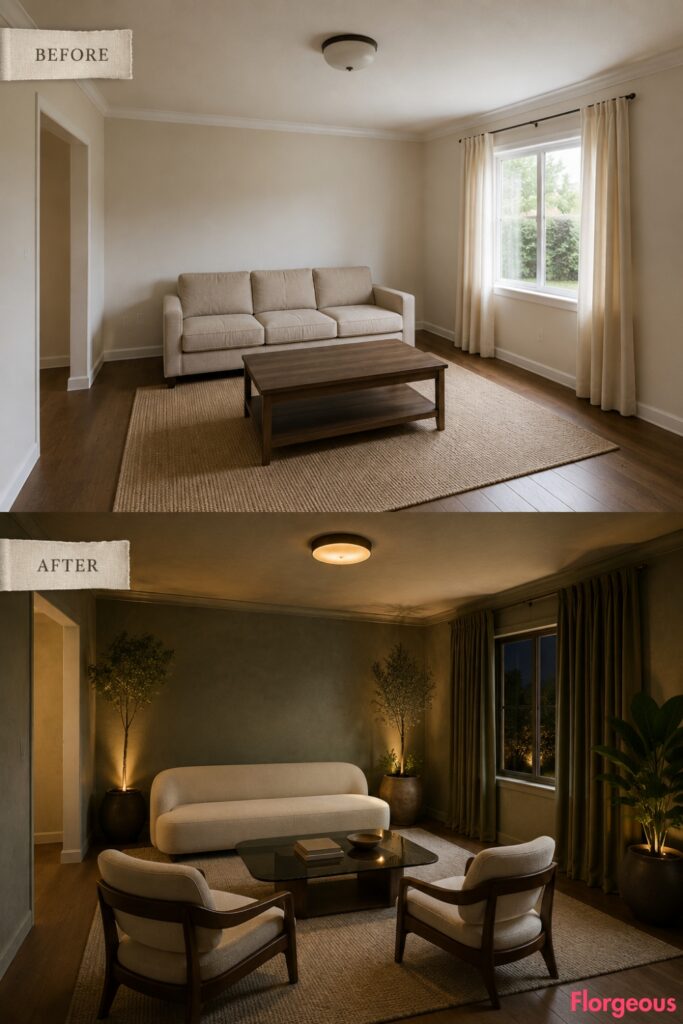
The final concept changes the mood without relying on plant quantity.
Olive plaster surrounds a low cream sofa and two curved walnut-framed chairs. Three specimen plants sit along the perimeter, each softly uplighted from below, while smoked glass, bronze lamps, and deep green curtains create layered shadows after sunset.
It is less an indoor jungle and more the feeling of sitting beside a garden at night.
How to Choose Your Own Garden Direction
The strongest Garden Oasis Living Room is rarely the one with the highest plant count. Begin with the practical conditions you cannot style away: natural light, usable floor area, doorway clearance, household habits, and the amount of plant care you actually want.
Then choose one dominant idea. That might be a specimen tree, a stone table, a vertical garden, trellis millwork, walnut planting bay, Mediterranean plaster, or a window-focused furniture layout.
Finish with greenery rather than starting with it. Once furniture and circulation feel right, add plants only where they strengthen the composition. That approach creates a room that feels genuinely connected to a garden rather than simply filled with pots.