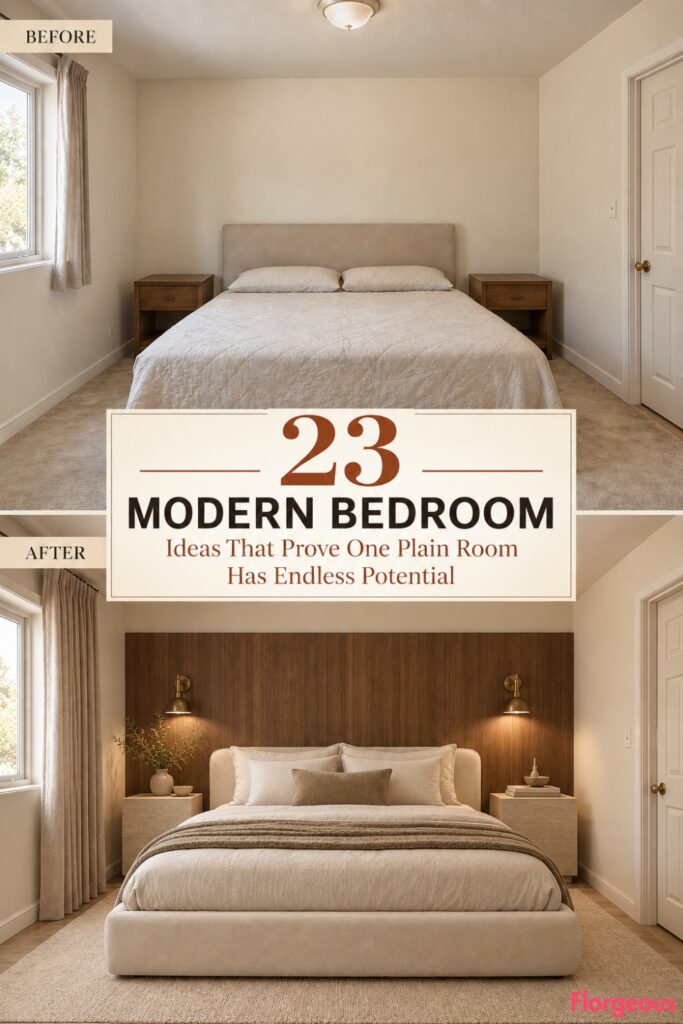
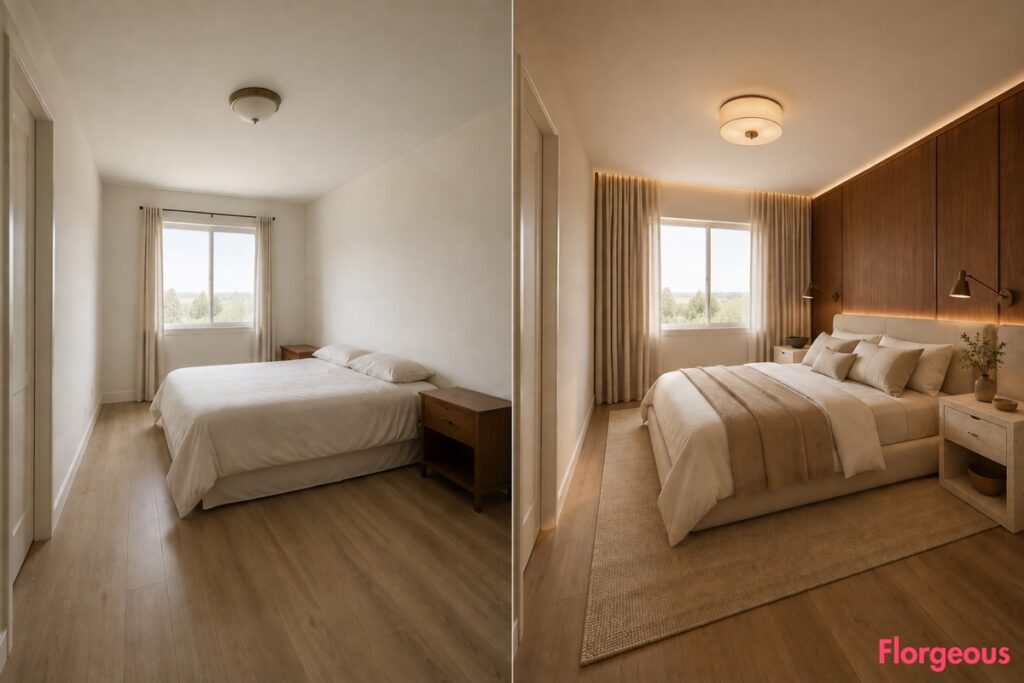
A plain bedroom can be surprisingly difficult to finish. The bed is there, the walls are painted, and the room technically works, yet short curtains, bare nightstands, basic lighting, and an empty headboard wall can leave everything feeling temporary.
For this gallery, we kept one builder-grade bedroom completely fixed: warm off-white walls, a basic bed with simple neutral bedding, two plain nightstands, short curtains, simple flooring, a basic ceiling light, minimal styling, and soft natural daylight. The doorway, window, room proportions, flooring footprint, and camera angle remain exactly the same in every makeover.
What changes is the design direction. These 23 Modern Bedroom ideas explore completely different approaches to color, furniture, lighting, storage, materials, and layout, proving that the same ordinary shell can support everything from quiet minimalism to dark architectural drama.
1. Frame the Bed With a Wide Walnut Architectural Wall
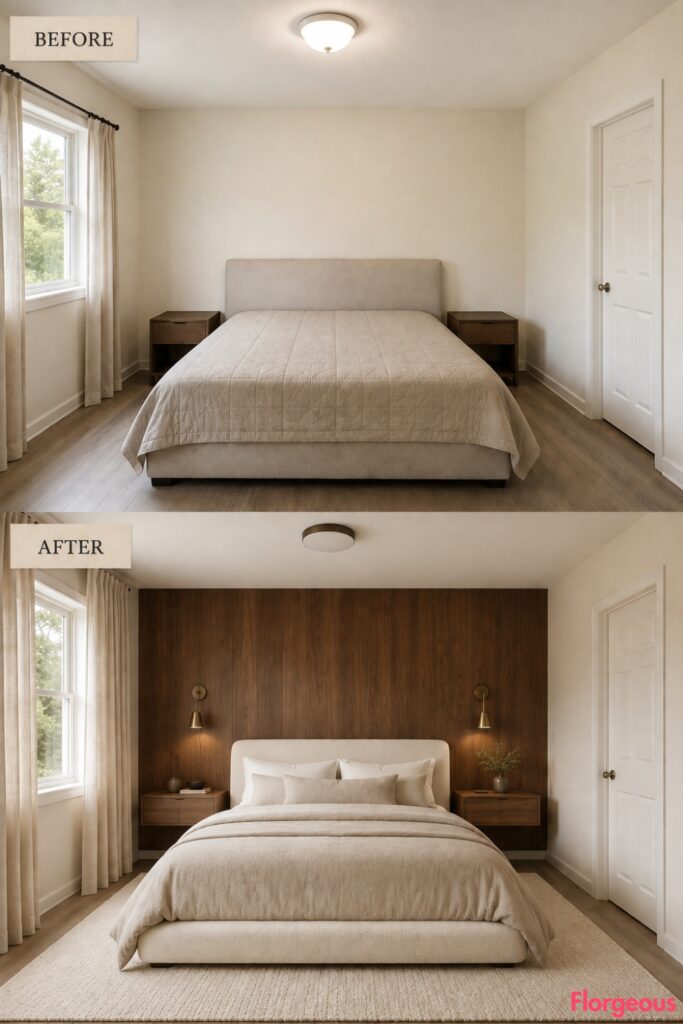
Start with one strong material instead of dozens of decorative details.
Before: The locked plain bedroom has warm off-white walls, a basic neutral bed, bare nightstands, short curtains, simple lighting, and no clear focal point.
After: A wide walnut panel stretches behind a low cream upholstered bed and continues behind two narrow floating nightstands. Bronze reading lights, oatmeal linen bedding, an ivory wool rug, and full-height flax curtains keep the timber from feeling heavy.
Why it works: Extending the headboard treatment beyond the mattress gives the bed more visual importance and makes the whole room feel intentionally planned.
Try this: Walnut veneer or high-quality timber-look panels can create the same effect without solid-wood construction.
2. Turn the Same Bedroom Into a Dark Charcoal Cocoon
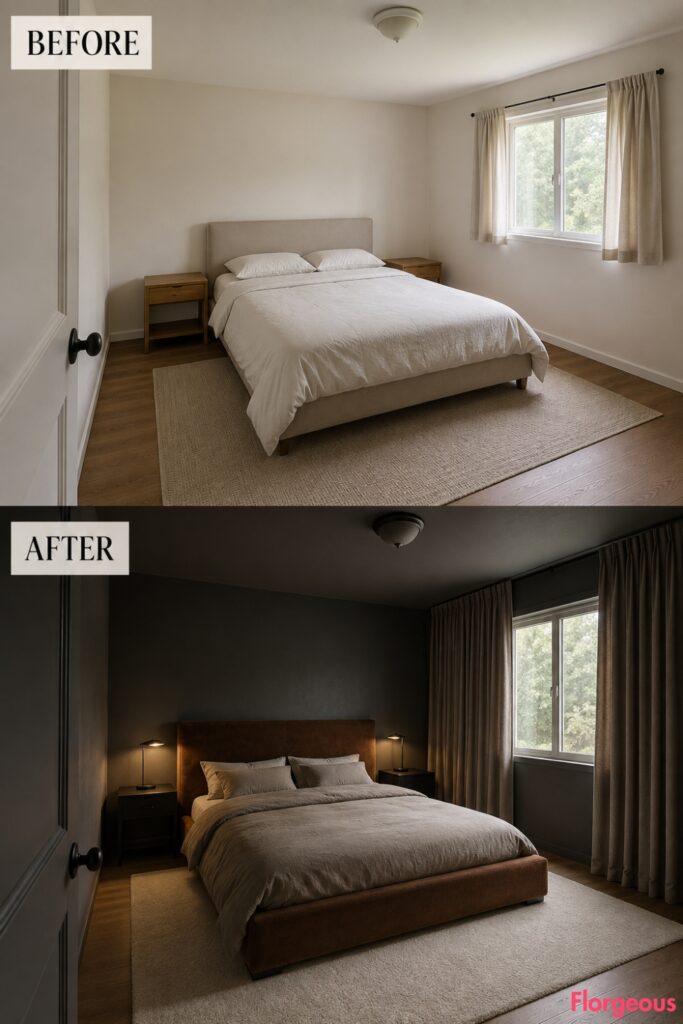
This makeover uses darkness as atmosphere rather than decoration.
Charcoal mineral paint wraps the walls, while the ceiling shifts slightly deeper to soften the room boundaries. A tobacco upholstered bed, mushroom bedding, blackened-oak tables, and low amber lighting prevent the palette from becoming cold.
Designer Tip: In dark bedrooms, avoid one bright central light. Several lower, warmer light sources create a much calmer result.
3. Replace the Headboard With a Floor-to-Ceiling Upholstered Wall
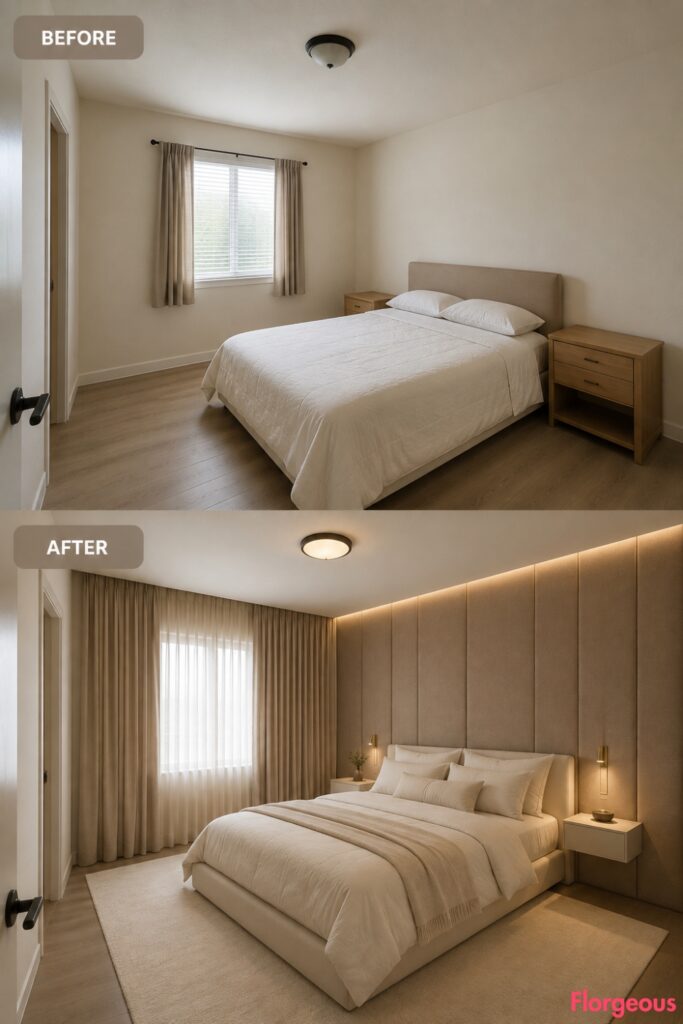
Here, softness becomes the architecture.
Warm taupe upholstered panels cover the entire wall behind a streamlined bed. Narrow bedside ledges replace conventional nightstands, and concealed lighting washes gently across the padded surface.
The result feels tailored without relying on artwork, shelves, or decorative objects.
4. Lower the Furniture With a Pale Oak Platform Bed
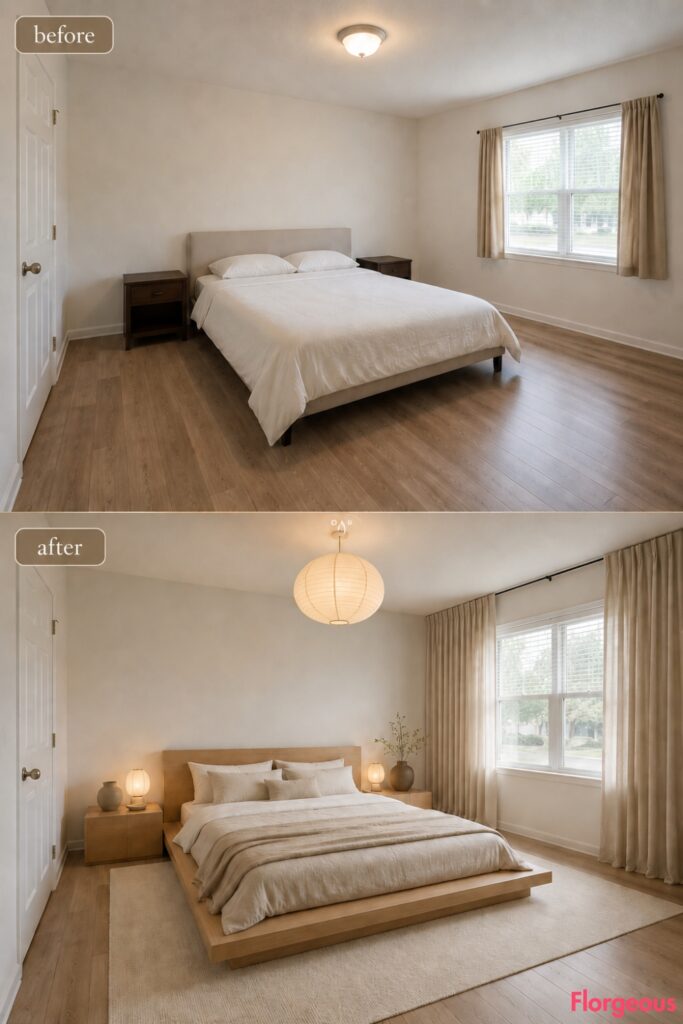
Changing furniture height can make the room feel architecturally different even when nothing structural moves.
A pale-oak platform bed sits low to the floor with an extended timber base, small block side tables, loose flax bedding, and a paper-inspired pendant. The furniture remains sparse, allowing negative space to become part of the design.
5. Build the Palette Around Earthy Clay Limewash
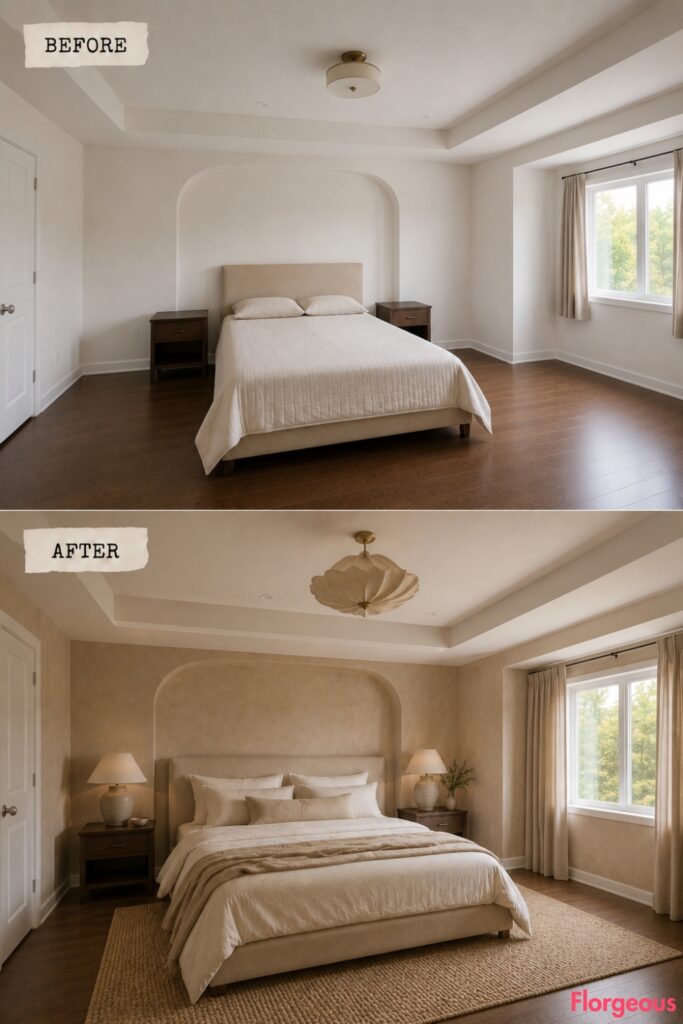
This version proves that modern rooms do not need to stay beige or gray.
Muted clay limewash gives the walls a softly mottled texture. A sand upholstered bed, dark brown bedside tables, cream linen, handmade ceramic lamps, and a woven rug create a warm but controlled palette.
Color Story: Keep clay sophisticated by pairing it with chocolate, mushroom, flax, and chalky cream rather than bright terracotta accessories.
6. Turn a Blank Side Wall Into Seamless Bedroom Storage
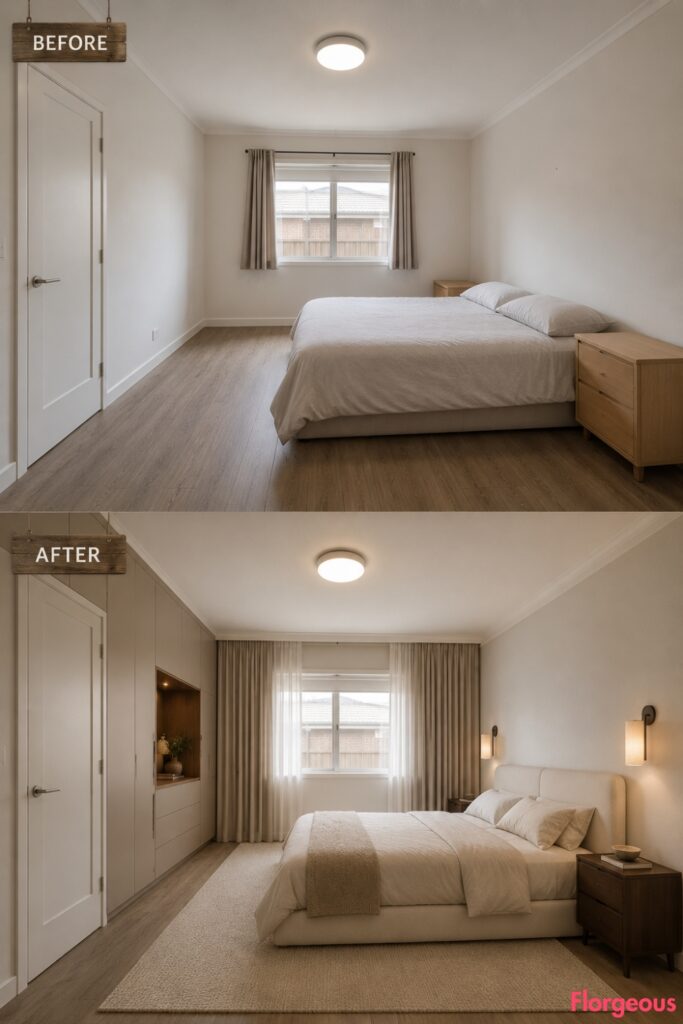
This transformation is driven by function rather than decoration.
A wall of matte mushroom cabinetry stretches floor to ceiling along one unused side, safely outside the entrance route. Flush doors and concealed pulls keep the storage visually quiet, while one small walnut-lined niche prevents it from feeling flat.
Budget Version: Several matching freestanding wardrobes pushed tightly together can create a similar rhythm without custom joinery.
7. Make Muted Olive the Main Upholstery Color
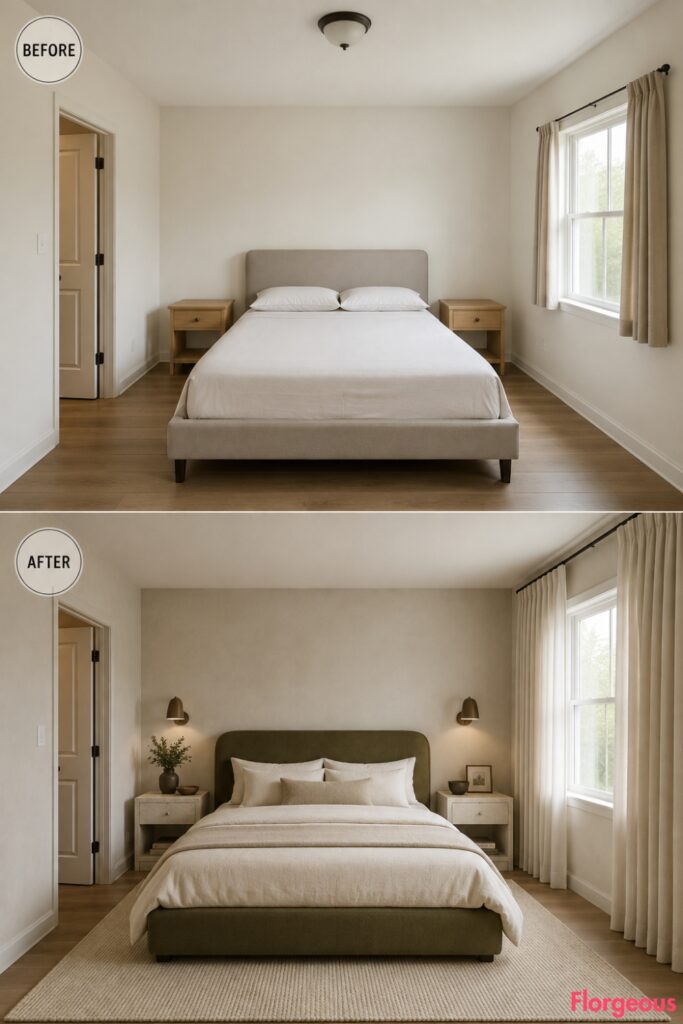
Rather than painting a green accent wall, place the color on the largest piece of furniture.
A muted olive upholstered bed becomes the focal point against pale mineral walls. Compact limestone nightstands, cream bedding, aged-bronze sconces, and a warm oatmeal rug make the green feel earthy instead of decorative.
8. Sculpt a Shallow Plaster Niche Behind the Bed
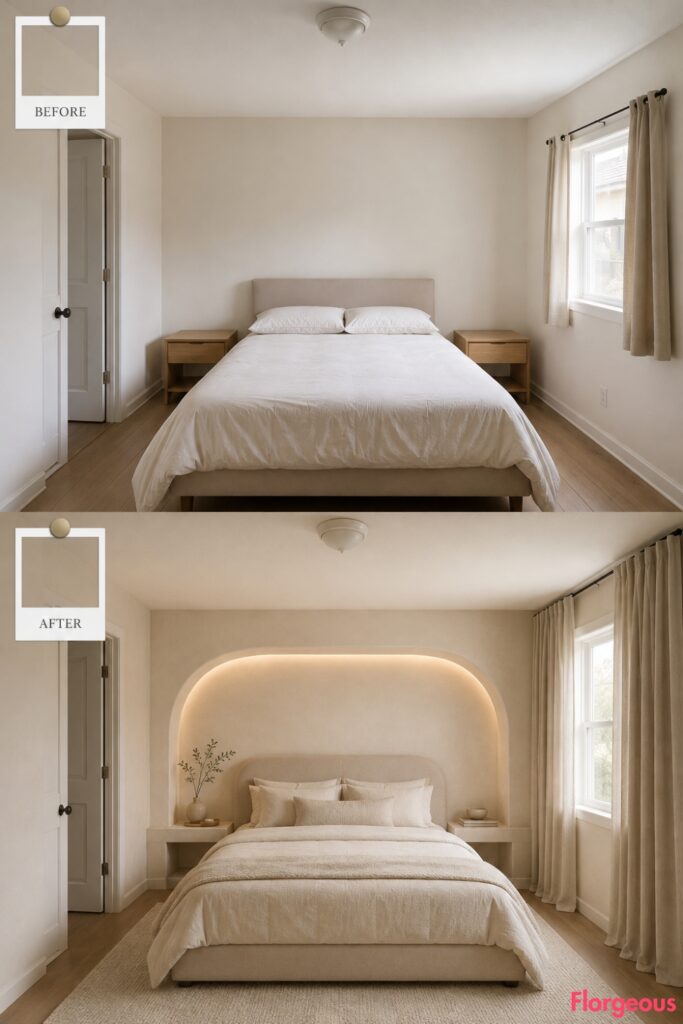
This idea introduces architectural depth without moving the actual wall.
A broad shallow niche with softly rounded corners frames the bed. Integrated ledges replace separate tables, and subtle concealed light creates a gentle gradient across the plaster.
Why It Works: The recess visually separates the sleeping zone without introducing another material or bold color.
9. Make the Makeover Completely Renter-Friendly
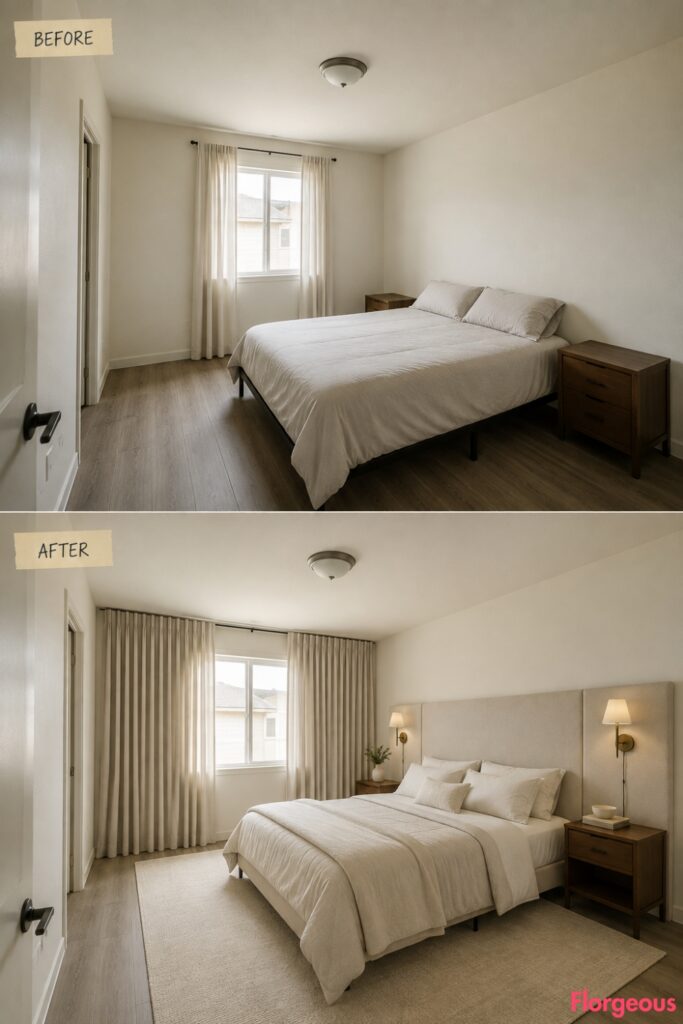
The architecture stays untouched and so does most of the original furniture.
Keep the existing bed, then introduce a removable upholstered headboard panel, plug-in sconces, ready-made floor-length curtains, a much larger rug, slim matching nightstands, and better bedding.
The improvement comes from proportion and layering rather than renovation.
10. Open Up a Small Bedroom With Floating Furniture
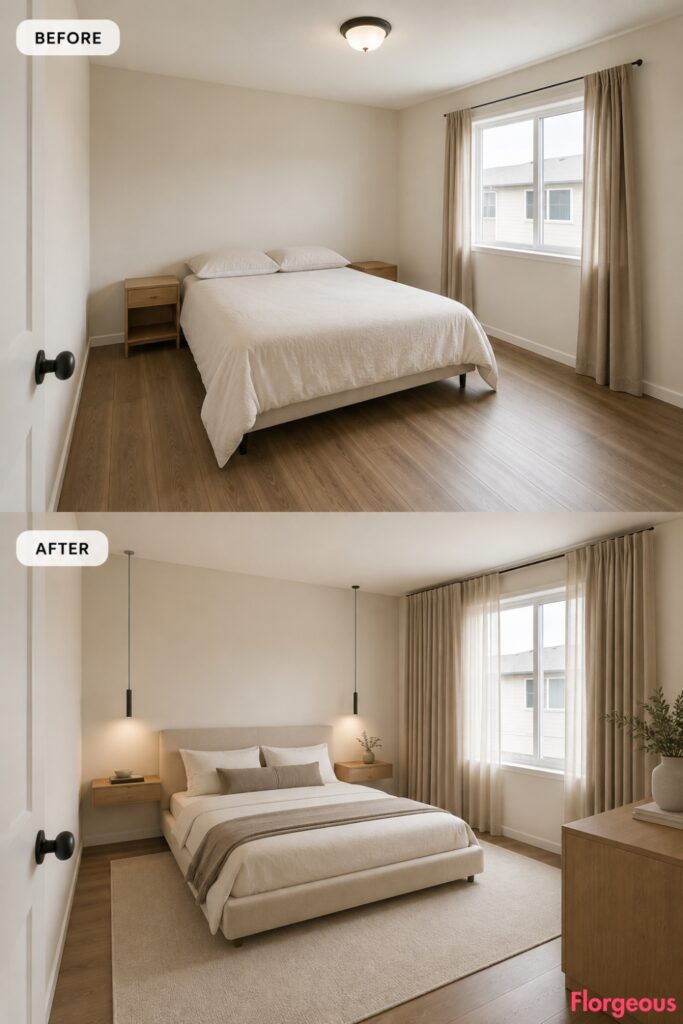
A compact room benefits from seeing more floor.
Wall-mounted bedside shelves replace freestanding nightstands, while narrow suspended reading lights eliminate lamp bases. A shallow dresser hugs the least congested wall and stays completely clear of the doorway.
Small Space Tip: Prioritize visible floor area before adding extra furniture. A lighter visual footprint often matters more than the actual square footage.
11. Color-Drench the Room in Mushroom and Taupe
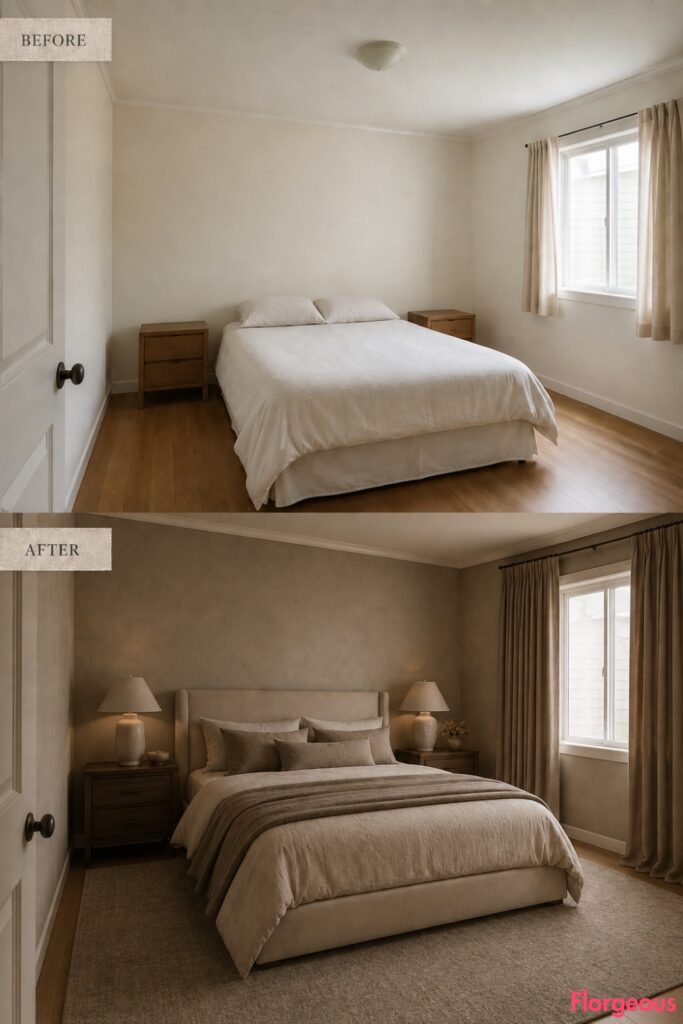
This bedroom removes most contrast.
Walls, upholstered bed, curtains, rug, lamps, and bedding stay within a narrow range of mushroom, stone, and taupe. Linen, wool, plaster, and brushed timber provide enough variation to keep the room from feeling flat.
12. Pair Dark Walnut With Parchment for Quiet Luxury
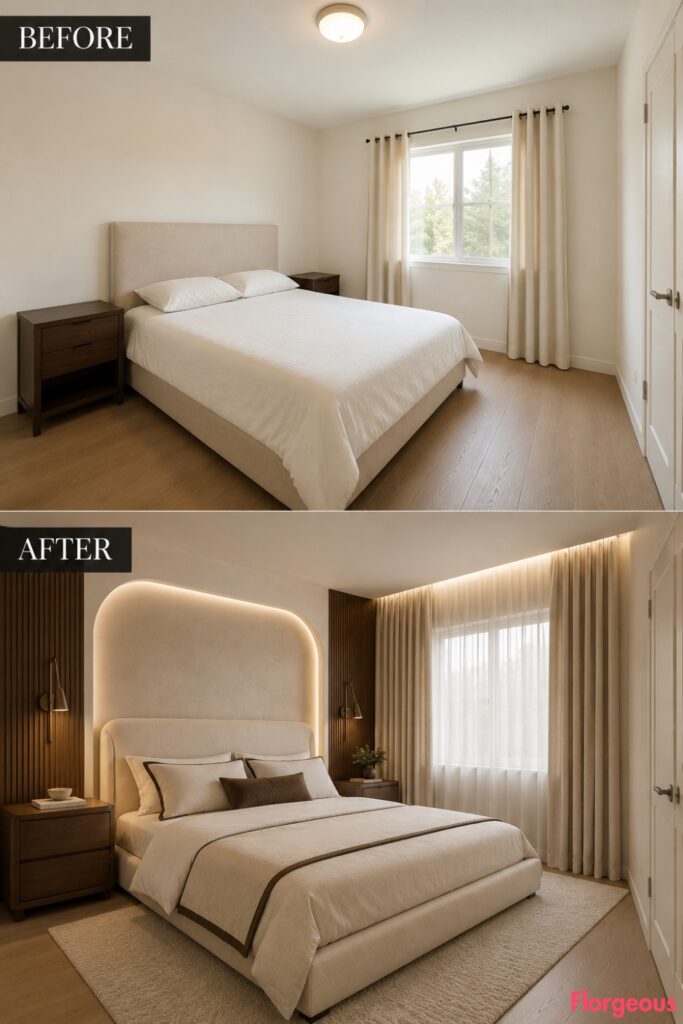
This room feels more tailored than minimal.
A substantial parchment upholstered bed sits between dark walnut nightstands. Bronze wall lights, ivory bedding with chocolate piping, dense wool underfoot, and generous curtains create a heavier, more refined material story.
There are almost no decorative accessories because the finishes already provide enough interest.
13. Design the Bedside Areas to Be Deliberately Asymmetrical
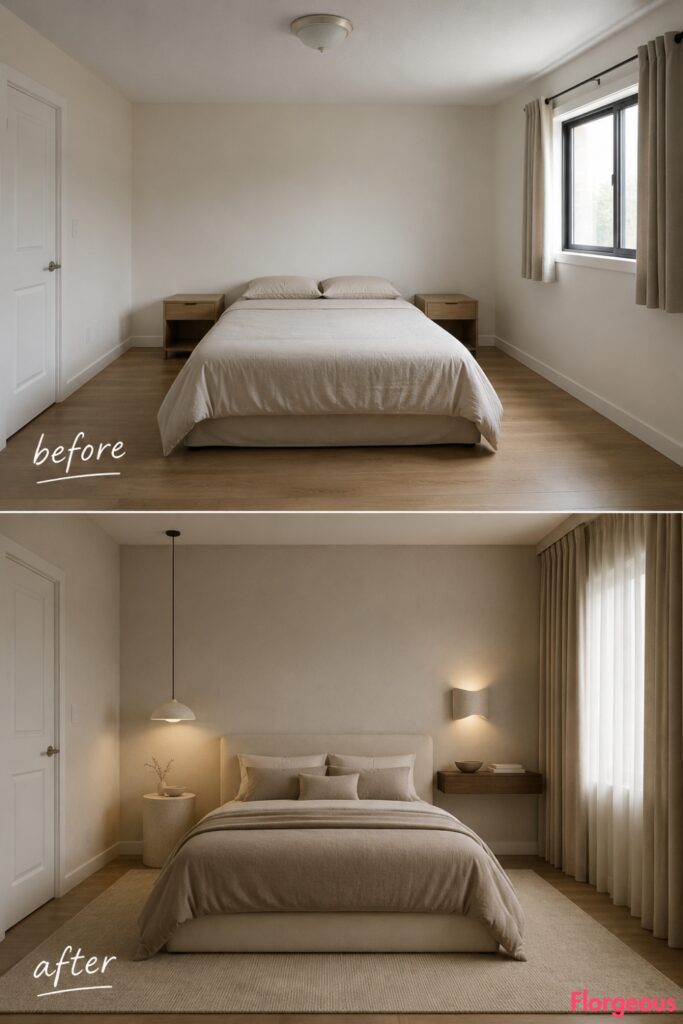
Perfect symmetry is not the only way to make a bedroom feel balanced.
One side gets a cylindrical stone pedestal. The other receives a long floating walnut shelf. A pendant hangs on one side while a sculptural wall light occupies the other.
The bed remains centered, giving the composition enough stability for those differences to feel intentional.
14. Turn the Window Corner Into a Proper Reading Spot
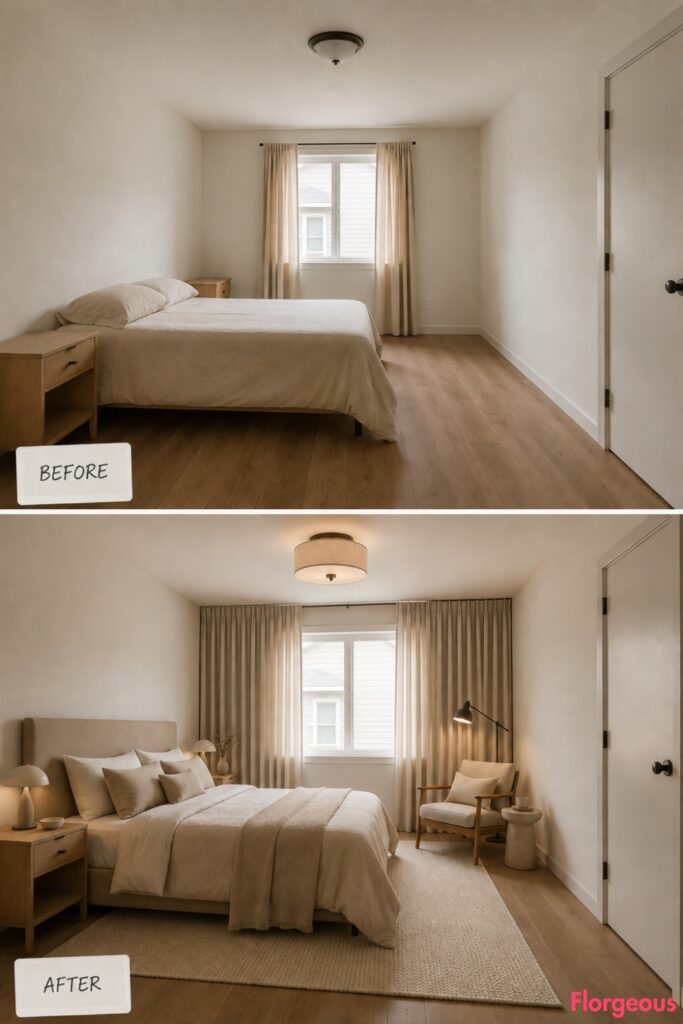
This makeover changes the way the floor plan is used.
One compact ash-framed lounge chair sits beside the window, never in front of it, paired with a tiny stone drinks table and a directional floor lamp. The bed zone remains restrained so the chair does not make the bedroom look crowded.
Common Mistake: Do not force seating into a room if it compromises the walkway around the bed.
15. Build a Modern Organic Room Around Travertine
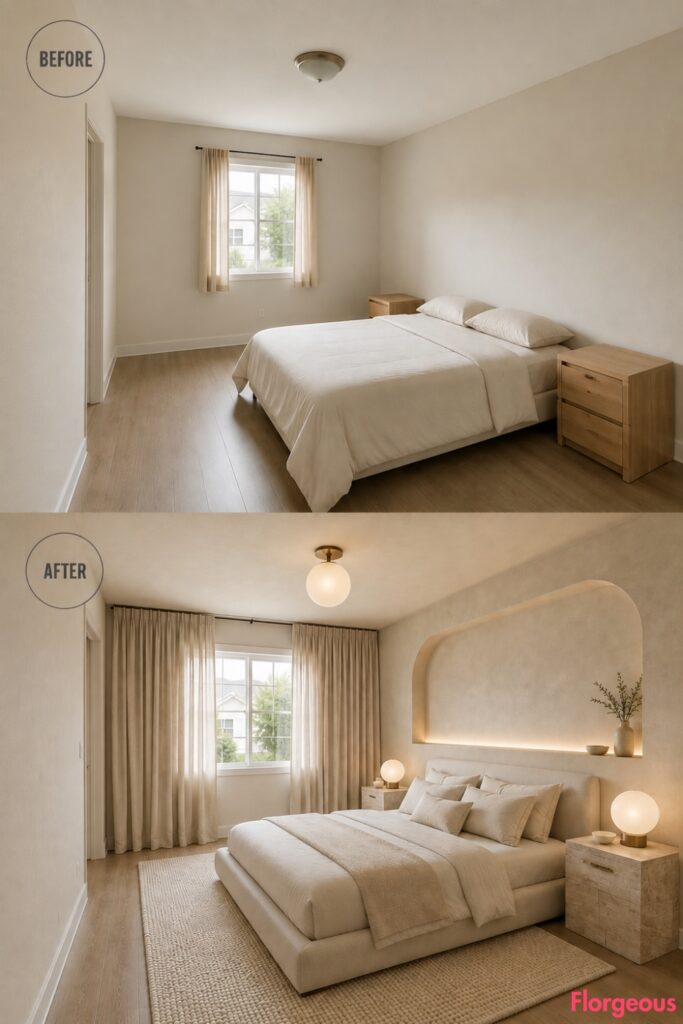
Instead of timber dominating the natural-material story, stone becomes the main feature.
Chunky travertine nightstands sit on either side of a low flax bed. Pale plaster walls, undyed wool, creamy linen, and quiet globe lighting keep the scheme tactile but uncluttered.
16. Conceal Technology Inside a Smoked-Oak Bed Wall
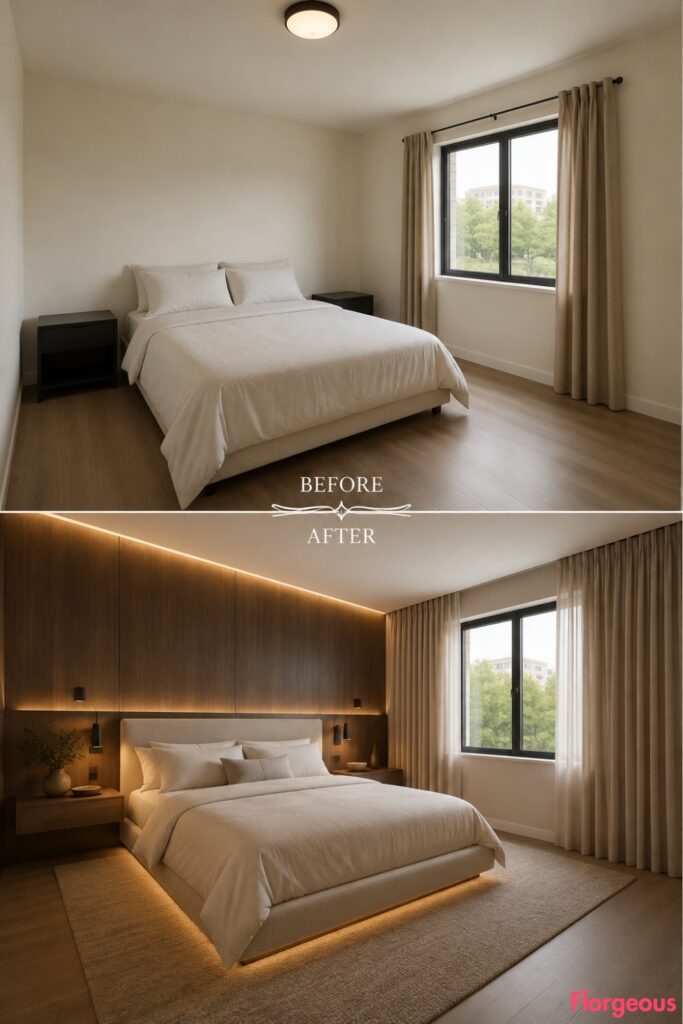
Technology becomes almost invisible in this version.
A smoked-oak headboard wall incorporates hidden charging, concealed outlets, integrated speakers, cable management, and indirect light. No screens, glowing panels, or visible wires interrupt the room.
17. Make Full-Height Tobacco Curtains the Main Color Feature
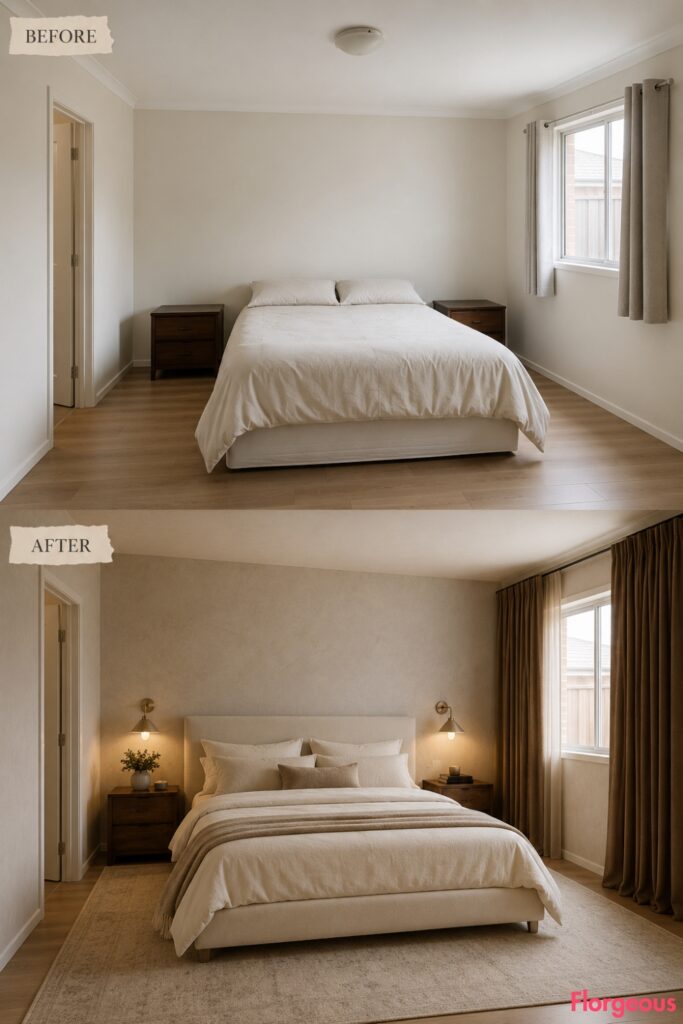
Here, the window treatment leads the entire palette.
Rich tobacco curtains run from ceiling to floor, framing the unchanged window without blocking it. Chalky walls, an ivory bed, simple walnut cubes, and pale bedding deliberately stay quiet around them.
18. Rework the Bedroom With Crisp Hotel Symmetry
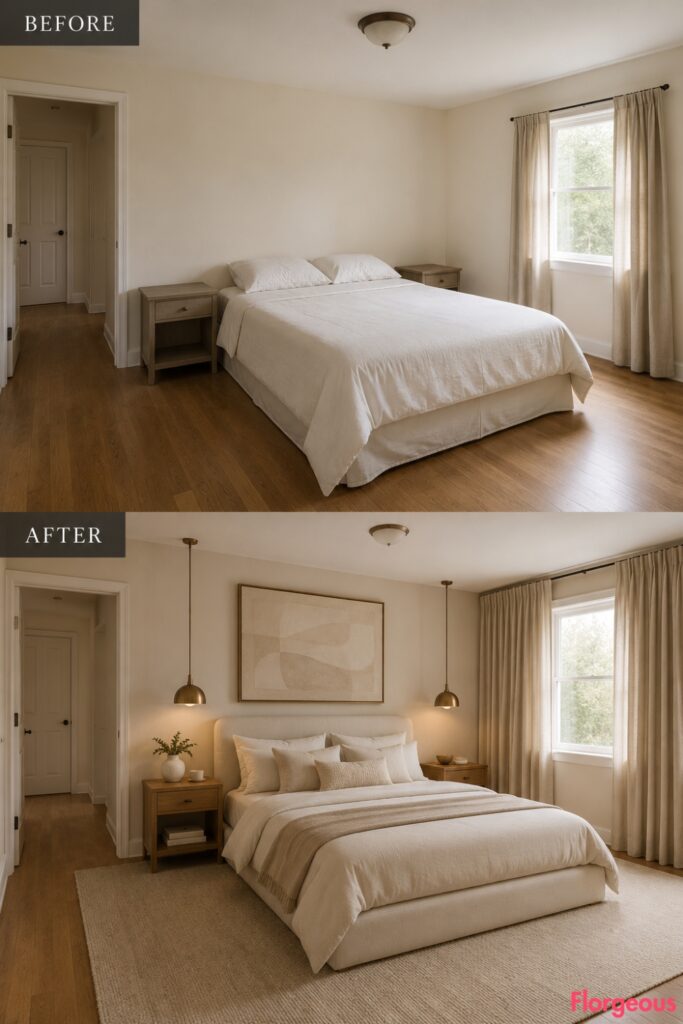
This is the most balanced composition in the gallery.
A wide cream upholstered bed sits exactly between matching warm-oak nightstands. Twin bronze pendants hang evenly above them, one oversized tonal artwork anchors the wall, and full-length curtains frame the window symmetrically.
19. Strip Everything Back to Black, Ivory, and Negative Space
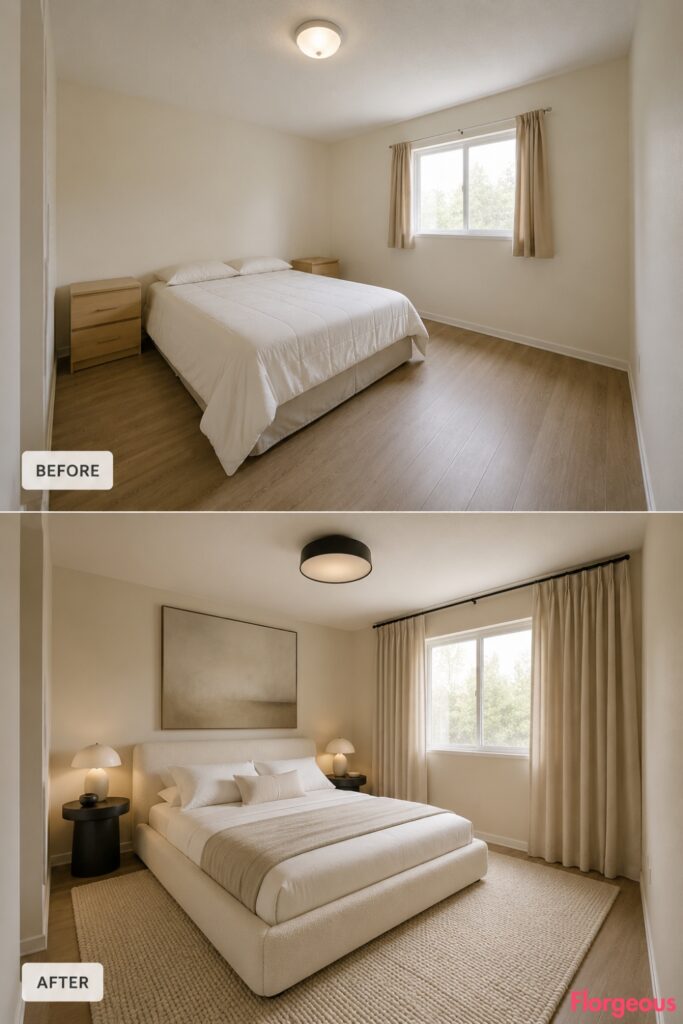
This scheme is intentionally graphic.
An ivory bed sits between blackened-wood pedestal tables beneath a slim charcoal ceiling fixture. One oversized abstract artwork supplies the only wall feature, and a thick cream rug softens the stark furniture shapes.
No extra accessories are needed.
20. Freshen the Room With Pale Oak and Eucalyptus
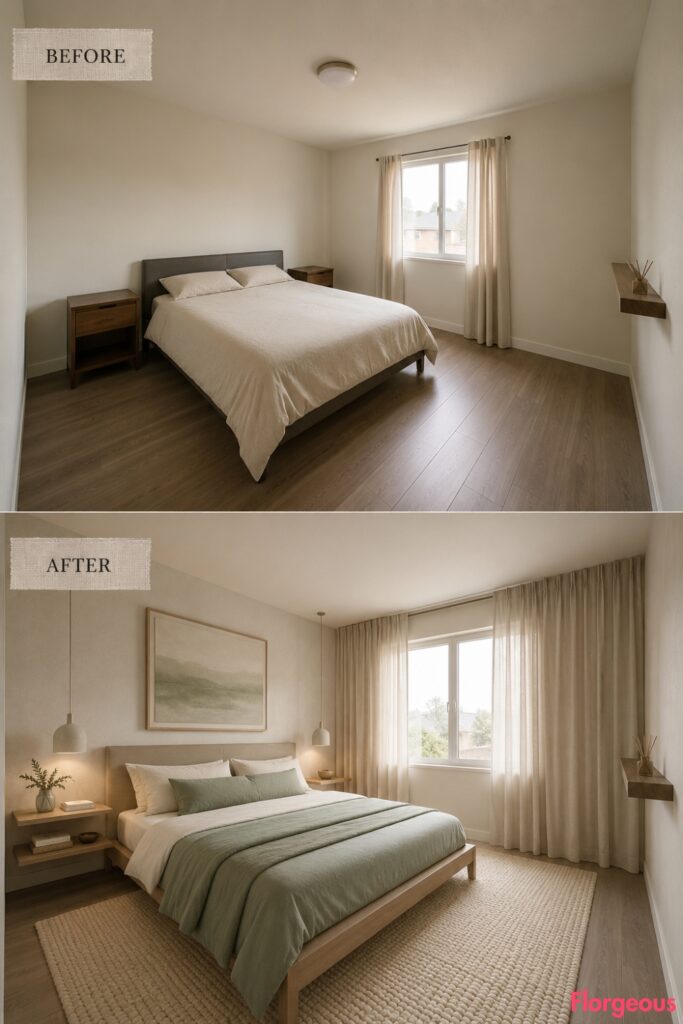
This concept feels light without becoming an all-white bedroom.
A slim pale-oak bed sits against soft mineral walls with eucalyptus bedding accents. Floating oak shelves, a woven wool rug, translucent flax curtains, and simple ceramic lighting maintain the airy character.
The dusty green behaves almost like another neutral.
21. Add a Work Zone Without Turning the Bedroom Into an Office
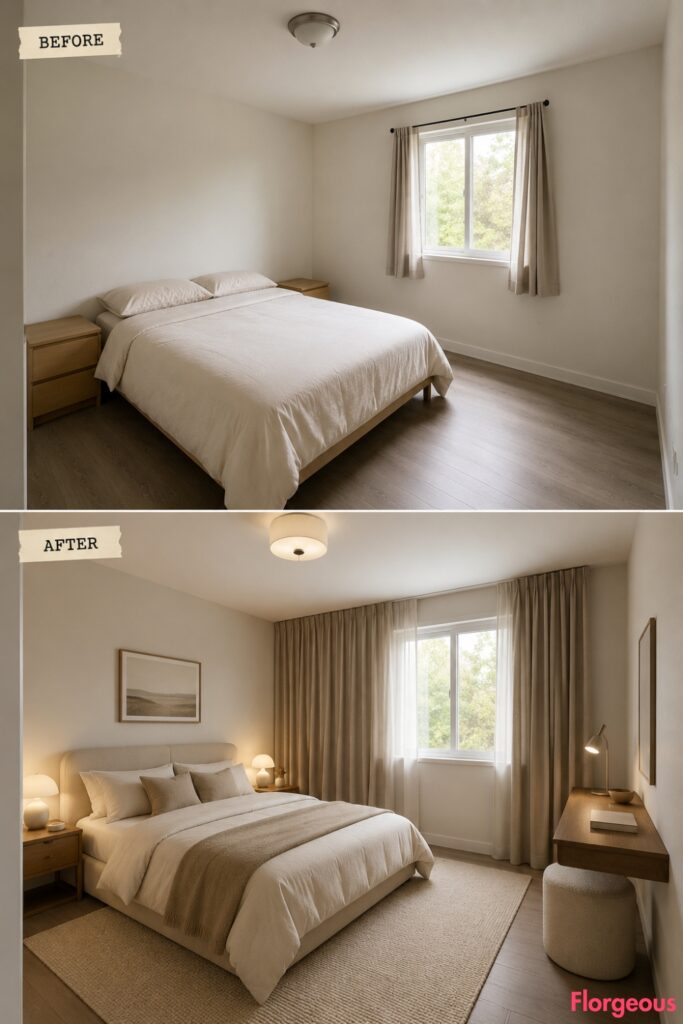
A bedroom desk only works when it visually disappears after work.
A narrow floating walnut surface occupies one free wall outside the entrance path. One compact upholstered stool slides fully underneath, and a small wall light provides focused task illumination.
There are no office-style cabinets, rolling chairs, or visible equipment.
22. Give the Bed Wall an Urban Microcement Finish
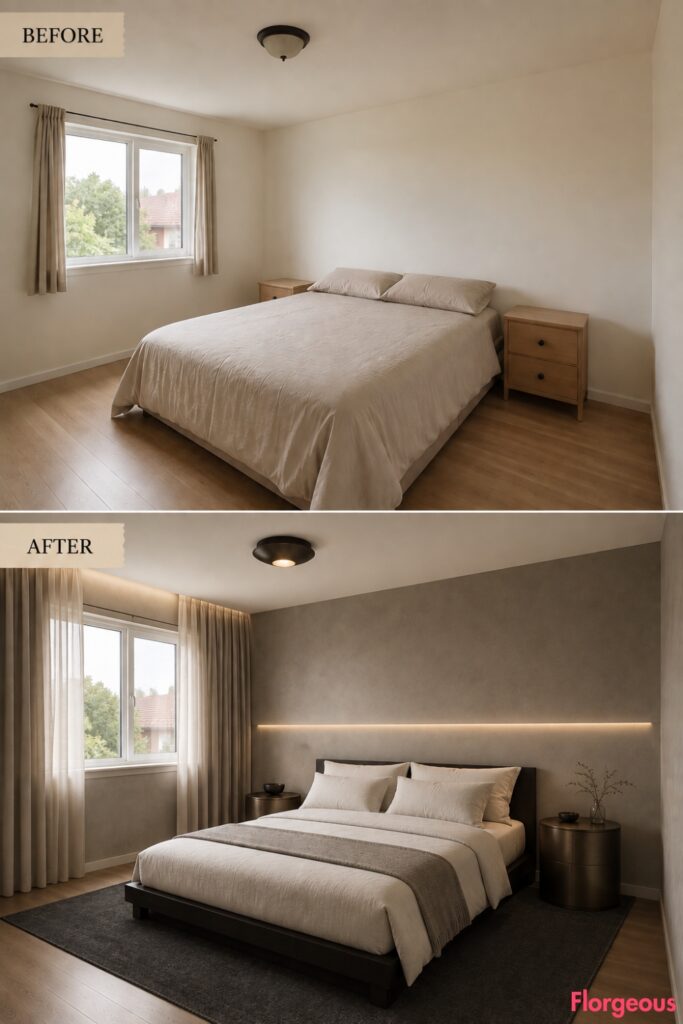
This room has a sharper architectural personality than the softer plaster schemes.
Warm-gray microcement covers the main bed wall. A low black-oak bed creates a strong horizontal line, while cylindrical brushed-metal side tables and one recessed linear light add a more precise material language.
Style Note: Keep surrounding textiles soft so microcement and metal do not make the room feel commercial.
23. Make the Bed Itself Sculptural With a Minimal Canopy Frame
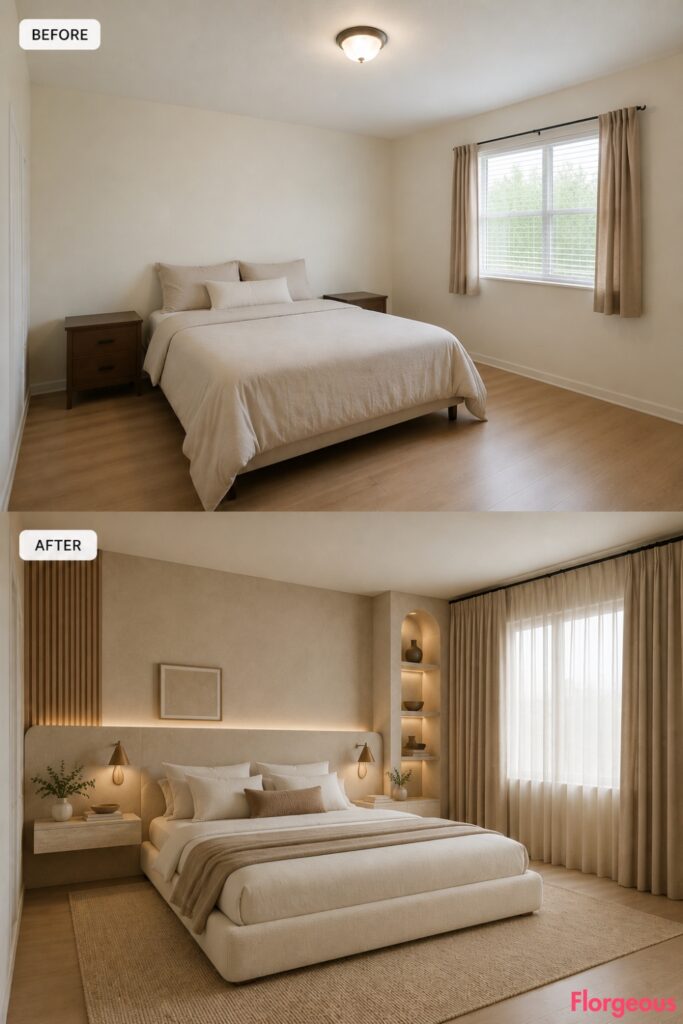
The final makeover changes neither the walls nor the storage. Instead, it completely changes the silhouette at the center of the room.
A slender dark-bronze rectangular canopy surrounds a low ivory upholstered bed. There are no traditional draped curtains. One translucent linen panel runs loosely across the top, keeping the frame contemporary.
Pale stone nightstands, warm lighting, ivory bedding, and a sand-colored rug allow the canopy to remain the unmistakable focal point.
Which Bedroom Idea Should You Try First?
These makeovers work because each one begins with a clear design decision. Walnut changes the architecture visually. Low furniture changes proportion. Stone changes the material story. Dark paint changes atmosphere. Integrated cabinetry changes function.
That is a more reliable approach than buying accessories until a bedroom feels finished.
If your room feels empty, start with the wall behind the bed. If it feels cramped, improve furniture scale and circulation before adding anything decorative. If it feels cold, concentrate on curtains, bedding, rugs, and lower-level lighting. If clutter is the problem, solve storage before styling.
For your own Modern Bedroom, choose one dominant idea first and let the smaller choices support it. A defined direction makes it much easier to choose lighting, nightstands, bedding, curtains, and artwork without creating a room full of unrelated trends.