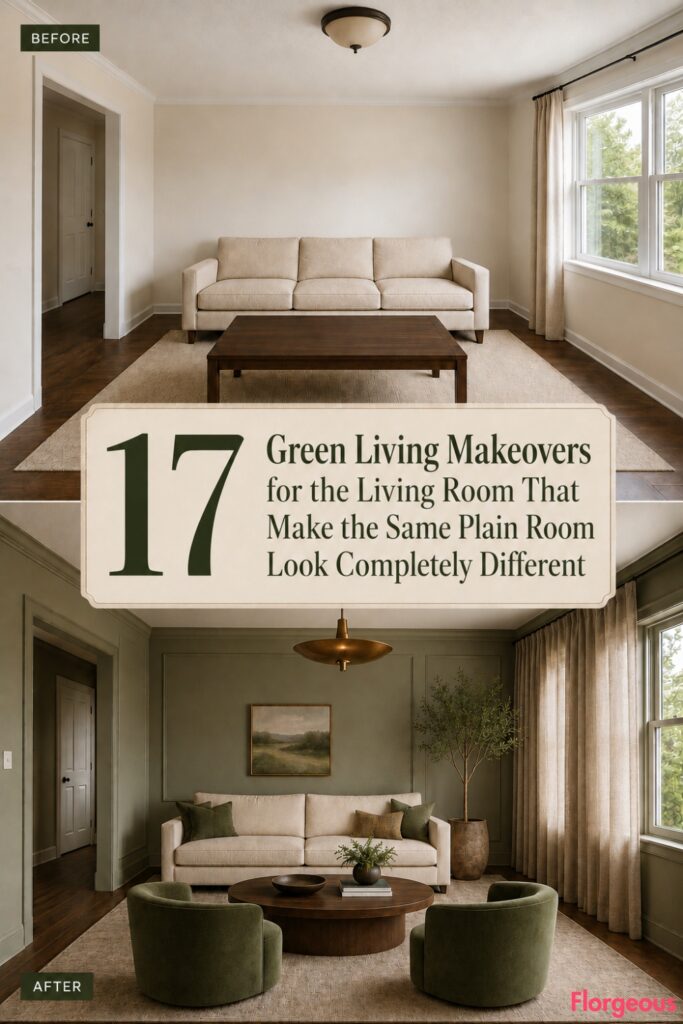
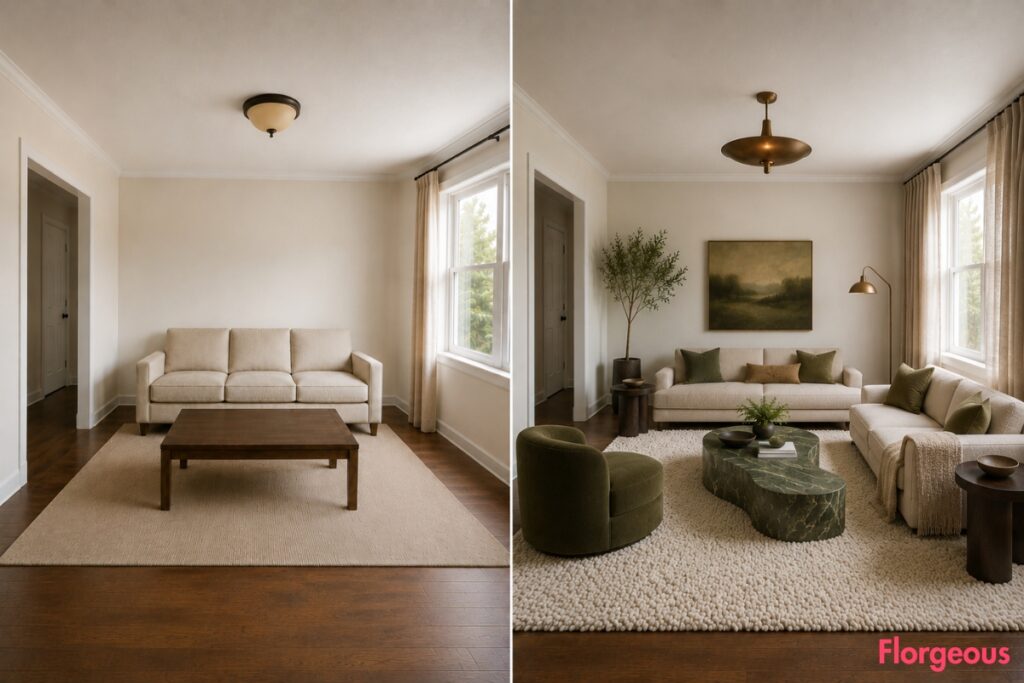
The starting room is familiar: warm off-white walls, a straight beige sofa, a bare rectangular coffee table, a simple neutral rug, short curtains, basic ceiling lighting, and almost nothing pulling the room together.
For this Green Living Living Room experiment, we kept that exact builder-grade shell locked. The doorway, window, flooring, ceiling height, proportions, camera position, daylight direction, furniture scale, and circulation never change.
What changes is the role green plays. Sometimes it becomes a soft architectural background. Elsewhere it appears through upholstery, cabinetry, curtains, paneling, a ceiling, a rug, or even natural stone.
The result is 17 genuinely different living rooms built from one identical starting point, with different layouts, furniture silhouettes, focal points, material combinations, and moods.
1. Wash the Room in Dusty Sage and Pale Oak
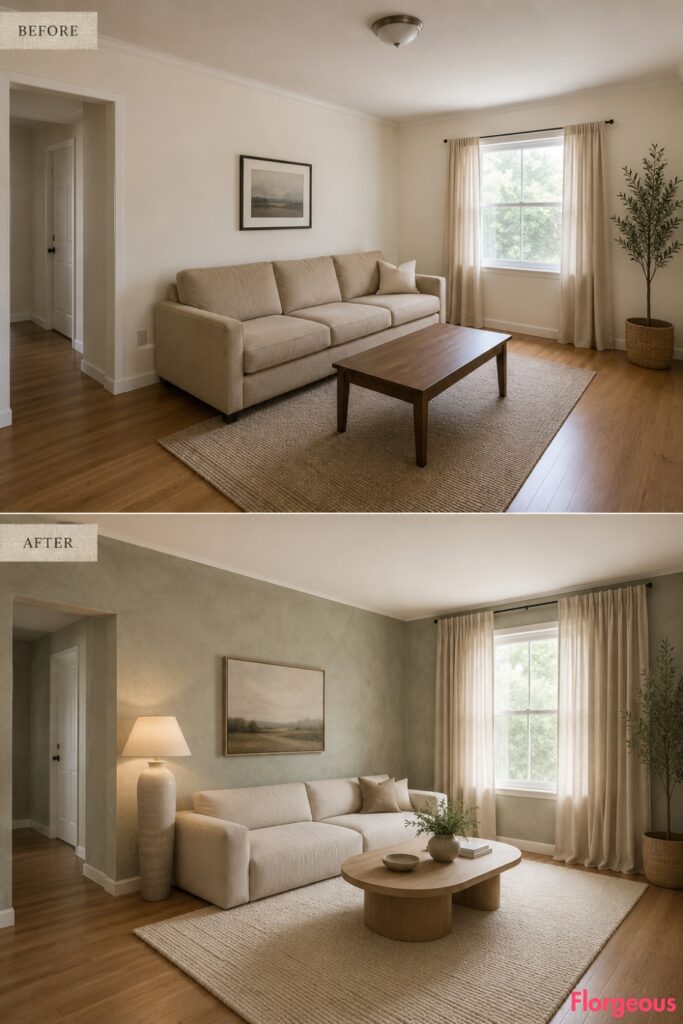
This is the quietest makeover in the collection, designed around softness rather than contrast.
Before: A plain builder-grade living room with warm off-white walls, a straight beige sofa against the main wall, bare rectangular coffee table, neutral rug, short plain curtains, basic ceiling lighting, minimal styling, and soft natural daylight.
After: Dusty sage limewash covers the walls. A low oatmeal linen sofa sits neatly against the main wall with a pale oak oval table, ivory wool rug, full-height flax curtains, and one warm ceramic floor lamp. No armchairs are added, keeping the center unusually spacious.
Designer Tip: Test sage beside the flooring first. Warm sage usually sits more comfortably beside honey-toned timber than a blue-green version.
2. Let a Curved Olive Sofa Carry All the Color
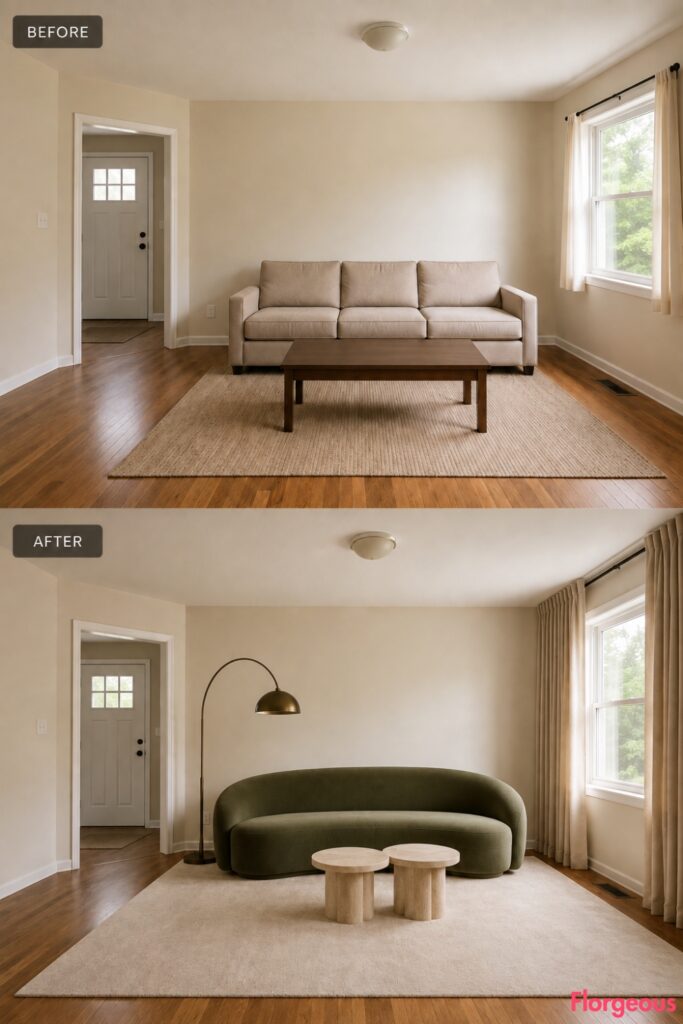
Instead of painting anything, this version turns one substantial piece of furniture into the green focal point.
Before: A plain builder-grade living room with warm off-white walls, a straight beige sofa against the main wall, bare rectangular coffee table, neutral rug, short plain curtains, basic ceiling lighting, minimal styling, and soft natural daylight.
After: The walls stay warm ivory while a gently curved olive wool sofa becomes the centerpiece. Two small travertine drinks tables replace the traditional coffee table. An oversized parchment rug and slender bronze arc lamp preserve the open feeling.
Green appears nowhere else in a major way, which makes the sofa feel deliberate rather than matched.
3. Build a Deep Forest Green Media Wall
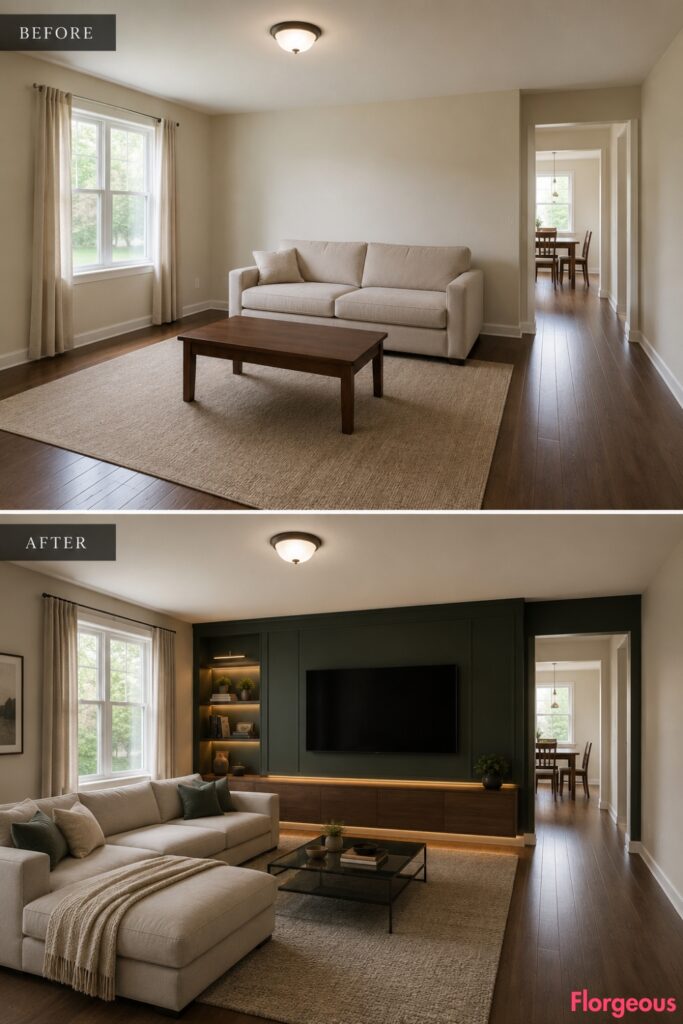
This makeover gives the room a clear destination while adding useful storage.
Before: A plain builder-grade living room with warm off-white walls, a straight beige sofa against the main wall, bare rectangular coffee table, neutral rug, short plain curtains, basic ceiling lighting, minimal styling, and soft natural daylight.
After: A deep forest green media wall is paired with low walnut closed cabinetry and concealed lighting. A compact mushroom sectional runs along the adjacent side in an open L, facing the new focal wall. A narrow smoked-glass table prevents the center from becoming heavy.
Budget Version: Paint the media wall and use matching low freestanding cabinets instead of custom joinery.
4. Turn the Window Into a Moss Green Reading Zone
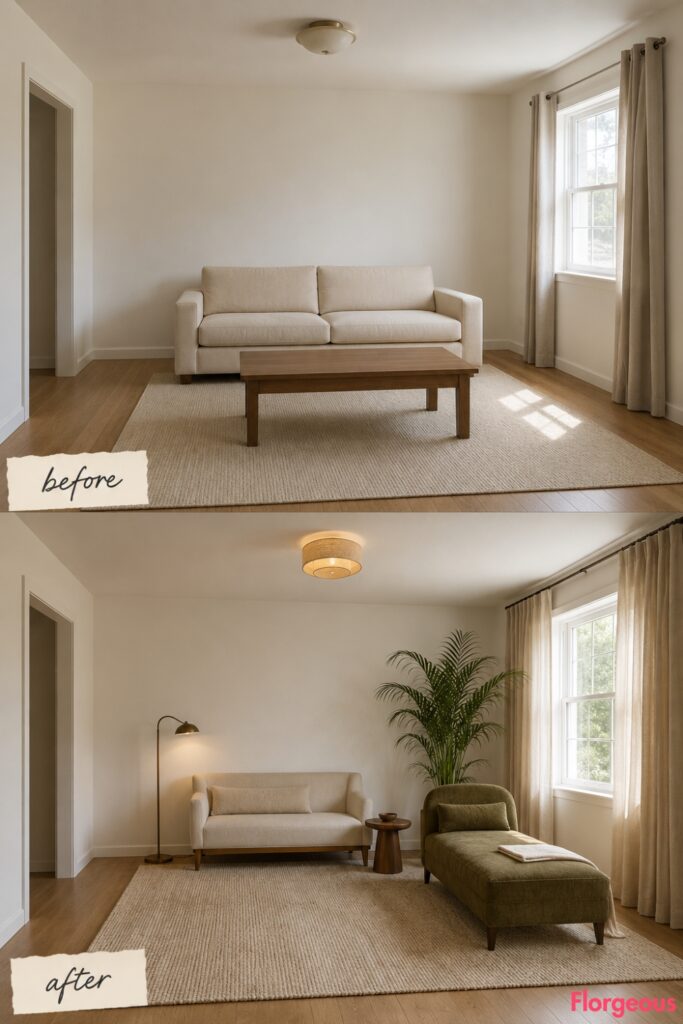
Here, the strongest furniture piece moves toward the natural light.
Before: A plain builder-grade living room with warm off-white walls, a straight beige sofa against the main wall, bare rectangular coffee table, neutral rug, short plain curtains, basic ceiling lighting, minimal styling, and soft natural daylight.
After: A slim moss chaise sits near the window on a gentle diagonal, with its head oriented toward the wall rather than projecting awkwardly into the room. A compact cream settee stays farther back. There is no central coffee table, only a walnut pedestal, sculptural reading lamp, and one tall Kentia palm behind the chaise.
Small Space Tip: A missing coffee table can be a design decision, especially when two small side surfaces do the job better.
5. Turn Eucalyptus Cabinetry Into the Architecture
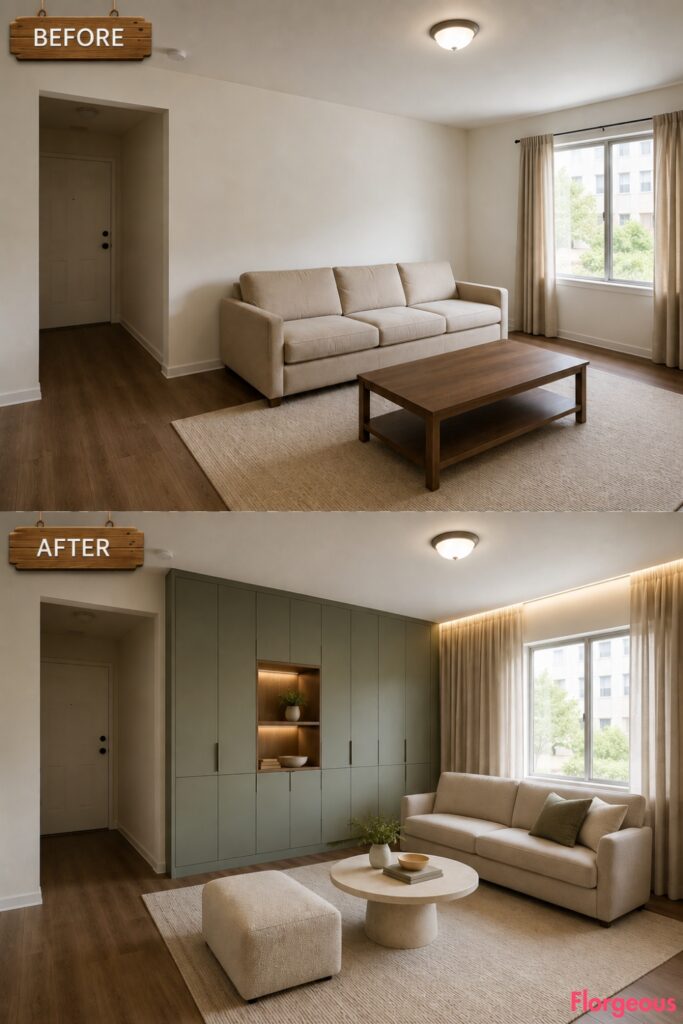
Green can be practical storage rather than decoration.
Before: A plain builder-grade living room with warm off-white walls, a straight beige sofa against the main wall, bare rectangular coffee table, neutral rug, short plain curtains, basic ceiling lighting, minimal styling, and soft natural daylight.
After: Shallow eucalyptus cabinetry covers one usable wall with mostly closed doors and one restrained open niche. A compact flax settee faces it, accompanied by a limestone pedestal table and one movable oatmeal ottoman.
The cabinetry introduces color, storage, and a strong focal point without filling the room with extra furniture.
6. Make Full-Height Lichen Curtains the Green Feature
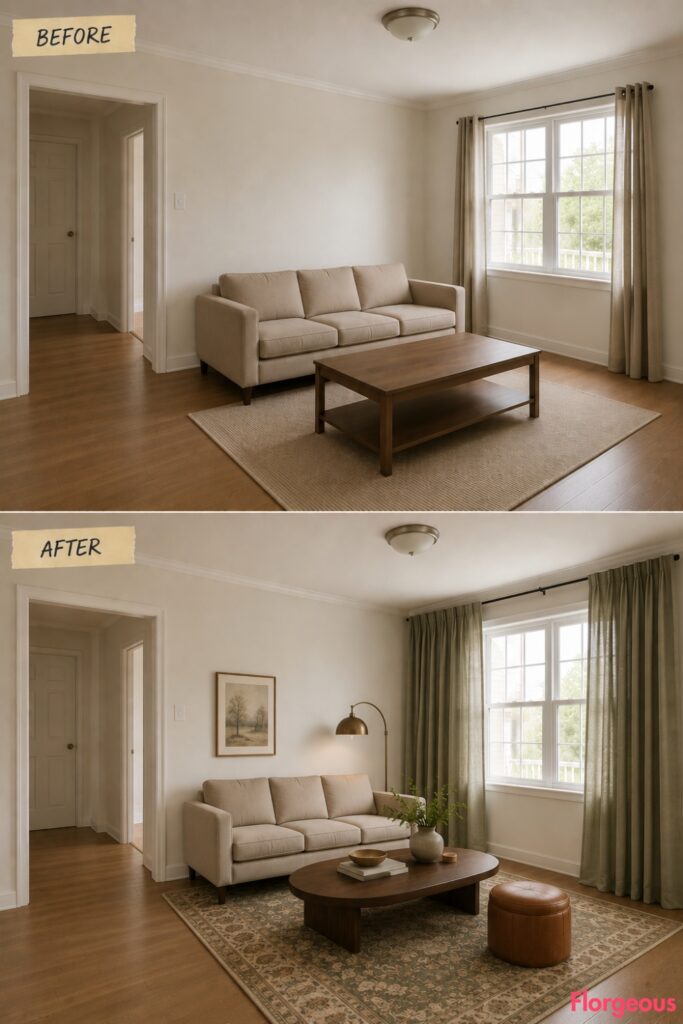
This makeover works especially well if the existing sofa needs to stay.
Before: A plain builder-grade living room with warm off-white walls, a straight beige sofa against the main wall, bare rectangular coffee table, neutral rug, short plain curtains, basic ceiling lighting, minimal styling, and soft natural daylight.
After: The walls and beige sofa remain. Floor-to-ceiling lichen linen curtains now frame the window, supported by a dark walnut oval table, moss-and-parchment vintage-style rug, tobacco leather stool, and aged-bronze lighting.
The transformation comes largely from fabric, scale, and richer materials rather than construction.
Budget Version: Ready-made curtains mounted close to the ceiling can create a similar vertical effect.
7. Ground the Room With Olive Wall Paneling
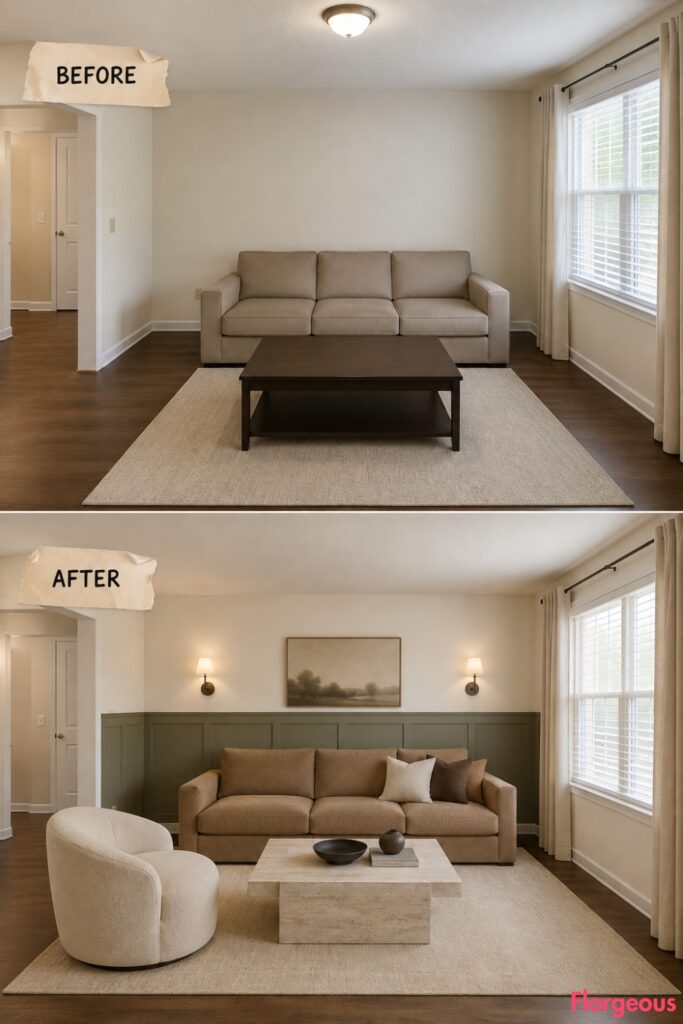
Instead of surrounding the room with green paint, this scheme keeps the color low.
Before: A plain builder-grade living room with warm off-white walls, a straight beige sofa against the main wall, bare rectangular coffee table, neutral rug, short plain curtains, basic ceiling lighting, minimal styling, and soft natural daylight.
After: Muted olive paneling wraps the lower walls while warm cream plaster remains above. A camel linen sofa sits against the main wall. One oversized cream lounge chair creates an offset conversation zone around a square limestone table.
The horizontal olive band adds structure while the pale upper walls keep the room bright.
8. Put Muted Eucalyptus on the Ceiling
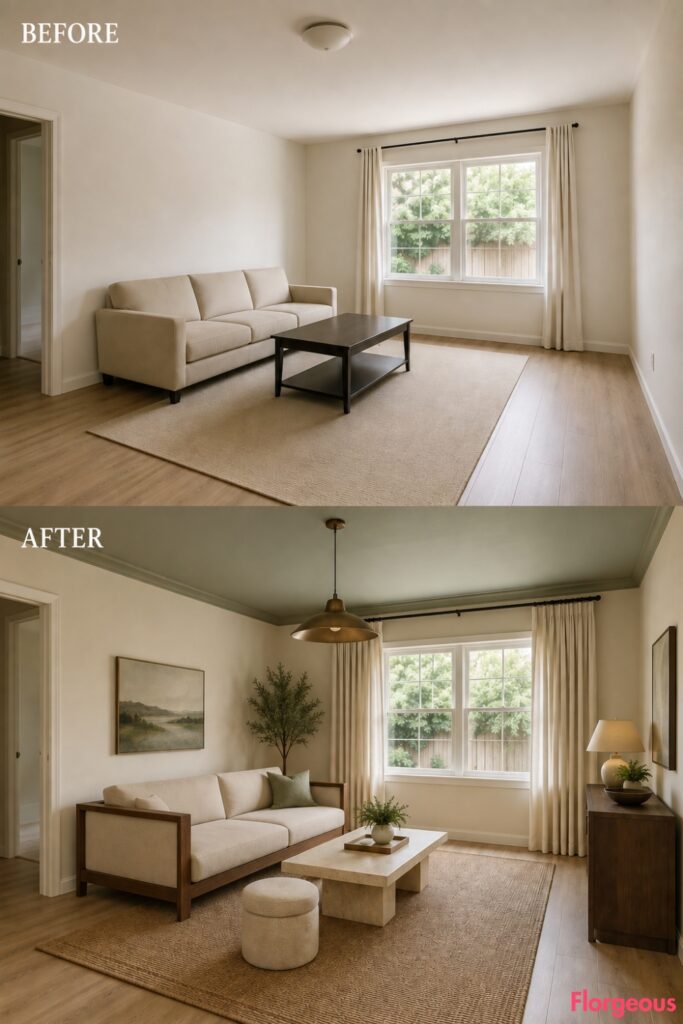
One surface change gives this neutral room an unexpected identity.
Before: A plain builder-grade living room with warm off-white walls, a straight beige sofa against the main wall, bare rectangular coffee table, neutral rug, short plain curtains, basic ceiling lighting, minimal styling, and soft natural daylight.
After: The walls remain warm cream, while the ceiling becomes muted eucalyptus. A walnut-framed oatmeal sofa sits perpendicular to the window but stops comfortably short of the entry path. Pale travertine, a woven rug, and a bronze pendant visually connect the ceiling to the furniture below.
Why It Works: Green overhead changes the atmosphere without visually narrowing the walls.
9. Create a Smoky Green-Gray Gallery Living Room
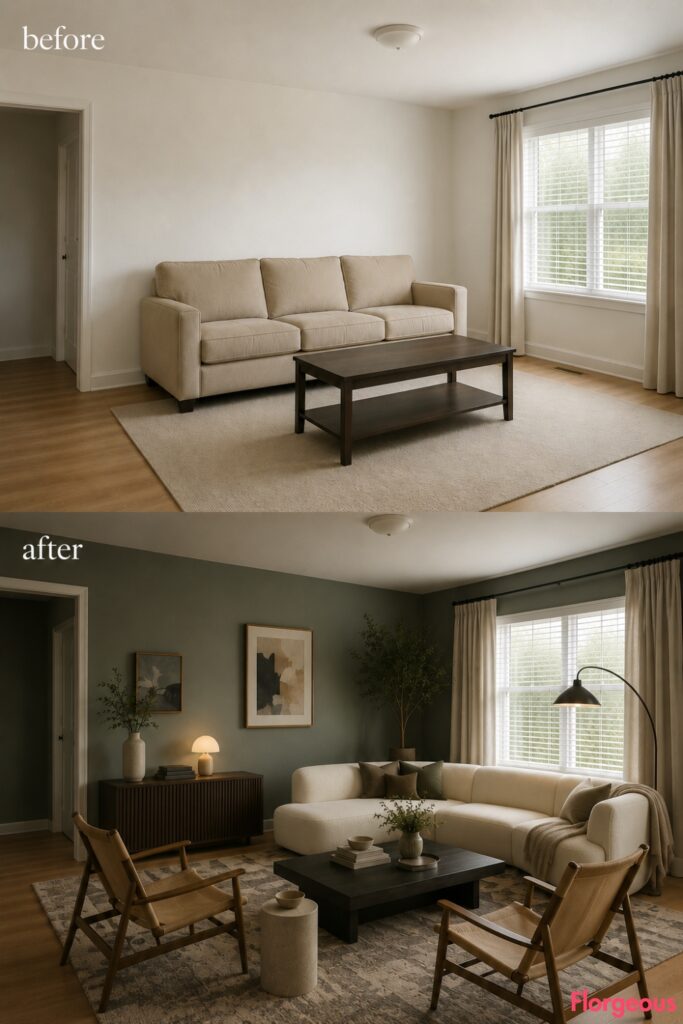
This is the most restrained contemporary interpretation.
Before: A plain builder-grade living room with warm off-white walls, a straight beige sofa against the main wall, bare rectangular coffee table, neutral rug, short plain curtains, basic ceiling lighting, minimal styling, and soft natural daylight.
After: Smoky green-gray walls frame a tailored ivory sofa. Two slim ash-framed sling chairs form a separated conversational pair opposite it. A blackened-oak rectangular table, warm-gray wool rug, and one large abstract artwork give the space a gallery-like calm.
There are no plants and very few decorative objects.
10. Take the Room Dark With Blackened Green
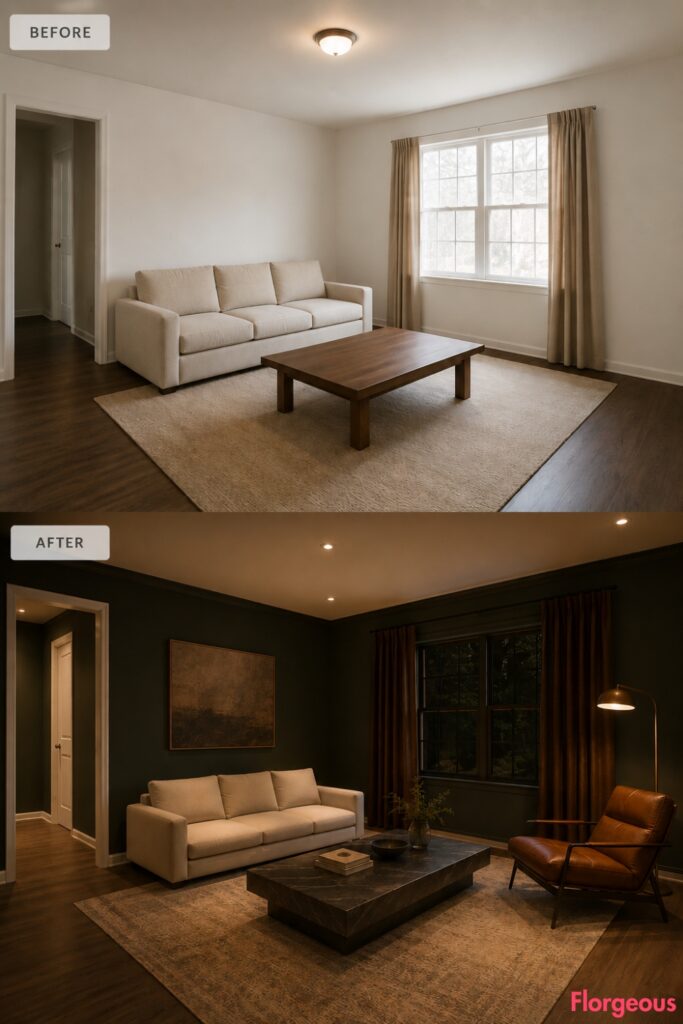
This makeover is built around evening atmosphere rather than daytime brightness.
Before: A plain builder-grade living room with warm off-white walls, a straight beige sofa against the main wall, bare rectangular coffee table, neutral rug, short plain curtains, basic ceiling lighting, minimal styling, and soft natural daylight.
After: Blackened green walls surround a low parchment sofa, honed soapstone table, and one cognac leather lounge chair tucked into the quieter outer corner. Tobacco curtains, bronze lighting, and multiple low amber lamps create depth after sunset.
Style Note: Dark green usually needs pale upholstery or a light rug nearby to keep the room from becoming visually dense.
11. Rebuild a Small Room Around a Bottle-Green Settee
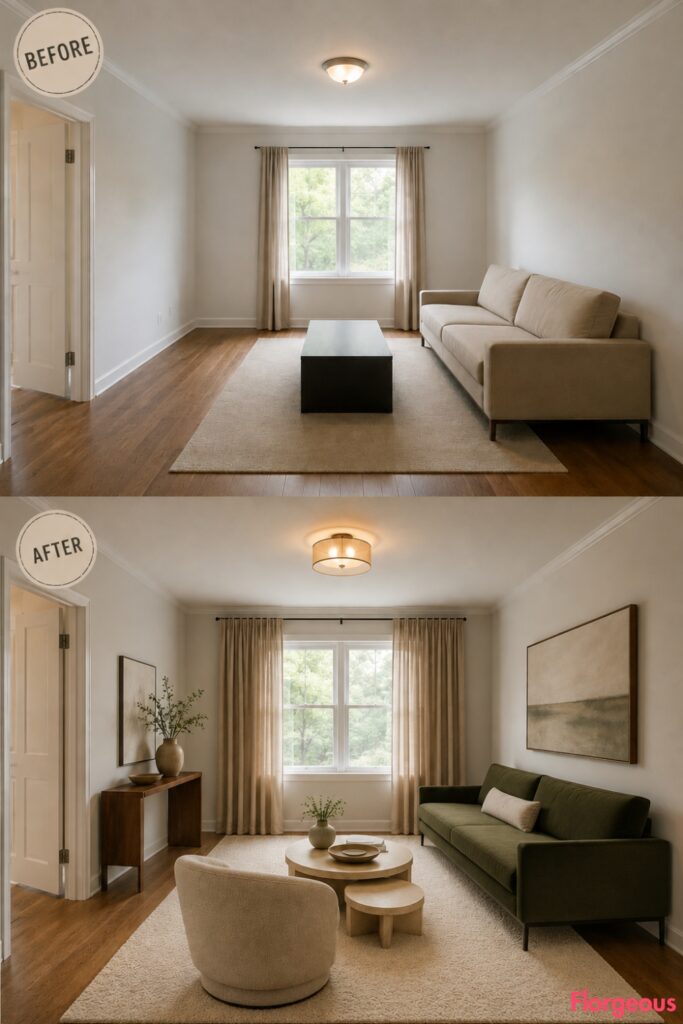
A compact living room benefits more from changed proportions than simply smaller accessories.
Before: A plain builder-grade living room with warm off-white walls, a straight beige sofa against the main wall, bare rectangular coffee table, neutral rug, short plain curtains, basic ceiling lighting, minimal styling, and soft natural daylight.
After: A slim bottle-green settee hugs the main wall. One oatmeal swivel chair sits diagonally opposite, and two small nesting limestone tables replace the bulky coffee table. A narrow walnut console adds storage without approaching the doorway.
Rounded pieces make the floor plan easier to navigate.
12. Make Emerald Chairs the Focus of a Tailored Salon
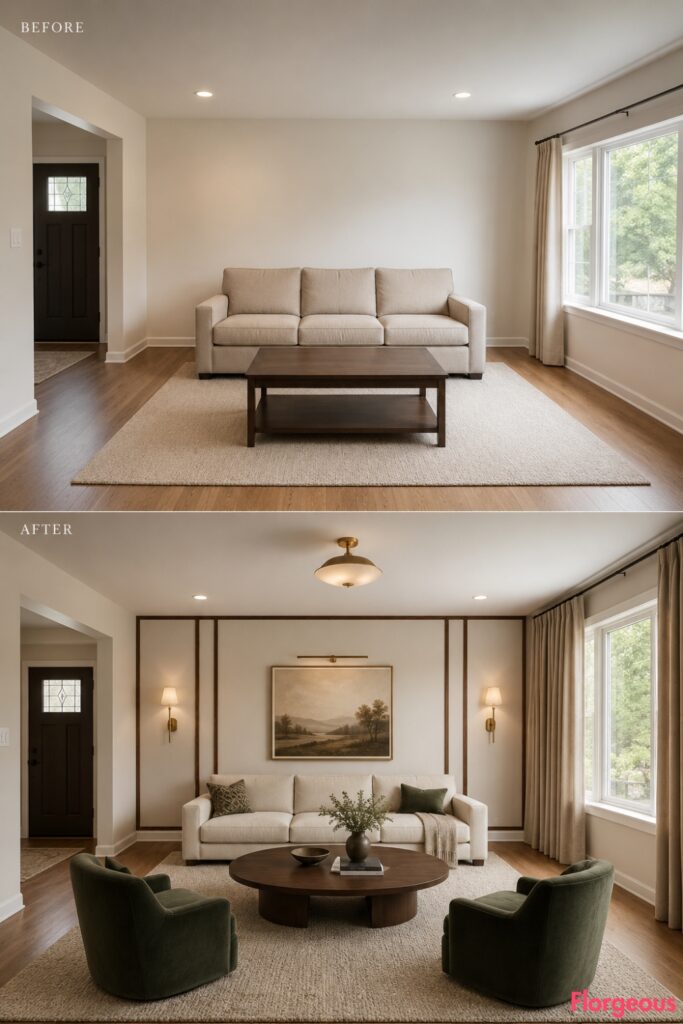
This is a richer use of green, but only two pieces receive the saturated color.
Before: A plain builder-grade living room with warm off-white walls, a straight beige sofa against the main wall, bare rectangular coffee table, neutral rug, short plain curtains, basic ceiling lighting, minimal styling, and soft natural daylight.
After: A tailored ivory sofa anchors the main wall. Two compact emerald mohair chairs sit together opposite it with a deliberate gap between them. A broad dark-walnut oval table, mushroom wool rug, narrow walnut wall treatment, and aged-brass picture lights create a polished salon mood.
13. Add Celadon With a Soft Grasscloth Effect
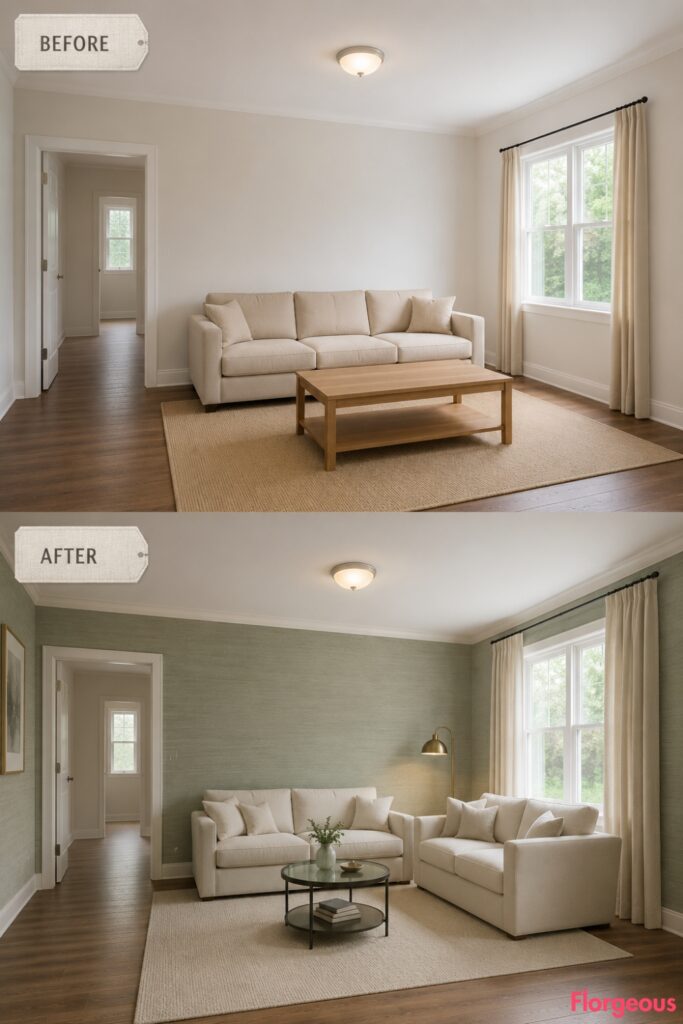
Texture takes the lead in this quieter green direction.
Before: A plain builder-grade living room with warm off-white walls, a straight beige sofa against the main wall, bare rectangular coffee table, neutral rug, short plain curtains, basic ceiling lighting, minimal styling, and soft natural daylight.
After: Celadon grasscloth-effect wallcovering wraps the room. Two compact cream loveseats meet at a right angle in the far seating zone, leaving the doorway side intentionally open. A small smoked-glass round table and slim antique-brass lamp keep the arrangement light.
The result feels collected without relying on strong color contrast.
14. Remove the Sofa and Build a Khaki Conversation Island
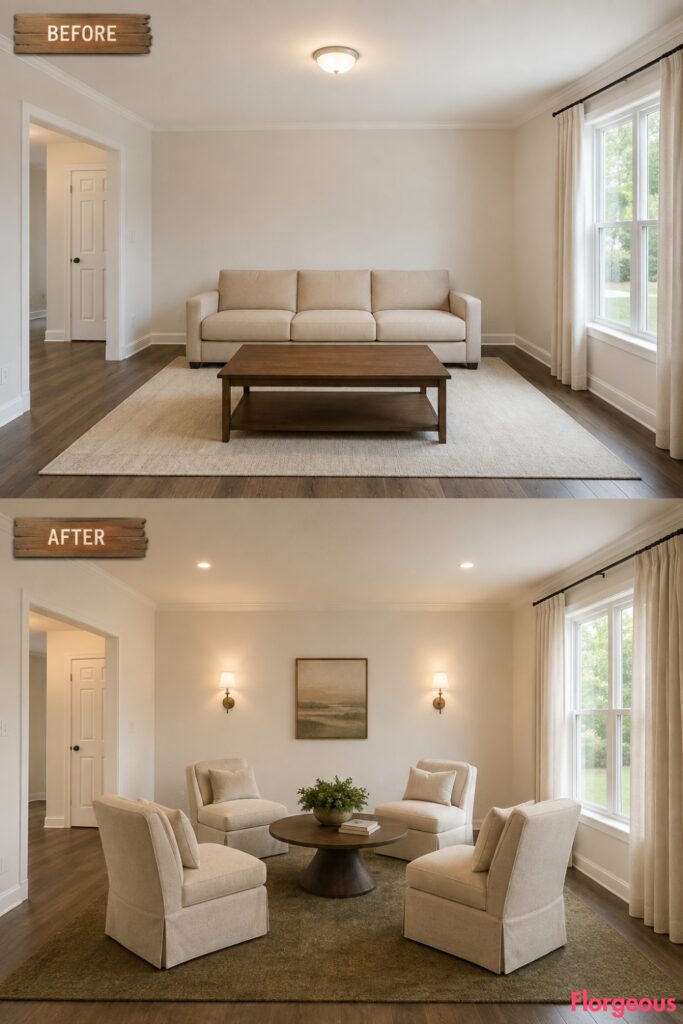
This is the biggest furniture-layout departure in the collection.
Before: A plain builder-grade living room with warm off-white walls, a straight beige sofa against the main wall, bare rectangular coffee table, neutral rug, short plain curtains, basic ceiling lighting, minimal styling, and soft natural daylight.
After: Four compact oatmeal slipper chairs gather around a round dark-oak pedestal table. An oversized khaki wool rug defines the entire composition while the walls remain warm white.
With no sofa or media wall, the room becomes a true conversation space. A generous clear route runs beside the seating island.
15. Use Warm Avocado for a Retro-Modern Accent
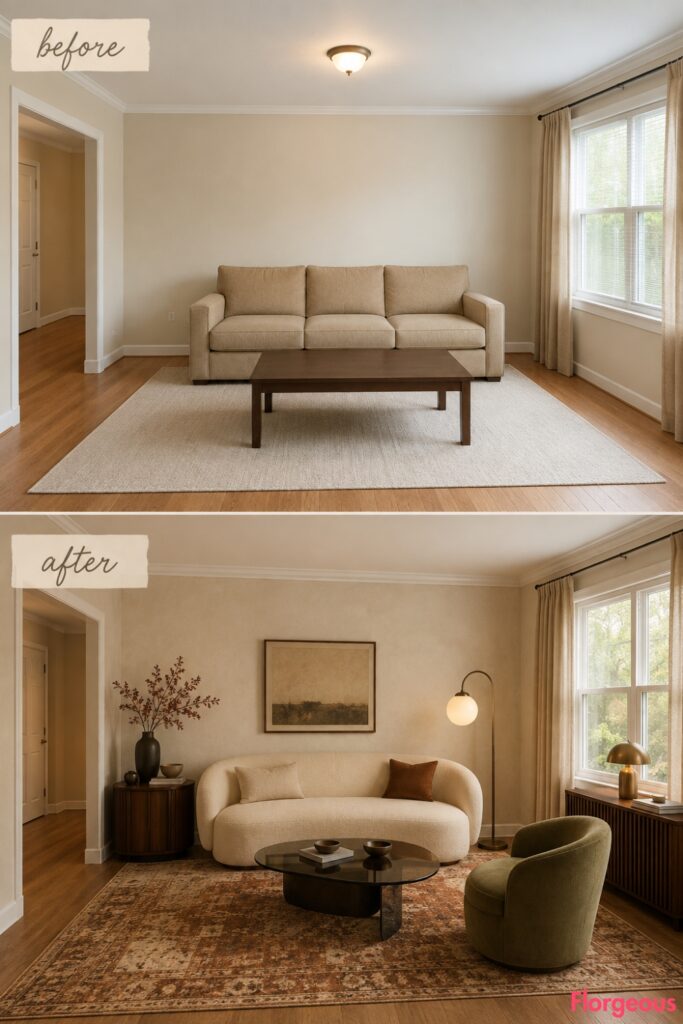
A greener living room does not have to rely only on sage and olive.
Before: A plain builder-grade living room with warm off-white walls, a straight beige sofa against the main wall, bare rectangular coffee table, neutral rug, short plain curtains, basic ceiling lighting, minimal styling, and soft natural daylight.
After: Parchment walls frame a rounded cream sofa. One substantial warm-avocado lounge chair sits off-center beside a smoked-glass kidney-shaped table. Dark walnut furniture, a rust-and-oatmeal rug, and bronze globe lighting introduce a restrained 1970s note.
The avocado appears only once, keeping the room sophisticated rather than nostalgic.
16. Create a Pine-Green Freestanding Library
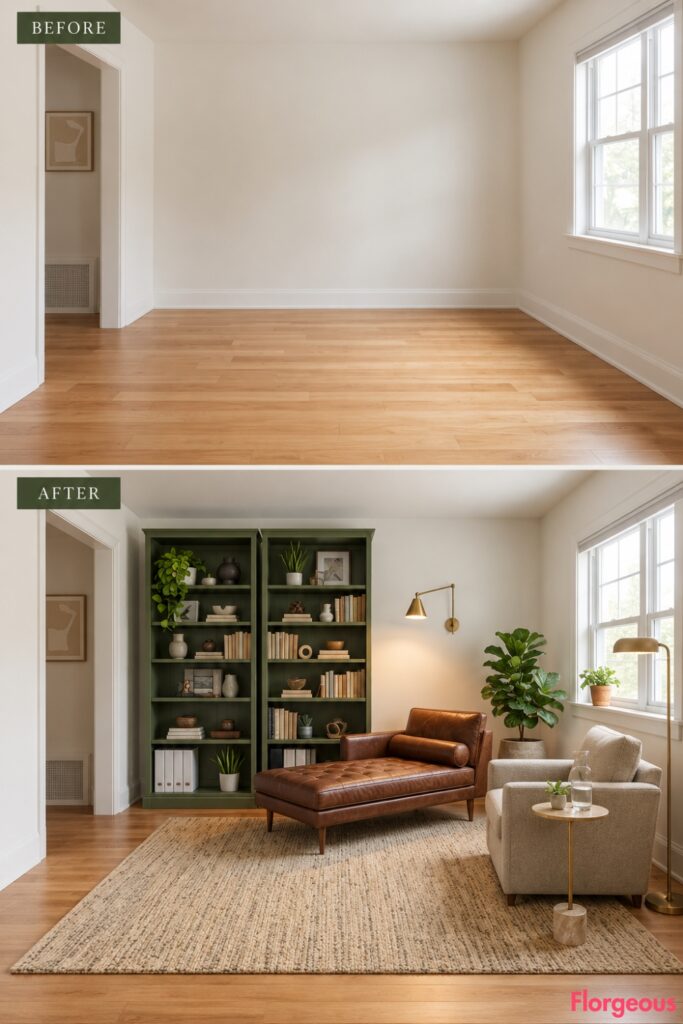
This makeover delivers the feeling of a library without permanent built-ins.
Before: A plain builder-grade living room with warm off-white walls, a straight beige sofa against the main wall, bare rectangular coffee table, neutral rug, short plain curtains, basic ceiling lighting, minimal styling, and soft natural daylight.
After: Two tall pine-green freestanding bookcases line one wall well away from the doorway. A tobacco leather chaise runs parallel to them, while a compact oatmeal reading chair sits near the window. A tiny brass-and-stone table connects the two reading positions.
Books and objects remain restrained, with no readable covers.
17. Let Green Stone Replace Green Paint Entirely
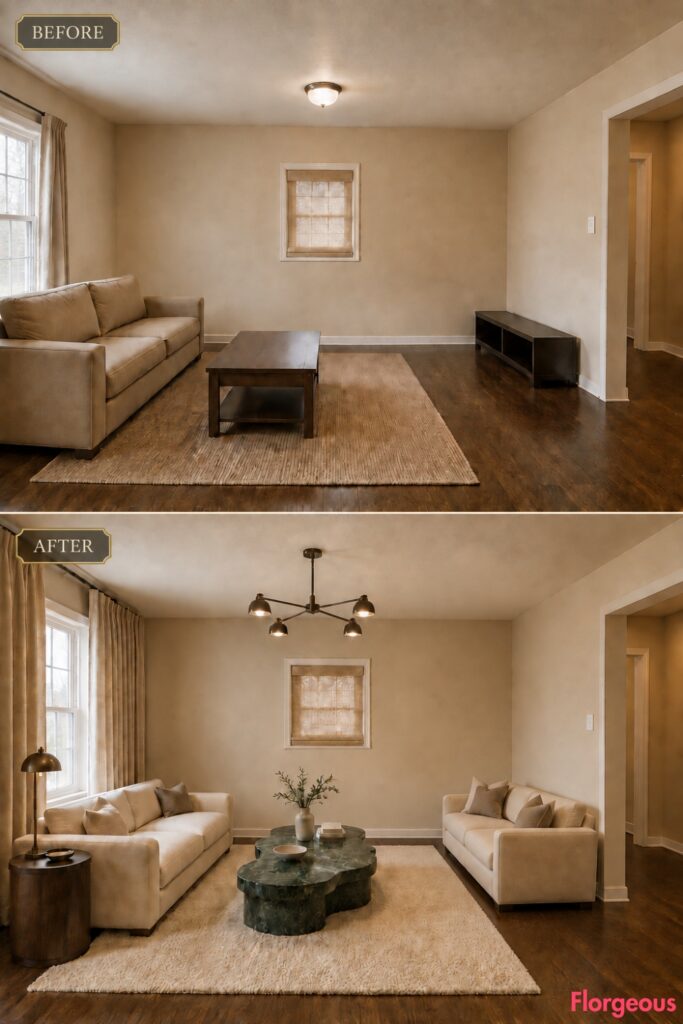
The final room proves that the strongest green element can come from material rather than pigment.
Before: A plain builder-grade living room with warm off-white walls, a straight beige sofa against the main wall, bare rectangular coffee table, neutral rug, short plain curtains, basic ceiling lighting, minimal styling, and soft natural daylight.
After: Creamy off-white walls remain untouched. Two compact low oatmeal sofas face one another across a substantial green-veined serpentine stone table. Dark walnut end tables, dense ivory wool, flax curtains, and aged-bronze lighting give the stone enough visual space to become the focal point.
Unlike the previous rooms, there are no green walls, chairs, cabinets, curtains, or rugs.
How to Choose the Right Green Direction for Your Own Living Room
The strongest rooms above do not simply add more green. They decide what green is supposed to do.
Sage and green-gray make effective backgrounds. Olive and emerald work beautifully as concentrated upholstery. Eucalyptus can define architecture. Lichen can frame natural light. Khaki can establish a seating zone underfoot. Forest and blackened green can deepen focal walls, while green-veined stone provides color without paint at all.
For a Green Living Living Room that feels intentional, begin with the element you are least likely to replace, usually the flooring or largest sofa. Test green samples next to it in morning and evening light before committing.
Then decide whether green will be the background, focal point, or supporting material. Repeat the chosen family of green only where it helps connect the room. Once the palette works, focus on curtain height, rug scale, furniture spacing, and layered lighting before adding extra decor.