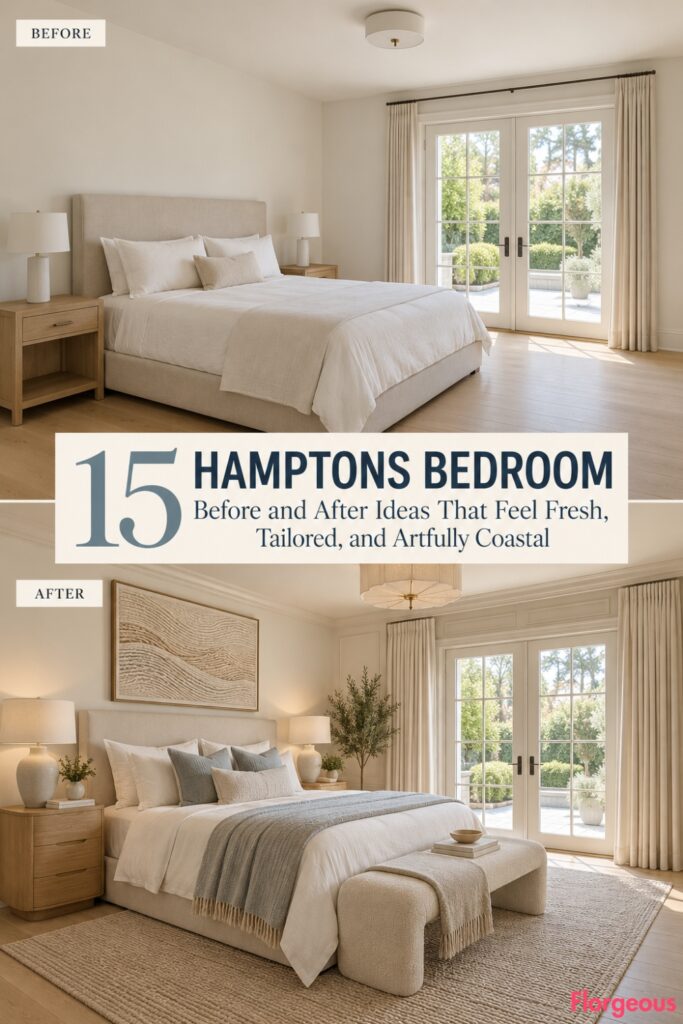
A plain bedroom can feel clean and calm, but still look as though it has not quite found its point of view. A basic bed, simple bedding, bare nightstands, and neutral walls create a usable room, yet they rarely deliver the layered charm people hope for when they picture a beautiful Hamptons Bedroom.
What makes this style so interesting is that it is not one-note. It can feel crisp and coastal, softly tailored, clubby and classic, or light and quietly artistic. The best rooms do not rely on a few blue accents. They use architecture, trim, upholstery, craftsmanship, and proportion to create that easy East Coast polish.
For every idea below, the starting point stays the same: a terrace-facing bedroom with warm off-white walls, a basic neutral upholstered bed on the solid left wall, plain ivory bedding, two bare nightstands, short simple curtains framing French doors on the far wall, a basic flush ceiling light, wide-plank pale oak flooring, minimal styling, and soft daylight. The shell stays fixed. Only the after changes.
1. Turn a Plain Bedroom Into a Sculptural Hamptons Retreat With a Bobbin Bed
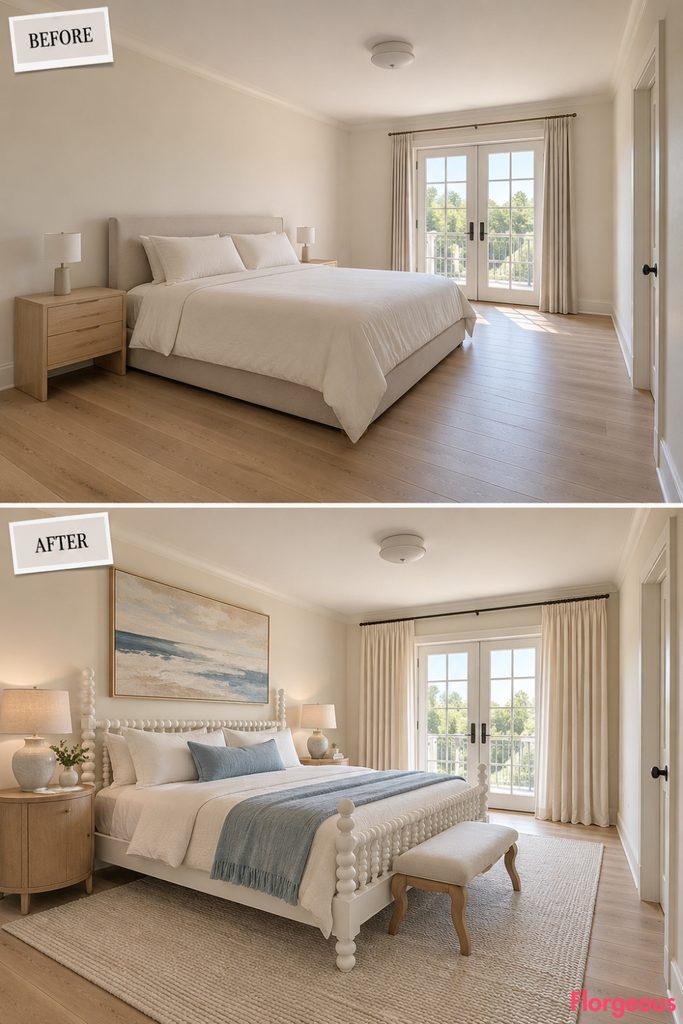
Use the bed itself as the focal point instead of adding another feature wall.
Before: A plain terrace-facing bedroom with warm off-white walls, a basic upholstered bed, simple nightstands, short curtains, and minimal styling.
After: Replace the bed with an oversized chalky-white bobbin frame with bold simplified turning. Add oval pale-oak nightstands, ceramic lamps, crisp white linen, one dusty-blue lumbar, a low upholstered stool, full-height ivory curtains, and one broad abstract coastal artwork.
Style Note: Keep every other silhouette simple so the bobbin bed feels refined and sculptural rather than cottage-like.
2. Add a Tailored Awning-Stripe Bed Corona
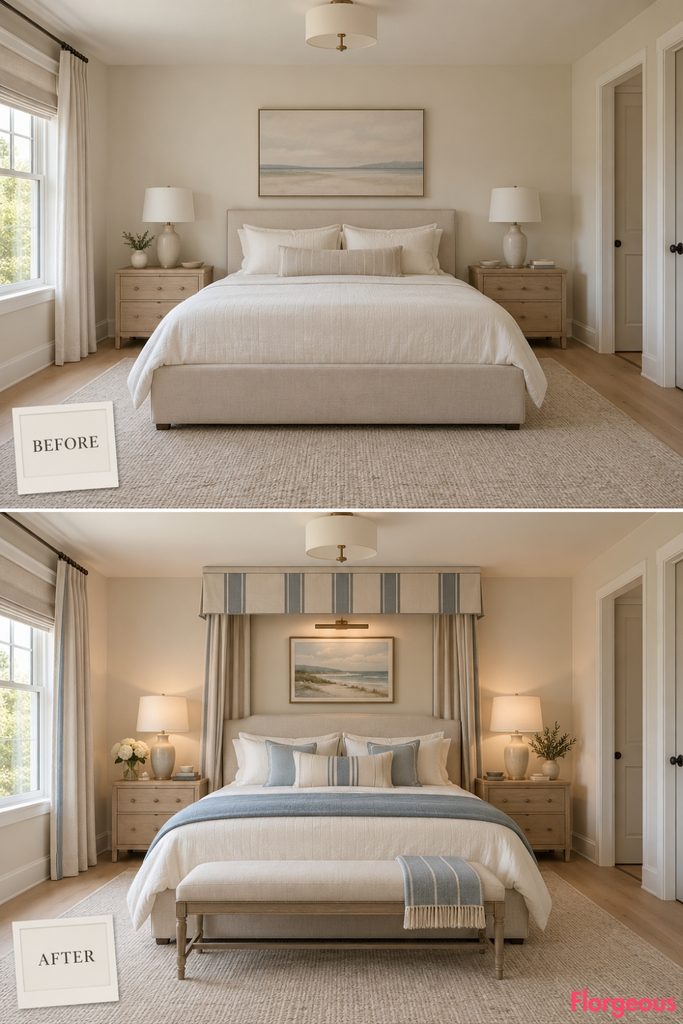
Before: The original head area feels flat, with little visual lift above the mattress.
After: A compact upholstered bed corona sits just above the headboard, trimmed in soft awning stripes in sand and faded blue. Two short hanging side drapes frame the bed without becoming a full canopy. Keep the bedding clean and the room airy, then let the corona bring the charm of a dressed summer house bedroom.
Designer Tip: Keep the stripe wide enough to read from a distance. Thin ticking stripes can disappear.
3. Build the Room Around a Serpentine Chest Composition
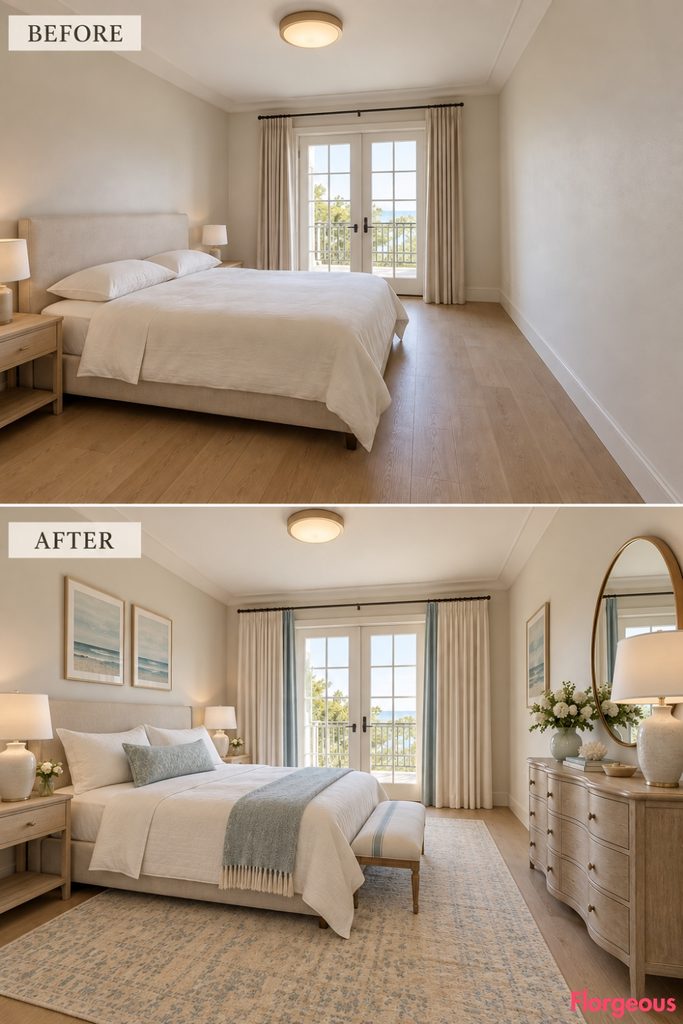
Before: The right wall feels underused and slightly empty.
After: A graceful serpentine-front chest becomes the hero piece on the right wall, paired with a round mirror and a sculptural table lamp. The bed stays simple and quietly tailored. The composition feels collected and distinctly East Coast, especially when paired with soft ivory bedding and a muted sea-glass accent at the foot of the bed.
Why it works: A curving case piece adds movement and refinement without requiring a major renovation.
4. Turn the Side Wall Into a Sculptural Hamptons Display Ledge
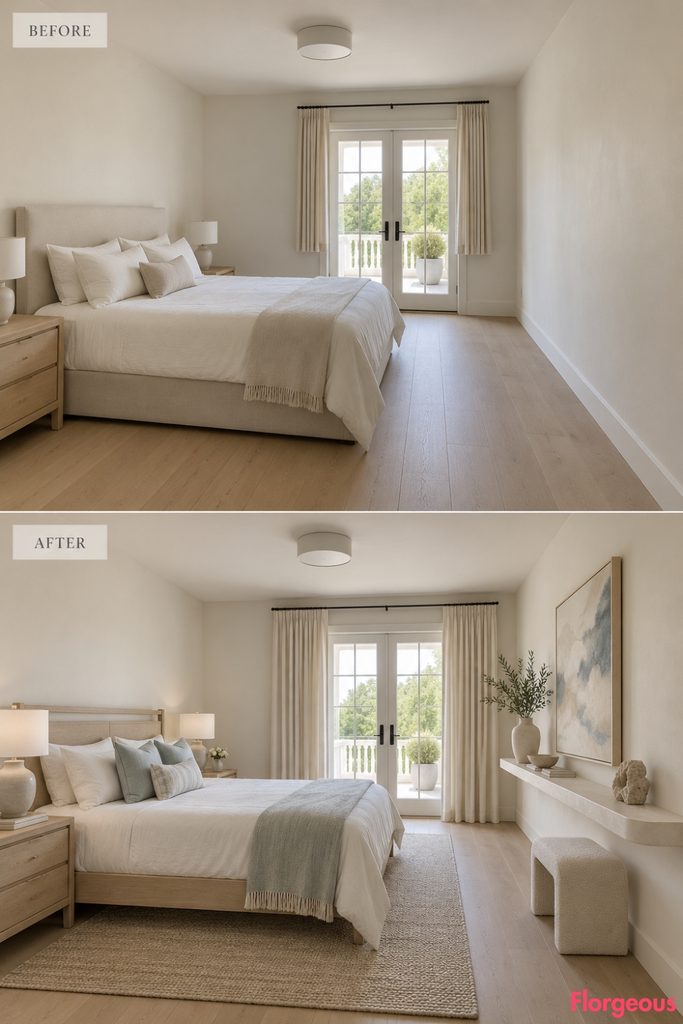
Give the empty side wall a stronger architectural role instead of making the bed another focal point.
Before: The same plain terrace-facing bedroom has a basic bed, bare nightstands, short curtains, and an empty right wall.
After: Add a long shallow plaster display ledge with softly rounded ends along the right wall. Style it sparingly with sculptural ceramics, a broad abstract artwork, and a slim upholstered stool. Keep the bed simple with pale oak, crisp ivory linen, compact nightstands, and full-height curtains at the French doors.
Why it works: The curved plaster feature adds an artistic horizontal line and makes the room feel custom without overwhelming the relaxed Hamptons character.
Try this: Keep the ledge shallow and use only a few substantial objects so it reads as architecture rather than shelving.
5. Soften the Space With a Deep Box-Pleated Bed Skirt
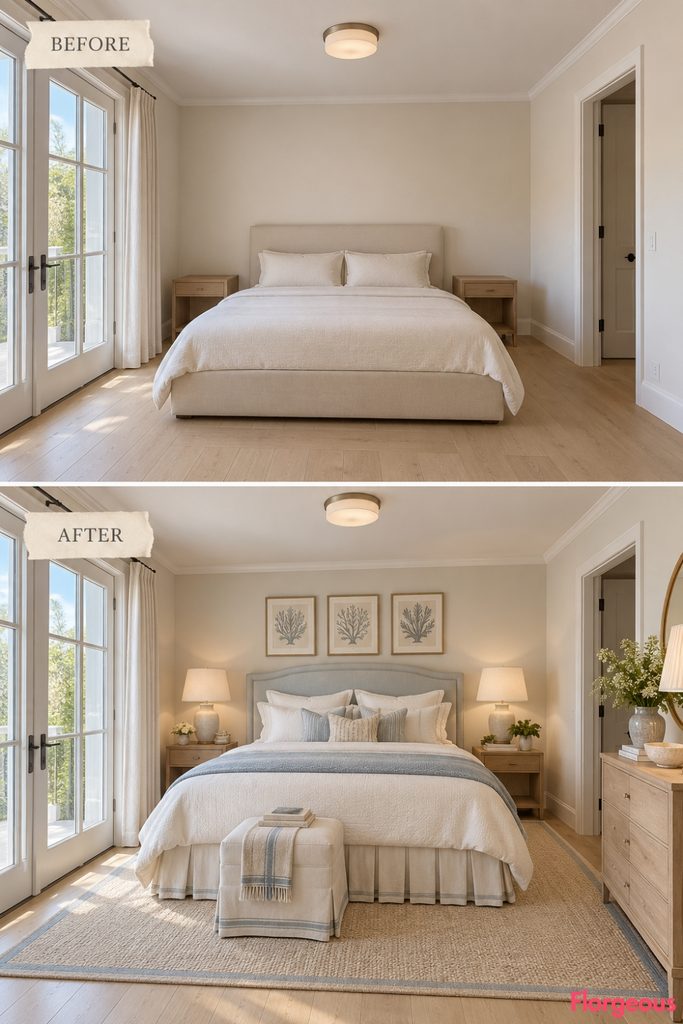
Before: The original bed feels slightly floating and visually light in an unfinished way.
After: The bed becomes more dressed and summer-house friendly with a tailored box-pleated bed skirt in stone-colored linen. Pair it with a softly upholstered headboard, airy bedding, a slipcovered stool, and a very simple wall composition so the skirt becomes the lead design move.
Budget Version: A custom bed skirt often changes the feeling of a room more than replacing the whole bed.
6. Create a Hamptons Bedroom With a Pale Oak Sunburst Headboard
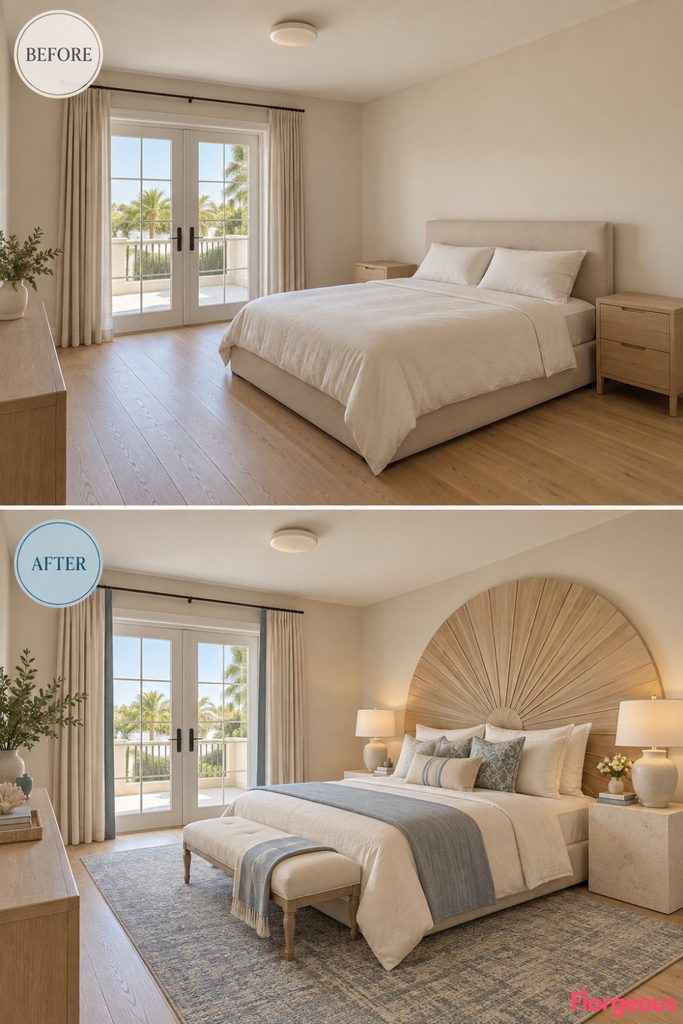
Before: The bed wall feels flat, with a basic upholstered bed and little visual character.
After: Replace the ordinary headboard with a wide pale-oak sunburst design made from slender timber segments radiating from behind the bed. Keep the geometry refined rather than dramatic, then add simple ivory bedding, limestone bedside blocks, ceramic lamps, and a quiet blue-gray rug.
Why it works: The radial timber pattern creates an artistic focal point through craftsmanship and geometry, while pale oak and restrained styling keep it light enough for a Hamptons bedroom.
7. Create a Ribbon-Trimmed Country Club Bedroom
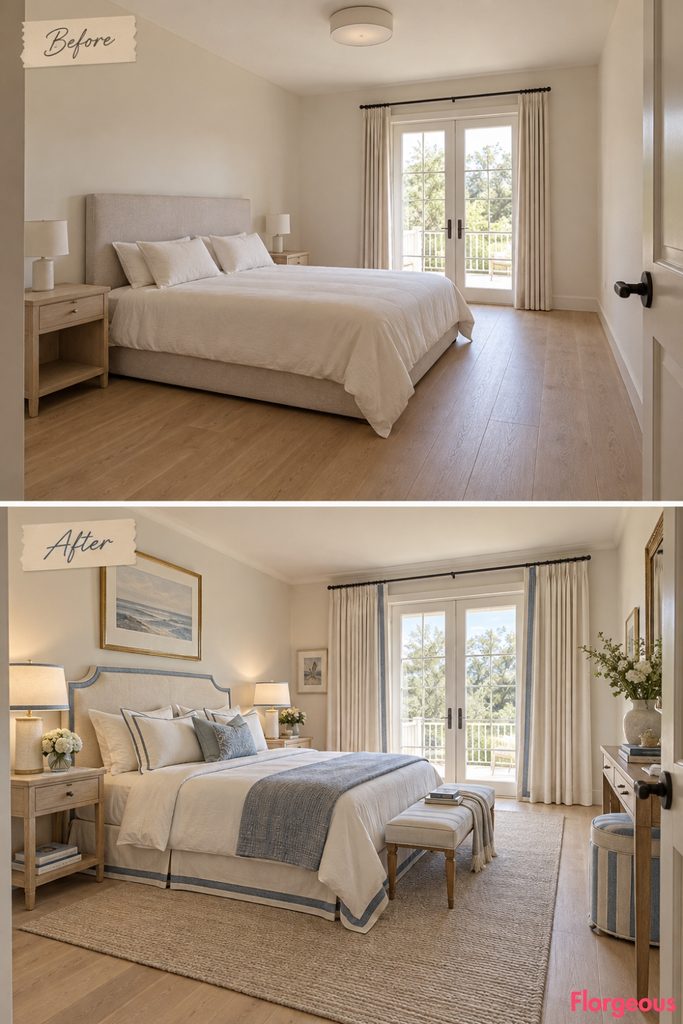
Before: The textiles feel plain and somewhat forgettable.
After: Grosgrain ribbon trim is introduced with purpose on the headboard edge, curtain leading edges, lampshades, and a small bed valance. The room becomes instantly more tailored. A palette of warm white, oat, and dusty blue keeps it firmly in Hamptons territory.
Common Mistake: Do not repeat trim on every textile in the room. A few carefully chosen placements feel elegant. Too many look fussy.
8. Create a Hamptons Morning Salon Beside the French Doors
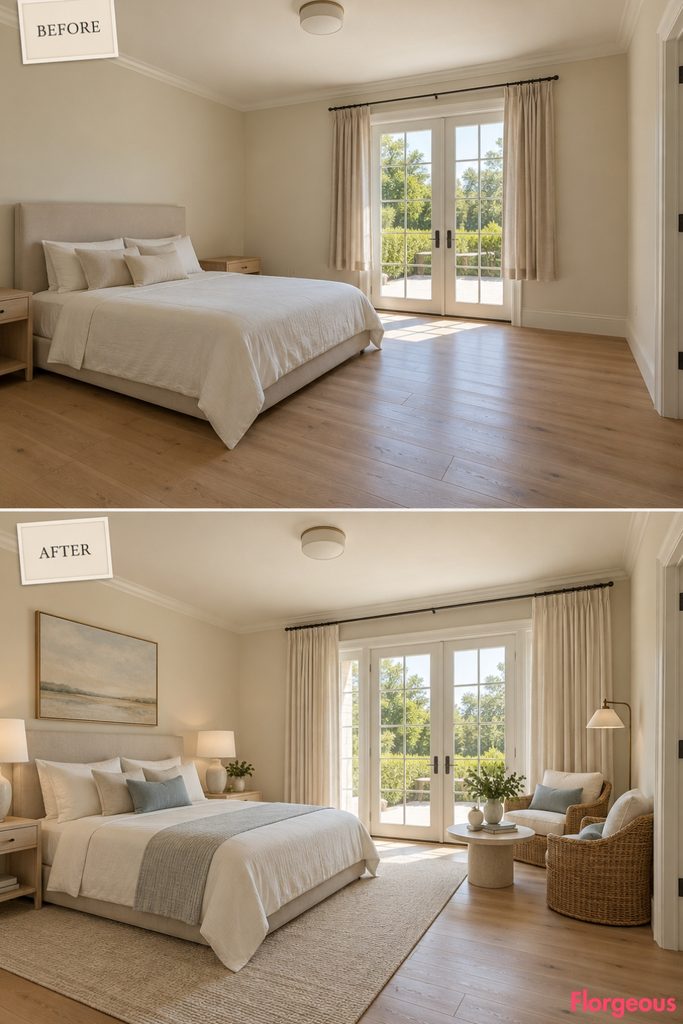
Instead of concentrating everything around the bed, give the room a second purpose with a relaxed sitting zone beside the terrace doors.
Before: The same plain bedroom has an underused open area near the French doors and very little furniture beyond the bed.
After: Create a small Hamptons morning salon with two sculptural woven club chairs angled toward a compact oval pedestal table. Add tailored seat cushions in warm ivory, one faded blue lumbar, a slender floor lamp, and a small ceramic vessel. Keep the bed crisp and understated so the new conversation zone changes the balance of the whole room.
Why it works: Dividing the room into sleeping and sitting zones makes it feel more like a generous Southampton guest suite than a standard bedroom.
Try this: Angle the chairs rather than pushing them flat against the wall. The composition will feel more natural and less staged.
9. Create a Tailored Hamptons Dressing Gallery With Antiqued Mirror Panels
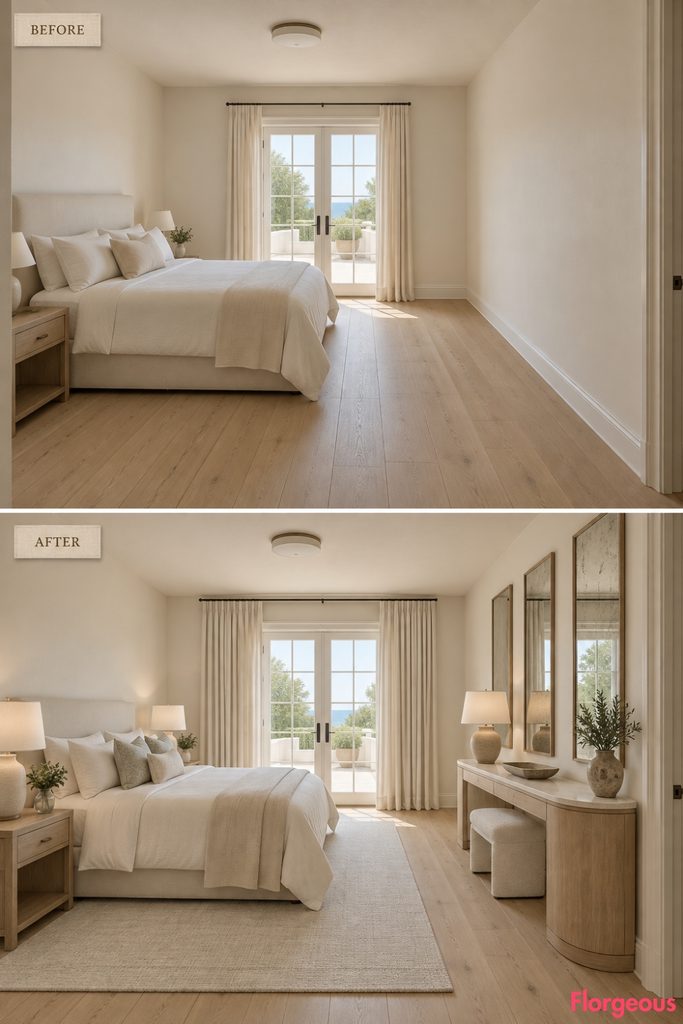
Turn the long right wall into a polished dressing composition rather than another decorative feature wall.
Before: The right wall is empty, and the bedroom has no dedicated dressing or getting-ready zone.
After: Install three tall, slim antiqued mirror panels with narrow pale-oak frames, mounted with small gaps between them to create a rhythmic wall composition. Place a long curved-front dressing console beneath, paired with a compact upholstered stool, ceramic lamp, shallow tray, and one sculptural vessel. Keep the bed zone quiet and balanced.
Why it works: The repeated mirror panels bounce daylight deeper into the room while creating a strong architectural rhythm without changing the shell.
Try this: Use softly antiqued rather than perfectly clear mirror so the wall feels decorative and atmospheric instead of like a wardrobe showroom.
10. Frame the French Doors With a Hamptons Veranda Portal
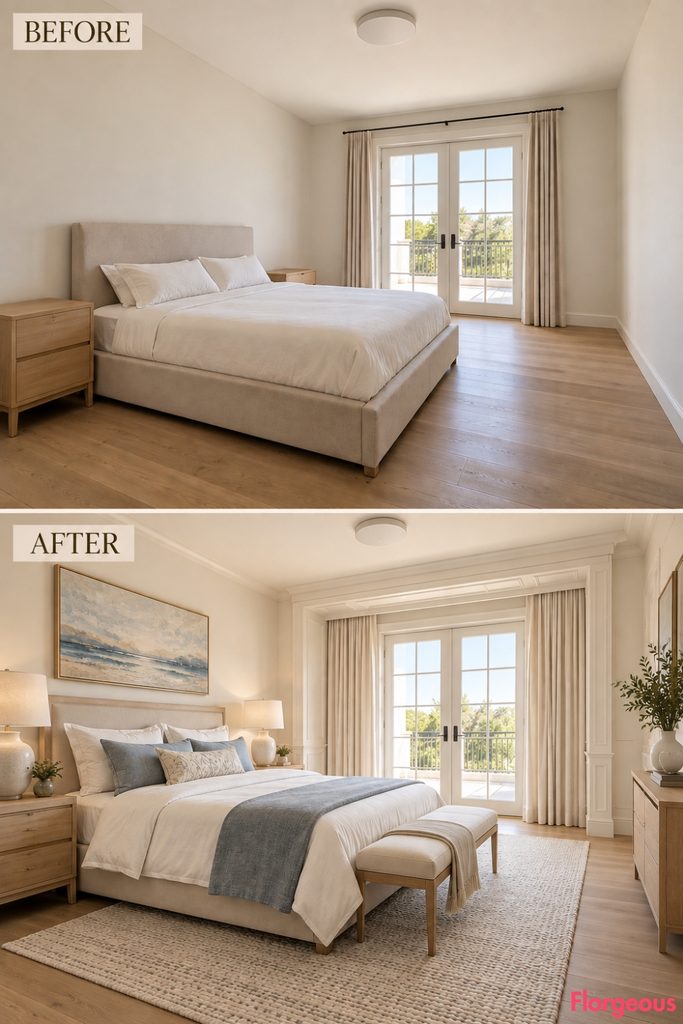
Make the terrace connection feel architectural rather than treating the French doors as a standard opening.
Before: The French doors have short curtains and little visual presence.
After: Build a deep stepped white-painted timber casing around the existing French doors, with slim side pilaster returns and a broad clean header inspired by an East Coast veranda. Add full-height linen curtains, a pale-oak bed, tailored bedside pieces, a narrow upholstered bench, and restrained ceramic lighting.
Why it works: The enhanced doorway makes the terrace feel deliberately connected to the bedroom without changing the opening itself.
11. Create an Artistic Sgraffito Plaster Wall
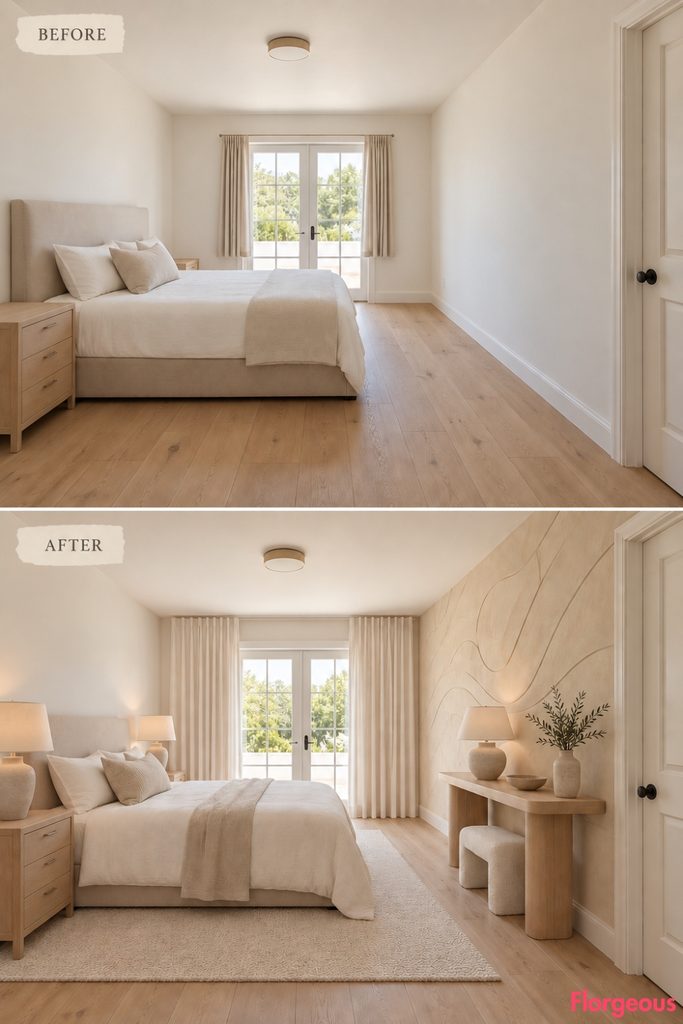
Give the long right wall a handcrafted surface that reads as artwork and architecture at the same time.
Before: The right wall is plain and visually disconnected from the rest of the room.
After: Finish it in chalky mineral plaster with broad hand-incised sgraffito lines inspired by wind, dunes, and tidal movement. Add a sculptural pale-oak console, one substantial ceramic lamp, two handmade vessels, and a low upholstered stool. Keep the sleeping area quieter with linen, pale timber, and full-height curtains.
Why it works: The design creates movement through texture and shadow rather than wallpaper, framed art, or another painted feature wall.
12. Recompose the Bedroom Around a Freestanding Headboard Spine
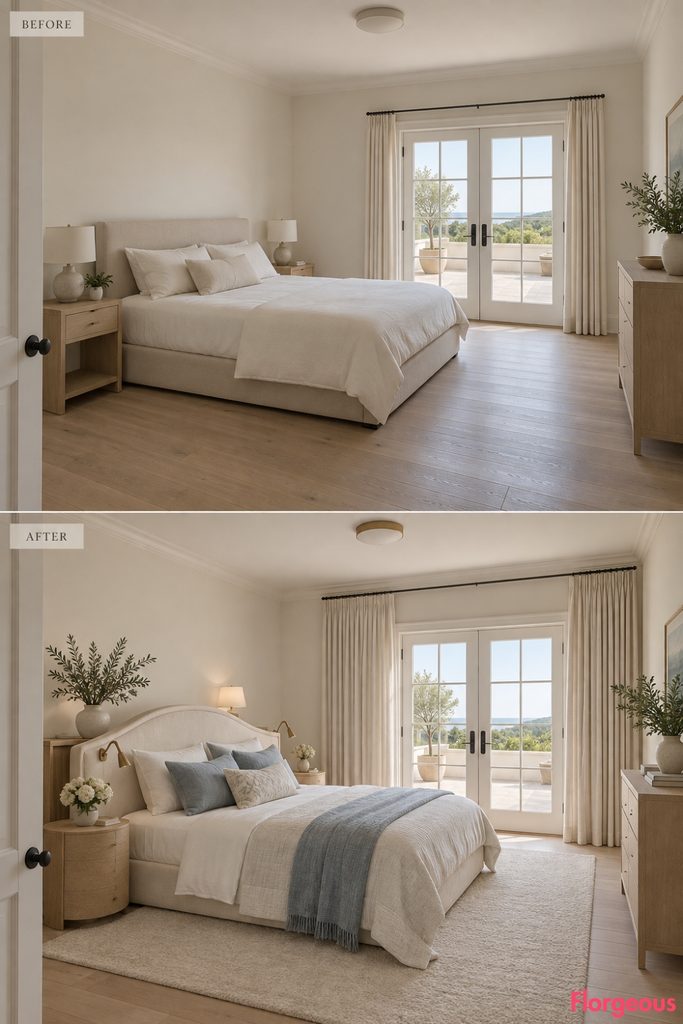
Change the actual furniture layout instead of decorating the existing arrangement.
Before: The bed sits conventionally against the solid left wall.
After: Pull the sleeping zone slightly into the room and anchor it with a freestanding curved upholstered headboard spine, leaving a deliberate shadow gap behind it. A slim pale-oak console runs along the back of the spine, creating a polished rear elevation. Pair it with compact side tables, directional reading lamps, layered linen, and a generous rug.
Small Space Tip: This only works where the circulation can remain comfortably open on both sides.
13. Create a Limestone Terrace Threshold Inside the Bedroom
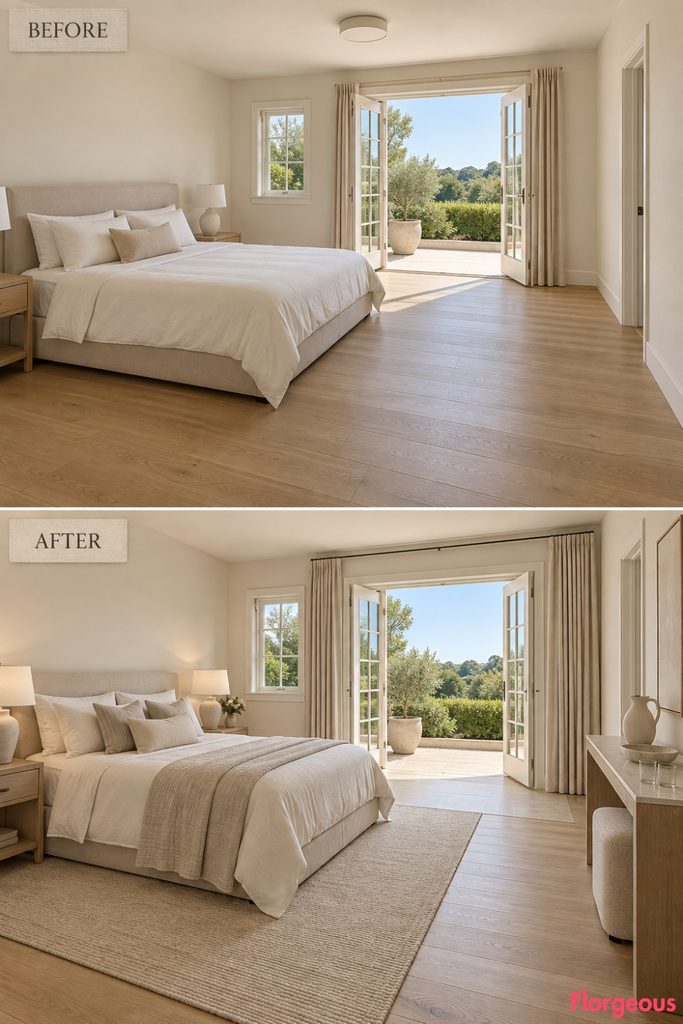
Let the transition to the terrace become a designed moment rather than covering the whole floor.
Before: Pale oak runs continuously to the French doors with no distinction between the sleeping zone and terrace threshold.
After: Insert a wide flush-set rectangle of honed pale limestone immediately inside the French doors, framed precisely by the original oak floor. Add a narrow freestanding oak drinks console along the right return, a stone tray, ceramic pitcher, and one elegant stool. Keep the bed zone warm with linen, oak, and a large wool rug.
Why it works: The limestone creates the feeling of an indoor veranda while preserving the bedroom’s warm timber floor.
14. Add a White Garden-Trellis Ceiling Frame
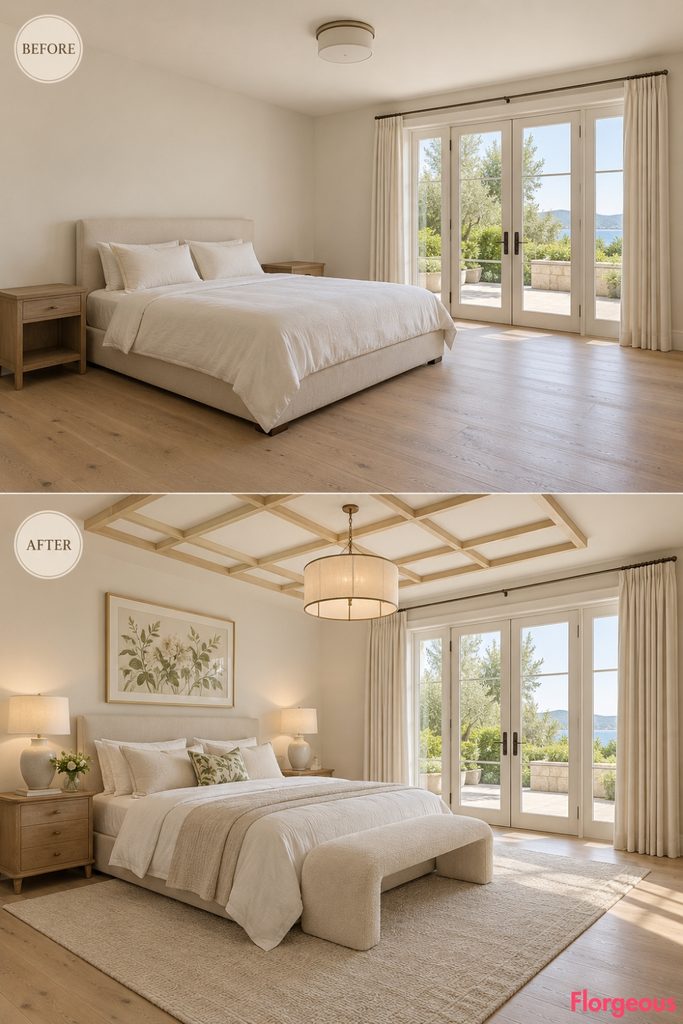
Take the Hamptons garden-house idea overhead rather than repeating another decorated wall.
Before: The flat ceiling has only a basic flush light and contributes little to the room.
After: Suspend a very shallow white-painted timber trellis framework beneath the central ceiling area, using large open rectangles and slim members so the original ceiling remains visible above it. Center a refined linen-and-bronze pendant within the framework. Keep the walls calm and furnish the room with a tailored bed, sculptural nightstands, a curved bench, and controlled botanical accents.
Why it works: The overhead geometry creates an artistic garden-room atmosphere without becoming a coffered ceiling or conventional beams.
15. Create a Hamptons Textile Atelier With an Oversized Framed Linen Panel
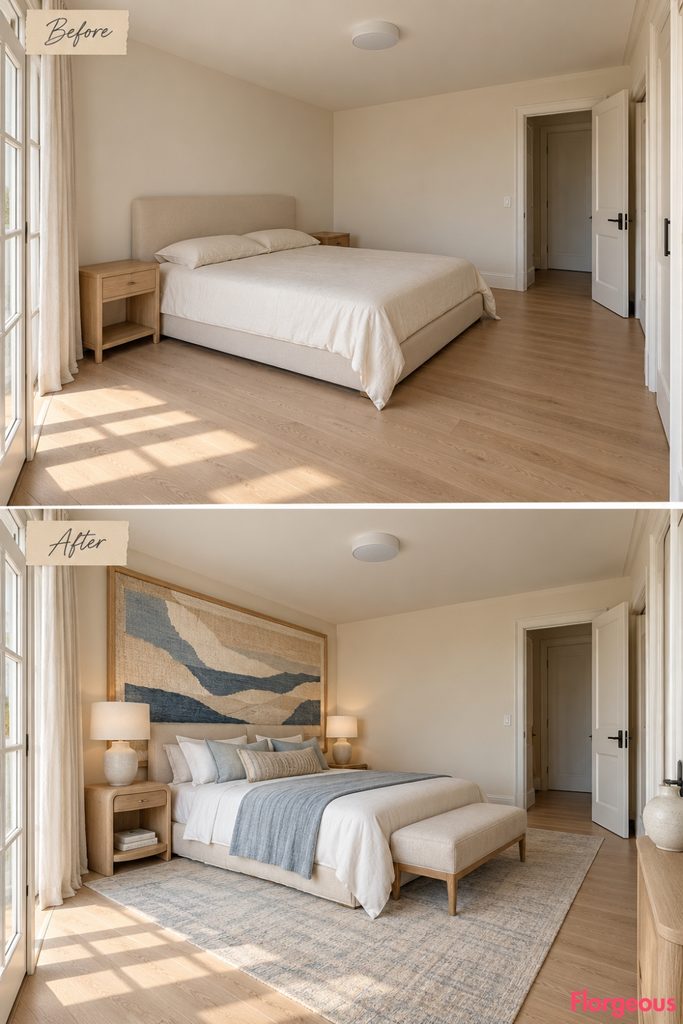
Finish the collection with a focal point that feels handcrafted rather than traditionally decorated.
Before: The bed wall is plain and the room lacks one memorable artistic gesture.
After: Mount one oversized hand-blocked linen panel inside a deep pale-oak shadow frame, positioned like a large textile artwork rather than wallpaper or a conventional headboard. Use an abstract coastal pattern in chalk, faded indigo, sand, and muted clay. Pair it with a clean upholstered bed, sculptural oak nightstands, ceramic lighting, a tailored footstool, and carefully layered linen.
Why it works: The room gets pattern, texture, craft, and scale from one controlled installation instead of multiple small decorative objects.
Choosing the Right Hamptons Bedroom Direction
The strongest Hamptons rooms usually begin with one clear design idea rather than dozens of coastal details. Start with the element that will make the biggest difference in your own bedroom, whether that is a stronger furniture layout, an architectural wall treatment, a terrace transition, a crafted ceiling detail, or one oversized artistic focal point.
Then support that feature with natural timber, tailored upholstery, linen, ceramic lighting, generous curtains, and enough negative space for the room to stay relaxed. A successful Hamptons Bedroom should feel considered and layered, but never crowded or overly nautical.
Before buying accessories, look at the architecture and circulation first. Keeping the path around the bed and toward doors clear will usually make the final room feel more luxurious than adding another decorative object.