A beach house bedroom feels best when the coastal mood comes from the room itself, not from a collection of obvious seaside decorations. Light, weathered materials, tactile walls, handmade surfaces, relaxed textiles, and thoughtful furniture placement can create a stronger sense of place than anchors, shells, signs, or nautical props ever could.
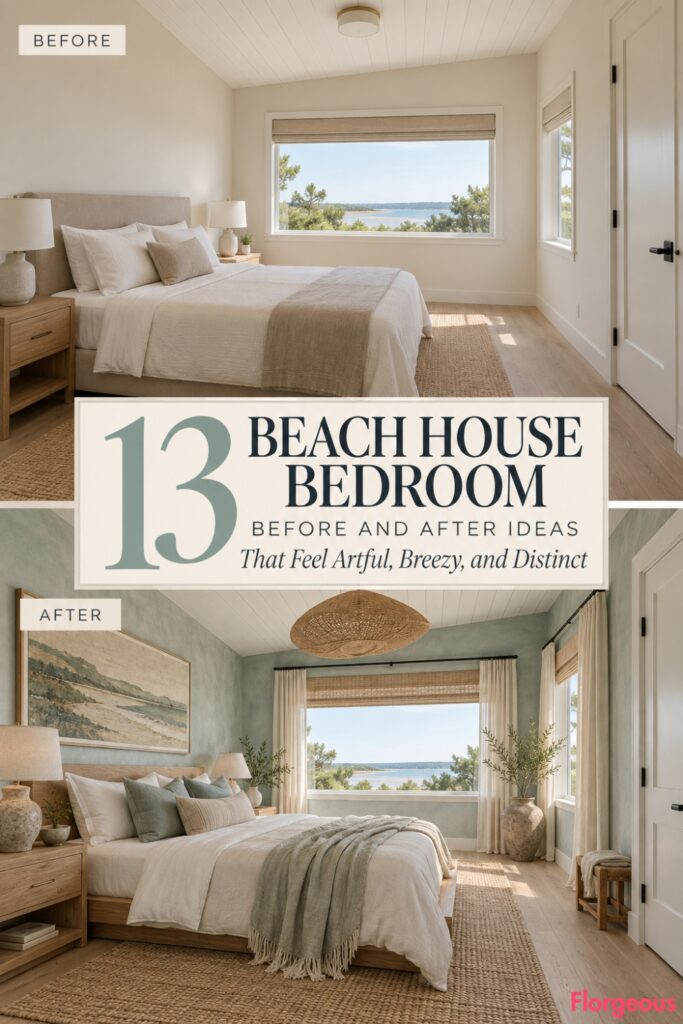
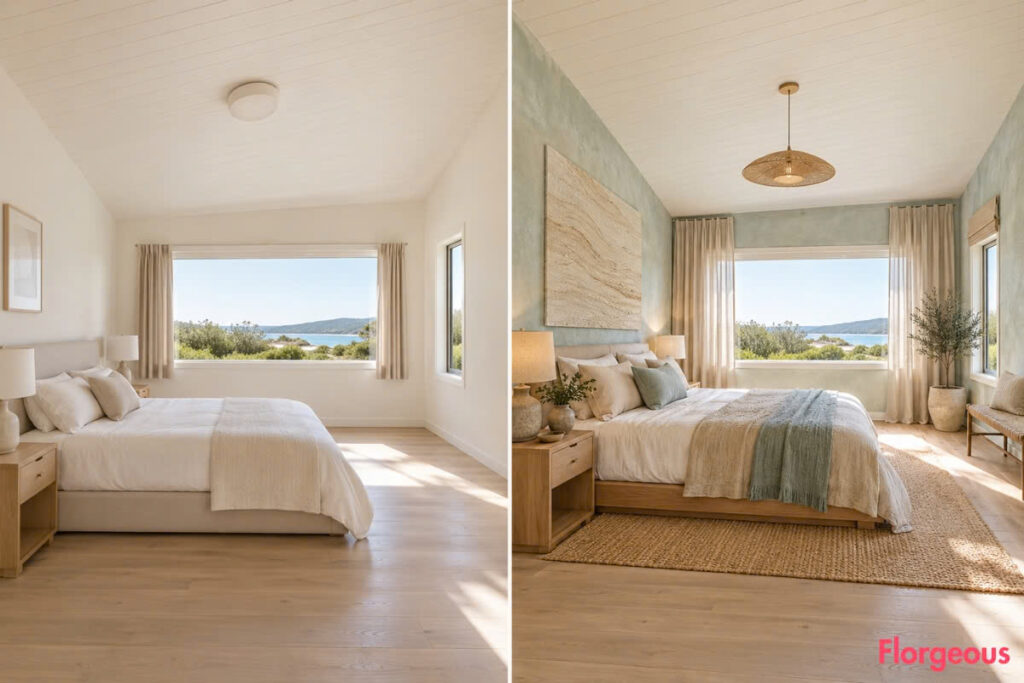
For all 13 makeovers, we begin with the exact same locked bedroom shell. The room has a bed positioned along the left wall, a wide horizontal picture window on the far wall, a narrow vertical window on the right wall near the back corner, a front-right entry, a gently sloped white-painted narrow-board ceiling, and pale sun-bleached oak flooring.
The BEFORE version never changes: warm off-white walls, a basic neutral upholstered bed, plain ivory bedding, two simple pale-wood nightstands, a compact flush ceiling light, minimal styling, and soft natural daylight.
Only the AFTER changes. Each idea uses a different design language and a different camera direction so the gallery does not feel like the same room photographed thirteen times with new furniture.
1. Wash the Room in Faded Sea-Glass Limewash
The first makeover lets the walls create the coastal atmosphere.
Before: The neutral room is light and usable, but there is no focal point or material depth.
After: Faded sea-glass limewash wraps the walls in a soft, slightly irregular finish. A low rounded oak bed replaces the basic upholstered frame, paired with washed flax bedding, an indigo quilt, and a generous pale sand wool rug. Matte ceramic lamps and one weathered timber stool keep the styling tactile but restrained.
The room still feels calm, but the mineral wall surface gives it a distinct sense of place.
Designer Tip: Choose sea-glass shades with plenty of gray and mineral undertone. Bright turquoise can make the space feel themed.
2. Turn the Right Wall Into a Handwoven Art Installation
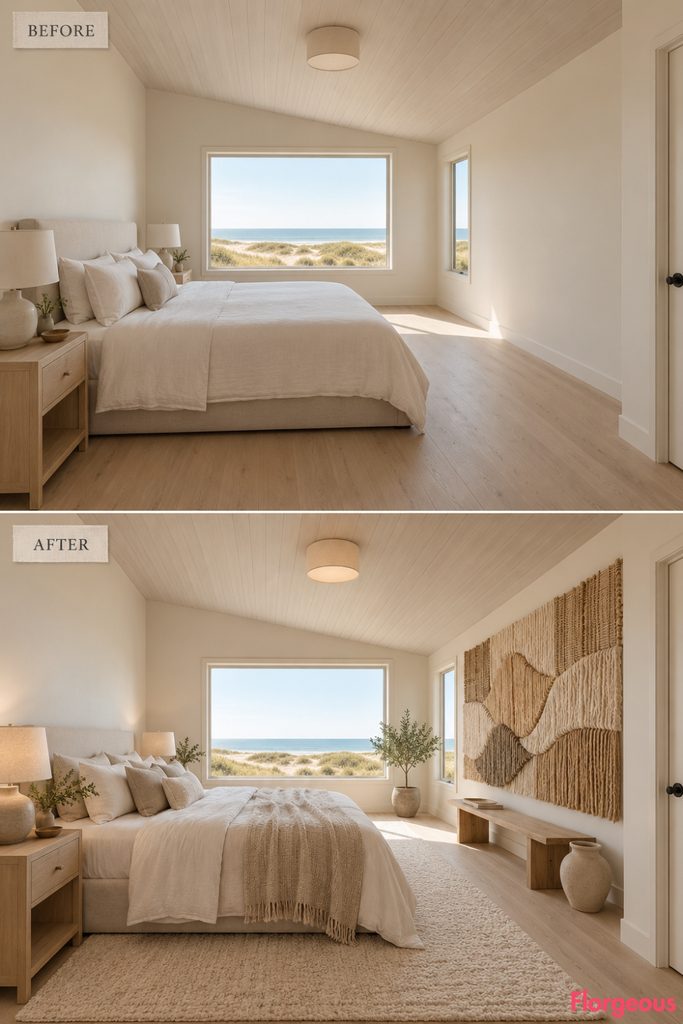
This concept treats an empty wall as a large-scale piece of craft rather than a place to hang several small pictures.
After: A broad installation made from woven rush, paper cord, and flax stretches across much of the solid right wall in an abstract composition of overlapping vertical and curved panels. A low oak bench beneath it anchors the installation, while one oversized clay vessel adds weight at one end.
The bed stays relatively quiet in warm white linen so the handmade wall treatment remains the star.
Why it works: The woven fibers reference natural beach-house materials without resorting to literal coastal imagery.
3. Make the Picture Window Feel Like a Coastal Resort
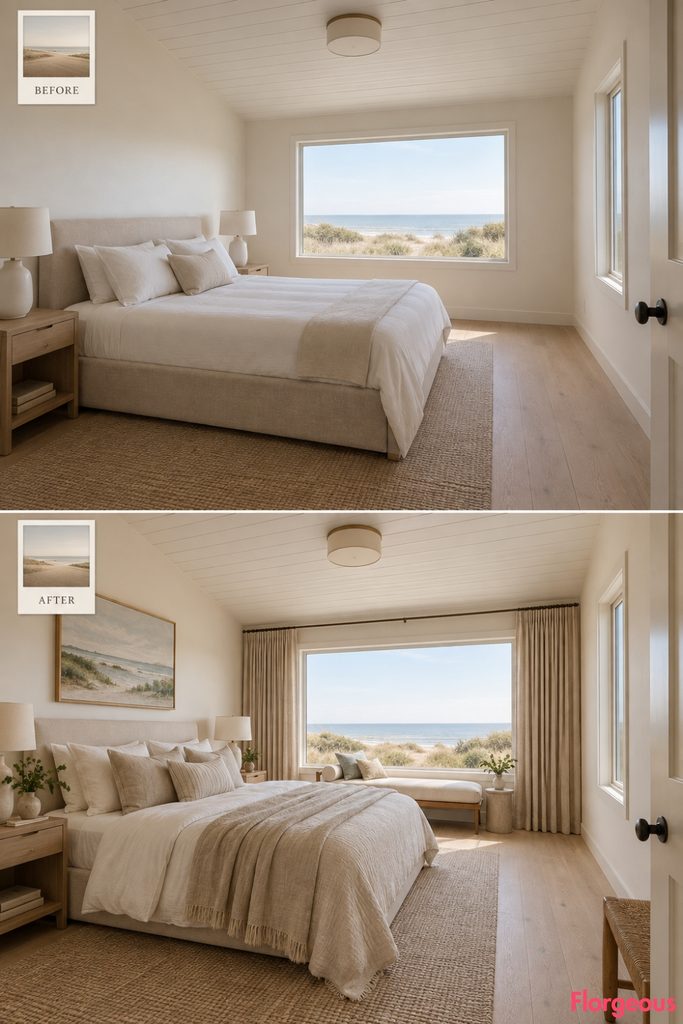
Here, the transformation is concentrated almost entirely around the far wall.
Full-height flax curtains are hung high and wide around the picture window, with the fabric stacked completely outside the glass so daylight remains uninterrupted. Beneath the window sits a slim oak chaise with a thick linen cushion, creating a quiet place to read.
The bed is kept in layered white and oat textiles so the drapery, view, and daylight become the visual focus.
Budget Version: Ready-made linen panels can work beautifully if the rod is mounted close to the ceiling and significantly wider than the window.
4. Create a Floating Linen Canopy Above the Bed
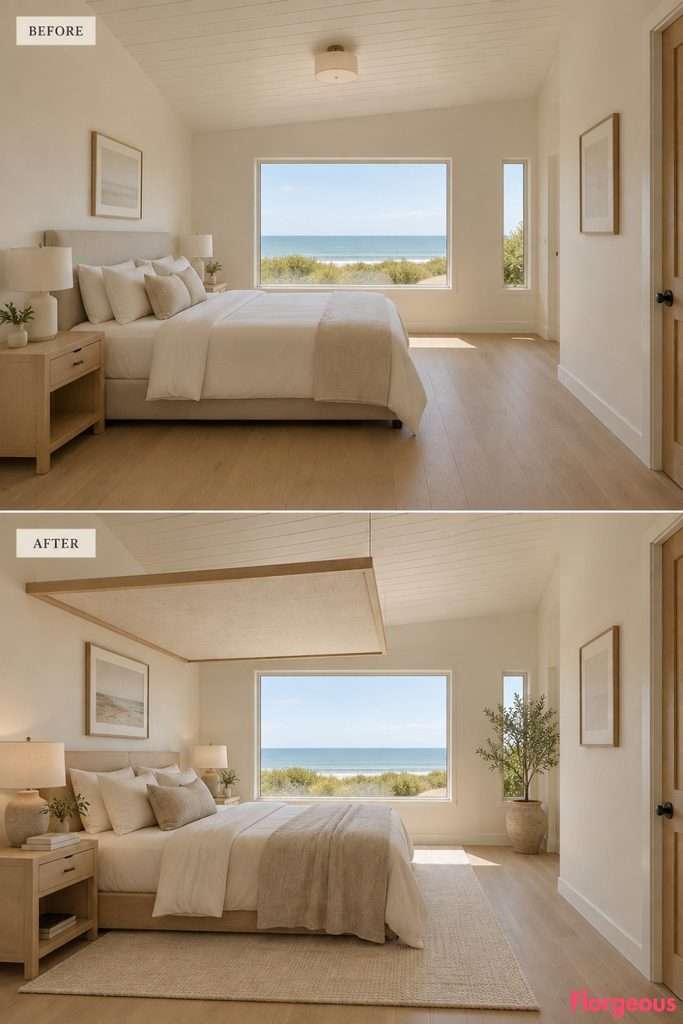
Instead of introducing a traditional four-poster, this room uses a lighter architectural gesture.
A shallow rectangular canopy plane made from natural linen is suspended close to the sloped ceiling directly above the bed. Slim pale-oak rails keep the structure crisp, while the fabric remains taut and quiet rather than draped theatrically.
A low oak bed and warm ivory textiles below make the canopy feel like part of the architecture.
Style Note: The canopy should remain high and visually light. Heavy hanging fabric would make this compact room feel smaller.
5. Sculpt the Bed Wall With Abstract Tide-Line Plaster
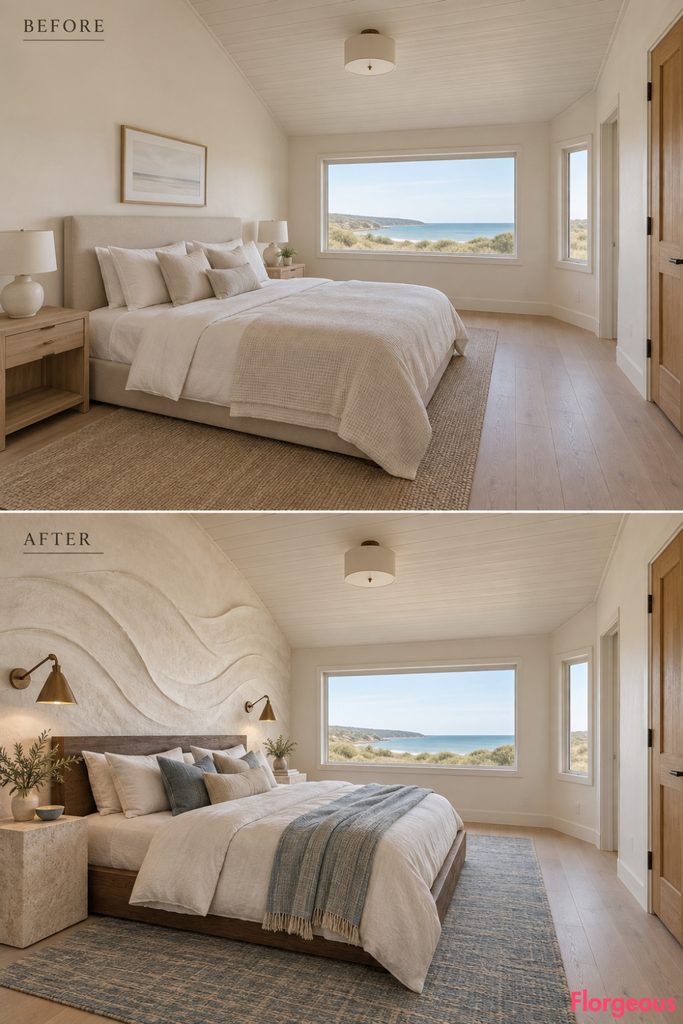
This room uses plaster as artwork.
A shallow relief is applied directly to the existing bed wall, forming broad horizontal curves inspired by receding waterlines and wind-shaped sand. The design remains abstract, tonal, and architectural.
Directional bronze sconces graze the plaster from the sides, creating shadow and depth without adding extra objects.
Common Mistake: Keep the relief shallow. Deep sculpting can become visually heavy and harder to maintain.
6. Wrap the Lower Walls in Sun-Bleached Oak Boarding
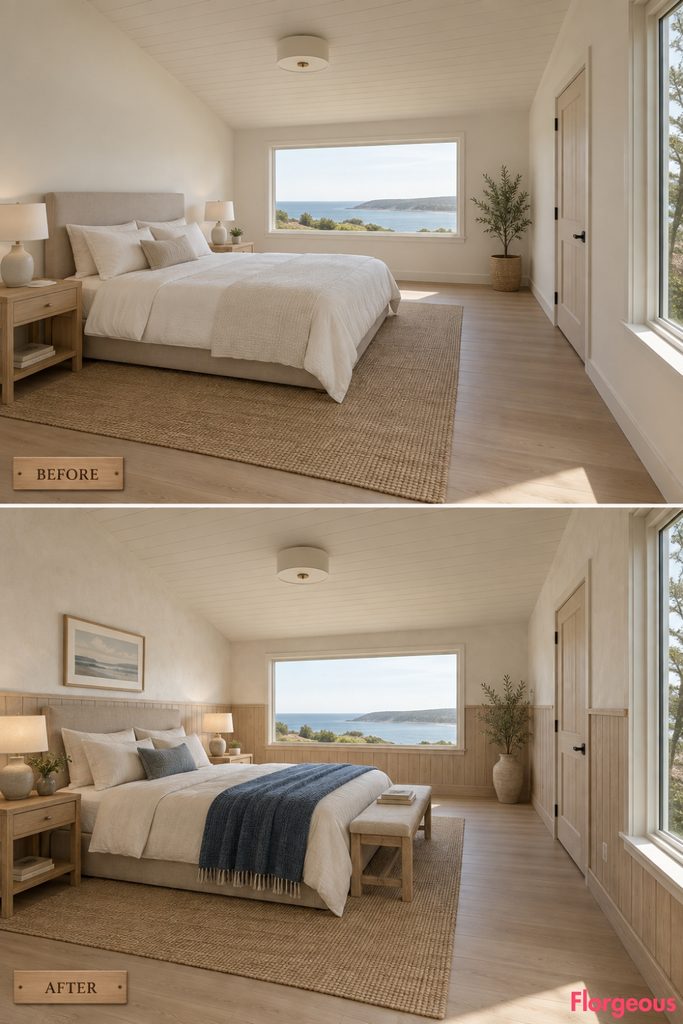
This concept brings in a subtle coastal cottage reference without becoming rustic.
Surface-applied sun-bleached oak boards run around the lower portion of the solid walls, while chalky warm-white plaster remains above. The timber creates a continuous horizontal datum that visually ties the room together.
A flax-upholstered bed and parchment bedding continue the dry, natural palette.
Why it works: The architectural treatment changes the character of the entire room rather than simply decorating one corner.
7. Give the Room a Tailored Hamptons Architecture
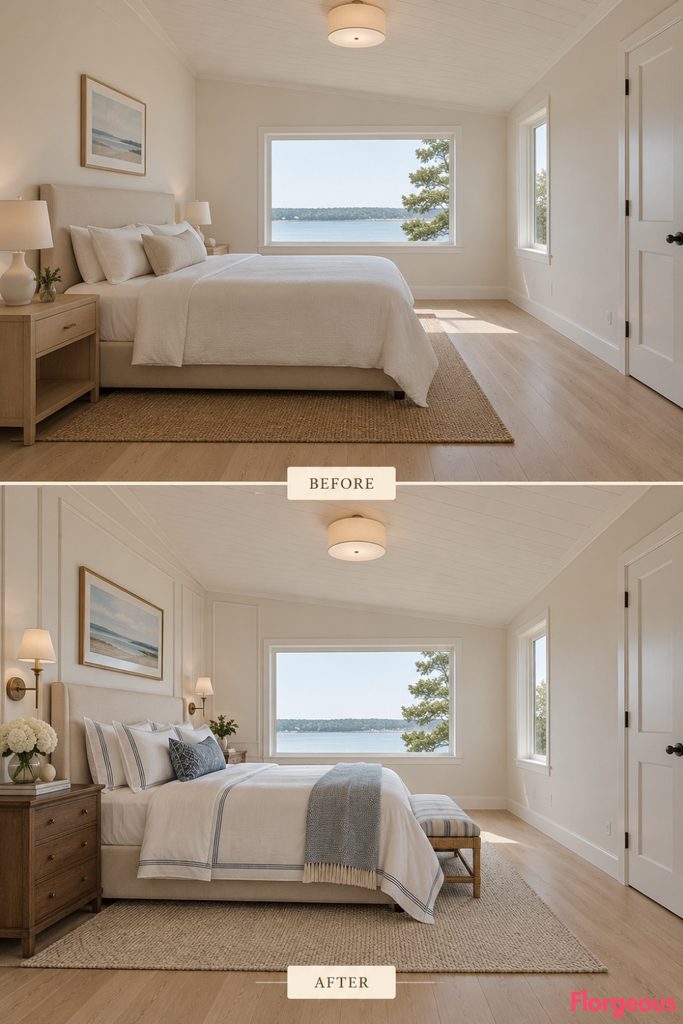
This room shifts completely into a more polished, tailored coastal language.
Rather than using weathered surfaces, the bed wall is organized with slim applied molding in balanced rectangular fields. A broad upholstered headboard stretches horizontally across much of the left wall, giving the room a stronger architectural rhythm.
Matching dark-oak bedside chests, shaded bronze sconces, crisp white linen, and finely controlled indigo ticking complete the look. A structured wool rug makes the room feel finished without making it formal.
The Hamptons character comes from proportion, symmetry, and tailoring, not decorative shells or navy overload.
Why it works: The molding, wide headboard, paired furniture, and controlled textile pattern create a coherent design language across the whole room.
8. Reimagine the Bedroom as a Mediterranean Coastal Villa
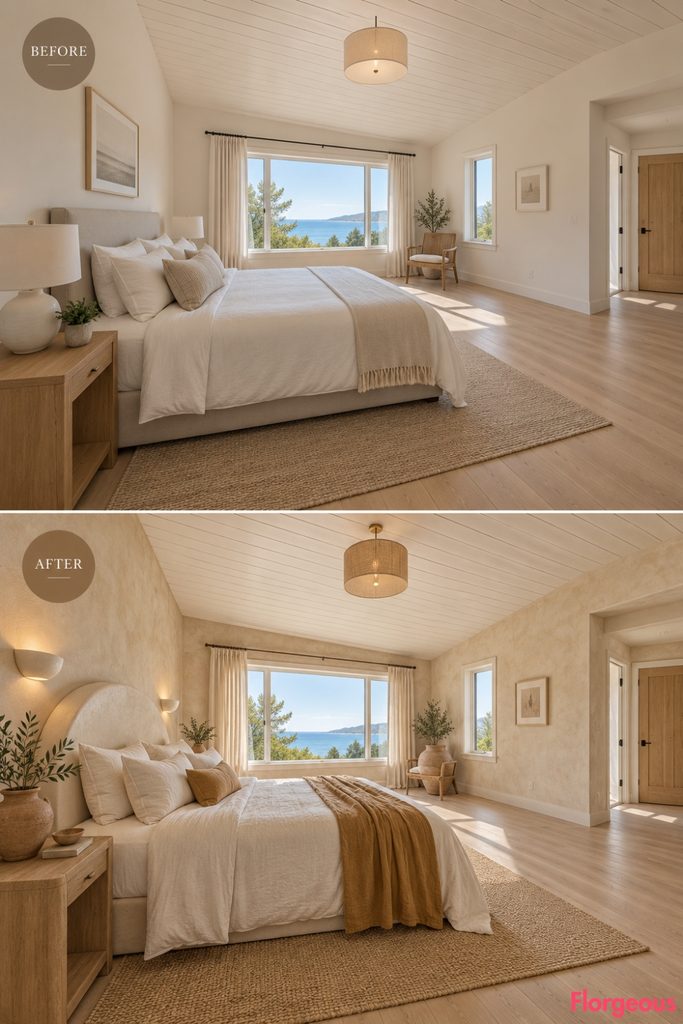
This makeover takes the same shell into a completely different world.
The walls are finished in hand-troweled warm limestone plaster with visible but subtle movement. Instead of sharp tailored furniture, the bed becomes a softly curved freestanding form with a plaster-like headboard and low natural-oak frame.
White washed linen falls loosely rather than sitting perfectly tailored. Handmade terracotta vessels, muted ochre textiles, and compact plaster sconces give the room warmth without clutter.
The overall feeling is sun-baked, tactile, and quietly imperfect.
Style Note: Mediterranean coastal rooms benefit from softness at every level, from wall texture to furniture edges and bedding.
9. Strip Everything Back for a Scandinavian Beach Cottage
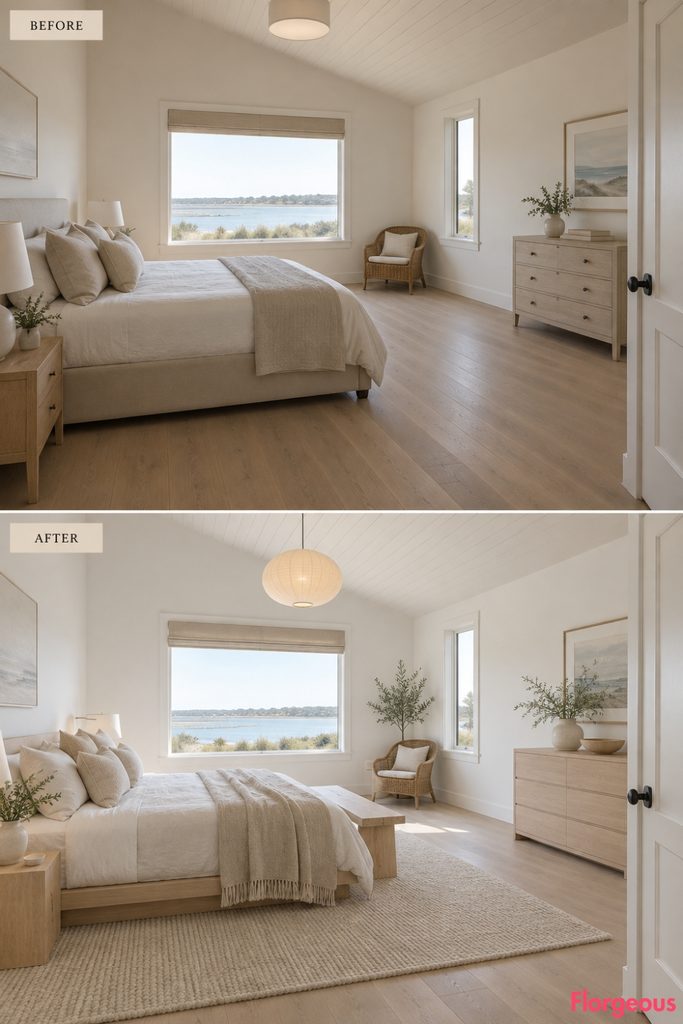
This version removes visual weight rather than adding it.
Chalk-white walls meet a very low blonde-ash platform bed, compact ash bedside blocks, and a slim pale-timber bench. Oatmeal and ivory linen keep the palette nearly monochrome.
A soft opaline pendant and one natural wool blanket introduce warmth, but the room remains functional and intentionally spare.
There is no strong feature wall, no heavy drapery, and no oversized decoration. The architecture, daylight, and pale timber do most of the work.
Small Space Tip: Low furniture and restrained contrast help a modest coastal bedroom feel broader and calmer.
10. Build an Australian Coastal Modern Bedroom
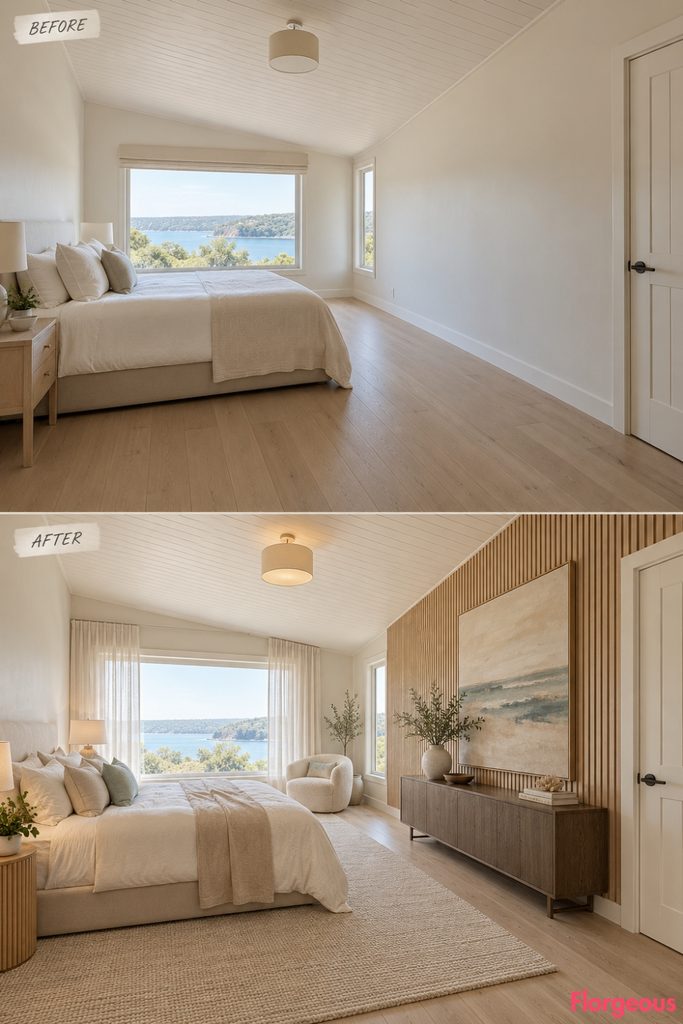
This room becomes broader, more sculptural, and more gallery-like.
A localized field of slim vertical pale-timber battens gives the long right wall an architectural rhythm. Beneath it sits a smoked-oak console with generous negative space around it.
The bed becomes a broad low upholstered form with softened corners rather than a conventional headboard-and-nightstand arrangement. One oversized abstract artwork and a sculptural cream lounge chair establish an art-driven mood.
Sheer linen and a large pale wool rug soften the composition.
Designer Tip: Modern coastal rooms often look stronger when one architectural zone is detailed and the remaining surfaces are deliberately quiet.
11. Turn It Into a Refined Tropical Beach Villa
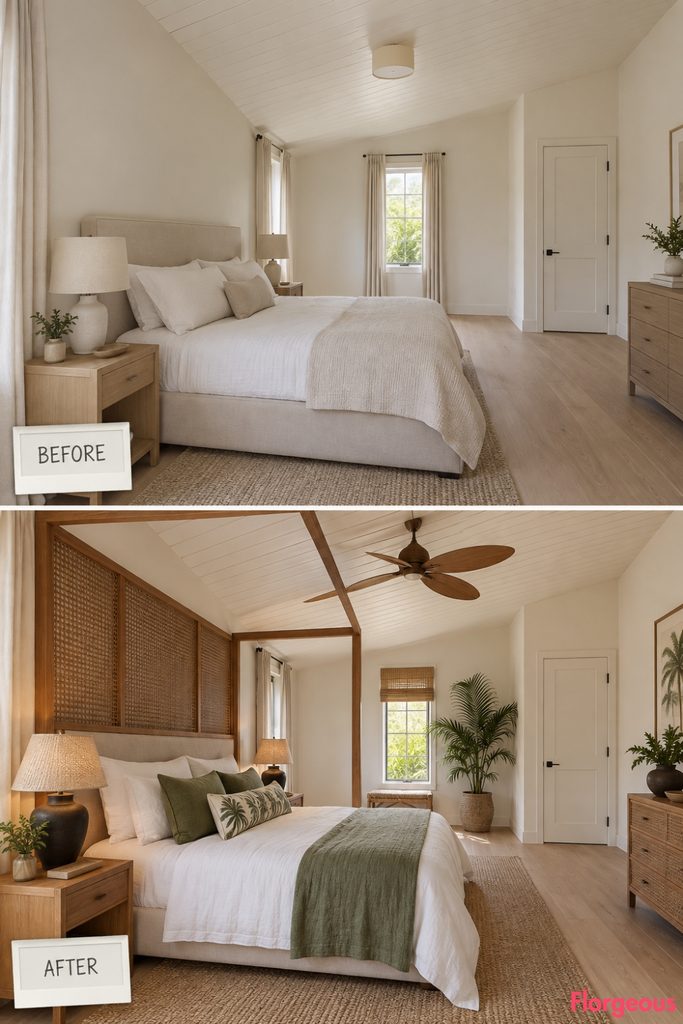
The tropical version changes both the material language and the visual density of the room.
A freestanding teak portal frames the bed zone, with woven-cane panels inset behind the headboard. It feels crafted and substantial, but remains separate from the architecture.
Crisp white and flax linen keep the deeper timber from becoming heavy. Dark clay lamps add contrast, while a single muted tropical-green textile brings in restrained color.
A broad timber-blade ceiling fan completes the sense of a naturally ventilated coastal villa.
Common Mistake: Avoid palm-print overload. Timber, cane, linen, clay, and airflow already communicate tropical coastal design.
12. Create a Japanese Coastal Minimal Retreat
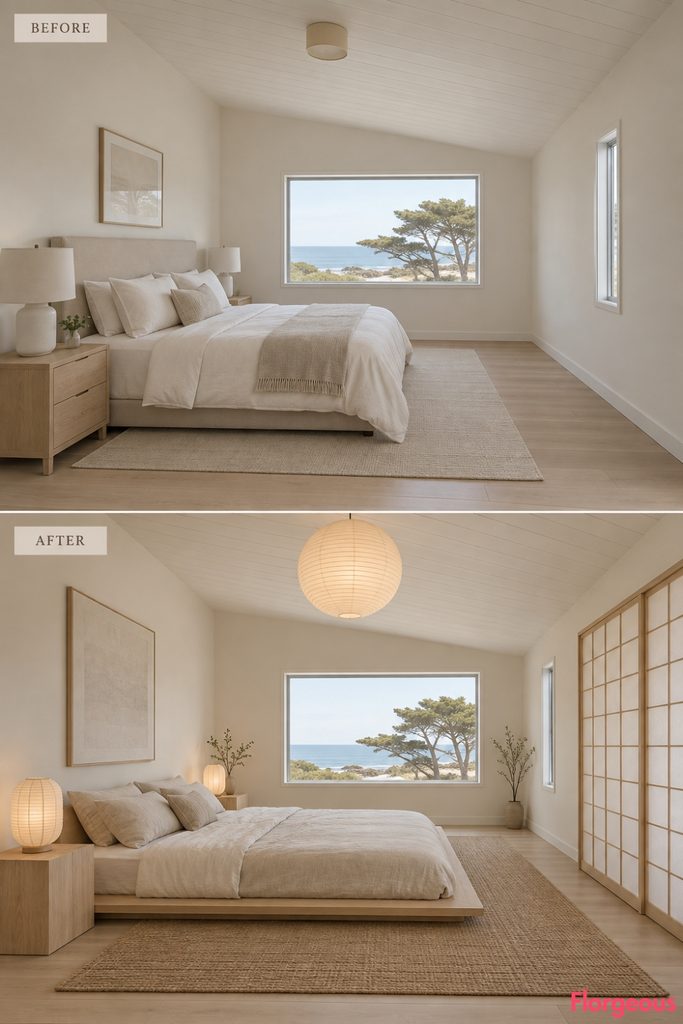
This version reduces the room to low forms, filtered light, and precise materials.
A very low pale-ash platform bed runs along the left wall with compact freestanding ash bedside blocks. A large paper-and-pale-wood screen sits against part of the right wall, creating a quiet visual plane without altering the architecture.
Bedding stays in chalk, oat, and soft stone tones. A simple paper lantern brings warm evening light, while the floor remains almost completely open.
The room feels coastal because of air, light, pale timber, and restraint rather than recognizable beach-house decoration.
Why it works: The low horizontal forms echo the relaxed coastal horizon while keeping the visual field exceptionally calm.
13. Finish With a California Surf-Modern Bedroom
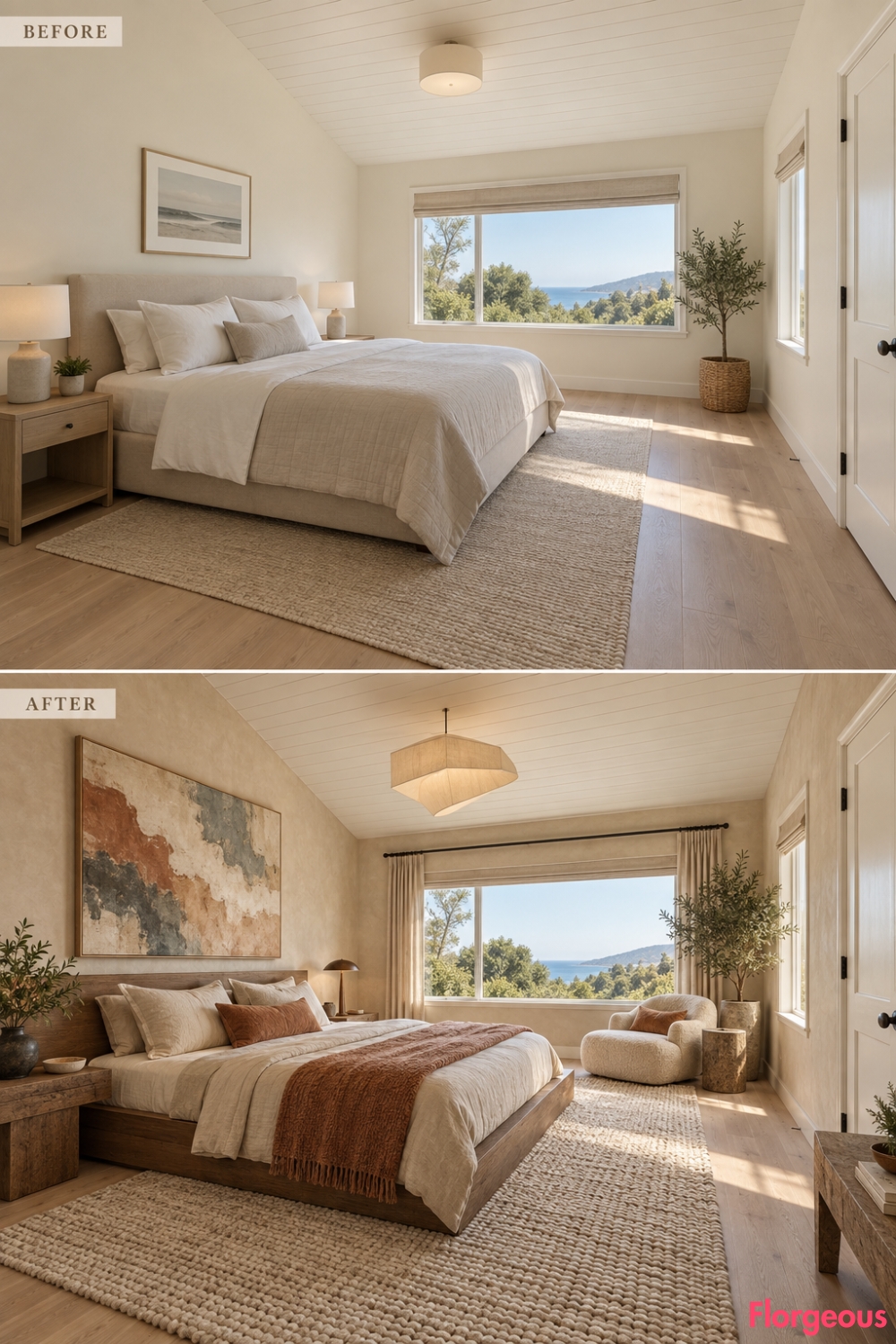
The final makeover is the most relaxed and artistic of the set.
Warm mineral plaster gives the walls a softly sun-baked quality. A low asymmetrical smoked-oak bed stretches along the left wall with relaxed bone and flax bedding.
Rather than using coastal motifs, the right wall holds one huge abstract canvas with loose sand, bone, rust, and faded ocean-gray forms. A sculptural lounge chair and chunky wool rug create a casual gallery atmosphere.
The ceiling light is geometric and deliberately off-center, adding a slightly unconventional detail that suits the creative surf-house direction.
How to Choose the Right Beach House Direction
The strongest Beach House Bedroom ideas begin with a complete design language rather than a few coastal accessories.
If you prefer something soft and contemporary, sea-glass limewash and Australian coastal styling create relaxed rooms without relying on obvious beach references. Hamptons interiors work better when you prefer symmetry, upholstery, tailored details, and a slightly more polished finish.
Mediterranean coastal style moves in the opposite direction, using irregular plaster, rounded forms, washed linen, and handmade ceramics. Scandinavian and Japanese coastal rooms strip the visual language back further, letting natural light and pale timber carry the atmosphere.
A tropical beach villa can support richer timber, woven cane, and deeper contrast, while California Surf-Modern works well for a more artistic and less traditional home.
The important step is to choose one direction first. Once the design language is established, the wall treatment, furniture shape, textiles, lighting, and accessories should all reinforce it.
Avoid combining a Hamptons headboard with Mediterranean plaster, tropical cane, Japanese paper lighting, and California artwork simply because every piece feels vaguely coastal. The individual objects may be attractive, but the room will lose its identity.
Start by deciding what the room should feel like, then choose one architectural or artistic move that expresses that mood clearly. It may be limewash, woven art, window drapery, a floating canopy, sculptural plaster, timber boarding, tailored molding, or an entirely different furniture language.
Build quietly around that decision, protect the open circulation, and let the architecture and natural daylight remain visible. That is usually what separates a convincing beach house bedroom from a room that is simply decorated with coastal objects.