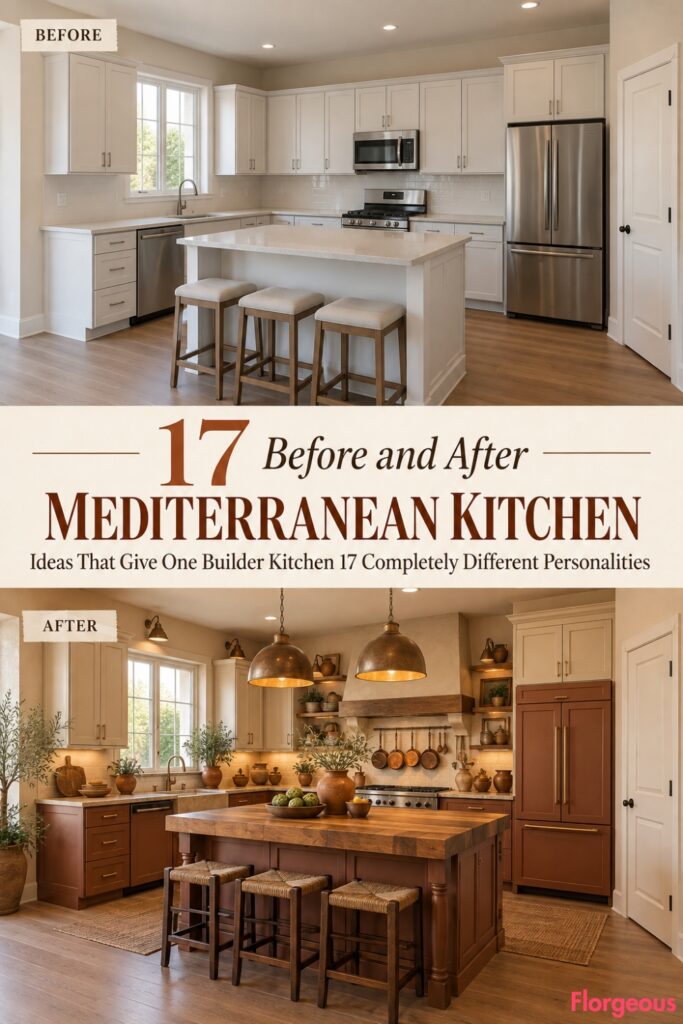
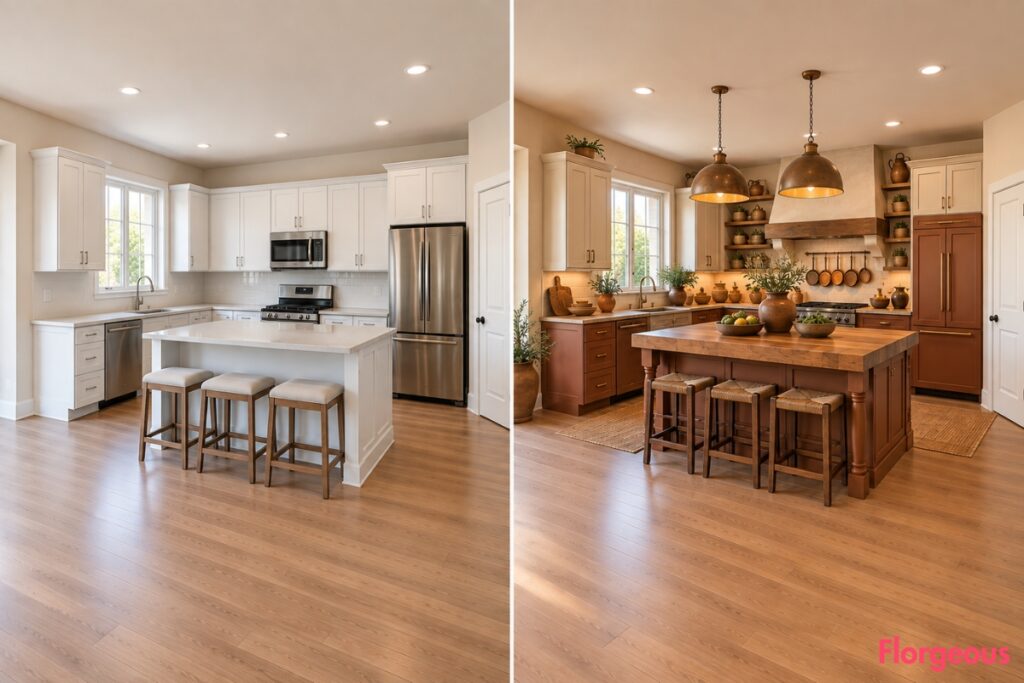
A builder-grade kitchen can be perfectly usable and still feel as if nobody ever made a real design decision. Standard light cabinets, neutral counters, a visible refrigerator, an ordinary island, basic pendants, and empty worktops get the job done, but they rarely create a room worth remembering.
That is where a Mediterranean Kitchen makeover becomes much more interesting than a simple material swap. Mediterranean design can feel hardworking, monastic, glamorous, rustic, artistic, social, coastal, collected, or sharply modern depending on how the room is composed.
For all 17 transformations below, the starting kitchen stays exactly the same. Walls, windows, doors, ceiling geometry, floor footprint, sink, range, refrigerator, island footprint, appliance clearances, and circulation remain locked. The AFTER changes through furniture character, cabinetry organization, lighting, styling, storage language, surfaces, and the way each zone is visually prioritized.
1. Turn the Plain Kitchen Into a Mediterranean Market Kitchen
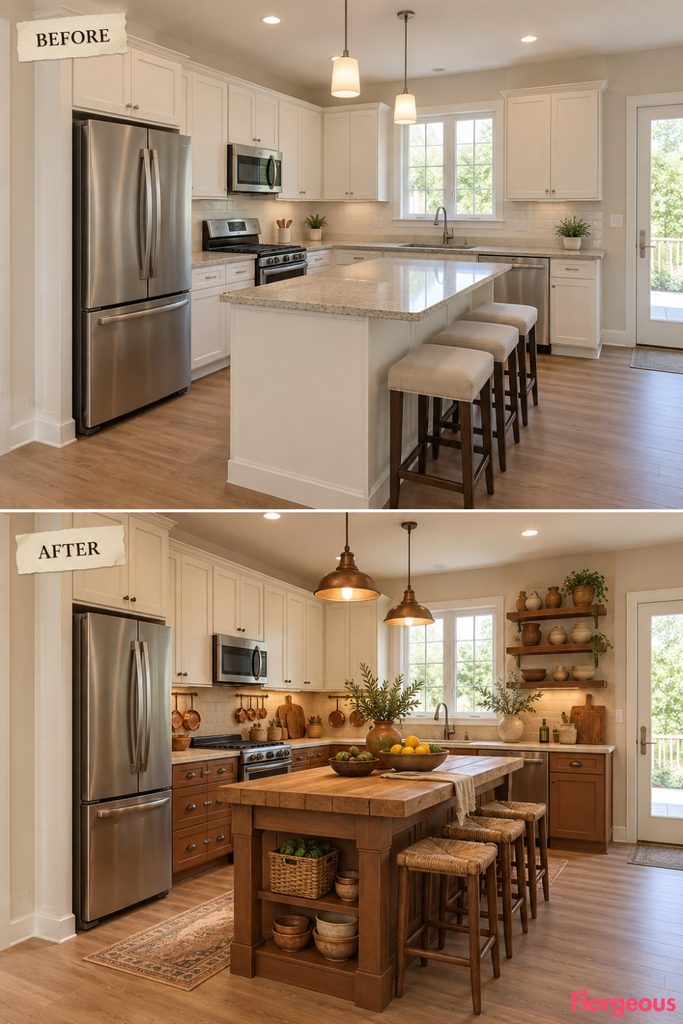
This first makeover should feel active, practical, and beautifully stocked rather than polished and formal.
Before: The same builder-grade kitchen with warm off-white walls, simple light cabinetry, basic neutral counters, exposed refrigerator, rectangular island, standard appliances, generic pendants, bare surfaces, and soft daylight.
After: Rework the cabinetry into warm clay-brown lower storage with simple cream uppers, then introduce a long utensil rail, hanging copper pans, stacked handmade bowls, open produce crates, olive-oil vessels, and a substantial butcher-block preparation zone. The island becomes a hardworking market table visually, with thick timber detailing and simple backless stools.
Nothing should feel decorative for decoration’s sake. Every visible object looks useful.
Why it works: The kitchen gains life through function, abundance, and craftsmanship rather than luxury finishes.
Try this: Group visible objects by task so open storage still feels intentional.
2. Strip the Room Back Into a Mediterranean Monastery Kitchen
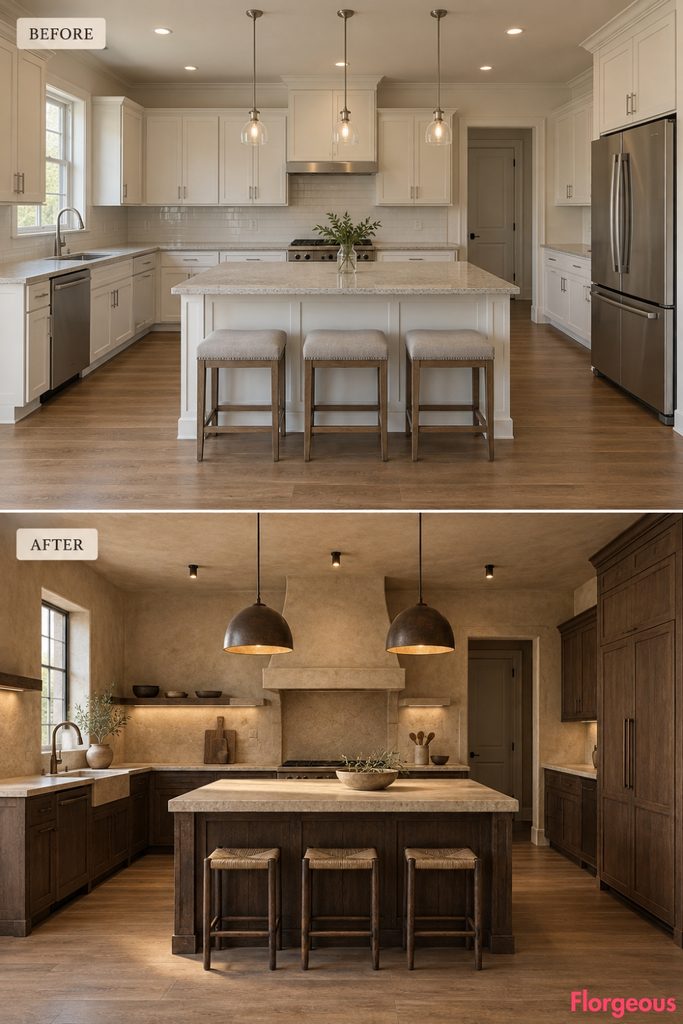
The second room should feel almost silent.
Before: The same locked builder-grade kitchen.
After: Remove visual clutter and reduce the material palette dramatically. Use matte mineral walls, very dark brown timber cabinetry with broad plain fronts, pale stone worktops, almost no upper-cabinet decoration, and a single long work surface that reads like a built-in bench.
The island becomes visually severe, with a dark timber base and pale slab top. Accessories are limited to one ceramic water vessel, one chopping board, and a small bowl.
Lighting is quiet and directional rather than decorative.
Why it works: Restraint gives this kitchen a completely different emotional character from the busy market version.
3. Reimagine It as a Riviera Entertaining Kitchen
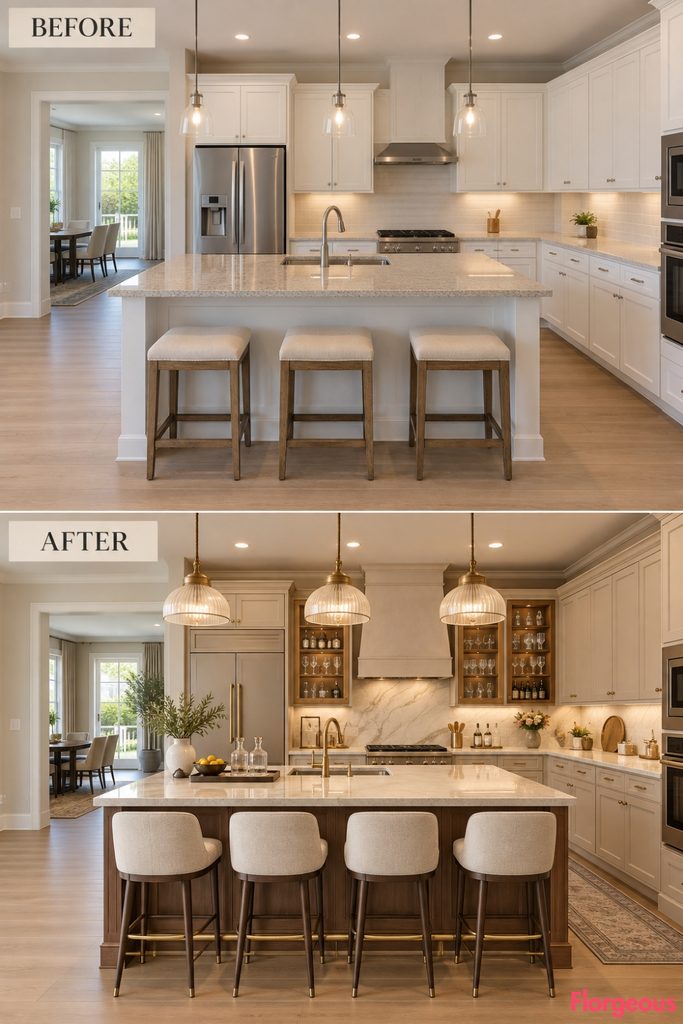
This room is designed for conversation rather than food prep taking visual priority.
Before: The same basic builder kitchen.
After: Give the existing island a social-bar identity with tailored upholstered counter stools, a polished pale surface, a discreet drinks-prep zone, elegant glassware storage, and a slim brass rail detail. The perimeter becomes soft champagne-beige with darker walnut accents.
A glamorous ceiling fixture anchors the island, and a few large decorative vessels replace everyday countertop clutter.
Why it works: The kitchen now feels like part of an elegant entertaining suite rather than a purely working room.
Try this: Upholstered counter stools instantly change the social character of an island.
4. Make It Feel Like a Provençal Baker’s Kitchen
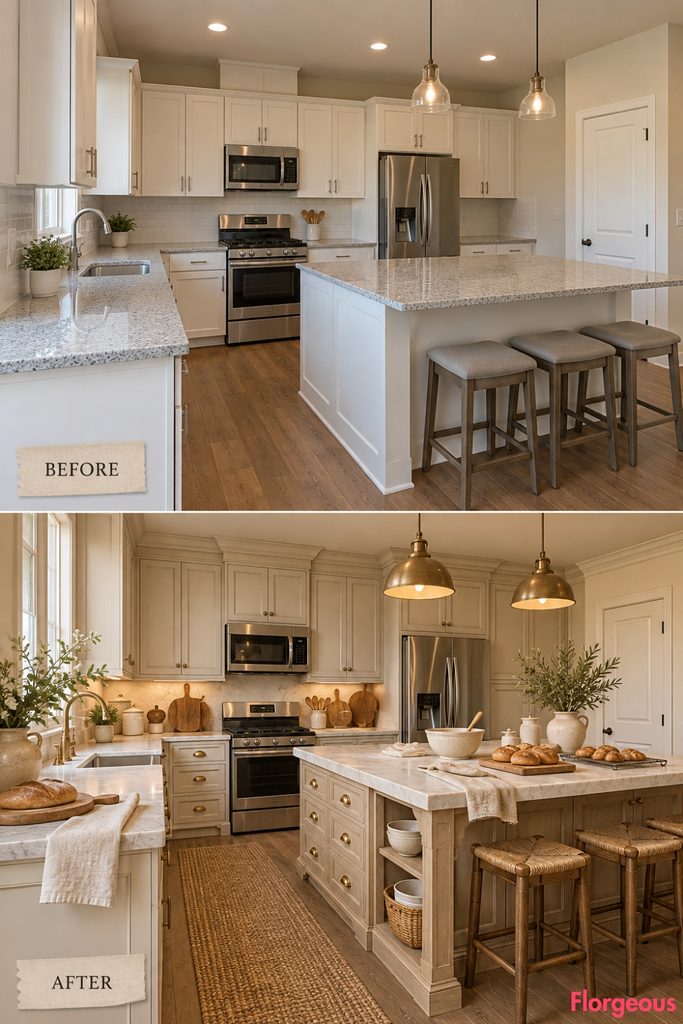
Instead of glamour, this makeover revolves around pastry preparation and old-fashioned utility.
Before: The same neutral builder kitchen.
After: Introduce a pale stone work surface with an especially generous pastry-prep zone, warm flour-colored cabinetry, deep baking drawers, visible wooden boards, ceramic ingredient jars without readable text, cooling racks, and neatly stacked linen.
The island feels like a baker’s workbench, with thick pale worktop, sturdy timber legs expressed visually at the corners, and simple stools tucked away.
Why it works: The makeover is driven by a specific activity, which makes the room feel authentic rather than styled generically.
5. Turn the Same Shell Into a Mediterranean Collector’s Kitchen
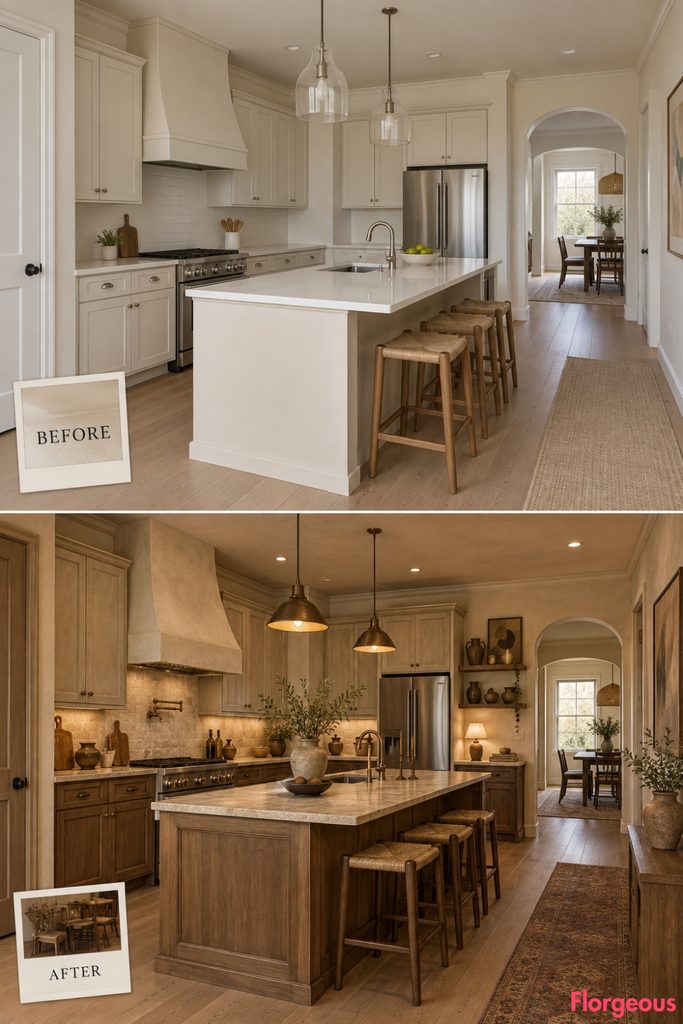
Here, the room is built around beautiful objects.
Before: The same plain base kitchen.
After: Keep most work surfaces calm, but introduce carefully composed display zones for hand-thrown ceramics, sculptural pitchers, irregular platters, glass vessels, and small framed abstract artwork without readable text.
Cabinetry becomes muted tobacco and parchment, while one high display ledge runs across a non-working wall. The island stays simple so the collected objects remain the hero.
Why it works: The kitchen feels curated over time rather than installed all at once.
Style Note: Collections look stronger when they share material or color rather than matching exactly.
6. Create an Italian Villa Library Kitchen
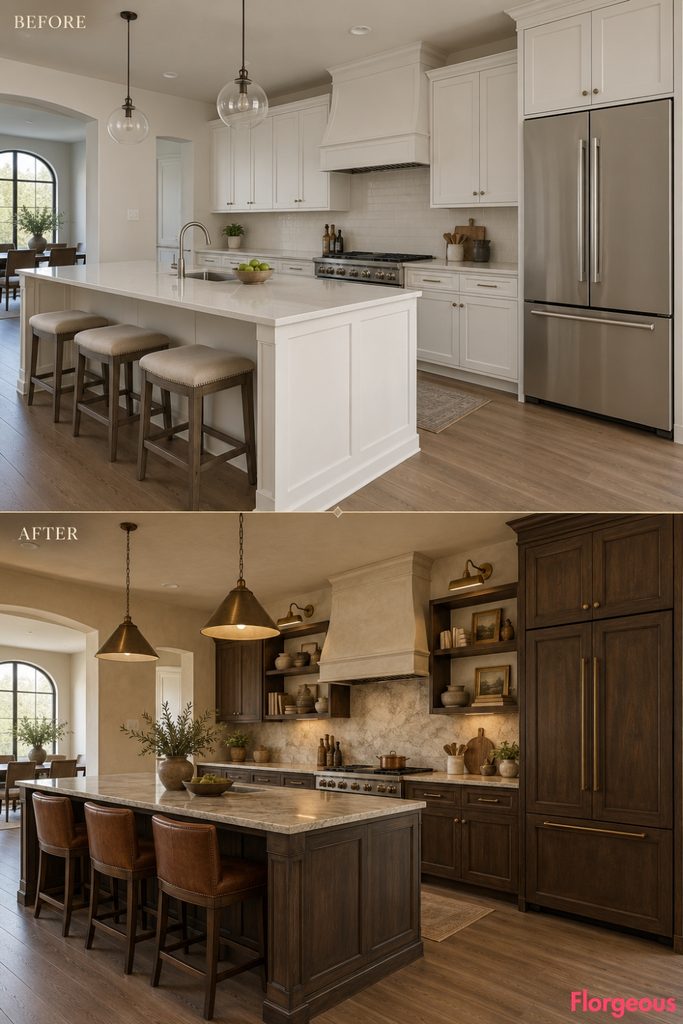
This concept should feel intellectual and residential rather than display-focused.
Before: The same builder kitchen with no distinctive storage personality.
After: Treat one tall-storage zone like a classic library wall, with closed dark timber cabinetry below and shallow cookbook-scale open shelving above, all within the existing cabinet footprint. Use leather-toned stools, parchment walls, and softly aged brass reading-style lights.
The island stays practical but gains a dark timber furniture character.
Why it works: Books, warm timber, and reading-room lighting give the kitchen an entirely different mood from conventional Mediterranean styling.
7. Make It a Greek Island Breakfast Kitchen
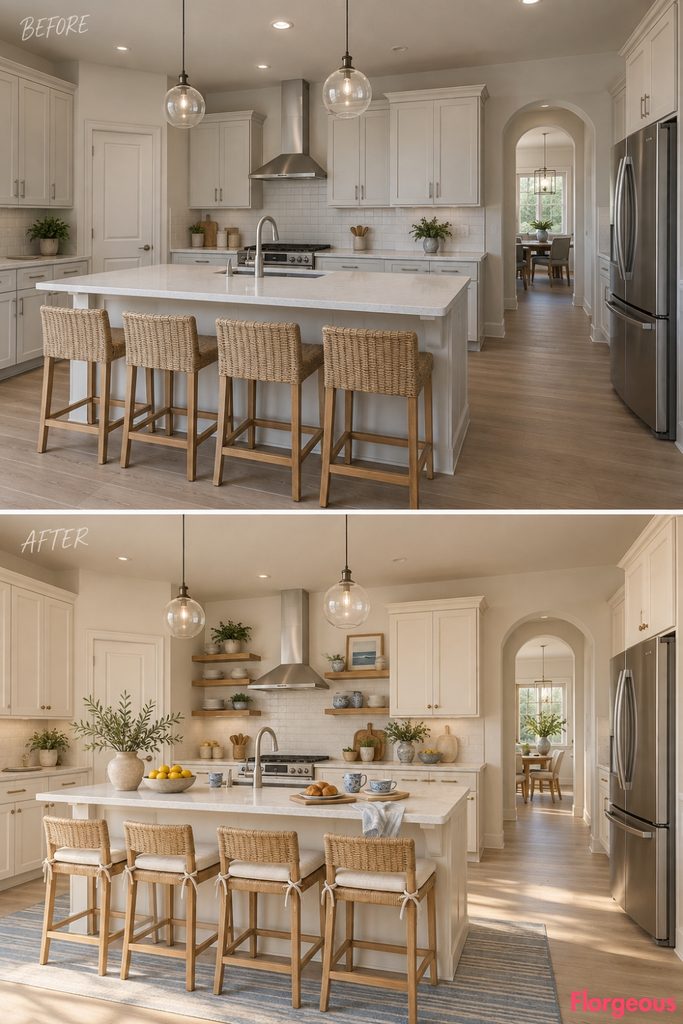
This version is casual, bright, and designed around mornings.
Before: The same basic neutral kitchen.
After: Use chalky cream cabinetry, pale timber, soft blue-gray accents, simple cotton café-style seat cushions, breakfast ceramics, fruit bowls, and light woven textures. The island becomes visually lighter and more café-like, with slender stools and a clean pale worktop.
Styling is sunny and sparse rather than rustic.
Why it works: The mood comes from lightness and daily ritual, not from a heavy material statement.
8. Turn It Into a Spanish Supper Club Kitchen
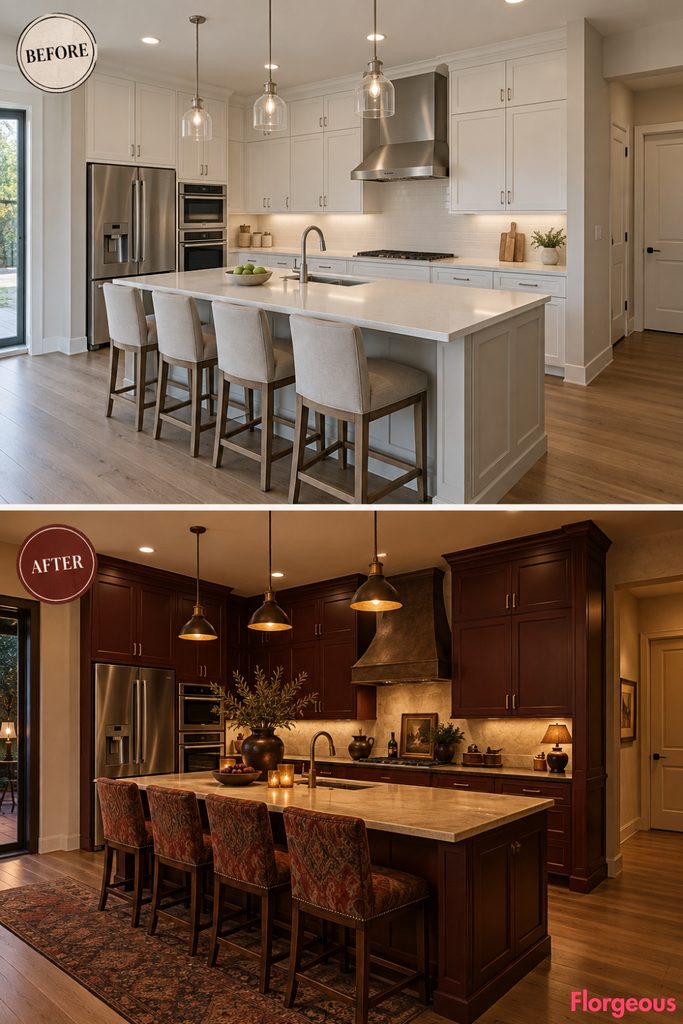
This section should feel dramatically different after sunset.
Before: The same neutral builder kitchen.
After: Use deep wine-brown cabinetry, dark warm timber, creamy counters, tailored high-back counter seating, and pools of low warm light. The island becomes an intimate dining-bar zone, while the perimeter recedes into shadow.
Decor is sparse, with dark ceramics, amber glass, and one dramatic floral branch arrangement.
Why it works: Instead of designing around daylight, the room is organized around evening atmosphere.
9. Create a Mediterranean Artist’s Kitchen
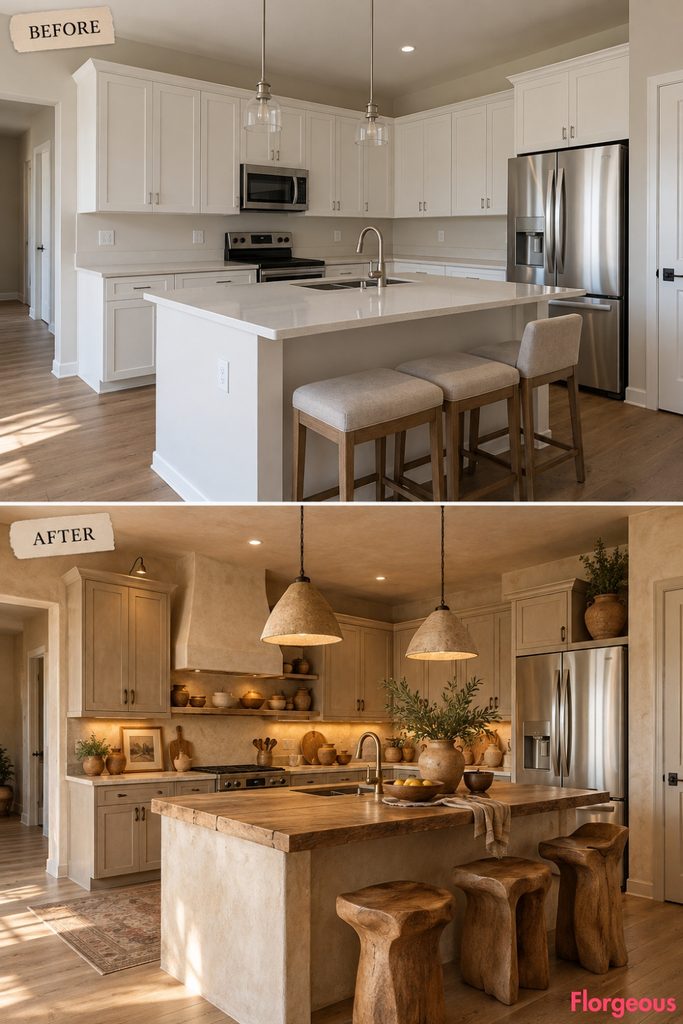
The room becomes looser, more handmade, and deliberately imperfect.
Before: The same builder kitchen with factory-standard surfaces.
After: Use hand-finished plaster with visible tonal variation, asymmetric ceramic objects, rough-edged timber accessories, sculptural handmade stools, and irregularly shaped cabinet pulls. The cabinetry itself stays relatively simple in a dusty mineral tone so the handcrafted objects and surfaces carry the character.
The island doubles as an artful making table, but remains inside its fixed footprint.
Why it works: Imperfection becomes the visual language.
Try this: Mix handmade forms, but keep the palette controlled.
10. Build a Tuscan Farm Work Kitchen
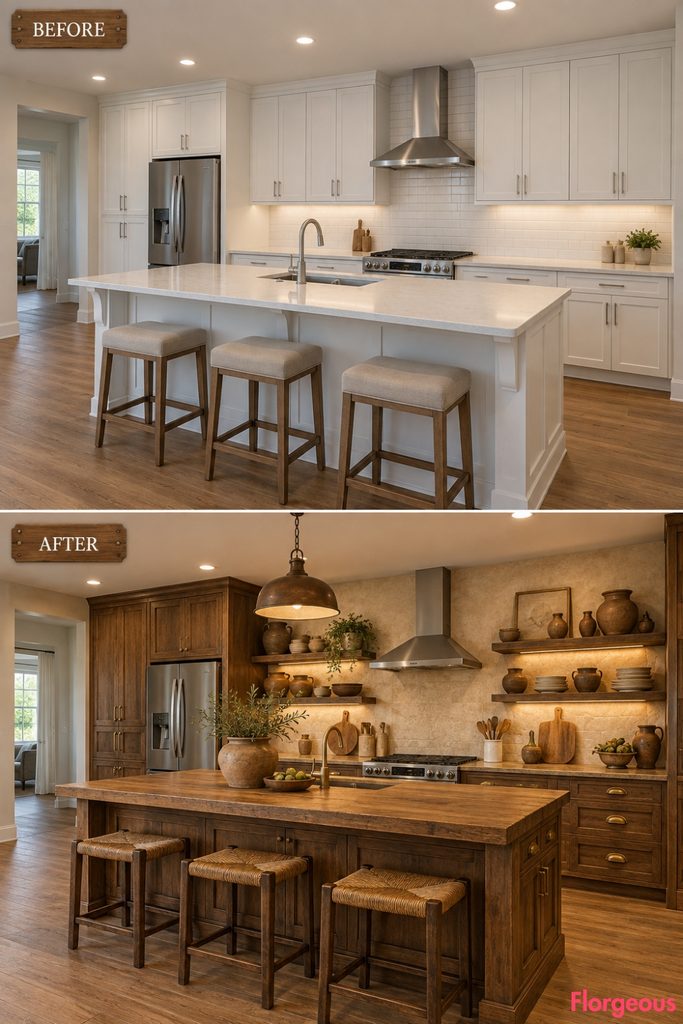
This should feel robust and agricultural, not decorative rustic.
Before: The same light builder kitchen.
After: Give the perimeter cabinetry a sturdy medium-brown work-furniture character with deep drawers, visible cutting boards, crock storage, and large practical handles. The island becomes a heavy farm workbench visually, with thick timber base detailing and a pale durable worktop.
Add utilitarian stools, large earthenware vessels, baskets, and one simple hanging light.
Why it works: Scale and utility make the room feel like a genuine working kitchen rather than a styled farmhouse imitation.
11. Reimagine It as a Refined Mediterranean Fisherman’s House Kitchen
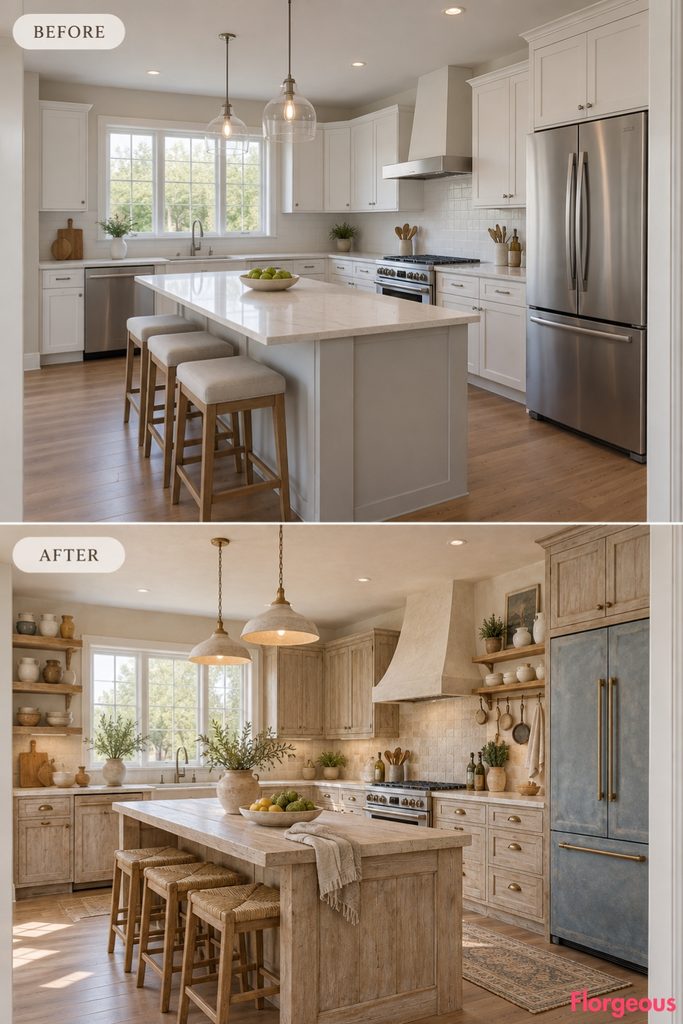
This is coastal, but deliberately avoids nautical props.
Before: The same neutral builder kitchen.
After: Use weather-softened pale timber, chalky mineral surfaces, simple peg rails, practical hooks, cream ceramics, washed linen, and a lightly aged blue-gray refrigerator treatment.
The island remains straightforward, with pale timber base and creamy top. Styling suggests a windswept coastal home through texture rather than anchors, rope, or obvious maritime symbols.
Why it works: Coastal character comes from wear, utility, and pale materials rather than themed decor.
12. Give It a Sicilian Citrus Salon Personality
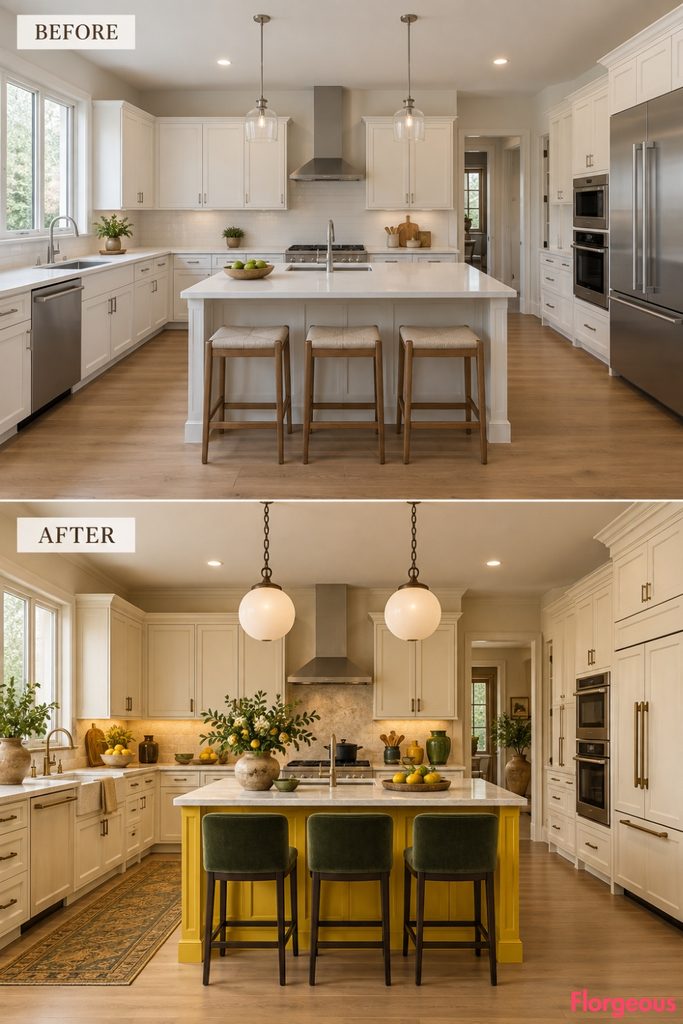
This is the boldest color story, but color works through full compositions rather than small accents.
Before: The same generic neutral kitchen.
After: Use creamy cabinetry as a backdrop, then introduce a strong citron-yellow island, deep leaf-green stools, glossy black accessory details, and carefully placed citrus-colored ceramics. The refrigerator remains cream so the island is unquestionably the focal point.
Lighting is playful but still sophisticated, with opaque globe forms rather than rustic fixtures.
Why it works: The palette is unmistakable from a thumbnail while the design remains Mediterranean rather than novelty-themed.
13. Turn the Same Room Into a Mediterranean Grand Hotel Kitchen
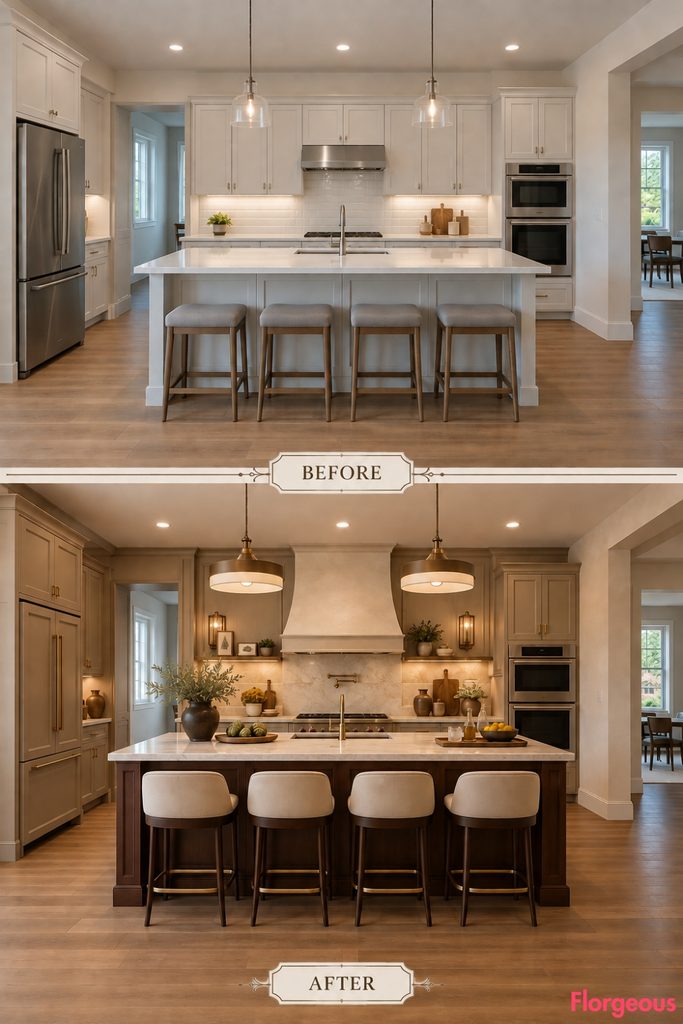
This concept is formal and controlled.
Before: The same builder-grade room with generic cabinetry and casual lighting.
After: Use precise symmetrical-looking cabinetry arrangements within the existing layout, polished warm-neutral fronts, elegant dark timber detailing, refined wall lights, tailored counter stools, coordinated trays, and a highly edited palette.
The island reads like a luxury hotel service counter rather than a rustic workbench.
Why it works: Formality, repetition, and immaculate styling create a completely different experience from the casual concepts.
14. Create an Ibiza Earth Kitchen
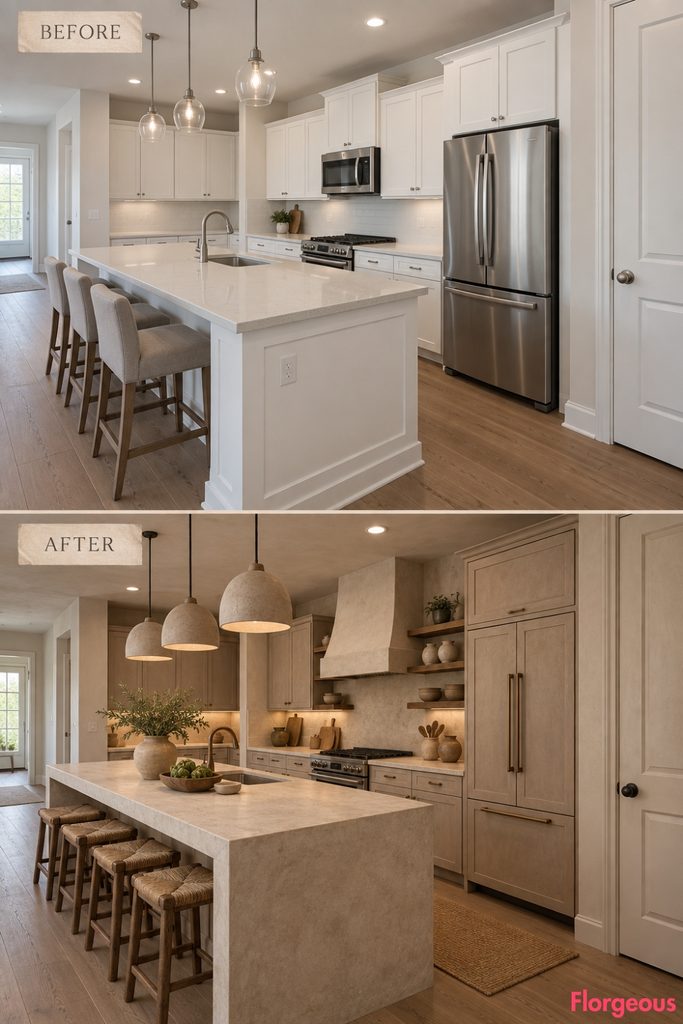
This room should feel low, tactile, and almost primitive-modern.
Before: The same light generic kitchen.
After: Use dusty earth-colored cabinetry, thick matte mineral counters, low handmade timber stools, chunky ceramic vessels, raw linen, and irregular organic forms. Avoid polished metal and formal detailing.
The island becomes visually grounded and heavy, while the perimeter is intentionally sparse.
Why it works: The design feels elemental and tactile rather than decorative.
15. Make It Feel Like a French Mediterranean Antique Kitchen
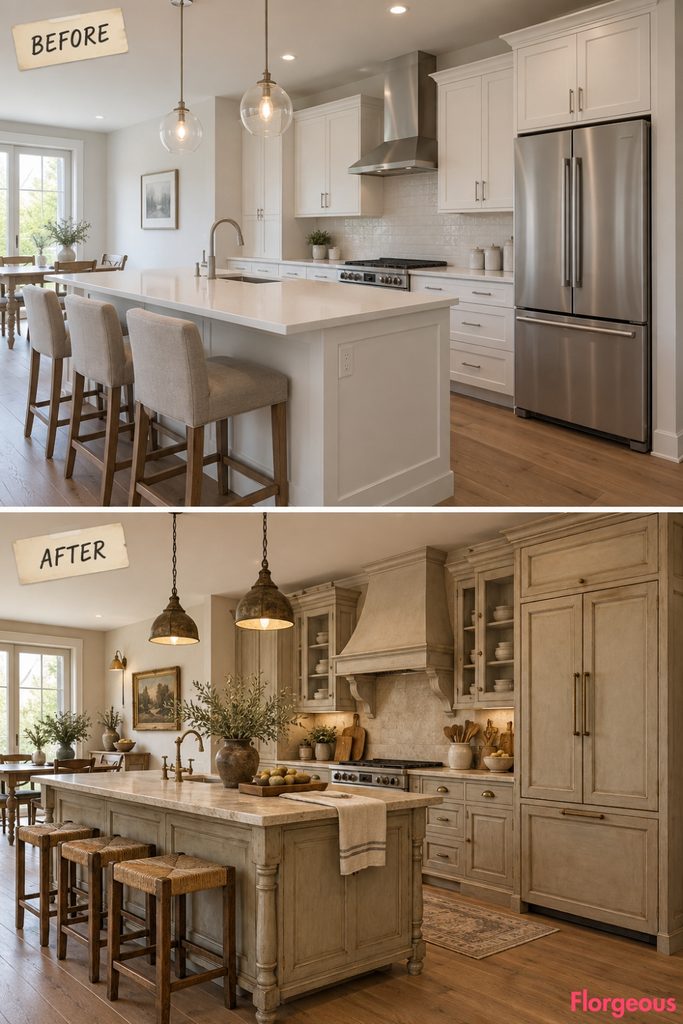
This concept is collected and old-fashioned, but the fixed kitchen layout remains intact.
Before: The same builder kitchen.
After: Give selected cabinet fronts a furniture-like painted finish in faded putty, introduce antique-style brass hardware, a freestanding-looking cupboard treatment around existing storage, aged linen, old cutting boards, ironstone ceramics, and a few well-worn wooden accessories.
The island feels like an old painted preparation table without actually moving or changing its footprint.
Why it works: Age and furniture character replace the visual language of fitted cabinetry.
16. Push the Room Into Modernist Mediterranean Territory
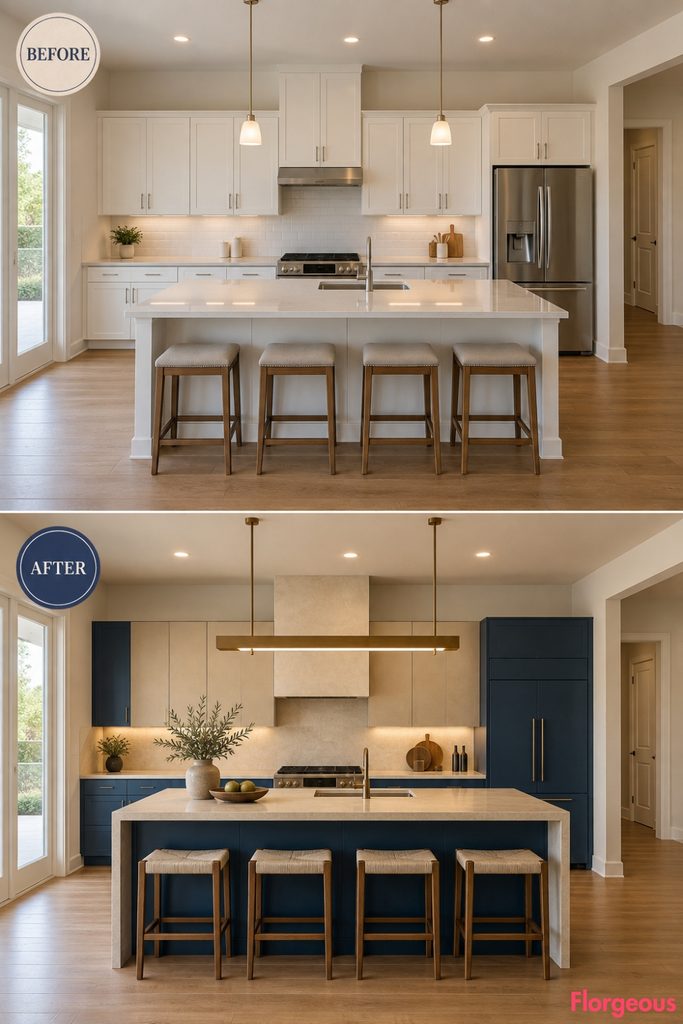
Now remove almost all nostalgic references.
Before: The same ordinary builder kitchen.
After: Use crisp geometric cabinet volumes, large uninterrupted color blocks, a very limited palette of sand, deep blue, and pale timber, concealed hardware, disciplined countertops, and nearly no decorative objects.
The island becomes a clean graphic object rather than rustic furniture. One bold geometric ceiling fixture reinforces the modern composition.
Why it works: Mediterranean color and warmth remain, but the furniture language becomes unapologetically contemporary.
17. Finish With a Mediterranean Night Kitchen
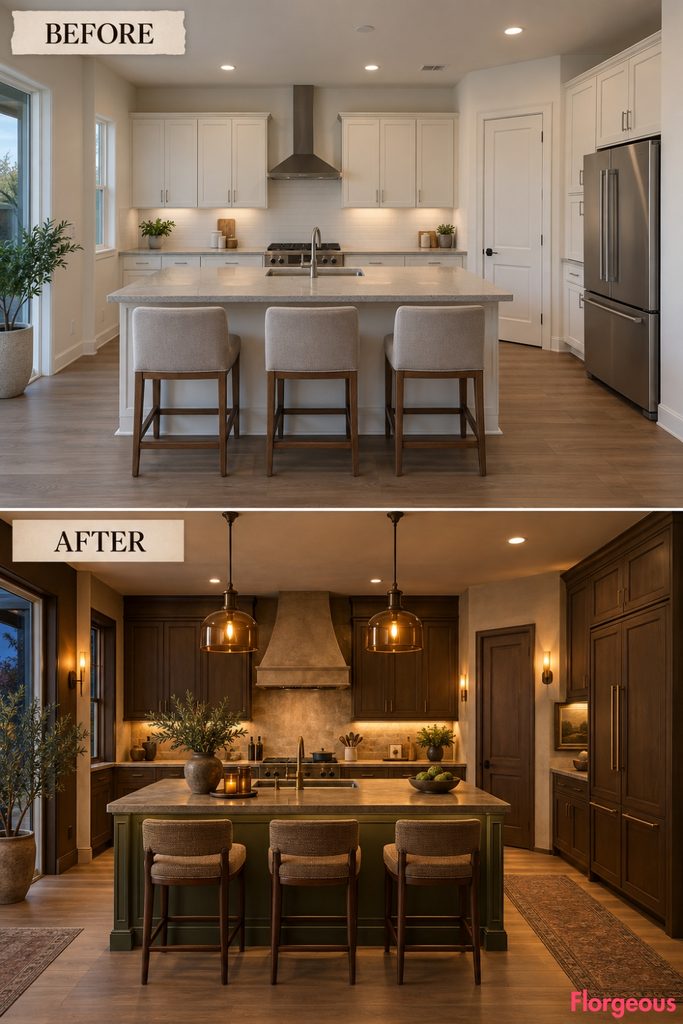
The last concept is designed specifically around what the room feels like after dark.
Before: The same builder-grade kitchen with generic overhead lighting and no evening atmosphere.
After: Use deep warm-brown cabinetry, smoky neutral counters, dark olive island details, and multiple believable lighting layers: concealed under-cabinet light, soft wall lights, low island illumination, and one warm pendant group.
Amber glass, dark ceramics, and small pools of light make the room feel cinematic without changing any architecture.
During daylight, it remains restrained. At night, the whole character changes.
Why it works: Lighting becomes part of the design strategy rather than an accessory added at the end.
How to Choose the Mediterranean Kitchen Personality That Fits Your Home
The most useful lesson from these makeovers is that Mediterranean style is not one fixed look. A market kitchen and a monastery kitchen can share the same regional roots while feeling completely different. The same is true of a polished Riviera entertaining room, a Tuscan farm workspace, an Ibiza earth kitchen, or a modernist Mediterranean interior.
Start with lifestyle rather than color. If you cook constantly, the market, baker’s, or farm-work approach may make more sense. If the kitchen is also your entertaining space, the Riviera, supper-club, or grand-hotel direction gives the island and lighting a more social role.
Then choose a furniture language. Open utilitarian storage, formal tailored cabinetry, dark monastic timber, antique-style painted furniture, or crisp modernist volumes will change the room more dramatically than simply replacing beige with olive or cream.
Finally, keep the parts of the existing kitchen that already work. If appliance positions, plumbing, circulation, and island dimensions are practical, there is no reason to move them just to create a dramatic AFTER. A strong Mediterranean Kitchen makeover can come from rethinking how those fixed elements look, function, and relate to one another.