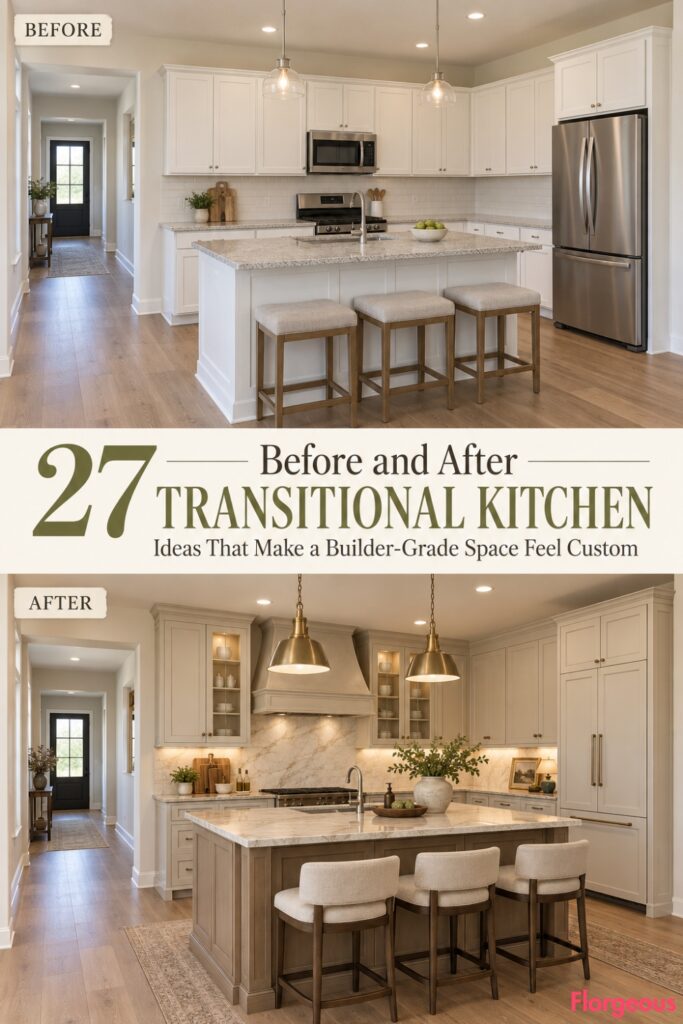
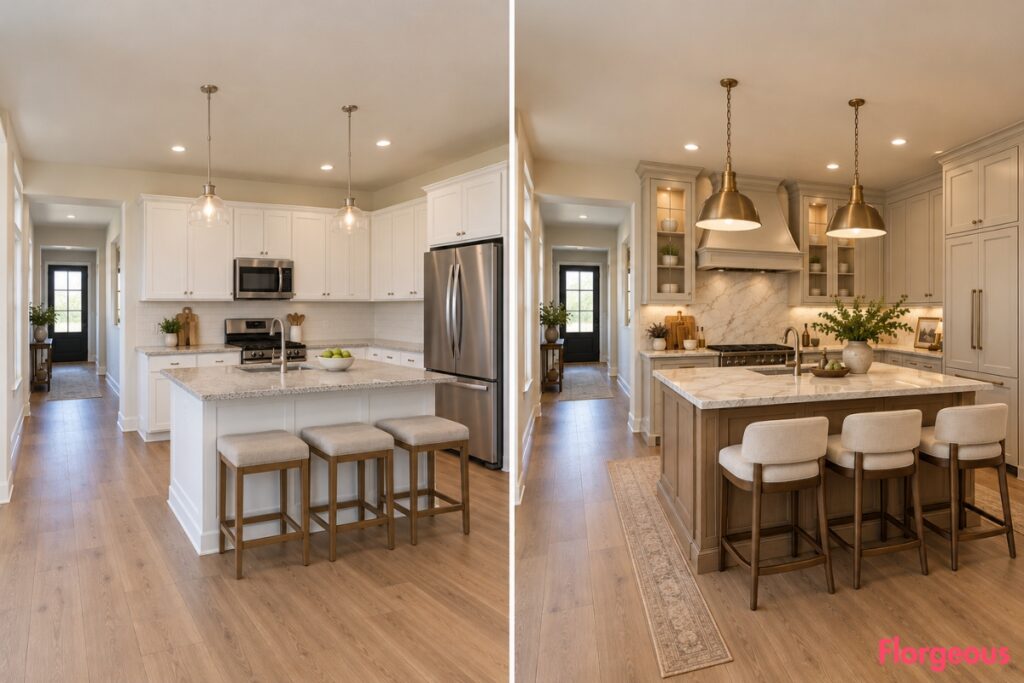
A builder-grade kitchen can work perfectly and still feel forgettable. Basic cabinetry, speckled counters, exposed stainless appliances, and standard lighting often make the room feel installed rather than intentionally designed.
A Transitional Kitchen solves that by combining traditional craftsmanship with cleaner contemporary lines. For all 27 ideas below, imagine the exact same starting kitchen: warm off-white walls, basic light cabinetry, neutral counters, rectangular center island, fixed stainless refrigerator, standard appliances, simple flooring, minimal styling, and soft daylight.
The architecture never changes. Walls, windows, doors, ceiling, plumbing, appliance positions, refrigerator dimensions, island footprint, and circulation remain fixed. Only the AFTER design changes.
1. Parisian Apartment Transitional
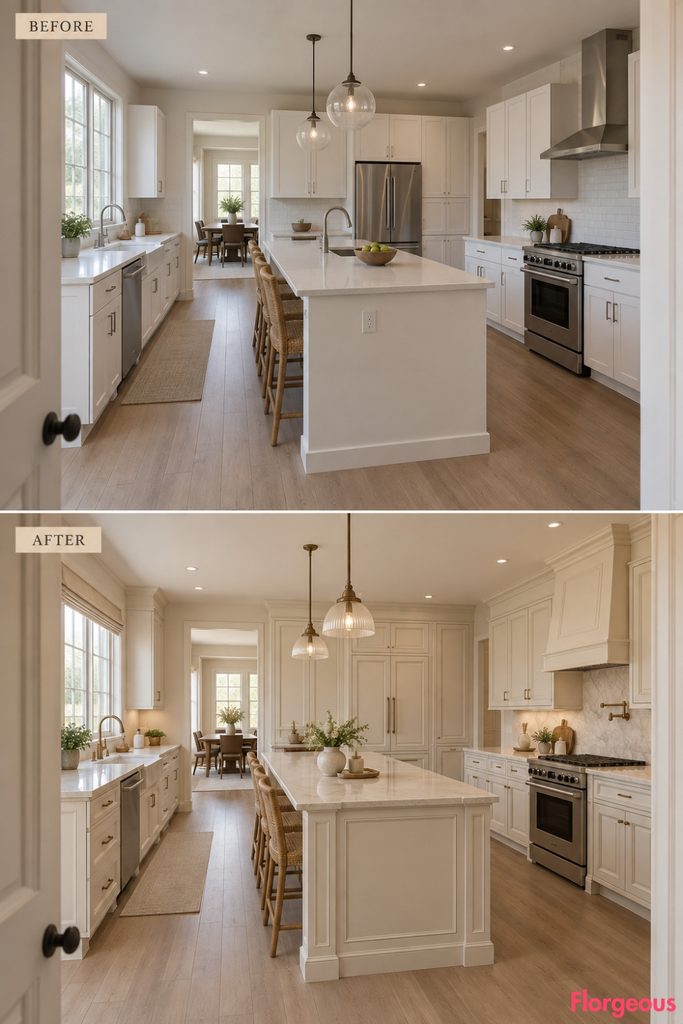
Before: The same plain builder-grade kitchen.
After: Warm ivory millwork, creamy stone, restrained bronze, elegant island detailing, tailored lighting, and refrigerator panels treated like quiet Parisian cabinetry.
Why it works: Classic refinement meets cleaner modern editing.
2. Manhattan Penthouse Transitional
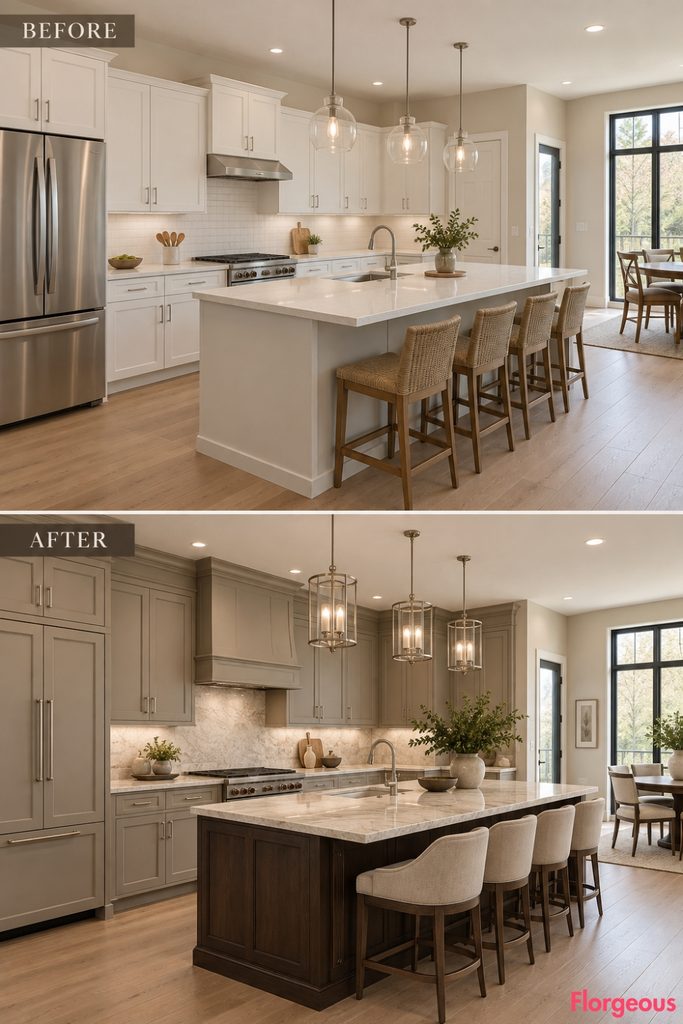
Before: The same locked kitchen.
After: Warm-gray cabinetry, espresso island, broad pale stone, precision nickel hardware, architectural lighting, and sleek coordinated refrigerator panels.
Why it works: Traditional cabinetry becomes sharper and more urban.
3. New England Tailored Transitional
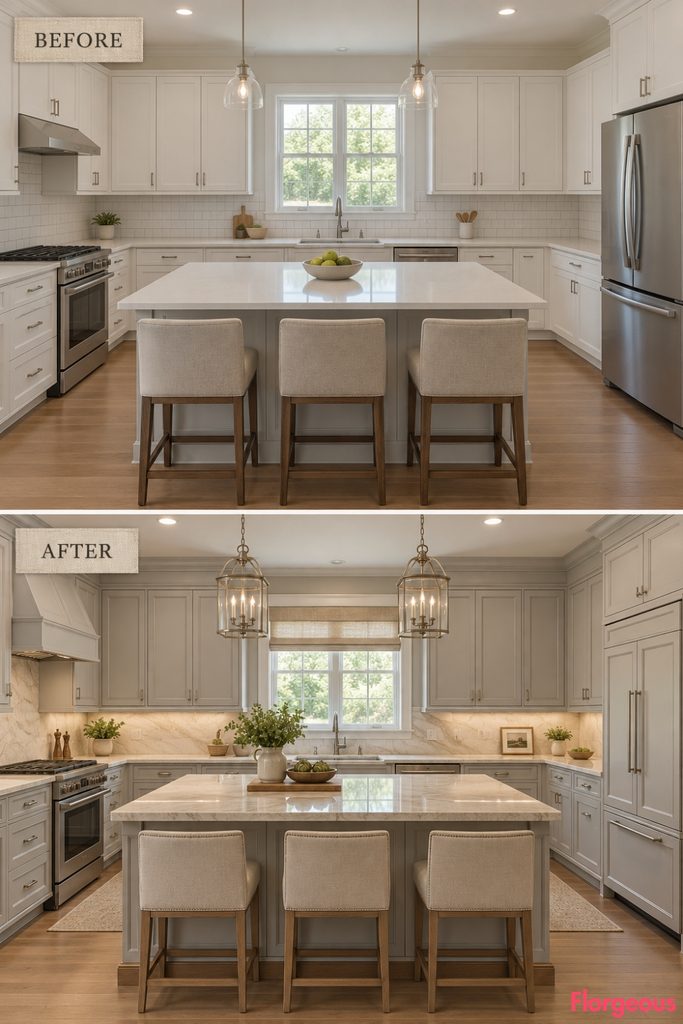
Before: The same neutral builder-grade kitchen.
After: Pearl-gray cabinetry, creamy quartzite, controlled oak accents, polished nickel, tailored seating, lantern lighting, and pale integrated refrigerator panels.
Why it works: Crisp and established without becoming coastal or farmhouse.
4. London Townhouse Transitional
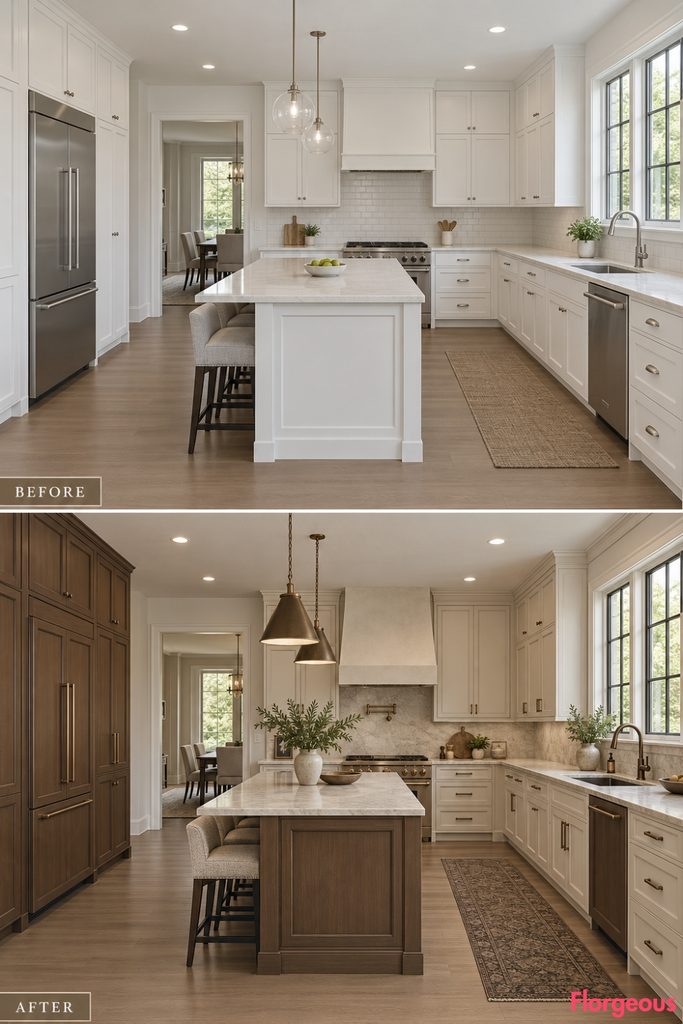
Before: The same plain kitchen.
After: Tobacco-brown tall cabinetry, parchment working cabinets, pale stone, dark bronze, a substantial island, and refrigerator fronts absorbed into the darker storage zone.
Why it works: Rich traditional depth is balanced by clean surfaces.
5. Contemporary Brownstone Transitional
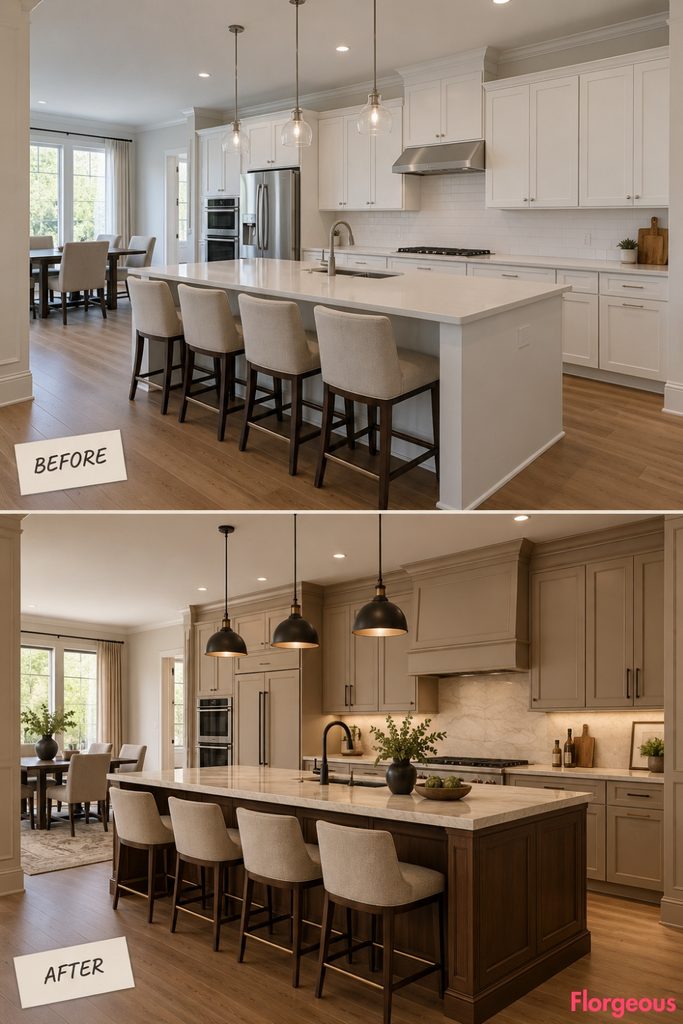
Before: The same builder-grade kitchen.
After: Oat cabinetry, deep walnut-brown island, creamy stone, blackened-metal accents, stronger millwork proportions, and quietly paneled refrigerator fronts.
Why it works: Heritage warmth feels cleaner and more metropolitan.
6. Boutique Hotel Transitional
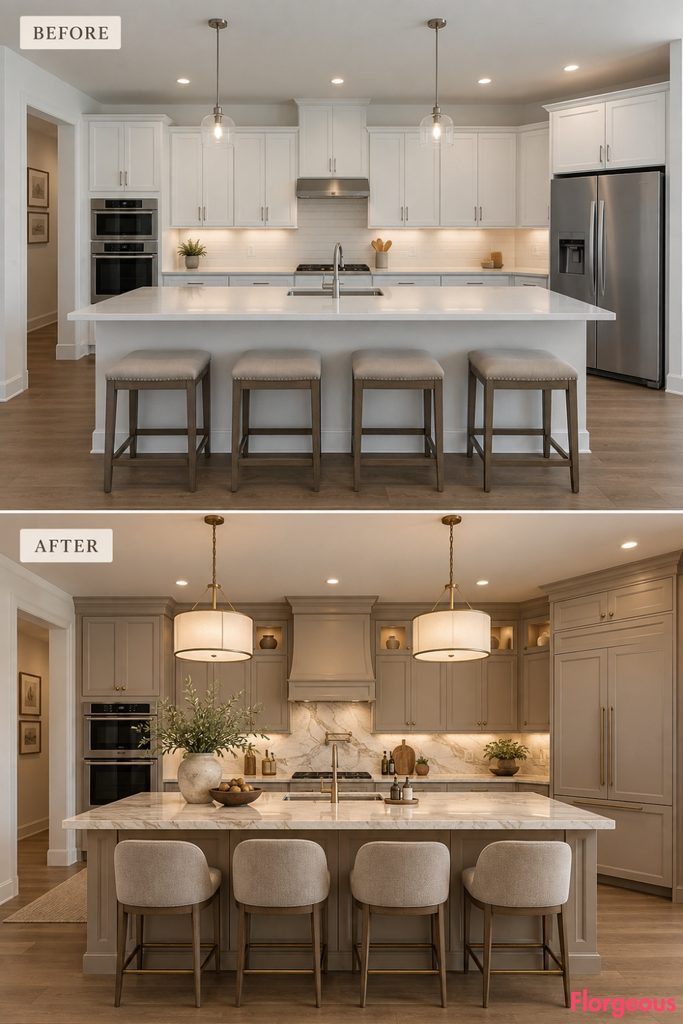
Before: The same standard kitchen.
After: Soft taupe cabinetry, creamy stone, polished warm metal, upholstered stools, layered lighting, and seamless refrigerator panels.
Why it works: The kitchen feels polished and hospitality-level without becoming flashy.
7. Quiet Luxury Transitional
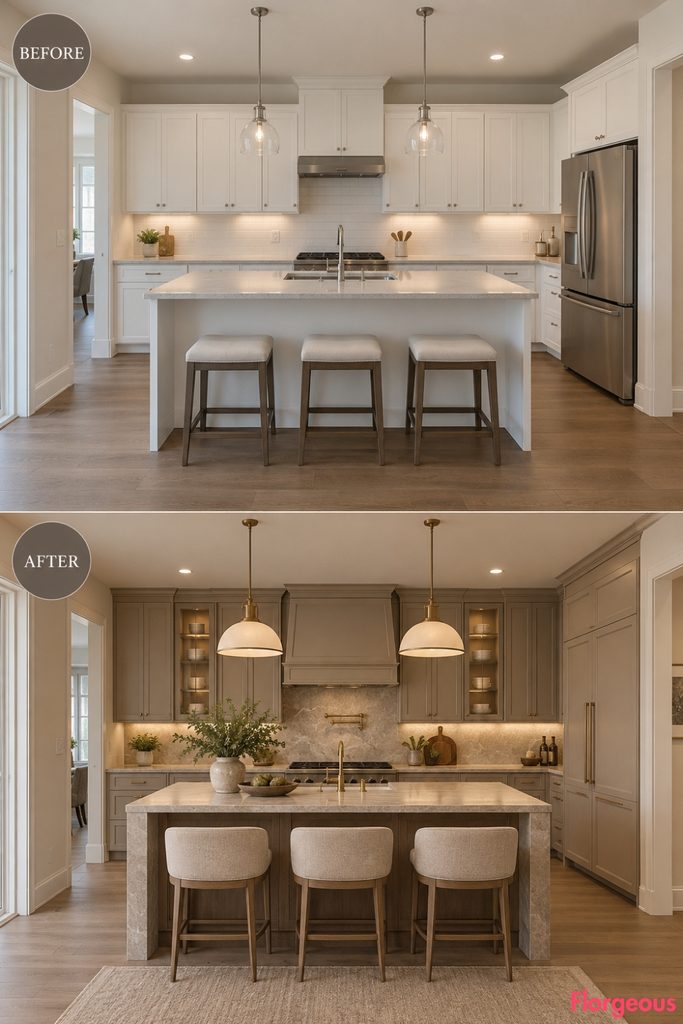
Before: The same plain kitchen.
After: Layered mushroom cabinetry, tonal stone, minimal metalwork, substantial island proportions, discreet lighting, and refrigerator panels that nearly disappear.
Why it works: Luxury comes from proportion and material quality.
8. Art Collector Transitional
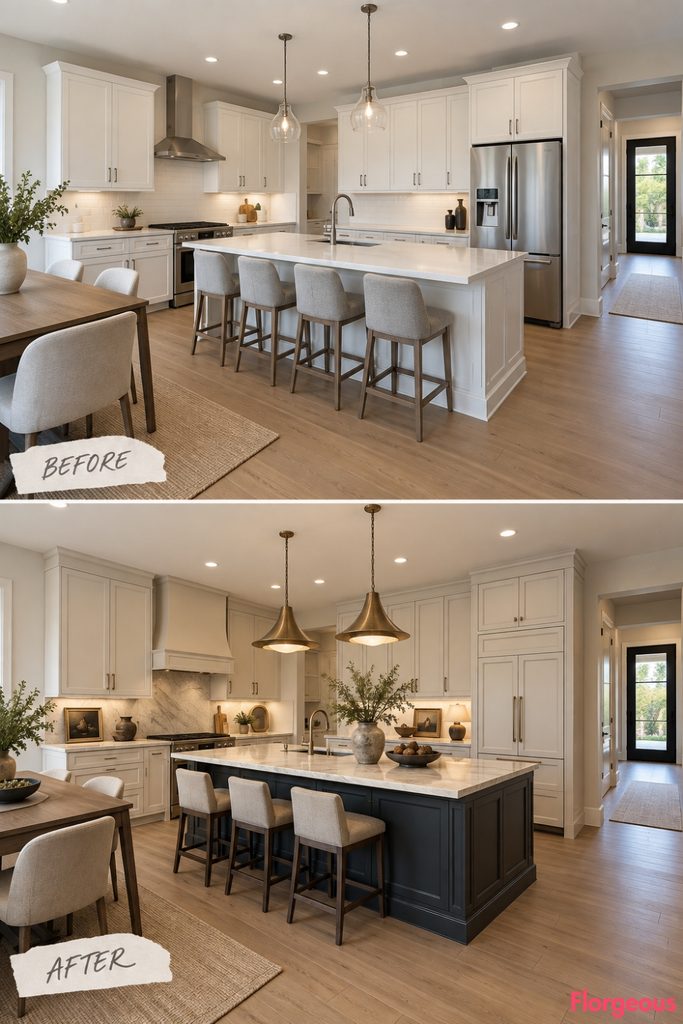
Before: The same builder-grade kitchen.
After: Chalk cabinetry, muted ink island, pale stone, sculptural lighting, sparse decorative objects, and understated refrigerator panels.
Why it works: Negative space gives the kitchen a gallery-like personality.
9. Soft European Transitional
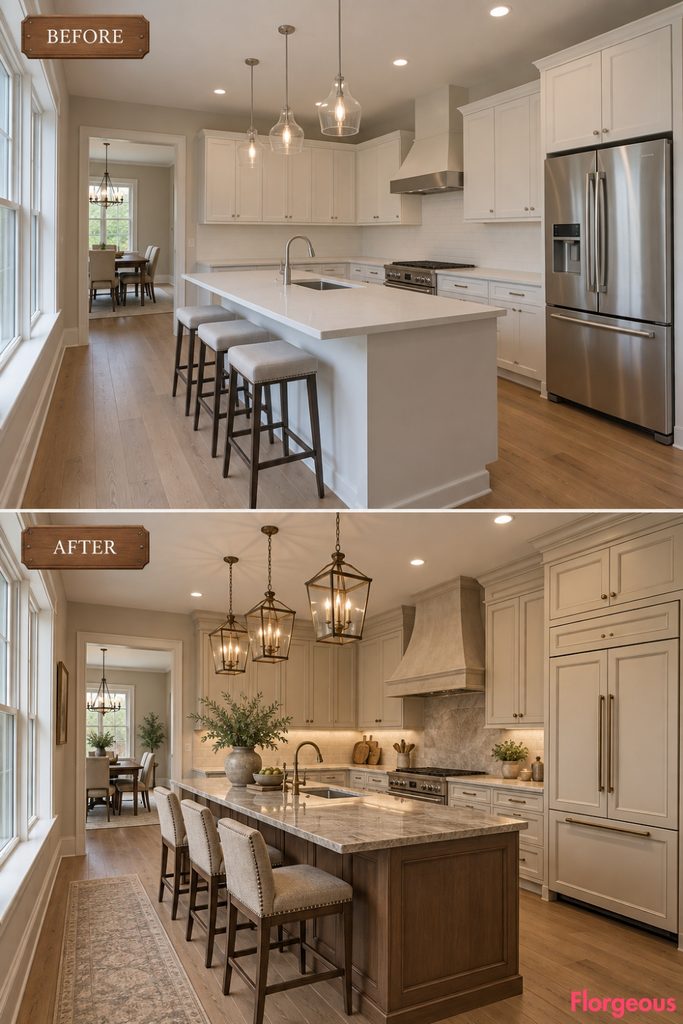
Before: The same simple kitchen.
After: Creamy beige cabinetry, warm-gray stone, softly aged metal, medium-brown island, graceful lighting, and understated integrated refrigerator panels.
Why it works: It feels established and elegant without obvious historical motifs.
10. Urban Club Transitional
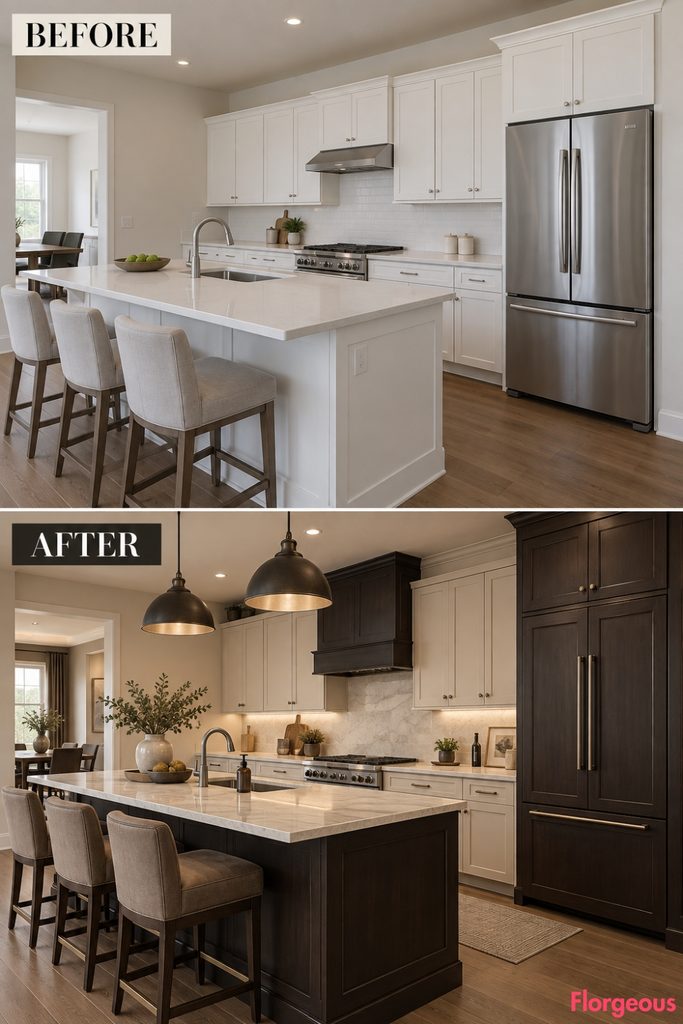
Before: The same pale builder-grade space.
After: Espresso cabinetry in selected zones, warm bone elsewhere, pale stone, dark metal lighting, substantial stools, and deep espresso refrigerator panels.
Why it works: The mood becomes darker without losing transitional restraint.
11. Sunlit Family Transitional
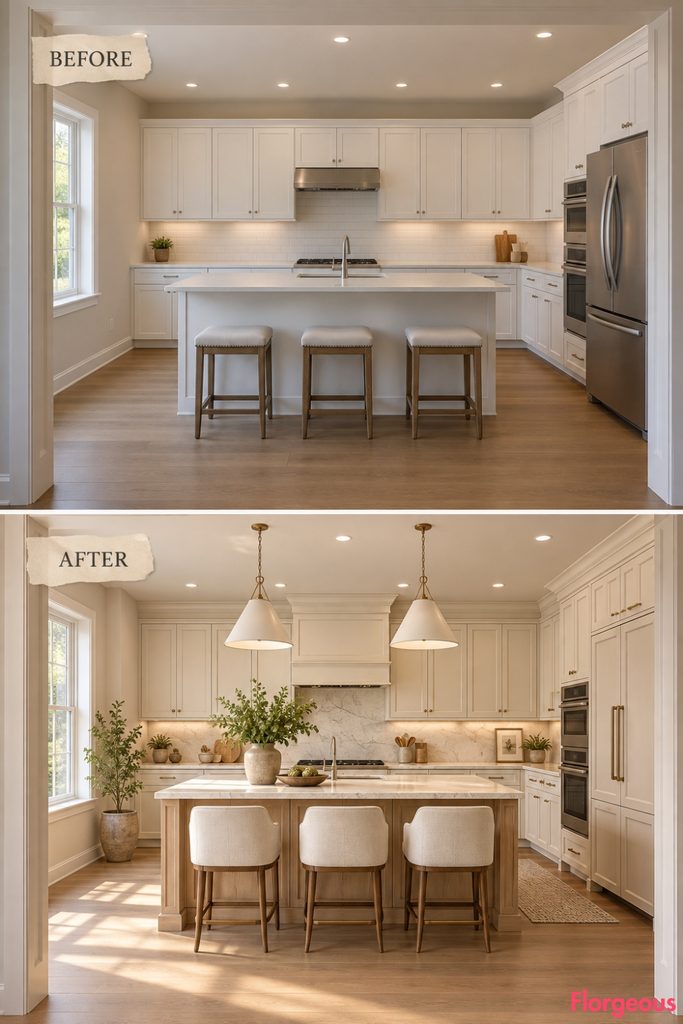
Before: The same plain kitchen.
After: Warm-white cabinetry, pale natural stone, restrained light oak, comfortable stools, brighter layered lighting, and integrated refrigerator panels.
Why it works: Practical and relaxed, but still tailored.
12. Evening Entertainer Transitional
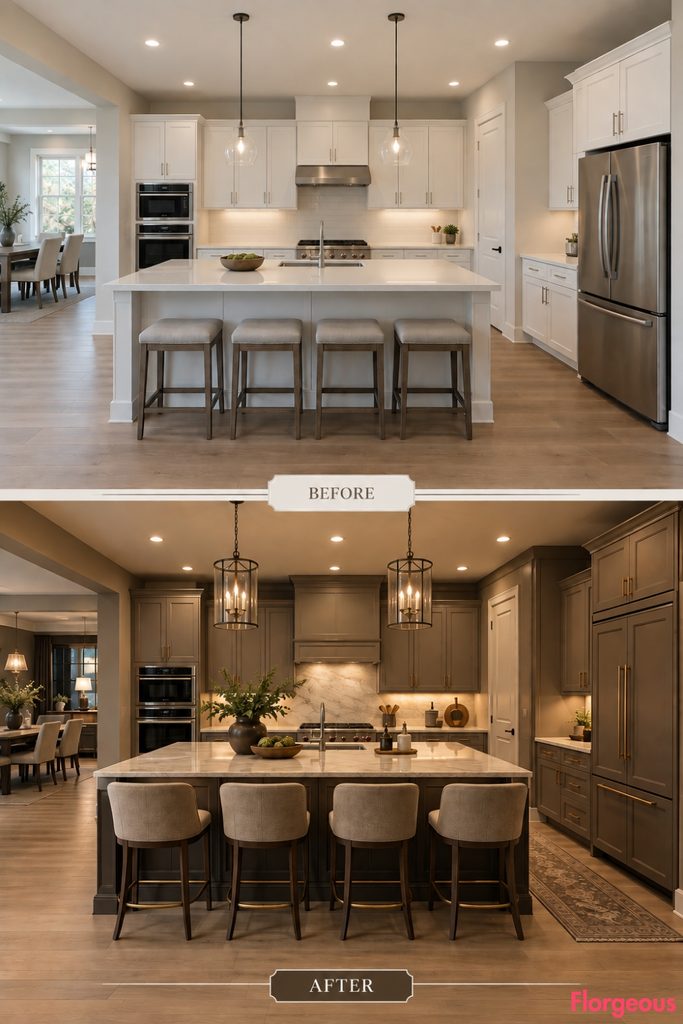
Before: The same neutral kitchen.
After: Deep greige cabinetry, charcoal-brown island, luminous pale stone, atmospheric metal-and-glass lighting, richer seating, and darker refrigerator panels.
Why it works: The palette has drama without becoming formal or ornate.
13. Warm Monochrome Transitional
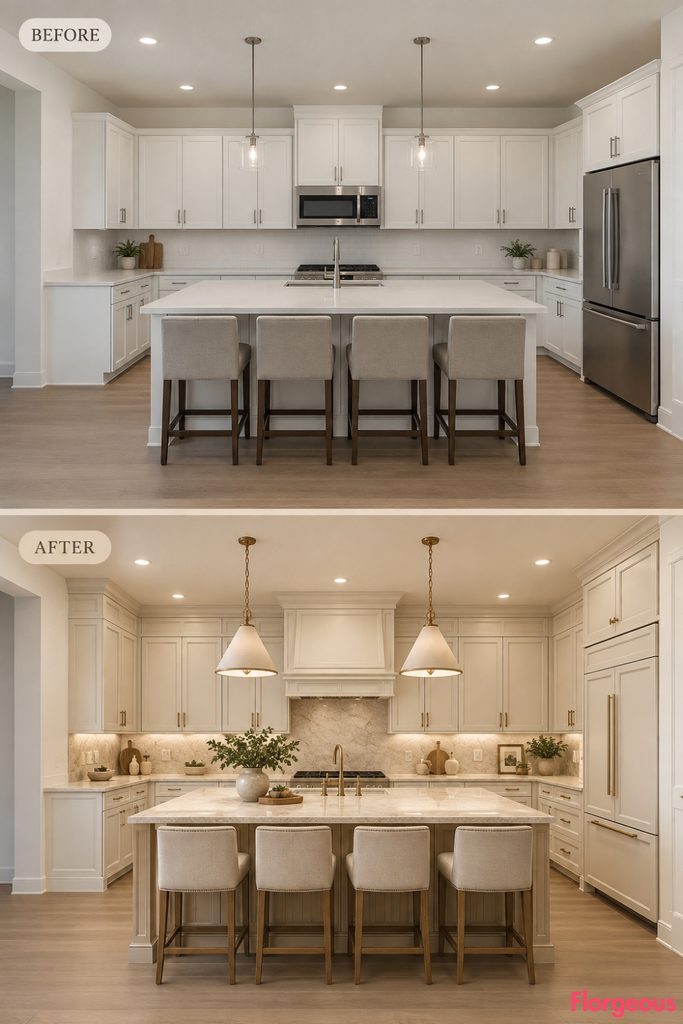
Before: The same pale kitchen.
After: Cabinetry, island, and refrigerator remain within one warm ivory family, with depth coming from profiles, sheen, stone thickness, shadow lines, and lighting.
Why it works: Craftsmanship creates contrast without strong color changes.
14. High-Contrast Editorial Transitional
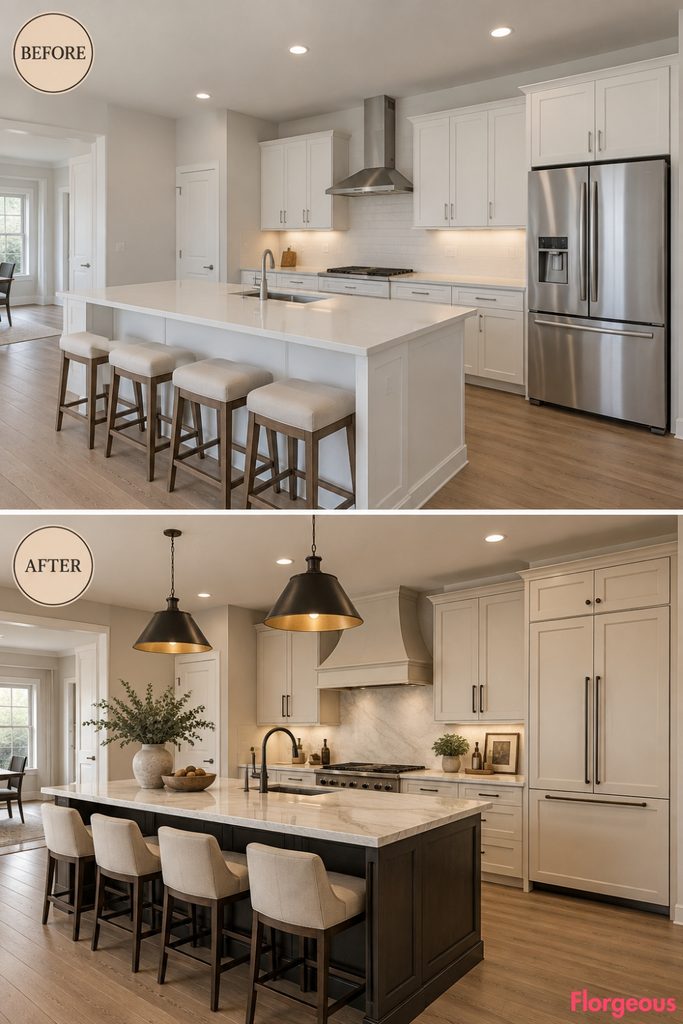
Before: The same builder-grade kitchen.
After: Bone cabinetry, brown-black island, crisp pale worktops, dark architectural hardware, strong graphic lighting, and quiet bone refrigerator panels.
Why it works: High contrast makes classic proportions feel more editorial.
15. Stone Gallery Transitional
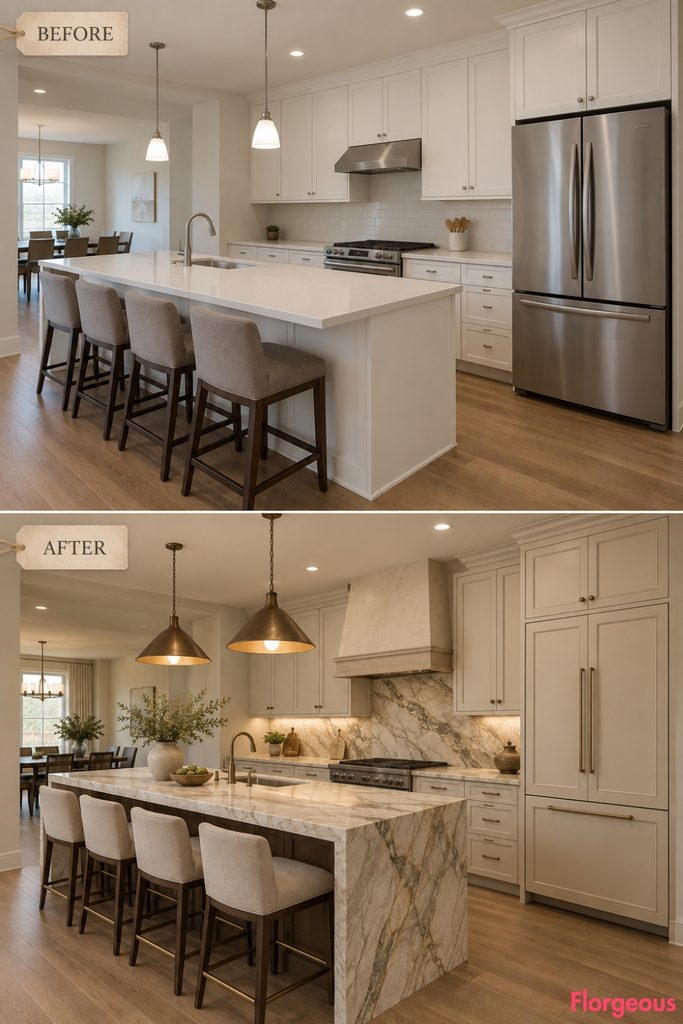
Before: The same simple kitchen.
After: Parchment cabinetry forms a quiet backdrop for broad expressive natural stone, minimal bronze, restrained island detailing, and subtle refrigerator panels.
Why it works: Stone becomes the artwork.
16. Tailored Timber Transitional
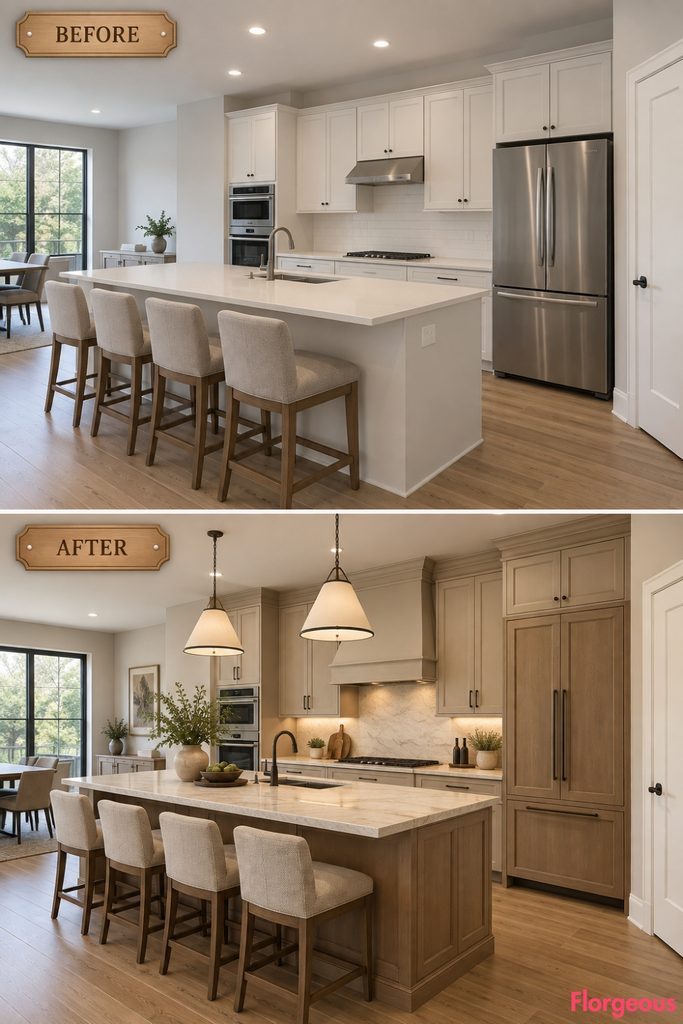
Before: The same neutral kitchen.
After: Painted warm-neutral cabinetry is balanced by controlled medium-tone timber on the island and selected refrigerator panels, with pale stone and dark hardware.
Why it works: Wood adds warmth without making the kitchen rustic.
17. Parchment and Nickel Transitional
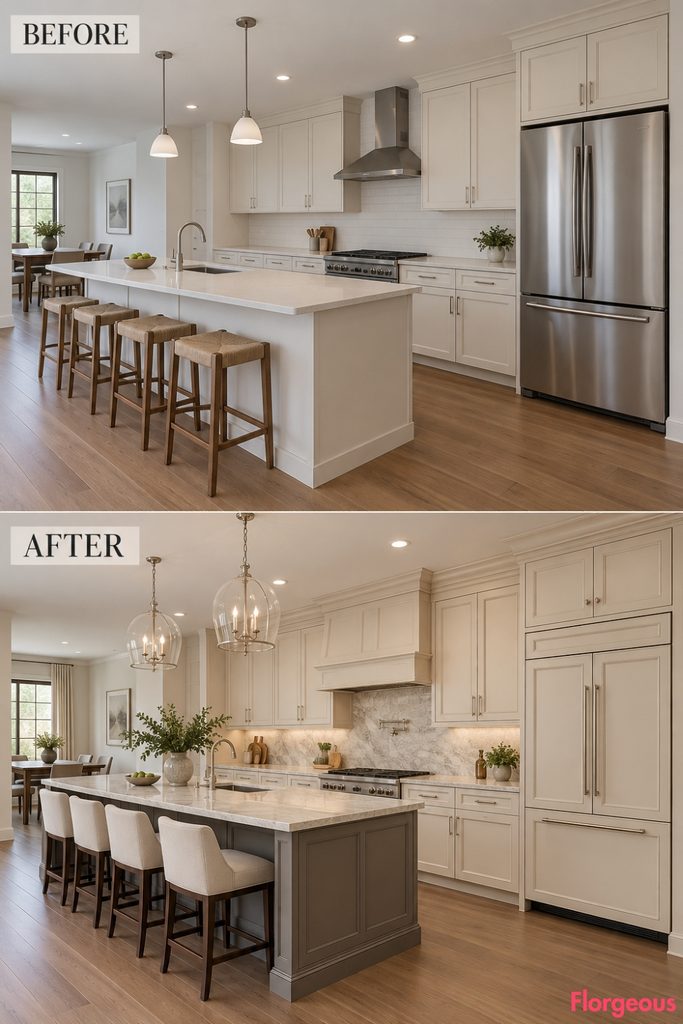
Before: The same builder-grade kitchen.
After: Parchment cabinetry, cool pale stone, polished nickel, elegant glass lighting, a deeper gray island, and refrigerator fronts with crisp nickel detailing.
Why it works: Cooler metal sharpens the warmer cabinetry.
18. Putty and Bronze Transitional
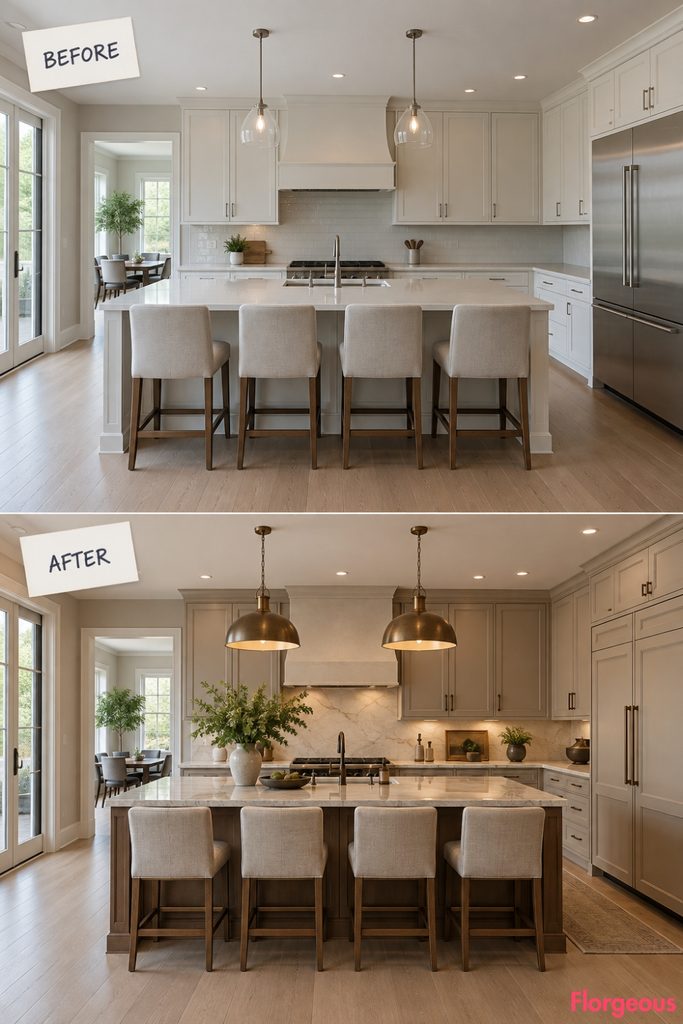
Before: The same simple kitchen.
After: Soft putty cabinetry, creamy stone, dark bronze, warm-brown island, sculptural lighting, and refrigerator panels in a slightly deeper putty.
Why it works: Warm contrast feels comfortable but controlled.
19. Espresso and Ivory Transitional
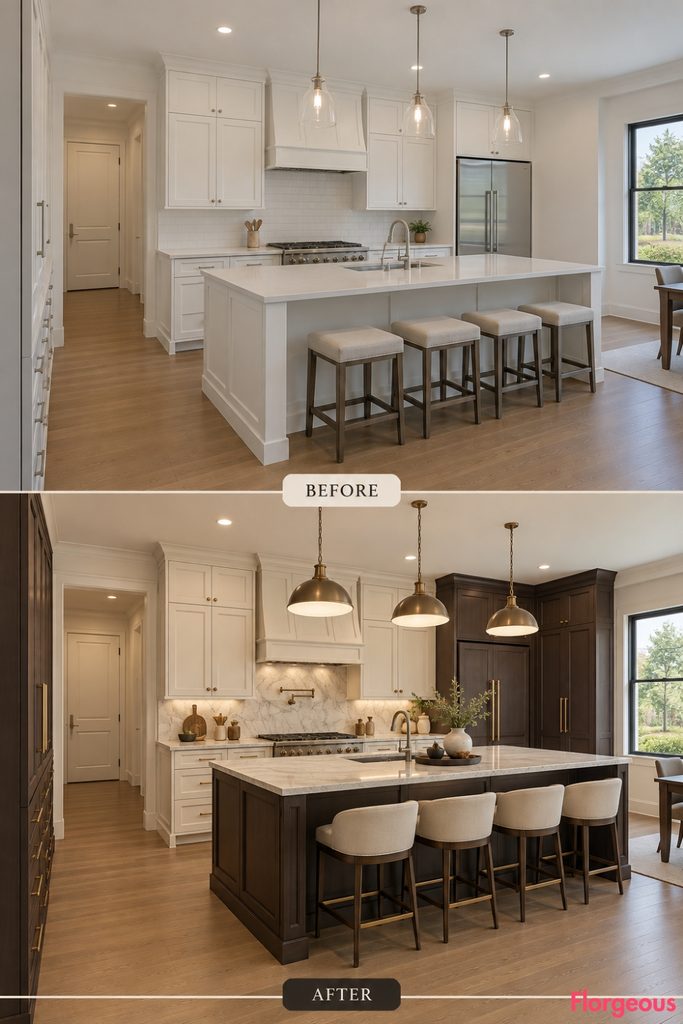
Before: The same builder-grade kitchen.
After: Ivory working cabinetry is anchored by espresso tall storage and refrigerator zone, pale stone, warm metal, and tailored island detailing.
Why it works: Dark vertical mass balances a much lighter working kitchen.
20. Mushroom and Oak Transitional
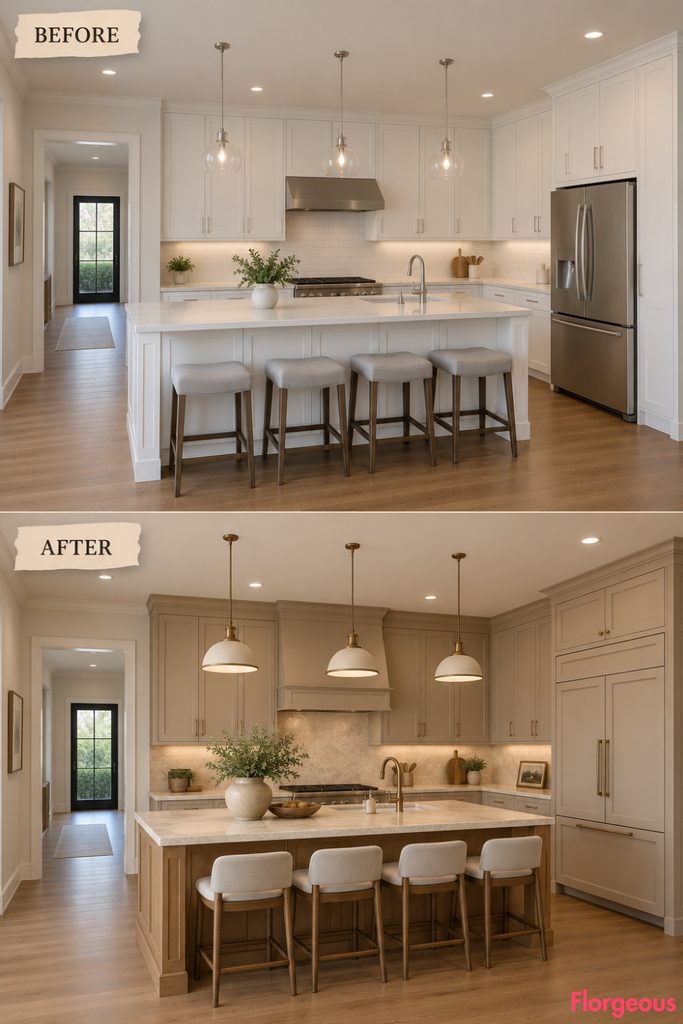
Before: The same plain kitchen.
After: Mushroom cabinetry, controlled oak accents, limestone-colored counters, muted hardware, relaxed lighting, and mushroom refrigerator panels with subtle oak pulls.
Why it works: Natural warmth remains refined rather than rustic.
21. Clay and Cream Transitional
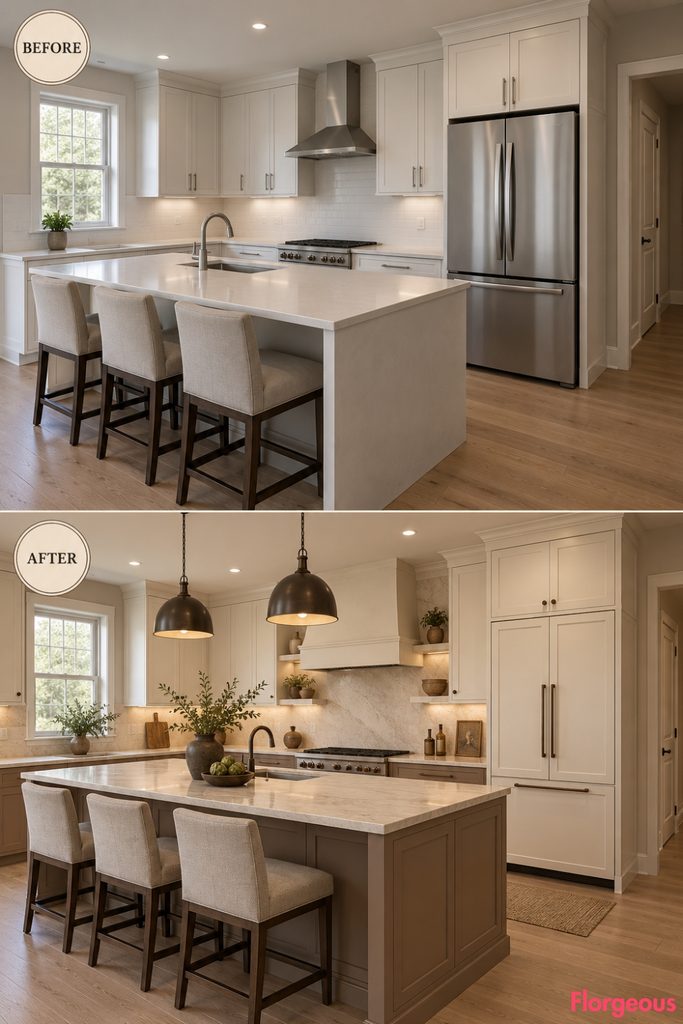
Before: The same neutral kitchen.
After: Muted clay island and selected lower cabinetry contrast with creamy uppers, pale stone, dark bronze, and cream refrigerator panels.
Why it works: Earthy color brings personality without becoming Mediterranean.
22. Ink and Almond Transitional
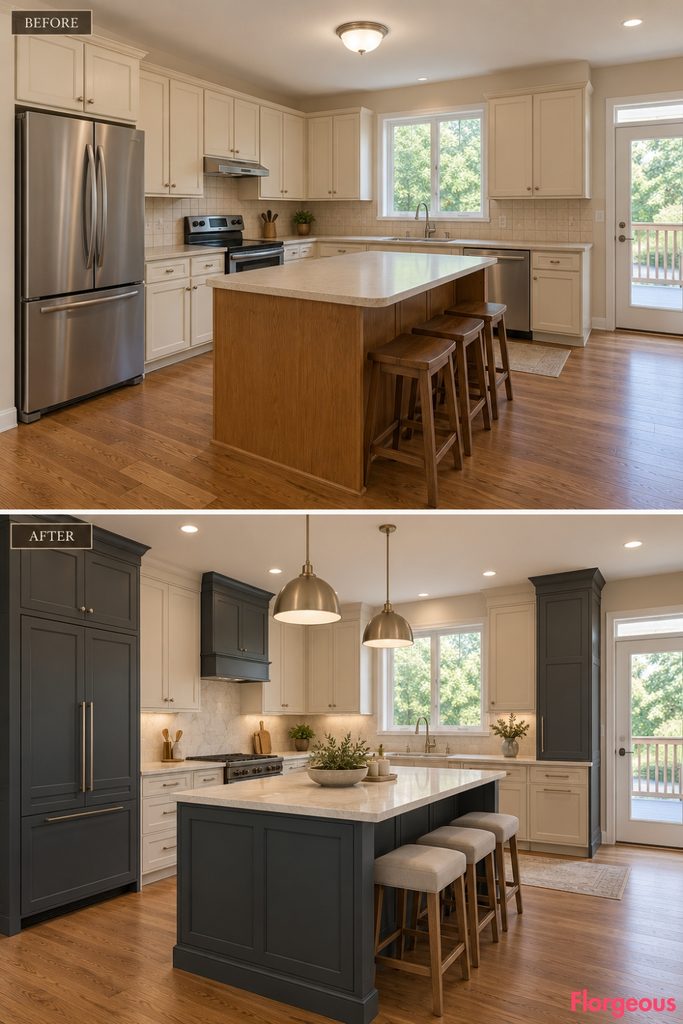
Before: The same builder-grade kitchen.
After: Almond cabinetry surrounds a muted ink island and selected dark accents, with creamy stone, restrained nickel, and coordinated refrigerator treatment.
Why it works: The dark tone feels tailored rather than coastal.
23. Pewter and Bone Transitional
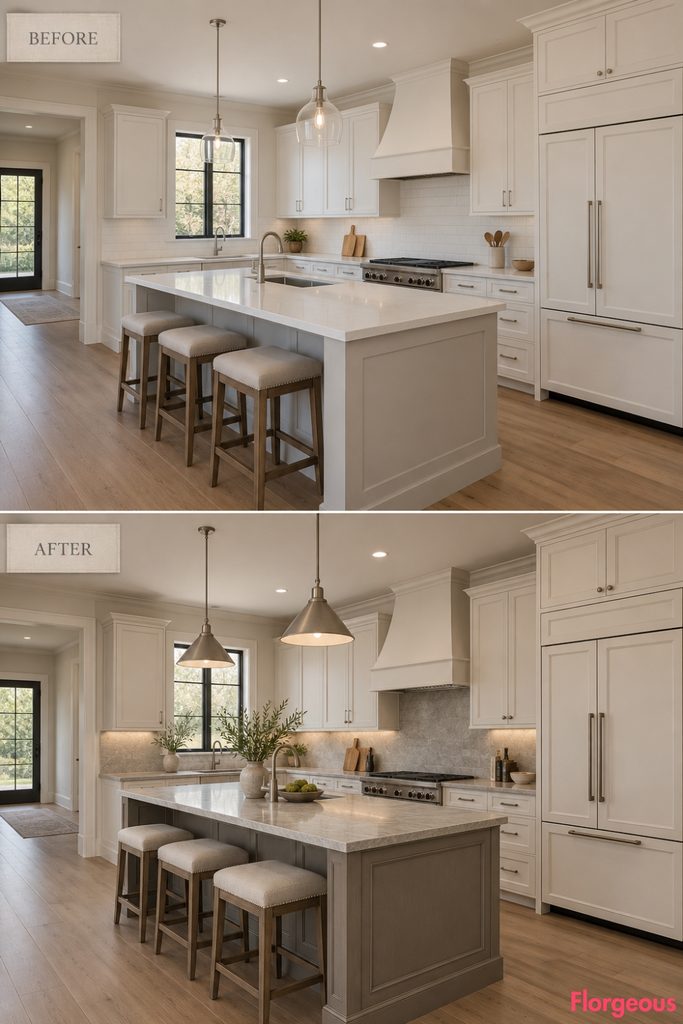
Before: The same plain kitchen.
After: Bone cabinetry, soft gray stone, pewter-toned metalwork, darker neutral island detailing, diffused lighting, and refrigerator panels with understated pewter hardware.
Why it works: The cooler palette stays polished rather than cold.
24. Soft Green-Gray Transitional
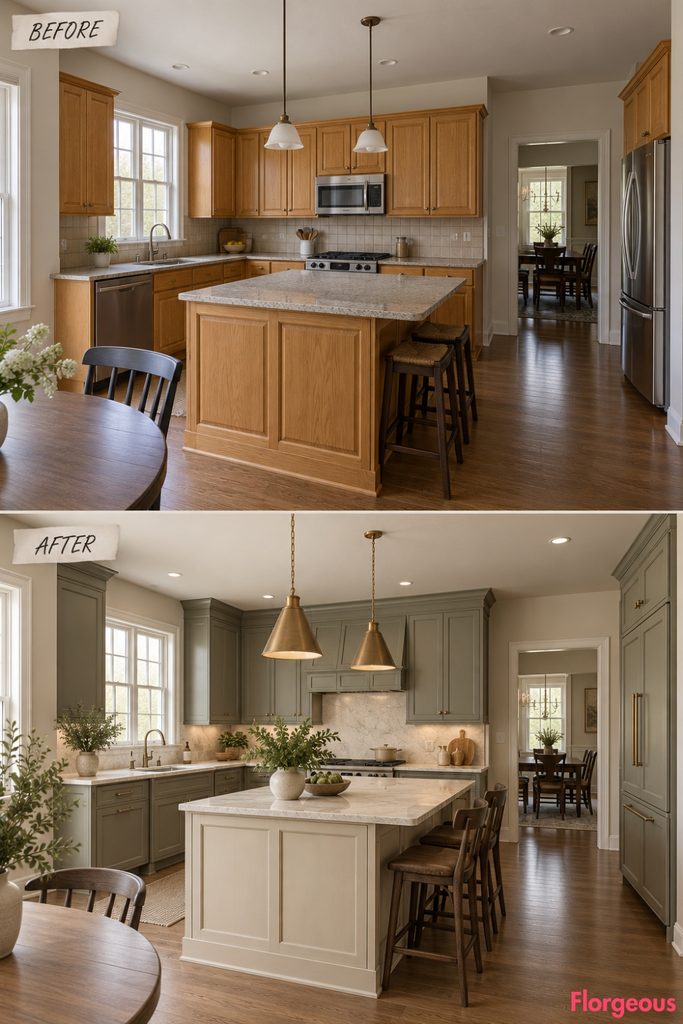
Before: The same builder-grade kitchen.
After: Muted green-gray cabinetry, warm cream stone, quiet bronze, dark wood seating, a lighter island, and matching green-gray refrigerator panels.
Why it works: The softened green functions almost like a neutral.
25. Dusty Blue-Gray Transitional
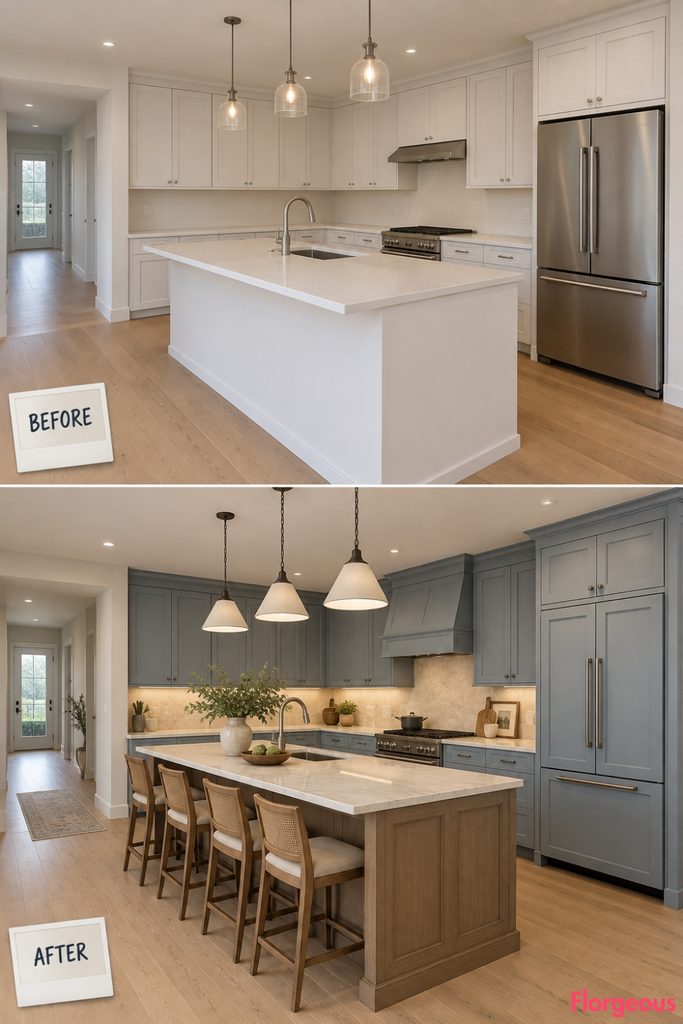
Before: The same simple kitchen.
After: Dusty blue-gray cabinetry, warm ivory stone, medium-brown island accents, darkened nickel, and matching refrigerator panels.
Why it works: The blue behaves like a tailored neutral instead of a coastal color.
26. Cocoa and Cream Transitional
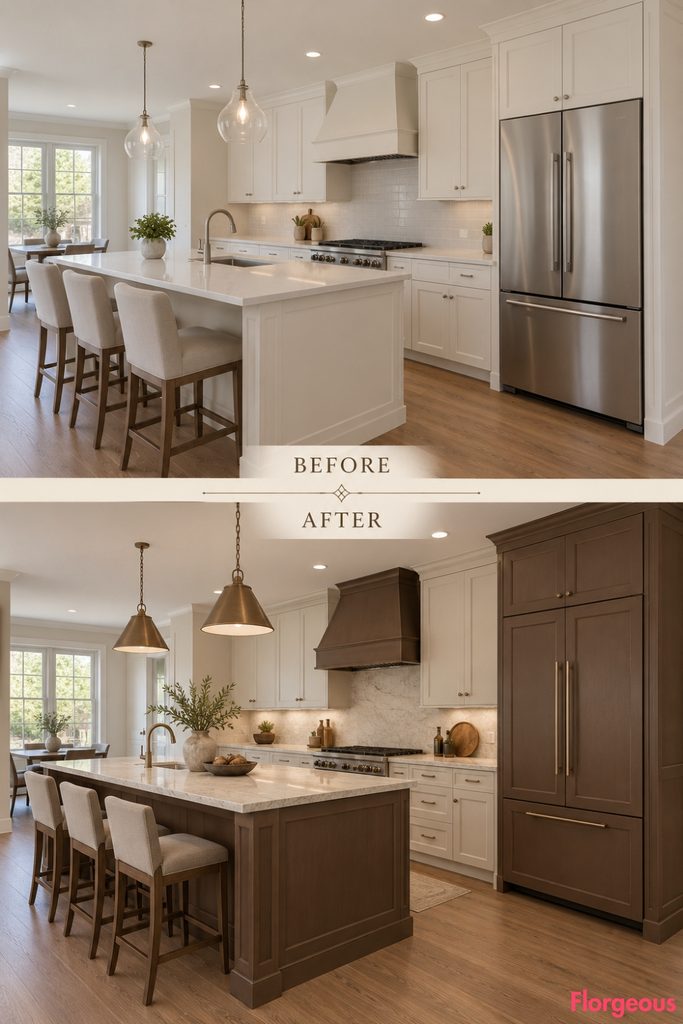
Before: The same neutral kitchen.
After: Cocoa island and tall storage contrast with creamy working cabinetry, light quartzite, warm metal, and refrigerator panels absorbed into the cocoa zone.
Why it works: The palette feels rich without needing ornate decoration.
27. Grand Hotel Transitional
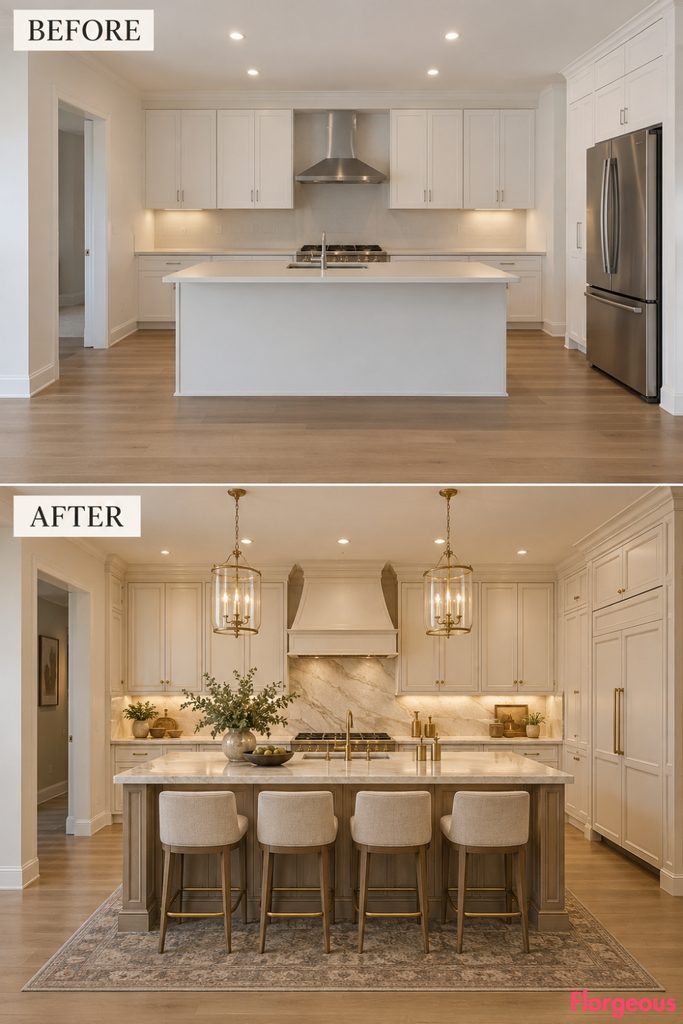
Before: The same builder-grade kitchen.
After: Warm ivory millwork, substantial pale stone, a deeper tailored island, polished mixed metal, elegant seating, layered lighting, and exceptionally clean refrigerator millwork.
Why it works: The room feels formal and polished while remaining practical.
How to Choose the Right Transitional Kitchen Look
Start with the mood you want rather than a cabinet color.
For a light and polished result, Parisian, New England, Quiet Luxury, or Warm Monochrome are strong directions. For more contrast, Manhattan, Urban Club, Espresso and Ivory, or Cocoa and Cream create greater depth. If you want warmth without rustic styling, Tailored Timber, Mushroom and Oak, or Soft European work especially well.
Keep the architecture you already have whenever the layout functions properly. Cabinet proportions, stone, island treatment, lighting, hardware, seating, and refrigerator integration can create a dramatic makeover without moving walls or appliances.
The refrigerator should also support the individual concept. It can disappear into pale cabinetry, become part of a darker tall-storage zone, or pick up controlled timber or metal details, but its form, dimensions, location, door swing, and clearance should remain unchanged.
Before ordering finishes, compare your cabinet, stone, timber, metal, and upholstery samples together in the actual kitchen. Transitional design depends on these materials feeling balanced rather than competing.
The best makeover is one where the BEFORE and AFTER are clearly the same physical kitchen, but the AFTER immediately feels more considered, cohesive, and personal.