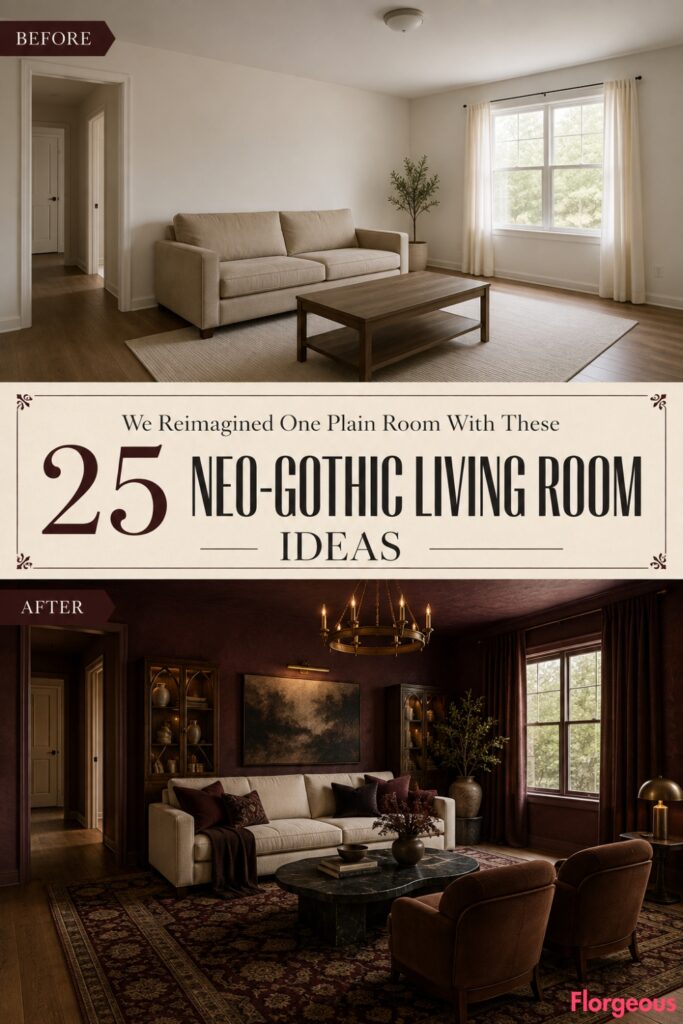
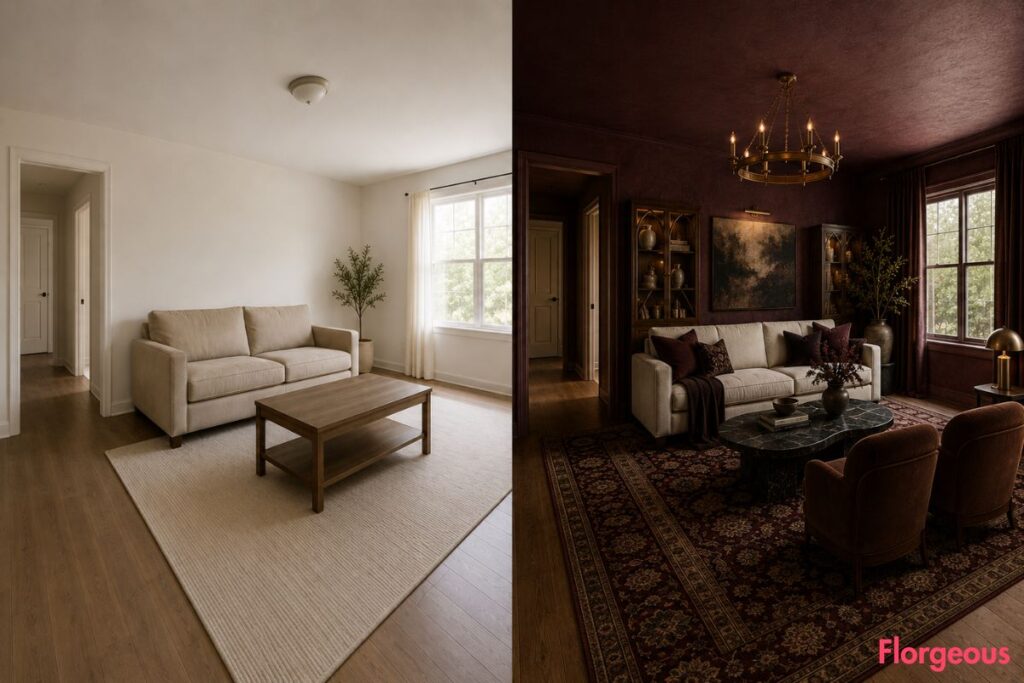
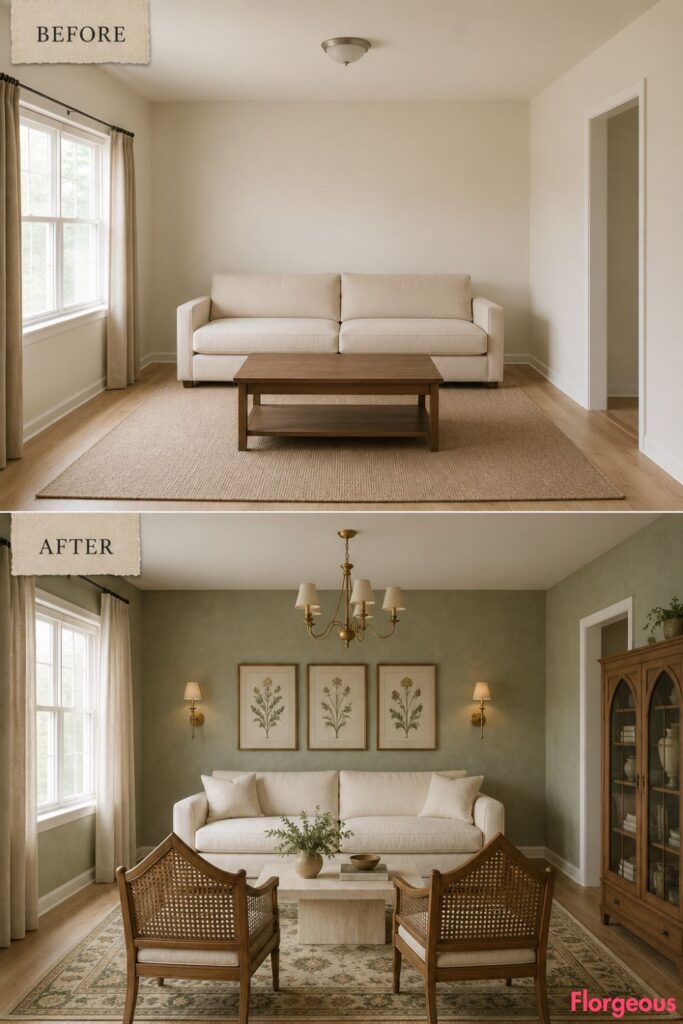
Our starting room could belong to almost any newer home: warm off-white walls, a beige sofa, a basic coffee table, short curtains, flat lighting, and absolutely nothing commanding your attention.
Instead of treating Gothic design as a formula of black paint and ornate antiques, we reimagined that exact room 25 different ways. This Neo-Gothic Living Room experiment moves from oxblood velvet and carved walnut to pale limestone, dusty sage, faded blue, modern black-and-cream, and sculptural stone.
The interesting part is how little the architecture itself needs to change. Pointed silhouettes, stronger vertical lines, expressive timber, aged metals, patterned textiles, and carefully chosen lighting can give the same ordinary shell a completely different personality.
1. Turn the Plain Room Into a Walnut and Oxblood Gothic Revival Salon
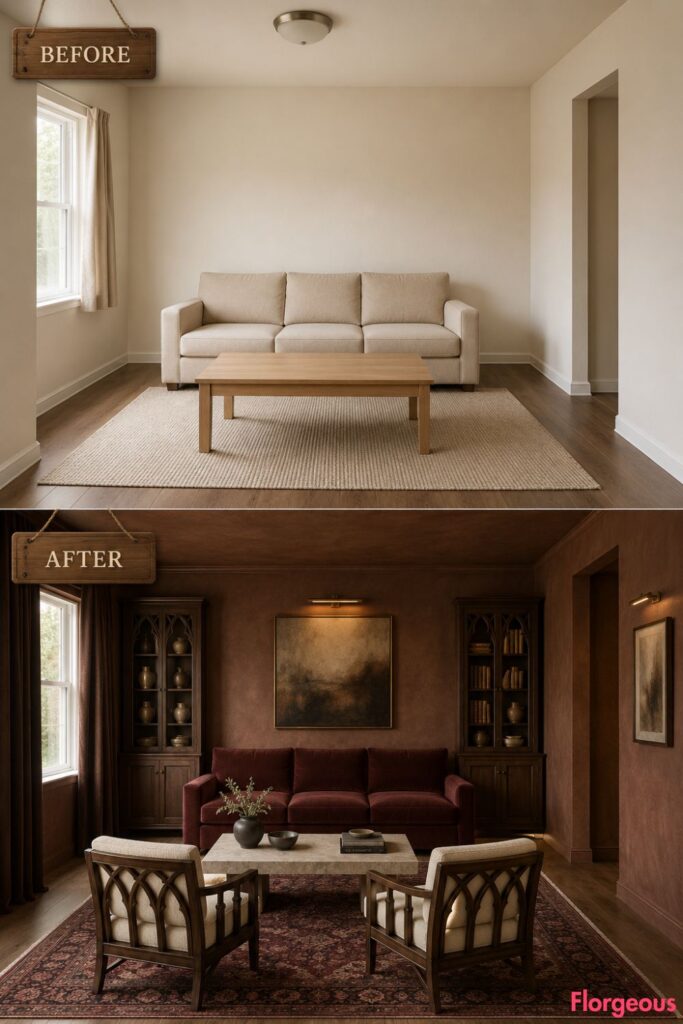
Before: The identical builder-grade room has warm off-white walls, a beige sofa, bare rectangular table, neutral rug, short curtains, basic ceiling light, and empty walls.
After: Tobacco-toned Roman clay surrounds an oxblood mohair sofa, two carved dark-walnut wool chairs, a honed limestone table, burgundy-patterned rug, espresso curtains, bronze picture lights, and walnut cabinetry with restrained tracery-inspired doors.
Why it works: The drama comes from materials and proportion rather than novelty Gothic props.
2. Make Gothic Revival Feel Light With Ivory Limestone and Warm Oak
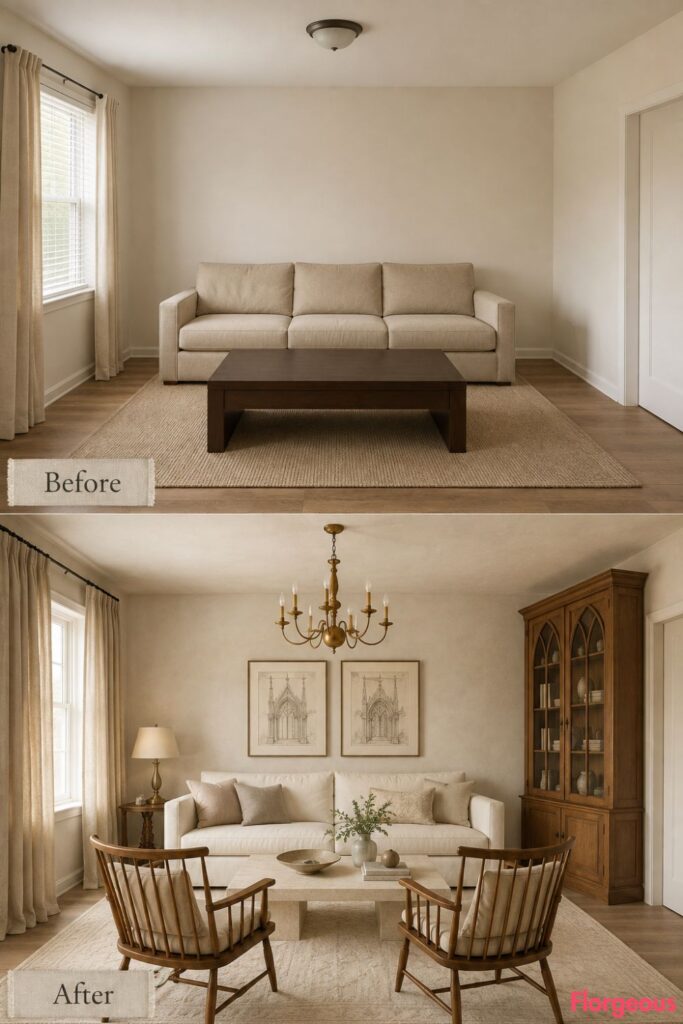
Before: The same plain beige-and-off-white living room feels neutral, sparse, and unfinished.
After: Pale limestone plaster replaces dark walls entirely. An ivory linen sofa, warm-oak spindle chairs, creamy travertine table, parchment wool rug, flax curtains, aged-brass chandelier, and tall oak cabinet introduce Gothic verticality without heaviness.
Color Story: Pale stone, oatmeal, and honeyed wood can carry Gothic forms just as effectively as black.
3. Rework the Room With Forest Green and Carved Oak
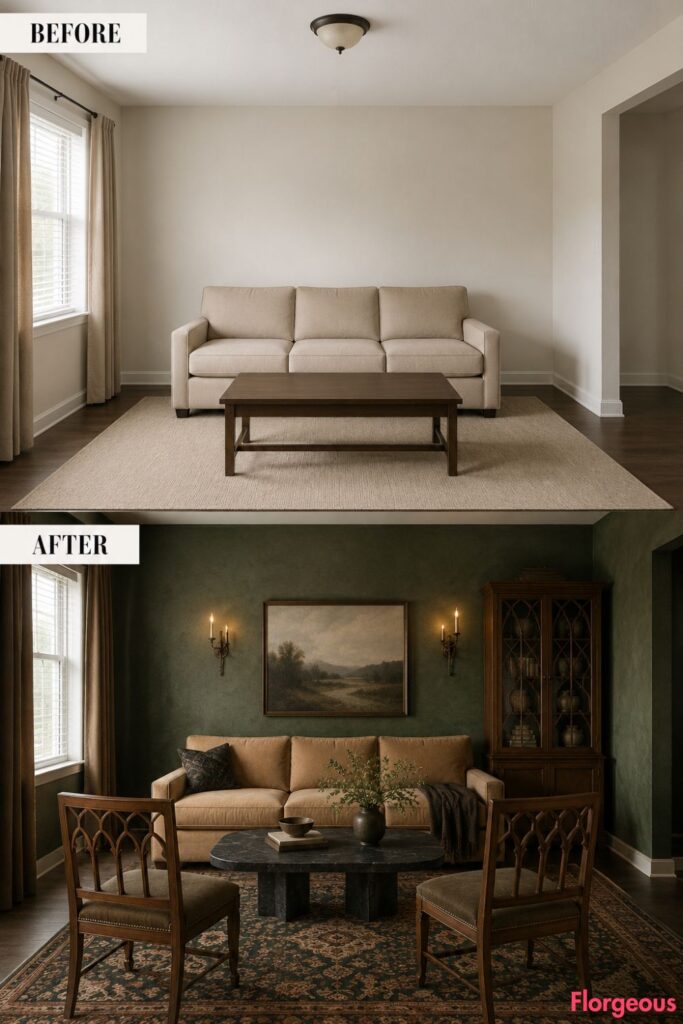
Before: Warm off-white walls and generic beige furniture provide the unchanged starting point.
After: Deep forest mineral paint creates a quieter historic mood around a camel wool sofa, carved medium-oak chairs, black soapstone table, moss-and-rust rug, tobacco curtains, antique-bronze sconces, and an oak display cabinet with geometric Gothic detailing.
Try this: One carved cabinet can create more character than filling the room with ornate accessories.
4. Give the Same Room a Midnight Blue Library Mood
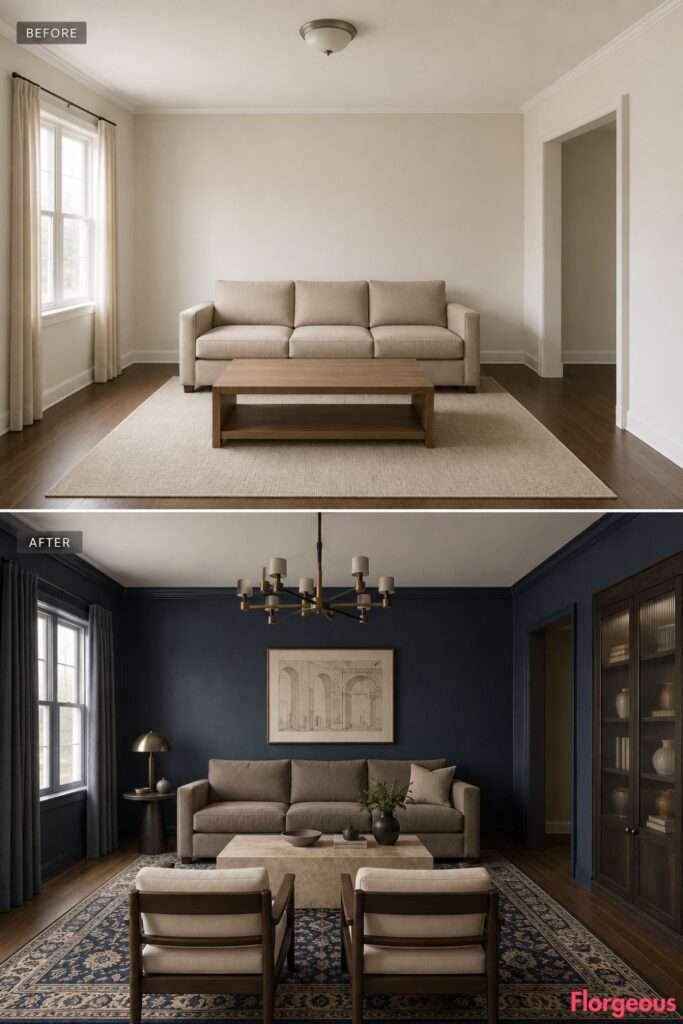
Before: The beige sofa, plain rug, short curtains, and basic light remain unchanged.
After: Midnight navy walls frame a warm-gray wool sofa, smoked-oak parchment chairs, block limestone table, navy-and-cream rug, slate curtains, bronze-nickel chandelier, architectural artwork, and smoked-oak storage with ribbed glass.
5. Build a Burgundy and Mahogany Evening Room
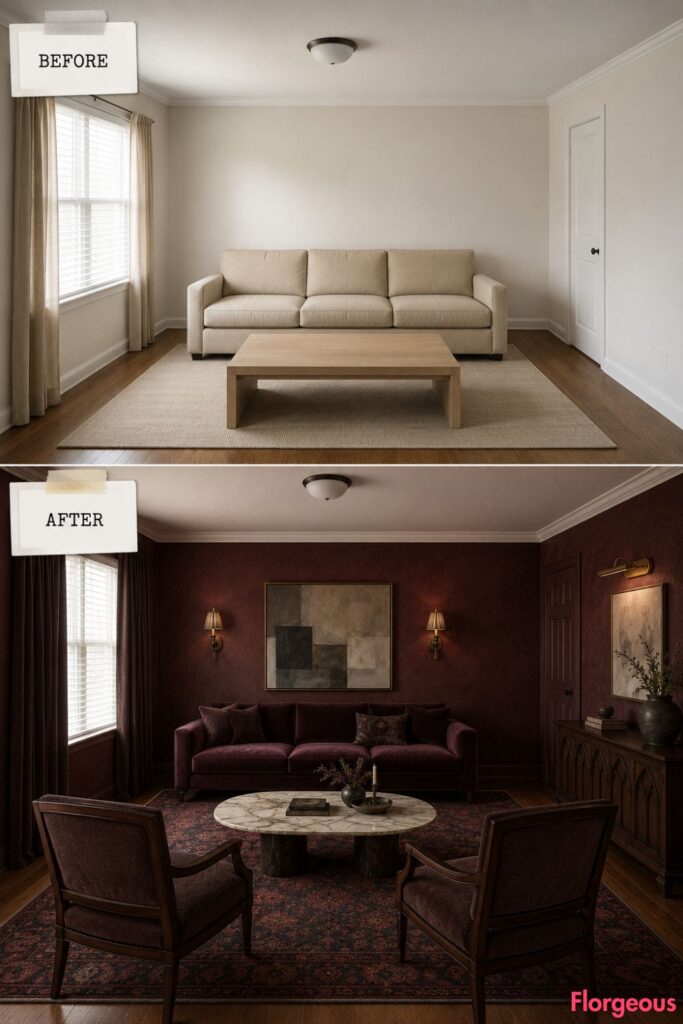
Before: The room begins as the same lightly styled builder-grade shell.
After: Deep garnet plaster meets a smoky-plum velvet sofa, mahogany upholstered chairs, cream marble oval table, burgundy-charcoal rug, chocolate curtains, aged-brass sconces, and a mahogany console with elongated pointed-panel fronts.
6. Strip Gothic Design Back to Charcoal and Blackened Timber
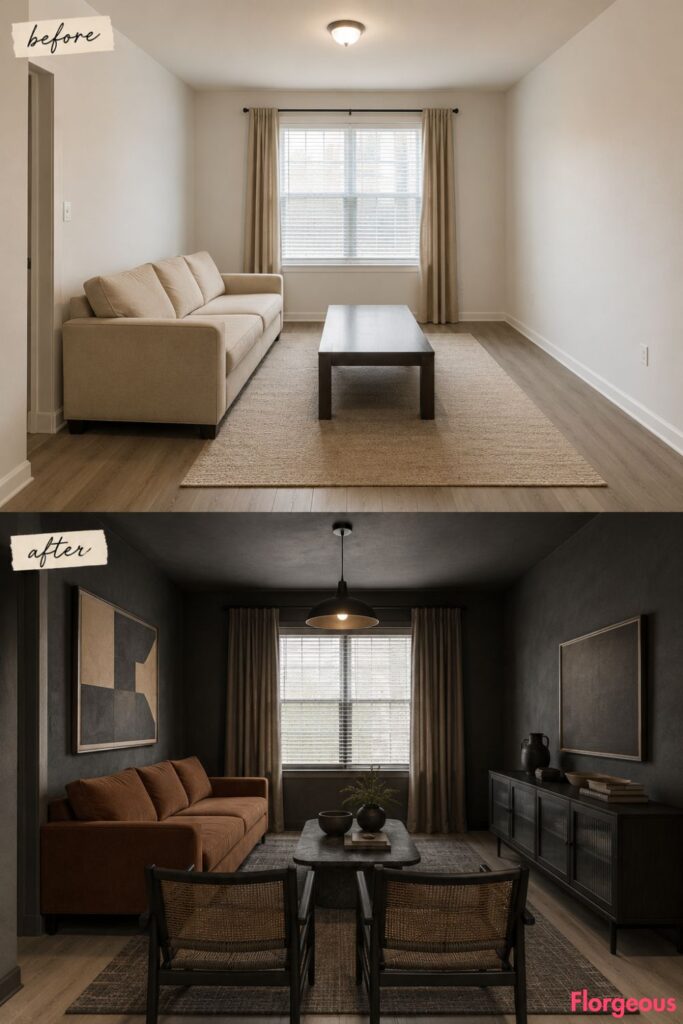
Before: The neutral room remains bright but visually flat.
After: Charcoal mineral plaster creates a sharp backdrop for a saddle-brown wool sofa, blackened-oak woven chairs, slate slab table, graphite rug, taupe curtains, blackened-iron pendant, and a long ribbed-glass cabinet.
Style Note: Restrained silhouettes keep a dark Gothic palette contemporary rather than theatrical.
7. Soften Gothic Architecture With Dusty Sage
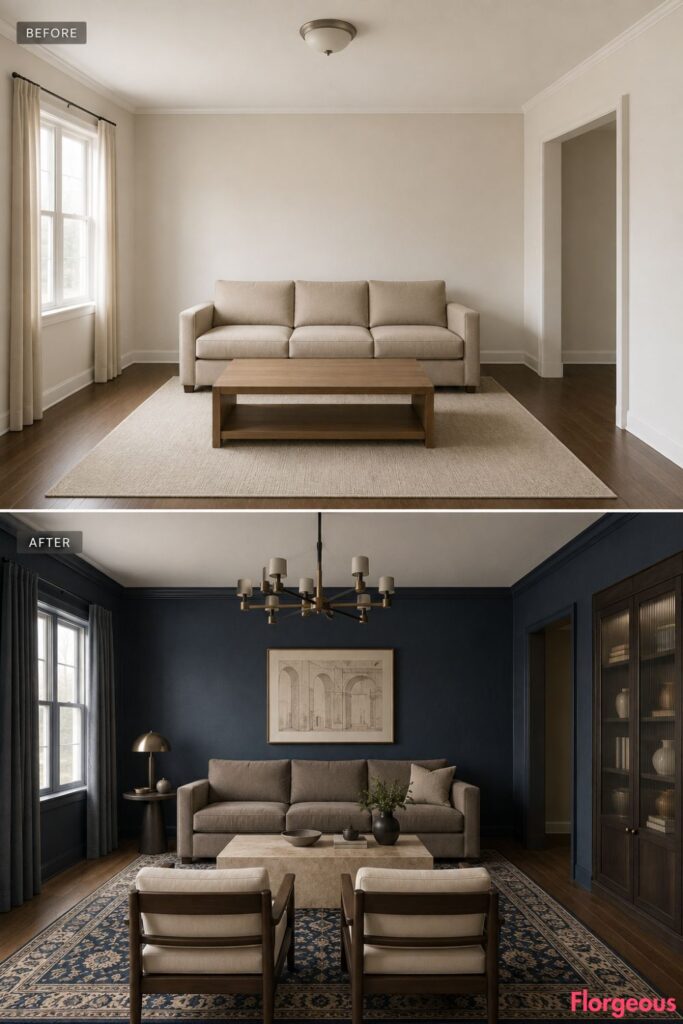
Before: The same off-white builder-grade living room has no strong focal point.
After: Dusty sage walls surround an ivory wool sofa, medium-oak cane chairs with pointed backs, pale travertine table, moss-parchment rug, linen curtains, antique-brass lighting, botanical studies, and a glass-front oak cabinet.
8. Try a Romantic Powder-Blue Gothic Revival Room
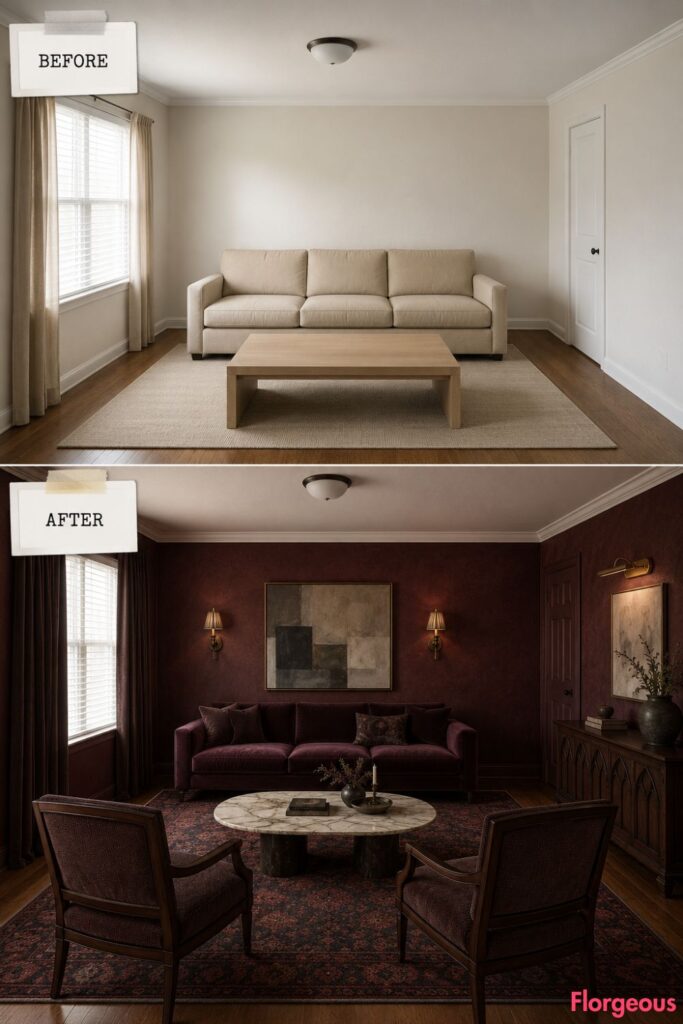
Before: Beige seating and warm off-white walls keep the unchanged room deliberately ordinary.
After: Chalky powder-blue walls brighten a camel linen sofa, cherrywood upholstered chairs, cream marble oval table, faded blue-rust rug, ivory curtains, antique-bronze sconces, small landscape paintings, and a cherrywood console.
9. Pair Mushroom Plaster With Dark Mahogany
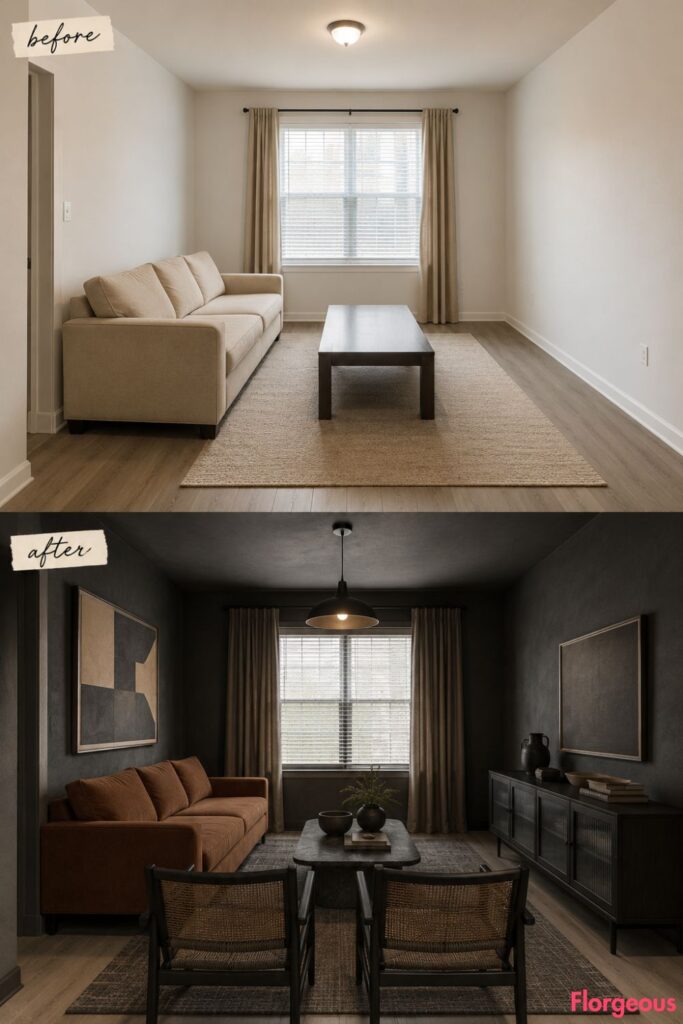
Before: The same beige sofa and basic furnishings create a simple neutral baseline.
After: Soft mushroom plaster makes dark mahogany look richer without making the room gloomy. A muted olive linen sofa, striped wool chairs, dark travertine table, cream-brown rug, flax curtains, opaline sconces, and mahogany media storage complete the scheme.
10. Make Neo-Gothic Graphic With Black and Cream
Before: The unchanged builder-grade room remains soft, beige, and visually anonymous.
After: Warm cream walls contrast with blackened-oak panel details, a charcoal linen sofa, cream canvas chairs, black marble table, graphic ivory-charcoal rug, black curtains, sculptural iron lighting, and slim black storage.
Designer Tip: Use pointed forms as accents. Too many arches can make a contemporary room feel themed.
11. Create a Plum, Bronze, and Walnut Salon
Before: Off-white walls, beige sofa, simple rug, and minimal styling remain unchanged.
After: Smoky plum walls support a rose-brown mohair sofa, curved walnut lounge chairs, bronze oval table, faded plum rug, cocoa curtains, amber-glass chandelier, and antiqued walnut cabinetry.
12. Go Monochrome With Warm Mineral Gray
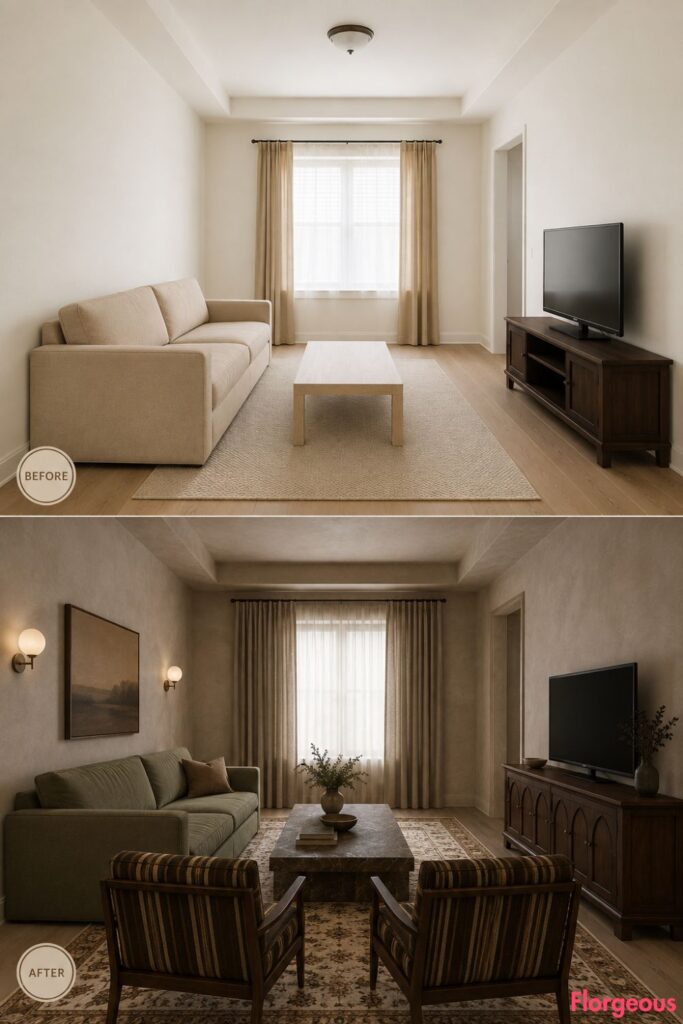
Before: The plain neutral room remains the fixed starting point.
After: Layered stone-gray plaster, a curved graphite sofa, pale-gray wool chairs with ebonized frames, Jura limestone table, charcoal geometric rug, smoky curtains, brushed-steel pendant, and fluted-glass storage create a Gothic room through vertical rhythm rather than ornament.
13. Mix Burnt Rust, Forest Velvet, and Aged Walnut
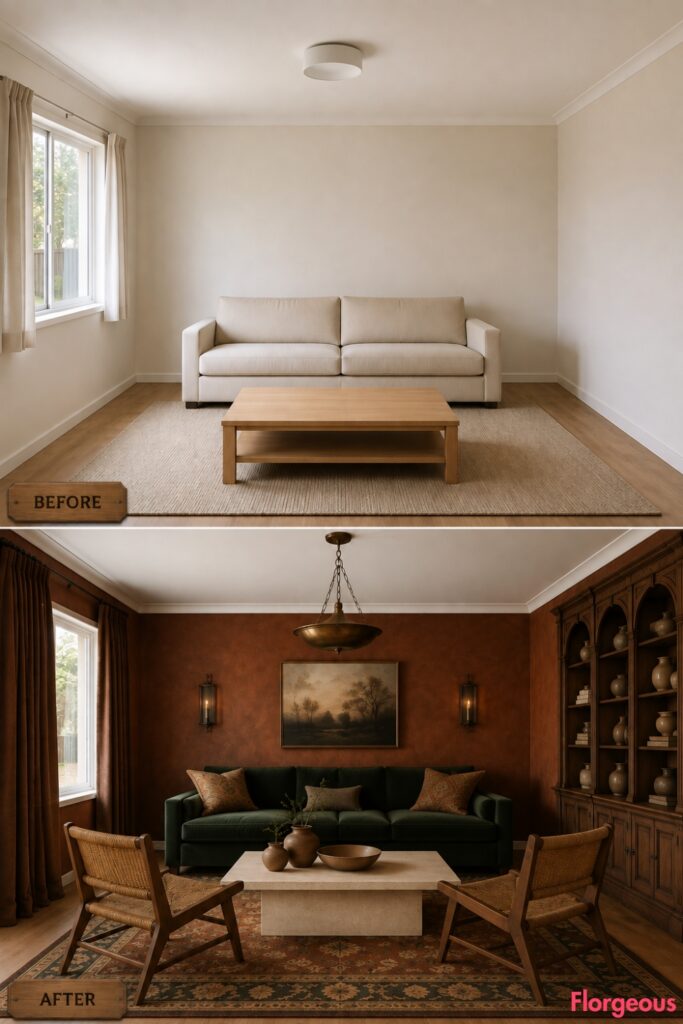
Before: The same light builder-grade room feels clean but characterless.
After: Burnt-rust mineral plaster becomes the backdrop for a forest velvet sofa, aged-walnut rush chairs, cream travertine table, rust-green tapestry-inspired rug, brown curtains, antique-bronze pendant, and carved walnut cabinetry.
14. Make the Room Luminous With Flax and Pale Oak
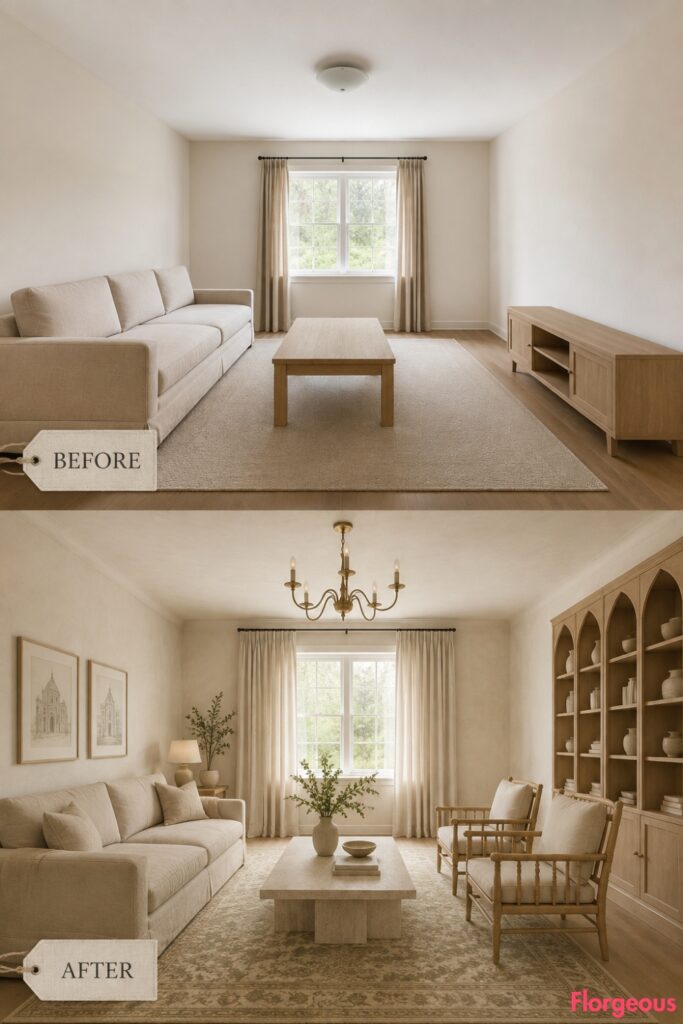
Before: The unchanged room retains basic beige furniture and short curtains.
After: Warm ivory limewash, an oatmeal linen sofa, pale-oak spindle chairs, limestone table, pale olive rug, full flax curtains, delicate aged-brass chandelier, architectural sketches, and pale-oak shelving create a bright Gothic interpretation.
15. Build an Olive and Cognac Collector Room
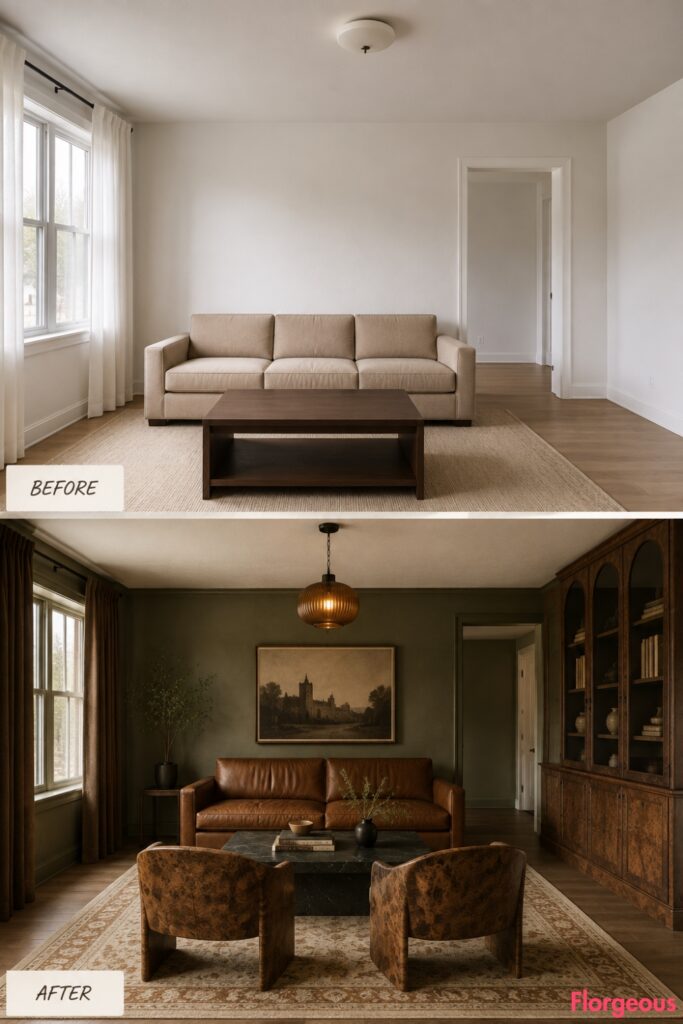
Before: The same off-white, beige, minimally styled space serves as the baseline.
After: Muted olive walls meet a cognac leather sofa, burl-wood lounge chairs, dark stone table, cream-brown rug, tobacco curtains, amber-glass pendant, burl cabinetry, ceramics, and a tightly edited collection of books.
16. Turn the Room Into a Stone-Gray Gothic Gallery
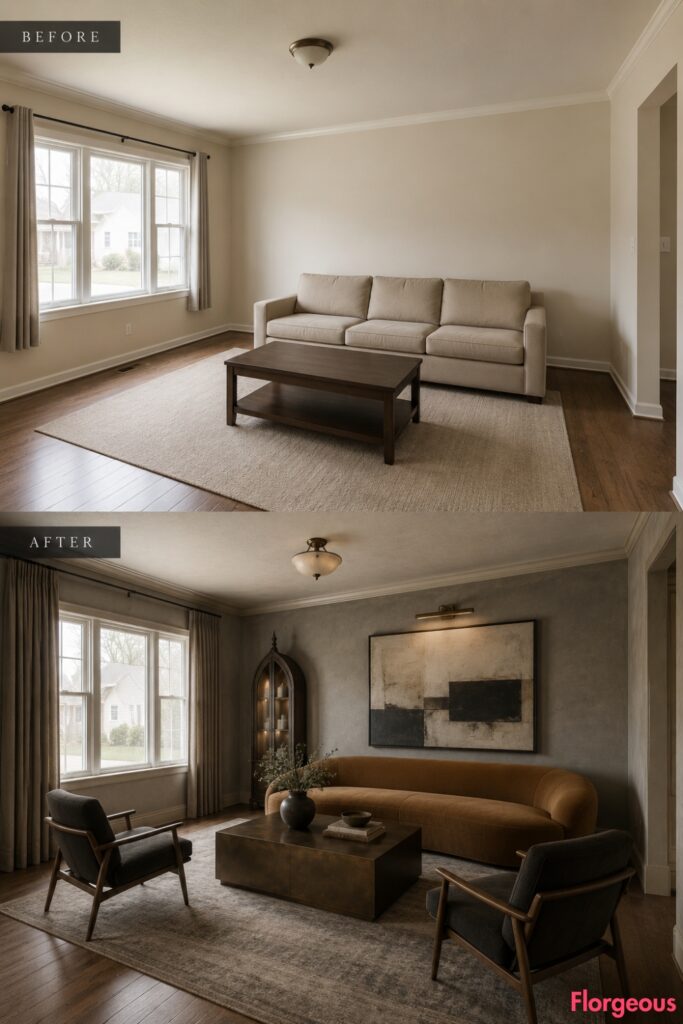
Before: The plain beige sofa and empty walls remain deliberately unremarkable.
After: Stone-gray plaster, a sculptural camel sofa, walnut charcoal-wool chairs, bronze-clad table, warm-gray rug, taupe curtains, oversized abstract art, picture lights, and one tall glass-front display cabinet create a museum-like atmosphere.
17. Make the Look Renter-Friendly and Reversible
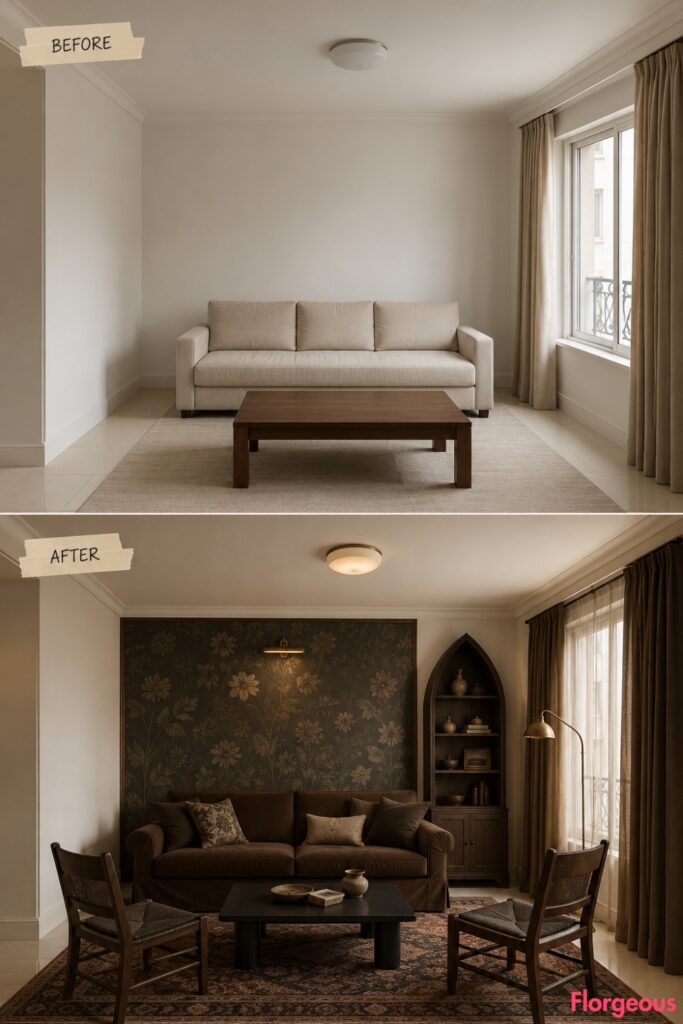
Before: The same builder-grade room starts with no decorative commitment.
After: A removable charcoal botanical wallpaper panel, chocolate slipcovered sofa, secondhand dark-wood chairs, black coffee table, vintage-style rug, full curtains, freestanding arched shelving, plug-in picture light, and aged-brass floor lamp create character without permanent construction.
Budget Version: Begin with the tall mirror or shelving, curtains, and lighting before buying new upholstered furniture.
18. Give a Small Neo-Gothic Living Room More Height
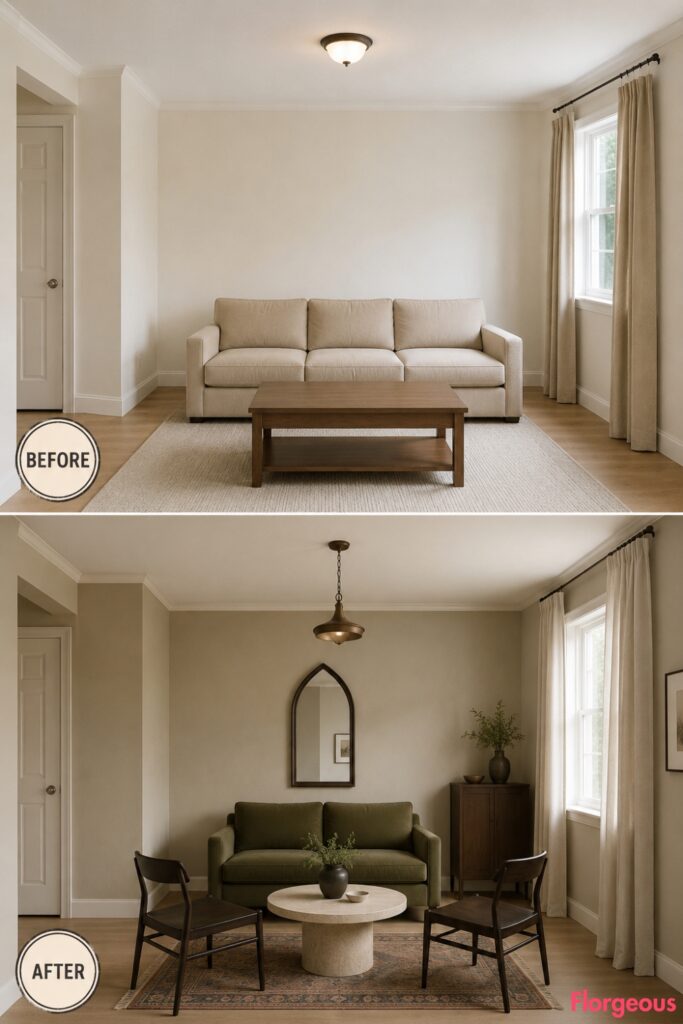
Before: The unchanged room has basic furnishings and an open circulation route.
After: Warm greige walls, a compact moss loveseat, slim dark-oak chairs, small round limestone table, narrow patterned rug, high-hung curtains, one tall lancet-shaped mirror, and shallow closed storage preserve floor space while emphasizing verticality.
Small Space Tip: One tall Gothic-shaped object is more effective than several bulky historic pieces.
19. Design a Family-Friendly Gothic Room With Softer Edges
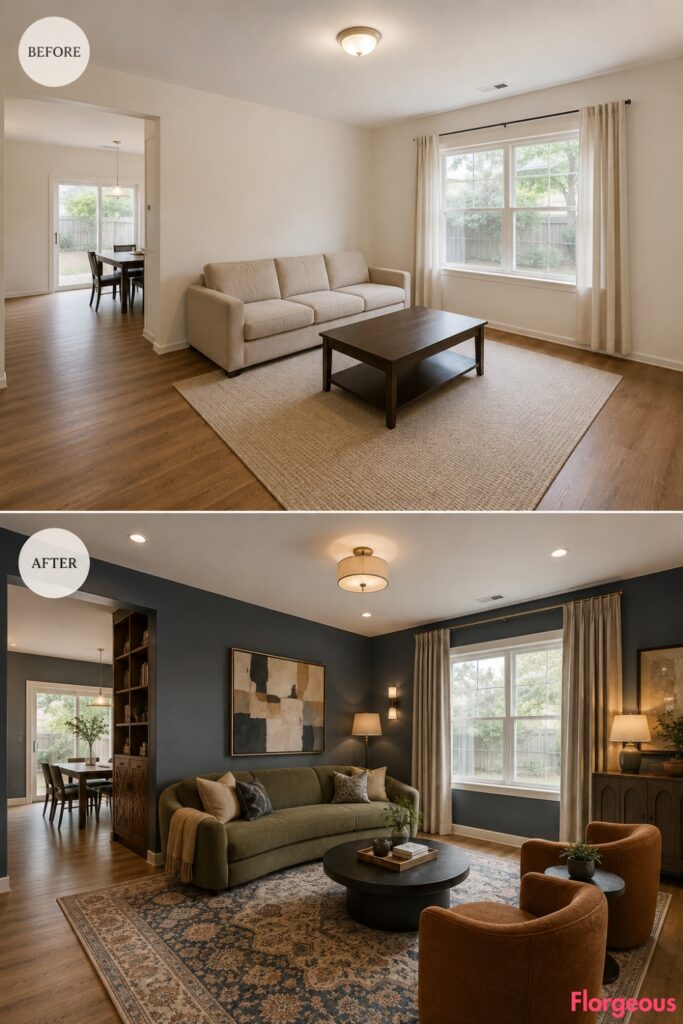
Before: The builder-grade room is plain, beige, and minimally styled.
After: Deep blue-gray washable walls frame a rounded olive performance sofa, cognac performance chairs, rounded dark-stone table, durable patterned rug, lined curtains, closed walnut storage, safe layered lighting, and abstract art.
20. Layer a Vintage-Collected Gothic Revival Interior
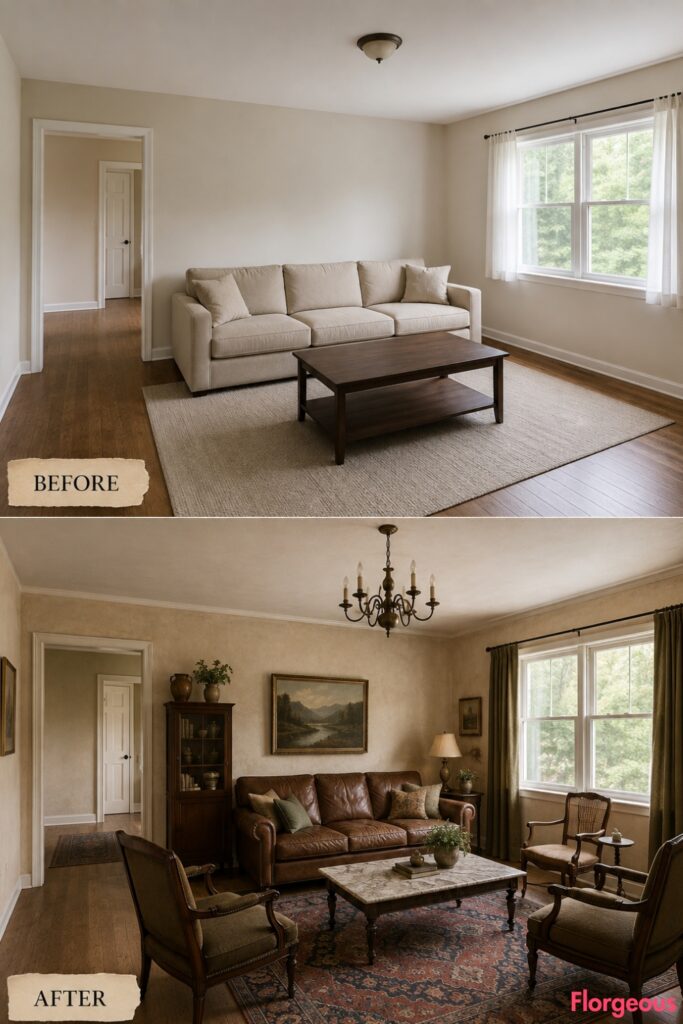
Before: The same blank room offers no historic character.
After: Faded parchment walls anchor a worn tobacco leather sofa, mismatched but coordinated oak and mahogany chairs, veined marble table, antique-style red-blue rug, olive curtains, vintage bronze chandelier, old landscapes, and a repaired glass-front cabinet.
Common Mistake: Collected should still feel edited. Stop before every surface becomes an antique display.
21. Create a Boutique-Hotel Gothic Salon
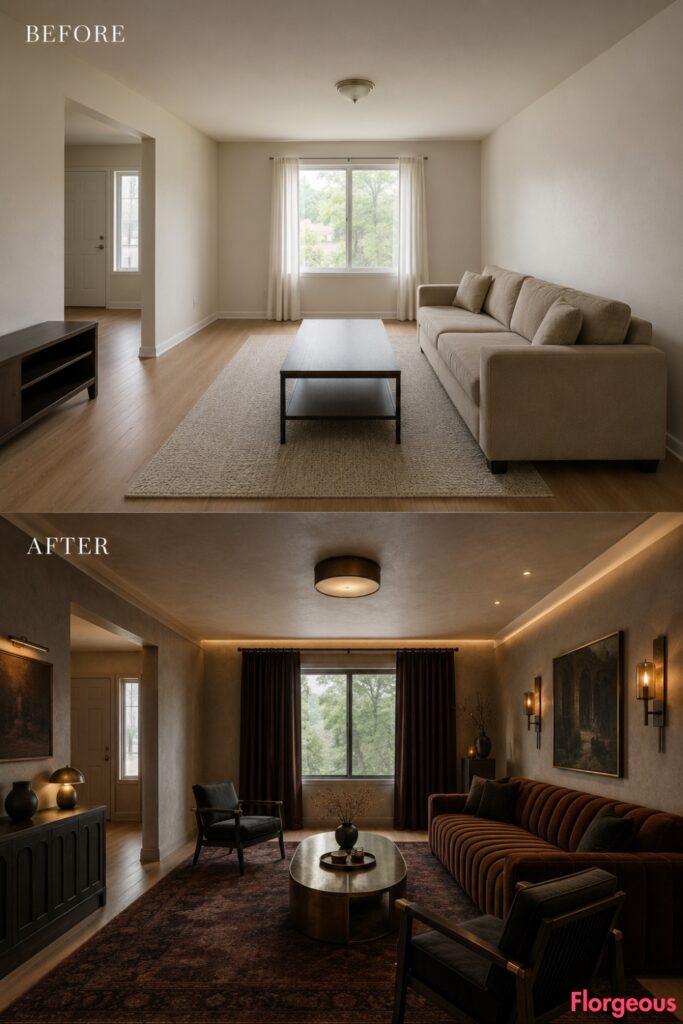
Before: Warm off-white walls and generic furnishings keep the baseline intentionally ordinary.
After: Deep mushroom plaster, a channel-tufted tobacco sofa, dark-ash bronze-detailed chairs, bronze oval table, burgundy-charcoal rug, espresso curtains, amber-glass sconces, layered ceiling lighting, and tailored dark-ash cabinetry create a polished evening mood.
22. Blend Arts and Crafts Warmth With Gothic Detail
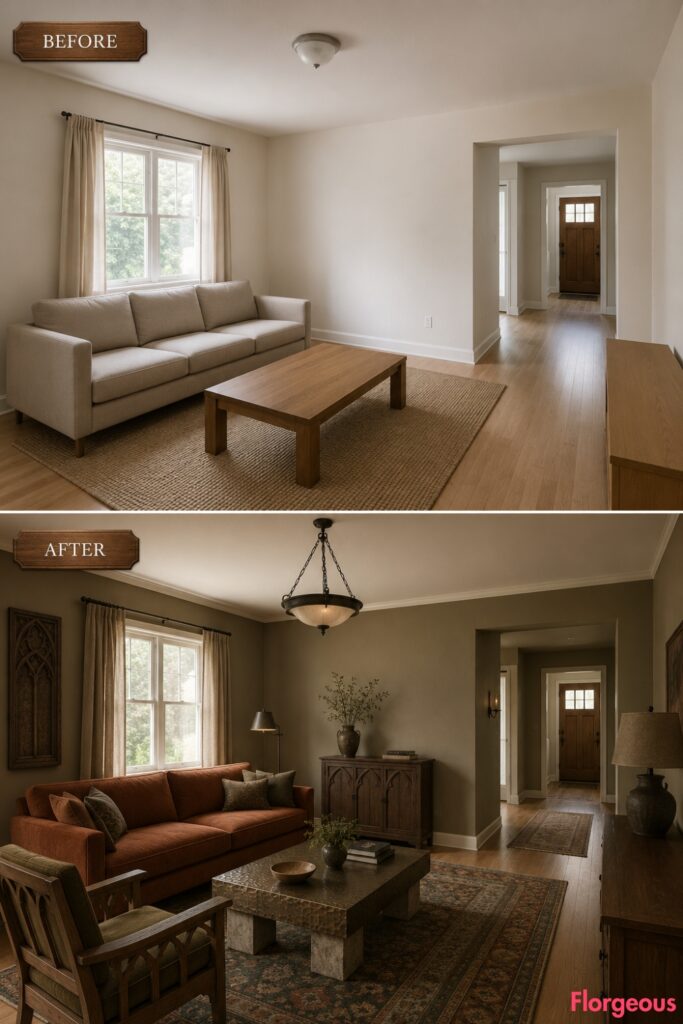
Before: The same beige builder-grade room remains simple and bare.
After: Ochre-olive walls, a russet wool sofa, sturdy quarter-sawn oak chairs, hammered-bronze and stone table, handwoven moss-rust rug, heavy linen curtains, iron pendant, carved timber relief, and oak storage introduce craftsmanship over drama.
23. Refine Blue-Gray With Walnut and Parchment
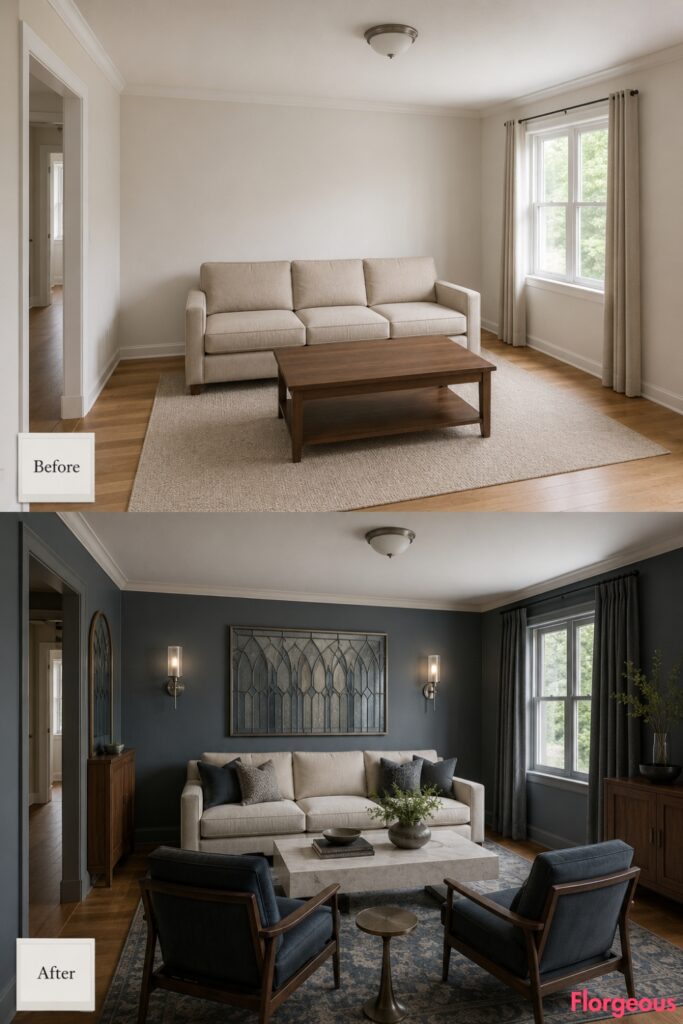
Before: The same off-white room retains its beige sofa and basic lighting.
After: Smoky blue-gray walls, a parchment wool sofa, walnut upholstered chairs, pale stone table, blue-taupe rug, slate curtains, antique-nickel sconces, geometric leadlight-inspired glazing, and walnut storage produce a sophisticated apartment-friendly interpretation.
24. Push Neo-Gothic Into a Sculptural Contemporary Direction
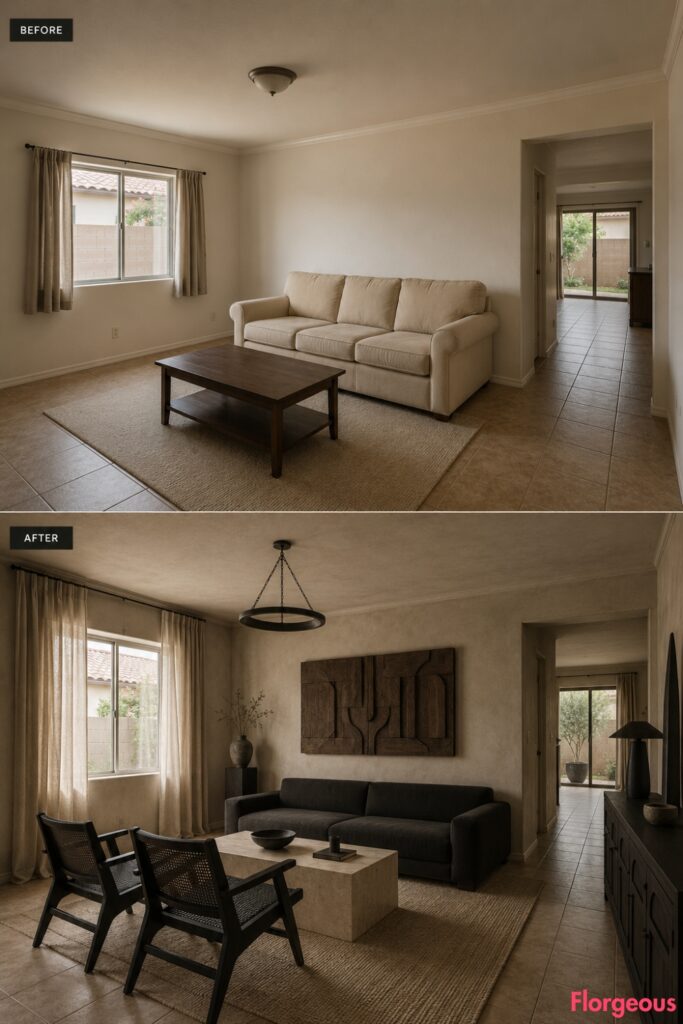
Before: The unchanged room is rectangular, neutral, and visually flat.
After: Pale cementitious walls support a low charcoal sofa, sculptural blackened-oak chairs, monolithic limestone table, undyed wool rug, flax curtains, simple iron pendant, carved timber relief, and a long dark-oak storage unit with abstract pointed geometry.
25. Finish With a Dramatic Architectural Gothic Salon
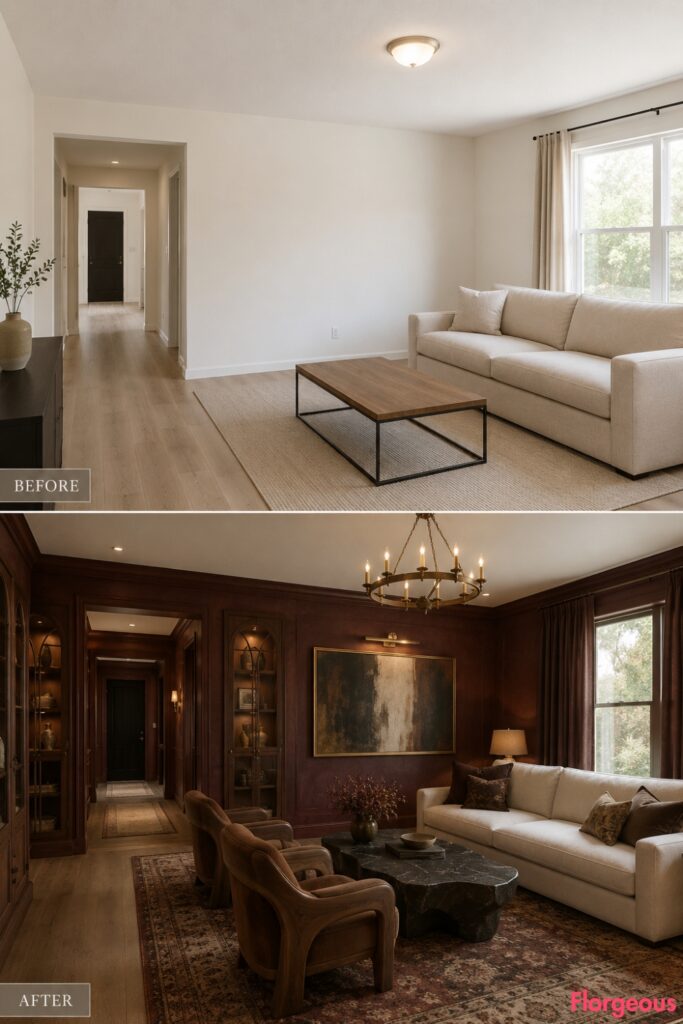
Before: The final concept still begins with the exact same plain off-white room, beige sofa, basic table, neutral rug, short curtains, and simple ceiling light.
After: Deep burgundy mineral walls frame an ivory linen sofa, sculptural walnut tobacco-wool chairs, irregular dark limestone table, moss-burgundy rug, chocolate curtains, aged-gold chandelier, tall tracery-inspired antiqued-glass cabinetry, and monumental abstract artwork.
The contrast is dramatic, but contemporary seating and an uncluttered layout keep the room residential.
How to Choose the Right Neo-Gothic Direction for Your Living Room
The easiest way to make this style feel livable is to choose a few strong ideas rather than copying every Gothic reference at once. Start with your room’s natural light and decide whether it wants a pale stone palette, a mid-tone historic color, or a richer evening mood.
Then choose one vertical or architectural gesture, perhaps a pointed mirror, tall cabinet, elongated paneling, tracery-inspired doors, or high-hung curtains. Finish with one material that gives the room weight, such as walnut, limestone, bronze, velvet, decorative glass, or aged oak.
For a convincing Neo-Gothic Living Room, the goal is not to make a modern home look centuries old. It is to borrow the craftsmanship, silhouettes, material richness, and architectural rhythm that made Gothic Revival interiors memorable, then edit them for the way you actually live.
Before buying anything, identify the transformation above that best matches your existing light, room size, and furniture. Recreate its color story first, add one architectural focal point second, then layer the richer materials slowly. That sequence makes it much easier to stop before the room becomes overly themed.