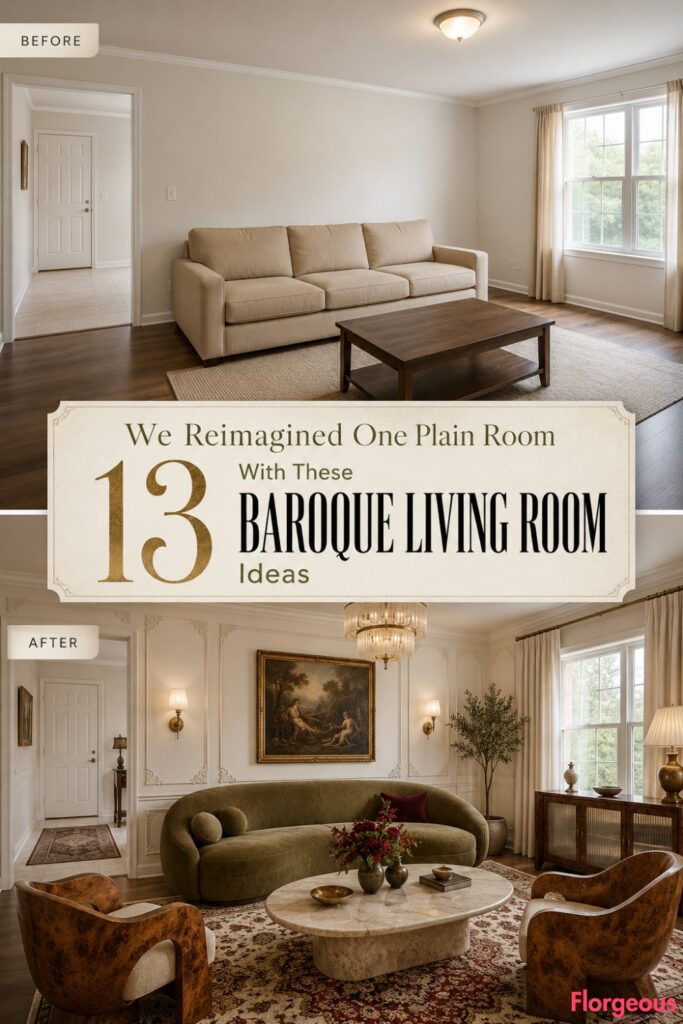
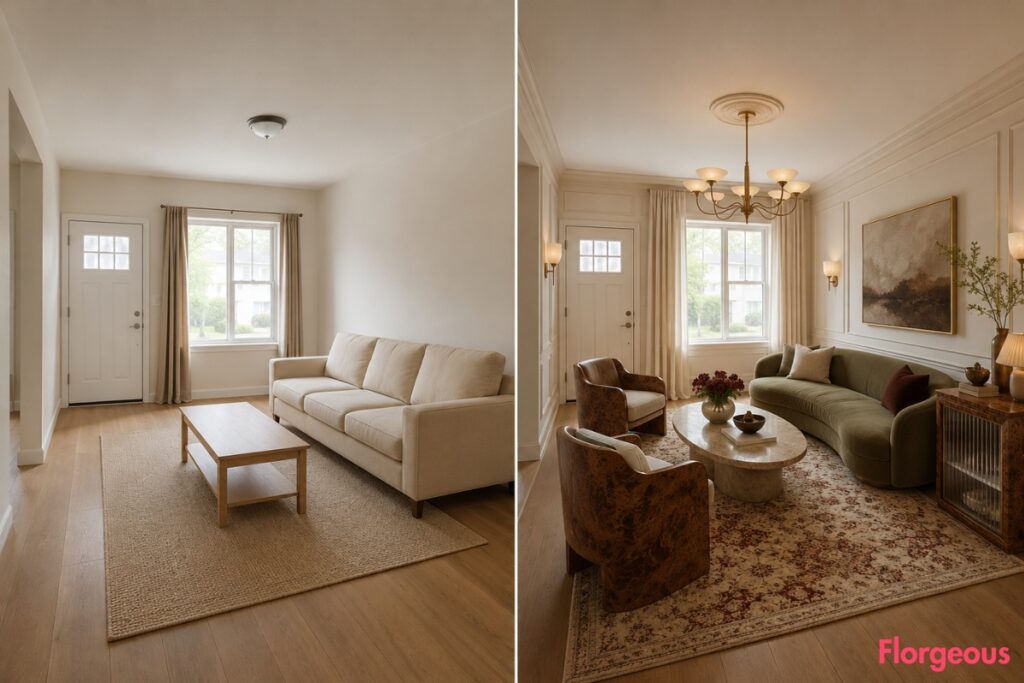
A plain builder-grade living room can feel almost anonymous. Beige sofa, empty walls, short curtains, flat lighting, and basic furniture give you very little personality, but they also create an unusually useful blank canvas.
For these makeovers, that starting point never changes. The doorway, window, flooring, architecture, furniture scale, circulation route, and camera angle remain identical in every image. Only the AFTER design changes.
These 13 Baroque Living Room ideas show just how varied the style can be. One room becomes a luminous Parisian salon, another turns dark and scholarly, while others explore Mediterranean warmth, graphic monochrome, renter-friendly decorating, contemporary sculptural luxury, and more.
The aim is not to reproduce thirteen versions of a gilded palace. Every transformation uses a different interpretation of Baroque curves, ornament, craftsmanship, dramatic lighting, rich materials, and architectural presence.
1. Turn the Plain Room Into a Luminous Parisian Baroque Salon
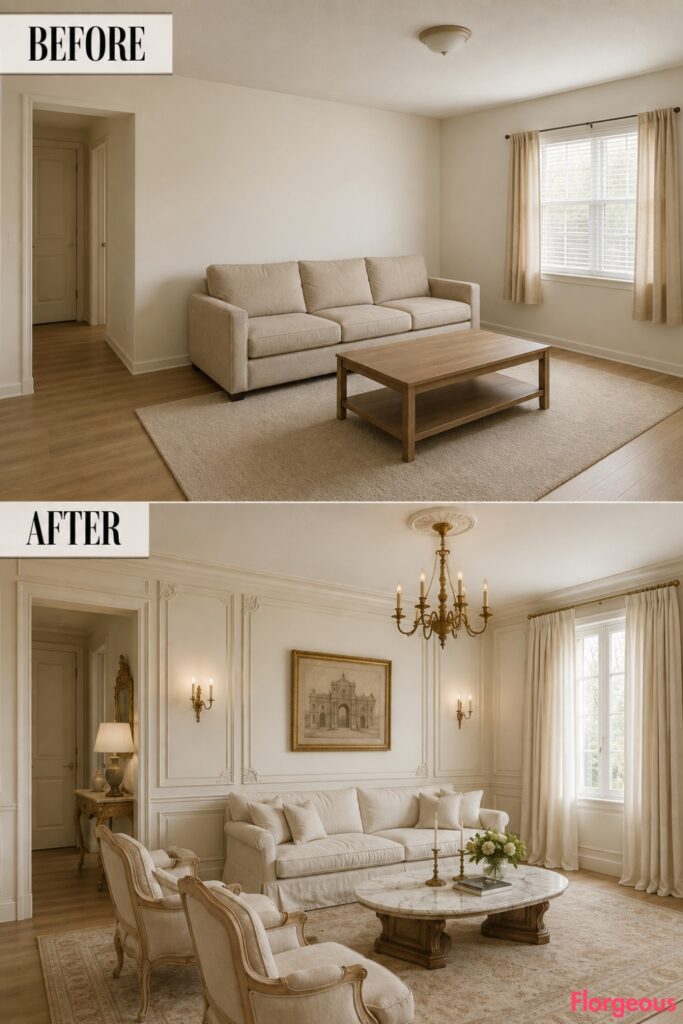
The first makeover keeps the room light and elegant. Chalky ivory walls gain slim applied moldings, while an oyster linen sofa and pale walnut bergère-inspired chairs soften the formality.
A veined marble table, faded parchment rug, full ivory curtains, and an aged-brass chandelier add refinement without making the room feel overly ceremonial.
Before: Warm off-white walls, beige sofa, basic coffee table, neutral rug, short curtains, empty walls, and a simple ceiling fixture.
After: A graceful cream-on-cream salon where molding and furniture silhouettes provide the ornament.
Designer Tip: If custom paneling is out of budget, inexpensive applied molding painted the exact wall color can create a remarkably convincing architectural effect.
2. Give the Same Room a Moody Venetian Evening Mood
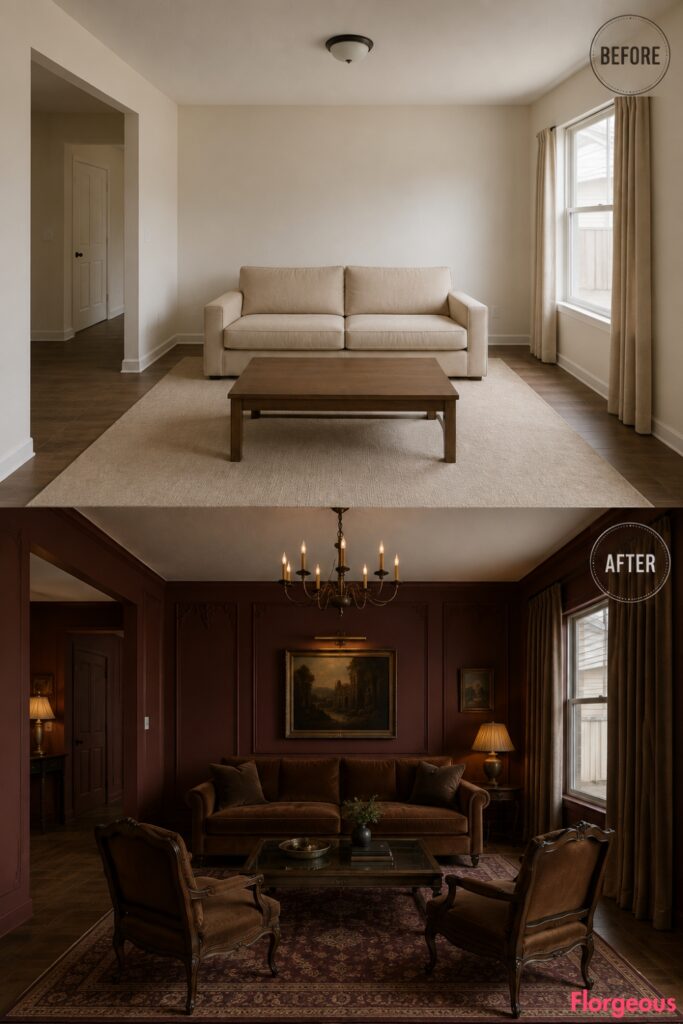
Now take the room in the opposite direction.
Oxblood mineral walls, a tobacco velvet sofa, dark walnut chairs, smoked glass, and deep plum textiles create a shadowy Venetian-inspired interior. Rather than filling the space with gilding, use bronze and amber light to create drama.
The richness comes from darkness, sheen, and texture.
Color Story: Oxblood, plum, tobacco, walnut, and aged bronze create a layered palette that feels historic without becoming theatrical.
3. Build a Scholarly Baroque Library Around Olive and Leather
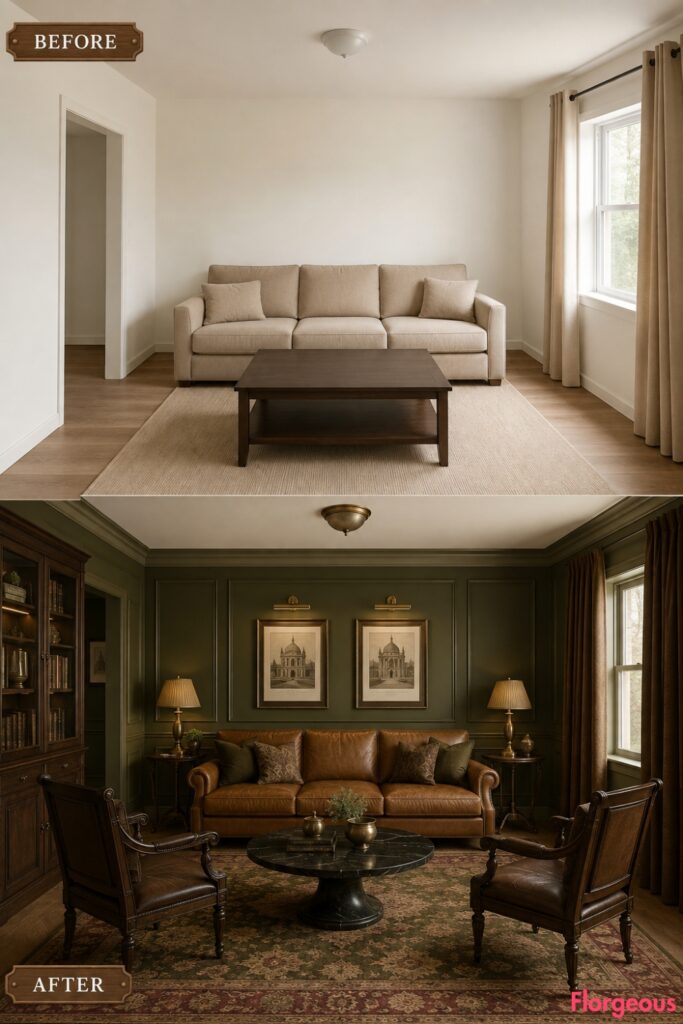
A scholarly version of Baroque feels particularly comfortable in a living room.
Deep olive paneled walls provide the background for a camel leather sofa, carved walnut library chairs, a black marble pedestal table, faded claret rug, and glass-front book storage.
Shaded lamps replace sparkling chandeliers, giving the room the atmosphere of an old European study.
Why it works: The historic character comes from timber, books, leather, symmetry, and warm lighting rather than excessive ornament.
4. Create a Graphic Black-and-Ivory Baroque Interior
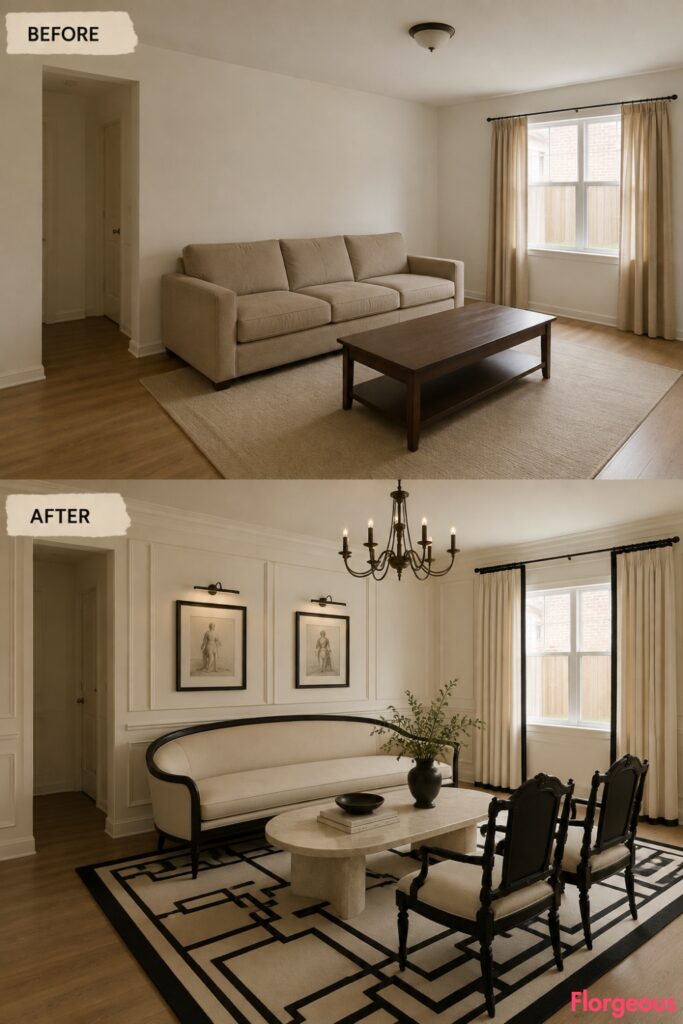
For a sharper interpretation, remove almost all traditional Baroque color.
Use ivory molding against black and cream furniture: an ebonized curved sofa, black lacquer carved chairs, a pale quartzite table, graphic wool rug, ivory curtains edged in black, and dark bronze lighting.
Curves become much easier to notice when the palette is this controlled.
Common Mistake: Do not compensate for the limited palette by adding too many decorative objects. The furniture outlines and molding should remain visually clear.
5. Explore a Powdery Rococo-Influenced Pastel Salon
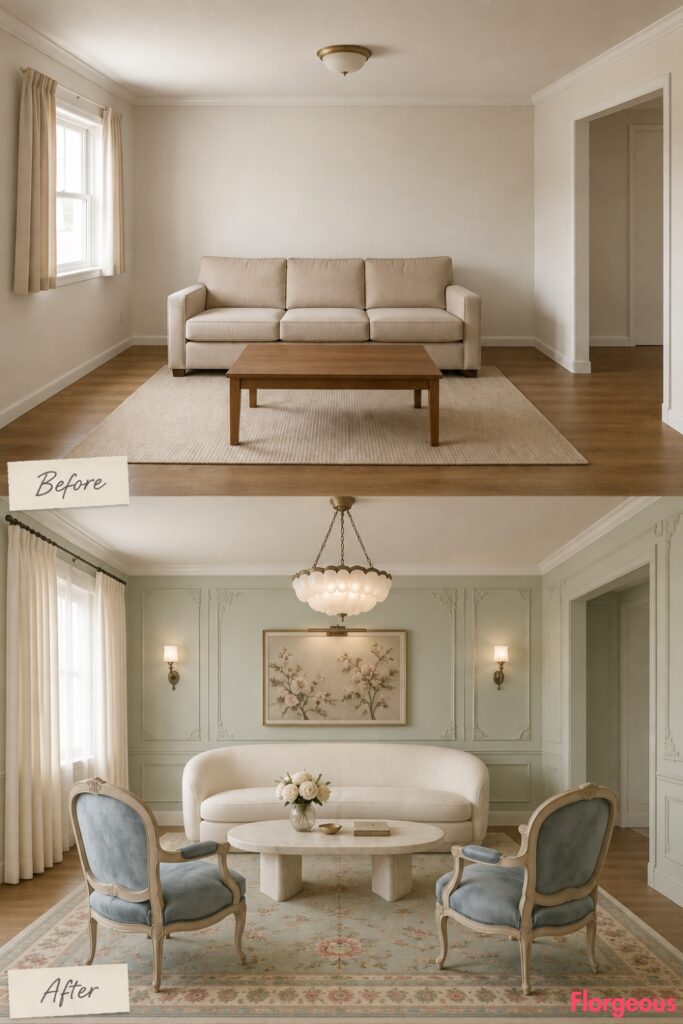
This version brings a lighter, more playful branch of historic ornament into the same room.
Pale celadon walls, creamy upholstery, carved pale-ash chairs in dusty blue fabric, and a softly veined light stone table keep everything airy. Delicate rose and celadon notes appear through the rug rather than covering every surface with florals.
Opaline lighting completes the softer atmosphere.
Try this: If pastel furniture feels risky, keep the sofa neutral and introduce color through two smaller chairs and a rug.
6. Make Sculptural Plasterwork the Main Event
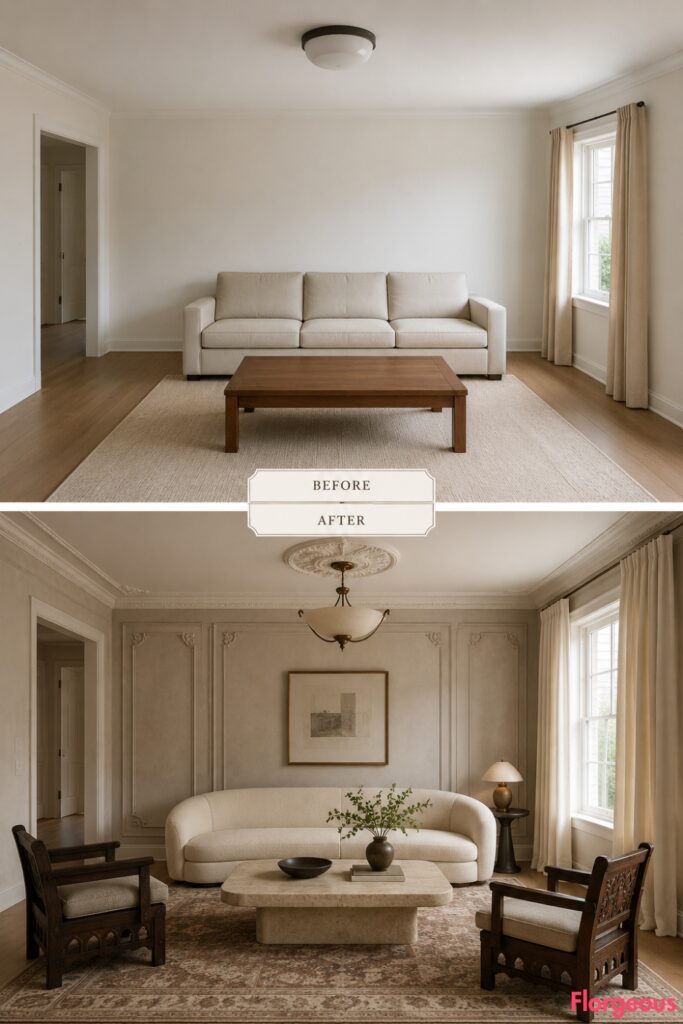
This makeover proves that Baroque character does not have to come from decorative furniture.
Warm mushroom plaster covers the walls, but the real focal point is a series of sculptural applied frames, shallow reliefs, and a decorative ceiling medallion.
A simple curved cream sofa, dark oak chairs, limestone table, and restrained textiles prevent the architectural treatment from competing with too many furnishings.
7. Warm the Room With Mediterranean Baroque Character
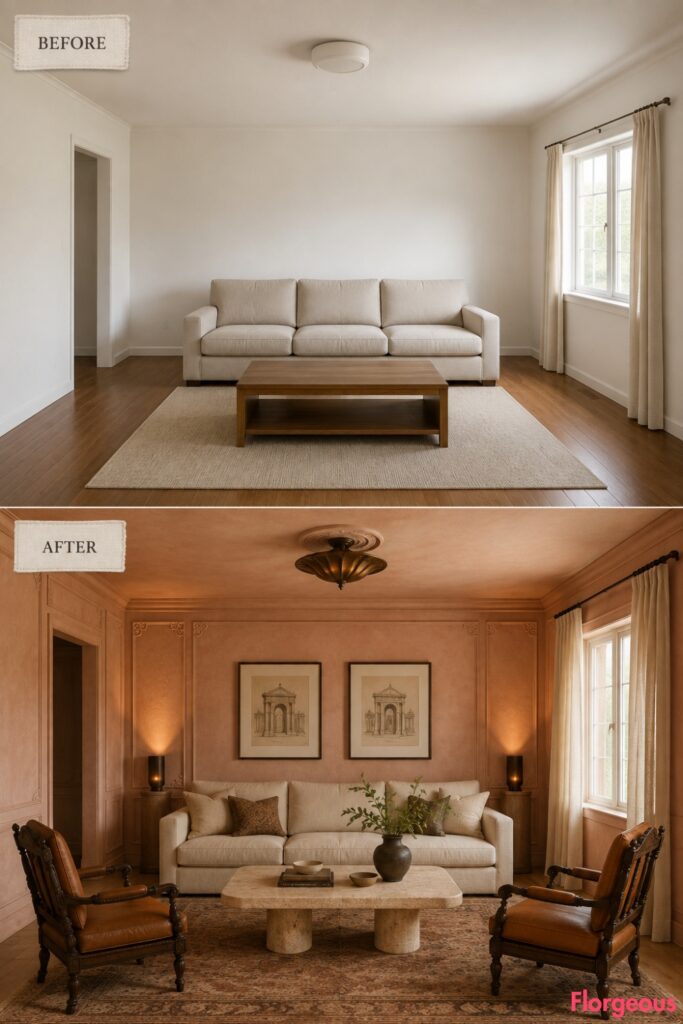
For a sun-washed direction, shift away from ivory and jewel tones.
Pale terracotta plaster gives the room a warm southern European backdrop. Pair it with an oat linen sofa, dark walnut carved leather chairs, a travertine pedestal table, faded tobacco rug, bronze uplights, and architectural drawings.
The room still feels historic, but far more relaxed.
8. Turn the Room Into an Art Collector’s Baroque Gallery
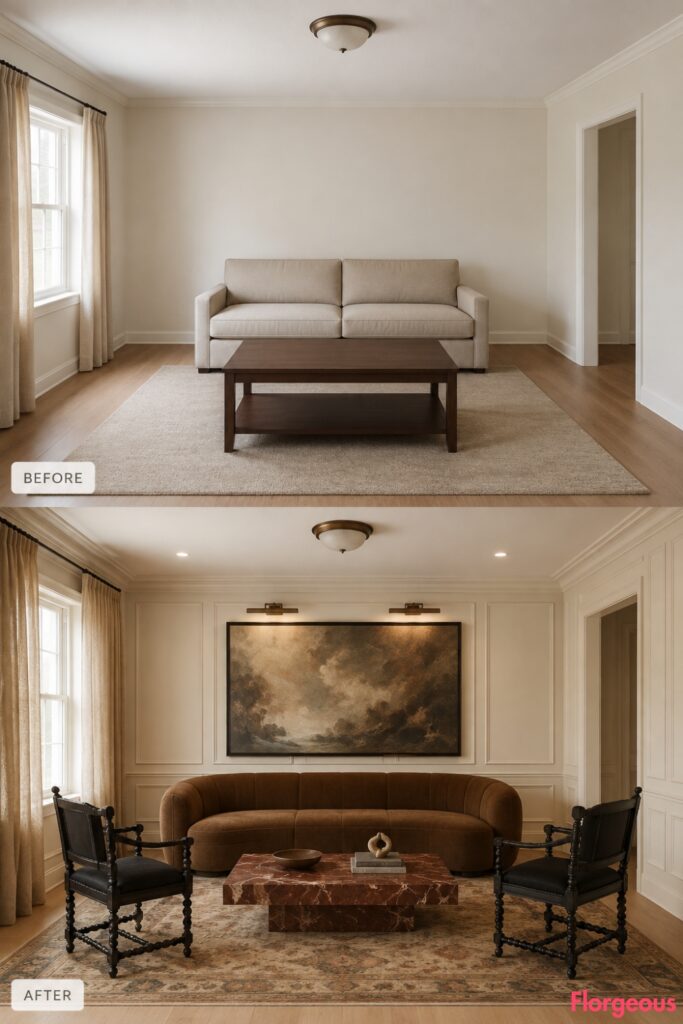
Instead of an ornate mirror or dramatic wallpaper, make oversized artwork the focal point.
Warm cream paneled walls provide a gallery-like background for a sculptural tobacco sofa, carved blackwood chairs, red-brown marble table, and large classical-inspired abstract compositions.
Directional picture lighting gives the room almost museum-like focus, while comfortable seating keeps it unmistakably residential.
Style Note: Let one or two large artworks dominate. Rows of small ornate frames would make this concept feel too similar to a traditional gallery wall.
9. Create an Intimate Boutique-Hotel Baroque Lounge
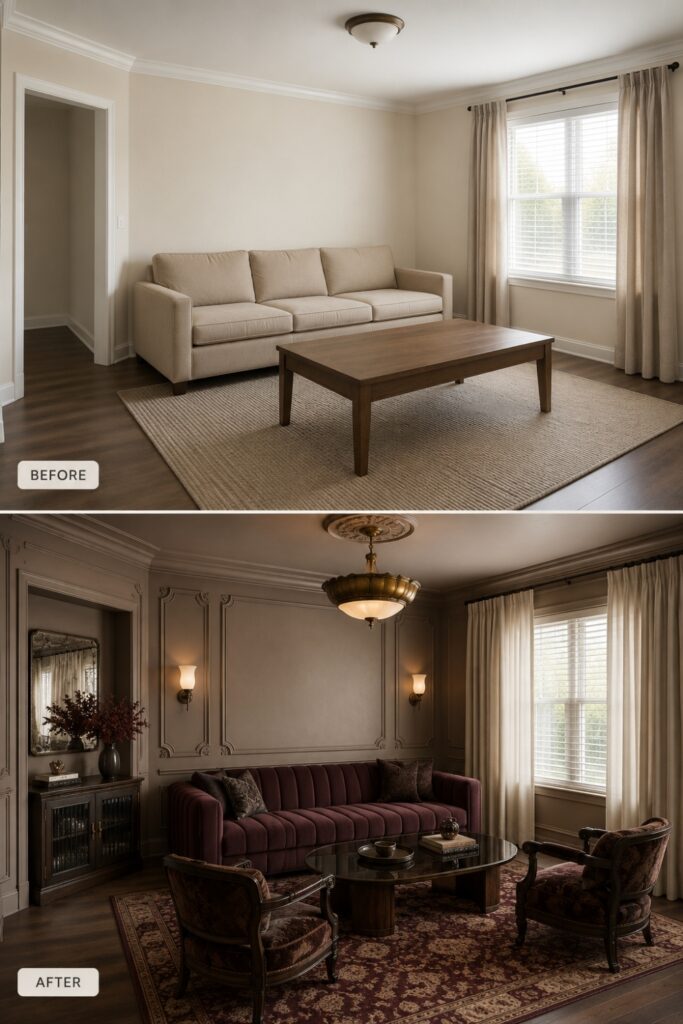
Here, Baroque style becomes glamorous rather than explicitly historic.
Mushroom walls form the backdrop for a channel-tufted plum sofa, espresso carved lounge chairs, smoked-glass walnut table, burgundy-camel rug, full-height parchment curtains, opaline sconces, and a fluted-glass console.
Smoked reflective surfaces replace the obvious gilded mirror.
Why it works: Layered lighting and luxurious upholstery make the room feel indulgent while modern glass and streamlined storage prevent it from becoming a period set.
10. Make Baroque Work in a Compact Living Room
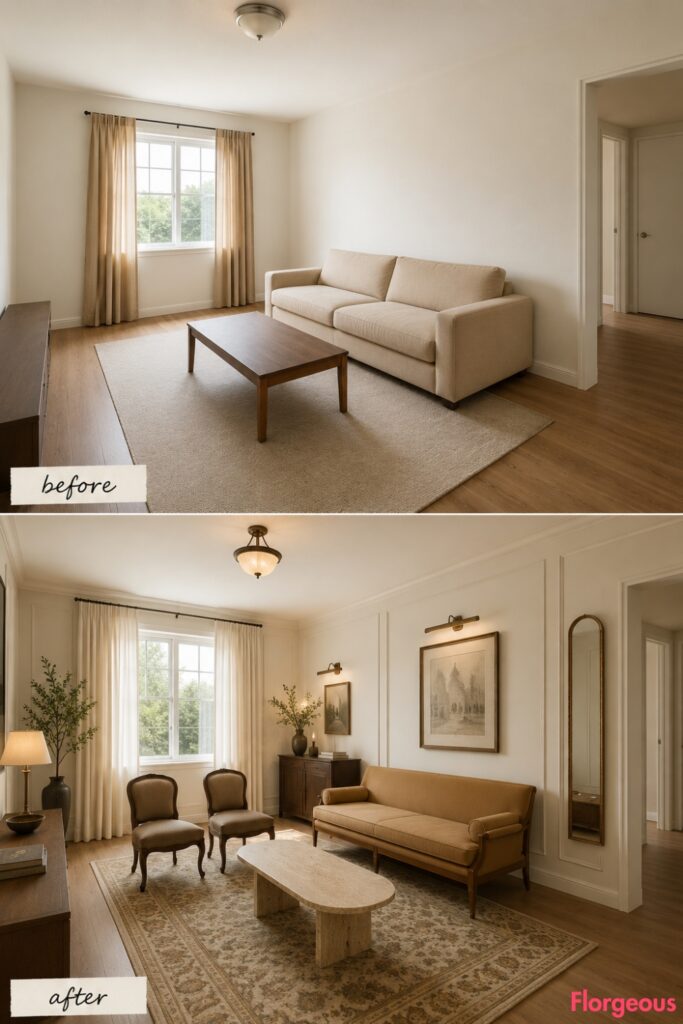
Small rooms do not need miniature decor. They need better proportions.
Use a slim camel settee rather than a bulky sofa, two compact walnut slipper chairs, a narrow oval travertine table, shallow wall molding, and tall curtains.
A vertical antiqued mirror emphasizes height while shallow storage keeps the floor clear.
Small Space Tip: Look for carved furniture with exposed legs. Seeing more floor underneath each piece makes the room feel less crowded.
11. Create a Completely Reversible Renter-Friendly Version
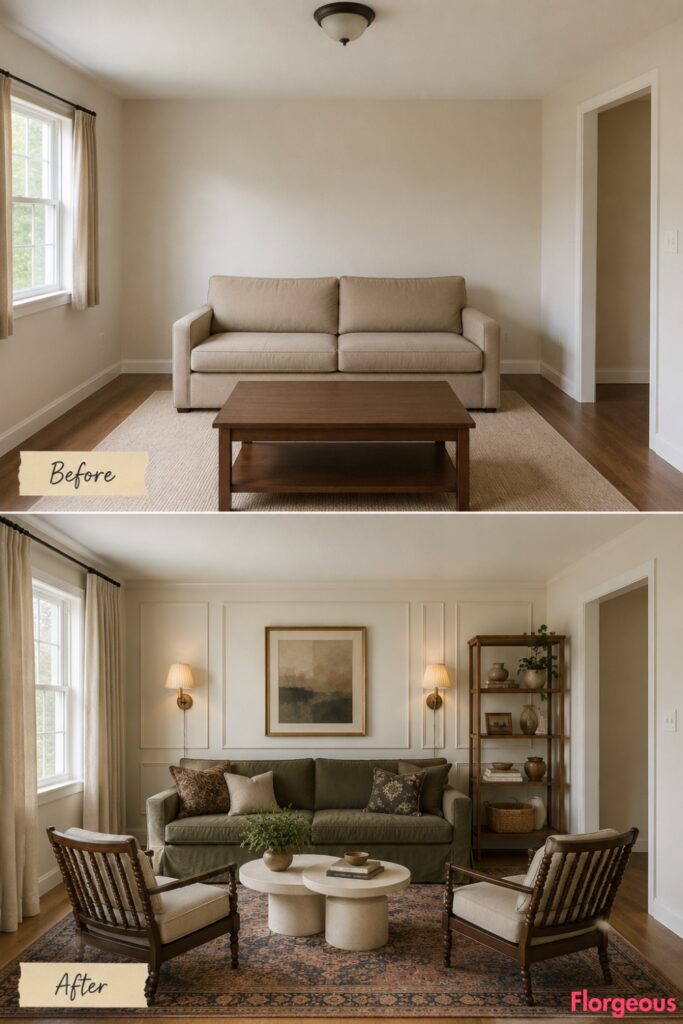
This room gets its Baroque identity without changing permanent architecture.
Use removable ivory molding or trim, a freestanding dramatic mirror, plug-in antique-brass sconces, ready-made curtains, freestanding walnut storage, a faded rust-indigo rug, and carved-look furniture.
A slipcovered olive sofa keeps the investment practical.
Budget Version: Start with the rug, mirror, lighting, and curtains. Those four changes can shift the mood before you add any removable molding.
12. Give the Room a Vintage-Collected European Character
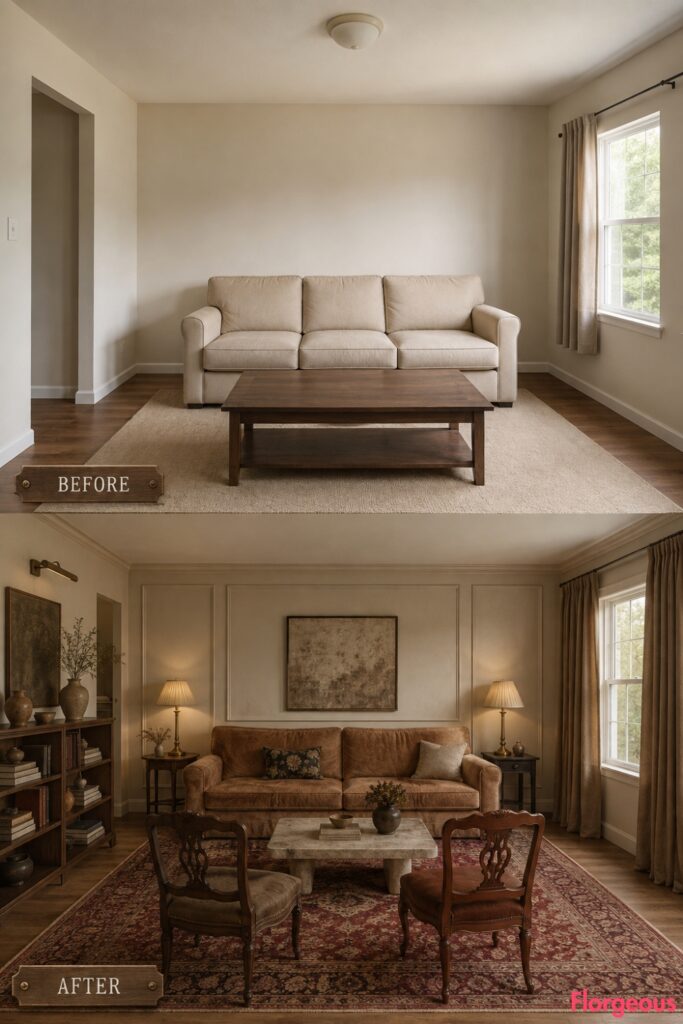
Instead of designing a perfectly matched room, let this version feel as though it developed over decades.
A worn camel sofa sits with two related but deliberately different carved chairs, one walnut and one mahogany. An aged stone table, faded wine rug, mushroom curtains, shallow shelving, ceramics, and shaded brass lamps reinforce the collected quality.
Small inconsistencies make the result more believable.
13. Finish With a Contemporary Luxury Baroque Living Room
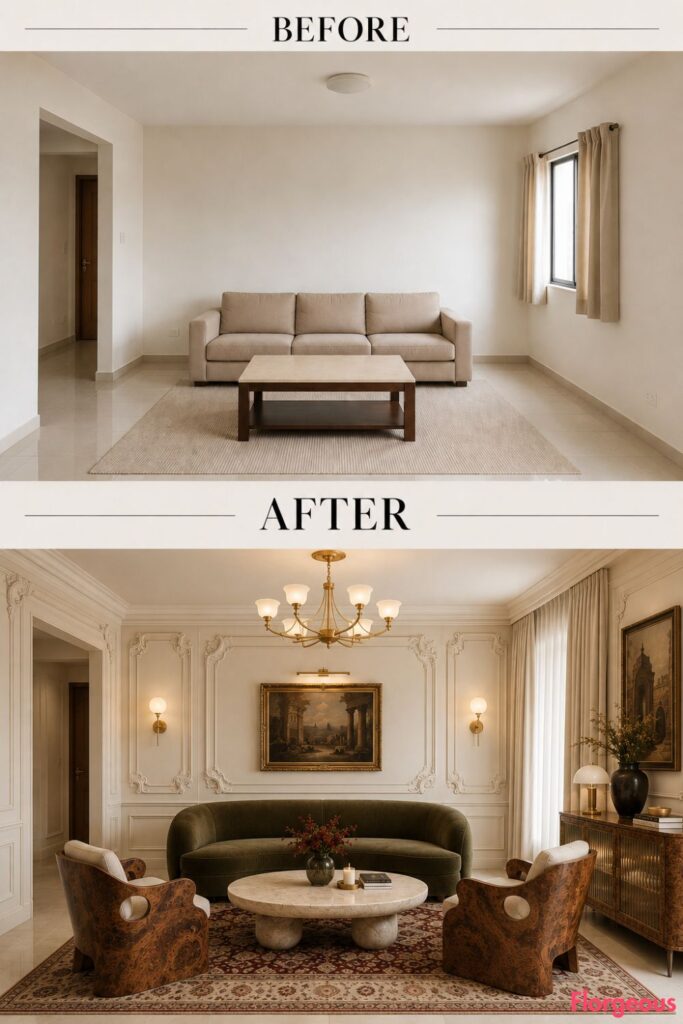
The final transformation combines old-world architectural language with distinctly contemporary furniture.
Mineral ivory walls receive broad sculptural molding rather than delicate traditional trim. A curved olive mohair sofa is paired with burl-wood lounge chairs, honed quartzite, a parchment-claret rug, fluted glass, full-height curtains, and pale-gold architectural lighting.
It feels unmistakably luxurious, but nothing looks like a reproduction palace interior.
Designer Tip: If you are mixing historical and contemporary pieces, repeat one shape between them. Here, curved molding, the rounded sofa, oval table, and chair backs create visual continuity.
Choosing the Right Baroque Direction for Your Own Living Room
The strongest Baroque-inspired rooms do not try to make every object decorative. Instead, they decide where the drama belongs.
If your living room has flat builder-grade walls, start with molding or a dramatic paint treatment. If the architecture is already interesting, focus on a curved sofa, carved chair, expressive rug, stone table, or unusual lighting fixture. Renters can achieve much of the same effect through curtains, mirrors, rugs, plug-in lighting, and freestanding furniture.
Also consider how much contrast suits your home. Pale Parisian and pastel interpretations work beautifully where daylight is abundant. Olive, oxblood, tobacco, and plum create more intimate rooms. Monochrome schemes are useful if you love Baroque silhouettes but prefer contemporary interiors.
A convincing Baroque Living Room ultimately balances ornament with empty space, historic references with modern comfort, and dramatic focal points with practical circulation. Pick one dominant feature first, then let the rest of the room support it rather than compete with it.