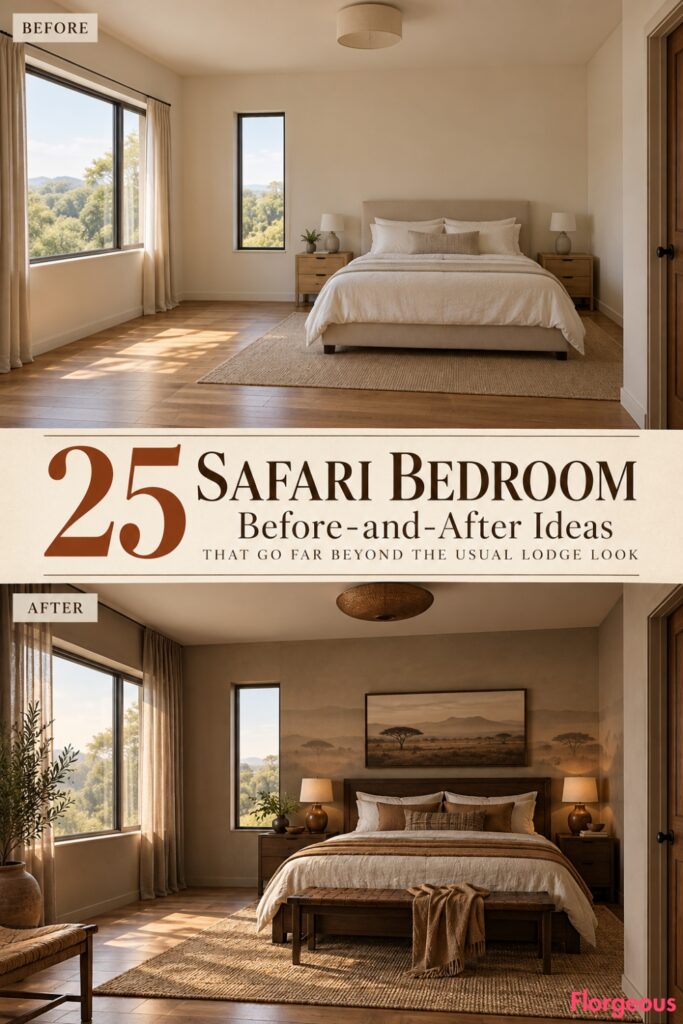
A bright bedroom can still feel unfinished when the furniture is generic, the walls are blank, and every surface plays it safe.
These Safari Bedroom transformations take a more refined path. Instead of trophies, costume-like props, or excessive animal print, they use savanna color, botanical references, handworked clay, linen, dark timber, natural fibers, landscape-inspired pattern, and thoughtful lighting.
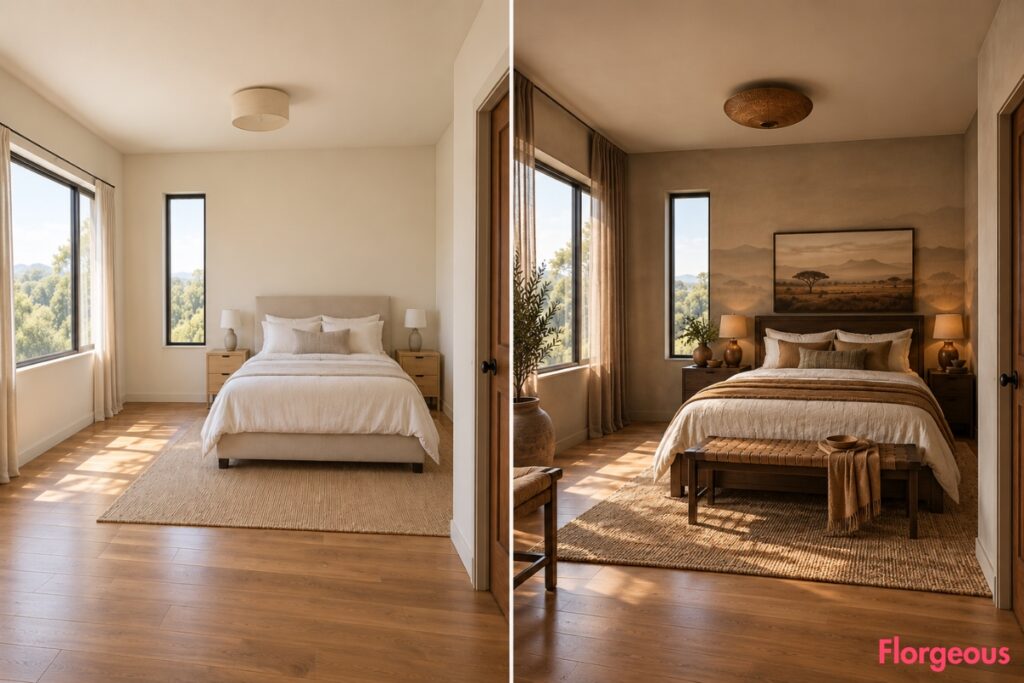
Every makeover begins with the same locked bedroom: a wide rectangular room with one large window on the left wall, one tall narrow window on the far wall slightly left of center, a front-right entry, flat ceiling, warm oak flooring, warm off-white walls, a basic neutral upholstered bed on the right side of the far wall, cream bedding, two bare light-wood nightstands, short plain curtains, and a simple ceiling light.
Only the camera angle and AFTER design direction change from section to section. Within each individual before-and-after pair, the architecture, camera, perspective, lens, framing, windows, door, ceiling, floor footprint, and daylight direction remain identical.
1. Turn the Entire Bed Wall Into an Indigo Botanical Study
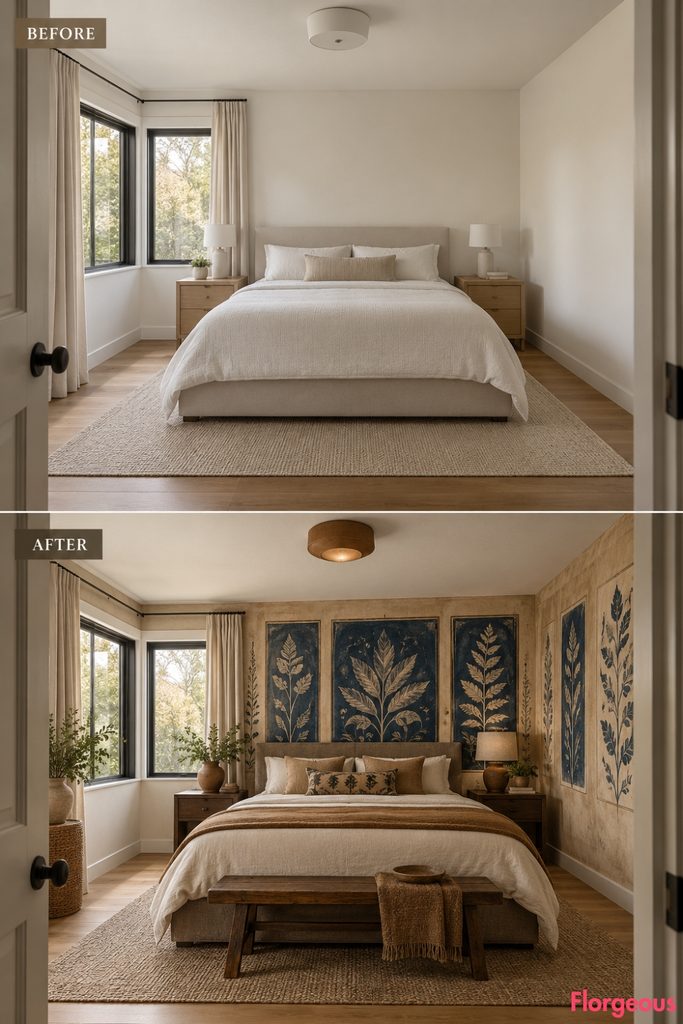
Before: The locked plain bedroom feels bright but visually empty, with generic furniture and a completely undecorated far wall.
After: Treat the entire far wall as one coordinated botanical composition. Finish it in a softly chalked parchment tone, then arrange three oversized indigo cyanotype-style botanical panels across the broad wall zone around the bed, with smaller narrow botanical fragments extending visually toward the narrow far-wall window. Dark timber, parchment linen, tawny wool, and matte clay lamps keep the room grounded.
Why it works: The wall reads as one intentional field rather than three isolated pictures.
Designer Tip: Keep spacing generous and align all artwork edges so the composition feels architectural.
2. Wash the Whole Bed Wall With Acacia-Like Shadows
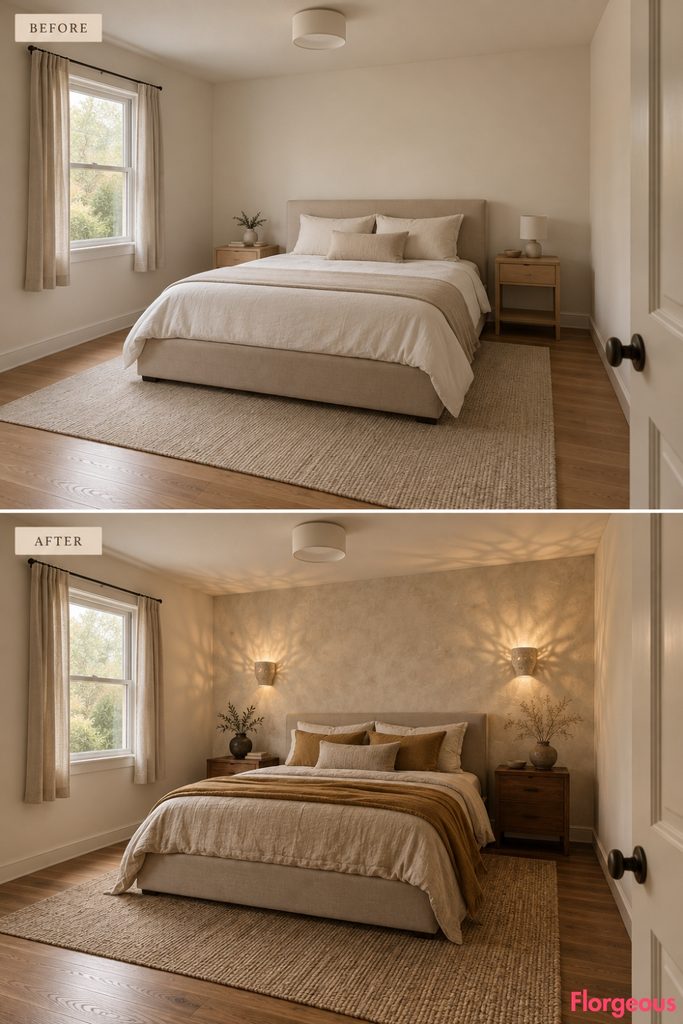
Before: The same plain bedroom has flat walls and a basic central ceiling light.
After: Finish the full far wall in pale limestone mineral paint rather than leaving surrounding areas untreated. Two hand-formed clay sconces cast restrained branching shadows that spread widely across the whole bed wall, creating a changing acacia-like canopy effect. Flax bedding, ochre cushions, dark acacia-toned timber, and a simple natural rug reinforce the dry-landscape mood.
Why it works: Light becomes a wall-scale material rather than a small decorative effect.
3. Tailor Both Window Walls Like Field Equipment
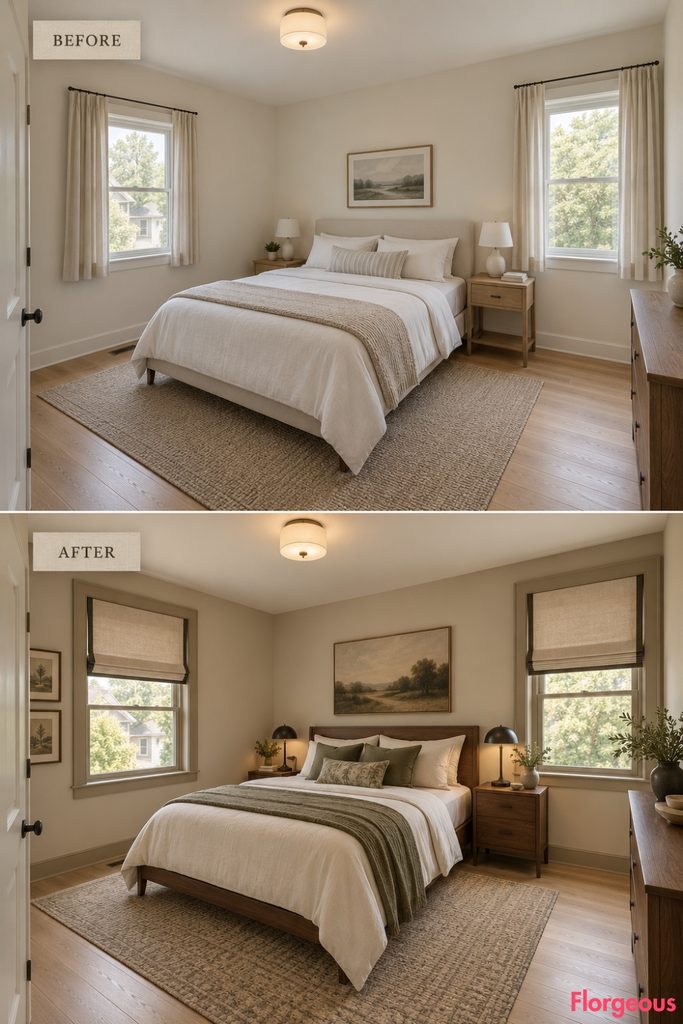
Before: The large left window and narrow far-wall window have short plain curtains.
After: Treat both window zones as one coordinated architectural detail. Use pale-khaki cotton-linen shades with narrow espresso edging on both windows, then continue a subtle warm-khaki painted reveal around each opening so the treatment feels integrated rather than applied. Walnut furniture, bone bedding, muted olive piping, and blackened-bronze lighting complete the field-inspired direction.
Try this: Matching the window reveals to the shade family makes even inexpensive blinds look more considered.
4. Let Burnt Saffron Travel Across the Window Wall
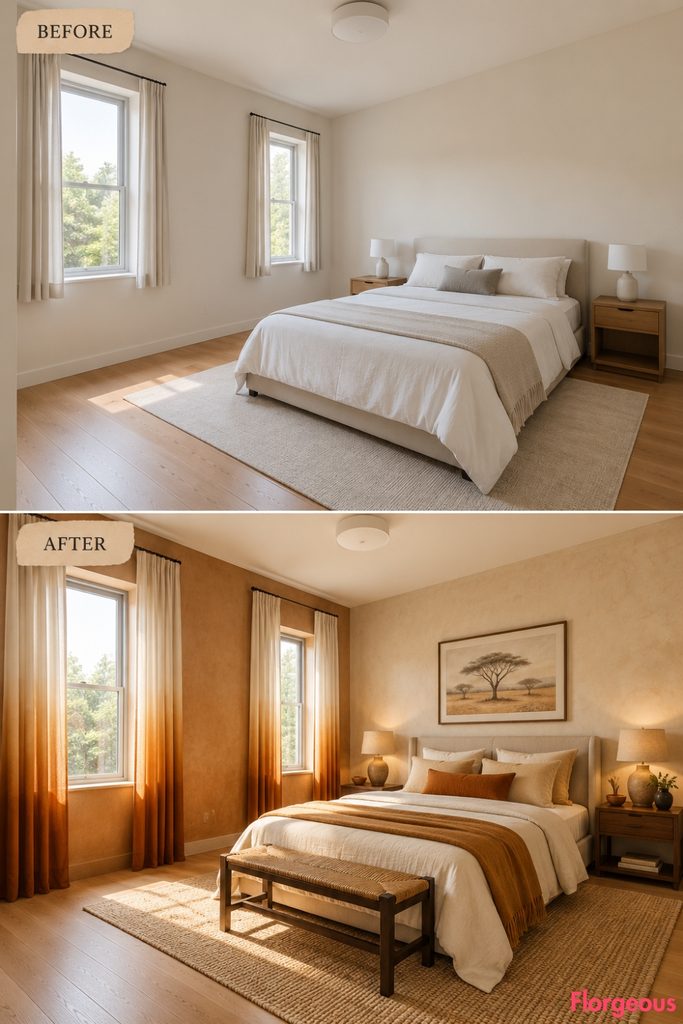
Before: Short curtains make the plain room look slightly unfinished.
After: Full-height linen curtains fade from chalk ivory into burnt saffron near the floor. Extend the saffron idea subtly across the lower section of the left wall with a very soft painted tonal band, stopping well below the sill so the whole window wall feels designed as one composition. Warm plaster, ivory bedding, dark timber, and deep-brown ceramic tables keep the effect sophisticated.
Color Story: The wall treatment should echo the textile, not compete with it.
5. Carry Terrain Lines Across the Bed Wall and Bedding
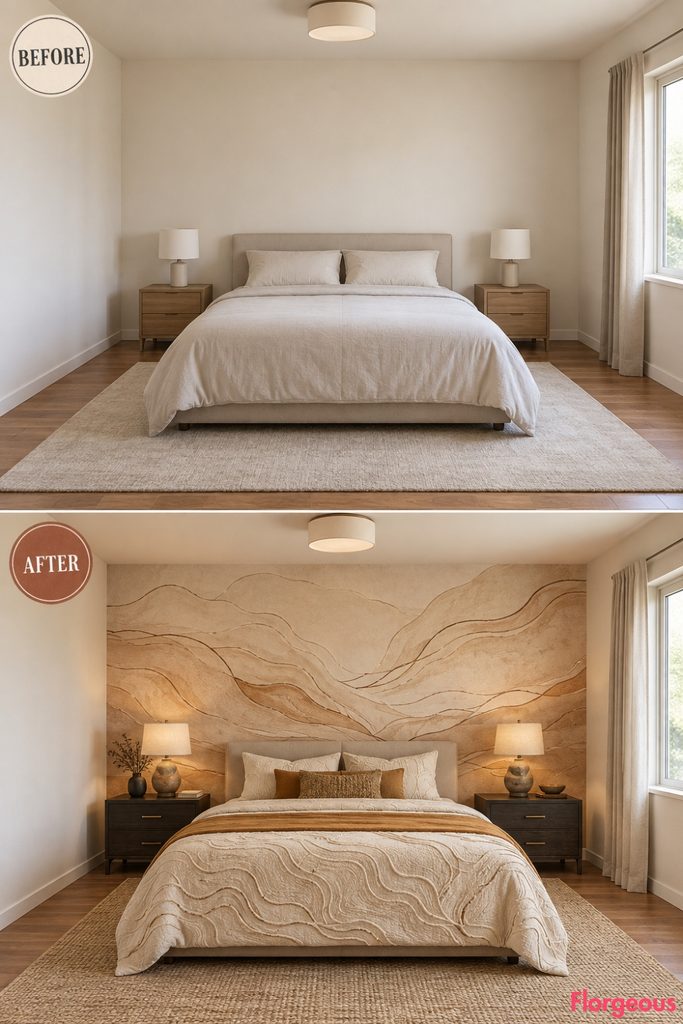
Before: Cream bedding and plain walls offer little texture.
After: Bone linen is embroidered with raised contour-like lines suggesting escarpments and dry terrain. Continue the same idea very subtly onto the entire bed wall using low-contrast hand-painted contour lines in sand and mineral brown, spaced widely enough to remain sophisticated. Charcoal-brown furniture, ochre piping, and hand-thrown ceramic lamps finish the look.
Why it works: Repeating the terrain motif at two different scales makes the room feel intentional.
6. Turn the Far Wall Into a Museum-Like Botanical Display
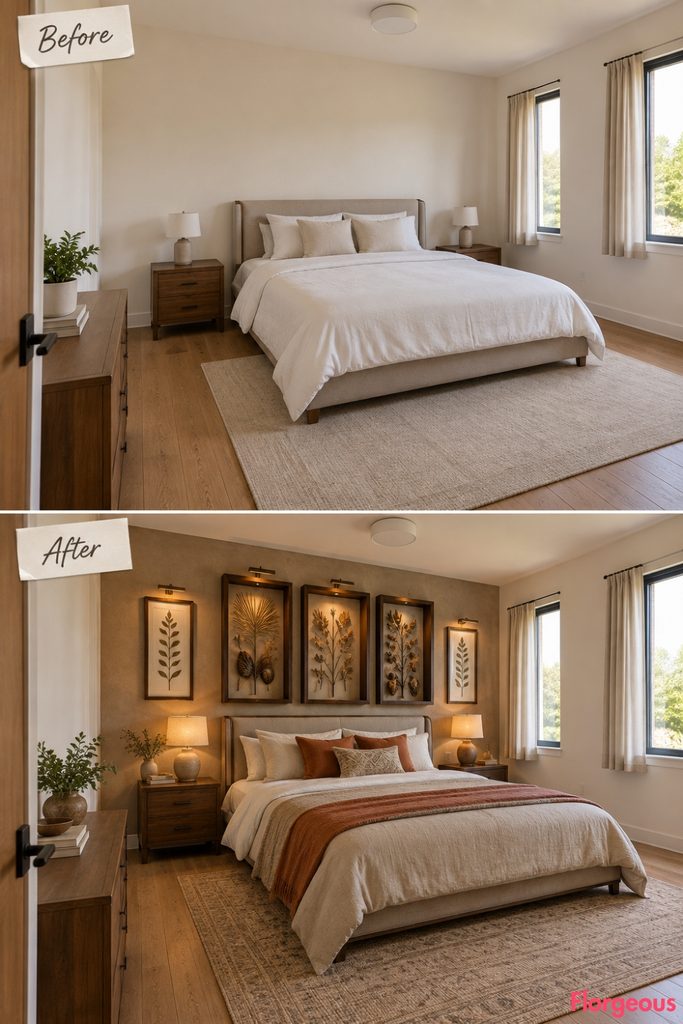
Before: The room starts with bare walls and empty nightstands.
After: Finish the full far wall in warm mushroom mineral paint and compose three deep shadow boxes with sculptural seed pods and dried botanical forms as the central display. Add two much smaller specimen frames toward the outer edges so the wall feels complete rather than partially decorated. Dark walnut, flax bedding, and one rust accent keep the display contemporary.
Try This: Use responsibly sourced dried botanicals instead of decorative replicas.
7. Cover the Entire Far Wall in Tonal Giraffe Geometry
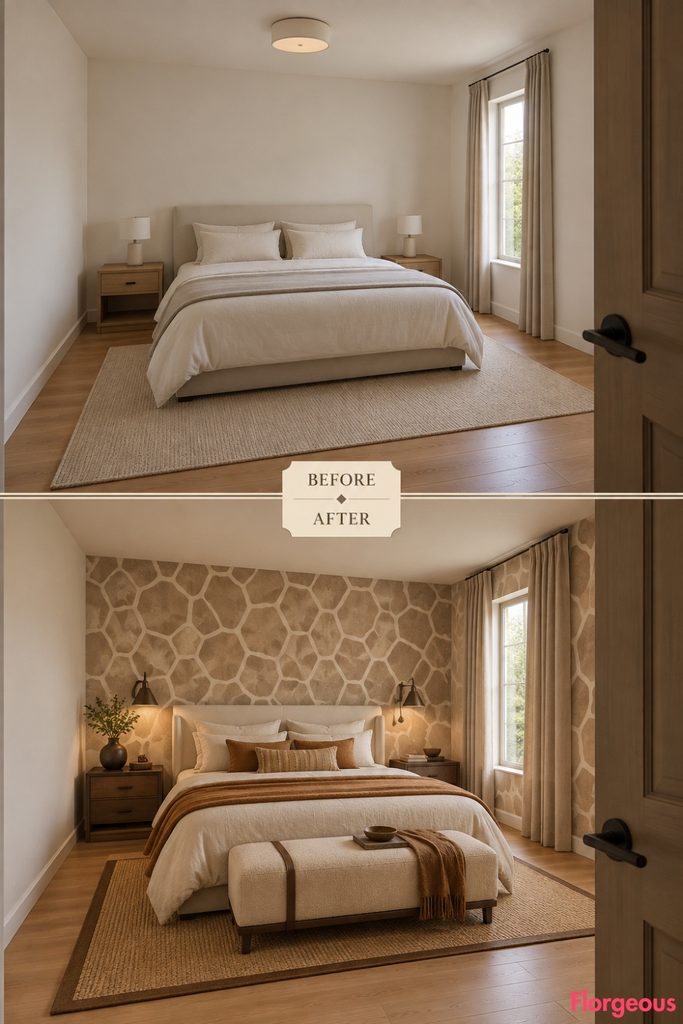
Before: Warm off-white walls provide no pattern or visual rhythm.
After: Apply the oversized polygon wallcovering across the entire far wall from corner to corner, including the wall zone around the narrow window. Use only sand, mushroom, and taupe so the geometry loosely references giraffe markings without becoming literal animal print. An ivory bed, tobacco piping, linen curtains, and aged bronze lighting keep the effect refined.
Common Mistake: Do not stop wallpaper abruptly behind the bed if the concept depends on pattern. Let the pattern own the whole wall.
8. Compose the Entire Right Wall Around Bronze Reflections
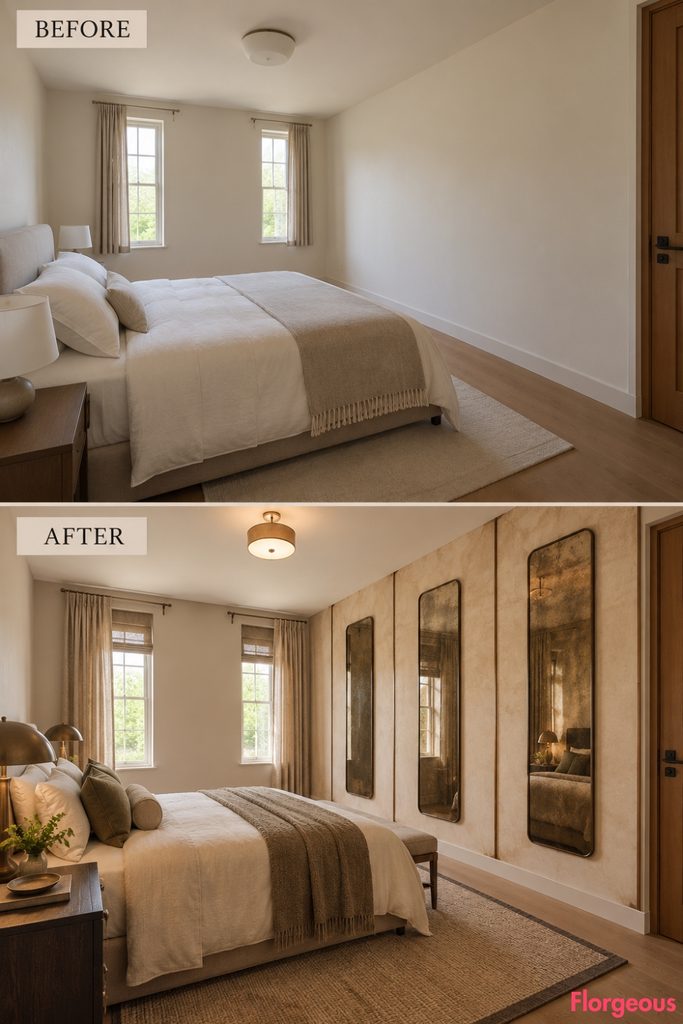
Before: The solid right wall feels empty and unused.
After: Finish the full right wall in warm parchment mineral paint. Space three tall narrow antiqued bronze-gray mirrors evenly across the usable wall surface, then add very slim painted umber vertical lines between them to create one continuous composition. Oatmeal linen, dark timber, and aged brass carry the palette into the furniture.
9. Let the Floor Border Connect the Whole Room
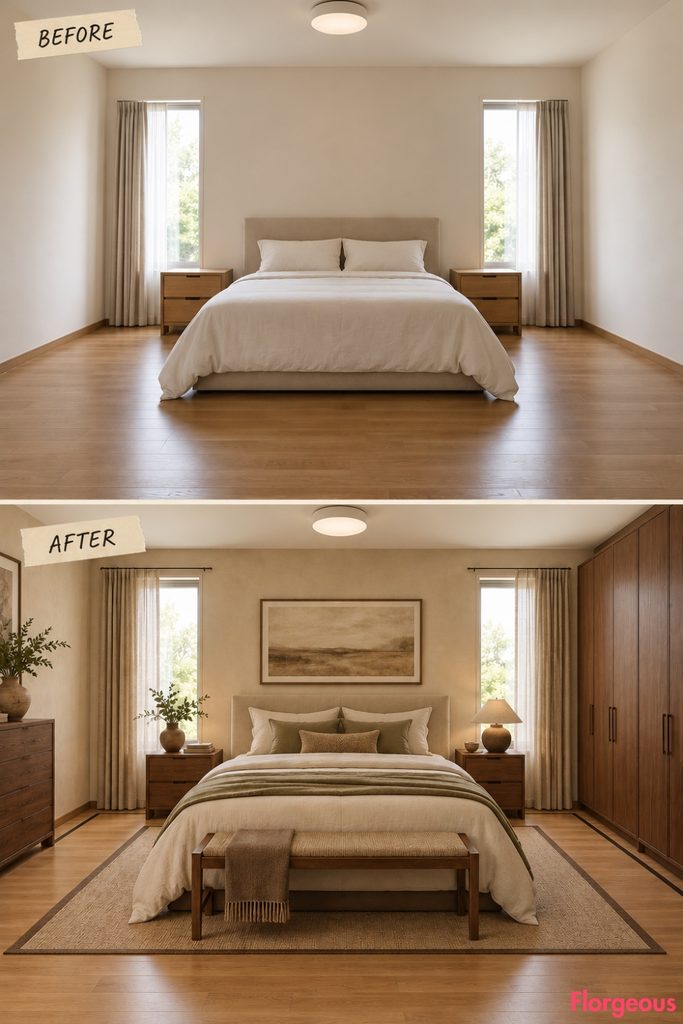
Before: The warm oak floor runs continuously without definition.
After: A fine deep-umber perimeter keyline follows all accessible wall edges, visually connecting the bed zone, window zone, and entry zone. Cream upholstery, khaki linen, walnut furniture, and clay objects keep the graphic detail grounded.
10. Repeat Blanket Stitching Across the Entire Textile Story
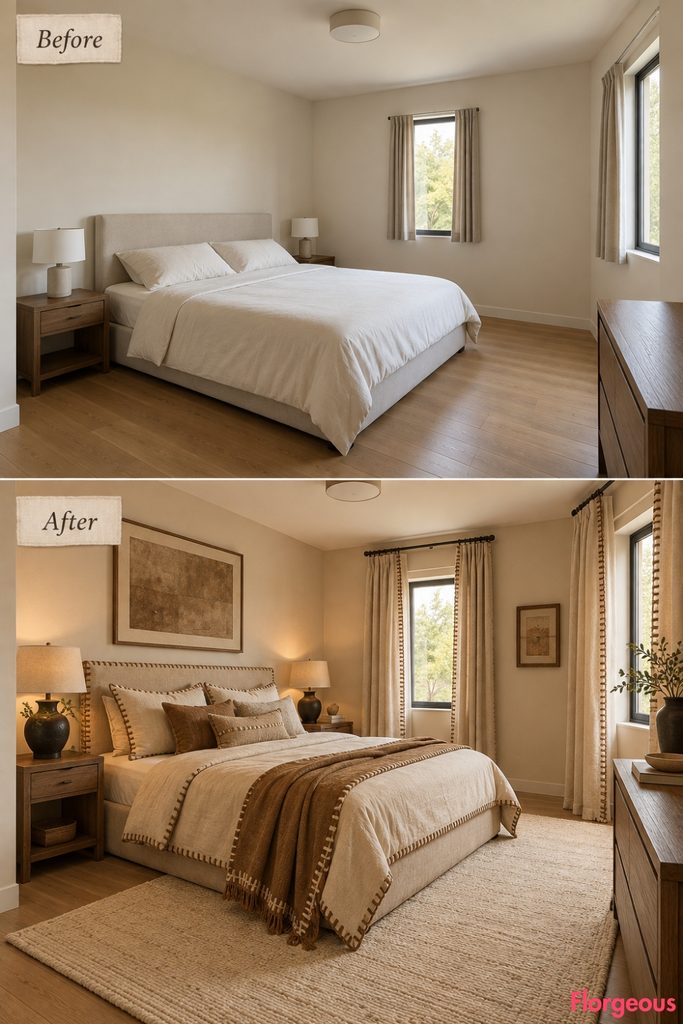
Before: Generic textiles make the room feel impersonal.
After: Flax bedding, cushion edges, upholstered bed base, curtain leading edges, and one folded throw all carry exaggerated tobacco-colored blanket stitching. Keep the walls sun-warmed beige and largely unadorned so the repeated textile detail becomes the main concept.
11. Build a Complete Botanical Glass Vignette on the Right Wall
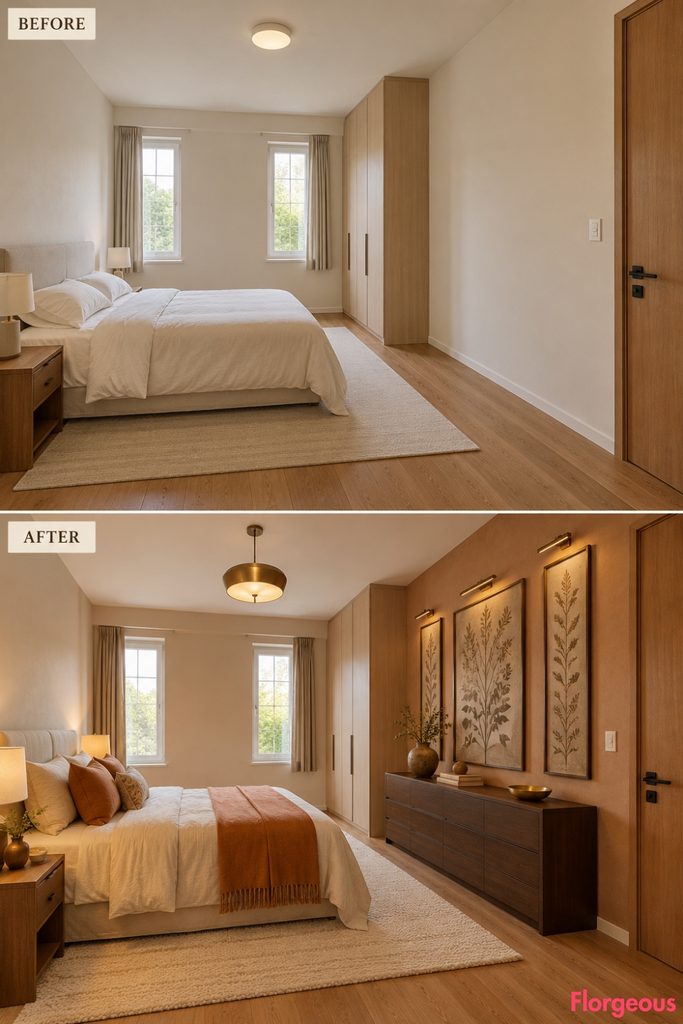
Before: A bare side wall and empty surfaces make the room feel unfinished.
After: Finish the entire right wall in soft clay. Place a low dark-timber dresser along the wall and compose three etched-glass botanical artworks above it, one larger center panel and two narrower flanking panels, all with translucent grasses and leaf silhouettes. Cream linen, iroko-toned furniture, and restrained rust accents complete the vignette.
12. Wash Every Wall in Salt-Pan White
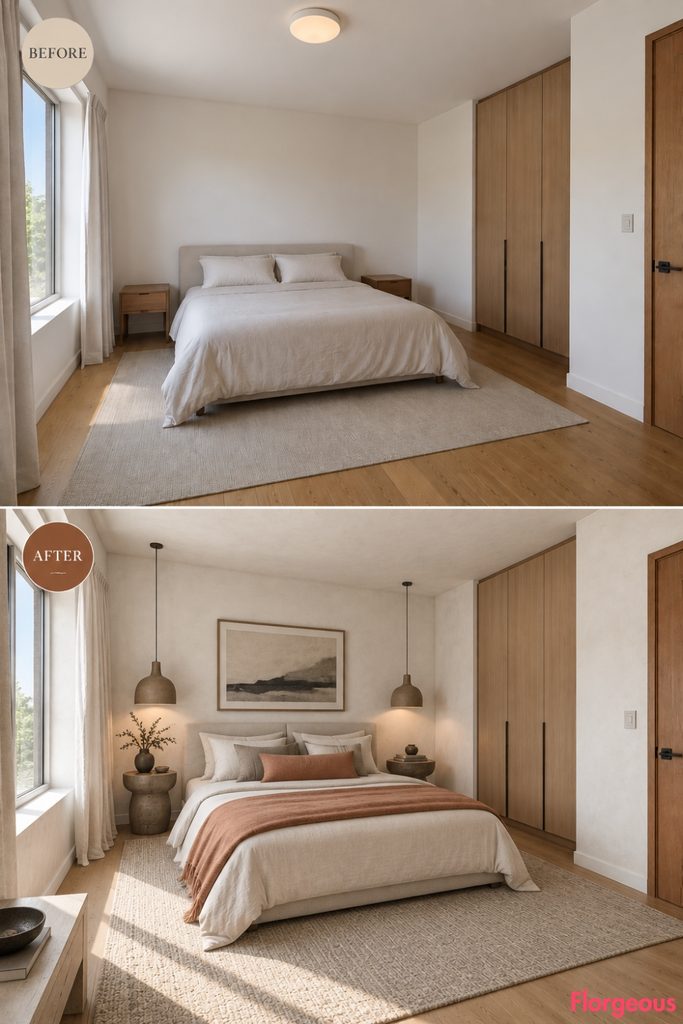
Before: The original neutral palette looks safe rather than intentional.
After: Carry chalk-white mineral paint across every wall surface, including the reveals around both windows, so the entire room becomes bright and dry-looking. Mineral-gray linen, ink-black details, bleached timber, and one faded-clay textile add contrast without breaking the salt-flat feeling.
Common Mistake: Do not add beige accessories until the white field loses its clarity.
13. Wrap the Room in Dusk Mauve
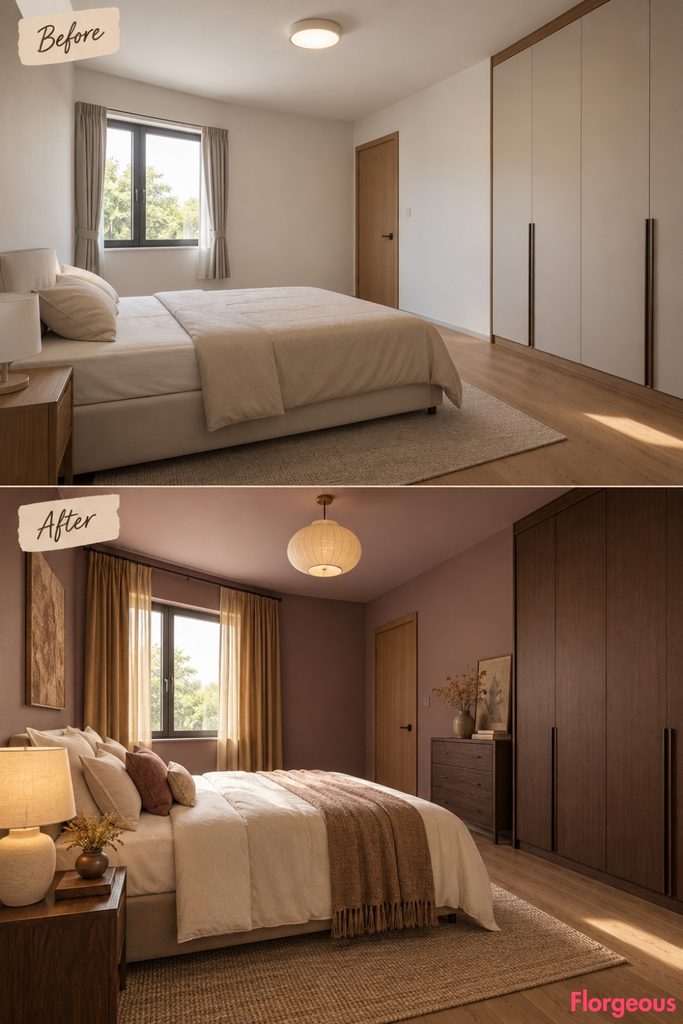
Before: The off-white room has little emotional warmth.
After: Apply smoked mauve across all primary wall surfaces rather than treating only the bed wall. Dry-grass-gold curtains, ivory bedding, deep-brown timber, and pale mineral ceramics keep the room grounded in open-landscape color.
Color Story: A full-room color treatment feels more immersive than one isolated accent wall.
14. Build a Complete Sun-Bleached Tan Envelope
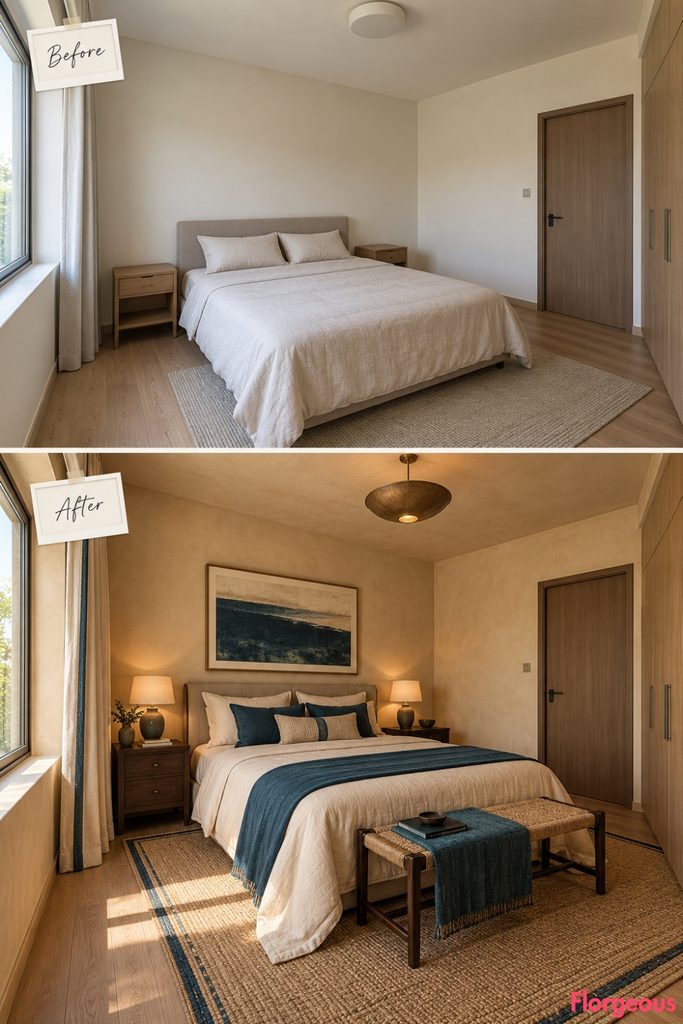
Before: Neutral walls and bedding lack contrast.
After: Carry sun-bleached tan across all visible walls, including the window reveals, then introduce one petrol-blue blanket and a compact enamel side table as controlled accents. Ivory linen and dark timber keep the color story earthy rather than coastal.
15. Wash the Whole Room in Pale Eucalyptus
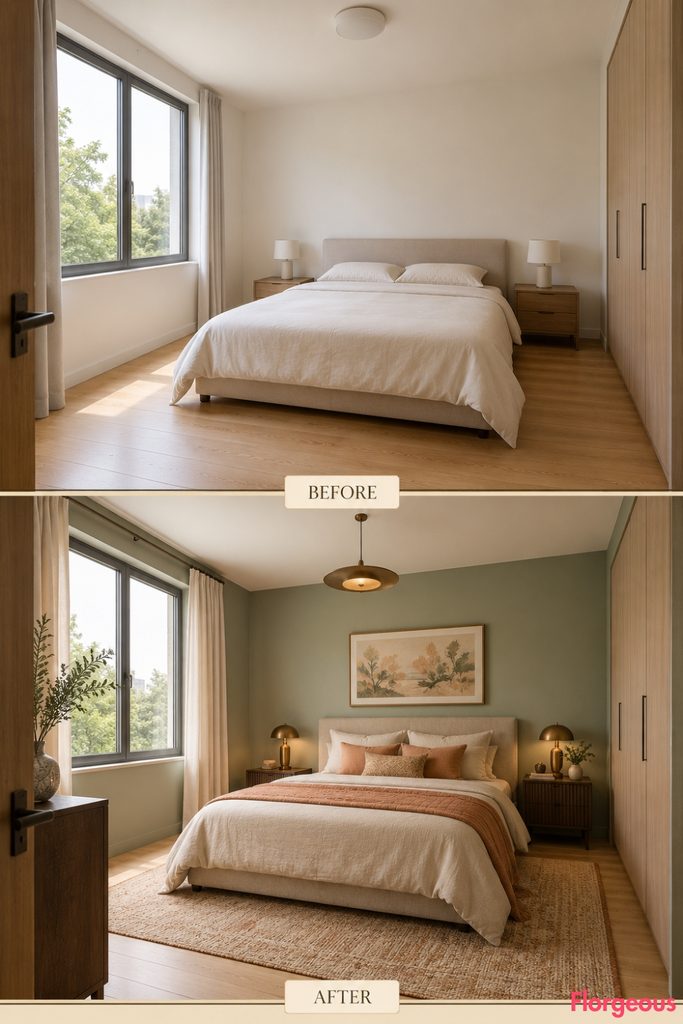
Before: The room begins as a generic warm-neutral bedroom.
After: Use pale eucalyptus mineral paint on all wall surfaces for a softly enveloping backdrop. Dark timber, dusty-apricot cushions, oat bedding, chalk curtains, and muted bronze lighting create a gentler savanna palette without becoming tropical.
16. Give the Walls a Dry-Grass Fiber Finish
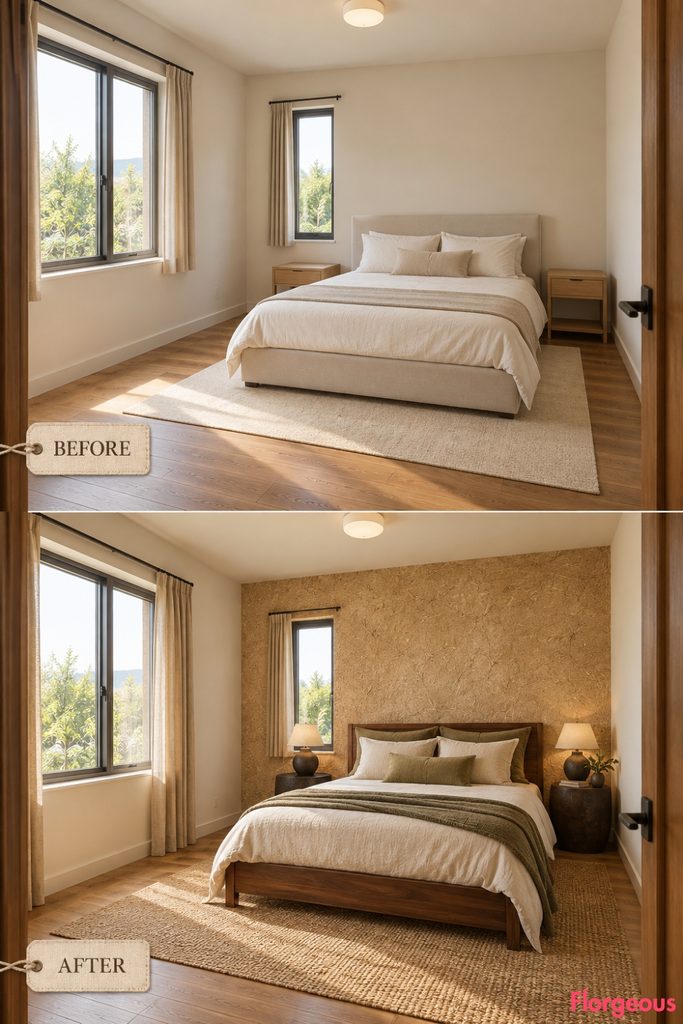
Before: The same plain bedroom has smooth off-white walls, basic furniture, and very little tactile character.
After: Finish the entire far wall in a hand-troweled mineral coating mixed with fine natural straw fibers, creating a softly irregular surface with tiny visible golden strands. Keep the color muted, somewhere between sun-bleached wheat and pale clay, so the texture becomes noticeable mainly when daylight moves across it. Pair the wall with a simple smoked-walnut bed, bone linen, one muted olive throw, dark ceramic bedside pieces, and a tightly woven natural rug.
The safari character comes from the dry, fibrous, earth-based material itself rather than obvious motifs or decorative objects.
Why it works: The chopped natural fibers give a flat wall the tactile quality of dried grassland while still looking refined enough for a sophisticated bedroom.
Budget Version: A textured mineral paint with a small amount of fine natural-fiber additive can suggest the same effect without requiring a specialist plaster finish.
17. Keep the Walls Quiet and Build the Glow at Floor Level
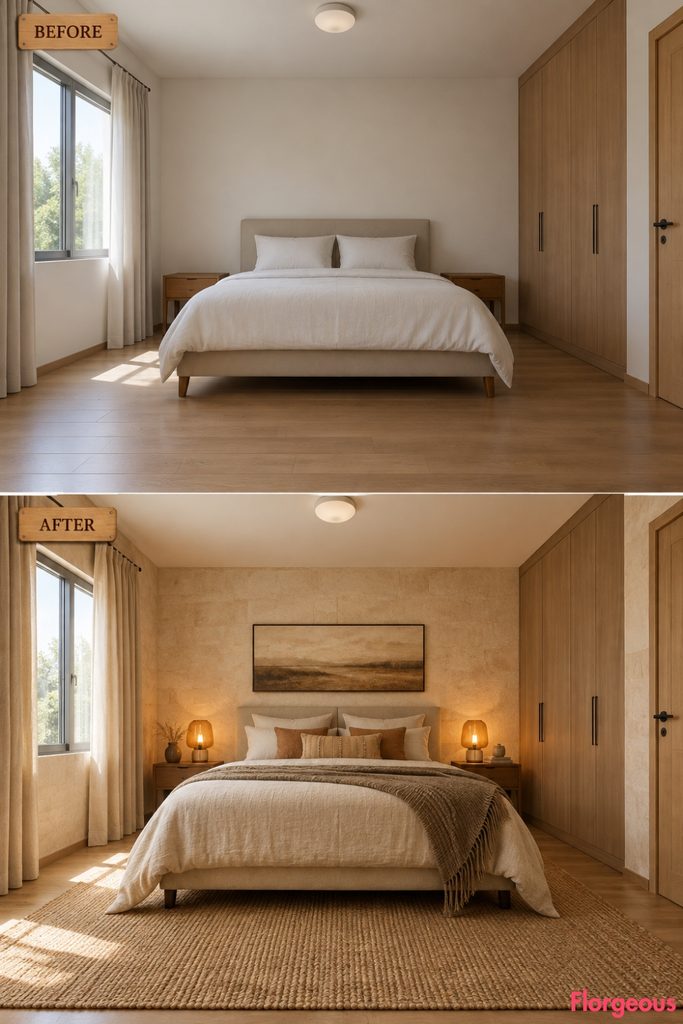
Before: Lighting comes mainly from the generic ceiling fixture.
After: Pale stone walls remain deliberately uninterrupted across the room while low amber-glass lamps sit near floor level beside the bed. Their light spreads across the lower bed frame and woven rug. Oatmeal linen, dark wood, and straw textiles complete the composition.
Why it works: This concept needs negative wall space, so the walls should stay consistently quiet rather than half-decorated.
18. Turn the Far Wall Into One Abstract Savannah Horizon
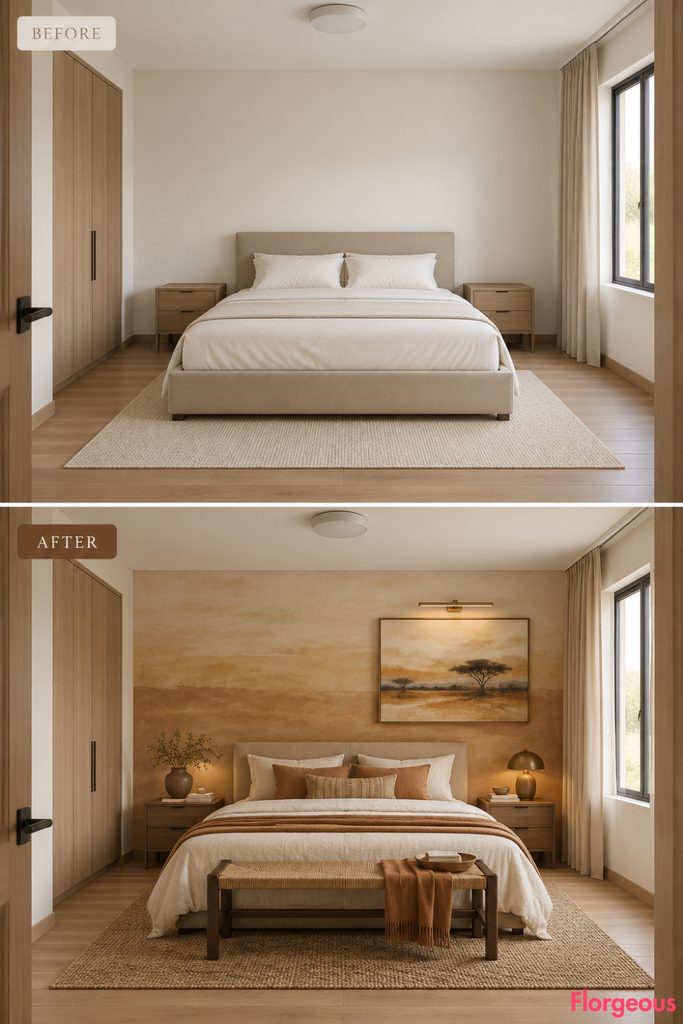
Before: The blank bed wall lacks a focal point.
After: Instead of hanging a small isolated picture, treat the full far wall in a very subtle horizontal tonal wash, moving from parchment near the ceiling to muted clay lower down. Overlay one large abstract savanna-horizon artwork slightly off center and illuminate it with a slim aged-brass picture light. The bed remains straight and balanced.
19. Press a Dry-Reed Relief Into the Entire Bed Wall
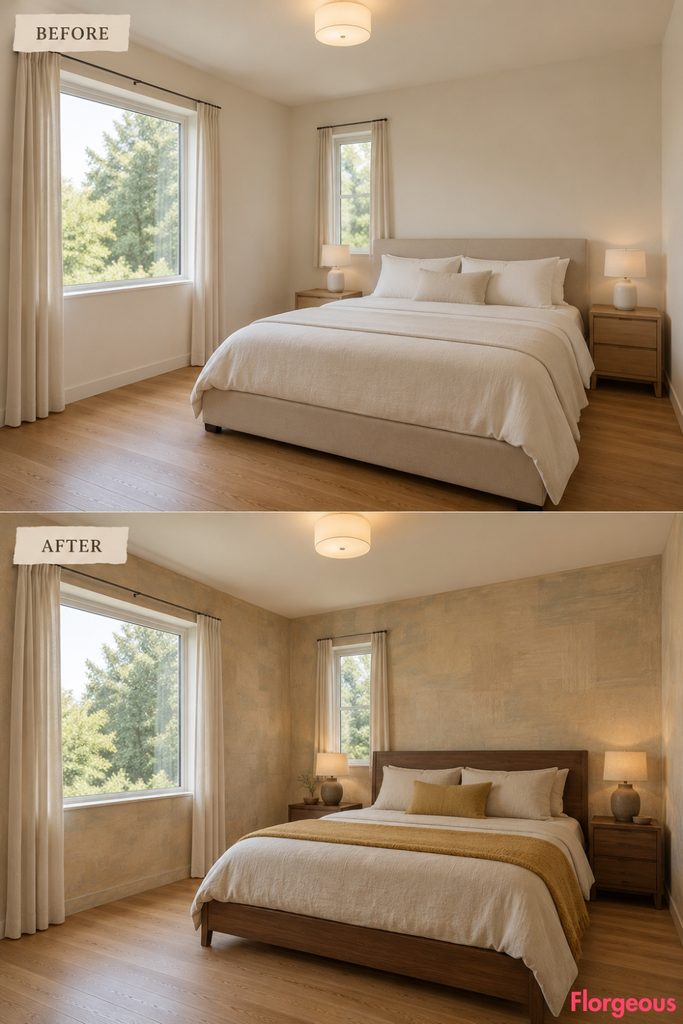
Before: The locked bedroom has smooth off-white walls, generic furniture, and no tactile focal point.
After: Finish the entire far wall with a pale clay mineral surface pressed with shallow, irregular vertical reed impressions. The marks should be subtle and widely spaced, creating the suggestion of dried grass stems without becoming literal botanical artwork. Keep the narrow far-wall window completely unchanged and continue the textured finish cleanly around its reveals. Add a low dark-walnut bed, bone linen, muted tobacco textiles, matte black-brown bedside pieces, and a simple natural rug.
The Safari character comes from the wall’s handmade, grassland-inspired texture rather than decorative accessories.
Why it works: The shallow relief catches daylight differently throughout the day, giving the wall movement without adding pattern, artwork, or lighting effects.
20. Introduce a Handwoven Bed Valance With Long Knotted Fringe
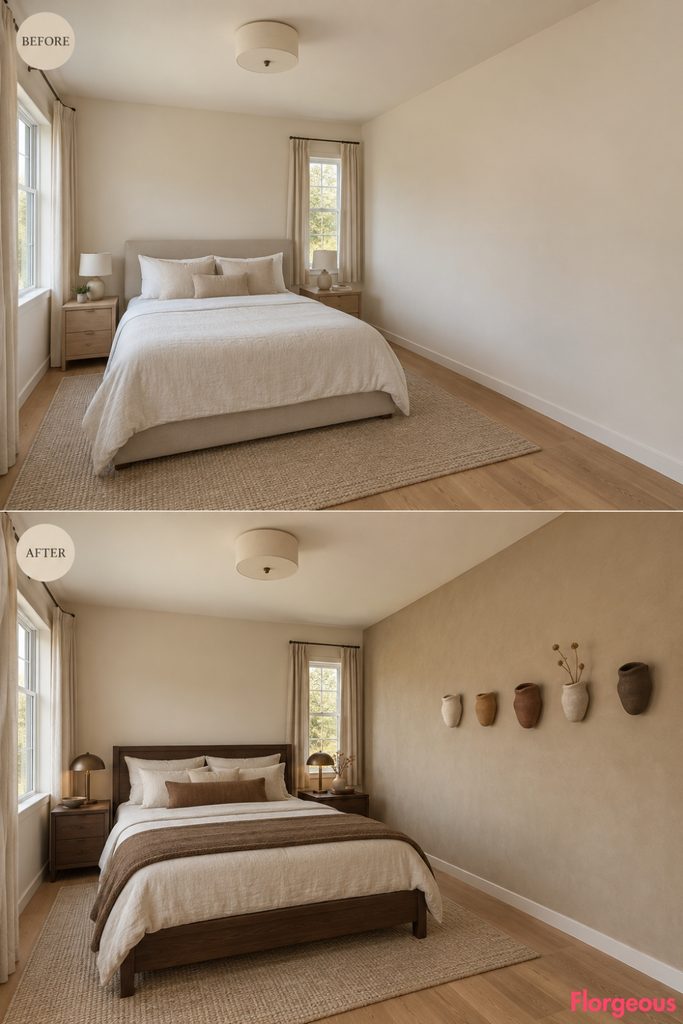
Before: The same plain room has a basic upholstered bed with generic cream bedding and little textile character.
After: Keep the walls intentionally quiet in a warm chalky sand tone and make the bed itself the textile focal point. Wrap the lower bed base with a tailored handwoven flax-and-cotton valance finished with long, controlled knotted fringe that nearly reaches the floor. Layer bone linen above it with one narrow olive-gray blanket and two tobacco cushions. Use compact dark timber bedside pieces and small matte ceramic lamps.
This is not a canopy, bed curtain, upholstered headboard, or textile cocoon. The transformation happens entirely at the lower bed edge, giving the room a handcrafted, field-textile quality.
Style Note: The fringe should be dense, straight, and tailored rather than bohemian or shaggy.
21. Create a Burnished Earth Band Directly Across the Floor
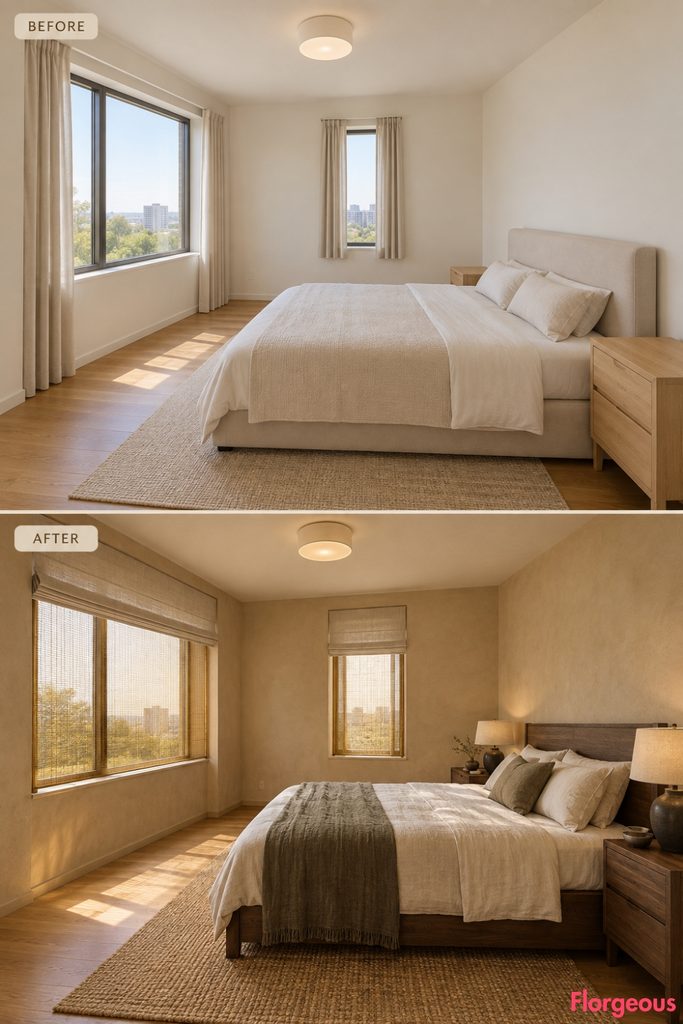
Before: The warm oak floor is visually continuous and the plain bedroom has no strong grounding element.
After: Keep the original oak floor visible, but introduce a broad removable floor textile running horizontally beneath the lower third of the bed and extending well beyond both sides. Instead of a conventional rug pattern, use a flat, almost mat-like composition in three wide irregular bands of burnt umber, dry clay, and pale sand, inspired by exposed layers of earth. Keep the walls warm ivory, use a dark timber bed, bone linen, and only a few charcoal-brown accents.
The room feels Safari-inspired through landscape geology rather than plants, animal motifs, or wall decoration.
Why it works: The low horizontal bands visually ground the room and create a completely different composition from wall-led concepts.
22. Trace the Room Architecture With Iron-Oxide Edges
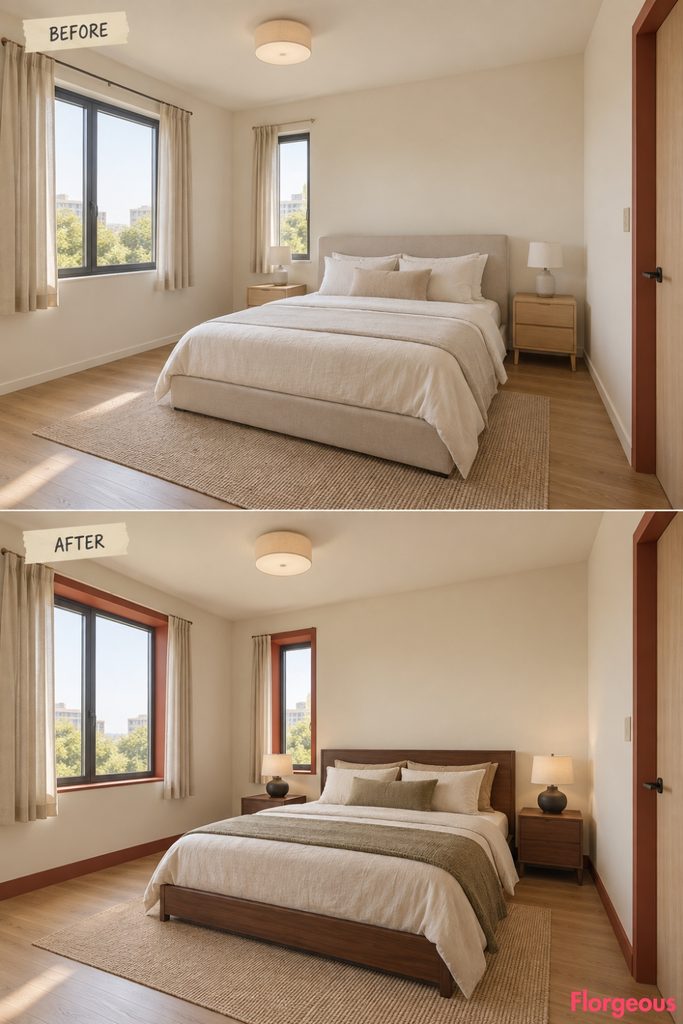
Before: The locked bedroom has plain warm off-white walls, ordinary white window reveals, a basic doorway, and no detail linking the different parts of the room together.
After: Keep the main wall surfaces a warm bone color, then use a narrow matte iron-oxide red finish to trace selected architectural edges throughout the room: the inner reveals of both existing windows, the top edge of the skirting, and the inside edge of the front-right door jamb. The lines stay slim and precise, creating the feeling of earth-pigment field markings without becoming decorative stripes.
Pair the architectural detailing with a smoked-walnut bed, oat linen, muted khaki textiles, and small dark ceramic lamps. Nothing is added to the wall as an object. The existing architecture itself becomes the graphic element.
Why it works: Repeating one earthy edge color across windows, doorway, and skirting makes the whole room feel intentionally composed without relying on artwork or a feature wall.
23. Add a Tailored Canvas Utility Runner at the Foot of the Bed
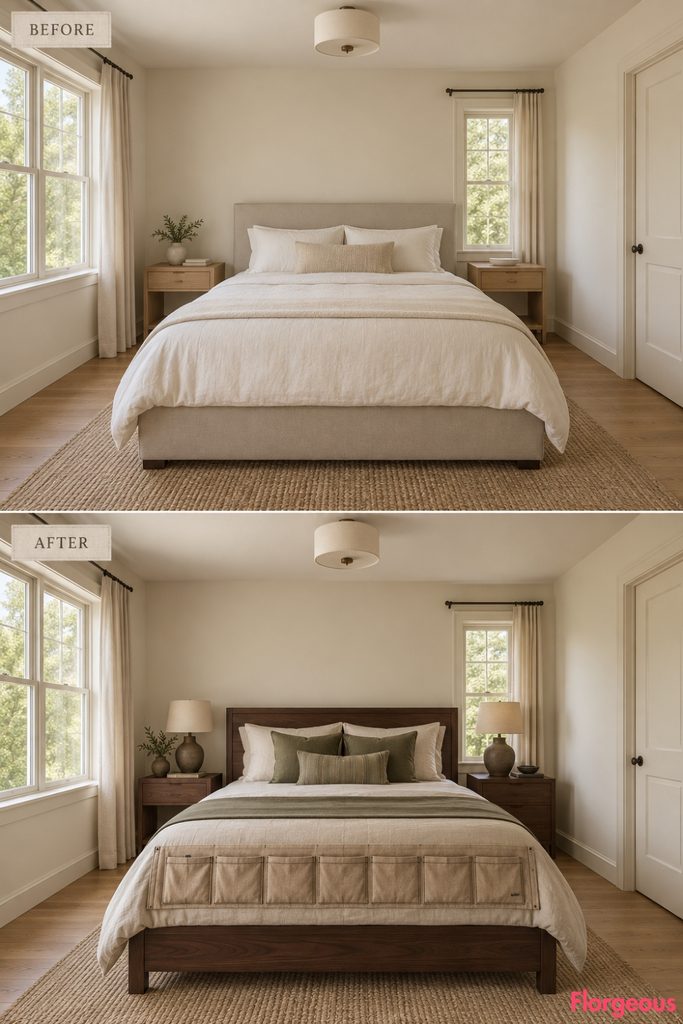
Before: The same basic bed has plain cream bedding and offers no useful place for small everyday bedroom items.
After: Keep the bed silhouette simple, but drape a wide heavyweight sand-colored cotton-canvas runner across the lower third of the mattress. Along the outward-facing foot edge, integrate a neat row of flat stitched utility pockets in different widths, designed for a book, sleep mask, notebook, or folded scarf.
Use tobacco-brown topstitching, bone linen above it, deep walnut furniture, and muted olive accents elsewhere. The pockets should lie almost flat when empty, so the bed still looks refined rather than like camping equipment.
The field reference comes from functional textile construction, not campaign furniture or decorative straps.
Style Note: Keep every pocket rectangular, shallow, and carefully tailored. No buckles, logos, labels, or oversized cargo details.
24. Give One Low Chest a Grass-Fiber Composite Surface
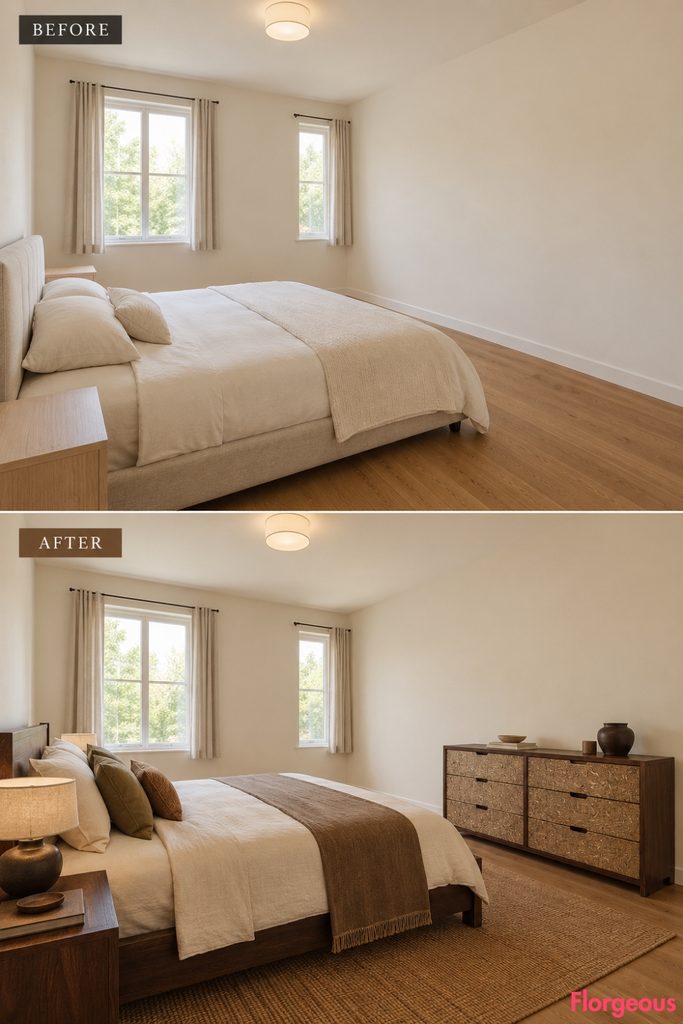
Before: The plain bedroom has two generic light-wood nightstands and no furniture surface with unusual material depth.
After: Keep the bed area restrained and introduce one low freestanding chest against the solid right wall. Its drawer fronts are made from a matte pressed natural-fiber composite containing visible fine dry-grass and flax fragments suspended in a warm clay-beige binder. The material should look dense, tactile, and furniture-grade, not like raw straw board.
Use very simple dark timber framing around the chest, tiny recessed finger pulls, warm ivory walls, bone bedding, muted tobacco textiles, and one black-brown ceramic lamp on top.
The Safari connection comes from transforming dry grass fiber into a polished contemporary furniture material rather than displaying grass as decor.
Why it works: The texture rewards close viewing but remains quiet from across the room, giving the makeover material richness without creating another statement wall.
25. Finish the Room With a Low Ochre Ceramic Dado
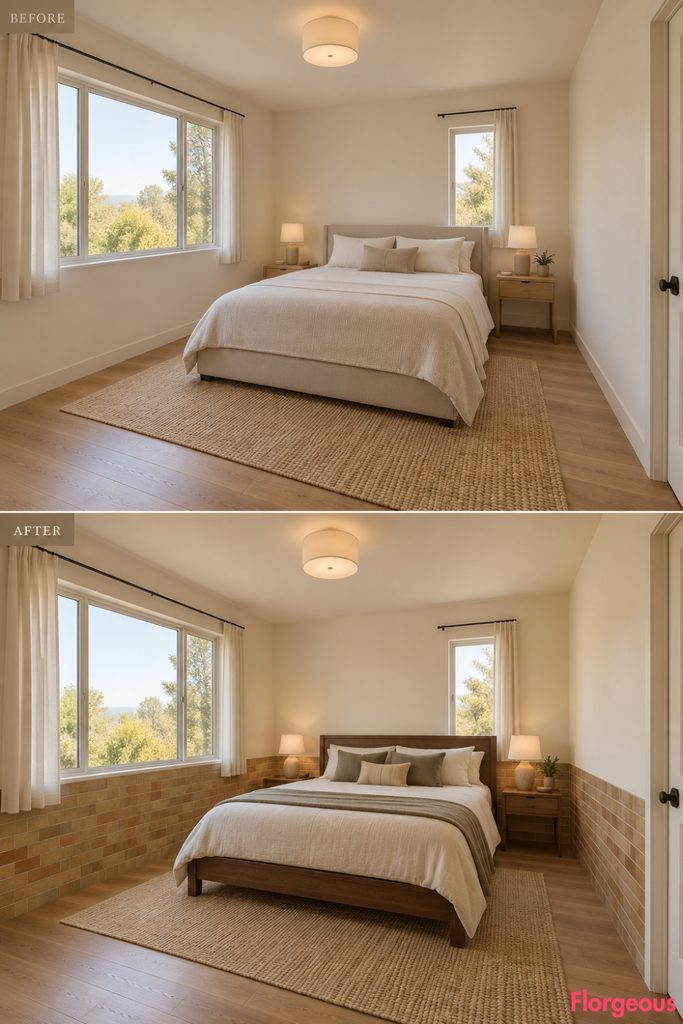
Before: The locked room has plain off-white walls running uninterrupted down to the oak floor.
After: Keep the upper walls a softly chalked warm ivory, but wrap the lower 55 to 60 cm of every solid wall section in small matte handmade ceramic tiles in closely related ochre, pale clay, sand, and muted tobacco tones. Use long narrow tiles laid horizontally with irregular handmade edges and very fine tone variation, creating a low earth-colored dado around the room.
Continue the ceramic treatment only across solid wall surfaces and carefully around the doorway and window-wall sections where appropriate, never covering the windows themselves. Add a simple dark-walnut bed, bone linen, olive-gray cushions, and restrained cream curtains.
Unlike a decorative border, the tiled dado should feel like a durable architectural surface inspired by packed earth and fired clay.
Budget Version: A washable mineral paint dado using the same ochre-clay palette can reproduce the proportion without installing tile.
Choosing the Right Safari Direction for Your Bedroom
The strongest Safari Bedroom interiors begin with atmosphere rather than props. Decide whether you want the room to feel sun-bleached, botanical, duskier, highly crafted, or inspired by field textiles and natural landscape colors.
Then decide how much of the architecture needs to participate. If a concept depends on wallpaper, mineral color, tonal graphics, botanical displays, or landscape-inspired artwork, treat the whole relevant wall as part of the composition. Do not decorate only the square directly behind the bed and leave awkward blank areas around it.
At the same time, not every concept needs a busy wall. Ideas driven by lighting, textile stitching, floor graphics, or a single sculptural object often work better against a deliberately quiet wall field.
Keep the practical room intact. Protect the route from the front-right entry, keep both windows usable, leave realistic clearance around the bed, and avoid decorative pieces that interrupt circulation.
If the room still reads clearly as a refined safari-inspired bedroom after unnecessary accessories are removed, the materials, wall treatment, light, color, and composition are doing the work.