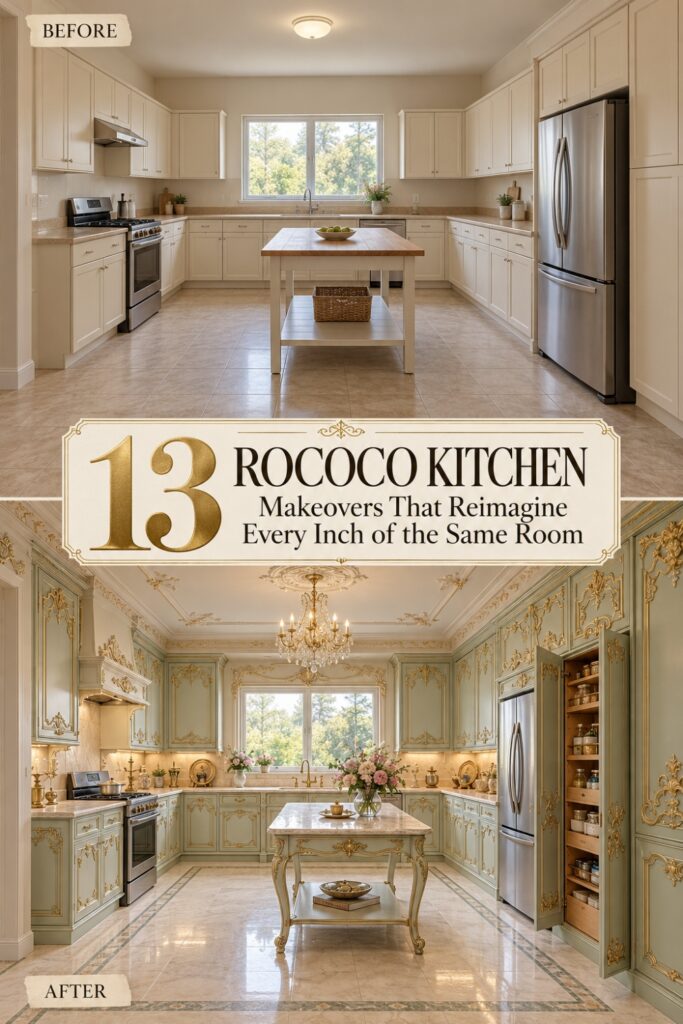
A kitchen can be spacious, practical, and filled with natural light yet still feel completely ordinary. Plain cream cabinets, beige countertops, simple flooring, and basic lighting leave little room for personality or artistic expression.
Now imagine redesigning that same space through thirteen different interpretations of Rococo style. Flowing architectural forms, intricate craftsmanship, sculptural furniture, ornamental surfaces, and beautifully layered materials could make it almost unrecognizable.
These 13 Rococo Kitchen before-and-after transformations begin with one identical 7-by-5-meter builder-grade kitchen. Every redesign preserves its original walls, entrance, rear window, sink, cooking range, refrigerator, and ceiling geometry.
The difference is that each AFTER transforms the entire room, not just one corner. Every concept has its own architectural identity, coordinated cabinetry, flooring, ceiling treatment, materials, lighting, and furniture arrangement. The results are imaginative design visualizations intended to inspire complete, functional kitchen makeovers.
1. Behind the Boiserie: A Disappearing Rococo Storage Wall
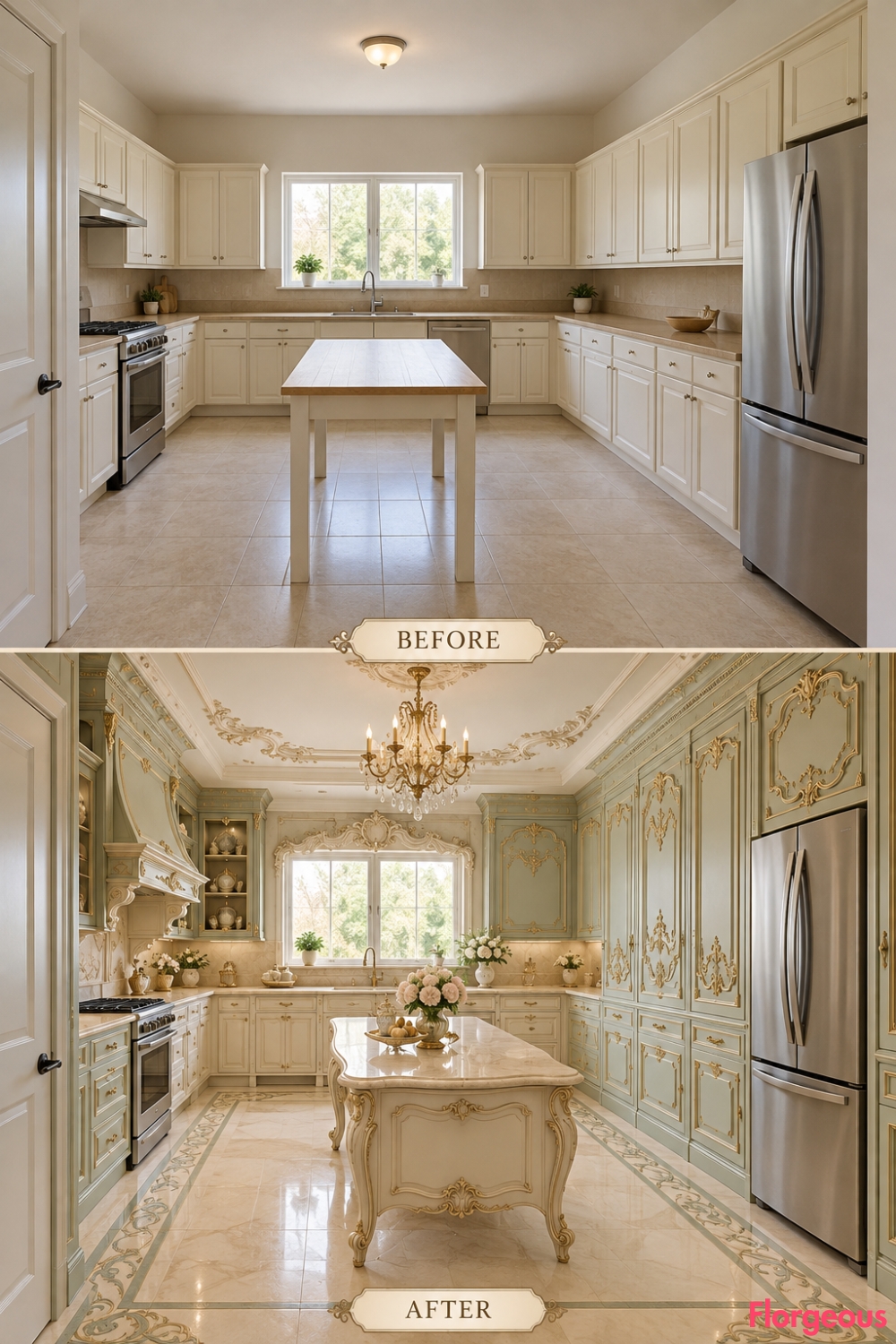
Before: Cream cabinets, beige counters, plain walls, and a basic central table make the kitchen feel generic.
After: An architectural composition of pale-celadon boiserie wraps the kitchen in flowing Rococo ornament. Concealed pantry panels define the right wall, while coordinated ivory cabinetry, sculpted ceiling trim, warm limestone floors, and an elegant curved preparation console complete the interior.
Why it works: Hidden storage and continuous decorative woodwork create one cohesive architectural identity.
Try this: Combine full-height cabinets, concealed hinges, and applied ornamental molding.
Designer Tip: Design pantry access and appliance clearances before creating the decorative panel pattern.
Create an extraordinary photorealistic vertical 2:3 Rococo Kitchen BEFORE/AFTER transformation, exactly 1000 × 1500 px, divided into two perfectly equal horizontal panels.
2. A Mineral Grotto Reimagines the Ordinary Sink Wall
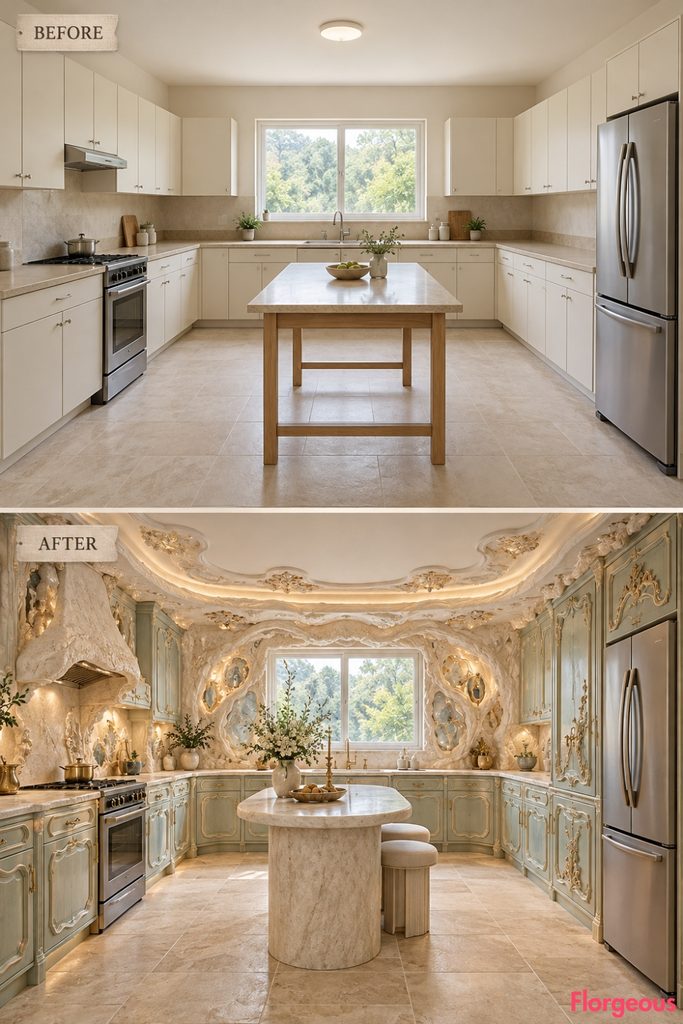
Before: Flat painted walls, stock cabinetry, and ordinary floor tiles give the kitchen no architectural character.
After: The entire room becomes a luminous Rococo mineral grotto. Sculpted limestone contours surround the rear working wall, while seafoam cabinetry, textured plaster ceilings, sandy stone floors, and a softly curved preparation table create a unified organic interior.
Why it works: Flowing mineral forms connect the architecture, cabinetry, and working surfaces.
Try this: Use shallow decorative plaster and moisture-resistant stone finishes instead of structural rockwork.
3. An Embossed Copper Tapestry Takes Over the Cooking Wall
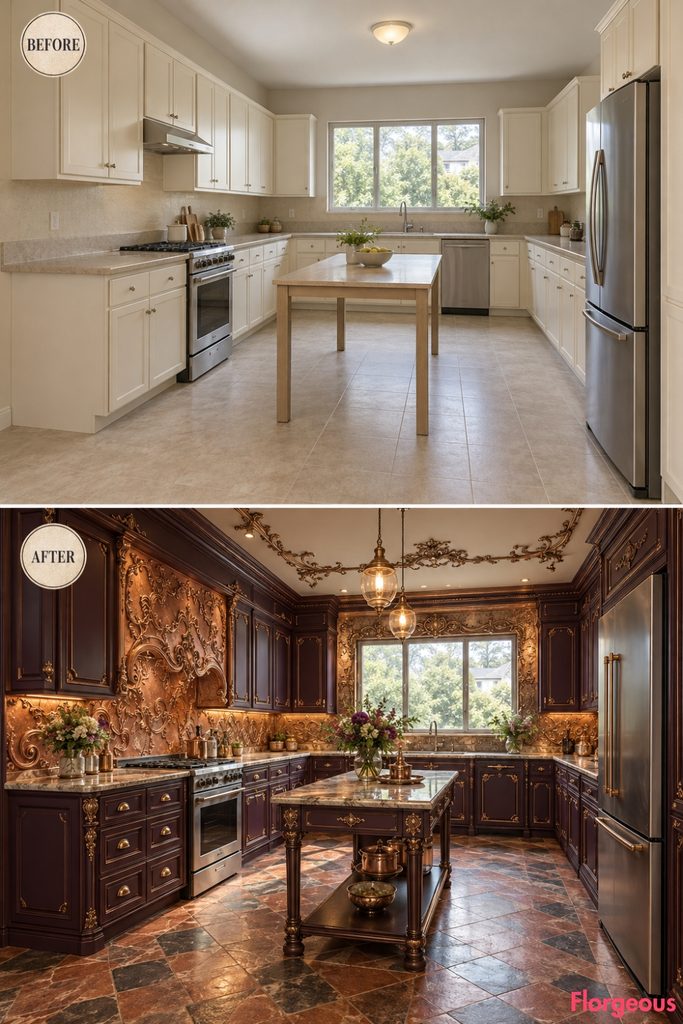
Before: The kitchen has a plain cooking wall, simple cream storage, beige counters, and little visual contrast.
After: Hand-hammered copper repoussé becomes the foundation of a dramatic Rococo interior. Deep-aubergine cabinetry, dark veined stone, ornamental bronze ceiling details, warm terracotta flooring, and refined copper accents create a richly coordinated space.
Why it works: The copper relief establishes a distinctive material and architectural language across the room.
Try this: Use embossed copper selectively and coordinate surrounding cabinetry with darker natural finishes.
4. The Bombé Drawer Cascade: French Furniture Becomes Kitchen Architecture
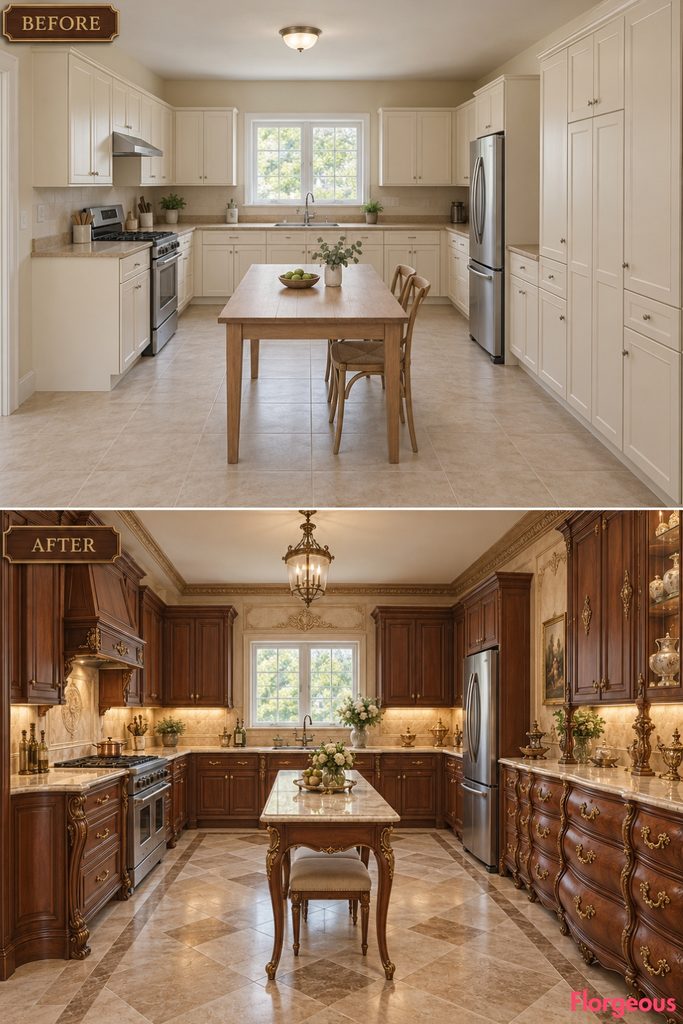
Before: Straight cream cabinet fronts and ordinary worktops create a flat, predictable kitchen.
After: The room becomes a furniture-inspired Rococo atelier. Swelling cherrywood drawers anchor the right side, while tobacco-toned wall paneling, patterned limestone flooring, curved perimeter cabinets, and refined ornamental ceiling details complete the makeover.
Why it works: Full-room furniture proportions create a consistent sculptural rhythm.
Try this: Use custom bombé units as a starting point, then coordinate surrounding cabinets with shaped aprons and curved profiles.
5. A Botanical Pietra Dura Workstation With Inlaid Stone Flowers
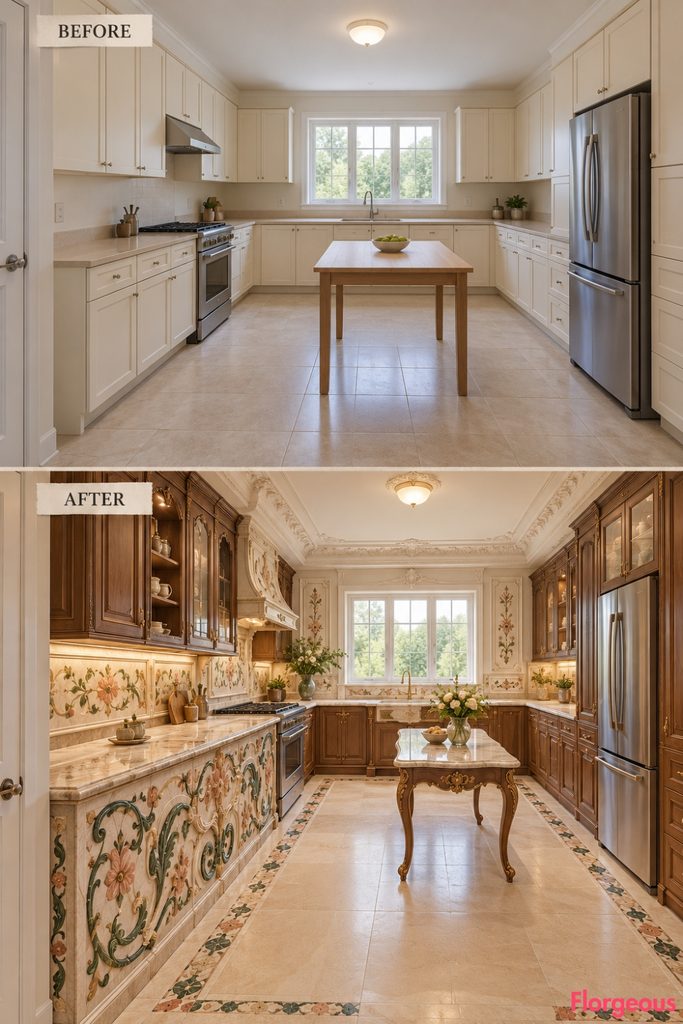
Before: Beige laminate surfaces and plain cabinets offer little decorative interest.
After: Botanical stone inlay defines a vibrant Rococo kitchen. The workstation’s intricate mineral flowers connect with warm walnut cabinetry, complementary stone wall panels, pale mineral flooring, delicate ceiling relief, and a beautifully proportioned central serving table.
Why it works: Natural stone craftsmanship becomes a consistent design language throughout the room.
Try this: Commission a decorative inlaid counter apron and repeat selected stone colors elsewhere.
6. Pierced Wood Lace Creates a Delicate Cabinet Canopy
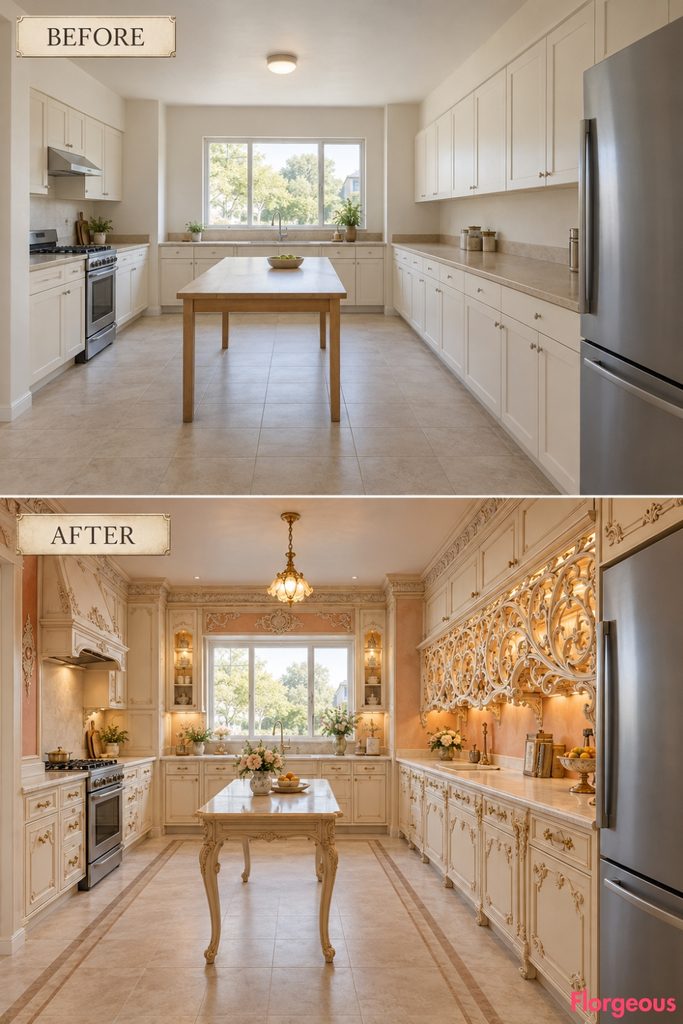
Before: Plain cupboards, flat walls, and a basic ceiling make the kitchen visually rigid.
After: Delicate pierced-wood carving defines an airy Rococo interior. An intricate upper-cabinet canopy complements buttercream storage, apricot wall panels, pale stone floors, a refined ceiling cornice, and elegant lightweight furniture.
Why it works: Openwork timber and layered lighting make the entire kitchen feel lighter and more artistic.
Try this: Use precision-cut decorative wooden panels combined with practical standard-depth cabinetry.
7. The Trefoil Folding Counter: A Playful Louis XV Serving Invention
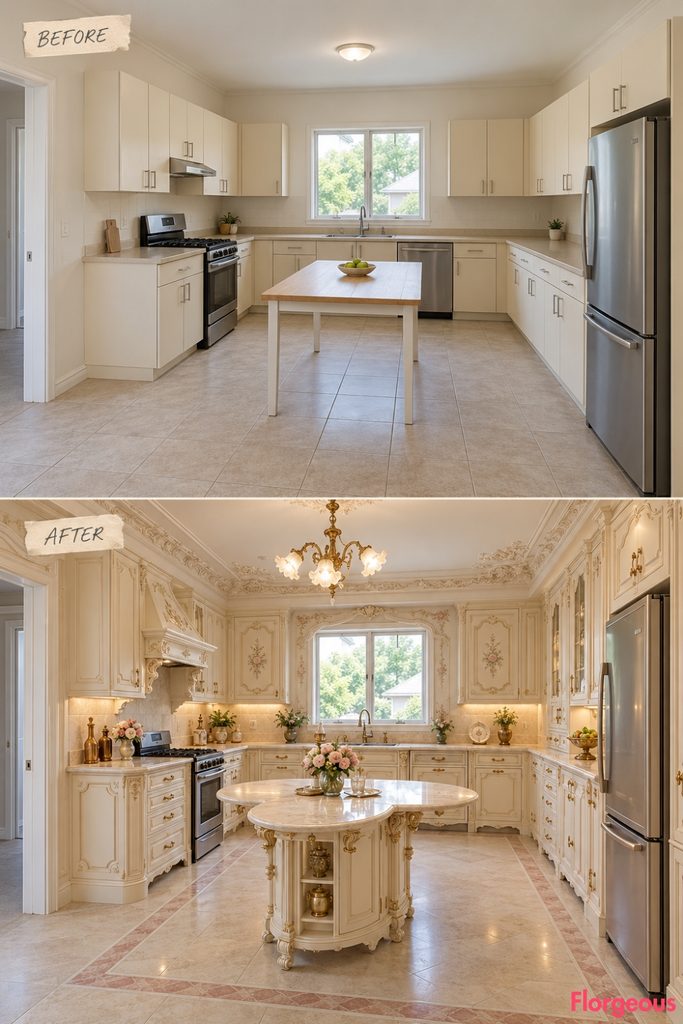
Before: A rectangular utility table and ordinary cabinets leave the central area underused.
After: The kitchen becomes a graceful Rococo serving atelier with an ingenious trefoil folding counter. Coordinated ivory cabinetry, scalloped wall moldings, limestone flooring, ornamental ceiling trim, and refined bronze lighting complete the redesign.
Why it works: The makeover combines functional flexibility with distinctive Rococo furniture construction.
Try this: Use a professionally engineered folding counter with concealed supports and lockable hinges.
Designer Tip: Check access and walkway widths with the leaves fully extended.
8. A Murano Glass Cascade Gives Rococo a Luminous Centerpiece
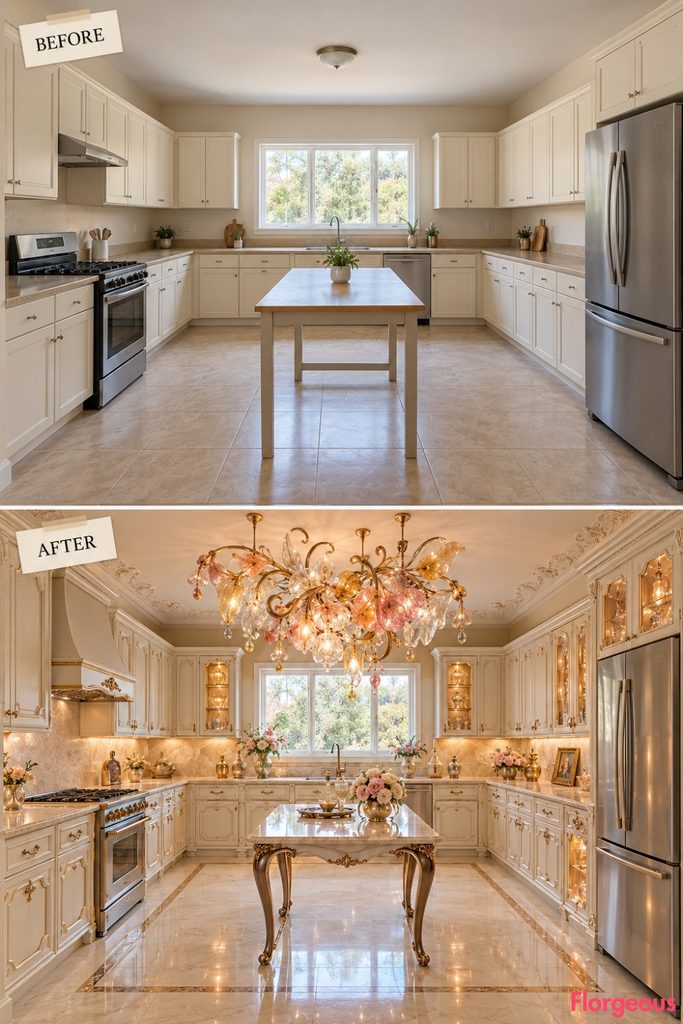
Before: Basic lighting, flat surfaces, and plain cabinetry make the kitchen feel visually static.
After: A cascading Murano-style glass sculpture anchors a radiant Venetian Rococo interior. Pearl cabinetry, champagne-colored walls, polished stone flooring, curved furniture profiles, and layered lighting echo the glass installation’s graceful movement.
Why it works: Light, transparency, and reflective materials unify the entire room.
Try this: Choose a smaller cluster of hand-blown pendants supported by soft, coordinated finishes.
9. A Perforated Porcelain Lace Wall Brings Soft Shadows to the Kitchen
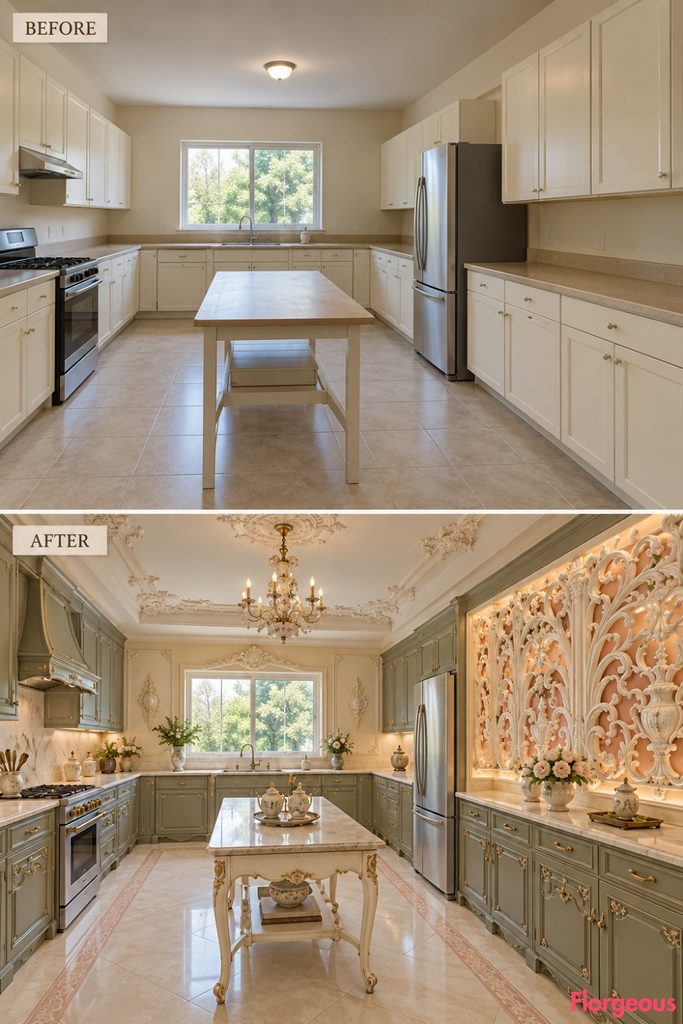
Before: The kitchen has plain painted walls, standard cabinets, and little texture.
After: Delicate porcelain cutwork transforms the room into a refined Rococo ceramic salon. Ivory pierced panels combine with apricot wall finishes, gray-green cabinetry, pale patterned flooring, subtle ceiling relief, and warm layered lighting.
Why it works: Ceramic depth and light create a distinctive architectural atmosphere across the room.
Try this: Combine decorative porcelain panels with durable standard cabinetry and simple natural stone worktops.
10. An Opalescent Cabinet Wave Inspired by Rococo Enamelwork
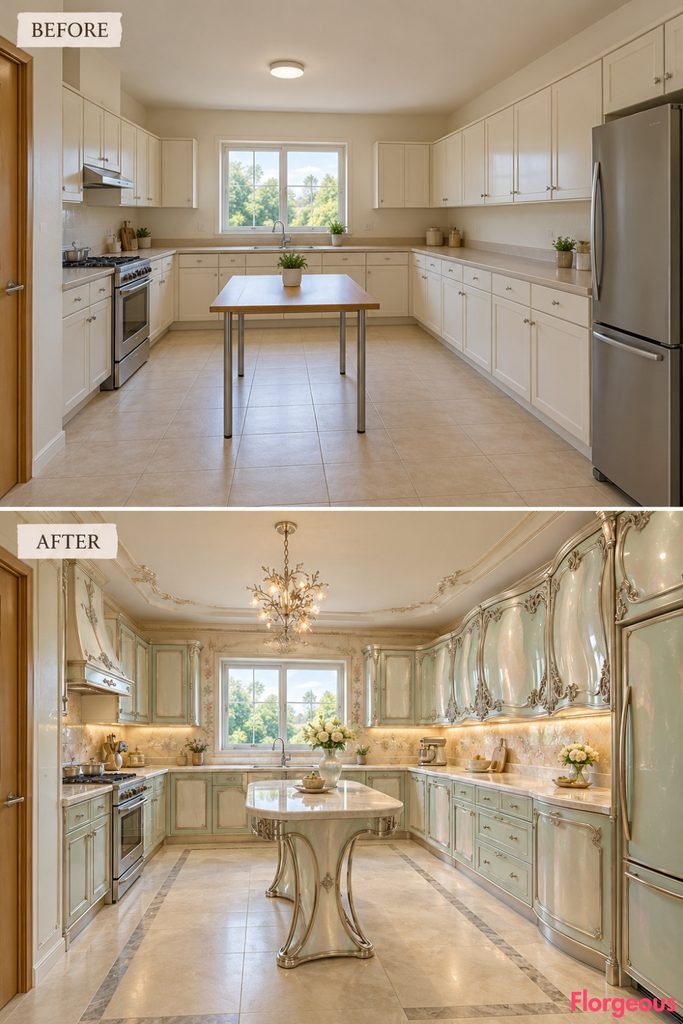
Before: Flat cream cabinets and beige surfaces create a conventional, visually repetitive kitchen.
After: Opalescent enamel cabinetry introduces a modern Rococo interpretation across the entire space. Flowing mint-and-pearl cabinet profiles coordinate with silvered ornamental trim, pale stone floors, curved ceiling moldings, and refined sculptural furniture.
Why it works: Reflective materials and carefully controlled curves create a graceful visual rhythm.
Try this: Use specialty enamel-look finishes on selected shaped cabinets and simpler complementary finishes elsewhere.
11. A Rococo Porcelain Cabinet Wall With Curved Display Vitrines
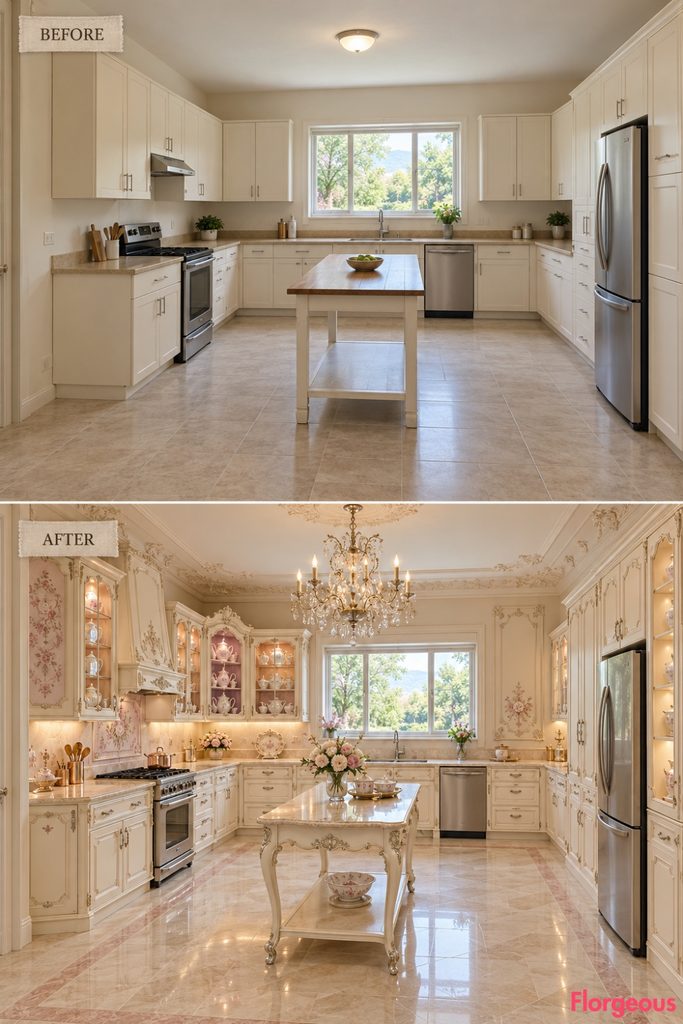
Before: Ordinary cream cupboards and empty walls create a purely functional kitchen.
After: Three staggered bowed-glass vitrines lead a romantic porcelain-gallery redesign. Ivory cabinetry, delicate rose-colored panels, limestone floors, ornamental ceiling details, and coordinated display storage create a refined Rococo interior.
Why it works: Curved vitrines and carefully arranged porcelain give the entire kitchen an elegant gallery-like identity.
Try this: Introduce one curved display cabinet and coordinate nearby storage with similar proportions and finishes.
12. A Rococo Cartouche Wall of Sculpted Painted Relief
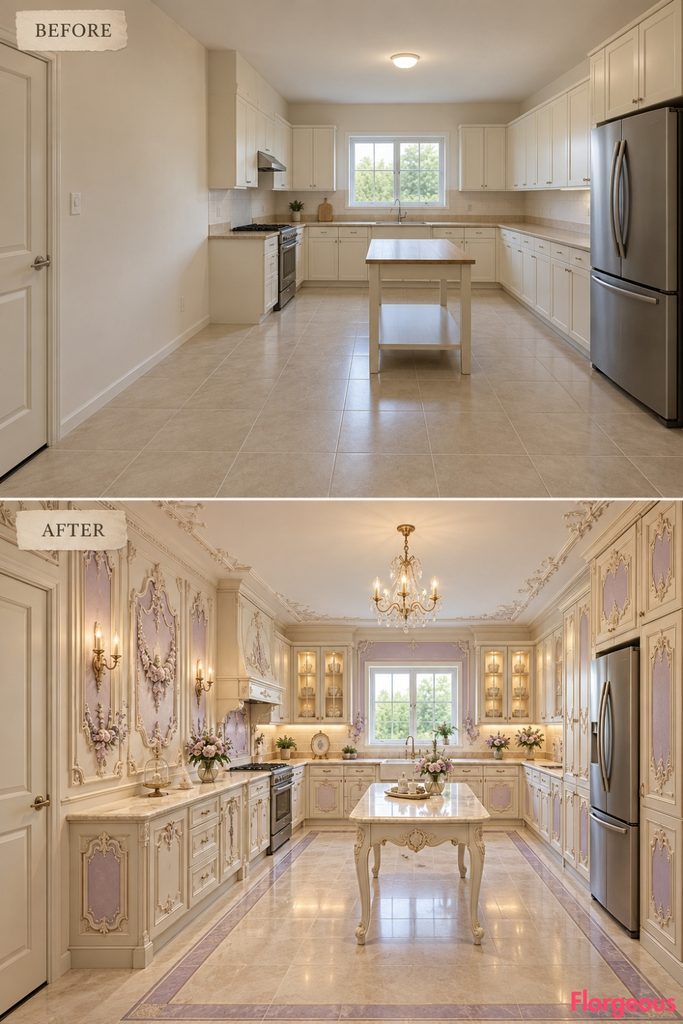
Before: Flat walls, stock cupboards, and simple work surfaces leave the kitchen visually unfinished.
After: A sweeping gallery of sculpted cartouches establishes an expressive Rococo interior. Pale-lilac reliefs connect with coordinated cabinetry, decorative floor borders, delicate ceiling plasterwork, and carefully layered warm lighting.
Why it works: Flowing architectural relief unites the room without relying on oversized furniture.
Try this: Combine lightweight sculpted moldings with tonal paint and shallow wall lighting.
Style Note: Keep the most elaborate relief on dry walls and use cleanable finishes near food preparation.
13. A Rose-Petal Rococo Preparation Station With Sculptural Stonework
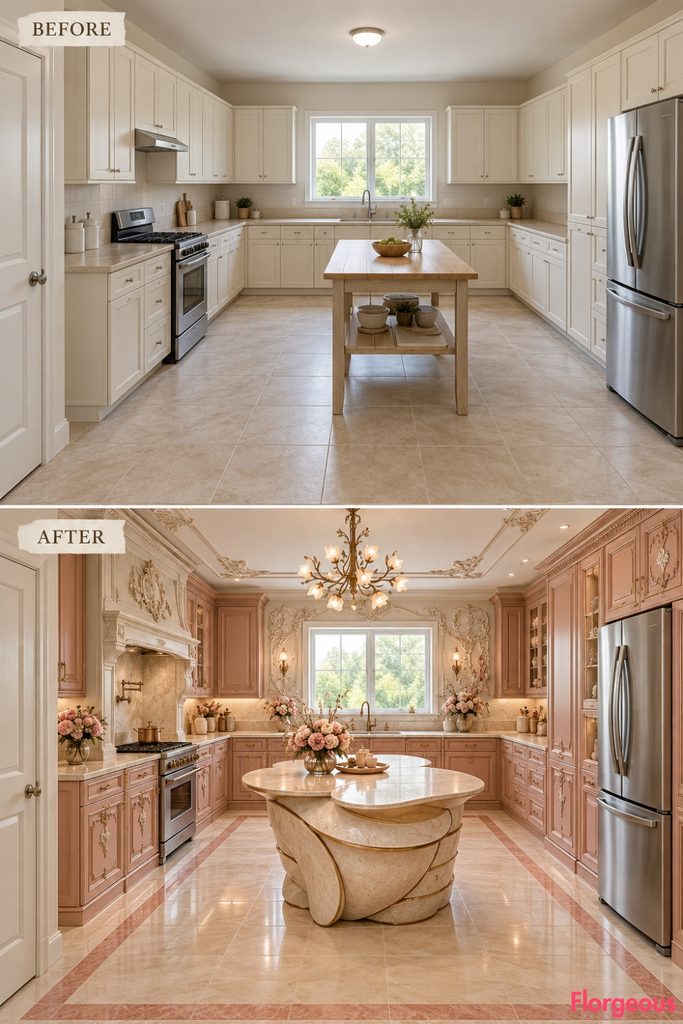
Before: A plain utility table sits among cream cupboards, beige countertops, and undecorated surfaces.
After: A sculptural rose-petal preparation station anchors a completely reimagined Rococo kitchen. Its layered ivory forms connect with terracotta-pink cabinetry, soft floral wall relief, pale limestone flooring, elegant ceiling moldings, and graceful lighting.
Why it works: A distinctive organic centerpiece gives the entire room an artistic identity.
Try this: Use a fabricated composite base with an engineered-stone top to achieve sculptural form without excessive weight.
Finding the Rococo Design That Fits Your Kitchen
These thirteen transformations show how varied Rococo design can become when the entire kitchen is treated as one architectural composition. Concealed boiserie creates elegance through seamless storage, copper repoussé introduces dramatic craftsmanship, and sculptural stonework offers a more contemporary expression of graceful movement.
For a softer atmosphere, consider pale mineral finishes, pierced-wood ornament, or porcelain display cabinetry. For a stronger statement, a richly detailed cooking wall, dramatic enamel cabinetry, or sculptural central workstation can give the space a completely different personality.
The most successful Rococo Kitchen designs balance one powerful artistic feature with coordinated cabinetry, walls, ceiling, flooring, lighting, and practical working surfaces.
Before choosing your favorite, consider how the concept will work with the existing sink, range, refrigerator, entrances, and circulation. Establish the dominant material and architectural language first, then select supporting finishes that reinforce it rather than compete for attention.