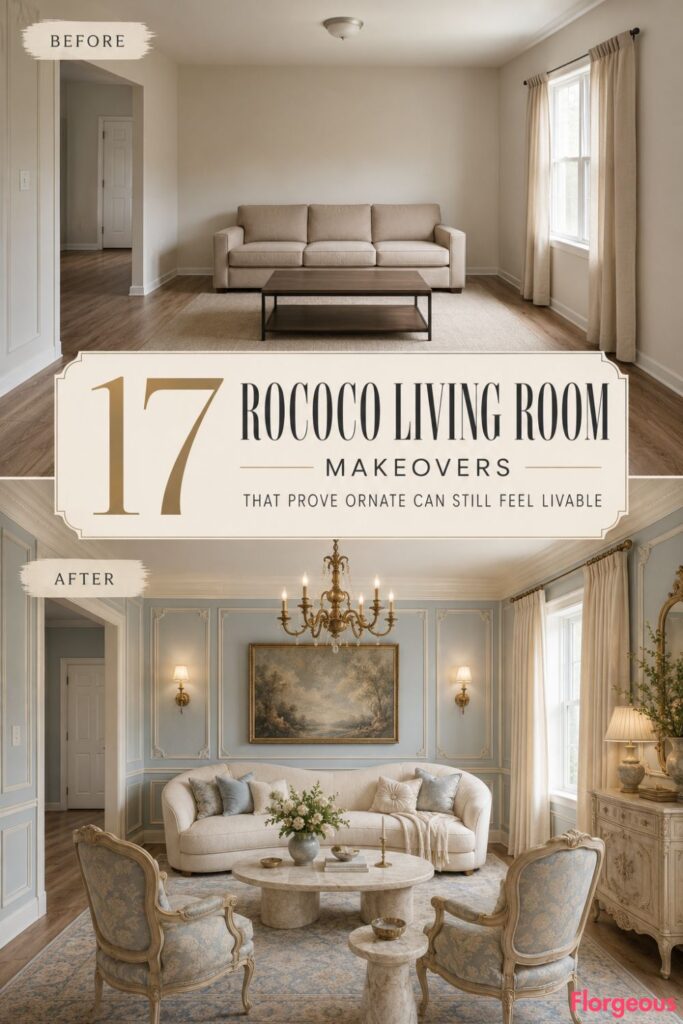
A straight beige sofa, warm off-white walls, a bare coffee table, short curtains, and a basic ceiling light make a perfectly usable living room, but there is very little to remember about it.
That makes this plain builder-grade space the perfect testing ground for Rococo Living Room ideas. Rococo can be powdery and romantic, earthy and antique-inspired, bright and playful, contemporary and sculptural, or unexpectedly dark and atmospheric.
For every makeover below, the starting room remains identical. The doorway, window, flooring footprint, ceiling height, wall proportions, camera position, furniture scale, and open circulation path never change.
Only the after design changes, showing how dramatically color, molding, carved furniture, stone, lighting, textiles, and decorative details can reshape the personality of one ordinary room.
1. Start With Powder Blue, Ivory, and Graceful Curves
This light interpretation captures Rococo’s softness without making the room feel overly sweet.
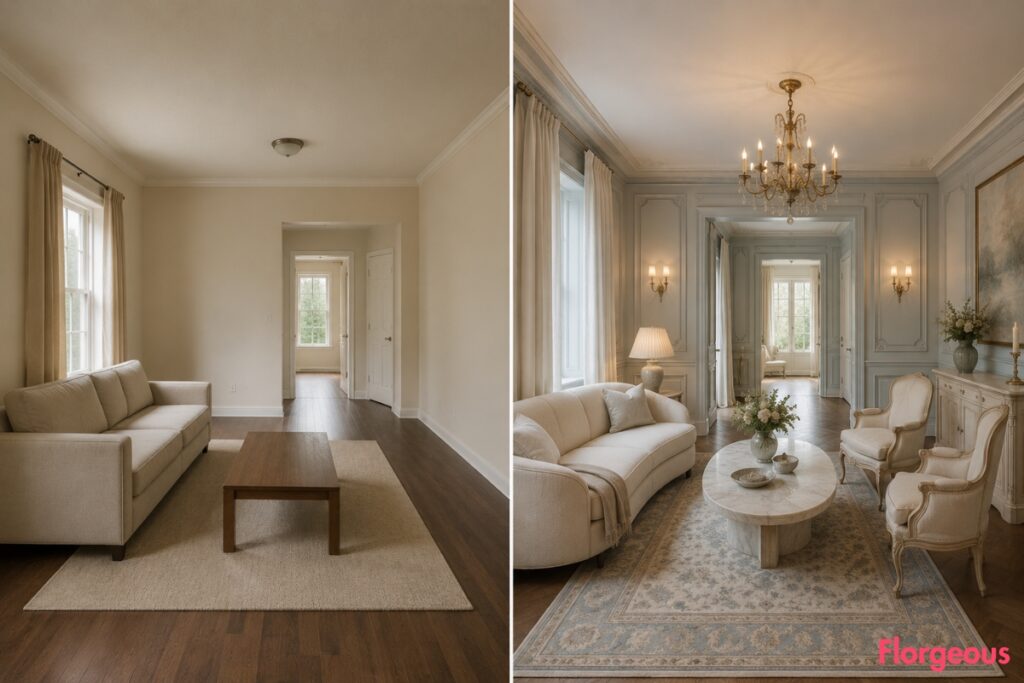
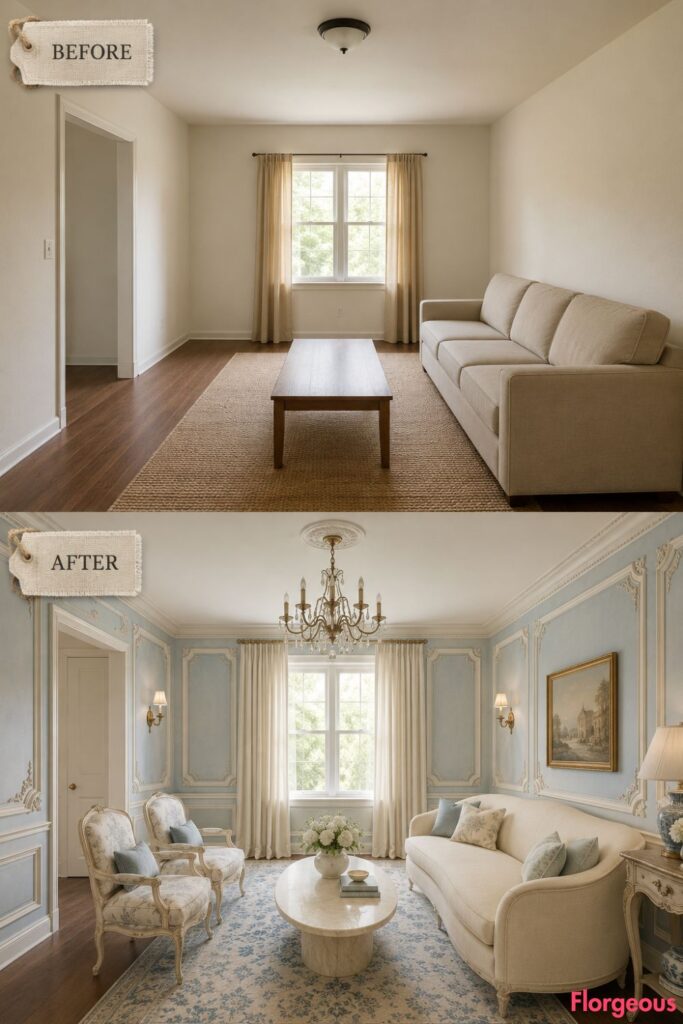
Before: The living room has warm off-white walls, a basic straight beige sofa against the main wall, a bare rectangular coffee table, simple neutral rug, short plain curtains, a basic ceiling light, empty walls, minimal styling, and soft natural daylight.
After: Powder blue walls are framed with delicate mineral-ivory panel molding. A curved ivory linen sofa brings softness to the main wall, while two pale carved-wood bergère-inspired chairs sit together directly opposite it. A creamy oval marble coffee table, faded blue-ivory rug, full-height curtains, and aged-brass chandelier finish the room.
The limited palette lets curves and architectural details become the decoration.
Designer Tip: Leave some sections of wall visually quiet so the ornamental molding feels special rather than overwhelming.
2. Warm the Room With Parchment, Walnut, and Tobacco Velvet
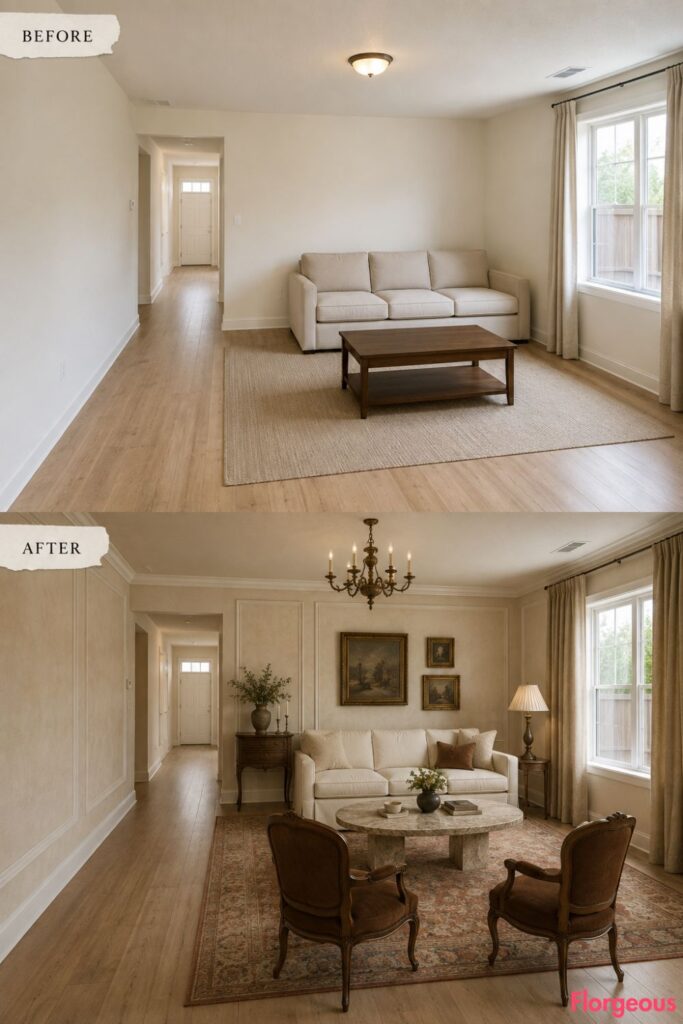
A warmer color story proves Rococo does not depend on pastel tones.
Before: The same builder-grade room has warm off-white walls, straight beige sofa, rectangular coffee table, neutral rug, short curtains, basic lighting, bare walls, and almost no decorative detail.
After: Warm parchment limewash replaces the flat paint, while restrained decorative molding gives the walls dimension. A cream sofa is paired with two carved walnut cabriole chairs upholstered in tobacco velvet. A warm veined stone table, parchment-rust rug, flax curtains, antique-bronze chandelier, and carved walnut console create a richer atmosphere.
Why it works: Dark natural wood prevents the ornate silhouettes from becoming overly delicate.
3. Bring the Garden Indoors With Sage and Soft Cream
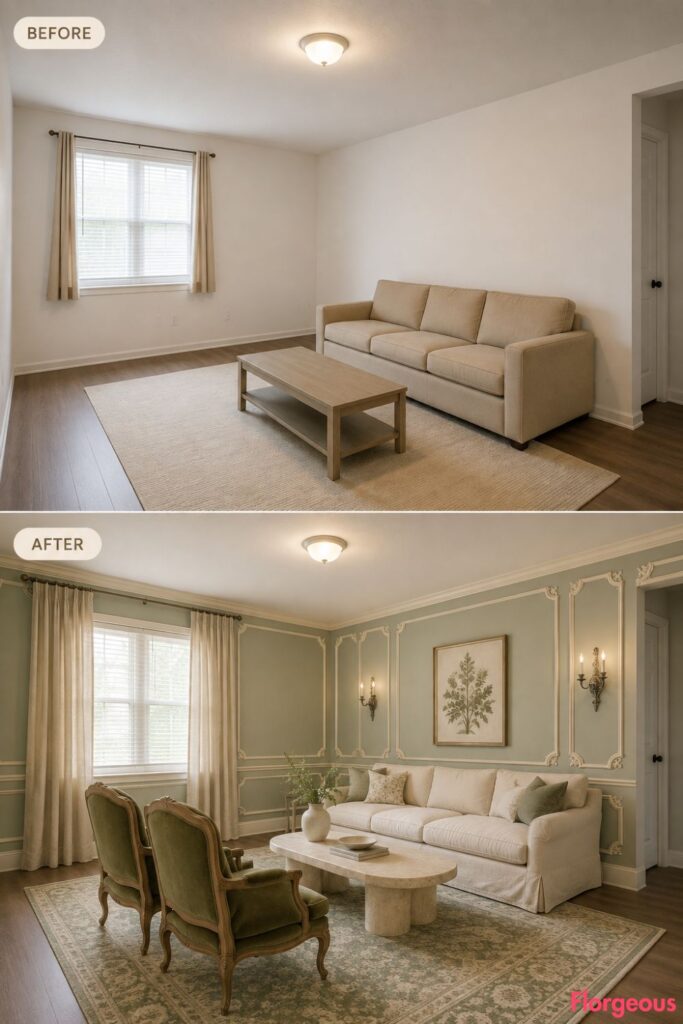
Rococo’s connection to flowers, foliage, and organic forms makes muted green a natural fit.
Before: Warm off-white builder-grade walls surround the same beige sofa, plain rectangular table, neutral rug, short curtains, basic ceiling light, empty walls, and minimally styled surfaces.
After: Muted sage walls meet warm-cream panel molding. An oatmeal linen sofa anchors the room, with two moss velvet carved-wood chairs placed together opposite it. A pale limestone curved table, faded green-cream rug, natural curtains, aged-silver sconces, botanical artwork, and restrained ceramics create a garden-inspired palette without literal floral overload.
4. Make Dusty Coral Feel Sophisticated With Dark Walnut
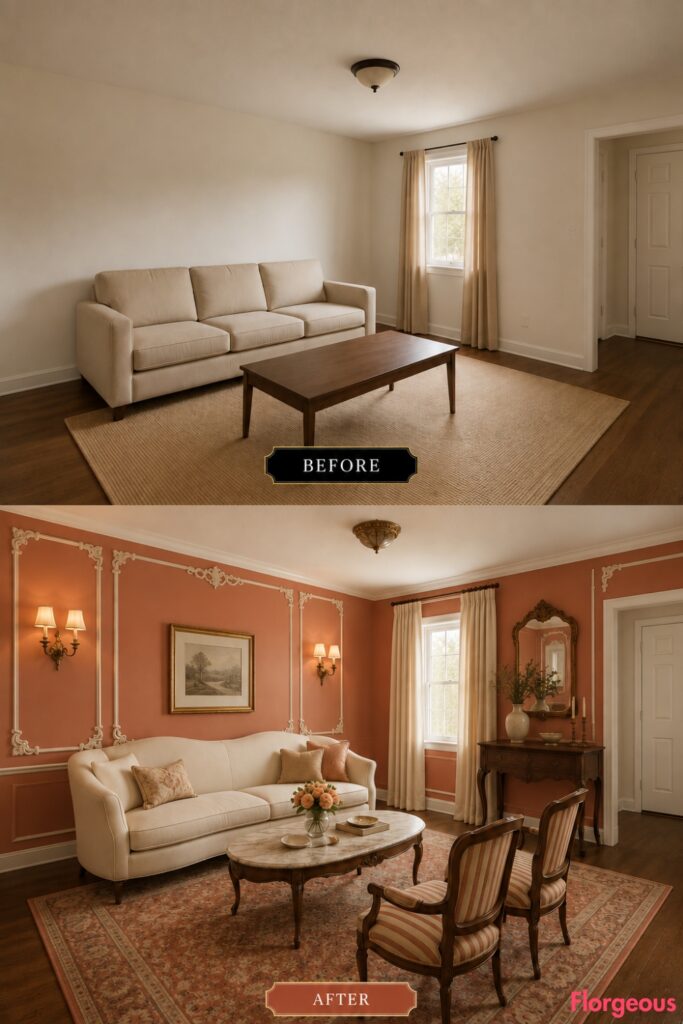
Coral can feel mature when it is softened with brown and cream.
Before: The same neutral builder-grade living room features plain off-white walls, beige sofa, bare rectangular coffee table, simple rug, short curtains, empty walls, basic lighting, and no focal point.
After: Dusty coral mineral paint is framed by cream decorative molding. A warm ivory sofa sits opposite two dark walnut carved chairs upholstered in a subtle stripe. An oval marble-topped table, faded coral-brown rug, cream curtains, aged-brass sconces, and espresso-toned console deepen the scheme.
Color Story: Coral, cream, walnut, and aged brass offer warmth without falling into a predictable pink-and-gold formula.
5. Strip Rococo Back to Sculptural Curves
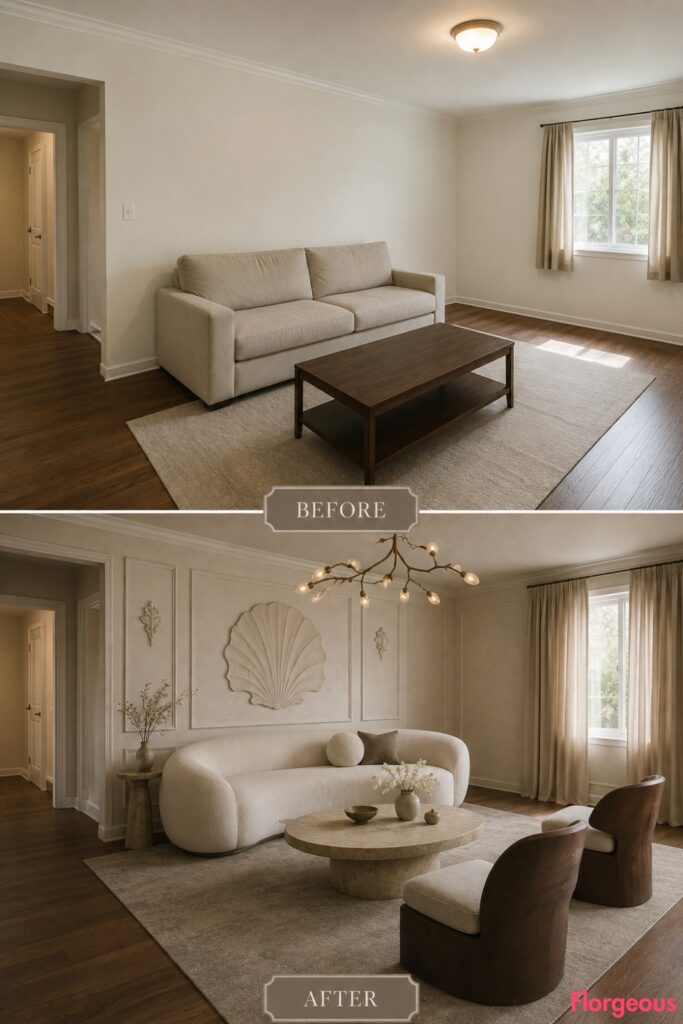
Historical style can feel contemporary when ornament is expressed through form rather than decoration alone.
Before: The room remains plain and builder-grade with off-white walls, straight beige sofa, rectangular table, neutral rug, short curtains, basic ceiling light, empty walls, and minimal styling.
After: Soft mushroom plaster creates a tactile backdrop with minimal Rococo-inspired molding. A sculptural cream sofa faces two asymmetric walnut lounge chairs, while a rounded travertine table keeps the center soft. A branching aged-brass chandelier and abstract shell-inspired plaster relief reference Rococo without relying on antique reproductions.
6. Replace Pink With Smoky Lavender and Antique Silver
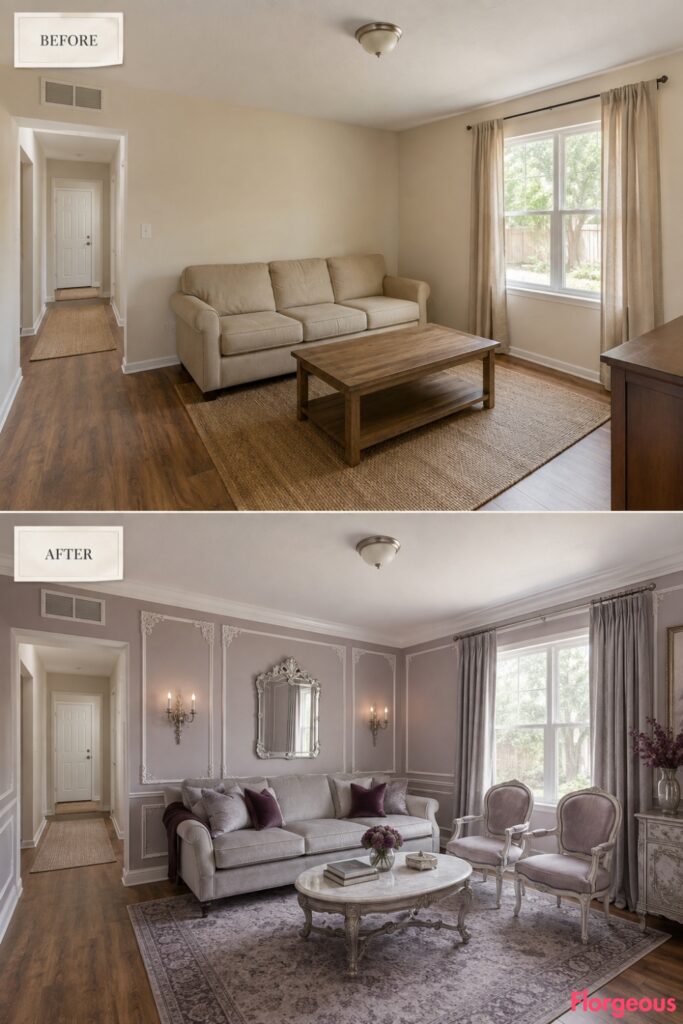
Lavender gives the room a softer character while antique silver cools the palette.
Before: The unchanged living room has neutral off-white walls, beige sofa, simple rectangular table, neutral rug, short curtains, basic ceiling fixture, empty walls, and bare surfaces.
After: Smoky lavender walls are edged with chalk-white molding. A pale-gray velvet sofa sits opposite two painted carved-wood chairs. Gray marble, lavender-charcoal textiles, soft gray curtains, an antique-silver mirror, silvered sconces, and dark plum cushions add depth.
Common Mistake: Avoid making every surface pale. One charcoal or plum accent helps the room maintain definition.
7. Make the Room Feel Collected Over Generations
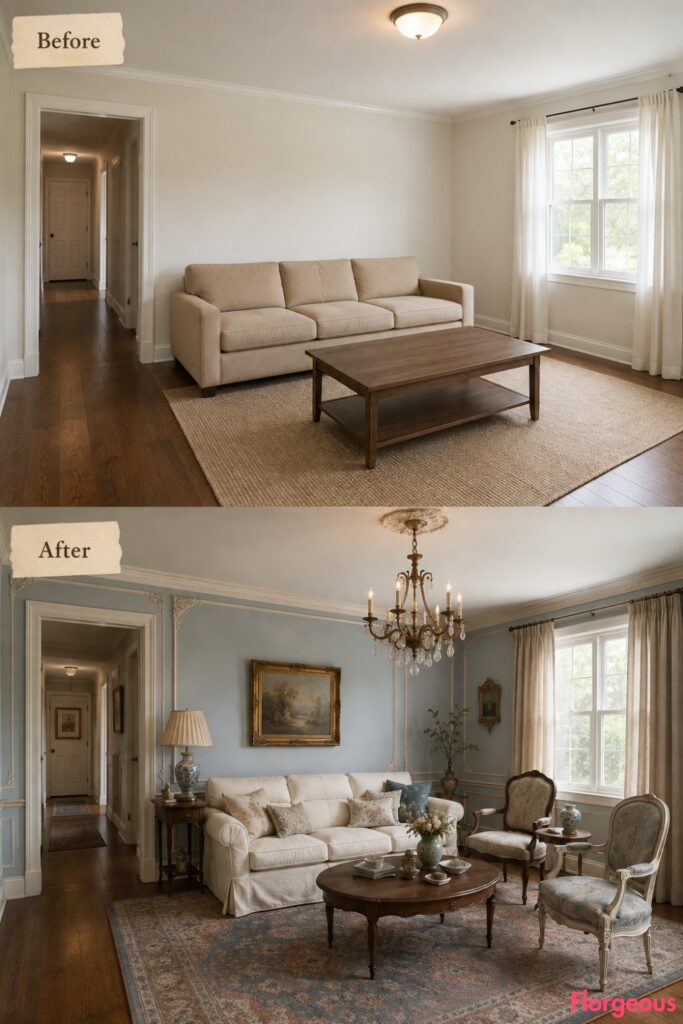
Not every piece needs to match for Rococo to feel coherent.
Before: The same builder-grade room has flat warm off-white walls, generic beige sofa, bare rectangular table, simple rug, short curtains, basic ceiling light, and empty walls.
After: Faded French blue walls meet lightly aged cream molding. A relaxed ivory slipcovered sofa is paired with two intentionally mismatched antique-inspired chairs, one walnut and one painted. A worn oval walnut table, blue-rust rug, flax curtains, tarnished brass chandelier, vintage ceramics, and collected landscapes create an evolved look.
Try this: Mix furniture finishes while keeping upholstery colors related.
8. Take the Style Into Deep Teal
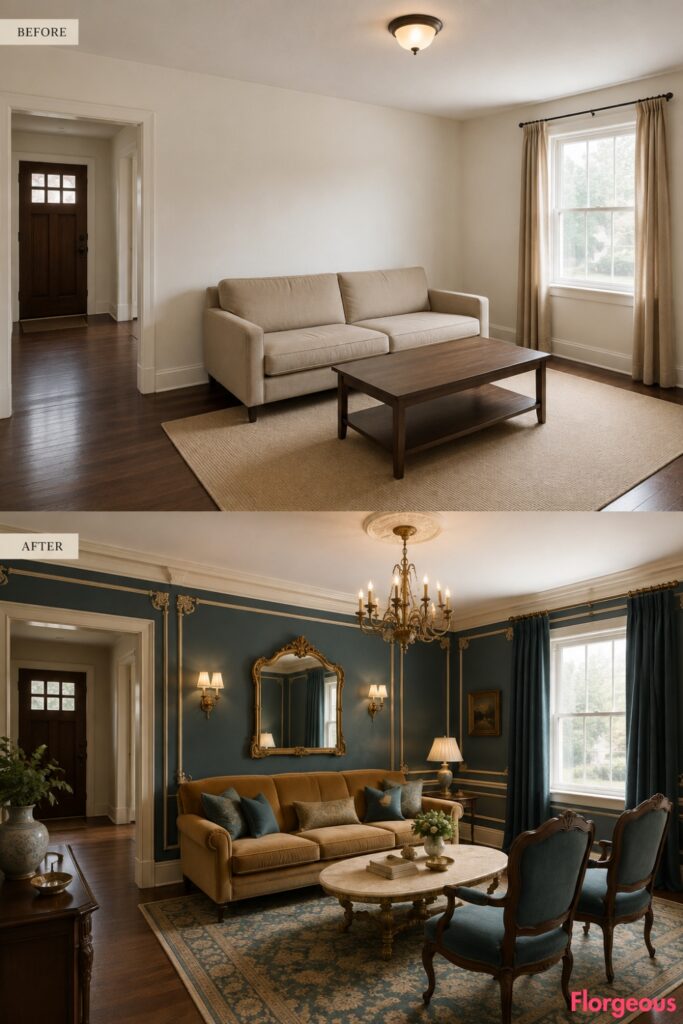
Dark walls make delicate plasterwork appear more sculptural.
Before: The unchanged neutral room contains warm off-white walls, straight beige sofa, rectangular coffee table, simple neutral rug, short curtains, basic ceiling light, empty walls, and minimal styling.
After: Deep teal walls contrast against warm cream Rococo molding. A camel velvet sofa faces two dark walnut chairs upholstered in teal wool. An antiqued limestone table, teal-camel rug, dark curtains, aged-gold chandelier, and one restrained decorative mirror create a moody evening atmosphere.
9. Make Rococo Work in a Small Living Room
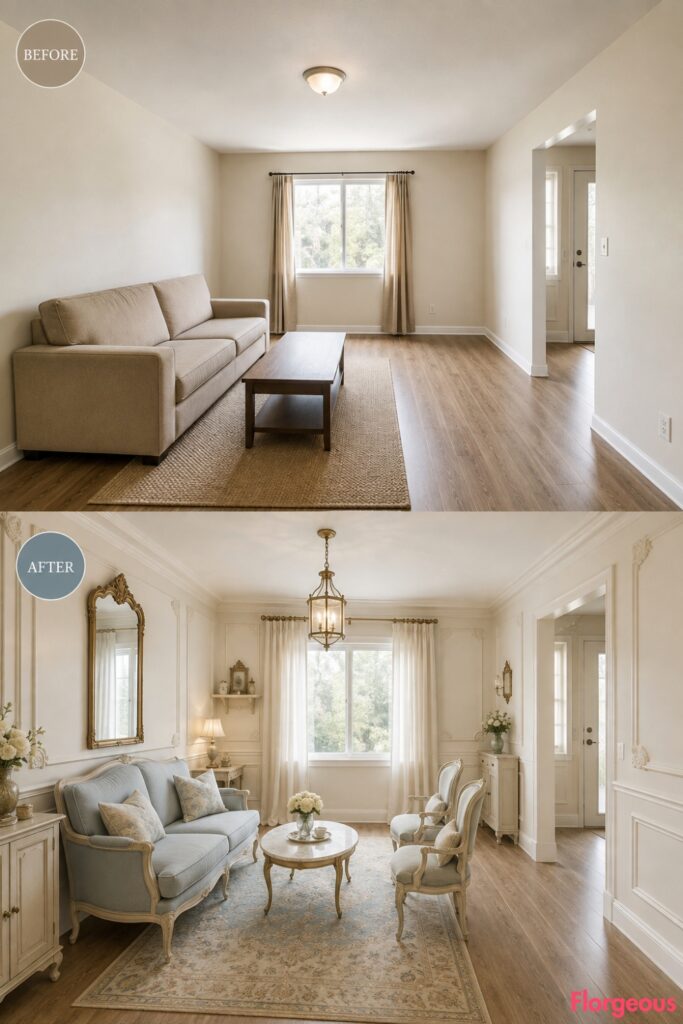
The smallest version relies on proportion rather than sacrificing decorative character.
Before: The same room begins with plain off-white walls, generic beige sofa, basic coffee table, neutral rug, short curtains, simple ceiling fixture, empty walls, and little visual interest.
After: Warm ivory walls receive narrow applied molding. A compact pale blue loveseat replaces the bulky sofa and faces two slim painted-wood chairs. A small round marble table occupies less floor space, while high-hung curtains, a tall decorative mirror, and shallow storage emphasize vertical space.
Small Space Tip: Choose chairs and tables with visible legs so more flooring remains visible.
10. Create a Renter-Friendly Rococo Makeover
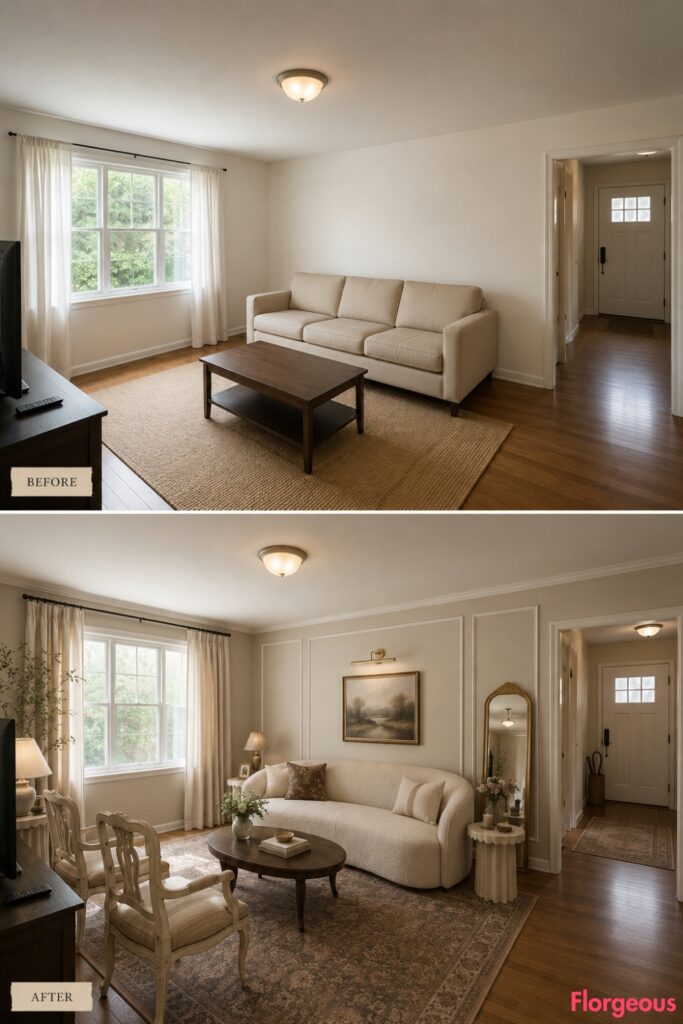
Decorative architecture can be suggested without permanently changing the room.
Before: Warm off-white walls, beige sofa, rectangular coffee table, neutral rug, short curtains, builder-grade ceiling light, empty walls, and bare surfaces create the same simple starting point.
After: Removable cream molding strips frame warm greige walls. A curved oatmeal sofa faces two secondhand painted carved chairs. Scalloped side tables, an oval coffee table, vintage-style rug, ready-made full curtains, plug-in picture lights, and a freestanding decorative mirror add character without permanent construction.
Budget Version: Start with removable molding, secondhand chairs, and high-hung curtains before investing in larger furniture.
11. Brighten the Room With Butter Yellow and Pale Oak
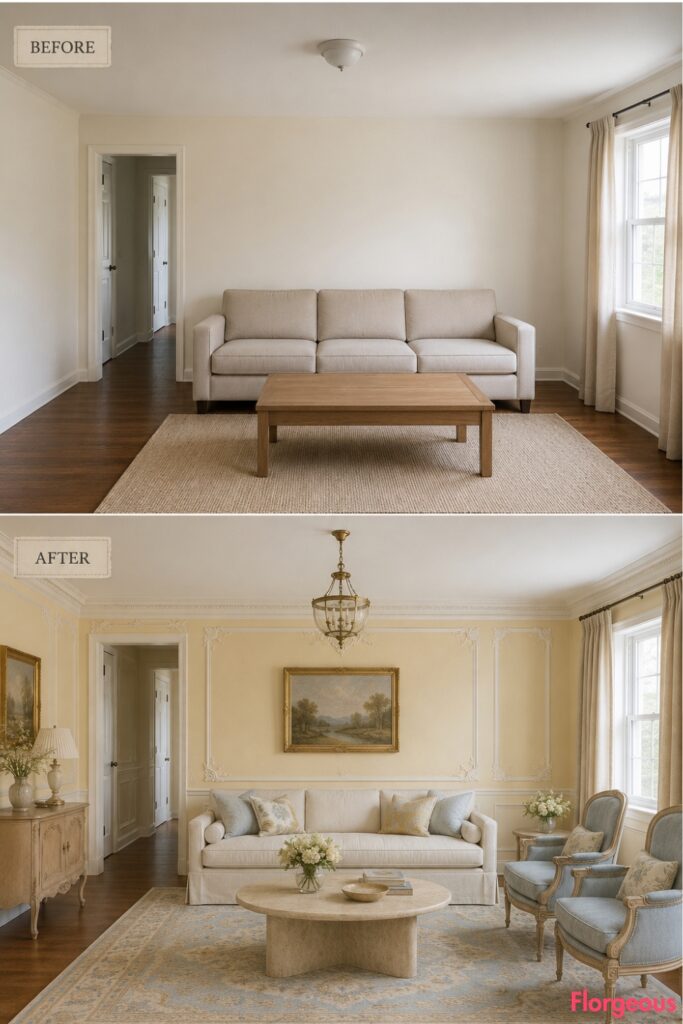
Warm yellow creates a cheerful interpretation without becoming overly decorative.
Before: The same plain room has builder-grade warm off-white walls, beige sofa, bare rectangular table, neutral rug, short curtains, basic lighting, empty walls, and minimal styling.
After: Muted butter-yellow walls are framed with creamy molding. An ivory linen sofa is paired with two pale-oak carved chairs upholstered in faded blue. A warm limestone oval table, blue-yellow rug, flax curtains, delicate bronze pendant, pale-oak console, and garden-inspired artwork keep everything light.
12. Make Rococo Practical Enough for Family Life
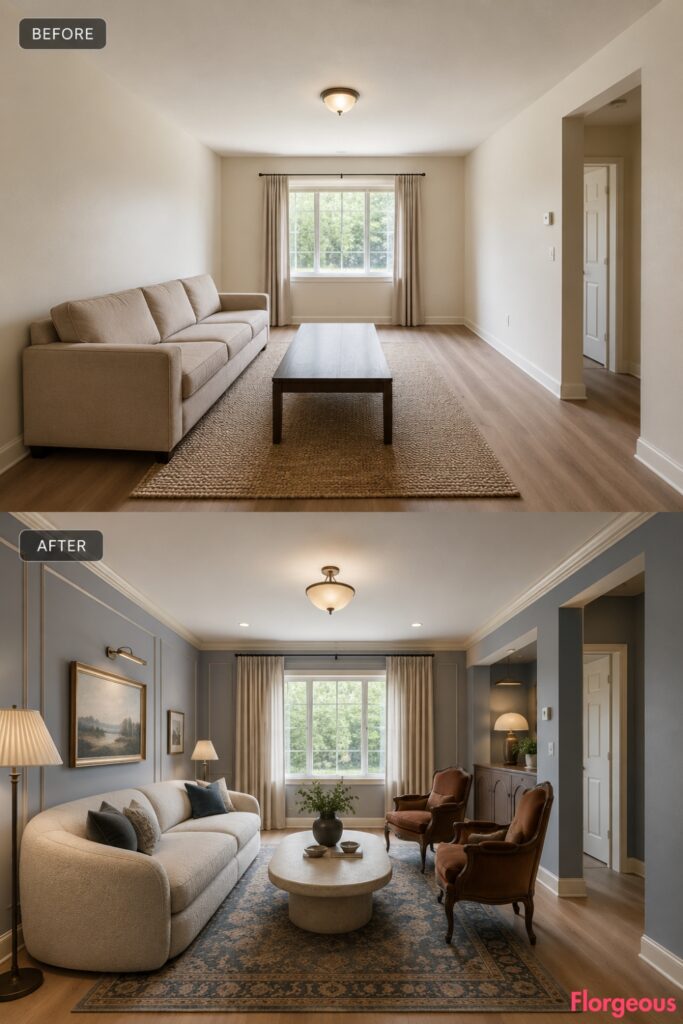
Durability and decorative style can coexist.
Before: The room starts with flat warm off-white walls, basic beige sofa, rectangular table, simple rug, short curtains, generic lighting, empty walls, and an unfinished builder-grade character.
After: Washable warm blue-gray paint surrounds restrained cream molding. A rounded performance-fabric sofa faces two durable carved-frame chairs with cognac upholstery. A honed stone table has softened corners, while the patterned rug is stain-resistant. Closed walnut storage keeps daily clutter hidden.
Why it works: The Rococo character comes primarily from silhouettes and wall detail, leaving the actual materials easy to maintain.
13. Blend Rococo With French Country Warmth
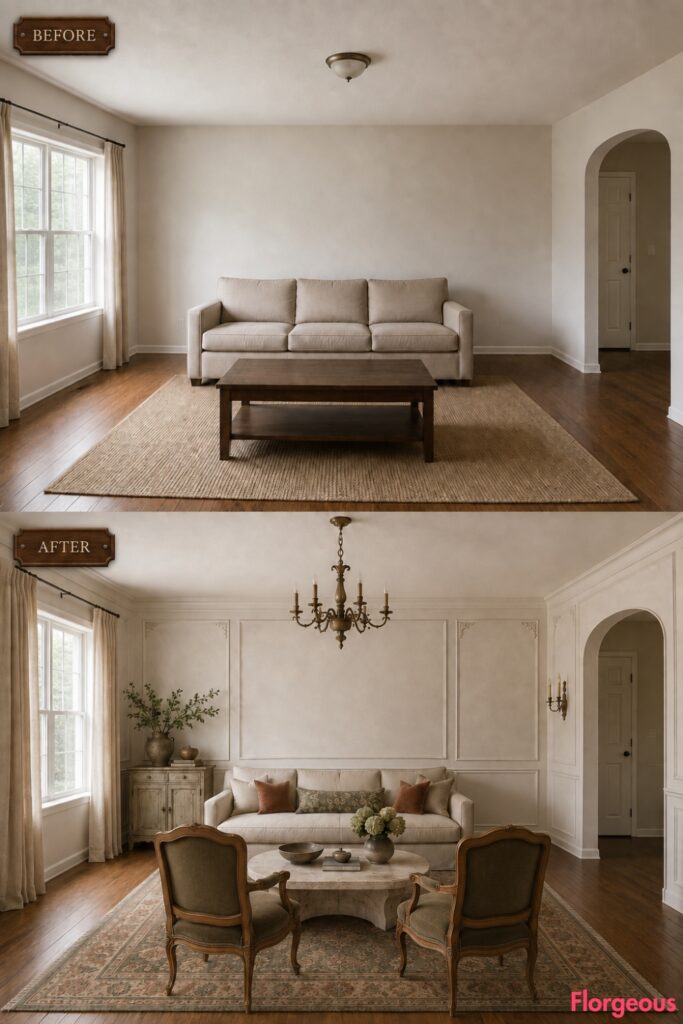
This interpretation trades polished glamour for patina and natural materials.
Before: Warm off-white walls, basic beige sofa, bare rectangular table, neutral rug, short curtains, simple ceiling light, empty walls, and minimal styling remain unchanged.
After: Chalky cream walls receive restrained molding. An oatmeal linen sofa faces two warm-oak carved chairs in faded olive upholstery. A curved stone-topped table, olive-terracotta rug, linen curtains, aged-bronze chandelier, distressed painted cabinet, pottery, and softly aged artwork make the space feel collected.
Style Note: This combination works especially well with natural flooring and existing vintage furniture.
14. Sharpen Soft Rococo Curves With Black Accents
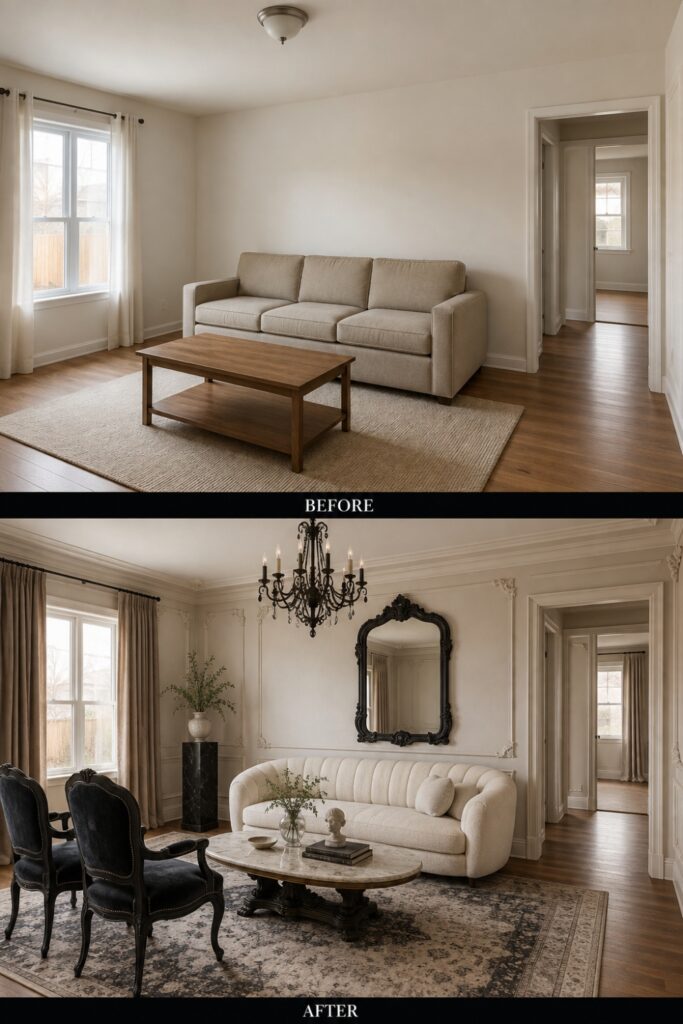
A graphic palette makes ornate forms feel unexpectedly modern.
Before: The starting room remains plain with warm off-white walls, straight beige sofa, rectangular coffee table, simple rug, short curtains, basic ceiling fixture, empty walls, and no decorative focal point.
After: Pale stone walls and cream molding become the backdrop for black lacquered carved chairs, charcoal upholstery, a dark decorative mirror, and blackened-bronze lighting. A cream sofa and warm marble table prevent the darker details from dominating.
Try this: Repeat black in three or four places instead of using one isolated dark object.
15. Let a Gallery Wall Become the Main Feature
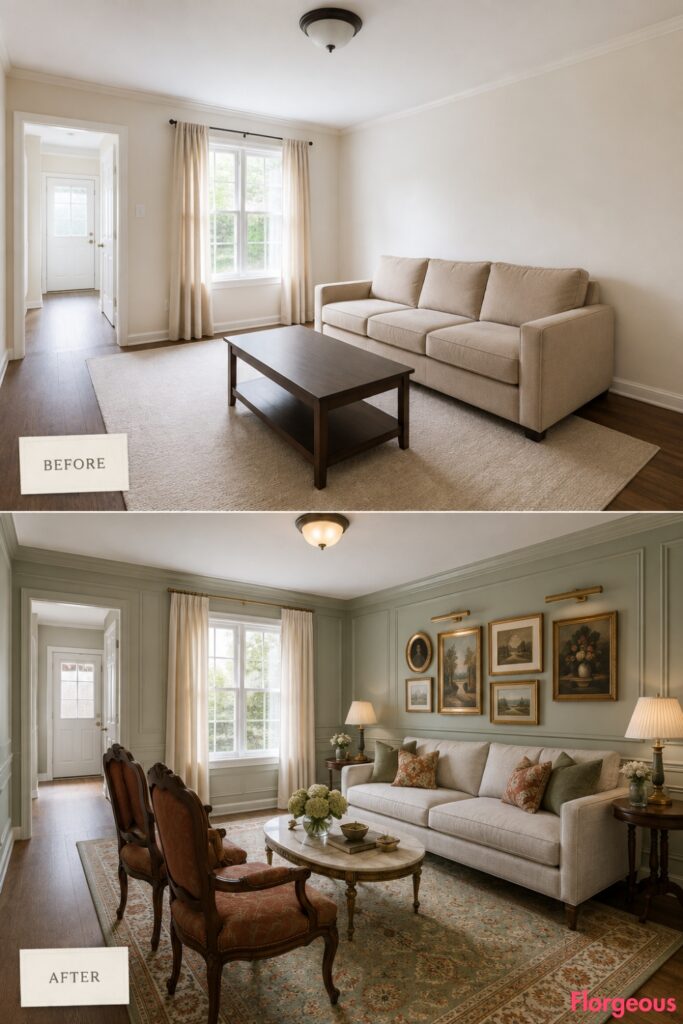
Art can provide decorative richness while the furniture stays relatively restrained.
Before: The same neutral builder-grade room has warm off-white walls, generic beige sofa, bare coffee table, neutral rug, short curtains, simple lighting, and completely empty walls.
After: Muted celadon paneling becomes the backdrop for a carefully spaced gallery collection. A neutral linen sofa faces two dark cherrywood carved chairs. An oval marble table, celadon-rust rug, cream curtains, and aged-brass picture lights complete the composition.
16. Create a Plum and Walnut Evening Salon
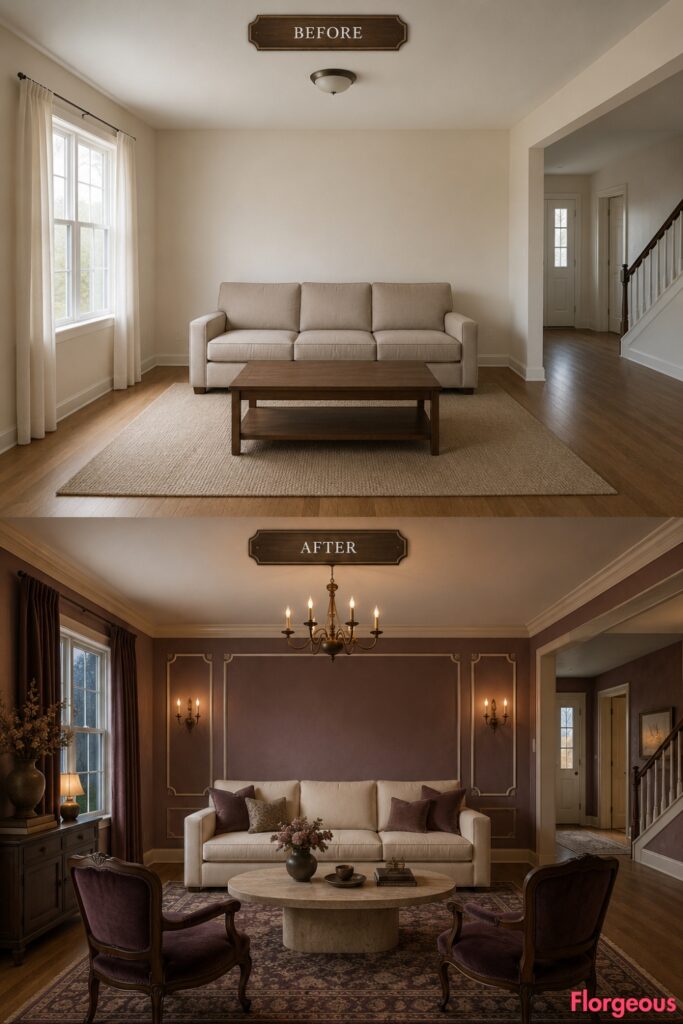
A softened plum palette shows how atmospheric Rococo can become.
Before: Warm off-white walls, straight beige sofa, bare rectangular table, simple neutral rug, short curtains, basic ceiling light, empty walls, and minimal styling create the same plain starting point.
After: Soft plum mineral walls are framed by warm-cream molding. A parchment sofa faces two walnut carved chairs upholstered in muted plum velvet. A cream stone table lightens the center, while a plum-tobacco rug, chocolate curtains, bronze chandelier, sconces, and walnut console create an intimate evening mood.
17. Finish With an Almost Monochromatic Ivory Salon
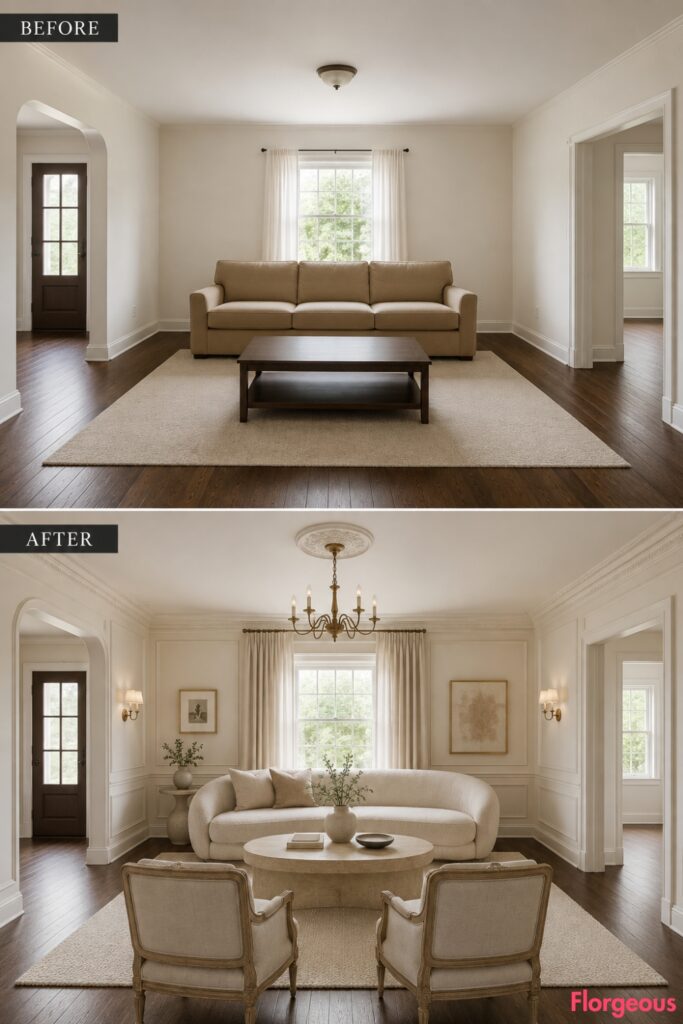
The final makeover shows that decorative shape can replace strong color.
Before: The unchanged builder-grade living room has plain warm off-white walls, straight beige sofa, bare rectangular table, neutral rug, short curtains, basic ceiling light, empty walls, and no meaningful focal point.
After: Mineral ivory walls receive delicate molding and a restrained plaster ceiling medallion. A curved parchment linen sofa faces two pale carved-wood chairs. A sculptural limestone table, tonal wool rug, flax curtains, aged-brass chandelier, subtle sconces, pale ceramics, and edited artwork create depth through texture and shadow rather than contrast.
The room feels ornate, but remarkably calm.
Choosing a Rococo Look That Works in Real Life
The easiest way to build a convincing Rococo Living Room is to decide which feature will carry most of the decorative character. That might be wall molding, a pair of carved chairs, a shapely sofa, an ornate mirror, an oval stone table, or one beautiful chandelier.
Then choose a palette that suits the atmosphere you actually want. Powder blue and ivory feel light and romantic. Sage and oak feel calmer and more natural. Coral and walnut create warmth. Deep teal feels dramatic, while plum is especially effective in rooms used more often at night.
Practicality should influence the final choices too. Renters can work with removable molding and plug-in lighting. Families can choose performance upholstery and rounded furniture. Compact rooms benefit from slim chairs, shallow storage, visible furniture legs, and tall curtains.
The goal is not to reproduce an eighteenth-century salon piece by piece. Keep Rococo’s graceful curves, asymmetry, craftsmanship, decorative wall detail, elegant textiles, and sense of movement, then edit those elements until they work comfortably with the way you live.